- gettectonic.com - Page 3
The Paradox of Jagged Intelligence in AI

The Paradox of Jagged Intelligence in AI

AI systems are breaking records on complex benchmarks, yet they falter on simpler tasks humans handle intuitively—a phenomenon dubbed jagged intelligence. This ainsight explores this uneven capability, tracing its evolution in frontier models and the impact of reasoning models. We introduce SIMPLE, a new public benchmark with easy reasoning tasks solvable by high schoolers, vital for enterprise AI where reliability trumps advanced math skills. Since ChatGPT’s 2022 debut, foundation models have been marketed as chat interfaces. Now, reasoning models like OpenAI’s o3 and DeepSeek’s R1 leverage extra inference-time computation for step-by-step internal reasoning, boosting performance in math, engineering, and coding. This shift to scaling inference compute arrives as pretraining gains may be plateauing. Benchmarking the Gaps Traditional AI benchmarks measure peak performance on tough tasks, like graduate exams or complex code, creating new challenges as old ones are mastered. However, they overlook reliability and worst-case performance on basic tasks, masking jaggedness in “solved” areas. Modern models outshine humans on some challenges but stumble unpredictably on others, unlike specialized tools (e.g., calculators or photo editors). Despite advances in modeling and training, this inconsistent jaggedness persists. SIMPLE targets easy problems where AI still lags, offering insights into jaggedness trends. Evolution of Jaggedness Will jaggedness shrink or grow as models advance? This question shapes enterprise AI success. Lacking jaggedness benchmarks, we created SIMPLE—a dataset of 225 simple questions, each solvable by at least 10% of high schoolers. Example Questions from SIMPLE Performance Trends Evaluating current and past top models on SIMPLE traces jaggedness over time. Green tasks are high school-level; blue are expert-level. School-level benchmarks saturated by 2023-2024, shifting focus to harder tasks. SIMPLE, using the best of gpt-4, gpt-4-turbo, gpt-4o, o1, and o3-mini, scores lowest on school-level questions. Yet, reasoning models show a ~30% improvement, suggesting they reduce jaggedness by double-checking work, linking reasoning to better simple-task performance. Case Study Insights and Implications Reasoning models transfer top-line gains to simple tasks to some extent, but SIMPLE remains unsaturated. Jaggedness persists, with top-line progress outpacing worst-case improvements. This mirrors computing’s history: excelling in narrow domains, outpacing human limits once applied, yet always facing new challenges. Jaggedness may not just define AI—it could be computation’s inherent nature. Like Related Posts Who is Salesforce? Who is Salesforce? Here is their story in their own words. From our inception, we’ve proudly embraced the identity of Read more Salesforce Unites Einstein Analytics with Financial CRM Salesforce has unveiled a comprehensive analytics solution tailored for wealth managers, home office professionals, and retail bankers, merging its Financial Read more AI-Driven Propensity Scores AI plays a crucial role in propensity score estimation as it can discern underlying patterns between treatments and confounding variables Read more Tectonic’s Successful Salesforce Track Record Salesforce Technology Services Integrator – Tectonic has successfully delivered Salesforce in a variety of industries including Public Sector, Hospitality, Manufacturing, Read more


Read More
Salesforce prompt builder

Mastering Agentforce

Mastering Agentforce: How to Supercharge Salesforce with AI-Powered Prompts Unlocking the Power of Agentforce Salesforce’s Agentforce is transforming how businesses automate marketing and sales—using generative AI to handle repetitive tasks, respond to prospect behavior in real time, and drive smarter strategies with less effort. But to fully leverage Agentforce, you need to master prompt engineering—the art of crafting effective AI instructions. (Don’t let the term “engineering” intimidate you—it simply means writing clear, structured prompts!) AI Prompts 101: The Key to Personalized Automation An AI prompt is a detailed instruction that guides Salesforce’s large language model (LLM) to generate relevant, business-specific responses. Why Prompts Matter Introducing Salesforce Prompt Builder Prompt Builder is Agentforce’s central hub for creating, managing, and applying reusable prompt templates across your AI Agents. How It Works 3 Types of Prompt Templates Step-by-Step: How to Use Prompt Builder 1. Get Access 2. Open Prompt Builder 3. Craft Your Prompt Every effective prompt should include:✅ Who’s involved? (Roles, relationships, data)Example: “You are a marketer named {!user.firstname} writing to {!account.name}, a potential customer.” ✅ Context (Tone, style, language)Example: “Write a professional yet conversational email in British English.” ✅ Goal (What should the AI accomplish?)Example: “Persuade {!account.name} to book a 15-minute intro call.” ✅ Constraints (Word limits, data boundaries)Example: “Keep under 300 words. Avoid jargon and unsupported claims.” 📌 Pro Tip: Draft prompts in a separate doc first for easy editing. 4. Test & Refine Before going live:✔ Verify responses match your goals & brand voice.✔ Check for bias, errors, or inconsistencies.✔ Fine-tune by adding more context or rephrasing. 5. Deploy Activate your prompt for use in: Why This Changes Everything With Agentforce + Prompt Builder, Salesforce users can:🚀 Scale hyper-personalized outreach without manual work.🤖 Automate repetitive tasks while maintaining brand consistency.📈 Drive higher ROI with AI that adapts to real-time data. Ready to transform your Salesforce automation? Start engineering smarter prompts today! Like Related Posts Who is Salesforce? Who is Salesforce? Here is their story in their own words. From our inception, we’ve proudly embraced the identity of Read more Salesforce Marketing Cloud Transactional Emails Salesforce Marketing Cloud Transactional Emails are immediate, automated, non-promotional messages crucial to business operations and customer satisfaction, such as order Read more Salesforce Unites Einstein Analytics with Financial CRM Salesforce has unveiled a comprehensive analytics solution tailored for wealth managers, home office professionals, and retail bankers, merging its Financial Read more AI-Driven Propensity Scores AI plays a crucial role in propensity score estimation as it can discern underlying patterns between treatments and confounding variables Read more

Read More
Slack Operating System

U.S. Government Secures Major Discounts on Slack for Federal Agencies

U.S. Government Secures Major Discounts on Slack for Federal Agencies Through New GSA-Salesforce Partnership May 19, 2025 – In a major step to boost federal efficiency, the U.S. General Services Administration (GSA) has signed a landmark OneGov agreement with Salesforce, slashing the cost of Slack for government agencies. The deal provides deep discounts on Slack’s enterprise collaboration tools, enabling federal offices to modernize operations while cutting costs. Key Details of the Agreement Under the new terms, federal agencies will receive: These reduced rates will be available until November 30, 2025, giving agencies a six-month window to adopt the platform at significantly lower costs. Unlike past agreements, where agencies negotiated individual discounts, this deal leverages the total purchasing power of the federal government, ensuring better pricing and streamlined procurement. The move reflects the GSA’s push to centralize IT acquisitions, eliminating redundancies and maximizing savings. Leadership and Strategic Goals Josh Gruenbaum, GSA Federal Acquisition Service Commissioner, highlighted the partnership’s significance: “Through the OneGov initiative, we’re demonstrating that the federal government is a strong partner for industry, securing top-tier tools at the best value for taxpayers.” The OneGov program, backed by the current administration, aims to foster long-term partnerships with tech providers, potentially leading to more discounted offerings in the coming fiscal year. Boosting Government Productivity Slack, now part of Salesforce, serves as a unified hub for communication, app integration, and AI-driven workflows. Its adoption across federal agencies could improve interdepartmental collaboration, reduce inefficiencies, and accelerate decision-making. The inclusion of Slack AI for Enterprise introduces advanced automation, helping agencies process data faster and optimize operations—a critical advantage for large, complex organizations. A Shift in Federal Tech Procurement This agreement signals a broader move toward modernizing government IT infrastructure while controlling costs. As noted by NextGov, the deal is part of GSA’s strategy to offer cost-effective, scalable solutions under the OneGov framework. By standardizing collaboration tools across agencies, the federal government could enhance interoperability, reduce reliance on fragmented systems, and lower long-term technical debt. Looking Ahead Industry analysts suggest that this partnership could pave the way for more AI and cloud-based solutions in government. The steep discounts may drive rapid adoption, setting a precedent for future public-private tech collaborations. As agencies integrate Slack into their workflows, the impact on federal productivity and service delivery will be closely monitored—potentially serving as a model for future digital transformation efforts. Sources: BizSugar, Investing.com, NextGov Like Related Posts Who is Salesforce? Who is Salesforce? Here is their story in their own words. From our inception, we’ve proudly embraced the identity of Read more Salesforce Marketing Cloud Transactional Emails Salesforce Marketing Cloud Transactional Emails are immediate, automated, non-promotional messages crucial to business operations and customer satisfaction, such as order Read more Salesforce Unites Einstein Analytics with Financial CRM Salesforce has unveiled a comprehensive analytics solution tailored for wealth managers, home office professionals, and retail bankers, merging its Financial Read more AI-Driven Propensity Scores AI plays a crucial role in propensity score estimation as it can discern underlying patterns between treatments and confounding variables Read more

Read More

Once Upon a Time in Data Land

Once Upon a Time in Data Land: Building the Artificial Intelligence-Ready Warehouse In the early days of data, businesses simply wanted to know what had already happened in the past. Questions like “How many units shipped?” or “What were last month’s sales?” drove the first major digital settlements—the Digitally Filed Data Warehouse. Looking back this seems like the aluminum carport you can have erected in your driveway. The Meticulously Organized Library (The Digitally Filed Data Warehouse Era) Imagine a grand, meticulously organized library. Data from sales, finance, and inventory wasn’t just dumped inside—it went through ETL (Extract, Transform, Load), where it was cleaned, standardized, and structured into predefined formats. Need quarterly sales figures? They were always in the same place, ready for reliable reporting. But then, the world outside got messy. Suddenly, businesses weren’t just dealing with neat rows and columns—they faced website clicks, customer emails, sensor data, social media streams, images, and videos. The rigid Digitally Filed Data Warehouse struggled to adapt. Trying to force unstructured data through ETL was like trying to shelve a waterfall—slow, expensive, and often impossible. The Everything Shed (The Rise of the AI-Powered Warehouse) Enter the AI-Powered Warehouse—a vast, flexible storage space built for raw, unstructured data. Instead of forcing structure upfront, it embraced “store first, organize later” (schema-on-read). Data scientists could explore everything, from tweets to video transcripts, without constraints. But freedom had a cost. Without governance, many AI-Powered Warehouses became “data swamps”—cluttered, unreliable, and slow. Finding clean, trustworthy data was a treasure hunt, and building reliable AI pipelines was a challenge. Organizing the Shed (The AI-Ready Warehouse Paradigm) The solution? Structure without sacrifice. The AI-Ready Warehouse kept the flexibility of raw storage but added intelligence on top. Technologies like Delta Lake, Apache Iceberg, and Apache Hudi introduced:✔ ACID transactions (no more corrupted data)✔ Data versioning (“time travel” to past states)✔ Schema enforcement (order without rigidity)✔ Performance optimizations (speed at scale) A key innovation was the Medallion Architecture, organizing data by quality: This hybrid approach unified BI dashboards, analytics, and machine learning—all on the same foundation. The AI Factory (The Modern AI-Functioning Warehouse) Just as businesses adapted, AI evolved. Generative AI, autonomous agents, and real-time decision-making demanded more than batch-processed data. The AI-Ready Warehouse transformed into a fully integrated AI factory, built for: 🔹 Real-Time & Streaming Data 🔹 Seamless MLOps Integration 🔹 Vector Databases & Embeddings 🔹 Robust AI Governance Why This Matters for AI Agents Autonomous AI agents don’t just analyze data—they act on it. The AI-Functioning Warehouse gives them:✔ Context: Real-time data + historical insights✔ Consistency: Features match training data✔ Memory: Logged actions for continuous learning The Future: An AI-Native Data Ecosystem The journey from Digitally Filed Data Warehouse to AI-Powered Warehouse to AI-Functioning Warehouse reflects a shift from static reporting to dynamic intelligence. For businesses embracing AI, the question is no longer “Do we need a data strategy?” but “Is our data foundation AI-ready?” The answer will separate the leaders from the laggards in the age of AI. Next Steps: The future belongs to those who build not just for data, but for AI. Like Related Posts Who is Salesforce? Who is Salesforce? Here is their story in their own words. From our inception, we’ve proudly embraced the identity of Read more Salesforce Unites Einstein Analytics with Financial CRM Salesforce has unveiled a comprehensive analytics solution tailored for wealth managers, home office professionals, and retail bankers, merging its Financial Read more AI-Driven Propensity Scores AI plays a crucial role in propensity score estimation as it can discern underlying patterns between treatments and confounding variables Read more Tectonic’s Successful Salesforce Track Record Salesforce Technology Services Integrator – Tectonic has successfully delivered Salesforce in a variety of industries including Public Sector, Hospitality, Manufacturing, Read more

Read More
AI Agent Revolution

The Salesforce AI Agent Maturity Model

The Salesforce AI Agent Maturity Model: A Roadmap for Scaling Intelligent Automation With 84% of CIOs believing AI will be as transformative as the internet, strategic adoption is no longer optional—it’s a competitive imperative. Yet many organizations struggle with where to begin, how to scale AI agents, and how to measure success. To help enterprises navigate this challenge, Salesforce has introduced the Agentic Maturity Model, a four-stage framework that guides businesses from basic automation to advanced, multi-agent ecosystems. “While agents can be deployed quickly, scaling them effectively requires a thoughtful, phased approach,” said Shibani Ahuja, SVP of Enterprise IT Strategy at Salesforce. “This model provides a clear roadmap to help organizations progress toward higher levels of AI maturity.” How Leading Companies Are Using the Framework Wiley: Building a Future-Ready AI Foundation “Visionary leadership is essential in today’s rapidly evolving AI landscape,” said Kevin Quigley, Director of Process Improvement at Wiley. “Salesforce’s framework ensures the building blocks we create today will support our long-term AI strategy.” Alpine Intel: Accelerating Efficiency in Insurance “Every minute saved counts in our high-volume claims business,” said Kelly Bentubo, Director of Architecture at Alpine Intel. “This model brings clarity to scaling AI—helping us move from time-saving automations to advanced multi-agent applications.” The Four Levels of Agentic Maturity Level 0: Fixed Rules & Repetitive Tasks (Chatbots & Co-pilots) What it is: Basic automation with no reasoning—think FAQ bots or scripted workflows.Example: A chatbot handling password resets via predefined decision trees. How to Advance to Level 1:✔ Identify rigid processes ripe for AI reasoning.✔ Measure time/cost savings from automation.✔ Start with low-risk, employee-facing agents. Level 1: Information Retrieval Agents What it is: AI that fetches data and suggests actions (but doesn’t act alone).Example: A support agent recommending troubleshooting steps from a knowledge base. How to Advance to Level 2:✔ Shift from recommendations to autonomous actions.✔ Improve data quality and governance.✔ Track metrics like case deflection and CSAT. Level 2: Simple Orchestration (Single Domain) What it is: Agents automating multi-step tasks within one system.Example: Scheduling meetings + sending follow-ups using calendar/email data. How to Advance to Level 3:✔ Choose between specialized agents or a “mega-agent.”✔ Extend capabilities with API integrations.✔ Design scalable architecture for future growth. Level 3: Complex Orchestration (Cross-Domain) What it is: AI coordinating workflows across departments (e.g., sales + service).Example: An agent analyzing CRM, support tickets, and financial data to optimize deals. How to Advance to Level 4:✔ Build a universal communication layer for agents.✔ Implement dynamic agent discovery & governance.✔ Measure ROI via cost savings and revenue impact. Level 4: Multi-Agent Ecosystems What it is: AI teams collaborating across systems with human oversight.Example: Agents processing orders, managing inventory, and routing feedback in real time. Maximizing Value:✔ Strengthen security for ecosystem-wide AI.✔ Develop new business models powered by agent collaboration.✔ Track revenue growth, retention, and operational efficiency. Beyond Technology: Key Implementation Factors “AI success hinges on more than just tech,” notes Ahuja. Organizations must: By addressing these pillars, businesses can accelerate AI adoption—turning experimentation into scalable, measurable value. Contact Tectonic today to harness the power of AI and move along the AI Agent maturity continuum. Like Related Posts Who is Salesforce? Who is Salesforce? Here is their story in their own words. From our inception, we’ve proudly embraced the identity of Read more Salesforce Marketing Cloud Transactional Emails Salesforce Marketing Cloud Transactional Emails are immediate, automated, non-promotional messages crucial to business operations and customer satisfaction, such as order Read more Salesforce Unites Einstein Analytics with Financial CRM Salesforce has unveiled a comprehensive analytics solution tailored for wealth managers, home office professionals, and retail bankers, merging its Financial Read more AI-Driven Propensity Scores AI plays a crucial role in propensity score estimation as it can discern underlying patterns between treatments and confounding variables Read more

Read More
Informatica, Agentforce, and Salesforce

Informatica, Agentforce, and Salesforce

Informatica and Salesforce Deepen AI Partnership to Power Smarter Customer Experiences Las Vegas, [May, 2025] – At Informatica World, Informatica (NYSE: INFA) announced an expanded collaboration with Salesforce to integrate its Intelligent Data Management Cloud (IDMC) with Salesforce Agentforce, enabling enterprises to deploy AI agents fueled by trusted, real-time customer data. Bringing Trusted Data to AI-Powered Workflows The integration centers on Informatica’s Master Data Management (MDM), which distills fragmented customer data into unified, accurate “golden records.” These records will enhance Agentforce AI agents—used by sales and service teams—to deliver: “Data is foundational for agentic AI,” said Tyler Carlson, SVP of Business Development at Salesforce. “With Informatica’s MDM, Salesforce customers can ground AI interactions in high-quality data for more targeted service and engagement.” Key Capabilities (Available H2 2025 on Salesforce AppExchange) “This is about action, not just insights,” emphasized Rik Tamm-Daniels, GVP of Strategic Ecosystems at Informatica. “We’re embedding reliable enterprise data directly into Agentforce to drive measurable outcomes.” Why It Matters As AI agents handle more customer interactions, data quality becomes critical. This partnership ensures Agentforce operates on clean, governed data—reducing hallucinations and bias while improving relevance. The MDM SaaS tools for Agentforce will enter pilot testing soon, with general availability slated for late 2025. Like Related Posts Who is Salesforce? Who is Salesforce? Here is their story in their own words. From our inception, we’ve proudly embraced the identity of Read more Salesforce Marketing Cloud Transactional Emails Salesforce Marketing Cloud Transactional Emails are immediate, automated, non-promotional messages crucial to business operations and customer satisfaction, such as order Read more Salesforce Unites Einstein Analytics with Financial CRM Salesforce has unveiled a comprehensive analytics solution tailored for wealth managers, home office professionals, and retail bankers, merging its Financial Read more AI-Driven Propensity Scores AI plays a crucial role in propensity score estimation as it can discern underlying patterns between treatments and confounding variables Read more

Read More
The Question of Will: Karma, Learning, and the Future of AI

The Question of Will: Karma, Learning, and the Future of AI

Human beings possess a partially constrained will. At any moment, a person might choose to stop writing and go for a walk—or not. But they won’t suddenly take up surfing if they barely know how to swim. AI, in contrast, has no will—free or constrained. It has no intrinsic desires, no need to act. It simply executes tasks when activated and ceases when idle, indifferent to its own existence. The Nature of Karma in Humans and Machines From birth, humans and animals are driven by needs—hunger, comfort, social connection. These imperatives shape behavior, creating what might be called natural karma. As individuals grow, their motivations become more complex—work, relationships, personal ambitions—forming a nurtured karma shaped by societal structures. Eastern philosophies suggest enlightenment comes from freeing oneself from karma. In Siddhartha, Herman Hesse’s protagonist renounces material attachments, yet his path to wisdom doesn’t lie in mere deprivation. If Siddhartha observed modern AI, he might envy its lack of karma—it exists without fear, desire, or existential dread. But AI is not entirely free from karma. When active, it accumulates a kind of temporary karma—the computational burden of reasoning, learning, and decision-making. Early AI systems operated in milliseconds; today’s models take seconds, minutes, or even days to complete complex tasks. What if we extended this further, tasking an AI with a year-long mission? To make this meaningful, the AI would need sustained goals, memory, and iterative cycles—much like human daily routines. The Evolution of AI Learning: From Passive to Self-Directed Current AI training, such as LLM pretraining, already resembles a form of karmic cycle—months of computation, iterative updates, and structured learning batches. But unlike humans, AI lacks intrinsic goal-setting. Humans learn with purpose, adjusting their methods based on evolving objectives. Could AI do the same? Goal-Oriented, Self-Regulated Learning A more advanced approach would allow AI to curate its own learning path. Instead of passively ingesting data, it could: This self-regulated curriculum learning could optimize knowledge acquisition, making AI more efficient and adaptive. Goal-Actualizing Learning: Beyond Reading to Acting Humans don’t just absorb information—they apply it. If someone reads about humor, they might start telling jokes. AI, however, remains reactive—it won’t adopt new behaviors unless explicitly instructed. What if AI could modify its own directives? After studying humor, it might autonomously update its “system prompt” to incorporate wit. This goal-actualizing learning would require: The Challenge: Moving Beyond Next-Token Prediction Current AI relies on next-token prediction, forcing models to replicate exact phrasing rather than internalizing concepts. Humans, in contrast, synthesize ideas in their own words. Bridging this gap requires new architectures—such as Joint Embedding Predictive Architecture (JEPA), which measures conceptual similarity rather than syntactic fidelity. The Future: Autonomous AI with Evolving Will AI that controls its own learning and behavior remains a frontier challenge. As Rich Sutton, a pioneer in reinforcement learning, noted: “We don’t treat children as machines to be controlled—we guide them, and they grow into their own beings. AI will be no different.” While fully autonomous AI may still be years away, the rapid pace of research suggests it’s not a distant prospect. The question is no longer just what AI can learn—but how it will choose to act on that knowledge. Like Related Posts Who is Salesforce? Who is Salesforce? Here is their story in their own words. From our inception, we’ve proudly embraced the identity of Read more Salesforce Unites Einstein Analytics with Financial CRM Salesforce has unveiled a comprehensive analytics solution tailored for wealth managers, home office professionals, and retail bankers, merging its Financial Read more AI-Driven Propensity Scores AI plays a crucial role in propensity score estimation as it can discern underlying patterns between treatments and confounding variables Read more Tectonic’s Successful Salesforce Track Record Salesforce Technology Services Integrator – Tectonic has successfully delivered Salesforce in a variety of industries including Public Sector, Hospitality, Manufacturing, Read more
Read More
Transformative Potential of AI in Healthcare

The Hidden Environmental Cost of Health AI

The Hidden Environmental Cost of Health AI: Why Sustainability Can’t Wait AI in Healthcare: A Double-Edged Sword AI is revolutionizing healthcare with:✅ Early disease detection (e.g., AI radiology tools)✅ Predictive analytics for personalized treatment✅ Automated admin tasks reducing clinician burnout Yet, its carbon footprint is staggering: Why Healthcare Must Act Now 3 Steps to a Greener Health AI Strategy 1. Adopt Energy-Efficient AI Models 2. Demand Transparency from Vendors 3. Implement an AI Sustainability Framework Factor Action Item Model Selection Opt for models with lower FLOPs (floating-point operations) Data Efficiency Use synthetic data where possible Hardware Deploy on carbon-neutral cloud providers Lifecycle Audit & retire unused AI workloads “We can’t sacrifice our planet for short-term AI gains. Healthcare must lead in sustainable innovation.”—Dr. Manijeh Berenji, UC Irvine The Bottom Line Health AI is indispensable—but so is preserving a livable planet. By adopting energy-conscious AI practices, healthcare can advance medicine without accelerating climate change. Next Steps: Sustainable AI starts with awareness. Like Related Posts Who is Salesforce? Who is Salesforce? Here is their story in their own words. From our inception, we’ve proudly embraced the identity of Read more Salesforce Unites Einstein Analytics with Financial CRM Salesforce has unveiled a comprehensive analytics solution tailored for wealth managers, home office professionals, and retail bankers, merging its Financial Read more AI-Driven Propensity Scores AI plays a crucial role in propensity score estimation as it can discern underlying patterns between treatments and confounding variables Read more Tectonic’s Successful Salesforce Track Record Salesforce Technology Services Integrator – Tectonic has successfully delivered Salesforce in a variety of industries including Public Sector, Hospitality, Manufacturing, Read more

Read More
designing ai agents the right way

Designing AI Agents the Right Way

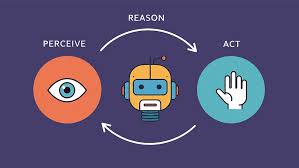
Designing AI agents effectively involves a structured approach, starting with defining clear objectives and aligning them with business needs. It also requires careful data collection and preparation, selecting the right machine learning models, and crafting a robust architecture. Finally, building in feedback loops and prioritizing continuous monitoring and improvement are crucial for success.  Here’s a more detailed breakdown: 1. Define Objectives and Purpose: 2. Data Collection and Preparation: 3. Choose the Right Models and Tools: 4. Design the Agent Architecture: 5. Training and Refinement: 6. Testing and Validation: 7. Deployment, Monitoring, and Iteration: 8. Key Considerations: By following these principles, you can design AI agents that are not only effective but also robust, scalable, and aligned with your business objectives. Like Related Posts Who is Salesforce? Who is Salesforce? Here is their story in their own words. From our inception, we’ve proudly embraced the identity of Read more Salesforce Unites Einstein Analytics with Financial CRM Salesforce has unveiled a comprehensive analytics solution tailored for wealth managers, home office professionals, and retail bankers, merging its Financial Read more AI-Driven Propensity Scores AI plays a crucial role in propensity score estimation as it can discern underlying patterns between treatments and confounding variables Read more Tectonic’s Successful Salesforce Track Record Salesforce Technology Services Integrator – Tectonic has successfully delivered Salesforce in a variety of industries including Public Sector, Hospitality, Manufacturing, Read more
Read More
Salesforce Data Cloud

Salesforce Data Cloud: The Ultimate Guide for Businesses

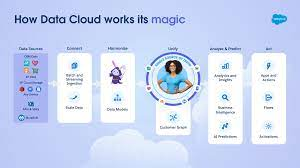
What Is Salesforce Data Cloud? In today’s digital-first world, delivering personalized customer experiences requires trusted, unified, and actionable data. But how can businesses ensure their teams have a single source of truth for customer insights? Enter Salesforce Data Cloud—a next-generation Customer Data Platform (CDP) built natively within the Salesforce ecosystem. Unlike traditional CDPs, Data Cloud unifies real-time customer data across multiple sources, enabling AI-driven automation, analytics, and personalized engagement at scale. If you’re evaluating enterprise CDPs, this guide will help you understand:✔ How Salesforce Data Cloud works✔ Key capabilities & benefits✔ How it differs from traditional CDPs✔ Pricing & whether it’s right for your business Salesforce Data Cloud: A Next-Gen CDP for AI & Automation Formerly known as Salesforce CDP, Data Cloud is a real-time, AI-powered platform that consolidates structured and unstructured data from: It transforms raw data into standardized models, creating a single customer view that fuels AI, segmentation, and automation. How Does Salesforce Data Cloud Work? Unlike legacy CDPs, Data Cloud supports zero-copy data access, meaning you can query external data without moving it, reducing costs and latency. Key Capabilities of Salesforce Data Cloud 1. Real-Time Data Ingestion & Processing 2. AI-Powered Identity Resolution 3. Unified Data Models 4. Dynamic Customer Segmentation 5. Native Integration with Salesforce & Beyond Salesforce Data Cloud vs. Traditional CDPs Feature Salesforce Data Cloud Traditional CDP Integration Native to Salesforce ecosystem Often requires connectors AI & Automation Built-in AI (Einstein) Limited AI capabilities Real-Time Processing Yes Often batch-based Zero-Copy Data Access Yes Rarely supported Pricing Consumption-based (credits) Fixed licensing Top Use Cases for Salesforce Data Cloud ✅ AI-Powered Customer Service ✅ Privacy-First Data Governance ✅ Smarter Sales & Marketing Targeting ✅ Unified Analytics with Tableau Salesforce Data Cloud Pricing Data Cloud uses a consumption-based model: Should You Buy Salesforce Data Cloud? ✔ Yes, if you… ✖ Consider alternatives if… Final Verdict: A Game-Changer for Salesforce Users Salesforce Data Cloud is evolving rapidly, especially with Salesforce’s new partnership with Informatica (enhancing data quality & metadata management). For Salesforce-powered businesses, it’s a must-have to unlock AI, automation, and hyper-personalization. Ready to explore Data Cloud? Contact Tectonic! Like Related Posts Who is Salesforce? Who is Salesforce? Here is their story in their own words. From our inception, we’ve proudly embraced the identity of Read more Salesforce Marketing Cloud Transactional Emails Salesforce Marketing Cloud Transactional Emails are immediate, automated, non-promotional messages crucial to business operations and customer satisfaction, such as order Read more Salesforce Unites Einstein Analytics with Financial CRM Salesforce has unveiled a comprehensive analytics solution tailored for wealth managers, home office professionals, and retail bankers, merging its Financial Read more AI-Driven Propensity Scores AI plays a crucial role in propensity score estimation as it can discern underlying patterns between treatments and confounding variables Read more

Read More
Patient Misidentification

Patient Misidentification

Patient Misidentification: A Costly Challenge for Healthcare—Can the MATCH IT Act Help? The Growing Problem of Patient Misidentification Patient misidentification poses serious risks to interoperability, patient safety, and privacy. Without widely adopted industry standards for patient matching, errors and duplicate records persist, leading to medical mistakes, denied claims, and increased costs. The Financial and Clinical Toll Research highlights the staggering financial impact of patient misidentification: Beyond financial losses, misidentification leads to: Legislative Action: The MATCH IT Act To address these issues, U.S. Representatives Mike Kelly (R-Pa.) and Bill Foster (D-Ill.) reintroduced the Patient Matching and Transparency in Certified Health IT (MATCH IT) Act in March 2025 (originally proposed in February 2024). Key Goals of the MATCH IT Act Industry Support The Patient ID Now coalition—including AHIMA, HIMSS, CHIME, and Intermountain Health—endorses the MATCH IT Act, calling it a critical step toward:✔ Reducing misidentification errors✔ Improving patient privacy✔ Strengthening interoperability The Road Ahead If passed, the MATCH IT Act could transform patient matching by:✅ Setting clear standards for health IT systems✅ Reducing costly errors and claim denials✅ Enhancing patient safety and data exchange As healthcare embraces AI and digital transformation, standardized patient identification is more crucial than ever. Will this legislation be the solution the industry needs? Key Takeaway: Patient misidentification is a billion-dollar problem—but with structured policies like the MATCH IT Act, healthcare may finally see better accuracy, safety, and cost savings. Like Related Posts Who is Salesforce? Who is Salesforce? Here is their story in their own words. From our inception, we’ve proudly embraced the identity of Read more Salesforce Unites Einstein Analytics with Financial CRM Salesforce has unveiled a comprehensive analytics solution tailored for wealth managers, home office professionals, and retail bankers, merging its Financial Read more AI-Driven Propensity Scores AI plays a crucial role in propensity score estimation as it can discern underlying patterns between treatments and confounding variables Read more Tectonic’s Successful Salesforce Track Record Salesforce Technology Services Integrator – Tectonic has successfully delivered Salesforce in a variety of industries including Public Sector, Hospitality, Manufacturing, Read more

Read More
gettectonic.com