

Generative AI Archives - gettectonic.com - Page 33
Sales Enablement in an AI World

Sales Enablement in an AI World

The New Era of AI-Driven Sales Enablement The era of AI-driven sales is upon us. More than 60% of sales and service professionals believe that generative AI will enhance their ability to serve customers effectively. AI-powered tools are already transforming the sales landscape by automating routine tasks and boosting productivity, ultimately driving sales and improving customer experiences. Sales Enablement in an AI World. AI is set to completely reshape the sales function, including the way we train and educate sales teams. Traditional Sales Enablement Historically, organizations have relied on generic sales enablement programs that provided “set it and forget it” content to the entire sales force, regardless of the specific challenges individual sellers faced. While some training was tailored to specific roles, personalizing content at scale was not feasible. Organizations generally expected sellers to learn the same foundational content at the same pace and in the same manner. Enterprises invested significantly in these programs but had little ability to measure the impact of their investments. ROI was often assessed based on whether sales team members completed training courses, rather than on their ability to apply new learnings to close deals. It’s no surprise that sales reps often viewed enablement as a box to check off in the process, not a path to growth. Thanks to AI, that perspective is changing. AI-Powered Enablement in Action AI and data are revolutionizing sales enablement by delivering more personalized and effective training and helping organizations understand the true impact of their investments. Companies can now monitor and adjust enablement programs in real time, using metrics like win rates, pipeline generation, average contract value (ACV), and customer satisfaction to continually refine their programs and drive business results. AI allows sales reps to access enablement programs seamlessly within their daily workflows. It facilitates hyper-personalization by aligning training with an individual’s past performance, strengths, and areas for growth. Organizations can adopt a data-driven approach to identify the challenges individual sellers face and automatically provide personalized guidance to boost productivity and help close specific deals. The Groundwork for AI-Powered Enablement Companies are understandably eager to reap the benefits of AI, but their approach must be thoughtful, outcome-focused, and powered by a robust data strategy. Effective AI-powered sales enablement requires well-connected and organized data. A strong data strategy helps organizations understand what works and what doesn’t in their sales processes. Data enables companies to identify the most effective sales tactics and share these insights with their teams—from targeting the prospects most likely to buy, to crafting compelling offers for specific individuals, to listening for cues that help overcome objections. Companies must adopt a values-driven, human-first approach to integrating AI into their sales and enablement processes. Leaders should proactively communicate that AI is not a replacement for the human connections that drive sales. Instead, AI supports salespeople by offering real-time feedback to refine sales pitches, follow-up notes, and perform mundane tasks, thereby giving sales teams more time and resources to excel in understanding customer pain points, presenting solutions, and building trust. To thrive in this AI-powered world, organizations must invest in both AI technology and the continued development of their people, especially the teams directly impacting the bottom line. Sales Enablement in an AI World isn’t the future. It is here. Like Related Posts Who is Salesforce? Who is Salesforce? Here is their story in their own words. From our inception, we’ve proudly embraced the identity of Read more Salesforce Marketing Cloud Transactional Emails Salesforce Marketing Cloud Transactional Emails are immediate, automated, non-promotional messages crucial to business operations and customer satisfaction, such as order Read more Salesforce Unites Einstein Analytics with Financial CRM Salesforce has unveiled a comprehensive analytics solution tailored for wealth managers, home office professionals, and retail bankers, merging its Financial Read more AI-Driven Propensity Scores AI plays a crucial role in propensity score estimation as it can discern underlying patterns between treatments and confounding variables Read more
Read More
Salesforce Net Zero Enhancements

Salesforce Net Zero Enhancements

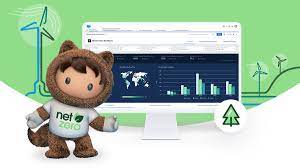
Salesforce AI Innovations Boost ESG Reporting in Net Zero Cloud Powered by Einstein, Net Zero Cloud’s generative AI capabilities will suggest reliable, auto-generated responses for ESG reports – Salesforce Net Zero Enhancements CSRD Report Builder automates reporting, and Materiality Assessment empowers ESG managers to identify most relevant ESG topics Global sports brand Rossignol Group uses Net Zero Cloud to track its carbon footprint; joins 1t.org with commitment to plant 100,000 trees Today at Dreamforce 2023, Salesforce unveiled new Einstein features for Net Zero Cloud to make corporate environmental, social, and governance (ESG) reporting easier for companies as they navigate a rapidly evolving regulatory landscape.  Beginning in 2024, approximately 50,000 companies — including many large, multinationals based in the United States — must comply with the Corporate Sustainability Reporting Directive (CSRD). This includes disclosing both climate-related financial risks and societal impact, along with scope 3 or the emissions generated by a company’s supply chain. The company also introduced two new capabilities for Net Zero Cloud — CSRD Report Builder and Materiality Assessment. The Report Builder automates CSRD report generation, and Materiality Assessment helps organizations determine what is material – both to their business and broader societal impact, the “double materiality” assessment that is a requirement of CSRD. Integrate a complete sustainability management solution into your organization Like Related Posts Who is Salesforce? Who is Salesforce? Here is their story in their own words. From our inception, we’ve proudly embraced the identity of Read more Salesforce Marketing Cloud Transactional Emails Salesforce Marketing Cloud Transactional Emails are immediate, automated, non-promotional messages crucial to business operations and customer satisfaction, such as order Read more Salesforce Unites Einstein Analytics with Financial CRM Salesforce has unveiled a comprehensive analytics solution tailored for wealth managers, home office professionals, and retail bankers, merging its Financial Read more AI-Driven Propensity Scores AI plays a crucial role in propensity score estimation as it can discern underlying patterns between treatments and confounding variables Read more

Read More
Knowledge Management for Agents

Knowledge Management for Agents

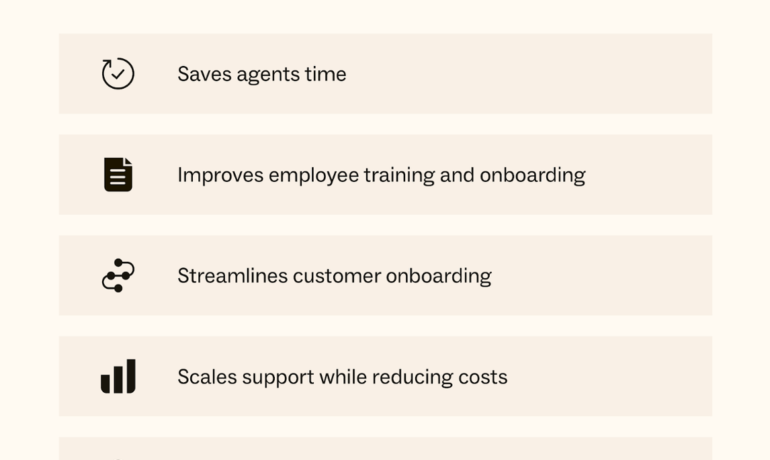
Consider the invaluable contributions of your most seasoned and high-performing agents and field service technicians to your organization. They possess an in-depth understanding of your product or service, efficiently tackle common customer issues, and can transform challenging interactions into positive ones. These experienced professionals also serve as mentors to junior staff and become indispensable sources of information when your knowledge management for agents system lacks organization. Now, contemplate the potential repercussions if these individuals were to leave your company. The departure of their knowledge and expertise puts customer satisfaction in jeopardy. The recruitment of replacement talent requires substantial time, money, and resources. Moreover, the onboarding process for new hires entails a significant time investment. The stakes for your business are high. Imagine if you could capture and preserve the expertise of your employees, making it easily accessible to you and others. The good news is that, to a large extent, you can achieve this through strategic knowledge management. Let’s dig into the details. What is knowledge management? Knowledge management involves capturing, organizing, and distributing critical information for customer support. Ideally, this knowledge resides in a centralized digital library accessible to agents, field service technicians, and customers from any location, ensuring prompt and high-quality service. However, in many companies, frequently asked questions (FAQs) and knowledge base articles guide contact center agents and field service technicians. Yet, the challenge lies in the timely update of this information, potential duplications, and undocumented topics. Much of the knowledge essential for effective customer support is often stored solely in employees’ minds or dispersed across multiple systems and devices. Leveraging technology and artificial intelligence (AI) allows you to swiftly capture and share this knowledge across your team. Generative AI can draft knowledge articles, subject to your company’s review and approval process, streamlining the process and keeping pace with the ever-evolving landscape of knowledge needed for quality customer support. Additionally, the resources created can be shared in your self-service portal, enabling customers to find answers independently and contributing to cost savings. Bonus features like Einstein Search Answers utilize knowledge-grounded generative AI to surface relevant responses in your self-service portal or agent console. Types of knowledge to capture Before documenting institutional knowledge, consider the various types employed by agents and field service workers: Benefits of knowledge management Documenting, centralizing, and consistently updating institutional knowledge yields numerous benefits, including: Knowledge management use cases and examples While your organization likely employs some form of knowledge management, there’s room for improvement. Examples of knowledge management applications include: How to get started with knowledge management Embark on your knowledge management journey with these steps: In conclusion, knowledge management is foundational for successful customer support operations and plays a crucial role in maximizing the benefits of AI. It offers a structured approach to handling information and proves to be a worthwhile investment, enhancing team capabilities, customer satisfaction, operational efficiency, and employee knowledge retention. Like Related Posts Who is Salesforce? Who is Salesforce? Here is their story in their own words. From our inception, we’ve proudly embraced the identity of Read more Salesforce Marketing Cloud Transactional Emails Salesforce Marketing Cloud Transactional Emails are immediate, automated, non-promotional messages crucial to business operations and customer satisfaction, such as order Read more Salesforce Unites Einstein Analytics with Financial CRM Salesforce has unveiled a comprehensive analytics solution tailored for wealth managers, home office professionals, and retail bankers, merging its Financial Read more AI-Driven Propensity Scores AI plays a crucial role in propensity score estimation as it can discern underlying patterns between treatments and confounding variables Read more

Read More
Swapping Human Labor for AI

Swapping Human Labor for AI

Key Considerations for Using Generative AI Generative artificial intelligence offers a wide array of capabilities: compiling meeting agendas, drafting emails, transcribing notes, and even generating code. However, a crucial question often arises: should these tasks be performed by AI? Before Swapping Human Labor for AI, read on. John Horton, an MIT Sloan associate professor and leader of the IDE research group, who specializes in AI labor and online marketplaces, notes that effectively working with AI requires more than just knowing its functions. “It’s not a trivial task, learning how to work well with a machine,” Horton said. “There’s still the challenge of figuring out how to ask good questions or make effective requests.” Since the release of ChatGPT last fall, a powerful AI tool for answering questions, engaging in conversation, and generating text, both businesses and consumers have been exploring its potential. The critical question for employers considering replacing human labor with AI is not whether AI can perform a task but whether integrating AI with human capabilities is worthwhile. For a human-AI interaction to be effective, several factors need to align. Humans must pose the right questions and evaluate the AI’s responses promptly. Horton emphasizes, “Is that going to be more efficient than just having the person do the task directly?” During the 2023 IDE Annual Conference, Horton suggested four key questions to consider when determining the suitability of AI for various tasks: Looking ahead, Horton envisions improvements in AI technology, not only in the models themselves but also in user interfaces that simplify prompting and result evaluation. “It’s easy to imagine these tasks becoming more integrated, making the evaluation process simpler and more automated,” Horton said. In the future, AI could potentially enhance both prompting and evaluation tasks. For further insights, the original article was published on MIT Sloan on August 28, 2023. Like Related Posts Who is Salesforce? Who is Salesforce? Here is their story in their own words. From our inception, we’ve proudly embraced the identity of Read more Salesforce Unites Einstein Analytics with Financial CRM Salesforce has unveiled a comprehensive analytics solution tailored for wealth managers, home office professionals, and retail bankers, merging its Financial Read more AI-Driven Propensity Scores AI plays a crucial role in propensity score estimation as it can discern underlying patterns between treatments and confounding variables Read more Tectonic’s Successful Salesforce Track Record Salesforce Technology Services Integrator – Tectonic has successfully delivered Salesforce in a variety of industries including Public Sector, Hospitality, Manufacturing, Read more
Read More
Einstein in Salesforce

Einstein in Salesforce

Salesforce AI and CRM Evolution Salesforce has long been a leader in customer relationship management (CRM) by pioneering cloud technologies. Recently, the platform has significantly advanced with the integration of generative artificial intelligence (AI) and AI-powered features, thanks to its Einstein technology. Einstein in Salesforce is like a super smart computer overseeing and analyzing the data in your CRM. This guide explores Salesforce’s AI strategy, exploring its specific products and features to help business teams understand and benefit from this technology. Exploring Salesforce’s Advanced AI Features Einstein, Salesforce’s AI technology, powers various advanced features within the platform. This guide will cover these capabilities, provide real-life adoption examples, and discuss their benefits. Additionally, it offers best practices, solutions, and services to facilitate your Einstein implementation. Salesforce’s Comprehensive CRM Solution Salesforce remains a number one in the CRM software world, offering robust solutions for managing relationships across various departments. Specific clouds within Salesforce enable teams to handle marketing, sales, customer service, e-commerce, and more. The platform focuses on customer experience and provides robust data analytics to support decision-making. Enhancements Through Generative AI Salesforce’s generative AI has rapidly enhanced the platform’s automation, workflow management, data analytics, and assistive capabilities for customer management. A prime example is Salesforce Copilot, which aids internal users with outreach and analysis tasks while improving the external user experience. What is Salesforce Einstein? Salesforce Einstein is the first comprehensive AI for CRM, integrating AI technologies to enhance the Customer Success Platform and bring AI to users everywhere. It is seamlessly integrated into many Salesforce products, offering generative AI built specifically for CRM. Key Features of Salesforce Einstein Comprehensive AI Capabilities of Salesforce Einstein Einstein extends its capabilities across the Salesforce CRM platform under the Customer 360 umbrella, enhancing intelligence and providing personalized customer experiences. Key Benefits of Salesforce Einstein Salesforce Einstein helps close deals faster, personalize customer service, understand customer behaviors, target audience segments better, and create personalized shopping experiences. It ensures data protection and privacy through the Einstein Trust Layer, maintaining strong data governance controls. Responsible AI Principles Salesforce is committed to responsible AI principles, ensuring Einstein is trustworthy and safe for every organization. Organizations can select from various principles to ensure ethical AI use in their operations. Implementation of Salesforce Einstein Salesforce Einstein is a powerful AI solution transforming how businesses interact with customers. By leveraging machine learning and data analysis, it personalizes experiences, predicts customer behavior, and automates tasks, boosting sales, enhancing service, and driving growth. As AI evolves, its impact on CRM will continue to grow, making it an indispensable tool for businesses aiming to stay competitive in today’s data-driven landscape. Top 4 Benefits of Salesforce Einstein in an Organization Einstein Essentials Salesforce Einstein and GPT (Generative Pretrained Transformer) technologies represent significant advancements in AI, particularly in CRM and natural language processing. Here’s a brief overview of their relevance and potential intersection: Data Handling and Ethics in Salesforce Salesforce manages a vast amount of customer data, and the ethical handling of this data is crucial. Key considerations include data privacy, secure storage, access controls, compliance with regulations like GDPR and CCPA, and the ethical use of AI and machine learning. It’s important to maintain transparency, avoid biases, and ensure AI models are making ethical decisions. Newest Einstein Features for 2024 In the rapidly evolving ecosystem of Salesforce, AI offers a suite of tools to spark innovation, streamline operations, and provide richer business insights. Explore these potentials and let Einstein AI reshape your work in 2024. Content updated June 2024. Like1 Related Posts Who is Salesforce? Who is Salesforce? Here is their story in their own words. From our inception, we’ve proudly embraced the identity of Read more Salesforce Marketing Cloud Transactional Emails Salesforce Marketing Cloud Transactional Emails are immediate, automated, non-promotional messages crucial to business operations and customer satisfaction, such as order Read more Salesforce Unites Einstein Analytics with Financial CRM Salesforce has unveiled a comprehensive analytics solution tailored for wealth managers, home office professionals, and retail bankers, merging its Financial Read more AI-Driven Propensity Scores AI plays a crucial role in propensity score estimation as it can discern underlying patterns between treatments and confounding variables Read more
Read More
AI Drives Demand for Trusted Data

AI Drives Demand for Trusted Data

The demand for reliable data has long been emphasized due to the ongoing need for real-time personalization and increased business efficiencies. Generative AI is amplifying these requirements, prompting analytics and IT leaders to strengthen their data foundations. AI Drives Demand for Trusted Data and we are on the frontlines. A significant majority (86%) of analytics and IT leaders acknowledge that the effectiveness of AI outputs is contingent on the quality of data inputs. On a positive note, technical leaders express optimism about their current standing. More than one-third of analytics and IT leaders categorize their data maturity as best-in-class, considering factors such as data capabilities, processes, sponsorship, investment, and vision. However, only a small fraction (6%) describe their data maturity as below industry standard or nonexistent. This might indicate the challenge of benchmarking maturity against peers or, at worst, an overestimation of confidence in data strategy and capabilities. Despite generally favorable self-assessments by IT and analytics leaders, a significant majority of business leaders (94%) believe there is untapped potential in deriving more value from their data, signaling the need for improvement. To address this, analytics and IT leaders are prioritizing fundamental aspects such as data quality, enhanced security, and readiness for AI adoption. However, the path to achieving these goals is perceived as challenging. Generative AI represents a substantial leap beyond established technologies like predictive AI, and business leaders are enthusiastic about its potential. A vast majority (91%) consider generative AI to offer significant advantages, with compelling use-cases ranging from content creation to software development. Despite its relative novelty, generative AI is advancing rapidly, and more than three-quarters of business leaders express concerns about missing out on its benefits. In particular, marketing leaders are apprehensive that their companies are falling behind in fully harnessing generative AI in workflows, with 88% sharing this concern. Like Related Posts Who is Salesforce? Who is Salesforce? Here is their story in their own words. From our inception, we’ve proudly embraced the identity of Read more Salesforce Marketing Cloud Transactional Emails Salesforce Marketing Cloud Transactional Emails are immediate, automated, non-promotional messages crucial to business operations and customer satisfaction, such as order Read more Salesforce Unites Einstein Analytics with Financial CRM Salesforce has unveiled a comprehensive analytics solution tailored for wealth managers, home office professionals, and retail bankers, merging its Financial Read more AI-Driven Propensity Scores AI plays a crucial role in propensity score estimation as it can discern underlying patterns between treatments and confounding variables Read more
Read More
Salesforce Certified Healthcare Technology

Salesforce Certified Healthcare Technology

As a Salesforce Certified healthcare technology consultant, Tectonic brings extensive experience across both large and small healthcare settings, witnessing firsthand the transformative impact of Salesforce Health Cloud. Having contributed to the development of an EHR and RCM application on Salesforce, Tectonic understands the substantial benefits this platform offers when integrated with existing technologies such as Electronic Health Records (EHR), claims data sources, and Patient Population Health Management systems. Enhanced Patient Population Health Management: Salesforce Health Cloud equips healthcare providers with tools to effectively manage Patient Population Health by gathering, analyzing, and acting on health data. Providers can leverage these insights to identify at-risk populations, design targeted interventions, and improve patient outcomes. Optimized Provider Referral Patterning: By integrating Salesforce Health Cloud with claims data, Tectonic enables providers to analyze referral patterns. This helps healthcare organizations collaborate more effectively with physicians based on their specialties, insurance networks, and common CPT codes, ultimately enhancing patient care and strengthening provider networks. AI-Enabled Contact Service Centers for Better Patient Care: Integrating Generative AI with Salesforce Health Cloud allows healthcare providers to deliver personalized, responsive services. By connecting Billing, EHR, and Patient Population Health Management platforms, Tectonic reduces administrative burdens, streamlines communication, and improves patient satisfaction in contact service centers. Business Development Liaison Route Planning: Using Salesforce Maps combined with 1st and 3rd party claims data, Tectonic enables business development teams to generate optimized, daily route plans within seconds. These plans allow healthcare representatives to visit the right providers based on location, specialty, referral volumes, and other key preferences. Strategic Territory Expansion and Planning: Salesforce Health Cloud empowers healthcare organizations to strategically plan for territory expansion. Through analyzing geographic claims data and patient demographics, Tectonic helps organizations make data-driven decisions on resource allocation and service growth. Extending Functionality with Salesforce AppExchange and Salesforce Health Cloud: The Salesforce AppExchange offers a wide array of applications that expand Health Cloud’s core capabilities. These apps can boost patient engagement, care coordination, and advanced analytics. In addition, Tectonic leverages multiple health and life sciences process, which integrates Revenue Cycle Management (RCM) and EHR functionalities, enabling providers to manage billing, claims, and clinical data seamlessly within one platform, among many other features. Conclusion: Salesforce Health Cloud, when combined with Tectonic‘s expertise and solutions like payer and provider processes, becomes a powerful asset for healthcare providers. By integrating Health Cloud into existing technology stacks and utilizing AppExchange apps, healthcare organizations can improve patient care, streamline operations, and strategically plan for growth in the ever-evolving healthcare landscape. Content updated September 2024. Like Related Posts Who is Salesforce? Who is Salesforce? Here is their story in their own words. From our inception, we’ve proudly embraced the identity of Read more Salesforce Marketing Cloud Transactional Emails Salesforce Marketing Cloud Transactional Emails are immediate, automated, non-promotional messages crucial to business operations and customer satisfaction, such as order Read more Salesforce Unites Einstein Analytics with Financial CRM Salesforce has unveiled a comprehensive analytics solution tailored for wealth managers, home office professionals, and retail bankers, merging its Financial Read more AI-Driven Propensity Scores AI plays a crucial role in propensity score estimation as it can discern underlying patterns between treatments and confounding variables Read more
Read More
Salesforce Einstein and Einstein Automate

Einstein Trust

Generative AI, Salesforce, and the Commitment to Trust The excitement surrounding generative AI is palpable as it unlocks new dimensions of creativity for individuals and promises significant productivity gains for businesses. Engaging with generative AI can be a great experience, whether creating superhero versions of your pets with Midjourney or crafting pirate-themed poems using ChatGPT. According to Salesforce research, employees anticipate saving an average of 5 hours per week through the adoption of generative AI, translating to a substantial monthly time gain for full-time workers. Whether designing content for sales and marketing or creating a cute version of a beloved story, generative AI is a tool that helps users create content faster. However, amidst the enthusiasm, questions arise, including concerns about the security and privacy of data. Users ponder how to leverage generative AI tools while safeguarding their own and their customers’ data. Questions also revolve around the transparency of data collection practices by different generative AI providers and ensuring that personal or company data is not inadvertently used to train AI models. Additionally, there’s a need for assurance regarding the accuracy, impartiality, and reliability of AI-generated responses. Salesforce has been at the forefront of addressing these concerns, having embraced artificial intelligence for nearly a decade. The Einstein platform, introduced in 2016, marked Salesforce’s foray into predictive AI, followed by investments in large language models (LLMs) in 2018. The company has diligently worked on generative AI solutions to enhance data utilization and productivity for their customers. The Einstein Trust Layer is designed with private, zero-retention architecture. Emphasizing the value of Trust, Salesforce aims to deliver not just technological capabilities but also a responsible, accountable, transparent, empowering, and inclusive approach. The Einstein Trust Layer represents a pivotal development in ensuring the security of generative AI within Salesforce’s offerings. The Einstein Trust Layer is designed to enhance the security of generative AI by seamlessly integrating data and privacy controls into the end-user experience. These controls, forming gateways and retrieval mechanisms, enable the delivery of AI securely grounded in customer and company data, mitigating potential security risks. The Trust Layer incorporates features such as secure data retrieval, dynamic grounding, data masking, zero data retention, toxic language detection, and an audit trail, all aimed at protecting data and ensuring the appropriateness and accuracy of AI-generated content. Salesforce proactively provided the ability for any admin to control how prompt inputs and outputs are generated, including reassurance over data privacy and reducing toxicity. This innovative approach allows customers to leverage the benefits of generative AI without compromising data security and privacy controls. The Trust Layer acts as a safeguard, facilitating secure access to various LLMs, both within and outside Salesforce, for diverse business use cases, including sales emails, work summaries, and service replies in contact centers. Through these measures, Salesforce underscores its commitment to building the most secure generative AI in the industry. Generating content within Salesforce can be achieved through three methods: CRM Solutions: Einstein Copilot Studio: Einstein LLM Generations API: An overarching feature of these AI capabilities is that every Language Model (LLM) generation is meticulously crafted through the Trust Layer, ensuring reliability and security. At Tectonic, we look forward to helping you embrace and utilize generative AI with Einstein save time. Like1 Related Posts Who is Salesforce? Who is Salesforce? Here is their story in their own words. From our inception, we’ve proudly embraced the identity of Read more Salesforce Marketing Cloud Transactional Emails Salesforce Marketing Cloud Transactional Emails are immediate, automated, non-promotional messages crucial to business operations and customer satisfaction, such as order Read more Salesforce Unites Einstein Analytics with Financial CRM Salesforce has unveiled a comprehensive analytics solution tailored for wealth managers, home office professionals, and retail bankers, merging its Financial Read more AI-Driven Propensity Scores AI plays a crucial role in propensity score estimation as it can discern underlying patterns between treatments and confounding variables Read more
Read More
Salesforce Chat GPT

What’s Happening with ChatGPT and Salesforce

ChatGPT and Salesforce The integration of ChatGPT with Salesforce presents an opportunity to streamline organizational processes, resulting in significant time savings. This integration not only enhances CRM data management with generative AI but also takes the customer experience to new heights. Integration Process: To integrate ChatGPT with Salesforce, the typical process involves creating an account on the OpenAI platform and generating an API key. These steps ensure successful integration by providing API access and authentication credentials. It’s crucial to treat the API key with the same security measures as a password to safeguard the integration. Salesforce and OpenAI Collaboration: While Salesforce offers access to AI through its Einstein GPT suite of products, Salesforce Admins and Developers have also begun directly integrating with OpenAI’s APIs and various AppExchange apps. They are incorporating these tools into their offerings to introduce new AI-powered features, enhancing their platforms’ capabilities. Role of ChatGPT and Salesforce Admins: ChatGPT does not aim to replace Salesforce Admins but rather to augment their effectiveness and productivity. Admins with strong analytical and administrative skills can leverage ChatGPT to expedite configuration tasks. However, mastering the collaboration with ChatGPT is essential to enhance the quality of results. Understanding ChatGPT: ChatGPT, developed by OpenAI, represents a breakthrough in AI beyond conventional chatbots. It operates on the OpenAI GPT-3.5 family of large language models, incorporating both supervised and reinforcement learning techniques. Backed by OpenAI, ChatGPT employs natural language processing (NLP) to interact conversationally, mirroring human dialogue. OpenAI, founded in San Francisco, boasts substantial support from industry leaders like Microsoft. OpenAI and GPT-4: OpenAI recently unveiled GPT-4, the latest iteration of its popular ChatGPT model. GPT-4 boasts enhanced capabilities, including image processing and increased word processing capacity. With millions of users since its launch, ChatGPT continues to evolve, offering unparalleled NLP functionality. Top Use Cases for ChatGPT in Salesforce: Explore the potential of ChatGPT and Salesforce with features and scenarios, including natural language processing, chatbots, predictive sales, personalized communication, and analysis of conversational data. Einstein GPT: Salesforce introduces Einstein GPT, the world’s first generative AI for CRM. Einstein GPT enables the generation of tailored content from CRM data, ensuring relevance in every interaction, be it emails, reports, knowledge articles, or code snippets. Community Insights: As the AI landscape, particularly ChatGPT, continues to evolve, it’s essential to understand its implications for the Salesforce ecosystem. The Salesforce community acknowledges the power of ChatGPT as a sophisticated chatbot built on advanced AI technology, poised to revolutionize various Salesforce roles and experiences. What is Salesforce doing with ChatGPT? The integration between ChatGPT and Salesforce can optimize a significant portion of organizational processes, resulting in considerable time savings. This not only enhances CRM data management, now powered by generative AI, but also elevates the customer experience to a new level. Can we integrate ChatGPT with Salesforce? This typically involves creating an account on the OpenAI platform and generating an API key. To set up your API access and authentication credentials for a successful ChatGPT for Salesforce integration, follow the steps below. Treat your API key like a password to protect the security of your integration. Is Salesforce using OpenAI? While Salesforce enables customers to access it via its Einstein GPT suite of products, Salesforce Admins and Developers have also started integrating directly with OpenAI’s APIs and the many AppExchange apps. They are now embedding it into their offerings to deliver new AI-powered features. ChatGPT has shown the world the potential of AI beyond simple chatbots. Join Tectonic on the AI journey and learn about How to use ChatGPT for Salesforce, Its use cases, Integration and how you can implement it in Salesforce. Salesforce’s new marketing message is AI + Data + CRM. It all adds up to customer magic. At the heart of this magic is Generative AI or GPT, not ChatGPT. Of course, AI advancements will mean very different things across the wide variety of Salesforce roles and day-to-day experiences. With more and more “GPT” tools being launched each week, how is the Salesforce community using the Chat variety in their day-to-day roles, and how do they see it evolving over the coming months and years? ChatGPT is nothing more than a chatbot, akin to Einstein bots. However, it’s a powerful one! Built on the OpenAI GPT-3.5 family of large language models and both supervised and reinforcement learning techniques, ChatGPT was trained on a vast amount of internet text with a cutoff in January 2022. It has been optimized for natural language processing tasks such as text generation, question answering, translation, and text classification. The technology behind ChatGPT is advanced and continues to evolve, relying on machine learning and deep learning techniques. Like Related Posts Who is Salesforce? Who is Salesforce? Here is their story in their own words. From our inception, we’ve proudly embraced the identity of Read more Salesforce Marketing Cloud Transactional Emails Salesforce Marketing Cloud Transactional Emails are immediate, automated, non-promotional messages crucial to business operations and customer satisfaction, such as order Read more Salesforce Unites Einstein Analytics with Financial CRM Salesforce has unveiled a comprehensive analytics solution tailored for wealth managers, home office professionals, and retail bankers, merging its Financial Read more AI-Driven Propensity Scores AI plays a crucial role in propensity score estimation as it can discern underlying patterns between treatments and confounding variables Read more
Read More
what is tableau gpt

What is Tableau GPT

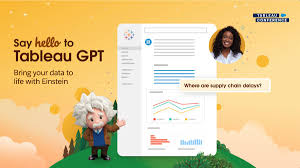
Tableau GPT is a suite of AI-powered features within the Tableau platform designed to simplify and democratize data analysis. It leverages generative AI to automate tasks, generate insights, and make data more accessible to a wider range of users, including those with less technical expertise.  Key features and capabilities of Tableau GPT: How Tableau GPT benefits users: Like Related Posts Who is Salesforce? Who is Salesforce? Here is their story in their own words. From our inception, we’ve proudly embraced the identity of Read more Salesforce Unites Einstein Analytics with Financial CRM Salesforce has unveiled a comprehensive analytics solution tailored for wealth managers, home office professionals, and retail bankers, merging its Financial Read more AI-Driven Propensity Scores AI plays a crucial role in propensity score estimation as it can discern underlying patterns between treatments and confounding variables Read more Tectonic’s Successful Salesforce Track Record Salesforce Technology Services Integrator – Tectonic has successfully delivered Salesforce in a variety of industries including Public Sector, Hospitality, Manufacturing, Read more

Read More
Tools to Liberate Salesforce Data

Caring For Utility Customers

Have you ever considered what your utility customers go through when trying to resolve an issue? Imagine being a customer facing a higher-than-expected bill. You navigate the website for answers but find none. Frustrated, you call customer service, enduring the automated phone system and long hold times. Once connected, you must repeat your information and wait while the agent figures out what you couldn’t. Eventually, the agent informs you that your bill is high because you used more energy last month and therefore still owe the billed amount. What you don’t see is the agent scrambling through multiple screens and systems to understand the bill change. Knowing the customer’s past billing history, recent weather conditions, or potential meter issues would help immensely. Lacking the necessary information frustrates customers and flusters agents. However, with artificial intelligence (AI), this experience can be greatly improved. Enter Artificial Intelligence As a utility company, each customer call adds up, and inefficient processes prolong call times and slow resolutions, impacting satisfaction. Utilities leveraging predictive analytics and generative AI are transforming the customer experience. By integrating AI into customer service, you can make the customer experience more intuitive and less frustrating. Internally, AI simplifies operations, reduces costs, and improves satisfaction for both employees and customers. What AI Can Do for Your Utility’s Customer Service AI’s capability to analyze vast amounts of data aligns perfectly with utilities’ needs — from historical usage and weather data to detecting unusual consumption spikes that often trigger customer service calls. AI can proactively send personalized notifications to customers explaining likely reasons for higher consumption before their bill arrives. It can also offer individualized recommendations and links to relevant services, programs, or rate plans, preventing calls and increasing engagement in cost-saving utility programs. Virtual assistants on your website and mobile app can understand customer questions, provide clear explanations, and deliver instant, accurate responses in natural language. AI in Utilities for Customer Service in Action Consider this scenario: as a customer, you call customer service and are greeted by a virtual agent that validates your identity and attempts to troubleshoot your issue. If unsuccessful, it transfers you to a live agent. Before connecting, the live agent sees all your relevant customer details, including what you’ve already tried on the web or mobile app. Generative AI supports the agent with a script and guides them in diagnosing and solving your issue. At the end of the call, AI drafts a call summary, updates relevant knowledge articles, and creates a follow-up email with links to recommended programs or services. Proactive communication with clear, detailed information reduces frustration and confusion, potentially resolving issues without needing a live agent. This AI-driven support enhances customer satisfaction and engagement. For the utility, AI-driven support reduces call volume, improves agent effectiveness, speeds up call resolution, lowers operational costs, and boosts agent satisfaction. Ready to Dip Your Toe into AI? We’re Here for You Embracing AI not only addresses immediate challenges but also sets the stage for a more efficient and customer-centric future in the utilities sector, creating a win-win scenario for both customers and utility companies. With AI-powered tools like Salesforce Energy and Utilities Cloud, you can recommend next best actions, provide knowledge articles to support agents and customers, and deploy chatbots for better online self-service options. These capabilities improve customer service and key performance indicators (KPIs). Implementing AI in customer service might seem daunting. Here are some initial steps to help you get started: Feeling overwhelmed? Don’t worry — we have Professional Services and AI Coaches to guide you every step of the way. Your AI journey will be structured, supported, and geared towards tangible success. Let’s embark on this journey together, enhancing efficiency, customer satisfaction, and sustainable growth in the utilities sector. Content updated August 1014. Like Related Posts Who is Salesforce? Who is Salesforce? Here is their story in their own words. From our inception, we’ve proudly embraced the identity of Read more Salesforce Marketing Cloud Transactional Emails Salesforce Marketing Cloud Transactional Emails are immediate, automated, non-promotional messages crucial to business operations and customer satisfaction, such as order Read more Salesforce Unites Einstein Analytics with Financial CRM Salesforce has unveiled a comprehensive analytics solution tailored for wealth managers, home office professionals, and retail bankers, merging its Financial Read more AI-Driven Propensity Scores AI plays a crucial role in propensity score estimation as it can discern underlying patterns between treatments and confounding variables Read more
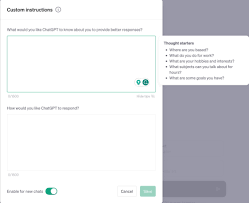
Read More
Need for AI Workers Never So Great

Need for AI Workers Never So Great

Salesforce’s UK & Ireland chief, Zahra Bahrololoumi, emphasized the urgent need for companies to train their staff on the effective and safe use of artificial intelligence tools, speaking to City A.M. The Need for AI Workers Never So Great. Bahrololoumi highlighted the increasing demand for “highly skilled people” capable of utilizing trustworthy data sources and protecting sensitive information, noting that this need has “never been more clear nor urgent.” Her comments coincide with the release of a Salesforce survey revealing that over 60 percent of individuals who use or plan to use generative AI at work feel they lack the skills to do so “accurately and safely.” Additionally, 70 percent of workers believe their employers are not fully leveraging generative AI’s potential, and more than half desire proper AI training. Salesforce, which also owns the business messaging platform Slack, has urged the government to enhance national access to digital skills training. The survey, conducted in collaboration with YouGov, included 1,384 full-time UK employees from various industries. Artificial intelligence (AI) is used in many aspects of life, including the workplace, retail, and healthcare. AI can help people understand how technology can improve their lives through products and services. AI skills can also set you apart at an interview. Like Related Posts Who is Salesforce? Who is Salesforce? Here is their story in their own words. From our inception, we’ve proudly embraced the identity of Read more Salesforce Marketing Cloud Transactional Emails Salesforce Marketing Cloud Transactional Emails are immediate, automated, non-promotional messages crucial to business operations and customer satisfaction, such as order Read more Salesforce Unites Einstein Analytics with Financial CRM Salesforce has unveiled a comprehensive analytics solution tailored for wealth managers, home office professionals, and retail bankers, merging its Financial Read more AI-Driven Propensity Scores AI plays a crucial role in propensity score estimation as it can discern underlying patterns between treatments and confounding variables Read more

Read More
ChatGPT Announces Custom Instructions

ChatGPT Announces Custom Instructions

We’re rolling out custom instructions to empower you to tailor ChatGPT to better suit your needs. This feature will be accessible in beta starting today with the Plus plan, with availability expanding to all users over the next few weeks. Custom instructions enable you to incorporate preferences or requirements that you want ChatGPT to consider when generating responses. Based on feedback about the inconvenience of starting each ChatGPT conversation from scratch, we’ve engaged with users across 22 countries to grasp the crucial role of steerability in enabling our models to effectively adapt to diverse contexts and individual needs. Moving forward, ChatGPT will take your custom instructions into account in every conversation. The model will integrate these instructions into its responses, eliminating the need for you to repeat preferences or information in each interaction. For instance, a teacher designing a lesson plan no longer needs to reiterate that they’re teaching 3rd-grade science. Similarly, a developer preferring efficient code in a language other than Python can express it once, and ChatGPT will understand. Even tasks like grocery shopping for a large family become more seamless, with the model considering specifics like needing 6 servings in the grocery list. Plugins Incorporating instructions can also enhance your experience with plugins by providing relevant information to the plugins you utilize. For example, if you specify your city in your instructions and use a restaurant reservation plugin, ChatGPT might include your city when calling the plugin. Beta During the beta phase, ChatGPT may not always interpret custom instructions flawlessly—it might occasionally overlook instructions or apply them incorrectly. Safety We’ve adjusted our safety measures to accommodate the new ways users can instruct the model. For instance, our Moderation API is designed to prevent instructions from being saved if they violate our Usage Policies. Additionally, the model can decline or disregard instructions that lead to responses violating our policies. Privacy While we may leverage your custom instructions to enhance model performance, you can opt out of this via your data controls. Similar to ChatGPT conversations, we take steps to remove personal identifiers from custom instructions before using them to enhance model performance. Learn more about how we utilize conversations to improve model performance and your options in our Help Center. Like Related Posts AI-Driven Propensity Scores AI plays a crucial role in propensity score estimation as it can discern underlying patterns between treatments and confounding variables Read more Einstein Relationship Insights ERI, serves as an AI-powered research assistant, enhancing sales processes. ERI operates as a desktop plugin with a browser extension, Read more Joined Datasets in B2B Marketing Analytics B2BMA empowers users to generate additional datasets using the data manager. This process involves creating datasets in various ways, such Read more AI in Sales Enablement automation, and personalization to enhance sales processes, increase customer engagement, and drive revenue growth. Companies are working with AI to Read more

Read More
Generative AI Regulations

Salesforce, Data Science, and Generative AI

Is Salesforce utilized in the field of data science? Salesforce data science and Generative AI Data Science-as-a-Service (DSaaS) democratizes access to machine learning through the Salesforce Data Management Platform, enabling widespread adoption of data science capabilities. Utilizing Salesforce for Data Science Empowerment: The integration of Salesforce into data science represents a transformative endeavor aimed at democratizing machine learning through Data Science-as-a-Service (DSaaS). By leveraging the Salesforce Data Management Platform, the objective is to empower individuals across various domains with the potential of data science. Democratization of Data Science: DSaaS introduces a versatile workbench that capitalizes on machine learning to refine segmentation, enhance activation strategies, and uncover deeper insights. Through robust analytics tools, users can gain profound insights into individual customer behaviors. Supported by a formidable 20-petabyte analytics environment and a real-time big data infrastructure, data-driven analytics are taken to unprecedented levels. Harnessing Modeling Resources: Data owners enjoy the flexibility to harness their data, algorithms, and models either within the Salesforce Data Management Platform or within their independent environments. Spearheading this initiative is the Salesforce Unified Intelligence Platform (UIP) team, constructing a centralized data intelligence platform aimed at enriching business insights, enhancing user experience, improving product quality, and optimizing operational efficiency, all while upholding the core value of trust embedded in the Salesforce platform. Salesforce Data Science and Generative AI Emphasizing Security and Design: Security stands as a cornerstone of the Salesforce platform, with the UIP’s evolution tracing back to a transition from a colossal Hadoop cluster to UIP in public clouds. The architectural journey prioritized data classification early on, engaging in meticulous reviews with legal and security experts to classify data intended for storage within UIP. Adopting the “zero-trust infrastructure” principle, the architecture is fortified against both internal and external threats, ensuring robust defense mechanisms against potential data breaches. Unlocking Data Science Potential through DSaaS: DSaaS serves as a catalyst in democratizing machine learning through the Salesforce Data Management Platform, spotlighting the pivotal role of data science in fostering generative AI and cultivating trustworthy AI. Data scientists play a critical role in ensuring data quality and organization to steer clear of issues such as biased or irrelevant outcomes. Navigating Data Science Challenges: Despite the transformative potential of data science, businesses encounter various challenges including managing diverse data sources, scarcity of skilled professionals, data privacy and security concerns, data cleansing complexities, and effectively communicating findings to non-technical stakeholders. Proposed Solutions: Addressing these challenges involves leveraging data integration tools, investing in the upskilling and reskilling of data professionals, implementing robust data privacy measures, employing data governance tools for data cleansing, and honing communication skills for reporting findings to non-technical stakeholders. The success of generative AI hinges on well-organized data, and data science is pivotal in achieving this. Whether utilizing AI tools built with the expertise of data scientists or building a data science team, businesses can navigate the evolving landscape of AI and data science with confidence. Content updated March 2024. Like1 Related Posts Who is Salesforce? Who is Salesforce? Here is their story in their own words. From our inception, we’ve proudly embraced the identity of Read more Salesforce Marketing Cloud Transactional Emails Salesforce Marketing Cloud Transactional Emails are immediate, automated, non-promotional messages crucial to business operations and customer satisfaction, such as order Read more Salesforce Unites Einstein Analytics with Financial CRM Salesforce has unveiled a comprehensive analytics solution tailored for wealth managers, home office professionals, and retail bankers, merging its Financial Read more AI-Driven Propensity Scores AI plays a crucial role in propensity score estimation as it can discern underlying patterns between treatments and confounding variables Read more

Read More
Use Salesforce Einstein Copilot

Marketing GPT and Commerce GPT Announcement

Salesforce Introduces Marketing GPT and Commerce GPT to Revolutionize Personalized Campaigns and Shopping Experiences with Generative AI San Francisco — June 7, 2023 — Salesforce (NYSE: CRM), the global CRM leader, announced today at Connections its latest innovations, Marketing GPT and Commerce GPT, which combine generative AI with real-time data from Data Cloud. These groundbreaking products aim to transform how businesses engage with customers by delivering personalized experiences across every touchpoint. Significance: Generative AI is driving efficiency and productivity for businesses, with 60% of marketers acknowledging its transformative potential. However, concerns about accuracy and quality remain prevalent, highlighting the importance of trusted customer data for effective generative AI implementation. What’s new: Marketing GPT empowers marketers to create personalized, relevant experiences using generative AI and trusted first-party data from Data Cloud. With Marketing GPT and Data Cloud, marketers can: Commerce GPT enables companies to deliver customized shopping experiences throughout the buyer’s journey with auto-generated insights and recommendations based on unified real-time data from Data Cloud. With Commerce GPT and Data Cloud, brands can: Salesforce partners like DEPT®, Media.Monks, NeuraFlash, and Slalom are building a generative AI ecosystem with new accelerators, language models, and integrations to simplify Marketing GPT and Commerce GPT implementation for businesses. Soundbites: Availability: Like1 Related Posts Who is Salesforce? Who is Salesforce? Here is their story in their own words. From our inception, we’ve proudly embraced the identity of Read more Salesforce Marketing Cloud Transactional Emails Salesforce Marketing Cloud Transactional Emails are immediate, automated, non-promotional messages crucial to business operations and customer satisfaction, such as order Read more Salesforce Unites Einstein Analytics with Financial CRM Salesforce has unveiled a comprehensive analytics solution tailored for wealth managers, home office professionals, and retail bankers, merging its Financial Read more AI-Driven Propensity Scores AI plays a crucial role in propensity score estimation as it can discern underlying patterns between treatments and confounding variables Read more

Read More
gettectonic.com