Generative AI Archives - gettectonic.com - Page 34
Benioff Dreams of AI Making Messaging Intelligent

Benioff Dreams of AI Making Messaging Intelligent

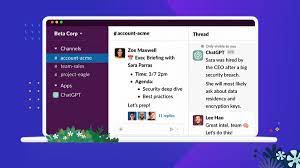
During the company’s recent earnings call, Salesforce CEO Marc Benioff spoke about the “revolutionary” impacts of generative AI, emphasizing the immense potential it holds for the tech industry. Benioff Dreams of AI Making Messaging Intelligent. Benioff highlighted Salesforce’s integration of OpenAI’s ChatGPT platform into Slack, the workplace messaging app owned by Salesforce. This integration aims to enhance Slack’s capabilities by enabling features such as conversation summarization, research assistance, and message drafting directly within the platform. Benioff expressed his vision for Slack to become intelligent itself, leveraging the wealth of data stored within the platform. He emphasized the transformative potential of generative AI in providing intelligent support to users, potentially revolutionizing customer service interactions and business operations. Salesforce’s clients, including Gucci, are already leveraging AI to enhance customer service experiences, reflecting the growing adoption of AI-driven solutions across various industries. Generative AI offers benefits such as time-saving automation of routine tasks, efficient research gathering, and concise information delivery, benefiting individuals in personal, professional, and academic contexts. However, concerns regarding the ethical implications of generative AI have also surfaced, including issues related to deepfake images, bias, and potential job displacement. Some advocate for stricter regulation and careful assessment of AI’s risks before further development. Benioff Dreams of AI Making Messaging Intelligent Despite these concerns, Benioff remains optimistic about the transformative potential of generative AI, describing it as a revolution that will reshape the world in unprecedented ways. He believes that we are only at the beginning of this AI revolution, with much more innovation and transformation yet to come. Like Related Posts Who is Salesforce? Who is Salesforce? Here is their story in their own words. From our inception, we’ve proudly embraced the identity of Read more Salesforce Marketing Cloud Transactional Emails Salesforce Marketing Cloud Transactional Emails are immediate, automated, non-promotional messages crucial to business operations and customer satisfaction, such as order Read more Salesforce Unites Einstein Analytics with Financial CRM Salesforce has unveiled a comprehensive analytics solution tailored for wealth managers, home office professionals, and retail bankers, merging its Financial Read more AI-Driven Propensity Scores AI plays a crucial role in propensity score estimation as it can discern underlying patterns between treatments and confounding variables Read more

Read More
Tableau Pulse and Tableau GPT

Announcing Tableau Pulse and Tableau GPT

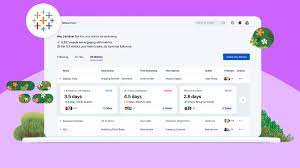
It’s fair to say that many are familiar with ChatGPT, the groundbreaking Large Language Model from OpenAI that has transformed how we work and interact with AI. At TC 2023, Tableau announced a new tool called Tableau GPT. But what exactly is Tableau GPT, and how does it fit into Tableau’s suite of products? Announcing Tableau Pulse and Tableau GPT. Tableau GPT Tableau GPT is an assistant leveraging the advanced capabilities of generative AI to simplify and democratize data analysis. Built from Einstein GPT, a Salesforce product developed in collaboration with OpenAI, Tableau GPT integrates generative AI into Tableau’s user experience. This integration aims to help users work smarter, learn faster, and communicate more effectively. During the Devs on Stage segment of the keynote at TC, Matthew Miller, Senior Director of Product Management, showcased Tableau GPT’s ability to generate calculations. For example, with a prompt like “Extract email addresses from JSON,” Tableau GPT quickly produces a calculation that users can copy into the calculation window. Tableau Pulse Tableau GPT also powers a new tool called Tableau Pulse, designed to generate powerful insights swiftly. Tableau Pulse provides “data digests” on a personalized metrics homepage, offering a curated, ‘newsfeed’-like experience of key KPIs. As users interact with Pulse, it learns to deliver more personalized results based on their interests. For example, Tableau Pulse highlights metrics that require attention, derived from recent data trends identified by Tableau GPT. The tool provides the latest metric values, visual trends, and AI-generated insights for user-selected KPIs. Tableau Pulse also enables users to ask questions about their data in natural language. For instance, when asked, “What is driving change in Appliance Sales?” Tableau Pulse responded with a brief answer and visualization. Further inquiries, such as “What else should I know about air fryers?” revealed that the “inventory fill rate” for air fryers is forecasted to fall below a set threshold, providing actionable insights that users can share across their organization. Future Impact and Availability Tableau GPT and Pulse promise to revolutionize interactions with Tableau products, enabling quicker visualization creation and making data accessible to non-technical users. Salesforce announced that Tableau Pulse and Tableau GPT would enter pilot testing later this year. When they do, we’ll be ready to share new insights. Follow us on LinkedIn to stay updated on all the latest developments and features in Tableau! Like Related Posts Who is Salesforce? Who is Salesforce? Here is their story in their own words. From our inception, we’ve proudly embraced the identity of Read more Salesforce Marketing Cloud Transactional Emails Salesforce Marketing Cloud Transactional Emails are immediate, automated, non-promotional messages crucial to business operations and customer satisfaction, such as order Read more Salesforce Unites Einstein Analytics with Financial CRM Salesforce has unveiled a comprehensive analytics solution tailored for wealth managers, home office professionals, and retail bankers, merging its Financial Read more AI-Driven Propensity Scores AI plays a crucial role in propensity score estimation as it can discern underlying patterns between treatments and confounding variables Read more

Read More
Salesforce's Get Ready for AI Report

CoMarketing is Here

A New Era: Introducing CoMarketing Clouds is here. Original source articl written by Jim Lundy of Aragon Research. CoMarketing Clouds (CMCs), a new category identified by Aragon, has emerged as a response to the demand for an integrated stack powered by Generative AI. Here are some key insights into this groundbreaking category: CoMarketing Clouds – A Revolution in Marketing In just five months, marketers have witnessed the prowess of Generative AI in content creation, even without a specific focus on marketing. This new era of Clouds are poised to revolutionize marketing strategies. Yesterday, Aragon unveiled this innovative category. You can find the press release here and a summary of the research note here. Dispelling Misconceptions: CoMarketing as a Trend Contrary to misconceptions, Co Marketing Clouds are not a passing trend. With the marketing landscape crowded with standalone solutions that promise campaign and journey automation but fall short, CMCs offer a substantial shift in how marketers approach content creation, campaign generation, and automation. The Timing is Perfect -CoMarketing is here: Embracing CoMarketing Now The rise of Co Marketing Clouds is driven by one factor: automation. Marketers can now leverage automation to a significant degree, marking a pivotal moment in marketing evolution. Expect a flurry of announcements from various CMC providers in the near future. CoMarketing is New and Here to Stay Generative AI holds immense potential to streamline marketers’ daily operations, particularly in engaging with prospects and buyers. Aragon has a track record of identifying groundbreaking categories, dating back to Digital Transaction Management in 2014. CoMarketing Clouds may very well be one of the defining AI-powered categories of our time, and we are committed to monitoring and reporting on its evolution. Like1 Related Posts Salesforce Marketing Cloud Transactional Emails Salesforce Marketing Cloud Transactional Emails are immediate, automated, non-promotional messages crucial to business operations and customer satisfaction, such as order Read more Salesforce Unites Einstein Analytics with Financial CRM Salesforce has unveiled a comprehensive analytics solution tailored for wealth managers, home office professionals, and retail bankers, merging its Financial Read more AI-Driven Propensity Scores AI plays a crucial role in propensity score estimation as it can discern underlying patterns between treatments and confounding variables Read more Tectonic’s Successful Salesforce Track Record Salesforce Technology Services Integrator – Tectonic has successfully delivered Salesforce in a variety of industries including Public Sector, Hospitality, Manufacturing, Read more

Read More
Salesforce Data Cloud Explained

Salesforce Data Cloud Explained

Salesforce Data Cloud, previously recognized as Salesforce CDP/Genie, made its debut at Dreamforce 2022, hailed by Salesforce as one of the most significant innovations in the company’s history. A hyperscale data platform built into Salesforce. Activate all your customer data across Salesforce applications with Data Cloud. Data Cloud facilitates the intake and storage of real-time data streams on a massive scale, empowering automated tasks that result in highly personalized experiences. Data can be sourced from diverse Salesforce data outlets, including Mulesoft, Marketing Cloud, and others, along with customers’ proprietary applications and data sources. Subsequently, it can dynamically respond to this real-time data by automating actions across Salesforce CRM, Marketing Cloud, Commerce, and more, inclusive of automating actions through Salesforce Flow. What is the Salesforce data cloud? Data Cloud is the fastest growing organically built product in Salesforce’s history (i.e. Salesforce built it themselves, not via acquisitions). Data Cloud could be described as the ‘Holy Grail of CRM’, meaning that the data problem that’s existed since the infancy of CRM is now finally solvable. Data Cloud is the foundation that speeds up the connectivity between different ‘clouds’ across the platform. However, Data Cloud is also a product that can be purchased. While not all Salesforce customers have licensed Data Cloud, being at the foundation means they are still taking advantage of Data Cloud to a degree – but this all becomes even stronger with Data Cloud as a personalization and data unification platform. What is the history of Data Cloud? Salesforce has gone through several iterations with naming its CDP product: Customer 360 Audiences → Salesforce CDP → Marketing Cloud Customer Data Platform → Salesforce Genie → Salesforce Data Cloud. In some instances, changes were made because the name just didn’t stick – but what’s more important to note, is that some of the name changes were to indicate the significant developments that happened to the product. Salesforce Data Cloud Differentiators Data Cloud, in itself, is impressive. While many organizations would consider it expensive, if you were to flip the argument on its head, by buying your own data warehouse, building the star schema, and paying for ongoing compute storage, you’d be looking to spend 5 to 10 times more than what Salesforce is charging for Data Cloud. Plus, data harmonization works best when your CRM data is front and center. There are other key differentiators that helps Data Cloud to stand out from the crowd: Is data cloud a data lakehouse? That means that Data Cloud is now not just a really good CDP, it’s now a data lake which will be used in sales and service use cases. But it also means that we can start to fundamentally move some of our higher-scale consumer products like Marketing and Commerce onto the platform. Is Snowflake a data Lakehouse? Snowflake offers customers the ability to ingest data to a managed repository, in what’s commonly referred to as a data warehouse architecture, but also gives customers the ability to read and write data in cloud object storage, functioning as a data lake query engine. What is the benefit of Salesforce data cloud? Data Cloud empowers Salesforce Sales Cloud with AI capabilities and automation that quickly closes deals and boosts productivity across every channel. It drives customer data from all the touchpoints and unifies it separately in individual customer profiles. Salesforce Data Cloud is a powerful data warehouse solution that allows companies to effectively manage and analyze their data. What is the difference between Salesforce CDP and data lake? Talking abut Salesforce CDP is a little bit like a history lesson. While a CDP provides a unified, structured view of customer data, a data lake, on the other hand, is more of a raw, unstructured storage repository that holds a vast amount of data (more than just customer data) in its native format until it’s needed. Like1 Related Posts Who is Salesforce? Who is Salesforce? Here is their story in their own words. From our inception, we’ve proudly embraced the identity of Read more Salesforce Marketing Cloud Transactional Emails Salesforce Marketing Cloud Transactional Emails are immediate, automated, non-promotional messages crucial to business operations and customer satisfaction, such as order Read more Salesforce Unites Einstein Analytics with Financial CRM Salesforce has unveiled a comprehensive analytics solution tailored for wealth managers, home office professionals, and retail bankers, merging its Financial Read more AI-Driven Propensity Scores AI plays a crucial role in propensity score estimation as it can discern underlying patterns between treatments and confounding variables Read more

Read More
Feedback Management

Einstein for Feedback Management

Einstein for Feedback Management: AI-Driven Insights for Smarter Decisions Salesforce introduces Einstein for Feedback Management, a next-generation solution that leverages generative AI to revolutionize how businesses collect, analyze, and act on customer and employee feedback. AI-Optimized Surveys for Higher Engagement ✔ Effortless Survey Creation – Generate tailored surveys in seconds using AI-powered question suggestions.✔ Personalized Questioning – Adapt surveys dynamically based on audience demographics and past interactions.✔ Higher Response Rates – Optimize survey length, tone, and structure to maximize participation. Break Language Barriers with AI-Powered Translations ✔ Global Reach – Instantly translate surveys into multiple languages while preserving meaning and cultural relevance.✔ Improved Accuracy – AI ensures high-quality translations, eliminating inconsistencies in multilingual feedback. Seamless Integration with Salesforce Einstein for Feedback Management automatically syncs with Salesforce data to:✔ Pre-fill surveys with known customer details for hyper-personalized experiences.✔ Auto-update CRM records with real-time feedback, eliminating manual data entry.✔ Trigger automated follow-ups (e.g., service tickets, loyalty rewards) based on responses. End-to-End Feedback Intelligence ✔ Omnichannel Distribution – Deploy surveys via email, chatbots, service portals, and more.✔ Journey Analytics – Map feedback across the entire customer lifecycle for deeper insights.✔ NPS & CSAT Tracking – Monitor satisfaction trends and identify improvement areas.✔ AI-Powered Dashboards – Get instant visualizations of feedback trends with Einstein Analytics. Why Feedback Management Matters Now According to Salesforce’s State of the Connected Customer Report: Ashish Kothari, SVP of Product Management at Salesforce Industries, emphasizes: “Real-time feedback is the key to unlocking personalized experiences. As customer expectations evolve, businesses need agile tools to capture and act on insights instantly. Einstein for Feedback Management turns raw data into actionable intelligence—helping companies make smarter decisions at every touchpoint.” The Future of Intelligent Feedback With AI-driven automation, seamless CRM integration, and global scalability, Einstein for Feedback Management empowers businesses to:🔹 Close the experience gap by understanding customer needs in real time.🔹 Drive operational efficiency with automated data capture and workflows.🔹 Build loyalty by acting on feedback at scale. Ready to transform feedback into action? Learn more! Part of the Salesforce Einstein 1 Platform—where AI meets CRM to deliver smarter, faster outcomes. Content updated March 2024. Like Related Posts Who is Salesforce? Who is Salesforce? Here is their story in their own words. From our inception, we’ve proudly embraced the identity of Read more Salesforce Marketing Cloud Transactional Emails Salesforce Marketing Cloud Transactional Emails are immediate, automated, non-promotional messages crucial to business operations and customer satisfaction, such as order Read more Salesforce Unites Einstein Analytics with Financial CRM Salesforce has unveiled a comprehensive analytics solution tailored for wealth managers, home office professionals, and retail bankers, merging its Financial Read more AI-Driven Propensity Scores AI plays a crucial role in propensity score estimation as it can discern underlying patterns between treatments and confounding variables Read more

Read More
Einstein GPT Links to Flow and Data Cloud

Einstein GPT Links to Flow and Data Cloud

Salesforce Harnesses AI and Data Integration to Drive Autonomous, Intelligent Enterprise-Einstein GPT Links to Flow and Data Cloud Salesforce is forging ahead with innovative advancements, seamlessly integrating Einstein GPT and Data Cloud into Flow to propel the autonomous, intelligent enterprise. This article explores how these technologies collaborate to enhance customer experiences and streamline business operations. Einstein GPT Links to Flow and Data Cloud for Intelligent Enterprise Einstein GPT, Salesforce’s groundbreaking generative AI CRM technology, merges proprietary AI models with cutting-edge generative AI from diverse partners, alongside real-time data from the Salesforce Data Cloud. With Einstein GPT, users can leverage this data within their Salesforce CRM to generate adaptive content using natural-language prompts, responding dynamically to evolving customer information and preferences. The Data Cloud consolidates a company’s customer data from various channels into a unified, real-time customer profile. By empowering Flow with the Data Cloud, customers can automate intricate workflows triggered by real-time changes. Flow paired with Einstein GPT offers a conversational interface for creating and adjusting automation, significantly simplifying the process and reducing barriers for non-technical users. Einstein GPT Across Sales, Service, Marketing, and Development Salesforce introduces Einstein GPT across Sales, Service, Marketing, and Development to automate tasks such as composing emails, scheduling meetings, generating knowledge articles from case notes, and crafting personalized content across multiple platforms. Developers benefit from enhanced productivity with AI-driven code generation and assistance using Salesforce Research’s language model. By combining Einstein AI models with ChatGPT or similar models, customers can use natural-language prompts on CRM data to trigger powerful automation and generate personalized content efficiently. Generative AI Fund Salesforce Ventures launches a $250 million Generative AI Fund to invest in promising startups, bolster the startup ecosystem, and advance responsible and trusted generative AI technologies. Real-World Applications Flow, empowered by the Data Cloud, enables businesses to personalize every interaction. For instance, marketers optimize retail experiences with real-time data-driven automation for in-store discounts, while financial services automate fraud detection by flagging suspicious transactions. Manufacturing companies enhance efficiency by monitoring machine performance and automating maintenance requests based on real-time data. Einstein GPT Links to Flow and Data Cloud Real-time automation transforms energy solution commissioning. Salesforce automation streamlines energy production snapshots and system registration for incentives, enhancing operational efficiency and ensuring customer satisfaction. Salesforce is leading the charge in revolutionizing AI-driven content and real-time data integration to automate workflows and deliver personalized customer experiences. The integration of Einstein GPT and Data Cloud into Flow simplifies automation creation and fosters accessibility for all users. With the launch of Einstein GPT for diverse business functions and the Generative AI Fund, Salesforce demonstrates its commitment to responsible, trusted, and innovative AI solutions. Across industries, Salesforce is paving the way for a future powered by autonomous, intelligent enterprises. Like1 Related Posts Who is Salesforce? Who is Salesforce? Here is their story in their own words. From our inception, we’ve proudly embraced the identity of Read more Salesforce Marketing Cloud Transactional Emails Salesforce Marketing Cloud Transactional Emails are immediate, automated, non-promotional messages crucial to business operations and customer satisfaction, such as order Read more Salesforce Unites Einstein Analytics with Financial CRM Salesforce has unveiled a comprehensive analytics solution tailored for wealth managers, home office professionals, and retail bankers, merging its Financial Read more AI-Driven Propensity Scores AI plays a crucial role in propensity score estimation as it can discern underlying patterns between treatments and confounding variables Read more

Read More
Sales Cloud Einstein

Salesforce Einstein Explained

Einstein serves as Salesforce’s integrated AI layer, intricately woven into nearly every Salesforce Cloud. Salesforce Einstein Explained. While certain features, like Opportunity Scoring in Salesforce, are now offered at no cost, many Einstein functionalities are premium add-ons for essential Salesforce products like Sales, Service, Commerce, and Marketing Cloud. A notable development came in March 2023 when Salesforce introduced Einstein GPT, an extension of the Einstein product. This groundbreaking application leverages the ChatGPT platform from OpenAI, renowned for its widespread popularity, and is anticipated to be released later this year. Thereby incorporating generative AI into many Salesforce cloud features. Salesforce AI delivers trusted, extensible AI grounded in the fabric of our Platform. Utilize our AI in your customer data to create customizable, predictive, and generative AI experiences to fit all your business needs safely. Bring conversational AI to any workflow, user, department, and industry with Einstein. Salesforce Einstein is the only comprehensive Artificial Intelligence for CRM. It is data ready to work in your Salesforce org and clouds. Einstein is an integrated set of AI technologies that make the Customer Success Platform smarter. Einstein is the only comprehensive AI for CRM. It is: Einstein enables you to become an AI-first company so you can get smarter and more predictive about your customers. What can you do with Einstein? Drive productivity and personalization with predictive and generative AI across the Customer 360 with Salesforce Einstein. Create and deploy assistive AI experiences natively in Salesforce, allowing your customers and employees to converse directly with Einstein to solve issues faster and work smarter. Empower sellers, agents, marketers, and more with AI tools safely grounded in your customer data to make every customer experience more impactful. Build and customize a conversational AI assistant for CRM. Einstein Copilot is a trusted, generative-AI powered assistant built into the user experience of every Salesforce application. Whether employee-facing or customer-facing, Einstein Copilot can automatically reason through tasks based on pre-built skills. Use prompts, APIs, apex, and more to customize your own AI assistant. Like2 Related Posts Who is Salesforce? Who is Salesforce? Here is their story in their own words. From our inception, we’ve proudly embraced the identity of Read more Salesforce Marketing Cloud Transactional Emails Salesforce Marketing Cloud Transactional Emails are immediate, automated, non-promotional messages crucial to business operations and customer satisfaction, such as order Read more Salesforce Unites Einstein Analytics with Financial CRM Salesforce has unveiled a comprehensive analytics solution tailored for wealth managers, home office professionals, and retail bankers, merging its Financial Read more AI-Driven Propensity Scores AI plays a crucial role in propensity score estimation as it can discern underlying patterns between treatments and confounding variables Read more

Read More
AI Drives Insights

AI Drives Insights

Innovations from Salesforce, HubSpot, and One AI are driving deeper insights and streamlining processes. Key Takeaways: AI is transforming the way businesses operate, and customer relationship management (CRM) is no exception. AI has been influencing the CRM space for years, but its impact is now reaching new heights. By harnessing AI algorithms, modern CRM systems offer predictive analytics and deeper insights, enabling brands to understand their customers on an unprecedented level. Advanced AI-enabled CRMs even incorporate sentiment analysis to gauge customer perceptions and provide automation tools to free marketers from mundane tasks. The global AI market, currently valued at 2.3 billion, continues to expand rapidly. From 2020 to 2022, annual corporate investments in AI startups increased by $5 billion, reflecting the growing demand for AI-driven innovations. As CRM vendors introduce more AI capabilities, it’s important to understand the unique approaches each one takes to differentiate themselves and deliver specific benefits. Salesforce and Einstein GPT: A New Era with OpenAI’s ChatGPT On March 7, 2023, Salesforce introduced Einstein GPT, a generative AI technology integrated into its CRM platform. Combining real-time data from Salesforce’s Data Cloud with OpenAI’s ChatGPT, Einstein GPT allows users to input natural-language prompts to streamline tasks and decision-making. Salesforce has long invested in AI. In 2017, it launched its Einstein AI as part of Service Cloud. By 2019, Salesforce had partnered with OpenAI to explore AI research and integrate advanced models into its ecosystem. The acquisition of Slack in 2020 further strengthened its AI capabilities by incorporating advanced messaging and communication tools into the CRM environment. Marc Benioff, CEO of Salesforce, highlighted the significance of AI’s growth: “The world is experiencing one of the most profound technological shifts with real-time technologies and generative AI. This comes at a pivotal moment as every company is focused on connecting with their customers in more intelligent, automated, and personalized ways.” Einstein GPT is set to transform customer engagement, with applications across Salesforce’s various platforms, including Tableau, MuleSoft, and Slack. HubSpot CRM: AI-Powered Content Assistant A day before Salesforce’s AI announcement, HubSpot revealed its own AI-powered features: the Content Assistant and ChatSpot.ai. These tools aim to enhance CRM users’ productivity while creating stronger connections with customers. HubSpot’s Content Assistant helps marketing and sales teams ideate, create, and share content through generative AI capabilities. It can suggest blog titles, create content outlines, and assist with crafting content for blogs, emails, landing pages, and websites. ChatSpot.ai, on the other hand, offers a natural-language chat experience to simplify CRM tasks for HubSpot users. HubSpot has also invested in AI for other functions, including conversation intelligence, data enrichment, predictive analytics, and content optimization, solidifying its position in the AI-driven CRM landscape. With AI advancements from companies like Salesforce, HubSpot, and One AI, the future of CRM is poised for enhanced efficiency, automation, and personalized customer interactions. Like Related Posts Who is Salesforce? Who is Salesforce? Here is their story in their own words. From our inception, we’ve proudly embraced the identity of Read more Salesforce Marketing Cloud Transactional Emails Salesforce Marketing Cloud Transactional Emails are immediate, automated, non-promotional messages crucial to business operations and customer satisfaction, such as order Read more Salesforce Unites Einstein Analytics with Financial CRM Salesforce has unveiled a comprehensive analytics solution tailored for wealth managers, home office professionals, and retail bankers, merging its Financial Read more AI-Driven Propensity Scores AI plays a crucial role in propensity score estimation as it can discern underlying patterns between treatments and confounding variables Read more

Read More
Einstein GPT and AI-Powered CRM

Einstein GPT and AI-Powered CRM

As many of you are already aware, ChatGPT has become a prominent term in AI chatbot systems. It leverages predictive computing to respond to user questions and queries, spanning from recipes for favorite dishes to new song lyrics or even code writing assistance. It’s quite thrilling, isn’t it? Einstein GPT and AI-Powered CRM bring forth the world’s first generative AI tool for customer relationship management. In this insight, we’ll introduce you to Einstein GPT, a fusion of proprietary Einstein AI models with ChatGPT or other leading large language models. We’ll dig into its applications across sales, service, marketing, and development. Firstly, GPT stands for Generative Pre-Trained Transformer, an AI framework that generates text from datasets and offers human-like responses to user queries. Einstein GPT and AI-Powered CRM. Einstein GPT marks the world’s inaugural implementation of generative AI CRM technology, delivering AI-generated content across sales, service, marketing, commerce, and IT interactions, at scale. Although currently in a closed pilot phase, it’s set to transition to the BETA phase soon. Now, let’s explore how Einstein GPT can assist sales representatives in composing emails. How Einstein GPT Can Enhance Sales?Imagine you’re an Account Executive (AE) charged with engaging the prospect account, Escape LTD. You can kickstart by asking Einstein Assistant to provide an overview of the account, including recent news. It furnishes details instantly, eliminating the need for manual research (Time saver#1). Based on the information provided, it appears they are expanding operations to the US. You can delve deeper by exploring top contacts for the US expansion initiative. Mara Williams, the VP of sales, emerges as a key contact. Einstein has already identified the corresponding contact record for you (Time saver#2) and conveniently offers a “Compose Email” button to draft a personalized email to Mara instantly. Clicking on it generates a tailored email for you, ready to be copied into the email composer (Time saver#3). If you prefer a less formal tone, you can request Einstein to adjust accordingly (Time saver#4). You can also instruct Einstein to create a private Slack channel for real-time communication with Mara. Notably, it not only generates the link but also includes it in the email (Time saver#5). Once satisfied with the email, simply hit “Send,” and it’s on its way. We’ve added “Time saver#” just for fun, but truthfully, these are genuine time savers that you’ll appreciate when using Einstein GPT. As we know, an AE’s time is better spent interacting with customers than on email composition, meeting scheduling, or CRM data entry. As demonstrated above, composing emails is a breeze, showcasing how Einstein GPT streamlines sales processes. There’s much more Einstein GPT can do for Sales: Retrieve information on top contacts.Integrate sign-up forms.Extract insights about new accounts.Generate leads, and much more. As mentioned earlier, Einstein GPT extends its benefits to Service, Marketing, and Developers too: Einstein GPT for Service: Generate knowledge articles from past case notes, and auto-generate personalized agent chat replies for enhanced customer satisfaction. Einstein GPT for Marketing: Dynamically generate personalized content to engage customers across various channels. Einstein GPT for Developers: Boost developer productivity by generating code and addressing queries in languages like Apex. Pretty cool, right? We’re equally excited at Tectonic to witness Einstein GPT’s general availability. If you’re eager to learn more or need additional information about Einstein GPT, feel free to reach out— Tectonic is here to assist. Like1 Related Posts Who is Salesforce? Who is Salesforce? Here is their story in their own words. From our inception, we’ve proudly embraced the identity of Read more Salesforce Marketing Cloud Transactional Emails Salesforce Marketing Cloud Transactional Emails are immediate, automated, non-promotional messages crucial to business operations and customer satisfaction, such as order Read more Salesforce Unites Einstein Analytics with Financial CRM Salesforce has unveiled a comprehensive analytics solution tailored for wealth managers, home office professionals, and retail bankers, merging its Financial Read more AI-Driven Propensity Scores AI plays a crucial role in propensity score estimation as it can discern underlying patterns between treatments and confounding variables Read more

Read More
Salesforce Service Cloud Einstein

Salesforce Service Cloud Einstein

Einstein for Service is a robust suite of time-saving Artificial Intelligence features designed to empower agents in delivering exceptional customer service experiences. Salesforce Service Cloud Einstein-learn more. Customer service has evolved from being a cost center to a growth driver, and leading companies are prioritizing customer service to increase brand loyalty. In Service Cloud Einstein, various AI technologies, such as Machine Learning (ML), deep learning, predictive analytics, Natural Language Processing (NLP), and smart data discovery, work collaboratively to enhance customer support, providing faster and better service. Salesforce Einstein, recognized as the world’s first “generative AI” built for CRM, seamlessly integrates into multiple Salesforce products, including Marketing Cloud, Sales Cloud, and Service Cloud. Sales Cloud incorporates Einstein in the form of eight essential tools: Salesforce Einstein, since its inception in 2016, has been at the forefront of CRM AI technology, delivering personalized and predictive experiences for enhanced professionalism. Salesforce Service Cloud is a CRM platform focused on providing service and support to business customers. It is an extension of the Sales Cloud product tailored for sales professionals. Service Cloud Einstein is utilized by notable companies like Thomson Reuters, Southern Glazer’s Wine and Spirits, Cisco, and Skillsoft. Service Cloud Einstein benefits businesses by providing efficient customer service, with Einstein GPT responding promptly to inquiries, offering precise responses, enhancing customer satisfaction, and reducing resolution time. Studies show that in the same time 3 customers could be serviced before Service Cloud Einstein, now ten can be taken care of. The difference between Einstein GPT and ChatGPT lies in their design, with Einstein GPT specifically tailored for Salesforce users and clouds, while ChatGPT is a more versatile model for general use. Einstein is available for free with Salesforce’s Developer Edition, providing access to most platform features for building and testing custom applications and integrations using Einstein. Salesforce Sales Cloud and Service Cloud differ in their focus, with Sales Cloud concentrating on sales processes, while Service Cloud centers around customer service and support. Einstein remains the overarching AI brand for Salesforce, present across the portfolio, including within Tableau. Einstein Discovery is available as part of Tableau CRM Plus or through Einstein Predictions. Are you ready to explore the power of Einstein in your Salesforce Service Cloud implementation? Contact Tectonic today. Tectonic is please to announce Salesforce Service Cloud Implementation Solutions. Content updated January 2024. Like1 Related Posts Who is Salesforce? Who is Salesforce? Here is their story in their own words. From our inception, we’ve proudly embraced the identity of Read more Salesforce Marketing Cloud Transactional Emails Salesforce Marketing Cloud Transactional Emails are immediate, automated, non-promotional messages crucial to business operations and customer satisfaction, such as order Read more Salesforce Unites Einstein Analytics with Financial CRM Salesforce has unveiled a comprehensive analytics solution tailored for wealth managers, home office professionals, and retail bankers, merging its Financial Read more AI-Driven Propensity Scores AI plays a crucial role in propensity score estimation as it can discern underlying patterns between treatments and confounding variables Read more

Read More
Slack and ChatGPT

Slack and ChatGPT

Salesforce Inc announced its collaboration with OpenAI, the creator of ChatGPT, to integrate the chatbot technology into its Slack collaboration software and broaden the use of generative artificial intelligence across its business software. The San Francisco-based company unveiled EinsteinGPT, a technology merging its own AI capabilities with those of external partners like OpenAI. This collaboration aims to assist businesses in tasks such as drafting emails, managing customer accounts, and even generating computer code. Additionally, ChatGPT will integrate with Slack to help users summarize conversations and handle various queries. This strategic move reflects the competitive landscape among tech giants racing to enhance their platforms with generative AI, which can generate text, images, and other content based on historical data inputs. Microsoft Corp, for example, leveraging its investment in OpenAI, has integrated generative AI into its Teams product, enabling functionalities like generating meeting notes and suggesting email responses through its Viva Sales subscription. This places Teams in direct competition with Slack. Clara Shih, a general manager at Salesforce, highlighted during a press briefing that this announcement addresses the growing demand from businesses for advanced AI capabilities. She emphasized that Salesforce’s proprietary data and AI models would differentiate their offerings in the market. Salesforce’s initiative in generative AI is poised to transform customer engagement strategies for businesses, according to Shih, enabling them to innovate profoundly in their interactions with customers. In addition to this integration, Salesforce also unveiled a new fund aimed at investing in startups specializing in generative AI technologies. Like Related Posts Who is Salesforce? Who is Salesforce? Here is their story in their own words. From our inception, we’ve proudly embraced the identity of Read more Salesforce Marketing Cloud Transactional Emails Salesforce Marketing Cloud Transactional Emails are immediate, automated, non-promotional messages crucial to business operations and customer satisfaction, such as order Read more Salesforce Unites Einstein Analytics with Financial CRM Salesforce has unveiled a comprehensive analytics solution tailored for wealth managers, home office professionals, and retail bankers, merging its Financial Read more AI-Driven Propensity Scores AI plays a crucial role in propensity score estimation as it can discern underlying patterns between treatments and confounding variables Read more

Read More
Sales Cloud Einstein

Einstein GPT from Salesforce

Salesforce, the leading global CRM provider, has unveiled Einstein GPT, the world’s first generative AI CRM technology. Engineered to craft personalized content across sales, service, marketing, commerce, and IT interactions, Einstein GPT aims to enhance employee productivity and elevate customer experiences. While Salesforce had previously integrated AI into its ecosystem with Einstein AI, the introduction of Einstein GPT represents a notable advancement. Leaning on OpenAI’s capabilities, Einstein GPT is an empowered iteration of existing technology, aligning with Salesforce’s commitment to artificial intelligence technology adoption. Einstein GPT from Salesforce Einstein GPT operates as an open and extensible platform, leveraging trusted, real-time data for training. It facilitates public and private AI models tailored for CRM, integrating seamlessly with OpenAI to offer generative AI capabilities. This enables users to connect data to OpenAI’s advanced models or choose external models, employing natural-language prompts within Salesforce CRM for content generation that dynamically adapts to evolving customer information and needs. The technology infusion of Einstein GPT involves combining Salesforce’s proprietary AI models with generative AI tech from an ecosystem of partners and real-time data from the Salesforce Data Cloud. This combination allows the generation of personalized content, including emails for sales, responses for customer service, targeted content for marketers, and auto-generated code for developers. The collaboration with OpenAI extends Salesforce’s capabilities by merging OpenAI’s enterprise-grade ChatGPT with Salesforce’s private AI models. Additionally, Salesforce Ventures announced the Generative AI Fund. This is a 0 million investment initiative supporting startups to foster responsible, trusted, and generative AI development. Einstein GPT introduces various applications, such as Einstein GPT for Sales, Service, Marketing, and Developers. These applications empower users to auto-generate things they used to have to write. Sales tasks, enhanced customer service interactions, dynamically created personalized content, and improved developer productivity through an AI chat assistant. To further enhance collaboration, Salesforce and OpenAI introduced the ChatGPT for Slack app. Thus offering AI-powered conversation summaries. The research tools and writing assistance within the Slack platform are aided by Einstein.. Prominent organizations like HPE, L’Oréal, RBC US Wealth Management, and S&P Global Ratings have acknowledged the value of generative AI. They are all improving customer engagement. Like1 Related Posts Who is Salesforce? Who is Salesforce? Here is their story in their own words. From our inception, we’ve proudly embraced the identity of Read more Salesforce Marketing Cloud Transactional Emails Salesforce Marketing Cloud Transactional Emails are immediate, automated, non-promotional messages crucial to business operations and customer satisfaction, such as order Read more Salesforce Unites Einstein Analytics with Financial CRM Salesforce has unveiled a comprehensive analytics solution tailored for wealth managers, home office professionals, and retail bankers, merging its Financial Read more AI-Driven Propensity Scores AI plays a crucial role in propensity score estimation as it can discern underlying patterns between treatments and confounding variables Read more

Read More
AI All Grown Up

Understanding Generative AI and Predictive AI

Understanding Generative AI and Predictive AI: A Synergistic Approach Artificial Intelligence (AI) is broadly categorized into two key branches: Generative AI and Predictive AI. Both play a crucial role across various industries, from healthcare and fintech to logistics and education. Their impact is undeniable, driving efficiency, accuracy, and innovation. However, this is not a debate about Generative AI versus Predictive AI. Instead, it is an exploration of both branches and how they contribute to technological advancement. Let’s dive in. Generative AI vs. Predictive AI: An Overview Generative AI has been around for decades, with early iterations like Generative Adversarial Networks (GANs) and Variational Autoencoders (VAEs). While these earlier models saw limited enterprise adoption, the success of ChatGPT demonstrated the vast potential of Generative AI in producing articulate, human-like content. Conversely, Predictive AI is widely used across industries to correlate data and support decision-making. It is particularly prevalent in applications like cybersecurity, inventory management, and digital twin technology. Businesses increasingly recognize the benefits of both AI branches. From automating processes to creating digital replicas for scenario testing, AI applications continue to evolve. The goal now is not to compare Generative AI and Predictive AI, but to understand their mechanisms and potential for seamless integration. Are you fully leveraging AI in your enterprise? If not, or if you have questions, feel free to reach out. Now, let’s delve into how these AI branches work. What is Generative AI? Generative AI is transforming industries by producing text, code, music, and even videos. Companies use it to analyze vast datasets and generate content instantaneously. Key Applications of Generative AI: By 2026, over 80% of businesses are expected to incorporate Generative AI into their workflows. While implementation can be complex, expert guidance can help streamline the process. How Does Generative AI Work? Generative AI leverages machine learning (ML) and big data to analyze input forms—such as text, images, or sound—and learn their structures. Once trained, it generates new content without merely replicating existing data, making it a powerful tool for innovation. Generative AI in Action: If you’re uncertain about how to implement Generative AI in your business, consulting with experts can provide clarity. What is Predictive AI? Predictive AI, or predictive analytics, forecasts future outcomes based on historical data. It empowers businesses to make informed decisions by identifying patterns and trends. Key Applications of Predictive AI: Predictive AI improves decision-making capabilities by analyzing large datasets and refining machine learning algorithms. Integrating it with other analytics tools enhances its effectiveness and mitigates implementation challenges. Predictive AI in Action: Predictive AI’s ability to anticipate market trends and consumer behavior makes it a valuable tool for businesses looking to stay ahead. Generative AI vs. Predictive AI: Key Differences While Generative AI focuses on creating new content based on learned data patterns, Predictive AI forecasts future outcomes using historical data. These two models are not competing forces; rather, they complement each other in building comprehensive business strategies. Both models require a strong foundation in data governance and cybersecurity to ensure ethical and effective AI implementation. The Future of AI: Generative vs. Predictive According to McKinsey, the combined impact of Generative and Predictive AI could contribute up to $4.4 trillion annually to the global economy. What’s Next for AI? Generative AI: Predictive AI: Both Generative and Predictive AI are poised to shape the future of AI-driven industries. Businesses that embrace both models will gain a competitive edge in innovation and strategic decision-making. Conclusion Generative and Predictive AI are not opposing technologies; they are complementary forces that drive efficiency, accuracy, and creativity. Their applications span numerous industries, proving their immense value in today’s tech-driven world. Navigating AI implementation can be complex, but expert guidance can simplify the process. If you have questions about integrating AI into your business, consulting with professionals can help you harness its full potential. The future of business is deeply intertwined with AI—taking the right steps today will ensure success in the years ahead. Let Tectonic take you to the AI world. Like Related Posts Who is Salesforce? Who is Salesforce? Here is their story in their own words. From our inception, we’ve proudly embraced the identity of Read more Salesforce Marketing Cloud Transactional Emails Salesforce Marketing Cloud Transactional Emails are immediate, automated, non-promotional messages crucial to business operations and customer satisfaction, such as order Read more Salesforce Unites Einstein Analytics with Financial CRM Salesforce has unveiled a comprehensive analytics solution tailored for wealth managers, home office professionals, and retail bankers, merging its Financial Read more AI-Driven Propensity Scores AI plays a crucial role in propensity score estimation as it can discern underlying patterns between treatments and confounding variables Read more

Read More
ChatGPT and Einstein GPT

ChatGPT and Einstein GPT

Artificial intelligence (AI) has been rapidly advancing globally, with breakthroughs captivating professionals across various sectors. One milestone that has gained significant attention is the emergence of ChatGPT, a cutting-edge language model revolutionizing the tech landscape. This development has profoundly impacted businesses relying on Salesforce for their customer relationship management (CRM) needs. In March 2023, Salesforce unveiled its latest AI innovation, Einstein GPT, promising to transform how companies engage with their clientele. In this article, we explore what Salesforce Einstein GPT entails and how it can benefit teams across diverse industries. When OpenAI introduced ChatGPT in November 2022, they didn’t expect the overwhelming response it received. Initially positioned as a “research preview,” this AI chatbot aimed to refine existing technology while soliciting feedback from users. However, ChatGPT quickly became a viral sensation, surpassing OpenAI’s expectations and prompting them to adapt to its newfound popularity. Developed on the foundation of the GPT-3.5 language model, ChatGPT was specifically tailored to facilitate engaging and accessible conversations, distinguishing it from its predecessors. Its launch attracted a diverse user base keen to explore its capabilities, prompting OpenAI to prioritize addressing potential misuse and enhancing its safety features. As ChatGPT gained traction, it caught the attention of Salesforce, a leading CRM provider. In March 2023, Salesforce unveiled Einstein GPT, its own AI innovation, poised to transform customer engagement. Built on the GPT-3 architecture and seamlessly integrated into Salesforce Clouds, Einstein GPT promised to revolutionize how businesses interact with their clientele. Einstein GPT boasts a range of features designed to personalize customer experiences and streamline workflows. From generating natural language responses to crafting personalized content and automating tasks, Einstein GPT offers versatility and value across industries. By leveraging both Einstein AI and GPT technology, businesses can unlock unprecedented efficiency and deliver superior customer experiences. Despite its success, OpenAI acknowledges the need for ongoing refinement and vigilance, emphasizing the importance of responsible deployment and transparency in the development of AI technology. Exploring Einstein GPT Salesforce presents Einstein GPT as the premier generative AI tool for CRM worldwide. Utilizing the advanced GPT-3 architecture, Einstein GPT seamlessly integrates into all Salesforce Clouds, including Tableau, MuleSoft, and Slack. This groundbreaking technology empowers users to generate natural language responses to customer inquiries, craft personalized content, and compose entire email messages on behalf of sales personnel. With its high degree of customization, Einstein GPT can be finely tuned to meet the specific needs of various industries, use cases, and customer requirements, delivering significant value to businesses of all sizes and sectors. Objectives of Salesforce AI Einstein GPT Salesforce AI Einstein GPT is designed to achieve several key objectives: Distinguishing Einstein GPT from Einstein AI Einstein GPT represents the latest evolution of Salesforce’s Einstein artificial intelligence technology. Unlike its predecessors, Einstein GPT integrates proprietary Einstein AI models with ChatGPT and other leading large language models. This integration enables users to interact with CRM data using natural language prompts, resulting in highly personalized, AI-generated content and triggering powerful automations that enhance workflows and productivity. By leveraging both Einstein AI and GPT technology, businesses can achieve unparalleled efficiency and deliver exceptional customer experiences. Features of Einstein GPT in Salesforce CRM Key features and capabilities of Salesforce Einstein chatbot GPT include: Utilizing Einstein GPT for Business Improvement Einstein GPT can be leveraged across various domains to enhance business operations: Integration with Salesforce Data Cloud Salesforce Data Cloud, a cloud-based data management system, enables real-time data aggregation from diverse sources. Einstein GPT utilizes unified customer data profiles from the Salesforce Data Cloud to personalize interactions throughout the customer journey. OpenAI on ChatGPT Methods We trained this model using Reinforcement Learning from Human Feedback (RLHF), using the same methods as InstructGPT, but with slight differences in the data collection setup. We trained an initial model using supervised fine-tuning: human AI trainers provided conversations in which they played both sides—the user and an AI assistant. We gave the trainers access to model-written suggestions to help them compose their responses. We mixed this new dialogue dataset with the InstructGPT dataset, which we transformed into a dialogue format. To create a reward model for reinforcement learning, we needed to collect comparison data, which consisted of two or more model responses ranked by quality. To collect this data, we took conversations that AI trainers had with the chatbot. We randomly selected a model-written message, sampled several alternative completions, and had AI trainers rank them. Using these reward models, we can fine-tune the model using Proximal Policy Optimization. We performed several iterations of this process. ChatGPT is fine-tuned from a model in the GPT-3.5 series, which finished training in early 2022. You can learn more about the 3.5 series here. ChatGPT and GPT-3.5 were trained on an Azure AI supercomputing infrastructure. Limitations ChatGPT and Einstein GPT Salesforce Einstein GPT signifies a significant advancement in AI technology, empowering businesses to deliver tailored customer experiences and streamline operations. With its integration into Salesforce CRM and other platforms, Einstein GPT offers unprecedented capabilities for personalized engagement and automated insights, ensuring organizations remain competitive in today’s dynamic market landscape. When OpenAI quietly launched ChatGPT in late November 2022, the San Francisco-based AI company didn’t anticipate the viral sensation it would become. Initially viewed as a “research preview,” it was meant to showcase a refined version of existing technology while gathering feedback from the public to address its flaws. However, the overwhelming success of ChatGPT caught OpenAI off guard, leading to a scramble to capitalize on its newfound popularity. ChatGPT, based on the GPT-3.5 language model, was fine-tuned to be more conversational and accessible, setting it apart from previous iterations. Its release marked a significant milestone, attracting millions of users eager to test its capabilities. OpenAI quickly realized the need to address potential misuse and improve the model’s safety features. Since its launch, ChatGPT has undergone several updates, including the implementation of adversarial training to prevent users from exploiting it (known as “jailbreaking”). This technique involves pitting multiple chatbots against each other to identify and neutralize malicious behavior. Additionally,


Read More
gettectonic.com