Salesforce Data Cloud Archives - gettectonic.com - Page 13
Salesforce Data Cloud

Salesforce Data Cloud – The Ultimate Guide to Unified Customer Intelligence

Why Salesforce Data Cloud is Transforming Business Operations In today’s digital-first economy, customer data is your most valuable asset—if you can harness it effectively. Salesforce Data Cloud revolutionizes how enterprises unify, analyze, and activate customer data across every touchpoint. 5 Key Business Transformations The Data Cloud Advantage: Beyond Traditional CDPs Unlike legacy customer data platforms, Salesforce Data Cloud delivers: Feature Traditional Solutions Salesforce Data Cloud Data Integration Manual ETL processes Real-time harmonization AI Capabilities Basic segmentation Predictive insights & recommendations Activation Limited channel support Native Salesforce app integration Scalability Fixed data models Elastic cloud infrastructure Total Cost Hidden implementation fees Transparent consumption model Proven Results Across Industries Financial Services Healthcare Retail Implementation Roadmap Phase 1: Foundation (Weeks 1-4) Phase 2: Activation (Weeks 5-8) Phase 3: Scaling (Ongoing) Overcoming Common Challenges “Our data is too messy”→ Automated data quality tools clean and standardize information during ingestion “We can’t afford another platform”→ Consumption-based pricing starts at $25K/year with proven 3-5X ROI “Our team isn’t technical enough”→ No-code tools like Flow Builder enable business user configuration The Future of Data-Driven Business As AI reshapes customer expectations, Salesforce Data Cloud provides the essential infrastructure to: Leading organizations are already achieving: Next Steps for Your Data Transformation “Companies using Data Cloud see 47% faster decision-making and 32% higher customer satisfaction scores within 6 months.” – Forrester Consulting Study Unlock your data’s full potential. Contact our specialists today to begin your assessment. Like Related Posts Who is Salesforce? Who is Salesforce? Here is their story in their own words. From our inception, we’ve proudly embraced the identity of Read more Salesforce Marketing Cloud Transactional Emails Salesforce Marketing Cloud Transactional Emails are immediate, automated, non-promotional messages crucial to business operations and customer satisfaction, such as order Read more Salesforce Unites Einstein Analytics with Financial CRM Salesforce has unveiled a comprehensive analytics solution tailored for wealth managers, home office professionals, and retail bankers, merging its Financial Read more AI-Driven Propensity Scores AI plays a crucial role in propensity score estimation as it can discern underlying patterns between treatments and confounding variables Read more

Read More
Salesforce Data Cloud

Salesforce Data Cloud

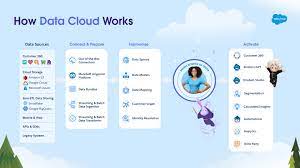
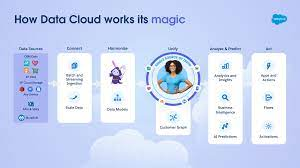
Revolutionizing Customer Engagement with the First Real-Time Platform – Salesforce Data Cloud In today’s business environment, customer expectations are soaring, with 71% anticipating personalized interactions at every touchpoint. However, the deluge of data, diverse devices, and evolving experiences poses a challenge for companies to maintain relevance. The typical business juggles an average of 1,061 form completions resulting in fragmented customer profiles and a sense of anonymity. The experience rather than giving personalized value. Leading to a sense of disconnection. Imagine a solution that consolidates all customer data, spanning channels and systems, into a unified source of truth. What if this real-time data could transform customer interactions? Empowering you to make them feel not just recognized but truly understood? Enter Salesforce Data Cloud, the inaugural real-time platform designed for customer magic. Data Cloud seamlessly integrates real-time data into Customer 360, unlocking the potential for enchanting customer experiences. Equipped with built-in connectors, Data Cloud aggregates data from diverse sources—Salesforce apps, mobile, web, connected devices, legacy systems via MuleSoft, and historical data from proprietary lakes—all in real time. However, the true power lies in distilling this vast pool of data into a cohesive customer view. Data Cloud achieves this by harmonizing and storing customer data at an extensive scale, crafting a dynamic, real-time customer graph—a singular source of truth. Real-Time Visibility The Data Cloud process involves connecting data streams, harmonizing the data into a real-time customer graph, and making it available across the Customer 360, facilitating engagement and creating magical experiences—all unfolding in real time. This real-time customer graph continually evolves as it absorbs more customer data. Activating this data across the entire Customer 360 empowers companies to create personalized, magical experiences. The real-time data from Data Cloud enhances automation with Flow and augments intelligence with Einstein, all under the reliable umbrella of Hyperforce infrastructure. The result? An automated, intelligent, and real-time Customer 360, delivering cost savings, time efficiency, and revenue growth. Data Cloud’s impact spans across the Customer 360 ecosystem: In essence, Data Cloud empowers businesses across industries to deliver real-time, intelligent, and automated experiences, fostering loyalty, cost efficiency, and increased ROI—a truly magical transformation! Like Related Posts Who is Salesforce? Who is Salesforce? Here is their story in their own words. From our inception, we’ve proudly embraced the identity of Read more Salesforce Marketing Cloud Transactional Emails Salesforce Marketing Cloud Transactional Emails are immediate, automated, non-promotional messages crucial to business operations and customer satisfaction, such as order Read more Salesforce Unites Einstein Analytics with Financial CRM Salesforce has unveiled a comprehensive analytics solution tailored for wealth managers, home office professionals, and retail bankers, merging its Financial Read more AI-Driven Propensity Scores AI plays a crucial role in propensity score estimation as it can discern underlying patterns between treatments and confounding variables Read more

Read More
Salesforce CDP

When Was Salesforce CDP Released?

Customer Data Platforms (CDPs) allow marketing organizations to have a single and complete source of truth around their customer data.  Salesforce CDP Released to address this need. Salesforce CDP Released In May 2021, Salesforce launched their own Customer Data Platform (CDP), an enhancement of the product formerly known as Customer Audience 360 (CA360). The customer data platform (CDP) is one of the fastest-growing categories of marketing technology today. Customer Data Platform, formerly Salesforce CDP, helps you connect and unify customer data. Across systems, power the connected and personalized marketing experiences that your customers expect, and analyze cross-channel engagement behavior. Activate loyalty, transaction, engagement attributes, and more from Customer Data Platform. Marketers can send additional customer profile information to marketing platforms, like Marketing Cloud Engagement, to enhance personalized communications. As a developer, you can use the CDP Python connector to leverage the power of Query API to extract data from Customer Data Platform into your environment. What is the difference between Salesforce CRM and CDP? Ultimately the difference between a CDP and CRM comes down to who primarily uses these tools and how each collects data. In short, CRMs organize and manage customer-facing interactions with your team while CDPs collect data from across your tech stack to understand customer behavior and traits more broadly. Is Salesforce Genie the same as CDP? Although Salesforce CDP and Genie are both beneficial tools for organizations, they have different functions. Salesforce CDP is certainly a superior option if you’re trying to increase your marketing and sales activities. Salesforce CDP Is Now Customer Data Platform The name change doesn’t change the functionality of Customer Data Platform. Is Salesforce CDP now data cloud? Salesforce Data Cloud is not a replacement for formerly Salesforce CDP – you will still be able to purchase, and use, Salesforce CDP. No doubt that there’s plenty on the horizon for Data Cloud, arguably Salesforce’s hottest product. Salesforce’s CDP offering was has been renamed a few times: Customer 360 Audiences → Salesforce CDP → Marketing Cloud Customer Data Platform → Salesforce Data Cloud. Content updated November 2023. Like1 Related Posts Tectonic’s Successful Salesforce Track Record Salesforce Technology Services Integrator – Tectonic has successfully delivered Salesforce in a variety of industries including Public Sector, Hospitality, Manufacturing, Read more What is Salesforce? Salesforce is cloud-based CRM software. It makes it easier for companies to find more prospects, close more deals, and connect Read more Capture Initial Traffic Source With Google Analytics To ensure the proper sequencing of Tags, modify the Tag sequencing in the Google Analytics preview Tag settings. The custom Read more Snowflake and Salesforce with Embed Snowflake has deepened its partnership with investor Salesforce by introducing two tools that seamlessly connect their cloud-native systems. Snowflake and Read more

Read More
Salesforce

Data Cloud for Tableau

Data Cloud for Tableau is another valuable tool, allowing organizations to unlock customer data and generate actionable insights at scale. The platform natively connects to integrated, unified data from various sources, including Salesforce instances, facilitating visualization, automation, exploration, and action on data. It simplifies the creation of real-time customer data platforms, aiding in the discovery of customer insights and data-driven decision-making. In the pursuit of transforming into a customer-centric company, the ability to swiftly act on insights and deliver personalized customer experiences is more crucial than ever. In today’s business landscape, where demands are high and resources are limited, leaders require access to reliable, up-to-date Key Performance Indicators (KPIs) and data-driven insights to effectively manage their businesses, stay ahead of the competition, and offer unparalleled customer experiences. Getting Good Data However, obtaining good data and actionable insights has proven to be challenging. Traditional approaches involved constructing intricate data pipelines for data replication, resulting in brittle, complex, and time-consuming architectures. These structures necessitated data duplication and substantial investments in data warehouses, making the process of making informed business decisions frustrating and time-intensive. Salesforce Data Cloud for Tableau addresses these challenges. It stands out for its ease of use, deployment, and scalability. All customer data becomes instantly accessible, up-to-date, trusted, and secure. Data Cloud for Tableau emerges as the swiftest and most scalable solution for unlocking customer data and facilitating the delivery of actionable, real-time insights. Now, let’s dig into what Salesforce Data Cloud for Tableau entails. Salesforce Data Cloud, recognized as the leading CRM data cloud, serves as a real-time data platform, offering a unified source of truth for customer data. This platform is designed to tackle significant data pipeline challenges. Powering the entire Salesforce Customer 360 platform. Thereby enabling organizations to ingest, harmonize, and unify all customer data across various channels and interactions. The result is a single, real-time customer profile. By enhancing automation, intelligence, integration, and real-time experiences across the Customer 360. Data Cloud for Tableau transforms trusted and current customer data into dynamic, visual, and actionable analytics and insights. Seamlessly integrating all Salesforce data into Tableau. It empowers individuals across the organization with valuable insights to unlock customer value and make quicker, informed decisions. Simplifying the process of building a real-time customer data platform, Data Cloud for Tableau facilitates easy visualization, automation, exploration, and action on data from any source, enabling efficient tracking of key performance indicators (KPIs) essential to the business. Additionally, we ensure secure, real-time, and open data sharing between Salesforce and Snowflake. This facilitates direct access to data stored in Snowflake by Data Cloud for Tableau and vice versa. By creating a real-time Customer 360 view across the two platforms without the need for data movement or duplication. Data Cloud empowers you to uncover concealed insights within your customer data, allowing you to: To understand how Data Cloud and Tableau collaborate, envision Tableau as the data visualization and business intelligence layer atop Data Cloud. This combination enables you to perceive, comprehend, and act on your live customer data. The features of this collaboration cover functionality across five key categories for enterprise customer data: Connect, Harmonize, Unify, Analyze and Predict, and Act. Like Related Posts Capture Initial Traffic Source With Google Analytics To ensure the proper sequencing of Tags, modify the Tag sequencing in the Google Analytics preview Tag settings. The custom Read more Joined Datasets in B2B Marketing Analytics B2BMA empowers users to generate additional datasets using the data manager. This process involves creating datasets in various ways, such Read more Snowflake and Salesforce with Embed Snowflake has deepened its partnership with investor Salesforce by introducing two tools that seamlessly connect their cloud-native systems. Snowflake and Read more Salesforce CDP Explained What is a Customer Data Platform (CDP)? A Customer Data Platform (CDP) is one of the most transformative tools in Read more

Read More
Sales Cloud Einstein

Einstein GPT from Salesforce

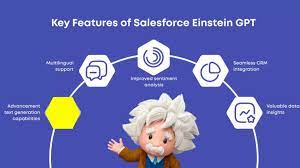
Salesforce, the leading global CRM provider, has unveiled Einstein GPT, the world’s first generative AI CRM technology. Engineered to craft personalized content across sales, service, marketing, commerce, and IT interactions, Einstein GPT aims to enhance employee productivity and elevate customer experiences. While Salesforce had previously integrated AI into its ecosystem with Einstein AI, the introduction of Einstein GPT represents a notable advancement. Leaning on OpenAI’s capabilities, Einstein GPT is an empowered iteration of existing technology, aligning with Salesforce’s commitment to artificial intelligence technology adoption. Einstein GPT from Salesforce Einstein GPT operates as an open and extensible platform, leveraging trusted, real-time data for training. It facilitates public and private AI models tailored for CRM, integrating seamlessly with OpenAI to offer generative AI capabilities. This enables users to connect data to OpenAI’s advanced models or choose external models, employing natural-language prompts within Salesforce CRM for content generation that dynamically adapts to evolving customer information and needs. The technology infusion of Einstein GPT involves combining Salesforce’s proprietary AI models with generative AI tech from an ecosystem of partners and real-time data from the Salesforce Data Cloud. This combination allows the generation of personalized content, including emails for sales, responses for customer service, targeted content for marketers, and auto-generated code for developers. The collaboration with OpenAI extends Salesforce’s capabilities by merging OpenAI’s enterprise-grade ChatGPT with Salesforce’s private AI models. Additionally, Salesforce Ventures announced the Generative AI Fund. This is a 0 million investment initiative supporting startups to foster responsible, trusted, and generative AI development. Einstein GPT introduces various applications, such as Einstein GPT for Sales, Service, Marketing, and Developers. These applications empower users to auto-generate things they used to have to write. Sales tasks, enhanced customer service interactions, dynamically created personalized content, and improved developer productivity through an AI chat assistant. To further enhance collaboration, Salesforce and OpenAI introduced the ChatGPT for Slack app. Thus offering AI-powered conversation summaries. The research tools and writing assistance within the Slack platform are aided by Einstein.. Prominent organizations like HPE, L’Oréal, RBC US Wealth Management, and S&P Global Ratings have acknowledged the value of generative AI. They are all improving customer engagement. Like1 Related Posts Who is Salesforce? Who is Salesforce? Here is their story in their own words. From our inception, we’ve proudly embraced the identity of Read more Salesforce Marketing Cloud Transactional Emails Salesforce Marketing Cloud Transactional Emails are immediate, automated, non-promotional messages crucial to business operations and customer satisfaction, such as order Read more Salesforce Unites Einstein Analytics with Financial CRM Salesforce has unveiled a comprehensive analytics solution tailored for wealth managers, home office professionals, and retail bankers, merging its Financial Read more AI-Driven Propensity Scores AI plays a crucial role in propensity score estimation as it can discern underlying patterns between treatments and confounding variables Read more

Read More
Salesforce Data Cloud

Data Cloud Salesforce

What is the data cloud in Salesforce? A hyperscale data platform built into Salesforce. Activate all your customer data across Salesforce applications with Data Cloud. Empower teams to engage customers, at every touchpoint, with relevant insights and contextual data in the flow of work. What is the benefit of data cloud? With Data Cloud, your company can feel confident in your customer information, and know that you’re taking the right steps to engage with your customer base across channels. The team at Tectonic can help you bring value to your wealth of customer data when you leverage Data Cloud. Data Cloud enables you to build a comprehensive, 360-degree view of your customers across all products, services, and interactions, ensuring all of your employees can quickly access and easily act on centralized, real-time information about their customers. Natively integrated into the Einstein1 Platform, companies can power automation, activation, analytics, and action across the world’s #1 AI CRM. Data has always been the foundation of CRM. But the connection between enterprise data and CRM is broken. Companies are collecting more data and signals about their customers than ever before, yet that data sits in siloes and is disconnected from the customer experience. And while most companies have invested in centralizing their data, it’s trapped. Over time, data strategies and customer strategies have diverged. Data Cloud isn’t just about bringing data together. It’s about unlocking your data in service of the customer. Deeply integrated into the Einstein1 Platform, Data Cloud makes all your data natively available across all Salesforce applications — Sales Cloud, Service Cloud, Marketing Cloud, Commerce Cloud, Tableau, and MuleSoft — to power automation and business processes and inform AI. Like Related Posts Demandbase Salesforce Integration The integration of Demandbase with Salesforce creates a seamless connection between Demandbase One and your Salesforce CRM, establishing a bidirectional Read more Box and Salesforce Integration What is Box and Salesforce integration? Together, Box and Salesforce integration bring you seamless solutions that make it easy for Read more Case Study: Tribal Nation Resorts and Casinos-Hospitality and Gaming-Salesforce Service/Marketing Clouds Tribal Nation with 3 Casinos, 2 Hotels and 1 Golf Course.  In total the Resorts and Casinos offer more than Read more Important Characteristics to Look for in a Salesforce Partner Consulting partners tailor Salesforce solutions to unique business needs, from initial setup to ongoing optimization. They provide comprehensive support, training, Read more

Read More
Snowflake Database

Snowflake Database

What is Snowflake Database? Snowflake Database serves as the repository for an organization’s structured and semi-structured data sets, facilitating processing and analysis. It offers automated management of various aspects of data storage, including organization, structure, metadata, file size, compression, and statistics. Snowflake: The Global Data Cloud Platform Snowflake stands as a unified global platform powering the Data Cloud, connecting businesses worldwide across diverse data types, scales, and workloads, fostering seamless data collaboration. Understanding Snowflake Database Snowflake, a relational database hosted in the cloud, serves as a data warehousing solution. Leveraging infrastructure from Google Cloud Platform, Azure, and AWS, it combines traditional database features with innovative functionalities. Snowflake: More Than Just a Data Warehouse Snowflake’s Data Cloud encompasses a pure cloud-based SQL data warehouse, uniquely engineered to handle all data and analytics aspects. It offers high performance, concurrency, simplicity, and affordability unmatched by other data warehousing solutions. Snowflake Database’s Role in ETL Processes Snowflake streamlines data loading, transformation, and storage, eliminating the need for additional ETL tools. Its unique features, scalability, and security have led many organizations worldwide to adopt it as their primary Data Warehousing solution. Snowflake’s Integration with SQL and Python Built on a new SQL database engine, Snowflake’s data warehouse architecture is tailored for the cloud. Moreover, Snowflake provides first-class Python APIs for managing core resources, enabling seamless integration without SQL queries. Challenges and Advantages of Snowflake Despite its advantages such as scalability, performance tuning, and data security, Snowflake faces challenges like higher costs and limited support for unstructured data. Snowflake’s Position in Comparison to Other Databases Snowflake offers faster, easier-to-use, and more flexible data storage and analytic solutions compared to traditional offerings. It is not built on existing database technology or big data software platforms like Hadoop. Ownership and Integration Snowflake operates on major public clouds like AWS, Azure, and GCP, offering pre-warmed virtual machines to support rapid compute. Salesforce had a stake in Snowflake but sold its holdings, making Snowflake an independent entity. Snowflake vs. Salesforce: Choosing the Right Solution Snowflake is preferable for businesses requiring a versatile data platform, whereas Salesforce Data Cloud suits organizations already using Salesforce products due to its seamless integration. Some companies utilize both platforms for diverse needs. Like Related Posts Who is Salesforce? Who is Salesforce? Here is their story in their own words. From our inception, we’ve proudly embraced the identity of Read more Salesforce Marketing Cloud Transactional Emails Salesforce Marketing Cloud Transactional Emails are immediate, automated, non-promotional messages crucial to business operations and customer satisfaction, such as order Read more Salesforce Unites Einstein Analytics with Financial CRM Salesforce has unveiled a comprehensive analytics solution tailored for wealth managers, home office professionals, and retail bankers, merging its Financial Read more AI-Driven Propensity Scores AI plays a crucial role in propensity score estimation as it can discern underlying patterns between treatments and confounding variables Read more

Read More
Salesforce Data Cloud

Key Components of Salesforce Data Cloud

Salesforce Data Cloud organizes and unifies data across Salesforce and other external data sources.  After ingestion, it can drive personalization and engagement. Components of Salesforce Data Cloud to explore. Data Cloud expands Salesforce capabilities by using the best pieces of the developer-friendly Salesforce Platform and adding a highly scalable infrastructure. Data Cloud is an evolution of Customer Data Platform—which was originally designed for marketers but now caters to broader use cases beyond marketing.  The magic of Data Cloud is in creating experiences that wow customers. Key features and components of Salesforce Data Cloud include: Like Related Posts Who is Salesforce? Who is Salesforce? Here is their story in their own words. From our inception, we’ve proudly embraced the identity of Read more Salesforce Marketing Cloud Transactional Emails Salesforce Marketing Cloud Transactional Emails are immediate, automated, non-promotional messages crucial to business operations and customer satisfaction, such as order Read more Salesforce Unites Einstein Analytics with Financial CRM Salesforce has unveiled a comprehensive analytics solution tailored for wealth managers, home office professionals, and retail bankers, merging its Financial Read more AI-Driven Propensity Scores AI plays a crucial role in propensity score estimation as it can discern underlying patterns between treatments and confounding variables Read more

Read More
ChatGPT and Einstein GPT

ChatGPT and Einstein GPT

Artificial intelligence (AI) has been rapidly advancing globally, with breakthroughs captivating professionals across various sectors. One milestone that has gained significant attention is the emergence of ChatGPT, a cutting-edge language model revolutionizing the tech landscape. This development has profoundly impacted businesses relying on Salesforce for their customer relationship management (CRM) needs. In March 2023, Salesforce unveiled its latest AI innovation, Einstein GPT, promising to transform how companies engage with their clientele. In this article, we explore what Salesforce Einstein GPT entails and how it can benefit teams across diverse industries. When OpenAI introduced ChatGPT in November 2022, they didn’t expect the overwhelming response it received. Initially positioned as a “research preview,” this AI chatbot aimed to refine existing technology while soliciting feedback from users. However, ChatGPT quickly became a viral sensation, surpassing OpenAI’s expectations and prompting them to adapt to its newfound popularity. Developed on the foundation of the GPT-3.5 language model, ChatGPT was specifically tailored to facilitate engaging and accessible conversations, distinguishing it from its predecessors. Its launch attracted a diverse user base keen to explore its capabilities, prompting OpenAI to prioritize addressing potential misuse and enhancing its safety features. As ChatGPT gained traction, it caught the attention of Salesforce, a leading CRM provider. In March 2023, Salesforce unveiled Einstein GPT, its own AI innovation, poised to transform customer engagement. Built on the GPT-3 architecture and seamlessly integrated into Salesforce Clouds, Einstein GPT promised to revolutionize how businesses interact with their clientele. Einstein GPT boasts a range of features designed to personalize customer experiences and streamline workflows. From generating natural language responses to crafting personalized content and automating tasks, Einstein GPT offers versatility and value across industries. By leveraging both Einstein AI and GPT technology, businesses can unlock unprecedented efficiency and deliver superior customer experiences. Despite its success, OpenAI acknowledges the need for ongoing refinement and vigilance, emphasizing the importance of responsible deployment and transparency in the development of AI technology. Exploring Einstein GPT Salesforce presents Einstein GPT as the premier generative AI tool for CRM worldwide. Utilizing the advanced GPT-3 architecture, Einstein GPT seamlessly integrates into all Salesforce Clouds, including Tableau, MuleSoft, and Slack. This groundbreaking technology empowers users to generate natural language responses to customer inquiries, craft personalized content, and compose entire email messages on behalf of sales personnel. With its high degree of customization, Einstein GPT can be finely tuned to meet the specific needs of various industries, use cases, and customer requirements, delivering significant value to businesses of all sizes and sectors. Objectives of Salesforce AI Einstein GPT Salesforce AI Einstein GPT is designed to achieve several key objectives: Distinguishing Einstein GPT from Einstein AI Einstein GPT represents the latest evolution of Salesforce’s Einstein artificial intelligence technology. Unlike its predecessors, Einstein GPT integrates proprietary Einstein AI models with ChatGPT and other leading large language models. This integration enables users to interact with CRM data using natural language prompts, resulting in highly personalized, AI-generated content and triggering powerful automations that enhance workflows and productivity. By leveraging both Einstein AI and GPT technology, businesses can achieve unparalleled efficiency and deliver exceptional customer experiences. Features of Einstein GPT in Salesforce CRM Key features and capabilities of Salesforce Einstein chatbot GPT include: Utilizing Einstein GPT for Business Improvement Einstein GPT can be leveraged across various domains to enhance business operations: Integration with Salesforce Data Cloud Salesforce Data Cloud, a cloud-based data management system, enables real-time data aggregation from diverse sources. Einstein GPT utilizes unified customer data profiles from the Salesforce Data Cloud to personalize interactions throughout the customer journey. OpenAI on ChatGPT Methods We trained this model using Reinforcement Learning from Human Feedback (RLHF), using the same methods as InstructGPT, but with slight differences in the data collection setup. We trained an initial model using supervised fine-tuning: human AI trainers provided conversations in which they played both sides—the user and an AI assistant. We gave the trainers access to model-written suggestions to help them compose their responses. We mixed this new dialogue dataset with the InstructGPT dataset, which we transformed into a dialogue format. To create a reward model for reinforcement learning, we needed to collect comparison data, which consisted of two or more model responses ranked by quality. To collect this data, we took conversations that AI trainers had with the chatbot. We randomly selected a model-written message, sampled several alternative completions, and had AI trainers rank them. Using these reward models, we can fine-tune the model using Proximal Policy Optimization. We performed several iterations of this process. ChatGPT is fine-tuned from a model in the GPT-3.5 series, which finished training in early 2022. You can learn more about the 3.5 series here. ChatGPT and GPT-3.5 were trained on an Azure AI supercomputing infrastructure. Limitations ChatGPT and Einstein GPT Salesforce Einstein GPT signifies a significant advancement in AI technology, empowering businesses to deliver tailored customer experiences and streamline operations. With its integration into Salesforce CRM and other platforms, Einstein GPT offers unprecedented capabilities for personalized engagement and automated insights, ensuring organizations remain competitive in today’s dynamic market landscape. When OpenAI quietly launched ChatGPT in late November 2022, the San Francisco-based AI company didn’t anticipate the viral sensation it would become. Initially viewed as a “research preview,” it was meant to showcase a refined version of existing technology while gathering feedback from the public to address its flaws. However, the overwhelming success of ChatGPT caught OpenAI off guard, leading to a scramble to capitalize on its newfound popularity. ChatGPT, based on the GPT-3.5 language model, was fine-tuned to be more conversational and accessible, setting it apart from previous iterations. Its release marked a significant milestone, attracting millions of users eager to test its capabilities. OpenAI quickly realized the need to address potential misuse and improve the model’s safety features. Since its launch, ChatGPT has undergone several updates, including the implementation of adversarial training to prevent users from exploiting it (known as “jailbreaking”). This technique involves pitting multiple chatbots against each other to identify and neutralize malicious behavior. Additionally,


Read More
Salesforce Genie Announced

Salesforce Genie Announced

Salesforce Genie announced this year is an innovative data platform recently unveiled at Dreamforce 2022, heralding the world’s first real-time CRM. Genie is the driving force behind Salesforce’s entire Customer 360 platform, delivering hyper-scale, real-time data capabilities. With Genie, any business can harness the power of data to create magical customer experiences, offering seamless, personalized interactions across sales, service, marketing, and commerce. It adapts effortlessly to evolving customer needs. Consider scenarios we encounter daily: the frustration of lengthy customer support calls navigating purchase history, or the challenge of locating specific items on cluttered e-commerce websites. These situations underscore the demand for real-time updates in every customer interaction, a demand that Genie aims to fulfill. In the last 12 hours alone, the volume of stored customer data worldwide has doubled, explaining the delays in customer support. However, with Salesforce Genie, businesses can make sense of their data regardless of source, system, or channel. This unified data drives unprecedented levels of personalization, akin to magic. Salesforce Genie’s Key Features: Genie is pivotal for various industries leveraging Salesforce, like banks managing vast customer records and administrative tasks. Salesforce aims to enhance data utilization without altering existing approaches. Comparison with Salesforce CDP: Genie transcends traditional Customer Data Platforms (CDPs) by: How Genie Works: Genie ingests and stores real-time data streams at scale, integrating them seamlessly with Salesforce data. It consolidates data from diverse channels, legacy systems via MuleSoft, and proprietary data lakes through connectors. Core Pillars of Salesforce Genie: Salesforce Genie’s Extensibility: Genie partners with leading data providers such as Snowflake and Amazon SageMaker, enabling seamless integration and real-time data sharing without data movement. Unified Customer 360 Use Cases: Genie unifies data across Salesforce’s Customer 360 products for various departments: In essence, Salesforce Genie revolutionizes data integration and utilization, enabling businesses to deliver unparalleled customer experiences across all touchpoints. Like1 Related Posts Who is Salesforce? Who is Salesforce? Here is their story in their own words. From our inception, we’ve proudly embraced the identity of Read more Salesforce Marketing Cloud Transactional Emails Salesforce Marketing Cloud Transactional Emails are immediate, automated, non-promotional messages crucial to business operations and customer satisfaction, such as order Read more Salesforce Unites Einstein Analytics with Financial CRM Salesforce has unveiled a comprehensive analytics solution tailored for wealth managers, home office professionals, and retail bankers, merging its Financial Read more AI-Driven Propensity Scores AI plays a crucial role in propensity score estimation as it can discern underlying patterns between treatments and confounding variables Read more

Read More
Salesforce Data Cloud

Data Spaces and Unified Profiles in Salesforce Data Cloud

Efficiently manage and safeguard your data by categorizing it based on brand, department, and region, enabling distinct business processes. Elevate customer interactions through personalized engagement. Facilitated by a comprehensive, unified customer view accessible to your team. Unified Profiles in Salesforce Data Cloud. In the realm of Data Cloud (formerly Salesforce Genie), a data space serves as a logical partition for organizing data. By fostering profile unification, insights, and targeted marketing. A Cloud Profile encompasses pertinent settings for the underlying cloud, including regions, Security Groups, and subnets. Multiple clusters can be deployed to a Cloud Profile over time. Thereby ensuring scalability and adaptability. Identity resolution, a core function of Customer Data Platforms (CDP), involves matching and consolidating disparate data sets. This enables you to pinpoint and link the same individual across various sources and devices. Unified data, represented by a unified data layer, signifies a company’s ability to amalgamate fragmented data sources. Turning them into a singular, central view. This view can manifest as a unified enterprise data lake or a virtual federation of distinct physical data stores. Salesforce distinguishes between CDP and DMP, recommending CDP for organized utilization of first-party data for diverse purposes and DMP for leveraging third-party audiences in digital advertising campaigns. Key considerations for Salesforce CDP implementations involve identifying required data, preparing it for ingestion, and establishing keys for seamless data organization. CDPs are versatile, allowing the combination of structured, unstructured, and semi-structured data. Data can come from various sources like email, social media, loyalty programs, ERP, CRM, and DMPs, facilitating the creation of a unified customer view. Unified Profiles in Salesforce Data Cloud A unified data model (UDM) offers benefits such as standardized storage of records from different vendors, simplified rule implementation, and vendor-agnostic rule application. Unified data is pivotal as it provides a singular source of truth for business operations. The result enabling informed decision-making. This is exemplified in a retail setting, where a unified data store analyzes sales, inventory, and customer data for enhanced product and service strategies. Create Unified Data Key steps to create a unified data model involve identifying data sources. Next is understanding data requirements, defining a standard schema, mapping and transforming data,. Then establishing data integration processes, implementing data governance, documenting the data model, and testing and iterating for continuous improvement. Data Cloud Data Cloud makes it easy for every business to make sense of all their data from any system, channel, or data stream. It integrates data from every step in the customer experience into a unified customer profile record. And that real-time customer profile can be used to instantly create an unprecedented level of personalization, which feels like magic. Everything in this unified customer profile record is visible and actionable across Salesforce’s entire suite of products, including all industry solutions. You can also build custom apps that take advantage of Data Cloud, allowing you to meet customer expectations for apps that reflect their behavior in real time. Like1 Related Posts Who is Salesforce? Who is Salesforce? Here is their story in their own words. From our inception, we’ve proudly embraced the identity of Read more Salesforce Marketing Cloud Transactional Emails Salesforce Marketing Cloud Transactional Emails are immediate, automated, non-promotional messages crucial to business operations and customer satisfaction, such as order Read more Salesforce Unites Einstein Analytics with Financial CRM Salesforce has unveiled a comprehensive analytics solution tailored for wealth managers, home office professionals, and retail bankers, merging its Financial Read more AI-Driven Propensity Scores AI plays a crucial role in propensity score estimation as it can discern underlying patterns between treatments and confounding variables Read more

Read More
Salesforce Data Cloud

Data Cloud from Salesforce

What is the data cloud in Salesforce? A hyperscale data platform built into Salesforce. Activate all your customer data across Salesforce applications with Salesforce Data Cloud, formerly known as Customer Data Platform (or CDP). Empower teams to engage customers, at every touchpoint, with relevant insights and contextual data in the flow of work. What is the benefit of Salesforce data cloud? Your company can feel confident in your customer data, and know that you’re taking the right steps to engage with your customer base across multiple channels.  The team at Tectonic can help you bring value to your wealth of customer data when you leverage Data Cloud. With Salesforce Data Cloud, automation, intelligence, real-time data, and security aren’t just goals; they make up the foundation of the platform. Data Cloud brings the power of automation, analytics, AI, data, and integration together to create a single view of the customer across any cloud. As a team of certified Salesforce experts with years working within all core and industry clouds, analytics, and customizations across all aspects of the platform, Tectonic can help you understand how Data Cloud fits into your customer experience goals, supports revenue growth, and integrates with your existing data models, data sources, and systems such as Snowflake, Tableau, Slack, and MuleSoft. By Implementing Data Cloud, we can enable you to: Are you taking advantage of SFDC Data Cloud’s customer 360 capabilities when it comes to intuitive, fast, efficient customer service? Data Cloud is the fastest growing organically built product in Salesforce’s history (Salesforce built it themselves, not via acquisitions). Data Cloud could be described as the ‘Holy Grail of CRM’, meaning that the data problem that’s existed since the infancy of CRM is now finally solvable. There are some differences between Genie and Data Cloud. Genie offers a zero-data copy architecture, meaning data can be fetched on-demand without duplicating it on the Salesforce platform. This allows for more flexibility and scalability when handling large amounts of customer data. Is Salesforce Data Cloud a data lake? Your data sitting in the data lake benefits from all of the capability of the Salesforce platform just like it does in the transactional side in Oracle. That means that Data Cloud is now not just a really good CDP, it’s now a data lake which will be used in sales and service use cases. Is Data Cloud free? At Dreamforce 2023, Salesforce announced that Data Cloud free licenses are now included for all Enterprise Edition or above customers so customers can become familiar with the new capabilities and develop use case ideas. There’s never been a better time to partner with Tectonic to explore Salesforce Data Cloud for your business. Content updated November 2023. Like2 Related Posts Tectonic’s Successful Salesforce Track Record Salesforce Technology Services Integrator – Tectonic has successfully delivered Salesforce in a variety of industries including Public Sector, Hospitality, Manufacturing, Read more Step By Step Guide to a Salesforce Quickstart Salesforce Implementation with a Tectonic Quickstart: Step-by-Step Salesforce Quickstart Guide. Step 1: Define Your Business Requirements Identify specific business processes Read more Cool Ways to Use Surveys With Salesforce Leveraging survey forms is an effective way to gather real-life insights from individuals crucial to your organization. Salesforce facilitates survey Read more Salesforce Integrations How do you make Salesforce even better? Integrate it with all the third party apps you already use. From productivity Read more

Read More
Salesforce Data Cloud

Enable Real-Time Decision Making With Unified Data

Goal You use business metrics to guide prioritization of data efforts. Your teams build data sources to address the most critical business questions. Enable real-time decision making with unified data. What it looks like Data owners and business owners form a cross-functional team to identify or create key data sources. Ensure that your data sources align to one or multiple parts of a business process. Use a data lake to centralize, secure, process, and organize large amounts of data so that teams across your entire company can access the unified data they need from a single location. Next, identify critical decision points. Use your data sources to inform these points, explore and model potential outcomes, and measure the impact. Generate insights on crucial business processes. Aggregate data from business processes most impacted by key performance metrics.  Unify your leadership team with data. Structure a workflow where each data owner, business stakeholder, and process expert all have a single view of the data and are assigned to oversee a different, crucial business process.  Audit your data use. Work with leadership teams to identify relevance of existing data sources, and resolve gaps in knowledge to create a complete and unified view of your data. Enable Real-Time Decision Making with Unified Data Build data sources to support key decision points. Support key decision points with data analytics and unified data.  Run experiments with unified data. Achieve incremental improvements by adjusting different factors in multiple experimental trials. Identify new drivers of improved performance. Monitor changes and measure the impact on business success. Enable real-time decision making with unified data. Track ROI following business improvements. Analyze business impact with key performance metrics.  Offer your teams a single view of the data. Support performance reviews with data visualization to ensure that your team members’ accomplishments are acknowledged and rewarded.  Collect data from process changes. Document all stages of business transformation, and make data associated with process changes available to teams across your company to guide their decisions. Like1 Related Posts Capture Initial Traffic Source With Google Analytics To ensure the proper sequencing of Tags, modify the Tag sequencing in the Google Analytics preview Tag settings. The custom Read more Snowflake and Salesforce with Embed Snowflake has deepened its partnership with investor Salesforce by introducing two tools that seamlessly connect their cloud-native systems. Snowflake and Read more Salesforce CDP Explained What is a Customer Data Platform (CDP)? A Customer Data Platform (CDP) is one of the most transformative tools in Read more What is BI in Salesforce? Salesforce BI helps to create fast, digestible reports to help you make informed decisions at the right time. Salesforce Einstein Read more

Read More
Salesforce Marketing Cloud Advertising Studio

What is the Difference Between a CRM and a DMP?

A DMP uses first-, second-, and third-party data, stored temporarily, creating an audience profile. Data is obtained from various online and offline sources, and mobile sources. A CRM system is typically managed by a sales team, with limited data integration. Is CRM a DMP? While a DMP uses anonymous, third-party data, a CRM and a CDP use first-, second-, and third-party data. Goal. DMPs are built for prospecting, CRMs are built to manage and nurture customers, and CDPs help engage and personalize all phases of the customer experience. Is Salesforce a DMP? Salesforce DMP, called Audience Studio, is a platform that collects, stores, organizes, and centralizes data from different sources, own or external. It works in real time, unifying user data collected from multiple sources into a single profile for each customer. Salesforce proper, the database, is a CRM, not a DMP. Who uses DMP? Marketers who are getting started with audience segmentation for digital advertising can get the most utility out of a DMP. A DMP organizes all the data collected about a prospect or customer. Do you need a DMP? Use a DMP if you want to build marketing campaigns for audiences that are unfamiliar with your business. DMPs are best for this because of their use of third-party data. They can give you access to audiences that you don’t know. Why is CDP better than DMP? DMPs are effective for digital channels and audience segmentation. CDPs, on the other hand, are beneficial for social media websites, offline interactions, and insights into customer needs and purchase behavior. Like Related Posts Who is Salesforce? Who is Salesforce? Here is their story in their own words. From our inception, we’ve proudly embraced the identity of Read more Salesforce Marketing Cloud Transactional Emails Salesforce Marketing Cloud Transactional Emails are immediate, automated, non-promotional messages crucial to business operations and customer satisfaction, such as order Read more Salesforce Unites Einstein Analytics with Financial CRM Salesforce has unveiled a comprehensive analytics solution tailored for wealth managers, home office professionals, and retail bankers, merging its Financial Read more AI-Driven Propensity Scores AI plays a crucial role in propensity score estimation as it can discern underlying patterns between treatments and confounding variables Read more

Read More
gettectonic.com