
Confidential computing is a technology that protects data in use by isolating and encrypting it within a secure hardware-based environment, preventing unauthorized access or modification, even by cloud providers.
Details:
- What it is:Confidential computing uses hardware-based Trusted Execution Environments (TEEs) to create secure enclaves where data and code can be processed without being exposed to the host operating system or hypervisor.
- How it works:
- Hardware-based TEEs: These are secure, isolated environments within the CPU that prevent unauthorized access to the data and code running within them.
- Encryption: Data is encrypted within the TEE, ensuring that even if the enclave is compromised, the data remains protected.
- Attestation: The TEE can be attested to ensure that the environment is running as expected, further strengthening security.
- Benefits:
- Data confidentiality: Prevents unauthorized entities from viewing data while it’s in use.
- Data integrity: Prevents unauthorized entities from altering data while it’s in use.
- Code integrity: Prevents unauthorized entities from altering the code executing in the TEE.
- Trust in the cloud: Allows organizations to confidently move sensitive data and workloads to the cloud without compromising security.
- Enables new use cases: Facilitates multi-party computation and private data analysis, where data remains confidential even during collaboration.
- Examples:
- Running sensitive workloads in secure enclaves.
- Performing private data analysis on encrypted data.
- Enabling multi-party computation where data remains confidential even during collaboration.
- Key Players:
- Hardware vendors: AMD, Intel, and others provide CPUs with hardware-based TEE capabilities.
- Cloud providers: Google, Microsoft, AWS, and others offer confidential computing services.
- Software developers: Organizations are developing software and tools to support confidential computing.
- Related Technologies:
- Homomorphic Encryption (HE): Another technology that allows computations to be performed on encrypted data, but it is different from confidential computing which focuses on protecting data in use within a secure environment.
- Trusted Platform Modules (TPM): A security chip that can store cryptographic keys and other security-related information, which can be used to secure the boot process and other aspects of the system.

Who is Salesforce? Here is their story in their own words. From our inception, we've proudly embraced the identity of Read more

Salesforce has unveiled a comprehensive analytics solution tailored for wealth managers, home office professionals, and retail bankers, merging its Financial Read more
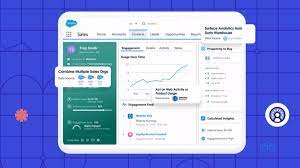
AI plays a crucial role in propensity score estimation as it can discern underlying patterns between treatments and confounding variables Read more

Salesforce Technology Services Integrator - Tectonic has successfully delivered Salesforce in a variety of industries including Public Sector, Hospitality, Manufacturing, Read more