Apex Archives - gettectonic.com - Page 3

Ushering in the Era of AI-Driven Workforces

Agentforce: Ushering in the Era of AI-Driven Workforces “Agentforce is redefining what’s possible in business and beyond, ushering in a new era of AI abundance and limitless workforces that augment every employee, build deeper customer relationships, and drive unprecedented growth and profitability.”— Marc Benioff, Salesforce CEO Key Features and Takeaways Out-of-the-Box AI Agents Agentforce introduces pre-built, customizable agents that are deployable with low-code or no-code tools, working tirelessly across any channel. Its first generally available solution, the Agentforce Service Agent, surpasses traditional chatbots by handling a diverse range of tasks—from simple inquiries to complex scenarios. Key capabilities include: Seamless Integration with Salesforce Platform Agentforce eliminates the complexity of building AI solutions from scratch. Unlike other platforms that demand intricate data integration and custom automation, Agentforce is fully embedded within the Salesforce ecosystem. With Agentforce, businesses can: Always-On Automation Agentforce operates independently of human intervention. Agents can be triggered by changes in data, predefined business rules, or pre-built automations, ensuring uninterrupted workflows. This blend of autonomous operation and human collaboration creates a symbiotic relationship between people and AI, enhancing productivity and customer satisfaction. A Competitive Edge in the AI Space Salesforce emphasizes that Agentforce goes beyond chatbots and copilots, setting a new benchmark for enterprise AI. In a strategic swipe at competitors, Marc Benioff likened rival offerings—like Microsoft’s Dynamics 365 AI agents—to “Clippy 2.0,” critiquing their inaccuracies and risks of corporate data leaks. By contrast, Agentforce builds on Salesforce’s proven Einstein AI platform, ensuring reliability, scalability, and secure integration. Redefining Customer Success Agentforce isn’t just about automation—it’s about driving outcomes. By enabling businesses to automate complex processes, deepen customer relationships, and scale operations, it paves the way for limitless growth in the age of AI. Ready to transform your workforce? With Agentforce, the future of AI-driven business is already here. Like Related Posts Who is Salesforce? Who is Salesforce? Here is their story in their own words. From our inception, we’ve proudly embraced the identity of Read more Salesforce Marketing Cloud Transactional Emails Salesforce Marketing Cloud Transactional Emails are immediate, automated, non-promotional messages crucial to business operations and customer satisfaction, such as order Read more Salesforce Unites Einstein Analytics with Financial CRM Salesforce has unveiled a comprehensive analytics solution tailored for wealth managers, home office professionals, and retail bankers, merging its Financial Read more AI-Driven Propensity Scores AI plays a crucial role in propensity score estimation as it can discern underlying patterns between treatments and confounding variables Read more

Read More
Agentforce to the Team

Salesforce has officially launched Agentforce

Agentforce goes beyond traditional chatbots and copilots, leveraging advanced reasoning to perform tasks like resolving customer issues, qualifying leads, and optimizing marketing campaigns—all without human intervention. Triggered by data changes, business rules, automations, or API signals, Agentforce executes actions independently. Companies like OpenTable, Saks, and Wiley are already harnessing Agentforce to enhance employee productivity, expand their workforce, and elevate customer experiences.

Read More

Customization and Configuration in Salesforce

Salesforce Customization vs. Configuration: Choosing the Right Approach for Your Business Salesforce has become a top choice for businesses aiming to strengthen customer relationships and achieve their goals. Its flexibility to adapt to diverse needs through customization and configuration makes it stand out. While both approaches aim to tailor your Salesforce Org to meet specific business requirements, they differ in methodology and use cases. This insight will help you understand their differences and provide insights into when and how to choose between them. Let’s get the insight! What is Salesforce Customization? Salesforce customization involves enhancing your Salesforce Org by introducing tailored features, functionalities, and applications through coding. It goes beyond the out-of-the-box capabilities, enabling you to extend your platform to meet unique and complex business requirements. This approach requires expertise from a Salesforce developer who leverages tools such as Apex, Lightning Components, and the Salesforce Code Builder to create custom solutions. Examples of Customization: What is Salesforce Configuration? Salesforce configuration refers to adapting Salesforce’s native features to meet business needs without modifying the underlying code. By using tools such as drag-and-drop builders, configuration allows users—even those without technical expertise—to optimize the platform’s functionality. Examples of Configuration: Key Differences Between Customization and Configuration Basis Customization Configuration Level of Personalization High personalization, tailored to unique needs Limited to Salesforce’s native capabilities Implementation Requires coding expertise and detailed development Simpler, relies on drag-and-drop tools Time to Deploy Longer development cycles Faster implementation and deployment Maintenance Can require ongoing updates and compatibility adjustments during Salesforce upgrades Easier to maintain, as it aligns with standard platform updates Cost Higher costs due to skilled developer involvement Cost-effective; can be handled by in-house admins Risk Higher risks due to potential code conflicts or errors Lower risks, but over-configuration can lead to complexity Best Practices for Customization and Configuration Choosing the Right Approach The decision to opt for customization or configuration depends on factors like business requirements, budget, timeline, and project complexity. Sometimes, a hybrid approach that combines customization and configuration is the best solution, providing flexibility while optimizing costs and implementation speed. Why Partner with Salesforce Experts? Partnering with experienced Salesforce consultants at Tectonic ensures your Org is tailored to meet your specific business needs. They analyze your workflows, processes, and challenges to recommend the most effective approach—whether it’s customization, configuration, or a blend of both. At Tectonic, our team of 200+ Salesforce experts specializes in delivering tailored solutions that maximize ROI. From development to ongoing maintenance, we ensure your Salesforce Org aligns with your long-term goals. Ready to transform your Salesforce platform? Let’s discuss how we can help. Like Related Posts Who is Salesforce? Who is Salesforce? Here is their story in their own words. From our inception, we’ve proudly embraced the identity of Read more Salesforce Marketing Cloud Transactional Emails Salesforce Marketing Cloud Transactional Emails are immediate, automated, non-promotional messages crucial to business operations and customer satisfaction, such as order Read more Salesforce Unites Einstein Analytics with Financial CRM Salesforce has unveiled a comprehensive analytics solution tailored for wealth managers, home office professionals, and retail bankers, merging its Financial Read more AI-Driven Propensity Scores AI plays a crucial role in propensity score estimation as it can discern underlying patterns between treatments and confounding variables Read more

Read More
user q and a

Handling Duplicate Phone Numbers in Salesforce Automations

I’m working with a list of customers in Salesforce, where duplicate detection is enabled for the phone field. When manually creating a new customer with an existing phone number, Salesforce displays a warning prompt asking if I want to proceed. The warning doesn’t block the save; it simply alerts me to the duplicate. However, when attempting to insert a record with the same phone number using MAKE, I encounter the following error: RuntimeError[400]: A duplicate record was found. Are you sure you want to create the record? This indicates that the automation is being blocked due to the duplicate detection rules. Solution Options Here are a few strategies to address this and allow the record to be inserted: Best Practices If you need help setting up any of these solutions, let Tectonic know! Like Related Posts Who is Salesforce? Who is Salesforce? Here is their story in their own words. From our inception, we’ve proudly embraced the identity of Read more Salesforce Marketing Cloud Transactional Emails Salesforce Marketing Cloud Transactional Emails are immediate, automated, non-promotional messages crucial to business operations and customer satisfaction, such as order Read more Salesforce Unites Einstein Analytics with Financial CRM Salesforce has unveiled a comprehensive analytics solution tailored for wealth managers, home office professionals, and retail bankers, merging its Financial Read more AI-Driven Propensity Scores AI plays a crucial role in propensity score estimation as it can discern underlying patterns between treatments and confounding variables Read more

Read More
Tectonic Salesforce Customization

Salesforce Customization Requests

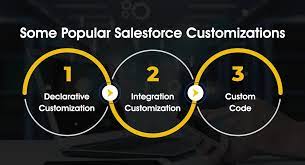
The Most Commonly Requested Salesforce Customizations Salesforce’s flexibility is one of its biggest strengths, allowing businesses to tailor the platform to meet their unique needs. Here are the most frequently requested types of customizations: 1. Declarative Customization Make adjustments using Salesforce’s built-in tools—no coding required. Examples: Ideal For:Businesses looking for straightforward changes to enhance usability without requiring programming expertise. 2. Integration Customization Connect Salesforce with third-party systems to streamline workflows and centralize data. Examples: Benefits:Boost operational efficiency by enabling seamless communication between systems. 3. Custom Code Development Go beyond standard functionality with tailored solutions using Apex, Visualforce, or Lightning Web Components. Examples: Best For:Organizations with advanced or highly specific requirements that declarative tools can’t fulfill. 4. User Interface (UI) Customization Adapt the look and feel of Salesforce to improve user experience and align with your brand. Examples: Goal:Create an intuitive, visually appealing interface that boosts productivity and user adoption. 5. Workflow Automation Save time by automating repetitive tasks and processes. Examples: Impact:Streamline operations, reduce manual workloads, and improve efficiency. 6. Reporting and Analytics Customization Provide actionable insights with tailored reports and dashboards. Examples: Advantage:Empower teams to make data-driven decisions with clear, relevant insights. 7. Mobile Optimization Ensure a seamless Salesforce experience for users on mobile devices. Examples: Purpose:Keep teams connected and productive, regardless of location. Conclusion Salesforce customization goes beyond CRM—it transforms the platform into a tailored solution that aligns with your unique business processes. Whether you’re looking for simple adjustments or advanced integrations, these customizations unlock Salesforce’s full potential to drive operational success. Ready to Get Started?Discover how our Salesforce customization services can help tailor the platform to your specific needs. Let’s work together to maximize your investment and achieve your business goals! Like Related Posts Who is Salesforce? Who is Salesforce? Here is their story in their own words. From our inception, we’ve proudly embraced the identity of Read more Salesforce Marketing Cloud Transactional Emails Salesforce Marketing Cloud Transactional Emails are immediate, automated, non-promotional messages crucial to business operations and customer satisfaction, such as order Read more Salesforce Unites Einstein Analytics with Financial CRM Salesforce has unveiled a comprehensive analytics solution tailored for wealth managers, home office professionals, and retail bankers, merging its Financial Read more AI-Driven Propensity Scores AI plays a crucial role in propensity score estimation as it can discern underlying patterns between treatments and confounding variables Read more
Read More
Winter 25 Release Notes

Winter 25 Release Experience Cloud

Salesforce Winter ’25 Release: 6 Key Enhancements to Experience Cloud The Salesforce Winter ’25 Release brings a fresh suite of updates to Experience Cloud, focusing on design customization, SEO optimization, and streamlined navigation for enhanced user engagement. We’ve summarized six major updates and additional enhancements that make this release a significant step forward for Experience Cloud sites. 1. Enhanced Design Options for LWR Sites Winter ’25 empowers site designers with more granular control over the look and feel of LWR (Lightning Web Runtime) sites. New customization options in the Experience Builder Theme panel now allow for specific styling of individual components like columns and buttons, offering a new level of precision in visual design. Additional features include a Scoped Header and Footer layout that allows fixed positioning for headers and footers, enhancing user experience with persistent navigation elements. Site admins can define unique color palettes for buttons across various states (default, hover, focus), and apply color schemes to individual columns, which can now be set in the Theme panel. Further text customizations for headings have also been added, allowing a personalized touch for every element on LWR sites. 2. SEO-Friendly URLs for Accounts and Contacts (Generally Available) To drive organic traffic, the Winter ’25 Release introduces SEO-friendly URL slugs for Account and Contact pages, replacing traditional record IDs with easily readable URLs. This enhancement allows search engines to better index content, making it easier for users to find your pages. Site managers can configure SEO-friendly URLs directly in the Administration panel and import slugs in bulk for faster setup. 3. Data Providers for LWR Sites (Beta) Experience Cloud now includes an option to configure data providers on LWR site pages, enabling seamless integration with data from various sources, including Apex and Record providers. Admins can specify data sources within Experience Builder, allowing for real-time data updates across components and pages, providing a more dynamic and responsive experience for users. 4. Revamped Navigation and New Components The Navigation Menu component has been revamped, allowing admins to design a more intuitive navigation experience for both desktop and mobile users. The beta Site Header component further enhances branding with logo placement and customizable headers, while the Grid component now ensures consistent cell height, improving the visual balance of page layouts. Tailored navigation menus for desktop and mobile screens can be customized for color, spacing, text styles, and more to provide an optimized experience across devices. 5. Expanded Data Cloud Integration for Event Tracking Winter ’25 expands Data Cloud integration to capture checkout, order, and cart events on enhanced LWR sites. Ecommerce-focused organizations can now record user interactions—like checkout initiation and address input—automatically, giving businesses richer insights into customer behavior. Data captured through these events can be viewed within Data Cloud, allowing admins to understand user engagement and optimize site design accordingly. 6. Salesforce File Linking for LWR Sites (Beta) The new File Upload Lightning Web Component enables file uploads directly from an LWR site to Salesforce, an option previously available only on Aura sites. This update streamlines the file transfer process, allowing guest users to upload files securely, which are then accessible within Salesforce. Additional Experience Cloud Enhancements In addition to the primary updates, Winter ’25 introduces several valuable, albeit smaller, features: Availability of Features Some Winter ’25 features will be accessible immediately after release, while others require setup by admins. Consider notifying users about these updates to ensure a smooth transition and to leverage the full potential of new functionalities. Like Related Posts Who is Salesforce? Who is Salesforce? Here is their story in their own words. From our inception, we’ve proudly embraced the identity of Read more Salesforce Marketing Cloud Transactional Emails Salesforce Marketing Cloud Transactional Emails are immediate, automated, non-promotional messages crucial to business operations and customer satisfaction, such as order Read more Salesforce Unites Einstein Analytics with Financial CRM Salesforce has unveiled a comprehensive analytics solution tailored for wealth managers, home office professionals, and retail bankers, merging its Financial Read more AI-Driven Propensity Scores AI plays a crucial role in propensity score estimation as it can discern underlying patterns between treatments and confounding variables Read more

Read More
Salesforce Flow Tests

Salesforce Flow Tests

Deploying Salesforce Flow tests is not just about hitting “go” and hoping for the best. It requires more than simply moving automations from a Sandbox environment to production. Successful deployment demands thoughtful planning and attention to detail. In this post, we’ll dive deeper into deploying Flow tests effectively, covering key factors like independent testing and ensuring environment consistency. Building on our ongoing series, we’ll provide practical insights to help you achieve smooth deployments and reliable test execution. Key Considerations for Deploying Flow Tests Steps to Deploy Flow Tests Using Change Sets Final Thoughts Deploying Flow tests effectively is critical for maintaining the integrity of your automations across environments. Skipping the testing phase is like driving with a blindfold—one mistake could disrupt your workflows and cause chaos in critical processes. By following these guidelines, particularly focusing on independent testing and post-deployment checks, you can help ensure your Salesforce Flows continue to operate smoothly. Stay tuned for future insights for Flownatics where we’ll dive into more advanced aspects of Flow tests, helping you further optimize your Salesforce automation processes. Need more advice on testing your automations in Salesforce? Let’s chat! Like Related Posts Who is Salesforce? Who is Salesforce? Here is their story in their own words. From our inception, we’ve proudly embraced the identity of Read more Salesforce Marketing Cloud Transactional Emails Salesforce Marketing Cloud Transactional Emails are immediate, automated, non-promotional messages crucial to business operations and customer satisfaction, such as order Read more Salesforce Unites Einstein Analytics with Financial CRM Salesforce has unveiled a comprehensive analytics solution tailored for wealth managers, home office professionals, and retail bankers, merging its Financial Read more AI-Driven Propensity Scores AI plays a crucial role in propensity score estimation as it can discern underlying patterns between treatments and confounding variables Read more

Read More
AI Agent Revolution

AI Customer Service Agents Explained

AI customer service agents are advanced technologies designed to understand and respond to customer inquiries within defined guidelines. These agents can handle both simple and complex issues, such as answering frequently asked questions or managing product returns, all while offering a personalized, conversational experience. Research shows that 82% of service representatives report that customers ask for more than they used to. As a customer service leader, you’re likely facing increasing pressure to meet these growing expectations while simultaneously reducing costs, speeding up service, and providing personalized, round-the-clock support. This is where AI customer service agents can make a significant impact. Here’s a closer look at how AI agents can enhance your organization’s service operations, improve customer experience, and boost overall productivity and efficiency. What Are AI Customer Service Agents? AI customer service agents are virtual assistants designed to interact with customers and support service operations. Utilizing machine learning and natural language processing (NLP), these agents are capable of handling a broad range of tasks, from answering basic inquiries to resolving complex issues — even managing multiple tasks at once. Importantly, AI agents continuously improve through self-learning. Why Are AI-Powered Customer Service Agents Important? AI-powered customer service technology is becoming essential for several reasons: Benefits of AI Customer Service Agents AI customer service agents help service teams manage growing service demands by taking on routine tasks and providing essential support. Key benefits include: Why Choose Agentforce Service Agent? If you’re considering adding AI customer service agents to your strategy, Agentforce Service Agent offers a comprehensive solution: By embracing AI customer service agents like Agentforce Service Agent, businesses can reduce costs, meet growing customer demands, and stay competitive in an ever-evolving global market. Like1 Related Posts Who is Salesforce? Who is Salesforce? Here is their story in their own words. From our inception, we’ve proudly embraced the identity of Read more Salesforce Marketing Cloud Transactional Emails Salesforce Marketing Cloud Transactional Emails are immediate, automated, non-promotional messages crucial to business operations and customer satisfaction, such as order Read more Salesforce Unites Einstein Analytics with Financial CRM Salesforce has unveiled a comprehensive analytics solution tailored for wealth managers, home office professionals, and retail bankers, merging its Financial Read more AI-Driven Propensity Scores AI plays a crucial role in propensity score estimation as it can discern underlying patterns between treatments and confounding variables Read more

Read More
Salesforce Flows and LeanData

Salesforce Flows and LeanData

Mastering Opportunity Routing in Salesforce Flows While leads are essential at the top of the funnel, opportunities take center stage as the sales process advances. In Salesforce, the opportunity object acts as a container that can hold multiple contacts tied to a specific deal, making accurate opportunity routing crucial. Misrouting or delays at this stage can significantly impact revenue and forecasting, while manual processing risks incorrect assignments and uneven distribution. Leveraging Salesforce Flows for opportunity routing can help avoid these issues. Salesforce Flows and LeanData. What Is Opportunity Routing? Opportunity routing is the process of assigning open opportunities to the right sales rep based on specific criteria like territory, deal size, industry, or product type. The goal is to ensure every opportunity reaches the right person quickly, maximizing the chance to close the deal. Opportunity routing also helps prioritize high-potential deals, improving pipeline efficiency. Challenges of Manual Routing Manual opportunity routing can lead to several challenges: Benefits of Automating Routing with Salesforce Flows Using Salesforce Flows for opportunity routing offers many benefits: Setting Up Opportunity Routing in Salesforce Flows Here’s an outline for setting up opportunity routing in Salesforce: Managing Complex Salesforce Flows Opportunity routing in Salesforce Flows is powerful, but managing complex sales environments can be challenging: How LeanData Enhances Opportunity Routing LeanData extends Salesforce routing capabilities with advanced, no-code automation and auditing features: Salesforce Flows and LeanData Whether using Salesforce Flows or LeanData, the goal is to optimize time to revenue. While Salesforce Flows offer a robust foundation, organizations without dedicated admins or developers may face challenges in making frequent updates. LeanData provides greater flexibility and real-time automation, helping to streamline the routing process and drive revenue growth. Like Related Posts Who is Salesforce? Who is Salesforce? Here is their story in their own words. From our inception, we’ve proudly embraced the identity of Read more Salesforce Marketing Cloud Transactional Emails Salesforce Marketing Cloud Transactional Emails are immediate, automated, non-promotional messages crucial to business operations and customer satisfaction, such as order Read more Salesforce Unites Einstein Analytics with Financial CRM Salesforce has unveiled a comprehensive analytics solution tailored for wealth managers, home office professionals, and retail bankers, merging its Financial Read more AI-Driven Propensity Scores AI plays a crucial role in propensity score estimation as it can discern underlying patterns between treatments and confounding variables Read more

Read More
Revolution Customer Service with Agentforce

Revolution Customer Service with Agentforce

Agentforce stole the spotlight at Dreamforce, but it’s not just about replacing human workers. Equally significant for Service Cloud was the focus on how AI can be leveraged to make agents, dispatchers, and field service technicians more productive and proactive. Join a conversation to unpack the latest Sales Cloud innovations, with a spotlight on Agentforce for sales followed by a Q&A with Salesblazers. During the Dreamforce Service Cloud keynote, GM Kishan Chetan emphasized the dramatic shift over the past year, with AI moving from theoretical to practical applications. He challenged customer service leaders to embrace AI agents, highlighting that AI-driven solutions can transform customer service from delivering “good” benefits to achieving exponential growth. He noted that AI agents are capable of handling common customer requests like tech support, scheduling, and general inquiries, as well as more complex tasks such as de-escalation, billing inquiries, and even cross-selling and upselling. In practice, research by Valoir shows that most Service Cloud customers are still in the early stages of AI adoption, particularly with generative AI. While progress has accelerated recently, most companies are only seeing incremental gains in individual productivity rather than the exponential improvements highlighted at Dreamforce. To achieve those higher-level returns, customers must move beyond simple automation and summarization to AI-driven transformation, powered by Agentforce. Chetan and his team outlined four key steps to make this transition. “Agentforce represents the Third Wave of AI—advancing beyond copilots to a new era of highly accurate, low-hallucination intelligent agents that actively drive customer success. Unlike other platforms, Agentforce is a revolutionary and trusted solution that seamlessly integrates AI across every workflow, embedding itself deeply into the heart of the customer journey. This means anticipating needs, strengthening relationships, driving growth, and taking proactive action at every touchpoint,” said Marc Benioff, Chair and CEO, Salesforce. “While others require you to DIY your AI, Agentforce offers a fully tailored, enterprise-ready platform designed for immediate impact and scalability. With advanced security features, compliance with industry standards, and unmatched flexibility. Our vision is bold: to empower one billion agents with Agentforce by the end of 2025. This is what AI is meant to be.” In contrast to now-outdated copilots and chatbots that rely on human requests and strugglewith complex or multi-step tasks, Agentforce offers a new level of sophistication by operating autonomously, retrieving the right data on demand, building action plans for any task, and executing these plans without requiring human intervention. Like a self-driving car, Agentforce uses real-time data to adapt to changing conditions and operates independently within an organizations’ customized guardrails, ensuring every customer interaction is informed, relevant, and valuable. And when desired, Agentforce seamlessly hands off to human employees with a summary of the interaction, an overview of the customer’s details, and recommendations for what to do next. Deploy AI agents across channelsAgentforce Service Agent is more than a chatbot—it’s an autonomous AI agent capable of handling both simple and complex requests, understanding text, video, and audio. Customers were invited to build their own Service Agents during Dreamforce, and many took up the challenge. Service-related agents are a natural fit, as research shows Service Cloud customers are generally more prepared for AI adoption due to the volume and quality of customer data available in their CRM systems. Turn insights into actionLaunching in October 2024, Customer Experience Intelligence provides an omnichannel supervisor Wall Board that allows supervisors to monitor conversations in real time, complete with sentiment scores and organized metrics by topics and regions. Supervisors can then instruct Service Agent to dive into root causes, suggest proactive messaging, or even offer discounts. This development represents the next stage of Service Intelligence, combining Data Cloud, Tableau, and Einstein Conversation Mining to give supervisors real-time insights. It mirrors capabilities offered by traditional contact center vendors like Verint, which also blend interaction, sentiment, and other data in real time—highlighting the convergence of contact centers and Service Cloud service operations. Empower teams to become trusted advisorsSalesforce continues to navigate the delicate balance between digital and human agents, especially within Service Cloud. The key lies in the intelligent handoff of customer data when escalating from a digital agent to a human agent. Service Planner guides agents step-by-step through issue resolution, powered by Unified Knowledge. The demo also showcased how Service Agent can merge Commerce and Service by suggesting agents offer complimentary items from a customer’s shopping cart. Enable field teams to be proactiveSalesforce also announced improvements in field service, designed to help dispatchers and field service agents operate more proactively and efficiently. Agentforce for Dispatchers enhances the ability to address urgent appointments quickly. Asset Service Prediction leverages AI to forecast asset failures and upcoming service needs, while AI-generated prework briefs provide field techs with asset health scores and critical information before they arrive on site. Setting a clear roadmap for adopting Agentforce across these four areas is an essential step toward helping customers realize more than just incremental gains in their service operations. Equally important will be helping customers develop a data strategy that harnesses the power of Data Cloud and Salesforce’s partner ecosystem, enabling a truly data-driven service experience. Investments in capabilities like My Service Journeys will also be critical in guiding customers through the process of identifying which AI features will deliver the greatest returns for their specific needs. Agentforce leverages Salesforce’s generative AI, like Einstein GPT, to automate routine tasks, provide real-time insights, and offer personalized recommendations, enhancing efficiency and enabling agents to deliver exceptional customer experiences. Agentforce is not just another traditional chatbot; it is a next-generation, AI-powered solution that understands complex queries and acts autonomously to enhance operational efficiency. Unlike conventional chatbots, Agentforce is intelligent and adaptive, capable of managing a wide range of customer issues with precision. It offers 24/7 support, responds in a natural, human-like manner, and seamlessly escalates to human agents when needed and redefining customer service by delivering faster, smarter, and more effective support experiences. Like1 Related Posts Who is Salesforce? Who is Salesforce? Here is their story in their own words. From our inception,

Read More

Agentforce Autonomous Agents

Agentforce: Transforming Business Operations with Autonomous Agents Agentforce empowers organizations to create and manage autonomous agents that streamline tasks across various business departments. These include Sales Agents, Service Agents, Marketing Agents, Commerce Agents, and Platform Agents—truly delivering on the vision of “an Agentforce in every app.” But how does Agentforce work, and what are the building blocks for configuring these agents? Salesforce emphasizes that Agentforce is built with clicks, not code, making it highly accessible to users. This claim was validated by many attendees at the ‘Agentforce Launchpad’ during Dreamforce, who noted that the tool is as declarative and user-friendly as Salesforce promised. The Building Blocks of Agentforce 1. Agent Builder The journey begins with the Agent Builder within Agentforce Studio. This configuration tool allows users to define their agent’s attributes, such as the avatar, name, and description, using natural language inputs—essentially describing the agent in conversational terms. Salesforce describes it as: “If you can dream it, Agentforce can do it.” The Agent Builder interface comprises: Salesforce also provides out-of-the-box agents, such as Sales Agents, which can be enabled via guided setup. 2. Agent Topics Topics are the foundational building blocks that determine an agent’s scope of work. For example, a topic like “Order Management” grants the agent access to data such as order histories and product specifications. In the Dreamforce keynote, Saks’ service agent demonstrated the importance of topics by resolving customer queries tied to its assigned topics. However, queries outside the defined topics were flagged as “guardrails,” ensuring the agent stayed within its designated scope. 3. Topic Actions Actions, tied to topics, define what an agent can do. These actions are often flows, such as querying a CRM database or triggering automated processes. Users can assign existing actions or create new ones by referencing Apex, Flow, prompts, or MuleSoft APIs. For example, integrating external data sources requires defining a new Agentforce action tied to a MuleSoft API. This allows the agent to query data just as human users would. Testing Agents with the Atlas Reasoning Engine Agentforce’s Atlas Reasoning Engine powers agents with advanced capabilities. Users can test agents within the Agent Builder interface, following the reasoning process step-by-step: Once configured, agents are ready to operate across their assigned communication channels (e.g., email, WhatsApp, voice). Omni Supervisor: Real-Time Agent Monitoring Omni Supervisor, originally a Service Cloud feature, now extends to monitoring agents. It provides insights into overall trends, allows real-time oversight of interactions, and even enables listening to recent conversations. The Role of Data Cloud in Agentforce Data powers Agentforce, enabling agents to provide highly contextual responses. The Data Cloud processes both structured data (e.g., Salesforce records) and unstructured data (e.g., emails, voice memos) using its Vector Database for advanced processing. 1. Retrieval Augmented Generation (RAG) Salesforce employs RAG to enhance the accuracy of agent responses. RAG integrates the Atlas Reasoning Engine with Data Cloud, creating a feedback loop. Data Cloud enriches user prompts by retrieving relevant data, making agent responses more contextual and informed. 2. New Data Streams To enhance Agentforce capabilities, data can be ingested into the platform in three ways: For instance, connecting an order management system like Snowflake is streamlined via Salesforce’s prebuilt connectors. 3. Data Graphs Data Graphs visualize relationships between Data Model Objects (DMOs), enabling users to ensure all necessary data is available for optimal agent performance. Real-time Data Graphs enhance identity resolution, segmentation, and action execution for seamless data flow. Inside Prompt Builder Prompt Builder allows users to create or refine prompts that power Agentforce actions. Low-code tools guide users through the process, offering features such as previewing results and assessing feedback toxicity ratings. Search Index in RAG The Search Index is a critical component of RAG. It retrieves relevant data from Data Cloud to enhance agent reasoning. Search parameters can be configured in three ways: Tectonic’s Thoughts Agentforce, powered by Data Cloud and advanced AI tools like the Atlas Reasoning Engine, represents a new era of automation and efficiency for businesses. Whether through Sales, Service, or Marketing Agents, organizations can leverage this technology to streamline operations, personalize customer experiences, and achieve better outcomes. With over 5,200 customers implementing Agentforce in their sandboxes within the first two days of Dreamforce, the platform is already proving its transformative potential. By 2025 over a billion agents had been created! Agentforce isn’t just about improving efficiency; it’s about redefining what’s possible for business operations. Content updated January 2025. Like Related Posts Who is Salesforce? Who is Salesforce? Here is their story in their own words. From our inception, we’ve proudly embraced the identity of Read more Salesforce Marketing Cloud Transactional Emails Salesforce Marketing Cloud Transactional Emails are immediate, automated, non-promotional messages crucial to business operations and customer satisfaction, such as order Read more Salesforce Unites Einstein Analytics with Financial CRM Salesforce has unveiled a comprehensive analytics solution tailored for wealth managers, home office professionals, and retail bankers, merging its Financial Read more AI-Driven Propensity Scores AI plays a crucial role in propensity score estimation as it can discern underlying patterns between treatments and confounding variables Read more

Read More
gettectonic.com