
Integrations Archives - gettectonic.com - Page 13
Otter AI S-Docs and Salesforce

Otter AI S-Docs and Salesforce

Numerous vendors in the enterprise software market are currently emphasizing their AI capabilities, envisioning a future where AI can address a wide array of global challenges, from healthcare to climate change. While the realization of these claims remains uncertain, the practical and impactful applications of AI in everyday scenarios often go unnoticed. There exists ample opportunity for leveraging AI tools that are readily available and require minimal setup to enhance efficiency. Otter AI S-Docs and Salesforce. One such example is S-Docs, a document automation vendor integrated natively on the Salesforce platform, which is harnessing Otter.ai, an AI transcription service, to revolutionize its sales process and product development. S-Docs is seamlessly integrating Otter.ai into its digital collaboration tools, enabling automatic transcription during sales calls. This not only aids sales representatives in navigating diverse dialects but also streamlines post-call administrative tasks, prompting quicker action. Moreover, the product development team at S-Docs is leveraging Otter.ai to analyze the transcribed content from sales calls and incorporate insights into its product feedback loop. This integration was sparked by S-Docs’ CTO, Anand Narasimhan, who discovered Otter.ai through a LinkedIn connection and recognized its potential value for the business. Initially used during team calls and sprint reviews, Otter.ai’s high transcription accuracy and insightful summaries impressed Narasimhan and his colleague, Keith Bossier, VP of Sales at S-Docs. Subsequently, Otter.ai was adopted by the sales and customer success teams, offering benefits that surpassed those of their previous provider, Gong. For the sales team, Otter.ai significantly reduces the administrative burden by providing real-time transcriptions, catch-all summaries, and key takeaways from meetings. This facilitates quicker follow-ups and enhances the overall customer experience. Buoyed by the success in sales, S-Docs is exploring avenues to expand the use of Otter.ai across its business. Bossier envisions leveraging transcripts from sales calls for onboarding new representatives, while Narasimhan explores integrating the captured content into the product development cycle. Additionally, they are collaborating with Otter.ai to introduce automated action items directly into the S-Docs platform, further streamlining operations and enhancing efficiency. As S-Docs continues to innovate and optimize its processes with Otter.ai, it exemplifies the tangible benefits of leveraging AI in practical business scenarios. Like Related Posts Who is Salesforce? Who is Salesforce? Here is their story in their own words. From our inception, we’ve proudly embraced the identity of Read more Salesforce Marketing Cloud Transactional Emails Salesforce Marketing Cloud Transactional Emails are immediate, automated, non-promotional messages crucial to business operations and customer satisfaction, such as order Read more Salesforce Unites Einstein Analytics with Financial CRM Salesforce has unveiled a comprehensive analytics solution tailored for wealth managers, home office professionals, and retail bankers, merging its Financial Read more AI-Driven Propensity Scores AI plays a crucial role in propensity score estimation as it can discern underlying patterns between treatments and confounding variables Read more
Read More
MuleSoft B2B and B2C With AI

MuleSoft B2B and B2C With AI

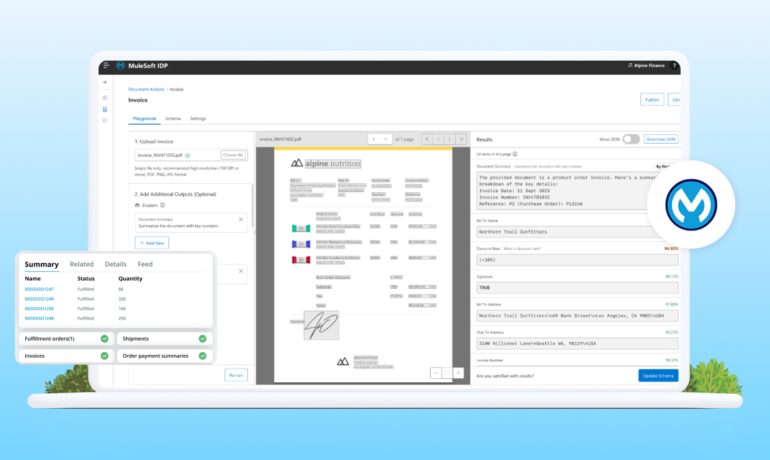
Salesforce yesterday announced new solutions to help streamline and accelerate end-to-end order lifecycle management: MuleSoft’s Anypoint Partner Manager with Intelligent Document Processing (IDP) and MuleSoft Accelerator for Salesforce Order Management. MuleSoft B2B and B2C With AI. Together, these business-to-business (B2B) and business-to-consumer (B2C) integration solutions make it easier to connect essential data across third-party applications, Salesforce OMS, and partner ecosystems – all within MuleSoft. Enhanced with AI, these new solutions help IT teams unify data from multiple data and system sources to achieve end-to-end order visibility, improved efficiency, and customer satisfaction. Why it matters: IT teams are inundated with requests to integrate disparate systems and adopt different technologies. And IT teams in retail, consumer goods, manufacturing, logistics, and healthcare must manage the thousands of daily transactions between suppliers and buyers across the supply chain ecosystem. To add to the complexity, 75% of B2B digital sales occur via standardized Electronic Data Interchange (EDI) and specialized solutions are needed to handle these transactions. Go deeper: Anypoint Partner Manager with IDP is a cloud-native B2B integration solution that accelerates partner onboarding and operational management of both API and EDI-based transactions through the commerce and supply chain lifecycle. It provides visibility tools to accurately monitor the health of partner transactions along with key business and operational insights like overall order frequency and volume, shipment statuses, and more. By utilizing IDP, developers can leverage AI to extract, read, and store unstructured data from documents such as invoice and purchase order PDFs, surfacing it in systems of record and order management systems like Salesforce OMS. IT and business teams can rapidly develop integrations and APIs, monitor and manage their performance, and secure them in compliance with partner requirements, all through a single pane of glass. New capabilities of MuleSoft B2B and B2C With AI include: MuleSoft Accelerator for Salesforce OMS makes it easier and faster to achieve end-to-end order visibility across channels from a centralized hub. The accelerator includes pre-built APIs, connectors, implementation templates, and other technical assets for Anypoint Platform to unify B2B orders with Salesforce OMS and connect all B2B and B2C orders to enterprise resource planning (ERP) systems. By leveraging the available out-of-the-box integration assets, customers can significantly reduce the development time required for integrating systems and accelerate time to market. MuleSoft B2B and B2C With AI. New capabilities of this offering include: Industry Use Cases: Customer perspective: “We were struggling with disjointed technology that was causing order and shipping delays while hampering our ability to innovate across our ecosystem,” said Jeff Blank, VP, Finance & Infrastructure at Jillamy. “MuleSoft’s Anypoint Partner Manager helped accelerate our partner onboarding processes with seamless B2B integration and more efficient management of our EDI transactions.” Salesforce perspective: “B2B and B2C integrations are critical to the success of supply chain management. From getting berries out of the farm or medical devices to hospitals, organizations across the globe are looking for a unified solution to manage and securely monitor their business partner transactions. With Anypoint Partner Manager and MuleSoft Accelerator for OMS, our customers can use our technology to build a composable business ecosystem that meets business partner compliance standards and drives end-to-end supply chain and commerce processes with efficiency, visibility, and speed.” – Andrew Comstock, VP, Product Management With Anypoint Partner Manager and MuleSoft Accelerator for OMS, our customers can use our technology to build a composable business ecosystem that meets business partner compliance standards and drives end-to-end supply chain and commerce processes with efficiency, visibility, and speed. Andrew Comstock, VP, Product Management Like Related Posts Who is Salesforce? Who is Salesforce? Here is their story in their own words. From our inception, we’ve proudly embraced the identity of Read more Salesforce Marketing Cloud Transactional Emails Salesforce Marketing Cloud Transactional Emails are immediate, automated, non-promotional messages crucial to business operations and customer satisfaction, such as order Read more Salesforce Unites Einstein Analytics with Financial CRM Salesforce has unveiled a comprehensive analytics solution tailored for wealth managers, home office professionals, and retail bankers, merging its Financial Read more AI-Driven Propensity Scores AI plays a crucial role in propensity score estimation as it can discern underlying patterns between treatments and confounding variables Read more

Read More
mulesoft and healthcare

MuleSoft and Healthcare

Driving Innovation in Healthcare Through Data Interoperability Healthcare organizations are navigating an unprecedented surge in patient data, which is critical for communication, research, and management. This data plays a pivotal role in modernizing healthcare and improving outcomes, particularly with the shift toward a Value-Based Care Model. However, 81% of IT leaders report that much of this data remains trapped in silos, hindering innovation and negatively impacting patient satisfaction. The Importance of Interoperability in Healthcare Improving Patient Outcomes and Managing RiskLeading healthcare organizations understand that achieving interoperability—seamless data exchange across clinical and non-clinical systems—is vital. Beyond supporting Value-Based Care, interoperability drives patient satisfaction, loyalty, and cost-efficiency. By enabling accurate data sharing, healthcare providers can: Interoperability also supports proactive preventative care, reducing long-term healthcare costs and boosting life expectancy. Regulatory Mandates: The Interoperability and Patient Access Final RuleSince May 1, 2020, the Centers for Medicare & Medicaid Services (CMS) have mandated interoperability through the Interoperability and Patient Access Final Rule. This legislation holds U.S. healthcare providers accountable for: Non-compliance can result in significant fines and public reporting of violations, further emphasizing the criticality of achieving interoperability. The Challenge of ImplementationDespite its clear benefits—improved patient outcomes, compliance, and cost savings—achieving interoperability poses challenges. Technological complexities and siloed data structures hinder seamless integration. This is where MuleSoft, a Salesforce company, provides a powerful solution. How MuleSoft Enables Interoperability in Healthcare Breaking Down Silos with API-Led IntegrationMuleSoft is a trusted partner for leading healthcare organizations, offering secure, scalable solutions to eliminate data silos. Recognized as a Leader in Gartner’s Magic Quadrant for iPaaS, MuleSoft empowers providers with its HIPAA-compliant Anypoint Platform, facilitating interoperability through API-led integration. Key Features and Benefits Transforming Healthcare with MuleSoft The digital transformation of healthcare is accelerating, driven by evolving regulations, patient expectations, and a dynamic global environment. MuleSoft stands at the forefront of this shift, empowering healthcare organizations to: By partnering with MuleSoft, healthcare organizations can embrace innovation and build healthier connections—one integration at a time. Contact Tectonic today to get started. Like Related Posts Who is Salesforce? Who is Salesforce? Here is their story in their own words. From our inception, we’ve proudly embraced the identity of Read more Salesforce Marketing Cloud Transactional Emails Salesforce Marketing Cloud Transactional Emails are immediate, automated, non-promotional messages crucial to business operations and customer satisfaction, such as order Read more Salesforce Unites Einstein Analytics with Financial CRM Salesforce has unveiled a comprehensive analytics solution tailored for wealth managers, home office professionals, and retail bankers, merging its Financial Read more AI-Driven Propensity Scores AI plays a crucial role in propensity score estimation as it can discern underlying patterns between treatments and confounding variables Read more
Read More
MuleSoft Certifications Now Unified with Salesforce Certifications

MuleSoft Certifications Now Unified with Salesforce Certifications

MuleSoft Certifications Now Unified with Salesforce Certifications As of May 6, 2024, MuleSoft certifications have been officially integrated into the Salesforce Certification program, with management now handled through Webassessor. This move simplifies the certification process, enabling professionals to manage both their Salesforce and MuleSoft credentials within a single platform, streamlining maintenance and tracking. This article delves into the merging of MuleSoft certifications with Salesforce’s Trailhead platform, highlighting what this means for professionals in both ecosystems. The update offers a significant improvement in managing certifications, particularly for those working across both platforms, as Salesforce has owned MuleSoft since 2018. We’ll cover what this change entails for current certification holders, key dates in the transition, and the new opportunities this unified platform brings—including new certifications. What is MuleSoft? MuleSoft is a leading integration platform that enables businesses to connect applications, data, and devices seamlessly. As an Integration Platform as a Service (iPaaS), MuleSoft facilitates the integration of cloud-based and on-premise applications, ensuring smooth workflows across various systems. Acquired by Salesforce in 2018, MuleSoft powers the integration layer of the Salesforce ecosystem, playing a crucial role in enabling businesses to unify their systems and create connected experiences. With the increasing demand for digital transformation and connected systems, MuleSoft expertise is becoming ever more valuable in the job market. MuleSoft Certifications and Training MuleSoft certifications validate expertise in designing, building, and managing integrations using the Anypoint Platform. Prior to this transition, MuleSoft certifications were handled through the MuleSoft Training portal, which was separate from Salesforce’s broader certification system. While this independent platform was functional, it required separate accounts and processes, making exam registration and certification management more cumbersome. By integrating MuleSoft certifications into Trailhead, Salesforce has simplified this process, offering a unified, more user-friendly experience for managing certifications. Transition Timeline The following key dates marked the transition: What This Means for Current MuleSoft Certification Holders For those already certified through MuleSoft, the migration to Salesforce’s certification system should have occurred automatically. MuleSoft credentials were transferred to their Trailblazer profiles for anyone with existing Webassessor accounts. A confirmation email was sent to ensure that the transition was successful. For those without a Webassessor account, one was created on their behalf, with login details provided via email by April 2024. Certification Maintenance MuleSoft certification holders with maintenance pending as of January 1, 2024, are not required to complete additional tasks through the old system. The expectation is that certification holders will have ample time to familiarize themselves with the new Trailhead process before maintenance requirements are introduced in 2025. New Certifications on Trailhead With the migration, certifications such as the MuleSoft Certified Catalyst Specialist and MuleSoft Certified Hyperautomation Specialist have also been integrated into Trailhead. Though not entirely new, these certifications were part of the legacy MuleSoft program, originally launched in late 2022 and early 2023. Summary The integration of MuleSoft certifications into Salesforce’s Trailhead platform marks a significant step towards a unified, more efficient credentialing process. This transition simplifies certification management, making it easier for professionals to stay current across both platforms. By merging these certifications, Salesforce is empowering professionals to fully leverage the combined capabilities of Salesforce and MuleSoft, further enhancing their skill sets in an increasingly interconnected digital landscape. Content updated September 2024. Like Related Posts Who is Salesforce? Who is Salesforce? Here is their story in their own words. From our inception, we’ve proudly embraced the identity of Read more Salesforce Marketing Cloud Transactional Emails Salesforce Marketing Cloud Transactional Emails are immediate, automated, non-promotional messages crucial to business operations and customer satisfaction, such as order Read more Salesforce Unites Einstein Analytics with Financial CRM Salesforce has unveiled a comprehensive analytics solution tailored for wealth managers, home office professionals, and retail bankers, merging its Financial Read more AI-Driven Propensity Scores AI plays a crucial role in propensity score estimation as it can discern underlying patterns between treatments and confounding variables Read more

Read More
Enhanced WhatsApp Channel In Salesforce Service Cloud

Enhanced WhatsApp Channel In Salesforce Service Cloud

Setting up an enhanced WhatsApp channel in Salesforce Service Cloud allows your support team to assist customers over WhatsApp with advanced features like messaging session transfers, collaboration with supervisors, and interactive content sharing. This insight provides a guide on how to create an enhanced WhatsApp channel, including upgrading from a standard channel or migrating a number from an external business service provider. Required Salesforce Editions and User Permissions To configure WhatsApp channels, you need the following user permissions: Note: Standard WhatsApp channels will be retired in mid-2025. Upgrade to enhanced channels before July 30, 2025, to avoid interruptions. Step 1: Prepare to Create Your Channel Step 2: Create Your Channel in Setup Step 3: Activate Your Channel If activation is not completed within 14 days, reverify your WhatsApp number through Meta Business Manager or repeat the setup flow in Messaging Settings. Enhanced WhatsApp Channel In Salesforce Service Cloud Like Related Posts Who is Salesforce? Who is Salesforce? Here is their story in their own words. From our inception, we’ve proudly embraced the identity of Read more Salesforce Marketing Cloud Transactional Emails Salesforce Marketing Cloud Transactional Emails are immediate, automated, non-promotional messages crucial to business operations and customer satisfaction, such as order Read more Salesforce Unites Einstein Analytics with Financial CRM Salesforce has unveiled a comprehensive analytics solution tailored for wealth managers, home office professionals, and retail bankers, merging its Financial Read more AI-Driven Propensity Scores AI plays a crucial role in propensity score estimation as it can discern underlying patterns between treatments and confounding variables Read more

Read More
salesforce unified knowledge

The Low-Code Revolution

The Low-Code Revolution: How Salesforce is Democratizing CRM Customization Redefining CRM Development Through Visual Innovation Salesforce has pioneered a fundamental shift in customer relationship management by embracing low-code/no-code technology, transforming how organizations customize their CRM platforms. This revolutionary approach enables business users across departments to actively participate in solution development through intuitive visual interfaces rather than complex programming. The low-code movement represents more than just simplified development—it’s a strategic empowerment of business teams to rapidly adapt systems to evolving needs without creating IT bottlenecks. By 2025, Gartner predicts 70% of new applications will use low-code/no-code technologies, with Salesforce positioned at the forefront of this transformation. Understanding the Low-Code/No-Code Paradigm Visual Development for Business Agility Low-code/no-code platforms replace traditional programming with: This approach creates a spectrum of capability: The Strategic Advantages of Salesforce’s Approach 1. Accelerated Digital Transformation 2. Cost-Effective Innovation 3. Cross-Functional Collaboration Salesforce’s Low-Code Ecosystem Core Platform Capabilities Expanding Possibilities Real-World Impact Across Industries Financial Services A regional bank reduced loan processing time by 40% by enabling loan officers to build their own workflow automations using Salesforce Flow. Healthcare A hospital network created a patient intake portal in three days using Lightning App Builder, eliminating a six-month development backlog. Retail A global retailer empowered store managers to build custom inventory apps, improving stock accuracy by 25% without IT involvement. The Future of Enterprise Development Salesforce’s low-code strategy represents more than just simplified tools—it’s redefining the relationship between business needs and technical solutions. Key emerging trends include: Implementing a Successful Low-Code Strategy Organizations maximizing Salesforce’s low-code potential typically: Conclusion: The Democratization of Digital Transformation Salesforce’s low-code/no-code revolution represents a fundamental shift in how businesses approach CRM customization and digital innovation. By empowering business users to become active participants in solution development, organizations can achieve: As the platform continues to evolve, Salesforce is positioned to lead the next wave of enterprise software—where the power to transform business processes resides not just with technical teams, but across the entire organization. This democratization of development capability marks a new era of business agility and competitive advantage. Content updated April 2025. Like Related Posts Who is Salesforce? Who is Salesforce? Here is their story in their own words. From our inception, we’ve proudly embraced the identity of Read more Salesforce Marketing Cloud Transactional Emails Salesforce Marketing Cloud Transactional Emails are immediate, automated, non-promotional messages crucial to business operations and customer satisfaction, such as order Read more Salesforce Unites Einstein Analytics with Financial CRM Salesforce has unveiled a comprehensive analytics solution tailored for wealth managers, home office professionals, and retail bankers, merging its Financial Read more AI-Driven Propensity Scores AI plays a crucial role in propensity score estimation as it can discern underlying patterns between treatments and confounding variables Read more

Read More
ai voice agent

Voice Agents

A voice agent, also known as a voice AI agent, is a system that uses artificial intelligence (AI) to understand, interpret, and respond to human speech, enabling natural, conversational interactions for tasks like answering questions, providing information, or completing actions. Functionality:Voice agents use technologies like natural language processing (NLP) and machine learning to engage in conversations, answer queries, and perform tasks, much like a customer service representative would. Voice AI agents represent a transformative leap in how humans interact with technology. These sophisticated systems combine speech recognition, natural language understanding, and human-like speech synthesis to enable fluid, real-time conversations. Unlike traditional AI tools, voice AI agents can autonomously reason, make decisions, and execute tasks—revolutionizing industries from customer service to healthcare. What Are Voice AI Agents? Voice AI agents are autonomous software systems that:✔ Understand spoken language (speech recognition).✔ Reason like humans (powered by large language models).✔ Respond with natural-sounding speech (text-to-speech synthesis).✔ Perform tasks with minimal human intervention (agentic workflows). They excel in 24/7 interactive services, such as customer support, personal assistants, and accessibility tools, offering human-like interactions at scale. How Voice AI Agents Work Voice AI agents integrate multiple AI disciplines: 1. Speech Recognition (ASR) 2. Natural Language Understanding (NLU) 3. Decision-Making & Task Execution 4. Speech Synthesis (TTS) Key Advancements Over Traditional Assistants Feature Virtual Assistants (Siri, Alexa) Modern Voice AI Agents Reasoning Limited, scripted responses Dynamic, LLM-powered decisions Task Complexity Single-step commands Multi-step workflows Adaptability Static knowledge Learns from interactions Personalization Basic user profiles Context-aware responses Architecture of a Voice AI Agent A typical client-server setup includes: Client-Side Server-Side Communication Protocols: Challenges & Limitations Despite rapid progress, voice AI agents still face hurdles: 🔹 Accents & Dialects – Performance drops with underrepresented languages.🔹 Speech Disorders – Struggles with stuttering or atypical speech patterns.🔹 Continuous Learning – Requires frequent retraining to stay current.🔹 Privacy Concerns – Handling sensitive voice data securely. How to Build a Voice AI Agent Real-World Applications ✅ Customer Service – Automated call centers (Vapi, Skit.ai).✅ Healthcare – Voice assistants for patients & diagnostics.✅ Education – Personalized tutoring & language learning.✅ Accessibility – Assistive tech for visually impaired (Be My AI).✅ Smart Homes – Voice-controlled IoT devices (Alexa, Google Home). The Future of Voice AI Agents As LLMs, speech synthesis, and agentic frameworks improve, voice AI will: However, ethical AI development remains critical to address biases, privacy, and security. Final Thoughts Voice AI agents are reshaping human-computer interaction, moving beyond rigid chatbots to true conversational partners. Businesses adopting this tech early will gain a competitive edge—while those lagging risk obsolescence. The era of talking machines is here. Are you ready? Like Related Posts Who is Salesforce? Who is Salesforce? Here is their story in their own words. From our inception, we’ve proudly embraced the identity of Read more Salesforce Unites Einstein Analytics with Financial CRM Salesforce has unveiled a comprehensive analytics solution tailored for wealth managers, home office professionals, and retail bankers, merging its Financial Read more AI-Driven Propensity Scores AI plays a crucial role in propensity score estimation as it can discern underlying patterns between treatments and confounding variables Read more Tectonic’s Successful Salesforce Track Record Salesforce Technology Services Integrator – Tectonic has successfully delivered Salesforce in a variety of industries including Public Sector, Hospitality, Manufacturing, Read more

Read More
Top AI Tools Shaping Business Success

Top AI Tools Shaping Business Success

Top AI Tools Shaping Business Success in 2024 In the dynamic world of business, staying ahead means embracing the latest technologies. Artificial Intelligence (AI) is no longer just a buzzword—it’s a transformative force that helps businesses operate more efficiently, make smarter decisions, and enhance customer experiences. As we move through 2024, the AI tool ecosystem is rapidly expanding, offering innovative solutions to automate tasks, gain deep insights, and improve customer engagement. Below, we explore the top AI tools that are shaping the future of business. StoryChief is a comprehensive content marketing platform that simplifies the creation and distribution of content through AI. From ideation to optimization, it leverages machine learning to help businesses generate high-quality, engaging content at scale. Key Features: Pricing: Plans start with a free tier, with paid options ranging from $40 to $500 per month. Developed by OpenAI, ChatGPT is a versatile language model capable of generating human-like text. It excels in content creation, customer support, and data analysis. Key Use Cases: Pricing: API access with usage-based pricing. Perplexity AI is an advanced search engine that provides accurate, summarized answers to complex queries using natural language processing (NLP). Key Features: Pricing: Free version available, with Pro version at $20/month offering enhanced features. Zapier connects over 5,000 apps, enabling automation of repetitive tasks across your tech stack with AI-powered tools that simplify complex automations. Key Features: Pricing: Free plan available for up to 100 tasks per month; paid plans start at $19.99/month. Grammarly is an AI-driven writing assistant that enhances the quality of written communication, ensuring clarity, conciseness, and error-free content. Key Features: Pricing: Free version available; Premium plans start at $12/month for individuals and $25/user/month for businesses. Typeframes simplifies video creation with AI, turning scripts or images into professional-quality videos with animations, transitions, and voiceovers. Key Features: Pricing: Plans start at $29/month, with higher-tier options available. Chatbase enables businesses to build intelligent chatbots and virtual assistants that handle a wide range of customer service inquiries. Key Features: Pricing: Free plan available with limited message credits; paid plans start at $19/month. Secta is an AI-powered headshot generator that creates professional-quality headshots from user-submitted photos, ideal for businesses needing polished profile pictures. Key Features: Pricing: Pay-as-you-go at $49 per headshot session. Voicenotes is an AI-driven transcription tool that converts voice memos into concise summaries and action items, perfect for capturing important information efficiently. Key Features: Pricing: Free plan available; paid plans start at $10/month, with lifetime payment options. Notion AI enhances the popular Notion productivity platform with AI-powered writing assistance, content summarization, and database management. Key Features: Pricing: Available as an add-on at $10 per user per month, with discounts for annual plans. Choosing the Right AI Tools for Your Business Selecting the right AI tools involves considering several factors: By evaluating these aspects, you can effectively leverage AI to enhance efficiency, drive growth, and maintain a competitive edge in 2024. Like Related Posts Who is Salesforce? Who is Salesforce? Here is their story in their own words. From our inception, we’ve proudly embraced the identity of Read more Salesforce Marketing Cloud Transactional Emails Salesforce Marketing Cloud Transactional Emails are immediate, automated, non-promotional messages crucial to business operations and customer satisfaction, such as order Read more Salesforce Unites Einstein Analytics with Financial CRM Salesforce has unveiled a comprehensive analytics solution tailored for wealth managers, home office professionals, and retail bankers, merging its Financial Read more AI-Driven Propensity Scores AI plays a crucial role in propensity score estimation as it can discern underlying patterns between treatments and confounding variables Read more
Read More
Data Management and Data Maturity

Data Management and Data Maturity

Data Management and Data Maturity: Generative AI Raises Concerns About Data Ethics and Equity Harnessing the capabilities of generative AI is contingent on having comprehensive, unified, and accurate data, as indicated by more than half of IT leaders. However, several obstacles hinder progress. A recent survey unveils that a majority of IT leaders lack a unified data strategy, impeding the seamless integration of generative AI into their existing technology stack. Beyond technical challenges, generative AI also brings to the forefront serious ethical considerations. Key findings from the survey reveal: AI Illuminates Data Management While generative AI garners attention, more established AI applications, such as predictive analytics and chatbots, have long been advantageous for organizations. Technical leaders leveraging AI report significantly faster decision-making and operations. The benefits extend beyond speed, with analytics and IT leaders highlighting more time to address strategic challenges rather than being immersed in mundane tasks. Customers also reap the rewards, with technical leaders noting substantial improvements in customer satisfaction due to AI. Given the pivotal role of quality data in AI outcomes, it is unsurprising that nearly nine out of ten analytics and IT leaders consider new developments in AI to prioritize data management. Realized Benefits of AI Adoption Analytics and IT leaders cite several top benefits realized from AI adoption: Data Maturity Signals AI Preparedness Data maturity emerges as a foundational element for successful AI adoption, with high-maturity organizations boasting superior infrastructure, strategy, and alignment compared to their low-data-maturity counterparts. The disparities are particularly evident in terms of data quality, with high-maturity respondents being twice as likely as low-maturity respondents to possess the high-quality data required for effective AI utilization. Like2 Related Posts Who is Salesforce? Who is Salesforce? Here is their story in their own words. From our inception, we’ve proudly embraced the identity of Read more Salesforce Marketing Cloud Transactional Emails Salesforce Marketing Cloud Transactional Emails are immediate, automated, non-promotional messages crucial to business operations and customer satisfaction, such as order Read more Salesforce Unites Einstein Analytics with Financial CRM Salesforce has unveiled a comprehensive analytics solution tailored for wealth managers, home office professionals, and retail bankers, merging its Financial Read more AI-Driven Propensity Scores AI plays a crucial role in propensity score estimation as it can discern underlying patterns between treatments and confounding variables Read more

Read More
Tectonic at a Glance

AI Product Management Tools

Embracing AI in Product Management: Your New Best Friend, Not a Replacement-Original published by https://zedaio.medium.com/ Amid the lively debates about AI taking over product management roles, let’s set the record straight: AI is here as an ally, not a replacement. It’s about leveraging AI to amplify our capabilities, streamline mundane tasks, and make room for the creative and strategic aspects of product management. AI Product Management Tools. Here are seven AI tools that will automate your daily routines, offering support that transforms the way you manage products. Ready to upgrade your product management game with AI by your side? Let’s dive in! 1. Zeda.io Zeda.io is one of the best AI tools for product managers. It offers a complete suite of features that help you in feedback management, strategic planning, and closing the loop. It is a perfect tool if you are striving to balance your customer needs and business goals. With integrations like Slack, Gong, Teams, Salesforce, and more, you can gather and manage customer feedback effortlessly. Its unique AI technology generates valuable, actionable insights by categorizing all the feedback, helping you uncover pressing customer issues and decide what to build next. Key Features: 2. ChatGPT An obvious choice, ChatGPT can automate many of your tasks. It helps make sense of vague product user feedback, create PRDs, release notes, and other documents. The key is to use the right prompts and GPT plugins tailored for product managers. Key Features: 3. Notion AI Notion is a cloud-based productivity and collaboration tool that provides various organizational tools, including task management, project tracking, to-do lists, bookmarking, and more. Notion’s AI can assist product managers in several ways. Key Features: 4. Uizard Uizard is a user interface design tool that uses AI to quickly and efficiently create wireframes, mockups, and prototypes in minutes. The tool’s advanced deep-learning algorithms analyze images provided by product teams and managers to create design themes. Key Features: 5. ClickUp ClickUp is a cloud-based tool that helps teams manage their work effectively, offering features like task management, time tracking, file sharing, and communication tools. ClickUp is highly customizable and offers multiple AI tools that integrate seamlessly into workflows. Key Features: 6. Delibr Delibr is an excellent tool for AI product teams to collaborate effectively during the feature refinement process. It helps capture, synthesize, and organize feedback from diverse sources, enabling informed decision-making and creating high-quality documentation. Key Features: 7. Fireflies.ai Fireflies.ai enhances meeting productivity by transcribing, summarizing, and analyzing voice conversations. It integrates with major video-conferencing platforms and offers various ways to capture meetings, including a Chrome extension and direct uploads. Key Features: AI Product Management Tools Embracing AI in product management doesn’t mean diminishing the value of human insight; it’s about enhancing our capabilities and efficiency. The seven AI tools outlined here offer a glimpse into a future where technology and creativity intersect, empowering product managers to achieve more in less time. By integrating suitable tools into your workflow, you can focus on innovation and strategy, ensuring your products not only meet but exceed user expectations. Let AI be your ally to achieve greater heights and product success. Like Related Posts Who is Salesforce? Who is Salesforce? Here is their story in their own words. From our inception, we’ve proudly embraced the identity of Read more Salesforce Marketing Cloud Transactional Emails Salesforce Marketing Cloud Transactional Emails are immediate, automated, non-promotional messages crucial to business operations and customer satisfaction, such as order Read more Salesforce Unites Einstein Analytics with Financial CRM Salesforce has unveiled a comprehensive analytics solution tailored for wealth managers, home office professionals, and retail bankers, merging its Financial Read more AI-Driven Propensity Scores AI plays a crucial role in propensity score estimation as it can discern underlying patterns between treatments and confounding variables Read more

Read More
Einstein Copilot Studio

Einstein Copilot Studio Explained

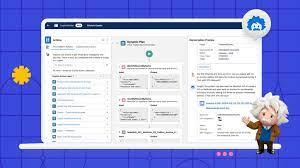
Einstein Copilot Studio Explained: Crafting and Personalizing a Reliable AI Assistant Enterprises aiming to personalize Einstein Copilot can leverage the newly introduced Einstein Copilot Studio. This platform enables the construction and customization of AI assistants, incorporating pertinent prompts, skills, and AI models tailored for specific sales, service, marketing, commerce, and IT tasks. Beyond the confines of Salesforce applications, companies can seamlessly integrate Einstein Copilot into consumer-facing channels. This extension enhances customer interactions by embedding AI assistants into websites for real-time chat capabilities or integrating with popular messaging platforms such as Slack, WhatsApp, or SMS. Einstein Copilot Studio comprises the following key components: Just as Microsoft has introduced its own Copilot solutions, powered by generative AI, Salesforce is tapping into the power of LLMs to empower sales, marketing, and customer service professionals. Building on Salesforce’s existing range of Einstein AI features, the company announced “Einstein 1” this year – the next generation of the Salesforce platform. Einstein 1 is a comprehensive suite of tools that empowers users to bring AI into their everyday workflows. The Einstein Copilot (Salesforce Copilot) solution is at the core of this solution, alongside the new Copilot studio and the Einstein Trust Layer. Contact Tectonic today to explore the value of Einstein Copilot Studio for your company., Like2 Related Posts Who is Salesforce? Who is Salesforce? Here is their story in their own words. From our inception, we’ve proudly embraced the identity of Read more Salesforce Marketing Cloud Transactional Emails Salesforce Marketing Cloud Transactional Emails are immediate, automated, non-promotional messages crucial to business operations and customer satisfaction, such as order Read more Salesforce Unites Einstein Analytics with Financial CRM Salesforce has unveiled a comprehensive analytics solution tailored for wealth managers, home office professionals, and retail bankers, merging its Financial Read more AI-Driven Propensity Scores AI plays a crucial role in propensity score estimation as it can discern underlying patterns between treatments and confounding variables Read more
Read More
New ChatGPT-4o

ChatGPT and Salesforce Explained

Supercharge Salesforce with ChatGPT: AI-Powered CRM Enhancements Integrating ChatGPT with Salesforce unlocks transformative potential across sales, service, marketing, and development—boosting efficiency, personalization, and decision-making. Here’s how businesses can harness generative AI to elevate their CRM strategy. 1. Automating Workflows & Boosting Productivity Workflow Optimization Accelerated Development AI-Generated Content 2. Smarter Customer Engagement Intelligent Lead Management Hyper-Personalized Communication Instant Customer Support 3. Data-Driven Sales & Marketing Predictive Sales Insights Laser-Targeted Campaigns AI-Powered Sales Forecasting 4. Seamless Salesforce Integration Einstein GPT + OpenAI Lightning Web Components (LWC) API Configuration 5. Real-World Use Cases Scenario AI Solution Outcome Case Summarization ChatGPT auto-generates case notes for agents. 50% faster resolution times. Dynamic Email Drafting AI crafts personalized responses in <10 seconds. 35% higher reply rates. Automated Reporting “Show me Q2 pipeline trends” → Instant dashboard. No-code analytics for all users. The Bottom Line By integrating ChatGPT with Salesforce, businesses can:✅ Reduce manual work with AI automation.✅ Enhance customer experiences through hyper-personalization.✅ Drive revenue growth with predictive insights. With Einstein GPT and custom LWC integrations, Salesforce users can deploy generative AI without complex coding—unlocking smarter, faster, and more scalable CRM operations. Ready to transform your Salesforce workflows? Start with a pilot in lead scoring, service automation, or sales forecasting today. Content updated June 2025. Like Related Posts Who is Salesforce? Who is Salesforce? Here is their story in their own words. From our inception, we’ve proudly embraced the identity of Read more Salesforce Marketing Cloud Transactional Emails Salesforce Marketing Cloud Transactional Emails are immediate, automated, non-promotional messages crucial to business operations and customer satisfaction, such as order Read more Salesforce Unites Einstein Analytics with Financial CRM Salesforce has unveiled a comprehensive analytics solution tailored for wealth managers, home office professionals, and retail bankers, merging its Financial Read more AI-Driven Propensity Scores AI plays a crucial role in propensity score estimation as it can discern underlying patterns between treatments and confounding variables Read more

Read More
gettectonic.com