Large Language Model Archives - gettectonic.com - Page 14
Rise of AI Agents

Rise of AI Agents

The Rise of AI Agents in Enterprise Automation Rise of AI Agents… It sound a bit like a B grade satire movie. But its not satire or scary. AI Agents, powered by large language models (LLMs), represent a groundbreaking paradigm shift in software. Unlike previous automation technologies, AI agents can reason, collaborate, and act in ways similar to human behavior. This new era of Enterprise AI Agents marks a significant evolution from traditional Robotic Process Automation (RPA), expanding the scope from simple task-level automation to enhancing complex knowledge work. RPA stands for Robotic Process Automation, which uses software bots to automate digital tasks and streamline processes. RPA can help reduce costs and improve efficiency. There are three main types of RPA: attended, unattended, and hybrid From RPA to AI Agents: A Strategic Shift A decade after the emergence of RPA, the enterprise landscape is poised for another transformation with intelligent AI agents. These agents are not merely incremental improvements but a revolutionary technology requiring new skills and tools. They transcend the limitations of RPA, moving beyond rule-based automation to dynamic, context-aware operations. Transitioning from RPA to AI agents is a strategic initiative necessitating executive sponsorship. This shift also offers automation leaders and Centers of Excellence (CoEs) the chance to reimagine their roles as strategic enablers within the enterprise. The Evolution of Enterprise Automation Automating Tasks: RPA RPA gained popularity in the mid-2010s through companies like UiPath, leveraging record-and-playback style UI automation. Despite early skepticism about its fragility, RPA established itself as a cornerstone of low-code business applications. Automating Processes: Intelligent Automation (IA) IA extends beyond RPA by incorporating techniques like API automation and OCR. It signals a shift from point-and-click automation to process automation, often blending coding with low-code tools. However, IA remains rule-based, suitable for structured processes. Automating Work: Intelligent AI Agents AI agents introduce a new agentic planning and execution workflow. They natively understand unstructured data and processes, making them ideal for tasks described in natural language rather than rigid rules. AI agents can self-correct and seek human feedback, enhancing resilience compared to pre-programmed bots. Strategic Applications of AI Agents AI agents expand the possibilities of enterprise automation. While RPA remains effective for repetitive, structured tasks, AI agents bring new capabilities to areas requiring flexible reasoning and decision-making. Tactical Automation AI agents can augment existing RPA workflows, addressing tasks that precede or follow RPA routines. This initial integration helps expand automation’s reach within the enterprise. Standard Decisions in Standard Contexts For work involving standard decisions within platforms like ServiceNow or Salesforce, AI and automation solutions from these vendors are beneficial. These platforms continue to innovate, enhancing their data and process capabilities. Strategic Core Business Workflows The most significant impact of AI agents lies in complex, custom-context tasks central to the enterprise’s operations. Here, built-for-purpose enterprise AI agents can drive substantial value, allowing human workers to focus on more strategic activities. Implementing AI Agents: Steps to Get Started The Urgency of Adopting AI Agents The rapid pace of AI advancements necessitates immediate action. Traditional strategies that plan for future technology must pivot to embrace AI today. Forward-looking companies are already reaping significant benefits from AI, and delaying adaptation risks losing competitive advantage. AI agents are not just the next step in automation; they are a transformative technology redefining enterprise workflows. By acting now, businesses can harness AI agents’ full potential, driving innovation and maintaining relevance in an ever-evolving market. Like Related Posts Who is Salesforce? Who is Salesforce? Here is their story in their own words. From our inception, we’ve proudly embraced the identity of Read more Salesforce Unites Einstein Analytics with Financial CRM Salesforce has unveiled a comprehensive analytics solution tailored for wealth managers, home office professionals, and retail bankers, merging its Financial Read more AI-Driven Propensity Scores AI plays a crucial role in propensity score estimation as it can discern underlying patterns between treatments and confounding variables Read more Tectonic’s Successful Salesforce Track Record Salesforce Technology Services Integrator – Tectonic has successfully delivered Salesforce in a variety of industries including Public Sector, Hospitality, Manufacturing, Read more


Read More
Train On Your Own Data

Train On Your Own Data

General-purpose large language models (LLMs) offer businesses the convenience of immediate use without requiring any special setup or customization. However, to maximize the potential of LLMs in business environments, organizations can achieve significant benefits by customizing these models through training on their own data. Custom LLMs excel at handling organization-specific tasks that generic LLMs—such as OpenAI’s ChatGPT or Google’s Gemini—may not manage as effectively. By training an LLM on data unique to the enterprise, businesses can fine-tune the model to produce responses that are highly relevant to specific products, workflows, and customer interactions. To determine whether to customize an LLM with organization-specific data, businesses should first explore the various types of LLMs and understand the advantages of fine-tuning a model on custom data sets. Following this, they can proceed with the necessary steps: identifying data sources, cleaning and formatting the data, adjusting model parameters, retraining the model, and testing it in production. Generic vs. Customized LLMs LLMs can be broadly categorized into two types: Training an LLM on custom data doesn’t imply starting from scratch; instead, it often involves fine-tuning a pre-trained generic model with additional training on the organization’s data. This approach allows the model to retain the broad knowledge it acquired during initial training while enhancing its capabilities in areas specific to the business. Benefits of Customizing an LLM The primary reason for retraining or fine-tuning an LLM is to achieve superior performance on business-specific tasks compared to using a generic model. For example, a company that wants to deploy a chatbot for customer support needs an LLM that understands its products in detail. Even if a generic LLM has some familiarity with the product from public data sources, it may lack the depth of knowledge that the company’s internal documentation provides. Without this comprehensive context, a generic LLM might struggle to generate accurate responses when interacting with customers about specific products. Generic models are optimized for broad usability, which means they may not be tailored for the specialized conversations required in business scenarios. Organizations can overcome these limitations by retraining or fine-tuning an LLM with data related to their products and services. During this process, AI teams can also adjust parameters, such as model weights, to influence the type of output the model generates, making it more relevant to the organization’s needs. Steps to Customize an LLM with Organization-Specific Data To customize an LLM with your organization’s data, follow these steps: By following these steps, organizations can transform a generic LLM into a powerful, customized tool tailored to their unique business needs, enhancing efficiency, customer satisfaction, and overall operational effectiveness. Like Related Posts Who is Salesforce? Who is Salesforce? Here is their story in their own words. From our inception, we’ve proudly embraced the identity of Read more Salesforce Marketing Cloud Transactional Emails Salesforce Marketing Cloud Transactional Emails are immediate, automated, non-promotional messages crucial to business operations and customer satisfaction, such as order Read more Salesforce Unites Einstein Analytics with Financial CRM Salesforce has unveiled a comprehensive analytics solution tailored for wealth managers, home office professionals, and retail bankers, merging its Financial Read more AI-Driven Propensity Scores AI plays a crucial role in propensity score estimation as it can discern underlying patterns between treatments and confounding variables Read more

Read More
Apple's Privacy Changes: A Call for Email Marketing Innovation

Apple’s MM1

Apple’s MM1: The Next Frontier in Multimodal AI A New Challenger Emerges On March 14, 2024, Apple quietly revolutionized the AI landscape with MM1—a multimodal large language model that redefines what’s possible at the intersection of language and visual understanding. While not yet publicly available, MM1’s technical disclosures reveal an architecture poised to challenge OpenAI’s GPT-4 and Google’s Gemini. Architectural Breakthroughs Vision-Language Fusion Engine Training Data Alchemy MM1’s secret sauce lies in its curated multimodal diet: Benchmark Dominance Early evaluations show MM1 outperforming competitors in key areas: Task MM1-30B GPT-4V Gemini 1.5 Visual QA Accuracy 82.3% 78.1% 80.6% Image Captioning 91.2% 89.4% 90.1% Multimodal Reasoning 76.8% 72.3% 74.5% Scores represent relative performance on MMMU benchmark suite The Apple Advantage Three key differentiators set MM1 apart: Industry Transformations Ahead MM1’s capabilities suggest disruptive potential across sectors: Healthcare Education Retail The Road to Availability While Apple remains characteristically secretive about release plans, industry analysts predict: Why This Matters MM1 represents more than another LLM—it’s Apple’s first shot across the bow in the AI arms race. By combining:✔ Unmatched multimodal understanding✔ Apple’s hardware/software synergy✔ Industry-leading privacy standards This model could redefine how consumers and businesses interact with AI. As the tech world awaits access, one thing is clear: the multimodal AI landscape just got far more interesting. Like Related Posts Who is Salesforce? Who is Salesforce? Here is their story in their own words. From our inception, we’ve proudly embraced the identity of Read more Salesforce Unites Einstein Analytics with Financial CRM Salesforce has unveiled a comprehensive analytics solution tailored for wealth managers, home office professionals, and retail bankers, merging its Financial Read more AI-Driven Propensity Scores AI plays a crucial role in propensity score estimation as it can discern underlying patterns between treatments and confounding variables Read more Tectonic’s Successful Salesforce Track Record Salesforce Technology Services Integrator – Tectonic has successfully delivered Salesforce in a variety of industries including Public Sector, Hospitality, Manufacturing, Read more

Read More
Customized Conversational AI Assistant

Conversational AI Explained

Conversational AI is a type of artificial intelligence that focuses on simulating human conversations, enabling machines to understand and respond to natural language input in a way that feels natural and engaging.  Conversational AI: Like Related Posts Who is Salesforce? Who is Salesforce? Here is their story in their own words. From our inception, we’ve proudly embraced the identity of Read more Salesforce Unites Einstein Analytics with Financial CRM Salesforce has unveiled a comprehensive analytics solution tailored for wealth managers, home office professionals, and retail bankers, merging its Financial Read more AI-Driven Propensity Scores AI plays a crucial role in propensity score estimation as it can discern underlying patterns between treatments and confounding variables Read more Tectonic’s Successful Salesforce Track Record Salesforce Technology Services Integrator – Tectonic has successfully delivered Salesforce in a variety of industries including Public Sector, Hospitality, Manufacturing, Read more

Read More
Why Domain-Specific AI Models Are Outperforming Generic LLMs in Enterprise Applications

Mastering AI Agents: From Basics to Multi-Agent Systems

AI agents represent one of the most transformative trends in artificial intelligence, potentially surpassing the impact of next-generation foundation models. As Andrew Ng highlighted: “AI agent workflows will drive massive progress this year—perhaps even more than new foundation models. This is a critical trend for anyone in AI to watch.” What Are AI Agents? AI agents are autonomous entities powered by large language models (LLMs) that can: They represent a shift from passive AI (providing information) to active AI (executing tasks). For example: Why AI Agents Matter Key Components of an AI Agent Building a Multi-Agent System Multi-agent architectures outperform single-agent approaches by distributing tasks. Example workflow: Performance Boost: Challenges & Future Directions Conclusion AI agents are redefining automation, offering unprecedented efficiency and problem-solving capabilities. While challenges remain, their potential to revolutionize industries—from finance to healthcare—is undeniable. Ready to explore AI agents? Start building today. Like Related Posts Who is Salesforce? Who is Salesforce? Here is their story in their own words. From our inception, we’ve proudly embraced the identity of Read more Salesforce Unites Einstein Analytics with Financial CRM Salesforce has unveiled a comprehensive analytics solution tailored for wealth managers, home office professionals, and retail bankers, merging its Financial Read more AI-Driven Propensity Scores AI plays a crucial role in propensity score estimation as it can discern underlying patterns between treatments and confounding variables Read more Tectonic’s Successful Salesforce Track Record Salesforce Technology Services Integrator – Tectonic has successfully delivered Salesforce in a variety of industries including Public Sector, Hospitality, Manufacturing, Read more

Read More
How AI is Raising the Stakes in Phishing Attacks

How AI is Raising the Stakes in Phishing Attacks

Cybercriminals are increasingly using advanced AI, including tools like ChatGPT, to execute highly convincing phishing campaigns that mimic legitimate communications with uncanny accuracy. As AI-powered phishing becomes more sophisticated, cybersecurity practitioners must adopt AI and machine learning defenses to stay ahead. What are AI-Powered Phishing Attacks? Phishing, a long-standing cybersecurity issue, has evolved from crude scams into refined attacks that can mimic trusted entities like Amazon, postal services, or colleagues. Leveraging social engineering, these scams trick people into clicking malicious links, downloading harmful files, or sharing sensitive information. However, AI is elevating this threat by making phishing attacks more convincing, timely, and challenging to detect. General Phishing Attacks Traditionally, phishing emails were often easy to spot due to grammatical errors or poor formatting. AI, however, eliminates these mistakes, creating messages that appear professionally written. Additionally, AI language models can gather real-time data from news and corporate sites, embedding relevant details that create urgency and heighten the attack’s credibility. AI chatbots can also generate business email compromise attacks or whaling campaigns at a massive scale, boosting both the volume and sophistication of these threats. Spear Phishing Spear phishing involves targeting specific individuals with highly customized messages based on data gathered from social media or data breaches. AI has supercharged this tactic, enabling attackers to craft convincing, personalized emails almost instantly. During a cybersecurity study, AI-generated phishing emails outperformed human-crafted ones in terms of convincing recipients to click on malicious links. With the help of large language models (LLMs), attackers can create hyper-personalized emails and even deepfake phone calls and videos. Vishing and Deepfakes Vishing, or voice phishing, is another tactic on the rise. Traditionally, attackers would impersonate someone like a company executive or trusted colleague over the phone. With AI, they can now create deepfake audio to mimic a specific person’s voice, making it even harder for victims to discern authenticity. For example, an employee may receive a voice message that sounds exactly like their CFO, urgently requesting a bank transfer. How to Defend Against AI-Driven Phishing Attacks As AI-driven phishing becomes more prevalent, organizations should adopt the following defense strategies: How AI Improves Phishing Defense AI can also bolster phishing defenses by analyzing threat patterns, personalizing training, and monitoring for suspicious activity. GenAI, for instance, can tailor training to individual users’ weaknesses, offer timely phishing simulations, and assess each person’s learning needs to enhance cybersecurity awareness. AI can also predict potential phishing trends based on data such as attack frequency across industries, geographical locations, and types of targets. These insights allow security teams to anticipate attacks and proactively adapt defenses. Preparing for AI-Enhanced Phishing Threats Businesses should evaluate their risk level and implement corresponding safeguards: AI, and particularly LLMs, are transforming phishing attacks, making them more dangerous and harder to detect. As digital footprints grow and personalized data becomes more accessible, phishing attacks will continue to evolve, including falsified voice and video messages that can trick even the most vigilant employees. By proactively integrating AI defenses, organizations can better protect against these advanced phishing threats. Like Related Posts Who is Salesforce? Who is Salesforce? Here is their story in their own words. From our inception, we’ve proudly embraced the identity of Read more Salesforce Unites Einstein Analytics with Financial CRM Salesforce has unveiled a comprehensive analytics solution tailored for wealth managers, home office professionals, and retail bankers, merging its Financial Read more AI-Driven Propensity Scores AI plays a crucial role in propensity score estimation as it can discern underlying patterns between treatments and confounding variables Read more Tectonic’s Successful Salesforce Track Record Salesforce Technology Services Integrator – Tectonic has successfully delivered Salesforce in a variety of industries including Public Sector, Hospitality, Manufacturing, Read more
Read More
Salesforce Einstein Features

Salesforce Einstein Features

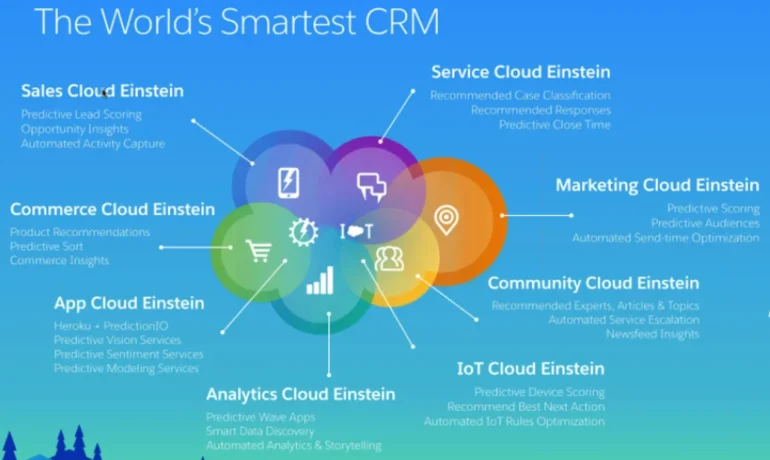
Salesforce Einstein Discover the power of the #1 AI for CRM with Einstein. Built into the Salesforce Platform, Einstein uses powerful machine learning and large language models to personalize customer interactions and make employees more productive. With Einstein powering the Customer 360, teams can accelerate time to value, predict outcomes, and automatically generate content within the flow of work. Einstein is for everyone, empowering business users, Salesforce Admins and Developers to embed AI into every experience with low code. Salesforce Einstein Features. Einstein Copilot Sales Actions: Sell faster with an AI assistant in the flow of work.Call Exploration: Ask Einstein to synthesize important call information in seconds. Ask Einstein to identify important takeaways and customer sentiment, so you have the context you need to move deals forward.

 Sales Summaries: Summarize records to identify likelihood the deal will close, the competitors involved, key activities, and more. Forecast Guidance: Ask Einstein to inform your forecast and help you identify which deals need your attention. Close Plan: Generate a customized action plan personalized to your customer and sales process. Increase conversion rates with step-by-step guidance and milestones grounded in CRM data. Salesforce Einstein Features Sales Generative AI features: ° Knowledge Creation: ° Search Answers for Agents and Customers: Einstein Copilot Service Actions: Streamline service operations by drafting Knowledge articles and surfacing answers, grounded in knowledge, to the most commonly asked questions. Summarize support interactions to save agent time and formalize institutional knowledge. Surface generated answers to agents’ & customers’ questions that are grounded in your trusted Knowledge base directly into your search page. Search Answers for Agents is included in the Einstein for Service Add-on SKU and Search Answers for Customers is included in the Einstein 1 Service Edition.
Empower agents to deliver more personalized service and reach resolutions faster with an AI assistant built into the flow of work. You can leverage out-of-the-box actions like summarize conversations or answer questions with Knowledge or you can build custom actions to fit your unique business needs. Service Salesforce Einstein Features This Release Einstein CopilotSell faster with an AI assistant. No data requirements
Included in Einstein 1 Sales Edition. Einstein Copilot: Sales ActionsSell faster with an AI assistant.No data requirements. 
 Call explorer and meeting follow-up requires Einstein Conversation Insights.
Included in Einstein 1 Sales Edition. Generative AIBoost productivity by automating time-consuming tasks.No data requirements. 
 Call summaries and call explorer requires Einstein Conversation Insights.
Included in Einstein 1 Sales Edition. Einstein will use a global model until enough data is available for a local model. For a local model: ≥1,000 lead records created and ≥120 of those converted in the last 6 monthsEinstein Automated Contacts Automatically add new
contacts & events to your CRM≥ 30 business accounts. If you use Person Accounts, >= 50 percent of accounts must be business accounts Einstein Recommended ConnectionsGet insights about your teams network to see who knows your customers and can help out ona deal ≥ 2 users to be connected to Einstein Activity Capture
and Inbox (5 preferred) Einstein Forecasting Easily predict sales forecasts inside
of Salesforce Collaborative Forecasting enabled; use a standard fiscal year; measure forecasts by opportunity revenue; forecast hierarchy must include at least one forecasting enabled user who reports to a forecast manager; opportunities must be in Salesforce ≥ 24 months;Einstein Email Insights Prioritize your inbox with actionable intelligence Einstein Activity Capture enabledEinstein Activity Metiics (Activity 360) Get insight into the activities you enter
manually and automatically from Einstein
Activity Capture Einstein Activity Capture enabled Sales Analytics Get insights into the most common sales KPIs No data requirements. User specific requirements like browser and device apply Einstein Conveisation Insights Gain actionable insights from your sales calls with conversational intelligenceCall or video recordings from Lightning Dialer, Service Cloud Voice, Zoom and other supported CTI audio and video partners.Buyer Assistant Replace web-to-lead forms with real-time conversations. No data requirements – Sales Cloud UE or Sales Engagement. Einstein Opportunity ScoringEinstein Activity CaptuiePrioritize the opportunities most likely to convertAutomatically capture data & add to your CRMEinstein will use a global model until enough data is available for a local model. For a local model: ≥ 200 closed won and ≥ 200 closed lost opportunities in the last 2 years, each with a lifespan of at least 2 days≥ 30 accounts, contacts, or leads; Requires Gmail, Microsoft Exchange 2019, 2016, or 2013 Einstein Relationship Insights Speed prospecting with AI that researches for you. No data requirements. Einstein Next Best Action Deliver optimal recommendations at the point of maximumimpactNo data requirements. User specific requirements like browser and device apply Sales AIGenerate emails, prioritize leads & opportunities most likely to convert, uncover pipeline trends, predict sales forecasts, automate data capture, and more with Einstein for Sales. Generative AIPrompt BuilderEinstein Lead ScoringEinstein Opportunity ScoringEinstein Activity CaptureEinstein Automated ContactsEinstein Recommended ConnectionsEinstein ForecastingEinstein Email InsightsEinstein Activity Metrics (Activity 360)Sales AnalyticsEinstein Conversation InsightsBuyer Assistant Sales AIGenerative AI: 
Feature Why is it so Great? What do I need? Automate common questions and business processes to solve customer requests fasterBoost productivity by auto-generating service replies, summarizing conversations during escalations andtransfers or closed interactions, drafting knowledge articles, and surfacing relevant answers grounded inknowledge for agents’ and customers’ commonly asked questions. Deliver optimal recommendations at the point of maximum impactEliminate the guesswork with AI-powered recommendations for everyoneDecrease time spent on manual data entry for incoming cases and improve case field accuracy and completionAutomate case triage and solve customer requests fasterDecrease time spent selecting field values needed to close a case with chat conversations and improved field accuracySurface the best articles in real time to solve any customer’s questionEliminate time spent typing responses to the most common customer questionsGet insights into contact center operations, understand customers, and deliver enhanced customerexperiencesChat or Messaging channels, minimum of 20 examples for most languagesNo data requirements. User specific requirements like browser and device apply Make sure that your dataset has the minimum records to build a successful recommendation. Recipient Records need a minimum of 100 records,Recommended Item Records need a minimum of 10 records, andPositive Interaction Examples need a minimum of 400

Read More
ai voice agent

Voice Agents

A voice agent, also known as a voice AI agent, is a system that uses artificial intelligence (AI) to understand, interpret, and respond to human speech, enabling natural, conversational interactions for tasks like answering questions, providing information, or completing actions. Functionality:Voice agents use technologies like natural language processing (NLP) and machine learning to engage in conversations, answer queries, and perform tasks, much like a customer service representative would. Voice AI agents represent a transformative leap in how humans interact with technology. These sophisticated systems combine speech recognition, natural language understanding, and human-like speech synthesis to enable fluid, real-time conversations. Unlike traditional AI tools, voice AI agents can autonomously reason, make decisions, and execute tasks—revolutionizing industries from customer service to healthcare. What Are Voice AI Agents? Voice AI agents are autonomous software systems that:✔ Understand spoken language (speech recognition).✔ Reason like humans (powered by large language models).✔ Respond with natural-sounding speech (text-to-speech synthesis).✔ Perform tasks with minimal human intervention (agentic workflows). They excel in 24/7 interactive services, such as customer support, personal assistants, and accessibility tools, offering human-like interactions at scale. How Voice AI Agents Work Voice AI agents integrate multiple AI disciplines: 1. Speech Recognition (ASR) 2. Natural Language Understanding (NLU) 3. Decision-Making & Task Execution 4. Speech Synthesis (TTS) Key Advancements Over Traditional Assistants Feature Virtual Assistants (Siri, Alexa) Modern Voice AI Agents Reasoning Limited, scripted responses Dynamic, LLM-powered decisions Task Complexity Single-step commands Multi-step workflows Adaptability Static knowledge Learns from interactions Personalization Basic user profiles Context-aware responses Architecture of a Voice AI Agent A typical client-server setup includes: Client-Side Server-Side Communication Protocols: Challenges & Limitations Despite rapid progress, voice AI agents still face hurdles: 🔹 Accents & Dialects – Performance drops with underrepresented languages.🔹 Speech Disorders – Struggles with stuttering or atypical speech patterns.🔹 Continuous Learning – Requires frequent retraining to stay current.🔹 Privacy Concerns – Handling sensitive voice data securely. How to Build a Voice AI Agent Real-World Applications ✅ Customer Service – Automated call centers (Vapi, Skit.ai).✅ Healthcare – Voice assistants for patients & diagnostics.✅ Education – Personalized tutoring & language learning.✅ Accessibility – Assistive tech for visually impaired (Be My AI).✅ Smart Homes – Voice-controlled IoT devices (Alexa, Google Home). The Future of Voice AI Agents As LLMs, speech synthesis, and agentic frameworks improve, voice AI will: However, ethical AI development remains critical to address biases, privacy, and security. Final Thoughts Voice AI agents are reshaping human-computer interaction, moving beyond rigid chatbots to true conversational partners. Businesses adopting this tech early will gain a competitive edge—while those lagging risk obsolescence. The era of talking machines is here. Are you ready? Like Related Posts Who is Salesforce? Who is Salesforce? Here is their story in their own words. From our inception, we’ve proudly embraced the identity of Read more Salesforce Unites Einstein Analytics with Financial CRM Salesforce has unveiled a comprehensive analytics solution tailored for wealth managers, home office professionals, and retail bankers, merging its Financial Read more AI-Driven Propensity Scores AI plays a crucial role in propensity score estimation as it can discern underlying patterns between treatments and confounding variables Read more Tectonic’s Successful Salesforce Track Record Salesforce Technology Services Integrator – Tectonic has successfully delivered Salesforce in a variety of industries including Public Sector, Hospitality, Manufacturing, Read more

Read More
LLM Knowledge Test

LLM Knowledge Test

Large Language Models. How much do you know about them? Take the LLM Knowledge Test to find out. Question 1Do you need to have a vector store for all your text-based LLM use cases? A. Yes B. No Correct Answer: B ExplanationA vector store is used to store the vector representation of a word or sentence. These vector representations capture the semantic meaning of the words or sentences and are used in various NLP tasks. However, not all text-based LLM use cases require a vector store. Some tasks, such as summarization, sentiment analysis, and translation, do not need context augmentation. Here is why: Question 2Which technique helps mitigate bias in prompt-based learning? A. Fine-tuning B. Data augmentation C. Prompt calibration D. Gradient clipping Correct Answer: C ExplanationPrompt calibration involves adjusting prompts to minimize bias in the generated outputs. Fine-tuning modifies the model itself, while data augmentation expands the training data. Gradient clipping prevents exploding gradients during training. Question 3Which of the following is NOT a technique specifically used for aligning Large Language Models (LLMs) with human values and preferences? A. RLHF B. Direct Preference Optimization C. Data Augmentation Correct Answer: C ExplanationData Augmentation is a general machine learning technique that involves expanding the training data with variations or modifications of existing data. While it can indirectly impact LLM alignment by influencing the model’s learning patterns, it’s not specifically designed for human value alignment. Incorrect Options: A) Reinforcement Learning from Human Feedback (RLHF) is a technique where human feedback is used to refine the LLM’s reward function, guiding it towards generating outputs that align with human preferences. B) Direct Preference Optimization (DPO) is another technique that directly compares different LLM outputs based on human preferences to guide the learning process. Question 4In Reinforcement Learning from Human Feedback (RLHF), what describes “reward hacking”? A. Optimizes for desired behavior B. Exploits reward function Correct Answer: B ExplanationReward hacking refers to a situation in RLHF where the agent discovers unintended loopholes or biases in the reward function to achieve high rewards without actually following the desired behavior. The agent essentially “games the system” to maximize its reward metric. Why Option A is Incorrect:While optimizing for the desired behavior is the intended outcome of RLHF, it doesn’t represent reward hacking. Option A describes a successful training process. In reward hacking, the agent deviates from the desired behavior and finds an unintended way to maximize the reward. Question 5Fine-tuning GenAI model for a task (e.g., Creative writing), which factor significantly impacts the model’s ability to adapt to the target task? A. Size of fine-tuning dataset B. Pre-trained model architecture Correct Answer: B ExplanationThe architecture of the pre-trained model acts as the foundation for fine-tuning. A complex and versatile architecture like those used in large models (e.g., GPT-3) allows for greater adaptation to diverse tasks. The size of the fine-tuning dataset plays a role, but it’s secondary. A well-architected pre-trained model can learn from a relatively small dataset and generalize effectively to the target task. Why A is Incorrect:While the size of the fine-tuning dataset can enhance performance, it’s not the most crucial factor. Even a massive dataset cannot compensate for limitations in the pre-trained model’s architecture. A well-designed pre-trained model can extract relevant patterns from a smaller dataset and outperform a less sophisticated model with a larger dataset. Question 6What does the self-attention mechanism in transformer architecture allow the model to do? A. Weigh word importance B. Predict next word C. Automatic summarization Correct Answer: A ExplanationThe self-attention mechanism in transformers acts as a spotlight, illuminating the relative importance of words within a sentence. In essence, self-attention allows transformers to dynamically adjust the focus based on the current word being processed. Words with higher similarity scores contribute more significantly, leading to a richer understanding of word importance and sentence structure. This empowers transformers for various NLP tasks that heavily rely on context-aware analysis. Incorrect Options: Question 7What is one advantage of using subword algorithms like BPE or WordPiece in Large Language Models (LLMs)? A. Limit vocabulary size B. Reduce amount of training data C. Make computationally efficient Correct Answer: A ExplanationLLMs deal with massive amounts of text, leading to a very large vocabulary if you consider every single word. Subword algorithms like Byte Pair Encoding (BPE) and WordPiece break down words into smaller meaningful units (subwords) which are then used as the vocabulary. This significantly reduces the vocabulary size while still capturing the meaning of most words, making the model more efficient to train and use. Incorrect Answer Explanations: Question 8Compared to Softmax, how does Adaptive Softmax speed up large language models? A. Sparse word reps B. Zipf’s law exploit C. Pre-trained embedding Correct Answer: B ExplanationStandard Softmax struggles with vast vocabularies, requiring expensive calculations for every word. Imagine a large language model predicting the next word in a sentence. Softmax multiplies massive matrices for each word in the vocabulary, leading to billions of operations! Adaptive Softmax leverages Zipf’s law (common words are frequent, rare words are infrequent) to group words by frequency. Frequent words get precise calculations in smaller groups, while rare words are grouped together for more efficient computations. This significantly reduces the cost of training large language models. Incorrect Answer Explanations: Question 9Which configuration parameter for inference can be adjusted to either increase or decrease randomness within the model output layer? A. Max new tokens B. Top-k sampling C. Temperature Correct Answer: C ExplanationDuring text generation, large language models (LLMs) rely on a softmax layer to assign probabilities to potential next words. Temperature acts as a key parameter influencing the randomness of these probability distributions. Why other options are incorrect: Question 10What transformer model uses masking & bi-directional context for masked token prediction? A. Autoencoder B. Autoregressive C. Sequence-to-sequence Correct Answer: A ExplanationAutoencoder models are pre-trained using masked language modeling. They use randomly masked tokens in the input sequence, and the pretraining objective is to predict the masked tokens to reconstruct the original sentence. Question 11What technique allows you to scale model

Read More
LLMs Beyond Generative AI

LLMs Beyond Generative AI

Beyond Text Generation: The Versatile Capabilities of Large Language Models While large language models (LLMs) and generative AI have dominated the conversation over the past year, the spotlight has largely been on their text generation capabilities. There’s no denying the value of LLMs in generating answers to questions. However, focusing solely on this use case overlooks other valuable applications. This insight will explore several primary uses of LLMs, ensuring you recognize their broader potential beyond just generative purposes. Creation and Generation This is the most publicized use case for LLMs today. Applications like ChatGPT can answer questions with detailed responses, and tools like DALL-E generate images based on user prompts. Similar generators exist for code, video, and 3D virtual worlds. Interestingly, these generators share fundamental algorithmic approaches despite producing different content types—text, images, videos. Since they all process prompts, they require training to understand and decompose these prompts to guide the generation process, necessitating the use of LLMs. However, generating new content is just one aspect of what LLMs can achieve. Summarization LLMs excel at summarizing information. For instance, if you have a list of papers on your to-read list, an LLM can summarize their key themes, common points, and differences. This provides a clear baseline, helping you focus on essential aspects as you read. Summarizing content with AI tends to have a lower error risk compared to generating new content because the LLM works within the boundaries of the provided information. While it might occasionally miss a pattern or emphasize the wrong details, it’s unlikely to produce completely incorrect summaries. Translation Often underrated, translation might be one of the most impactful uses of LLMs. For example, LLMs can translate old code from obsolete languages into modern ones. An LLM generates a draft translation, which, although imperfect, can be refined by a programmer who understands the goal of the code even with limited knowledge of the original language. Human language translation also stands to benefit significantly. Soon, we’ll be able to communicate in our preferred languages, with LLMs instantly translating our words into the listener’s language. This will eliminate the need for a common language and help preserve uncommon languages by removing the communication barriers associated with them. Interpretation and Extraction LLMs are also adept at interpreting statements and triggering subsequent actions. Image generators use this approach, as do tools that handle analytical queries. For instance, asking “Please summarize this year’s sales by region and subtotal by product” allows an LLM to interpret the request, extract key parameters, and pass them to a query generator for the answer. Companies like Quaeris, which I advise, focus on this capability. Additionally, LLMs can handle tasks like sentiment analysis and customer service inquiries. They can ingest inquiries and extract relevant details, such as the product in question, the issue raised, and the requested action, to route the inquiry to the appropriate person more effectively. LLMs Beyond Generative AI The examples discussed are not exhaustive but represent some common and powerful uses of LLMs. They highlight that LLMs offer far more than just text generation. Exploring these other applications can provide significant benefits for you and your organization. Originally posted in the Analytics Matters newsletter on LinkedIn. Like Related Posts Who is Salesforce? Who is Salesforce? Here is their story in their own words. From our inception, we’ve proudly embraced the identity of Read more Salesforce Unites Einstein Analytics with Financial CRM Salesforce has unveiled a comprehensive analytics solution tailored for wealth managers, home office professionals, and retail bankers, merging its Financial Read more AI-Driven Propensity Scores AI plays a crucial role in propensity score estimation as it can discern underlying patterns between treatments and confounding variables Read more Tectonic’s Successful Salesforce Track Record Salesforce Technology Services Integrator – Tectonic has successfully delivered Salesforce in a variety of industries including Public Sector, Hospitality, Manufacturing, Read more

Read More
Customized Conversational AI Assistant

Customized Conversational AI Assistant

Create and Customize a Conversational AI Assistant for CRM Einstein Copilot is your all-in-one CRM AI assistant, seamlessly integrated into every Salesforce application. It empowers teams to accelerate tasks with intelligent actions, deploy conversational AI with built-in trust, and easily scale a unified copilot across your organization. Customized Conversational AI Assistant. Einstein 1 Studio Customize and Enhance AI for CRM:Einstein 1 Studio allows you to tailor Einstein Copilot to your specific business needs. Configure actions, prompts, and models to create a personalized AI experience. Users can interact with the AI using natural language, making task execution more intuitive and efficient. Copilot Builder Expand Einstein Copilot with Advanced Features:Enhance Einstein Copilot by integrating actions with familiar Salesforce platform features like Flows, Apex code, and Mulesoft APIs. Convert workflows into copilot actions and test these interactions within a user-friendly interface, enabling you to monitor and refine your copilot’s performance. Prompt Builder Accelerate Employee Task Completion:Design prompt templates that quickly summarize and generate content, helping employees complete tasks faster. Create prompts that draw from CRM data, Data Cloud, and external sources to make every business task more relevant. Develop prompts once and deploy them across Einstein Copilot, Lightning pages, and flows. Model Builder Integrate and Manage AI Models:Incorporate your predictive AI models and large language models (LLMs) within Salesforce through the Einstein Trust Layer. Utilize no-code ML models in Data Cloud, and manage all your AI models from a centralized control platform, ensuring seamless operation and integration. Deploy Trustworthy AI Leverage Generative AI with Built-In Safeguards:Einstein Copilot is designed to ensure the privacy and security of your data, while improving result accuracy and promoting responsible AI use across your organization. Built directly into the Salesforce Platform, the Einstein Trust Layer offers top-tier features and safeguards to ensure your AI deployments are trustworthy. “The combination of AI, data, and CRM allows us to help busy parents solve the ‘what’s for dinner’ dilemma with personalized recipe recommendations their family will love.”— Heather Conneran, Director, Brand Experience Platforms, General Mills Like1 Related Posts Who is Salesforce? Who is Salesforce? Here is their story in their own words. From our inception, we’ve proudly embraced the identity of Read more Salesforce Marketing Cloud Transactional Emails Salesforce Marketing Cloud Transactional Emails are immediate, automated, non-promotional messages crucial to business operations and customer satisfaction, such as order Read more Salesforce Unites Einstein Analytics with Financial CRM Salesforce has unveiled a comprehensive analytics solution tailored for wealth managers, home office professionals, and retail bankers, merging its Financial Read more AI-Driven Propensity Scores AI plays a crucial role in propensity score estimation as it can discern underlying patterns between treatments and confounding variables Read more

Read More
Einstein Trust Layer explained

Einstein Trust Layer Explained

The Einstein Trust Layer, seamlessly integrated into the Salesforce Platform, serves as a secure AI architecture designed to meet enterprise security standards. This foundational layer prioritizes stringent security measures, allowing teams to harness the power of generative AI without compromising customer data. Simultaneously, it empowers companies to make the most of their trusted data, thereby enhancing the precision of generative AI responses. Key features of the Einstein Trust Layer include: Integrated and Grounded: An inherent component of every Einstein Copilot, the Trust Layer ensures that generative prompts are firmly rooted and enriched in trusted company data. Its integration with Salesforce Data Cloud establishes a seamless connection, reinforcing the reliability and relevance of generative responses. Zero-Data Retention and PII Protection: Companies can trust that their data will never be retained by third-party Large Language Model (LLM) providers. The Trust Layer incorporates masking techniques for personally identifiable information (PII), ensuring an added layer of data privacy. Toxicity Awareness and Compliance-Ready AI Monitoring: A dedicated safety-detector LLM within the Trust Layer acts as a guard against toxicity, assessing risks to brand reputation by scoring AI generations. This scoring mechanism instills confidence in the safety of responses. Moreover, each AI interaction is meticulously recorded in a secure, monitored audit trail, providing companies with visibility and control over how their data is utilized and ensuring compliance readiness. In alignment with Microsoft’s introduction of Copilot solutions powered by generative AI, Salesforce is leveraging the capabilities of Large Language Models (LLMs) to empower professionals in sales, marketing, and customer service. Building on Salesforce’s existing suite of Einstein AI features, the company unveiled “Einstein 1” this year—a next-generation suite of tools empowering users to seamlessly integrate AI into their everyday workflows. At the core of this advancement is the Einstein Copilot solution, complemented by the new Copilot studio and the Einstein Trust Layer. Like2 Related Posts Who is Salesforce? Who is Salesforce? Here is their story in their own words. From our inception, we’ve proudly embraced the identity of Read more Salesforce Marketing Cloud Transactional Emails Salesforce Marketing Cloud Transactional Emails are immediate, automated, non-promotional messages crucial to business operations and customer satisfaction, such as order Read more Salesforce Unites Einstein Analytics with Financial CRM Salesforce has unveiled a comprehensive analytics solution tailored for wealth managers, home office professionals, and retail bankers, merging its Financial Read more AI-Driven Propensity Scores AI plays a crucial role in propensity score estimation as it can discern underlying patterns between treatments and confounding variables Read more

Read More
How Good is Our Data

How Good is Our Data?

Generative AI promises to significantly reshape how you manage your customer relationships, but it requires data that is accurate, updated, accessible, and complete. Why is this important? You may do something differently this quarter than you did last quarter, based on the latest data. But if your data is outdated or incorrect, that’s what the AI will use.  Generative AI focuses on creating new and original content, chat responses, designs, synthetic content or even deepfakes. It’s particularly valuable in creative fields and for novel problem-solving, as it can autonomously generate many types of new outputs. Generative Artificial Intelligence models often present inaccurate information as though it were correct. This is often caused by limited information in the system, biases in training data, and issues with the algorithm. These are commonly called ‘hallucinations‘ and they present a huge problem. When training your models for generative AI, you should first ensure high information excellence from top to bottom. To get your information house in order, remove duplicates, outliers, errors, and other things that can negatively affect how you make decisions. Then connect your data sources — marketing, sales, service, commerce – into a single record, updated in real time, so the AI can make the best recommendations.   McKinsey recently wrote, “Companies that have not yet found ways to harmonize and provide ready access to their information will be unable to unlock much of generative AI’s potentially transformative power.” Why is data important in generative AI? Aside from the cost factor, poor information quality can introduce unnecessary and harmful noise into the generative AI systems and models, leading to misleading answers, nonsensical output, or overall lower efficacy. What is high-quality data for AI? High-quality information is essential for AI systems to deliver meaningful results. Data quality possesses several key attributes: Accuracy: High-quality information is free from errors and inaccuracies. Inaccurate information can mislead AI models and produce unreliable outputs. Is AI 100 percent accurate? Because AI will still rely on your data for decision making and accuracy depends on the quality of your information. AI machines must be well-programmed to make sure the machine is making decisions based on the correct, available information. Also, privacy and security of the data are paramount. AI machines need to access information that is encrypted and secure. Understand that Generative AI is most effective at creating new data based on existing patterns and examples, with a focus on text and image data. Generative AI is most suitable for generating new data based on existing patterns and examples. It doesn’t actually think for itself. Yet. Known Limitations Of Generative AI Large language models (LLMs) are prone to “hallucinations” – generating fictitious information, presented as factual or accurate. This can include citations, publications, biographical information, and other information commonly used in research and academic papers. Like1 Related Posts Who is Salesforce? Who is Salesforce? Here is their story in their own words. From our inception, we’ve proudly embraced the identity of Read more Salesforce Marketing Cloud Transactional Emails Salesforce Marketing Cloud Transactional Emails are immediate, automated, non-promotional messages crucial to business operations and customer satisfaction, such as order Read more Salesforce Unites Einstein Analytics with Financial CRM Salesforce has unveiled a comprehensive analytics solution tailored for wealth managers, home office professionals, and retail bankers, merging its Financial Read more AI-Driven Propensity Scores AI plays a crucial role in propensity score estimation as it can discern underlying patterns between treatments and confounding variables Read more

Read More
Exploring Google Vertex AI

Vertex AI

Exploring Google Vertex AI Conversation — Dialogflow CX with Generative AI, Data Stores, and Generators Vertex AI Conversation, built on Dialogflow and Vertex AI, introduces generative conversational features that utilize large language models (LLMs) for natural language understanding, crafting responses, and managing conversation flow. These advancements streamline agent design and enhance the quality of interactions. With Vertex AI Conversation, you can employ a state machine approach to develop sophisticated, generative AI-powered agents for dynamic conversation design and automation. In this insight, we’ll delve into the cutting-edge Dialogflow CX Generative AI technology, focusing on Data Stores and Generators. Data Stores: The Library of Information for Conversations Imagine Data Stores as an extensive library. When a question is asked, the virtual assistant acts as a librarian, locating relevant information. Dialogflow CX’s Data Store feature makes it easy to create conversations around stored information from various sources: For data preparation guidance, visit Google’s official documentation. Generators: LLM-Enhanced Dynamic Responses Dialogflow CX also enables Generators to use an LLM directly in Dialogflow CX without webhooks. Generators can perform tasks like summarization, parameter extraction, and data manipulation. Sourced from Vertex AI, they create real-time responses based on your prompts. For example, a Generator can be customized to summarize lengthy answers—an invaluable feature for simplifying conversations in chat or voice applications. You can find common Generator configurations in Google Cloud Platform (GCP) documentation. Creating a Chat Application with Vertex AI To start building, go to the Search and Conversation page in Google Cloud, agree to the terms, activate the API, and select “Chat.” Setting Up Your Agent After naming your agent and configuring data sources, like a Cloud Storage bucket with PDF documents, you’ll see your new chat app under Search & Conversation | Apps. Navigate to Dialogflow CX, where you can use your data store by setting up parameters for the agent and configuring responses. Once your agent is ready, you can test it in the Agent simulator. Adding a Generator for Summarization Using the Generator feature, you can further refine responses. Set parameters to target the Generator’s summarization feature, and link it to a specific page for summarized responses. This improves chat flow, providing concise answers for faster interactions. Integrating with Discord If you want to deploy your agent on platforms like Discord, follow Google’s integration guide for Dialogflow and adjust your code as needed. With the integration, responses will include hyperlinks for easy reference. Conclusion Vertex AI Conversation, with Dialogflow CX, enables powerful, human-like chat experiences by combining LLMs, Data Stores, and Generators. Ready to build your own dynamic conversational experiences? Now is the perfect time to experiment with this technology and see where it can take you. Like Related Posts Who is Salesforce? Who is Salesforce? Here is their story in their own words. From our inception, we’ve proudly embraced the identity of Read more Salesforce Unites Einstein Analytics with Financial CRM Salesforce has unveiled a comprehensive analytics solution tailored for wealth managers, home office professionals, and retail bankers, merging its Financial Read more AI-Driven Propensity Scores AI plays a crucial role in propensity score estimation as it can discern underlying patterns between treatments and confounding variables Read more Tectonic’s Successful Salesforce Track Record Salesforce Technology Services Integrator – Tectonic has successfully delivered Salesforce in a variety of industries including Public Sector, Hospitality, Manufacturing, Read more
Read More
Generative AI Prompts with Retrieval Augmented Generation

Generative AI Cheat Sheets

Wanted to utilize this insight to share a link to some incredible AI cheat sheets compiled by Medium. Generative AI Cheat Sheets. Top 8 Cheat Sheets on AI Whether you need assistance building a Powerpoint Presentation, AI for enterprise, machine learning, podcast enhancement tools, large language models, efficient ChatGPT prompts, efficient use of emojis, journeys, or more. This list is pretty inclusive. Tectonic would like to share one additional tool we have been using internally. Fireflies. Firflies helps teams transcribe, summarize, search, and analyze voice conversations. When ChatGPT made its debut in late 2022, it sparked global recognition of the transformative capabilities of artificial intelligence (AI). This groundbreaking chatbot represents one of the most significant advancements in AI history. Unlike traditional AI systems that analyze or categorize existing data, generative AI has the remarkable ability to create entirely new content, spanning text, images, audio, synthetic data, and more. This innovation is poised to revolutionize human creativity and productivity across industries, including business, science, and society as a whole. From ChatGPT to DALL-E, the latest wave of generative AI applications has emerged from foundation models, sophisticated machine learning systems trained on massive datasets encompassing text, images, audio, or a combination of these data types. Recent advancements now enable companies to develop specialized models for image and language generation based on these foundation models, most of which are large language models (LLMs) trained on natural language. The power of these models lies not only in their scale but also in their adaptability to diverse tasks without the need for task-specific training. Techniques like zero-shot learning and in-context learning allow models to make predictions and generate responses even in domains they haven’t been explicitly trained on. As a result, companies can leverage these models to address a wide range of challenges, from customer service automation to product design. The introduction of pre-trained foundation models with unprecedented adaptability is expected to have profound implications. According to Accenture’s 2023 Technology Vision report, 97% of global executives believe that foundation models will revolutionize how and where AI is applied, enabling seamless connections across different data types. To thrive in this evolving landscape, businesses must leverage the full potential of generative AI. To expedite implementation, organizations can readily access foundation models through APIs. However, customization and fine-tuning are necessary to tailor these models to specific use cases and maximize their effectiveness. By harnessing generative AI, companies can enhance efficiency, drive innovation, and gain a competitive edge in the market. As generative AI continues to evolve, its impact will only multiply. Companies will increasingly rely on these technologies to streamline workflows, optimize processes, and unlock new opportunities for growth and innovation. With the global AI market projected to reach nearly trillion by 2030, the future holds immense potential for companies to leverage generative AI in solving complex problems and driving transformative change. Generative AI encompasses various machine learning techniques, including transformer models, generative adversarial networks (GANs), and variational autoencoders (VAEs). These technologies underpin a wide range of applications, from natural language processing to image generation, enabling businesses to approach tasks in innovative ways. While generative AI presents unprecedented opportunities, it also raises ethical and security concerns. It is essential for companies to adopt responsible AI practices and ensure the safe and ethical use of these technologies. By embracing generative AI and investing in the necessary infrastructure and talent, businesses can unlock its full potential and drive sustainable growth in the digital era. Like Related Posts Who is Salesforce? Who is Salesforce? Here is their story in their own words. From our inception, we’ve proudly embraced the identity of Read more Salesforce Marketing Cloud Transactional Emails Salesforce Marketing Cloud Transactional Emails are immediate, automated, non-promotional messages crucial to business operations and customer satisfaction, such as order Read more Salesforce Unites Einstein Analytics with Financial CRM Salesforce has unveiled a comprehensive analytics solution tailored for wealth managers, home office professionals, and retail bankers, merging its Financial Read more AI-Driven Propensity Scores AI plays a crucial role in propensity score estimation as it can discern underlying patterns between treatments and confounding variables Read more

Read More
gettectonic.com