Large Language Model Archives - gettectonic.com - Page 12
Used YouTube to Train AI

Used YouTube to Train AI

Announced by siliconANGLE’s Duncan Riley. Companies Used YouTube to Train AI. A new report released today reveals that companies such as Anthropic PBC, Nvidia Corp., Apple Inc., and Salesforce Inc. have used subtitles from YouTube videos to train their AI services without obtaining permission. This raises significant ethical questions about the use of publicly available materials and facts without consent. According to Proof News, these companies allegedly utilized subtitles from 173,536 YouTube videos sourced from over 48,000 channels to enhance their AI models. Rather than scraping the content themselves, Anthropic, Nvidia, Apple, and Salesforce reportedly used a dataset provided by EleutherAI, a nonprofit AI organization. EleutherAI, founded in 2020, focuses on the interpretability and alignment of large AI models. The organization aims to democratize access to advanced AI technologies by developing and releasing open-source AI models like GPT-Neo and GPT-J. EleutherAI also advocates for open science norms in natural language processing, promoting transparency and ethical AI development. The dataset in question, known as “YouTube Subtitles,” includes transcripts from educational and online learning channels, as well as several media outlets and YouTube personalities. Notable YouTubers whose transcripts are included in the dataset are Mr. Beast, Marques Brownlee, PewDiePie, and left-wing political commentator David Pakman. Some creators whose content was used are outraged. Pakman, for example, argues that using his transcripts jeopardizes his livelihood and that of his staff. David Wiskus, CEO of streaming service Nebula, has even called the use of the data “theft.” Despite the data being publicly accessible, the controversy revolves around the fact that large language models are utilizing it. This situation echoes recent legal actions regarding the use of publicly available data to train AI models. For instance, Microsoft Corp. and OpenAI were sued in November over their use of nonfiction authors’ works for AI training. The class-action lawsuit, led by a New York Times reporter, claimed that OpenAI scraped the content of hundreds of thousands of nonfiction books to develop their AI models. Additionally, The New York Times accused OpenAI, Google LLC, and Meta Holdings Inc. in April of skirting legal boundaries in their use of AI training data. While the legality of using AI training data remains a gray area, it has yet to be extensively tested in court. Should a case arise, the key issue will likely be whether publicly stated facts, including utterances, can be copyrighted. Relevant U.S. case law includes Feist Publications Inc. v. Rural Telephone Service Co., 499 U.S. 340 (1991) and International News Service v. Associated Press (1918). In both cases, the U.S. Supreme Court ruled that facts cannot be copyrighted. Like Related Posts Who is Salesforce? Who is Salesforce? Here is their story in their own words. From our inception, we’ve proudly embraced the identity of Read more Salesforce Marketing Cloud Transactional Emails Salesforce Marketing Cloud Transactional Emails are immediate, automated, non-promotional messages crucial to business operations and customer satisfaction, such as order Read more Salesforce Unites Einstein Analytics with Financial CRM Salesforce has unveiled a comprehensive analytics solution tailored for wealth managers, home office professionals, and retail bankers, merging its Financial Read more AI-Driven Propensity Scores AI plays a crucial role in propensity score estimation as it can discern underlying patterns between treatments and confounding variables Read more

Read More
Einstein Service Agent

Einstein Service Agent

Introducing Agentforce Service Agent: Salesforce’s Autonomous AI to Transform Chatbot Experiences Accelerate case resolutions with an intelligent, conversational interface that uses natural language and is grounded in trusted customer and business data. Deploy in minutes with ready-made templates, Salesforce components, and a large language model (LLM) to autonomously engage customers across any channel, 24/7. Establish clear privacy and security guardrails to ensure trusted responses, and escalate complex cases to human agents as needed. Editor’s Note: Einstein Service Agent is now known as Agentforce Service Agent. Salesforce has launched Agentforce Service Agent, the company’s first fully autonomous AI agent, set to redefine customer service. Unlike traditional chatbots that rely on preprogrammed responses and lack contextual understanding, Agentforce Service Agent is dynamic, capable of independently addressing a wide range of service issues, which enhances customer service efficiency. Built on the Einstein 1 Platform, Agentforce Service Agent interacts with large language models (LLMs) to analyze the context of customer messages and autonomously determine the appropriate actions. Using generative AI, it creates conversational responses based on trusted company data, such as Salesforce CRM, and aligns them with the brand’s voice and tone. This reduces the burden of routine queries, allowing human agents to focus on more complex, high-value tasks. Customers, in turn, receive faster, more accurate responses without waiting for human intervention. Available 24/7, Agentforce Service Agent communicates naturally across self-service portals and messaging channels, performing tasks proactively while adhering to the company’s defined guardrails. When an issue requires human escalation, the transition is seamless, ensuring a smooth handoff. Ease of Setup and Pilot Launch Currently in pilot, Agentforce Service Agent will be generally available later this year. It can be deployed in minutes using pre-built templates, low-code workflows, and user-friendly interfaces. “Salesforce is shaping the future where human and digital agents collaborate to elevate the customer experience,” said Kishan Chetan, General Manager of Service Cloud. “Agentforce Service Agent, our first fully autonomous AI agent, will revolutionize service teams by not only completing tasks autonomously but also augmenting human productivity. We are reimagining customer service for the AI era.” Why It Matters While most companies use chatbots today, 81% of customers would still prefer to speak to a live agent due to unsatisfactory chatbot experiences. However, 61% of customers express a preference for using self-service options for simpler issues, indicating a need for more intelligent, autonomous agents like Agentforce Service Agent that are powered by generative AI. The Future of AI-Driven Customer Service Agentforce Service Agent has the ability to hold fluid, intelligent conversations with customers by analyzing the full context of inquiries. For instance, a customer reaching out to an online retailer for a return can have their issue fully processed by Agentforce, which autonomously handles tasks such as accessing purchase history, checking inventory, and sending follow-up satisfaction surveys. With trusted business data from Salesforce’s Data Cloud, Agentforce generates accurate and personalized responses. For example, a telecommunications customer looking for a new phone will receive tailored recommendations based on data such as purchase history and service interactions. Advanced Guardrails and Quick Setup Agentforce Service Agent leverages the Einstein Trust Layer to ensure data privacy and security, including the masking of personally identifiable information (PII). It can be quickly activated with out-of-the-box templates and pre-existing Salesforce components, allowing companies to equip it with customized skills faster using natural language instructions. Multimodal Innovation Across Channels Agentforce Service Agent supports cross-channel communication, including messaging apps like WhatsApp, Facebook Messenger, and SMS, as well as self-service portals. It even understands and responds to images, video, and audio. For example, if a customer sends a photo of an issue, Agentforce can analyze it to provide troubleshooting steps or even recommend replacement products. Seamless Handoffs to Human Agents If a customer’s inquiry requires human attention, Agentforce seamlessly transfers the conversation to a human agent who will have full context, avoiding the need for the customer to repeat information. For example, a life insurance company might program Agentforce to escalate conversations if a customer mentions sensitive topics like loss or death. Similarly, if a customer requests a return outside of the company’s policy window, Agentforce can recommend that a human agent make an exception. Customer Perspective “Agentforce Service Agent’s speed and accuracy in handling inquiries is promising. It responds like a human, adhering to our diverse, country-specific guidelines. I see it becoming a key part of our service team, freeing human agents to handle higher-value issues.” — George Pokorny, SVP of Global Customer Success, OpenTable. Content updated October 2024. Like Related Posts Who is Salesforce? Who is Salesforce? Here is their story in their own words. From our inception, we’ve proudly embraced the identity of Read more Salesforce Marketing Cloud Transactional Emails Salesforce Marketing Cloud Transactional Emails are immediate, automated, non-promotional messages crucial to business operations and customer satisfaction, such as order Read more Salesforce Unites Einstein Analytics with Financial CRM Salesforce has unveiled a comprehensive analytics solution tailored for wealth managers, home office professionals, and retail bankers, merging its Financial Read more AI-Driven Propensity Scores AI plays a crucial role in propensity score estimation as it can discern underlying patterns between treatments and confounding variables Read more

Read More
AI Confidence Scores

AI Confidence Scores

In this insight, the focus is on exploring the use of confidence scores available through the OpenAI API. The first section delves into these scores and explains their significance using a custom chat interface. The second section demonstrates how to apply confidence scores programmatically in code. Understanding Confidence Scores To begin, it’s important to understand what an LLM (Large Language Model) is doing for each token in its response: However, it’s essential to clarify that the term “probabilities” here is somewhat misleading. While mathematically, they qualify as a “probability distribution” (the values add up to one), they don’t necessarily reflect true confidence or likelihood in the way we might expect. In this sense, these values should be treated with caution. A useful way to think about these values is to consider them as “confidence” scores, though it’s crucial to remember that, much like humans, LLMs can be confident and still be wrong. The values themselves are not inherently meaningful without additional context or validation. Example: Using a Chat Interface An example of exploring these confidence scores can be seen in a chat interface where: In one case, when asked to “pick a number,” the LLM chose the word “choose” despite it having only a 21% chance of being selected. This demonstrates that LLMs don’t always pick the most likely token unless configured to do so. Additionally, this interface shows how the model might struggle with questions that have no clear answer, offering insights into detecting possible hallucinations. For example, when asked to list famous people with an interpunct in their name, the model shows low confidence in its guesses. This behavior indicates uncertainty and can be an indicator of a forthcoming incorrect response. Hallucinations and Confidence Scores The discussion also touches on the question of whether low confidence scores can help detect hallucinations—cases where the model generates false information. While low confidence often correlates with potential hallucinations, it’s not a foolproof indicator. Some hallucinations may come with high confidence, while low-confidence tokens might simply reflect natural variability in language. For instance, when asked about the capital of Kazakhstan, the model shows uncertainty due to the historical changes between Astana and Nur-Sultan. The confidence scores reflect this inconsistency, highlighting how the model can still select an answer despite having conflicting information. Using Confidence Scores in Code The next part of the discussion covers how to leverage confidence scores programmatically. For simple yes/no questions, it’s possible to compress the response into a single token and calculate the confidence score using OpenAI’s API. Key API settings include: Using this setup, one can extract the model’s confidence in its response, converting log probabilities back into regular probabilities using math.exp. Expanding to Real-World Applications The post extends this concept to more complex scenarios, such as verifying whether an image of a driver’s license is valid. By analyzing the model’s confidence in its answer, developers can determine when to flag responses for human review based on predefined confidence thresholds. This technique can also be applied to multiple-choice questions, allowing developers to extract not only the top token but also the top 10 options, along with their confidence scores. Conclusion While confidence scores from LLMs aren’t a perfect solution for detecting accuracy or truthfulness, they can provide useful insights in certain scenarios. With careful application and evaluation, developers can make informed decisions about when to trust the model’s responses and when to intervene. The final takeaway is that confidence scores, while not foolproof, can play a role in improving the reliability of LLM outputs—especially when combined with thoughtful design and ongoing calibration. Like Related Posts Who is Salesforce? Who is Salesforce? Here is their story in their own words. From our inception, we’ve proudly embraced the identity of Read more Salesforce Marketing Cloud Transactional Emails Salesforce Marketing Cloud Transactional Emails are immediate, automated, non-promotional messages crucial to business operations and customer satisfaction, such as order Read more Salesforce Unites Einstein Analytics with Financial CRM Salesforce has unveiled a comprehensive analytics solution tailored for wealth managers, home office professionals, and retail bankers, merging its Financial Read more AI-Driven Propensity Scores AI plays a crucial role in propensity score estimation as it can discern underlying patterns between treatments and confounding variables Read more
Read More
Generative AI for Tableau

Generative AI for Tableau

Tableau’s first generative AI assistant is now generally available. Generative AI for Tableau brings data prep to the masses. Earlier this month, Tableau launched its second platform update of 2024, announcing that its first two GenAI assistants would be available by the end of July, with a third set for release in August. The first of these, Einstein Copilot for Tableau Prep, became generally available on July 10. Tableau initially unveiled its plans to develop generative AI capabilities in May 2023 with the introduction of Tableau Pulse and Tableau GPT. Pulse, an insight generator that monitors data for metric changes and uses natural language to alert users, became generally available in February. Tableau GPT, now renamed Einstein Copilot for Tableau, moved into beta testing in April. Following Einstein Copilot for Tableau Prep, Einstein Copilot for Tableau Catalog is expected to be generally available before the end of July. Einstein Copilot for Tableau Web Authoring is set to follow by the end of August. With these launches, Tableau joins other data management and analytics vendors like AWS, Domo, Microsoft, and MicroStrategy, which have already made generative AI assistants generally available. Other companies, such as Qlik, DBT Labs, and Alteryx, have announced similar plans but have not yet moved their products out of preview. Tableau’s generative AI capabilities are comparable to those of its competitors, according to Doug Henschen, an analyst at Constellation Research. In some areas, such as data cataloging, Tableau’s offerings are even more advanced. “Tableau is going GA later than some of its competitors. But capabilities are pretty much in line with or more extensive than what you’re seeing from others,” Henschen said. In addition to the generative AI assistants, Tableau 2024.2 includes features such as embedding Pulse in applications. Based in Seattle and a subsidiary of Salesforce, Tableau has long been a prominent analytics vendor. Its first 2024 platform update highlighted the launch of Pulse, while the final 2023 update introduced new embedded analytics capabilities. Generative AI assistants are proliferating due to their potential to enable non-technical workers to work with data and increase efficiency for data experts. Historically, the complexity of analytics platforms, requiring coding and data literacy, has limited their widespread adoption. Studies indicate that only about one-quarter of employees regularly work with data. Vendors have attempted to overcome this barrier by introducing natural language processing (NLP) and low-code/no-code features. However, NLP features have been limited by small vocabularies requiring specific business phrasing, while low-code/no-code features only support basic tasks. Generative AI has the potential to change this dynamic. Large language models like ChatGPT and Google Gemini offer extensive vocabularies and can interpret user intent, enabling true natural language interactions. This makes data exploration and analysis accessible to non-technical users and reduces coding requirements for data experts. In response to advancements in generative AI, many data management and analytics vendors, including Tableau, have made it a focal point of their product development. Tech giants like AWS, Google, and Microsoft, as well as specialized vendors, have heavily invested in generative AI. Einstein Copilot for Tableau Prep, now generally available, allows users to describe calculations in natural language, which the tool interprets to create formulas for calculated fields in Tableau Prep. Previously, this required expertise in objects, fields, functions, and limitations. Einstein Copilot for Tableau Catalog, set for release later this month, will enable users to add descriptions for data sources, workbooks, and tables with one click. In August, Einstein Copilot for Tableau Web Authoring will allow users to explore data in natural language directly from Tableau Cloud Web Authoring, producing visualizations, formulating calculations, and suggesting follow-up questions. Tableau’s generative AI assistants are designed to enhance efficiency and productivity for both experts and generalists. The assistants streamline complex data modeling and predictive analysis, automate routine data prep tasks, and provide user-friendly interfaces for data visualization and analysis. “Whether for an expert or someone just getting started, the goal of Einstein Copilot is to boost efficiency and productivity,” said Mike Leone, an analyst at TechTarget’s Enterprise Strategy Group. The planned generative AI assistants for different parts of Tableau’s platform offer unique value in various stages of the data and AI lifecycle, according to Leone. Doug Henschen noted that the generative AI assistants for Tableau Web Authoring and Tableau Prep are similar to those being introduced by other vendors. However, the addition of a generative AI assistant for data cataloging represents a unique differentiation for Tableau. “Einstein Copilot for Tableau Catalog is unique to Tableau among analytics and BI vendors,” Henschen said. “But it’s similar to GenAI implementations being done by a few data catalog vendors.” Beyond the generative AI assistants, Tableau’s latest update includes: Among these non-Copilot capabilities, making Pulse embeddable is particularly significant. Extending generative AI capabilities to work applications will make them more effective. “Embedding Pulse insights within day-to-day applications promises to open up new possibilities for making insights actionable for business users,” Henschen said. Multi-fact relationships are also noteworthy, enabling users to relate datasets with shared dimensions and informing applications that require large amounts of high-quality data. “Multi-fact relationships are a fascinating area where Tableau is really just getting started,” Leone said. “Providing ways to improve accuracy, insights, and context goes a long way in building trust in GenAI and reducing hallucinations.” While Tableau has launched its first generative AI assistant and will soon release more, the vendor has not yet disclosed pricing for the Copilots and related features. The generative AI assistants are available through a bundle named Tableau+, a premium Tableau Cloud offering introduced in June. Beyond the generative AI assistants, Tableau+ includes advanced management capabilities, simplified data governance, data discovery features, and integration with Salesforce Data Cloud. Generative AI is compute-intensive and costly, so it’s not surprising that Tableau customers will have to pay extra for these capabilities. Some vendors are offering generative AI capabilities for free to attract new users, but Henschen believes costs will eventually be incurred. “Customers will want to understand the cost implications of adding these new capabilities,”

Read More
MuleSoft Compostability

MuleSoft Composability

MuleSoft: Enabling AI Integration with Composability Solutions – MuleSoft Composability MuleSoft, a subsidiary of Salesforce, is enhancing its portfolio with new capabilities to help organizations build AI services that serve as the building blocks for more complex applications. The company announced a new AI-powered composability solution designed to assist organizations in constructing discrete AI services to form sophisticated systems and applications. The Power of APIs in AI“We believe the world of AI is really the world of APIs,” said Param Kahlon, Salesforce EVP and GM of Automation and Integration. “Accessing AI in the enterprise fundamentally involves the ability to call a model.” This applies whether the AI model is an internal large language model (LLM) or a foundational model built by a third party. “Using an LLM within the company or federating requests across multiple LLMs through LangChain involves API calls,” Kahlon added. “These API calls need to be managed and governed.” AI Integration with MuleSoftMuleSoft’s goal is to provide a platform that integrates AI, especially generative AI, with business processes. For instance, MuleSoft aims to manage API calls to external LLMs using its API management tools and enable APIs to act as actions for copilot conversational agents in the enterprise. This allows agents to execute backend actions using natural language, such as granting customer credit or escalating orders. The MuleSoft solution enables you to connect data, automate workflows, and build an AI-ready foundation in a single unified platform. The pulse of innovation never stops, and neither does the pressure to cater to employees and customers. In fact, 84% of IT leaders share the need for IT to step up its game and better address shifting customer expectations.  The MuleSoft Composability Solution The MuleSoft composability solution comprises three main pillars: Anypoint Platform: Used to define, design, build, and deploy APIs.API Management: Manages the deployment of APIs throughout their lifecycle, whether built with Anypoint or other technologies.Automation: Includes MuleSoft RPA and MuleSoft Intelligent Document Processing (IDP).While these components are part of MuleSoft’s existing portfolio, the company introduced new features, such as support for AsyncAPI, to facilitate the adoption of event-driven architectures (EDAs). AsyncAPI Support and Real-Time CommunicationCurrently in open beta, AsyncAPI support will be generally available later this year. It will enable systems to add real-time communication for processes with fluctuating data sets, like predictive maintenance, dynamic pricing, or fraud detection. For example, a bank could use AI models for fraud detection by analyzing transactional data and user behavior. This model can be transformed into a service callable by various applications. Enhancing Security and GovernanceSecurity and governance are crucial components of the composability solution. When applications make API calls to LLMs and other external models, it’s vital to ensure that valuable data is encrypted and/or masked. MuleSoft’s API gateways, Anypoint Flex Gateway, and Mule Gateway can act as LLM gateways with custom policies to secure and manage APIs. For example, a financial institution could use an API gateway to implement a custom policy checking for sensitive customer information before sharing data with a third-party LLM. To increase internal collaboration and efficiency, IT leaders are leaning into automation and AI – but these initiatives are not here to replace the human touch, rather to liberate human potential. These technologies free up IT experts to dive into the more “human” aspects of their roles, think innovation, communication, and collaboration. Picture it as IT superheroes, if you will, donning capes of automation. MuleSoft is at the forefront of enabling AI integration and innovation in enterprise environments. By breaking down data silos and fostering interoperability, MuleSoft’s composability solution enhances the efficiency and effectiveness of AI applications, ensuring secure and seamless integration across business processes. MuleSoft has a goal to empower everyone with AI. Salesforce announced AI-powered enhancements to its MuleSoft automation, integration, and API management solutions that help business users and developers improve productivity, simplify workflows, and accelerate time to value.  MuleSoft’s Intelligent Document Processing (IDP) helps teams quickly extract and organize data from diverse document formats including PDFs and images. Unlike other automation solutions, MuleSoft’s IDP is natively integrated into Salesforce Flow, which provides customers with an end-to-end automation experience. Additionally, to speed up project delivery, MuleSoft has embedded Einstein, Salesforce’s predictive and generative AI assistant, in its pro-code and low-code tools. This empowers users to build integrations and automations using natural language prompts directly in IDP, Flow Builder, and Anypoint Code Builder.  Like Related Posts Who is Salesforce? Who is Salesforce? Here is their story in their own words. From our inception, we’ve proudly embraced the identity of Read more Salesforce Marketing Cloud Transactional Emails Salesforce Marketing Cloud Transactional Emails are immediate, automated, non-promotional messages crucial to business operations and customer satisfaction, such as order Read more Salesforce Unites Einstein Analytics with Financial CRM Salesforce has unveiled a comprehensive analytics solution tailored for wealth managers, home office professionals, and retail bankers, merging its Financial Read more AI-Driven Propensity Scores AI plays a crucial role in propensity score estimation as it can discern underlying patterns between treatments and confounding variables Read more

Read More
AI Impact on Workforce

AI Impact on Workforce

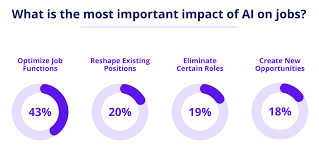
About a month ago, Jon Stewart did a segment on AI causing people to lose their jobs. He spoke against it. Well, his words were against it, but deep down, he’s for it—and so are you, whether you realize it or not. AI Impact on Workforce is real, but is it good or bad? The fact that Jon Stewart can go on TV to discuss cutting-edge technology like large language models in AI is because previous technology displaced jobs. Lots of jobs. What probably felt like most jobs. Remember, for most of human history, 80–90% of people were farmers. The few who weren’t had professions like blacksmithing, tailoring, or other essential trades. They didn’t have TV personalities, TV executives, or even TVs. Had you been born hundreds of years ago, chances are you would have been a farmer, too. You might have died from an infection. But as scientific and technological progress reduced the need for farmers, it also gave us doctors and scientists who discovered, manufactured, and distributed cures for diseases like the plague. Innovation begets innovation. Generative AI is just the current state of the art, leading the next cycle of change. The Core Issue This doesn’t mean everything will go smoothly. While many tech CEOs tout the positive impacts of AI, these benefits will take time. Consider the automobile: Carl Benz patented the motorized vehicle in 1886. Fifteen years later, there were only 8,000 cars in the US. By 1910, there were 500,000 cars. That’s 25 years, and even then, only about 0.5% of people in the US had a car. The first stop sign wasn’t used until 1915, giving society time to establish formal regulations and norms as the technology spread. Lessons from History Social media, however, saw negligible usage until 2008, when Facebook began to grow rapidly. In just four years, users soared from a few million to a billion. Social media has been linked to cyberbullying, self-esteem issues, depression, and misinformation. The risks became apparent only after widespread adoption, unlike with cars, where risks were identified early and mitigated with regulations like stop signs and driver’s licenses. Nuclear weapons, developed in 1945, also illustrate this point. Initially, only a few countries possessed them, understanding the catastrophic risks and exercising restraint. However, if a terrorist cell obtained such weapons, the consequences could be dire. Similarly, if AI tools are misused, the outcomes could be harmful. Just this morning a news channel was covering an AI bot that was doing robo-calling. Can you imagine the increase in telemarketing calls that could create? How about this being an election cycle year? AI and Its Rapid Adoption AI isn’t a nuclear weapon, but it is a powerful tool that can do harm. Unlike past technologies that took years or decades to adopt, AI adoption is happening much faster. We lack comprehensive safety warnings for AI because we don’t fully understand it yet. If in 1900, 50% of Americans had suddenly gained access to cars without regulations, the result would have been chaos. Similarly, rapid AI adoption without understanding its risks can lead to unintended consequences. The adoption rate, impact radius (the scope of influence), and learning curve (how quickly we understand its effects) are crucial. If the adoption rate surpasses our ability to understand and manage its impact, we face excessive risk. Proceeding with Caution Innovation should not be stifled, but it must be approached with caution. Consider historical examples like x-rays, which were once used in shoe stores without understanding their harmful effects, or the industrial revolution, which caused significant environmental degradation. Early regulation could have mitigated many negative impacts. AI is transformative, but until we fully understand its risks, we must proceed cautiously. The potential for harm isn’t a reason to avoid it altogether. Like cars, which we accept despite their risks because we understand and manage them, we need to learn about AI’s risks. However, we don’t need to rush into widespread adoption without safeguards. It’s easier to loosen restrictions later than to impose them after damage has been done. Let’s innovate, but with foresight. Regulation doesn’t kill innovation; it can inspire it. We should learn from the past and ensure AI development is responsible and measured. We study history to avoid repeating mistakes—let’s apply that wisdom to AI. Content updated July 2024. Like Related Posts Who is Salesforce? Who is Salesforce? Here is their story in their own words. From our inception, we’ve proudly embraced the identity of Read more AI-Driven Propensity Scores AI plays a crucial role in propensity score estimation as it can discern underlying patterns between treatments and confounding variables Read more Tectonic’s Successful Salesforce Track Record Salesforce Technology Services Integrator – Tectonic has successfully delivered Salesforce in a variety of industries including Public Sector, Hospitality, Manufacturing, Read more Asset Management Salesforce Can Salesforce do asset management? You can manage assets in Consumer Goods (desktop) and in the Consumer Goods offline mobile Read more
Read More
DPD Salesforce AI Enhancements

DPD Salesforce AI Enhancements

DPD’s AI Integration: Enhancing Customer and Employee Experience DPD has ambitious plans to integrate AI throughout its Salesforce platform, aiming to automate tasks and significantly enhance the experiences of both customers and employees. DPD Salesforce AI Enhancements. Adam Hooper, Head of Central Platforms at DPD, explains that with over 400 million parcels delivered annually, maintaining robust customer relationships is crucial. To this end, DPD leverages a range of Salesforce technologies, including Service Cloud, Sales Cloud, Marketing Cloud, and Mulesoft. AI-Powered Customer Service In Salesforce’s latest update on DPD: Financial and Operational Efficiency Targeted Marketing Spreadsheets to Salesforce At the Salesforce World Tour event in London, Ben Pyne, Salesforce Platform Manager at DPD, elaborated on their current usage and future AI plans. Pyne’s team acts as internal consultants to optimize organizational workflows. As he explains: “My role is essentially to get people off spreadsheets and onto Salesforce!” He noted that about 40 departments and teams within DPD use Salesforce, far beyond the typical Sales and CRM applications. Custom applications within Salesforce personalize and enhance user experiences by focusing on relevant information. Using tools like Prompt Builder, Pyne’s team recently developed a project management app within Salesforce, streamlining tasks like writing acceptance criteria and user stories. Pyne emphasized: “I want our guys to focus on designing and building, less on the admin.” AI Use Cases When considering AI and generative AI, DPD sees significant potential to reduce operational tasks. Pyne highlighted case summarization as an obvious application, given the millions of customer service cases created each year. Rolling Out Generative AI DPD adopts a cautious approach to rolling out new technologies like generative AI. Pyne explained: “It’s starting small, finding the right teams to be able to do it. But fundamentally, starting somewhere and making slow progressions into it to ensure we don’t scare everybody away.” Ensuring Security and Trust Security and trust are paramount for DPD. Pyne noted their robust IT security team scrutinizes every implementation. Fortunately, Salesforce’s security measures, such as data anonymization and preventing LLMs (Large Language Models) from learning from their data, provide peace of mind. Pyne concluded: “We can focus on what we’re good at and not worry about the rest because Salesforce has thought of everything for us.” Like Related Posts Who is Salesforce? Who is Salesforce? Here is their story in their own words. From our inception, we’ve proudly embraced the identity of Read more Salesforce Marketing Cloud Transactional Emails Salesforce Marketing Cloud Transactional Emails are immediate, automated, non-promotional messages crucial to business operations and customer satisfaction, such as order Read more Salesforce Unites Einstein Analytics with Financial CRM Salesforce has unveiled a comprehensive analytics solution tailored for wealth managers, home office professionals, and retail bankers, merging its Financial Read more AI-Driven Propensity Scores AI plays a crucial role in propensity score estimation as it can discern underlying patterns between treatments and confounding variables Read more

Read More
Agentic AI is Here

Agentic AI is Here

Embracing the Era of Agentic AI: Redefining Autonomous Systems A new paradigm in artificial intelligence, known as “Agentic Artificial Intelligence,” is poised to revolutionize the capabilities of the known autonomous universe. This cutting-edge technology represents a significant leap forward in AI-driven decision-making and action, promising transformative impacts across various industries including healthcare, manufacturing, IT, finance, marketing, and HR. Agents are the way to go! There is no two ways about this. Looking into the progression of the Large Language Model based applications since last year, its not hard to see that the Agentic Process (agents as reusable, specific and dedicated single unit of work) — would be the way to build Gen AI applications. What is Agentic AI? Agentic Artificial Intelligence marks a departure from traditional AI models that primarily focus on passive observation and analysis. Unlike its predecessors, which often require human intervention to execute tasks, Agentic AI systems possess the autonomy to initiate actions independently based on their assessments. This allows them to navigate much more complex environments and undertake tasks with a level of initiative and adaptability previously unseen. At least outside of sci-fy movies. Real-World Applications of Agentic Artificial Intelligence Healthcare In healthcare, Agentic AI systems are transforming patient care. These systems autonomously monitor vital signs, administer medication, and assist in surgical procedures with unparalleled precision. By augmenting healthcare professionals’ capabilities, these AI-driven agents enhance patient outcomes and streamline care processes. Augmenting is the key word, here. Manufacturing and Logistics In manufacturing and logistics, Agentic AI optimizes operations and boosts efficiency. Intelligent agents handle predictive maintenance of machinery, autonomous inventory management, and robotic assembly. Leveraging advanced algorithms and sensor technologies, these systems anticipate issues, coordinate complex workflows, and adapt to real-time production demands, driving a shift towards fully autonomous production environments. Customer Service Within enterprises, AI agents are revolutionizing business operations across various departments. In customer service, AI-powered chatbots with Agentic Artificial Intelligence capabilities engage with customers in natural language, providing personalized assistance and resolving queries efficiently. This enhances customer satisfaction and allows human agents to focus on more complex tasks. Marketing and Sales Agentic Artificial Intelligence empowers marketing and sales teams to analyze vast datasets, identify trends, and personalize campaigns with unprecedented precision. By understanding customer behavior and preferences at a granular level, AI agents optimize advertising strategies, maximize conversion rates, and drive revenue growth. Finance and Accounting In finance and accounting, Agentic AI streamlines processes like invoice processing, fraud detection, and risk management. These AI-driven agents analyze financial data in real time, flag anomalies, and provide insights that enable faster, more informed decision-making, thereby improving operational efficiency. Ethical Considerations of Agentic Artificial Intelligence The rise of Agentic AI also brings significant ethical and societal challenges. Concerns about data privacy, algorithmic bias, and job displacement necessitate robust regulation and ethical frameworks to ensure responsible and equitable deployment of AI technologies. Navigating the Future with Agentic AI The advent of Agentic AI ushers in a new era of autonomy and innovation in artificial intelligence. As these intelligent agents permeate various facets of our lives and enterprises, they present both challenges and opportunities. To navigate this new world, we must approach it with foresight, responsibility, and a commitment to harnessing technology for the betterment of humanity. Like1 Related Posts Who is Salesforce? Who is Salesforce? Here is their story in their own words. From our inception, we’ve proudly embraced the identity of Read more Salesforce Marketing Cloud Transactional Emails Salesforce Marketing Cloud Transactional Emails are immediate, automated, non-promotional messages crucial to business operations and customer satisfaction, such as order Read more Salesforce Unites Einstein Analytics with Financial CRM Salesforce has unveiled a comprehensive analytics solution tailored for wealth managers, home office professionals, and retail bankers, merging its Financial Read more AI-Driven Propensity Scores AI plays a crucial role in propensity score estimation as it can discern underlying patterns between treatments and confounding variables Read more

Read More
Generative AI Benchmark from Salesforce

Generative AI Benchmark from Salesforce

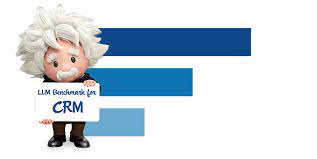
Salesforce Introduces Generative AI Benchmark Tool for CRM Generative AI Benchmark from Salesforce evaluation tool designed to help businesses select the most suitable large language models (LLMs) for their CRM needs. Key Benefits of the Generative AI Benchmark for CRM: Tailored for CRM Applications: Silvio Savarese, EVP and Chief Scientist of Salesforce Research, highlights the importance of aligning generative AI processes with CRM goals. The benchmark helps businesses assess various LLMs using real-world CRM data, covering use cases such as sales and service scenarios. Human-Centered Evaluation Approach: The benchmark, developed by Salesforce’s Frontier AI applied research group and core product teams, leverages human professionals and real CRM data. This approach ensures a thorough evaluation across four key areas: Notable Insights: Savarese points out that larger models are not always the optimal choice. Smaller, more cost-effective models can offer satisfactory performance. He also mentions that this benchmark is just the beginning, with plans to expand metrics, use cases, and data annotations. Future evaluations will include the performance of fine-tuned models on CRM data, promising further differentiation and improvement. Salesforce’s generative AI benchmark tool offers a comprehensive and practical framework for businesses to choose the best LLMs for their CRM needs, ensuring a balance of accuracy, cost, speed, and trust and safety. Like Related Posts Who is Salesforce? Who is Salesforce? Here is their story in their own words. From our inception, we’ve proudly embraced the identity of Read more Salesforce Marketing Cloud Transactional Emails Salesforce Marketing Cloud Transactional Emails are immediate, automated, non-promotional messages crucial to business operations and customer satisfaction, such as order Read more Salesforce Unites Einstein Analytics with Financial CRM Salesforce has unveiled a comprehensive analytics solution tailored for wealth managers, home office professionals, and retail bankers, merging its Financial Read more AI-Driven Propensity Scores AI plays a crucial role in propensity score estimation as it can discern underlying patterns between treatments and confounding variables Read more
Read More
Salesforce Feeding Post-Pandemic AI-Powered Digital Transformation

Salesforce Feeding Post-Pandemic AI-Powered Digital Transformation

The Digital Transformation Imperative: Salesforce’s AI Solutions The COVID-19 pandemic didn’t just accelerate digital transformation; it cemented it as an existential imperative for businesses across all industries. The sudden shift to remote work, digital customer engagement, and e-commerce highlighted the stark contrast between organizations that had prioritized digitization and those that hadn’t. In the post-pandemic era, digital agility has become synonymous with resilience and competitiveness. Salesforce Feeding Post-Pandemic AI-Powered Digital Transformation with unparalled innovation. However, the path to digital transformation remains challenging for many companies. Legacy systems, data silos, and manual processes continue to hinder adaptation and innovation at the pace demanded by today’s market and consumer. This has led to a certain weariness and skepticism around transformation initiatives, often perceived as an ever-receding target. Salesforce’s AI-Powered Integration Solutions Salesforce’s AI-powered integration solutions aim to revitalize the digital transformation journey. With tools like Einstein for Flow, Intelligent Document Processing (IDP), and Einstein for MuleSoft, Salesforce is embedding AI across its automation and integration portfolio to address some of the most difficult challenges in digitization. Anypoint Partner Manager: Harnessing AI for B2B Integration Salesforce’s latest MuleSoft offering, Anypoint Partner Manager, exemplifies this AI-centric approach. The cloud-native B2B integration solution leverages IDP to streamline partner onboarding and manage API and EDI-based transactions, addressing a key pain point for companies in complex supply chain ecosystems. “EDI has historically been that code-driven solution. You must really know the EDI spec,” noted Andrew Comstock, VP of Product Management at Salesforce. “Partner Manager actually brings the partner definition into a form, and you can just define that, save it, and you’re off and done. We can deploy all the applications that you need for you.” By using AI to extract and structure data from unstructured documents like invoices and purchase orders, Anypoint Partner Manager democratizes B2B integration, making it accessible to businesses beyond the traditional technology sector. The solution is now generally available. MuleSoft Accelerator for Salesforce Order Management: Bridging B2B and B2C Salesforce also introduced the MuleSoft Accelerator for Salesforce Order Management. This tool provides pre-built APIs, connectors, and templates to unify B2B and B2C orders from a centralized hub. By connecting Salesforce OMS with ERP systems in real-time, the accelerator enables end-to-end visibility across channels, a critical capability in today’s omnichannel environment. “For many companies, [order management] is super critical and vital,” emphasized Comstock. “The more that they can standardize and centralize that, the better visibility, controls, and governance they have.” The MuleSoft Accelerator for Salesforce OMS is now generally available. The AI Imperative in Digital Transformation Salesforce’s AI-powered integration solutions come at a time when businesses are grappling with the realities of the post-pandemic digital imperative. Automating complex B2B processes, unifying data flows across ecosystems, and extracting insights from unstructured data is no longer a luxury but a necessity for survival in the digital economy. Salesforce Feeding Post-Pandemic AI-Powered Digital Transformation “A lot of our successes are happening at companies that are not traditional technology companies. Using solutions like MuleSoft and Salesforce allows them to build those technologies better,” noted Comstock. In this context, AI is emerging as a key enabler of digital transformation at scale. By abstracting complexity and automating manual tasks, AI-powered integration tools like those from Salesforce are helping businesses overcome the hurdles that have long stymied digitization efforts. For companies still wrestling with the challenges of digital transformation, Salesforce’s AI-powered integration portfolio offers a glimmer of hope. By harnessing the power of large language models and other AI technologies to streamline integration and automation, Salesforce is providing a new path forward for organizations looking to thrive in the post-pandemic digital landscape. Salesforce Feeding Post-Pandemic AI-Powered Digital Transformation with Einstein, Mulesoft, Flow, and more. Like Related Posts Who is Salesforce? Who is Salesforce? Here is their story in their own words. From our inception, we’ve proudly embraced the identity of Read more Salesforce Marketing Cloud Transactional Emails Salesforce Marketing Cloud Transactional Emails are immediate, automated, non-promotional messages crucial to business operations and customer satisfaction, such as order Read more Salesforce Unites Einstein Analytics with Financial CRM Salesforce has unveiled a comprehensive analytics solution tailored for wealth managers, home office professionals, and retail bankers, merging its Financial Read more AI-Driven Propensity Scores AI plays a crucial role in propensity score estimation as it can discern underlying patterns between treatments and confounding variables Read more
Read More
Adopt a Large Language Model

Adopt a Large Language Model

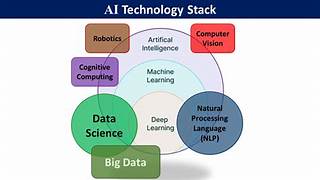
In 2023, Algo Communications, a Canadian company, faced a significant challenge. With rapid growth on the horizon, the company struggled to train customer service representatives (CSRs) quickly enough to keep pace. To address this, Algo turned to an innovative solution: generative AI. They needed to Adopt a Large Language Model. Algo adopted a large language model (LLM) to accelerate the onboarding of new CSRs. However, to ensure CSRs could accurately and fluently respond to complex customer queries, Algo needed more than a generic, off-the-shelf LLM. These models, typically trained on public internet data, lack the specific business context required for accurate answers. This led Algo to use retrieval-augmented generation, or RAG. Many people have already used generative AI models like OpenAI’s ChatGPT or Google’s Gemini (formerly Bard) for tasks like writing emails or crafting social media posts. However, achieving the best results can be challenging without mastering the art of crafting precise prompts. An AI model is only as effective as the data it’s trained on. For optimal performance, it needs accurate, contextual information rather than generic data. Off-the-shelf LLMs often lack up-to-date, reliable access to your specific data and customer relationships. RAG addresses this by embedding the most current and relevant proprietary data directly into LLM prompts. RAG isn’t limited to structured data like spreadsheets or relational databases. It can retrieve all types of data, including unstructured data such as emails, PDFs, chat logs, and social media posts, enhancing the AI’s output quality. How RAG Works RAG enables companies to retrieve and utilize data from various internal sources for improved AI results. By using your own trusted data, RAG reduces or eliminates hallucinations and incorrect outputs, ensuring responses are relevant and accurate. This process involves a specialized database called a vector database, which stores data in a numerical format suitable for AI and retrieves it when prompted. “RAG can’t do its job without the vector database doing its job,” said Ryan Schellack, Director of AI Product Marketing at Salesforce. “The two go hand in hand. Supporting retrieval-augmented generation means supporting a vector store and a machine-learning search mechanism designed for that data.” RAG, combined with a vector database, significantly enhances LLM outputs. However, users still need to understand the basics of crafting clear prompts. Faster Responses to Complex Questions In December 2023, Algo Communications began testing RAG with a few CSRs using a small sample of about 10% of its product base. They incorporated vast amounts of unstructured data, including chat logs and two years of email history, into their vector database. After about two months, CSRs became comfortable with the tool, leading to a wider rollout. In just two months, Algo’s customer service team improved case resolution times by 67%, allowing them to handle new inquiries more efficiently. “Exploring RAG helped us understand we could integrate much more data,” said Ryan Zoehner, Vice President of Commercial Operations at Algo Communications. “It enabled us to provide detailed, technically savvy responses, enhancing customer confidence.” RAG now touches 60% of Algo’s products and continues to expand. The company is continually adding new chat logs and conversations to the database, further enriching the AI’s contextual understanding. This approach has halved onboarding time, supporting Algo’s rapid growth. “RAG is making us more efficient,” Zoehner said. “It enhances job satisfaction and speeds up onboarding. Unlike other LLM efforts, RAG lets us maintain our brand identity and company ethos.” RAG has also allowed Algo’s CSRs to focus more on personalizing customer interactions. “It allows our team to ensure responses resonate well,” Zoehner said. “This human touch aligns with our brand and ensures quality across all interactions.” Write Better Prompts – Adopt a Large Language Model If you want to learn how to craft effective generative AI prompts or use Salesforce’s Prompt Builder, check out Trailhead, Salesforce’s free online learning platform. Start learning Trail: Get Started with Prompts and Prompt Builder Like Related Posts Who is Salesforce? Who is Salesforce? Here is their story in their own words. From our inception, we’ve proudly embraced the identity of Read more Salesforce Marketing Cloud Transactional Emails Salesforce Marketing Cloud Transactional Emails are immediate, automated, non-promotional messages crucial to business operations and customer satisfaction, such as order Read more Salesforce Unites Einstein Analytics with Financial CRM Salesforce has unveiled a comprehensive analytics solution tailored for wealth managers, home office professionals, and retail bankers, merging its Financial Read more AI-Driven Propensity Scores AI plays a crucial role in propensity score estimation as it can discern underlying patterns between treatments and confounding variables Read more
Read More
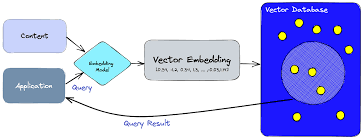
Gen AI Unleased With Vector Database

Gen AI Unleased With Vector Database

Salesforce Unveils Data Cloud Vector Database with GenAI Integration Salesforce has officially launched its Data Cloud Vector Database, leveraging GenAI to rapidly process a company’s vast collection of PDFs, emails, transcripts, online reviews, and other unstructured data. Gen AI Unleased With Vector Database. Rahul Auradkar, Executive Vice President and General Manager of Salesforce Unified Data Services and Einstein Units, highlighted the efficiency gains in a one-on-one briefing with InformationWeek. Auradkar demonstrated the new capabilities through a live demo, showcasing the potential of the Data Cloud Vector Database. Enhanced Efficiency and Data Utilization The new Data Cloud integrates with the Einstein 1 platform, combining unstructured and structured data for rapid analysis by sales, marketing, and customer service teams. This integration significantly enhances the accuracy of Einstein Copilot, Salesforce’s enterprise conversational AI assistant. Gen AI Unleased With Vector Database Auradkar demonstrated how a customer service query could retrieve multiple relevant results within seconds. This process, which typically takes hours of manual effort, now leverages unstructured data, which makes up 90% of customer data, to deliver swift and accurate results. “This advancement allows our customers to harness the full potential of 90% of their enterprise data—unstructured data that has been underutilized or siloed—to drive use cases, AI, automation, and analytics experiences across both structured and unstructured data,” Auradkar explained. Comprehensive Data Management Using Salesforce’s Einstein 1 platform, Data Cloud enables users to ingest, store, unify, index, and perform semantic queries on unstructured data across all applications. This data encompasses diverse unstructured content from websites, social media platforms, and other sources, resulting in more accurate outcomes and insights. Auradkar emphasized, “This represents an order of magnitude improvement in productivity and customer satisfaction. For instance, a large shipping company with thousands of customer cases can now categorize and access necessary information far more efficiently.” Additional Announcements Salesforce also introduced several new AI and Data Cloud features: Auradkar noted that these innovations enhance Salesforce’s competitive edge by prioritizing flexibility and enabling customers to take control of their data. “We’ll continue on this journey,” Auradkar said. “Our future investments will focus on how this product evolves and scales. We’re building significant flexibility for our customers to use any model they choose, including any large language model.” For more insights and updates, visit Salesforce’s official announcements and stay tuned for further developments. Like1 Related Posts Who is Salesforce? Who is Salesforce? Here is their story in their own words. From our inception, we’ve proudly embraced the identity of Read more Salesforce Marketing Cloud Transactional Emails Salesforce Marketing Cloud Transactional Emails are immediate, automated, non-promotional messages crucial to business operations and customer satisfaction, such as order Read more Salesforce Unites Einstein Analytics with Financial CRM Salesforce has unveiled a comprehensive analytics solution tailored for wealth managers, home office professionals, and retail bankers, merging its Financial Read more AI-Driven Propensity Scores AI plays a crucial role in propensity score estimation as it can discern underlying patterns between treatments and confounding variables Read more

Read More
gettectonic.com