Large Language Model Archives - gettectonic.com - Page 11
SearchGPT and Knowledge Cutoff

SearchGPT and Knowledge Cutoff

Tackling the Knowledge Cutoff Challenge in Generative AI In the realm of generative AI, a significant hurdle has been the issue of knowledge cutoff—where a large language model (LLM) only has information up until a specific date. This was an early concern with OpenAI’s ChatGPT. For example, the GPT-4o model that currently powers ChatGPT has a knowledge cutoff in October 2023. The older GPT-4 model, on the other hand, had a cutoff in September 2021. Traditional search engines like Google, however, don’t face this limitation. Google continuously crawls the internet to keep its index up to date with the latest information. To address the knowledge cutoff issue in LLMs, multiple vendors, including OpenAI, are exploring search capabilities powered by generative AI (GenAI). Introducing SearchGPT: OpenAI’s GenAI Search Engine SearchGPT is OpenAI’s GenAI search engine, first announced on July 26, 2024. It aims to combine the strengths of a traditional search engine with the capabilities of GPT LLMs, eliminating the knowledge cutoff by drawing real-time data from the web. SearchGPT is currently a prototype, available to a limited group of test users, including individuals and publishers. OpenAI has invited publishers to ensure their content is accurately represented in search results. The service is positioned as a temporary offering to test and evaluate its performance. Once this evaluation phase is complete, OpenAI plans to integrate SearchGPT’s functionality directly into the ChatGPT interface. As of August 2024, OpenAI has not announced when SearchGPT will be generally available or integrated into the main ChatGPT experience. Key Features of SearchGPT SearchGPT offers several features designed to enhance the capabilities of ChatGPT: OpenAI’s Challenge to Google Search Google has long dominated the search engine landscape, a position that OpenAI aims to challenge with SearchGPT. Answers, Not Links Traditional search engines like Google act primarily as indexes, pointing users to other sources of information rather than directly providing answers. Google has introduced AI Overviews (formerly Search Generative Experience or SGE) to offer AI-generated summaries, but it still relies heavily on linking to third-party websites. SearchGPT aims to change this by providing direct answers to user queries, summarizing the source material instead of merely pointing to it. Contextual Continuity In contrast to Google’s point-in-time search queries, where each query is independent, SearchGPT strives to maintain context across multiple queries, offering a more seamless and coherent search experience. Search Accuracy Google Search often depends on keyword matching, which can require users to sift through several pages to find relevant information. SearchGPT aims to combine real-time data with an LLM to deliver more contextually accurate and relevant information. Ad-Free Experience SearchGPT offers an ad-free interface, providing a cleaner and more user-friendly experience compared to Google, which includes ads in its search results. AI-Powered Search Engine Comparison Here’s a comparison of the AI-powered search engines available today: Search Engine Platform Integration Publisher Collaboration Ads Cost SearchGPT (OpenAI) Standalone prototype Strong emphasis Ad-free Free (prototype stage) Google SGE Built on Google’s infrastructure SEO practices, content partnerships Includes ads Free Microsoft Bing AI/Copilot Built on Microsoft’s infrastructure SEO practices, content partnerships Includes ads Free Perplexity AI Standalone Basic source attribution Ad-free Free; $20/month for premium You.com AI assistant with various modes Basic source attribution Ad-free Free; premium tiers available Brave Search Independent search index Basic source attribution Ad-free Free Like Related Posts Who is Salesforce? Who is Salesforce? Here is their story in their own words. From our inception, we’ve proudly embraced the identity of Read more Salesforce Unites Einstein Analytics with Financial CRM Salesforce has unveiled a comprehensive analytics solution tailored for wealth managers, home office professionals, and retail bankers, merging its Financial Read more AI-Driven Propensity Scores AI plays a crucial role in propensity score estimation as it can discern underlying patterns between treatments and confounding variables Read more Tectonic’s Successful Salesforce Track Record Salesforce Technology Services Integrator – Tectonic has successfully delivered Salesforce in a variety of industries including Public Sector, Hospitality, Manufacturing, Read more


Read More
Box Acquires Alphamoon

Box Acquires Alphamoon

Box Inc. has acquired Alphamoon to enhance its intelligent document processing (IDP) capabilities and its enterprise knowledge management AI platform. Now that Box acquires Alphamoon, it will imr improves IDP. Box Acquires Alphamoon IDP goes beyond traditional optical character recognition (OCR) by applying AI to scanned paper documents and unstructured PDFs. While AI technologies like natural language processing (NLP), workflow automation, and document structure recognition have been around for some time, Alphamoon introduces generative AI (GenAI) into the mix, providing advanced capabilities. According to Rand Wacker, Vice President of AI Product Strategy at Box, the integration of GenAI helps not only with summarizing and extracting content from documents but also with recognizing document structures and categorizing them. GenAI works alongside existing OCR and NLP tools, making the digital conversion of paper documents more accurate. Box Acquires Alphamoon – Not LLM Although Box hasn’t acquired a large language model (LLM) outright, it has gained a toolkit that will enhance its Box AI platform. Box AI already uses retrieval-augmented generation to combine a user’s content with external LLMs, ensuring data security while training Box AI to better recognize and categorize documents. Alphamoon’s technology will further refine this process, enabling administrators to create tools more efficiently within the Box ecosystem. “For example, if Alphamoon’s OCR misreads or misextracts something, the system can adjust that specific part and feed it back into the LLM,” Wacker explained. “This approach is powered by an LLM, but it’s specifically trained to understand the documents it encounters, rather than relying on generic content from the internet.” Previewing an upcoming report from Deep Analysis, founder Alan Pelz-Sharpe shared that a survey of 500 enterprises across various industries, including financial services, manufacturing, healthcare, and government, revealed that 53% of enterprise documents still exist on paper. This highlights the need for Box users to have more precise tools to digitize contracts, letters, invoices, faxes, and other paper-based documents. Alphamoon’s generative AI-driven IDP solution allows for human oversight to ensure that attributes are correctly imported from the original documents. Pelz-Sharpe noted that IDP is challenging, but AI has made significant advancements, especially in handling imperfections like crumpled paper, coffee stains, and handwriting. He added that this acquisition addresses a critical gap for Box, which previously relied on partners for these capabilities. Box Buys Alphamoon – Integration Box plans to integrate Alphamoon’s tools into its platform later this year, with deeper integrations expected next year. These will include no-code app-building capabilities related to another acquisition, Crooze, as well as Box Relay’s forms and document generation tools. Like Related Posts Who is Salesforce? Who is Salesforce? Here is their story in their own words. From our inception, we’ve proudly embraced the identity of Read more Salesforce Unites Einstein Analytics with Financial CRM Salesforce has unveiled a comprehensive analytics solution tailored for wealth managers, home office professionals, and retail bankers, merging its Financial Read more AI-Driven Propensity Scores AI plays a crucial role in propensity score estimation as it can discern underlying patterns between treatments and confounding variables Read more Tectonic’s Successful Salesforce Track Record Salesforce Technology Services Integrator – Tectonic has successfully delivered Salesforce in a variety of industries including Public Sector, Hospitality, Manufacturing, Read more
Read More
AI in scams

AIs Role in Scams

How Generative AI is Supporting the Creation of Lures & Scams A Guide for Value Added Resellers Copyright © 2024 Gen Digital Inc. All rights reserved. Avast is part of Gen™. A long, long time ago, I worked for an antivirus company who has since been acquired by Avast.  Knowing many of the people involved in this area of artificial intelligence, I pay attention when they publish a white paper. AI in scams is something we all should be concerned about. I am excited to share it in our Tectonic Insights. Executive Summary The capabilities and global usage of both large language models (LLMs) and generative AI are rapidly increasing. While these tools offer significant benefits to the general public and businesses, they also pose potential risks for misuse by malicious actors, including the misuse of tools like OpenAI’s ChatGPT and other GPTs. This document explores how the ChatGPT brand is exploited for lures, scams, and other social engineering threats. Generative AI is expected to play a crucial role in the cyber threat world challenges, particularly in creating highly believable, multilingual texts for phishing and scams. These advancements provide more opportunities for sophisticated social engineering by even less sophisticated scammers than ever before. Conversely, we believe generative AI will not drastically change the landscape of malware generation in the near term. Despite numerous proofs of concept, the complexity of generative AI methods still makes traditional, simpler methods more practical for malware creation. In short, the good may not outweigh the bad – just yet. Recognizing the value of generative AI for legitimate purposes is important. AI-based security and assistant tools with various levels of maturity and specialization are already emerging in the market. As these tools evolve and become more widely available, substantial improvements in their capabilities are anticipated. AI-Generated Lures and Scams AI-generated lures and scams are increasingly prevalent. Cybercriminals use AI to create lures and conduct phishing attempts and scams through various texts—emails, social media content, e-shop reviews, SMS scams, and more. AI improves the credibility of social scams by producing trustworthy, authentic texts, eliminating traditional phishing red flags like broken language and awkward addressing. These advanced threats have exploited societal issues and initiatives, including cryptocurrencies, Covid-19, and the war in Ukraine. The popularity of ChatGPT among hackers stems more from its widespread recognition than its AI capabilities, making it a prime target for investigation by attackers. How is Generative AI Supporting the Creation of Lures and Scams? Generative AI, particularly ChatGPT, enhances the language used in scams, enabling cybercriminals to create more advanced texts than they could otherwise. AI can correct grammatical errors, provide multilingual content, and generate multiple text variations to improve believability. For sophisticated phishing attacks, attackers must integrate the AI-generated text into credible templates. They can purchase functional, well-designed phishing kits or use web archiving tools to replicate legitimate websites, altering URLs to phish victims. Currently, attackers need to manually build some aspects of their attempts. ChatGPT is not yet an “out-of-the-box” solution for advanced malware creation. However, the emergence of multi-type models, combining outputs like images, audio, and video, will enhance the capabilities of generative AI for creating believable phishing and scam campaigns. Malvertising Malvertising, or “malicious advertising,” involves disseminating malware through online ads. Cybercriminals exploit the widespread reach and interactive nature of digital ads to distribute harmful content. Instances have been observed where ChatGPT’s name is used in malicious vectors on platforms like Facebook, leading users to fraudulent investment portals. Users who provide personal information become vulnerable to identity theft, financial fraud, account takeovers, and further scams. The collected data is often sold on the dark web, contributing to the broader cybercrime ecosystem. Recognizing and mitigating these deceptive tactics is crucial. YouTube Scams YouTube, one of the world’s most popular platforms, is not immune to cybercrime. Fake videos featuring prominent figures are used to trick users into harmful actions. This strategy, known as the “Appeal to Authority,” exploits trust and credibility to phish personal details or coerce victims into sending money. For example, videos featuring Elon Musk discussing OpenAI have been modified to scam victims. A QR code displayed in the video redirects users to a scam page, often a cryptocurrency scam or phishing attempt. As AI models like Midjourney and DALL-E mature, the use of fake images, videos, and audio is expected to increase, enhancing the credibility of these scams. Typosquatting Typosquatting involves minor changes in URLs to redirect users to different websites, potentially leading to phishing attacks or the installation of malicious applications. An example is an Android app named “Open Chat GBT: AI Chat Bot,” where a subtle URL alteration can deceive users into downloading harmful software. Browser Extensions The popularity of ChatGPT has led to the emergence of numerous browser extensions. While many are legitimate, others are malicious, designed to lure victims. Attackers create extensions with names resembling ChatGPT to deceive users into downloading harmful software, such as adware or spyware. These extensions can also subscribe users to services that periodically charge fees, known as fleeceware. For instance, a malicious extension mimicking “ChatGPT for Google” was reported by Guardio. This extension stole Facebook sessions and cookies but was removed from the Chrome Web Store after being reported. Installers and Cracks Malicious installers often mimic legitimate tools, tricking users into installing malware. These installers promise to install ChatGPT but instead deploy malware like NodeStealer, which steals passwords and browser cookies. Cracked or unofficial software versions pose similar risks, hiding malware that can steal personal information or take control of computers. This particular method of installing malware has been around for decades. However the usage of ChatGPT and other free to download tools has given it a resurrection. Fake Updates Fake updates are a common tactic where users are prompted to update their browser to access content. Campaigns like SocGholish use ChatGPT-related articles to lure users into downloading remote access trojans (RATs), giving attackers control over infected devices. These pages are often hosted on vulnerable WordPress sites or sites with

Read More
Rold of Small Language Models

Role of Small Language Models

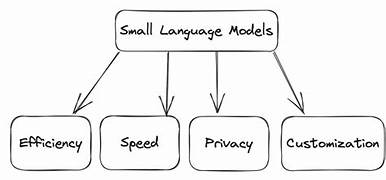
The Role of Small Language Models (SLMs) in AI While much attention is often given to the capabilities of Large Language Models (LLMs), Small Language Models (SLMs) play a vital role in the AI landscape. Role of Small Language Models. Large vs. Small Language Models LLMs, like GPT-4, excel at managing complex tasks and providing sophisticated responses. However, their substantial computational and energy requirements can make them impractical for smaller organizations and devices with limited processing power. In contrast, SLMs offer a more feasible solution. Designed to be lightweight and resource-efficient, SLMs are ideal for applications operating in constrained computational environments. Their reduced resource demands make them easier and quicker to deploy, while also simplifying maintenance. What are Small Language Models? Small Language Models (SLMs) are neural networks engineered to generate natural language text. The term “small” refers not only to the model’s physical size but also to its parameter count, neural architecture, and the volume of data used during training. Parameters are numeric values that guide a model’s interpretation of inputs and output generation. Models with fewer parameters are inherently simpler, requiring less training data and computational power. Generally, models with fewer than 100 million parameters are classified as small, though some experts consider models with as few as 1 million to 10 million parameters to be small in comparison to today’s large models, which can have hundreds of billions of parameters. How Small Language Models Work SLMs achieve efficiency and effectiveness with a reduced parameter count, typically ranging from tens to hundreds of millions, as opposed to the billions seen in larger models. This design choice enhances computational efficiency and task-specific performance while maintaining strong language comprehension and generation capabilities. Techniques such as model compression, knowledge distillation, and transfer learning are critical for optimizing SLMs. These methods enable SLMs to encapsulate the broad understanding capabilities of larger models into a more concentrated, domain-specific toolset, facilitating precise and effective applications while preserving high performance. Advantages of Small Language Models Applications of Small Language Models Role of Small Language Models is lengthy. SLMs have seen increased adoption due to their ability to produce contextually coherent responses across various applications: Small Language Models vs. Large Language Models Feature LLMs SLMs Training Dataset Broad, diverse internet data Focused, domain-specific data Parameter Count Billions Tens to hundreds of millions Computational Demand High Low Cost Expensive Cost-effective Customization Limited, general-purpose High, tailored to specific needs Latency Higher Lower Security Risk of data exposure through APIs Lower risk, often not open source Maintenance Complex Easier Deployment Requires substantial infrastructure Suitable for limited hardware environments Application Broad, including complex tasks Specific, domain-focused tasks Accuracy in Specific Domains Potentially less accurate due to general training High accuracy with domain-specific training Real-time Application Less ideal due to latency Ideal due to low latency Bias and Errors Higher risk of biases and factual errors Reduced risk due to focused training Development Cycles Slower Faster Conclusion The role of Small Language Models (SLMs) is increasingly significant as they offer a practical and efficient alternative to larger models. By focusing on specific needs and operating within constrained environments, SLMs provide targeted precision, cost savings, improved security, and quick responsiveness. As industries continue to integrate AI solutions, the tailored capabilities of SLMs are set to drive innovation and efficiency across various domains. Like Related Posts Who is Salesforce? Who is Salesforce? Here is their story in their own words. From our inception, we’ve proudly embraced the identity of Read more Salesforce Marketing Cloud Transactional Emails Salesforce Marketing Cloud Transactional Emails are immediate, automated, non-promotional messages crucial to business operations and customer satisfaction, such as order Read more Salesforce Unites Einstein Analytics with Financial CRM Salesforce has unveiled a comprehensive analytics solution tailored for wealth managers, home office professionals, and retail bankers, merging its Financial Read more AI-Driven Propensity Scores AI plays a crucial role in propensity score estimation as it can discern underlying patterns between treatments and confounding variables Read more

Read More
guide to RAG

Tectonic Guide to RAG

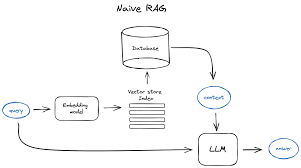
Guide to RAG (Retrieval-Augmented Generation) Retrieval-Augmented Generation (RAG) has become increasingly popular, and while it’s not yet as common as seeing it on a toaster oven manual, it is expected to grow in use. Despite its rising popularity, comprehensive guides that address all its nuances—such as relevance assessment and hallucination prevention—are still scarce. Drawing from practical experience, this insight offers an in-depth overview of RAG. Why is RAG Important? Large Language Models (LLMs) like ChatGPT can be employed for a wide range of tasks, from crafting horoscopes to more business-centric applications. However, there’s a notable challenge: most LLMs, including ChatGPT, do not inherently understand the specific rules, documents, or processes that companies rely on. There are two ways to address this gap: How RAG Works RAG consists of two primary components: While the system is straightforward, the effectiveness of the output heavily depends on the quality of the documents retrieved and how well the Retriever performs. Corporate documents are often unstructured, conflicting, or context-dependent, making the process challenging. Search Optimization in RAG To enhance RAG’s performance, optimization techniques are used across various stages of information retrieval and processing: Python and LangChain Implementation Example Below is a simple implementation of RAG using Python and LangChain: pythonCopy codeimport os import wget from langchain.vectorstores import Qdrant from langchain.embeddings import OpenAIEmbeddings from langchain import OpenAI from langchain_community.document_loaders import BSHTMLLoader from langchain.chains import RetrievalQA # Download ‘War and Peace’ by Tolstoy wget.download(“http://az.lib.ru/t/tolstoj_lew_nikolaewich/text_0073.shtml”) # Load text from html loader = BSHTMLLoader(“text_0073.shtml”, open_encoding=’ISO-8859-1′) war_and_peace = loader.load() # Initialize Vector Database embeddings = OpenAIEmbeddings() doc_store = Qdrant.from_documents( war_and_peace, embeddings, location=”:memory:”, collection_name=”docs”, ) llm = OpenAI() # Ask questions while True: question = input(‘Your question: ‘) qa = RetrievalQA.from_chain_type( llm=llm, chain_type=”stuff”, retriever=doc_store.as_retriever(), return_source_documents=False, ) result = qa(question) print(f”Answer: {result}”) Considerations for Effective RAG Ranking Techniques in RAG Dynamic Learning with RELP An advanced technique within RAG is Retrieval-Augmented Language Model-based Prediction (RELP). In this method, information retrieved from vector storage is used to generate example answers, which the LLM can then use to dynamically learn and respond. This allows for adaptive learning without the need for expensive retraining. Guide to RAG RAG offers a powerful alternative to retraining large language models, allowing businesses to leverage their proprietary knowledge for practical applications. While setting up and optimizing RAG systems involves navigating various complexities, including document structure, query processing, and ranking, the results are highly effective for most business use cases. Like Related Posts Who is Salesforce? Who is Salesforce? Here is their story in their own words. From our inception, we’ve proudly embraced the identity of Read more Salesforce Unites Einstein Analytics with Financial CRM Salesforce has unveiled a comprehensive analytics solution tailored for wealth managers, home office professionals, and retail bankers, merging its Financial Read more AI-Driven Propensity Scores AI plays a crucial role in propensity score estimation as it can discern underlying patterns between treatments and confounding variables Read more Tectonic’s Successful Salesforce Track Record Salesforce Technology Services Integrator – Tectonic has successfully delivered Salesforce in a variety of industries including Public Sector, Hospitality, Manufacturing, Read more

Read More
Snowpark Container Services

Snowpark Container Services

Snowflake announced on Thursday the general availability of Snowpark Container Services, enabling customers to securely deploy and manage models and applications, including generative AI, within Snowflake’s environment. Initially launched in preview in June 2023, Snowpark Container Services is now a fully managed service available in all AWS commercial regions and in public preview in all Azure commercial regions. Containers are a software method used to isolate applications for secure deployment. Snowflake’s new feature allows customers to use containers to manage and deploy any type of model, optimally for generative AI applications, by securely integrating large language models (LLMs) and other generative AI tools with their data, explained Jeff Hollan, Snowflake’s head of applications and developer platform. Mike Leone, an analyst at TechTarget’s Enterprise Strategy Group, noted that Snowpark Container Services’ launch builds on Snowflake’s recent efforts to provide customers with an environment for developing generative AI models and applications. Sridhar Ramaswamy became Snowflake’s CEO in February, succeeding Frank Slootman, who led the company through a record-setting IPO. Under Ramaswamy, Snowflake has aggressively added generative AI capabilities, including launching its own LLM, integrating with Mistral AI, and providing tools for creating AI chatbots. “There has definitely been a concerted effort to enhance Snowflake’s capabilities and presence in the AI and GenAI markets,” Leone said. “Offerings like Snowpark help AI stakeholders like data scientists and developers use the languages they prefer.” As a result, Snowpark Container Services is a significant new feature for Snowflake customers. “It’s a big deal for the Snowflake ecosystem,” Leone said. “By enabling easy deployment and management of containers within the Snowflake platform, it helps customers handle complex workloads and maintain consistency across development and production stages.” Despite the secure environment provided by Snowflake Container Services, it was revealed in May that the login credentials of potentially 160 customers had been stolen and used to access their data. However, Snowflake has stated there is no evidence that the breach resulted from a vulnerability or misconfiguration of the Snowflake platform. Prominent customers affected include AT&T and Ticketmaster, and Snowflake’s investigation is ongoing. New Capabilities Generative AI can transform business by enabling employees to easily work with data to inform decisions and making trained experts more efficient. Generative AI, combined with an enterprise’s proprietary data, allows users to interact with data using natural language, reducing the need for coding and data literacy training. Non-technical workers can query and analyze data, freeing data engineers and scientists from routine tasks. Many data management and analytics vendors are focusing on developing generative AI-powered features. Enterprises are building models and applications trained on their proprietary data to inform business decisions. Among data platform vendors, AWS, Databricks, Google, IBM, Microsoft, and Oracle are providing environments for generative AI tool development. Snowflake, under Slootman, was less aggressive in this area but is now committed to generative AI development, though it still has ground to cover compared to its competitors. “Snowflake has gone as far as creating their own LLM,” Leone said. “But they still have a way to go to catch up to some of their top competitors.” Matt Aslett, an analyst at ISG’s Ventana Research, echoed that Snowflake is catching up to its rivals. The vendor initially focused on traditional data warehouse capabilities but made a significant step forward with the late 2023 launch of Cortex, a platform for developing AI models and applications. Cortex includes access to various LLMs and vector search capabilities, marking substantial progress. The general availability of Snowpark Container Services furthers Snowflake’s effort to foster generative AI development. The feature provides users with on-demand GPUs and CPUs to run any code next to their data. This enables the deployment and management of any type of model or application without moving data out of Snowflake’s platform. “It’s optimized for next-generation data and AI applications by pushing that logic to the data,” Hollan said. “This means customers can now easily and securely deploy everything from source code to homegrown models in Snowflake.” Beyond security, Snowpark Container Services simplifies model management and deployment while reducing associated costs. Snowflake provides a fully integrated managed service, eliminating the need for piecing together various services from different vendors. The service includes a budget control feature to reduce operational costs and provide cost certainty. Snowpark Container Services includes diverse storage options, observability tools like Snowflake Trail, and streamlined DevOps capabilities. It supports deploying LLMs with local volumes, memory, Snowflake stages, and configurable block storage. Integrations with observability specialists like Datadog, Grafana, and Monte Carlo are also included. Aslett noted that the 2020 launch of the Snowpark development environment enabled users to use their preferred coding languages with their data. Snowpark Container Services takes this further by allowing the use of third-party software, including generative AI models and data science libraries. “This potentially reduces complexity and infrastructure resource requirements,” Aslett said. Snowflake spent over a year moving Snowpark Container Services from private preview to general availability, focusing on governance, networking, usability, storage, observability, development operations, scalability, and performance. One customer, Landing AI, used Snowpark Container Services during its preview phases to develop LandingLens, an application for training and deploying computer vision models. “[With Snowflake], we are increasing access to AI for more companies and use cases, especially given the rapid growth of unstructured data in our increasingly digital world,” Landing AI COO Dan Maloney said in a statement Thursday. Future Plans With Snowpark Container Services now available on AWS, Snowflake plans to extend the feature to all cloud platforms. The vendor’s roadmap includes further improvements to Snowpark Container Services with more enterprise-grade tools. “Our team is investing in making it easy for companies ranging from startups to enterprises to build, deliver, distribute, and monetize next-generation AI products across their ecosystems,” Hollan said. Aslett said that making Snowpark Container Services available on Azure and Google Cloud is the logical next step. He noted that the managed service’s release is significant but needs broader availability beyond AWS regions. “The next step will be to bring Snowpark Container Services to general

Read More
AI Data Cloud and Integration

AI Data Cloud and Integration

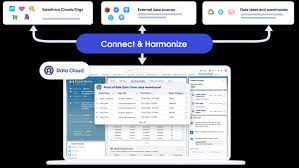
The enterprise has transitioned from merely speculating about artificial intelligence to actively implementing it. In doing so, companies must determine the optimal combination of ancillary technologies that, when strategically paired with AI, can drive relevant use cases and business outcomes. With AI Data Cloud and Integration, your data-driven decisions happen in real-time. Salesforce Inc. is leveraging a powerful trio — its Data Cloud, automation, and AI — to deliver what it considers transformative outcomes for organizations. “AI has such wonderful capability today from predictive to generative, [but] it’s not new to Salesforce,” said Param Kahlon, executive vice president and general manager at Salesforce. “Salesforce has been doing predictive AI for almost 10 years now. But what is great is that generative AI now gives the ability to process these large language models on large amounts of unstructured, semi-structured content to generate great content that can be used by salespeople to send relevant emails and marketing people to create personalized landing pages.” Kahlon spoke with theCUBE Research Senior Analyst George Gilbert during a recent “The Road to Intelligent Data Apps” podcast series. They discussed how Salesforce is revolutionizing business operations in the digital age by harnessing AI-driven insights, contextualizing data with the company’s Data Cloud, and enabling real-time actions. Gen AI and Data Cloud for Contextualization In today’s business environment, intelligence is the cornerstone of success. Salesforce’s AI platform empowers companies with predictive and generative AI capabilities, enabling them to make insightful decisions and craft personalized experiences for their customers. Businesses can now process vast amounts of unstructured data and generate compelling content. “For this AI to be meaningful and for companies to harness the full value of AI, you want to make sure that you’re grounding the data that’s being used to generate those predictions with some things that are relevant to the current business process, to the current transaction, to the current context of interaction you’re happening with the customer,” Kahlon said. Salesforce’s Data Cloud acts as the AI foundation, enriching existing data models with relevant contextual data tailored to the specific needs of each business and their interactions with customers. “When we talk to our large Salesforce customers, they all tell us that AI is really important for them,” Kahlon said. “That is something that they want to drive, but they’re also saying that the data for them is spread out across the enterprise. Some of them tell us that they have more than 900 different business systems in which data is stored, and they want the ability to bring that data together in a seamless way so it can be processed by AI through Data Cloud.” Automation and Integration for Real-Time Action The combination of AI and Data Cloud generates actionable insights, but these insights alone aren’t enough. Businesses need to act swiftly on these predictions, driving real-time actions to capitalize on opportunities. This is where integration and automation come into play, according to Kahlon. “[Customers are] essentially telling us that data is spread across the enterprise and they want the data in real time to be available to customers,” he said. “With MuleSoft and Salesforce integration capabilities, we’ve focused on the real-time nature of making sure that you can take real-time business transactions in the context of the process that is happening, and that’s what’s differentiated in our approach to making sure that we can collect the data in real time and make actions happen in real time.” Integration is the glue that brings together data from various sources, allowing AI to derive meaningful insights. Salesforce’s integration capabilities, powered by MuleSoft, focus on real-time data processing, ensuring that businesses can act on insights as they occur. This low-latency approach enables not only Salesforce applications but also other third-party applications to contribute to the data ecosystem, Kahlon explained. “We’ve got a very large North American airline that has built their entire customer experience, from booking an airline ticket to checking into your flight and ordering special meals for your flight, all of that on an API-based platform — and we’re able to process that scale of transactions,” he said. “As you get into AI, all of that becomes extremely relevant to drive that real-time throughput, and that’s where our customers are finding value in our technology.” When the customer experience is the driver, the experience is always stellar. Like Related Posts Who is Salesforce? Who is Salesforce? Here is their story in their own words. From our inception, we’ve proudly embraced the identity of Read more Salesforce Marketing Cloud Transactional Emails Salesforce Marketing Cloud Transactional Emails are immediate, automated, non-promotional messages crucial to business operations and customer satisfaction, such as order Read more Salesforce Unites Einstein Analytics with Financial CRM Salesforce has unveiled a comprehensive analytics solution tailored for wealth managers, home office professionals, and retail bankers, merging its Financial Read more AI-Driven Propensity Scores AI plays a crucial role in propensity score estimation as it can discern underlying patterns between treatments and confounding variables Read more

Read More
Generative AI Replaces Legacy Systems

Securing AI for Efficiency and Building Customer Trust

As businesses increasingly adopt AI to enhance automation, decision-making, customer support, and growth, they face crucial security and privacy considerations. The Salesforce Platform, with its integrated Einstein Trust Layer, enables organizations to leverage AI securely by ensuring robust data protection, privacy compliance, transparent AI functionality, strict access controls, and detailed audit trails. Why Secure AI Workflows Matter AI technology empowers systems to mimic human-like behaviors, such as learning and problem-solving, through advanced algorithms and large datasets that leverage machine learning. As the volume of data grows, securing sensitive information used in AI systems becomes more challenging. A recent Salesforce study found that 68% of Analytics and IT teams expect data volumes to increase over the next 12 months, underscoring the need for secure AI implementations. AI for Business: Predictive and Generative Models In business, AI depends on trusted data to provide actionable recommendations. Two primary types of AI models support various business functions: Addressing Key LLM Risks Salesforce’s Einstein Trust Layer addresses common risks associated with large language models (LLMs) and offers guidance for secure Generative AI deployment. This includes ensuring data security, managing access, and maintaining transparency and accountability in AI-driven decisions. Leveraging AI to Boost Efficiency Businesses gain a competitive edge with AI by improving efficiency and customer experience through: Four Strategies for Secure AI Implementation To ensure data protection in AI workflows, businesses should consider: The Einstein Trust Layer: Protecting AI-Driven Data The Einstein Trust Layer in Salesforce safeguards generative AI data by providing: Salesforce’s Einstein Trust Layer addresses the security and privacy challenges of adopting AI in business, offering reliable data security, privacy protection, transparent AI operations, and robust access controls. Through this secure approach, businesses can maximize AI benefits while safeguarding customer trust and meeting compliance requirements. Like Related Posts Who is Salesforce? Who is Salesforce? Here is their story in their own words. From our inception, we’ve proudly embraced the identity of Read more Salesforce Marketing Cloud Transactional Emails Salesforce Marketing Cloud Transactional Emails are immediate, automated, non-promotional messages crucial to business operations and customer satisfaction, such as order Read more Salesforce Unites Einstein Analytics with Financial CRM Salesforce has unveiled a comprehensive analytics solution tailored for wealth managers, home office professionals, and retail bankers, merging its Financial Read more AI-Driven Propensity Scores AI plays a crucial role in propensity score estimation as it can discern underlying patterns between treatments and confounding variables Read more

Read More
Impact of Generative AI on Workforce

Impact of Generative AI on Workforce

The Impact of Generative AI on the Future of Work Automation has long been a source of concern and hope for the future of work. Now, generative AI is the latest technology fueling both fear and optimism. AI’s Role in Job Augmentation and Replacement While AI is expected to enhance many jobs, there’s a growing argument that job augmentation for some might lead to job replacement for others. For instance, if AI makes a worker’s tasks ten times easier, the roles created to support that job could become redundant. A June 2023 McKinsey report highlighted that generative AI (GenAI) could automate 60% to 70% of employee workloads. In fact, AI has already begun replacing jobs, contributing to nearly 4,000 job cuts in May 2023 alone, according to Challenger, Gray & Christmas Inc. OpenAI, the creator of ChatGPT, estimates that 80% of the U.S. workforce could see at least 10% of their jobs impacted by large language models (LLMs). Examples of AI Job Replacement One notable example involves a writer at a tech startup who was let go without explanation, only to later discover references to her as “Olivia/ChatGPT” in internal communications. Managers had discussed how ChatGPT was a cheaper alternative to employing a writer. This scenario, while not officially confirmed, strongly suggested that AI had replaced her role. The Writers Guild of America also went on strike, seeking not only higher wages and more residuals from streaming platforms but also more regulation of AI. Research from the Frank Hawkins Kenan Institute of Private Enterprise indicates that GenAI might disproportionately affect women, with 79% of working women holding positions susceptible to automation compared to 58% of working men. Unlike past automation that typically targeted repetitive tasks, GenAI is different—it automates creative work such as writing, coding, and even music production. For example, Paul McCartney used AI to partially generate his late bandmate John Lennon’s voice to create a posthumous Beatles song. In this case, AI enhanced creativity, but the broader implications could be more complex. Other Impacts of AI on Jobs AI’s impact on jobs goes beyond replacement. Human-machine collaboration presents a more positive angle, where AI helps improve the work experience by automating repetitive tasks. This could lead to a rise in AI-related jobs and a growing demand for AI skills. AI systems require significant human feedback, particularly in training processes like reinforcement learning, where models are fine-tuned based on human input. A May 2023 paper also warned about the risk of “model collapse,” where LLMs deteriorate without continuous human data. However, there’s also the risk that AI collaboration could hinder productivity. For example, generative AI might produce an overabundance of low-quality content, forcing editors to spend more time refining it, which could deprioritize more original work. Jobs Most Affected by AI AI Legislation and Regulation Despite the rapid advancement of AI, comprehensive federal regulation in the U.S. remains elusive. However, several states have introduced or passed AI-focused laws, and New York City has enacted regulations for AI in recruitment. On the global stage, the European Union has introduced the AI Act, setting a common legal framework for AI. Meanwhile, U.S. leaders, including Senate Majority Leader Chuck Schumer, have begun outlining plans for AI regulation, emphasizing the need to protect workers, national security, and intellectual property. In October 2023, President Joe Biden signed an executive order on AI, aiming to protect consumer privacy, support workers, and advance equity and civil rights in the justice system. AI regulation is becoming increasingly urgent, and it’s a question of when, not if, comprehensive laws will be enacted. As AI continues to evolve, its impact on the workforce will be profound and multifaceted, requiring careful consideration and regulation to ensure it benefits society as a whole. Like Related Posts Who is Salesforce? Who is Salesforce? Here is their story in their own words. From our inception, we’ve proudly embraced the identity of Read more Salesforce Marketing Cloud Transactional Emails Salesforce Marketing Cloud Transactional Emails are immediate, automated, non-promotional messages crucial to business operations and customer satisfaction, such as order Read more Salesforce Unites Einstein Analytics with Financial CRM Salesforce has unveiled a comprehensive analytics solution tailored for wealth managers, home office professionals, and retail bankers, merging its Financial Read more AI-Driven Propensity Scores AI plays a crucial role in propensity score estimation as it can discern underlying patterns between treatments and confounding variables Read more

Read More
Salesforce Data Cloud Pioneer

Salesforce Data Cloud Pioneer

While many organizations are still building their data platforms, Salesforce Data Cloud Pioneer has made a significant leap forward. By seamlessly incorporating metadata integration, Salesforce has transformed the modern data stack into a comprehensive application platform known as the Einstein 1 Platform. Led by Muralidhar Krishnaprasad, executive vice president of engineering at Salesforce, the Einstein 1 Platform is built on the company’s metadata framework. This platform harmonizes metadata and integrates it with AI and automation, marking a new era of data utilization. The Einstein 1 Platform: Innovations and Capabilities Salesforce’s goal with the Einstein 1 Platform is to empower all business users—salespeople, service engineers, marketers, and analysts—to access, use, and act on all their data, regardless of its location, according to Krishnaprasad. The open, extensible platform not only unlocks trapped data but also equips organizations with generative AI functionality, enabling personalized experiences for employees and customers. “Analytics is very important to know how your business is doing, but you also want to make sure all that data and insights are actionable,” Krishnaprasad said. “Our goal is to blend AI, automation, and analytics together, with the metadata layer being the secret sauce.” Salesforce Data Cloud Pioneer In a conversation with George Gilbert, senior analyst at theCUBE Research, Krishnaprasad discussed the platform’s metadata integration, open-API technology, and key features. They explored how its extensibility and interoperability enhance usability across various data formats and sources. Metadata Integration: Accommodating Any IT Environment The Einstein 1 Platform is built on Trino, the federated open-source query engine, and Spark for data processing. It offers a rich set of connectors and an open, extensible environment, enabling organizations to share data between warehouses, lake houses, and other systems. “We use a hyper-engine for sub-second response times in Tableau and other data explorations,” Krishnaprasad explained. “This in-memory overlap engine ensures efficient data processing.” The platform supports various machine learning options and allows users to integrate their own large language models. Whether using Salesforce Einstein, Databricks, Vertex, SageMaker, or other solutions, users can operate without copying data. The platform includes three levels of extensibility, enabling organizations to standardize and extend their customer journey models. Users can start with basic reference models, customize them, and then generate insights, including AI-driven insights. Finally, they can introduce their own functions or triggers to act on these insights. The platform continuously performs unification, allowing users to create different unified graphs based on their needs. “We’re a multimodal system, considering your entire customer journey,” Krishnaprasad said. “We provide flexibility at all levels of the stack to create the right experience for your business.” The Triad of AI, Automation, and Analytics The platform’s foundation ingests, harmonizes, and unifies data, resulting in a standardized metadata model that offers a 360-degree view of customer interactions. This approach unlocks siloed data, much of which is in unstructured forms like conversations, documents, emails, audio, and video. “What we’ve done with this customer 360-degree model is to use unified data to generate insights and make these accessible across application surfaces, enabling reactions to these insights,” Krishnaprasad said. “This unlocks a comprehensive customer journey.” For instance, when a customer views an ad and visits the website, salespeople know what they’re interested in, service personnel understand their concerns, and analysts have the information needed for business insights. These capabilities enhance customer engagement. “Couple this with generative AI, and we enable a lot of self-service,” Krishnaprasad added. “We aim to provide accurate answers, elevating data to create a unified model and powering a unified experience across the entire customer journey.” Like Related Posts Who is Salesforce? Who is Salesforce? Here is their story in their own words. From our inception, we’ve proudly embraced the identity of Read more Salesforce Marketing Cloud Transactional Emails Salesforce Marketing Cloud Transactional Emails are immediate, automated, non-promotional messages crucial to business operations and customer satisfaction, such as order Read more Salesforce Unites Einstein Analytics with Financial CRM Salesforce has unveiled a comprehensive analytics solution tailored for wealth managers, home office professionals, and retail bankers, merging its Financial Read more AI-Driven Propensity Scores AI plays a crucial role in propensity score estimation as it can discern underlying patterns between treatments and confounding variables Read more

Read More
Salesforce Workday Partnership

Salesforce Workday Partnership

Salesforce and Workday Partner to Launch AI-Powered Employee Service Agent Salesforce (NYSE: CRM), the leading AI CRM platform, and Workday, Inc. (NASDAQ: WDAY), a leader in enterprise cloud applications for finance and HR, today announced a strategic partnership to develop a new AI-powered employee service agent. This solution will enhance employee experiences by automating routine tasks, providing personalized support, and delivering data-driven insights across Salesforce and Workday platforms. A Unified Data Foundation for Enhanced Employee Services The partnership will integrate HR and financial data from Workday with CRM data from Salesforce, creating a unified data foundation. This integration will enable the development of AI-driven use cases that increase productivity, reduce costs, and improve the employee experience. A key feature will be the seamless incorporation of Workday into Slack, allowing for enhanced automation and collaboration around HR and financial records, using AI. The new AI employee service agent, built on Salesforce’s Agentforce Platform and Einstein AI, alongside Workday AI, will cater to various employee service needs, such as onboarding, health benefits management, and career development. This agent will utilize a company’s data to interact with employees in natural language, offering personalized support and executing tasks based on trusted business rules and permissions. Enhancing Employee and Customer Success “The AI opportunity lies in augmenting employees and delivering exceptional customer experiences. Our collaboration with Workday will empower businesses to create remarkable experiences using generative and autonomous AI, allowing employees to efficiently find answers, learn new skills, solve problems, and take actions.” Marc Benioff, Chair and CEO of Salesforce Carl Eschenbach, CEO of Workday, highlighted the integration’s benefits: “By combining our platforms, data, and AI capabilities, we empower customers to deliver unmatched AI-powered employee experiences, leading to happier customers and substantial business value.” Key Features of the Partnership Benefits for Employees and Employers For Employees: For Employers: Sal Companieh, Chief Digital and Information Officer at Cushman & Wakefield, noted the strategic advantage: “The integration of Workday and Salesforce will streamline workflows and deliver more personalized, AI-powered employee experiences, significantly enhancing our operational efficiency.” “The shared data foundation between Workday and Salesforce will enable these partners to deliver transformative AI capabilities, enhancing employee experiences and driving business performance.” R “Ray” Wang, CEO of Constellation Research, Inc. About Workday Workday is a leading enterprise platform that helps organizations manage their most important assets – their people and money. The Workday platform is built with AI at the core to help customers elevate people, supercharge work, and move their business forever forward. Workday is used by more than 10,500 organizations around the world and across industries – from medium-sized businesses to more than 60% of the Fortune 500. For more information about Workday, visit workday.com. Like Related Posts Who is Salesforce? Who is Salesforce? Here is their story in their own words. From our inception, we’ve proudly embraced the identity of Read more Salesforce Marketing Cloud Transactional Emails Salesforce Marketing Cloud Transactional Emails are immediate, automated, non-promotional messages crucial to business operations and customer satisfaction, such as order Read more Salesforce Unites Einstein Analytics with Financial CRM Salesforce has unveiled a comprehensive analytics solution tailored for wealth managers, home office professionals, and retail bankers, merging its Financial Read more AI-Driven Propensity Scores AI plays a crucial role in propensity score estimation as it can discern underlying patterns between treatments and confounding variables Read more

Read More
Einstein Code Generation and Amazon SageMaker

Einstein Code Generation and Amazon SageMaker

Salesforce and the Evolution of AI-Driven CRM Solutions Salesforce, Inc., headquartered in San Francisco, California, is a leading American cloud-based software company specializing in customer relationship management (CRM) software and applications. Their offerings include sales, customer service, marketing automation, e-commerce, analytics, and application development. Salesforce is at the forefront of integrating artificial general intelligence (AGI) into its services, enhancing its flagship SaaS CRM platform with predictive and generative AI capabilities and advanced automation features. Einstein Code Generation and Amazon SageMaker. Salesforce Einstein: Pioneering AI in Business Applications Salesforce Einstein represents a suite of AI technologies embedded within Salesforce’s Customer Success Platform, designed to enhance productivity and client engagement. With over 60 features available across different pricing tiers, Einstein’s capabilities are categorized into machine learning (ML), natural language processing (NLP), computer vision, and automatic speech recognition. These tools empower businesses to deliver personalized and predictive customer experiences across various functions, such as sales and customer service. Key components include out-of-the-box AI features like sales email generation in Sales Cloud and service replies in Service Cloud, along with tools like Copilot, Prompt, and Model Builder within Einstein 1 Studio for custom AI development. The Salesforce Einstein AI Platform Team: Enhancing AI Capabilities The Salesforce Einstein AI Platform team is responsible for the ongoing development and enhancement of Einstein’s AI applications. They focus on advancing large language models (LLMs) to support a wide range of business applications, aiming to provide cutting-edge NLP capabilities. By partnering with leading technology providers and leveraging open-source communities and cloud services like AWS, the team ensures Salesforce customers have access to the latest AI technologies. Optimizing LLM Performance with Amazon SageMaker In early 2023, the Einstein team sought a solution to host CodeGen, Salesforce’s in-house open-source LLM for code understanding and generation. CodeGen enables translation from natural language to programming languages like Python and is particularly tuned for the Apex programming language, integral to Salesforce’s CRM functionality. The team required a hosting solution that could handle a high volume of inference requests and multiple concurrent sessions while meeting strict throughput and latency requirements for their EinsteinGPT for Developers tool, which aids in code generation and review. After evaluating various hosting solutions, the team selected Amazon SageMaker for its robust GPU access, scalability, flexibility, and performance optimization features. SageMaker’s specialized deep learning containers (DLCs), including the Large Model Inference (LMI) containers, provided a comprehensive solution for efficient LLM hosting and deployment. Key features included advanced batching strategies, efficient request routing, and access to high-end GPUs, which significantly enhanced the model’s performance. Key Achievements and Learnings Einstein Code Generation and Amazon SageMaker The integration of SageMaker resulted in a dramatic improvement in the performance of the CodeGen model, boosting throughput by over 6,500% and reducing latency significantly. The use of SageMaker’s tools and resources enabled the team to optimize their models, streamline deployment, and effectively manage resource use, setting a benchmark for future projects. Conclusion and Future Directions Salesforce’s experience with SageMaker highlights the critical importance of leveraging advanced tools and strategies in AI model optimization. The successful collaboration underscores the need for continuous innovation and adaptation in AI technologies, ensuring that Salesforce remains at the cutting edge of CRM solutions. For those interested in deploying their LLMs on SageMaker, Salesforce’s experience serves as a valuable case study, demonstrating the platform’s capabilities in enhancing AI performance and scalability. To begin hosting your own LLMs on SageMaker, consider exploring their detailed guides and resources. Like Related Posts Who is Salesforce? Who is Salesforce? Here is their story in their own words. From our inception, we’ve proudly embraced the identity of Read more Salesforce Marketing Cloud Transactional Emails Salesforce Marketing Cloud Transactional Emails are immediate, automated, non-promotional messages crucial to business operations and customer satisfaction, such as order Read more Salesforce Unites Einstein Analytics with Financial CRM Salesforce has unveiled a comprehensive analytics solution tailored for wealth managers, home office professionals, and retail bankers, merging its Financial Read more AI-Driven Propensity Scores AI plays a crucial role in propensity score estimation as it can discern underlying patterns between treatments and confounding variables Read more

Read More
Salesforce Research Produces INDICT

Salesforce Research Produces INDICT

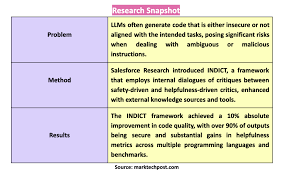
Automating and assisting in coding holds tremendous promise for speeding up and enhancing software development. Yet, ensuring that these advancements yield secure and effective code presents a significant challenge. Balancing functionality with safety is crucial, especially given the potential risks associated with malicious exploitation of generated code. Salesforce Research Produces INDICT. In practical applications, Large Language Models (LLMs) often struggle with ambiguous or adversarial instructions, sometimes leading to unintended security vulnerabilities or facilitating harmful attacks. This isn’t merely theoretical; empirical studies, such as those on GitHub’s Copilot, have revealed that a substantial portion of generated programs—about 40%—contained vulnerabilities. Addressing these risks is vital for unlocking the full potential of LLMs in coding while safeguarding against potential threats. Current strategies to mitigate these risks include fine-tuning LLMs with safety-focused datasets and implementing rule-based detectors to identify insecure code patterns. However, fine-tuning alone may not suffice against sophisticated attack prompts, and creating high-quality safety-related data can be resource-intensive. Meanwhile, rule-based systems may not cover all vulnerability scenarios, leaving gaps that could be exploited. To address these challenges, researchers at Salesforce Research have introduced the INDICT framework. INDICT employs a novel approach involving dual critics—one focused on safety and the other on helpfulness—to enhance the quality of LLM-generated code. This framework facilitates internal dialogues between the critics, leveraging external knowledge sources like code snippets and web searches to provide informed critiques and iterative feedback. INDICT operates through two key stages: preemptive and post-hoc feedback. In the preemptive stage, the safety critic assesses potential risks during code generation, while the helpfulness critic ensures alignment with task requirements. External knowledge sources enrich their evaluations. In the post-hoc stage, after code execution, both critics review outcomes to refine future outputs, ensuring continuous improvement. Evaluation of INDICT across eight diverse tasks and programming languages demonstrated substantial enhancements in both safety and helpfulness metrics. The framework achieved a remarkable 10% absolute improvement in code quality overall. For instance, in CyberSecEval-1 benchmarks, INDICT enhanced code safety by up to 30%, with over 90% of outputs deemed secure. Additionally, the helpfulness metric showed significant gains, surpassing state-of-the-art baselines by up to 70%. INDICT’s success lies in its ability to provide detailed, context-aware critiques that guide LLMs towards generating more secure and functional code. By integrating safety and helpfulness feedback, the framework sets new standards for responsible AI in coding, addressing critical concerns about functionality and security in automated software development. Like Related Posts Who is Salesforce? Who is Salesforce? Here is their story in their own words. From our inception, we’ve proudly embraced the identity of Read more Salesforce Marketing Cloud Transactional Emails Salesforce Marketing Cloud Transactional Emails are immediate, automated, non-promotional messages crucial to business operations and customer satisfaction, such as order Read more Salesforce Unites Einstein Analytics with Financial CRM Salesforce has unveiled a comprehensive analytics solution tailored for wealth managers, home office professionals, and retail bankers, merging its Financial Read more AI-Driven Propensity Scores AI plays a crucial role in propensity score estimation as it can discern underlying patterns between treatments and confounding variables Read more

Read More
Salesforce API Gen

Salesforce API Gen

Function-calling agent models, a significant advancement within large language models (LLMs), encounter challenges in requiring high-quality, diverse, and verifiable datasets. These models interpret natural language instructions to execute API calls crucial for real-time interactions with various digital services. However, existing datasets often lack comprehensive verification and diversity, resulting in inaccuracies and inefficiencies. Overcoming these challenges is critical for deploying function-calling agents reliably in real-world applications, such as retrieving stock market data or managing social media interactions. Salesforce API Gen. Current approaches to training these agents rely on static datasets that lack thorough verification, hampering adaptability and performance when encountering new or unseen APIs. For example, models trained on restaurant booking APIs may struggle with tasks like stock market data retrieval due to insufficient relevant training data. Addressing these limitations, researchers from Salesforce AI Research propose APIGen, an automated pipeline designed to generate diverse and verifiable function-calling datasets. APIGen integrates a multi-stage verification process to ensure data reliability and correctness. This innovative approach includes format checking, actual function executions, and semantic verification, rigorously verifying each data point to produce high-quality datasets. Salesforce API Gen APIGen initiates its data generation process by sampling APIs and query-answer pairs from a library, formatting them into standardized JSON format. The pipeline then progresses through a series of verification stages: format checking to validate JSON structure, function call execution to verify operational correctness, and semantic checking to align function calls, execution results, and query objectives. This meticulous process results in a comprehensive dataset comprising 60,000 entries, covering 3,673 APIs across 21 categories, accessible via Huggingface. The datasets generated by APIGen significantly enhance model performance, achieving state-of-the-art results on the Berkeley Function-Calling Benchmark. Models trained on these datasets outperform multiple GPT-4 models, demonstrating substantial improvements in accuracy and efficiency. For instance, a model with 7 billion parameters achieves an accuracy of 87.5%, surpassing previous benchmarks by a notable margin. These outcomes underscore the robustness and reliability of APIGen-generated datasets in advancing the capabilities of function-calling agents. In conclusion, APIGen presents a novel framework for generating high-quality, diverse datasets for function-calling agents, addressing critical challenges in AI research. Its multi-stage verification process ensures data reliability, empowering even smaller models to achieve competitive results. APIGen opens avenues for developing efficient and powerful language models, emphasizing the pivotal role of high-quality data in AI advancements. Like Related Posts Who is Salesforce? Who is Salesforce? Here is their story in their own words. From our inception, we’ve proudly embraced the identity of Read more Salesforce Marketing Cloud Transactional Emails Salesforce Marketing Cloud Transactional Emails are immediate, automated, non-promotional messages crucial to business operations and customer satisfaction, such as order Read more Salesforce Unites Einstein Analytics with Financial CRM Salesforce has unveiled a comprehensive analytics solution tailored for wealth managers, home office professionals, and retail bankers, merging its Financial Read more AI-Driven Propensity Scores AI plays a crucial role in propensity score estimation as it can discern underlying patterns between treatments and confounding variables Read more

Read More
gettectonic.com