OpenAI Archives - gettectonic.com - Page 12
Generative AI Trends for 2024

Generative AI Trends for 2024

It’s hard to believe that ChatGPT is only a year old. The number of exciting new product launches over the past 12 months has been astonishing — and there’s no sign of slowing down. In fact, quite the opposite. Earlier in November, OpenAI hosted DevDay, where the company announced extensive offerings across B2C and B2B markets. Cohere has doubled down on its knowledge search capabilities and private deployments. Amazon Web Services launched PartyRock, its no-code gen AI app-building playground. Generative AI Trends for 2024 you can expect to see. We believe that last month’s activity sets the stage for 2024 in the gen AI space. Here are six major trends happening across the space: While the technology’s possibilities continue to grow, we believe there are four principles for CEOs to consider as they drive their gen AI agendas. These principles draw from our experiences building gen AI applications with our clients throughout the year, as well as decades of delivering digital and analytics transformations. Be Intentional: Set Gen AI Strategy Top-Down Gen AI is a gold rush. Everyone from shareholders to employees to boards is scrambling to deploy the latest and most powerful gen AI tools, and many large organizations have over 150 gen AI use cases on backlog. While we share their excitement and admire their ambition, allowing dozens of gen AI projects to spawn across an organization puts at-scale value creation at risk. Generative AI Trends for 2024 With recent developments in the gen AI space, the proliferation of use cases and opportunities will continue to split the already divided attention of leadership teams. C-suites must bring focus with a top-down gen AI strategy, constantly asking how the technology can create enduring strategic distance between the organization and its competitors. Here are some examples from first movers: Smart organizations are taking a 2×2 approach: identifying two fast use cases to register quick wins and excite the organization while working on two slower, more transformational use cases that will change day-to-day business operations. Reimagine Entire Domains Rather Than Isolated Use Cases During 2023, most organizations began experimenting with gen AI, building one-off prototypes and buying off-the-shelf solutions. Yet, as these solutions are rolled out to end users, organizations are struggling to capture value. For example, some organizations that invested in GitHub Copilot have yet to figure out how the value capture is passed back to the business. Organizations need to reframe from isolated use cases to the full software delivery lifecycle. Scrum teams need to commit to shipping more product features, or sales need to offer more competitive pricing to win more business. Stopping at just buying a new shiny tool means the productivity gains will not translate to bottom-line gains. This often means reimagining entire workflows and domains. This serves two purposes: 1) it creates a more seamless end-user experience by avoiding point solutions; and 2) organizations can more easily track value against clear business outcomes. For example, an insurer we worked with is reimagining its end-to-end claims process — from first notice of loss to payment. For each step along the way, the insurer has identified gen AI, digital, and analytics opportunities, while never losing sight of the claims adjuster’s experience. Ultimately, this comprehensive approach made a step-change impact on end-to-end handling time. Buy Selectively, Build Strategically Matching the pace of innovation, many new startups and software offerings are entering the market, leaving enterprises with a familiar question: “Buy or build?” On the “buy” side, organizations are wary about investing in capabilities that will eventually be available for a fraction of the cost. These organizations are also skeptical of off-the-shelf solutions, unsure if the software will perform at scale without significant customization. As these solutions mature and prove their value, “buy” strategies will continue to play a central role in any gen AI strategy. Meanwhile, some organizations find compelling business cases to “build.” These players start by identifying use cases that create strategic competitive advantages against their peers by compounding existing strengths in their domain expertise, workflow integration, or regulatory know-how. For example, deploying gen AI to accelerate drug discovery has become standard in the pharmaceutical industry. Additionally, organizations are investing in data and IT infrastructure to enable their portfolio of gen AI use cases. For many organizations, there has been little to no investment in unstructured data governance. Now is the time. Build Products, Not Proofs of Concept (POCs) With the new tooling available, a talented engineer can build a proof-of-concept over a weekend. In some cases, this might be sufficient to serve an enterprise need (e.g., a summarization chatbot). However, for most use cases in a large enterprise context, proofs-of-concept are not sufficient. They do not scale well into production and their performance degrades without the appropriate engineering and experimentation. At OpenAI’s Dev Day, engineers demonstrated how hard it is to turn a POC into a production-grade product. Initially, a demo POC only achieved 45% accuracy for a retrieval task. After a few months and numerous experiments (e.g., fine-tuning, re-ranking, metadata tagging, data labeling, model self-assessment, risk guardrails), the engineers achieved 98% accuracy. Implications of Generative AI Trends for 2024 This has two implications. First, organizations cannot seek near-perfection on every use case. They need to be selective about when it is worthwhile to invest scarce engineering talent to develop high-performance gen AI applications. For some situations, 45% accuracy may be sufficient to deliver business benefits. Second, organizations need to scale their gen AI capabilities to meet their ambitions. Most organizations have identified hundreds of gen AI use cases. Therefore, organizations are turning to reusable code components to accelerate development. Dedicated engineers, often in a Center of Excellence (COE), codify best practices into these code components, allowing subsequent gen AI efforts to build off the lessons learned from pioneering projects. We have seen these components accelerate delivery by 25% to 50%. Throughout the past year, there has been an endless stream of gen AI news and hype. The coming year will likely be similar

Read More
Salesforce Einstein Copilot

What’s Included in Einstein Copilot Studio?

Christmas came early this year with Salesforce’s announcement of Einstein Copilot Studio. Einstein Copilot Studio will encompass the following features: By Tectonic’s Salesforce Marketing Consultant, Shannan Hearne Like1 Related Posts Who is Salesforce? Who is Salesforce? Here is their story in their own words. From our inception, we’ve proudly embraced the identity of Read more Salesforce Marketing Cloud Transactional Emails Salesforce Marketing Cloud Transactional Emails are immediate, automated, non-promotional messages crucial to business operations and customer satisfaction, such as order Read more Salesforce Unites Einstein Analytics with Financial CRM Salesforce has unveiled a comprehensive analytics solution tailored for wealth managers, home office professionals, and retail bankers, merging its Financial Read more AI-Driven Propensity Scores AI plays a crucial role in propensity score estimation as it can discern underlying patterns between treatments and confounding variables Read more

Read More
2024 AI and Machine Learning Trends

2024 AI and Machine Learning Trends

In 2023, the AI landscape experienced transformative changes following the debut of ChatGPT in November 2022, a landmark event for artificial intelligence. 2024 AI and Machine Learning Trends ahead, AI is set to dramatically alter global business practices and drive significant advancements across various sectors. Organizations are shifting their focus from experimental initiatives to real-time applications, reflecting a more mature understanding of AI’s capabilities while still being intrigued by generative AI technologies. Key AI and Machine Learning Trends for 2024 Here are the top trends shaping the AI and machine learning landscape for 2024: 1. Agentic AIAgentic AI is evolving from reactive to proactive systems. Unlike traditional AI that primarily responds to user inputs, these advanced AI agents demonstrate autonomy, proactivity, and the ability to independently set and pursue goals. 2. Open-Source AIOpen-source AI is democratizing access to sophisticated AI models and tools by offering free, publicly accessible alternatives to proprietary solutions. This trend has seen significant growth, with notable competitors like Mistral AI’s Mixtral models and Meta’s Llama 2 making strides in 2023. 3. Multimodal AIMultimodal AI integrates various types of inputs—such as text, images, and audio—mimicking human sensory capabilities. Models like GPT-4 from OpenAI showcase this ability, enhancing applications in fields like healthcare by improving diagnostic precision. 4. Customized Enterprise Generative AI ModelsThere is a rising interest in bespoke generative AI models tailored to specific business needs. While broad tools like ChatGPT remain widely used, niche-specific models are increasingly popular for their efficiency in addressing specialized requirements. 5. Retrieval-Augmented Generation (RAG)RAG combines text generation with information retrieval to boost the accuracy and relevance of AI-generated content. By reducing model size and leveraging external data sources, RAG is well-suited for business applications that require up-to-date factual information. 6. Shadow AIShadow AI, which refers to user-friendly AI tools used without formal IT approval, is gaining traction among employees seeking quick solutions or exploring new technologies. While it fosters innovation, it also raises concerns about data privacy and security. Looking Ahead to 2024 These trends highlight AI and machine learning’s expanding role across industries in 2024. Organizations must adapt to these advancements to remain competitive, balancing innovation with strong governance frameworks to ensure security and compliance. Staying informed about these developments will be crucial for leveraging AI’s transformative potential in the coming year. Like Related Posts Who is Salesforce? Who is Salesforce? Here is their story in their own words. From our inception, we’ve proudly embraced the identity of Read more Salesforce Marketing Cloud Transactional Emails Salesforce Marketing Cloud Transactional Emails are immediate, automated, non-promotional messages crucial to business operations and customer satisfaction, such as order Read more Salesforce Unites Einstein Analytics with Financial CRM Salesforce has unveiled a comprehensive analytics solution tailored for wealth managers, home office professionals, and retail bankers, merging its Financial Read more AI-Driven Propensity Scores AI plays a crucial role in propensity score estimation as it can discern underlying patterns between treatments and confounding variables Read more

Read More
Cool New AI Tools

Cool New AI Tools

In the rapidly growing world of artificial intelligence, staying abreast of the latest tools is not merely advantageous but imperative. As AI technology advances, so do the instruments that revolutionize problem-solving, innovation, and business growth. Whether you are an experienced developer, an aspiring entrepreneur, or simply interested in the expansive potential of AI, this insight offers a comprehensive guide to the newest and most impactful AI tools available. Additionally, startups and developers can now register their AI projects at no cost by visiting genai.works. Let us dig into this exciting wave of innovation. AI Tools Overview AI for Content & Voiceovers Parlandi AI: Accessible at parlandi.com, this tool enables the generation of various text content such as articles, blogs, advertisements, and media in 53 languages. Additionally, users can create AI-generated images by simply describing them, leveraging solutions like OpenAI DALL-E-2, DALL-E-3, DALL-E-3 HD, and Stable Diffusion by Stability.ai. AI for Clip Generation 10LevelUp: Available at 10levelup.com, this platform automates the creation of viral clips from YouTube videos, facilitating channel growth with minimal user input by generating engaging clips within minutes. AI for In-Depth Qualitative Research ResearchGOAT: Found at researchgoat.com, ResearchGOAT harnesses the burgeoning capabilities of generative AI to design, field, and analyze custom research studies across various vertical markets, geographical regions, and consumer cohorts. AI for Customer Support ChatFly: Accessible via chatfly.co, ChatFly is a robust platform for developing AI-driven chatbots. It empowers businesses to create intelligent bots using their data, which can be seamlessly integrated into existing systems to enhance customer support. AI to Automate Document Processes Base64.ai Document AI: Available at base64.ai, this leading no-code AI solution comprehends documents, photos, and videos, facilitating the automation of document-related processes. AI for Job & CV Management Xtramile: Accessible through lnkd.in, Xtramile offers an Office Add-in that allows the dissemination of job offers across job boards with a single click, streamlining the recruitment process. Conclusion Empower your operations and innovate with these cutting-edge AI tools, tailored to meet a variety of business needs from content creation and customer support to qualitative research and job management. Embrace the future of AI and unlock new potentials for growth and efficiency. Like Related Posts Who is Salesforce? Who is Salesforce? Here is their story in their own words. From our inception, we’ve proudly embraced the identity of Read more Salesforce Unites Einstein Analytics with Financial CRM Salesforce has unveiled a comprehensive analytics solution tailored for wealth managers, home office professionals, and retail bankers, merging its Financial Read more AI-Driven Propensity Scores AI plays a crucial role in propensity score estimation as it can discern underlying patterns between treatments and confounding variables Read more Tectonic’s Successful Salesforce Track Record Salesforce Technology Services Integrator – Tectonic has successfully delivered Salesforce in a variety of industries including Public Sector, Hospitality, Manufacturing, Read more

Read More
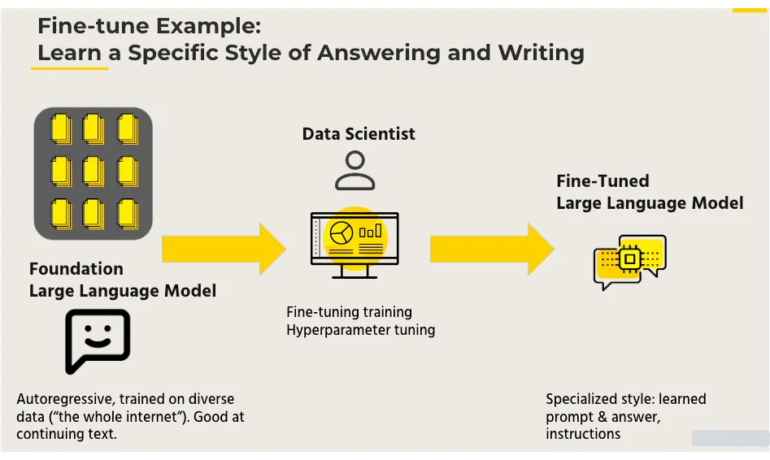
Fine Tune Your Large Language Model

Fine Tune Your Large Language Model

Revamping Your LLM? There’s a Superior Approach to Fine Tune Your Large Language Model. The next evolution in AI fine-tuning might transcend fine-tuning altogether. Vector databases present an efficient means to access and analyze all your business data. Have you ever received redundant emails promoting a product you’ve already purchased or encountered repeated questions in different service interactions? Large language models (LLMs), like OpenAI’s ChatGPT and Google’s Bard, aim to alleviate such issues by enhancing information-sharing and personalization within your company’s operations. However, off-the-shelf LLMs, built on generic internet data, lack access to your proprietary data, limiting the nuanced customer experience. Additionally, these models might not incorporate the latest information—ChatGPT, for instance, only extends up to January 2022. To customize off-the-shelf LLMs for your company, fine-tuning requires integrating your proprietary data, but this process is costly, time-consuming, and may raise trust concerns. A superior alternative is a vector database, described as “a new kind of database for the AI era.” This database offers the benefits of fine-tuning while addressing privacy concerns, promoting data unification, and saving time and resources. Fine-tuning involves training an LLM for specific tasks, such as analyzing customer sentiment or summarizing a patient’s health history. However, it is resource-intensive and fails to resolve the fundamental issue of fragmented data across your organization. A vector database, organized around vectors that describe different types of data, can seamlessly integrate with an LLM or the prompt. By storing and organizing data with an emphasis on vectors, this database streamlines access to relevant information, eliminating the need for fine-tuning and unifying enterprise data with your CRM. This is pivotal for the accuracy, completeness, and efficiency of AI outputs. Unstructured data, comprising 90% of corporate data, poses a challenge for LLMs due to its varied formats. A vector database resolves this by allowing AI to process unstructured and structured data, delivering enhanced business value and ROI. Ultimately, a company’s proprietary data serves as the cornerstone for constructing an enterprise LLM. A vector database ensures seamless storage and processing of this data, facilitating better decision-making across all business applications. Like Related Posts Who is Salesforce? Who is Salesforce? Here is their story in their own words. From our inception, we’ve proudly embraced the identity of Read more Salesforce Unites Einstein Analytics with Financial CRM Salesforce has unveiled a comprehensive analytics solution tailored for wealth managers, home office professionals, and retail bankers, merging its Financial Read more AI-Driven Propensity Scores AI plays a crucial role in propensity score estimation as it can discern underlying patterns between treatments and confounding variables Read more Tectonic’s Successful Salesforce Track Record Salesforce Technology Services Integrator – Tectonic has successfully delivered Salesforce in a variety of industries including Public Sector, Hospitality, Manufacturing, Read more

Read More
Salesforce Chat GPT

What’s Happening with ChatGPT and Salesforce

ChatGPT and Salesforce The integration of ChatGPT with Salesforce presents an opportunity to streamline organizational processes, resulting in significant time savings. This integration not only enhances CRM data management with generative AI but also takes the customer experience to new heights. Integration Process: To integrate ChatGPT with Salesforce, the typical process involves creating an account on the OpenAI platform and generating an API key. These steps ensure successful integration by providing API access and authentication credentials. It’s crucial to treat the API key with the same security measures as a password to safeguard the integration. Salesforce and OpenAI Collaboration: While Salesforce offers access to AI through its Einstein GPT suite of products, Salesforce Admins and Developers have also begun directly integrating with OpenAI’s APIs and various AppExchange apps. They are incorporating these tools into their offerings to introduce new AI-powered features, enhancing their platforms’ capabilities. Role of ChatGPT and Salesforce Admins: ChatGPT does not aim to replace Salesforce Admins but rather to augment their effectiveness and productivity. Admins with strong analytical and administrative skills can leverage ChatGPT to expedite configuration tasks. However, mastering the collaboration with ChatGPT is essential to enhance the quality of results. Understanding ChatGPT: ChatGPT, developed by OpenAI, represents a breakthrough in AI beyond conventional chatbots. It operates on the OpenAI GPT-3.5 family of large language models, incorporating both supervised and reinforcement learning techniques. Backed by OpenAI, ChatGPT employs natural language processing (NLP) to interact conversationally, mirroring human dialogue. OpenAI, founded in San Francisco, boasts substantial support from industry leaders like Microsoft. OpenAI and GPT-4: OpenAI recently unveiled GPT-4, the latest iteration of its popular ChatGPT model. GPT-4 boasts enhanced capabilities, including image processing and increased word processing capacity. With millions of users since its launch, ChatGPT continues to evolve, offering unparalleled NLP functionality. Top Use Cases for ChatGPT in Salesforce: Explore the potential of ChatGPT and Salesforce with features and scenarios, including natural language processing, chatbots, predictive sales, personalized communication, and analysis of conversational data. Einstein GPT: Salesforce introduces Einstein GPT, the world’s first generative AI for CRM. Einstein GPT enables the generation of tailored content from CRM data, ensuring relevance in every interaction, be it emails, reports, knowledge articles, or code snippets. Community Insights: As the AI landscape, particularly ChatGPT, continues to evolve, it’s essential to understand its implications for the Salesforce ecosystem. The Salesforce community acknowledges the power of ChatGPT as a sophisticated chatbot built on advanced AI technology, poised to revolutionize various Salesforce roles and experiences. What is Salesforce doing with ChatGPT? The integration between ChatGPT and Salesforce can optimize a significant portion of organizational processes, resulting in considerable time savings. This not only enhances CRM data management, now powered by generative AI, but also elevates the customer experience to a new level. Can we integrate ChatGPT with Salesforce? This typically involves creating an account on the OpenAI platform and generating an API key. To set up your API access and authentication credentials for a successful ChatGPT for Salesforce integration, follow the steps below. Treat your API key like a password to protect the security of your integration. Is Salesforce using OpenAI? While Salesforce enables customers to access it via its Einstein GPT suite of products, Salesforce Admins and Developers have also started integrating directly with OpenAI’s APIs and the many AppExchange apps. They are now embedding it into their offerings to deliver new AI-powered features. ChatGPT has shown the world the potential of AI beyond simple chatbots. Join Tectonic on the AI journey and learn about How to use ChatGPT for Salesforce, Its use cases, Integration and how you can implement it in Salesforce. Salesforce’s new marketing message is AI + Data + CRM. It all adds up to customer magic. At the heart of this magic is Generative AI or GPT, not ChatGPT. Of course, AI advancements will mean very different things across the wide variety of Salesforce roles and day-to-day experiences. With more and more “GPT” tools being launched each week, how is the Salesforce community using the Chat variety in their day-to-day roles, and how do they see it evolving over the coming months and years? ChatGPT is nothing more than a chatbot, akin to Einstein bots. However, it’s a powerful one! Built on the OpenAI GPT-3.5 family of large language models and both supervised and reinforcement learning techniques, ChatGPT was trained on a vast amount of internet text with a cutoff in January 2022. It has been optimized for natural language processing tasks such as text generation, question answering, translation, and text classification. The technology behind ChatGPT is advanced and continues to evolve, relying on machine learning and deep learning techniques. Like Related Posts Who is Salesforce? Who is Salesforce? Here is their story in their own words. From our inception, we’ve proudly embraced the identity of Read more Salesforce Marketing Cloud Transactional Emails Salesforce Marketing Cloud Transactional Emails are immediate, automated, non-promotional messages crucial to business operations and customer satisfaction, such as order Read more Salesforce Unites Einstein Analytics with Financial CRM Salesforce has unveiled a comprehensive analytics solution tailored for wealth managers, home office professionals, and retail bankers, merging its Financial Read more AI-Driven Propensity Scores AI plays a crucial role in propensity score estimation as it can discern underlying patterns between treatments and confounding variables Read more

Read More

Is Prompt Engineering Dying?

The Rise and Fall of Prompt Engineering Prompt engineering is everywhere—it’s the hot topic in the AI world. The World Economic Forum, OpenAI’s Sam Altman, and the Twitterverse can’t stop talking about it. My feeds are filled with ads promoting courses that promise to make you a fortune with minimal effort. But here’s the uncomfortable truth: prompt engineering is already facing its decline. Don Giannatti originally wrote on this topic in June of 2023. Whic got us thinking, is prompt engineering dying? Why Is Prompt Engineering Fading? Reason 1: AI Is Getting Smarter AI is advancing rapidly. Machines are starting to understand our words and phrases just like we do, similar to a child learning to talk. The need for finely tuned prompts is decreasing because AI is developing the ability to generate its own prompts simply by interpreting questions. It’s learning all the time. Reason 2: AI Crafts Its Own Prompts SDon already usea minimal nudge prompts, which AI then expands into detailed, contextually accurate prompts. GPT-4 can do this, and GPT-5 will have it even more integrated. While prompt engineering has been trendy among marketers and tech enthusiasts, its relevance is quickly waning. Reason 3: Prompts Are Limited in Versatility Prompts are tailored for specific AI models and versions, limiting their flexibility. AI can overcome these limitations more efficiently than humans. Machine learning excels in reducing input and friction, and AI is quickly learning and improving upon human-made prompts. The Future: Problem Formulation The enduring skill in the AI age is problem formulation—how we identify, analyze, and define problems. When we can clearly illustrate a problem, AI can provide efficient solutions. AI cannot identify unquantifiable problems that aren’t part of existing systems—that’s still a human strength, for now. Prompt Engineering vs. Problem Formulation Prompt engineering focuses on the words, sentence structure, and punctuation. Problem formulation is about defining the problem—seeing the bigger picture and broader strokes. Without a well-defined problem, even the best-crafted prompt is just a set of words. Why Problem Formulation Matters Problem formulation has been overshadowed by problem-solving. It’s not easy, isn’t taught in universities, and isn’t popularized by futurists. Yet, it’s essential. Executives often struggle with diagnosing problems—85% of them say so. To stay ahead, we need better problem formulation. Four Ways to Enhance Problem Formulation Embracing AI Wisely AI is evolving quickly. To leverage its potential, we must clearly identify problems. Once defined, AI can generate prompts to find solutions. A Take on AI While one can appreciate the educational and helpful capabilities of GPT and other language models, be cautious about the rapid integration of AI into our lives without adequate discussion or input from society. I trust AI more than the billionaires driving its adoption, but be wary of their motivations. Like Related Posts Who is Salesforce? Who is Salesforce? Here is their story in their own words. From our inception, we’ve proudly embraced the identity of Read more Salesforce Marketing Cloud Transactional Emails Salesforce Marketing Cloud Transactional Emails are immediate, automated, non-promotional messages crucial to business operations and customer satisfaction, such as order Read more Salesforce Unites Einstein Analytics with Financial CRM Salesforce has unveiled a comprehensive analytics solution tailored for wealth managers, home office professionals, and retail bankers, merging its Financial Read more AI-Driven Propensity Scores AI plays a crucial role in propensity score estimation as it can discern underlying patterns between treatments and confounding variables Read more

Read More
Benioff Dreams of AI Making Messaging Intelligent

Benioff Dreams of AI Making Messaging Intelligent

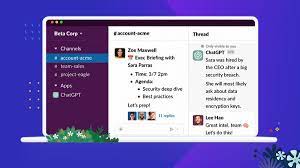
During the company’s recent earnings call, Salesforce CEO Marc Benioff spoke about the “revolutionary” impacts of generative AI, emphasizing the immense potential it holds for the tech industry. Benioff Dreams of AI Making Messaging Intelligent. Benioff highlighted Salesforce’s integration of OpenAI’s ChatGPT platform into Slack, the workplace messaging app owned by Salesforce. This integration aims to enhance Slack’s capabilities by enabling features such as conversation summarization, research assistance, and message drafting directly within the platform. Benioff expressed his vision for Slack to become intelligent itself, leveraging the wealth of data stored within the platform. He emphasized the transformative potential of generative AI in providing intelligent support to users, potentially revolutionizing customer service interactions and business operations. Salesforce’s clients, including Gucci, are already leveraging AI to enhance customer service experiences, reflecting the growing adoption of AI-driven solutions across various industries. Generative AI offers benefits such as time-saving automation of routine tasks, efficient research gathering, and concise information delivery, benefiting individuals in personal, professional, and academic contexts. However, concerns regarding the ethical implications of generative AI have also surfaced, including issues related to deepfake images, bias, and potential job displacement. Some advocate for stricter regulation and careful assessment of AI’s risks before further development. Benioff Dreams of AI Making Messaging Intelligent Despite these concerns, Benioff remains optimistic about the transformative potential of generative AI, describing it as a revolution that will reshape the world in unprecedented ways. He believes that we are only at the beginning of this AI revolution, with much more innovation and transformation yet to come. Like Related Posts Who is Salesforce? Who is Salesforce? Here is their story in their own words. From our inception, we’ve proudly embraced the identity of Read more Salesforce Marketing Cloud Transactional Emails Salesforce Marketing Cloud Transactional Emails are immediate, automated, non-promotional messages crucial to business operations and customer satisfaction, such as order Read more Salesforce Unites Einstein Analytics with Financial CRM Salesforce has unveiled a comprehensive analytics solution tailored for wealth managers, home office professionals, and retail bankers, merging its Financial Read more AI-Driven Propensity Scores AI plays a crucial role in propensity score estimation as it can discern underlying patterns between treatments and confounding variables Read more

Read More
Tableau Pulse and Tableau GPT

Announcing Tableau Pulse and Tableau GPT

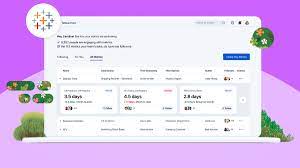
It’s fair to say that many are familiar with ChatGPT, the groundbreaking Large Language Model from OpenAI that has transformed how we work and interact with AI. At TC 2023, Tableau announced a new tool called Tableau GPT. But what exactly is Tableau GPT, and how does it fit into Tableau’s suite of products? Announcing Tableau Pulse and Tableau GPT. Tableau GPT Tableau GPT is an assistant leveraging the advanced capabilities of generative AI to simplify and democratize data analysis. Built from Einstein GPT, a Salesforce product developed in collaboration with OpenAI, Tableau GPT integrates generative AI into Tableau’s user experience. This integration aims to help users work smarter, learn faster, and communicate more effectively. During the Devs on Stage segment of the keynote at TC, Matthew Miller, Senior Director of Product Management, showcased Tableau GPT’s ability to generate calculations. For example, with a prompt like “Extract email addresses from JSON,” Tableau GPT quickly produces a calculation that users can copy into the calculation window. Tableau Pulse Tableau GPT also powers a new tool called Tableau Pulse, designed to generate powerful insights swiftly. Tableau Pulse provides “data digests” on a personalized metrics homepage, offering a curated, ‘newsfeed’-like experience of key KPIs. As users interact with Pulse, it learns to deliver more personalized results based on their interests. For example, Tableau Pulse highlights metrics that require attention, derived from recent data trends identified by Tableau GPT. The tool provides the latest metric values, visual trends, and AI-generated insights for user-selected KPIs. Tableau Pulse also enables users to ask questions about their data in natural language. For instance, when asked, “What is driving change in Appliance Sales?” Tableau Pulse responded with a brief answer and visualization. Further inquiries, such as “What else should I know about air fryers?” revealed that the “inventory fill rate” for air fryers is forecasted to fall below a set threshold, providing actionable insights that users can share across their organization. Future Impact and Availability Tableau GPT and Pulse promise to revolutionize interactions with Tableau products, enabling quicker visualization creation and making data accessible to non-technical users. Salesforce announced that Tableau Pulse and Tableau GPT would enter pilot testing later this year. When they do, we’ll be ready to share new insights. Follow us on LinkedIn to stay updated on all the latest developments and features in Tableau! Like Related Posts Who is Salesforce? Who is Salesforce? Here is their story in their own words. From our inception, we’ve proudly embraced the identity of Read more Salesforce Marketing Cloud Transactional Emails Salesforce Marketing Cloud Transactional Emails are immediate, automated, non-promotional messages crucial to business operations and customer satisfaction, such as order Read more Salesforce Unites Einstein Analytics with Financial CRM Salesforce has unveiled a comprehensive analytics solution tailored for wealth managers, home office professionals, and retail bankers, merging its Financial Read more AI-Driven Propensity Scores AI plays a crucial role in propensity score estimation as it can discern underlying patterns between treatments and confounding variables Read more

Read More

Layers of the AI Stack

The AI stack refers to the layered architecture of technologies and components that work together to build, deploy, and manage artificial intelligence (AI) systems. Each layer of the stack plays a critical role in enabling AI capabilities, from data collection to model deployment and beyond. Here’s a breakdown of the key layers of the AI stack: 1. Data Layer The foundation of any AI system is data. This layer involves collecting, storing, and managing the data required to train and operate AI models. Key Components: 2. Infrastructure Layer This layer provides the computational power and hardware needed to process data and run AI models. Key Components: 3. Framework and Tools Layer This layer includes the software frameworks and tools used to build, train, and optimize AI models. Key Components: 4. Model Layer This is the core layer where AI models are developed, trained, and fine-tuned. Key Components: 5. Application Layer This layer focuses on deploying AI models into real-world applications and integrating them with existing systems. Key Components: 6. Orchestration and Management Layer This layer ensures that AI systems are scalable, reliable, and efficient in production environments. Key Components: 7. Business Layer This layer focuses on the business value of AI, including use cases, ROI, and ethical considerations. Key Components: 8. Ecosystem Layer This layer includes the external tools, services, and communities that support AI development and deployment. Key Components: How the Layers Work Together Why the AI Stack Matters The AI stack provides a structured approach to building and deploying AI systems. By understanding and optimizing each layer, organizations can: Conclusion The AI stack is a comprehensive framework that enables organizations to harness the power of AI effectively. By mastering each layer—from data collection to business value—you can build robust, scalable, and impactful AI solutions. Whether you’re a startup or an enterprise, understanding the AI stack is key to staying competitive in the age of artificial intelligence. Content updated March 2025. Like Related Posts Who is Salesforce? Who is Salesforce? Here is their story in their own words. From our inception, we’ve proudly embraced the identity of Read more Salesforce Marketing Cloud Transactional Emails Salesforce Marketing Cloud Transactional Emails are immediate, automated, non-promotional messages crucial to business operations and customer satisfaction, such as order Read more Salesforce Unites Einstein Analytics with Financial CRM Salesforce has unveiled a comprehensive analytics solution tailored for wealth managers, home office professionals, and retail bankers, merging its Financial Read more AI-Driven Propensity Scores AI plays a crucial role in propensity score estimation as it can discern underlying patterns between treatments and confounding variables Read more

Read More
ai watermarking

AI Watermarking

What is AI Watermarking? AI watermarking is the process of embedding a unique, identifiable signal—called a watermark—into the output of an artificial intelligence model, such as text or images, to mark it as AI-generated. This watermark can then be detected by specialized algorithms designed to scan for it. An effective AI watermark should be: AI watermarking has gained attention with the rise of consumer-facing AI tools like text and image generators, which can produce highly realistic content. For instance, in March 2023, an AI-generated image of the Pope wearing a puffer coat went viral, misleading many into believing it was real. While some AI-generated content is harmless, the technology also poses risks, such as: To combat these risks, researchers are developing watermarking techniques to help distinguish AI-generated content from human-created material. How AI Watermarking Works AI watermarking involves two key stages: Example: Text Watermarking in LLMs A technique proposed by OpenAI researcher Scott Aaronson involves: Similarly, image generators could embed watermarks by: Benefits of AI Watermarking Limitations & Challenges Despite its potential, current AI watermarking has significant drawbacks: Conclusion AI watermarking is a promising but imperfect solution for identifying AI-generated content. While it could help mitigate misinformation and verify authenticity, current methods remain unreliable. Future advancements will need to address removal resistance, false detection, and ethical implications before watermarking becomes a widely adopted standard. Like Related Posts Who is Salesforce? Who is Salesforce? Here is their story in their own words. From our inception, we’ve proudly embraced the identity of Read more Salesforce Unites Einstein Analytics with Financial CRM Salesforce has unveiled a comprehensive analytics solution tailored for wealth managers, home office professionals, and retail bankers, merging its Financial Read more AI-Driven Propensity Scores AI plays a crucial role in propensity score estimation as it can discern underlying patterns between treatments and confounding variables Read more Tectonic’s Successful Salesforce Track Record Salesforce Technology Services Integrator – Tectonic has successfully delivered Salesforce in a variety of industries including Public Sector, Hospitality, Manufacturing, Read more

Read More
Cloud First

Advances in Generative AI

What is generative AI?  Generative AI focuses on creating new and original content, chat responses, designs, synthetic data or even deepfakes.  While predictive AI worked on predefined, human supplied rules, generative AI functions somewhat autonomously. Advances in Generative AI have been groundbreaking. Advances in generative AI represent a significant advancement beyond established technologies like predictive AI, and business leaders are eagerly embracing its potential. A remarkable 91% recognize generative AI as a major advantage, driven by its diverse applications, from content creation to software development. Despite its novelty, generative AI is rapidly progressing, causing over three-quarters of business leaders to express concerns about potentially missing out on its benefits. In particular, marketing leaders are apprehensive about not fully leveraging generative AI in their workflows, with 88% worried that their companies are lagging behind. Insight Generation and Decision-Making: Going beyond traditional data analysis, generative AI excels by not only analyzing existing data but also generating potential scenarios. This predictive modeling empowers businesses to anticipate market shifts, understand consumer preferences, and identify potential risks, fostering proactive strategies over reactive ones. Generative AI’s Global Impact: Generative AI has captivated global attention, with ChatGPT becoming the fastest-growing software program in history, reaching a hundred million users within two months of its public debut. This surge has sparked an arms race among tech giants like Microsoft and Google, and AI chip maker Nvidia has witnessed increased business. Unlike previous AI programs that provided numeric scores, generative AI, including programs like Stability AI’s Stable Diffusion and OpenAI’s DALL-E, reproduces elements of the real world. Amazon announced in 2023 that its voice assistant Alexa now comes with generative AI capabilities. Apple is developing a large array of features that use generative AI, including a new version of Siri expected to launch in 2024. Mixed Modality in AI: The concept of mixed modality or “multi-modality” is taking center stage, enabling programs to fuse text, images, physical space representations, sounds, video, and entire computer functions as smart applications. This approach enhances program capabilities and contributes to continuous learning, potentially advancing the goal of “embodied AI” and robotics. Evolution of Generative AI: Generative AI will continue evolving, contributing to advancements in translation, drug discovery, anomaly detection, and the generation of new content, spanning text, video, fashion design, and music. A generative AI chatbot, for example, is a type of conversational AI system that uses deep learning and natural language processing techniques to generate human-like text responses in real-time. These chatbots can hold text-based conversations with users, understand user input, and generate contextually relevant responses. Transformative Trends in Marketing and Sales Operations: Generative AI is reshaping marketing and sales operations with key trends, including hyper-quick sales and marketing content creation, automation of repetitive tasks (e.g., keyword research, administrative work, content formatting, and data analysis), and the facilitation of sales enablement and custom materials. What is the Main Goal of Generative AI? The answer likely would vary depending on who you ask, but commonly we expect generative AI tools to change the calculus of knowledge work automation. Generative AI isn’t going to eliminate the need for human workers, but it will assist them with the ability to produce human-like writing, images, audio, or video in response to plain-English text prompts. The potential to collaborate with human partners to generate contact that represents practical work is exciting. Curious how generative AI could help your business? Contact Tectonic today to learn more. Like1 Related Posts Who is Salesforce? Who is Salesforce? Here is their story in their own words. From our inception, we’ve proudly embraced the identity of Read more Salesforce Marketing Cloud Transactional Emails Salesforce Marketing Cloud Transactional Emails are immediate, automated, non-promotional messages crucial to business operations and customer satisfaction, such as order Read more Salesforce Unites Einstein Analytics with Financial CRM Salesforce has unveiled a comprehensive analytics solution tailored for wealth managers, home office professionals, and retail bankers, merging its Financial Read more AI-Driven Propensity Scores AI plays a crucial role in propensity score estimation as it can discern underlying patterns between treatments and confounding variables Read more

Read More
Sales Cloud Einstein

Salesforce Einstein Explained

Einstein serves as Salesforce’s integrated AI layer, intricately woven into nearly every Salesforce Cloud. Salesforce Einstein Explained. While certain features, like Opportunity Scoring in Salesforce, are now offered at no cost, many Einstein functionalities are premium add-ons for essential Salesforce products like Sales, Service, Commerce, and Marketing Cloud. A notable development came in March 2023 when Salesforce introduced Einstein GPT, an extension of the Einstein product. This groundbreaking application leverages the ChatGPT platform from OpenAI, renowned for its widespread popularity, and is anticipated to be released later this year. Thereby incorporating generative AI into many Salesforce cloud features. Salesforce AI delivers trusted, extensible AI grounded in the fabric of our Platform. Utilize our AI in your customer data to create customizable, predictive, and generative AI experiences to fit all your business needs safely. Bring conversational AI to any workflow, user, department, and industry with Einstein. Salesforce Einstein is the only comprehensive Artificial Intelligence for CRM. It is data ready to work in your Salesforce org and clouds. Einstein is an integrated set of AI technologies that make the Customer Success Platform smarter. Einstein is the only comprehensive AI for CRM. It is: Einstein enables you to become an AI-first company so you can get smarter and more predictive about your customers. What can you do with Einstein? Drive productivity and personalization with predictive and generative AI across the Customer 360 with Salesforce Einstein. Create and deploy assistive AI experiences natively in Salesforce, allowing your customers and employees to converse directly with Einstein to solve issues faster and work smarter. Empower sellers, agents, marketers, and more with AI tools safely grounded in your customer data to make every customer experience more impactful. Build and customize a conversational AI assistant for CRM. Einstein Copilot is a trusted, generative-AI powered assistant built into the user experience of every Salesforce application. Whether employee-facing or customer-facing, Einstein Copilot can automatically reason through tasks based on pre-built skills. Use prompts, APIs, apex, and more to customize your own AI assistant. Like2 Related Posts Who is Salesforce? Who is Salesforce? Here is their story in their own words. From our inception, we’ve proudly embraced the identity of Read more Salesforce Marketing Cloud Transactional Emails Salesforce Marketing Cloud Transactional Emails are immediate, automated, non-promotional messages crucial to business operations and customer satisfaction, such as order Read more Salesforce Unites Einstein Analytics with Financial CRM Salesforce has unveiled a comprehensive analytics solution tailored for wealth managers, home office professionals, and retail bankers, merging its Financial Read more AI-Driven Propensity Scores AI plays a crucial role in propensity score estimation as it can discern underlying patterns between treatments and confounding variables Read more

Read More
AI Drives Insights

AI Drives Insights

Innovations from Salesforce, HubSpot, and One AI are driving deeper insights and streamlining processes. Key Takeaways: AI is transforming the way businesses operate, and customer relationship management (CRM) is no exception. AI has been influencing the CRM space for years, but its impact is now reaching new heights. By harnessing AI algorithms, modern CRM systems offer predictive analytics and deeper insights, enabling brands to understand their customers on an unprecedented level. Advanced AI-enabled CRMs even incorporate sentiment analysis to gauge customer perceptions and provide automation tools to free marketers from mundane tasks. The global AI market, currently valued at 2.3 billion, continues to expand rapidly. From 2020 to 2022, annual corporate investments in AI startups increased by $5 billion, reflecting the growing demand for AI-driven innovations. As CRM vendors introduce more AI capabilities, it’s important to understand the unique approaches each one takes to differentiate themselves and deliver specific benefits. Salesforce and Einstein GPT: A New Era with OpenAI’s ChatGPT On March 7, 2023, Salesforce introduced Einstein GPT, a generative AI technology integrated into its CRM platform. Combining real-time data from Salesforce’s Data Cloud with OpenAI’s ChatGPT, Einstein GPT allows users to input natural-language prompts to streamline tasks and decision-making. Salesforce has long invested in AI. In 2017, it launched its Einstein AI as part of Service Cloud. By 2019, Salesforce had partnered with OpenAI to explore AI research and integrate advanced models into its ecosystem. The acquisition of Slack in 2020 further strengthened its AI capabilities by incorporating advanced messaging and communication tools into the CRM environment. Marc Benioff, CEO of Salesforce, highlighted the significance of AI’s growth: “The world is experiencing one of the most profound technological shifts with real-time technologies and generative AI. This comes at a pivotal moment as every company is focused on connecting with their customers in more intelligent, automated, and personalized ways.” Einstein GPT is set to transform customer engagement, with applications across Salesforce’s various platforms, including Tableau, MuleSoft, and Slack. HubSpot CRM: AI-Powered Content Assistant A day before Salesforce’s AI announcement, HubSpot revealed its own AI-powered features: the Content Assistant and ChatSpot.ai. These tools aim to enhance CRM users’ productivity while creating stronger connections with customers. HubSpot’s Content Assistant helps marketing and sales teams ideate, create, and share content through generative AI capabilities. It can suggest blog titles, create content outlines, and assist with crafting content for blogs, emails, landing pages, and websites. ChatSpot.ai, on the other hand, offers a natural-language chat experience to simplify CRM tasks for HubSpot users. HubSpot has also invested in AI for other functions, including conversation intelligence, data enrichment, predictive analytics, and content optimization, solidifying its position in the AI-driven CRM landscape. With AI advancements from companies like Salesforce, HubSpot, and One AI, the future of CRM is poised for enhanced efficiency, automation, and personalized customer interactions. Like Related Posts Who is Salesforce? Who is Salesforce? Here is their story in their own words. From our inception, we’ve proudly embraced the identity of Read more Salesforce Marketing Cloud Transactional Emails Salesforce Marketing Cloud Transactional Emails are immediate, automated, non-promotional messages crucial to business operations and customer satisfaction, such as order Read more Salesforce Unites Einstein Analytics with Financial CRM Salesforce has unveiled a comprehensive analytics solution tailored for wealth managers, home office professionals, and retail bankers, merging its Financial Read more AI-Driven Propensity Scores AI plays a crucial role in propensity score estimation as it can discern underlying patterns between treatments and confounding variables Read more

Read More
Slack and ChatGPT

Slack and ChatGPT

Salesforce Inc announced its collaboration with OpenAI, the creator of ChatGPT, to integrate the chatbot technology into its Slack collaboration software and broaden the use of generative artificial intelligence across its business software. The San Francisco-based company unveiled EinsteinGPT, a technology merging its own AI capabilities with those of external partners like OpenAI. This collaboration aims to assist businesses in tasks such as drafting emails, managing customer accounts, and even generating computer code. Additionally, ChatGPT will integrate with Slack to help users summarize conversations and handle various queries. This strategic move reflects the competitive landscape among tech giants racing to enhance their platforms with generative AI, which can generate text, images, and other content based on historical data inputs. Microsoft Corp, for example, leveraging its investment in OpenAI, has integrated generative AI into its Teams product, enabling functionalities like generating meeting notes and suggesting email responses through its Viva Sales subscription. This places Teams in direct competition with Slack. Clara Shih, a general manager at Salesforce, highlighted during a press briefing that this announcement addresses the growing demand from businesses for advanced AI capabilities. She emphasized that Salesforce’s proprietary data and AI models would differentiate their offerings in the market. Salesforce’s initiative in generative AI is poised to transform customer engagement strategies for businesses, according to Shih, enabling them to innovate profoundly in their interactions with customers. In addition to this integration, Salesforce also unveiled a new fund aimed at investing in startups specializing in generative AI technologies. Like Related Posts Who is Salesforce? Who is Salesforce? Here is their story in their own words. From our inception, we’ve proudly embraced the identity of Read more Salesforce Marketing Cloud Transactional Emails Salesforce Marketing Cloud Transactional Emails are immediate, automated, non-promotional messages crucial to business operations and customer satisfaction, such as order Read more Salesforce Unites Einstein Analytics with Financial CRM Salesforce has unveiled a comprehensive analytics solution tailored for wealth managers, home office professionals, and retail bankers, merging its Financial Read more AI-Driven Propensity Scores AI plays a crucial role in propensity score estimation as it can discern underlying patterns between treatments and confounding variables Read more

Read More
gettectonic.com