RAG Archives - gettectonic.com - Page 104

How Do I Check for Duplicates in Salesforce

Run a Duplicate Job to find existing duplicate Contacts based on your Matching Rules. How do i check for duplicates in salesforce? How do i check for duplicates in salesforce? Other Salesforce resources. A matching rule defines how duplicate records are identified in duplicate rules and duplicate jobs. Salesforce provides standard matching rules for business and person accounts, contacts, and leads. You can also create custom matching rules. REQUIRED EDITIONS Available in: Lightning Experience and Salesforce Classic (not available in all orgs) Available in: Essentials, Professional, Enterprise, Performance, Unlimited, and Developer Editions SEE ALSO Like Related Posts Who is Salesforce? Who is Salesforce? Here is their story in their own words. From our inception, we’ve proudly embraced the identity of Read more Salesforce Marketing Cloud Transactional Emails Salesforce Marketing Cloud Transactional Emails are immediate, automated, non-promotional messages crucial to business operations and customer satisfaction, such as order Read more Salesforce Unites Einstein Analytics with Financial CRM Salesforce has unveiled a comprehensive analytics solution tailored for wealth managers, home office professionals, and retail bankers, merging its Financial Read more AI-Driven Propensity Scores AI plays a crucial role in propensity score estimation as it can discern underlying patterns between treatments and confounding variables Read more


Read More
Tectonic Salesforce Services

Merging Duplicate Sales Cloud Leads in Lightning Experience

Considerations when merging duplicate leads in Sales Cloud: Campaigns When merging duplicate leads in Sales Cloud associated with different campaigns, Salesforce preserves the campaign Member Status Updated date for each campaign to which the merged lead belongs. Related Items, Chatter Feeds, and Attachments In the case of merging duplicate Sales Cloud, leads, records linked to items like campaigns or activities, Salesforce establishes connections with the merged record, with certain exceptions. Chatter feeds are maintained solely from the master record. Salesforce Files attached in the Chatter feed or listed under Files are preserved in the merged record. Hidden and Read-Only Fields Salesforce retains data in hidden or read-only fields, including sharing settings, from the master record. These hidden fields remain concealed during the merging process. The merged record preserves the Created By user and Created Date from the oldest merged record, regardless of which record serves as the master. The Last Modified By date reflects the merge date. Non-Master Leads Non-master leads are relocated to the Recycle Bin after the merge process. One tool for duplicate management is Cloudingo. Improve and better manage Salesforce data with Cloudingo. From deduping to importing and even migrating data, Cloudingo makes it easier to manage your Salesforce org. Find duplicates within your existing records and easily merge them. The Salesforce AppExchange offers multiple tools for duplicate record management. Like Related Posts Who is Salesforce? Who is Salesforce? Here is their story in their own words. From our inception, we’ve proudly embraced the identity of Read more Salesforce Marketing Cloud Transactional Emails Salesforce Marketing Cloud Transactional Emails are immediate, automated, non-promotional messages crucial to business operations and customer satisfaction, such as order Read more Salesforce Unites Einstein Analytics with Financial CRM Salesforce has unveiled a comprehensive analytics solution tailored for wealth managers, home office professionals, and retail bankers, merging its Financial Read more AI-Driven Propensity Scores AI plays a crucial role in propensity score estimation as it can discern underlying patterns between treatments and confounding variables Read more

Read More
Improving customer experiences with Marketing Cloud Personalization

Understanding Marketing Cloud List

Understanding Marketing Cloud Lists: A Guide for Email Studio Users If you use Salesforce Marketing Cloud (SFMC) Email Studio, you may wonder: This guide explains lists, their types, and best practices for managing subscriber data. What Is a Marketing Cloud List? Lists are the default way to store subscriber data in Email Studio. They help: Key Considerations for Lists ✔ Best for small datasets (under 500,000 subscribers).✔ Not ideal for complex data (use Data Extensions instead).✔ Use cases: Preference centers, opt-outs, basic segmentation. Types of Email Studio Lists Marketing Cloud has two main list types: 1. Publication Lists 📍 Where to find them:Email Studio » Subscribers » Lists 2. Suppression Lists 📍 How to manage: When to Use Lists vs. Data Extensions Feature Lists Data Extensions Max Records 500,000 Unlimited Data Complexity Simple (subscriber status, preferences) Complex (transactional, relational data) Use Case Opt-outs, basic segmentation Advanced segmentation, dynamic content Performance Slower for large datasets Optimized for scalability 💡 Best Practice: How Admins Can Improve Data Quality Final Thoughts Marketing Cloud lists are great for basic subscriber management, but Data Extensions offer more flexibility for advanced use cases. By understanding the differences, you can optimize your email strategy for better deliverability and segmentation. 🚀 Next Steps: Need help? Check Salesforce’s official documentation or consult a Tectonic Marketing Cloud expert. Like Related Posts Who is Salesforce? Who is Salesforce? Here is their story in their own words. From our inception, we’ve proudly embraced the identity of Read more Salesforce Marketing Cloud Transactional Emails Salesforce Marketing Cloud Transactional Emails are immediate, automated, non-promotional messages crucial to business operations and customer satisfaction, such as order Read more Salesforce Unites Einstein Analytics with Financial CRM Salesforce has unveiled a comprehensive analytics solution tailored for wealth managers, home office professionals, and retail bankers, merging its Financial Read more AI-Driven Propensity Scores AI plays a crucial role in propensity score estimation as it can discern underlying patterns between treatments and confounding variables Read more
Read More
public sector and tribal governent

What is BI in Salesforce?

Salesforce BI helps to create fast, digestible reports to help you make informed decisions at the right time. Salesforce Einstein is a leading business intelligence software solution that will help streamline your operations. Read on in this insight to learn how Salesforce BI capabilities including Tableau rank in the Gartner Magic Quadrant. Make the right decision every time using analytics that go beyond business intelligence software. See why Gartner named Salesforce (Tableau) a Leader in the Gartner® Magic Quadrant™ for Analytics and Business Intelligence Platforms for the 11th consecutive year. Data and analytics leaders must use analytics and BI platforms to support the needs of IT, analysts, consumers and data scientists. While integration with cloud ecosystems and business applications is a key selection requirement, buyers also need platforms to support openness and interoperability. Analytics and business intelligence (ABI) platforms enable less technical users, including business people, to model, analyze, explore, share and manage data, and collaborate and share findings, enabled by IT and augmented by artificial intelligence (AI). For several years, the Magic Quadrant for Analytic and Business Intelligence Platforms has emphasized visual self-service for end users augmented by AI to deliver automated insights. While this remains a significant use case, the ABI platform market will increasingly need to focus on the needs of the analytic content consumer and business decision makers. To achieve this, automated insights must be relevant in context of a user’s goals, actions and workflow. Many platforms are adding capabilities for users to easily compose low-code or no-code automation workflows and applications. This blend of capabilities is helping to expand the vision for analytics beyond simply delivering datasets and presenting dashboards. Today’s ABI platforms can deliver enriched contextualized insights, refocus attention on decision-making processes and ultimately take actions that will deliver business value. In addition to the increasing consumer design focus trend, we see other key market trends, including the need for improved governance of analytic content creation and dissemination, and the demand for a headless, open architecture. For example, a headless ABI platform would decouple the metrics store from the front-end presentation layer, enabling more interoperability with competitive products. ABI platform functionality includes the following 12 critical capabilities, which have been updated to reflect areas of market change, differentiation and customer demand: Gartner added three new critical capabilities as part of our metrics store evaluation criteria this year:  ABI platforms have always been about measurement. For decades, the slicing and dicing of measures by their dimensional attributes was synonymous with the act of performing business intelligence. However, over the last decade, the focus on metrics and measurement was overshadowed by data visualization. As data visualization became the most conspicuous capability, some business executives began to conflate ABI platforms with data visualization — as if ABI platforms are glorified chart wizards. This misconception minimizes much of the work performed and the business value delivered by ABI platforms. Establishing metrics stores as a critical capability to execute makes it clear that defining and communicating performance measures throughout an organization is one of the key purposes of an ABI platform. Analytics collaboration is a combination of many features (such as Slack/Teams integration, action frameworks) that collectively improve an organization’s ability to make decisions with consensus. Data science integration reflects the increasing likelihood that a business analyst may want to use data science to test certain hypotheses, and that data scientists will need to leverage features such as data prep and data visualization. In addition, Gartner is changing “catalogs” to “analytic catalogs” to emphasize a set of requirements that are not being met by ABI platform vendors today. Most large enterprises have thousands of reports built across multiple ABI platforms, but consumers in these organizations have no easy way to access these reports. The name change to analytic catalogs reflects the need for ABI platform vendors to deliver analytic content with the consumer in mind. Three critical capabilities were removed from our evaluation criteria: security, natural language generation (NLG; rolled into data storytelling) and cloud analytics (which will no longer be considered a platform capability, but instead a go-to-market strategy covered in the Magic Quadrant). And one of the security sub-criteria, about the granularity of authorization (e.g., row-based security) has been moved to the enterprise reporting capability. Salesforce (Tableau) Tableau, a Salesforce company, is a Leader in this Magic Quadrant. Its products are mainly focused on visual-based exploration that enables business users to access, prepare, analyze and present findings in their data. CRM Analytics, formerly Tableau CRM, provides augmented analytics capabilities for analysts and citizen data scientists. Tableau has global operations and serves clients of all sizes. In 2022, Tableau reinforced its augmented consumer vision to provide contextualized insights with deeper integration with Salesforce Data Cloud. IT also improved decision intelligence by bringing domain-aware insights into action with Revenue Intelligence and other Salesforce-native apps. The extensible design and x-platform integrations (Salesforce Flow, MuleSoft, UiPath and Looker) further enable composable analytics to bring insights into workflow with agility. Strengths Cautions Like Related Posts Who is Salesforce? Who is Salesforce? Here is their story in their own words. From our inception, we’ve proudly embraced the identity of Read more Salesforce Marketing Cloud Transactional Emails Salesforce Marketing Cloud Transactional Emails are immediate, automated, non-promotional messages crucial to business operations and customer satisfaction, such as order Read more Salesforce Unites Einstein Analytics with Financial CRM Salesforce has unveiled a comprehensive analytics solution tailored for wealth managers, home office professionals, and retail bankers, merging its Financial Read more AI-Driven Propensity Scores AI plays a crucial role in propensity score estimation as it can discern underlying patterns between treatments and confounding variables Read more
Read More
Customer Satisfaction

10 Essential Customer Service Skills & How to Master Them

At Tectonic, we focus heavily on Salesforce tools—but technology alone isn’t enough. Exceptional customer service hinges on the right mix of human skills and smart automation. Ever called customer support only to be met with indifference or incompetence? Poor service doesn’t just frustrate—it erodes trust and drives customers away. In today’s competitive market, outstanding service is a differentiator. It boosts satisfaction, retention, and revenue while building brand loyalty. Whether you’re a leader refining your team or an agent honing your craft, mastering both hard and soft skills is key. What Is Customer Service? Customer service is the support businesses provide before, during, and after a purchase. It includes:✔ Resolving issues✔ Answering questions✔ Offering guidance✔ Ensuring satisfaction The goal? Stronger relationships, happier customers, and business growth. Why Do Customer Service Skills Matter? It’s not just about fixing problems—it’s about listening, empathizing, and exceeding expectations. Top Customer Service Skills 1. Continuity 2. Omnichannel Support 3. Automation How to Improve Customer Service Skills For Teams: For Agents: Hard Skills Every Agent Needs 🔹 Product Knowledge – Know features, fixes, and FAQs inside out.🔹 Technical Expertise – Navigate service consoles & CRMs with ease.🔹 AI Proficiency – Leverage chatbots and automation smartly.🔹 Omnichannel Etiquette – Adjust tone for email, chat, and phone.🔹 Multilingual Ability – Serve diverse customers better. Soft Skills That Build Trust 🔸 Effective Communication – Be clear, concise, and customer-focused.🔸 Active Listening – Hear the real issue behind complaints.🔸 Empathy – Show genuine care (e.g., “I understand how frustrating this must be.”).🔸 Adaptability – Stay calm under pressure and pivot when needed.🔸 Time Management – Balance speed and quality. Mastering Customer Service in the AI Era Customer service is evolving fast. The best teams combine:✅ Human touch (empathy, problem-solving)✅ Smart tech (AI, automation, CRM insights) For leaders: Use this checklist when hiring and training.For agents: Sharpen these skills to deliver standout experiences—and grow your career. Pro Tip: Pair skills with the right tools. Salesforce’s My Service Journey helps align service with business goals. Final Thought Great service isn’t just about solving issues—it’s about making customers feel valued. Invest in these skills, and your team (and bottom line) will thrive. 🚀 Like Related Posts Who is Salesforce? Who is Salesforce? Here is their story in their own words. From our inception, we’ve proudly embraced the identity of Read more Salesforce Marketing Cloud Transactional Emails Salesforce Marketing Cloud Transactional Emails are immediate, automated, non-promotional messages crucial to business operations and customer satisfaction, such as order Read more Salesforce Unites Einstein Analytics with Financial CRM Salesforce has unveiled a comprehensive analytics solution tailored for wealth managers, home office professionals, and retail bankers, merging its Financial Read more AI-Driven Propensity Scores AI plays a crucial role in propensity score estimation as it can discern underlying patterns between treatments and confounding variables Read more

Read More
Salesforce CDP Explained

Salesforce CDP Explained

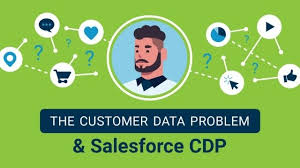
What is a Customer Data Platform (CDP)? A Customer Data Platform (CDP) is one of the most transformative tools in modern marketing. Salesforce CDP Explained. If you’re exploring whether your business needs a CDP and how to begin using one, this guide will walk you through the essentials. CDPs have quickly become a go-to solution in marketing, popping up in reports and strategies everywhere. According to the 2020 State of Marketing Report, 86% of marketers who use CDPs are maintaining or increasing their usage, making many companies wonder: Do we need a CDP too? This insight serves as your step-by-step guide to help you determine whether your business should invest in a CDP, and how to successfully implement one for smarter marketing. What is a CDP? A Customer Data Platform (CDP) is a sophisticated piece of marketing technology designed to collect and organize customer data from various sources into centralized profiles. It helps businesses manage and draw actionable insights from data in real time, making it easier to personalize customer interactions. A typical CDP includes tools for customer data management, marketing automation, multichannel campaign execution, and real-time interaction management. It’s particularly useful when businesses need a database of user-level data to understand customer behaviors across touchpoints. Why Does Your Business Need a CDP? Salesforce CDP Explained CDPs excel in four core tasks: collecting, unifying, activating, and analyzing data. Introducing Salesforce’s CDP: Data Cloud Salesforce’s Data Cloud is a powerful CDP that integrates with Customer 360 to provide real-time customer profiles. It collects and unifies customer data in real time, ensuring businesses can deliver personalized customer experiences and foster stronger relationships. Data Cloud is scalable and designed for businesses of all sizes, with built-in security, compliance, and privacy features through Hyperforce. Benefits of a CDP Beyond basic segmentation, CDPs offer three major benefits: CDPs vs. CRM vs. DMP It’s important to understand the distinction between different data tools. While CRMs focus on managing customer relationships and interactions, and Data Management Platforms (DMPs) handle anonymous data for targeted advertising, CDPs are designed to unify and activate first-party data for personalized marketing. How to Choose a CDP When selecting a CDP, focus on two key areas: insights and engagement. Some CDPs specialize in integrating and analyzing customer data (insights), while others focus on delivering real-time personalized experiences (engagement). Salesforce’s Data Cloud combines both capabilities, offering real-time insights and activation to power personalized experiences across channels. To choose the right CDP for your business, ask these questions: Success Stories with CDPs CDPs have transformed the way businesses engage with their customers. One example involves a regional food and convenience store chain that implemented a CDP to enhance personalized digital experiences. By using customer data to tailor marketing emails and online interactions, the business saw a 16% increase in conversion rates on one of its key products. Getting Started with a CDP CDPs are essential tools for businesses looking to unify customer data, personalize marketing, and drive smarter marketing strategies. To get started, consider building a business case for CDP adoption, assembling a cross-functional team, and researching the right CDP to fit your organization’s needs. The journey to smarter, data-driven marketing begins with the right CDP. Make sure to explore Salesforce’s Data Cloud and other leading platforms to find the best fit for your organization’s growth and success. Content updated April 2023. Like Related Posts Who is Salesforce? Who is Salesforce? Here is their story in their own words. From our inception, we’ve proudly embraced the identity of Read more Salesforce Marketing Cloud Transactional Emails Salesforce Marketing Cloud Transactional Emails are immediate, automated, non-promotional messages crucial to business operations and customer satisfaction, such as order Read more Salesforce Unites Einstein Analytics with Financial CRM Salesforce has unveiled a comprehensive analytics solution tailored for wealth managers, home office professionals, and retail bankers, merging its Financial Read more AI-Driven Propensity Scores AI plays a crucial role in propensity score estimation as it can discern underlying patterns between treatments and confounding variables Read more

Read More
Collecting customer data

Customer Journey Mapping

Based on a Salesforce study, 51% of marketing leaders measure success with revenue growth.  22% look at customer satisfaction. While only 18% look at customer retention.  Customer journey mapping addresses retention, satisfaction, and revenue growth.  Taking a customer-centric approach to designing your customer journey map puts your focus on the customer improving customer satisfaction and retention, in addition to revenue. Your customer journey map coordinates all your marketing efforts. Maximize the Advantages of Customer Journey Mapping To maximize the advantages of customer journey mapping, it’s critical to take a comprehensive approach that integrates each of the following steps: Your Customer Journey Map is a Diagram of Touchpoints The customer journey map becomes a diagram of all the touchpoints a customer has with your company. While every customer’s experience with your company will be slightly, or greatly, different the customer journey map will outline potential journeys and touchpoints. Understanding how, when, and why your customer is interacting with your company is key to improving your customer experiences. The Salesforce team at Tectonic looks forward to assisting you in implementing your customer journey throughout the entire Salesforce ecosystem. Like1 Related Posts Who is Salesforce? Who is Salesforce? Here is their story in their own words. From our inception, we’ve proudly embraced the identity of Read more Salesforce Marketing Cloud Transactional Emails Salesforce Marketing Cloud Transactional Emails are immediate, automated, non-promotional messages crucial to business operations and customer satisfaction, such as order Read more Salesforce Unites Einstein Analytics with Financial CRM Salesforce has unveiled a comprehensive analytics solution tailored for wealth managers, home office professionals, and retail bankers, merging its Financial Read more AI-Driven Propensity Scores AI plays a crucial role in propensity score estimation as it can discern underlying patterns between treatments and confounding variables Read more
Read More
Case Management in Salesforce

Case Management in Salesforce

What does Salesforce Case Management entail? Salesforce Case Management, as explained in the Service Cloud Introduction session, provides a platform for recording, tracking, and resolving customer issues across sales, service, and support. Advantages of utilizing a case management system: Case Management in Salesforce Salesforce Case Management allows the automatic collection of cases from various sources like email, social media, support centers, or web forms. It provides tools for categorizing, filtering, and adding notes to cases stored in the database. How can I establish case management in Salesforce? Utilize queues and automated rules to assign cases to your team without constant monitoring. By assigning cases to a queue, specific team members can select cases from a list, helping prioritize work. Auto-assign cases to queues or team members based on conditional rules. Distinguishing case management from CRM: While both case management and CRM assist in managing customer data and interactions, the key distinction lies in the fact that case management is tailored to monitor the progress of individual cases. Visibility of cases in Salesforce: If the organization-wide sharing default access for Cases is set to ‘Private,’ and ‘Grant Access Using Hierarchies’ is enabled, only the Case owner, the owner’s managers in the role hierarchy, Salesforce admins, and user profiles with the ‘View All’ object permission on Cases can view a Case. Can leads have cases in Salesforce? To associate a Lead with a Case, create a custom lookup field on Cases to the Leads object. This allows for a Cases related list on the Lead record. Like Related Posts Who is Salesforce? Who is Salesforce? Here is their story in their own words. From our inception, we’ve proudly embraced the identity of Read more Salesforce Marketing Cloud Transactional Emails Salesforce Marketing Cloud Transactional Emails are immediate, automated, non-promotional messages crucial to business operations and customer satisfaction, such as order Read more Salesforce Unites Einstein Analytics with Financial CRM Salesforce has unveiled a comprehensive analytics solution tailored for wealth managers, home office professionals, and retail bankers, merging its Financial Read more AI-Driven Propensity Scores AI plays a crucial role in propensity score estimation as it can discern underlying patterns between treatments and confounding variables Read more
Read More
Salesforce CDP Innovations

Salesforce CDP Innovations

New Salesforce CDP Innovations: Smarter, Faster, and More Personalized Customer Interactions Salesforce has launched new innovations for its Customer Data Platform (CDP), designed to help businesses leverage first-party data for more personalized customer experiences. Leading brands like Bank of Montreal and convenience store retailer Casey’s are already using Salesforce CDP to create a unified source of customer truth, streamlining interactions and providing frictionless customer experiences. The world is gradually recovering from the pandemic, and consumer behavior is shifting as shops, hotels, restaurants, and other establishments reopen. While customers are eager to engage in the experiences they’ve missed, companies recognize that digital innovations, such as curbside pickup and direct-to-consumer websites, which fueled pandemic-era growth, are here to stay. As expectations for personalized, connected experiences grow—with 70% of customers demanding this—many businesses struggle to unify customer data across systems, teams, and devices. This data fragmentation makes it difficult to create a single source of truth for customers. Salesforce CDP: Built on the World’s Leading CRM Salesforce CDP solves this challenge by capturing, unifying, and activating customer data across various touchpoints to drive more personalized experiences. Today’s new CDP features make data smarter, more connected, and easier to activate securely. Built on Salesforce’s #1 CRM platform, the CDP unifies data from sales, service, marketing, loyalty, and commerce systems, creating a comprehensive single source of truth. Businesses can then leverage this unified view for personalized marketing, advertising, analytics, and relationship-building strategies that increase customer loyalty and revenue. New Innovations in Salesforce CDP Include: How Businesses Are Using Salesforce CDP Availability of New Features: This insight helped you learn more about these innovations and how Salesforce CDP can enhance customer engagement from anywhere. Like Related Posts Who is Salesforce? Who is Salesforce? Here is their story in their own words. From our inception, we’ve proudly embraced the identity of Read more Salesforce Marketing Cloud Transactional Emails Salesforce Marketing Cloud Transactional Emails are immediate, automated, non-promotional messages crucial to business operations and customer satisfaction, such as order Read more Salesforce Unites Einstein Analytics with Financial CRM Salesforce has unveiled a comprehensive analytics solution tailored for wealth managers, home office professionals, and retail bankers, merging its Financial Read more AI-Driven Propensity Scores AI plays a crucial role in propensity score estimation as it can discern underlying patterns between treatments and confounding variables Read more

Read More
Salesforce Sales Cloud

Salesforce for the Inside Sales Team

Inside sales serves as the cornerstone of a thriving sales organization. The efficient model using Salesforce for the inside sales team enables the delivery of personalized human interactions. Salesforce facilitates rapid scalability. Inside sales involves sales representatives engaging with and selling to customers via phone or digital channels rather than face-to-face interactions. This approach not only streamlines business operations but also fosters organizational and personal growth. Modern technology enhances the productivity and effectiveness of inside sales teams by providing valuable data and insights. Whether your team is making or receiving calls, employing the inside sales methodology, business development, or a similar approach yields results. This strategy, known as Sales Engagement, focuses on promptly connecting with customers through their preferred channels. In today’s fast-paced environment, buyers expect personalized engagement and that it aligns with their needs. Inside sales teams, often responsible for initial contact and research, play a crucial role in setting the stage for a successful sales process. Salesforce for the inside sales team provides that personalized engagement,. This example is actually how Salesforce itself handles inside sales. Inside sales teams can be structured as generalized, specialized, or segmented entities, catering to diverse business needs. Salesforce, following a Quantity and Quality approach, emphasizes multiple touches to nurture leads effectively. Leveraging advanced tools and strategic timing, Salesforce maximizes sales touches, ensuring engagement during opportune moments. The organization has mastered the art of striking while the iron is hot, reaching out to potential leads promptly after engagement. Salesforce combines quantity with quality, recognizing that 64% of customers expect personalized engagement based on past interactions and interests. Salesforce representatives meticulously research target companies to tailor personalized sales communications. Sales Engagement Of particular interest are the tools employed by Salesforce for inside sales. Sales Engagement, a solution automating record-keeping and streamlining the selling process, is accessible to all Salesforce customers as an add-on to Sales Cloud. With features like email integration, automated activity logging, Sales Dialer, and AI-driven tools like Einstein Lead Scoring and Einstein Conversation Insights, Salesforce empowers its inside sales teams. They work smarter, not harder. High Velocity Sales Salesforce’s Sales Engagement tool, formerly known as High Velocity Sales, enhances inside sales reps’ ability to engage buyers more efficiently, effectively, and with greater agility. With the right tools at their disposal, inside sales teams can provide a seamless experience, essential for winning and retaining new business. Tectonic recognizes the pivotal role of inside sales and supports our clients in optimizing their processes with Salesforce’s Sales Engagement tool, ensuring a more streamlined and productive approach to closing deals. Contact Tectonic today to discuss how Salesforce Sales Engagement can empower your inside sales team. Like Related Posts Who is Salesforce? Who is Salesforce? Here is their story in their own words. From our inception, we’ve proudly embraced the identity of Read more Salesforce Marketing Cloud Transactional Emails Salesforce Marketing Cloud Transactional Emails are immediate, automated, non-promotional messages crucial to business operations and customer satisfaction, such as order Read more Salesforce Unites Einstein Analytics with Financial CRM Salesforce has unveiled a comprehensive analytics solution tailored for wealth managers, home office professionals, and retail bankers, merging its Financial Read more AI-Driven Propensity Scores AI plays a crucial role in propensity score estimation as it can discern underlying patterns between treatments and confounding variables Read more
Read More
salesforce marketing cloud interaction studio

Ampscript

What is AMPscript used for in Salesforce? What is its purpose? AMPscript is a useful scripting language that you can use across emails, landing pages, SMS, and push notifications in Salesforce Marketing Cloud Builders. AMPscript is Marketing Cloud‘s proprietary scripting language for advanced dynamic content in emails, landing pages, SMS, and push messages. Why use Marketing Cloud AMPscript? AMPscript allows you to extend Marketing Cloud functionality beyond its out-of-the-box capabilities because you can develop code and custom solutions, tailored to your own specific needs and requirements. What are some functions you can perform with AMPscript? Types of Functions in Marketing Cloud AMPscript: What are advantages of AMPscript compared to Ssjs? For the web developer who are new to both languages, for them AMPscript has a shorter learning curve compared to SSJS. AMPscript should be preferred for simple inline personalization, which includes content like name, salutation and simple IF ELSE loops. Using AMPscript To use AMPscript, you insert it into the content body of your messages at the point where you want it to render. When you send a message that contains AMPscript, Marketing Cloud Engagement interprets the code and substitutes it with the output of the AMPscript function. 3 Way to Add There are three ways to add AMPscript code to your content: by using inline code, by adding code blocks, or by using tag-based scripting. The first two of these methods use special delimiters to denote the beginning and ending of the code that you want Marketing Cloud Engagement to interpret. In the third method, you delineate the AMPscript code with <script> tags. When you close an AMPscript block, use the same type of closing delimiter as you used to open the block. For example, if you open a block using tag-based scripting, you can’t close it by using the closing code block delimiter. Use the %%= and =%% delimiters to add AMPscript code inline with your content. Inline AMPscript is frequently used within HTML tags to dynamically populate the content of a message. In this basic example, a section of AMPscript is included inline within an HTML <p> tag. You can also include multi-line blocks of AMPscript code in your messages. Use the %%[ and ]%% delimiters to begin and end a code block, respectively. With a code block, you can define multiple variables and execute multiple functions. Code blocks use the syntax shown in this example. Tag-based syntax for AMPscript standardizes the syntax used to declare AMPscript blocks with the syntax of Server-Side JavaScript (SSJS). This syntax makes it easier for developers to switch between AMPscript and SSJS. Like1 Related Posts Who is Salesforce? Who is Salesforce? Here is their story in their own words. From our inception, we’ve proudly embraced the identity of Read more Salesforce Marketing Cloud Transactional Emails Salesforce Marketing Cloud Transactional Emails are immediate, automated, non-promotional messages crucial to business operations and customer satisfaction, such as order Read more Salesforce Unites Einstein Analytics with Financial CRM Salesforce has unveiled a comprehensive analytics solution tailored for wealth managers, home office professionals, and retail bankers, merging its Financial Read more AI-Driven Propensity Scores AI plays a crucial role in propensity score estimation as it can discern underlying patterns between treatments and confounding variables Read more

Read More
gettectonic.com