Relationships Archives - gettectonic.com - Page 17
Smithsonian Data Cloud

Smithsonian Data Cloud

The Smithsonian already embraces technology through its Open Access Initiative. ousing 2D and 3D renders of collections it provides access to over 20 museums. Enter Salesforce and Smithsonian Data Cloud. The world’s largest network of research, museum, and education facilities, the Smithsonian Institution, manages over 150 million collections across its 21 museums, the National Zoo, and eight research centers. Navigating this vast array of artifacts can be overwhelming, even for dedicated history enthusiasts. To enhance accessibility, the Smithsonian Institution is collaborating with cloud computing giant Salesforce. The goal is to streamline the user experience by integrating disparate data sources, such as ticketing systems and donation histories, into a unified system. This initiative aims to provide a clearer blueprint of Smithsonian’s diverse locations and offerings, according to Lori Freeman, Salesforce’s Vice President and General Manager of Nonprofit Industry Solutions and Strategy. “Smithsonian is so progressive. They have all this content, they have all this history, they have incredible tools,” Freeman told Technical.ly. “So this technology is going to enable them to reach audiences they would never get to.” For instance, this system will allow museum staff and volunteers to assist visitors in locating exhibits across different Smithsonian locations. Becky Kobberod, the Smithsonian’s Head of Digital Transformation, illustrated this by describing how a visitor at the Hirshhorn could ask about a piece of art at the National Museum of American History. “It’s connecting the dots and creating a Smithsonian ecosystem that we currently don’t have. If you want to engage in our various museums, you go to each of them separately,” Kobberod said. “Whereas now, we’re providing you a front door, so to speak, that can help you navigate across all of the many different museums and resources that we have.” Although specifics about the technology and user interface have not been disclosed, Freeman emphasized that the main objectives are to keep visitors engaged and to build lifelong relationships with both in-person and virtual visitors. Building on Current Tech Resources The Smithsonian’s Open Access initiative, launched in early 2020, offers 2D and 3D renderings of its collections, totaling around 5 million items to date. Users can interact with 3D images to get a 360-degree view of fossils, sculptures, and artifacts like Neil Armstrong’s spacesuit. This initiative began with 2.8 million pieces and continues to grow, said Kobberod. In addition to Open Access, the Smithsonian has other digital initiatives. In 2022, the National Museum of African American History and Culture, in collaboration with Baltimore-based digital services firm Fearless, launched a searchable online platform to make certain collections and stories more accessible. Kobberod noted that only about 1% of the collections are physically displayed at any given time. Digitizing and uploading these collections not only preserves them but also makes them accessible to people who might not have the means to visit in person. “Smithsonian exists as a service to all of the American public,” she said. “We know that this is core to our future, and to making what we have available to the nation and the world.” Like1 Related Posts Who is Salesforce? Who is Salesforce? Here is their story in their own words. From our inception, we’ve proudly embraced the identity of Read more Salesforce Marketing Cloud Transactional Emails Salesforce Marketing Cloud Transactional Emails are immediate, automated, non-promotional messages crucial to business operations and customer satisfaction, such as order Read more Salesforce Unites Einstein Analytics with Financial CRM Salesforce has unveiled a comprehensive analytics solution tailored for wealth managers, home office professionals, and retail bankers, merging its Financial Read more AI-Driven Propensity Scores AI plays a crucial role in propensity score estimation as it can discern underlying patterns between treatments and confounding variables Read more


Read More
Generative AI for Tableau

Generative AI for Tableau

Tableau’s first generative AI assistant is now generally available. Generative AI for Tableau brings data prep to the masses. Earlier this month, Tableau launched its second platform update of 2024, announcing that its first two GenAI assistants would be available by the end of July, with a third set for release in August. The first of these, Einstein Copilot for Tableau Prep, became generally available on July 10. Tableau initially unveiled its plans to develop generative AI capabilities in May 2023 with the introduction of Tableau Pulse and Tableau GPT. Pulse, an insight generator that monitors data for metric changes and uses natural language to alert users, became generally available in February. Tableau GPT, now renamed Einstein Copilot for Tableau, moved into beta testing in April. Following Einstein Copilot for Tableau Prep, Einstein Copilot for Tableau Catalog is expected to be generally available before the end of July. Einstein Copilot for Tableau Web Authoring is set to follow by the end of August. With these launches, Tableau joins other data management and analytics vendors like AWS, Domo, Microsoft, and MicroStrategy, which have already made generative AI assistants generally available. Other companies, such as Qlik, DBT Labs, and Alteryx, have announced similar plans but have not yet moved their products out of preview. Tableau’s generative AI capabilities are comparable to those of its competitors, according to Doug Henschen, an analyst at Constellation Research. In some areas, such as data cataloging, Tableau’s offerings are even more advanced. “Tableau is going GA later than some of its competitors. But capabilities are pretty much in line with or more extensive than what you’re seeing from others,” Henschen said. In addition to the generative AI assistants, Tableau 2024.2 includes features such as embedding Pulse in applications. Based in Seattle and a subsidiary of Salesforce, Tableau has long been a prominent analytics vendor. Its first 2024 platform update highlighted the launch of Pulse, while the final 2023 update introduced new embedded analytics capabilities. Generative AI assistants are proliferating due to their potential to enable non-technical workers to work with data and increase efficiency for data experts. Historically, the complexity of analytics platforms, requiring coding and data literacy, has limited their widespread adoption. Studies indicate that only about one-quarter of employees regularly work with data. Vendors have attempted to overcome this barrier by introducing natural language processing (NLP) and low-code/no-code features. However, NLP features have been limited by small vocabularies requiring specific business phrasing, while low-code/no-code features only support basic tasks. Generative AI has the potential to change this dynamic. Large language models like ChatGPT and Google Gemini offer extensive vocabularies and can interpret user intent, enabling true natural language interactions. This makes data exploration and analysis accessible to non-technical users and reduces coding requirements for data experts. In response to advancements in generative AI, many data management and analytics vendors, including Tableau, have made it a focal point of their product development. Tech giants like AWS, Google, and Microsoft, as well as specialized vendors, have heavily invested in generative AI. Einstein Copilot for Tableau Prep, now generally available, allows users to describe calculations in natural language, which the tool interprets to create formulas for calculated fields in Tableau Prep. Previously, this required expertise in objects, fields, functions, and limitations. Einstein Copilot for Tableau Catalog, set for release later this month, will enable users to add descriptions for data sources, workbooks, and tables with one click. In August, Einstein Copilot for Tableau Web Authoring will allow users to explore data in natural language directly from Tableau Cloud Web Authoring, producing visualizations, formulating calculations, and suggesting follow-up questions. Tableau’s generative AI assistants are designed to enhance efficiency and productivity for both experts and generalists. The assistants streamline complex data modeling and predictive analysis, automate routine data prep tasks, and provide user-friendly interfaces for data visualization and analysis. “Whether for an expert or someone just getting started, the goal of Einstein Copilot is to boost efficiency and productivity,” said Mike Leone, an analyst at TechTarget’s Enterprise Strategy Group. The planned generative AI assistants for different parts of Tableau’s platform offer unique value in various stages of the data and AI lifecycle, according to Leone. Doug Henschen noted that the generative AI assistants for Tableau Web Authoring and Tableau Prep are similar to those being introduced by other vendors. However, the addition of a generative AI assistant for data cataloging represents a unique differentiation for Tableau. “Einstein Copilot for Tableau Catalog is unique to Tableau among analytics and BI vendors,” Henschen said. “But it’s similar to GenAI implementations being done by a few data catalog vendors.” Beyond the generative AI assistants, Tableau’s latest update includes: Among these non-Copilot capabilities, making Pulse embeddable is particularly significant. Extending generative AI capabilities to work applications will make them more effective. “Embedding Pulse insights within day-to-day applications promises to open up new possibilities for making insights actionable for business users,” Henschen said. Multi-fact relationships are also noteworthy, enabling users to relate datasets with shared dimensions and informing applications that require large amounts of high-quality data. “Multi-fact relationships are a fascinating area where Tableau is really just getting started,” Leone said. “Providing ways to improve accuracy, insights, and context goes a long way in building trust in GenAI and reducing hallucinations.” While Tableau has launched its first generative AI assistant and will soon release more, the vendor has not yet disclosed pricing for the Copilots and related features. The generative AI assistants are available through a bundle named Tableau+, a premium Tableau Cloud offering introduced in June. Beyond the generative AI assistants, Tableau+ includes advanced management capabilities, simplified data governance, data discovery features, and integration with Salesforce Data Cloud. Generative AI is compute-intensive and costly, so it’s not surprising that Tableau customers will have to pay extra for these capabilities. Some vendors are offering generative AI capabilities for free to attract new users, but Henschen believes costs will eventually be incurred. “Customers will want to understand the cost implications of adding these new capabilities,”

Read More
Content Marketing Lessons

Content Marketing Lessons

Content Marketing Lessons: Beyond Creativity Content marketing requires more than just creativity; it demands a strategic approach rooted in collaboration, consistency, and data-driven insights. Salesforce, a leader in customer relationship management, exemplifies how to revolutionize content marketing to achieve meaningful business outcomes. Centralize Content Strategy for Consistency One of the key takeaways from Salesforce’s content marketing evolution is the power of centralization. Jessica Bergmann, Vice President of Content and Customer Marketing at Salesforce, led a shift that elevated content marketing to a strategic function within the company. By centralizing content operations, Salesforce ensured consistency in voice, tone, and messaging across all channels. This centralization wasn’t about controlling content but about creating a unified narrative that resonates with customers at every touchpoint. Empower Teams with Strategic Roles To bridge the gap between audience needs and Salesforce’s business objectives, Jessica introduced two pivotal roles: content strategists and editorial leads. These roles are embedded within brand, persona, and industry teams, ensuring content aligns with business goals and is tailored to the specific needs of different customer segments. This approach underscores the importance of empowering teams with the right expertise and tools to deliver impactful content. Leverage Technology for Seamless Operations Salesforce’s centralized content operations team plays a crucial role in managing the company’s content ecosystem. By utilizing a central content operations tool, the team oversees real-time editorial calendars, workflows, and a global measurement dashboard. This technological foundation allows Salesforce to streamline content production and maintain a cohesive strategy across its global teams. For any organization aiming to scale content marketing efforts, investing in the right technology is essential. Integrate Cross-Functional Collaboration A key to Salesforce’s success is its emphasis on cross-functional collaboration. By working closely with product marketing, creative, and campaigns teams, the content marketing function at Salesforce is integral to the broader marketing strategy. This integrated approach ensures content is not created in isolation but as part of a larger, cohesive effort to educate customers and drive business growth. Measure What Matters In content marketing, measurement is everything. Salesforce’s content performance dashboard provides visibility into how content is performing across the organization. By tracking metrics like traffic, engagement, and progression, Salesforce ensures its content efforts align with business objectives. This focus on actionable metrics helps teams make informed decisions about optimizing, promoting, or cutting content. Prioritize Strategic Initiatives Salesforce’s ability to manage multiple high-impact projects, such as Dreamforce, Salesforce+, and the #TeamEarth campaign, demonstrates its strategic prioritization process. Using the V2MOM framework (vision, values, methods, obstacles, and measures), Salesforce aligns its content marketing efforts with the company’s broader goals. This structured approach allows Salesforce to allocate resources effectively and ensure content initiatives deliver maximum impact. Focus on Audience-First Content At the heart of Salesforce’s content marketing strategy is an unwavering focus on the audience. By adopting an “audience-first” mindset, Salesforce’s content teams strive to create content that addresses customer needs while earning the right to market to them. This approach is crucial in today’s content-saturated environment, where businesses must offer genuine value to stand out. Develop Long-Range Content Plans Content marketing isn’t just about quick wins; it’s about building long-term relationships with your audience. Salesforce’s commitment to long-range content planning, integrating thought leadership, search, and editorial efforts, ensures the company remains top-of-mind for customers throughout their buying journey. This long-term focus is key to nurturing leads and converting them into loyal customers. Invest in Content Marketing Talent Hiring the right talent is vital for a successful content marketing strategy. Salesforce’s experience highlights the importance of bringing in content marketing experts who can execute the strategy effectively. These experts bring fresh ideas and ensure the content marketing function is respected and prioritized within the organization. Show Early Wins to Build Momentum Finally, one of the most important lessons from Salesforce’s content marketing journey is the value of showcasing early wins. By focusing on quick victories that demonstrate the impact of content marketing, Jessica and her team built momentum and secured buy-in from senior leadership. This approach is essential for any content marketing team seeking to establish itself as a strategic function within the organization. Conclusion Salesforce’s content marketing transformation offers valuable insights for businesses at any stage of their content marketing journey. By centralizing content strategy, empowering teams with strategic roles, leveraging technology, and focusing on audience-first content, Salesforce has created a content marketing engine that drives real business results. For organizations looking to elevate their content marketing efforts, these lessons provide a clear roadmap to success. Like Related Posts Who is Salesforce? Who is Salesforce? Here is their story in their own words. From our inception, we’ve proudly embraced the identity of Read more Salesforce Marketing Cloud Transactional Emails Salesforce Marketing Cloud Transactional Emails are immediate, automated, non-promotional messages crucial to business operations and customer satisfaction, such as order Read more Salesforce Unites Einstein Analytics with Financial CRM Salesforce has unveiled a comprehensive analytics solution tailored for wealth managers, home office professionals, and retail bankers, merging its Financial Read more AI-Driven Propensity Scores AI plays a crucial role in propensity score estimation as it can discern underlying patterns between treatments and confounding variables Read more

Read More
Alphabet Abandons Acquisition for HubSpot

Alphabet Abandons Acquisition for HubSpot

Alphabet Abandons Acquisition Plans for HubSpot The integration between Salesforce and Hubspot could have changed drastically. The HubSpot-Salesforce integration allows you to pass data between HubSpot and Salesforce seamlessly, and maintain consistency between your marketing and sales teams. Current HubSpot Google integration includes: ability to log emails sent from Gmail into HubSpot CRM with one click, so your team spends less time on busy work and more time doing what they do best. HubSpot integrates with your Google Calendar to help you book more meetings in less time. Google parent Alphabet has abandoned its plans to acquire HubSpot, according to sources familiar with the matter. This decision puts to rest what would have been one of the year’s largest takeovers. HubSpot, Inc. is an American developer and marketer of software products for inbound marketing, sales, and customer service. HubSpot was founded by Brian Halligan and Dharmesh Shah in 2006. The talks between Alphabet and HubSpot never progressed to due diligence and fell apart shortly after the companies held initial discussions on a potential deal, the source said, on condition of anonymity to discuss confidential matters. HubSpot’s shares, a customer relationship management company, plummeted by as much as 19 percent on Wednesday (Jul 10) in New York trading, marking the most significant drop since 2020. The shares closed down 12 percent at $492.31, giving the company a market value of approximately $25 billion. Earlier this year, Alphabet had expressed interest in a potential deal with HubSpot. However, the two sides never progressed to detailed discussions or due diligence, said the sources, who requested anonymity due to the confidentiality of the matter. Representatives for Alphabet did not immediately comment. A HubSpot spokesperson also declined to comment. Any acquisition of HubSpot would have been among the largest tech deals of the year, comparable to Synopsys’s pending $34 billion acquisition of Ansys, according to data compiled by Bloomberg. HubSpot recently suffered a hack attack. HubSpot, which builds marketing software for small and medium-sized businesses, has specialized in so-called inbound marketing, where consumers start engagement with a brand. HubSpot customers apply its software to make advertising content that consumers can click on. CEO Yamini Rangan said in May on HubSpot’s financial results call that customer demand had weakened, as small businesses worried about the economic impact of high interest rates. Acquiring Cambridge, Massachusetts-based HubSpot, which caters to small and midsize enterprises, would have bolstered Alphabet’s competitiveness against rivals like Microsoft, Oracle, and Salesforce. Like Related Posts Who is Salesforce? Who is Salesforce? Here is their story in their own words. From our inception, we’ve proudly embraced the identity of Read more Salesforce Marketing Cloud Transactional Emails Salesforce Marketing Cloud Transactional Emails are immediate, automated, non-promotional messages crucial to business operations and customer satisfaction, such as order Read more Salesforce Unites Einstein Analytics with Financial CRM Salesforce has unveiled a comprehensive analytics solution tailored for wealth managers, home office professionals, and retail bankers, merging its Financial Read more AI-Driven Propensity Scores AI plays a crucial role in propensity score estimation as it can discern underlying patterns between treatments and confounding variables Read more

Read More
Autodesk Enhancements with Einstein 1

Autodesk Enhancements with Einstein 1

Autodesk Enhances Customer Service and Agent Productivity with Salesforce AI Integration Autodesk, a leader in 3D design, engineering, and entertainment software, has strengthened its partnership with Salesforce by incorporating Salesforce AI technology into its service agent workflow. This integration aims to boost agent productivity and enhance customer satisfaction. Autodesk Enhancements with Einstein 1. Impact of Salesforce Integration By leveraging Salesforce’s CRM, trusted AI, and data solutions, Autodesk has unified data access and developed an AI-powered self-service application. This initiative aims to foster deeper customer relationships and enhance employee productivity. The integration with Salesforce is transforming Autodesk’s customer engagement and agent workflow efficiency. Key Benefits for Autodesk Accelerating Self-Service: Autodesk uses the Einstein 1 Platform, which employs AI to create actionable data and streamline processes. This has enabled the development of a comprehensive, intuitive service cloud application for Autodesk’s team. At the conclusion of customer-agent interactions, Einstein for Service generates AI-powered case summaries, reducing the time agents spend summarizing chats by 63%. Creating Frictionless Experiences: MuleSoft has been pivotal in advancing Autodesk’s automation strategy by providing integrated and unified data access across cloud solutions. This has allowed Autodesk to modernize, simplify, and connect existing SaaS applications, resulting in smoother operations. Minimizing Disruption: Salesforce Professional Services provides real-time, 24/7 monitoring, equipping Autodesk with tools to identify and resolve potential performance issues before they affect customers. Salesforce also enhances data access monitoring, leading to a 30% reduction in ongoing maintenance. Customer Perspective Prakash Kota, SVP and CIO of Autodesk, expressed enthusiasm for the partnership: “We are thrilled to partner with Salesforce as Autodesk continues to innovate, grow, and scale with the customer at the center of our business. Our teams are excited to put generative AI to work across the enterprise, enhancing the productivity of our service agents. Saving time on tasks enables our employees to focus on higher-value work.” This partnership underscores Autodesk’s commitment to customer-centric innovation and operational efficiency, leveraging Salesforce’s advanced technologies to drive continued growth and customer satisfaction. Like Related Posts Who is Salesforce? Who is Salesforce? Here is their story in their own words. From our inception, we’ve proudly embraced the identity of Read more Salesforce Marketing Cloud Transactional Emails Salesforce Marketing Cloud Transactional Emails are immediate, automated, non-promotional messages crucial to business operations and customer satisfaction, such as order Read more Salesforce Unites Einstein Analytics with Financial CRM Salesforce has unveiled a comprehensive analytics solution tailored for wealth managers, home office professionals, and retail bankers, merging its Financial Read more AI-Driven Propensity Scores AI plays a crucial role in propensity score estimation as it can discern underlying patterns between treatments and confounding variables Read more

Read More
Sales Cloud Unlimited Plus Edition Call-out Features

Sales Cloud Unlimited Plus Edition Call-out Features

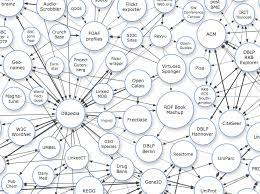
Sales Cloud Unlimited Plus Edition Call-out Features Sales Inspection Pipeline Pipeline Inspection gives sales teams a consolidated view of pipeline metrics, opportunities, week-to-week changes, AI-driven insights, close date predictions, and activity information. With this intelligence, sales teams can focus on the most important opportunities and forecast revenue more accurately. Einstein Converstion Insights Give sales teams insights about their customer calls and surface coachable moments. Managers and reps can play recordings of conversations to gain visibility into mentions of competitors, products, custom keywords, pricing discussions, and next steps. Sales leaders can extract conversation trends and visualize insights related to voice and video calls. Einstein Relationship Insights Explore interconnected relationships between people and companies on the web. Einstein Relationship Insights helps discover critical relationships by exploring disparate data sources, from unstructured web pages, and structured information like Salesforce records. Use these insights to prioritize contacts and accounts, enrich leads, and accelerate productivity of your sales team. With evidence documents that explain the relationship, sales teams can target the right people and companies, source more opportunities, and close deals. Like Related Posts Who is Salesforce? Who is Salesforce? Here is their story in their own words. From our inception, we’ve proudly embraced the identity of Read more Salesforce Marketing Cloud Transactional Emails Salesforce Marketing Cloud Transactional Emails are immediate, automated, non-promotional messages crucial to business operations and customer satisfaction, such as order Read more Salesforce Unites Einstein Analytics with Financial CRM Salesforce has unveiled a comprehensive analytics solution tailored for wealth managers, home office professionals, and retail bankers, merging its Financial Read more AI-Driven Propensity Scores AI plays a crucial role in propensity score estimation as it can discern underlying patterns between treatments and confounding variables Read more
Read More
iDataMasker for Salesforce FinTech

iDataMasker for Salesforce FinTech

Safeguarding Data Privacy and Security in the Digital Age with iDataMasker In today’s digital transformation era, data privacy and security are paramount for organizations worldwide. As cloud-based platforms like Salesforce become integral to business operations, robust solutions to protect sensitive information are essential. iDataMasker for Salesforce FinTech powers security in Salesforce banking solutions. Introducing iDataMasker on Salesforce AppExchange IntellectAI has launched iDataMasker, an advanced data obfuscation application, now available on the Salesforce AppExchange marketplace. This innovative tool is set to revolutionize data security within Salesforce environments. Addressing the Threat of Data Breaches Data breaches and unauthorized access can lead to significant financial losses, reputational damage, and legal issues for organizations. With stringent data protection regulations such as GDPR and CCPA, companies must take proactive steps to ensure compliance. iDataMasker provides a comprehensive solution with advanced anonymization techniques to uphold the highest standards of data privacy and security. Key Features of iDataMasker Compliance and Data Security Compliance with industry regulations and standards is crucial for businesses. iDataMasker helps organizations achieve compliance effortlessly with its robust data masking capabilities. Whether handling personally identifiable information (PII), financial data, or healthcare records, iDataMasker ensures sensitive data remains protected and compliant. Enhancing Organizational Data Security By safeguarding sensitive information from unauthorized access and data breaches, iDataMasker enhances an organization’s overall data security posture. This instills confidence in both the company and its customers, knowing that their data is secure within the Salesforce environment. Usability and Operational Efficiency iDataMasker maintains data privacy while ensuring information remains usable for business processes. This allows companies to harness data-driven insights without compromising confidentiality. Rigorous data masking policies help maintain data integrity and foster a culture of responsible data management, strengthening data governance practices. Using obfuscated data that mirrors real-world scenarios, iDataMasker streamlines processes such as testing, training, and development. Organizations can work with realistic data without compromising confidentiality, leading to improved operational efficiency and faster time-to-market. Building Customer Trust Demonstrating a strong commitment to data privacy and security is vital for building customer trust and loyalty. By implementing iDataMasker, organizations can show their dedication to protecting customer data, fostering long-lasting relationships based on trust and transparency. Conclusion In today’s digital landscape, data privacy and security are non-negotiable. iDataMasker, developed by IntellectAI and available on the Salesforce AppExchange marketplace, offers a powerful solution to address these critical concerns. Leveraging advanced data masking techniques, flexible configuration options, seamless integration, and compliance readiness, iDataMasker empowers organizations to safeguard their sensitive data while fully embracing the potential of Salesforce. Like1 Related Posts Who is Salesforce? Who is Salesforce? Here is their story in their own words. From our inception, we’ve proudly embraced the identity of Read more Salesforce Marketing Cloud Transactional Emails Salesforce Marketing Cloud Transactional Emails are immediate, automated, non-promotional messages crucial to business operations and customer satisfaction, such as order Read more Salesforce Unites Einstein Analytics with Financial CRM Salesforce has unveiled a comprehensive analytics solution tailored for wealth managers, home office professionals, and retail bankers, merging its Financial Read more AI-Driven Propensity Scores AI plays a crucial role in propensity score estimation as it can discern underlying patterns between treatments and confounding variables Read more
Read More
DPD Salesforce AI Enhancements

DPD Salesforce AI Enhancements

DPD’s AI Integration: Enhancing Customer and Employee Experience DPD has ambitious plans to integrate AI throughout its Salesforce platform, aiming to automate tasks and significantly enhance the experiences of both customers and employees. DPD Salesforce AI Enhancements. Adam Hooper, Head of Central Platforms at DPD, explains that with over 400 million parcels delivered annually, maintaining robust customer relationships is crucial. To this end, DPD leverages a range of Salesforce technologies, including Service Cloud, Sales Cloud, Marketing Cloud, and Mulesoft. AI-Powered Customer Service In Salesforce’s latest update on DPD: Financial and Operational Efficiency Targeted Marketing Spreadsheets to Salesforce At the Salesforce World Tour event in London, Ben Pyne, Salesforce Platform Manager at DPD, elaborated on their current usage and future AI plans. Pyne’s team acts as internal consultants to optimize organizational workflows. As he explains: “My role is essentially to get people off spreadsheets and onto Salesforce!” He noted that about 40 departments and teams within DPD use Salesforce, far beyond the typical Sales and CRM applications. Custom applications within Salesforce personalize and enhance user experiences by focusing on relevant information. Using tools like Prompt Builder, Pyne’s team recently developed a project management app within Salesforce, streamlining tasks like writing acceptance criteria and user stories. Pyne emphasized: “I want our guys to focus on designing and building, less on the admin.” AI Use Cases When considering AI and generative AI, DPD sees significant potential to reduce operational tasks. Pyne highlighted case summarization as an obvious application, given the millions of customer service cases created each year. Rolling Out Generative AI DPD adopts a cautious approach to rolling out new technologies like generative AI. Pyne explained: “It’s starting small, finding the right teams to be able to do it. But fundamentally, starting somewhere and making slow progressions into it to ensure we don’t scare everybody away.” Ensuring Security and Trust Security and trust are paramount for DPD. Pyne noted their robust IT security team scrutinizes every implementation. Fortunately, Salesforce’s security measures, such as data anonymization and preventing LLMs (Large Language Models) from learning from their data, provide peace of mind. Pyne concluded: “We can focus on what we’re good at and not worry about the rest because Salesforce has thought of everything for us.” Like Related Posts Who is Salesforce? Who is Salesforce? Here is their story in their own words. From our inception, we’ve proudly embraced the identity of Read more Salesforce Marketing Cloud Transactional Emails Salesforce Marketing Cloud Transactional Emails are immediate, automated, non-promotional messages crucial to business operations and customer satisfaction, such as order Read more Salesforce Unites Einstein Analytics with Financial CRM Salesforce has unveiled a comprehensive analytics solution tailored for wealth managers, home office professionals, and retail bankers, merging its Financial Read more AI-Driven Propensity Scores AI plays a crucial role in propensity score estimation as it can discern underlying patterns between treatments and confounding variables Read more
Read More
Salesforce Education Cloud

Get to Know Salesforce Education Cloud

Introducing the next-generation CRM for education: Education Cloud, your institution’s digital foundation for the future. In an ever-changing digital world of education, Education Cloud’s configurable and secure platform equips your institution to stay ahead, ready to meet the challenges of tomorrow. Let’s get to know Salesforce Education Cloud. Harnessing the full power of Salesforce, Education Cloud integrates insights across recruitment, admissions, and student success, providing a unified view of every learner’s complete and varied journey. With a single source of truth, your institution can create personalized experiences that foster lifelong learning — from prospective students to engaged alumni. With Salesforce at the heart of your institution’s IT solution, tasks are streamlined, scalable, and foster collaboration across departments. Education Cloud empowers your institution with cutting-edge technologies, including: Join the Trailblazer Community to connect with user groups, share best practices, and get support as you explore Education Cloud. Log in with your Salesforce credentials and engage with the Education Hub and Education Release Readiness groups. Get to Know Salesforce Education Cloud Education Cloud offers a learner-first, organization-wide platform that enhances stakeholder engagement and collaboration. Dive into what Education Cloud provides, experience it firsthand with a trial org, and discover recommended setups to prepare for your implementation. Explore What’s Included with Education Cloud Education Cloud provides an education-centric data model within Salesforce, enabling you to build applications that support the entire learning experience and meet user needs. Recruitment and Admissions Education Cloud modernizes recruitment and admissions by providing an online portal and powerful collaboration tools. Today’s prospective students expect a connected, online experience, and Education Cloud ensures your institution is ready to meet those expectations. The heart of this process is an online portal where learners can: The portal collects essential information, which is seamlessly integrated into Salesforce. To manage the complexities of recruitment and admissions, use the Recruiting and Admissions Consoles, which offer: Academic Operations Centralize and manage your institution’s academic offerings with Education Cloud’s Academic Operations. This feature allows staff to: The data you manage here becomes the foundation for tools in Recruitment & Admissions and Student Success apps, ensuring a seamless flow of information across your institution. Student Success Education Cloud equips your institution with powerful tools to support learner success, from career counseling to large-scale orientation programs. Use it to: Example: Empowering Success At Valley School District, counselor Devi Gill uses Education Cloud’s Student Success app to manage remote learning challenges, like coordinating book deliveries and assisting seniors with college applications. At Callaras University, academic advisor Adrian Morges utilizes the same app to help students like Stephanie and Stuart navigate their educational paths. Mentoring Programs Mentoring is vital for student success, providing academic guidance, career development, and personal support. Education Cloud helps you manage mentoring programs by allowing you to: Alumni Relations Sustained alumni engagement is essential for institutional growth. Education Cloud offers tools to manage alumni relationships effectively, providing a 360-degree view of each alumnus. Use it to: Developer Resources for Education Cloud Access developer resources like entity relationship diagrams (ERD), object references, and apex references to customize and extend Education Cloud to meet your institution’s needs. Explore these features and more with Education Cloud to elevate your institution’s ability to deliver personalized, scalable, and impactful educational experiences. Like Related Posts Who is Salesforce? Who is Salesforce? Here is their story in their own words. From our inception, we’ve proudly embraced the identity of Read more Salesforce Marketing Cloud Transactional Emails Salesforce Marketing Cloud Transactional Emails are immediate, automated, non-promotional messages crucial to business operations and customer satisfaction, such as order Read more Salesforce Unites Einstein Analytics with Financial CRM Salesforce has unveiled a comprehensive analytics solution tailored for wealth managers, home office professionals, and retail bankers, merging its Financial Read more AI-Driven Propensity Scores AI plays a crucial role in propensity score estimation as it can discern underlying patterns between treatments and confounding variables Read more

Read More
BERT and GPT

BERT and GPT

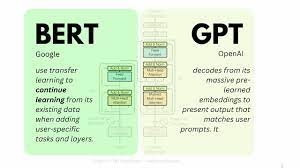
Breakthroughs in Language Models: From Word2Vec to Transformers Language models have rapidly evolved since 2018, driven by advancements in neural network architectures for text representation. This journey began with Word2Vec and N-Grams in 2013, followed by the emergence of Recurrent Neural Networks (RNNs) and Long Short-Term Memory (LSTM) networks in 2014. The pivotal moment came with the introduction of the Attention Mechanism, which paved the way for large pre-trained models and transformers. BERT and GPT. From Word Embedding to Transformers The story of language models begins with word embedding. What is Word Embedding? Word embedding is a technique in natural language processing (NLP) where words are represented as vectors in a continuous vector space. These vectors capture semantic meanings, allowing words with similar meanings to have similar representations. For instance, in a word embedding model, “king” and “queen” would have vectors close to each other, reflecting their related meanings. Similarly, “car” and “truck” would be near each other, as would “cat” and “dog.” However, “car” and “dog” would not have close vectors due to their different meanings. A notable example of word embedding is Word2Vec. Word2Vec: Neural Network Model Using N-Grams Introduced by Mahajan, Patil, and Sankar in 2013, Word2Vec is a neural network model that uses n-grams by training on context windows of words. It has two main approaches: Both methods help capture semantic relationships, providing meaningful word embeddings that facilitate various NLP tasks like sentiment analysis and machine translation. Recurrent Neural Networks (RNNs) RNNs are designed for sequential data, processing inputs sequentially and maintaining a hidden state that captures information about previous inputs. This makes them suitable for tasks like time series prediction and natural language processing. The concept of RNNs can be traced back to 1925 with the Ising model, used to simulate magnetic interactions analogous to RNNs’ state transitions for sequence learning. Long Short-Term Memory (LSTM) Networks LSTMs, introduced by Hochreiter and Schmidhuber in 1997, are a specialized type of RNN designed to overcome the limitations of standard RNNs, particularly the vanishing gradient problem. They use gates (input, output, and forget gates) to regulate information flow, enabling them to maintain long-term dependencies and remember important information over long sequences. Comparing Word2Vec, RNNs, and LSTMs The Attention Mechanism and Its Impact The attention mechanism, introduced in the paper “Attention Is All You Need” by Vaswani et al., is a key component in transformers and large pre-trained language models. It allows models to focus on specific parts of the input sequence when generating output, assigning different weights to different words or tokens, and enabling the model to prioritize important information and handle long-range dependencies effectively. Transformers: Revolutionizing Language Models Transformers use self-attention mechanisms to process input sequences in parallel, capturing contextual relationships between all tokens in a sequence simultaneously. This improves handling of long-term dependencies and reduces training time. The self-attention mechanism identifies the relevance of each token to every other token within the input sequence, enhancing the model’s ability to understand context. Large Pre-Trained Language Models: BERT and GPT Both BERT (Bidirectional Encoder Representations from Transformers) and GPT (Generative Pre-trained Transformer) are based on the transformer architecture. BERT Introduced by Google in 2018, BERT pre-trains deep bidirectional representations from unlabeled text by jointly conditioning on both left and right context in all layers. This enables BERT to create state-of-the-art models for tasks like question answering and language inference without substantial task-specific architecture modifications. GPT Developed by OpenAI, GPT models are known for generating human-like text. They are pre-trained on large corpora of text and fine-tuned for specific tasks. GPT is majorly generative and unidirectional, focusing on creating new text content like poems, code, scripts, and more. Major Differences Between BERT and GPT In conclusion, while both BERT and GPT are based on the transformer architecture and are pre-trained on large corpora of text, they serve different purposes and excel in different tasks. The advancements from Word2Vec to transformers highlight the rapid evolution of language models, enabling increasingly sophisticated NLP applications. Like Related Posts Who is Salesforce? Who is Salesforce? Here is their story in their own words. From our inception, we’ve proudly embraced the identity of Read more Salesforce Unites Einstein Analytics with Financial CRM Salesforce has unveiled a comprehensive analytics solution tailored for wealth managers, home office professionals, and retail bankers, merging its Financial Read more AI-Driven Propensity Scores AI plays a crucial role in propensity score estimation as it can discern underlying patterns between treatments and confounding variables Read more Tectonic’s Successful Salesforce Track Record Salesforce Technology Services Integrator – Tectonic has successfully delivered Salesforce in a variety of industries including Public Sector, Hospitality, Manufacturing, Read more

Read More
gettectonic.com