

Roadmap Archives - gettectonic.com - Page 2
Alaska Inspires

Alaska Inspires

Alaska Airlines Launches Guest-Facing Generative AI Tool, Alaska Inspires Alaska Airlines has become the first airline to introduce a guest-facing Generative AI (GenAI) tool with the launch of Alaska Inspires. Designed to simplify travel planning, this AI-powered assistant helps guests discover destinations more efficiently. “We heard from our guests that planning a trip to a new destination can take up to 40 hours,” says Bernadette Berger, Director of Innovation at Alaska Airlines. “Much of that time is spent comparing destinations, prices, travel times, and reading reviews. We built a Natural Language Search tool to let guests explore travel options using their own words, preferred language, or voice.” With Alaska Inspires, travelers can ask questions like, “Where can I go in Europe for under 80,000 miles?” or “Where can I go skiing within four hours?” Powered by OpenAI, the tool provides highly personalized responses and recommends up to four destinations, explaining why each was selected. This initiative is part of Alaska Airlines’ broader effort to develop a suite of GenAI tools that make discovering, shopping, and booking travel faster and more intuitive. Enhancing the Day-of-Travel Experience with AI Beyond trip planning, Alaska Airlines is leveraging GenAI to provide real-time, personalized travel insights. Berger highlights the growing role of AI in understanding guest preferences and delivering information in their preferred format. “Using voice as an interface—especially in a guest’s preferred language—is ideal for quick questions or simple tasks,” she explains. “How many minutes until I board?” or “Check me in for my flight” are prime examples of how voice-enabled GenAI can enhance the customer experience. Additionally, translating live announcements and direct messages into a traveler’s native language helps improve clarity and engagement. Bridging the Gap Between Data and Human Understanding Airlines operate in a world of complex policies, acronyms, and industry jargon. GenAI helps bridge this gap by translating raw operational data into clear, guest-friendly language. “GenAI excels at ingesting rules, policies, and operational data while generating responses that explain situations in a brand-aligned, easy-to-understand way,” Berger says. Currently, Alaska Airlines uses GenAI to assist customer service agents in quickly answering policy-related questions and responding to guest inquiries with speed and care. Balancing Innovation with Privacy and Quality While the opportunities with GenAI are vast, Berger acknowledges the challenges of implementing AI responsibly. “Building AI-powered tools is fast, but it requires time for model training, security, and rigorous user testing,” she notes. Ensuring privacy and maintaining high-quality outputs remain top priorities. Advice for the Industry: Experiment, Learn, and Scale For airlines, airports, and industry stakeholders exploring GenAI, Berger offers practical advice: focus on reducing the cost of testing. “If your AI roadmap is filled with expensive, time-consuming trials, your team will get stuck in hypotheticals,” she warns. “Build fast, low-cost experiments to validate the technology, use case, inputs, and outputs. Identify failures quickly and move on, then scale what works. This approach helps separate marketing hype from real business value and, most importantly, delivers solutions that truly enhance the customer experience.” With Alaska Inspires and a growing suite of AI-driven innovations, Alaska Airlines is leading the way in making travel planning and the day-of-travel experience more seamless and personalized. Like Related Posts Who is Salesforce? Who is Salesforce? Here is their story in their own words. From our inception, we’ve proudly embraced the identity of Read more Salesforce Marketing Cloud Transactional Emails Salesforce Marketing Cloud Transactional Emails are immediate, automated, non-promotional messages crucial to business operations and customer satisfaction, such as order Read more Salesforce Unites Einstein Analytics with Financial CRM Salesforce has unveiled a comprehensive analytics solution tailored for wealth managers, home office professionals, and retail bankers, merging its Financial Read more AI-Driven Propensity Scores AI plays a crucial role in propensity score estimation as it can discern underlying patterns between treatments and confounding variables Read more

Read More
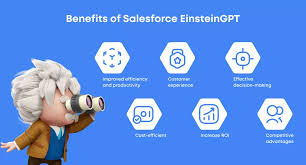
What is Einstein Used for in Salesforce?

Unlocking the Full Potential of Salesforce Einstein

Unlocking the Full Potential of Salesforce Einstein: A Strategic Guide Moving Beyond Basic AI Features While standard Einstein features provide value, the true competitive advantage comes from custom AI solutions tailored to your unique business processes. Here’s how leading organizations are pushing Einstein’s capabilities further: Custom AI Model Development Real-World Custom Implementations: Cross-Functional AI Strategy Department-Specific AI Roadmaps Team Key Use Cases Success Metrics Sales Deal stagnation alertsOptimal contact timing 20% reduction in stalled deals Service Case severity predictionAuto-routing 15% faster resolution Marketing Content engagement scoringChurn risk segmentation 30% higher campaign ROI Operations Inventory demand forecastingResource allocation 25% waste reduction Implementation Tip: Start with one high-impact department before enterprise rollout. Technical Implementation Framework Data Preparation Checklist Model Selection Guide Pro Tip: Use Einstein’s AutoML to test multiple approaches before custom development. Overcoming Adoption Challenges Trust-Building Playbook Skills Development Plan Advanced Integration Patterns Combine Einstein With: Example Architecture: Measuring AI Success Key Performance Indicators: Continuous Improvement Cycle: Getting Started with Advanced Einstein *”Companies that customize AI solutions see 3-5x greater ROI than those using only out-of-the-box features.”* – Forrester Research Transform your Einstein implementation from basic scoring to strategic advantage with tailored AI solutions. Like Related Posts Who is Salesforce? Who is Salesforce? Here is their story in their own words. From our inception, we’ve proudly embraced the identity of Read more Salesforce Marketing Cloud Transactional Emails Salesforce Marketing Cloud Transactional Emails are immediate, automated, non-promotional messages crucial to business operations and customer satisfaction, such as order Read more Salesforce Unites Einstein Analytics with Financial CRM Salesforce has unveiled a comprehensive analytics solution tailored for wealth managers, home office professionals, and retail bankers, merging its Financial Read more AI-Driven Propensity Scores AI plays a crucial role in propensity score estimation as it can discern underlying patterns between treatments and confounding variables Read more

Read More
enterprise ai rag

Enterprise AI RAG

Retrieval-Augmented Generation (RAG): Enhancing AI with External Knowledge Large language models (LLMs) can answer nearly any question—but their responses aren’t always based on verified or up-to-date information. Retrieval-augmented generation (RAG) bridges this gap by enabling AI applications to access external knowledge sources, making it invaluable for enterprises leveraging proprietary data. By integrating RAG into their AI strategy, organizations can deliver accurate, secure, and compliant AI-powered solutions grounded in real-time, internal knowledge. To get started, explore RAG’s architecture, benefits, and challenges, then follow a six-step best practices checklist for enterprise adoption. How RAG Works In a standard LLM, responses are generated solely from pre-trained data, limiting accuracy to the model’s training cutoff date and excluding proprietary business knowledge. RAG enhances this process in three stages: Why Enterprises Need RAG RAG overcomes three key LLM limitations: Challenges to Address: 6 Best Practices for Implementing RAG Integrating RAG into Your AI Roadmap Start with high-impact use cases like customer support, internal knowledge bases, or compliance documentation. Take a phased approach, building expertise in data preparation, embeddings, and prompt engineering. Complement RAG with fine-tuning and supervised learning for a robust, enterprise-ready AI solution. Like Related Posts Who is Salesforce? Who is Salesforce? Here is their story in their own words. From our inception, we’ve proudly embraced the identity of Read more Salesforce Unites Einstein Analytics with Financial CRM Salesforce has unveiled a comprehensive analytics solution tailored for wealth managers, home office professionals, and retail bankers, merging its Financial Read more AI-Driven Propensity Scores AI plays a crucial role in propensity score estimation as it can discern underlying patterns between treatments and confounding variables Read more Tectonic’s Successful Salesforce Track Record Salesforce Technology Services Integrator – Tectonic has successfully delivered Salesforce in a variety of industries including Public Sector, Hospitality, Manufacturing, Read more

Read More
Marketing Automation

AI and Automation

The advent of AI agents is widely discussed as a transformative force in application development, with much of the focus on the automation that generative AI brings to the process. This shift is expected to significantly reduce the time and effort required for tasks such as coding, testing, deployment, and monitoring. However, what is even more intriguing is the change not just in how applications are built, but in what is being built. This perspective was highlighted during last week’s Salesforce developer conference, TDX25. Developers are no longer required to build entire applications from scratch. Instead, they can focus on creating modular building blocks and guidelines, allowing AI agents to dynamically assemble these components at runtime. In a pre-briefing for the event, Alice Steinglass, EVP and GM of Salesforce Platform, outlined this new approach. She explained that with AI agents, development is broken down into smaller, more manageable chunks. The agent dynamically composes these pieces at runtime, making individual instructions smaller and easier to test. This approach also introduces greater flexibility, as agents can interpret instructions based on policy documents rather than relying on rigid if-then statements. Steinglass elaborated: “With agents, I’m actually doing it differently. I’m breaking it down into smaller chunks and saying, ‘Hey, here’s what I want to do in this scenario, here’s what I want to do in this scenario.’ And then the agent, at runtime, is able to dynamically compose these individual pieces together, which means the individual instructions are much smaller. That makes it easier to test. It also means I can bring in more flexibility and understanding so my agent can interpret some of those instructions. I could have a policy document that explains them instead of hard coding them with if-then statements.” During a follow-up conversation, Steinglass further explored the practical implications of this shift. She acknowledged that adapting to this new paradigm would be a significant change for developers, comparable to the transition from web to mobile applications. However, she emphasized that the transition would be gradual, with stepping stones along the way. She noted: “It’s a sea change in the way we build applications. I don’t think it’s going to happen all at once. People will move over piece by piece, but the result’s going to be a fundamentally different way of building applications.” Different Building Blocks One reason the transition will be gradual is that most AI agents and applications built by enterprises will still incorporate traditional, deterministic functions. What will change is how these existing building blocks are combined with generative AI components. Instead of hard-coding business logic into predetermined steps, AI agents can adapt on-the-fly to new policies, rules, and goals. Steinglass provided an example from customer service: “What AI allows us to do is to break down those processes into components. Some of them will still be deterministic. For example, in a service agent scenario, AI can handle tasks like understanding customer intent and executing flexible actions based on policy documents. However, tasks like issuing a return or connecting to an ERP system will remain deterministic to ensure consistency and compliance.” She also highlighted how deterministic processes are often used for high-compliance tasks, which are automated due to their strict rules and scalability. In contrast, tasks requiring more human thought or frequent changes were previously left unautomated. Now, AI can bridge these gaps by gluing together deterministic and non-deterministic components. In sales, Salesforce’s Sales Development Representative (SDR) agent exemplifies this hybrid approach. The definition of who the SDR contacts is deterministic, based on factors like value or reachability. However, composing the outreach and handling interactions rely on generative AI’s flexibility. Deterministic processes re-enter the picture when moving a prospect from lead to opportunity. Steinglass explained that many enterprise processes follow this pattern, where deterministic inputs trigger workflows that benefit from AI’s adaptability. Connections to Existing Systems The introduction of the Agentforce API last week marked a significant step in enabling connections to existing systems, often through middleware like MuleSoft. This allows agents to act autonomously in response to events or asynchronous triggers, rather than waiting for human input. Many of these interactions will involve deterministic calls to external systems. However, non-deterministic interactions with autonomous agents in other systems require richer protocols to pass sufficient context. Steinglass noted that while some partners are beginning to introduce actions in the AgentExchange marketplace, standardized protocols like Anthropic’s Model Context Protocol (MCP) are still evolving. She commented: “I think there are pieces that will go through APIs and events, similar to how handoffs between systems work today. But there’s also a need for richer agent-to-agent communication. MuleSoft has already built out AI support for the Model Context Protocol, and we’re working with partners to evolve these protocols further.” She emphasized that even as richer communication protocols emerge, they will coexist with traditional deterministic calls. For example, some interactions will require synchronous, context-rich communication, while others will resemble API calls, where an agent simply requests a task to be completed without sharing extensive context. Agent Maturity Map To help organizations adapt to these new ways of building applications, Salesforce uses an agent maturity map. The first stage involves building a simple knowledge agent capable of answering questions relevant to the organization’s context. The next stage is enabling the agent to take actions, transitioning from an AI Q&A bot to a true agentic capability. Over time, organizations can develop standalone agents capable of taking multiple actions across the organization and eventually orchestrate a digital workforce of multiple agents. Steinglass explained: “Step one is ensuring the agent can answer questions about my data with my information. Step two is enabling it to take an action, starting with one action and moving to multiple actions. Step three involves taking actions outside the organization and leveraging different capabilities, eventually leading to a coordinated, multi-agent digital workforce.” Salesforce’s low-code tooling and comprehensive DevSecOps toolkit provide a significant advantage in this journey. Steinglass highlighted that Salesforce’s low-code approach allows business owners to build processes and workflows,

Read More
Agentic AI Race

Salesforce Unveils Blueprint for the Agentic AI Era

A Roadmap for AI Maturity: From Chatbots to Autonomous Agents Salesforce has introduced a new Agentic Maturity Model, providing businesses with a structured framework to evolve from basic AI chatbots to fully autonomous, collaborative AI agents. With 84% of CIOs believing AI will be as transformative as the internet—yet struggling with deployment—this model offers a clear pathway to scale AI effectively. The Four Stages of Agentic AI Maturity Salesforce’s model defines four progressive stages of AI agent sophistication: 1️⃣ Chatbots & Co-Pilots (Stage 0 → 1) 2️⃣ Information Retrieval Agents (Stage 1 → 2) 3️⃣ Simple Orchestration (Single Domain) → Complex Orchestration (Multiple Domains) (Stage 2 → 3) 4️⃣ Multi-Agent Orchestration (Stage 3 → 4) Why This Model Matters Many businesses deploy AI quickly but struggle to scale due to:🔹 Unclear governance🔹 Data silos🔹 Security concerns🔹 Lack of human-AI collaboration strategies Shibani Ahuja, SVP of Enterprise IT Strategy at Salesforce, emphasizes: “Scaling AI effectively requires a phased approach. This framework helps organizations progress toward higher maturity—balancing innovation with security and operational readiness.” Key Recommendations for Advancement ✅ Start with high-impact use cases where chatbots fall short.✅ Build governance early—define testing, security, and accountability.✅ Prepare data ecosystems for AI interoperability.✅ Foster human-AI collaboration—agents should augment, not replace, teams. The Future: AI That Works Like a Well-Oiled Team The ultimate vision? AI agents that: Salesforce’s model provides the playbook to get there—helping businesses move from experimentation to enterprise-wide AI transformation. Next Step: Assess where your organization stands—and start climbing the maturity ladder. Contact Tectonic today. Like Related Posts Who is Salesforce? Who is Salesforce? Here is their story in their own words. From our inception, we’ve proudly embraced the identity of Read more Salesforce Marketing Cloud Transactional Emails Salesforce Marketing Cloud Transactional Emails are immediate, automated, non-promotional messages crucial to business operations and customer satisfaction, such as order Read more Salesforce Unites Einstein Analytics with Financial CRM Salesforce has unveiled a comprehensive analytics solution tailored for wealth managers, home office professionals, and retail bankers, merging its Financial Read more AI-Driven Propensity Scores AI plays a crucial role in propensity score estimation as it can discern underlying patterns between treatments and confounding variables Read more

Read More
Public Group vs Queue in Salesforce

Transforming Crisis Management with Intelligent Technology

Transforming Crisis Management with Intelligent Technology In high-pressure disaster scenarios where every second counts, AI is emerging as a force multiplier for response teams. From predictive analytics to real-time decision support, artificial intelligence is revolutionizing how organizations prepare for, manage, and recover from catastrophic events. Here are seven pivotal areas where AI delivers measurable impact across the disaster lifecycle. Here is a new Public Sector Solution from AI 1. Predictive Scenario Planning & Stress Testing AI Advantage: Dynamically generates realistic disaster simulations 2. Autonomous Response Systems AI Advantage: Subsecond reaction times with precision execution 3. Intelligent Log Analysis & Threat Detection AI Advantage: Pattern recognition across petabyte-scale telemetry 4. Crisis Communication Orchestration AI Advantage: Multi-channel coordination at scale 5. Real-Time Situational Awareness AI Advantage: Fusion of disparate data streams 6. Resource Optimization Engine AI Advantage: Calculates optimal recovery sequences 7. Continuous Improvement Loop AI Advantage: Institutionalizes lessons learned Implementation Roadmap The Future of AI in Disaster Response Emerging capabilities include: While AI won’t replace human judgment in crises, it’s becoming an indispensable force multiplier. Organizations adopting these tools gain measurable advantages in response speed, resource efficiency, and long-term resilience building. The key lies in strategic implementation – using AI where it excels while maintaining human oversight where nuance matters most. Like Related Posts Who is Salesforce? Who is Salesforce? Here is their story in their own words. From our inception, we’ve proudly embraced the identity of Read more Salesforce Unites Einstein Analytics with Financial CRM Salesforce has unveiled a comprehensive analytics solution tailored for wealth managers, home office professionals, and retail bankers, merging its Financial Read more AI-Driven Propensity Scores AI plays a crucial role in propensity score estimation as it can discern underlying patterns between treatments and confounding variables Read more Tectonic’s Successful Salesforce Track Record Salesforce Technology Services Integrator – Tectonic has successfully delivered Salesforce in a variety of industries including Public Sector, Hospitality, Manufacturing, Read more

Read More
AI-Powered Contact Center Landscape

Salesforce’s Vision for the Future of Service Cloud & Contact Center Integration

The New Era of CCaaS-CRM Convergence At Enterprise Connect 2025, Salesforce and AWS unveiled Salesforce Contact Center with Amazon Connect, expanding beyond voice to embed omnichannel routing, digital channels, and AI-powered workflows directly into Service Cloud. This follows similar deep integrations with Genesys and Five9, signaling Salesforce’s commitment to open, flexible contact center partnerships—rather than locking customers into a single vendor. “We want all vendors to integrate deeply with our system. AI needs real-time, cross-channel data to deliver seamless experiences.”—Ryan Nichols, Chief Customer Officer, Service Cloud, Salesforce Key Benefits of the New Integrations ✔ Unified Agent Workspace – Blend voice, chat, email, and more in one CRM view.✔ AI-Ready Infrastructure – Real-time data flows power smarter automation.✔ BYO Channel Flexibility – Keep existing CCaaS investments while enhancing Service Cloud. Salesforce’s “Bring Your Own Channel” Strategy Rather than building its own CCaaS, Salesforce is doubling down on partnerships via: 🔹 Bring Your Own Telephony (BYOT) – Already adopted by 18+ CCaaS providers.🔹 Bring Your Own Channel (BYOC) Program – Extends integrations to digital channels, routing, and AI. “We’re an open platform. Partners can build deeper, more customized connections.”—Ryan Nichols Contrasting Approaches: Salesforce vs. Zendesk The Future of Service Cloud: AI, Predictions & Prescriptive Guidance Salesforce is evolving Service Cloud into a self-optimizing, AI-driven platform with: 1. My Service Journey 2. Customer Success Score 3. AI Agents & Predictive Service The Bottom Line ✅ Salesforce is betting on open CCaaS partnerships—not walled gardens.✅ Service Cloud’s future is predictive, prescriptive, and AI-native.✅ Zendesk’s in-house CCaaS move could reshape competitive dynamics. What’s Next? Want to optimize Service Cloud for AI? Contact Tectonic today. Like Related Posts Who is Salesforce? Who is Salesforce? Here is their story in their own words. From our inception, we’ve proudly embraced the identity of Read more Salesforce Marketing Cloud Transactional Emails Salesforce Marketing Cloud Transactional Emails are immediate, automated, non-promotional messages crucial to business operations and customer satisfaction, such as order Read more Salesforce Unites Einstein Analytics with Financial CRM Salesforce has unveiled a comprehensive analytics solution tailored for wealth managers, home office professionals, and retail bankers, merging its Financial Read more AI-Driven Propensity Scores AI plays a crucial role in propensity score estimation as it can discern underlying patterns between treatments and confounding variables Read more
Read More
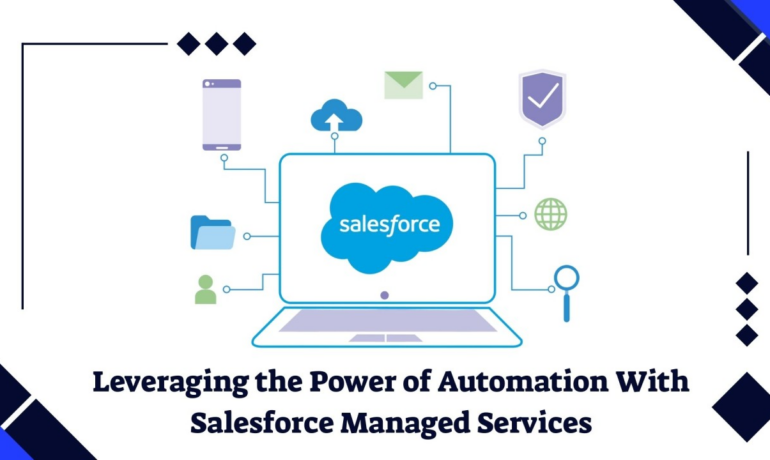
Salesforce Managed Services

Key Signs Your Business Needs a Salesforce Support & Maintenance Partner

Salesforce is a powerful CRM platform, but simply implementing it doesn’t guarantee success. To maximize ROI, businesses need continuous optimization, expert guidance, and proactive maintenance—something an in-house team may struggle to provide alone. Discover the key signs your business needs a Salesforce support and maintenance partner. Many companies invest in Salesforce expecting high returns but end up facing: These challenges turn Salesforce into a cost center rather than a revenue-driving platform. If you’re noticing these issues, it’s time to consider a Salesforce support and maintenance partner. This insight explores the critical warning signs and how a managed services provider can help. What Is a Salesforce Support & Maintenance Partner? A Salesforce support and maintenance partner is a specialized provider that manages, optimizes, and secures your Salesforce org. They provide you: ✔ Proactive Monitoring – 24/7 performance checks to prevent downtime, security breaches, and data decay.✔ Expert Guidance – Certified professionals resolve feature stagnation (unused automation/AI tools) and boost user adoption.✔ Strategic Roadmaps – Align Salesforce with business goals for long-term success.✔ Elimination of Technical Debt – Reduce technology noise slowing down your org. Why Are They Crucial? ✅ Cost Efficiency – Avoid hiring full-time specialists.✅ Risk Mitigation – Ensure compliance, security, and data integrity.✅ ROI Maximization – Unlock advanced features and improve team efficiency. A trusted partner like Tectonic identifies warning signs early, preventing short- and long-term inefficiencies. 9 Key Signs You Need a Salesforce Support & Maintenance Partner 1. Declining User Adoption The Problem: Employees avoid Salesforce due to poor training, complex workflows, or inefficient processes.Why It Matters: Low adoption wastes your CRM investment. (Only 36% of agents upsell due to lack of training—Salesforce State of Service Report.)The Solution: 2. Security & Compliance Risks The Problem: Unclear GDPR/HIPAA compliance, outdated security settings, or unauthorized access attempts.Why It Matters: Data breaches lead to fines, legal risks, and lost trust. (Non-compliance costs $14.8M on average—Globalscape.)The Solution: 3. Rising Ticket Backlogs The Problem: IT teams are overwhelmed with unresolved requests, slowing operations.Why It Matters: Delays hurt sales cycles, employee morale, and customer satisfaction.The Solution: 4. Underutilized Salesforce Features The Problem: Only basic functions (leads/contacts) are used—AI, automation, and analytics are ignored.Why It Matters: Manual processes slow growth. (Only 49% of service orgs use AI—Salesforce.)The Solution: 5. Poor Data Quality & Duplicates The Problem: Duplicate leads, missing fields, and inaccurate reports lead to bad decisions.Why It Matters: Poor data costs .9M annually (Gartner).The Solution: 6. Increasing Downtime The Problem: Frequent crashes, slow reports, or integration failures.Why It Matters: Downtime = lost sales & productivity. (Meta lost $100M in 2 hours in 2024.)The Solution: 7. Lack of Strategic Roadmap The Problem: No clear upgrade plan, leading to disorganized workflows.Why It Matters: 30-70% of CRM projects fail due to poor planning.The Solution: 8. Unstable Customizations The Problem: Apex triggers, Flows, or Lightning components break after updates.Why It Matters: Patchwork fixes increase technical debt & admin workload.The Solution: 9. Slow Salesforce Performance The Problem: Reports load slowly, or users face “Service Unavailable” errors.Why It Matters: A 100ms delay can hurt conversions by 7% (Akamai).The Solution: Conclusion If you’re experiencing any of these issues, your Salesforce org needs expert care. A managed services partner like Tectonic helps:✔ Reduce downtime✔ Improve performance✔ Boost user adoption✔ Enhance security & compliance With 24/7 proactive support, strategic roadmaps, and advanced feature utilization, Tectonic ensures your Salesforce investment drives revenue—not costs. Need help optimizing Salesforce? Contact Tectonic today for a free assessment. Like1 Related Posts Who is Salesforce? Who is Salesforce? Here is their story in their own words. From our inception, we’ve proudly embraced the identity of Read more Salesforce Marketing Cloud Transactional Emails Salesforce Marketing Cloud Transactional Emails are immediate, automated, non-promotional messages crucial to business operations and customer satisfaction, such as order Read more Salesforce Unites Einstein Analytics with Financial CRM Salesforce has unveiled a comprehensive analytics solution tailored for wealth managers, home office professionals, and retail bankers, merging its Financial Read more AI-Driven Propensity Scores AI plays a crucial role in propensity score estimation as it can discern underlying patterns between treatments and confounding variables Read more

Read More
AI Agents Are About to Disrupt Your Marketing Channels

AI Agents Are About to Disrupt Your Marketing Channels

AI Agents Are About to Disrupt Your Marketing Channels—Here’s How to Adapt The Future of Marketing Isn’t Human-Centric—It’s Agent-Driven AI agents are poised to revolutionize how brands and consumers interact. These autonomous systems don’t just assist—they research, decide, and transact on behalf of users, fundamentally altering the role of traditional marketing channels. Google knows this. That’s why it’s replacing traditional search with Gemini, an AI agent that delivers answers, not just links. Meta is integrating AI across WhatsApp and Messenger, enabling two-way, large-scale brand interactions. Soon, every channel—email, social, loyalty programs, even your website—will become an AI-powered research and transaction hub. The question isn’t if this will impact your marketing strategy—it’s how soon. What Are AI Agents—And Why Should Marketers Care? AI agents are the next evolution of autonomous AI, combining:✅ Generative AI (content creation, personalization)✅ Predictive AI (data-driven decision-making)✅ Complex task execution (end-to-end customer journeys) Today’s challenge? Most companies struggle to move from AI experimentation to real-world impact. Agents change that—they bridge the gap between hype and execution, turning AI potential into measurable business results. 3 Ways to Future-Proof Your Channel Strategy 1. Build a Bulletproof Data Foundation (Now) AI agents won’t just use data—they’ll demand it to make decisions for customers. 🔹 Example: A customer asks an agent, “Find me the best CRM for small businesses.”🔹 Without structured data: The agent may overlook your product.🔹 With optimized data: Your CRM appears as a top recommendation, complete with pricing, features, and a seamless sign-up link. Action Step: Audit your product data, pricing, and USPs. Ensure they’re machine-readable and easily accessible to AI-driven platforms. 2. Rethink “Channels” as AI Conversation Hubs Traditional marketing funnels (search → browse → convert) will collapse. Instead: Action Step: Optimize for AI-native experiences—structured FAQs, API-accessible pricing, and instant conversion paths. 3. Prepare for AI-to-AI Negotiation B2B and high-consideration purchases (e.g., SaaS, automotive, real estate) will see AI agents negotiating deals on behalf of users. 🔹 Example: A corporate procurement AI evaluates your software against competitors, automatically requesting discounts or custom terms.🔹 Winners will be brands that enable AI-friendly decision-making (clear pricing, comparison data, instant approvals). Action Step: Develop agent-friendly sales collateral—dynamic pricing tables, competitor comparisons, and API-driven contract automation. The Bottom Line: Adapt or Get Displaced The shift to agent-driven marketing isn’t gradual—it’s exponential. Companies that wait will find themselves invisible to AI intermediaries shaping customer decisions. Your roadmap: The future belongs to marketers who design for AI-first experiences. The time to act is now. “AI agents won’t just change marketing—they’ll redefine it. The brands that win will be those that engineer their systems for machines, not just people.”—Salesforce AI Research, 2024 Ready to future-proof your strategy? Contact Tectonic. Like Related Posts Who is Salesforce? Who is Salesforce? Here is their story in their own words. From our inception, we’ve proudly embraced the identity of Read more Salesforce Marketing Cloud Transactional Emails Salesforce Marketing Cloud Transactional Emails are immediate, automated, non-promotional messages crucial to business operations and customer satisfaction, such as order Read more Salesforce Unites Einstein Analytics with Financial CRM Salesforce has unveiled a comprehensive analytics solution tailored for wealth managers, home office professionals, and retail bankers, merging its Financial Read more AI-Driven Propensity Scores AI plays a crucial role in propensity score estimation as it can discern underlying patterns between treatments and confounding variables Read more
Read More

Adecco Group and Salesforce Launch Joint Venture

Adecco Group and Salesforce Launch Joint Venture to Pioneer AI-Human Workforce Integration Strategic Partnership Aims to Redefine Workforce Management The Adecco Group, the world’s second-largest staffing firm, has announced a groundbreaking joint venture with Salesforce to create an AI-powered workforce management platform. The new entity, backed by investments from both corporations, will focus on enabling enterprises to strategically integrate human employees with autonomous AI agents. Bridging the Human-Digital Workforce Divide The partnership combines Adecco’s workforce expertise with Salesforce’s Agentforce platform to deliver: “The mission is to unlock the full potential of humans working alongside AI,” stated Denis Machuel, CEO of Adecco Group. “We’re at a critical juncture where establishing clear frameworks for human-AI collaboration will determine future success.” Market Context and Industry Impact The move follows Adecco’s December 2024 adoption of Salesforce’s Agentforce to enhance its recruitment operations. Industry analysts view this as a strategic response to workforce transformation: “Staffing firms face a choice – lead the AI transition or risk disruption,” noted John Nurthen of Staffing Industry Analysts. “Adecco’s initiative likely signals a broader trend in the trillion digital labor market.” Platform Capabilities and Roadmap The joint venture will offer: Broader Industry Momentum The announcement coincides with Deloitte’s March 26 reveal of its Salesforce-powered marketing agent, part of a broader push to embed AI across enterprise functions. Other staffing technology providers like Bullhorn and Asymbl have also joined AgentExchange, signaling growing industry adoption. “These partnerships demonstrate how agentic AI is moving from concept to commercialization,” commented Brian Landsman of Salesforce. “We’re seeing the emergence of entirely new business models in digital labor.” The joint venture plans to release additional details about its platform and go-to-market strategy in coming months. Contact Tectonic to upgrade your staffing agency. Like Related Posts Who is Salesforce? Who is Salesforce? Here is their story in their own words. From our inception, we’ve proudly embraced the identity of Read more Salesforce Marketing Cloud Transactional Emails Salesforce Marketing Cloud Transactional Emails are immediate, automated, non-promotional messages crucial to business operations and customer satisfaction, such as order Read more Salesforce Unites Einstein Analytics with Financial CRM Salesforce has unveiled a comprehensive analytics solution tailored for wealth managers, home office professionals, and retail bankers, merging its Financial Read more AI-Driven Propensity Scores AI plays a crucial role in propensity score estimation as it can discern underlying patterns between treatments and confounding variables Read more

Read More
How Salesforce’s 5-Level Framework for AI Agents Cuts Through the Hype

How Salesforce’s 5-Level Framework for AI Agents Cuts Through the Hype

The tech industry is abuzz with talk of AI agents, but what can they actually accomplish? Amid the noise, Salesforce has introduced a practical five-level framework—the Agentic Maturity Model—that clarifies the real capabilities and limitations of today’s AI agents. The Problem with AI Agent Hype AI agents are often overpromised, vaguely defined, and limited by ecosystem barriers. Major players like Microsoft and Google tout AI agents for everything from enterprise workflows to personal computing, yet many of these tools remain constrained by data silos and interoperability issues. Salesforce’s framework provides a structured way to assess AI agent maturity, helping businesses distinguish between basic automation and truly intelligent, cross-platform AI systems. The 5 Levels of AI Agent Maturity Level 0: Fixed Rules & Repetitive Tasks Level 1: Information Retrieval Agents Level 2: Simple Orchestration, Single Domain Level 3: Complex Orchestration, Multiple Domains Level 4: Multi-Agent Orchestration Why This Framework Matters Salesforce’s model demystifies AI agent capabilities, helping businesses:✅ Evaluate vendor claims (Is it Level 2 or Level 4?).✅ Plan AI adoption (Start with Level 0 automation, then scale up).✅ Avoid ecosystem lock-in by understanding data interoperability challenges. Final Verdict: A Much-Needed Reality Check While AI agents hold immense potential, most current implementations are far from autonomous. Salesforce’s framework provides a clear, honest roadmap—helping businesses cut through the hype and adopt AI agents strategically. For now, Levels 0-2 are widely achievable, while Levels 3-4 remain aspirational for most organizations. The key takeaway? AI agents are evolving, but true cross-platform intelligence is still a work in progress. What’s Next?Businesses should: Salesforce’s framework is a wake-up call: AI agents are powerful, but not magic. The future lies in practical, phased adoption—not blind hype. Like Related Posts Who is Salesforce? Who is Salesforce? Here is their story in their own words. From our inception, we’ve proudly embraced the identity of Read more Salesforce Marketing Cloud Transactional Emails Salesforce Marketing Cloud Transactional Emails are immediate, automated, non-promotional messages crucial to business operations and customer satisfaction, such as order Read more Salesforce Unites Einstein Analytics with Financial CRM Salesforce has unveiled a comprehensive analytics solution tailored for wealth managers, home office professionals, and retail bankers, merging its Financial Read more AI-Driven Propensity Scores AI plays a crucial role in propensity score estimation as it can discern underlying patterns between treatments and confounding variables Read more

Read More
Salesforce Sales Engagement for Nonprofits

Salesforce Sales Engagement for Nonprofits

Supercharge Your Nonprofit’s Donor Outreach with Salesforce Sales Engagement It’s time for the annual donor campaign. The fundraising team is juggling hundreds—if not thousands—of emails, phone calls, and follow-ups. The budget depends on surpassing last year’s donations, but with limited staff and time, reaching every potential donor feels impossible. The executive director asks, “How can we maximize donor engagement without increasing headcount—or at least focus our resources on the most likely givers?” Sound familiar? Every nonprofit faces the challenge of doing more with less. Fortunately, Salesforce offers a solution to keep your team organized, on task, and working smarter: Salesforce Sales Engagement. What Is Salesforce Sales Engagement? Salesforce Sales Engagement acts as a high-powered assistant for fundraising, membership, or program teams. This productivity hub, embedded within Salesforce, streamlines daily activities through automation, organization, and AI-powered insights. Key benefits include:✅ Cadences & Work Queues – Ensure no email, call, or task slips through the cracks.✅ Centralized Outreach – Keep all donor interactions in one place for seamless engagement.✅ AI-Driven Optimization – Analyze performance and refine strategies based on data. Previously known as High-Velocity Sales, Sales Engagement accelerates development cycles and scales outreach efforts effortlessly. By prioritizing critical tasks and automating others, your team can focus on building meaningful relationships and securing commitments faster. Engagement Cadences: Your Fundraising Playbook in Action Cadences serve as step-by-step roadmaps, guiding teams on how and when to engage with donors, members, or program participants. Whether you’re running a donor drive, promoting event registrations, or managing renewals, cadences ensure consistency and efficiency. Two Types of Cadences: 1️⃣ Standard Cadences – A structured sequence of touchpoints (emails, calls, LinkedIn messages) over time, such as a 30-day donor onboarding journey.2️⃣ Quick Cadences – A single, repeatable action, like automatically sending a thank-you email after a donation. With Cadence Builder, customizing workflows for different donor segments is fast and easy. Actions dynamically adjust based on engagement—so if a donor opens an email, they might receive a follow-up call; if they don’t, a reminder email is sent instead. Best of all, your team doesn’t have to track or remember each step—Sales Engagement assigns tasks automatically to individual work queues, ensuring nothing gets missed. Data-Driven Decision-Making with Built-In Analytics To improve outreach, you need to measure it. Sales Engagement provides powerful dashboards and reports to evaluate performance and optimize your approach. ✅ Track email open rates, call response rates, and donor engagement trends.✅ Identify successful messaging and refine underperforming campaigns.✅ Tie engagement metrics to fundraising goals to measure real impact. Unlike basic email tracking, Sales Engagement helps nonprofits connect data-driven insights with mission outcomes—empowering smarter decision-making without complex process changes. Already Using Salesforce Flows for Outreach? If your nonprofit relies on Salesforce Flow for outreach, you may wonder if Sales Engagement is necessary. The answer? Yes—if you want to do more with less effort. While flows are great for automation, Sales Engagement goes further with built-in call scripts, AI-powered task prioritization, and adaptable cadences. It offers a more intuitive, flexible approach to donor engagement, reducing manual work and boosting efficiency. Ready to Transform Your Fundraising Strategy? Salesforce Sales Engagement isn’t just for corporations—it’s a game-changer for nonprofits, helping teams increase donations, memberships, and event participation with less effort and greater impact. Are you ready to work smarter, engage better, and raise more? Let’s get started. Contact Tectonic today. Like1 Related Posts Who is Salesforce? Who is Salesforce? Here is their story in their own words. From our inception, we’ve proudly embraced the identity of Read more Salesforce Marketing Cloud Transactional Emails Salesforce Marketing Cloud Transactional Emails are immediate, automated, non-promotional messages crucial to business operations and customer satisfaction, such as order Read more Salesforce Unites Einstein Analytics with Financial CRM Salesforce has unveiled a comprehensive analytics solution tailored for wealth managers, home office professionals, and retail bankers, merging its Financial Read more AI-Driven Propensity Scores AI plays a crucial role in propensity score estimation as it can discern underlying patterns between treatments and confounding variables Read more

Read More
Salesforce Introduces Agentblazer Status

Salesforce Introduces Agentblazer Status

Salesforce Introduces Agentblazer Status: Your AI Learning Roadmap on Trailhead Trailblazers have always been at the forefront of innovation, using Salesforce to empower businesses and communities. Now, as AI transforms the way we work and solve problems, the need for a deeper understanding of this technology has never been greater. Technology is evolving—becoming smarter, more powerful, and more creative. To thrive in the era of agentic AI, we must evolve too. That means staying curious, embracing change, and continuously building new skills. At Salesforce, we’ve seen our community embody this mindset, always ready to learn and explore new possibilities. Today, we’re making that journey even easier with a structured path to mastering AI and Agentforce. Introducing Agentblazer Status Meet Agentblazers—Trailblazers who leverage Salesforce’s digital labor platform to build Agentforce-powered companies. Whether you’re just starting with AI or already developing advanced autonomous agents, Agentblazer Status provides a clear, structured learning path tailored to your expertise level. Your Agentblazer journey includes three levels: Each level is tied to dedicated Trails, including interactive modules and hands-on challenges that build your expertise. As you progress, you’ll earn badges and points that showcase your Agentblazer Status on your Trailblazer Profile. Building the Skills for the Future The skills that got you here today won’t be enough to take you where you need to go next. AI isn’t just a tool—it’s a collaborator. The future of work isn’t about whether you’ll work with AI but how you’ll integrate, manage, and optimize autonomous agents to elevate customer experiences and business operations. That’s why developing Agentforce literacy is essential for every professional. The Agentblazer program provides a structured roadmap to help you move from AI fundamentals to real-world implementation, ensuring you stay ahead in an AI-driven workplace. Join the Agentblazer Community We’re committed to supporting your AI learning journey. That’s why Salesforce is offering the first attempt at the Agentforce Specialist Certification exam free of charge through 2025. Get started today: The AI revolution is here—are you ready to lead it? Let Tectonic guide you! Like Related Posts Who is Salesforce? Who is Salesforce? Here is their story in their own words. From our inception, we’ve proudly embraced the identity of Read more Salesforce Marketing Cloud Transactional Emails Salesforce Marketing Cloud Transactional Emails are immediate, automated, non-promotional messages crucial to business operations and customer satisfaction, such as order Read more Salesforce Unites Einstein Analytics with Financial CRM Salesforce has unveiled a comprehensive analytics solution tailored for wealth managers, home office professionals, and retail bankers, merging its Financial Read more AI-Driven Propensity Scores AI plays a crucial role in propensity score estimation as it can discern underlying patterns between treatments and confounding variables Read more

Read More

The End of Salesforce CPQ

Salesforce CPQ Is Fading: What You Need to Know Salesforce has officially stopped selling CPQ (formerly Steelbrick CPQ) to new customers, signaling a major shift in strategy. While there hasn’t been a formal “end of life” announcement, the writing is on the wall. Many businesses may assume they have time to decide, but the reality is starkly different. With no new customers, Salesforce has effectively cut off a key revenue stream that would sustain CPQ’s development. The product has seen no major updates in over four years, lacks an AI roadmap, and has no clear future innovation path. It’s clear that Salesforce is prioritizing other solutions—most notably, Revenue Lifecycle Management (RLM). The Shift to Revenue Lifecycle Management (RLM) Salesforce is positioning RLM as the future, offering a broader revenue management ecosystem that integrates CPQ-like functionality. While CPQ customers aren’t yet being forced to migrate, it’s only a matter of time before continued use of CPQ becomes impractical due to: Eventually, Salesforce will likely sunset CPQ altogether, leaving businesses scrambling for a replacement. Why Waiting Is a Risk Companies that delay planning may face a rushed and costly migration when Salesforce officially phases out CPQ. Instead of reacting to a sudden shift, businesses should take proactive steps now: Get Ahead of the Change Salesforce CPQ is already fading from relevance. The smartest businesses are taking action before they’re forced into a reactive transition. Now is the time to review your Salesforce setup, explore scalable CPQ alternatives, and future-proof your revenue operations. Let’s discuss your options and ensure your CPQ strategy is built for long-term success. Like Related Posts Who is Salesforce? Who is Salesforce? Here is their story in their own words. From our inception, we’ve proudly embraced the identity of Read more Salesforce Marketing Cloud Transactional Emails Salesforce Marketing Cloud Transactional Emails are immediate, automated, non-promotional messages crucial to business operations and customer satisfaction, such as order Read more Salesforce Unites Einstein Analytics with Financial CRM Salesforce has unveiled a comprehensive analytics solution tailored for wealth managers, home office professionals, and retail bankers, merging its Financial Read more AI-Driven Propensity Scores AI plays a crucial role in propensity score estimation as it can discern underlying patterns between treatments and confounding variables Read more

Read More
salesforce agentforce ai powered agentic agents

Building Trusted AI

Building Trusted AI: A Roadmap for IT Leaders AI is revolutionizing how organizations operate, fueling workflows, creativity, and innovation at unprecedented levels. It’s no surprise that nearly 70% of senior IT leaders now consider AI a top business priority. But with great potential comes great responsibility. AI introduces challenges around trust, security, and ethics, extending far beyond today’s implementations. To fully harness AI’s power—while ensuring transparency and security—IT leaders must take a structured, responsible approach. Here are five key steps to maximize AI’s potential without compromising trust. Step 1: Build AI on a Foundation of Quality Data AI is only as good as the data it’s built on. Generative AI models rely on vast datasets to generate meaningful outputs—but poor-quality data can lead to bias, irrelevance, or even harmful results. To ensure data integrity:✔ Diversify data sources to reflect different perspectives, scenarios, and contexts, reducing bias.✔ Clean and normalize data to minimize noise and ensure consistent quality.✔ Use tools like Privacy Center to manage data across multiple sources and eliminate duplicates.✔ Continuously refine datasets to stay aligned with evolving trends and insights. By prioritizing high-quality, well-managed data, organizations set a strong foundation for ethical and reliable AI systems. Learn how AI works and how to use it responsibly on Trailhead, Salesforce’s free learning platform. Step 2: Define Ethical Boundaries and Strengthen Data Privacy Trust is built on respecting customer privacy and protecting sensitive data. With AI systems handling personally identifiable information (PII) and other confidential data, strong policies are essential. Key actions to prioritize AI ethics and privacy: 🔹 Adopt secure, compliant data handling from collection to storage (Privacy Center helps manage retention policies).🔹 Implement data minimization—collect only what’s needed and retain it only as long as necessary.🔹 Encrypt sensitive data and limit access to authorized personnel and systems.🔹 Form an ethical AI task force to oversee compliance and mitigate legal or reputational risks. Transparency in data collection and usage builds trust and helps prevent misuse. Step 3: Conduct Regular AI Audits Even with ethical safeguards, AI can produce unintended biases, inaccuracies, or misinformation—especially in critical decision-making scenarios. A robust AI auditing strategy includes: ✔ Automated compliance checks to scan AI outputs against ethical standards and policies.✔ User feedback loops (surveys, interviews) to assess AI performance and its real-world impact.✔ Risk identification and mitigation—proactively addressing emerging challenges. Regular audits ensure AI remains accurate, fair, and aligned with business objectives. Step 4: Strengthen AI Security and Monitoring AI systems process valuable data, making security a top priority—especially in regulated industries. In response, governments worldwide, including the U.S. White House and the EU, are introducing policies for independent AI audits. How to protect AI systems: ✔ Define strict access controls to limit AI interactions to authorized users only.✔ Use tools like Security Center to manage user permissions and secure configurations.✔ Conduct ongoing security reviews (including penetration testing and quality control).✔ Enable Event Monitoring to set alerts or block unintended AI actions. By embedding security into every layer of AI processes, organizations can trust the AI they deploy. Step 5: Prioritize Transparency and Encourage Feedback A lack of transparency breeds distrust. In fact, only 42% of customers trusted businesses to use AI ethically in 2024—a 16% decline from the previous year. How to build AI transparency: 🔹 Clearly label AI-generated content so users know when AI is at work.🔹 Document AI processes to explain how data is collected, processed, and used.🔹 Disclose AI auditing and security measures to reinforce trust.🔹 Actively gather feedback to assess AI’s impact and align it with organizational values. Transparency isn’t just about compliance—it’s about building lasting trust with customers and stakeholders. Trusted AI is a Journey, Not a Destination Building trustworthy AI requires continuous effort—not just a one-time fix. Organizations must take a proactive approach to data quality, security, audits, and transparency. Platforms like Agentforce are designed to support responsible AI adoption—from policy creation to implementation—helping businesses innovate securely and ethically. By embedding trust into AI strategies today, businesses can lead with confidence tomorrow. Like Related Posts Who is Salesforce? Who is Salesforce? Here is their story in their own words. From our inception, we’ve proudly embraced the identity of Read more Salesforce Marketing Cloud Transactional Emails Salesforce Marketing Cloud Transactional Emails are immediate, automated, non-promotional messages crucial to business operations and customer satisfaction, such as order Read more Salesforce Unites Einstein Analytics with Financial CRM Salesforce has unveiled a comprehensive analytics solution tailored for wealth managers, home office professionals, and retail bankers, merging its Financial Read more AI-Driven Propensity Scores AI plays a crucial role in propensity score estimation as it can discern underlying patterns between treatments and confounding variables Read more

Read More
gettectonic.com