Roadmap Archives - gettectonic.com - Page 3
The Event-Driven Paradigm for Next-Generation AI Agents

The Event-Driven Paradigm for Next-Generation AI Agents

The Infrastructure Imperative for AI Evolution The enterprise landscape stands at an inflection point where AI agents promise autonomous decision-making and adaptive workflows at scale. However, the critical barrier to realizing this potential isn’t model sophistication—it’s architectural. True agentic systems require: These requirements fundamentally represent an infrastructure challenge that demands event-driven architecture (EDA) as the foundational framework for agent deployment and scaling. The Three Waves of AI Evolution First Wave: Predictive Models Characterized by: These deterministic systems excelled at specialized tasks but proved rigid and unscalable across business functions. Second Wave: Generative Models Marked by breakthroughs in: However, these models remained constrained by: Third Wave: Agentic Systems Emerging capabilities include: This evolution shifts focus from model architecture to system architecture, where EDA becomes the critical enabler. The Compound AI Advantage Modern agent systems combine multiple architectural components: This compound approach overcomes the limitations of standalone models through: Event-Driven Architecture: The Nervous System for Agents Core EDA Principles for AI Systems Implementation Benefits Architectural Patterns for Agentic Systems 1. Reflective Processing <img src=”reflection-pattern.png” width=”400″ alt=”Reflection design pattern diagram”> Agents employ meta-cognition to: 2. Dynamic Tool Orchestration <img src=”tool-use-pattern.png” width=”400″ alt=”Tool use design pattern diagram”> Capabilities include: 3. Hierarchical Planning <img src=”planning-pattern.png” width=”400″ alt=”Planning design pattern diagram”> Features: 4. Collaborative Multi-Agent Systems <img src=”multi-agent-pattern.png” width=”400″ alt=”Multi-agent collaboration diagram”> Enables: The Enterprise Integration Challenge Critical Success Factors Implementation Roadmap Phase 1: Foundation Phase 2: Capability Expansion Phase 3: Optimization The Competitive Imperative Enterprise readiness data reveals: Early adopters of event-driven agent architectures gain: The transition to agentic operations represents not just technological evolution but fundamental business transformation. Organizations that implement EDA foundations today will dominate the AI-powered enterprise landscape of tomorrow. Those failing to adapt risk joining the legacy systems they currently maintain—as historical footnotes in the annals of digital transformation. Like Related Posts Who is Salesforce? Who is Salesforce? Here is their story in their own words. From our inception, we’ve proudly embraced the identity of Read more Salesforce Unites Einstein Analytics with Financial CRM Salesforce has unveiled a comprehensive analytics solution tailored for wealth managers, home office professionals, and retail bankers, merging its Financial Read more AI-Driven Propensity Scores AI plays a crucial role in propensity score estimation as it can discern underlying patterns between treatments and confounding variables Read more Tectonic’s Successful Salesforce Track Record Salesforce Technology Services Integrator – Tectonic has successfully delivered Salesforce in a variety of industries including Public Sector, Hospitality, Manufacturing, Read more

Read More
ChatGPT 5.0 is Coming

ChatGPT Search

OpenAI’s ChatGPT Search: Everything You Need to Know ChatGPT Search is OpenAI’s generative AI-powered search engine, designed to provide real-time information while eliminating the limitations of traditional language models’ knowledge cutoffs. It combines conversational AI with real-time web search, offering up-to-date insights, summaries, and more. Here’s a deep dive into what makes ChatGPT Search unique and how it compares to existing solutions like Google. Overcoming Knowledge Cutoffs Earlier iterations of OpenAI’s models, like GPT-4 (October 2023 cutoff) and GPT-3 (September 2021 cutoff), lacked the ability to access real-time data, a significant drawback for users seeking the latest information. By integrating live search capabilities, ChatGPT Search resolves this issue. Unlike traditional search engines like Google, which continuously crawl and update web indexes, ChatGPT combines the strengths of its GPT-4o model with live web access, bridging the gap between generative AI and real-time search. What Is ChatGPT Search? Launched on October 31, 2024, after being prototyped as “SearchGPT,” ChatGPT Search pairs OpenAI’s advanced language models with live web search. Initially available to ChatGPT Plus and Team users, it will expand to Enterprise, Education, and free-tier users by early 2025. Key Features of ChatGPT Search How Does It Work? ChatGPT Search leverages the following technologies: Accessing ChatGPT Search ChatGPT Search is accessible through multiple platforms: Why ChatGPT Search Challenges Google While Google dominates the search market, OpenAI’s ChatGPT Search introduces key differentiators: AI-Powered Search Engine Comparison Search Engine Platform Integration Publisher Collaboration Ads Cost ChatGPT Search OpenAI infrastructure Strong media partnerships Ad-free Free (Premium tiers planned) Google AI Overviews Google infrastructure SEO-focused partnerships Ads included Free Bing AI Microsoft infrastructure SEO-focused partnerships Ads included Free Perplexity AI Independent, standalone Basic attribution Ad-free Free; $20/month premium You.com Multi-mode AI assistant Basic attribution Ad-free Free; premium available Brave Search Independent index Basic attribution Ad-free Free The Roadmap for ChatGPT Search OpenAI has ambitious plans to refine and expand ChatGPT Search, including: Conclusion ChatGPT Search marks a pivotal shift in how users interact with AI and access information. By combining the generative power of GPT-4o with real-time search, OpenAI has created a tool that rivals traditional search engines with conversational AI, summarized insights, and ad-free functionality. As OpenAI continues to refine the platform, ChatGPT Search is poised to redefine the way we find and interact with information—offering a glimpse into the future of search. Like Related Posts Who is Salesforce? Who is Salesforce? Here is their story in their own words. From our inception, we’ve proudly embraced the identity of Read more Salesforce Unites Einstein Analytics with Financial CRM Salesforce has unveiled a comprehensive analytics solution tailored for wealth managers, home office professionals, and retail bankers, merging its Financial Read more AI-Driven Propensity Scores AI plays a crucial role in propensity score estimation as it can discern underlying patterns between treatments and confounding variables Read more Tectonic’s Successful Salesforce Track Record Salesforce Technology Services Integrator – Tectonic has successfully delivered Salesforce in a variety of industries including Public Sector, Hospitality, Manufacturing, Read more

Read More
Agentforce Redefines Generative AI

The Rise of Agentic AI: Balancing Innovation and Trust

Agentic AI is transforming industries, and Salesforce’s Agentforce is proving to be a catalyst for both economic growth and workforce empowerment. For companies like Wiley, Agentforce has increased case resolutions by 40%, surpassing the performance of its previous chatbot and allowing employees to focus on more complex cases. However, a new Salesforce white paper emphasizes that simply deploying AI agents isn’t enough to drive productivity and build trust—they must operate within well-defined frameworks that ensure responsible AI adoption. “AI has the potential to enhance trust, efficiency, and effectiveness in our institutions,” said Eric Loeb, EVP of Global Government Affairs at Salesforce. “Salesforce research shows 90% of constituents are open to using AI agents for government services, drawn by benefits like 24/7 access, faster response times, and streamlined processes.” Key Considerations for Policymakers in the Age of AI Agents To strike a balance between risk and opportunity, the Salesforce white paper outlines critical areas policymakers must address: 🔹 Human-AI Collaboration – Employees must develop new skills to configure, manage, and oversee AI agents, ensuring they can be easily programmed and adapted for various tasks. 🔹 Reliability & Guardrails – AI agents must be engineered with fail-safes that enable clear handoffs to human workers and mechanisms to detect and correct AI hallucinations. 🔹 Cross-Domain Fluency – AI must be designed to interpret and act on data from diverse sources, making seamless enterprise-wide integrations essential. 🔹 Transparency & Explainability – Users must know when they’re interacting with AI, and regulators need visibility into how decisions are made to ensure compliance and accountability. 🔹 Data Governance & Privacy – AI agents often require access to sensitive information. Strong privacy and security safeguards are crucial to maintaining trust. 🔹 Security & AI Safety – AI systems must be resilient against adversarial attacks that attempt to manipulate or deceive them into producing inaccurate outputs. 🔹 Ethical AI Use – Companies should establish clear ethical guidelines to govern AI behavior, ensuring responsible deployment and human-AI collaboration. 🔹 Agent-to-Agent Interactions – Standardized protocols and security measures must be in place to ensure controlled, predictable AI behavior and auditability of decisions. Building an Agent-Ready Ecosystem While AI agents represent the next wave of enterprise innovation, policy frameworks must evolve to foster responsible adoption. Policymakers must look beyond AI development and equip the workforce with the skills needed to work alongside these digital assistants. “It’s no longer a question of whether AI agents should be part of the workforce—but how to optimize human and digital labor to achieve the best outcomes,” said Loeb. “Governments must implement policies that ensure AI agents are deployed responsibly, creating more meaningful and productive work environments.” Next Steps Salesforce’s white paper provides a roadmap for policymakers navigating the agentic AI revolution. By focusing on risk-based approaches, transparency, and robust safety measures, businesses and governments alike can unlock the full potential of AI agents—while ensuring trust, accountability, and innovation. Like Related Posts Who is Salesforce? Who is Salesforce? Here is their story in their own words. From our inception, we’ve proudly embraced the identity of Read more Salesforce Marketing Cloud Transactional Emails Salesforce Marketing Cloud Transactional Emails are immediate, automated, non-promotional messages crucial to business operations and customer satisfaction, such as order Read more Salesforce Unites Einstein Analytics with Financial CRM Salesforce has unveiled a comprehensive analytics solution tailored for wealth managers, home office professionals, and retail bankers, merging its Financial Read more AI-Driven Propensity Scores AI plays a crucial role in propensity score estimation as it can discern underlying patterns between treatments and confounding variables Read more

Read More

Decision Domain Management

Roger’s first week in the office felt like a wilder than 8 second ride on a raging rodeo bull. Armed with top-notch academic achievements, he hoped to breeze through operational routines and impress his new managers. What he didn’t expect was to land in a whirlwind of half-documented processes, half-baked ideas, and near-constant firefighting. While the organization had detailed SOPs for simple, routine tasks—approving invoices, updating customer records, and shipping standard orders—Roger quickly realized that behind the structured facade, there was a deeper level of uncertainty. Every day, he heard colleagues discuss “strategic pivots” or “risky product bets.” There were whispers about AI-based initiatives that promised to automate entire workflows. Yet, when the conversation shifted to major decisions—like selecting the right AI use cases—leaders often seemed to rely more on intuition than any structured methodology. One afternoon, Roger was invited to a cross-functional meeting about the company’s AI roadmap. Expecting an opportunity to showcase his knowledge, he instead found himself in a room filled with brilliant minds pulling in different directions. Some argued that AI should focus on automating repetitive tasks aligned with existing SOPs. Others insisted that AI’s real value lay in predictive modeling—helping forecast new market opportunities. The debate went in circles, with no consensus on where or how to allocate AI resources. After an hour of heated discussion, the group dispersed, each manager still convinced of the merit of their own perspective but no closer to a resolution. That evening, as Roger stood near the coffee machine, he muttered to himself, “We have SOPs for simple tasks, but nothing for big decisions. How do we even begin selecting which AI models or agents to develop first?” His frustration led him to a conversation with a coworker who had been with the company for years. “We’re missing something fundamental here,” Roger said. “We’re rushing to onboard AI agents that can mimic our SOPs—like some large language model trained to follow rote instructions—but that’s not where the real value lies. We don’t even have a framework for weighing one AI initiative against another. Everything feels like guesswork.” His coworker shrugged. “That’s just how it’s always been. The big decisions happen behind closed doors, mostly based on experience and intuition. If you’re waiting for a blueprint, you might be waiting a long time.” That was Roger’s ;ight bulb moment. Despite all his academic training, he realized the organization lacked a structured approach to high-level decision-making. Sure, they had polished SOPs for operational tasks, but when it came to determining which AI initiatives to prioritize, there were no formal criteria, classifications, or scoring mechanisms in place. Frustrated but determined, Roger decided he needed answers. Two days later, he approached a coworker known for their deep understanding of business strategy and technology. After a quick greeting, he outlined his concerns—the disorganized AI roadmap meeting, the disconnect between SOP-driven automation and strategic AI modeling, and his growing suspicion that even senior leaders were making decisions without a clear framework. His coworker listened, then gestured for him to take a seat. “Take a breath,” they said. “You’re not the first to notice this gap. Let me explain what’s really missing.” Why SOPs Aren’t Enough The coworker acknowledged that the organization was strong in SOPs. “We’re great at detailing exactly how to handle repetitive, rules-based tasks—like verifying invoices or updating inventory. In those areas, we can plug in AI agents pretty easily. They follow a well-defined script and execute tasks efficiently. But that’s just the tip of the iceberg.” They leaned forward and continued, “Where we struggle, as you’ve discovered, is in decision-making at deeper levels—strategic decisions like which new product lines to pursue, or tactical decisions like selecting the right vendor partnerships. There’s no documented methodology for these. It’s all in people’s heads.” Roger tilted his head, intrigued. “So how do we fix something as basic but great impact as that?” “That’s where Decision Domain Management comes in,” he explained. In the context of data governance and management, data domains are the high-level blocks that data professionals use to define master data. Simply put, data domains help data teams logically group data that is of interest to their business or stakeholders. “Think of it as the equivalent of SOPs—but for decision-making. Instead of prescribing exact steps for routine tasks, it helps classify decisions, assess their importance, and determine whether AI can support them—and if so, in what capacity.” They broke it down further. The Decision Types “First, we categorize decisions into three broad types: Once we correctly classify a decision, we get a clearer picture of how critical it is and whether it requires an AI agent (good at routine tasks) or an AI model (good at predictive and analytical tasks).” The Cynefin Framework The coworker then introduced the Cynefin Framework, explaining how it helps categorize decision contexts: By combining Decision Types with the Cynefin Framework, organizations can determine exactly where AI projects will be most beneficial. Putting It into Practice Seeing the spark of understanding in Roger’s eyes, the coworker provided some real-world examples: ✅ AI agents are ideal for simple SOP-based tasks like invoice validation or shipping notifications. ✅ AI models can support complicated decisions, like vendor negotiations, by analyzing performance metrics. ✅ Strategic AI modeling can help navigate complex decisions, such as predicting new market trends, but human judgment is still required. “Once we classify decisions,” the coworker continued, “we can score and prioritize AI investments based on impact and feasibility. Instead of throwing AI at random problems, we make informed choices.” The Lightbulb Moment Roger exhaled, visibly relieved. “So the problem isn’t just that we lack a single best AI approach—it’s that we don’t have a shared structure for decision-making in the first place,” he said. “If we build that structure, we’ll know which AI investments matter most, and we won’t keep debating in circles.” The coworker nodded. “Exactly. Decision Domain Management is the missing blueprint. We can’t expect AI to handle what even humans haven’t clearly defined. By categorizing

Read More

Salesforce Business Automation

Streamlining Business Automation: A Guide to Successful Salesforce Implementation Salesforce is a lightning jolt for business automation, offering powerful tools to enhance efficiency and productivity. However, implementing Salesforce is a complex process that requires strategic planning and execution. This insight will walk you through best practices for Salesforce implementation, helping you avoid common pitfalls and maximize the platform’s benefits. From defining clear business objectives to post-implementation performance measurement, we’ve got you covered. Understanding Salesforce Implementation Implementing Salesforce is more than simply installing software—it’s a strategic process that must align with your business goals. Successful implementation requires understanding each critical phase, including: Each phase builds toward a solution that drives operational improvements and delivers measurable results. The Role of Salesforce in Business Automation Salesforce transforms business processes by automating repetitive tasks, integrating workflows, and providing real-time analytics. These capabilities empower teams to focus on strategic activities, fostering growth and improving customer engagement. The platform’s automation features enhance decision-making, streamline operations, and deliver actionable insights, making it an essential tool for any data-driven organization. Best Practices for Salesforce Implementation 1. Define Clear Business Objectives Set specific, measurable, and strategic goals that Salesforce can address. Identify business challenges and align objectives with user needs to ensure widespread adoption and long-term success. 2. Conduct a Thorough Needs Analysis Analyze existing processes, identify gaps, and engage stakeholders to gather input. A detailed needs analysis ensures Salesforce is configured to address real pain points and deliver value. 3. Develop a Comprehensive Roadmap Create an implementation roadmap outlining timelines, responsibilities, resources, and risk mitigation strategies. A clear roadmap keeps the project on track and fosters effective communication. 4. Prioritize Data Quality and Governance Start by cleansing existing data to remove inaccuracies and duplicates. Implement governance policies to maintain data integrity, ensuring Salesforce delivers accurate insights. 5. Customize Thoughtfully Tailor Salesforce to enhance existing workflows rather than disrupting them. Engage users to understand their needs and avoid unnecessary complexity that could hinder usability or future updates. 6. Engage Certified Salesforce Partners Collaborate with experienced Salesforce partners to leverage best practices, avoid common pitfalls, and tailor the platform to your unique requirements. The Importance of User Adoption and Training User adoption is crucial for Salesforce’s success. Engage end-users early, involve them in the process, and provide tailored, hands-on training. Post-launch, offer continuous support and advanced training to help users unlock Salesforce’s full potential. Strategies to maximize adoption include: Post-Implementation Success Once Salesforce is live, focus on monitoring performance, gathering feedback, and fostering continuous improvement. 1. Measure Success with KPIs Track key performance indicators (KPIs) to evaluate Salesforce’s impact on your business objectives. Identify trends, address challenges, and ensure the platform remains aligned with your goals. 2. Establish a Feedback Mechanism Encourage users to share feedback and suggest improvements. Regularly review input to refine the system and ensure it evolves with your organization’s needs. 3. Provide Ongoing Support Maintain a dedicated support team to address queries and troubleshoot issues promptly. Continuous training sessions keep users updated and confident in leveraging new features. Avoiding Common Pitfalls Awareness of potential challenges can help you mitigate risks. Common pitfalls to avoid include: By addressing these challenges proactively, you set your Salesforce implementation up for success. Embracing the Salesforce Journey Implementing Salesforce is a transformative opportunity for your business. With strategic planning, stakeholder engagement, and a commitment to continuous improvement, Salesforce can revolutionize your operations. If you’re seeking a streamlined solution, consider leveraging tools like Sweep, an AI-powered visual workspace that simplifies Salesforce implementation. With Sweep’s no-code interface, you can design processes, customize fields, and automate workflows effortlessly. Ready to transform your business with Salesforce?Connect with our experts today and unlock the full potential of Salesforce for your organization. Like Related Posts Who is Salesforce? Who is Salesforce? Here is their story in their own words. From our inception, we’ve proudly embraced the identity of Read more Salesforce Marketing Cloud Transactional Emails Salesforce Marketing Cloud Transactional Emails are immediate, automated, non-promotional messages crucial to business operations and customer satisfaction, such as order Read more Salesforce Unites Einstein Analytics with Financial CRM Salesforce has unveiled a comprehensive analytics solution tailored for wealth managers, home office professionals, and retail bankers, merging its Financial Read more AI-Driven Propensity Scores AI plays a crucial role in propensity score estimation as it can discern underlying patterns between treatments and confounding variables Read more

Read More
tableau einstein alliance

Tableau Einstein Alliance

Salesforce has announced the Tableau Einstein Alliance, a partner community designed to develop and deliver AI solutions and analytical tools for Tableau Einstein, which is integrated with the Salesforce platform and Agentforce. The Alliance offers partners exclusive benefits, such as access to Salesforce’s data and AI advancements, product roadmap insights, expert support, marketing promotions, and co-selling opportunities. Partners will be able to use the Alliance to create apps, agents, and AI innovations that help customers quickly leverage their data and AI investments. Set to launch in February 2025, the Alliance will begin with 25 founding members, including Atrium, Capgemini, Deloitte, IBM, and Slalom. Solutions developed through the Alliance will be available on Salesforce AppExchange and the upcoming Tableau Marketplace, where developers can share and monetize their analytical assets. The initiative underscores the importance of partner ecosystems in advancing technological innovations, particularly with the release of Agentforce. Salesforce views these partnerships as critical to the future of data and analytics, with partners playing a key role in helping customers integrate AI-driven insights across their operations. “So much of Tableau’s success is thanks to our partners’ investment in our customers. Now, we’re investing in the Tableau Einstein Alliance to grow an ecosystem of visionary and innovative partners that will help our customers integrate Agentforce into every aspect of analytics. The future of data and analytics is now, and our partners are a critical part of the journey,” said Ryan Aytay, CEO of Tableau. Like Related Posts Who is Salesforce? Who is Salesforce? Here is their story in their own words. From our inception, we’ve proudly embraced the identity of Read more Salesforce Marketing Cloud Transactional Emails Salesforce Marketing Cloud Transactional Emails are immediate, automated, non-promotional messages crucial to business operations and customer satisfaction, such as order Read more Salesforce Unites Einstein Analytics with Financial CRM Salesforce has unveiled a comprehensive analytics solution tailored for wealth managers, home office professionals, and retail bankers, merging its Financial Read more AI-Driven Propensity Scores AI plays a crucial role in propensity score estimation as it can discern underlying patterns between treatments and confounding variables Read more

Read More
Google Gemini 2.0

Google Gemini 2.0

Google Gemini 2.0 Flash: A First Look Google has unveiled an experimental version of Gemini 2.0 Flash, its next-generation large language model (LLM), now accessible to developers via Google AI Studio and the Gemini API. This model builds on the capabilities of its predecessors with improved multimodal features and enhanced support for agentic workflows, positioning it as a major step forward in AI-driven applications. Key Features of Gemini 2.0 Flash Performance and Efficiency According to Google, Gemini 2.0 Flash is twice as fast as Gemini 1.5 while outperforming it on standard benchmarks for AI accuracy. Its efficiency and size make it particularly appealing for real-world applications, as highlighted by David Strauss, CTO of Pantheon: “The emphasis on their Flash model, which is efficient and fast, stands out. Frontier models are great for testing limits but inefficient to run at scale.” Applications and Use Cases Agentic AI and Competitive Edge Gemini 2.0’s standout feature is its agentic AI capabilities, where multiple AI agents collaborate to execute multi-stage workflows. Unlike simpler solutions that link multiple chatbots, Gemini 2.0’s tool-driven, code-based training sets it apart. Chirag Dekate, an analyst at Gartner, notes: “There is a lot of agent-washing in the industry today. Gemini now raises the bar on frontier models that enable native multimodality, extremely large context, and multistage workflow capabilities.” However, challenges remain. As AI systems grow more complex, concerns about security, accuracy, and trust persist. Developers, like Strauss, emphasize the need for human oversight in professional applications: “I would trust an agentic system that formulates prompts into proposed, structured actions, subject to review and approval.” Next Steps and Roadmap Google has not disclosed pricing for Gemini 2.0 Flash, though its free availability is anticipated if it follows the Gemini 1.5 rollout. Looking ahead, Google plans to incorporate the model into its beta-stage AI agents, such as Project Astra, Mariner, and Jules, by 2025. Conclusion With Gemini 2.0 Flash, Google is pushing the boundaries of multimodal and agentic AI. By introducing native tool usage and support for complex workflows, this LLM offers developers a versatile and efficient platform for innovation. As enterprises explore the model’s capabilities, its potential to reshape AI-driven applications in coding, data science, and interactive interfaces is immense—though trust and security considerations remain critical for broader adoption. Like Related Posts Who is Salesforce? Who is Salesforce? Here is their story in their own words. From our inception, we’ve proudly embraced the identity of Read more Salesforce Unites Einstein Analytics with Financial CRM Salesforce has unveiled a comprehensive analytics solution tailored for wealth managers, home office professionals, and retail bankers, merging its Financial Read more AI-Driven Propensity Scores AI plays a crucial role in propensity score estimation as it can discern underlying patterns between treatments and confounding variables Read more Tectonic’s Successful Salesforce Track Record Salesforce Technology Services Integrator – Tectonic has successfully delivered Salesforce in a variety of industries including Public Sector, Hospitality, Manufacturing, Read more
Read More
AI Adoption Not Even Across the Board

Keeping People at the Core of AI

Successfully adopting AI requires thoughtful planning and a focus on human impact. While the pressure to leverage AI is immense across industries, the path to transforming its potential into meaningful outcomes is less clear. Businesses must address critical questions: What impact do we aim to achieve? Are we prepared for the organizational changes AI will bring? Mark Wakelin, Executive Vice President of Global Professional Services at Salesforce, emphasizes the importance of understanding the “why” behind adopting AI. “You need a clear vision of the impact you want to have and the use cases you’ll deploy,” he explains. A Readiness Checklist Before diving into AI initiatives, organizations must evaluate their readiness. This involves: “This isn’t just a technology equation,” Wakelin notes. “AI is also a legal, ethical, and humanitarian equation. It has the potential to significantly impact humanity, and we need to approach it within the context of workforce operations.” Linking AI to Business Value A common mistake in AI strategies is failing to align initiatives with tangible business outcomes. Wakelin recalls an engineer boasting about processing billions of images with AI but unable to articulate its business application. Companies must start by identifying where AI can have the greatest impact: Trust as the Foundation For AI to succeed, trust must be at the core of its implementation. This includes: “Trust is earned through predictable, integrity-driven behaviors,” says Wakelin. Unlike humans, machines lack relationships, so fostering trust within the ecosystem is crucial. Starting with People AI strategies should prioritize people, not technology. Wakelin stresses the need for transparency and proactive communication about AI implementation. This includes clear plans for: Partnering for Success Salesforce Partner Services supports organizations through this journey by: Reach out to Tectonic today to road map AI adoption for your organization. These steps help customers adopt AI thoughtfully, balancing opportunities with risks, and ensuring initiatives are controlled and trust-driven. A Vision for AI’s Future “AI is the most exciting development of my 35-year career,” Wakelin shares. He envisions AI enhancing productivity, education, and work-life balance while fostering diversity and equity. In the coming years, AI holds the promise of significantly improving society—provided organizations keep people at the center of its evolution. Like Related Posts Who is Salesforce? Who is Salesforce? Here is their story in their own words. From our inception, we’ve proudly embraced the identity of Read more Salesforce Marketing Cloud Transactional Emails Salesforce Marketing Cloud Transactional Emails are immediate, automated, non-promotional messages crucial to business operations and customer satisfaction, such as order Read more Salesforce Unites Einstein Analytics with Financial CRM Salesforce has unveiled a comprehensive analytics solution tailored for wealth managers, home office professionals, and retail bankers, merging its Financial Read more AI-Driven Propensity Scores AI plays a crucial role in propensity score estimation as it can discern underlying patterns between treatments and confounding variables Read more

Read More
DHS Introduces AI Framework to Protect Critical Infrastructure

DHS Introduces AI Framework to Protect Critical Infrastructure

The Department of Homeland Security (DHS) has unveiled the Roles and Responsibilities Framework for Artificial Intelligence in Critical Infrastructure, a voluntary set of guidelines designed to ensure the safe and secure deployment of AI across the systems that power daily life. From energy grids to water systems, transportation, and communications, critical infrastructure increasingly relies on AI for enhanced efficiency and resilience. While AI offers transformative potential—such as detecting earthquakes, optimizing energy usage, and streamlining logistics—it also introduces new vulnerabilities. Framework Overview The framework, developed with input from cloud providers, AI developers, critical infrastructure operators, civil society, and public sector organizations, builds on DHS’s broader policies from 2023, which align with White House directives. It aims to provide a shared roadmap for balancing AI’s benefits with its risks. AI Vulnerabilities in Critical Infrastructure The DHS framework categorizes vulnerabilities into three key areas: The guidelines also address sector-specific vulnerabilities and offer strategies to ensure AI strengthens resilience while minimizing misuse risks. Industry and Government Support Arvind Krishna, Chairman and CEO of IBM, lauded the framework as a “powerful tool” for fostering responsible AI development. “We look forward to working with DHS to promote shared and individual responsibilities in advancing trusted AI systems.” Marc Benioff, CEO of Salesforce, emphasized the framework’s role in fostering collaboration among stakeholders while prioritizing trust and accountability. “Salesforce is committed to humans and AI working together to advance critical infrastructure industries in the U.S. We support this framework as a vital step toward shaping the future of AI in a safe and sustainable manner.” DHS Secretary Alejandro N. Mayorkas highlighted the urgency of proactive action. “AI offers a once-in-a-generation opportunity to improve the strength and resilience of U.S. critical infrastructure, and we must seize it while minimizing its potential harms. The framework, if widely adopted, will help ensure the safety and security of critical services.” DHS Recommendations for Stakeholders A Call to Action DHS encourages widespread adoption of the framework to build safer, more resilient critical infrastructure. By prioritizing trust, transparency, and collaboration, this initiative aims to guide the responsible integration of AI into essential systems, ensuring they remain secure and effective as technology continues to evolve. Like Related Posts Who is Salesforce? Who is Salesforce? Here is their story in their own words. From our inception, we’ve proudly embraced the identity of Read more Salesforce Marketing Cloud Transactional Emails Salesforce Marketing Cloud Transactional Emails are immediate, automated, non-promotional messages crucial to business operations and customer satisfaction, such as order Read more Salesforce Unites Einstein Analytics with Financial CRM Salesforce has unveiled a comprehensive analytics solution tailored for wealth managers, home office professionals, and retail bankers, merging its Financial Read more AI-Driven Propensity Scores AI plays a crucial role in propensity score estimation as it can discern underlying patterns between treatments and confounding variables Read more

Read More
Salesforce Data Migration Tools

Salesforce Data Migration Tools

In the current age of digital transformation, effective data migration is essential, especially as cloud adoption accelerates. Research from Foundry reveals that 63% of IT leaders have increased their cloud migrations, but 90% face challenges—primarily budgetary constraints. This highlights the importance of thoughtful planning and strategic execution. In this context, we’ll explore the significance of successful Salesforce data migration and present a nine-step roadmap to ensure a seamless transition. Additionally, we’ll cover solutions for data preparation and the top five Salesforce data migration tools that can help turn migration challenges into growth opportunities. Salesforce Data Migration ChecklistDownload our e-book to quickly and efficiently migrate data from Excel spreadsheets and CRM systems to Salesforce. Why is Data Migration Important?In 2010, I bought my first smartphone and struggled to transfer data from my outdated phone. My contacts were vital, but the old phone lacked proper data transfer options. Determined not to re-enter everything manually, I searched for a solution. Eventually, I found a method to extract data into a CSV file, which I converted to vCard format to transfer successfully. This experience reinforced how essential data migration is—not only for businesses but also for everyday situations. For organizations looking to modernize, data migration is a crucial step in upgrading IT infrastructure. It enables smooth transitions from legacy systems to modern platforms like Salesforce, enhancing efficiency, scalability, and data accessibility. Effective data migration improves data management, reduces costs tied to outdated systems, and supports better decision-making through improved analytics. It also ensures data integrity and security, aligning IT capabilities with evolving business needs, fostering innovation, and keeping a competitive edge. What is Data Migration in Salesforce?Whether you are already using Salesforce or considering adoption, one common question arises: “How do I migrate my data to Salesforce?” Salesforce data migration involves moving information from external systems like legacy CRMs or local databases into Salesforce. This process is critical not only for protecting data integrity but also for enabling better decision-making, improving customer service, and promoting organizational growth. A well-planned data migration strategy ensures a smooth transition to Salesforce, maximizing its potential and enhancing business efficiency. 9-Step Salesforce Data Migration PlanPreparing for a Salesforce data migration? Follow these nine essential steps for a seamless process: Need Help with Data Migration to Salesforce?We offer consulting services to guide you through the data migration process, from auditing data sources to executing the migration strategy. Tectonic is here to help. Top 5 Salesforce Data Migration ToolsHere’s a quick comparison of five Salesforce data migration tools to help you choose the right solution: For hassle-free data migration, reach out to Tectonic for a tailored plan that minimizes downtime and maximizes operational efficiency. Like Related Posts Who is Salesforce? Who is Salesforce? Here is their story in their own words. From our inception, we’ve proudly embraced the identity of Read more Salesforce Marketing Cloud Transactional Emails Salesforce Marketing Cloud Transactional Emails are immediate, automated, non-promotional messages crucial to business operations and customer satisfaction, such as order Read more Salesforce Unites Einstein Analytics with Financial CRM Salesforce has unveiled a comprehensive analytics solution tailored for wealth managers, home office professionals, and retail bankers, merging its Financial Read more AI-Driven Propensity Scores AI plays a crucial role in propensity score estimation as it can discern underlying patterns between treatments and confounding variables Read more

Read More
Salesforce CPQ Check Up

Salesforce CPQ Check Up

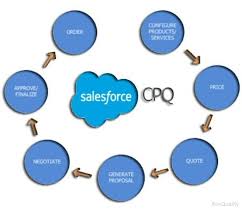
A Salesforce CPQ Check Up is a comprehensive review of your system’s configuration and performance. It assesses how well your CPQ solution integrates with your business processes, highlighting any gaps hindering your sales efforts. From pricing rules to approval processes, a health check ensures seamless functionality and equips your sales reps with the tools they need to succeed.

Read More
Intelligent Adoption Framework

Intelligent Adoption Framework

Intelligent Adoption Framework Marks a New Era for AI IntegrationAfter a surge of initial excitement, AI has now entered a phase of more thoughtful and strategic adoption, focusing on sustainable progress and measurable results. Following years of hype in which artificial intelligence was hailed as a revolutionary force poised to instantly transform industries, AI is now facing a more tempered reality. As it settles into Gartner’s “Trough of Disillusionment,” organizations are grappling with the reality of high costs and challenges scaling experimental projects. However, this phase of learning is typical for any emerging technology, and the journey to unlock AI’s full potential is far from over. Steve Daly, Senior Vice President of Solutions at New Era Technology, explains: “AI has been around for 70 years, but the recent hype inflated expectations. At $30 per user per month for tools like Microsoft 365 Copilot, they’re appealing for proof-of-concept projects. But once those initial tests are over, many companies struggle to find a clear ROI when scaling.” Cost is not the only barrier to broader AI adoption. Concerns over data security and sharing sensitive information are top priorities for many organizations. Daly adds, “New Era’s robust data and security practice has shifted to offer Copilot Studio, allowing companies to build GenAI solutions with tighter security controls. With Copilot Studio, you can limit access to specific files or libraries, ensuring greater control over sensitive data.” Moving Beyond OverpromisesBuilding confidence in AI requires addressing several factors. First, organizations must tackle security and data control issues, alongside developing a clear business model to justify AI investments. Equally important is maintaining momentum—patience and persistence are key to seeing projects through to success, or determining when to pivot. Daly observes, “We’re seeing many projects lose steam. Around half of AI initiatives stall due to poor security practices and suboptimal data management. Projects must demonstrate progress, and that’s difficult in the innovation phase when you don’t always know what you don’t know.” Introducing Intelligent AdoptionThis is where Copilot Studio and New Era’s Intelligent Adoption Framework come into play. The framework is designed to help organizations chart their AI development journey and ensure investments yield tangible results. Copilot Studio supports IT teams by focusing on the tasks that truly drive value, helping them stay on track toward their goals. The Intelligent Adoption Framework is built around three core pillars: technical redesign, organizational readiness, and user readiness. New Era’s framework leverages its expertise to guide businesses through the steps necessary to define their AI strategy, align their corporate vision, and identify the most valuable use cases for AI adoption. Daly concludes, “It’s not just about purchasing licenses—it’s about creating a roadmap for successful adoption. We’re developing packaged solutions, such as ‘train the trainer’ programs from day one, followed by proof-of-concept demonstrations using Copilot Studio. Our goal is to help customers answer key questions, like when to build a GenAI chatbot, while navigating the complexities of AI adoption and managing the pressures CIOs face from stakeholders.” In this new era of AI, success will be determined not by rushed deployment, but by strategic, intelligent adoption that ensures sustained value over time. Like Related Posts Who is Salesforce? Who is Salesforce? Here is their story in their own words. From our inception, we’ve proudly embraced the identity of Read more Salesforce Unites Einstein Analytics with Financial CRM Salesforce has unveiled a comprehensive analytics solution tailored for wealth managers, home office professionals, and retail bankers, merging its Financial Read more AI-Driven Propensity Scores AI plays a crucial role in propensity score estimation as it can discern underlying patterns between treatments and confounding variables Read more Tectonic’s Successful Salesforce Track Record Salesforce Technology Services Integrator – Tectonic has successfully delivered Salesforce in a variety of industries including Public Sector, Hospitality, Manufacturing, Read more

Read More
AI Strategy for Your Business

AI Strategy for Your Business

How to Create a Winning AI Strategy for Your Business To maximize the value of AI, organizations must align their AI projects with strategic business objectives. Here’s a 10-step guide to crafting an effective AI strategy, including sample templates to support your planning. While AI adoption is on the rise, many companies still struggle to unlock its full potential. According to the 2024 IDC report Scaling AI Initiatives Responsibly, even organizations with advanced AI practices, termed “AI Masters,” face a 13% failure rate, while those still emerging in AI see a 20% failure rate. Challenges such as poor data quality and cultural resistance often contribute to these failures. To avoid these pitfalls, companies need to adopt a more deliberate and strategic approach to AI implementation. As Nick Kramer from SSA & Company states, “It’s not just about implementing the right technology; a lot of work needs to be done beforehand to succeed with AI.” What is an AI Strategy and Why is it Important? An AI strategy unifies all necessary components—such as data, technology, and talent—required to achieve business goals through AI. This includes: A well-designed AI strategy sets clear directions on how AI should be leveraged to achieve optimal outcomes within the organization. 10 Steps to Craft a Successful AI Strategy Resources for AI Strategy Templates If you’re ready to start building your AI strategy, here are several resources offering templates and guidance: By following these steps and utilizing the right resources, businesses can ensure they capture AI in ways that align with their strategic goals and maximize their competitive edge. Like Related Posts Who is Salesforce? Who is Salesforce? Here is their story in their own words. From our inception, we’ve proudly embraced the identity of Read more Salesforce Unites Einstein Analytics with Financial CRM Salesforce has unveiled a comprehensive analytics solution tailored for wealth managers, home office professionals, and retail bankers, merging its Financial Read more AI-Driven Propensity Scores AI plays a crucial role in propensity score estimation as it can discern underlying patterns between treatments and confounding variables Read more Tectonic’s Successful Salesforce Track Record Salesforce Technology Services Integrator – Tectonic has successfully delivered Salesforce in a variety of industries including Public Sector, Hospitality, Manufacturing, Read more

Read More
gettectonic.com