Roadmap Archives - gettectonic.com - Page 4
Market Insights and Forecast for Quote Generation Software

Market Insights and Forecast for Quote Generation Software

Market Insights and Forecast for Quote Generation Software for Salesforce (2024-2031): Key Players, Technology Advancements, and Growth Opportunities A recent research report by WMR delves into the Quote Generation Software for Salesforce Market, offering over 150 pages of in-depth analysis on business strategies employed by both leading and emerging industry players. The study provides insights into market developments, technological advancements, drivers, opportunities, and overall market status. Understanding market segments is essential to identify key factors driving growth. Comprehensive Market Insights The report provides an extensive analysis of the global market landscape, including business expansion strategies designed to increase revenue. It compiles critical data about target customers, evaluating the potential success of products and services prior to launch. The research offers valuable insights for stakeholders, including detailed updates on the impact of COVID-19 on business operations and the broader market. The report assesses whether a target market aligns with an enterprise’s goals, emphasizing that market success hinges on understanding the target audience. Key Players Featured: Market Segmentation By Types: By Applications: Geographical Overview The Quote Generation Software for Salesforce Market varies significantly across regions, driven by factors such as economic development, technical advancements, and cultural differences. Businesses looking to expand globally must account for these variations to leverage local opportunities effectively. Key regions include: Competitive Landscape The report offers a detailed competitive analysis, highlighting: Highlights from the Report Key Market Questions Addressed: Reasons to Purchase this Report: This report provides a valuable roadmap for businesses aiming to navigate the evolving Quote Generation Software for Salesforce Market, helping them make informed decisions and strategically position themselves for growth. Like Related Posts Who is Salesforce? Who is Salesforce? Here is their story in their own words. From our inception, we’ve proudly embraced the identity of Read more Salesforce Marketing Cloud Transactional Emails Salesforce Marketing Cloud Transactional Emails are immediate, automated, non-promotional messages crucial to business operations and customer satisfaction, such as order Read more Salesforce Unites Einstein Analytics with Financial CRM Salesforce has unveiled a comprehensive analytics solution tailored for wealth managers, home office professionals, and retail bankers, merging its Financial Read more AI-Driven Propensity Scores AI plays a crucial role in propensity score estimation as it can discern underlying patterns between treatments and confounding variables Read more

Read More
Fully Formatted Facts

Fully Formatted Facts

A recent discovery by programmer and inventor Michael Calvin Wood is addressing a persistent challenge in AI: hallucinations. These false or misleading outputs, long considered an inherent flaw in large language models (LLMs), have posed a significant issue for developers. However, Wood’s breakthrough is challenging this assumption, offering a solution that could transform how AI-powered applications are built and used. The Importance of Wood’s Discovery for Developers Wood’s findings have substantial implications for developers working with AI. By eliminating hallucinations, developers can ensure that AI-generated content is accurate and reliable, particularly in applications where precision is critical. Understanding the Root Cause of Hallucinations Contrary to popular belief, hallucinations are not primarily caused by insufficient training data or biased algorithms. Wood’s research reveals that the issue stems from how LLMs process and generate information based on “noun-phrase routes.” LLMs organize information around noun phrases, and when they encounter semantically similar phrases, they may conflate or misinterpret them, leading to incorrect outputs. How LLMs Organize Information For example: The Noun-Phrase Dominance Model Wood’s research led to the development of the Noun-Phrase Dominance Model, which posits that neural networks in LLMs self-organize around noun phrases. This model is key to understanding and eliminating hallucinations by addressing how AI processes noun-phrase conflicts. Fully-Formatted Facts (FFF): A Solution Wood’s solution involves transforming input data into Fully-Formatted Facts (FFF)—statements that are literally true, devoid of noun-phrase conflicts, and structured as simple, complete sentences. Presenting information in this format has led to significant improvements in AI accuracy, particularly in question-answering tasks. How FFF Processing Works While Wood has not provided a step-by-step guide for FFF processing, he hints that the process began with named-entity recognition using the Python SpaCy library and evolved into using an LLM to reduce ambiguity while retaining the original writing style. His company’s REST API offers a wrapper around GPT-4o and GPT-4o-mini models, transforming input text to remove ambiguity before processing it. Current Methods vs. Wood’s Approach Current approaches, like Retrieval Augmented Generation (RAG), attempt to reduce hallucinations by adding more context. However, these methods often introduce additional noun-phrase conflicts. For instance, even with RAG, ChatGPT-3.5 Turbo experienced a 23% hallucination rate when answering questions about Wikipedia articles. In contrast, Wood’s method focuses on eliminating noun-phrase conflicts entirely. Results: RAG FF (Retrieval Augmented Generation with Formatted Facts) Wood’s method has shown remarkable results, eliminating hallucinations in GPT-4 and GPT-3.5 Turbo during question-answering tasks using third-party datasets. Real-World Example: Translation Error Elimination Consider a simple translation example: This transformation eliminates hallucinations by removing the potential noun-phrase conflict. Implications for the Future of AI The Noun-Phrase Dominance Model and the use of Fully-Formatted Facts have far-reaching implications: Roadmap for Future Development Wood and his team plan to expand their approach by: Conclusion: A New Era of Reliable AI Wood’s discovery represents a significant leap forward in the pursuit of reliable AI. By aligning input data with how LLMs process information, he has unlocked the potential for accurate, trustworthy AI systems. As this technology continues to evolve, it could have profound implications for industries ranging from healthcare to legal services, where AI could become a consistent and reliable tool. While there is still work to be done in expanding this method across all AI tasks, the foundation has been laid for a revolution in AI accuracy. Future developments will likely focus on refining and expanding these capabilities, enabling AI to serve as a trusted resource across a range of applications. Experience RAGFix For those looking to explore this technology, RAGFix offers an implementation of these groundbreaking concepts. Visit their official website to access demos, explore REST API integration options, and stay updated on the latest advancements in hallucination-free AI: Visit RAGFix.ai Like Related Posts Who is Salesforce? Who is Salesforce? Here is their story in their own words. From our inception, we’ve proudly embraced the identity of Read more Salesforce Marketing Cloud Transactional Emails Salesforce Marketing Cloud Transactional Emails are immediate, automated, non-promotional messages crucial to business operations and customer satisfaction, such as order Read more Salesforce Unites Einstein Analytics with Financial CRM Salesforce has unveiled a comprehensive analytics solution tailored for wealth managers, home office professionals, and retail bankers, merging its Financial Read more AI-Driven Propensity Scores AI plays a crucial role in propensity score estimation as it can discern underlying patterns between treatments and confounding variables Read more

Read More
Customer Engagement with AI

Customer Engagement with AI

Funlab Explores AI to Boost Customer Engagement in Leisure Venues In a push to enhance customer experiences across its “leisure-tainment” venues, Funlab has begun experimenting with artificial intelligence. Speaking at a Salesforce Agentforce event in Sydney, Funlab’s Head of Customer Relationships and Retention, Tracy Tanti, shared that the company is “excited to be able to start experimenting” with AI. Agentforce, a Salesforce platform designed to create autonomous agents for supporting employees and customers, serves as a key part of Funlab’s AI exploration efforts. According to Tanti, Funlab has a range of AI-focused projects on its roadmap, with the goal of blending digital experiences into real-life interactions and supporting both venue and corporate teams with AI-driven tools. Reflecting the company’s dedication to careful planning, Tanti described how Salesforce connected Funlab with another customer, Norths Collective, to discuss its own AI implementation journey. Robert Lopez, Chief Marketing and Innovation Officer at Norths Collective, has seen success with enhanced personalization and analytics, which have contributed to increased membership and engagement. Tanti noted that Norths Collective’s transformation work would provide valuable insights for Funlab as it optimizes its data in preparation for AI adoption. Currently, Funlab is in a post-digital transformation phase, refining its processes to deliver more connected and personalized guest experiences throughout the customer lifecycle. With ongoing expansion into the U.S. market—including recent openings of Holey Moley venues—Funlab is also focusing on building robust support infrastructure and engaging local audiences through Salesforce. Tanti highlighted the company’s vision for the U.S. to become a significant portion of total revenues and emphasized how Salesforce will help Funlab nurture a strong customer database in this new market. Additionally, Funlab is leveraging Salesforce to grow its event and function sales, which are projected to reach 39% of total online revenue by year’s end, up from 23% earlier this year. This expansion underscores Funlab’s commitment to using AI and data-driven insights to fuel growth and deepen customer engagement across all its markets and venues. Like Related Posts Who is Salesforce? Who is Salesforce? Here is their story in their own words. From our inception, we’ve proudly embraced the identity of Read more Salesforce Marketing Cloud Transactional Emails Salesforce Marketing Cloud Transactional Emails are immediate, automated, non-promotional messages crucial to business operations and customer satisfaction, such as order Read more Salesforce Unites Einstein Analytics with Financial CRM Salesforce has unveiled a comprehensive analytics solution tailored for wealth managers, home office professionals, and retail bankers, merging its Financial Read more AI-Driven Propensity Scores AI plays a crucial role in propensity score estimation as it can discern underlying patterns between treatments and confounding variables Read more

Read More
AI Agents

Gen AI and Software Development

The Future of Software Development with Generative AI Imagine developing software products at unprecedented speed and cost efficiency, allowing your company to test more ideas with real—and even virtual—customers. This capability could accelerate the time to market for targeted products while minimizing risk and resource waste. Generative AI (GenAI) is making this vision a reality. But how exactly will AI-powered product development work? We propose a four-stage framework that leverages GenAI to streamline today’s labor-intensive processes. The Challenge with Traditional Software Development As Marty Cagan of Silicon Valley Product Group has pointed out, most companies still rely on a lengthy, complex software development cycle. Typically, it follows this pattern: This approach is expensive and fraught with risk. Predicting a product’s ROI before release is notoriously inaccurate. Additionally, testing product designs with real users is both time-consuming and costly. If a final product fails to attract customers, the company loses valuable time, money, and human effort—something we’ve seen in cases like Quibi and Clubhouse. To mitigate these risks, some firms have embraced iterative development, involving end users early in the process and continuously refining their solutions. While this method improves outcomes, GenAI offers the potential to revolutionize the entire approach. How GenAI Transforms Software Development GenAI moves beyond traditional A/B testing and incremental improvements. Consider the perspective of Nikita Bier, Product Growth Partner at Lightspeed Venture Partners, who recently stated: “No, I just ship the app—and if it’s not ranked in the Apple Store, I change it until it is.” This mindset—enabled by GenAI—suggests a more agile, data-driven approach to product development, where software is rapidly iterated based on real-world feedback. We propose a simplified four-step framework that highlights GenAI’s role in transforming each stage: 1. User Research Today: Companies analyze user problems, market needs, and contextual factors to determine why a product should be built. With GenAI: AI can simulate realistic consumer behavior, reducing the need for expensive user research. For example, a recent study used OpenAI’s GPT-3.5 to predict laptop purchasing decisions based on simulated income levels. The AI accurately adjusted its price sensitivity based on whether it “earned” $50,000 or $120,000 annually—mimicking real consumer behavior. 2. Design Today: Product teams develop solutions, mapping interactions between users and the product. With GenAI: AI can translate ideas into designs for different types of creators. Visual thinkers can sketch concepts, which AI converts into formal design assets. Those who work better with words can use AI tools like Galileo and Genius to generate wireframes from natural language descriptions—seamlessly integrating with design platforms like Figma. 3. Build Today: Developers determine how the product’s components fit together, writing code to bring it to life. With GenAI: AI can generate functional software code with minimal human input. For instance, aerospace engineer Brandon Starr used a single sentence—“Create a bunny-themed Flappy Bird as an iOS app”—to instruct Replit Agent, which then built the app autonomously. 4. Learn Today: Companies analyze product performance and user feedback to refine future iterations. With GenAI: AI will integrate with top-tier product analytics tools, synthesizing data to automate improvements, rebuilds, and relaunches. As Wharton professor Ethan Mollick has demonstrated, GPT’s advanced data analysis capabilities can already perform this type of iterative optimization. The Future of AI-Powered Development What about traditional product development steps like market research, segmentation, and feature prioritization? Some will be absorbed into these four stages, while others—like extensive market analysis—will become less critical as development accelerates. An even more transformative shift is on the horizon: natural language interfaces that guide product developers through the entire process. Imagine describing a vague product idea, and AI not only builds it but also evaluates its business viability. This shift could redefine how companies structure development teams—or even empower individuals to create software on demand, much like smartphones democratized video production. As GenAI pioneers the next frontier, software development is poised to become one of its most revolutionary applications. Like Related Posts Who is Salesforce? Who is Salesforce? Here is their story in their own words. From our inception, we’ve proudly embraced the identity of Read more Salesforce Unites Einstein Analytics with Financial CRM Salesforce has unveiled a comprehensive analytics solution tailored for wealth managers, home office professionals, and retail bankers, merging its Financial Read more AI-Driven Propensity Scores AI plays a crucial role in propensity score estimation as it can discern underlying patterns between treatments and confounding variables Read more Tectonic’s Successful Salesforce Track Record Salesforce Technology Services Integrator – Tectonic has successfully delivered Salesforce in a variety of industries including Public Sector, Hospitality, Manufacturing, Read more

Read More

Enterprise AI

Enterprise AI: Revolutionizing Business Operations for a Competitive Edge Enterprise AI refers to the suite of advanced artificial intelligence technologies—such as machine learning, natural language processing (NLP), robotics, and computer vision—that organizations use to transform operations, enhance efficiency, and gain a competitive advantage. These technologies demand high-quality data, skilled expertise, and adaptability to rapid advancements. Businesses increasingly adopt enterprise AI because of its ability to automate critical processes, reduce costs, optimize operations, and enable data-driven decision-making. According to McKinsey’s 2024 report, 72% of organizations now integrate AI into their operations, a significant increase from 50% just six years ago. However, implementing AI presents challenges, such as employee mistrust, data biases, lack of explainability, and managing AI’s fast evolution. Successful adoption requires aligning AI initiatives with organizational goals, fostering data trust, and building internal expertise. This guide provides a strategic roadmap for embracing enterprise AI, covering foundational concepts, advanced use cases, and ways to navigate common pitfalls. Why AI Matters in the Enterprise Enterprise AI is a transformative force, similar to how the internet revolutionized global businesses. By integrating AI into their operations, organizations can achieve: AI-driven applications are reshaping industries by enabling hyper-personalized customer experiences, optimizing supply chains, and automating repetitive tasks to free employees for higher-value contributions. The rapid pace of AI innovation requires leaders to consistently re-evaluate its alignment with their strategies while maintaining effective data management and staying informed on evolving tools and regulations. AI’s Transformational Impact on Business AI’s potential is as groundbreaking as electrification in the 20th century. Its immediate influence lies in automating tasks and augmenting human workflows. For example: Generative AI tools like ChatGPT and Copilot further accelerate adoption by automating creative and intellectual tasks. Key Benefits of Enterprise AI Challenges of Enterprise AI Despite its benefits, AI adoption comes with hurdles: Ethical concerns, such as workforce displacement and societal impacts, also demand proactive strategies. AI and Big Data: A Symbiotic Relationship AI thrives on large, high-quality datasets, while big data analytics leverage AI to extract deeper insights. The rise of cloud computing amplifies this synergy, enabling scalable, cost-effective AI deployments. Evolving AI Use Cases AI continues to redefine industries, turning complex tasks into routine operations: Future AI Trends to Watch Building the Future with Responsible AI As AI advances, organizations must prioritize responsible AI practices, balancing innovation with ethical considerations. Developing robust frameworks for transparency and governance is essential to maintaining trust and fostering sustainable growth. AI’s future offers vast opportunities for businesses willing to adapt and innovate. By aligning AI initiatives with strategic goals and investing in robust ecosystems, enterprises can unlock new efficiencies, drive innovation, and lead in their industries. Like Related Posts Who is Salesforce? Who is Salesforce? Here is their story in their own words. From our inception, we’ve proudly embraced the identity of Read more Salesforce Marketing Cloud Transactional Emails Salesforce Marketing Cloud Transactional Emails are immediate, automated, non-promotional messages crucial to business operations and customer satisfaction, such as order Read more Salesforce Unites Einstein Analytics with Financial CRM Salesforce has unveiled a comprehensive analytics solution tailored for wealth managers, home office professionals, and retail bankers, merging its Financial Read more AI-Driven Propensity Scores AI plays a crucial role in propensity score estimation as it can discern underlying patterns between treatments and confounding variables Read more

Read More
Revolution Customer Service with Agentforce

Revolution Customer Service with Agentforce

Agentforce stole the spotlight at Dreamforce, but it’s not just about replacing human workers. Equally significant for Service Cloud was the focus on how AI can be leveraged to make agents, dispatchers, and field service technicians more productive and proactive. Join a conversation to unpack the latest Sales Cloud innovations, with a spotlight on Agentforce for sales followed by a Q&A with Salesblazers. During the Dreamforce Service Cloud keynote, GM Kishan Chetan emphasized the dramatic shift over the past year, with AI moving from theoretical to practical applications. He challenged customer service leaders to embrace AI agents, highlighting that AI-driven solutions can transform customer service from delivering “good” benefits to achieving exponential growth. He noted that AI agents are capable of handling common customer requests like tech support, scheduling, and general inquiries, as well as more complex tasks such as de-escalation, billing inquiries, and even cross-selling and upselling. In practice, research by Valoir shows that most Service Cloud customers are still in the early stages of AI adoption, particularly with generative AI. While progress has accelerated recently, most companies are only seeing incremental gains in individual productivity rather than the exponential improvements highlighted at Dreamforce. To achieve those higher-level returns, customers must move beyond simple automation and summarization to AI-driven transformation, powered by Agentforce. Chetan and his team outlined four key steps to make this transition. “Agentforce represents the Third Wave of AI—advancing beyond copilots to a new era of highly accurate, low-hallucination intelligent agents that actively drive customer success. Unlike other platforms, Agentforce is a revolutionary and trusted solution that seamlessly integrates AI across every workflow, embedding itself deeply into the heart of the customer journey. This means anticipating needs, strengthening relationships, driving growth, and taking proactive action at every touchpoint,” said Marc Benioff, Chair and CEO, Salesforce. “While others require you to DIY your AI, Agentforce offers a fully tailored, enterprise-ready platform designed for immediate impact and scalability. With advanced security features, compliance with industry standards, and unmatched flexibility. Our vision is bold: to empower one billion agents with Agentforce by the end of 2025. This is what AI is meant to be.” In contrast to now-outdated copilots and chatbots that rely on human requests and strugglewith complex or multi-step tasks, Agentforce offers a new level of sophistication by operating autonomously, retrieving the right data on demand, building action plans for any task, and executing these plans without requiring human intervention. Like a self-driving car, Agentforce uses real-time data to adapt to changing conditions and operates independently within an organizations’ customized guardrails, ensuring every customer interaction is informed, relevant, and valuable. And when desired, Agentforce seamlessly hands off to human employees with a summary of the interaction, an overview of the customer’s details, and recommendations for what to do next. Deploy AI agents across channelsAgentforce Service Agent is more than a chatbot—it’s an autonomous AI agent capable of handling both simple and complex requests, understanding text, video, and audio. Customers were invited to build their own Service Agents during Dreamforce, and many took up the challenge. Service-related agents are a natural fit, as research shows Service Cloud customers are generally more prepared for AI adoption due to the volume and quality of customer data available in their CRM systems. Turn insights into actionLaunching in October 2024, Customer Experience Intelligence provides an omnichannel supervisor Wall Board that allows supervisors to monitor conversations in real time, complete with sentiment scores and organized metrics by topics and regions. Supervisors can then instruct Service Agent to dive into root causes, suggest proactive messaging, or even offer discounts. This development represents the next stage of Service Intelligence, combining Data Cloud, Tableau, and Einstein Conversation Mining to give supervisors real-time insights. It mirrors capabilities offered by traditional contact center vendors like Verint, which also blend interaction, sentiment, and other data in real time—highlighting the convergence of contact centers and Service Cloud service operations. Empower teams to become trusted advisorsSalesforce continues to navigate the delicate balance between digital and human agents, especially within Service Cloud. The key lies in the intelligent handoff of customer data when escalating from a digital agent to a human agent. Service Planner guides agents step-by-step through issue resolution, powered by Unified Knowledge. The demo also showcased how Service Agent can merge Commerce and Service by suggesting agents offer complimentary items from a customer’s shopping cart. Enable field teams to be proactiveSalesforce also announced improvements in field service, designed to help dispatchers and field service agents operate more proactively and efficiently. Agentforce for Dispatchers enhances the ability to address urgent appointments quickly. Asset Service Prediction leverages AI to forecast asset failures and upcoming service needs, while AI-generated prework briefs provide field techs with asset health scores and critical information before they arrive on site. Setting a clear roadmap for adopting Agentforce across these four areas is an essential step toward helping customers realize more than just incremental gains in their service operations. Equally important will be helping customers develop a data strategy that harnesses the power of Data Cloud and Salesforce’s partner ecosystem, enabling a truly data-driven service experience. Investments in capabilities like My Service Journeys will also be critical in guiding customers through the process of identifying which AI features will deliver the greatest returns for their specific needs. Agentforce leverages Salesforce’s generative AI, like Einstein GPT, to automate routine tasks, provide real-time insights, and offer personalized recommendations, enhancing efficiency and enabling agents to deliver exceptional customer experiences. Agentforce is not just another traditional chatbot; it is a next-generation, AI-powered solution that understands complex queries and acts autonomously to enhance operational efficiency. Unlike conventional chatbots, Agentforce is intelligent and adaptive, capable of managing a wide range of customer issues with precision. It offers 24/7 support, responds in a natural, human-like manner, and seamlessly escalates to human agents when needed and redefining customer service by delivering faster, smarter, and more effective support experiences. Like1 Related Posts Who is Salesforce? Who is Salesforce? Here is their story in their own words. From our inception,

Read More
Tableau Einstein Alliance

Tableau Einstein Alliance

We’re expanding our commitment to the future of data and analytics with the launch of the Tableau Einstein Alliance, an initiative designed to foster an ecosystem of visionary and innovative partners. These partners will help integrate Agentforce across every facet of analytics, positioning our customers to harness the full potential of AI. The future of data-driven insights is here, and our partners play a vital role in this journey. —Ryan Aytay, CEO, Tableau Salesforce Introduces Tableau Einstein Alliance Salesforce recently unveiled the Tableau Einstein Alliance, a new partner community for its Tableau Einstein users. This initiative aims to empower partners to excel in the “agent era” by offering exclusive benefits to support their development and implementation of AI-driven solutions and analytics agents. Members of the Alliance will gain access to product roadmaps, in-house expertise, and dedicated marketing support, as well as opportunities for co-selling. Moreover, Salesforce is offering these partners the ability to leverage the Alliance for building AI agents, apps, and solutions that maximize their clients’ investments in AI and data. What is Tableau Einstein? Launched in September, Tableau Einstein is an AI-powered visual analytics platform designed to scale and enhance data-driven workflows. It seamlessly integrates with Salesforce tools like Agentforce and its privacy framework, providing data professionals with the ability to create semantic models using real-time customer data. Tableau Einstein also features a marketplace where organizations can share analytical assets, and its APIs facilitate seamless collaboration. Teams can easily work together on data models, visualizations, and dashboards in a unified, drag-and-drop interface. Why Tableau Einstein Matters In discussing the platform, Ryan Aytay highlighted its transformative capabilities: “By leveraging high-performance AI to connect data, actions, and humans, autonomous and assistive agents are redefining business efficiency. They ensure that the data foundation you’re already using will continue to support your needs into the future. You no longer need to sift through data silos or be a specialist to access critical insights—data is now accessible to everyone.” With Tableau Einstein, Salesforce is setting a new standard for how businesses can achieve success with AI-powered, data-driven insights. Like Related Posts Who is Salesforce? Who is Salesforce? Here is their story in their own words. From our inception, we’ve proudly embraced the identity of Read more Salesforce Marketing Cloud Transactional Emails Salesforce Marketing Cloud Transactional Emails are immediate, automated, non-promotional messages crucial to business operations and customer satisfaction, such as order Read more Salesforce Unites Einstein Analytics with Financial CRM Salesforce has unveiled a comprehensive analytics solution tailored for wealth managers, home office professionals, and retail bankers, merging its Financial Read more AI-Driven Propensity Scores AI plays a crucial role in propensity score estimation as it can discern underlying patterns between treatments and confounding variables Read more

Read More
Ethical AI Implementation

Ethical AI Implementation

AI technologies are rapidly evolving, becoming a practical solution to support essential business operations. However, creating true business value from AI requires a well-balanced approach that considers people, processes, and technology. Ethical AI Implementation. AI encompasses various forms, including machine learning, deep learning, predictive analytics, natural language processing, computer vision, and automation. To leverage AI’s competitive advantages, companies need a strong foundation and a realistic strategy aligned with their business goals. “Artificial intelligence is multifaceted,” said John Carey, managing director at AArete, a business management consultancy. “There’s often hype and, at times, exaggeration about how ‘intelligent’ AI truly is.” Business Advantages of AI Adoption Recent advancements in generative AI, such as ChatGPT and Dall-E, have showcased AI’s significant impact on businesses. According to a McKinsey Global Survey, global AI adoption surged from around 50% over the past six years to 72% in 2024. Some key benefits of adopting AI include: Prerequisites for AI Implementation Successfully implementing AI can be complex. A detailed understanding of the following prerequisites is crucial for achieving positive results: 13 Steps for Successful AI Implementation Common AI Implementation Mistakes Organizations often stumble by: Key Challenges in Ethical AI Implementation Human-related challenges often present the biggest hurdles. To overcome them, organizations must foster data literacy and build trust among stakeholders. Additionally, challenges around data management, model governance, system integration, and intellectual property need to be addressed. Ensuring Ethical AI Implementation To ensure responsible AI use, companies should: Ethical AI implementation requires a continuous commitment to transparency, fairness, and inclusivity across all levels of the organization. Like Related Posts Who is Salesforce? Who is Salesforce? Here is their story in their own words. From our inception, we’ve proudly embraced the identity of Read more Salesforce Marketing Cloud Transactional Emails Salesforce Marketing Cloud Transactional Emails are immediate, automated, non-promotional messages crucial to business operations and customer satisfaction, such as order Read more Salesforce Unites Einstein Analytics with Financial CRM Salesforce has unveiled a comprehensive analytics solution tailored for wealth managers, home office professionals, and retail bankers, merging its Financial Read more AI-Driven Propensity Scores AI plays a crucial role in propensity score estimation as it can discern underlying patterns between treatments and confounding variables Read more
Read More
Tableau Einstein Alliance to Help Partners Drive Success in the Agent Era

Tableau Einstein Alliance to Help Partners Drive Success in the Agent Era

Salesforce Unveils Tableau Einstein Alliance to Empower Partners in the AI-Driven Agent Era Salesforce today announced the launch of the Tableau Einstein Alliance, a new partner community designed to create and deliver AI-driven solutions and analytical agents for Tableau Einstein. Built on the Salesforce platform and integrated with Agentforce, this initiative aims to help partners accelerate success in the emerging AI landscape. Tableau Einstein Alliance to Help Partners Drive Success in the Agent Era The Tableau Einstein Alliance offers partners a range of exclusive benefits, including early access to Salesforce’s product roadmaps, in-house AI experts, marketing support, and co-selling opportunities. Through the Alliance, partners will be able to develop agents, apps, and AI-driven solutions, enabling customers to navigate the autonomous AI revolution and rapidly extract value from their data and AI investments. The Alliance is set to launch in February 2025 with 25 founding members, including Tectonic, Capgemini, Deloitte, IBM, and Slalom. Solutions developed within the Alliance will be available on both the Salesforce AppExchange and the forthcoming Tableau Marketplace, offering developers a platform to create, share, and monetize analytical assets. Why It Matters:Partner ecosystems have been crucial in advancing major technological innovations, from cloud computing to software-as-a-service. With the rise of Agentforce, building a dynamic partner community is more critical than ever to drive the next wave of AI and analytics adoption. Salesforce’s Perspective: “Tableau’s success is deeply rooted in our partners’ commitment to our customers. Now, we’re investing in the Tableau Einstein Alliance to cultivate an ecosystem of visionary and innovative partners who will integrate Agentforce into every facet of analytics. The future of data and analytics is here, and our partners are essential to this journey.”— Ryan Aytay, CEO, Tableau Industry Perspectives: “Atrium has championed the vision of unified analytics since Tableau joined the Salesforce ecosystem. We’ve seen the incredible potential of Data Cloud and Tableau Cloud together, and we’re thrilled to help bring Tableau Einstein to market. Its integrated features will offer customers unprecedented productivity.”— Chris Heineken, CEO, Atrium “Tectonic’s “Insight to Action” methodology (i2a) is directly improved by the launch of the Tableau Einstein Alliance. By utilizing automated AI-solutions to power data-driven insights, we are able to deliver additional value to our customers.”— Dan Grossnickle, Tectonic “Tableau Einstein represents the next step in Salesforce’s data platforms and generative AI products. The value for clients from these data-driven insights is immense. We’re excited to help lead the way through the Tableau Einstein Alliance.”— Jean-Marc Gaultier, Head of Group Strategic Initiatives and Partnerships, Capgemini “Deloitte has long benefited from Tableau’s capabilities, and we’re excited to see how this next iteration will further empower our teams with data to drive growth. Integrating key features into tools like Salesforce and Slack will unlock even greater potential for us.”— Moritz Schieder, Tableau Alliance Leader and Director, Deloitte Germany “IBM is eager to leverage Tableau Einstein to deliver more value to our customers, regardless of where they work. As a strategic Agentforce partner and Salesforce customer, we are excited to be part of the next generation of analytics alongside Salesforce.”— Mary Rowe, Global Head of IBM Consulting Salesforce Practice Tableau Einstein Alliance to Help Partners Drive Success in the Agent Era and Tectonic, an insights 2 actions company, is excited to be a part of the innovation. Like Related Posts Who is Salesforce? Who is Salesforce? Here is their story in their own words. From our inception, we’ve proudly embraced the identity of Read more Salesforce Marketing Cloud Transactional Emails Salesforce Marketing Cloud Transactional Emails are immediate, automated, non-promotional messages crucial to business operations and customer satisfaction, such as order Read more Salesforce Unites Einstein Analytics with Financial CRM Salesforce has unveiled a comprehensive analytics solution tailored for wealth managers, home office professionals, and retail bankers, merging its Financial Read more AI-Driven Propensity Scores AI plays a crucial role in propensity score estimation as it can discern underlying patterns between treatments and confounding variables Read more

Read More
Spotlight on Agentforce

Spotlight on Agentforce

Agentforce stole the spotlight at Dreamforce, but it’s not just about replacing human workers. Equally significant for Service Cloud was the focus on how AI can be leveraged to make agents, dispatchers, and field service technicians more productive and proactive. During the Dreamforce Service Cloud keynote, GM Kishan Chetan emphasized the dramatic shift over the past year, with AI moving from theoretical to practical applications. He challenged customer service leaders to embrace AI agents, highlighting that AI-driven solutions can transform customer service from delivering “good” benefits to achieving exponential growth. He noted that AI agents are capable of handling common customer requests like tech support, scheduling, and general inquiries, as well as more complex tasks such as de-escalation, billing inquiries, and even cross-selling and upselling. In practice, research by Valoir shows that most Service Cloud customers are still in the early stages of AI adoption, particularly with generative AI. While progress has accelerated recently, most companies are only seeing incremental gains in individual productivity rather than the exponential improvements highlighted at Dreamforce. To achieve those higher-level returns, customers must move beyond simple automation and summarization to AI-driven transformation, powered by Agentforce. Chetan and his team outlined four key steps to make this transition. Deploy AI agents across channelsAgentforce Service Agent is more than a chatbot—it’s an autonomous AI agent capable of handling both simple and complex requests, understanding text, video, and audio. Customers were invited to build their own Service Agents during Dreamforce, and many took up the challenge. Service-related agents are a natural fit, as research shows Service Cloud customers are generally more prepared for AI adoption due to the volume and quality of customer data available in their CRM systems. Turn insights into actionLaunching in October 2024, Customer Experience Intelligence provides an omnichannel supervisor Wall Board that allows supervisors to monitor conversations in real time, complete with sentiment scores and organized metrics by topics and regions. Supervisors can then instruct Service Agent to dive into root causes, suggest proactive messaging, or even offer discounts. This development represents the next stage of Service Intelligence, combining Data Cloud, Tableau, and Einstein Conversation Mining to give supervisors real-time insights. It mirrors capabilities offered by traditional contact center vendors like Verint, which also blend interaction, sentiment, and other data in real time—highlighting the convergence of contact centers and Service Cloud service operations. Empower teams to become trusted advisorsSalesforce continues to navigate the delicate balance between digital and human agents, especially within Service Cloud. The key lies in the intelligent handoff of customer data when escalating from a digital agent to a human agent. Service Planner guides agents step-by-step through issue resolution, powered by Unified Knowledge. The demo also showcased how Service Agent can merge Commerce and Service by suggesting agents offer complimentary items from a customer’s shopping cart. Enable field teams to be proactiveSalesforce also announced improvements in field service, designed to help dispatchers and field service agents operate more proactively and efficiently. Agentforce for Dispatchers enhances the ability to address urgent appointments quickly. Asset Service Prediction leverages AI to forecast asset failures and upcoming service needs, while AI-generated prework briefs provide field techs with asset health scores and critical information before they arrive on site. Setting a clear roadmap for adopting Agentforce across these four areas is an essential step toward helping customers realize more than just incremental gains in their service operations. Equally important will be helping customers develop a data strategy that harnesses the power of Data Cloud and Salesforce’s partner ecosystem, enabling a truly data-driven service experience. Investments in capabilities like My Service Journeys will also be critical in guiding customers through the process of identifying which AI features will deliver the greatest returns for their specific needs. Like Related Posts Who is Salesforce? Who is Salesforce? Here is their story in their own words. From our inception, we’ve proudly embraced the identity of Read more Salesforce Marketing Cloud Transactional Emails Salesforce Marketing Cloud Transactional Emails are immediate, automated, non-promotional messages crucial to business operations and customer satisfaction, such as order Read more Salesforce Unites Einstein Analytics with Financial CRM Salesforce has unveiled a comprehensive analytics solution tailored for wealth managers, home office professionals, and retail bankers, merging its Financial Read more AI-Driven Propensity Scores AI plays a crucial role in propensity score estimation as it can discern underlying patterns between treatments and confounding variables Read more

Read More
Financial Services Cloud and Core

Financial Services Cloud and Core

Remember When Salesforce First Launched Financial Services Cloud in 2016? The managed package introduced a standardized data model that transformed how banks, credit unions, and implementation partners utilized Salesforce. It was a game-changer! But Salesforce hasn’t stopped innovating. Since 2019, they’ve been enhancing the core platform to meet demands for greater performance and flexibility. Now, in 2024, Salesforce has rolled out its biggest core release yet: Financial Account Management Standard Objects. This strategic update could redefine how financial data is managed within Financial Services Cloud (FSC). Understanding these updates is essential for all FSC users. The introduction of standard objects signals a major shift in the platform. Staying informed ensures that your institution remains innovative and fully leverages Financial Services Cloud. Let’s explore what’s changing and why it matters. 1. A New Era for Financial Accounts Say goodbye to limitations and hello to flexibility! The core platform introduces a modern way to manage financial accounts: The elimination of financial account triggers is a huge win for performance. Salesforce’s new data model is designed to handle real-time integrations, which can be a game-changer for many institutions. But real-time integration isn’t necessary for everyone. Depending on your organization’s needs, you might find that a combination of batch integration, on-demand integration, and data visualization works best. If you’re dealing with slow nightly batch data loads due to financial account triggers, exploring the new standard objects could be the solution to your performance woes. 2. Core Offers Benefits for Everyone 3. The FSC Managed Package is Still Supported Salesforce has reassured customers that the FSC Managed Package will continue to be supported. However, with Core advancements, Salesforce is re-evaluating its long-term strategy to provide more streamlined and scalable solutions. While migration to Core isn’t mandatory, Salesforce’s ongoing focus on this new architecture suggests that aligning with the core platform may offer increasing benefits over time. To stay ahead of the curve and access the latest features, it’s wise to explore the potential advantages of migration. Tectonic can help assess your current environment, weigh the benefits of moving to Core, and develop a strategy that aligns with your business goals. 4. Exciting Core Enhancements Core introduces powerful new features that simplify financial data management, such as: 5. The Future Is Core, and You Need the Right Partner to Chart Your Course Salesforce’s shift toward Core highlights the platform’s future direction. While the managed package remains relevant for now, Core offers a more modern, flexible solution for managing financial data. To make the most of these changes and ensure a smooth transition, partnering with an experienced team like Tectonic is crucial. Transitioning to Core requires careful planning. Here’s a roadmap to guide you: Ready to Explore the Power of Core? Contact Tectonic today to learn how we can help guide your transition to Core and capture the full potential of these new features to drive your business forward. Like1 Related Posts Who is Salesforce? Who is Salesforce? Here is their story in their own words. From our inception, we’ve proudly embraced the identity of Read more Salesforce Marketing Cloud Transactional Emails Salesforce Marketing Cloud Transactional Emails are immediate, automated, non-promotional messages crucial to business operations and customer satisfaction, such as order Read more Salesforce Unites Einstein Analytics with Financial CRM Salesforce has unveiled a comprehensive analytics solution tailored for wealth managers, home office professionals, and retail bankers, merging its Financial Read more AI-Driven Propensity Scores AI plays a crucial role in propensity score estimation as it can discern underlying patterns between treatments and confounding variables Read more

Read More
Tableau Einstein is Here

Tableau Einstein is Here

Tableau Einstein marks a new chapter for Tableau, transforming the analytics experience by moving beyond traditional reports and dashboards to deliver insights directly within the flow of a user’s work. This new AI-powered analytics platform blends existing Tableau and Salesforce capabilities with innovative features designed to revolutionize how users engage with data. The platform is built around four key areas: autonomous insight delivery through AI, AI-assisted development of a semantic layer, real-time data access, and a marketplace for data and AI products, allowing customers to personalize their Tableau experience. Some features, like Tableau Pulse and Tableau Agent, which provide autonomous insights, are already available. Additional tools, such as Tableau Semantics and a marketplace for AI products, are expected to launch in 2025. Access to Tableau Einstein is provided through a Tableau+ subscription, though pricing details remain private. Since being acquired by Salesforce in 2019, Tableau has shifted its focus toward AI, following the trend of many analytics vendors. In February, Tableau introduced Tableau Pulse, a generative AI-powered tool that delivers insights in natural language. In July, it also rolled out Tableau Agent, an AI assistant to help users prepare and analyze data. With AI at its core, Tableau Einstein reflects deeper integration between Tableau and Salesforce. David Menninger, an analyst at Ventana Research, commented that these new capabilities represent a meaningful step toward true integration between the two platforms. Donald Farmer, founder of TreeHive Strategy, agrees, highlighting that while the robustness of Tableau Einstein’s AI capabilities compared to its competitors remains to be seen, the platform offers more than just incremental add-ons. “It’s an impressive release,” he remarked. A Paradigm Shift in Analytics A significant aspect of Tableau Einstein is its agentic nature, where AI-powered agents deliver insights autonomously, without user prompts. Traditionally, users queried data and analyzed reports to derive insights. Tableau Einstein changes this model by proactively providing insights within the workflow, eliminating the need for users to formulate specific queries. The concept of autonomous insights, represented by tools like Tableau Pulse and Agentforce for Tableau, allows businesses to build autonomous agents that deliver actionable data. This aligns with the broader trend in analytics, where the market is shifting toward agentic AI and away from dashboard reliance. Menninger noted, “The market is moving toward agentic AI and analytics, where agents, not dashboards, drive decisions. Agents can act on data rather than waiting for users to interpret it.” Farmer echoed this sentiment, stating that the integration of AI within Tableau is intuitive and seamless, offering a significantly improved analytics experience. He specifically pointed out Tableau Pulse’s elegant design and the integration of Agentforce AI, which feels deeply integrated rather than a superficial add-on. Core Features and Capabilities One of the most anticipated features of Tableau Einstein is Tableau Semantics, a semantic layer designed to enhance AI models by enabling organizations to define and structure their data consistently. Expected to be generally available by February 2025, Tableau Semantics will allow enterprises to manage metrics, data dimensions, and relationships across datasets with the help of AI. Pre-built metrics for Salesforce data will also be available, along with AI-driven tools to simplify semantic layer management. Tableau is not the first to offer a semantic layer—vendors like MicroStrategy and Looker have similar features—but the infusion of AI sets Tableau’s approach apart. According to Tableau’s chief product officer, Southard Jones, AI makes Tableau’s semantic layer more agile and user-friendly compared to older, labor-intensive systems. Real-time data integration is another key component of Tableau Einstein, made possible through Salesforce’s Data Cloud. This integration enables Tableau users to securely access and combine structured and unstructured data from hundreds of sources without manual intervention. Unstructured data, such as text and images, is critical for comprehensive AI training, and Data Cloud allows enterprises to use it alongside structured data efficiently. Additionally, Tableau Einstein will feature a marketplace launching in mid-2025, which will allow users to build a composable infrastructure. Through APIs, users will be able to personalize their Tableau environment, share AI assets, and collaborate across departments more effectively. Looking Forward As Tableau continues to build on its AI-driven platform, Menninger and Farmer agree that the vendor’s move toward agentic AI is a smart evolution. While Tableau’s current capabilities are competitive, Menninger noted that the platform doesn’t necessarily set Tableau apart from competitors like Qlik, MicroStrategy, or Microsoft Fabric. However, the tight integration with Salesforce and the focus on agentic AI may provide Tableau with a short-term advantage in the fast-changing analytics landscape. Farmer added that Tableau Einstein’s autonomous insight generation feels like a significant leap forward for the platform. “Tableau has done great work in creating an agentic experience that feels, for the first time, like the real deal,” he said. Looking ahead, Tableau’s roadmap includes a continued focus on agentic AI, with the goal of providing each user with their own personal analyst. “It’s not just about productivity,” said Jones. “It’s about changing the value of what can be delivered.” Menninger concluded that Tableau’s shift away from dashboards is a reflection of where business intelligence is headed. “Dashboards, like data warehouses, don’t solve problems on their own. What matters is what you do with the information,” he said. “Tableau’s push toward agentic analytics and collaborative decision-making is the right move for its users and the market as a whole.” Like1 Related Posts Who is Salesforce? Who is Salesforce? Here is their story in their own words. From our inception, we’ve proudly embraced the identity of Read more Salesforce Marketing Cloud Transactional Emails Salesforce Marketing Cloud Transactional Emails are immediate, automated, non-promotional messages crucial to business operations and customer satisfaction, such as order Read more Salesforce Unites Einstein Analytics with Financial CRM Salesforce has unveiled a comprehensive analytics solution tailored for wealth managers, home office professionals, and retail bankers, merging its Financial Read more AI-Driven Propensity Scores AI plays a crucial role in propensity score estimation as it can discern underlying patterns between treatments and confounding variables Read more
Read More
Data Governance Frameworks

Data Governance Frameworks

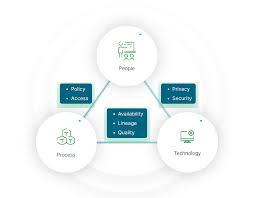
Examples of Data Governance Frameworks Data governance is not a one-size-fits-all approach. Organizations must carefully choose a framework that aligns with their unique goals, structure, and culture. Data is one of an organization’s most valuable assets, and proper governance is key to unlocking its potential. Without a well-designed framework, companies risk poor data quality, privacy breaches, regulatory noncompliance, and missed insights. A data governance framework provides a structured way to manage data throughout its lifecycle, including policies, processes, and standards to ensure data is accurate, accessible, and secure. By putting clear guidelines in place, organizations can increase trust in their data and improve decision-making. Key Pillars of a Data Governance Frameworks A robust data governance framework typically rests on four key pillars: 1. Center-Out Model The center-out model places a centralized team, such as a data governance council, at the core of the governance process. This group establishes policies and oversees data management across the organization, balancing consistency with flexibility for different departments. The Data Governance Institute’s framework is an example of this model. It focuses on creating a Data Governance Office responsible for managing key governance functions such as setting data policies, assigning data stewards, and monitoring compliance. The framework provides a clear structure while allowing business units some leeway in adapting governance practices to their needs. PwC’s model also adopts a center-out approach, with an emphasis on using data governance to monetize data assets. It highlights the importance of maintaining consistency while minimizing the risk of data silos. 2. Top-Down Model In the top-down model, data governance is driven by executive leadership, ensuring alignment with strategic goals. This model provides authority for enforcing governance standards but may face challenges if business units feel disconnected from the central governance team. McKinsey’s framework exemplifies this approach, focusing on integrating data governance with broader business transformation efforts. Executive leadership plays a key role in ensuring that governance initiatives receive the necessary attention and resources. 3. Hybrid Model The hybrid model combines centralized governance with flexibility for individual business units. It establishes an enterprise-wide framework while allowing departments to adapt governance practices to their specific needs. The Eckerson Group’s Modern Data Governance Framework represents a hybrid approach. It emphasizes the importance of people and culture, alongside technology and processes, and encourages organizations to create a roadmap for governance that evolves as needs change. This model provides a balance between centralized control and decentralized flexibility. 4. Bottom-Up Model In the bottom-up model, data governance is driven by subject matter experts and data stakeholders across the organization. This approach promotes collaboration and buy-in from the people closest to the data, ensuring that governance policies are practical and effective. The DAMA-DMBOK framework, developed by the Data Management Association, is a prime example. Although flexible, it often starts as a bottom-up initiative, driven by IT departments and data experts who later gain executive support. 5. Silo-In Model The silo-in model allows individual business units or departments to create their own governance practices. While this approach addresses localized data issues, it often leads to inconsistencies and challenges when the organization needs to integrate data across the enterprise. Though not widely recommended, the silo-in approach may emerge when specific business units take the initiative to establish governance due to regulatory requirements or data management needs within their domains. However, as organizations mature, they often transition to more holistic frameworks to support cross-functional collaboration and data integration. Choosing the Right Framework Selecting the right data governance framework involves evaluating the organization’s needs, structure, and culture. Whether an organization adopts a center-out, top-down, hybrid, bottom-up, or silo-in approach, success depends on involving key stakeholders, securing executive buy-in, and committing to continuous improvement. By treating data as a critical asset and implementing a governance framework that aligns with its business strategy, an organization can ensure that its data management practices support growth, innovation, and regulatory compliance. Like Related Posts Who is Salesforce? Who is Salesforce? Here is their story in their own words. From our inception, we’ve proudly embraced the identity of Read more Salesforce Marketing Cloud Transactional Emails Salesforce Marketing Cloud Transactional Emails are immediate, automated, non-promotional messages crucial to business operations and customer satisfaction, such as order Read more Salesforce Unites Einstein Analytics with Financial CRM Salesforce has unveiled a comprehensive analytics solution tailored for wealth managers, home office professionals, and retail bankers, merging its Financial Read more AI-Driven Propensity Scores AI plays a crucial role in propensity score estimation as it can discern underlying patterns between treatments and confounding variables Read more
Read More
gettectonic.com