
Roadmap Archives - gettectonic.com - Page 6
Salesforce Implementation Solutions

Salesforce Implementation Solutions Are Here!

Tectonic is Pleased to Announce Salesforce Implementation Solutions! The world’s #1 CRM platform has just received a new function in deliverability. Salesforce Implementation Solutions from Tectonic are pre-planned, flxed rate priced, low technical debt solution to Salesforce implementations. Designed with the SMB in mind, Tectonic’s Salesforce Implementation Solutions get you up and running quickly on the Salesforce solutions you need. Finding the right mix of Salesforce products can be as challenging as finding the right Salesforce partner. Tectonic has custom designed Salesforce Implementation Solutions to help ease the integration to the Salesforce platform. Sometimes called quickstarts, jumpstarts, or even accelorators, Salesforce Implementation Solutions are designed to get you set up right and fast, to see the value from your Salesforce investment. Tectonic has tailored our packages to address specific business needs. Pre-defined Salesforce Deliverables at a Fixed Price The Salesforce Implementation Solutions experts at Tectonic will enable you to deploy Salesforce in weeks not months to maximize efficiency. Whether you are seeking a marketing platform solution, a healthcare CRM, personalization, feedback management, or core Salesforce platform capabilities we have you covered. Tectonic gets you started on Salesforce quickly and affordably, without compromising on quality. These fast implementation solutions help you hit the ground running. It doesn’t matter if you’ve never used Salesforce, never purchased a Salesforce license, or have been using the simple, out-of-the-box version. Our team of Salesforce experts will identify and implement what is critical for your business’s immediate success. Thereby giving you the functionality that can develop and grow along with your business at minimal cost, and lightning speed. Why Salesforce Implementation Solutions? From kick off call and discovery to UAT and launch, these packages are here for quick and easy implementation service. With a flat fee, you know your project will be completed on time and budget. When you are seeking a basic platform stand-up, you don’t need to be bombarded with endless choices and decisions. With the help of our certified Salesforce professionals, you will receive expert guidance and support as we implement your new system with a focus on maximizing functionality. You want an implementation with a proven roadmap. Implementation solutions include a range of tools and resources, such as a personalized onboarding plan, training resources, and pre-built solutions, that can help reduce the time it takes to implement Salesforce. This can be especially helpful if you are new to Salesforce or if you need to get your implementation completed in a short time frame. Efficiency, speed, and success are the promises of Tectonic Salesforce Implementation Solutions. Salesforce is your customer success platform, designed to help you sell, service, market, analyze, and connect with your customers. Interested in making the most of Salesforce? Tectonic’s implementation solutions get your business or nonprofit up and running in weeks. Automation is one of the big keys to managing tons of data. Our implementations get you where you need to be in no time flat. Salesforce CRM isn’t just a solution to automate processes, manage workflows, and corral data. Salesforce can jumpstart your digital transformation. Tectonic’s Salesforce implementations avoid the unexpected costs of an implementation. Fixed price packages prevent surprises. Tectonic provides niche, high quality, service-oriented Salesforce implementation, customization, and managed services. The best time to embark on your transformation was 5 years ago. The second best time is right now.  Tectonic Salesforce implementation solutions, or quickstarts, are limited engagement implementations. They zero in on key planning and decision making, standard and custom configurations, and essential training to get up and running lightning fast. Therefore our solutions provide immediate benefits and ROI. Tectonic even offers implementations for upgrading versions and clouds within Salesforce. These all-in-one solutions take the guesswork out of implementing Salesforce with a proven partner to guide you every step of the way. Learn about all Tectonic’s Salesforce Implementation Solutions here. If you have other needs you’d like to address in a flat bundled project, contact us today. Like2 Related Posts Who is Salesforce? Who is Salesforce? Here is their story in their own words. From our inception, we’ve proudly embraced the identity of Read more Salesforce Marketing Cloud Transactional Emails Salesforce Marketing Cloud Transactional Emails are immediate, automated, non-promotional messages crucial to business operations and customer satisfaction, such as order Read more Salesforce Unites Einstein Analytics with Financial CRM Salesforce has unveiled a comprehensive analytics solution tailored for wealth managers, home office professionals, and retail bankers, merging its Financial Read more AI-Driven Propensity Scores AI plays a crucial role in propensity score estimation as it can discern underlying patterns between treatments and confounding variables Read more


Read More
Understanding Roles, Profiles, and Permission Sets

Understanding Roles, Profiles, and Permission Sets

Salesforce Access Control: Understanding Roles, Profiles, and Permission Sets Core Concepts of Salesforce Security Salesforce provides three primary mechanisms for controlling user access: 1. Roles (What Users Can See) 2. Profiles (What Users Can Do) 3. Permission Sets (Granular Access Augmentation) How These Components Work Together Component Controls Required? Multiple Assignments? Best For Profile Actions (CRED) Yes No Baseline access Role Data Visibility No No Organizational structure Permission Set Additional Privileges No Yes Specialized access Modern Access Management Best Practices The Problem with Profile Proliferation Many organizations suffer from: The Permission Set Solution Salesforce recommends: Implementation Roadmap Security Considerations “In mature orgs, we often find users with unnecessary edit/delete permissions. Permission sets let you tighten security without disrupting workflows.”— Salesforce Security Architect Tools for Effective Access Management By understanding these fundamental concepts and adopting modern permission strategies, organizations can maintain robust security while enabling productivity across their Salesforce implementation. Content updated June 2025. Like Related Posts Who is Salesforce? Who is Salesforce? Here is their story in their own words. From our inception, we’ve proudly embraced the identity of Read more Salesforce Marketing Cloud Transactional Emails Salesforce Marketing Cloud Transactional Emails are immediate, automated, non-promotional messages crucial to business operations and customer satisfaction, such as order Read more Salesforce Unites Einstein Analytics with Financial CRM Salesforce has unveiled a comprehensive analytics solution tailored for wealth managers, home office professionals, and retail bankers, merging its Financial Read more AI-Driven Propensity Scores AI plays a crucial role in propensity score estimation as it can discern underlying patterns between treatments and confounding variables Read more

Read More
Build a Culture of Data

Build a Culture of Data

What is a Data Culture? A Data Culture is the collective behaviors and beliefs of people who value, practice, and encourage the use of data to improve decision-making. As a result, data is woven into the operations, mindset, and identity of an organization. Why is a data culture important?  It enables more informed decision-making. With a data culture in place, decisions at all levels of the organization are based on data-driven insights rather than intuition or guesswork. This leads to more effective strategies and better outcomes. What is the difference in data culture and data strategy? Gartner defines data strategy as “a highly dynamic process employed to support the acquisition, organization, analysis, and delivery of data in support of business objectives.” In contrast, the culture around data comes together with data talent, data literacy, and data tools. Build a Culture of Data Building a data culture is crucial for companies to unlock valuable insights and make smarter, more strategic decisions. Here’s what leaders need to know to foster a data-driven environment: By following these steps and prioritizing the development of a data culture, leaders can empower their organizations to make informed decisions, drive growth, and stay ahead of the competition in today’s data-driven world. Data Maturity Understanding data maturity is crucial for organizations as it provides a framework for assessing their current state of data management and analytics capabilities. It serves as a tool to guide decision-making and prioritize initiatives aimed at advancing the organization’s data capabilities. By evaluating data maturity, organizations can identify gaps, set goals, and determine the necessary steps to progress along their data journey. Data maturity assessment typically involves evaluating various aspects of data management, including data governance, data quality, data infrastructure, analytics capabilities, and organizational culture around data. Based on the assessment, organizations can identify areas of strength and weakness and develop a roadmap for improvement. Furthermore, understanding data maturity enables organizations to track their progress over time. By periodically reassessing data maturity, organizations can measure how much they have advanced and identify areas that still require attention. This iterative process allows organizations to continuously improve their data capabilities and adapt to evolving business needs and technological advancements. In summary, understanding data maturity allows organizations to: Like1 Related Posts Who is Salesforce? Who is Salesforce? Here is their story in their own words. From our inception, we’ve proudly embraced the identity of Read more Salesforce Marketing Cloud Transactional Emails Salesforce Marketing Cloud Transactional Emails are immediate, automated, non-promotional messages crucial to business operations and customer satisfaction, such as order Read more Salesforce Unites Einstein Analytics with Financial CRM Salesforce has unveiled a comprehensive analytics solution tailored for wealth managers, home office professionals, and retail bankers, merging its Financial Read more AI-Driven Propensity Scores AI plays a crucial role in propensity score estimation as it can discern underlying patterns between treatments and confounding variables Read more
Read More
Tectonic at a Glance

AI Product Management Tools

Embracing AI in Product Management: Your New Best Friend, Not a Replacement-Original published by https://zedaio.medium.com/ Amid the lively debates about AI taking over product management roles, let’s set the record straight: AI is here as an ally, not a replacement. It’s about leveraging AI to amplify our capabilities, streamline mundane tasks, and make room for the creative and strategic aspects of product management. AI Product Management Tools. Here are seven AI tools that will automate your daily routines, offering support that transforms the way you manage products. Ready to upgrade your product management game with AI by your side? Let’s dive in! 1. Zeda.io Zeda.io is one of the best AI tools for product managers. It offers a complete suite of features that help you in feedback management, strategic planning, and closing the loop. It is a perfect tool if you are striving to balance your customer needs and business goals. With integrations like Slack, Gong, Teams, Salesforce, and more, you can gather and manage customer feedback effortlessly. Its unique AI technology generates valuable, actionable insights by categorizing all the feedback, helping you uncover pressing customer issues and decide what to build next. Key Features: 2. ChatGPT An obvious choice, ChatGPT can automate many of your tasks. It helps make sense of vague product user feedback, create PRDs, release notes, and other documents. The key is to use the right prompts and GPT plugins tailored for product managers. Key Features: 3. Notion AI Notion is a cloud-based productivity and collaboration tool that provides various organizational tools, including task management, project tracking, to-do lists, bookmarking, and more. Notion’s AI can assist product managers in several ways. Key Features: 4. Uizard Uizard is a user interface design tool that uses AI to quickly and efficiently create wireframes, mockups, and prototypes in minutes. The tool’s advanced deep-learning algorithms analyze images provided by product teams and managers to create design themes. Key Features: 5. ClickUp ClickUp is a cloud-based tool that helps teams manage their work effectively, offering features like task management, time tracking, file sharing, and communication tools. ClickUp is highly customizable and offers multiple AI tools that integrate seamlessly into workflows. Key Features: 6. Delibr Delibr is an excellent tool for AI product teams to collaborate effectively during the feature refinement process. It helps capture, synthesize, and organize feedback from diverse sources, enabling informed decision-making and creating high-quality documentation. Key Features: 7. Fireflies.ai Fireflies.ai enhances meeting productivity by transcribing, summarizing, and analyzing voice conversations. It integrates with major video-conferencing platforms and offers various ways to capture meetings, including a Chrome extension and direct uploads. Key Features: AI Product Management Tools Embracing AI in product management doesn’t mean diminishing the value of human insight; it’s about enhancing our capabilities and efficiency. The seven AI tools outlined here offer a glimpse into a future where technology and creativity intersect, empowering product managers to achieve more in less time. By integrating suitable tools into your workflow, you can focus on innovation and strategy, ensuring your products not only meet but exceed user expectations. Let AI be your ally to achieve greater heights and product success. Like Related Posts Who is Salesforce? Who is Salesforce? Here is their story in their own words. From our inception, we’ve proudly embraced the identity of Read more Salesforce Marketing Cloud Transactional Emails Salesforce Marketing Cloud Transactional Emails are immediate, automated, non-promotional messages crucial to business operations and customer satisfaction, such as order Read more Salesforce Unites Einstein Analytics with Financial CRM Salesforce has unveiled a comprehensive analytics solution tailored for wealth managers, home office professionals, and retail bankers, merging its Financial Read more AI-Driven Propensity Scores AI plays a crucial role in propensity score estimation as it can discern underlying patterns between treatments and confounding variables Read more

Read More
AI Capability Maturity Model

AI Capability Maturity Model

The AI Capability Maturity Model (AI CMM), devised by the Artificial Intelligence Center of Excellence within the GSA IT Modernization Centers of Excellence (CoE), functions as a standardized framework for federal agencies to evaluate their organizational and operational maturity levels. It is equally useful for private organizations in aligning them with predefined objectives. Instead of imposing normative capability assessments, the AI CMM concentrates on illuminating significant milestones indicative of maturity levels along the AI journey. The AI Capability Maturity Model focuses primarily on the development of AI capabilities within an organization. It evaluates an organization’s maturity across four main areas: data, algorithms, technology, and people. Serving as a valuable tool, the AI CMM assists organizations in shaping their unique AI roadmap and investment strategy. The outcomes derived from AI CMM analysis empower decision-makers to identify investment areas that address immediate goals for rapid AI adoption while aligning with broader enterprise objectives in the long run. Maturity vs capability models A maturity model tends to measure activities, such as whether a certain tool or process has been implemented. In contrast, capability models are outcome-based, which means you need to use measurements of key outcomes to confirm that changes result in improvements. AI development rooted in sound software practices underpins much of the content discussed in this and other chapters. Though not explicitly delving into agile development methodology, Dev(Sec)Ops, or cloud and infrastructure strategies, these elements are fundamental to the successful development of AI solutions. The AI CMM elaborates on how a robust IT infrastructure leads to the most successful development of an organization’s AI practice. What are the maturity levels of AI? What are the maturity levels of Artificial Intelligence? Or it can be measured this way. AI Maturity Model Why is AI maturity important? The AI Maturity Assessment is a process designed to help organizations evaluate their current AI capabilities, identify gaps and areas for improvement, and develop a roadmap to build a more effective AI program. Organizational Maturity Areas Organizational maturity areas represent the capacity to embed AI capabilities across the organization. Two approaches, top-down and user-centric, offer distinct perspectives on organizational maturity. Top-Down, Organizational View Bottom-Up, User-centric View Operational Maturity Areas Operational maturity areas represent organizational functions impacting the implementation of AI capabilities. Each area is treated as a discrete capability for maturity evaluation, yet they generally depend on one another. PeopleOps CloudOps DevOps SecOps DataOps MLOps AIOps AI Capability Maturity Model This comprehensive overview of organizational and operational maturity areas underlines the multifaceted nature of AI implementation and the critical role played by diverse elements in ensuring success across different layers of an organization. How AI is transforming the world? AI-powered technologies such as natural language processing, image and audio recognition, and computer vision have revolutionized the way we interact with and consume media. With AI, we are able to process and analyze vast amounts of data quickly, making it easier to find and access the information we need. Like1 Related Posts Who is Salesforce? Who is Salesforce? Here is their story in their own words. From our inception, we’ve proudly embraced the identity of Read more Salesforce Marketing Cloud Transactional Emails Salesforce Marketing Cloud Transactional Emails are immediate, automated, non-promotional messages crucial to business operations and customer satisfaction, such as order Read more Salesforce Unites Einstein Analytics with Financial CRM Salesforce has unveiled a comprehensive analytics solution tailored for wealth managers, home office professionals, and retail bankers, merging its Financial Read more AI-Driven Propensity Scores AI plays a crucial role in propensity score estimation as it can discern underlying patterns between treatments and confounding variables Read more

Read More
How to Implement AI for Business Transformation

How to Implement AI for Business Transformation

Harnessing the Power of AI for Business Transformation The age of artificial intelligence (AI) is here. How to Implement AI for Business Transformation? Once a niche technology confined to research labs and the realm of science fiction, AI has now become a mainstream force. Today, an estimated 35% of businesses are leveraging AI to enhance products, boost efficiency, and gain a competitive edge. However, for companies yet to begin their AI journey, the path to implementation can seem daunting. So how can organizations navigate the complexities of AI and unlock its potential to drive success? This comprehensive guide is designed to empower businesses to confidently adopt AI. We’ll break down what AI is, assess your organization’s readiness, help you develop a robust AI strategy, and explore how to implement and integrate AI across operations. Ultimately, this insight will show you how to embrace AI for continuous innovation, helping automate tasks, uncover insights, and future-proof your business. AI Era Demands an Intelligent Data Infrastructure AI consulting services and digital transformation partners like Tectonic underscore the technology’s immense value, helping organizations evaluate, implement, and scale AI initiatives. However, knowing where to start and who to trust can be challenging. This guide will provide best practices for planning and executing AI projects, helping you make informed decisions when selecting solutions and partners. By the end, your organization will be equipped with the knowledge and confidence needed to make AI a powerful competitive advantage. Understanding the AI Landscape Before diving into AI implementation, it’s important to understand what artificial intelligence is and the wide array of applications it offers. What is Artificial Intelligence? Artificial intelligence (AI) refers to software and machines designed to perform tasks that typically require human intelligence—such as visual perception, speech recognition, decision-making, and language translation. AI is already deeply integrated into many everyday products and services, including: Machine Learning Basics At the core of most AI systems is machine learning (ML), which involves training algorithms on vast datasets, enabling them to learn from examples without being explicitly programmed for every scenario. There are three main types of machine learning: Beyond ML, fields like natural language processing (NLP) focus on understanding human language, while computer vision analyzes visual content such as images and video. Real-World AI Applications Understanding the fundamentals of AI helps organizations align their needs with its capabilities. Common business use cases for AI include: Armed with this knowledge, businesses can better evaluate how AI fits into their goals and operations. Developing a Comprehensive AI Strategy Once you understand the AI landscape, the next step is developing a strategic plan to guide implementation. Establishing an AI Vision and Objectives AI adoption must align with clear financial and operational goals. Leadership teams should identify: Aligning stakeholders and executive leaders around specific use cases will drive urgency, investment, and commitment. AI Ethics and Governance AI adoption also requires guidelines for ethical usage, transparency, and accountability. Organizations should consider: Establishing these frameworks early ensures responsible and transparent AI usage. Resourcing an AI Program AI implementation requires the right talent and resources. Budget considerations should include: A Phased AI Adoption Roadmap Rather than attempting to scale AI all at once, organizations should adopt a phased approach: This roadmap balances short-term impact with long-term scalability. Choosing the Right AI Implementation Approach With your strategy in place, the next decision is how to implement AI. Three primary approaches are: The choice depends on your organization’s internal capabilities, desired level of customization, and timeline. Integrating AI into Your Operations Successful AI implementation requires careful planning and integration with existing operations. Develop an Integration Plan Consider how AI will interact with existing systems and workflows: Address Security and Privacy Ensure that AI systems comply with data privacy regulations and security protocols, especially when handling sensitive information. Drive Adoption Through Training Help staff understand how AI will augment their roles by providing training on how the algorithms work and how to interact with AI systems effectively. Monitor for Model Decay Implement processes to monitor and retrain models as needed to ensure continued performance and reliability. Embracing AI for Continuous Improvement AI should be viewed as an ongoing investment, driving continuous improvement across the organization. Encourage a Data-Driven Culture Empower teams to identify new AI use cases and experiment with AI-driven solutions. Provide the tools and frameworks to facilitate this culture of innovation. Foster Responsible AI Ensure that AI systems are transparent, accountable, and designed to augment human decision-making responsibly. Commit to Reskilling As AI capabilities evolve, continually upskill employees to ensure your workforce remains at the forefront of technological advancements. Unlocking the Future of AI The potential of AI to revolutionize businesses is clear. However, achieving success requires more than just technical capabilities. It demands thoughtful planning, strategic alignment, and a commitment to continuous improvement. By following this guide, your organization can confidently implement AI to unlock powerful data-driven insights, automate tasks, and achieve lasting competitive advantage. The future of AI is full of possibilities—are you ready to seize them? Tectonic is ready to help. How to Implement AI for Business Transformation Like Related Posts Who is Salesforce? Who is Salesforce? Here is their story in their own words. From our inception, we’ve proudly embraced the identity of Read more Salesforce Unites Einstein Analytics with Financial CRM Salesforce has unveiled a comprehensive analytics solution tailored for wealth managers, home office professionals, and retail bankers, merging its Financial Read more AI-Driven Propensity Scores AI plays a crucial role in propensity score estimation as it can discern underlying patterns between treatments and confounding variables Read more Tectonic’s Successful Salesforce Track Record Salesforce Technology Services Integrator – Tectonic has successfully delivered Salesforce in a variety of industries including Public Sector, Hospitality, Manufacturing, Read more

Read More
Tools to Liberate Salesforce Data

Caring For Utility Customers

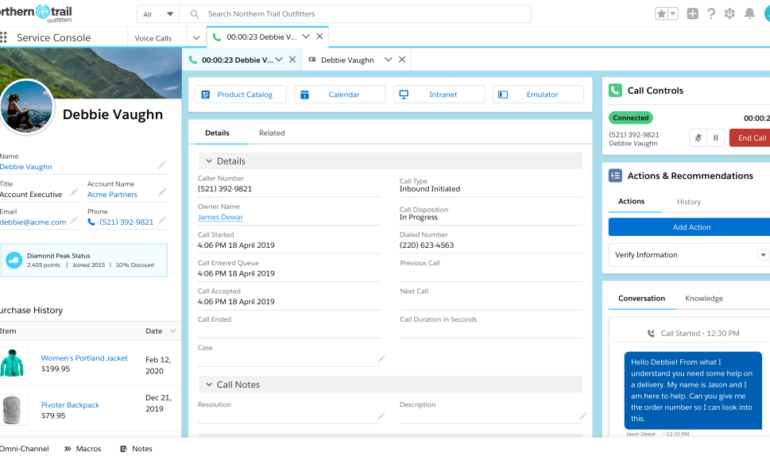
Have you ever considered what your utility customers go through when trying to resolve an issue? Imagine being a customer facing a higher-than-expected bill. You navigate the website for answers but find none. Frustrated, you call customer service, enduring the automated phone system and long hold times. Once connected, you must repeat your information and wait while the agent figures out what you couldn’t. Eventually, the agent informs you that your bill is high because you used more energy last month and therefore still owe the billed amount. What you don’t see is the agent scrambling through multiple screens and systems to understand the bill change. Knowing the customer’s past billing history, recent weather conditions, or potential meter issues would help immensely. Lacking the necessary information frustrates customers and flusters agents. However, with artificial intelligence (AI), this experience can be greatly improved. Enter Artificial Intelligence As a utility company, each customer call adds up, and inefficient processes prolong call times and slow resolutions, impacting satisfaction. Utilities leveraging predictive analytics and generative AI are transforming the customer experience. By integrating AI into customer service, you can make the customer experience more intuitive and less frustrating. Internally, AI simplifies operations, reduces costs, and improves satisfaction for both employees and customers. What AI Can Do for Your Utility’s Customer Service AI’s capability to analyze vast amounts of data aligns perfectly with utilities’ needs — from historical usage and weather data to detecting unusual consumption spikes that often trigger customer service calls. AI can proactively send personalized notifications to customers explaining likely reasons for higher consumption before their bill arrives. It can also offer individualized recommendations and links to relevant services, programs, or rate plans, preventing calls and increasing engagement in cost-saving utility programs. Virtual assistants on your website and mobile app can understand customer questions, provide clear explanations, and deliver instant, accurate responses in natural language. AI in Utilities for Customer Service in Action Consider this scenario: as a customer, you call customer service and are greeted by a virtual agent that validates your identity and attempts to troubleshoot your issue. If unsuccessful, it transfers you to a live agent. Before connecting, the live agent sees all your relevant customer details, including what you’ve already tried on the web or mobile app. Generative AI supports the agent with a script and guides them in diagnosing and solving your issue. At the end of the call, AI drafts a call summary, updates relevant knowledge articles, and creates a follow-up email with links to recommended programs or services. Proactive communication with clear, detailed information reduces frustration and confusion, potentially resolving issues without needing a live agent. This AI-driven support enhances customer satisfaction and engagement. For the utility, AI-driven support reduces call volume, improves agent effectiveness, speeds up call resolution, lowers operational costs, and boosts agent satisfaction. Ready to Dip Your Toe into AI? We’re Here for You Embracing AI not only addresses immediate challenges but also sets the stage for a more efficient and customer-centric future in the utilities sector, creating a win-win scenario for both customers and utility companies. With AI-powered tools like Salesforce Energy and Utilities Cloud, you can recommend next best actions, provide knowledge articles to support agents and customers, and deploy chatbots for better online self-service options. These capabilities improve customer service and key performance indicators (KPIs). Implementing AI in customer service might seem daunting. Here are some initial steps to help you get started: Feeling overwhelmed? Don’t worry — we have Professional Services and AI Coaches to guide you every step of the way. Your AI journey will be structured, supported, and geared towards tangible success. Let’s embark on this journey together, enhancing efficiency, customer satisfaction, and sustainable growth in the utilities sector. Content updated August 1014. Like Related Posts Who is Salesforce? Who is Salesforce? Here is their story in their own words. From our inception, we’ve proudly embraced the identity of Read more Salesforce Marketing Cloud Transactional Emails Salesforce Marketing Cloud Transactional Emails are immediate, automated, non-promotional messages crucial to business operations and customer satisfaction, such as order Read more Salesforce Unites Einstein Analytics with Financial CRM Salesforce has unveiled a comprehensive analytics solution tailored for wealth managers, home office professionals, and retail bankers, merging its Financial Read more AI-Driven Propensity Scores AI plays a crucial role in propensity score estimation as it can discern underlying patterns between treatments and confounding variables Read more

Read More
process mining salesforce

Unlocking Salesforce Efficiency with Process Mining

The Hidden Power of Your Event Data Every click, field update, and approval in Salesforce leaves a digital footprint. Process mining transforms these breadcrumbs into actionable intelligence, revealing how your organization actually operates versus how you think it operates. Why Leading Enterprises Are Adopting Process Mining How Process Mining Revolutionizes Salesforce 1. Process X-Ray Vision Example: A medical device company discovered their quote approval process had 37 variations, with 68% bypassing compliance checks. 2. AI-Driven Optimization Engine Modern tools like Celonis and Hubbl don’t just diagnose—they prescribe: 3. Closed-Loop Improvement Top Process Mining Solutions for Salesforce Tool Key Strength Best For Celonis Enterprise-scale process intelligence Global deployments Hubbl Native Salesforce integration with AI nudges User adoption Apromore Open-source customization Technical teams Processity Compliance-focused analytics Healthcare/Finance Transformational Use Cases Sales Operations Service Cloud Health Cloud Implementation Roadmap “Process mining is like putting your Salesforce org under an MRI—you finally see all the blockages and irregularities that were invisible before.”— VP of Business Systems, Fortune 500 Tech Company Like Related Posts Who is Salesforce? Who is Salesforce? Here is their story in their own words. From our inception, we’ve proudly embraced the identity of Read more Salesforce Marketing Cloud Transactional Emails Salesforce Marketing Cloud Transactional Emails are immediate, automated, non-promotional messages crucial to business operations and customer satisfaction, such as order Read more Salesforce Unites Einstein Analytics with Financial CRM Salesforce has unveiled a comprehensive analytics solution tailored for wealth managers, home office professionals, and retail bankers, merging its Financial Read more AI-Driven Propensity Scores AI plays a crucial role in propensity score estimation as it can discern underlying patterns between treatments and confounding variables Read more

Read More
Technical Debt

Don’t Let Salesforce Technical Debt Derail Your Next Upgrade!

A well-optimized Salesforce org is the foundation of a smooth upgrade and long-term success. But like any powerful, customizable platform, Salesforce naturally accumulates technical debt—especially as your business evolves. The good news? It’s manageable—if you take the right approach. Is Your Salesforce Org Carrying Hidden Technical Debt? Just like financial debt, unchecked technical debt can slow your growth, reduce agility, and frustrate users. Partnering with a Salesforce expert can help you quickly identify and resolve issues before they escalate—saving time, money, and headaches. Signs Your Salesforce Org Has Technical Debt You don’t need to be a developer to spot the symptoms. Technical debt often impacts users first, then spreads across your business. Watch for: Behind the Scenes: Developer & Admin Struggles Admins and developers face their own battles with tech debt, including: These issues don’t just slow performance—they make every future change harder, delaying releases and limiting your ability to leverage new Salesforce features. How Does Salesforce Technical Debt Happen? Even with a skilled team, tech debt creeps in through: The result? Your team spends more time patching problems than driving innovation—whether that’s streamlining quotes, improving service, or scaling operations. How to Manage (and Reduce) Salesforce Technical Debt A structured, three-phase approach keeps your org healthy: Start with a Salesforce Health Check A technical debt assessment from a trusted Salesforce partner can uncover hidden risks and create a clear roadmap for optimization. Real-World Impact: When Technical Debt Holds You Back Imagine you’re a fast-growing outdoor retailer. Salesforce helped you scale—but now, it’s slowing you down. Your Challenges: The Solution? A Strategic Optimization Plan The Results? Keep Your Org Healthy for the Long Haul Technical debt never disappears completely—but with the right partner, you can control it, reduce it, and prevent it from derailing your growth. Why Partner with Us? At Tectonic, we don’t just fix Salesforce—we transform it into a growth engine. Our mission is to simplify processes, empower teams, and drive measurable success. Ready to optimize your Salesforce org? Let’s talk. Like Related Posts Who is Salesforce? Who is Salesforce? Here is their story in their own words. From our inception, we’ve proudly embraced the identity of Read more Salesforce Marketing Cloud Transactional Emails Salesforce Marketing Cloud Transactional Emails are immediate, automated, non-promotional messages crucial to business operations and customer satisfaction, such as order Read more Salesforce Unites Einstein Analytics with Financial CRM Salesforce has unveiled a comprehensive analytics solution tailored for wealth managers, home office professionals, and retail bankers, merging its Financial Read more AI-Driven Propensity Scores AI plays a crucial role in propensity score estimation as it can discern underlying patterns between treatments and confounding variables Read more

Read More
Salesforce Data Cloud

Salesforce Data Cloud – The Ultimate Guide to Unified Customer Intelligence

Why Salesforce Data Cloud is Transforming Business Operations In today’s digital-first economy, customer data is your most valuable asset—if you can harness it effectively. Salesforce Data Cloud revolutionizes how enterprises unify, analyze, and activate customer data across every touchpoint. 5 Key Business Transformations The Data Cloud Advantage: Beyond Traditional CDPs Unlike legacy customer data platforms, Salesforce Data Cloud delivers: Feature Traditional Solutions Salesforce Data Cloud Data Integration Manual ETL processes Real-time harmonization AI Capabilities Basic segmentation Predictive insights & recommendations Activation Limited channel support Native Salesforce app integration Scalability Fixed data models Elastic cloud infrastructure Total Cost Hidden implementation fees Transparent consumption model Proven Results Across Industries Financial Services Healthcare Retail Implementation Roadmap Phase 1: Foundation (Weeks 1-4) Phase 2: Activation (Weeks 5-8) Phase 3: Scaling (Ongoing) Overcoming Common Challenges “Our data is too messy”→ Automated data quality tools clean and standardize information during ingestion “We can’t afford another platform”→ Consumption-based pricing starts at $25K/year with proven 3-5X ROI “Our team isn’t technical enough”→ No-code tools like Flow Builder enable business user configuration The Future of Data-Driven Business As AI reshapes customer expectations, Salesforce Data Cloud provides the essential infrastructure to: Leading organizations are already achieving: Next Steps for Your Data Transformation “Companies using Data Cloud see 47% faster decision-making and 32% higher customer satisfaction scores within 6 months.” – Forrester Consulting Study Unlock your data’s full potential. Contact our specialists today to begin your assessment. Like Related Posts Who is Salesforce? Who is Salesforce? Here is their story in their own words. From our inception, we’ve proudly embraced the identity of Read more Salesforce Marketing Cloud Transactional Emails Salesforce Marketing Cloud Transactional Emails are immediate, automated, non-promotional messages crucial to business operations and customer satisfaction, such as order Read more Salesforce Unites Einstein Analytics with Financial CRM Salesforce has unveiled a comprehensive analytics solution tailored for wealth managers, home office professionals, and retail bankers, merging its Financial Read more AI-Driven Propensity Scores AI plays a crucial role in propensity score estimation as it can discern underlying patterns between treatments and confounding variables Read more
Read More
Salesforce Service Cloud

Differences Between Salesforce Sales Cloud and Salesforce Service Cloud Explained

Salesforce Sales Cloud focuses on the sales process, while Salesforce Service Cloud is dedicated to customer service and support. Sales Cloud is designed for managing leads, opportunities, and sales forecasts, whereas Service Cloud is tailored for handling customer inquiries and cases. Both Sales Cloud and Service Cloud share critical features as they are built on the core Salesforce Platform. If your business primarily emphasizes sales, Sales Cloud is the ideal choice. If your focus is more on customer service, then Service Cloud is the preferred option. For businesses involved in both sales and customer service, both Sales Cloud and Service Cloud may be the best Salesforce solution. Difference Between Sales Cloud and Service Cloud: Sales Cloud streamlines sales and marketing efforts, focusing on lead management and increasing sales. Service Cloud helps support agents provide excellent customer service, resolving issues proactively. Functions Included in Service Cloud but not in Sales Cloud: Service Cloud includes specialized functions for customer support, such as omnichannel case routing, Web-to-Case and Email-to-Case conversion, and configurable assignment rules to streamline support agents’ work. Sales Cloud Features: Service Cloud Features: Agent Productivity (Service Cloud): Call Center Management (Service Cloud): Live Chat (Service Cloud): Customer Portal (Service Cloud): Ticket Management (Service Cloud): Like2 Related Posts Who is Salesforce? Who is Salesforce? Here is their story in their own words. From our inception, we’ve proudly embraced the identity of Read more Salesforce Marketing Cloud Transactional Emails Salesforce Marketing Cloud Transactional Emails are immediate, automated, non-promotional messages crucial to business operations and customer satisfaction, such as order Read more Salesforce Unites Einstein Analytics with Financial CRM Salesforce has unveiled a comprehensive analytics solution tailored for wealth managers, home office professionals, and retail bankers, merging its Financial Read more AI-Driven Propensity Scores AI plays a crucial role in propensity score estimation as it can discern underlying patterns between treatments and confounding variables Read more

Read More
Salesforce Whatsapp Integration

New Salesforce Whatsapp Integrations

Salesforce has unveiled its roadmap for upcoming WhatsApp integrations tailored for marketing and service teams. WhatsApp, a widely-used mobile messaging app with over 2.2 billion monthly active users and a daily message count exceeding 100 billion, has demonstrated remarkable international reach, fostering instant and effective communication across borders without reliance on local telecom providers. New Salesforce Whatsapp Integrations While WhatsApp integration was not previously available as a standard feature in Salesforce, the recent partnership announcement at Dreamforce ’22 prompted swift action. The integration will harness the WhatsApp Business Platform API, a cloud-based service provided by Meta (WhatsApp’s owner) for businesses at no cost in 2022. This API enhances end-to-end experiences, streamlining scalable business processes. For Salesforce + WhatsApp in Service: WhatsApp for Service can be utilized through Digital Engagement, an add-on for Service Cloud. Also Salesforce’s Contact Center for Communications within Communications Cloud. WhatsApp for Service Cloud is expected to be generally available (GA) starting March 16, 2023. For Salesforce + WhatsApp in Marketing: The WhatsApp for Marketing Cloud Rich Media support is anticipated to be generally available (GA) in the second half of 2023. As consumer demand for WhatsApp continues to surge, specialized integrations, like those tailored for Salesforce. By address the growing need for organizations to connect WhatsApp with their business-critical systems. The collaboration underscores Salesforce’s commitment to meeting evolving communication demands and leveraging the popularity of WhatsApp for enhanced customer interactions. Struggling to integrate WhatsApp in your Salesforce ecosystem? Tectonic can help. Like2 Related Posts Who is Salesforce? Who is Salesforce? Here is their story in their own words. From our inception, we’ve proudly embraced the identity of Read more Salesforce Marketing Cloud Transactional Emails Salesforce Marketing Cloud Transactional Emails are immediate, automated, non-promotional messages crucial to business operations and customer satisfaction, such as order Read more Salesforce Unites Einstein Analytics with Financial CRM Salesforce has unveiled a comprehensive analytics solution tailored for wealth managers, home office professionals, and retail bankers, merging its Financial Read more AI-Driven Propensity Scores AI plays a crucial role in propensity score estimation as it can discern underlying patterns between treatments and confounding variables Read more
Read More
Salesforce Marketing Cloud

Custom Preference Center in Salesforce Marketing Cloud

Improve your customer relationships by seamlessly integrating the Salesforce core Individual object with the Marketing Cloud profile center and subscription center when creating a custom preference center. Consider the following design considerations to optimize this process: Understanding the Preference Center: A preference center serves as a centralized contact management tool, empowering customers to: Customizing a Preference Center: As the dynamics of the relationship between a company and its customers evolve over time, influencing customer contact preferences, businesses should: Key Instances When a Preference Center Is Crucial: Common Data Considerations: Evaluate hosting options, considering platforms such as SFMC, EHI, Lacek, or Salesforce Experience Cloud. Address data model concerns by determining: Contact Governance: Contact governance involves guiding principles for enterprise-wide data management and contact strategy. To ensure a customer-first approach and streamline data management, consider: Creating a Custom Preference Center: Engage marketing and technology teams for segmentation, language, and channel considerations. Even with light initial adoption, align goals and priorities across brands to move into gathering technical requirements and scoping the project. SFMC Custom Preference Center: In Salesforce Marketing Cloud (SFMC), a custom preference center allows subscribers to choose the type and frequency of email messages they wish to receive, enabling them to “opt down” instead of unsubscribing completely. Importance of Preference Management: Preference management in marketing cloud is crucial for: Like3 Related Posts Who is Salesforce? Who is Salesforce? Here is their story in their own words. From our inception, we’ve proudly embraced the identity of Read more Salesforce Marketing Cloud Transactional Emails Salesforce Marketing Cloud Transactional Emails are immediate, automated, non-promotional messages crucial to business operations and customer satisfaction, such as order Read more Salesforce Unites Einstein Analytics with Financial CRM Salesforce has unveiled a comprehensive analytics solution tailored for wealth managers, home office professionals, and retail bankers, merging its Financial Read more AI-Driven Propensity Scores AI plays a crucial role in propensity score estimation as it can discern underlying patterns between treatments and confounding variables Read more

Read More

Digital Marketing Roadmap

Digital transformation is becoming a mantra in business, but how do you embark on this journey? What is the goal? What does it look like? Begin with a digital marketing roadmap. What is the roadmap for digital marketing? A digital marketing roadmap lays out your major areas of focus and ensures iterations stay grounded in that strategy. As you build your digital marketing roadmap, remember the goal is to facilitate: Alignment: A strategy-driven roadmap rallies the team around the work that needs to be done. What are the four phases of digital marketing? Awareness – Content focused on educating your audience. Evaluation – Customers determine whether they need your product. Conversion – Reasons to buy your product. Delight – Keeping your audience engaged. The initial draft is likely straightforward, conceived by visionaries in your organization, outlining the roadmap’s initial steps: This initial draft is a good start but needs refinement before presentation to management for buy-in. The key is to make metrics SMART, following the framework proposed by management theorist Peter F. Drucker: Now, let’s transform the draft into a presentation-worthy strategic roadmap: Strategic Plan Vision Statement: Provide a seamless omnichannel customer experience to become the number 1 seller of our industry. This refined roadmap is more achievable, being both measurable and time-bound. For added effectiveness, consider SMARTER goals, where “E” stands for engagement evaluator and “R” stands for reward. Have an evaluator determine goal achievement and showcase how it impacts the organization in the long run. What are the 5 key elements of digital marketing? The five most important elements of a digital campaign consist of mobile considerations, organic search, social media marketing, content marketing and lead nurturing. All of these elements combined make up a cohesive digital marketing strategy. What is 4Ps vs the 4Cs of digital marketing? 4Ps is Product, Price, Place, and Promotion. On other hand 4Cs is Customer Value, Cost, Conveniece, and Communication. 4Ps is more company centered in other hand 4Cs is more customer focused. Note: For expert assistance with your assessment and strategic roadmap, contact your account executive at Tectonic to explore how our Salesforce team can assist with your planning. Once completed, revisit and tweak your roadmap to ensure customer experience is at its core and goals are SMARTER. Like Related Posts Who is Salesforce? Who is Salesforce? Here is their story in their own words. From our inception, we’ve proudly embraced the identity of Read more Salesforce Marketing Cloud Transactional Emails Salesforce Marketing Cloud Transactional Emails are immediate, automated, non-promotional messages crucial to business operations and customer satisfaction, such as order Read more Salesforce Unites Einstein Analytics with Financial CRM Salesforce has unveiled a comprehensive analytics solution tailored for wealth managers, home office professionals, and retail bankers, merging its Financial Read more AI-Driven Propensity Scores AI plays a crucial role in propensity score estimation as it can discern underlying patterns between treatments and confounding variables Read more

Read More
gettectonic.com