Salesforce Einstein Archives - gettectonic.com - Page 7
Salesforce AI

Salesforce Einstein and Social Studio

The digital era (sometimes considered the third industrial revolution) has transformed the dynamics of customer-business interactions, demanding a proactive approach to customer engagement across diverse channels. Navigating this ever-evolving world is essential for business success, and Social Studio is a valuable asset in this endeavor. Social Studio, in conjunction with Einstein AI, plays a pivotal role in achieving social media success. Recognizing the significance of social media in shaping brand identity and fostering customer relationships, marketers are tasked with maintaining an active and responsive presence across various social media platforms. This challenge is met by Social Studio, offering a centralized hub for comprehensive social media management. This platform facilitates content planning and publication, team collaboration, content approval, audience engagement, and performance analysis. Equipped with advanced scheduling tools, user-friendly content creation features, and customizable approval rules, Social Studio ensures the safeguarding of your brand’s integrity across multiple platforms and messaging. Notably, Social Studio seamlessly integrates with Salesforce Marketing Cloud, providing an all-encompassing solution for efficient social media management. Its capabilities extend to user role management, image classification through Einstein Vision, and process automation using macros. With Social Studio, users gain access to a unified platform for content creation, scheduling, and monitoring, audience interaction, and performance analysis. Whether collaborating within a team or managing multiple accounts, Social Studio streamlines social media efforts, empowering users to achieve their goals. Embrace the advantages of this robust tool for an enhanced social media experience! Social Studio is a one-stop solution to manage, schedule, create, and monitor posts. You can organize posts by brand, region, or multiple teams and individuals in a unified interface. Social Studio offers powerful real-time publishing and engagement. Social Studio offers powerful real-time publishing and engagement platform for content marketers, plus the comprehensive content performance by social network and time frame. A single interface offers a fully customizable team-based collaboration platform that analyzes channel and content performance. Analyze current trends and recommend new content ideas. With Social Studio you can: Social Studio Components Social Studio is made up of these components: Note: Salesforce will sundown Social Studio on November 18, 2024, but some users will lose access before then if their contract expires sooner.  Salesforce recommends retrieving your Social Studio data at least 90 days before the Order End Date of your Marketing Cloud Social Studio Product(s) or November 18, 2024, whichever is sooner.  The digital, or third industrial revolution is the shift from mechanical and analogue electronic technologies from the Industrial Revolution towards digital electronics which began in the latter half of the 20th century.  This was prompted with the adoption and evolution of digital computers. (source) Like Related Posts Who is Salesforce? Who is Salesforce? Here is their story in their own words. From our inception, we’ve proudly embraced the identity of Read more Salesforce Marketing Cloud Transactional Emails Salesforce Marketing Cloud Transactional Emails are immediate, automated, non-promotional messages crucial to business operations and customer satisfaction, such as order Read more Salesforce Unites Einstein Analytics with Financial CRM Salesforce has unveiled a comprehensive analytics solution tailored for wealth managers, home office professionals, and retail bankers, merging its Financial Read more AI-Driven Propensity Scores AI plays a crucial role in propensity score estimation as it can discern underlying patterns between treatments and confounding variables Read more

Read More
Salesforce Sales Cloud

Salesforce Sales Cloud GPT

What is Salesforce Sales Cloud GPT? Salesforce’s Einstein GPT is a robust AI tool that seamlessly integrates both public and private AI models with CRM data. This unique synergy allows users to articulate natural-language queries directly within the Salesforce CRM environment, resulting in continuously adapted AI-generated content tailored to evolving customer information and requirements. Salesforce Sales Cloud GPT The suite encompasses a suite of powerful Artificial Intelligence (AI) products, including the Einstein service, the workplace-messaging app Slack, and the data analysis software Tableau. Notably, it unveils a compelling array of natural language tools slated for release in 2023, such as Sales GPT for personalized emails, Service GPT for service messages and chatbots, and Marketing GPT for refined audience targeting. Furthermore, the AI Cloud is meticulously crafted to host extensive language models from various providers such as AWS, Anthropic, and Cohere. Salesforce’s commitment to AI startups is further underscored by a substantial $500 million injection into its venture capital fund. Impact on Sales Cloud with AI and EinsteinGPT: Sales Cloud undergoes a transformative impact through AI, notably EinsteinGPT. Anchored in principles of Trust, Security, and Privacy, Salesforce introduces the Einstein Trust Layer within its AI Cloud offering to assuage privacy concerns. This layer ensures adaptability and transparency while upholding stringent standards for data privacy, security, and compliance. EinsteinGPT for Sales Cloud emerges as a game-changing innovation, serving as a personalized assistant within Salesforce CRM to streamline sales processes. Leveraging Generative AI, it transcends mere data analysis by generating novel content, ideas, and approaches. Key features encompass Einstein GPT, Einstein Conversation Insights, and Einstein Relationship Insights. Industries Experience Tangible Impact: Salesforce’s substantial investments in AI are reshaping the landscape of sales and customer engagement. As EinsteinGPT becomes an integral part of the platform, the anticipation of new and innovative use cases signals a significant leap forward in AI accessibility. Tectonic is please to announce our Sales Cloud Implementation Solutions. Like1 Related Posts Who is Salesforce? Who is Salesforce? Here is their story in their own words. From our inception, we’ve proudly embraced the identity of Read more Salesforce Marketing Cloud Transactional Emails Salesforce Marketing Cloud Transactional Emails are immediate, automated, non-promotional messages crucial to business operations and customer satisfaction, such as order Read more Salesforce Unites Einstein Analytics with Financial CRM Salesforce has unveiled a comprehensive analytics solution tailored for wealth managers, home office professionals, and retail bankers, merging its Financial Read more AI-Driven Propensity Scores AI plays a crucial role in propensity score estimation as it can discern underlying patterns between treatments and confounding variables Read more
Read More

Layers of the AI Stack

The AI stack refers to the layered architecture of technologies and components that work together to build, deploy, and manage artificial intelligence (AI) systems. Each layer of the stack plays a critical role in enabling AI capabilities, from data collection to model deployment and beyond. Here’s a breakdown of the key layers of the AI stack: 1. Data Layer The foundation of any AI system is data. This layer involves collecting, storing, and managing the data required to train and operate AI models. Key Components: 2. Infrastructure Layer This layer provides the computational power and hardware needed to process data and run AI models. Key Components: 3. Framework and Tools Layer This layer includes the software frameworks and tools used to build, train, and optimize AI models. Key Components: 4. Model Layer This is the core layer where AI models are developed, trained, and fine-tuned. Key Components: 5. Application Layer This layer focuses on deploying AI models into real-world applications and integrating them with existing systems. Key Components: 6. Orchestration and Management Layer This layer ensures that AI systems are scalable, reliable, and efficient in production environments. Key Components: 7. Business Layer This layer focuses on the business value of AI, including use cases, ROI, and ethical considerations. Key Components: 8. Ecosystem Layer This layer includes the external tools, services, and communities that support AI development and deployment. Key Components: How the Layers Work Together Why the AI Stack Matters The AI stack provides a structured approach to building and deploying AI systems. By understanding and optimizing each layer, organizations can: Conclusion The AI stack is a comprehensive framework that enables organizations to harness the power of AI effectively. By mastering each layer—from data collection to business value—you can build robust, scalable, and impactful AI solutions. Whether you’re a startup or an enterprise, understanding the AI stack is key to staying competitive in the age of artificial intelligence. Content updated March 2025. Like Related Posts Who is Salesforce? Who is Salesforce? Here is their story in their own words. From our inception, we’ve proudly embraced the identity of Read more Salesforce Marketing Cloud Transactional Emails Salesforce Marketing Cloud Transactional Emails are immediate, automated, non-promotional messages crucial to business operations and customer satisfaction, such as order Read more Salesforce Unites Einstein Analytics with Financial CRM Salesforce has unveiled a comprehensive analytics solution tailored for wealth managers, home office professionals, and retail bankers, merging its Financial Read more AI-Driven Propensity Scores AI plays a crucial role in propensity score estimation as it can discern underlying patterns between treatments and confounding variables Read more

Read More
Feedback Management

Einstein for Feedback Management

Einstein for Feedback Management: AI-Driven Insights for Smarter Decisions Salesforce introduces Einstein for Feedback Management, a next-generation solution that leverages generative AI to revolutionize how businesses collect, analyze, and act on customer and employee feedback. AI-Optimized Surveys for Higher Engagement ✔ Effortless Survey Creation – Generate tailored surveys in seconds using AI-powered question suggestions.✔ Personalized Questioning – Adapt surveys dynamically based on audience demographics and past interactions.✔ Higher Response Rates – Optimize survey length, tone, and structure to maximize participation. Break Language Barriers with AI-Powered Translations ✔ Global Reach – Instantly translate surveys into multiple languages while preserving meaning and cultural relevance.✔ Improved Accuracy – AI ensures high-quality translations, eliminating inconsistencies in multilingual feedback. Seamless Integration with Salesforce Einstein for Feedback Management automatically syncs with Salesforce data to:✔ Pre-fill surveys with known customer details for hyper-personalized experiences.✔ Auto-update CRM records with real-time feedback, eliminating manual data entry.✔ Trigger automated follow-ups (e.g., service tickets, loyalty rewards) based on responses. End-to-End Feedback Intelligence ✔ Omnichannel Distribution – Deploy surveys via email, chatbots, service portals, and more.✔ Journey Analytics – Map feedback across the entire customer lifecycle for deeper insights.✔ NPS & CSAT Tracking – Monitor satisfaction trends and identify improvement areas.✔ AI-Powered Dashboards – Get instant visualizations of feedback trends with Einstein Analytics. Why Feedback Management Matters Now According to Salesforce’s State of the Connected Customer Report: Ashish Kothari, SVP of Product Management at Salesforce Industries, emphasizes: “Real-time feedback is the key to unlocking personalized experiences. As customer expectations evolve, businesses need agile tools to capture and act on insights instantly. Einstein for Feedback Management turns raw data into actionable intelligence—helping companies make smarter decisions at every touchpoint.” The Future of Intelligent Feedback With AI-driven automation, seamless CRM integration, and global scalability, Einstein for Feedback Management empowers businesses to:🔹 Close the experience gap by understanding customer needs in real time.🔹 Drive operational efficiency with automated data capture and workflows.🔹 Build loyalty by acting on feedback at scale. Ready to transform feedback into action? Learn more! Part of the Salesforce Einstein 1 Platform—where AI meets CRM to deliver smarter, faster outcomes. Content updated March 2024. Like Related Posts Who is Salesforce? Who is Salesforce? Here is their story in their own words. From our inception, we’ve proudly embraced the identity of Read more Salesforce Marketing Cloud Transactional Emails Salesforce Marketing Cloud Transactional Emails are immediate, automated, non-promotional messages crucial to business operations and customer satisfaction, such as order Read more Salesforce Unites Einstein Analytics with Financial CRM Salesforce has unveiled a comprehensive analytics solution tailored for wealth managers, home office professionals, and retail bankers, merging its Financial Read more AI-Driven Propensity Scores AI plays a crucial role in propensity score estimation as it can discern underlying patterns between treatments and confounding variables Read more
Read More
Salesforce Flow

Einstein GPT Integration with Flow and Data Cloud Now Available

Salesforce has recently unveiled exciting new capabilities for Flow, Einstein GPT Integration with Flow and Data Cloud. Introducing Einstein GPT and Data Cloud features to its growing family of automation tools. This development empowers everyday administrators, eliminating the need for extensive engineering teams to harness large datasets for automation purposes. The groundbreaking aspect lies in the ability to achieve this in real-time, using a user-friendly interface without the need for coding. Introduction to Einstein GPT: Einstein GPT builds upon ChatGPT technology, combining public and private AI models with CRM data within Salesforce. This allows users to pose natural-language prompts directly within Salesforce CRM, receiving AI-generated content that adapts continuously to changing customer information and needs. The learning capability of Einstein GPT ensures ongoing improvement based on user input, aligning with best practices. Einstein GPT for Flow: When integrated with Salesforce Flow, Einstein GPT enables users to create and modify automations through a conversational interface, simplifying the flow creation process significantly. This fusion lowers barriers for non-technical users, enhancing the overall experience with Flow Builder and ensuring adherence to best practices. Key benefits of Einstein GPT for Flow include: Pricing details for Einstein GPT products are pending confirmation, and Salesforce will soon announce pilot program dates to broaden accessibility. Data Cloud for Flow: Introduced at Dreamforce 2022, Salesforce Data Cloud, formerly Genie, facilitates highly personalized customer experiences in real-time. Serving as a command center for customer data, Data Cloud integrates real-time data streams with Salesforce data, powering Flow with actionable insights. By combining Data Cloud with Flow, users can automate complex workflows and trigger actions based on real-time changes without the need for extensive IT involvement. This approach streamlines the process of designing, building, and testing custom integrations, reducing the burden on IT teams. Key advantages of Data Cloud for Flow include: These announcements bring forth transformative capabilities, making data utilization more accessible and streamlining the automation process within Salesforce. The combination of Einstein GPT and Data Cloud for Flow opens up possibilities for creating personalized and interconnected customer experiences across different sectors. Like1 Related Posts Who is Salesforce? Who is Salesforce? Here is their story in their own words. From our inception, we’ve proudly embraced the identity of Read more Salesforce Marketing Cloud Transactional Emails Salesforce Marketing Cloud Transactional Emails are immediate, automated, non-promotional messages crucial to business operations and customer satisfaction, such as order Read more Salesforce Unites Einstein Analytics with Financial CRM Salesforce has unveiled a comprehensive analytics solution tailored for wealth managers, home office professionals, and retail bankers, merging its Financial Read more AI-Driven Propensity Scores AI plays a crucial role in propensity score estimation as it can discern underlying patterns between treatments and confounding variables Read more

Read More
Sales Cloud Einstein

Einstein Activity Capture

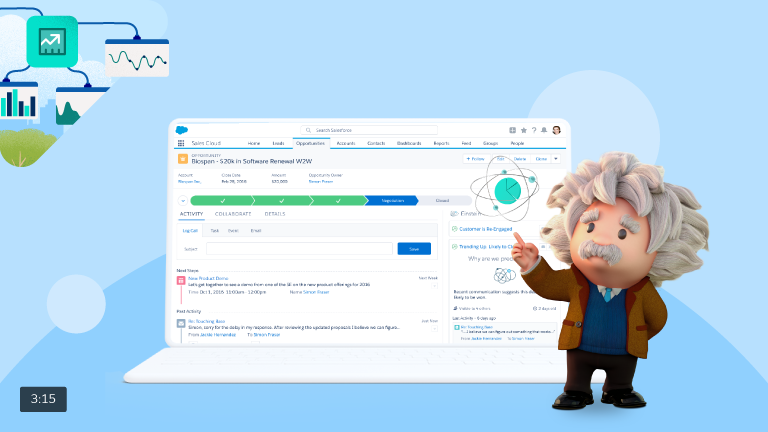
Einstein Activity Capture is a productivity-boosting tool that helps keep data between Salesforce and your email and calendar applications up to date. Note: Starting in late 2023, existing EAC services and data are migrating to Hyperforce. What is the difference between Salesforce Inbox and EAC? Salesforce Inbox excels in providing a unified email and calendar management interface, while EAC automates activity tracking and delivers AI-driven insights. Assess your specific sales requirements, budget, and preferences to determine which solution aligns best with your needs. What is the difference between lightning sync and Einstein activity capture? EAC has the same functionality as Lightning Sync, but it also automatically logs emails (both incoming and outgoing) in addition to events. EAC works in the background as well, so no user intervention is required. Does Einstein activity capture automatically log emails? Einstein Activity Capture (EAC) is part of the Sales Cloud family. It uses the power of AI to automatically log events and emails against their respective Salesforce records and can also sync Contacts from Gmail or Outlook. Why use Einstein activity capture? EAC is a productivity-boosting tool that helps keep data between Salesforce and your email and calendar applications up to date. How long does EAC store emails? The default is 24 months. The amount can range from 3 months to 5 years. How do I delete emails from EAC? To delete activity by email address: Does EAC sync contacts? EAC can sync up to 50,000 contacts per user. An additional non-syncing contact is picked up for sync only when one of the 50,000 stops syncing. What is the difference between EAC and Gmail integration? The main difference between these two is that Salesforce Gmail integration and Salesforce Inbox are both designed to providing users with Salesforce data and functionality within their email interface, while EAC focuses on automating data entry. What is the limit of Einstein activity capture? If you have only standard EAC users, a maximum of 6 months of captured activity data is stored and displayed on the activity timeline. Like1 Related Posts Who is Salesforce? Who is Salesforce? Here is their story in their own words. From our inception, we’ve proudly embraced the identity of Read more Salesforce Marketing Cloud Transactional Emails Salesforce Marketing Cloud Transactional Emails are immediate, automated, non-promotional messages crucial to business operations and customer satisfaction, such as order Read more Salesforce Unites Einstein Analytics with Financial CRM Salesforce has unveiled a comprehensive analytics solution tailored for wealth managers, home office professionals, and retail bankers, merging its Financial Read more AI-Driven Propensity Scores AI plays a crucial role in propensity score estimation as it can discern underlying patterns between treatments and confounding variables Read more
Read More
Sales Cloud Einstein

Salesforce Einstein Explained

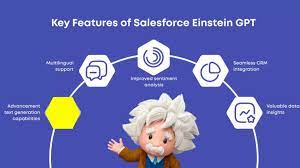
Einstein serves as Salesforce’s integrated AI layer, intricately woven into nearly every Salesforce Cloud. Salesforce Einstein Explained. While certain features, like Opportunity Scoring in Salesforce, are now offered at no cost, many Einstein functionalities are premium add-ons for essential Salesforce products like Sales, Service, Commerce, and Marketing Cloud. A notable development came in March 2023 when Salesforce introduced Einstein GPT, an extension of the Einstein product. This groundbreaking application leverages the ChatGPT platform from OpenAI, renowned for its widespread popularity, and is anticipated to be released later this year. Thereby incorporating generative AI into many Salesforce cloud features. Salesforce AI delivers trusted, extensible AI grounded in the fabric of our Platform. Utilize our AI in your customer data to create customizable, predictive, and generative AI experiences to fit all your business needs safely. Bring conversational AI to any workflow, user, department, and industry with Einstein. Salesforce Einstein is the only comprehensive Artificial Intelligence for CRM. It is data ready to work in your Salesforce org and clouds. Einstein is an integrated set of AI technologies that make the Customer Success Platform smarter. Einstein is the only comprehensive AI for CRM. It is: Einstein enables you to become an AI-first company so you can get smarter and more predictive about your customers. What can you do with Einstein? Drive productivity and personalization with predictive and generative AI across the Customer 360 with Salesforce Einstein. Create and deploy assistive AI experiences natively in Salesforce, allowing your customers and employees to converse directly with Einstein to solve issues faster and work smarter. Empower sellers, agents, marketers, and more with AI tools safely grounded in your customer data to make every customer experience more impactful. Build and customize a conversational AI assistant for CRM. Einstein Copilot is a trusted, generative-AI powered assistant built into the user experience of every Salesforce application. Whether employee-facing or customer-facing, Einstein Copilot can automatically reason through tasks based on pre-built skills. Use prompts, APIs, apex, and more to customize your own AI assistant. Like2 Related Posts Who is Salesforce? Who is Salesforce? Here is their story in their own words. From our inception, we’ve proudly embraced the identity of Read more Salesforce Marketing Cloud Transactional Emails Salesforce Marketing Cloud Transactional Emails are immediate, automated, non-promotional messages crucial to business operations and customer satisfaction, such as order Read more Salesforce Unites Einstein Analytics with Financial CRM Salesforce has unveiled a comprehensive analytics solution tailored for wealth managers, home office professionals, and retail bankers, merging its Financial Read more AI-Driven Propensity Scores AI plays a crucial role in propensity score estimation as it can discern underlying patterns between treatments and confounding variables Read more

Read More
Salesforce Service Cloud Einstein

Salesforce Service Cloud Einstein

Einstein for Service is a robust suite of time-saving Artificial Intelligence features designed to empower agents in delivering exceptional customer service experiences. Salesforce Service Cloud Einstein-learn more. Customer service has evolved from being a cost center to a growth driver, and leading companies are prioritizing customer service to increase brand loyalty. In Service Cloud Einstein, various AI technologies, such as Machine Learning (ML), deep learning, predictive analytics, Natural Language Processing (NLP), and smart data discovery, work collaboratively to enhance customer support, providing faster and better service. Salesforce Einstein, recognized as the world’s first “generative AI” built for CRM, seamlessly integrates into multiple Salesforce products, including Marketing Cloud, Sales Cloud, and Service Cloud. Sales Cloud incorporates Einstein in the form of eight essential tools: Salesforce Einstein, since its inception in 2016, has been at the forefront of CRM AI technology, delivering personalized and predictive experiences for enhanced professionalism. Salesforce Service Cloud is a CRM platform focused on providing service and support to business customers. It is an extension of the Sales Cloud product tailored for sales professionals. Service Cloud Einstein is utilized by notable companies like Thomson Reuters, Southern Glazer’s Wine and Spirits, Cisco, and Skillsoft. Service Cloud Einstein benefits businesses by providing efficient customer service, with Einstein GPT responding promptly to inquiries, offering precise responses, enhancing customer satisfaction, and reducing resolution time. Studies show that in the same time 3 customers could be serviced before Service Cloud Einstein, now ten can be taken care of. The difference between Einstein GPT and ChatGPT lies in their design, with Einstein GPT specifically tailored for Salesforce users and clouds, while ChatGPT is a more versatile model for general use. Einstein is available for free with Salesforce’s Developer Edition, providing access to most platform features for building and testing custom applications and integrations using Einstein. Salesforce Sales Cloud and Service Cloud differ in their focus, with Sales Cloud concentrating on sales processes, while Service Cloud centers around customer service and support. Einstein remains the overarching AI brand for Salesforce, present across the portfolio, including within Tableau. Einstein Discovery is available as part of Tableau CRM Plus or through Einstein Predictions. Are you ready to explore the power of Einstein in your Salesforce Service Cloud implementation? Contact Tectonic today. Tectonic is please to announce Salesforce Service Cloud Implementation Solutions. Content updated January 2024. Like1 Related Posts Who is Salesforce? Who is Salesforce? Here is their story in their own words. From our inception, we’ve proudly embraced the identity of Read more Salesforce Marketing Cloud Transactional Emails Salesforce Marketing Cloud Transactional Emails are immediate, automated, non-promotional messages crucial to business operations and customer satisfaction, such as order Read more Salesforce Unites Einstein Analytics with Financial CRM Salesforce has unveiled a comprehensive analytics solution tailored for wealth managers, home office professionals, and retail bankers, merging its Financial Read more AI-Driven Propensity Scores AI plays a crucial role in propensity score estimation as it can discern underlying patterns between treatments and confounding variables Read more
Read More
Salesforce Solutions for Communications

Salesforce Solutions for Communications

Salesforce has recently unveiled tailored Salesforce Solutions for Communications aimed at enhancing customer experiences through advanced analytics, automation tools, and AI-driven customer service. These innovations empower providers to gain deeper insights into their customers, automate interactions, and effectively monitor customer satisfaction levels. For communication providers looking to elevate their customer service, Salesforce’s automation solutions offer significant benefits. They ensure seamless and efficient handling of every customer interaction, leading to improved satisfaction and increased loyalty. Salesforce Solutions for Communication Providers Salesforce offers a comprehensive suite of solutions specifically designed for communication providers to enhance customer experiences. This suite includes: Salesforce Customer Engagement Platform (CXP) and Tools The Salesforce Customer Engagement Platform equips communication providers with a suite of tools to enhance customer experiences, including: Salesforce Einstein AI Platform for Communication Providers The Salesforce Einstein AI Platform is tailored to improve customer experiences for communication providers by analyzing extensive datasets to identify patterns, understand customer needs, and optimize interactions, ultimately enhancing overall customer experience. Benefits of the Salesforce Customer Engagement Platform The Salesforce Customer Engagement Platform offers communication providers various benefits, including enhanced customer experience, increased sales, and improved operational efficiencies. Features such as social listening and engagement analytics enable providers to understand customer sentiment and behavior, facilitating personalized interactions and driving sales growth. New Salesforce Innovations for Communication Providers New innovations from Salesforce include analytics, AI, and prebuilt solutions that automate processes, improve customer experiences, and reduce operational costs. Integrations with WhatsApp enable richer customer engagements, personalized experiences, and automated interactions through chatbots. In conclusion, Salesforce’s solutions for communication providers represent a significant advancement in improving customer experiences, revolutionizing how providers interact with their clientele to achieve positive outcomes and business growth. Contact Tectonic today to explore Salesforce communications solutions. Like Related Posts Who is Salesforce? Who is Salesforce? Here is their story in their own words. From our inception, we’ve proudly embraced the identity of Read more Salesforce Marketing Cloud Transactional Emails Salesforce Marketing Cloud Transactional Emails are immediate, automated, non-promotional messages crucial to business operations and customer satisfaction, such as order Read more Salesforce Unites Einstein Analytics with Financial CRM Salesforce has unveiled a comprehensive analytics solution tailored for wealth managers, home office professionals, and retail bankers, merging its Financial Read more AI-Driven Propensity Scores AI plays a crucial role in propensity score estimation as it can discern underlying patterns between treatments and confounding variables Read more

Read More

Einstein License for Service Cloud

Salesforce Einstein for Service Cloud combines AI technology with customer prioritization to enhance CRM solutions and deliver superior customer service experiences. Tectonic, as a trusted Salesforce implementation partner, can assist organizations in leveraging the full potential of Salesforce Einstein for Service Cloud to revolutionize their customer service operations.

Read More
Einstein Chatbot Salesforce

Einstein Chatbot Salesforce

Salesforce users have two options for creating a chatbot: either using an external platform and integrating the final product through Salesforce Lightning, or directly developing it within Salesforce Einstein Bot. Salesforce prioritizes empowering customers to create applications without the need for coding. Einstein Chatbot Salesforce. Einstein Bots utilize Artificial Intelligence (AI) to enhance the customer service experience across various channels such as SMS, Chat, Slack, Facebook Messenger, and WhatsApp, supporting conversations in multiple languages. They offer personalized and intelligent service by leveraging AI-powered chatbots integrated directly into the CRM. With just a few clicks, users can expedite issue resolution and boost productivity by utilizing AI-generated responses or automating routine tasks with bots integrated into Salesforce data. These secure, multilingual bots can be deployed on enhanced messaging channels, including in-app, web, and third-party platforms, as well as Slack and the Einstein Bots API. Creating an Einstein Bot: Enhanced Features for Einstein Bots: Einstein Bots offer various benefits: Salesforce Einstein Chatbots provide a valuable solution for organizations aiming to streamline customer service, reduce case volume, and enhance overall customer experience across diverse channels and languages. Like Related Posts Who is Salesforce? Who is Salesforce? Here is their story in their own words. From our inception, we’ve proudly embraced the identity of Read more Salesforce Marketing Cloud Transactional Emails Salesforce Marketing Cloud Transactional Emails are immediate, automated, non-promotional messages crucial to business operations and customer satisfaction, such as order Read more Salesforce Unites Einstein Analytics with Financial CRM Salesforce has unveiled a comprehensive analytics solution tailored for wealth managers, home office professionals, and retail bankers, merging its Financial Read more AI-Driven Propensity Scores AI plays a crucial role in propensity score estimation as it can discern underlying patterns between treatments and confounding variables Read more
Read More
ChatGPT and Einstein GPT

ChatGPT and Einstein GPT

Artificial intelligence (AI) has been rapidly advancing globally, with breakthroughs captivating professionals across various sectors. One milestone that has gained significant attention is the emergence of ChatGPT, a cutting-edge language model revolutionizing the tech landscape. This development has profoundly impacted businesses relying on Salesforce for their customer relationship management (CRM) needs. In March 2023, Salesforce unveiled its latest AI innovation, Einstein GPT, promising to transform how companies engage with their clientele. In this article, we explore what Salesforce Einstein GPT entails and how it can benefit teams across diverse industries. When OpenAI introduced ChatGPT in November 2022, they didn’t expect the overwhelming response it received. Initially positioned as a “research preview,” this AI chatbot aimed to refine existing technology while soliciting feedback from users. However, ChatGPT quickly became a viral sensation, surpassing OpenAI’s expectations and prompting them to adapt to its newfound popularity. Developed on the foundation of the GPT-3.5 language model, ChatGPT was specifically tailored to facilitate engaging and accessible conversations, distinguishing it from its predecessors. Its launch attracted a diverse user base keen to explore its capabilities, prompting OpenAI to prioritize addressing potential misuse and enhancing its safety features. As ChatGPT gained traction, it caught the attention of Salesforce, a leading CRM provider. In March 2023, Salesforce unveiled Einstein GPT, its own AI innovation, poised to transform customer engagement. Built on the GPT-3 architecture and seamlessly integrated into Salesforce Clouds, Einstein GPT promised to revolutionize how businesses interact with their clientele. Einstein GPT boasts a range of features designed to personalize customer experiences and streamline workflows. From generating natural language responses to crafting personalized content and automating tasks, Einstein GPT offers versatility and value across industries. By leveraging both Einstein AI and GPT technology, businesses can unlock unprecedented efficiency and deliver superior customer experiences. Despite its success, OpenAI acknowledges the need for ongoing refinement and vigilance, emphasizing the importance of responsible deployment and transparency in the development of AI technology. Exploring Einstein GPT Salesforce presents Einstein GPT as the premier generative AI tool for CRM worldwide. Utilizing the advanced GPT-3 architecture, Einstein GPT seamlessly integrates into all Salesforce Clouds, including Tableau, MuleSoft, and Slack. This groundbreaking technology empowers users to generate natural language responses to customer inquiries, craft personalized content, and compose entire email messages on behalf of sales personnel. With its high degree of customization, Einstein GPT can be finely tuned to meet the specific needs of various industries, use cases, and customer requirements, delivering significant value to businesses of all sizes and sectors. Objectives of Salesforce AI Einstein GPT Salesforce AI Einstein GPT is designed to achieve several key objectives: Distinguishing Einstein GPT from Einstein AI Einstein GPT represents the latest evolution of Salesforce’s Einstein artificial intelligence technology. Unlike its predecessors, Einstein GPT integrates proprietary Einstein AI models with ChatGPT and other leading large language models. This integration enables users to interact with CRM data using natural language prompts, resulting in highly personalized, AI-generated content and triggering powerful automations that enhance workflows and productivity. By leveraging both Einstein AI and GPT technology, businesses can achieve unparalleled efficiency and deliver exceptional customer experiences. Features of Einstein GPT in Salesforce CRM Key features and capabilities of Salesforce Einstein chatbot GPT include: Utilizing Einstein GPT for Business Improvement Einstein GPT can be leveraged across various domains to enhance business operations: Integration with Salesforce Data Cloud Salesforce Data Cloud, a cloud-based data management system, enables real-time data aggregation from diverse sources. Einstein GPT utilizes unified customer data profiles from the Salesforce Data Cloud to personalize interactions throughout the customer journey. OpenAI on ChatGPT Methods We trained this model using Reinforcement Learning from Human Feedback (RLHF), using the same methods as InstructGPT, but with slight differences in the data collection setup. We trained an initial model using supervised fine-tuning: human AI trainers provided conversations in which they played both sides—the user and an AI assistant. We gave the trainers access to model-written suggestions to help them compose their responses. We mixed this new dialogue dataset with the InstructGPT dataset, which we transformed into a dialogue format. To create a reward model for reinforcement learning, we needed to collect comparison data, which consisted of two or more model responses ranked by quality. To collect this data, we took conversations that AI trainers had with the chatbot. We randomly selected a model-written message, sampled several alternative completions, and had AI trainers rank them. Using these reward models, we can fine-tune the model using Proximal Policy Optimization. We performed several iterations of this process. ChatGPT is fine-tuned from a model in the GPT-3.5 series, which finished training in early 2022. You can learn more about the 3.5 series here. ChatGPT and GPT-3.5 were trained on an Azure AI supercomputing infrastructure. Limitations ChatGPT and Einstein GPT Salesforce Einstein GPT signifies a significant advancement in AI technology, empowering businesses to deliver tailored customer experiences and streamline operations. With its integration into Salesforce CRM and other platforms, Einstein GPT offers unprecedented capabilities for personalized engagement and automated insights, ensuring organizations remain competitive in today’s dynamic market landscape. When OpenAI quietly launched ChatGPT in late November 2022, the San Francisco-based AI company didn’t anticipate the viral sensation it would become. Initially viewed as a “research preview,” it was meant to showcase a refined version of existing technology while gathering feedback from the public to address its flaws. However, the overwhelming success of ChatGPT caught OpenAI off guard, leading to a scramble to capitalize on its newfound popularity. ChatGPT, based on the GPT-3.5 language model, was fine-tuned to be more conversational and accessible, setting it apart from previous iterations. Its release marked a significant milestone, attracting millions of users eager to test its capabilities. OpenAI quickly realized the need to address potential misuse and improve the model’s safety features. Since its launch, ChatGPT has undergone several updates, including the implementation of adversarial training to prevent users from exploiting it (known as “jailbreaking”). This technique involves pitting multiple chatbots against each other to identify and neutralize malicious behavior. Additionally,

Read More
gettectonic.com