Salesforce Marketing Cloud Archives - gettectonic.com - Page 5
Data Cloud and Snowflake Bidrectional Data Sharing

Data Cloud and Snowflake Bidrectional Data Sharing

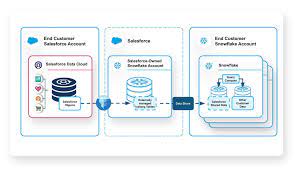
Salesforce Data Cloud and Snowflake are excited to announce that bidirectional data sharing between Snowflake, the Data Cloud company, and Salesforce Data Cloud is now generally available. In September, we introduced the ability for organizations to leverage Salesforce data directly in Snowflake via zero-ETL data sharing, enabling unified customer and business data, accelerating decision-making, and streamlining business processes. Today, we’re thrilled to share that customers can now also share Snowflake data into the Salesforce Data Cloud, using the same zero-ETL innovation to reduce friction and quickly surface powerful insights across sales, service, marketing, and commerce applications. Data Cloud and Snowflake Bidrectional Data Sharing. Data Cloud and Snowflake Bidrectional Data Sharing Enterprises generate valuable customer data within Salesforce applications, while increasingly relying on Snowflake as their preferred data platform for storing, modeling, and analyzing their full data estate. This integration between Salesforce and Snowflake minimizes friction, data latency, scale limitations, and data engineering costs associated with using these two leading platforms. The Snowflake Marketplace also offers customers the opportunity to acquire new data sets to enhance or fill gaps in their existing business data, driving innovation. By combining enterprise data and third-party data from Snowflake Marketplace with valuable customer data from Salesforce applications, organizations can unify their data and build powerful AI solutions to surface rich insights, driving superior and differentiated customer experiences. “Zero-ETL data sharing between Salesforce Data Cloud and Snowflake is game-changing. It has opened up new frontiers of data collaboration. We’re excited to see how customers are powering their customer data analytics and developing innovative AI solutions with near real-time data from Salesforce and Snowflake, generating incredible business value. Now that this integration is generally available, this kind of innovation will be broadly accessible,” says Christian Kleinerman, SVP of Product, Snowflake. Power Personalized Experiences with Salesforce and Snowflake Data sharing between Salesforce Data Cloud and Snowflake brings together holistic insights, empowering multiple customer-facing departments within any organization to create a truly robust customer 360. As Snowflake’s Chief Marketing Officer, Denise Persson, often states, a true, enterprise-wide customer 360 is the beating heart of a modern, customer-facing organization. The applicability of this integration spans various industries and unlocks new growth opportunities. For example: The bidirectional integration enables data sharing across business systems, Salesforce clouds, and operational systems, facilitating data set analysis and future action planning. This brings actionable insights and drives actions, unleashing a new level of customer experience and business productivity. Like Related Posts Who is Salesforce? Who is Salesforce? Here is their story in their own words. From our inception, we’ve proudly embraced the identity of Read more Salesforce Marketing Cloud Transactional Emails Salesforce Marketing Cloud Transactional Emails are immediate, automated, non-promotional messages crucial to business operations and customer satisfaction, such as order Read more Salesforce Unites Einstein Analytics with Financial CRM Salesforce has unveiled a comprehensive analytics solution tailored for wealth managers, home office professionals, and retail bankers, merging its Financial Read more AI-Driven Propensity Scores AI plays a crucial role in propensity score estimation as it can discern underlying patterns between treatments and confounding variables Read more

Read More
WhatsApp Integration Brings Service and Marketing Together

WhatsApp Integration Brings Service and Marketing Together

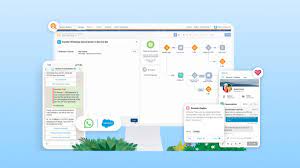
Salesforce has announced the general availability of Unified Conversations for WhatsApp, transforming one-way marketing promotions and service requests into dynamic, two-way conversations from a single WhatsApp number. WhatsApp Integration Brings Service and Marketing Together. Now, instead of managing separate threads for promotions and support, customers can receive personalized opt-in marketing promotions and individual support all within a single WhatsApp chat. This unified approach allows companies like Agibank to leverage Salesforce data from over 900 hubs within WhatsApp to deliver personalized loan proposals, resolve issues faster, and better support customers in a single conversation. Why It Matters A significant 79% of customers expect consistent interactions across departments, and 75% prefer to communicate with brands through messaging. However, businesses often fail to meet these expectations, with disconnected experiences being a top customer frustration. Salesforce Perspective “With over two billion people using WhatsApp, Salesforce’s Unified Conversations for WhatsApp enables brands to connect with customers in a unified, trusted manner,” said Steve Hammond, EVP and GM of Salesforce Marketing Cloud. “This helps brands break down internal barriers and build stronger relationships throughout the customer journey, ensuring personalized engagement at the right time and context.” Go Deeper Unified Conversations for WhatsApp is powered by Salesforce Data Cloud, allowing companies to consolidate data into Salesforce and create a unified customer profile. This shared profile provides marketers and service agents with the relevant context to deliver trusted experiences in a single chat thread. Innovation in Action Unified Conversations for WhatsApp combines marketing and service conversations, enabling: Customer Perspective Matheus Girardi, Chief Marketing and Customer Officer at Agibank, shared, “Our customers rely on WhatsApp to engage with us. Unifying our data in Salesforce for WhatsApp has improved our user experience by personalizing loan proposals, resolving concerns, and supporting customers. Salesforce’s previous integration with WhatsApp tripled our digital sales, and we are excited to do more.” Roberto Maia, Chief Information Officer at YDUQS, added, “WhatsApp is the preferred messaging app for our students across Brazil. We look forward to utilizing Unified Conversations to better engage and serve them and convert leads faster.” Availability Unified Conversations for WhatsApp is now generally available. Like Related Posts Who is Salesforce? Who is Salesforce? Here is their story in their own words. From our inception, we’ve proudly embraced the identity of Read more Salesforce Marketing Cloud Transactional Emails Salesforce Marketing Cloud Transactional Emails are immediate, automated, non-promotional messages crucial to business operations and customer satisfaction, such as order Read more Salesforce Unites Einstein Analytics with Financial CRM Salesforce has unveiled a comprehensive analytics solution tailored for wealth managers, home office professionals, and retail bankers, merging its Financial Read more AI-Driven Propensity Scores AI plays a crucial role in propensity score estimation as it can discern underlying patterns between treatments and confounding variables Read more

Read More
Why Use Marketing Cloud Mobile Connect

Why Use Marketing Cloud Mobile Connect

Understanding Mobile Connect in Marketing Cloud: Why Use Marketing Cloud Mobile Connect Why Use Marketing Cloud Mobile Connect? Mobile Connect serves as Marketing Cloud’s SMS and MMS messaging tool. It enables the sending of mass text messages either to its standard Mobile Contact list or through established Data Extensions. For Data Extensions, ensure the presence of a Phone field and a Locale field. How does Mobile Connect Work? Mobile Connect simplifies the user experience by verifying the end user through their mobile phone number. This process allows users to confirm their identity online and authorize transactions, sharing only essential personal data required for completing the transaction securely. Getting Started with Mobile Connect: Guidelines and Resources for Mobile Connect: MobileConnect Features: Why Use Marketing Cloud Mobile Connect SMS is the most underrated channel. If we consider the success rates of SMS deliverability, open rate and click rate over the past years you would understand why. Countless companies are going back to SMS in order to maintain a high frequency of engagement with their customers and reach tough geographic markets. Even with the promising future of SMS, the questions are always the same: is it easy/budget-friendly to use this channel in my marketing campaigns? Which use cases are best suited for my business objectives? Is an SMS a medium that can deliver commercial benefits, or just a transactional one? MobileConnect doesn’t actually send messages directly to the subscriber’s mobile phone, however. In order to send messages, MobileConnect pushes a message to partners, known as Aggregators, who then push the message out to the local phone Carriers via their SMS gateways, for the final delivery to the subscriber’s mobile phone. Like1 Related Posts Who is Salesforce? Who is Salesforce? Here is their story in their own words. From our inception, we’ve proudly embraced the identity of Read more Salesforce Marketing Cloud Transactional Emails Salesforce Marketing Cloud Transactional Emails are immediate, automated, non-promotional messages crucial to business operations and customer satisfaction, such as order Read more Salesforce Unites Einstein Analytics with Financial CRM Salesforce has unveiled a comprehensive analytics solution tailored for wealth managers, home office professionals, and retail bankers, merging its Financial Read more AI-Driven Propensity Scores AI plays a crucial role in propensity score estimation as it can discern underlying patterns between treatments and confounding variables Read more

Read More
Salesforce Success Story

Case Study: Healthcare Health Cloud Marketing Cloud Large Childrens Hospital

Large children’s hospital needs a usable data model and enhanced security to deliver excellent patient outcomes. Healthcare Health Cloud Marketing Cloud Large Childrens Hospital. Industry: Healthcare Client is a large children’s hospital with pediatric healthcare offering acute care. Problem: Implemented : Our solution? Results: In order to improve operations, provide physician-facing services, and move data—including PHI and PII—to the cloud, we have assisted healthcare providers in overcoming these obstacles. Salesforce offers all-inclusive solutions specifically designed to meet the demands of payers (insurance companies) and providers (healthcare organizations). Better health outcomes, more operational effectiveness, and increased patient engagement are the goals of these solutions. Salesforce solutions for the health and life sciences are tailored to the particular requirements of the medical industry. Salesforce offers digital transformation technology for health and life sciences industries. If you are considering a Salesforce healthcare implementation, contact Tectonic today. Like2 Related Posts Who is Salesforce? Who is Salesforce? Here is their story in their own words. From our inception, we’ve proudly embraced the identity of Read more Salesforce Marketing Cloud Transactional Emails Salesforce Marketing Cloud Transactional Emails are immediate, automated, non-promotional messages crucial to business operations and customer satisfaction, such as order Read more Salesforce Unites Einstein Analytics with Financial CRM Salesforce has unveiled a comprehensive analytics solution tailored for wealth managers, home office professionals, and retail bankers, merging its Financial Read more AI-Driven Propensity Scores AI plays a crucial role in propensity score estimation as it can discern underlying patterns between treatments and confounding variables Read more

Read More
Marketing Cloud Engagement

Salesforce Distributed Marketing Content

Salesforce Distributed Marketing Content empowers you to extend dynamic content to dispersed teams, fostering safe and efficient interaction with that content. Integrate one or more Distributed Marketing Content Blocks seamlessly with standard or custom content areas to facilitate collaborative moments within branded email messages. For instance, enable users to personalize holiday cards with personal notes and images or provide context to market update messages. Leverage Distributed Marketing alongside AMPscript to enable users to craft customized SMS messages. Salesforce Distributed Marketing Content While marketing teams retain control over message structure, ensuring coherence, brand alignment, and compliance, collaborative content augments this framework, granting distributed teams flexibility within set parameters – a concept Salesforce refers to as “flexibility within a framework.” The usage of Distributed Marketing content is flexible and can adapt over time. Since each message is independently configurable, you can initiate with existing assets and introduce collaborative elements as needed. Please note that Distributed Marketing employs JavaScript ES6 for message personalization, requiring the disabling of Prevent Cross-Site Tracking in Safari and third-party cookies in Chrome. Enable Email Personalization with Distributed Marketing Content Blocks Utilize Distributed Marketing Content Blocks within Marketing Cloud to create personalized sections of content for Distributed Marketing users. Enable Custom SMS Messages Incorporate AMPscript into SMS messages to empower users to compose and dispatch custom SMS messages through Distributed Marketing. Personalization Data Extension Distributed Marketing establishes personalization data extensions in Marketing Cloud to store user-entered personalization data for email messages. A personalization data extension is automatically generated when connecting a journey to a campaign or enabling a journey for quick send. Custom SMS messages are not stored here but are accessible in the journey’s event data extension. Legacy Personalization While Legacy Personalization options like Introduction, Conclusion, and Greeting are available, their usage will be supported until End of Support is announced. Like1 Related Posts Who is Salesforce? Who is Salesforce? Here is their story in their own words. From our inception, we’ve proudly embraced the identity of Read more Salesforce Marketing Cloud Transactional Emails Salesforce Marketing Cloud Transactional Emails are immediate, automated, non-promotional messages crucial to business operations and customer satisfaction, such as order Read more Salesforce Unites Einstein Analytics with Financial CRM Salesforce has unveiled a comprehensive analytics solution tailored for wealth managers, home office professionals, and retail bankers, merging its Financial Read more AI-Driven Propensity Scores AI plays a crucial role in propensity score estimation as it can discern underlying patterns between treatments and confounding variables Read more

Read More
demand generation web use cases for personalization

Demand Generation Web Use Cases for Personalization

Utilize effective personalization techniques adopted by businesses in online campaigns to stimulate demand generation. The term “demand generation” has somewhat faded from the marketing lexicon due to the emphasis on analytics, AI, and metrics for lead conversion. However, where does personalization fit into the broader scope of demand generation? Demand generation web use cases for personalization. Personalization plays a pivotal role in various aspects of demand generation: In lead nurturing, personalization is equally vital: Moreover, personalization is instrumental in lead acquisition efforts by delivering relevant experiences to all of your prospects. To effectively implement personalization, real-time insights into individual behaviors and interactions are essential. A comprehensive personalization solution should unify data from various channels and systems, enabling seamless cross-channel personalization. This includes “stitching” together anonymous and known user profiles, integrating data with complementary systems like CRMs and marketing platforms, and facilitating real-time omni-channel personalization. The key to successful personalization lies in understanding and addressing each individual’s unique needs and preferences. By adopting a customer-centric approach and setting clear objectives aligned with business goals, organizations can leverage personalization to enhance customer experiences, boost conversion rates, and drive measurable business growth. To execute a successful personalization strategy, organizations must: By following these steps and continuously optimizing personalization efforts, organizations can build stronger customer relationships, drive business growth, and maximize marketing ROI. Website personalization serves as the starting point for many companies embarking on their personalization journey. This entails ensuring that returning visitors encounter pages tailored to their previous experiences or recent purchases. It can also involve presenting new customers with product recommendations based on their current browsing session. The return on this initial investment can be substantial, with many companies witnessing a significant increase in conversion rates, sometimes by as much as 50% or more. For instance, a site converting 2% of visitors might see that figure rise to 3%, a dream scenario for digital marketers. Moreover, this boost in conversion rates can have far-reaching effects across marketing programs, leading to a reduction in overall customer acquisition costs. Tectonic now offers Personalization Implementation Solutions. The next stage in personalization maturity involves integrating a customer’s web and email experiences. This seamless connection between two major channels for customer engagement brings organizations closer to achieving an omni-channel personalization experience. Timely and relevant follow-up messages after a customer’s website visit or purchase can deepen relationships and enhance lifetime value without significant additional marketing expenditure. Finally, the ultimate goal is to extend personalization across all channels, ensuring consistent and tailored experiences wherever customers interact with your brand. However, achieving this can be challenging due to fragmented customer data across multiple channels, teams, and systems. An effective personalization solution should consolidate and synthesize this cross-channel information by maintaining unified customer profiles and enabling real-time omni-channel personalization. Testing is a crucial aspect of successful personalization efforts, allowing organizations to optimize campaigns and maximize engagement, conversions, and revenue. A robust personalization solution should facilitate A/B testing, measuring lift over control, evaluating impacts against specific goals, and filtering results by segment. Effective website personalization lays the foundation for broader personalization efforts across channels. By seamlessly integrating web and email experiences and extending personalization to all touchpoints, organizations can deliver tailored experiences that drive engagement, loyalty, and ultimately, business growth. By Tectonic’s Salesforce Marketing Platform Architect Shannan Hearne Like1 Related Posts Who is Salesforce? Who is Salesforce? Here is their story in their own words. From our inception, we’ve proudly embraced the identity of Read more Salesforce Marketing Cloud Transactional Emails Salesforce Marketing Cloud Transactional Emails are immediate, automated, non-promotional messages crucial to business operations and customer satisfaction, such as order Read more Salesforce Unites Einstein Analytics with Financial CRM Salesforce has unveiled a comprehensive analytics solution tailored for wealth managers, home office professionals, and retail bankers, merging its Financial Read more AI-Driven Propensity Scores AI plays a crucial role in propensity score estimation as it can discern underlying patterns between treatments and confounding variables Read more

Read More
Personalization With Customized AI-Driven Journeys

Personalization With Customized AI-Driven Journeys

AI-Enabled Triggers for Guiding Customer Journeys – Personalization With Customized AI-Driven Journeys Initiate timely and relevant customer experiences that seamlessly lead individuals through their purchasing journey. Employ AI-powered decision-making to identify the most suitable next steps for customers, offering personalized suggestions based on real-time behavior, historical data, and business-specific datasets such as pricing and inventory. Deliver predefined experiences, such as browsing or cart abandonment journeys, while utilizing real-time interactions to determine the optimal content, channel, or offer for each customer. Efficiently extract insights by harnessing behavioral data and advanced analytics to visualize cross-channel customer journeys for both individuals and segments, identifying and resolving key friction points. Elevate customer acquisition, loyalty, and lifetime value by crafting personalized, omni-channel journeys that align with both customer desires and business objectives. Enable trigger-based customer journeys that facilitate immediate responses to customer actions, whether in the physical realm, such as entering a store and connecting to Wi-Fi, or in the virtual space, like visiting a shopping website. The Role of AI in Elevating the Customer Journey AI significantly contributes to heightened customer satisfaction, ultimately leading to improved retention. Address customer pain points in their preferred language and provide solutions tailored to their needs based on purchasing history and previous interactions with customer service. AI’s Influence Across Customer Journey Stages At each stage of the customer journey, AI transforms experiences by delivering personalized interactions from awareness to post-purchase. This transformation is made possible through automation, predictive analytics, and intelligent virtual agents. Transformative Impact of Generative AI on Customer Journeys Generative AI, exemplified by advanced language models like GPT-4, has the potential to revolutionize customer journeys. These models automate communication and content creation, dynamically adjusting tone and style to match customer preferences. For instance, Grammarly’s tone detector adapts communication based on the recipient’s profile and interaction history. Continuous Iteration and AI in Customer Journey Mapping In the era of digitization, AI-driven personalization surpasses traditional customer journey mapping based on a few personas. Organizations must harness AI and machine learning to create personalized journeys that enhance user experiences. The iterative improvement process involves collecting comprehensive data, utilizing AI for analysis and insights, implementing changes, and evaluating results through key performance indicators. Netflix: An AI Success Story Netflix serves as a prime example of AI success, continuously analyzing user behavior and preferences to refine content recommendation algorithms. This approach enhances personalization, leading to increased customer engagement and satisfaction. Integrating Generative AI into Existing Systems To fully capitalize on generative AI, integration into existing systems and processes is crucial. This may entail developing APIs to connect AI tools with customer relationship management (CRM) systems and content management systems. Testing and Continuous Enhancement Implementing AI-driven personalization necessitates a robust testing and evaluation process. Clearly defined key performance indicators and analytics capabilities are essential for measuring effectiveness and making continuous improvements. Like2 Related Posts Who is Salesforce? Who is Salesforce? Here is their story in their own words. From our inception, we’ve proudly embraced the identity of Read more Salesforce Marketing Cloud Transactional Emails Salesforce Marketing Cloud Transactional Emails are immediate, automated, non-promotional messages crucial to business operations and customer satisfaction, such as order Read more Salesforce Unites Einstein Analytics with Financial CRM Salesforce has unveiled a comprehensive analytics solution tailored for wealth managers, home office professionals, and retail bankers, merging its Financial Read more AI-Driven Propensity Scores AI plays a crucial role in propensity score estimation as it can discern underlying patterns between treatments and confounding variables Read more

Read More
ai powered insights

AI Powered Insights

AI-Powered Marketing Insights: Transform Data Into Action Unlock the Full Potential of Your Data with AI In today’s fast-paced marketing world, raw data alone isn’t enough—you need AI-driven insights to uncover hidden opportunities, predict customer behavior, and optimize campaigns in real time. Why AI-Powered Insights Matter ✔ Predictive Analytics – Anticipate customer actions before they happen.✔ Real-Time Optimization – Adjust strategies on the fly for maximum impact.✔ Deeper Personalization – Tailor messaging based on AI-detected patterns. Key AI Tools in Salesforce Marketing Cloud 1. Einstein Marketing Insights (EMI) 🔍 Monitor KPIs with AI-Powered Bots 2. Einstein Copy Insights ✉ Optimize Email Subject Lines with NLP 3. Einstein Lead Scoring 🎯 Prioritize High-Value Leads 4. Einstein Messaging Insights ⚠ Detect Anomalies in Real Time How to Leverage AI for Smarter Marketing Step 1: Set Clear KPIs Step 2: Test & Optimize Continuously Step 3: Act on Real-Time Alerts Step 4: Align Sales & Marketing with AI Insights The Future of Marketing is AI-Driven Companies using AI-powered insights see:📈 Higher email open rates (up to 35% improvement)🎯 Better lead prioritization (2x more conversions)⏱ Faster decision-making (real-time adjustments vs. guesswork) Ready to supercharge your marketing? Start integrating Einstein AI today and turn data into your competitive edge. 🚀 Need help setting up AI-driven insights? Contact us today. Content updated August 2024. Like Related Posts Who is Salesforce? Who is Salesforce? Here is their story in their own words. From our inception, we’ve proudly embraced the identity of Read more Salesforce Marketing Cloud Transactional Emails Salesforce Marketing Cloud Transactional Emails are immediate, automated, non-promotional messages crucial to business operations and customer satisfaction, such as order Read more Salesforce Unites Einstein Analytics with Financial CRM Salesforce has unveiled a comprehensive analytics solution tailored for wealth managers, home office professionals, and retail bankers, merging its Financial Read more AI-Driven Propensity Scores AI plays a crucial role in propensity score estimation as it can discern underlying patterns between treatments and confounding variables Read more

Read More
Marketing Cloud Growth Extends The Platform

Marketing Cloud Growth Extends The Platform

Marketing Cloud Growth extends the platform capabilities to enhance your team’s marketing endeavors. It allows you to integrate multiple data sources with Data Cloud, create content using Digital Experiences, orchestrate complex customer journeys with Flow Builder, and optimize campaigns with Einstein AI. Required Editions: Available in Salesforce Enterprise and Unlimited Editions with Marketing Cloud Growth Edition. Marketing Cloud Growth Extends The Platform Today, Salesforce unveiled Marketing Cloud Growth, a new edition tailored for small businesses to drive efficient growth through CRM, AI, and data integration. Marketing Cloud Growth integrates marketing automation with sales, service, and commerce functionalities on Salesforce’s trusted customer platform, Einstein. Furthermore, Salesforce announced that marketers can leverage Data Cloud at no cost, enabling them to access trusted first-party data crucial for AI-driven, personalized customer experiences. Why it matters: Studies show that 51% of marketers use generative AI to streamline tasks like content creation, copywriting, and market data analysis. However, without high-quality first-party data, AI-generated content lacks the accuracy necessary for businesses to trust and utilize it effectively. AI has significant potential to benefit small businesses, which spend nearly 11 hours per week drafting emails—time that could be saved through AI-driven automation for content creation, personalization, and optimized customer communication timing. By consolidating CRM, AI, and data within a unified platform, these innovations empower businesses to deliver compelling, interconnected customer experiences. Steve Hammond, EVP and GM, Marketing Cloud, Salesforce perspective: “Marketers want to leverage AI to fuel creativity, drive efficiency, and grow their business, but often lack the necessary data for accurate, trustworthy results. By consolidating CRM, AI, and data within a single platform, these innovations empower businesses to deliver the compelling connected experiences customers expect.” With Marketing Cloud Growth, small businesses gain access to Data Cloud and generative AI directly within their workflow, integrating multi-channel marketing with sales, service, and commerce on a single platform. New customers can easily start leveraging data and generative AI to: Additionally, Data Cloud, available at no cost to Salesforce customers, enables: Go deeper: Data Cloud enables companies to consolidate trapped data into Salesforce, creating a comprehensive 360-degree view of customers across products, services, and interactions. Einstein 1 seamlessly integrates with Data Cloud to unlock organizational data for superior customer experiences, AI-driven employee augmentation, and enhanced profitability. Manage Your Marketing App: Salesforce admins, Data Cloud admins, and marketing admins configure and manage Marketing Cloud Growth. Determine whether these roles are consolidated or managed by multiple individuals. Increase Productivity with AI: Predictive and generative AI tools from Einstein in Marketing Cloud Growth enhance work outcomes and day-to-day productivity. Comply with Privacy Regulations: Stay compliant with privacy and consent regulations using Marketing Cloud Growth’s consent management tools, including default marketing communication subscriptions and a built-in email preference page. Target Audiences with Marketing Cloud Growth: Utilize Data Cloud data to filter segments, ensuring your campaigns reach the right audience. Manage Marketing Efforts with Campaigns: Design and automate campaigns in a centralized hub with templated options for content creation. Manage Content in Marketing Cloud Growth: Organize and create various content types within the Content tab powered by Salesforce CMS. Measure Success in Marketing Cloud Growth: Monitor performance and campaign success with Data Cloud reports available in the Analytics tab. Marketing Cloud Growth will initially launch in the United States and Canada, with plans to expand to EMEA by year-end and additional regions thereafter. Salesforce customers with Sales or Service Enterprise Edition (EE) or above can access Data Cloud at no cost. Like1 Related Posts Who is Salesforce? Who is Salesforce? Here is their story in their own words. From our inception, we’ve proudly embraced the identity of Read more Salesforce Marketing Cloud Transactional Emails Salesforce Marketing Cloud Transactional Emails are immediate, automated, non-promotional messages crucial to business operations and customer satisfaction, such as order Read more Salesforce Unites Einstein Analytics with Financial CRM Salesforce has unveiled a comprehensive analytics solution tailored for wealth managers, home office professionals, and retail bankers, merging its Financial Read more AI-Driven Propensity Scores AI plays a crucial role in propensity score estimation as it can discern underlying patterns between treatments and confounding variables Read more

Read More
b2b marketing cloud salesforce

What is B2B in Marketing Cloud?

In the context of Salesforce Marketing Cloud, “B2B” refers to the Business-to-Business aspect of marketing, meaning engaging with other businesses, rather than individual consumers, to drive sales. Salesforce Marketing Cloud B2B provides tools for businesses to manage their B2B marketing efforts, including lead generation, nurturing, and campaign management.  Key aspects of Salesforce Marketing Cloud B2B: In essence, B2B marketing within Salesforce Marketing Cloud focuses on the unique needs and behaviors of business customers, providing the tools to nurture and engage with them effectively.  Like Related Posts Who is Salesforce? Who is Salesforce? Here is their story in their own words. From our inception, we’ve proudly embraced the identity of Read more Salesforce Marketing Cloud Transactional Emails Salesforce Marketing Cloud Transactional Emails are immediate, automated, non-promotional messages crucial to business operations and customer satisfaction, such as order Read more Salesforce Unites Einstein Analytics with Financial CRM Salesforce has unveiled a comprehensive analytics solution tailored for wealth managers, home office professionals, and retail bankers, merging its Financial Read more AI-Driven Propensity Scores AI plays a crucial role in propensity score estimation as it can discern underlying patterns between treatments and confounding variables Read more

Read More
gettectonic.com