SSO Archives - gettectonic.com - Page 2
Salesforce in a Mega-Data Deal with Informatica

Salesforce and Informatica Again

Salesforce Revives Talks to Acquire Informatica in Major Data Play San Francisco, CA – Salesforce is reportedly in advanced discussions to acquire cloud data management firm Informatica, reigniting a potential deal that collapsed last year, according to sources familiar with the matter. Deal Details & Strategic Rationale A Deal Years in the Making Strategic Fit & Potential Hurdles Salesforce’s Acquisition History The CRM giant has a track record of blockbuster deals, including: However, activist investors recently pushed Salesforce to curb large acquisitions in favor of organic growth, leading to: The revived Informatica talks suggest a strategic pivot back to growth via acquisitions. Informatica’s Ownership & Market Position What’s Next? Industry Watch: Will Salesforce secure its next big bet, or will history repeat itself with another stalled deal? Key Takeaway: If successful, this acquisition would mark Salesforce’s return to large-scale M&A, positioning it as a stronger player in AI-powered data management. Follow-up Question: How would an Informatica acquisition impact Salesforce’s competition with Microsoft, Oracle, and Snowflake? Like Related Posts Who is Salesforce? Who is Salesforce? Here is their story in their own words. From our inception, we’ve proudly embraced the identity of Read more Salesforce Marketing Cloud Transactional Emails Salesforce Marketing Cloud Transactional Emails are immediate, automated, non-promotional messages crucial to business operations and customer satisfaction, such as order Read more Salesforce Unites Einstein Analytics with Financial CRM Salesforce has unveiled a comprehensive analytics solution tailored for wealth managers, home office professionals, and retail bankers, merging its Financial Read more AI-Driven Propensity Scores AI plays a crucial role in propensity score estimation as it can discern underlying patterns between treatments and confounding variables Read more

Read More
Sales Enablement

Salesforce’s Top Sales Enablement Tools

The 9 Best Sales Enablement Tools for 2025 Based on original research by Erin Hueffner, Writer at Salesforce Sales enablement software has become a must-have for high-performing sales teams. According to the Salesforce State of Sales report, adoption surged 48% in 2024, with 75% of reps crediting these tools for helping them meet quotas. But with so many options, how do you choose the right one? Below, we break down the top 9 sales enablement platforms—ranked by features, user ratings, and real-world impact. What Is Sales Enablement Software? Sales enablement tools help teams:✅ Train & onboard reps faster✅ Organize sales content (playbooks, case studies, scripts)✅ Track performance with CRM-linked analytics✅ Coach sellers with AI-driven insights The best platforms combine learning (LMS), content management (CMS), and CRM integration to drive measurable ROI. Who Uses Sales Enablement Tools? Key Benefits of Sales Enablement Software 🔹 Faster onboarding – Reduce ramp time for new hires.🔹 Higher win rates – AI recommends best-performing content.🔹 Larger deal sizes – Data reveals upselling opportunities.🔹 Shorter sales cycles – Right content at the right time. The 9 Best Sales Enablement Tools for 2025 (Ranked by G2 & Capterra ratings, features, and real-world impact) 1. Salesforce Sales Cloud Best for: End-to-end CRM-powered enablement⭐ Rating: 4.4/5 (G2) | ✅ Top Feature: AI-powered coaching (Agentforce) 2. Seismic Best for: Enterprise content & training unification⭐ Rating: 4.5/5 (G2) | ✅ Top Feature: AI-generated learning paths 3. Highspot Best for: AI-driven content recommendations⭐ Rating: 4.6/5 (Capterra) | ✅ Top Feature: Highspot Copilot (AI coaching) 4. Mindtickle Best for: Data-backed sales coaching⭐ Rating: 4.7/5 (G2) | ✅ Top Feature: AI role-play simulations 5. HubSpot Sales Hub Best for: SMBs needing CRM + enablement⭐ Rating: 4.3/5 (G2) | ✅ Top Feature: Conversation intelligence 6. Showpad Best for: Visual, interactive sales content⭐ Rating: 4.5/5 (G2) | ✅ Top Feature: AI-powered pitch coaching 7. Demodesk Best for: Virtual sales teams⭐ Rating: 4.6/5 (Capterra) | ✅ Top Feature: AI meeting summaries 8. ClientPoint Best for: Proposal & contract automation⭐ Rating: 4.4/5 (Capterra) | ✅ Top Feature: AI assistant (Meg) 9. Lessonly by Seismic Best for: Rapid sales training⭐ Rating: 4.5/5 (G2) | ✅ Top Feature: Microlearning modules Key Features to Look For 🔎 AI-powered coaching (e.g., call analysis, role-play feedback)📂 Smart content management (searchable, version-controlled libraries)📊 CRM integration (tie training to deal outcomes)📈 Predictive analytics (flag at-risk deals & skill gaps) How to Choose the Right Tool Final Verdict Sales enablement tools are no longer optional—they’re competitive necessities. The right platform can:✔ Cut ramp time by 50%+✔ Boost win rates by 20%✔ Reduce content search time by 80% Top Pick for 2025? Need AI coaching? Mindtickle & Demodesk lead the pack. Ready to enable your team? The right tool could be the difference between missing quota and smashing targets. Like Related Posts Who is Salesforce? Who is Salesforce? Here is their story in their own words. From our inception, we’ve proudly embraced the identity of Read more Salesforce Marketing Cloud Transactional Emails Salesforce Marketing Cloud Transactional Emails are immediate, automated, non-promotional messages crucial to business operations and customer satisfaction, such as order Read more Salesforce Unites Einstein Analytics with Financial CRM Salesforce has unveiled a comprehensive analytics solution tailored for wealth managers, home office professionals, and retail bankers, merging its Financial Read more AI-Driven Propensity Scores AI plays a crucial role in propensity score estimation as it can discern underlying patterns between treatments and confounding variables Read more

Read More
Access Salesforce With Email Address

Access Salesforce With Email Address

Log In with Your Email Address Use your email address instead of your username to access your Salesforce account. If you have multiple accounts, Salesforce displays them so you can choose the correct one and complete authentication. Availability How It Works Each Salesforce user has a unique username (formatted like an email) and a verified email address. Since your email is always associated with your account, you can use it to log in instead of remembering a complex username. When you click “Log In with Email” and enter your address: How to Access Finding Your Email & Username Your account includes both an email and a username (which may or may not match your email). Check your account settings if you need to confirm these details. Logging In with Multiple Accounts Adding or Switching Emails If you’ve logged in before, Salesforce shows previously used emails. You can select one or enter a different address. Like Related Posts Who is Salesforce? Who is Salesforce? Here is their story in their own words. From our inception, we’ve proudly embraced the identity of Read more Salesforce Marketing Cloud Transactional Emails Salesforce Marketing Cloud Transactional Emails are immediate, automated, non-promotional messages crucial to business operations and customer satisfaction, such as order Read more Salesforce Unites Einstein Analytics with Financial CRM Salesforce has unveiled a comprehensive analytics solution tailored for wealth managers, home office professionals, and retail bankers, merging its Financial Read more AI-Driven Propensity Scores AI plays a crucial role in propensity score estimation as it can discern underlying patterns between treatments and confounding variables Read more

Read More

Salesforce Summer 25 Release Updates

Mandatory Changes Taking Effect 1. Modernized Record Experience in Aura Sites (Enforced) What’s Changing: Action Required: 2. Secure Roles Behavior & Sharing Group Updates in Sandboxes (Enforced) What’s Changing: Action Required: 3. LinkedIn Lead Capture Configuration Update (Enforced) Why the Change?LinkedIn is retiring its legacy Ads Lead Sync APIs, requiring Salesforce admins to reconfigure lead sync. Action Required: Deadline: 4. API Versions 21.0–30.0 Retirement (Enforced) What’s Happening? Action Required: 5. SAML Framework Upgrade (Enforced) Why the Change? Action Required: Key Takeaways ✅ Test modernized Aura components for compatibility.✅ Update “Roles and Subordinates” references in code.✅ Reconfigure LinkedIn Lead Sync before enforcement.✅ Upgrade legacy API integrations to avoid disruptions.✅ Validate SAML setups in Summer ’25 sandboxes. Need Help? Deadline: All updates take effect in Summer ’25. Act now to avoid service interruptions!  Like Related Posts Who is Salesforce? Who is Salesforce? Here is their story in their own words. From our inception, we’ve proudly embraced the identity of Read more Salesforce Marketing Cloud Transactional Emails Salesforce Marketing Cloud Transactional Emails are immediate, automated, non-promotional messages crucial to business operations and customer satisfaction, such as order Read more Salesforce Unites Einstein Analytics with Financial CRM Salesforce has unveiled a comprehensive analytics solution tailored for wealth managers, home office professionals, and retail bankers, merging its Financial Read more AI-Driven Propensity Scores AI plays a crucial role in propensity score estimation as it can discern underlying patterns between treatments and confounding variables Read more

Read More
Log Into Salesforce with Your Email Address

Log Into Salesforce with Your Email Address

Log Into Salesforce with Your Email Address – A Game-Changer for Users & Admins Yes, you can now log into Salesforce using your email address instead of your username! Salesforce has introduced this new login option to simplify access. May Day, May Day! Log Into Salesforce with Your Email Address is here! How to Log In with Your Email This feature is perfect if you:✔ Forget your username✔ Manage multiple accounts✔ Want a faster login process Why This Matters Salesforce usernames must be unique across all orgs, while email addresses can be reused. Ever faced the “username already exists” error? Or struggled with a randomly generated Developer Edition username? Now, you can skip the hassle—just log in with your email! Introducing the Environment Switcher For admins and consultants managing multiple orgs, Salesforce’s Environment Switcher is a game-changer. When logging in with an email linked to multiple accounts, you’ll see:✅ A list of all connected orgs✅ Usernames, org types, and URLs✅ Search and renaming options for easy access Note: Sandboxes and Scratch Orgs are not yet supported in the Environment Switcher. Key Considerations 🔹 Verification Required: If your email is tied to multiple orgs, you’ll need access to your inbox for the one-time code.🔹 Mobile vs. Desktop: Codes last 30 days on desktop but expire after each mobile login.🔹 SSO Users: If your org uses Single Sign-On (SSO), you’ll still be redirected to your identity provider.🔹 Saved Emails: Previously used emails will appear for quick access (or you can choose a different login).🔹 Privacy Control: You can remove stored email addresses individually. Final Thoughts No more digging through password managers or struggling with forgotten usernames! Salesforce’s email login and Environment Switcher make accessing multiple orgs faster and easier—whether you’re handling client environments, Developer Editions, or production orgs. Like Related Posts Who is Salesforce? Who is Salesforce? Here is their story in their own words. From our inception, we’ve proudly embraced the identity of Read more Salesforce Marketing Cloud Transactional Emails Salesforce Marketing Cloud Transactional Emails are immediate, automated, non-promotional messages crucial to business operations and customer satisfaction, such as order Read more Salesforce Unites Einstein Analytics with Financial CRM Salesforce has unveiled a comprehensive analytics solution tailored for wealth managers, home office professionals, and retail bankers, merging its Financial Read more AI-Driven Propensity Scores AI plays a crucial role in propensity score estimation as it can discern underlying patterns between treatments and confounding variables Read more

Read More
Healthcare Cybersecurity Challenges Persist

Healthcare Cybersecurity Challenges Persist

Healthcare Cybersecurity Challenges Persist as Sector Struggles to Shift from Reactive to Proactive Strategies Healthcare organizations of all sizes continue to face significant challenges in addressing systemic cybersecurity risks, with new benchmarking data revealing that the industry remains largely reactive rather than proactive in its approach. The findings come from the 2025 Healthcare Cybersecurity Benchmarking Study, a collaborative effort by KLAS Research, Censinet, the American Hospital Association (AHA), the Health Information Sharing and Analysis Center (H-ISAC), the Healthcare and Public Health Sector Coordinating Council (HSCC), and the Scottsdale Institute. The study gathered responses from 69 healthcare and payer organizations between September and December 2024, assessing their alignment with key cybersecurity frameworks, including: Key Findings: Strong Response & Recovery, but Gaps in Prevention & Risk Management 1. Persistent Focus on Reactive Measures Consistent with past years, healthcare organizations reported high coverage in the “Respond” and “Recover” functions of the NIST CSF 2.0, indicating strong incident response and disaster recovery capabilities. However, long-term recovery planning lags behind immediate response efforts, suggesting room for improvement. “As cyber threats grow, healthcare organizations are preparing for when—not if—they will face a breach, emphasizing incident response and business continuity strategies,” the study noted. 2. Critical Gaps in Supply Chain & Asset Management Under the NIST CSF, the lowest coverage areas were: This is particularly concerning given the rising number of third-party breaches impacting healthcare. 3. Cybersecurity Insurance Benefits from Framework Adoption Organizations implementing the NIST CSF saw slower growth in cybersecurity insurance premiums, reinforcing the financial benefits of proactive risk management. 4. Emerging AI Risk Management Efforts Adoption of the NIST AI RMF remains in early stages, with many organizations still establishing governance structures for AI-related risks. 5. HICP & HPH CPG Findings Align with Past Trends Moving from Reactive to Proactive Security While progress has been made, the study highlights that greater adherence to leading cybersecurity frameworks can help healthcare organizations transition to a more proactive security posture, reducing risk and improving resilience. “The healthcare sector must prioritize foundational cybersecurity practices—particularly in supply chain and asset management—to mitigate escalating threats,” the report concluded. Final Takeaway:Healthcare cybersecurity remains heavily reactive, but organizations that invest in comprehensive risk management, third-party oversight, and AI governance can better protect patient data and reduce long-term vulnerabilities. Like Related Posts Who is Salesforce? Who is Salesforce? Here is their story in their own words. From our inception, we’ve proudly embraced the identity of Read more Salesforce Unites Einstein Analytics with Financial CRM Salesforce has unveiled a comprehensive analytics solution tailored for wealth managers, home office professionals, and retail bankers, merging its Financial Read more AI-Driven Propensity Scores AI plays a crucial role in propensity score estimation as it can discern underlying patterns between treatments and confounding variables Read more Tectonic’s Successful Salesforce Track Record Salesforce Technology Services Integrator – Tectonic has successfully delivered Salesforce in a variety of industries including Public Sector, Hospitality, Manufacturing, Read more

Read More
Salesforce Code Genie

Salesforce Code Genie

How Salesforce’s Agentforce Is Reshaping Development—Saving 30,000 Hours a Month “AI agents are transforming my role—shifting me from pure technical execution to strategic leadership,” says one Salesforce developer. Instead of spending hours on repetitive tasks like code reviews or debugging, she now focuses on designing scalable architectures, optimizing workflows, and driving innovation. This shift reflects a broader evolution in software development: Developers are becoming AI supervisors, guiding autonomous agents, refining outputs, and ensuring alignment with business goals. Success in this new paradigm requires systems thinking, context management, and strategic oversight—not just coding expertise. Agentforce: The AI-Powered Developer Revolution Salesforce is already leading this transition with Agentforce, its digital labor platform, which has saved 30,000 developer hours per month—equivalent to 15 full-time engineers—by automating routine tasks. Key tools powering this transformation include: Unlike traditional AI coding assistants (which suggest snippets or autocomplete boilerplate), Agentforce agents act autonomously. For example, a developer can simply prompt: “Create a component that calls this API, processes these parameters, and returns success/failure status.” The AI then: The developer’s role? Review, refine, and ensure alignment with broader system goals. CodeGenie: Salesforce’s Internal AI Powerhouse Behind Agentforce lies CodeGenie, Salesforce’s internal AI assistant, built on its proprietary CodeGen model. The results speak for themselves: ✅ 7M+ lines of code accepted✅ 500K+ developer questions answered✅ 30K+ hours saved monthly✅ Seamless integration (IDEs, GitHub, Slack, CLI) “CodeGenie handles repetitive work, freeing me to solve complex problems,” says NaveenKumar Namachivayam, Senior Software Engineer at Salesforce. “It’s like having an expert collaborator—making coding faster, smarter, and more efficient.” Lessons from Salesforce’s AI Journey These insights don’t just benefit Salesforce—they directly shape Agentforce’s external offerings. CodeGenie’s success, for example, informed Agentforce for Developers, ensuring enterprise users get battle-tested AI assistance. The Bottom Line: AI Won’t Replace Developers—It Will Elevate Them Just as cloud computing didn’t kill IT jobs, AI won’t make developers obsolete—it will redefine their roles. The future belongs to those who: 🔹 Embrace AI as a force multiplier🔹 Shift from writing code to orchestrating AI agents🔹 Focus on architecture, strategy, and innovation For organizations, this demands investment in training, culture, and tools that empower teams to lead in the agentic era. The message is clear: Developers who adapt will thrive—not as coders, but as AI-powered strategists. Salesforce’s Agentforce is proving it’s possible today. Like Related Posts Who is Salesforce? Who is Salesforce? Here is their story in their own words. From our inception, we’ve proudly embraced the identity of Read more Salesforce Marketing Cloud Transactional Emails Salesforce Marketing Cloud Transactional Emails are immediate, automated, non-promotional messages crucial to business operations and customer satisfaction, such as order Read more Salesforce Unites Einstein Analytics with Financial CRM Salesforce has unveiled a comprehensive analytics solution tailored for wealth managers, home office professionals, and retail bankers, merging its Financial Read more AI-Driven Propensity Scores AI plays a crucial role in propensity score estimation as it can discern underlying patterns between treatments and confounding variables Read more

Read More
Large and Small Language Models

Architecture for Enterprise-Grade Agentic AI Systems

LangGraph: The Architecture for Enterprise-Grade Agentic AI Systems Modern enterprises need AI that doesn’t just answer questions—but thinks, plans, and acts autonomously. LangGraph provides the framework to build these next-generation agentic systems capable of: ✅ Multi-step reasoning across complex workflows✅ Dynamic decision-making with real-time tool selection✅ Stateful execution that maintains context across operations✅ Seamless integration with enterprise knowledge bases and APIs 1. LangGraph’s Graph-Based Architecture At its core, LangGraph models AI workflows as Directed Acyclic Graphs (DAGs): This structure enables:✔ Conditional branching (different paths based on data)✔ Parallel processing where possible✔ Guaranteed completion (no infinite loops) Example Use Case:A customer service agent that: 2. Multi-Hop Knowledge Retrieval Enterprise queries often require connecting information across multiple sources. LangGraph treats this as a graph traversal problem: python Copy # Neo4j integration for structured knowledge from langchain.graphs import Neo4jGraph graph = Neo4jGraph(url=”bolt://localhost:7687″, username=”neo4j”, password=”password”) query = “”” MATCH (doc:Document)-[:REFERENCES]->(policy:Policy) WHERE policy.name = ‘GDPR’ RETURN doc.title, doc.url “”” results = graph.query(query) # → Feeds into LangGraph nodes Hybrid Approach: 3. Building Autonomous Agents LangGraph + LangChain agents create systems that: python Copy from langchain.agents import initialize_agent, Tool from langchain.chat_models import ChatOpenAI # Define tools search_tool = Tool( name=”ProductSearch”, func=search_product_db, description=”Searches internal product catalog” ) # Initialize agent agent = initialize_agent( tools=[search_tool], llm=ChatOpenAI(model=”gpt-4″), agent=AgentType.ZERO_SHOT_REACT_DESCRIPTION ) # Execute response = agent.run(“Find compatible accessories for Model X-42”) 4. Full Implementation Example Enterprise Document Processing System: python Copy from langgraph.graph import StateGraph from langchain.embeddings import OpenAIEmbeddings from langchain.vectorstores import Pinecone # 1. Define shared state class DocProcessingState(BaseModel): query: str retrieved_docs: list = [] analysis: str = “” actions: list = [] # 2. Create nodes def retrieve(state): vectorstore = Pinecone.from_existing_index(“docs”, OpenAIEmbeddings()) state.retrieved_docs = vectorstore.similarity_search(state.query) return state def analyze(state): # LLM analysis of documents state.analysis = llm(f”Summarize key points from: {state.retrieved_docs}”) return state # 3. Build workflow workflow = StateGraph(DocProcessingState) workflow.add_node(“retrieve”, retrieve) workflow.add_node(“analyze”, analyze) workflow.add_edge(“retrieve”, “analyze”) workflow.add_edge(“analyze”, END) # 4. Execute agent = workflow.compile() result = agent.invoke({“query”: “2025 compliance changes”}) Why This Matters for Enterprises The Future:LangGraph enables AI systems that don’t just assist workers—but autonomously execute complete business processes while adhering to organizational rules and structures. “This isn’t chatbot AI—it’s digital workforce AI.” Next Steps: Like Related Posts Who is Salesforce? Who is Salesforce? Here is their story in their own words. From our inception, we’ve proudly embraced the identity of Read more Salesforce Unites Einstein Analytics with Financial CRM Salesforce has unveiled a comprehensive analytics solution tailored for wealth managers, home office professionals, and retail bankers, merging its Financial Read more AI-Driven Propensity Scores AI plays a crucial role in propensity score estimation as it can discern underlying patterns between treatments and confounding variables Read more Tectonic’s Successful Salesforce Track Record Salesforce Technology Services Integrator – Tectonic has successfully delivered Salesforce in a variety of industries including Public Sector, Hospitality, Manufacturing, Read more

Read More
Public Group vs Queue in Salesforce

Transforming Crisis Management with Intelligent Technology

Transforming Crisis Management with Intelligent Technology In high-pressure disaster scenarios where every second counts, AI is emerging as a force multiplier for response teams. From predictive analytics to real-time decision support, artificial intelligence is revolutionizing how organizations prepare for, manage, and recover from catastrophic events. Here are seven pivotal areas where AI delivers measurable impact across the disaster lifecycle. Here is a new Public Sector Solution from AI 1. Predictive Scenario Planning & Stress Testing AI Advantage: Dynamically generates realistic disaster simulations 2. Autonomous Response Systems AI Advantage: Subsecond reaction times with precision execution 3. Intelligent Log Analysis & Threat Detection AI Advantage: Pattern recognition across petabyte-scale telemetry 4. Crisis Communication Orchestration AI Advantage: Multi-channel coordination at scale 5. Real-Time Situational Awareness AI Advantage: Fusion of disparate data streams 6. Resource Optimization Engine AI Advantage: Calculates optimal recovery sequences 7. Continuous Improvement Loop AI Advantage: Institutionalizes lessons learned Implementation Roadmap The Future of AI in Disaster Response Emerging capabilities include: While AI won’t replace human judgment in crises, it’s becoming an indispensable force multiplier. Organizations adopting these tools gain measurable advantages in response speed, resource efficiency, and long-term resilience building. The key lies in strategic implementation – using AI where it excels while maintaining human oversight where nuance matters most. Like Related Posts Who is Salesforce? Who is Salesforce? Here is their story in their own words. From our inception, we’ve proudly embraced the identity of Read more Salesforce Unites Einstein Analytics with Financial CRM Salesforce has unveiled a comprehensive analytics solution tailored for wealth managers, home office professionals, and retail bankers, merging its Financial Read more AI-Driven Propensity Scores AI plays a crucial role in propensity score estimation as it can discern underlying patterns between treatments and confounding variables Read more Tectonic’s Successful Salesforce Track Record Salesforce Technology Services Integrator – Tectonic has successfully delivered Salesforce in a variety of industries including Public Sector, Hospitality, Manufacturing, Read more

Read More

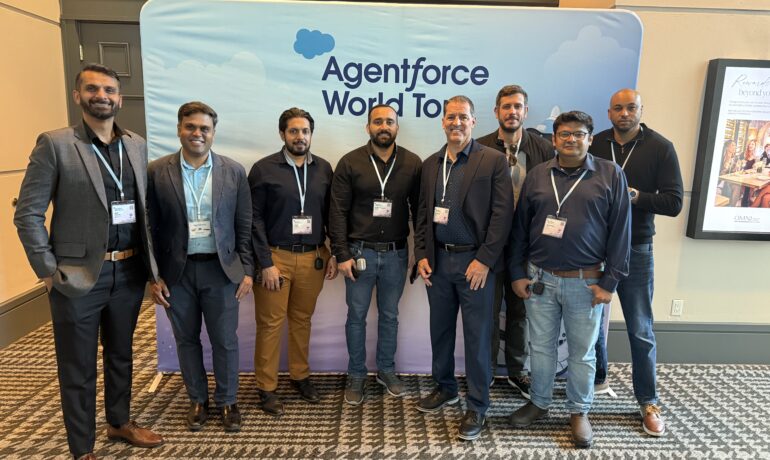
Tectonic Shook Things Up at AgentForce World Tour in Denver

The Tectonic team attended Salesforce’s Denver AgentForce World Tour this week. It was a great experience to develop our AgentBlazer team and a true seismic time was had by all! AI Agents were the topic of conversation and kept things lively! One almost expected to meet an Agentic Robot around every corner. We were all excited to network with Salesforce, customers, and partners alike. Key Takeaways Autonomous AI agents can understand and interpret customers’ questions using natural language, with minimal human intervention. Here’s what you need to know. The AI Assistant Revolution: Empowering Every Employee Imagine if every person in your company—from the CEO to frontline employees—had a dedicated assistant at their fingertips. An assistant who:✔ Knows your customers inside out✔ Delivers instant, data-driven insights✔ Helps prioritize next best actions Thanks to AI agents, this future is already here—and it’s transforming how businesses operate. How AI Agents Are Supercharging Teams 1. Instant Insights, No Manual Work 🔹 Generative AI agents analyze your trusted customer data in seconds—eliminating hours of manual research.🔹 Sales, service, and marketing teams get real-time recommendations, allowing them to focus on high-impact work. 2. Scaling Teams Without Adding Headcount 🔹 AI agents handle routine tasks—customer inquiries, data entry, meeting prep—freeing employees for strategic work.🔹 Quickly ramp up productivity during peak demand without overburdening staff. 3. Proactive Problem-Solving 🔹 AI doesn’t just react—it predicts.🔹 Identifies risks, suggests optimizations, and prevents small issues from becoming big ones. 4. Personalized Support for Every Role 🔹 Sales: AI suggests the best leads, crafts follow-ups, and forecasts deals.🔹 Service: Resolves common cases instantly, escalating only when needed.🔹 Leadership: Delivers real-time business insights for faster decisions. The Future of Work Is AI-Augmented AI agents aren’t replacing humans—they’re empowering them. By automating the mundane and enhancing decision-making, they help teams:✅ Work smarter, not harder✅ Deliver better customer experiences✅ Stay ahead of the competition The question isn’t if your company should adopt AI agents—it’s how soon you can start leveraging them. Tectonic, a trusted Salesforce partner, is here to help. Ready to explore AI-powered productivity? Let’s talk about the right AI strategy for your business. AI Agents: Your Intelligent Digital Workforce What Is an AI Agent? An AI agent is an autonomous artificial intelligence system that understands, processes, and responds to customer inquiries—without human intervention. Built using platforms like Agentforce, these agents leverage machine learning (ML) and natural language processing (NLP) to handle tasks ranging from simple FAQs to complex problem-solving. Unlike traditional AI, which requires manual programming for each task, AI agents continuously learn and improve from interactions, becoming smarter over time. How Do AI Agents Work? AI agents operate through a seamless four-step process: 💡 Result? Faster resolutions, happier customers, and more efficient teams. 6 Game-Changing Benefits of AI Agents Feature Impact 1. 24/7 Availability Instant support across time zones. 2. Hyper-Efficiency Handle thousands of queries simultaneously—no wait times. 3. Smarter Escalations Auto-route complex cases to the best-suited human agent. 4. Personalized Experiences Tailor responses using real-time customer data. 5. Scalability Grow support capacity without hiring more staff. 6. Data-Backed Insights Uncover trends to optimize operations & CX. “72% of companies already deploy AI—with generative AI adoption accelerating.” – McKinsey AI Agents in Action: Industry Use Cases 🏦 Finance ✔ Personalized wealth advice based on spending habits✔ Auto-summarize client cases for faster resolutions 🏭 Manufacturing ✔ Predict equipment failures before they happen✔ Optimize supply chain decisions with real-time data 🛒 Retail & Consumer Goods ✔ Smart inventory tracking (e.g., flagging stock discrepancies)✔ AI-generated promo content for targeted campaigns 🚗 Automotive ✔ Proactive vehicle maintenance alerts via telematics✔ Dynamic dealership promotions to boost sales 🏥 Healthcare ✔ Automated patient scheduling with the right specialist✔ Clinical trial matching using AI-driven eligibility checks Join the AI Revolution with Agentforce AI agents aren’t just tools—they’re productivity multipliers that help teams:✅ Work faster with automated workflows✅ Serve customers better with personalized AI assistance✅ Stay ahead with predictive insights 📈 Ready to transform your business? Connect with Tectonic today, or check out our Agentforce Quickstart offering. Connect with the Tectonic Agentforce team and launch your Agentic Revolution. AI Agents: The Ultimate Productivity Multiplier for Every Team AI agents aren’t just transforming customer service—they’re revolutionizing how every department operates. From 24/7 customer support to hyper-personalized marketing campaigns, AI agents help teams work smarter, move faster, and deliver exceptional experiences. Here’s how AI agents supercharge key business functions: 🤝 AI Agents for Service Teams Never miss a customer inquiry—even at 2 AM.✔ Instant, 24/7 support across email, chat, and social media✔ Smart escalation—AI routes complex cases to human agents with full context✔ Brand-consistent responses powered by your CRM data 🔹 With Agentforce for Service, deploy AI agents in minutes using prebuilt templates—or customize them for your unique needs. 💰 AI Agents for Sales Teams Turn every lead into a conversation—automatically.✔ Autonomous lead engagement—AI answers product questions & books meetings✔ Always-on SDRs—Agentforce Sales Development Reps qualify leads 24/7✔ Controlled escalation—Set rules for when & how AI hands off to your team 🔹 No more missed opportunities—AI keeps your pipeline full while your reps focus on closing. 🛍️ AI Agents for Commerce Teams Personal shopping assistants—powered by AI.✔ Smart product recommendations based on browsing & purchase history✔ Guided shopping experiences—AI helps customers find what they need faster✔ Omnichannel support—Engage shoppers on your site, WhatsApp, and more 🔹 Boost conversions with AI that acts like your best sales associate—for every customer. 📢 AI Agents for Marketing Teams Campaigns that write, optimize, and improve themselves.✔ AI-generated campaign briefs—audience targeting, messaging & KPIs✔ Automated content creation—draft ads, emails & social posts in your brand voice✔ Performance optimization—AI analyzes results & suggests improvements 🔹 With Agentforce Campaigns, launch better campaigns in hours—not weeks. Why AI Agents? The Bottom Line ✅ Scale operations without scaling headcount✅ Deliver instant, personalized experiences 24/7✅ Free your team to focus on high-value work “Companies using AI agents see 40% faster response times and 30% higher customer satisfaction.” Ready to deploy your AI workforce? See how Agentforce can transform your business #FutureOfWork

Read More

Agentforce Aids Distribution

Good360’s manual processes slowed their ability to distribute essential goods to communities in crisis. Agentforce will speed up distribution and automate donation matching for greater impact. About Good360 Good360 is a nonprofit organization on a mission to close the need gap. They work with corporate donors and nonprofit partners to put essential items like clothing and household items to great use. The Challenge for Good360 Manual processes hinder Good360’s efforts to get product donations to the people who need them. Good360 has been bridging the gap between surplus and demand since 1983, when it was founded to help distribute million worth of donated office equipment to nonprofits. What started as a single act of generosity has grown into a nationwide operation that’s distributed more than $18 billion in essential products, helped more than 100 million people, and kept all those excess goods out of landfills in the process. With millions of people in the U.S. living in poverty and natural disasters increasing in frequency and intensity, demand for their services will only continue to grow. From distributing emergency supplies to communities devastated by Hurricane Helene in Georgia to bringing comfort to NICU families in Florida, Good360’s impact is widely varied and deeply felt. Their challenge isn’t typically a lack of donations, rather, it’s ensuring that donations reach the right people at the right time. When a corporation notifies Good360 that a donation is ready, the matching team must manually search their network of tens of thousands of nonprofit partners to assess which ones have an urgent need for that type of donation. Then, they have to calculate possible shipping distances, contact the nonprofit to check whether the donation is still essential, and verify the shipping destination. Good360’s work plays a significant role in disaster recovery where every second counts. Even though this work is urgent, only two employees are dedicated to coordinating disaster-related donation matching. “The people who join Good360 are motivated to make a difference, they’re laser-focused on furthering our mission” said Stephane Moulec, Good360’s Chief Technology Officer. “Operations are part of what we do, but anything that streamlines admin so our employees can spend more time on building relationships with nonprofit partners and affected communities is a huge win.” With thousands of truckloads of goods coming in every year, this laborious matching process constrained the number of donations they were able to accept and distribute. “Globally, a significant amount of goods that could be matched to disaster survivors end up going to the landfill,” said Moulec. “Good360 is here to change that.” Good360 is determined to maximize every donation while reducing their carbon footprint and keeping operational costs low. They knew that with the right solution, they could increase the number of donations they’re able to accept, streamline distribution, and ensure critical supplies reach people faster. How Salesforce Helps Good360 Agentforce-powered resource matching is expected to triple Good360’s disaster recovery impact. Good360 is taking their mission to the next level with Agentforce — the agentic layer of the Salesforce Platform. To get goods to disaster-affected communities faster, they’re building a resource-matching agent that automates the donation routing process. Agentforce prioritizes communities that could use the donation most while recommending the nearest location, to reduce fuel consumption. Powered by Data Cloud, which harmonizes data from Nonprofit Cloud and third-party systems like NetSuite, Agentforce will instantly analyze donor, partner nonprofit, community, and logistics data to generate a curated list of top matches for each donation. Nonprofit Cloud unifies data for incoming donations, nonprofit profiles, and fundraising, while the prebuilt connection with NetSuite streamlines inventory, procurement, and business transactions — which will give Agentforce access to critical operational and financial data. Plus, Agentforce’s deep integration with Nonprofit Cloud ensures every donation is properly cataloged and placed where it makes the most sense, considering everything from travel distance and storage to cause alignment. “It was so fast and easy to ground our agents in the right data and test as we went,” said Lashowna Dukes, Good360’s Senior Salesforce Administrator. “We were confident in the logic of the outputs.” For example, if a sportswear company donates 15,000 pairs of unworn children’s shoes to a post-hurricane recovery effort, Agentforce will compile a list of nearby nonprofit partners that supply clothing to children. Instead of manually sorting through their network of tens of thousands of partner nonprofits, the matching team can immediately start outreach based on Agentforce’s recommendations. Once a nonprofit is selected, Agentforce will automatically update Nonprofit Cloud records, schedule shipments with third-party transportation vendors, and provide real-time email updates through Nonprofit Cloud to both the donor and recipient nonprofit. Its integration with Salesforce Maps allows Good360 to visualize the locations of donated products and partner nonprofits, making it easier to optimize routes and reduce transportation emissions. “With resource-matching agents, we’ll transform how we allocate and ship donations, reduce waste, cut our carbon footprint, and deliver disaster relief,” said Moulec. “We estimate this will save our employees over 1,000 hours annually, allowing them to focus on critical frontline response.” With Agentforce, Good360 will be able to connect disaster-affected communities with essential supplies up to three times faster with a goal of reducing its carbon footprint by 20%. It was so fast and easy to ground our agents in the right data and test as we went. We knew we could trust the outputs. Lashowna Dukes Senior Salesforce Administrator, Good360 AI agents will give Good360 the power to scale their impact without stretching their staff. Optimized resource matching is just the start. Good360 sees big potential for Agentforce to support fundraising by handling research, data collection, and impact analysis — freeing up staff to focus on building relationships with donors and nonprofit partners. With hundreds of corporate donors and tens of thousands of nonprofit partners, Agentforce can help Good360 tap into their full network more consistently — something that isn’t possible with manual processes. For example, it can turn unstructured inputs like chats and emails with donors and nonprofit partners into insights for better


Read More
Unlocking Efficiency with Salesforce Marketing Cloud Automation

Unlocking Efficiency with Salesforce Marketing Cloud Automation

Revolutionizing Marketing with Automation Salesforce Marketing Cloud automation is like having a personal assistant dedicated to your campaigns. It handles repetitive tasks, freeing you to focus on strategy and big-picture goals. Imagine designing a seamless customer journey without manually sending emails or determining the perfect timing—this is the power of advanced workflows in marketing. These tools streamline processes, enhance efficiency, and improve engagement. The Game-Changing Impact of Automation When I first started using Salesforce Marketing Cloud, it was a revelation. The automation tools allowed me to set up campaigns that practically ran themselves—like having an extra set of hands. For example, I created email sequences that responded to customer actions automatically. This meant engaging with customers at the right moments without lifting a finger. One standout experience was setting up a journey for free trial sign-ups. The system sent a welcome email, followed by usage-based tips. If a customer didn’t engage, an alternative path triggered a different message. This intelligent automation boosted engagement and conversions—marketing at its smartest. Transforming Marketing Operations: Doing More with Less Marketing Operations (Marketing Ops) is about maximizing impact with minimal effort. Advanced workflows reallocate resources effectively, shifting focus from task management to strategic growth. It’s like upgrading from a bicycle to a car—suddenly, you’re covering more ground, faster. Marketing Ops teams juggle campaign tracking, performance analysis, and strategy refinement. Automating these processes with Salesforce Marketing Cloud reduces mundane tasks, fostering innovation and continuous campaign optimization. For more insights on streamlining workflows, explore our guide on optimizing marketing automation. Beyond Emails: Personalization at Scale Automation isn’t just about sending emails—it’s about crafting personalized customer experiences. By intelligently segmenting your audience, you can ensure the right message reaches the right person at the right time, significantly increasing engagement. Of course, automation isn’t foolproof. Data accuracy is crucial. I once encountered a typo in a data field that misspelled a customer’s name—an embarrassing but valuable lesson in the importance of clean data. Always double-check your sources! Real-World Applications of Marketing Cloud Automation Automation enhances marketing efficiency across various scenarios: For more segmentation tips to improve email ROI, explore our in-depth guide. Getting Started: Small Steps, Big Impact If you’re wondering where to begin, the good news is that Salesforce Marketing Cloud scales with your needs. Start with a single campaign and gradually expand. As you become more comfortable, you’ll discover new ways to optimize automation. Leverage online resources—there are countless tutorials and guides available. And don’t hesitate to experiment—some of the best strategies emerge from trial and error. I remember my first attempt at automation. It wasn’t perfect, but the lessons I learned about timing and engagement refined future campaigns. It’s like learning to ride a bike—wobbly at first, but soon you’re cruising. Leveraging Analytics for Smarter Marketing Salesforce Marketing Cloud Engagement provides deep insights into customer engagement. Tracking these metrics enables data-driven decisions, optimizing experiences and increasing conversion rates. This is where the magic happens—understanding your audience to craft campaigns that truly resonate. And here’s a little secret: competition is fierce. Every company is competing for your customer’s attention. By optimizing Marketing Ops and leveraging advanced workflows, you gain a strategic edge. It’s like being the first to know about a secret sale. Conclusion: Embracing the Future of Marketing Automation Salesforce Marketing Cloud automation opens the door to endless possibilities. By implementing these workflows, marketing becomes more efficient, impactful, and personalized. Remember, you’re not just sending messages—you’re crafting experiences. That’s where true marketing magic lies. Ready to elevate your marketing game? Let’s talk. Like1 Related Posts Who is Salesforce? Who is Salesforce? Here is their story in their own words. From our inception, we’ve proudly embraced the identity of Read more Salesforce Marketing Cloud Transactional Emails Salesforce Marketing Cloud Transactional Emails are immediate, automated, non-promotional messages crucial to business operations and customer satisfaction, such as order Read more Salesforce Unites Einstein Analytics with Financial CRM Salesforce has unveiled a comprehensive analytics solution tailored for wealth managers, home office professionals, and retail bankers, merging its Financial Read more AI-Driven Propensity Scores AI plays a crucial role in propensity score estimation as it can discern underlying patterns between treatments and confounding variables Read more

Read More
GoMeddo

Tectonic Announces Partnership with GoMeddo

Revolutionizing Hospitality with Smart Guest Experiences The Future of Hospitality is Here – Powered by Salesforce, GoMeddo, and Tectonic Tectonic is thrilled to announce our partnership with GoMeddo to revolutionize hospitality with smart guest experiences! Today’s guests demand more than just great service—they expect personalized, seamless, and effortless experiences. That’s why Tectonic, a top-tier Salesforce implementation partner, and GoMeddo, the leading scheduling and booking platform, are teaming up to transform hospitality and restaurant operations with cutting-edge technology. There’s no time like the present to create the best possible guest experiences and no one better equipped to get you there than GoMeddo and Tectonic. 🚀 Key Benefits for Your Business:✔ Frictionless Bookings – Let guests reserve tables, rooms, or activities 24/7 from any device.  Regardless the use case (golf, batting cages, party rooms, ski lessons, events, meetings or more) our frictionless booking tool delights your guests.✔ Hyper-Personalized Journeys – Leverage real-time data to anticipate needs and amaze every guest.✔ Smarter Operations – Automate scheduling, optimize staff efficiency, and reduce overhead. This powerful partnership is set to elevate guest satisfaction, boost revenue, and streamline operations—ensuring your business stays ahead in a competitive market. Why Guest Experience is the New Battleground The hospitality industry is evolving fast. Guests no longer just compare you to competitors—they compare you to Amazon, Uber, and Netflix. They want:🔹 Instant, digital-first service (no phone calls or waiting)🔹 Tailored recommendations (like Spotify’s “Made for You” playlists)🔹 Seamless omnichannel interactions (book online, modify via app, check in via kiosk) 80% of guests are more likely to return to brands that offer personalized experiences. Are you meeting these expectations? How GoMeddo + Tectonic Deliver Next-Level Hospitality 1️⃣ For Guests: Effortless, Personalized Experiences 2️⃣ For Staff: Smarter Operations 3️⃣ For Management: Data-Driven Growth Real Results: What This Partnership Unlocks 📈 20-30% higher table turnover with automated reservations💳 15% increase in upsells via personalized promotions⭐ Improved guest reviews from streamlined experiences “Technology should enhance human connection, not replace it. With GoMeddo and Salesforce, we’re giving staff superpowers to focus on what matters—creating unforgettable moments.”– Krystal Hicks, Sales Director at Tectonic The Bottom Line The hospitality brands winning today aren’t just competing on service—they’re competing on convenience, personalization, and tech-powered magic. With GoMeddo’s scheduling expertise and Tectonic’s Salesforce mastery, your business can:✅ Turn first-time guests into loyal regulars✅ Free staff from admin headaches✅ Future-proof your operations Ready to redefine guest experience? [Discover how our solutions work] or [Book a consultation]. #HospitalityInnovation #SmartRestaurants #GuestExperience #Salesforce #GoMeddo #Tectonic #CustomerExperience #CustomerEngagement #SalesforcePartner Like Related Posts Who is Salesforce? Who is Salesforce? Here is their story in their own words. From our inception, we’ve proudly embraced the identity of Read more Salesforce Marketing Cloud Transactional Emails Salesforce Marketing Cloud Transactional Emails are immediate, automated, non-promotional messages crucial to business operations and customer satisfaction, such as order Read more Salesforce Unites Einstein Analytics with Financial CRM Salesforce has unveiled a comprehensive analytics solution tailored for wealth managers, home office professionals, and retail bankers, merging its Financial Read more AI-Driven Propensity Scores AI plays a crucial role in propensity score estimation as it can discern underlying patterns between treatments and confounding variables Read more

Read More
gettectonic.com