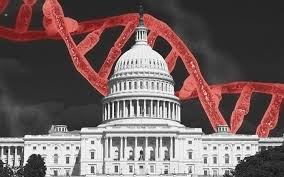
The U.S. House of Representatives has passed the bipartisan BIOSECURE Act, targeting Chinese biotech firms such as WuXi AppTec and WuXi Biologics as national security risks. The legislation restricts American companies from partnering with these firms, potentially disrupting the drug supply chain.
Bipartisan Support
The bill passed with a strong majority of 306-81, garnering support from 111 Democrats. Representative James Comer (R-Ky.) highlighted the bill’s goal to “protect U.S. taxpayer dollars from flowing to biotechnology companies that are owned, operated, or controlled by China or other foreign adversaries.” He emphasized the importance of safeguarding sensitive healthcare data from foreign influence before these companies become more entrenched in the U.S. economy.
National Security Concerns
Rep. Comer and other supporters, including Representatives John Moolenaar (R-Mich.) and Raja Krishnamoorthi (D-Ill.), underscored the bill’s significance for national security and the integrity of the U.S. healthcare system.
Senate Prospects
The Bipartisan BIOSECURE Act now moves to the Senate, where it is anticipated to receive robust bipartisan support. A similar measure previously passed the Senate Committee on Homeland Security and Governmental Affairs with overwhelming approval, suggesting a favorable outcome in the full Senate.
Key Provisions
Introduced in January 2024, the Act prohibits U.S. biopharma companies from working with certain Chinese contractors. Currently, five companies, including WuXi AppTec and WuXi Biologics, are blacklisted. An amendment allows existing contracts to remain in effect until January 1, 2032, offering some flexibility for ongoing projects.
Industry Impact
Analysts caution that the Act could disrupt the U.S. drug supply and impede clinical trials, adding strain to an already pressured supply chain. Jaxon Tan and Ivy Yang, in a BioSpace opinion piece, warned that these restrictions might significantly affect industry progress and innovation.
Domestic Manufacturing Challenges
The Act also highlights vulnerabilities in U.S. manufacturing capabilities. Fernando Muzzio, a Rutgers University professor, pointed out that the U.S. has become overly dependent on foreign manufacturing, particularly from China and India, neglecting the development of domestic production capacities. This dependence underscores the need to bolster homegrown manufacturing infrastructure.
Preparing for Change
As the BIOSECURE Act advances, healthcare technology companies will need to prepare for potential operational changes and supply chain disruptions. Firms may need to seek alternative partnerships and invest in domestic resources to navigate these challenges effectively.
While the Bipartisan BIOSECURE Act aims to enhance national security, it also presents both challenges and opportunities for the healthcare industry. Companies will need to adapt to these changes to maintain stability and continue advancing medical innovation.

Who is Salesforce? Here is their story in their own words. From our inception, we've proudly embraced the identity of Read more

Salesforce Marketing Cloud Transactional Emails are immediate, automated, non-promotional messages crucial to business operations and customer satisfaction, such as order Read more

Salesforce has unveiled a comprehensive analytics solution tailored for wealth managers, home office professionals, and retail bankers, merging its Financial Read more

AI plays a crucial role in propensity score estimation as it can discern underlying patterns between treatments and confounding variables Read more