
Einstein 1 Platform Archives - gettectonic.com - Page 7
Einstein 1 Unveiled

Einstein 1 Unveiled

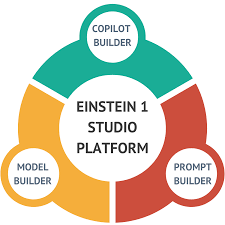
Salesforce Unveils Einstein 1: Enhancing Productivity and Fostering Customer Trust through Data, AI, and CRM-Einstein 1 Unveiled In September, Salesforce introduced the Einstein 1 Platform, a groundbreaking advancement that merges the capabilities of Salesforce Data Cloud with Einstein AI. This innovative platform harnesses a trusted metadata framework, enabling companies to effortlessly connect data and build AI-driven applications with minimal coding, thereby revolutionizing CRM experiences. Why it Matters: With customer data scattered across an average of 1,061 applications and limited integration, Salesforce addresses the challenge of fragmented customer data stacks. The metadata framework bridges this gap by offering a unified view of enterprise data, allowing organizations to customize user experiences across low-code platform services like Einstein for AI predictions, Flow for automation, and Lightning for user interfaces. Data Cloud Integration: The Einstein 1 Platform now seamlessly integrates with Data Cloud, a real-time hyperscale data engine processing 30 trillion transactions per month and harmonizing various data sources to create unified customer profiles. This integration unlocks siloed data, facilitating rich customer profiles and enabling new CRM experiences. Scalability and Automation: The platform supports thousands of metadata-enabled objects per customer and can handle up to 20,000 events per second. It enables the integration of massive data volumes from various sources, triggering flows and interactions with enterprise systems, including legacy ones. Analytics Offerings: Salesforce provides a suite of analytics solutions, including Reports and Dashboards, Tableau, CRM Analytics, and Marketing Cloud Reports. The common metadata schema and access model of the Einstein 1 Platform allow these solutions to operate on the same data, delivering comprehensive insights. Free Access to Data Cloud: Customers with Enterprise Edition or above can now access Data Cloud at no cost, empowering them to ingest, harmonize, and explore their data, thereby accelerating their AI journey. Einstein’s Conversational AI Assistant: The next generation of Einstein introduces Einstein Copilot, an out-of-the-box conversational AI assistant embedded in every Salesforce application. Copilot enhances productivity by responding to natural language queries with secure, proprietary company data from Data Cloud. It also proactively suggests actions and options to users. Einstein Copilot Studio: Companies can develop custom AI-powered apps with Einstein Copilot Studio, which facilitates the creation of AI models for various business tasks, making it adaptable for consumer-facing channels and messaging platforms. Einstein Copilot and Einstein Copilot Studio operate within the secure Einstein Trust Layer, ensuring data privacy and security. Salesforce’s Einstein 1 Platform represents a significant milestone in AI-powered CRM, providing companies with a seamless way to leverage AI, streamline processes, and deliver exceptional customer experiences. By Tectonic Salesforce Marketing Architect, Shannan Hearne Like Related Posts Who is Salesforce? Who is Salesforce? Here is their story in their own words. From our inception, we’ve proudly embraced the identity of Read more Salesforce Marketing Cloud Transactional Emails Salesforce Marketing Cloud Transactional Emails are immediate, automated, non-promotional messages crucial to business operations and customer satisfaction, such as order Read more Salesforce Unites Einstein Analytics with Financial CRM Salesforce has unveiled a comprehensive analytics solution tailored for wealth managers, home office professionals, and retail bankers, merging its Financial Read more AI-Driven Propensity Scores AI plays a crucial role in propensity score estimation as it can discern underlying patterns between treatments and confounding variables Read more

Read More
Einstein Advancement

Einstein Advancement

Salesforce, the enterprise software giant, announced on Tuesday the latest Einstein advancement in its artificial intelligence (AI) technology, unveiling a new generative AI tool called Einstein Copilot. This tool is set to revolutionize its suite of applications, including popular platforms like Slack and Tableau. What Happened: Einstein Copilot is introduced as a conversational AI assistant, seamlessly integrated within every Salesforce application. This integration aims to enhance user productivity by enabling interactions through natural language queries and providing responses based on proprietary company data. Unlike previous AI copilots, which often operated as separate, non-integrated applications, Einstein Copilot can access data from any Salesforce app, ensuring more accurate AI-powered recommendations and content generation. Einstein Copilot offers a wide range of functionalities, from summarizing video calls to automatically drafting sales emails tailored to individual customer contexts. It assists service teams by providing generative answers to customer concerns and helps marketers craft email content for campaigns. Developers can also benefit from its ability to convert natural language prompts directly into Apex code. Salesforce highlighted that 45% of executives are increasing their AI investments, with some already experiencing benefits, such as a 30% release of employee time. The San Francisco-based company mentioned that Einstein Copilot would leverage a vast pool of data, including customer information, enterprise content, and Slack conversations, to provide reliable and relevant recommendations. These recommendations can aid in tasks such as constructing digital storefronts or providing actionable insights for sales associates. Einstein Advancement This move aligns Salesforce with tech giants like Microsoft Corp and Alphabet Inc, which are capitalizing on the growing demand for generative AI. With previous initiatives such as the Einstein GPT genAI product launch in March and the expansion of its AI venture capital fund to 0 million in June, Salesforce is positioned to redefine the enterprise software landscape with its AI-driven initiatives. Like Related Posts Who is Salesforce? Who is Salesforce? Here is their story in their own words. From our inception, we’ve proudly embraced the identity of Read more Salesforce Marketing Cloud Transactional Emails Salesforce Marketing Cloud Transactional Emails are immediate, automated, non-promotional messages crucial to business operations and customer satisfaction, such as order Read more Salesforce Unites Einstein Analytics with Financial CRM Salesforce has unveiled a comprehensive analytics solution tailored for wealth managers, home office professionals, and retail bankers, merging its Financial Read more AI-Driven Propensity Scores AI plays a crucial role in propensity score estimation as it can discern underlying patterns between treatments and confounding variables Read more
Read More
Einstein in Salesforce

Einstein in Salesforce

Salesforce AI and CRM Evolution Salesforce has long been a leader in customer relationship management (CRM) by pioneering cloud technologies. Recently, the platform has significantly advanced with the integration of generative artificial intelligence (AI) and AI-powered features, thanks to its Einstein technology. Einstein in Salesforce is like a super smart computer overseeing and analyzing the data in your CRM. This guide explores Salesforce’s AI strategy, exploring its specific products and features to help business teams understand and benefit from this technology. Exploring Salesforce’s Advanced AI Features Einstein, Salesforce’s AI technology, powers various advanced features within the platform. This guide will cover these capabilities, provide real-life adoption examples, and discuss their benefits. Additionally, it offers best practices, solutions, and services to facilitate your Einstein implementation. Salesforce’s Comprehensive CRM Solution Salesforce remains a number one in the CRM software world, offering robust solutions for managing relationships across various departments. Specific clouds within Salesforce enable teams to handle marketing, sales, customer service, e-commerce, and more. The platform focuses on customer experience and provides robust data analytics to support decision-making. Enhancements Through Generative AI Salesforce’s generative AI has rapidly enhanced the platform’s automation, workflow management, data analytics, and assistive capabilities for customer management. A prime example is Salesforce Copilot, which aids internal users with outreach and analysis tasks while improving the external user experience. What is Salesforce Einstein? Salesforce Einstein is the first comprehensive AI for CRM, integrating AI technologies to enhance the Customer Success Platform and bring AI to users everywhere. It is seamlessly integrated into many Salesforce products, offering generative AI built specifically for CRM. Key Features of Salesforce Einstein Comprehensive AI Capabilities of Salesforce Einstein Einstein extends its capabilities across the Salesforce CRM platform under the Customer 360 umbrella, enhancing intelligence and providing personalized customer experiences. Key Benefits of Salesforce Einstein Salesforce Einstein helps close deals faster, personalize customer service, understand customer behaviors, target audience segments better, and create personalized shopping experiences. It ensures data protection and privacy through the Einstein Trust Layer, maintaining strong data governance controls. Responsible AI Principles Salesforce is committed to responsible AI principles, ensuring Einstein is trustworthy and safe for every organization. Organizations can select from various principles to ensure ethical AI use in their operations. Implementation of Salesforce Einstein Salesforce Einstein is a powerful AI solution transforming how businesses interact with customers. By leveraging machine learning and data analysis, it personalizes experiences, predicts customer behavior, and automates tasks, boosting sales, enhancing service, and driving growth. As AI evolves, its impact on CRM will continue to grow, making it an indispensable tool for businesses aiming to stay competitive in today’s data-driven landscape. Top 4 Benefits of Salesforce Einstein in an Organization Einstein Essentials Salesforce Einstein and GPT (Generative Pretrained Transformer) technologies represent significant advancements in AI, particularly in CRM and natural language processing. Here’s a brief overview of their relevance and potential intersection: Data Handling and Ethics in Salesforce Salesforce manages a vast amount of customer data, and the ethical handling of this data is crucial. Key considerations include data privacy, secure storage, access controls, compliance with regulations like GDPR and CCPA, and the ethical use of AI and machine learning. It’s important to maintain transparency, avoid biases, and ensure AI models are making ethical decisions. Newest Einstein Features for 2024 In the rapidly evolving ecosystem of Salesforce, AI offers a suite of tools to spark innovation, streamline operations, and provide richer business insights. Explore these potentials and let Einstein AI reshape your work in 2024. Content updated June 2024. Like1 Related Posts Who is Salesforce? Who is Salesforce? Here is their story in their own words. From our inception, we’ve proudly embraced the identity of Read more Salesforce Marketing Cloud Transactional Emails Salesforce Marketing Cloud Transactional Emails are immediate, automated, non-promotional messages crucial to business operations and customer satisfaction, such as order Read more Salesforce Unites Einstein Analytics with Financial CRM Salesforce has unveiled a comprehensive analytics solution tailored for wealth managers, home office professionals, and retail bankers, merging its Financial Read more AI-Driven Propensity Scores AI plays a crucial role in propensity score estimation as it can discern underlying patterns between treatments and confounding variables Read more
Read More
Salesforce Chat GPT

What’s Happening with ChatGPT and Salesforce

ChatGPT and Salesforce The integration of ChatGPT with Salesforce presents an opportunity to streamline organizational processes, resulting in significant time savings. This integration not only enhances CRM data management with generative AI but also takes the customer experience to new heights. Integration Process: To integrate ChatGPT with Salesforce, the typical process involves creating an account on the OpenAI platform and generating an API key. These steps ensure successful integration by providing API access and authentication credentials. It’s crucial to treat the API key with the same security measures as a password to safeguard the integration. Salesforce and OpenAI Collaboration: While Salesforce offers access to AI through its Einstein GPT suite of products, Salesforce Admins and Developers have also begun directly integrating with OpenAI’s APIs and various AppExchange apps. They are incorporating these tools into their offerings to introduce new AI-powered features, enhancing their platforms’ capabilities. Role of ChatGPT and Salesforce Admins: ChatGPT does not aim to replace Salesforce Admins but rather to augment their effectiveness and productivity. Admins with strong analytical and administrative skills can leverage ChatGPT to expedite configuration tasks. However, mastering the collaboration with ChatGPT is essential to enhance the quality of results. Understanding ChatGPT: ChatGPT, developed by OpenAI, represents a breakthrough in AI beyond conventional chatbots. It operates on the OpenAI GPT-3.5 family of large language models, incorporating both supervised and reinforcement learning techniques. Backed by OpenAI, ChatGPT employs natural language processing (NLP) to interact conversationally, mirroring human dialogue. OpenAI, founded in San Francisco, boasts substantial support from industry leaders like Microsoft. OpenAI and GPT-4: OpenAI recently unveiled GPT-4, the latest iteration of its popular ChatGPT model. GPT-4 boasts enhanced capabilities, including image processing and increased word processing capacity. With millions of users since its launch, ChatGPT continues to evolve, offering unparalleled NLP functionality. Top Use Cases for ChatGPT in Salesforce: Explore the potential of ChatGPT and Salesforce with features and scenarios, including natural language processing, chatbots, predictive sales, personalized communication, and analysis of conversational data. Einstein GPT: Salesforce introduces Einstein GPT, the world’s first generative AI for CRM. Einstein GPT enables the generation of tailored content from CRM data, ensuring relevance in every interaction, be it emails, reports, knowledge articles, or code snippets. Community Insights: As the AI landscape, particularly ChatGPT, continues to evolve, it’s essential to understand its implications for the Salesforce ecosystem. The Salesforce community acknowledges the power of ChatGPT as a sophisticated chatbot built on advanced AI technology, poised to revolutionize various Salesforce roles and experiences. What is Salesforce doing with ChatGPT? The integration between ChatGPT and Salesforce can optimize a significant portion of organizational processes, resulting in considerable time savings. This not only enhances CRM data management, now powered by generative AI, but also elevates the customer experience to a new level. Can we integrate ChatGPT with Salesforce? This typically involves creating an account on the OpenAI platform and generating an API key. To set up your API access and authentication credentials for a successful ChatGPT for Salesforce integration, follow the steps below. Treat your API key like a password to protect the security of your integration. Is Salesforce using OpenAI? While Salesforce enables customers to access it via its Einstein GPT suite of products, Salesforce Admins and Developers have also started integrating directly with OpenAI’s APIs and the many AppExchange apps. They are now embedding it into their offerings to deliver new AI-powered features. ChatGPT has shown the world the potential of AI beyond simple chatbots. Join Tectonic on the AI journey and learn about How to use ChatGPT for Salesforce, Its use cases, Integration and how you can implement it in Salesforce. Salesforce’s new marketing message is AI + Data + CRM. It all adds up to customer magic. At the heart of this magic is Generative AI or GPT, not ChatGPT. Of course, AI advancements will mean very different things across the wide variety of Salesforce roles and day-to-day experiences. With more and more “GPT” tools being launched each week, how is the Salesforce community using the Chat variety in their day-to-day roles, and how do they see it evolving over the coming months and years? ChatGPT is nothing more than a chatbot, akin to Einstein bots. However, it’s a powerful one! Built on the OpenAI GPT-3.5 family of large language models and both supervised and reinforcement learning techniques, ChatGPT was trained on a vast amount of internet text with a cutoff in January 2022. It has been optimized for natural language processing tasks such as text generation, question answering, translation, and text classification. The technology behind ChatGPT is advanced and continues to evolve, relying on machine learning and deep learning techniques. Like Related Posts Who is Salesforce? Who is Salesforce? Here is their story in their own words. From our inception, we’ve proudly embraced the identity of Read more Salesforce Marketing Cloud Transactional Emails Salesforce Marketing Cloud Transactional Emails are immediate, automated, non-promotional messages crucial to business operations and customer satisfaction, such as order Read more Salesforce Unites Einstein Analytics with Financial CRM Salesforce has unveiled a comprehensive analytics solution tailored for wealth managers, home office professionals, and retail bankers, merging its Financial Read more AI-Driven Propensity Scores AI plays a crucial role in propensity score estimation as it can discern underlying patterns between treatments and confounding variables Read more

Read More
How Data Cloud Vector Databases Work

How Data Cloud Vector Databases Work

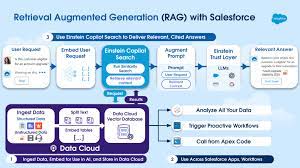
How Data Cloud Vector Databases Work 1. Ingest Unstructured Data in Data Cloud With the help of a new, unstructured data pipeline, relevant unstructured data for case deflection, such as product manuals or upgrade eligibility knowledge articles, can be ingested in Data Cloud and stored as unstructured data model objects. 2. Chunk and Transform Data for Use in AI In Data Cloud, teams will then be able to select the data that they want to use in processes like search, chunking this data into small segments before converting it into embeddings – numeric representations of data optimized for use in AI algorithms.  This is done through the Einstein Trust Layer, which securely calls a special type of LLM called an “embedding model” to create the embeddings. It is then indexed for use in search across the Einstein 1 platform alongside structured data. How Data Cloud Vector Databases Work. 3. Store Embeddings in Data Cloud Vector Database In addition to supporting chunking and indexing of data, Data Cloud now natively supports storage of embeddings – a concept called “vector storage”. This frees up time for teams to innovate with AI instead of managing and securing an integration to an external vector database. 4. Analyze and Act on Unstructured Data Use familiar platform tools like Flow, Apex, and Tableau to use unstructured data, such as clustering customer feedback by semantic similarity and creating automations that alert teams when sentiment changes significantly. 5. Deploy AI Search in Einstein Copilot to Deflect Cases With relevant data, such as knowledge articles, securely embedded and stored in Data Cloud’s vector database, this data can also be activated for use in Einstein AI Search within Einstein Copilot. When a customer visits a self-service portal and asks for details on how to return a product, for example, the Einstein Copilot performs semantic search by converting the user query into an embedding, after which it compares that query to the embedded data in Data Cloud, retrieving the most semantically relevant information for use in its answer while citing the sources it pulled from. The end result is AI-powered search capable of understanding the intent behind a question and retrieving not just article links but exact passages that best answer the question, all of which are summarized through a customer’s preferred LLM into a concise, actionable answer – boosting customer satisfaction while deflecting cases. Like1 Related Posts Who is Salesforce? Who is Salesforce? Here is their story in their own words. From our inception, we’ve proudly embraced the identity of Read more Salesforce Marketing Cloud Transactional Emails Salesforce Marketing Cloud Transactional Emails are immediate, automated, non-promotional messages crucial to business operations and customer satisfaction, such as order Read more Salesforce Unites Einstein Analytics with Financial CRM Salesforce has unveiled a comprehensive analytics solution tailored for wealth managers, home office professionals, and retail bankers, merging its Financial Read more AI-Driven Propensity Scores AI plays a crucial role in propensity score estimation as it can discern underlying patterns between treatments and confounding variables Read more
Read More
Data Management for AI

Who Are the AI Evangelists?

Who Are the AI Evangelists? What are the responsibilities of an AI evangelist? As a Technology Evangelist, your role entails guiding third-party developers in adopting the most effective strategies for creating innovative AI/ML-driven applications on platforms. You’ll facilitate the adoption of essential tools and frameworks like Core ML, Create ML, Vision, VisionKit, Speech, Natural Language, and others. How do you transition into an AI evangelist? Becoming an internal AI evangelist involves several steps. Firstly, you need to express your interest in AI to your immediate supervisor, emphasizing its significance for the organization. Clearly outline the advantages of AI, such as increased efficiency, data-driven insights, and competitive edge. Through educational efforts and outreach, you’ll encounter employees passionate about ensuring responsible AI creation and usage. With additional training, these individuals can serve as valuable resources, providing guidance in day-to-day discussions or design decisions across the company. Another approach involves integrating ethics reviews into existing AI product evaluations. Conducting these reviews earlier in the development process helps address potential issues proactively, rather than as a last-minute endeavor before launch. This proactive approach minimizes the accumulation of “ethical debt,” which arises when features violate ethical AI principles and require costly adjustments post-release. Implementing formal processes such as consequence scanning workshops, ethics canvases, harms modeling, and community juries, as well as creating documentation like model cards and FactSheets, further enhances ethical considerations throughout the product lifecycle. Who are the pioneers in the AI field? The field of AI owes its development to numerous pioneers whose contributions have been invaluable. Notable figures include Marvin Minsky, John McCarthy, and Alan Turing, whose ideas laid the foundation for today’s AI technologies. Understanding the Voices of AI The emergence of AI has sparked various viewpoints, represented by three distinct camps: evangelists, pessimists, and realists. Evangelists champion AI as a solution to global challenges, while pessimists highlight potential risks and advocate for immediate regulation. Realists acknowledge both the benefits and risks of AI, viewing it as a necessary tool for the future. Navigating the Risks of AI While AI offers significant productivity gains, it also introduces new security risks. For instance, AI-based services may require sharing sensitive data, potentially compromising privacy and intellectual property rights. Additionally, AI-generated code must undergo thorough testing to ensure it is free from malware or unauthorized elements. The surge in AI-driven IoT and generative AI applications further expands the attack surface, necessitating enhanced network security measures. As organizations embrace AI, it’s essential to weigh both its positive and negative impacts. Conducting a comprehensive risk and benefit analysis and establishing clear usage policies are critical steps in leveraging AI effectively. The rise of AI is not merely hype; it represents a transformative force that requires careful consideration to thrive in the modern security landscape. Like2 Related Posts AI-Driven Propensity Scores AI plays a crucial role in propensity score estimation as it can discern underlying patterns between treatments and confounding variables Read more What is Salesforce? Salesforce is cloud-based CRM software. It makes it easier for companies to find more prospects, close more deals, and connect Read more Einstein Relationship Insights ERI, serves as an AI-powered research assistant, enhancing sales processes. ERI operates as a desktop plugin with a browser extension, Read more Joined Datasets in B2B Marketing Analytics B2BMA empowers users to generate additional datasets using the data manager. This process involves creating datasets in various ways, such Read more

Read More
Revolutionizing Public Sector Efficiency

Revolutionizing Public Sector Efficiency

Salesforce: Transforming and Revolutionizing Public Sector Efficiency Salesforce, known worldwide as the premier CRM solution, continues to innovate with its adaptable features tailored to diverse audiences. It excels in delivering cutting-edge solutions, addressing unique needs across various industries and sectors. Particularly, the public sector stands to gain substantial benefits from Salesforce’s capabilities, offering a suite of solutions poised to optimize operations within any public office setting. Understanding the Role of Salesforce in the Public Sector The public sector encompasses the administrative segment responsible for managing essential citizen concerns at state, local, federal, and governmental agency levels. While carrying out critical tasks, these entities can significantly enhance efficiency with the right tools. Salesforce is dedicated to optimizing and streamlining processes within the public sector, recognizing its vital importance. Government offices face similar expectations to private enterprises, with citizens anticipating service quality on par with commercial experiences. Therefore, public entities must deliver efficiency, agility, and direct engagement to demonstrate proximity to the populace. In response to these expectations, Salesforce has developed a range of solutions tailored to the specific demands of the public sector. Revolutionizing Public Sector Efficiency Salesforce’s offerings for the public sector include meticulously crafted applications designed to meet its unique requirements. These flexible and secure e-government tools aim to revolutionize the sector’s experience, providing a comprehensive view of citizens and enhancing the efficacy of public employees. By simplifying processes and fostering innovation, these solutions drive efficiency at both organizational and individual levels, facilitating smoother operations. Integrated into Public Sector Solutions, these offerings leverage Salesforce’s standard functionalities and Service Cloud capabilities. Additionally, they enable the creation of an Experience Cloud site, allowing citizens seamless access to government services. Known as a Citizen Portal. Some of the available solutions cater to general tasks managed by public sector agencies, including: Thanks to these solutions, citizens can effortlessly navigate various processes, such as applying for licenses or permits. Through an online portal accessible at all times, individuals can interact seamlessly with public service agencies. Intelligent forms dynamically adjust based on user input, simplifying the submission process. From an employee standpoint, work processes are streamlined, with all citizen requests conveniently consolidated in one location. The system offers recommendations to guide employees, simplifies task delegation, and ensures seamless collaboration across departments. Key Advantages of Salesforce Solutions for the Public Sector Salesforce solutions offer numerous advantages to the public sector, aligning with citizens’ and employees’ current demands. These include: Salesforce emerges as an invaluable ally in the public sector’s modernization journey, transforming processes to be more agile and efficient. For organizations seeking to implement Salesforce solutions tailored for the public sector, the Tectonic team stands ready to assist. In the ever-evolving landscape of public administration and government services, the need for advanced, secure, and user-friendly technology solutions has never been more crucial. Enter Salesforce Public Sector Cloud—a dynamic platform designed to transform how government agencies engage with citizens, deliver services, and drive efficiency in their operations. Overview of Salesforce Public Sector Cloud: Salesforce Public Sector Cloud is a specialized offering tailored to meet the unique needs of government entities at all levels. Whether it’s federal, state, or local government agencies, the platform is engineered to enhance collaboration, streamline processes, and ultimately improve the delivery of public services. Key Features and Capabilities: Real-World Impact: Several government agencies have already embraced Salesforce Public Sector Cloud, realizing tangible benefits in their day-to-day operations. From improved citizen satisfaction to streamlined internal processes, the impact of this cloud solution is evident across various use cases. Challenges and Considerations: While Salesforce Public Sector Cloud offers numerous advantages, it’s essential to consider potential challenges. These may include customization complexities, data migration issues, and the need for comprehensive training for government personnel. A thoughtful and well-executed implementation strategy is crucial to overcoming these challenges. Salesforce Introduces Public Sector Einstein 1 for Service: Salesforce today announced Public Sector Einstein 1 for Service, including CRM, trusted AI, and data capabilities. What’s new in compliance: Salesforce also now offers several Federal Risk and Authorization Management Program (FedRAMP) compliant tools to help government agencies drive efficiency and productivity while meeting regulatory requirements. These tools include:  Content updated April 2024. Like Related Posts Who is Salesforce? Who is Salesforce? Here is their story in their own words. From our inception, we’ve proudly embraced the identity of Read more Salesforce Marketing Cloud Transactional Emails Salesforce Marketing Cloud Transactional Emails are immediate, automated, non-promotional messages crucial to business operations and customer satisfaction, such as order Read more Salesforce Unites Einstein Analytics with Financial CRM Salesforce has unveiled a comprehensive analytics solution tailored for wealth managers, home office professionals, and retail bankers, merging its Financial Read more AI-Driven Propensity Scores AI plays a crucial role in propensity score estimation as it can discern underlying patterns between treatments and confounding variables Read more

Read More
Feedback Management

Einstein for Feedback Management

Einstein for Feedback Management: AI-Driven Insights for Smarter Decisions Salesforce introduces Einstein for Feedback Management, a next-generation solution that leverages generative AI to revolutionize how businesses collect, analyze, and act on customer and employee feedback. AI-Optimized Surveys for Higher Engagement ✔ Effortless Survey Creation – Generate tailored surveys in seconds using AI-powered question suggestions.✔ Personalized Questioning – Adapt surveys dynamically based on audience demographics and past interactions.✔ Higher Response Rates – Optimize survey length, tone, and structure to maximize participation. Break Language Barriers with AI-Powered Translations ✔ Global Reach – Instantly translate surveys into multiple languages while preserving meaning and cultural relevance.✔ Improved Accuracy – AI ensures high-quality translations, eliminating inconsistencies in multilingual feedback. Seamless Integration with Salesforce Einstein for Feedback Management automatically syncs with Salesforce data to:✔ Pre-fill surveys with known customer details for hyper-personalized experiences.✔ Auto-update CRM records with real-time feedback, eliminating manual data entry.✔ Trigger automated follow-ups (e.g., service tickets, loyalty rewards) based on responses. End-to-End Feedback Intelligence ✔ Omnichannel Distribution – Deploy surveys via email, chatbots, service portals, and more.✔ Journey Analytics – Map feedback across the entire customer lifecycle for deeper insights.✔ NPS & CSAT Tracking – Monitor satisfaction trends and identify improvement areas.✔ AI-Powered Dashboards – Get instant visualizations of feedback trends with Einstein Analytics. Why Feedback Management Matters Now According to Salesforce’s State of the Connected Customer Report: Ashish Kothari, SVP of Product Management at Salesforce Industries, emphasizes: “Real-time feedback is the key to unlocking personalized experiences. As customer expectations evolve, businesses need agile tools to capture and act on insights instantly. Einstein for Feedback Management turns raw data into actionable intelligence—helping companies make smarter decisions at every touchpoint.” The Future of Intelligent Feedback With AI-driven automation, seamless CRM integration, and global scalability, Einstein for Feedback Management empowers businesses to:🔹 Close the experience gap by understanding customer needs in real time.🔹 Drive operational efficiency with automated data capture and workflows.🔹 Build loyalty by acting on feedback at scale. Ready to transform feedback into action? Learn more! Part of the Salesforce Einstein 1 Platform—where AI meets CRM to deliver smarter, faster outcomes. Content updated March 2024. Like Related Posts Who is Salesforce? Who is Salesforce? Here is their story in their own words. From our inception, we’ve proudly embraced the identity of Read more Salesforce Marketing Cloud Transactional Emails Salesforce Marketing Cloud Transactional Emails are immediate, automated, non-promotional messages crucial to business operations and customer satisfaction, such as order Read more Salesforce Unites Einstein Analytics with Financial CRM Salesforce has unveiled a comprehensive analytics solution tailored for wealth managers, home office professionals, and retail bankers, merging its Financial Read more AI-Driven Propensity Scores AI plays a crucial role in propensity score estimation as it can discern underlying patterns between treatments and confounding variables Read more
Read More
Sales Cloud Einstein

Einstein Activity Capture

Einstein Activity Capture is a productivity-boosting tool that helps keep data between Salesforce and your email and calendar applications up to date. Note: Starting in late 2023, existing EAC services and data are migrating to Hyperforce. What is the difference between Salesforce Inbox and EAC? Salesforce Inbox excels in providing a unified email and calendar management interface, while EAC automates activity tracking and delivers AI-driven insights. Assess your specific sales requirements, budget, and preferences to determine which solution aligns best with your needs. What is the difference between lightning sync and Einstein activity capture? EAC has the same functionality as Lightning Sync, but it also automatically logs emails (both incoming and outgoing) in addition to events. EAC works in the background as well, so no user intervention is required. Does Einstein activity capture automatically log emails? Einstein Activity Capture (EAC) is part of the Sales Cloud family. It uses the power of AI to automatically log events and emails against their respective Salesforce records and can also sync Contacts from Gmail or Outlook. Why use Einstein activity capture? EAC is a productivity-boosting tool that helps keep data between Salesforce and your email and calendar applications up to date. How long does EAC store emails? The default is 24 months. The amount can range from 3 months to 5 years. How do I delete emails from EAC? To delete activity by email address: Does EAC sync contacts? EAC can sync up to 50,000 contacts per user. An additional non-syncing contact is picked up for sync only when one of the 50,000 stops syncing. What is the difference between EAC and Gmail integration? The main difference between these two is that Salesforce Gmail integration and Salesforce Inbox are both designed to providing users with Salesforce data and functionality within their email interface, while EAC focuses on automating data entry. What is the limit of Einstein activity capture? If you have only standard EAC users, a maximum of 6 months of captured activity data is stored and displayed on the activity timeline. Like1 Related Posts Who is Salesforce? Who is Salesforce? Here is their story in their own words. From our inception, we’ve proudly embraced the identity of Read more Salesforce Marketing Cloud Transactional Emails Salesforce Marketing Cloud Transactional Emails are immediate, automated, non-promotional messages crucial to business operations and customer satisfaction, such as order Read more Salesforce Unites Einstein Analytics with Financial CRM Salesforce has unveiled a comprehensive analytics solution tailored for wealth managers, home office professionals, and retail bankers, merging its Financial Read more AI-Driven Propensity Scores AI plays a crucial role in propensity score estimation as it can discern underlying patterns between treatments and confounding variables Read more
Read More
Salesforce Shield Data Monitoring and Encryption

Salesforce Shield

Safeguarding your most sensitive data and proactively addressing evolving compliance and industry regulations through the implementation of Salesforce Shield can result in significant cost savings, as highlighted in Salesforce’s 2022 Top Data Security Trends report. Safeguarding with Salesforce Shield. Salesforce Shield was originally launched in 2015. Shield for Encryption Salesforce Shield allows you to encrypt your Salesforce data with AES 256-bit encryption at the field-level, as well as manage your own encryption keys. The Tectonic team is thrilled to introduce Salesforce Shield—an advanced encryption solution that ensures trusted data monitoring and expedites the security of cloud applications. Safeguarding with Salesforce Shield Salesforce Shield can help you protect your apps. Salesforce Shield is basically a set of security solutions that allows you to incorporate additional layers of trust, compliance, and governance into your mission-critical apps. Shield Platform Encryption, Event Monitoring, and Field Audit Trail are all included. Shield Platform Encryption also supports person accounts, cases, search, approval processes, and other key Salesforce features. Classic encryption lets you protect only a special type of custom text field, which you create for that purpose. Shield, a comprehensive suite of capabilities, offers an enhanced level of security beyond Salesforce’s default settings. With Salesforce Shield, you can confidently protect sensitive data within your Salesforce environment and maintain that security over time. Salesforce Shield provides protection in four key ways: Blocks Unauthorized or Unlawful Activity: Finds and Classifies Sensitive Data Quickly: Adds Additional Security to Sensitive Data: Meets Compliance and Industry Regulations: Working closely with your company, Tectonic will tailor the configuration of Salesforce Shield to align with your specific requirements. Salesforce Shield’s capabilities span across all Salesforce “cloud” products, offering comprehensive data risk reduction across critical business areas. It provides additional security features beyond standard Salesforce, which is especially valuable for customers dealing with sensitive data or operating in highly regulated industries. Unlike whole disk encryption, Salesforce Shield operates at the field level and for files and attachments. It extends field history tracking, supporting up to 60 fields per object, compared to the standard 20 fields per object. Event Monitoring Analytics, a component of Salesforce Shield, offers reporting on event monitoring through a pre-built dashboard. Events are logged and displayed, allowing users to monitor trends, analyze user behavior, and ensure data security. Salesforce Shield employs Einstein Data Detect, an automated scanning tool, to identify sensitive data based on predefined patterns, including credit card numbers, emails, social security numbers, URLs, and IP addresses. This tool works seamlessly with platform encryption, indicating which data needs encryption at rest. Ask Tectonic For those seeking more information on Salesforce Shield, feel free to reach out to your Tectonic team, Salesforce AE, or consult Salesforce’s guide to Salesforce Shield Implementation. Does using Salesforce Shield make an organization automatically HIPAA compliant? No, while Salesforce Shield provides additional security features, customers must still configure it correctly and use it with other security measures to meet their HIPAA obligations. Which user permissions does Shield platform encryption require? “While many companies are leveraging the cloud to build apps at the speed of business, those in regulated industries have struggled to take full advantage of the cloud due to regulatory and compliance constraints,” said Tod Nielsen, executive vice president of Salesforce1 Platform, Salesforce. “With Salesforce Shield, we are liberating these IT leaders and developers, and empowering them to quickly build the cloud apps their businesses need, with the trust Salesforce is known for.” Salesforce Shield, in collaboration with Tectonic, fortifies your enterprise and Salesforce org by safeguarding sensitive data. Tectonic conducts a data classification exercise to identify fields requiring encryption based on regulatory, security, privacy, and compliance requirements. Isn’t it time your business and data benefited from the protection of Salesforce Shield? Like1 Related Posts Who is Salesforce? Who is Salesforce? Here is their story in their own words. From our inception, we’ve proudly embraced the identity of Read more Salesforce Marketing Cloud Transactional Emails Salesforce Marketing Cloud Transactional Emails are immediate, automated, non-promotional messages crucial to business operations and customer satisfaction, such as order Read more Salesforce Unites Einstein Analytics with Financial CRM Salesforce has unveiled a comprehensive analytics solution tailored for wealth managers, home office professionals, and retail bankers, merging its Financial Read more AI-Driven Propensity Scores AI plays a crucial role in propensity score estimation as it can discern underlying patterns between treatments and confounding variables Read more
Read More
Salesforce Commerce Cloud Ecommerce Implementation Tasks and Roles

Commerce Cloud Explained

What is Salesforce commerce cloud? Salesforce Commerce Cloud is a cloud-based suite of products that enable e-commerce businesses to set up e-commerce sites, drive more automation and provide customers with seamless shopping experiences. Commerce enables retailers to swiftly establish an online presence, leveraging the capabilities of Salesforce CMS. Equipped with numerous out-of-the-box features, it caters to both B2C and B2B retailers, facilitating the creation of exceptional online experiences. Commerce Cloud encompasses standard Salesforce features, exhibiting mobile readiness, seamless integration with Service Cloud, and compatibility with other Salesforce products. Additionally, it incorporates Einstein AI-enabled functionalities. Noteworthy examples of SFDC Commerce Cloud implementation can be observed through prominent Salesforce customers like Puma and Adidas. The platform offers two variants, each catering to distinct customer focuses: Scale commerce with confidence on the most complete platform. Simplify everything from setting up your digital storefront to driving sales on any customer touchpoint with AI and automation powered by the Einstein 1 Platform. Salesforce Commerce capabilities enable you to cover more touchpoints with your customers, deliver personalized services to them, launch in new markets faster, and boost conversions. It helps you make analytics-based decisions to provide truly unforgettable services to your shoppers. Like1 Related Posts Who is Salesforce? Who is Salesforce? Here is their story in their own words. From our inception, we’ve proudly embraced the identity of Read more Salesforce Marketing Cloud Transactional Emails Salesforce Marketing Cloud Transactional Emails are immediate, automated, non-promotional messages crucial to business operations and customer satisfaction, such as order Read more Salesforce Unites Einstein Analytics with Financial CRM Salesforce has unveiled a comprehensive analytics solution tailored for wealth managers, home office professionals, and retail bankers, merging its Financial Read more AI-Driven Propensity Scores AI plays a crucial role in propensity score estimation as it can discern underlying patterns between treatments and confounding variables Read more

Read More
Salesforce Field Service

Salesforce Field Service Explained

As an expansion of Service Cloud, Salesforce Field Service offers an all-encompassing perspective on workforce management. In straightforward terms, when a customer requests a new cable service, the cable installer will be on-site. The coordination of their current location, destination, and the quantity of cable in their vehicle is seamlessly handled through Field Service Lightning. Key features encompass appointment scheduling, dispatching technology, territory management, and a mobile app designed to assist field service technicians. Power the future of field service with the #1 AI platform for field service. Enhance customer engagement with real-time personalization, optimize field teams with our best in class scheduling engine and access to offline data, and improve field visits with the help of trusted AI built on the Einstein 1 Platform. Salesforce Field Service provides optimal access to and for field service agents. Prework Brief Accelerate service delivery, enhance customer satisfaction, and boost overall efficiency by giving your mobile workers vital customer data, asset history, and service records prior to each job. With summarized insights that include equipment maintenance and past customer interactions, prework briefs help mobile workers prioritize onsite tasks and grasp the broader context for meeting contract terms. Onsite Knowledge Search Field challenges can be daunting when you’re on your own. That’s why our Field Service mobile app gives contractors and employees with the power to search both internal and external knowledge bases instantly. Powered by AI summarization, users get the precise information necessary to improve first-time fix rates — boosting confidence and credibility in real-time. Post-Work Summary Say goodbye to time-consuming and error-prone service reports at the end of each job. Our intelligent summary generation feature ensures accurate and comprehensive reports while also reducing visit duration. Boost customer satisfaction significantly with Service Reports enriched with real-time customer and asset data, updates from mobile workers, and job images. Field Service Mobile App Our field service mobile app — available on Android and iOS — is the ultimate all-in-one tool tailored for the demands of today’s mobile workforce. Designed as an offline-first application, it enables your front line to work and seamlessly save changes even without Wi-Fi. Plus, the app offers extensive customization options, so it aligns perfectly with your unique business requirements. Mobile App Extensibility Empower your mobile app users with offline-capable experiences through Lightning Web Components (LWCs). Use standard components to build a tailored interface that aligns perfectly with your company’s requirements. Unleash your creativity by designing custom components that boost productivity and bring your innovative ideas to life for your workforce. Slack for Field Service Empower your mobile workforce with seamless connectivity and timely assistance whenever they need it. Swiftly mobilize for service appointments and tap into the expertise of colleagues throughout your organization. Our user-friendly interface ensures intuitive and accessible collaboration — keeping your team connected and responsive. Dispatch Management Boost your dispatchers’ productivity with our Dispatch Console. Easily create and update resource absences directly in the console. Efficiently organize candidates by availability and skill to identify the ideal candidates for each appointment. Experience an enhanced user interface that maximizes the potential of your Gantt chart for improved scheduling efficiency. Scheduling and Optimization Elevate your field service operations with our best-in-class scheduling and optimization engine. Built on the Hyperforce platform, Enhanced Scheduling and Optimization automates scheduling while aligning with priorities and constraints. It ensures efficient resource allocation, minimizes travel time, and complies with service-level agreements. Forecasting and Planning with Salesforce Field Service Use real-time data to quickly assess the impact of global or in-day optimization on travel time and resource utilization. When refining your scheduling policy, get an instant view of optimization results and KPI changes. Asset Service Management Shift from reactive to proactive service with real-time asset tracking. Monitor service outcomes and create preventive maintenance plans based on asset use, condition, and specific criteria. For example, you can schedule service if an asset’s temperature exceeds a set threshold — ensuring smooth operations and preventing downtime. Work Order Management Simplify the entire work order management process to seamlessly create, assign, execute, and debrief work orders. Empower your team to stay agile, improve customer satisfaction, and drive growth by eliminating manual paperwork and digitizing the entire work order lifecycle. Content updated February 2024. Like Related Posts Who is Salesforce? Who is Salesforce? Here is their story in their own words. From our inception, we’ve proudly embraced the identity of Read more Salesforce Marketing Cloud Transactional Emails Salesforce Marketing Cloud Transactional Emails are immediate, automated, non-promotional messages crucial to business operations and customer satisfaction, such as order Read more Salesforce Unites Einstein Analytics with Financial CRM Salesforce has unveiled a comprehensive analytics solution tailored for wealth managers, home office professionals, and retail bankers, merging its Financial Read more AI-Driven Propensity Scores AI plays a crucial role in propensity score estimation as it can discern underlying patterns between treatments and confounding variables Read more

Read More
Salesforce AI

Einstein Opportunity Scoring

Let Salesforce’s artificial intelligence help you and your team focus on the right opportunities so you can close more deals with Einstein Opportunity Scoring. Each opportunity in Salesforce is given a score, from 1 to 99, which is available on opportunity records and list views. Sales reps use these opportunity scores to identify top opportunities. If you use Collaborative Forecasts, opportunity scores are also available on the forecasts page. Plus, use scores with reports, Process Builder, and workflows. Einstein Opportunity Scoring is available to users with or without a Sales Cloud Einstein license. Opportunity scores tell you the likelihood that an opportunity will be closed won. For each opportunity score, Einstein shows the factors that have contributed the most to the score, both positively and negatively. Einstein uses your team’s past closed opportunities, won and lost, to create a predictive scoring model.  This model helps identify which opportunities are most likely to result in a win. Einstein Opportunity Scoring in Lightning In Lightning Experience, the score is shown on the compact layout of opportunity records or on the Details tab. Hover over the score to see a list of factors that contribute to the score. For example, a score could be relatively high because the opportunity is moving quickly through the stages compared to other opportunities. In Salesforce Classic, the score is shown on the record detail of opportunity records. The contributing factors are shown. You can add the Opportunity Score field to any of your opportunity list views. If you don’t see the score on public list views, ask your Salesforce admin to add it. In Lightning Experience, hover over the score in the list view to see the factors that contribute to the score. In Salesforce Classic, the contributing factors aren’t available from the list views. Instead, navigate to the opportunity record detail page. The opportunity score can be calculated using a variety of factors, such as market demand, competitive landscape, the potential ROI, and the resources required to pursue the opportunity. Einstein Opportunity Scoring provides an unbiased, objective prediction on the likelihood of a deal closing, based on data patterns from previously closed deals. Then, take the guesswork out of forecasting. Einstein Forecasting uses AI technology to bring more certainty and visibility to your forecasts. Improve forecasting accuracy, get forecast predictions, and track how sales teams are doing. What is the difference between Einstein Lead Scoring and opportunity scoring? Einstein Opportunity Scoring is part of Sales Cloud Einstein Scoring, which also includes Einstein Lead Scoring. In the hierarchy, Einstein Lead Scoring comes under Salesforce’s Sales Cloud Einstein model. Opportunity scores tell the salesperson the likelihood of an opportunity to be won. Like1 Related Posts Salesforce Marketing Cloud Transactional Emails Salesforce Marketing Cloud Transactional Emails are immediate, automated, non-promotional messages crucial to business operations and customer satisfaction, such as order Read more Salesforce Unites Einstein Analytics with Financial CRM Salesforce has unveiled a comprehensive analytics solution tailored for wealth managers, home office professionals, and retail bankers, merging its Financial Read more AI-Driven Propensity Scores AI plays a crucial role in propensity score estimation as it can discern underlying patterns between treatments and confounding variables Read more Asset Management Salesforce Can Salesforce do asset management? You can manage assets in Consumer Goods (desktop) and in the Consumer Goods offline mobile Read more

Read More
gettectonic.com