
Salesforce Einstein Archives - gettectonic.com - Page 7
Gen AI Unleased With Vector Database

Gen AI Unleased With Vector Database

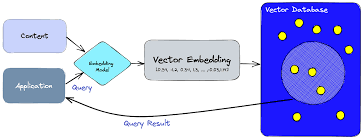
Salesforce Unveils Data Cloud Vector Database with GenAI Integration Salesforce has officially launched its Data Cloud Vector Database, leveraging GenAI to rapidly process a company’s vast collection of PDFs, emails, transcripts, online reviews, and other unstructured data. Gen AI Unleased With Vector Database. Rahul Auradkar, Executive Vice President and General Manager of Salesforce Unified Data Services and Einstein Units, highlighted the efficiency gains in a one-on-one briefing with InformationWeek. Auradkar demonstrated the new capabilities through a live demo, showcasing the potential of the Data Cloud Vector Database. Enhanced Efficiency and Data Utilization The new Data Cloud integrates with the Einstein 1 platform, combining unstructured and structured data for rapid analysis by sales, marketing, and customer service teams. This integration significantly enhances the accuracy of Einstein Copilot, Salesforce’s enterprise conversational AI assistant. Gen AI Unleased With Vector Database Auradkar demonstrated how a customer service query could retrieve multiple relevant results within seconds. This process, which typically takes hours of manual effort, now leverages unstructured data, which makes up 90% of customer data, to deliver swift and accurate results. “This advancement allows our customers to harness the full potential of 90% of their enterprise data—unstructured data that has been underutilized or siloed—to drive use cases, AI, automation, and analytics experiences across both structured and unstructured data,” Auradkar explained. Comprehensive Data Management Using Salesforce’s Einstein 1 platform, Data Cloud enables users to ingest, store, unify, index, and perform semantic queries on unstructured data across all applications. This data encompasses diverse unstructured content from websites, social media platforms, and other sources, resulting in more accurate outcomes and insights. Auradkar emphasized, “This represents an order of magnitude improvement in productivity and customer satisfaction. For instance, a large shipping company with thousands of customer cases can now categorize and access necessary information far more efficiently.” Additional Announcements Salesforce also introduced several new AI and Data Cloud features: Auradkar noted that these innovations enhance Salesforce’s competitive edge by prioritizing flexibility and enabling customers to take control of their data. “We’ll continue on this journey,” Auradkar said. “Our future investments will focus on how this product evolves and scales. We’re building significant flexibility for our customers to use any model they choose, including any large language model.” For more insights and updates, visit Salesforce’s official announcements and stay tuned for further developments. Like1 Related Posts Who is Salesforce? Who is Salesforce? Here is their story in their own words. From our inception, we’ve proudly embraced the identity of Read more Salesforce Marketing Cloud Transactional Emails Salesforce Marketing Cloud Transactional Emails are immediate, automated, non-promotional messages crucial to business operations and customer satisfaction, such as order Read more Salesforce Unites Einstein Analytics with Financial CRM Salesforce has unveiled a comprehensive analytics solution tailored for wealth managers, home office professionals, and retail bankers, merging its Financial Read more AI-Driven Propensity Scores AI plays a crucial role in propensity score estimation as it can discern underlying patterns between treatments and confounding variables Read more
Read More
ChatGPT 5.0 is Coming

ChatGPT 5.0 is Coming

Sam Altman Teases ChatGPT-5: Here’s What We Know GPT-5: A Major Leap in AI Following the release of GPT-4, anticipation for its successor, GPT-5, has been growing. According to reports from Business Insider, GPT-5 is expected to debut in mid-2024, potentially marking a significant advancement in AI capabilities. Insiders describe GPT-5 as “materially better,” with enhancements that could transform AI-driven communication and composition. ChatGPT 5.0 is Coming. The Journey to GPT-5 After GPT-4’s launch, speculation about GPT-5’s arrival intensified. OpenAI CEO Sam Altman has hinted at the upcoming release, assuring groundbreaking advancements. However, concrete details were scarce until recent reports provided a clearer timeline for GPT-5’s debut. What to Expect from GPT-5 Early demonstrations of GPT-5 have impressed insiders, with one CEO describing it as “really good.” The model promises significant improvements, showcasing its versatility in real-world applications. From unique use cases for individual enterprises to autonomous AI agents, GPT-5 is poised to expand the boundaries of AI capabilities. Evolution of Language Models Understanding GPT-5’s significance involves tracing the evolution of OpenAI’s language models. From the groundbreaking GPT-3 in 2020 to the iterative improvements leading to GPT-4 Turbo, each iteration has advanced the sophistication of AI-driven communication tools. ChatGPT 5.0 is Coming: A Multimodal Approach Building on its predecessors, GPT-5 is expected to offer a multimodal experience, integrating text and encoded visual input. This capability opens up numerous applications, from content generation to image captioning, further embedding AI in various domains. Next-Token Prediction and Conversational AI At its core, GPT-5 remains a next-token prediction model, generating contextually relevant responses based on input prompts. This functionality underpins conversational AI applications like ChatGPT, enabling seamless user-AI interactions. Challenges and Opportunities Ahead As OpenAI prepares for GPT-5’s launch, the focus shifts to the challenges and opportunities it presents. Addressing concerns about model performance and reliability, and exploring novel use cases, the journey towards realizing the full potential of AI-driven language models is filled with possibilities. Ensuring Safety and Reliability Ensuring the success of GPT-5 involves rigorous testing and validation to guarantee its safety and reliability. As AI continues to advance, maintaining transparency and accountability in its development is crucial. Unlocking New Frontiers Beyond immediate applications, GPT-5 represents a significant step towards unlocking new frontiers in AI innovation. From enhancing natural language understanding to facilitating human-machine collaboration, the implications of GPT-5 extend far beyond its initial release. Like1 Related Posts Who is Salesforce? Who is Salesforce? Here is their story in their own words. From our inception, we’ve proudly embraced the identity of Read more AI-Driven Propensity Scores AI plays a crucial role in propensity score estimation as it can discern underlying patterns between treatments and confounding variables Read more Asset Management Salesforce Can Salesforce do asset management? You can manage assets in Consumer Goods (desktop) and in the Consumer Goods offline mobile Read more Lookup Relationship in Salesforce What is Lookup relationship in Salesforce? Salesforce’s lookup relationships is a significant capability that allows users to connect two objects Read more

Read More
GPT-4o GPT4 and Gemini 1.5

GPT-4o GPT4 and Gemini 1.5

An Independent Analysis of GPT-4o’s Classification Abilities Article by Lars Wilk OpenAI’s recent unveiling of GPT-4o marks a significant advancement in AI language models, transforming how we interact with them. The most impressive feature is the live interaction capability with ChatGPT, allowing for seamless conversational interruptions. GPT-4o GPT4 and Gemini 1.5 Despite a few hiccups during the live demo, the achievements of the OpenAI team are undeniably impressive. Best of all, immediately after the demo, OpenAI granted access to the GPT-4o API. In this article, I will present my independent analysis, comparing the classification abilities of GPT-4o with GPT-4, Google’s Gemini, and Unicorn models using an English dataset I created. Which of these models is the strongest in understanding English? What’s New with GPT-4o? GPT-4o introduces the concept of an Omni model, designed to seamlessly process text, audio, and video. OpenAI aims to democratize GPT-4 level intelligence, making it accessible even to free users. Enhanced quality and speed across more than 50 languages, combined with a lower price point, promise a more inclusive and globally accessible AI experience. Additionally, paid subscribers will benefit from five times the capacity compared to non-paid users. OpenAI also announced a desktop version of ChatGPT to facilitate real-time reasoning across audio, vision, and text interfaces. How to Use the GPT-4o API The new GPT-4o model follows the existing chat-completion API, ensuring backward compatibility and ease of use: pythonCopy codefrom openai import AsyncOpenAI OPENAI_API_KEY = “<your-api-key>” def openai_chat_resolve(response: dict, strip_tokens=None) -> str: if strip_tokens is None: strip_tokens = [] if response and response.choices and len(response.choices) > 0: content = response.choices[0].message.content.strip() if content: for token in strip_tokens: content = content.replace(token, ”) return content raise Exception(f’Cannot resolve response: {response}’) async def openai_chat_request(prompt: str, model_name: str, temperature=0.0): message = {‘role’: ‘user’, ‘content’: prompt} client = AsyncOpenAI(api_key=OPENAI_API_KEY) return await client.chat.completions.create( model=model_name, messages=[message], temperature=temperature, ) openai_chat_request(prompt=”Hello!”, model_name=”gpt-4o-2024-05-13″) GPT-4o is also accessible via the ChatGPT interface. Official Evaluation GPT-4o GPT4 and Gemini 1.5 OpenAI’s blog post includes evaluation scores on known datasets such as MMLU and HumanEval, showcasing GPT-4o’s state-of-the-art performance. However, many models claim superior performance on open datasets, often due to overfitting. Independent analyses using lesser-known datasets are crucial for a realistic assessment. My Evaluation Dataset I created a dataset of 200 sentences categorized under 50 topics, designed to challenge classification tasks. The dataset is manually labeled in English. For this evaluation, I used only the English version to avoid potential biases from using the same language model for dataset creation and topic prediction. You can check out the dataset here. Performance Results I evaluated the following models: The task was to match each sentence with the correct topic, calculating an accuracy score and error rate for each model. A lower error rate indicates better performance. Conclusion This analysis using a uniquely crafted English dataset reveals insights into the state-of-the-art capabilities of these advanced language models. GPT-4o stands out with the lowest error rate, affirming OpenAI’s performance claims. Independent evaluations with diverse datasets are essential for a clearer picture of a model’s practical effectiveness beyond standardized benchmarks. Note that the dataset is fairly small, and results may vary with different datasets. This evaluation was conducted using the English dataset only; a multilingual comparison will be conducted at a later time. Like1 Related Posts Who is Salesforce? Who is Salesforce? Here is their story in their own words. From our inception, we’ve proudly embraced the identity of Read more Salesforce Unites Einstein Analytics with Financial CRM Salesforce has unveiled a comprehensive analytics solution tailored for wealth managers, home office professionals, and retail bankers, merging its Financial Read more AI-Driven Propensity Scores AI plays a crucial role in propensity score estimation as it can discern underlying patterns between treatments and confounding variables Read more Tectonic’s Successful Salesforce Track Record Salesforce Technology Services Integrator – Tectonic has successfully delivered Salesforce in a variety of industries including Public Sector, Hospitality, Manufacturing, Read more

Read More
Five9 Salesforce AI Integration

Five9 Salesforce AI Integration

Five9 and Salesforce Enhance AI-Powered Solutions for Superior Customer Experiences Five9 (NASDAQ: FIVN), a provider of the Intelligent CX Platform, today announced the next step in its collaboration with Salesforce. Five9 Salesforce AI Integration. This partnership aims to deliver AI-powered solutions to enhance customer experiences (CX) in contact centers. The latest release, Five9 for Service Cloud Voice with Partner Telephony, integrates Salesforce Einstein with Five9’s suite of AI solutions. This empowers agents to better service customer requests, improves management’s understanding of contact center operations, and delivers customer resolutions that exceed expectations. Using Five9’s open APIs and Five9 TranscriptStream, the Einstein AI engine identifies opportunities to provide real-time solutions for agents, prompting ‘Next Best Action’ guidance. The solution also offers real-time transcription of customer conversations, ensures call recordings’ accuracy and relevance, and integrates with Salesforce Einstein Conversation Insights to enhance conversation intelligence. “Five9 understands the power of elevating the customer experience through innovative technology and seamless integrations,” said Dan Burkland, President of Five9. “Our collaboration with Salesforce pushes the boundaries of what is possible. Infusing Einstein’s AI insights into the contact center and CRM eliminates repetitive tasks while guiding agents with the next best actions to help them be more effective.” A Long-Standing Partnership The Salesforce-Five9 collaboration, now over 15 years strong, recently introduced Five9 call dispositions for agents within the Salesforce Omni-Channel widget or Voice Call page. This allows organizations to automatically update call dispositions in the Five9 call database, ensuring accurate reporting across the integration. Both companies are meeting the growing demand for AI solutions to enhance customer engagement throughout the customer journey. “Five9’s deeper integration with Salesforce Einstein offers a new level of choice for customers seeking AI capabilities that best match their contact center needs and existing technology investments,” said Sheila McGee-Smith, President & Principal Analyst at McGee-Smith Analytics. “Coupled with features like Five9 TranscriptStream, organizations can significantly reduce an agent’s workload while enhancing the customer’s overall experience. This next step in the Salesforce-Five9 relationship demonstrates each company’s commitment to their joint customer base, enabling them to leverage the latest AI innovations easily.” “Service Cloud Voice with Five9 uses AI to deliver a better customer experience,” said Ryan Nichols, Chief Product Officer of Service Cloud, Salesforce. “Our collaboration focuses on more than just a ‘single pane of glass’– we’re bringing together customer data, knowledge, and real-time conversation transcripts to help make agents more productive and delight customers.” Availability and Further Information These new enhancements to Five9 for Service Cloud Voice with Partner Telephony will be available starting June 30. For a deeper look into the Five9 integration with Service Cloud Voice and to explore common use cases, register for the webinar “Unlock Efficiency with the Power of AI: Five9 and Salesforce Service Cloud Voice” on Tuesday, July 23. An on-demand playback of the December 2023 Five9 and Salesforce joint webinar is also available, covering topics such as using data for personalization, best practices for leveraging engagement data to improve experiences, and how companies can become more customer-centric. Salesforce, Einstein, and other related marks are trademarks of Salesforce, Inc. Like Related Posts Who is Salesforce? Who is Salesforce? Here is their story in their own words. From our inception, we’ve proudly embraced the identity of Read more Salesforce Marketing Cloud Transactional Emails Salesforce Marketing Cloud Transactional Emails are immediate, automated, non-promotional messages crucial to business operations and customer satisfaction, such as order Read more Salesforce Unites Einstein Analytics with Financial CRM Salesforce has unveiled a comprehensive analytics solution tailored for wealth managers, home office professionals, and retail bankers, merging its Financial Read more AI-Driven Propensity Scores AI plays a crucial role in propensity score estimation as it can discern underlying patterns between treatments and confounding variables Read more
Read More
Unified Knowledge in Salesforce

Unified Knowledge in Salesforce

A year following Salesforce’s introduction of the Einstein Trust Layer, aimed at safeguarding against the potential pitfalls of implementing Generative AI (GenAI) in enterprise settings, the discourse surrounding GenAI has remained both intriguing and cautionary. Business leaders are navigating its optimal applications to enrich customer and employee experiences. Enter Unified Knowledge in Salesforce. Unlocking the Power of Unified Knowledge The Einstein Trust Layer addressed critical concerns about GenAI, focusing on mitigating unwanted behaviors and preserving customer and corporate privacy. However, the current hurdle facing GenAI adoption pertains to data management. The efficacy of GenAI hinges on access to comprehensive and pertinent knowledge. This underscores the challenges in aggregating and accessing the right information, prompting Salesforce’s recent unveiling of Unified Knowledge in collaboration with Zoomin. This initiative aims to streamline data utilization across platforms, facilitating seamless integration of corporate data. Challenges in Data Aggregation and Preparation Enterprises typically grapple with fragmented data across various systems. Integrating disparate data formats and siloed systems poses a formidable challenge. Historically, the absence of automated systems to extract insights from unstructured data hindered effective data preparation. However, the advent of GenAI has underscored the need for advanced solutions to access extensive data repositories effortlessly. Salesforce’s partnership with Zoomin addresses this need, offering sophisticated tools to simplify data aggregation and preparation. Zoomin’s Role in Enhancing Salesforce Capabilities Zoomin’s technology facilitates integration with diverse third-party data sources, including Google Drive, AWS S3, Zendesk, and other Salesforce orgs. Beyond integration, Zoomin streamlines data preparation and integration processes, fostering a structured approach to managing unstructured data. Standardization through Taxonomy: Zoomin categorizes data into a hierarchical structure, enabling organizations to standardize content classification. This taxonomy is instrumental in aiding GenAI’s comprehension and retrieval of relevant information. Enhanced Search and Filtering: Tags and facets defined in the taxonomy facilitate refined searches, enhancing accessibility to specific content based on various parameters. Automated Categorization and Syncing: Zoomin’s auto-categorization features automate document classification according to the defined taxonomy. This ensures data remains current and organized within Salesforce’s ecosystem. Zoomin’s technology alleviates manual data preparation efforts through features like content tagging, auto-categorization, and seamless syncing with Salesforce Knowledge. For instance, technical manuals stored in Google Drive are automatically categorized, tagged, and synced with relevant sections in Salesforce Knowledge, ensuring quick access to accurate information. Unlocking the Power of Unified Knowledge Salesforce and Zoomin’s collaboration exemplifies efforts to harness distributed knowledge resources effectively. Unified Knowledge, currently in open Beta, is set to enhance GenAI capabilities and streamline data management. However, knowledgeable employees are essential for initial tagging to ensure accuracy. This approach ensures precise information delivery, enhancing the intelligence and responsiveness of GenAI-driven service platforms. Like Related Posts Who is Salesforce? Who is Salesforce? Here is their story in their own words. From our inception, we’ve proudly embraced the identity of Read more Salesforce Marketing Cloud Transactional Emails Salesforce Marketing Cloud Transactional Emails are immediate, automated, non-promotional messages crucial to business operations and customer satisfaction, such as order Read more Salesforce Unites Einstein Analytics with Financial CRM Salesforce has unveiled a comprehensive analytics solution tailored for wealth managers, home office professionals, and retail bankers, merging its Financial Read more AI-Driven Propensity Scores AI plays a crucial role in propensity score estimation as it can discern underlying patterns between treatments and confounding variables Read more

Read More
AI Outage

AI Outage

Unlike the recent mobile device network outage recently, where affected users were screaming fowl within minutes, AI experienced an outage today and you probably didn’t even know about it. AI Outage with three systems down simultaneously. Following a prolonged outage in the early morning hours, OpenAI’s ChatGPT chatbot experienced another disruption, but this time, it wasn’t alone. On Tuesday morning, both Anthropic’s Claude and Perplexity also encountered issues, albeit these were swiftly resolved compared to ChatGPT’s downtime. ChatGPT had seemingly recovered from what OpenAI described as a “major outage” earlier today, which hit millions of users worldwide. As of 3PM ET, the generative AI platform reported “All Systems Operational.” Reports indicate that Google’s Gemini was operational, although there were some user claims suggesting it might have briefly experienced downtime as well. The simultaneous outage of three major AI providers is uncommon and could suggest a broader infrastructure issue or a problem at an internet-scale level, akin to the outages affecting multiple social media platforms concurrently. Alternatively, the issues faced by Claude and Perplexity might have been a result of an overwhelming surge in traffic following ChatGPT’s outage, rather than inherent bugs or technical glitches. What has happened to all the AI platforms? An unknown glitch has affected the activity of most of the chatbots based on generative artificial intelligence (GenAI) on Tuesday, led by OpenAI’s ChatGPT and Google’s Gemini. What has happened to all the AI platforms? An unknown glitch has affected the activity of most of the chatbots based on generative artificial intelligence (GenAI) on Tuesday, led by OpenAI’s ChatGPT and Google’s Gemini. Although they have not yet reached the status of critical services such as a search engine, email or an instant messaging application, the scope of use of AI platforms is on a steady rise, for private use, work or studies. During ChatGPT’s outage, users were unable to message the AI chatbot from its landing page. The disruption began at approximately 7:33 AM PT and was resolved around 10:17 AM PT, marking another instance of multi-hour downtime. Like1 Related Posts Who is Salesforce? Who is Salesforce? Here is their story in their own words. From our inception, we’ve proudly embraced the identity of Read more AI-Driven Propensity Scores AI plays a crucial role in propensity score estimation as it can discern underlying patterns between treatments and confounding variables Read more The Evolution of Industrial Revolutions History of First Four Industrial Revolutions Throughout history, humanity has always relied on technology. Although the technology of each era Read more What is the definition of a CRM? Customer relationship management (definition of a CRM) is a set of integrated, data-driven software solutions that help manage, track, and Read more
Read More
Is AI a Bubble?

Is AI a Bubble?

Scott Galloway, Prof Marketing, NYU Stern • Host, CNN+ • Pivot, Prof G Podcasts • Bestselling author, The Four, The Algebra of Happiness, Post Corona, published an insightful look at artificial intelligence last month. Originally appearing in Medium.com Content repurposed with credit to author here. Five years ago, Nvidia was a second-tier semiconductor company, primarily known for enhancing the resolution of Call of Duty. Today, it is the third-most-valuable company globally, commanding an impressive 80% share in AI chips, the processors driving an unprecedented $8 trillion value creation in history. Since the release of ChatGPT by OpenAI in October 2022, Nvidia’s value has surged by $2 trillion, equating to Amazon’s market worth. Last week, Nvidia reported exceptional quarterly earnings, with its core business of selling chips to data centers experiencing a 427% year-over-year increase. Last year, at Cannes, Jensen Huang introduced himself to author, Scott Galloway, mentioning his admiration for Galloway’s videos. Not recognizing Huang, Galloway offered to take a photo, which Huang accepted before Galloway continued on his way. Since then, Nvidia has added $1.3 trillion in value. Galloway, on the other hand, underwent Ketamine therapy, abstained from drinking for 17 days, and installed a router with YouTube’s help. It’s been a significant year for both. There is widespread consensus on the revolutionary potential of the AI market, which explains the soaring AI stock prices. However, this unanimity raises concerns about a potential bubble. According to Scott Galloway, the situation mirrors the 1630s tulip mania, where people bid up tulips not for their beauty or utility but because they believed they could sell them at higher prices later—a phenomenon known as the “greater fool” theory. This logic also applies to meme stocks, which embody the “greatest fool” theory. Galloway advises skepticism toward any movement urging people to “stick it to the man,” as it often leaves them vulnerable. Galloway describes the dynamics of economy-distorting bubbles, where speculative psychology meets genuine economic potential. Such bubbles grow as increasing stock prices validate assumptions, attracting more speculators. Low-interest rates can fuel these bubbles, which typically have an enduring technology at their core. He draws parallels to previous bubbles: the dot-com bubble, the housing market bubble, and the cryptocurrency bubble, noting that AI appears to follow a similar trajectory. The financial media often debates whether AI represents a bubble or a genuine technological breakthrough. Galloway argues that AI’s economic promise is real, making a bubble inevitable. He cites the rapid increase in market value among AI-driven companies like Alphabet, Amazon, and Microsoft as indicative of an overvaluation bubble. Nvidia, the standout in the AI sector, faces the challenge of maintaining its valuation by dominating another market as significant as AI. Galloway highlights that the current narrative around Nvidia resembles that of Cisco during the dot-com bubble. Both companies were seen as essential investments in their respective eras, but Cisco’s stock eventually crashed along with the broader market. Timing a bubble’s burst is notoriously difficult. Galloway recounts how past investors, like John Paulson and Michael Burry, timed their bets on housing correctly, but others, like Julian Robertson and George Soros, faced significant losses by mistiming the dot-com bubble. He emphasizes that most people cannot predict market turns accurately and advises diversification and caution. Galloway speculates on how an AI market downturn might occur. A significant non-tech company scaling back its AI investments could trigger a chain reaction of declining stock prices and speculative sell-offs. This scenario mirrors the dot-com bubble’s collapse in 2000 and the housing bubble’s burst in 2007. He concludes that while the AI bubble feels more akin to the dot-com bubble than the housing crisis, its growing size could have broader economic repercussions. The AI bubble’s eventual deflation might resemble Cisco’s post-dot-com trajectory, where long-term value persists despite short-term losses. Ultimately, Nvidia’s current status as a “safe” investment suggests that it might offer returns aligned with the market, rather than the spectacular gains of past tech giants like Amazon. Scott Galloway encapsulates this analysis with a warning: when a “sure thing” stock becomes frothy, it is no longer a safe bet. Investors should be prepared for both the potential risks and rewards, securing their metaphorical tray tables as they navigate the turbulent AI investment landscape . Like Related Posts Who is Salesforce? Who is Salesforce? Here is their story in their own words. From our inception, we’ve proudly embraced the identity of Read more Salesforce Marketing Cloud Transactional Emails Salesforce Marketing Cloud Transactional Emails are immediate, automated, non-promotional messages crucial to business operations and customer satisfaction, such as order Read more Salesforce Unites Einstein Analytics with Financial CRM Salesforce has unveiled a comprehensive analytics solution tailored for wealth managers, home office professionals, and retail bankers, merging its Financial Read more AI-Driven Propensity Scores AI plays a crucial role in propensity score estimation as it can discern underlying patterns between treatments and confounding variables Read more
Read More
RAG Chunking Method

RAG Chunking Method

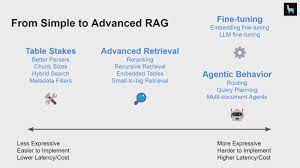
Enhancing Retrieval-Augmented Generation (RAG) Systems with Topic-Based Document Segmentation Dividing large documents into smaller, meaningful parts is crucial for the performance of Retrieval-Augmented Generation (RAG) systems. RAG Chunking Method. These systems benefit from frameworks that offer multiple document-splitting options. This Tectonic insight introduces an innovative approach that identifies topic changes using sentence embeddings, improving the subdivision process to create coherent topic-based sections. RAG Systems: An Overview A Retrieval-Augmented Generation (RAG) system combines retrieval-based and generation-based models to enhance output quality and relevance. It first retrieves relevant information from a large dataset based on an input query, then uses a transformer-based language model to generate a coherent and contextually appropriate response. This hybrid approach is particularly effective in complex or knowledge-intensive tasks. Standard Document Splitting Options Before diving into the new approach, let’s explore some standard document splitting methods using the LangChain framework, known for its robust support of various natural language processing (NLP) tasks. LangChain Framework: LangChain assists developers in applying large language models across NLP tasks, including document splitting. Here are key splitting methods available: Introducing a New Approach: Topic-Based Segmentation Segmenting large-scale documents into coherent topic-based sections poses significant challenges. Traditional methods often fail to detect subtle topic shifts accurately. This innovative approach, presented at the International Conference on Artificial Intelligence, Computer, Data Sciences, and Applications (ACDSA 2024), addresses this issue using sentence embeddings. The Core Challenge Large documents often contain multiple topics. Conventional segmentation techniques struggle to identify precise topic transitions, leading to fragmented or overlapping sections. This method leverages Sentence-BERT (SBERT) to generate embeddings for individual sentences, which reflect changes in the vector space as topics shift. Approach Breakdown 1. Using Sentence Embeddings: 2. Calculating Gap Scores: 3. Smoothing: 4. Boundary Detection: 5. Clustering Segments: Algorithm Pseudocode Gap Score Calculation: pythonCopy code# Example pseudocode for gap score calculation def calculate_gap_scores(sentences, n): embeddings = [sbert.encode(sentence) for sentence in sentences] gap_scores = [] for i in range(len(sentences) – n): before = embeddings[i:i+n] after = embeddings[i+n:i+2*n] score = cosine_similarity(before, after) gap_scores.append(score) return gap_scores Gap Score Smoothing: pythonCopy code# Example pseudocode for smoothing gap scores def smooth_gap_scores(gap_scores, k): smoothed_scores = [] for i in range(len(gap_scores)): start = max(0, i – k) end = min(len(gap_scores), i + k + 1) smoothed_score = sum(gap_scores[start:end]) / (end – start) smoothed_scores.append(smoothed_score) return smoothed_scores Boundary Detection: pythonCopy code# Example pseudocode for boundary detection def detect_boundaries(smoothed_scores, c): boundaries = [] mean_score = sum(smoothed_scores) / len(smoothed_scores) std_dev = (sum((x – mean_score) ** 2 for x in smoothed_scores) / len(smoothed_scores)) ** 0.5 for i, score in enumerate(smoothed_scores): if score < mean_score – c * std_dev: boundaries.append(i) return boundaries Future Directions Potential areas for further research include: Conclusion This method combines traditional principles with advanced sentence embeddings, leveraging SBERT and sophisticated smoothing and clustering techniques. This approach offers a robust and efficient solution for accurate topic modeling in large documents, enhancing the performance of RAG systems by providing coherent and contextually relevant text sections. Like Related Posts Who is Salesforce? Who is Salesforce? Here is their story in their own words. From our inception, we’ve proudly embraced the identity of Read more Salesforce Unites Einstein Analytics with Financial CRM Salesforce has unveiled a comprehensive analytics solution tailored for wealth managers, home office professionals, and retail bankers, merging its Financial Read more AI-Driven Propensity Scores AI plays a crucial role in propensity score estimation as it can discern underlying patterns between treatments and confounding variables Read more Tectonic’s Successful Salesforce Track Record Salesforce Technology Services Integrator – Tectonic has successfully delivered Salesforce in a variety of industries including Public Sector, Hospitality, Manufacturing, Read more

Read More
Einstein Personalization and Copilots

Einstein Personalization and Copilots

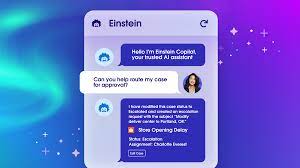
Salesforce launched a suite of new generative AI products at Connections in Chicago, including new Einstein Copilots for marketers and merchants, and Einstein Personalization. Einstein Personalization and Copilots To gain insights into these products and Salesforce’s evolving architecture, Bobby Jania, CMO of Marketing Cloud was interviewed. Salesforce’s Evolving Architecture Salesforce has a knack for introducing new names for its platforms and products, sometimes causing confusion about whether something is entirely new or simply rebranded. Reporters sought clarification on the Einstein 1 platform and its relationship to Salesforce Data Cloud. “Data Cloud is built on the Einstein 1 platform,” Jania explained. “Einstein 1 encompasses the entire Salesforce platform, including products like Sales Cloud and Service Cloud, continuing the original multi-tenant cloud concept.” Data Cloud, developed natively on Einstein 1, was the first product built on Hyperforce, Salesforce’s new cloud infrastructure. “From the start, Data Cloud has been able to connect to and read anything within Sales Cloud, Service Cloud, etc. Additionally, it can now handle both structured and unstructured data.” This marks significant progress from a few years ago when Salesforce’s platform comprised various acquisitions (like ExactTarget) that didn’t seamlessly integrate. Previously, data had to be moved between products, often resulting in duplicates. Now, Data Cloud serves as the central repository, with applications like Tableau, Commerce Cloud, Service Cloud, and Marketing Cloud all accessing the same operational customer profile without duplicating data. Salesforce customers can also import their own datasets into Data Cloud. “We wanted a federated data model,” Jania said. “If you’re using Snowflake, for example, we virtually sit on your data lake, providing value by forming comprehensive operational customer profiles.” Understanding Einstein Copilot “Copilot means having an assistant within the tool you’re using, contextually aware of your tasks and assisting you at every step,” Jania said. For marketers, this could start with a campaign brief created with Copilot’s help, identifying an audience, and developing content. “Einstein Studio is exciting because customers can create actions for Copilot that we hadn’t even envisioned.” Contrary to previous reports, there is only one Copilot, Einstein Copilot, with various use cases like marketing, merchants, and shoppers. “We use these names for clarity, but there’s just one Copilot. You can build your own use cases in addition to the ones we provide.” Marketers will need time to adapt to Copilot. “Adoption takes time,” Jania acknowledged. “This Connections event offers extensive hands-on training to help people use Data Cloud and these tools, beyond just demonstrations.” What’s New with Einstein Personalization Einstein Personalization is a real-time decision engine designed to choose the next best action or offer for customers. “What’s new is that it now runs natively on Data Cloud,” Jania explained. While many decision engines require a separate dataset, Einstein Personalization evaluates a customer holistically and recommends actions directly within Service Cloud, Sales Cloud, or Marketing Cloud. Ensuring Trust Connections presentations emphasized that while public LLMs like ChatGPT can be applied to customer data, none of this data is retained by the LLMs. This isn’t just a matter of agreements; it involves the Einstein Trust Layer. “All data passing through an LLM runs through our gateway. Personally identifiable information, such as credit card numbers or email addresses, is stripped out. The LLMs do not store the output; Salesforce retains it for auditing. Any output that returns through our gateway is logged, checked for toxicity, and only then is PII reinserted into the response. These measures ensure data safety beyond mere handshakes,” Jania said. Like Related Posts Who is Salesforce? Who is Salesforce? Here is their story in their own words. From our inception, we’ve proudly embraced the identity of Read more Salesforce Marketing Cloud Transactional Emails Salesforce Marketing Cloud Transactional Emails are immediate, automated, non-promotional messages crucial to business operations and customer satisfaction, such as order Read more Salesforce Unites Einstein Analytics with Financial CRM Salesforce has unveiled a comprehensive analytics solution tailored for wealth managers, home office professionals, and retail bankers, merging its Financial Read more AI-Driven Propensity Scores AI plays a crucial role in propensity score estimation as it can discern underlying patterns between treatments and confounding variables Read more
Read More
Did Google Dethrone ChatGPT

Did Google Dethrone ChatGPT?

Google’s Bard has emerged as a contender in the realm of large language models (LLMs), sparking speculation about its potential to outshine OpenAI’s ChatGPT. This insight explores the validity of this claim and examines the tests and factors that could determine the ultimate victor in this ongoing AI rivalry. Did Google Dethrone ChatGPT? Google’s Gemini 1.5 Pro is a generational leap in terms of Multimodal Large Language Models, or MLLMs, much like GPT-4 was to LLMs back in March 2023. Did Google Dethrone ChatGPT? While initial rumors of Bard’s “dethronement” of ChatGPT surfaced from a single LinkedIn post in February 2024, substantial evidence is required to substantiate such claims. Let’s determine the potential battleground: The Testing Grounds: There’s no singular, universally recognized benchmark for evaluating LLMs. Here are some areas where Google and OpenAI may showcase their AI prowess: Generative Text Quality: Can the LLM generate various creative text formats—such as poems, code, scripts, and emails—while maintaining coherence and factual accuracy? Question Answering: How effectively can the LLM respond to open-ended, challenging, or unconventional questions, drawing on its knowledge base? Following Instructions: Can the LLM adhere to complex instructions and perform tasks requiring multi-step reasoning? Bias Mitigation: Does the LLM demonstrate impartiality in its responses, or does it exhibit traces of prejudice or social stereotypes? Beyond the Tests: While test results offer insights into LLM capabilities, other factors influence their overall impact: Accessibility: How easily can the LLM be accessed by the public? Is there a user-friendly interface or developer API? Real-World Applications: How seamlessly can the LLM be integrated into practical applications like chatbots, virtual assistants, or educational tools? Continuous Learning: How adeptly does the LLM adapt and enhance its performance over time, incorporating new data and user feedback? The Current Landscape: Declaring a definitive winner is challenging. Bard and ChatGPT excel in different domains. Here’s a speculative analysis: Generative Text Quality: Bard may have a slight advantage, leveraging Google’s extensive dataset. Question Answering: ChatGPT might excel in responding to open-ended queries with creativity, while Bard may prioritize factual accuracy. Following Instructions & Bias Mitigation: Both LLMs are continually refining their capabilities in these areas. The Future of LLMs: The landscape of LLMs is dynamic, with Google and OpenAI poised to make significant advancements. Anticipated developments include: Focus on Explainability: Efforts to understand the reasoning behind LLM responses to foster transparency and trust. Bias Mitigation: Strategies to address bias in LLMs for fairer and more inclusive interactions. Specialized LLMs: Development of domain-specific LLMs tailored to fields like medicine or law. Is Google AI better than ChatGPT? Gemini offers a better user experience, with more imagery and website links. Gemini Advanced generates better AI images than ChatGPT Plus. Gemini responses were often set out in a more readable format than ChatGPT’s responses. Gemini was better at generating spreadsheet formulas than ChatGPT. How is Bard better than ChatGPT? Bard has real-time access to the internet through Google Search, allowing it to incorporate the latest information and news into its responses. Trained on a static dataset not updated since 2021, however, ChatGPT can only access external information through plugins, and this functionality is limited. Is Google nervous about ChatGPT? It’s that the technology represents everything Google was afraid artificial intelligence would become. If ChatGPT runs rampant, the search giant fears it could ruin AI adoption for everyone. Since going viral, ChatGPT has demonstrated how generative AI can be user-friendly, practical, and productive. The narrative of ChatGPT’s dethronement may be premature. Bard and ChatGPT are evolving entities, and the ultimate victor will be determined by their ability to navigate future challenges and opportunities. As these LLMs progress, users stand to benefit from access to increasingly sophisticated and beneficial AI tools. Like Related Posts Who is Salesforce? Who is Salesforce? Here is their story in their own words. From our inception, we’ve proudly embraced the identity of Read more Salesforce Unites Einstein Analytics with Financial CRM Salesforce has unveiled a comprehensive analytics solution tailored for wealth managers, home office professionals, and retail bankers, merging its Financial Read more AI-Driven Propensity Scores AI plays a crucial role in propensity score estimation as it can discern underlying patterns between treatments and confounding variables Read more Tectonic’s Successful Salesforce Track Record Salesforce Technology Services Integrator – Tectonic has successfully delivered Salesforce in a variety of industries including Public Sector, Hospitality, Manufacturing, Read more

Read More
AI in Marketing

AI in Marketing

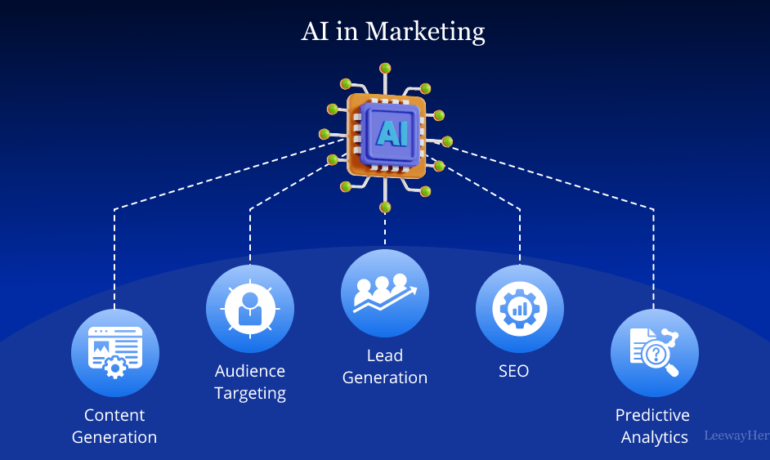
John Dutton recently posted in his blog about AI “representatives” who talk to you. It’s an interesting look into the “creep” factor potentially in artificial intelligence and certainly provides plenty of food for thought on robots and AI in marketing. Read it here. Summarized below. When the media or the internet shares a look at this wierd generated image talking, its easy to spot. When not flagged, it is getting a little harder to know for sure-is it real or is it Memorex. Unveiling AI in Ukraine Last week, Ukraine’s Ministry of Foreign Affairs introduced Victoriya Shi, a “digital representative” and AI-produced avatar. Shi delivers official statements in videos shared on the Ministry’s online social channels. According to Ukrainian Foreign Minister Dmytro Kuleba, Shi was created to “save time and resources” for diplomats. Given the ongoing conflict in Ukraine, this rationale seems reasonable. However, the introduction of such an AI avatar raises questions about the future and the potential for dystopian developments. A key concern is the ease of deepfaking an already artificial persona. This challenge has been addressed by the MFA through a smart yet simple solution: a QR code in the corner of each video that directs viewers to the official text version of the announcement on the Ministry’s website. It’s worth noting that the official statements themselves are not AI-generated, which could set a worrying precedent. While the Ukrainian version’s reception is unknown, the English version of Victoriya Shi struggles to escape the “uncanny valley” of artificial humans. Her sign-off, “I look forward to our fruitful cooperation,” has an eerie, robotic undertone. This unsettling impression might not be entirely negative. Navigating the Age of AI We are deeply entrenched in the Age of AI, where trust has become a scarce commodity. The concept of “fake news” emerged well before generative AI, gaining prominence in late 2016 with the rise of certain political figures. A search on Google Trends reveals the sudden spike in terms like “fake news” and “post-truth” during that period. With AI’s potential to create convincing deepfakes, the challenge of distinguishing real from fake is intensifying. A recent incident in Hong Kong saw an employee deceived by an AI-generated video, leading to a $25 million fraud. This highlights the need for secure credentialing, especially in large organizations and potential metaverse meetings. However, in-person meetings remain immune to such digital deceptions. AI’s Role in Authenticity Ironically, AI might help combat its own deceptions. OpenAI’s recent collaboration with the Coalition for Content Provenance and Authenticity (C2PA) aims to develop tools for identifying AI-generated content. As deepfakes become more sophisticated, the absence of C2PA authentication could become a red flag. If this leads to a heightened skepticism towards digital media, it might not be entirely negative. AI could bolster our defenses against scams, encouraging a healthy suspicion of the digital content we consume. The Balance of Authenticity and Truth The distinction between authenticity and truth is crucial. A government-created AI avatar can be fake in its artificiality but still deliver authentic, official statements. As generative AI advances, we must fine-tune our skepticism. Victoriya Shi’s name reflects Ukraine’s hope for “victory” and the integration of AI (“Shi” in Ukrainian). The war may ultimately hinge on intelligent tech use rather than sheer military might. Update and Reflections Following the newsletter’s release, it was revealed that WPP, the world’s largest ad agency network, nearly fell victim to a deepfake scam, with the CEO’s voice being replicated by AI. The Dystopia/Utopia Dichotomy The generative AI revolution has begun, and its trajectory could lead to either a utopian or dystopian future. My novel, “2084,” explores a world where life appears superficially perfect, masking underlying issues. Artistic AI Innovations One of my book’s main characters is a sculptor, a profession I initially believed immune to AI. However, Monumental Labs, founded in 2022, uses “sensors and AI” to produce sculptures at a fraction of traditional costs. This reality mirrors the AI-driven world imagined in “2084.” Genetic Modifications and Luxury Fresh Del Monte’s Rubyglow® pineapple, an ultra-premium, genetically modified fruit, exemplifies the future of designer foods. My novel envisions similar advancements with patented food items and drone-pollinated plants. The Challenger Mindset Adam Morgan, an expert in the challenger brand mindset, emphasizes the importance of maintaining a challenger attitude regardless of market position. Companies like Netflix exemplify this, adapting and thriving in a competitive landscape by retaining a challenger’s drive. The Right to Repair and Brand Identity The US Government Accountability Office highlights the “softwareification” of cars, making independent repairs difficult. Similarly, Apple’s restrictive policies on iPhone repairs underline the broader trend of manufacturers controlling repair markets. Cult of Brand Identity The Gray Area podcast discusses how modern consumers interact with brands, focusing on identity over product quality. This shift underscores the evolving landscape of commercial competition and consumer behavior. Like Related Posts Salesforce Marketing Cloud Transactional Emails Salesforce Marketing Cloud Transactional Emails are immediate, automated, non-promotional messages crucial to business operations and customer satisfaction, such as order Read more Salesforce Unites Einstein Analytics with Financial CRM Salesforce has unveiled a comprehensive analytics solution tailored for wealth managers, home office professionals, and retail bankers, merging its Financial Read more AI-Driven Propensity Scores AI plays a crucial role in propensity score estimation as it can discern underlying patterns between treatments and confounding variables Read more Tectonic’s Successful Salesforce Track Record Salesforce Technology Services Integrator – Tectonic has successfully delivered Salesforce in a variety of industries including Public Sector, Hospitality, Manufacturing, Read more
Read More
Securing SaaS

Securing SaaS

Obsidian Security recently discussed the complexity of enforcing Single Sign-On (SSO) within Salesforce and frequently encountering misconfigurations. Notably, 60% of Obsidian’s customers initially have local access without Multi-Factor Authentication (MFA) configured for Salesforce, highlighting a significant security gap that Obsidian diligently works to secure. Securing SaaS. The Hidden Vulnerability Application owners who manage Salesforce daily often remain unaware of this misconfiguration. Despite their deep knowledge of Salesforce management, local access without MFA presents an overlooked vulnerability. This situation raises concerns about the security of other SaaS applications, especially those without developed expertise or knowledge. If you have concerns about your configuration, Tectonic can help. Attacker Focus and Trends Attackers have historically targeted the Identity Provider (IdP) space, focusing on providers like Okta, Microsoft Entra, and Ping. This strategy offers maximal impact, as compromising an IdP grants broad access across multiple applications. Developing expertise to breach a few IdPs is more efficient than learning the diverse local access pathways of numerous SaaS vendors. Over the past 12 months, nearly 100% of the breaches that required Obsidian’s intervention through CrowdStrike or other incident response partners were IdP-focused. Notably, 70% of these breaches involved subverting MFA, often through methods like SIM swapping. In instances where local access bypasses the IdP, 95% of the time it lacks MFA. Recent discussions around Snowflake have brought attention to “shadow authentication,” defined as unsanctioned means to authenticate a user within an application. Obsidian Security has observed an increase in brute force attacks against SaaS applications via local access pathways over the last two weeks, indicating a growing awareness of this attack vector. Future Expectations Attackers continually seek easy and efficient pathways. Over the next 12 months, local access or shadow authentication is expected to become a major attack vector. Organizations must proactively secure these pathways as attackers shift their focus. What You Can Do How Obsidian Helps Salesforce Security partners offers robust solutions to address these challenges: By leveraging partner capabilities, organizations can enhance their security posture, protecting against evolving threats targeting local access and shadow authentication. The post “The Growing Importance of Securing Local Access in SaaS Applications” appeared first on Obsidian Security. Like Related Posts Who is Salesforce? Who is Salesforce? Here is their story in their own words. From our inception, we’ve proudly embraced the identity of Read more Salesforce Marketing Cloud Transactional Emails Salesforce Marketing Cloud Transactional Emails are immediate, automated, non-promotional messages crucial to business operations and customer satisfaction, such as order Read more Salesforce Unites Einstein Analytics with Financial CRM Salesforce has unveiled a comprehensive analytics solution tailored for wealth managers, home office professionals, and retail bankers, merging its Financial Read more AI-Driven Propensity Scores AI plays a crucial role in propensity score estimation as it can discern underlying patterns between treatments and confounding variables Read more

Read More
Einstein Generative AI Added to Service Cloud

Einstein Generative AI Added to Service Cloud

Salesforce to Enhance Service Cloud with New AI Tools and Broaden Automated Customer Conversations Salesforce is set to roll out more Einstein 1 generative AI tools for Service Cloud users in June and October. But the big news? More places to deploy automated customer conversations are on the way. Unified Conversations for WhatsApp and Line Yesterday, Salesforce unveiled Unified Conversations for WhatsApp. This feature automates bot responses to customer queries related to targeted marketing messages on the popular messaging app. And that’s not all—later this year, Salesforce plans to support Line, the widely used messaging app in Japan. These services leverage Salesforce’s Einstein 1 generative AI platform. The bots aggregate structured and unstructured CRM, product, service, and other data via Salesforce Data Cloud to generate personalized responses. The new features allow these conversations to be routed to the channels where a Salesforce user’s customers are most active online. Expanding Channel Support Salesforce also plans to introduce a “bring your own channel” connector to support digital channels not natively covered by the platform. Think TikTok, Discord, and South Korea’s KakaoTalk, said Ryan Nichols, chief product officer for Salesforce Service Cloud. “It’s about getting data from all your conversations with customers from Service Cloud into Data Cloud and using that to not just do a great job of delivering customer service, but actually growing your business,” Nichols explained. Conversation Mining and Revenue Opportunities Salesforce Einstein Conversation Mining, currently in beta, aggregates conversations across customer channels to surface insights on the topics where customers need help. The goal is to turn inbound customer service from a cost center into a revenue center—a dream that speakers and vendors at conferences like Dreamforce and ICMI have been floating for years. Traditionally, performance metrics such as time-to-answer and hold-time reduction have pushed agents to minimize call durations. However, the integration of generative AI could transform this dynamic. Constellation Research analyst Liz Miller, who has previously been skeptical, now sees generative AI as a potential game-changer. Armed with data, bots, and their copilot counterparts, agents could save time and access the right information to up-sell customers during service engagements. Nichols hinted that Salesforce is working on up-sell automation features for contact center service bots, which might be unveiled later this year. A Leap Forward for Contact Centers Copilot-type technologies for contact centers could be the breakthrough needed to enable human agents to generate revenue during service interactions. “Contact center leaders have been trying to etch out a space of strategic importance for themselves in the business that isn’t just ‘how do we get angry people off the phone?’” Miller said. Einstein Generative AI Added to Service Cloud Generative AI tools can eliminate the mundane, repetitive tasks that consume much of contact center agents’ time. Miller added, “If they no longer had to summarize the call, and they could actually go to the next call? [Generating revenue] sounds really big, and it sounds really ridiculous, but if we took all the garbage off of these people’s plates that no one wants to do, we give them an awful lot of time to actually be better mouthpieces for their organizations.” In short, Salesforce is gearing up to transform customer service into a more efficient, revenue-generating machine with a little help from generative AI. And who knows, maybe your next customer service bot will be better at upselling you than your favorite barista. Like1 Related Posts Who is Salesforce? Who is Salesforce? Here is their story in their own words. From our inception, we’ve proudly embraced the identity of Read more Salesforce Marketing Cloud Transactional Emails Salesforce Marketing Cloud Transactional Emails are immediate, automated, non-promotional messages crucial to business operations and customer satisfaction, such as order Read more Salesforce Unites Einstein Analytics with Financial CRM Salesforce has unveiled a comprehensive analytics solution tailored for wealth managers, home office professionals, and retail bankers, merging its Financial Read more AI-Driven Propensity Scores AI plays a crucial role in propensity score estimation as it can discern underlying patterns between treatments and confounding variables Read more

Read More
gettectonic.com