
Salesforce Einstein Archives - gettectonic.com - Page 9
Generative AI for Channel Sales Teams

Generative AI for Channel Sales Teams

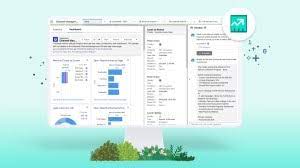
Salesforce unveiled new AI, CRM, and Slack sales enhancements tailored for its Partner Relationship Management (PRM) solution. Generative AI for Channel Sales Teams. The latest generative and predictive AI is now accessible to channel managers, third-party resellers, brokers, and various indirect sellers. Generative AI introduces advanced capabilities to streamline channel management and expedite partner sales. Moreover, the AI seamlessly integrated into the CRM aids channel managers and partners in maintaining focus and alignment on top-priority opportunities. This announcement expands Einstein for Sales directly into the workflows of channel managers and their partners. Einstein Copilot streamlines operations and enables channel managers to focus on scalability by automating administrative tasks and sharing proactive insights on promising leads and opportunities. Furthermore, the integration of Slack AI and PRM for Slack facilitates swift collaboration and data sharing among internal and external partners. Why it’s significant: What’s new: Salesforce perspective: “New generative AI, data, and automation capabilities in a Slack-first PRM will offer channel sales teams practical tools to enhance partner and internal processes. This will help Salesforce partners and sellers increase collaboration, improve seller productivity on both sides, deepen relationships, and enable growth.” – Ryan Nunez, VP, Industry Solutions Customer perspective: “Thanks to Partner Relationship Management, our team can help our partners get up and running faster, and they can automate a lot of what they used to do previously. We’re also excited to see how the AI insights – such as lead scoring – will give our partners clear guidance on what to focus on much faster.” – Hooman Shahidi, Chief Executive Officer and Co-Founder, EVPassport Availability: Disclaimer: Any unreleased services or features referenced here are not currently available and may not be delivered on time or at all. Customers should make their purchase decisions based upon features that are currently available. Like Related Posts Who is Salesforce? Who is Salesforce? Here is their story in their own words. From our inception, we’ve proudly embraced the identity of Read more Salesforce Marketing Cloud Transactional Emails Salesforce Marketing Cloud Transactional Emails are immediate, automated, non-promotional messages crucial to business operations and customer satisfaction, such as order Read more Salesforce Unites Einstein Analytics with Financial CRM Salesforce has unveiled a comprehensive analytics solution tailored for wealth managers, home office professionals, and retail bankers, merging its Financial Read more AI-Driven Propensity Scores AI plays a crucial role in propensity score estimation as it can discern underlying patterns between treatments and confounding variables Read more

Read More
Education Cloud AI Innovations

Education Cloud AI Innovations

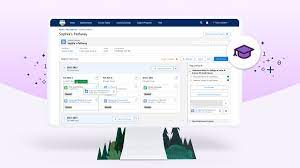
Salesforce AI Innovations: Empowering Student Success and Faculty Efficiency Salesforce is introducing new Education Cloud AI Innovations, AI-powered tools designed to streamline the educational journey, enabling students to chart clear paths to graduation, translate their coursework into resume-ready skills, and connect with mentors who can guide them toward their career goals. Enhancing Faculty and Staff Efficiency with AI New generative AI capabilities are set to automate time-consuming tasks for faculty and staff, allowing them to focus on what matters most—driving student success. Personalizing Student Experiences with AI Institutions like the University of Nevada Las Vegas and Texas Tech are leveraging Salesforce for Education to create personalized student experiences and improve staff efficiency through AI-driven solutions. Salesforce Introduces AI-Powered Student Success Tools for Education Cloud Today, Salesforce unveiled cutting-edge AI tools for Education Cloud, including Intelligent Degree Planning and Skills Generator. These innovations are designed to help institutions craft personalized graduation pathways, translate coursework into tangible skills, and facilitate impactful mentorship programs. Additionally, Salesforce introduced Data Cloud for Education and Einstein Copilot Recruitment & Admissions Actions. These tools will enable institutions to automate routine tasks, enhance recruitment and enrollment processes, and bolster student support. Why It Matters Education professionals face the highest burnout rates across industries, and students are feeling the impact—only 11% of college students believe they are workforce-ready. As the education sector approaches an enrollment cliff, confidence in the value of a college degree is declining, and educators are leaving the profession in significant numbers. Schools must find ways to reduce staff workload while improving student experiences and outcomes. Explore Education Cloud Elevate the educational experience with the #1 AI CRM for learner and institution success. DIVE IN AI Innovation for Lifelong Student Success The new AI capabilities for Education Cloud, built on Salesforce’s Einstein 1 Platform, will help higher education and K-12 institutions unlock the power of their data to deliver trusted AI solutions. These innovations are designed to improve staff efficiency while enhancing student experiences and learning outcomes. Key features include: AI in Action for Faculty and Staff Salesforce is delivering new AI and data tools to automate tasks related to recruitment, enrollment, and student experience management. New features include: With these industry-specific AI and data tools, Education Cloud is poised to help K-12 and higher education institutions offer more individualized support to every student while increasing operational efficiency and reducing staff burnout. The Salesforce Perspective “Every institution wants to provide the best possible experiences for their students and staff. With industry-specific AI and data tools, Education Cloud will help K-12 and higher ed institutions offer more personalized support to every student while increasing efficiency and helping to reduce staff burnout. This will free educators and staff to focus on improving student outcomes, such as career readiness, well-being, and graduation rates.”— Bala Subramanian, VP & GM of Education Like Related Posts Who is Salesforce? Who is Salesforce? Here is their story in their own words. From our inception, we’ve proudly embraced the identity of Read more Salesforce Marketing Cloud Transactional Emails Salesforce Marketing Cloud Transactional Emails are immediate, automated, non-promotional messages crucial to business operations and customer satisfaction, such as order Read more Salesforce Unites Einstein Analytics with Financial CRM Salesforce has unveiled a comprehensive analytics solution tailored for wealth managers, home office professionals, and retail bankers, merging its Financial Read more AI-Driven Propensity Scores AI plays a crucial role in propensity score estimation as it can discern underlying patterns between treatments and confounding variables Read more
Read More
Salesforce AI

Salesforce AI

Salesforce AI is the cornerstone of our Einstein 1 Platform, offering reliable and adaptable AI solutions seamlessly integrated into your customer data. With Einstein, you can craft tailored, predictive, and generative AI experiences to address all your business requirements securely. Einstein brings conversational AI to every facet of your operations, from workflows and users to departments and industries. Here’s what Einstein can do for you: Sales AI: Accelerate sales cycles with trusted AI capabilities. Einstein can compose emails enriched with customer insights, summarize sales calls, and provide real-time predictions to guide sellers towards successful deals. Customer Service AI: Enhance customer service experiences while boosting agent efficiency. Einstein surfaces relevant information during support interactions, automates case resolutions, and empowers agents with a knowledge base. Marketing AI: Drive personalized and efficient marketing campaigns at scale. Einstein provides insights to enhance engagement, create personalized customer journeys, and automate outreach efforts. Commerce AI: Personalize every buyer and merchant interaction with flexible ecommerce AI tools. Einstein generates product descriptions, recommends relevant products, and optimizes buying experiences. Einstein 1 Studio: Customize and extend AI for CRM with ease. Configure actions, prompts, and models to tailor Einstein Copilot to your specific business needs. Copilot Builder: Extend Einstein Copilot with familiar platform features to streamline workflows and monitor interactions seamlessly. Prompt Builder: Create prompt templates to expedite tasks and generate content grounded in your business data, ensuring relevance across Einstein Copilot, Lightning pages, and flows. Model Builder: Build or import predictive AI models into Salesforce and the Einstein Trust Layer, seamlessly managing AI models in a unified control plane. Deploy AI you can trust with the Einstein Trust Layer, ensuring privacy, security, and responsible use across your organization. Features like Dynamic Grounding, Sensitive Data Masking, and Ethics and Inclusivity policies uphold ethical AI principles while optimizing accuracy and relevance. Join companies like General Mills and Riley Children’s Health in leveraging the power of Salesforce AI to drive personalized experiences and optimize operations for greater impact and efficiency. Like Related Posts Who is Salesforce? Who is Salesforce? Here is their story in their own words. From our inception, we’ve proudly embraced the identity of Read more Salesforce Marketing Cloud Transactional Emails Salesforce Marketing Cloud Transactional Emails are immediate, automated, non-promotional messages crucial to business operations and customer satisfaction, such as order Read more Salesforce Unites Einstein Analytics with Financial CRM Salesforce has unveiled a comprehensive analytics solution tailored for wealth managers, home office professionals, and retail bankers, merging its Financial Read more AI-Driven Propensity Scores AI plays a crucial role in propensity score estimation as it can discern underlying patterns between treatments and confounding variables Read more

Read More
Salesforce-Powered Nonprofit Events

Salesforce-Powered Nonprofit Events

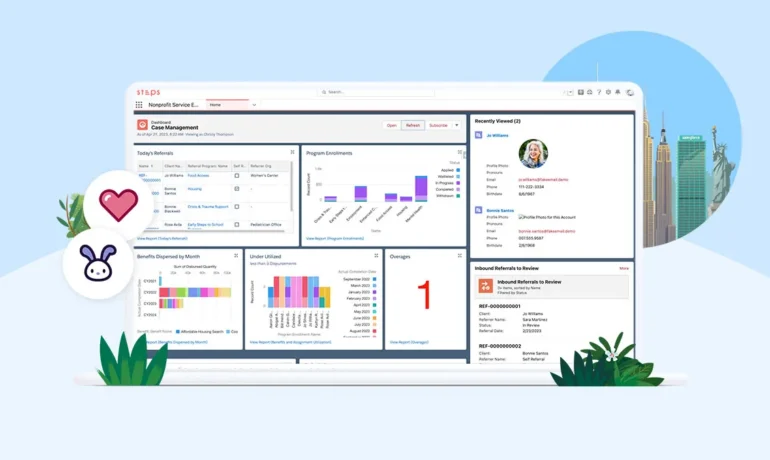
Salesforce has cemented its position as the #1 CRM, becoming an essential tool for businesses improving their marketing, sales, and support processes. But there’s another powerful feature you should explore: managing events directly within Salesforce. Salesforce’s versatility allows you to organize a successful event of any size, whether it’s online, offline, or a hybrid meeting. However, like any business endeavor, a well-thought-out strategy is crucial to ensure your event planning turns into a major success. In this insight, you’ll learn how events contribute to a business’s lifecycle, how to manage them effectively, and the essential tools you’ll need for successful event management in Salesforce. The Role of Events in Nonprofits If your company hasn’t yet ventured into event organization, it’s time to reconsider. Events are a great way to fuel engagement, foster data-driven decisions, and build a thriving community. On a larger scale, event planning offers a range of business benefits, including: Common Event Management Challenges Even with the best intentions, event planning comes with challenges that can derail your efforts if not addressed. Let’s review some common challenges and how Salesforce can help: How Salesforce Elevates Event Management Salesforce brings significant advantages to event planning, offering: Your Salesforce Event Planning Checklist To ensure your event management with Salesforce is effective, follow this simple checklist: Our Thoughts Building a robust event management process with Salesforce is not only a logical choice but a strategic one. It ensures smooth event execution, supports business growth, and boosts your brand’s equity. By leveraging the right tools, such as Salesforce, your event planning process becomes more efficient, data-driven, and ultimately more successful. For expert support in managing Salesforce-powered events, consider reaching out to a partner like Tectonic to guide you through the process. Like1 Related Posts Who is Salesforce? Who is Salesforce? Here is their story in their own words. From our inception, we’ve proudly embraced the identity of Read more Salesforce Marketing Cloud Transactional Emails Salesforce Marketing Cloud Transactional Emails are immediate, automated, non-promotional messages crucial to business operations and customer satisfaction, such as order Read more Salesforce Unites Einstein Analytics with Financial CRM Salesforce has unveiled a comprehensive analytics solution tailored for wealth managers, home office professionals, and retail bankers, merging its Financial Read more AI-Driven Propensity Scores AI plays a crucial role in propensity score estimation as it can discern underlying patterns between treatments and confounding variables Read more

Read More
AI Data Foundation

AI Data Foundation

In the era of AI, the Data Foundation is crucial for empowering AI-driven customer experiences. Data Cloud emerges as a unifying force, seamlessly integrating data to fuel transformative AI encounters and elevate customer-centricity. Beyond mere data management, Data Cloud represents a significant advancement, enabling profound insights by harmonizing diverse data sources with CRM data from the Salesforce platform. This convergence facilitates the unlocking of actionable insights critical for informed decision-making. In a strategic collaboration, Salesforce and AWS extend their partnership to enhance AI capabilities. AWS AI services are integrated into Salesforce’s Einstein Trust Layer, empowering Data Cloud with seamless access to AWS data services and compute resources. Additionally, Data Cloud and other Salesforce offerings are now accessible through the AWS Marketplace, streamlining procurement processes. This insight explores how Data Cloud unifies vast and varied business data with CRM data from the Salesforce Einstein Platform. It serves as a robust foundation for AI-powered customer experiences, providing businesses with unprecedented insights into their data universe. With Data Cloud, businesses can seamlessly combine CRM data with diverse sources, including transactional data, IoT device data, and social media interactions. This consolidation fosters a single source of truth, enhancing decision-making and the relevance of AI models. Unlike traditional approaches that involve laborious data movement, Data Cloud operates on AWS infrastructure, enabling seamless data connectivity and preparation without the need for ETL processes. Leveraging Apache Iceberg and Salesforce’s contributions, Data Cloud ensures data consistency, flexibility, and interoperability, essential for AI-driven insights. Moreover, Data Graphs offer a novel approach to assemble and rapidly access data collections from disparate sources, facilitating grounded AI experiences. Through Model Builder and Einstein Copilot Studio, businesses can seamlessly access Data Cloud data in Amazon SageMaker for custom AI model creation without ETL overheads. This partnership between Salesforce and AWS represents a paradigm shift in data management and AI integration. By combining Salesforce’s customer-centric approach with AWS’s scalable infrastructure, Data Cloud empowers businesses to harness AI as a practical tool for growth and innovation in the digital era. Like1 Related Posts Who is Salesforce? Who is Salesforce? Here is their story in their own words. From our inception, we’ve proudly embraced the identity of Read more Salesforce Marketing Cloud Transactional Emails Salesforce Marketing Cloud Transactional Emails are immediate, automated, non-promotional messages crucial to business operations and customer satisfaction, such as order Read more Salesforce Unites Einstein Analytics with Financial CRM Salesforce has unveiled a comprehensive analytics solution tailored for wealth managers, home office professionals, and retail bankers, merging its Financial Read more AI-Driven Propensity Scores AI plays a crucial role in propensity score estimation as it can discern underlying patterns between treatments and confounding variables Read more
Read More
Tectonic at a Glance

Why AI Keeps Salesforce Co-Founder Up At Night

Parker Harris holds conflicting views on artificial intelligence (AI). As the co-founder of Salesforce, he has urged the company’s leaders to swiftly integrate AI into their products. However, he grapples with concerns about maintaining the balance between speed and the company’s reputation for delivering high-quality solutions to clients. This dilemma has even led him to lose sleep. Expressing his anxiety at Salesforce’s World Tour event in New York City, Harris emphasized the unprecedented pace of AI development. He feels a sense of urgency to accelerate the adoption of AI technologies, driven by the need to meet customer expectations. Yet, he recognizes the importance of caution, knowing that customers rely on Salesforce to provide reliable solutions. Harris acknowledges the challenge of navigating this balance, pondering how to move quickly without making critical mistakes. Transitioning to his role as chief technology officer at Slack, a subsidiary of Salesforce, Harris reflected on AI’s potential, particularly its ability to generate images and videos from simple prompts. However, he tempered the enthusiasm by noting that what may seem like “magic tricks” on social media platforms may not necessarily translate effectively in workplace contexts. Harris also acknowledged the pervasive fear among entrepreneurs of missing out on the AI revolution, especially after a significant milestone in February when OpenAI, a market leader, was valued at $80 billion. This realization, coupled with the partnership between Salesforce rival Microsoft and OpenAI, prompted Harris and Salesforce co-founder Marc Benioff to acknowledge their need to catch up in the AI race. Salesforce’s main AI offering, Einstein, enables businesses to create predictive AI models using proprietary customer data. In Slack, enterprises can access Slack AI, a tool that summarizes conversations and provides answers to questions, for a monthly fee of $10 per person. Despite the promise of AI, Harris highlighted a critical issue: trust. He expressed concerns about AI occasionally providing inaccurate information or omitting key details, which could erode user trust in the technology. Maintaining trust is crucial, as users are unlikely to continue using AI tools if they encounter such troubling issues. Like Related Posts Who is Salesforce? Who is Salesforce? Here is their story in their own words. From our inception, we’ve proudly embraced the identity of Read more Salesforce Marketing Cloud Transactional Emails Salesforce Marketing Cloud Transactional Emails are immediate, automated, non-promotional messages crucial to business operations and customer satisfaction, such as order Read more Salesforce Unites Einstein Analytics with Financial CRM Salesforce has unveiled a comprehensive analytics solution tailored for wealth managers, home office professionals, and retail bankers, merging its Financial Read more AI-Driven Propensity Scores AI plays a crucial role in propensity score estimation as it can discern underlying patterns between treatments and confounding variables Read more
Read More
Salesforce Unified Knowledge

Salesforce Unified Knowledge

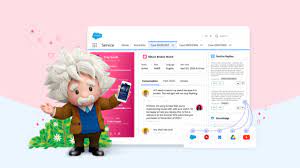
Salesforce Introduces Unified Knowledge: Empowering Service Excellence with Integrated Organizational Insights Salesforce has unveiled Unified Knowledge, a groundbreaking solution designed to integrate organizational knowledge from diverse third-party systems directly into Salesforce. This innovation aims to enhance the efficiency of service agents, enabling them to resolve customer cases more swiftly and effectively. Unified Knowledge, coupled with customer data from Salesforce Data Cloud, leverages this aggregated knowledge to generate precise and personalized AI-driven content. This capability ensures faster and more tailored customer experiences. Why It Matters In today’s service landscape, 79% of organizations are investing in AI to bolster their support capabilities. However, 76% of executives face challenges in scaling AI effectively due to fragmented systems and isolated data sources. Enhancing Service with AI: Einstein for Service Built on the Einstein Trust Layer, Einstein for Service harnesses AI to elevate service team productivity and enhance customer experiences. Historically, this capability has relied on structured and unstructured customer data within Data Cloud. Unified Knowledge: Integrating Comprehensive Data Sources Unified Knowledge enriches AI models by incorporating Salesforce knowledge articles and information from external platforms such as SharePoint, Confluence, Google Drive, and corporate websites. This holistic data foundation empowers Einstein for Service with robust generative AI capabilities, ensuring agents and AI assistants deliver timely and accurate solutions. Strategic Partnership with Zoomin Powered by a strategic collaboration with Zoomin, Unified Knowledge amplifies service capabilities through: Expansion Across Salesforce Ecosystem Unified Knowledge extends beyond Service Cloud to integrate seamlessly with Salesforce Field Service, Sales Cloud, Health Cloud, and Financial Services Cloud, ensuring comprehensive data utilization across various operational domains. Salesforce Perspective “In service, enhanced knowledge and context lead to superior outcomes for both agents and customers. Unified Knowledge complements Data Cloud’s customer insights by integrating external organizational data, facilitating widespread adoption of generative AI and enabling faster, more meaningful customer engagements.” – Kishan Chetan, EVP and GM, Service Cloud Customer Reaction “Unified Knowledge enables us to deliver proactive, predictive, and preventive service to our customers. By unifying our extensive resources through a single system, our agents can swiftly provide solutions, ensuring consistent service delivery and boosting organizational productivity.” – Dharam Rai, VP, Global Customer Success & Experience, Sonos Availability Unified Knowledge is available in open beta today for Salesforce customers using Service Cloud Unlimited Edition, Einstein 1 Service Edition, or the Knowledge Add-On. Knowledge Answers in Bots will be generally available in June 2024, while Einstein Copilot for Mobile Workers and Search Answers are available now. This strategic initiative underscores Salesforce’s commitment to enhancing service excellence through integrated, AI-driven solutions that empower organizations to deliver exceptional customer experiences. Like Related Posts Who is Salesforce? Who is Salesforce? Here is their story in their own words. From our inception, we’ve proudly embraced the identity of Read more Salesforce Marketing Cloud Transactional Emails Salesforce Marketing Cloud Transactional Emails are immediate, automated, non-promotional messages crucial to business operations and customer satisfaction, such as order Read more Salesforce Unites Einstein Analytics with Financial CRM Salesforce has unveiled a comprehensive analytics solution tailored for wealth managers, home office professionals, and retail bankers, merging its Financial Read more AI-Driven Propensity Scores AI plays a crucial role in propensity score estimation as it can discern underlying patterns between treatments and confounding variables Read more
Read More
Rise of AI Agents

Rise of AI Agents

The Rise of AI Agents in Enterprise Automation Rise of AI Agents… It sound a bit like a B grade satire movie. But its not satire or scary. AI Agents, powered by large language models (LLMs), represent a groundbreaking paradigm shift in software. Unlike previous automation technologies, AI agents can reason, collaborate, and act in ways similar to human behavior. This new era of Enterprise AI Agents marks a significant evolution from traditional Robotic Process Automation (RPA), expanding the scope from simple task-level automation to enhancing complex knowledge work. RPA stands for Robotic Process Automation, which uses software bots to automate digital tasks and streamline processes. RPA can help reduce costs and improve efficiency. There are three main types of RPA: attended, unattended, and hybrid From RPA to AI Agents: A Strategic Shift A decade after the emergence of RPA, the enterprise landscape is poised for another transformation with intelligent AI agents. These agents are not merely incremental improvements but a revolutionary technology requiring new skills and tools. They transcend the limitations of RPA, moving beyond rule-based automation to dynamic, context-aware operations. Transitioning from RPA to AI agents is a strategic initiative necessitating executive sponsorship. This shift also offers automation leaders and Centers of Excellence (CoEs) the chance to reimagine their roles as strategic enablers within the enterprise. The Evolution of Enterprise Automation Automating Tasks: RPA RPA gained popularity in the mid-2010s through companies like UiPath, leveraging record-and-playback style UI automation. Despite early skepticism about its fragility, RPA established itself as a cornerstone of low-code business applications. Automating Processes: Intelligent Automation (IA) IA extends beyond RPA by incorporating techniques like API automation and OCR. It signals a shift from point-and-click automation to process automation, often blending coding with low-code tools. However, IA remains rule-based, suitable for structured processes. Automating Work: Intelligent AI Agents AI agents introduce a new agentic planning and execution workflow. They natively understand unstructured data and processes, making them ideal for tasks described in natural language rather than rigid rules. AI agents can self-correct and seek human feedback, enhancing resilience compared to pre-programmed bots. Strategic Applications of AI Agents AI agents expand the possibilities of enterprise automation. While RPA remains effective for repetitive, structured tasks, AI agents bring new capabilities to areas requiring flexible reasoning and decision-making. Tactical Automation AI agents can augment existing RPA workflows, addressing tasks that precede or follow RPA routines. This initial integration helps expand automation’s reach within the enterprise. Standard Decisions in Standard Contexts For work involving standard decisions within platforms like ServiceNow or Salesforce, AI and automation solutions from these vendors are beneficial. These platforms continue to innovate, enhancing their data and process capabilities. Strategic Core Business Workflows The most significant impact of AI agents lies in complex, custom-context tasks central to the enterprise’s operations. Here, built-for-purpose enterprise AI agents can drive substantial value, allowing human workers to focus on more strategic activities. Implementing AI Agents: Steps to Get Started The Urgency of Adopting AI Agents The rapid pace of AI advancements necessitates immediate action. Traditional strategies that plan for future technology must pivot to embrace AI today. Forward-looking companies are already reaping significant benefits from AI, and delaying adaptation risks losing competitive advantage. AI agents are not just the next step in automation; they are a transformative technology redefining enterprise workflows. By acting now, businesses can harness AI agents’ full potential, driving innovation and maintaining relevance in an ever-evolving market. Like Related Posts Who is Salesforce? Who is Salesforce? Here is their story in their own words. From our inception, we’ve proudly embraced the identity of Read more Salesforce Unites Einstein Analytics with Financial CRM Salesforce has unveiled a comprehensive analytics solution tailored for wealth managers, home office professionals, and retail bankers, merging its Financial Read more AI-Driven Propensity Scores AI plays a crucial role in propensity score estimation as it can discern underlying patterns between treatments and confounding variables Read more Tectonic’s Successful Salesforce Track Record Salesforce Technology Services Integrator – Tectonic has successfully delivered Salesforce in a variety of industries including Public Sector, Hospitality, Manufacturing, Read more

Read More
Generative AI Self-Service and Unified Knowledge

Generative AI Self-Service and Unified Knowledge

Salesforce Announces Unified Knowledge to Boost Service Efficiency and Customer Experience Salesforce has introduced Unified Knowledge, a groundbreaking solution designed to integrate organizational knowledge from various third-party systems into Salesforce. This integration aims to enhance service agents’ efficiency and expedite customer case resolutions. By leveraging customer data in Salesforce Data Cloud, Unified Knowledge helps generate accurate and relevant AI-driven content, enabling faster and more personalized customer experiences. Generative AI Self-Service and Unified Knowledge. Key Importance Detailed Insights Built on the Einstein Trust Layer, Einstein for Service uses AI to boost service team productivity and customer experience. Traditionally, these AI capabilities have relied on unstructured and structured customer data within Data Cloud. Unified Knowledge enhances these AI models by incorporating Salesforce knowledge articles and resources from third-party platforms such as SharePoint, Confluence, Google Drive, and company websites. This robust data foundation empowers Einstein for Service and its generative AI capabilities to deliver precise answers to agents and AI assistants in real time. Generative AI Self-Service and Unified Knowledge Unified Knowledge, developed through a strategic partnership with Zoomin, offers several key capabilities: In addition to Service Cloud, Unified Knowledge integrates information into Salesforce Field Service, Sales Cloud, Health Cloud, and Financial Services Cloud. Salesforce’s Perspective Kishan Chetan, EVP and GM of Service Cloud, stated, “In service, more knowledge and more context translates to better answers for agents and customers. Agents and self-serve customers already benefit from a complete customer profile with information in Data Cloud. Now, with Unified Knowledge, they also have access to all external organizational data, creating a truly comprehensive foundation to fuel both the successful adoption of generative AI and the delivery of faster, more meaningful customer experiences.” Customer Reaction Dharam Rai, VP of Global Customer Success & Experience at Sonos, commented, “Unified Knowledge is helping us deliver proactive, predictive, and preventative service to our customers. We have over 500 agents educating our customers on different aspects of our products. Now, all our resources and data points can be unified through the same system quickly, enabling our agents to provide solutions faster. Every agent can deliver consistent and repeatable service to improve customer engagement and increase organizational productivity.” Availability Unified Knowledge is available today in open beta for Salesforce customers with Service Cloud Unlimited Edition, Einstein 1 Service Edition, or the Knowledge Add-On. Knowledge Answers in Bots will be generally available in June 2024, while Einstein Copilot for Mobile Workers and Search Answers are available now. Like1 Related Posts Who is Salesforce? Who is Salesforce? Here is their story in their own words. From our inception, we’ve proudly embraced the identity of Read more Salesforce Marketing Cloud Transactional Emails Salesforce Marketing Cloud Transactional Emails are immediate, automated, non-promotional messages crucial to business operations and customer satisfaction, such as order Read more Salesforce Unites Einstein Analytics with Financial CRM Salesforce has unveiled a comprehensive analytics solution tailored for wealth managers, home office professionals, and retail bankers, merging its Financial Read more AI-Driven Propensity Scores AI plays a crucial role in propensity score estimation as it can discern underlying patterns between treatments and confounding variables Read more
Read More
Salesforce to Power Loyalty and Personalization for IHG

Salesforce to Power Loyalty and Personalization for IHG

IHG Hotels & Resorts has teamed up with Salesforce to elevate guest loyalty and meet the evolving expectations of customers. Through its One Rewards program, IHG aims to foster guest loyalty by enhancing efficiency and delivering personalized experiences across its expansive network of over 6,000 hotels spanning 19 IHG brands. Salesforce to Power Loyalty and Personalization for IHG Research indicates that 65% of consumers express a preference for brands that prioritize personalized experiences. In response to these consumer preferences, IHG is embarking on a journey to standardize its CRM infrastructure using the Einstein 1 Platform. This platform seamlessly integrates CRM and data to create comprehensive customer profiles and tailor guest experiences, thereby driving loyalty. Leveraging generative AI, Salesforce and its technology partners are also assisting IHG in guest management endeavors. Heather Balsley, Global Chief Commercial & Marketing Officer at IHG Hotels & Resorts, emphasized, “As we strive to enhance the IHG One Rewards loyalty program, our foremost goal is to provide guests with booking and stay experiences that are customized to their unique travel requirements. Our partnership with Salesforce will empower us to further refine the technology, tools, teams, and solutions underpinning our loyalty program, enabling us to offer personalized content and services that forge deeper connections with our most valued guests.” Salesforce to Power Loyalty and Personalization for IHG By harnessing the capabilities of Service Cloud, IHG gains a comprehensive 360-degree view of guests, enabling prompt and accurate resolution of guest inquiries and thereby elevating overall guest satisfaction. Additionally, IHG’s adoption of Marketing Cloud facilitates targeted customer engagement through preferred communication channels, including email, SMS, and push notifications. IHG One Rewards members exhibit a strong inclination to book directly through IHG websites and its One Rewards mobile app, demonstrating a significant increase in spending compared to non-members. Through the predictive AI technology offered by the Einstein 1 Platform, IHG aims to expand its loyalty membership base and further enhance guest engagement. For more information about the Einstein 1 Platform, visit: Salesforce – Einstein 1 Platform Like Related Posts Who is Salesforce? Who is Salesforce? Here is their story in their own words. From our inception, we’ve proudly embraced the identity of Read more Salesforce Marketing Cloud Transactional Emails Salesforce Marketing Cloud Transactional Emails are immediate, automated, non-promotional messages crucial to business operations and customer satisfaction, such as order Read more Salesforce Unites Einstein Analytics with Financial CRM Salesforce has unveiled a comprehensive analytics solution tailored for wealth managers, home office professionals, and retail bankers, merging its Financial Read more AI-Driven Propensity Scores AI plays a crucial role in propensity score estimation as it can discern underlying patterns between treatments and confounding variables Read more

Read More
Unified Knowledge for Service Agents

Unified Knowledge for Service Agents

Salesforce has introduced a new intelligence source for service agents called Unified Knowledge. This solution aggregates information from third-party sources and integrates it into Salesforce, enhancing the customer data available in Data Cloud. Unified Knowledge Overview Enhanced Service with Unified Knowledge Unified Knowledge aggregates data from sources like SharePoint, Confluence, Google Drive, and brand websites, making it accessible within Salesforce Service Cloud. While Service Cloud has primarily utilized data from Data Cloud via Einstein for Service to assist service agents, Unified Knowledge expands this by including additional third-party information. Broader Integration Across Salesforce Although Service Cloud is a primary focus, Unified Knowledge will also integrate with Salesforce Field Service, Sales Cloud, Health Cloud, and Financial Services Cloud. This solution was developed in partnership with Zoomin Software. Technical Approach and Future Plans The initial version of Unified Knowledge does not utilize Data Cloud. Instead, it stores third-party knowledge in the KnowledgeArticle object on Core and uses Zoomin for integration. Salesforce plans to eventually transition this solution to Data Cloud for both storage and integration. This transition involves multiple dependencies and significant refactoring of the Knowledge product. For now, the current approach allows for quicker market entry. Once moved to Data Cloud, customers will need Data Cloud credits to use Unified Knowledge. Response by email from Salesforce: “The beta version of Unified Knowledge does not leverage Data Cloud. The third-party Knowledge is stored on Core in the KnowledgeArticle object, and Salesforce uses ZoomIn to integrate with third-party systems. Salesforce’s long-term vision is to move to Data Cloud — initially for the storage of third-party knowledge, and eventually for the connector/integration piece as well. This involves multiple dependencies on Data Cloud however and significant refactoring of the Knowledge product, so in order to get this solution to market more quickly, this initial version is built on Core. Once we move Unified Knowledge to Data Cloud, customers will have to purchase Data Cloud credits to use the product.” Benefits and Features of Unified Knowledge Unified Knowledge enhances the information available to service agents, potentially leading to better service experiences. Its generative AI capabilities include: By expanding the data available to service agents, Unified Knowledge aims to improve service quality and efficiency. Like Related Posts Who is Salesforce? Who is Salesforce? Here is their story in their own words. From our inception, we’ve proudly embraced the identity of Read more Salesforce Marketing Cloud Transactional Emails Salesforce Marketing Cloud Transactional Emails are immediate, automated, non-promotional messages crucial to business operations and customer satisfaction, such as order Read more Salesforce Unites Einstein Analytics with Financial CRM Salesforce has unveiled a comprehensive analytics solution tailored for wealth managers, home office professionals, and retail bankers, merging its Financial Read more AI-Driven Propensity Scores AI plays a crucial role in propensity score estimation as it can discern underlying patterns between treatments and confounding variables Read more

Read More
Blockers to IT Success and Salesforce Implementation Solutions

Blockers to IT Success and Salesforce Implementation Solutions

The CIO’s website recently delved into the primary obstacles to achieving success in IT. Tectonic echoes these concerns and offers insights and remedies based on our Salesforce Implementation Solutions. Issues such as data challenges, technical debt, and talent shortages can significantly hinder the progress of IT organizations and departments in executing high-value projects. Several CIOs have shared their approaches to tackling these challenges. Tectonic poses solutions based upon the Salesforce ecosystem. Carm Taglienti, Chief Data Officer and Distinguished Engineer at Insight, reflects on the dual nature of the recent surge in artificial intelligence (AI). While AI advancements have undoubtedly enhanced efficiency and productivity across technology departments, lines of business, and business units, the rapid proliferation of AI technologies, particularly generative AI, has disrupted numerous IT plans. Taglienti emphasizes the need for organizations to adapt swiftly to these technological shifts to avoid derailing critical projects. Tectonic recently looked at challenges the public sector face in regards to AI. Read more here. The rapid evolution of technology poses a continuous challenge for IT leaders. The relentless pace of technological advancements, exemplified by the rise of AI, demands proactive resource allocation to stay competitive. Ryan Downing, CIO of Principal Financial Group, underscores the necessity of adopting a strategic approach to navigate the complexities of multicloud environments effectively. Tectonic echoes the multicloud challenge. We address this for our clients with Salesforce implementation, optimization, consulting, and ongoing managed services. Salesforce remains the world’s number one CRM solution for a reason. Cloud solutions for marketing, personalization, patient data privacy, manufacturing, feedback management, and more are just a small sampling of the IT solutions Salesforce and Tectonic present. Unaddressed data issues pose a significant impediment to realizing the full potential of analytics, automation, and AI. Many organizations are grappling with legacy systems and inadequate data management practices, hindering their progress in succesfully deploying advanced technologies. Working with a Salesforce partner can address this challenge. The scarcity of skilled talent remains a pressing concern for CIOs, as highlighted in the State of the CIO Study by Foundry. Despite efforts to train internal staff and leverage contractors, filling critical tech positions remains challenging, impeding transformation initiatives. Managed services providers help address this skill gap. Technical debt and legacy systems present additional hurdles for IT departments. The maintenance of outdated infrastructure drains resources and limits innovation, forcing CIOs to strike a delicate balance between modernization efforts and operational demands. Addressing cybersecurity threats and compliance with evolving regulations further strains IT resources, necessitating proactive measures to safeguard organizational assets and maintain regulatory compliance. Striking the right balance between sustaining existing operations, fostering growth, and driving transformative initiatives is another challenge facing CIOs. Scott Saccal of Cambrex emphasizes the importance of aligning resource allocation with strategic objectives to avoid market displacement. The allure of new technologies, coupled with executive pressure to explore shiny objects, can divert focus from core priorities, hampering strategic execution. Shadow IT and the lack of organizational agility pose additional barriers to IT success, highlighting the need for CIOs to foster collaboration, align IT initiatives with business goals, and cultivate a culture of adaptability within their departments. ‘Shadow IT’ refers to the unsanctioned use of software, hardware, or other systems and services within an organization, often without the knowledge of that organization’s information technology (IT) department. CIOs must navigate a myriad of challenges, from technological disruptions to talent shortages, while maintaining a laser focus on strategic objectives to drive organizational success in an ever-evolving digital landscape. Tectonic is here to consult and achieve your IT challenges. Contact us today. Like1 Related Posts Who is Salesforce? Who is Salesforce? Here is their story in their own words. From our inception, we’ve proudly embraced the identity of Read more Salesforce Marketing Cloud Transactional Emails Salesforce Marketing Cloud Transactional Emails are immediate, automated, non-promotional messages crucial to business operations and customer satisfaction, such as order Read more Salesforce Unites Einstein Analytics with Financial CRM Salesforce has unveiled a comprehensive analytics solution tailored for wealth managers, home office professionals, and retail bankers, merging its Financial Read more AI-Driven Propensity Scores AI plays a crucial role in propensity score estimation as it can discern underlying patterns between treatments and confounding variables Read more

Read More
Why Use Marketing Cloud Mobile Connect

Mobile Marketing Strategy

In today’s multitasking digital landscape, customers are constantly engaged in various activities like texting, searching with Google, browsing social media, and ordering lunch, all on the same screen. Their usage requires you to develop a Mobile Marketing Strategy. To effectively reach these customers, mobile marketing must seamlessly integrate into their current mobile experience. This requires a unified platform that aligns with their digital habits. According to the Insider Intelligence 2023 Research, email remains the most preferred communication method among customers, with a whopping 93% preference rate. However, customer preferences vary significantly across different channels, presenting a challenge for marketers who need to choose the right channels for each context. To deliver the best customer experience, marketers need to bring together multiple channels by adhering to changing data sources and evolving customer expectations. As data sources for targeting shift towards digital identities and declared preferences, marketers must adapt their strategies accordingly. Here are guiding principles for an effective mobile marketing strategy: Understanding Mobile Channels: Push Notifications: SMS Messaging: Chat Apps: Key Takeaways: Like Related Posts Who is Salesforce? Who is Salesforce? Here is their story in their own words. From our inception, we’ve proudly embraced the identity of Read more Salesforce Marketing Cloud Transactional Emails Salesforce Marketing Cloud Transactional Emails are immediate, automated, non-promotional messages crucial to business operations and customer satisfaction, such as order Read more Salesforce Unites Einstein Analytics with Financial CRM Salesforce has unveiled a comprehensive analytics solution tailored for wealth managers, home office professionals, and retail bankers, merging its Financial Read more AI-Driven Propensity Scores AI plays a crucial role in propensity score estimation as it can discern underlying patterns between treatments and confounding variables Read more

Read More
Generative AI Regulations

Lobbying for AI Rules on Environemental Impact

Computing currently accounts for up to 3 percent of global power consumption, and Salesforce believes that AI could triple this figure. Lobbying for AI Rules on Environemental Impact. To address these concerns, Salesforce is initiating lobbying efforts to establish new regulations mandating emissions disclosure and efficiency standards for artificial intelligence. This announcement was made on Monday as part of Salesforce’s new “Sustainable AI Policy Priorities.” The company has previously taken stances on AI ethics and equity, a trend also seen among other major tech firms like Amazon, Google, and Microsoft. The move comes amidst rising apprehension about the energy-intensive nature of training and operating AI algorithms. Data centers already consume 2-3 percent of annual global power, a figure projected to triple by 2030 due to AI’s accelerating demand, according to Boston Consulting Group. This prospect has motivated tech giants like Amazon, Google, and Microsoft to explore alternative, non-fossil fuel energy sources such as nuclear and geothermal. Lobbying for AI Rules on Environemental Impact Salesforce has outlined six policy priorities aimed at supporting “sustainable AI” through regulations and incentives, categorized into two areas: Salesforce has already begun disclosing energy and environmental metrics related to its AI development activities. The company prioritizes the use of energy-efficient hardware and operates in data centers powered by lower-carbon sources, in collaboration with Google’s cloud services. Moreover, Salesforce, like other tech giants, supports organizations and startups developing AI applications with climate benefits. It recently announced support for five new nonprofits focused on climate initiatives: Climate Collective Foundation, Good360, Groundswell, Ocean Risk and Resilience Action Alliance, and WattTime. Like Related Posts Who is Salesforce? Who is Salesforce? Here is their story in their own words. From our inception, we’ve proudly embraced the identity of Read more Salesforce Marketing Cloud Transactional Emails Salesforce Marketing Cloud Transactional Emails are immediate, automated, non-promotional messages crucial to business operations and customer satisfaction, such as order Read more Salesforce Unites Einstein Analytics with Financial CRM Salesforce has unveiled a comprehensive analytics solution tailored for wealth managers, home office professionals, and retail bankers, merging its Financial Read more AI-Driven Propensity Scores AI plays a crucial role in propensity score estimation as it can discern underlying patterns between treatments and confounding variables Read more

Read More
Salesforce Service Summer 24 Release Notes

Salesforce Service Summer 24 Release Notes

Check out new features that enable customer service agents to work faster and more productively across customer service channels. Salesforce Service Summer 24 Release Notes. Like Related Posts Who is Salesforce? Who is Salesforce? Here is their story in their own words. From our inception, we’ve proudly embraced the identity of Read more Salesforce Marketing Cloud Transactional Emails Salesforce Marketing Cloud Transactional Emails are immediate, automated, non-promotional messages crucial to business operations and customer satisfaction, such as order Read more Salesforce Unites Einstein Analytics with Financial CRM Salesforce has unveiled a comprehensive analytics solution tailored for wealth managers, home office professionals, and retail bankers, merging its Financial Read more AI-Driven Propensity Scores AI plays a crucial role in propensity score estimation as it can discern underlying patterns between treatments and confounding variables Read more

Read More
gettectonic.com