Salesforce Einstein Archives - gettectonic.com - Page 8
salesforce unified knowledge

Unified Knowledge to Salesforce Service Agents

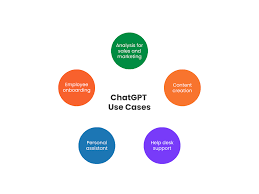
Salesforce Introduces Unified Knowledge to Enhance Service Agent Intelligence Salesforce has unveiled Unified Knowledge, a new solution designed to enrich service agents’ ability to resolve customer inquiries. By aggregating information from third-party sources and integrating it into Salesforce, Unified Knowledge complements the data already available in Salesforce’s Data Cloud, creating a more comprehensive knowledge base for service agents. Within Salesforce Service Cloud, Einstein for Service leverages AI to provide service agents with real-time information when addressing customer queries. Previously, this information was drawn from Data Cloud. Now, with Unified Knowledge, data from sources such as SharePoint, Confluence, Google Drive, and brand websites is incorporated, further enhancing the breadth of information available to agents. Expanding Beyond Service Cloud While Service Cloud is the primary use case for Unified Knowledge, the solution is also designed to integrate with other Salesforce platforms, including Sales Cloud, Field Service, Health Cloud, and Financial Services Cloud. Developed in collaboration with Zoomin Software, Unified Knowledge allows for greater cross-platform data accessibility and more efficient workflows across various service touchpoints. Why It Matters While the exact reasoning behind Salesforce’s decision to create a separate data channel for Unified Knowledge, rather than consolidating everything into Data Cloud, remains somewhat unclear, the broader availability of data to service agents could enhance service quality and efficiency. At its core, Unified Knowledge uses generative AI to provide dynamic, context-aware responses to agent and customer queries. Key features of the solution include: With these advancements, Unified Knowledge brings generative AI capabilities into the hands of service agents and workers, allowing for quicker, more accurate decision-making and enhanced customer interactions. The Unified Knowledge feature offers significant potential in revolutionizing how companies provide customer support by improving access to critical data from a wide array of sources, ultimately leading to more informed, efficient, and personalized service. Like Related Posts Who is Salesforce? Who is Salesforce? Here is their story in their own words. From our inception, we’ve proudly embraced the identity of Read more Salesforce Marketing Cloud Transactional Emails Salesforce Marketing Cloud Transactional Emails are immediate, automated, non-promotional messages crucial to business operations and customer satisfaction, such as order Read more Salesforce Unites Einstein Analytics with Financial CRM Salesforce has unveiled a comprehensive analytics solution tailored for wealth managers, home office professionals, and retail bankers, merging its Financial Read more AI-Driven Propensity Scores AI plays a crucial role in propensity score estimation as it can discern underlying patterns between treatments and confounding variables Read more


Read More
Generative AI and Service Cloud

Generative AI and Service Cloud

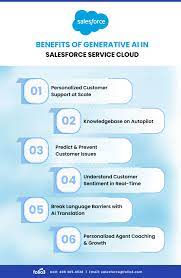
Salesforce Service Cloud users are set to receive more Einstein 1 generative AI tools in June and October. A key development is the expansion of automated customer conversations across more sales and marketing platforms. Generative AI and Service Cloud family of tools is growing. This insight aims to uncover the numerous use cases of generative AI in the modern contact center. We’ll help you understand how generative AI can fast track your contact center’s efficiency, improve data analysis capabilities, streamline QA and coaching processes, and make customers’ experiences better. Today, Salesforce launched Unified Conversations for WhatsApp, which automates bot responses to customer inquiries related to targeted marketing messages on the popular messaging app. Additionally, Salesforce plans to extend support to Line, a messaging app popular in Japan, later this year. These services are built on Salesforce’s Einstein 1 generative AI platform. The platform’s bots aggregate structured and unstructured CRM, product, service, and other data through Salesforce Data Cloud to generate personalized responses. These new features enable conversations to be routed to the digital channels where a Salesforce user’s customers are the most active. And to move omnichannel as customers needs change. Salesforce is also introducing a “bring your own channel” connector to support digital channels not natively covered by the platform. Current examples might include TikTok, Discord, and South Korea’s KakaoTalk, according to Ryan Nichols, Chief Product Officer for Salesforce Service Cloud. Generative AI and Service Cloud “It’s about getting data from all your conversations with customers from Service Cloud into Data Cloud and using that to not just deliver excellent customer service, but also grow your business,” Nichols said. Salesforce Einstein Conversation Mining, a Service Cloud feature currently in beta, aggregates conversations across customer channels to surface insights on the topics customers need help with. This aims to turn inbound customer service from a cost center into a revenue center, a goal long pursued at conferences like Dreamforce and ICMI. This massive change drives more than revenue, it drives ROI. Performance metrics such as time-to-answer and hold-time reduction have traditionally pressured agents to minimize call duration to retain their jobs. Now Salesforce is going to help them. While some skeptics question if generative AI can achieve this ambitious goal, Constellation Research analyst Liz Miller suggests it might be possible. Having previously managed a contact center herself, Miller recognizes the transformative potential of generative AI. With the aid of data, bots, and copilot counterparts assisting humans, agents could save time and access the right information to upsell customers during service engagements. Here are some of the ways Generative AI will change customer service forever. 1. Monitor and Ensure Compliance Maintaining compliance is crucial for fostering customer trust, preserving a positive brand image, and avoiding hefty privacy and compliance fines. In a contact center, compliance mistakes can quickly escalate into costly lawsuits and revenue losses. Generative AI allows your compliance team to proactively manage compliance by quickly identifying trends and addressing issues in real time. Instead of waiting for a compliance issue to escalate, you can fine-tune your AI model to provide compliance insights whenever necessary. For instance, you can ask: This approach offers more comprehensive insights than scorecards, which often lack context and accuracy. Generative AI’s analytical capabilities provide actionable insights to improve compliance across your contact center. 2. Get Insights About Your Call Center Performance at a Glance Generative AI language models make it easier than ever to gain insights into your contact center’s performance. Simply ask the model for the information you need. For example, you can inquire about the real-time average handling time (AHT) by asking, “What is the average handling time today?” But that’s just the beginning. With an advanced language model, you can compare metrics across different quarters or generate ideas for coaching plans by asking for each agent‘s strengths and weaknesses and suggestions for improvement. 3. Automate Post-Call Work Generative AI assistants can act as real-time notetakers, summarizing 100% of calls and freeing agents from manual note-taking. This automation makes after-call work effortless, generating comprehensive and compliant notes with a single click. 4. Capture Coachable Moments Easily Incorporating real-world coachable moments into your sessions is essential for tangible performance improvements. Generative AI can identify areas where agents typically struggle without requiring hours of call listening and note-checking. Traditional methods mean compromising on the specificity of coaching due to time constraints, especially when managing large teams. Generative AI solutions, however, enable call center managers to obtain detailed insights about each agent’s performance quickly. This allows for personalized coaching plans that address individual shortcomings efficiently. You can ask: 5. Improve Decision Making With Efficient Root-Cause Analysis Effective decision-making can transform your contact center. However, many managers struggle to identify the root causes of performance issues. Generative AI algorithms can analyze vast amounts of data and customer interactions, uncovering patterns and trends in customer and agent behavior. These insights help pinpoint the issues most impacting performance and customer satisfaction, allowing you to make informed decisions. The process is nearly fully automated, freeing your team from time-consuming data collection tasks. 6. Reduce Manual Work and Focus on Improvement Improving contact center performance requires extensive data, which is resource-intensive to collect manually. Generative AI simplifies this by analyzing customer interactions and providing actionable insights on demand. This saves time and money, allowing you to focus on improvements that deliver a higher ROI. 7. Scale What Works Discovering and scaling best practices is essential for team-wide success. Generative AI and Natural Language Processing (NLP) models can analyze customer interactions to identify effective strategies and coaching opportunities. For example, if a representative handles challenging situations well, AI can generate tips for other team members based on these successful interactions. Generative AI can identify top-performing agents and analyze their calls to extract best practices, providing a more comprehensive approach than focusing on a single agent. Queries you might use include: 8. Generate Agent Scripts Generative AI enables you to draft and fine-tune agent scripts for various customer interactions. Instead of relying

Read More
Connections and State of AI

Connections and State of AI

Salesforce Unveils Latest State of Marketing Study Ahead of Annual Connections Conference CHICAGO, May 21, 2024 – As Salesforce gears up for its annual Connections marketing and commerce conference, the company has released the ninth edition of its State of Marketing study. This year’s conference, themed around AI, marketing, and commerce, sets the stage for a deep dive into the future of these interconnected fields. AI Takes Center Stage: The study, drawing insights from over 4,800 marketers across 29 countries, reveals that AI is both the top implementation priority and the biggest challenge for marketers in the coming year. An impressive 63% of marketers currently use generative AI, with an additional 35% planning to adopt the technology within the next 18 months. Key AI applications identified include automating customer interactions, generating content, analyzing performance, automating data integration, and driving real-time best offers. Regional Variations: While AI is a global priority, regional differences are notable. In the US, AI implementation ranks second to improving ROI/attribution, whereas in the UK, it doesn’t even make the top five priorities. Despite these differences, both US and UK marketers cite AI implementation as their third greatest challenge. Countries prioritizing AI include South Korea, UAE, Argentina, Germany, Italy, Japan, Poland, Portugal, and Spain. Interestingly, AI does not feature in the top five priorities for India and Singapore. Challenges in AI Implementation: Across the board, data exposure and leakage are the top concerns related to generative AI, followed by a lack of necessary data, unclear strategy or use cases, fear of inaccurate outputs, and concerns about copyright/IP issues. These challenges vary by industry. For instance, government and media/entertainment sectors worry about AI job displacement, while other sectors focus on biases, brand adherence, and general distrust of AI. Data Integration Struggles: Marketers use an average of nine different tactics to capture customer data, including customer service interactions (88%), transaction data (82%), mobile apps (82%), web registrations (82%), and loyalty programs (80%). However, integrating this data into a unified system remains a significant challenge. Only 31% of marketers are fully satisfied with their ability to unify customer data, and many still rely on IT support for basic marketing tasks. The Personalization Paradox: Despite technological advances, fewer than six in 10 marketers can fully personalize familiar channels like email and mobile messaging. This gap highlights the ongoing struggle to meet rising customer expectations for personalized experiences. Steve Hammond, EVP and GM of Marketing Cloud at Salesforce, emphasizes the importance of personalization at scale: “Customers want to feel like they’re more than just a number. They want relevant experiences that create relationships. But personalization is still a challenge, especially at massive scale.” Looking Ahead: The findings from the State of Marketing study will undoubtedly fuel discussions at Connections. While the potential of AI is exciting, the need for a solid data foundation is critical for realizing its benefits. As the conference unfolds, diginomica’s Jon Reed will be on the ground in Chicago, providing updates on key insights and discussions. About Salesforce: Salesforce is the leading AI CRM, empowering companies to connect with their customers through a unified platform that combines CRM, AI, data, and trust. For more information, visit www.salesforce.com. Like Related Posts Who is Salesforce? Who is Salesforce? Here is their story in their own words. From our inception, we’ve proudly embraced the identity of Read more Salesforce Marketing Cloud Transactional Emails Salesforce Marketing Cloud Transactional Emails are immediate, automated, non-promotional messages crucial to business operations and customer satisfaction, such as order Read more Salesforce Unites Einstein Analytics with Financial CRM Salesforce has unveiled a comprehensive analytics solution tailored for wealth managers, home office professionals, and retail bankers, merging its Financial Read more AI-Driven Propensity Scores AI plays a crucial role in propensity score estimation as it can discern underlying patterns between treatments and confounding variables Read more
Read More
Salesforce Summer 24 Service Release

Salesforce Summer 24 Service Release

Service Salesforce Summer 24 Service Release. Check out new features that enable customer service agents to work faster and more productively across customer service channels. Salesforce Summer 24 Service Release Like Related Posts Who is Salesforce? Who is Salesforce? Here is their story in their own words. From our inception, we’ve proudly embraced the identity of Read more Salesforce Marketing Cloud Transactional Emails Salesforce Marketing Cloud Transactional Emails are immediate, automated, non-promotional messages crucial to business operations and customer satisfaction, such as order Read more Salesforce Unites Einstein Analytics with Financial CRM Salesforce has unveiled a comprehensive analytics solution tailored for wealth managers, home office professionals, and retail bankers, merging its Financial Read more AI-Driven Propensity Scores AI plays a crucial role in propensity score estimation as it can discern underlying patterns between treatments and confounding variables Read more

Read More
Patterns for Trust in AI

Patterns for Trust in AI

The advent of AI has introduced a layer of complexity to the concept of trust, intertwining technology with societal and individual concerns in various ways. Patterns for Trust in AI address some of these concerns. Ultimately, this erosion of trust poses formidable obstacles to innovation and responsible development within teams. To foster trust and mitigate these challenges, the adoption of design patterns emerges as a viable solution: Design patterns encapsulate solutions to common problems in a manner that’s easily replicable by others, offering a framework for creating trustworthy services. While design patterns streamline user experiences, they should also introduce a judicious level of friction to: Like Related Posts AI-Driven Propensity Scores AI plays a crucial role in propensity score estimation as it can discern underlying patterns between treatments and confounding variables Read more Tectonic’s Successful Salesforce Track Record Salesforce Technology Services Integrator – Tectonic has successfully delivered Salesforce in a variety of industries including Public Sector, Hospitality, Manufacturing, Read more Lookup Relationship in Salesforce What is Lookup relationship in Salesforce? Salesforce’s lookup relationships is a significant capability that allows users to connect two objects Read more The Evolution of Industrial Revolutions History of First Four Industrial Revolutions Throughout history, humanity has always relied on technology. Although the technology of each era Read more

Read More
AI Misconceptions Dispelled

AI Misconceptions Dispelled

The recent launch of GPT-4o (“o” for “omni”) has captivated everyone with its seamless human-computer interaction. Capable of solving math problems, translating languages in real-time, and even answering queries in a human voice with emotions, GPT-4o is a game-changer. Within hours of its debut, shares of Duolingo, the popular language EdTech platform, plummeted by 26% as investors perceived GPT-4o as a potential threat. But what AI Misconceptions Dispelled, would prevent this? Fears about AI are widespread. Many believe it will become so advanced and efficient that employing humans will be too costly, potentially leading to mass unemployment. Over the past year, it has become clear that artificial intelligence (AI) is among the most disruptive forces in business. AI promises efficiency and speed but also raises concerns about bias and ethics. In a candid conversation on Mint’s new video series All About AI, Arundhati Bhattacharya, Chairperson and CEO of Salesforce India, dispels these fears and discusses bridging the generation gap and making Salesforce a Great Place to Work. Forging Unity and Vision “When I came in, there were disparate groups—sales and distribution, technology and products, support and success. Each group had its leaders, but nobody was bringing them together to create one Salesforce vision and ensure that each group developed the Salesforce DNA,” Arundhati reflects on her April 2020 arrival. She underscored Salesforce’s values-driven approach, highlighting the significance of Trust, Customer Success, Innovation, Equality, and Sustainability. Under Arundhati’s leadership, Salesforce India has risen from 36th to 4th on the Great Places to Work list. Navigating AI Skepticism AI advancements are profoundly shaping industries and humanity’s future. According to Frost & Sullivan’s “Global State of AI, 2022” report, 87% of organizations see AI and machine learning as catalysts for revenue growth, operational efficiency, and better customer experiences. A 2023 IBM survey found that 42% of large businesses have integrated AI, with another 40% considering it. Furthermore, 38% of organizations have adopted generative AI, with an additional 42% contemplating its implementation. Despite the excitement around AI, skepticism remains. Arundhati offers insights on addressing this skepticism and using AI to benefit society. She suggests a balanced approach, noting that every significant technological change has sparked similar fears. Arundhati argues that AI won’t necessarily lead to massive unemployment, given humanity’s ability to adapt and evolve. Amidst India’s socio-economic challenges, Arundhati sees AI as a potent tool for positive change. She cites examples like the Prime Minister’s Jan Dhan Yojana, where AI-enabled solutions facilitated broader financial inclusion. “Similarly, AI can greatly improve services in state hospitals where doctors are overworked. AI can gather patient symptoms and present an initial diagnosis, allowing doctors to focus on more critical aspects. The technology is also being used to check sales conversations for accuracy in insurance, ensuring compliance and reducing mis-selling,” she elaborates. Driving Productivity through AI Integration Improving productivity in India is a pressing issue, and AI can effectively bridge this gap. However, the term “AI” is often overused and misunderstood. People need to approach AI initiatives with intentionality and focus. First, determine the use cases for AI, such as improving productivity, gaining customer mindshare, or enhancing customer experience. Once that is clear, ensure your organization is structured to provide the right inputs for AI, which involves having a robust data strategy. Tools like Data Cloud can help by integrating various data sources without copying the data and extracting intelligence from them. Lastly, securing buy-in from employees is crucial for successful AI implementation. Addressing their concerns, communicating the potential risks, and aligning everyone toward the same goal is essential. Securing the Future: Addressing AI Security Concerns As AI technologies advance, concerns about their security and potential misuse also rise. Threat actors can exploit sophisticated AI tools intended for positive purposes to carry out scams and fraud. As businesses rely more on AI, it is vital to recognize and protect against these security risks. These risks include data manipulation, automated malware, and abuse through impersonation and hallucination. To tackle AI security challenges, consider prioritizing cybersecurity measures for AI systems. Salesforce makes substantial investments in cybersecurity daily to stay ahead of potential threats. “We use third-party infrastructure with additional security layers on top. Public cloud infrastructure provides multiple layers of security, much like a compound with perimeter, building, and apartment security,” Arundhati explains. Empowering the Next Generation Workforce and Fostering Innovation Transitioning from her previous role as Chairperson of the State Bank of India to leading Salesforce India, Arundhati acknowledges the generational shift in workforce dynamics. She emphasizes understanding and catering to the evolving needs and aspirations of a younger workforce, focusing on engagement and fulfillment beyond monetary incentives. “Salesforce has a strong giving policy called one by one by one, where we give 1% of our profit, products, and time to the nonprofit sector. This resonates with the younger workforce, making them feel engaged and fulfilled.” Through a dedicated startup program, Salesforce fosters a collaborative ecosystem where startups can leverage resources, tools, and connections to thrive and succeed. Arundhati’s stewardship of Salesforce India epitomizes a transformative leadership approach anchored in values, innovation, and community empowerment. Under her leadership, Salesforce India continues to chart a course toward sustainable growth and inclusive prosperity, poised to redefine the paradigm of corporate success in the digital age. Like1 Related Posts Who is Salesforce? Who is Salesforce? Here is their story in their own words. From our inception, we’ve proudly embraced the identity of Read more Salesforce Marketing Cloud Transactional Emails Salesforce Marketing Cloud Transactional Emails are immediate, automated, non-promotional messages crucial to business operations and customer satisfaction, such as order Read more Salesforce Unites Einstein Analytics with Financial CRM Salesforce has unveiled a comprehensive analytics solution tailored for wealth managers, home office professionals, and retail bankers, merging its Financial Read more AI-Driven Propensity Scores AI plays a crucial role in propensity score estimation as it can discern underlying patterns between treatments and confounding variables Read more

Read More
AI Design Beyond the Chatbot

AI Design Beyond the Chatbot

As AI continues to advance, designers, builders, and creators are confronted with profound questions about the future of applications and how users will engage with digital experiences. AI Design Beyond the Chatbot. Generative AI has opened up vast possibilities, empowering people to utilize AI for tasks such as writing articles, generating marketing materials, building teaching assistants, and summarizing data. However, alongside its benefits, there are challenges. Sometimes, generative AI produces unexpected or biased responses, a phenomenon known as hallucination. In response, approaches like retrieval augmented generation (RAG) have emerged as effective solutions. RAG leverages a vector database, like SingleStore, to retrieve relevant information and provide users with contextually accurate responses. AI Design Beyond the Chatbot Looking ahead, the evolution of AI may lead to a future where users interact with a central LLM operating system, fostering more personalized and ephemeral experiences. Concepts like Mercury OS offer glimpses into this potential future. Moreover, we anticipate the rise of multimodal experiences, including voice and gesture interfaces, making technology more ubiquitous in our lives. Imran Chaudhri’s demonstration of a screen-less future, where humans interact with computers through natural language, exemplifies this trend. However, amidst these exciting prospects, the current state of AI integration in businesses varies. While some are exploring innovative ways to leverage AI, others may simply add AI chat interfaces without considering contextual integration. To harness AI effectively, it’s crucial to identify the right use cases and prioritize user value. AI should enhance experiences by reducing task time, simplifying tasks, or personalizing experiences. Providing contextual assistance is another key aspect. AI models can offer tailored suggestions and recommendations based on user context, enriching the user experience. Notion and Coda exemplify this by seamlessly integrating AI recommendations into user workflows. Furthermore, optimizing for creativity and control ensures users feel empowered in creation experiences. Tools like Adobe Firefly strike a balance between providing creative freedom and offering control over generated content. Building good prompts is essential for obtaining quality results from AI models. Educating users on how to construct effective prompts and managing expectations regarding AI limitations are critical considerations. Ultimately, as AI becomes more integrated into daily workflows, it’s vital to ensure seamless integration into user experiences. Responsible AI design requires ongoing dialogue and exploration to navigate this rapidly evolving landscape effectively. Like Related Posts Who is Salesforce? Who is Salesforce? Here is their story in their own words. From our inception, we’ve proudly embraced the identity of Read more Salesforce Marketing Cloud Transactional Emails Salesforce Marketing Cloud Transactional Emails are immediate, automated, non-promotional messages crucial to business operations and customer satisfaction, such as order Read more Salesforce Unites Einstein Analytics with Financial CRM Salesforce has unveiled a comprehensive analytics solution tailored for wealth managers, home office professionals, and retail bankers, merging its Financial Read more AI-Driven Propensity Scores AI plays a crucial role in propensity score estimation as it can discern underlying patterns between treatments and confounding variables Read more

Read More
Otter AI S-Docs and Salesforce

Otter AI S-Docs and Salesforce

Numerous vendors in the enterprise software market are currently emphasizing their AI capabilities, envisioning a future where AI can address a wide array of global challenges, from healthcare to climate change. While the realization of these claims remains uncertain, the practical and impactful applications of AI in everyday scenarios often go unnoticed. There exists ample opportunity for leveraging AI tools that are readily available and require minimal setup to enhance efficiency. Otter AI S-Docs and Salesforce. One such example is S-Docs, a document automation vendor integrated natively on the Salesforce platform, which is harnessing Otter.ai, an AI transcription service, to revolutionize its sales process and product development. S-Docs is seamlessly integrating Otter.ai into its digital collaboration tools, enabling automatic transcription during sales calls. This not only aids sales representatives in navigating diverse dialects but also streamlines post-call administrative tasks, prompting quicker action. Moreover, the product development team at S-Docs is leveraging Otter.ai to analyze the transcribed content from sales calls and incorporate insights into its product feedback loop. This integration was sparked by S-Docs’ CTO, Anand Narasimhan, who discovered Otter.ai through a LinkedIn connection and recognized its potential value for the business. Initially used during team calls and sprint reviews, Otter.ai’s high transcription accuracy and insightful summaries impressed Narasimhan and his colleague, Keith Bossier, VP of Sales at S-Docs. Subsequently, Otter.ai was adopted by the sales and customer success teams, offering benefits that surpassed those of their previous provider, Gong. For the sales team, Otter.ai significantly reduces the administrative burden by providing real-time transcriptions, catch-all summaries, and key takeaways from meetings. This facilitates quicker follow-ups and enhances the overall customer experience. Buoyed by the success in sales, S-Docs is exploring avenues to expand the use of Otter.ai across its business. Bossier envisions leveraging transcripts from sales calls for onboarding new representatives, while Narasimhan explores integrating the captured content into the product development cycle. Additionally, they are collaborating with Otter.ai to introduce automated action items directly into the S-Docs platform, further streamlining operations and enhancing efficiency. As S-Docs continues to innovate and optimize its processes with Otter.ai, it exemplifies the tangible benefits of leveraging AI in practical business scenarios. Like Related Posts Who is Salesforce? Who is Salesforce? Here is their story in their own words. From our inception, we’ve proudly embraced the identity of Read more Salesforce Marketing Cloud Transactional Emails Salesforce Marketing Cloud Transactional Emails are immediate, automated, non-promotional messages crucial to business operations and customer satisfaction, such as order Read more Salesforce Unites Einstein Analytics with Financial CRM Salesforce has unveiled a comprehensive analytics solution tailored for wealth managers, home office professionals, and retail bankers, merging its Financial Read more AI-Driven Propensity Scores AI plays a crucial role in propensity score estimation as it can discern underlying patterns between treatments and confounding variables Read more

Read More
Summer 24 The AI Release

Summer 24 The AI Release

Salesforce Unveils Summer 2024 Release with Generative AI at the Forefront Salesforce has announced its Summer 2024 release, featuring generative AI (GenAI) as a key highlight. Set to be generally available on June 17, 2024, this release promises enhanced productivity and access to large language models (LLMs) on an open platform. Read on to see why we call Summer 24 the AI release. Key Features of the Summer 2024 Release 1. Bring Your Own LLM Expansion 2. Slack AI 3. Zero Copy Integration with Amazon Redshift 4. Vector Database 5. Data Cloud for Commerce 6. Digital Wallet Enhanced Security with Einstein Trust Layer The Einstein Trust Layer ensures enhanced protection for customer and company data, making the new features more secure. Upcoming Pre-Summer Releases In addition to the major features coming in June, Salesforce has already introduced several innovations: Unified Knowledge Solution Salesforce and Vonage Partnership Conclusion Salesforce’s Summer 2024 release is packed with generative AI enhancements, robust integrations, and new tools aimed at boosting productivity, security, and data insights. With features gradually rolling out and pre-summer innovations already available, Salesforce continues to lead in delivering cutting-edge AI solutions to its users. Like Related Posts Who is Salesforce? Who is Salesforce? Here is their story in their own words. From our inception, we’ve proudly embraced the identity of Read more Salesforce Marketing Cloud Transactional Emails Salesforce Marketing Cloud Transactional Emails are immediate, automated, non-promotional messages crucial to business operations and customer satisfaction, such as order Read more Salesforce Unites Einstein Analytics with Financial CRM Salesforce has unveiled a comprehensive analytics solution tailored for wealth managers, home office professionals, and retail bankers, merging its Financial Read more AI-Driven Propensity Scores AI plays a crucial role in propensity score estimation as it can discern underlying patterns between treatments and confounding variables Read more

Read More
Mastercard Salesforce Integration

Mastercard Salesforce Integration Announced

As consumers seek easier and safer shopping experiences, Mastercard (NYSE: MA) and Salesforce (NYSE: CRM) today announced a new integration to enhance trust across the ecosystem, helping customers speed up the resolution of transaction disputes, and reduce costs associated with resolving them. Mastercard Salesforce Integration. Disputes and chargebacks, where a consumer notices a transaction they don’t recognise and requests a chargeback from their bank, represent a significant challenge to the entire payments industry. Projections suggest that by 2026 there could be 337 million chargebacks annually, an increase of 42% from 2023 levels1. The integration will streamline the way issuers, like banks and other financial institutions, view and manage transaction data, such as disputes and decisions. It will enable a quicker, more efficient and transparent response to dispute inquiries. The partnership will integrate Salesforce’s Financial Services Cloud (FSC) with Mastercard’s dispute resolution services, providing a powerful one-stop-shop for intake, managing disputes, reporting and preventing chargebacks. Mastercard’s services include Ethoca Alerts, which provides near real-time notifications when a financial institution raises a chargeback and Ethoca Consumer Clarity, enabling the provision of rich merchant and purchase insights to issuer back-office teams. The data from these services is now being fed into FSC so that every bank agent and team member working on a dispute has more visibility from start to finish and delivers the best customer experience. FSC is powered by the Einstein 1 Platform, which unifies customer relationship management (CRM), AI, merchant and consumer data, development and security capabilities into a single, comprehensive platform. Johan Gerber, Executive Vice President, Security and Cyber Innovation at Mastercard said: “Technology is helping to speed up and improve the checkout experience, especially when shopping online. However, every disputed transaction can create stress for the consumer as well as resource pressures and increased costs for merchants and financial institutions. Through this partnership, we are adding to the tools that make it easier and faster for banks and merchants to resolve disputes, further enhancing trust in the ways they choose to pay.” Eran Agrios, Senior Vice President and General Manager for Financial Services at Salesforce said: “Our partnership with Mastercard is a testament to our shared vision of using trusted data and innovative technology to streamline processes and deliver great customer experiences through the Einstein 1 Platform. Together with the Mastercard team, we’re reimagining the entire transaction dispute process, bringing together the power of Salesforce’s CRM, data, and AI with Mastercard’s dispute resolution, to deliver an end-to-end solution that will benefit both our joint customers.” Availability The integration is available today for Salesforce FSC customers. More information about the Transactions Dispute Management offering is available on salesforce.com. Information on Mastercard’s Ethoca solutions is available on ethoca.com.  Like Related Posts Who is Salesforce? Who is Salesforce? Here is their story in their own words. From our inception, we’ve proudly embraced the identity of Read more Salesforce Marketing Cloud Transactional Emails Salesforce Marketing Cloud Transactional Emails are immediate, automated, non-promotional messages crucial to business operations and customer satisfaction, such as order Read more Salesforce Unites Einstein Analytics with Financial CRM Salesforce has unveiled a comprehensive analytics solution tailored for wealth managers, home office professionals, and retail bankers, merging its Financial Read more AI-Driven Propensity Scores AI plays a crucial role in propensity score estimation as it can discern underlying patterns between treatments and confounding variables Read more

Read More
Einstein Web Recommendations

Einstein Web Recommendations

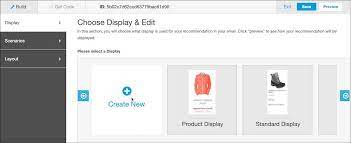
Einstein Web Recommendations leverage Einstein’s capabilities to analyze user behavior, construct preference profiles, and deliver personalized content tailored to each website visitor. Utilize application scenarios to fine-tune recommendations according to your specific business rules. Web Recommendations are provided through two methods: a JSON response or HTML/JS. While the JSON response is the recommended delivery method due to its flexibility, HTML/JS can be used if the web team is unable to work with JSON. As the JSON method allows for greater flexibility, you are responsible for parsing and styling the recommendations within your web environment. Marketing Cloud Einstein Recommendations enable the creation of product or content recommendations for display on your website. The Einstein Recommendation Engine necessitates a minimum of three active items in your product catalog. Incorporate any catalog field into the web recommendation call, emphasizing a clear understanding of the data driving recommendations during catalog setup. A unique web recommendation call is generated for each page type, with Home, Product, Category, Cart, and Conversion pages recommended as a best practice. However, there is no restriction on the number of pages that can be configured in the UI. Page templates are utilized by Einstein Recommendations, treating a Product Page as a template for building personalized recommendations specific to a product page. Different types of page templates may have distinct scenarios and contexts. For instance, recommendations on a product page may be based on the viewed product, adding context. Conversely, homepage recommendations rely on overall user affinity, lacking specific context. Integrate the Einstein Web Recommendations code into the designated page’s code, incorporating both the JavaScript for the recommendation call and the HTML recommendation zone placeholder provided. Select and configure the content to be included in your web recommendations: Like Related Posts Who is Salesforce? Who is Salesforce? Here is their story in their own words. From our inception, we’ve proudly embraced the identity of Read more Salesforce Marketing Cloud Transactional Emails Salesforce Marketing Cloud Transactional Emails are immediate, automated, non-promotional messages crucial to business operations and customer satisfaction, such as order Read more Salesforce Unites Einstein Analytics with Financial CRM Salesforce has unveiled a comprehensive analytics solution tailored for wealth managers, home office professionals, and retail bankers, merging its Financial Read more AI-Driven Propensity Scores AI plays a crucial role in propensity score estimation as it can discern underlying patterns between treatments and confounding variables Read more
Read More
MuleSoft B2B and B2C With AI

MuleSoft B2B and B2C With AI

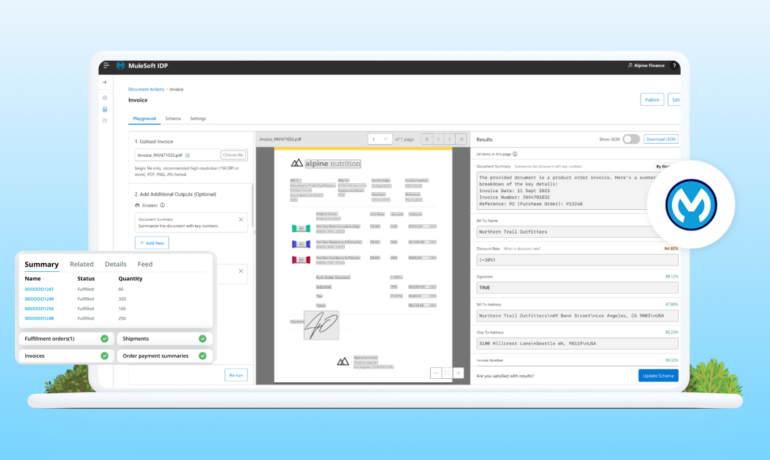
Salesforce yesterday announced new solutions to help streamline and accelerate end-to-end order lifecycle management: MuleSoft’s Anypoint Partner Manager with Intelligent Document Processing (IDP) and MuleSoft Accelerator for Salesforce Order Management. MuleSoft B2B and B2C With AI. Together, these business-to-business (B2B) and business-to-consumer (B2C) integration solutions make it easier to connect essential data across third-party applications, Salesforce OMS, and partner ecosystems – all within MuleSoft. Enhanced with AI, these new solutions help IT teams unify data from multiple data and system sources to achieve end-to-end order visibility, improved efficiency, and customer satisfaction. Why it matters: IT teams are inundated with requests to integrate disparate systems and adopt different technologies. And IT teams in retail, consumer goods, manufacturing, logistics, and healthcare must manage the thousands of daily transactions between suppliers and buyers across the supply chain ecosystem. To add to the complexity, 75% of B2B digital sales occur via standardized Electronic Data Interchange (EDI) and specialized solutions are needed to handle these transactions. Go deeper: Anypoint Partner Manager with IDP is a cloud-native B2B integration solution that accelerates partner onboarding and operational management of both API and EDI-based transactions through the commerce and supply chain lifecycle. It provides visibility tools to accurately monitor the health of partner transactions along with key business and operational insights like overall order frequency and volume, shipment statuses, and more. By utilizing IDP, developers can leverage AI to extract, read, and store unstructured data from documents such as invoice and purchase order PDFs, surfacing it in systems of record and order management systems like Salesforce OMS. IT and business teams can rapidly develop integrations and APIs, monitor and manage their performance, and secure them in compliance with partner requirements, all through a single pane of glass. New capabilities of MuleSoft B2B and B2C With AI include: MuleSoft Accelerator for Salesforce OMS makes it easier and faster to achieve end-to-end order visibility across channels from a centralized hub. The accelerator includes pre-built APIs, connectors, implementation templates, and other technical assets for Anypoint Platform to unify B2B orders with Salesforce OMS and connect all B2B and B2C orders to enterprise resource planning (ERP) systems. By leveraging the available out-of-the-box integration assets, customers can significantly reduce the development time required for integrating systems and accelerate time to market. MuleSoft B2B and B2C With AI. New capabilities of this offering include: Industry Use Cases: Customer perspective: “We were struggling with disjointed technology that was causing order and shipping delays while hampering our ability to innovate across our ecosystem,” said Jeff Blank, VP, Finance & Infrastructure at Jillamy. “MuleSoft’s Anypoint Partner Manager helped accelerate our partner onboarding processes with seamless B2B integration and more efficient management of our EDI transactions.” Salesforce perspective: “B2B and B2C integrations are critical to the success of supply chain management. From getting berries out of the farm or medical devices to hospitals, organizations across the globe are looking for a unified solution to manage and securely monitor their business partner transactions. With Anypoint Partner Manager and MuleSoft Accelerator for OMS, our customers can use our technology to build a composable business ecosystem that meets business partner compliance standards and drives end-to-end supply chain and commerce processes with efficiency, visibility, and speed.” – Andrew Comstock, VP, Product Management With Anypoint Partner Manager and MuleSoft Accelerator for OMS, our customers can use our technology to build a composable business ecosystem that meets business partner compliance standards and drives end-to-end supply chain and commerce processes with efficiency, visibility, and speed. Andrew Comstock, VP, Product Management Like Related Posts Who is Salesforce? Who is Salesforce? Here is their story in their own words. From our inception, we’ve proudly embraced the identity of Read more Salesforce Marketing Cloud Transactional Emails Salesforce Marketing Cloud Transactional Emails are immediate, automated, non-promotional messages crucial to business operations and customer satisfaction, such as order Read more Salesforce Unites Einstein Analytics with Financial CRM Salesforce has unveiled a comprehensive analytics solution tailored for wealth managers, home office professionals, and retail bankers, merging its Financial Read more AI-Driven Propensity Scores AI plays a crucial role in propensity score estimation as it can discern underlying patterns between treatments and confounding variables Read more
Read More
New ChatGPT-4o

New ChatGPT-4o

OpenAI’s ChatGPT Upgraded with GPT-4o: Here’s What’s New OpenAI has just launched a significant upgrade to ChatGPT with the new ChatGPT-4o model, also known as Omni. This true multimodal AI effortlessly understands text, images, video, and audio, offering faster responses and eventually the ability to engage in spoken conversations. If before you read about the New ChatGPT-4o and inadvertently used it, ChatGPT may have surprised you with its responses. I’ve been told to “enjoy my coffee”, “sit back and relax” and more! Key Benefits of GPT-4o The main advantage of GPT-4o is its enhanced reasoning, processing, and natural language capabilities, now available to free ChatGPT users for the first time. In their Spring Update announcement, OpenAI emphasized their goal of making top-tier AI accessible to a broader audience. Gradual Rollout The rollout of GPT-4o is happening in phases. Features are being released in batches, so users should check which features are currently available and which are coming soon. Accessing GPT-4o is straightforward once it’s been activated for your account. Notably, the address for ChatGPT has changed to chatgpt.com, indicating OpenAI’s commitment to AI as a fully-fledged product. Availability Across Platforms If you have access to GPT-4o, it will be available through the mobile app and online. A Mac app is also rolling out to some users, but be cautious of fraudulent links aiming to spread malware. It’s best to wait for an official email or notification from OpenAI before downloading the app. Even with a valid app link, access won’t be granted until it’s enabled on your OpenAI account. Current Features of GPT-4o Currently, users can access the chat version of GPT-4o, with advanced voice and video functionality being rolled out gradually, starting with Plus and Team accounts. Free account users will notice significant improvements as GPT-4o surpasses both the previous 3.5 model and GPT-4. Users can now run code snippets, analyze images and text files, and use custom GPT chatbots. On mobile, you still have access to ChatGPT Voice, but it’s the older version that transcribes conversations into text. The new model understands speech, emotion, and interaction natively without needing this step. How to Use GPT-4o Emotional and Conversational Upgrades OpenAI has demonstrated that the upgraded ChatGPT can now handle more natural and emotionally aware conversations. The new model, available to both free and paid users, responds more quickly to voice, image, and video inputs. It can detect and express emotions, making interactions feel more human-like. During a recent demo, ChatGPT engaged in lively, expressive conversations, picking up on emotional cues and responding with simulated emotional reactions. This new interface aims to enhance user engagement and provide a more personalized experience. And it does. But it can be deceptively human-like. Ethical Considerations Despite the engaging new features, the lifelike interactions of advanced chatbots raise ethical concerns. Researchers warn that highly persuasive and emotionally responsive AI could have unintended consequences, such as fostering addictive behaviors or influencing user actions negatively. Future Developments OpenAI promises further advancements and additional announcements soon. The competition in the AI field remains intense, with companies like Google expected to unveil new technologies at their upcoming I/O developer conference. OpenAI’s latest update signifies a major leap in AI capabilities, aiming to blend advanced technology with everyday usability while navigating the complex ethical landscape of human-AI interactions. Like Related Posts AI-Driven Propensity Scores AI plays a crucial role in propensity score estimation as it can discern underlying patterns between treatments and confounding variables Read more Tectonic’s Successful Salesforce Track Record Salesforce Technology Services Integrator – Tectonic has successfully delivered Salesforce in a variety of industries including Public Sector, Hospitality, Manufacturing, Read more The Evolution of Industrial Revolutions History of First Four Industrial Revolutions Throughout history, humanity has always relied on technology. Although the technology of each era Read more Step By Step Guide to a Salesforce Quickstart Salesforce Implementation with a Tectonic Quickstart: Step-by-Step Salesforce Quickstart Guide. Step 1: Define Your Business Requirements Identify specific business processes Read more
Read More
Google Search Goes AI

Google Search Goes AI

For the past 25 years, Google Search has evolved through numerous technological advancements. They’ve refined their core information quality systems to help you find the best content on the web, building a knowledge base of billions of facts about people, places, and things. This ensures you receive reliable information instantly. And now, Google Search Goes AI. If you experienced it before reading this insight, it might have taken you a bit by surprise. Generative AI enhances Search beyond what you ever imagined. Whether you’re researching, planning, or brainstorming, Google takes care of the heavy lifting. This innovation is driven by Google’s new custom Gemini model, which combines multi-step reasoning, planning, and multimodality with Google premier Search systems. Quick Answers with AI Overviews For those times when you need quick information without piecing everything together, AI Overviews can help. Users have already utilized AI Overviews billions of times through Google’s Search Labs experiment. They appreciate the concise topic overviews and links for further learning. Google has observed that AI Overviews increase Search usage and satisfaction. Starting today, AI Overviews are rolling out to all U.S. users, with plans to reach over a billion people worldwide by the end of the year. AI Overviews lead users to a broader range of websites for complex questions. The links within these overviews receive more clicks than traditional web listings. As we expand this feature, we’ll focus on driving valuable traffic to publishers and creators. Ads will remain clearly labeled and distinct from organic results. One can only imagine how this might change the world of SEO. Customizable AI Overviews Soon, you can customize AI Overviews to simplify the language or provide more detail. This is particularly useful for newcomers to a topic or for simplifying explanations for children. This feature will be available in Search Labs for English queries in the U.S. soon. Tackling Complex Questions With the Gemini model’s multi-step reasoning, AI Overviews can handle complex questions in a single search. For example, if you’re looking for a yoga or Pilates studio that’s popular with locals, convenient for your commute, and offers new member discounts, you’ll soon be able to ask, “Find the best yoga or Pilates studios in Boston and show me details on their intro offers and walking time from Beacon Hill.” These capabilities are coming soon to AI Overviews in Search Labs for English queries in the U.S. Planning Ahead Beyond answering questions, Search can help with planning. Search’s planning capabilities assist in creating plans for meals and vacations. For instance, search “create a 3-day meal plan for a group that’s easy to prepare,” and you’ll receive a variety of recipes. You can customize your plan, such as swapping a meal for a vegetarian option, and export it to Docs or Gmail. Meal and trip planning features are currently available in Search Labs in English in the U.S., with more customization options and categories coming later this year. Exploring AI-Organized Results When seeking inspiration, it can be challenging to sift through numerous options. Soon, Search will use generative AI to brainstorm with you, organizing results under unique AI-generated headlines, showcasing diverse perspectives and content types. This AI-organized results page will be available soon for English searches in the U.S., starting with dining and recipes, followed by movies, music, books, hotels, shopping, and more. Video Search Assistance Search is not just limited to text. Often, your questions involve visual elements. Advancements in video understanding allow you to search using videos. For instance, if you bought a record player at a thrift shop and it’s malfunctioning, searching with a video can save you the effort of describing the issue in words. You’ll receive an AI Overview with troubleshooting steps. Video search capabilities will be available soon for Search Labs users in English in the U.S., with plans to expand to more regions over time. This is a glimpse of how Google is reimagining Google Search, blending today’s best features with the advanced capabilities of the Gemini model. Soon, Google will handle the searching, simplifying, researching, planning, brainstorming, and more. Sign up for Search Labs to be among the first to try out these features and more. Like Related Posts AI-Driven Propensity Scores AI plays a crucial role in propensity score estimation as it can discern underlying patterns between treatments and confounding variables Read more Salesforce Quickstarts Explained What is a Salesforce Quickstart? Salesforce Quickstarts are great for individual departments or small sales & customer service teams who Read more Einstein Relationship Insights ERI, serves as an AI-powered research assistant, enhancing sales processes. ERI operates as a desktop plugin with a browser extension, Read more Joined Datasets in B2B Marketing Analytics B2BMA empowers users to generate additional datasets using the data manager. This process involves creating datasets in various ways, such Read more
Read More
Employ ChatGPT

50 Ways to Employ ChatGPT

You’ve likely heard of ChatGPT by now—a remarkably intelligent AI capable of understanding and communicating like a human. You can Employ ChatGPT. But did you realize just how adaptable this language model is? With the appropriate prompts, ChatGPT can swiftly assist you with a myriad of tasks. To my mind, ChatGPT is fully helpful right until you employ it to write about itself and it begins to brag. The anticipation is over, and this marks the beginning of the multitasking journey with ChatGPT. This AI can effortlessly handle these tasks in mere seconds with relatively straightforward prompts. We’re talking about a wide range of activities, from writing and editing to coding and marketing. The key lies in providing ChatGPT with clear, concise instructions upfront. Generative AI prompts are the most important factor to getting good results. Once you unlock that capability, a plethora of possibilities emerges for expediting your workflow. I’ve compiled 50 examples of tasks that ChatGPT can accomplish in seconds with the right prompts. Prepare to be amazed by the efficiency of this AI assistant! So, grab a cup of coffee and settle in as we hop into how this exceptional AI simplifies complex tasks effortlessly. The future is now, and it goes by the name of ChatGPT! 50 Tasks that ChatGPT Can Complete in Seconds with Simple Prompts: While ChatGPT cannot fully replicate human intelligence, it impresses with its conversational abilities, data analysis, content generation, and predictive capabilities. Just envision the evolution of this AI prodigy as researchers continue to enhance its skills! Examples of clear ChatGPT prompts. Writing/Editing Prompts: Research/Analysis Prompts: Creative Writing Prompts: Coding Prompts: Business/Marketing: There you have it — 50 ways ChatGPT can significantly simplify your life with just a few well-crafted prompts. The potential is virtually limitless when you can effectively communicate your needs to this highly capable AI. The things you can do with generative AI are mainly limited by the data your AI tool has access to. Remember with ChatGPT when it last had update to the world wide web. It cannot help you right about today’s events, but can assist with building historical context, for example. Whether it’s creative writing endeavors, coding challenges, marketing endeavors, or research tasks, ChatGPT is there to assist you, provided you know how to prompt it effectively. The key lies in delivering clear, straightforward, and precise instructions. You can employ ChatGPT to assist with many tasks. The key word is assist. You cannot employ ChatGPT to completely do your job for you. Experiment with prompts tailored to your specific requirements. Once you discover the right approach, you’ll be amazed by ChatGPT’s ability to accomplish tasks in a matter of seconds. One thing is certain—with ChatGPT handling the heavy lifting, humans are liberated to be more creative and concentrate on meaningful work. Like Related Posts Salesforce Marketing Cloud Transactional Emails Salesforce Marketing Cloud Transactional Emails are immediate, automated, non-promotional messages crucial to business operations and customer satisfaction, such as order Read more Salesforce Unites Einstein Analytics with Financial CRM Salesforce has unveiled a comprehensive analytics solution tailored for wealth managers, home office professionals, and retail bankers, merging its Financial Read more AI-Driven Propensity Scores AI plays a crucial role in propensity score estimation as it can discern underlying patterns between treatments and confounding variables Read more Tectonic’s Successful Salesforce Track Record Salesforce Technology Services Integrator – Tectonic has successfully delivered Salesforce in a variety of industries including Public Sector, Hospitality, Manufacturing, Read more

Read More
gettectonic.com