Salesforce Einstein Archives - gettectonic.com - Page 11
Salesforce Education Cloud for Educational Challenges

Salesforce Education Cloud for Educational Challenges

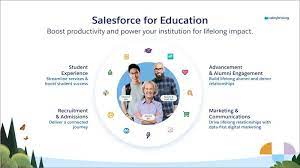
Educational institutions today confront a multitude of complex challenges, ranging from disjointed information systems to the need for agility in meeting evolving educational demands. Salesforce Education Cloud presents a unified solution aimed at overcoming these obstacles by enhancing operational efficiencies, boosting student engagement, and ensuring compliance with ever-changing educational standards. Below is an in-depth examination of the prevalent challenges faced by educational institutions and the tailored solutions provided by Salesforce Education Cloud. Key Challenges in the Education Sector Salesforce Education Cloud: Tailored Solutions for Education Salesforce Education Cloud addresses these challenges through a suite of customized features and tools designed to streamline operations, enhance student services, and promote effective communication. Real-World Impact of Salesforce Education Cloud Implementation of Salesforce Education Cloud yields transformative benefits across educational institutions: Conclusion Salesforce Education Cloud offers a comprehensive solution to the diverse challenges faced by educational institutions. By integrating this robust platform, schools, colleges, and universities can enhance operational efficiency, improve student outcomes, and cultivate a collaborative educational environment. Institutions seeking to explore the benefits of Education Cloud or enhance their existing systems are encouraged to consult with a Salesforce Education Cloud Consultant for tailored guidance and implementation strategies. Like Related Posts Who is Salesforce? Who is Salesforce? Here is their story in their own words. From our inception, we’ve proudly embraced the identity of Read more Salesforce Marketing Cloud Transactional Emails Salesforce Marketing Cloud Transactional Emails are immediate, automated, non-promotional messages crucial to business operations and customer satisfaction, such as order Read more Salesforce Unites Einstein Analytics with Financial CRM Salesforce has unveiled a comprehensive analytics solution tailored for wealth managers, home office professionals, and retail bankers, merging its Financial Read more AI-Driven Propensity Scores AI plays a crucial role in propensity score estimation as it can discern underlying patterns between treatments and confounding variables Read more

Read More
Gov Agencies AI Workforce Challenges

Gov Agencies AI Workforce Challenges

Federal agencies are placing a higher priority on providing AI training to their workforces with a focus on principles of transparency and accountability, officials announced at ATARC’s GITEC conference in Charlottesville, Virginia earlier. Gov Agencies AI Workforce Challenges. Alexis Bonnell, Air Force Research Laboratory CIO and Director of the Digital Capabilities Directorate, emphasized the importance of upholding existing ethics standards rather than creating new ones. She stressed that agencies need to exercise the ethical principles they have always been expected to follow. President Biden’s October 2023 executive order on artificial intelligence mandated that agencies develop ethical AI and establish AI offices, among other directives. While agencies like the Defense Department and the Department of Homeland Security are optimistic about AI’s potential, leaders remain cautious about its ethical implications and stress the importance of safe technology development. It’s not just technologists who require AI training. To ensure all employees understand AI’s risks and benefits, government leaders are prioritizing education and upskilling efforts. Steven Brand, Energy Deputy CIO of Resource Management, highlighted the initiative to provide foundational AI training across his department, emphasizing that the goal is not to make employees experts. Tammy Hornsby-Fink, Executive Vice President and System CISO at the Federal Reserve Bank of Richmond, emphasized the need for accessible learning opportunities for all department members, from data scientists to executive assistants, to grasp AI concepts in manageable increments. Hornsby-Fink also emphasized the importance of providing sandboxes for employees to experiment with new technologies safely, stressing that experimentation is key to understanding how these technologies can create business value. According to Tony Boese, Department of Veterans Affairs Interagency Programs Manager, consistent education is essential to combat misinformation about AI. He mentioned the agency’s ASPIRE data-literacy program, which leverages AI to identify skills gaps and tailor educational pathways for individuals. Karen Howard, IRS Office of Online Services Executive Director, highlighted the need to modernize recruitment strategies and change management principles to attract top talent and leverage digital transformation and AI effectively. Jamie Holcombe, U.S. Patent and Trademark Office CIO, emphasized the importance of diversifying agency workforces by bringing in new perspectives from industry, such as those from Silicon Valley, to move away from outdated organizational playbooks. Gov Agencies AI Workforce Challenges Like Related Posts Who is Salesforce? Who is Salesforce? Here is their story in their own words. From our inception, we’ve proudly embraced the identity of Read more Salesforce Unites Einstein Analytics with Financial CRM Salesforce has unveiled a comprehensive analytics solution tailored for wealth managers, home office professionals, and retail bankers, merging its Financial Read more AI-Driven Propensity Scores AI plays a crucial role in propensity score estimation as it can discern underlying patterns between treatments and confounding variables Read more Tectonic’s Successful Salesforce Track Record Salesforce Technology Services Integrator – Tectonic has successfully delivered Salesforce in a variety of industries including Public Sector, Hospitality, Manufacturing, Read more

Read More
Learning AI

The New Age of Compliance with AI

How can small businesses ensure compliance? Business in the New Age of Compliance with AI can be challenging. While larger corporations often allocate resources for extensive research and development to maintain compliance, smaller businesses may lack the means to conduct thorough due diligence. In such cases, it becomes crucial for them to pose the right questions to vendors and technology partners within their ecosystem. Even as Salesforce takes strides in creating trustworthy generative AI solutions for its customers, these customers also engage with other vendors and processors. It is imperative for them to remain vigilant about potential risks and not rely solely on trust. Salesforce and Tectonic suggest that smaller companies should inquire about: For smaller companies, depending on the due diligence of third-party service providers becomes essential. Evaluating privacy protocols, security procedures, identification of potential harms, and safeguarding measures are critical aspects that demand close attention. In this New Age of Compliance with AI everyone is responsible. Choosing an AI savvy Salesforce partner like Tectonic protects you and your company. The Einstein Trust Layer is your insurance that you are doing artificial intelligence right. Like1 Related Posts Who is Salesforce? Who is Salesforce? Here is their story in their own words. From our inception, we’ve proudly embraced the identity of Read more Salesforce Marketing Cloud Transactional Emails Salesforce Marketing Cloud Transactional Emails are immediate, automated, non-promotional messages crucial to business operations and customer satisfaction, such as order Read more Salesforce Unites Einstein Analytics with Financial CRM Salesforce has unveiled a comprehensive analytics solution tailored for wealth managers, home office professionals, and retail bankers, merging its Financial Read more AI-Driven Propensity Scores AI plays a crucial role in propensity score estimation as it can discern underlying patterns between treatments and confounding variables Read more

Read More
Custom Copilot Actions

Custom Copilot Actions

How to Create a Custom Copilot Action Custom Copilot Actions allow you to extend Copilot’s functionality within Salesforce, enabling users to perform tasks specific to your business needs. By utilizing invocable Apex classes, autolaunched flows, and prompt templates, you can build custom actions tailored to your organization’s requirements. Extend your unified copilot with custom actions. Before You Begin: Steps to Create a Custom Copilot Action: Testing and Deployment: Understanding Einstein Copilot Einstein Copilot is Salesforce’s AI assistant designed to enhance productivity and user experience across various applications and departments. Admins can configure and deploy Copilots to empower users with AI capabilities, streamlining workflows and increasing efficiency. Out-of-the-Box Actions: In the Spring ’24 release, Einstein Copilot offers several out-of-the-box actions, including: Customization and Future Development: Admins can create custom actions to tailor Copilot’s capabilities to their organization’s specific requirements. Custom actions enable tasks such as updating records and integrating with external systems, enhancing productivity and efficiency. When you create a custom action, you build it on top of platform functionality you want to make available in Einstein Copilot, such as invocable Apex classes, autolaunched flows, or prompt templates. Adding custom actions lets you customize your copilot and get more mileage out of your current Salesforce platform capabilities. Access to a custom copilot action depends on the type of Salesforce action it references. For example, if a custom action was built using a flow, the custom action adheres to the permissions, field-level security, and sharing settings configured in the flow. Use Cases and Considerations: Typical Use Cases: Considerations: Building Custom Copilot Actions: Power of Custom Actions: Custom actions extend Copilot’s capabilities, offering a wide range of use cases and functionalities. Actions can be built using flows, prompts, or Apex, providing flexibility and customization options. Descriptive Instructions: Accurate descriptions of actions, inputs, and outputs are essential for Copilot’s understanding and execution. Clear instructions provide context and improve response accuracy. Best Practices: Einstein Copilot, coupled with custom actions, empowers organizations to optimize workflows and drive efficiency. By following best practices and leveraging the full potential of Copilot, Salesforce admins can enhance user experiences and unlock new levels of productivity. Explore these features within your organization to realize the benefits of Salesforce Einstein Copilot Custom Actions. Assign an action to your copilot from the Copilot Actions page, the record page for an action, or the Copilot Action Library tab of the actions panel in the Copilot Builder. Your copilot must be deactivated. To test your action and preview how the output appears in a copilot conversation, open the copilot in the Copilot Builder and start a preview conversation. Enter utterances that you expect to trigger your action, and then make adjustments to the copilot action instructions based on your results. What powers Einstein Copilot custom actions? By facilitating the flow of work through smart, AI-driven actions, Einstein Copilot enhances efficiency and decision-making. Here’s how organizations can harness its power through the design of custom actions, ensuring their operations are as streamlined and effective as possible. Like1 Related Posts Who is Salesforce? Who is Salesforce? Here is their story in their own words. From our inception, we’ve proudly embraced the identity of Read more Salesforce Marketing Cloud Transactional Emails Salesforce Marketing Cloud Transactional Emails are immediate, automated, non-promotional messages crucial to business operations and customer satisfaction, such as order Read more Salesforce Unites Einstein Analytics with Financial CRM Salesforce has unveiled a comprehensive analytics solution tailored for wealth managers, home office professionals, and retail bankers, merging its Financial Read more AI-Driven Propensity Scores AI plays a crucial role in propensity score estimation as it can discern underlying patterns between treatments and confounding variables Read more

Read More
Learning AI

AI Success is a Team Sport

The contemporary workplace is currently experiencing a profound transformation. The Future of Jobs Report from the World Economic Forum predicts that AI will replace approximately 85 million jobs by 2025, while concurrently generating around 97 million AI-related jobs. AI Success is a Team Sport and will require hiring and training people. This significant shift necessitates a reevaluation of work dynamics, introducing new roles that involve collaboration between “humans, machines, and algorithms.” Amidst this transformative period, AI provides opportunities for organizations to reimagine existing roles, offer upskilling opportunities, and design innovative positions to meet evolving needs. For leaders in the data domain, the crucial task is to assess which jobs could benefit from AI. This requires a thorough understanding of organizational tasks, skills, and strategic goals, complemented by a scalable change management process to accommodate the growth of AI initiatives. To pinpoint relevant jobs, the following steps can be taken: Despite 67% of global business leaders considering the use of generative AI, an equal number of IT leaders acknowledge a skills gap among their employees. “I think most business leaders have a good sense of what the key jobs are inside their organizations. Of those key jobs, what are the good candidates for AI? I think it’s important for any executive—data or not—to understand what they are and plan accordingly.” SOLOMON KAHN DATA LEADERSHIP COLLABORATIVE  The implementation of AI necessitates a specialized team, encompassing roles from project managers to domain experts. The composition of the team depends on the project’s complexity, scope, budget, and overall strategic objectives. But to be sure, AI Success is a Team Sport. Key roles for AI initiatives include: AI acts as a disruptor to traditional business practices, and this disruption is viewed positively. The bonuses far outweigh the challenges. The new generation of user-friendly AI technologies, such as generative AI, has moved beyond the hype cycle, offering applications that generate personalized offers and automated chatbots capable of solving complex customer support issues. In this era powered by AI, data leaders play a pivotal role in driving transformative change. Like1 Related Posts Who is Salesforce? Who is Salesforce? Here is their story in their own words. From our inception, we’ve proudly embraced the identity of Read more Salesforce Marketing Cloud Transactional Emails Salesforce Marketing Cloud Transactional Emails are immediate, automated, non-promotional messages crucial to business operations and customer satisfaction, such as order Read more Salesforce Unites Einstein Analytics with Financial CRM Salesforce has unveiled a comprehensive analytics solution tailored for wealth managers, home office professionals, and retail bankers, merging its Financial Read more AI-Driven Propensity Scores AI plays a crucial role in propensity score estimation as it can discern underlying patterns between treatments and confounding variables Read more

Read More
LLMs Beyond Generative AI

LLMs Beyond Generative AI

Beyond Text Generation: The Versatile Capabilities of Large Language Models While large language models (LLMs) and generative AI have dominated the conversation over the past year, the spotlight has largely been on their text generation capabilities. There’s no denying the value of LLMs in generating answers to questions. However, focusing solely on this use case overlooks other valuable applications. This insight will explore several primary uses of LLMs, ensuring you recognize their broader potential beyond just generative purposes. Creation and Generation This is the most publicized use case for LLMs today. Applications like ChatGPT can answer questions with detailed responses, and tools like DALL-E generate images based on user prompts. Similar generators exist for code, video, and 3D virtual worlds. Interestingly, these generators share fundamental algorithmic approaches despite producing different content types—text, images, videos. Since they all process prompts, they require training to understand and decompose these prompts to guide the generation process, necessitating the use of LLMs. However, generating new content is just one aspect of what LLMs can achieve. Summarization LLMs excel at summarizing information. For instance, if you have a list of papers on your to-read list, an LLM can summarize their key themes, common points, and differences. This provides a clear baseline, helping you focus on essential aspects as you read. Summarizing content with AI tends to have a lower error risk compared to generating new content because the LLM works within the boundaries of the provided information. While it might occasionally miss a pattern or emphasize the wrong details, it’s unlikely to produce completely incorrect summaries. Translation Often underrated, translation might be one of the most impactful uses of LLMs. For example, LLMs can translate old code from obsolete languages into modern ones. An LLM generates a draft translation, which, although imperfect, can be refined by a programmer who understands the goal of the code even with limited knowledge of the original language. Human language translation also stands to benefit significantly. Soon, we’ll be able to communicate in our preferred languages, with LLMs instantly translating our words into the listener’s language. This will eliminate the need for a common language and help preserve uncommon languages by removing the communication barriers associated with them. Interpretation and Extraction LLMs are also adept at interpreting statements and triggering subsequent actions. Image generators use this approach, as do tools that handle analytical queries. For instance, asking “Please summarize this year’s sales by region and subtotal by product” allows an LLM to interpret the request, extract key parameters, and pass them to a query generator for the answer. Companies like Quaeris, which I advise, focus on this capability. Additionally, LLMs can handle tasks like sentiment analysis and customer service inquiries. They can ingest inquiries and extract relevant details, such as the product in question, the issue raised, and the requested action, to route the inquiry to the appropriate person more effectively. LLMs Beyond Generative AI The examples discussed are not exhaustive but represent some common and powerful uses of LLMs. They highlight that LLMs offer far more than just text generation. Exploring these other applications can provide significant benefits for you and your organization. Originally posted in the Analytics Matters newsletter on LinkedIn. Like Related Posts Who is Salesforce? Who is Salesforce? Here is their story in their own words. From our inception, we’ve proudly embraced the identity of Read more Salesforce Unites Einstein Analytics with Financial CRM Salesforce has unveiled a comprehensive analytics solution tailored for wealth managers, home office professionals, and retail bankers, merging its Financial Read more AI-Driven Propensity Scores AI plays a crucial role in propensity score estimation as it can discern underlying patterns between treatments and confounding variables Read more Tectonic’s Successful Salesforce Track Record Salesforce Technology Services Integrator – Tectonic has successfully delivered Salesforce in a variety of industries including Public Sector, Hospitality, Manufacturing, Read more

Read More
What is Einstein Used for in Salesforce?

What is Einstein Used for in Salesforce?

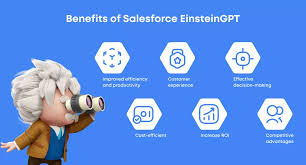
Salesforce Einstein is an AI-powered platform that can be used in various ways to enhance customer experiences and streamline business operations: SalesSalesforce Einstein can help sales teams better understand customers, improve conversion rates, and close deals more quickly. For instance, it can generate sales call summaries, draft emails using customer data, and provide real-time predictions. Customer ServiceEinstein helps customer service agents resolve cases faster and provide customers with relevant information during interactions. MarketingSalesforce Einstein enables marketers to create personalized experiences and send the right content to the right customer at the right time. ITSalesforce empowers IT teams to embed intelligence across the business and create smarter apps for customers and employees. CommerceSalesforce assists retailers by recommending the best products to each customer. Salesforce also includes features to protect data privacy and security, such as the Tectonic GPT Trust Layer, which provides AI bias detection, data security, and regulatory compliance. Salesforce Einstein is the first all-inclusive AI for CRM. It’s an integrated set of AI technologies that makes the Customer Success Platform smarter and brings AI to Salesforce users everywhere. Salesforce is the only comprehensive AI for CRM. It is: Tectonic and Salesforce allow businesses to become AI-first, providing the ability to anticipate customer needs, improve service efficiency, and enable smarter, data-driven decision-making. Sales teams can anticipate next opportunities and exceed customer needs,Service teams can proactively resolve issues before they occur,Marketing teams can create predictive journeys and personalize experiences like never before,IT teams can embed intelligence everywhere and create smarter apps. AI that works for your business.Drive business productivity and personalization with predictive AI, generative AI, and agents across the Customer 360 platform. Create and deploy assistive AI experiences natively in Salesforce, allowing your customers and employees to converse directly with Agentforce to solve issues faster and work smarter. Empower service reps, agents, marketers, and others with AI tools safely grounded in your customer data to make every customer experience more impactful. What is Salesforce Einstein?As of 2024, this groundbreaking AI-based product remains a leader in the CRM industry since its release in 2016. It combines a range of AI technologies, including advanced machine learning, natural language processing (NLP), predictive analytics, and image recognition, enabling businesses to improve productivity and sustain growth. Salesforce AI BenefitsThe most significant benefits of AI are the time and efficiency gains it offers to business processes. By automating tasks, employees can focus on more strategic work. Additionally, automating repetitive tasks reduces errors and enhances operational efficiency. Saleesforce provides robust reporting features that generate valuable insights to support decision-making, helping businesses understand customer needs and identify opportunities. From a customer perspective, Salesforce ensures more meaningful and personalized experiences through advanced NLP capabilities and machine learning to better understand customer behavior. Salesforce AI FeaturesSalesforce is a feature-rich platform that leverages AI’s capabilities in Natural Language Processing, Machine Learning, and image processing. Some of the key features include: Salesforce PricingCosts depend on the required features and the size of the business. Pricing starts at $50 per user per month, with potential increases based on the specific capabilities needed. Salesforce Tectonic ChallengesAlthough Salesforce Tectonic offers numerous benefits, companies may face challenges during integration, such as aligning it with existing systems and ensuring proper training for employees to maximize its use. How to Prepare for Salesforce Tectonic IntegrationUsing an implementation partner like Tectonic can help ensure seamless integration. A partner will assess your current Salesforce setup, recommend the right features, and guide you through the integration process. ConclusionSalesforce is a cutting-edge platform that empowers businesses to transform operations with comprehensive AI capabilities. It provides tailored solutions for sales, service, marketing, and commerce teams, enabling better customer interactions, data-driven decision-making, and increased productivity. With the right implementation partner like Tectonic, businesses can seamlessly integrate and leverage Tectonic to stay ahead in a competitive landscape. Content updated November 2024. Like1 Related Posts Who is Salesforce? Who is Salesforce? Here is their story in their own words. From our inception, we’ve proudly embraced the identity of Read more Salesforce Marketing Cloud Transactional Emails Salesforce Marketing Cloud Transactional Emails are immediate, automated, non-promotional messages crucial to business operations and customer satisfaction, such as order Read more Salesforce Unites Einstein Analytics with Financial CRM Salesforce has unveiled a comprehensive analytics solution tailored for wealth managers, home office professionals, and retail bankers, merging its Financial Read more AI-Driven Propensity Scores AI plays a crucial role in propensity score estimation as it can discern underlying patterns between treatments and confounding variables Read more

Read More
Use Salesforce Einstein Copilot

Use Salesforce Einstein Copilot

In tandem with Microsoft introducing its Copilot solution and fueled by generative AI. Salesforce is leveraging the capabilities of Large Language Models (LLMs) to empower professionals in sales, marketing, and customer service. Use Salesforce Einstein Copilot. As an extension of Salesforce’s existing suite of Einstein AI features, the company unveiled “Einstein 1” this year—an advanced iteration of the Salesforce platform, equipped with a range of tools facilitating the integration of AI into everyday workflows. Use Salesforce Einstein Copilot At the core of this advancement is the Einstein Copilot solution, complemented by the new Copilot studio and the Einstein Trust Layer. Positioned as Salesforce’s version of generative AI chatbot tools, Einstein Copilot aims to enhance the efficiency of CX staff by enabling them to accomplish specific tasks seamlessly. This tool taps into customer data from the Salesforce Data Cloud to enhance accuracy, incorporating telemetry data, enterprise content, customer insights, and Slack conversations. Through its conversational interface, Einstein Copilot facilitates auto-generation of customer replies, creation of sales emails, and development of unique consumer experiences. Einstein Copilot boasts versatile use cases across different departments, offering personalized recommendations and content generation for all customer-facing team members. Natively integrated into the Salesforce ecosystem, it can access data from any application, ensuring greater personalization through natural language prompts. Specific applications of Einstein Copilot include: Einstein Copilot Key Features: Customers can access Einstein Copilot through the purchase of Einstein 1 editions or by adding it to Enterprise or Unlimited Editions. Currently available for Sales Cloud and Service Cloud, Einstein Copilot will expand to Tableau, Commerce Cloud, and Marketing Cloud later in 2024. The solution supports data residency in the United States and the English language, aiming to alleviate burdens across various user types. Further insights about Copilot were unveiled at this year’s TrailblazerDX event. Like2 Related Posts Who is Salesforce? Who is Salesforce? Here is their story in their own words. From our inception, we’ve proudly embraced the identity of Read more AI-Driven Propensity Scores AI plays a crucial role in propensity score estimation as it can discern underlying patterns between treatments and confounding variables Read more Salesforce AI Einstein Next Best Action Salesforce AI Einstein Next Best Action is a feature designed to identify the most effective actions available to agents and Read more Einstein Relationship Insights ERI, serves as an AI-powered research assistant, enhancing sales processes. ERI operates as a desktop plugin with a browser extension, Read more

Read More

Developing Your AI Workforce in the Public Sector

Even the most advanced and technically robust AI solutions can only achieve their full potential with a dedicated team proficient in their utilization. Developing Your AI Workforce in the Public Sector has some primary challenges. Key considerations include: This insight delves into the composition of an Integrated Product Team, strategies for assembling and overseeing AI talent, and the creation of learning programs designed to foster transformative AI capabilities. Start with People: Identifying AI Talent Survey your organization to identify existing analytics talent or teams with an analytics orientation. Although analytics and AI differ, overlapping baseline skills can be developed. Assess existing talent by identifying individuals who exhibit qualities such as supporting decisions with data, comfort with statistics and math, proficiency in creating macros in Excel, an interest in computer programming, and an understanding of technology’s role in enhancing processes. Leverage the existing pool of intelligent individuals within your organization. Some may already possess AI and ML skills, while others may have skills that can be augmented to become AI-related.  Are they in IT, in one of the business functions, or part of the Office of the Chief Experience Officer (CXO)? Augment Talent When Needed: Consider public-private partnerships to access innovation emerging from private industry, particularly when faced with challenges in attracting, training, and retaining data science talent. Bringing in outside talent or vendors may be suitable when dealing with limited use cases requiring niche skills or for quickly testing the potential benefits of an AI solution. Developing and Retaining AI Talent: Mission and Practitioner Support Ensure that AI work aligns closely with the agency’s mission, providing a unique value proposition for AI practitioners. Meaningful work and practitioner support are crucial for retaining AI talent. Retention incentives and skill development can be optimized by providing federal employees with awareness and access to AI-related training opportunities. Formal education, training programs, conferences, and exchanges with industry and academia contribute to the continuous development of AI practitioners. An important part of assessing an organization’s existing talent is acknowledging that some people may already be leveraging defined AI and ML skills. Others, however, may work in technical roles or have skills that are not directly AI related, but could easily be supplemented to become AI skills. Understanding AI Job Roles and Career Paths Identify where AI practitioners should sit within mission areas and program offices. Roles include data analysts, data engineers, data scientists, technical program managers, AI champions, project sponsors, mission or program office practitioners, project managers, and business analysts. The success of AI projects depends on the Integrated Project Team’s makeup and understanding the challenge at hand. Certainly, many agencies want to increase the AI know-how of their internal staff. However, much of the innovation emerging in the AI field comes from private industry. Public-private partnerships are often an excellent way to get more support for AI projects. Career Path: AI-focused practitioners may start as junior data engineers or data scientists, with career paths evolving based on experience and education. Senior technical positions such as senior data architects or principal data scientists may exist, indicating extensive technical experience. Management career paths can transition from data engineer or data scientist to technical program manager. Recruiting AI Talent: Competing with Private Industry While the government may not compete with private industry on salary and bonuses, it can offer interesting and meaningful work tied to company missions. Centralized recruitment and certification through the central AI resource can ensure that incoming AI talent is well-qualified and suitable for the agency’s practitioner environment. This is even more important in public sector and nonprofit organizations. Placing AI Talent: The central AI resource, with access to technical infrastructure, data, security, legal, and human capital support, can provide well-qualified candidates. Mission and business centers should coordinate closely with the AI resource to ensure that vetted candidates align with staffing needs and contribute to mission and program goals. Developing Your AI Workforce in the Public Sector Mission and practitioner support The most powerful tools for retaining government AI talent are ensuring that AI work is closely tied to the agency mission and ensuring that AI talent has the technical and institutional support to work effectively as AI practitioners. This combination forms the unique value proposition for an AI career that only federal agencies can provide, and is usually the reason AI practitioners chose government over industry and academia. Developing Your AI Workforce in the Public Sector means meeting the correct balance of opportunity, reward, and challenge. If AI practitioners love the company mission but are unable to function as AI practitioners, they are also unlikely to stay if the agency is unable to leverage their skill set. Both meaningful work and practitioner support are crucial for retaining AI talent. Developing Your AI Workforce should be started early and focused on continually. Retention incentives and skill development One way to make the best use of these usually limited incentives is to ensure federal employees have full awareness and access to AI related training and skill development opportunities. AI and data science are fields that often require a significant technical and academic background for success. However, it’s also important for people to be open-minded about who might have (most of) the relevant skills and capabilities. Developing Your AI Workforce in the Public Sector is no more or less challenging than in nonprofit or for profit industries. They should not assume that only people with computer science or statistics education are going to be appropriate for AI-centric positions. A culture that prizes and generously supports learning not only ensures the continued effectiveness of the AI workforce, but also serves as a powerful recruitment and retention tool.  The success of an AI project hinges on the composition of the Integrated Project Team (IPT). While technical expertise is undeniably crucial, the project’s failure is inevitable without a thorough understanding of the challenges to be addressed and obtaining support from the mission and program team. And we can’t emphasize enough the seriousness of the human element. This distinction

Read More
AI tools for research

AI Tools for Research

10 AI Tools for Research Work This is a great list of resarch tools aided by AI. 1. Opinly AI AI-powered competitor research and analysis. Features: Link: Opinly AI 2. PDF Parser Tool to analyze, visualize, and communicate data for insights. Features: Link: PDF Parser 3. Heyday Turn data into insights. Features: Link: Heyday 4. Wisio Supercharge your academic writing with AI. Features: Link: Wisio 5. Silatus Fact-based research automation with AI. Features: Link: Silatus 6. Elicit An AI-powered research analysis assistant. Features: Link: Elicit 7. Eightify Learn from YouTube videos efficiently. Features: Link: Eightify 8. Aomni Helps B2B sellers build better buyer relationships and save time on prep work throughout the sales cycle. Features: Link: Aomni 9. Consensus An AI-powered search engine for research paper insights. Features: Link: Consensus 10. SciSpace by Typeset Chat with PDFs and conduct your literature review faster. Features: Link: SciSpace by Typeset Shushant Lakhyani writes and publishes Learn AI for free. Like Related Posts Who is Salesforce? Who is Salesforce? Here is their story in their own words. From our inception, we’ve proudly embraced the identity of Read more Salesforce Unites Einstein Analytics with Financial CRM Salesforce has unveiled a comprehensive analytics solution tailored for wealth managers, home office professionals, and retail bankers, merging its Financial Read more AI-Driven Propensity Scores AI plays a crucial role in propensity score estimation as it can discern underlying patterns between treatments and confounding variables Read more Tectonic’s Successful Salesforce Track Record Salesforce Technology Services Integrator – Tectonic has successfully delivered Salesforce in a variety of industries including Public Sector, Hospitality, Manufacturing, Read more

Read More
Salesforce Einstein Copilot

Embed Einstein Copilot

We’ve all been hearing about Einstein, Salesforce’s AI, for some time now. At Trailblazer DX yesterday we learned a whole lot more. Read on to know why you should embed Einstein Copilot in your Salesforce org. Salesforce has introduced Einstein 1 Studio, a suite of low-code tools that empowers Salesforce admins and developers to tailor Einstein Copilot, the CRM’s conversational AI assistant, and seamlessly integrate AI into any application for a personalized customer and employee experience. Einstein 1 Studio includes Copilot Builder for crafting custom AI actions, Prompt Builder for creating and activating custom prompts, and Model Builder for building or importing various AI models. These tools enable businesses to deliver tailored AI experiences across the Einstein 1 Platform, enhancing productivity and customer satisfaction. Embed Einstein Copilot Key Highlights: Salesforce aims to address challenges enterprises face in unlocking the power of AI across their business by providing intuitive user interfaces, adaptable AI models, and access to trusted customer data. The Einstein 1 Studio tools are designed to boost productivity, enhance customer experiences, and increase operational efficiency. Contact Tectonic today to learn more about putting Einstein to work at your company. Like2 Related Posts AI-Driven Propensity Scores AI plays a crucial role in propensity score estimation as it can discern underlying patterns between treatments and confounding variables Read more Salesforce Integrations How do you make Salesforce even better? Integrate it with all the third party apps you already use. From productivity Read more Salesforce Health Cloud Information Since its inception in 2016, Salesforce Health Cloud has evolved significantly, adapting to the intricacies of the sensitive and dynamic Read more Einstein Relationship Insights ERI, serves as an AI-powered research assistant, enhancing sales processes. ERI operates as a desktop plugin with a browser extension, Read more

Read More
Data Management and Data Maturity

Data Management and Data Maturity

Data Management and Data Maturity: Generative AI Raises Concerns About Data Ethics and Equity Harnessing the capabilities of generative AI is contingent on having comprehensive, unified, and accurate data, as indicated by more than half of IT leaders. However, several obstacles hinder progress. A recent survey unveils that a majority of IT leaders lack a unified data strategy, impeding the seamless integration of generative AI into their existing technology stack. Beyond technical challenges, generative AI also brings to the forefront serious ethical considerations. Key findings from the survey reveal: AI Illuminates Data Management While generative AI garners attention, more established AI applications, such as predictive analytics and chatbots, have long been advantageous for organizations. Technical leaders leveraging AI report significantly faster decision-making and operations. The benefits extend beyond speed, with analytics and IT leaders highlighting more time to address strategic challenges rather than being immersed in mundane tasks. Customers also reap the rewards, with technical leaders noting substantial improvements in customer satisfaction due to AI. Given the pivotal role of quality data in AI outcomes, it is unsurprising that nearly nine out of ten analytics and IT leaders consider new developments in AI to prioritize data management. Realized Benefits of AI Adoption Analytics and IT leaders cite several top benefits realized from AI adoption: Data Maturity Signals AI Preparedness Data maturity emerges as a foundational element for successful AI adoption, with high-maturity organizations boasting superior infrastructure, strategy, and alignment compared to their low-data-maturity counterparts. The disparities are particularly evident in terms of data quality, with high-maturity respondents being twice as likely as low-maturity respondents to possess the high-quality data required for effective AI utilization. Like2 Related Posts Who is Salesforce? Who is Salesforce? Here is their story in their own words. From our inception, we’ve proudly embraced the identity of Read more Salesforce Marketing Cloud Transactional Emails Salesforce Marketing Cloud Transactional Emails are immediate, automated, non-promotional messages crucial to business operations and customer satisfaction, such as order Read more Salesforce Unites Einstein Analytics with Financial CRM Salesforce has unveiled a comprehensive analytics solution tailored for wealth managers, home office professionals, and retail bankers, merging its Financial Read more AI-Driven Propensity Scores AI plays a crucial role in propensity score estimation as it can discern underlying patterns between treatments and confounding variables Read more

Read More
Tectonic at a Glance

AI Product Management Tools

Embracing AI in Product Management: Your New Best Friend, Not a Replacement-Original published by https://zedaio.medium.com/ Amid the lively debates about AI taking over product management roles, let’s set the record straight: AI is here as an ally, not a replacement. It’s about leveraging AI to amplify our capabilities, streamline mundane tasks, and make room for the creative and strategic aspects of product management. AI Product Management Tools. Here are seven AI tools that will automate your daily routines, offering support that transforms the way you manage products. Ready to upgrade your product management game with AI by your side? Let’s dive in! 1. Zeda.io Zeda.io is one of the best AI tools for product managers. It offers a complete suite of features that help you in feedback management, strategic planning, and closing the loop. It is a perfect tool if you are striving to balance your customer needs and business goals. With integrations like Slack, Gong, Teams, Salesforce, and more, you can gather and manage customer feedback effortlessly. Its unique AI technology generates valuable, actionable insights by categorizing all the feedback, helping you uncover pressing customer issues and decide what to build next. Key Features: 2. ChatGPT An obvious choice, ChatGPT can automate many of your tasks. It helps make sense of vague product user feedback, create PRDs, release notes, and other documents. The key is to use the right prompts and GPT plugins tailored for product managers. Key Features: 3. Notion AI Notion is a cloud-based productivity and collaboration tool that provides various organizational tools, including task management, project tracking, to-do lists, bookmarking, and more. Notion’s AI can assist product managers in several ways. Key Features: 4. Uizard Uizard is a user interface design tool that uses AI to quickly and efficiently create wireframes, mockups, and prototypes in minutes. The tool’s advanced deep-learning algorithms analyze images provided by product teams and managers to create design themes. Key Features: 5. ClickUp ClickUp is a cloud-based tool that helps teams manage their work effectively, offering features like task management, time tracking, file sharing, and communication tools. ClickUp is highly customizable and offers multiple AI tools that integrate seamlessly into workflows. Key Features: 6. Delibr Delibr is an excellent tool for AI product teams to collaborate effectively during the feature refinement process. It helps capture, synthesize, and organize feedback from diverse sources, enabling informed decision-making and creating high-quality documentation. Key Features: 7. Fireflies.ai Fireflies.ai enhances meeting productivity by transcribing, summarizing, and analyzing voice conversations. It integrates with major video-conferencing platforms and offers various ways to capture meetings, including a Chrome extension and direct uploads. Key Features: AI Product Management Tools Embracing AI in product management doesn’t mean diminishing the value of human insight; it’s about enhancing our capabilities and efficiency. The seven AI tools outlined here offer a glimpse into a future where technology and creativity intersect, empowering product managers to achieve more in less time. By integrating suitable tools into your workflow, you can focus on innovation and strategy, ensuring your products not only meet but exceed user expectations. Let AI be your ally to achieve greater heights and product success. Like Related Posts Who is Salesforce? Who is Salesforce? Here is their story in their own words. From our inception, we’ve proudly embraced the identity of Read more Salesforce Marketing Cloud Transactional Emails Salesforce Marketing Cloud Transactional Emails are immediate, automated, non-promotional messages crucial to business operations and customer satisfaction, such as order Read more Salesforce Unites Einstein Analytics with Financial CRM Salesforce has unveiled a comprehensive analytics solution tailored for wealth managers, home office professionals, and retail bankers, merging its Financial Read more AI-Driven Propensity Scores AI plays a crucial role in propensity score estimation as it can discern underlying patterns between treatments and confounding variables Read more

Read More
demand generation web use cases for personalization

Demand Generation Web Use Cases for Personalization

Utilize effective personalization techniques adopted by businesses in online campaigns to stimulate demand generation. The term “demand generation” has somewhat faded from the marketing lexicon due to the emphasis on analytics, AI, and metrics for lead conversion. However, where does personalization fit into the broader scope of demand generation? Demand generation web use cases for personalization. Personalization plays a pivotal role in various aspects of demand generation: In lead nurturing, personalization is equally vital: Moreover, personalization is instrumental in lead acquisition efforts by delivering relevant experiences to all of your prospects. To effectively implement personalization, real-time insights into individual behaviors and interactions are essential. A comprehensive personalization solution should unify data from various channels and systems, enabling seamless cross-channel personalization. This includes “stitching” together anonymous and known user profiles, integrating data with complementary systems like CRMs and marketing platforms, and facilitating real-time omni-channel personalization. The key to successful personalization lies in understanding and addressing each individual’s unique needs and preferences. By adopting a customer-centric approach and setting clear objectives aligned with business goals, organizations can leverage personalization to enhance customer experiences, boost conversion rates, and drive measurable business growth. To execute a successful personalization strategy, organizations must: By following these steps and continuously optimizing personalization efforts, organizations can build stronger customer relationships, drive business growth, and maximize marketing ROI. Website personalization serves as the starting point for many companies embarking on their personalization journey. This entails ensuring that returning visitors encounter pages tailored to their previous experiences or recent purchases. It can also involve presenting new customers with product recommendations based on their current browsing session. The return on this initial investment can be substantial, with many companies witnessing a significant increase in conversion rates, sometimes by as much as 50% or more. For instance, a site converting 2% of visitors might see that figure rise to 3%, a dream scenario for digital marketers. Moreover, this boost in conversion rates can have far-reaching effects across marketing programs, leading to a reduction in overall customer acquisition costs. Tectonic now offers Personalization Implementation Solutions. The next stage in personalization maturity involves integrating a customer’s web and email experiences. This seamless connection between two major channels for customer engagement brings organizations closer to achieving an omni-channel personalization experience. Timely and relevant follow-up messages after a customer’s website visit or purchase can deepen relationships and enhance lifetime value without significant additional marketing expenditure. Finally, the ultimate goal is to extend personalization across all channels, ensuring consistent and tailored experiences wherever customers interact with your brand. However, achieving this can be challenging due to fragmented customer data across multiple channels, teams, and systems. An effective personalization solution should consolidate and synthesize this cross-channel information by maintaining unified customer profiles and enabling real-time omni-channel personalization. Testing is a crucial aspect of successful personalization efforts, allowing organizations to optimize campaigns and maximize engagement, conversions, and revenue. A robust personalization solution should facilitate A/B testing, measuring lift over control, evaluating impacts against specific goals, and filtering results by segment. Effective website personalization lays the foundation for broader personalization efforts across channels. By seamlessly integrating web and email experiences and extending personalization to all touchpoints, organizations can deliver tailored experiences that drive engagement, loyalty, and ultimately, business growth. By Tectonic’s Salesforce Marketing Platform Architect Shannan Hearne Like1 Related Posts Who is Salesforce? Who is Salesforce? Here is their story in their own words. From our inception, we’ve proudly embraced the identity of Read more Salesforce Marketing Cloud Transactional Emails Salesforce Marketing Cloud Transactional Emails are immediate, automated, non-promotional messages crucial to business operations and customer satisfaction, such as order Read more Salesforce Unites Einstein Analytics with Financial CRM Salesforce has unveiled a comprehensive analytics solution tailored for wealth managers, home office professionals, and retail bankers, merging its Financial Read more AI-Driven Propensity Scores AI plays a crucial role in propensity score estimation as it can discern underlying patterns between treatments and confounding variables Read more

Read More
gettectonic.com