Salesforce Optimization Archives - gettectonic.com - Page 7
Salesforce Service Cloud Einstein

Improve Customer Experiences with Trusted AI

Improving customer experiences is your top priority, but 68% of agents say balancing customer service speed with quality is difficult. Let’s discover how we can improve customer experiences with trusted AI. We’re in a new era of service: FROM TO Manual Support Generative Experiences Disparate Platforms Connected Channels Static Processes AI-Powered Flows Operational Summaries Intelligent Data Reimagine Contact Center Salesforce Field Service Power the future with trusted AI + Data Every business wants to capitalize on the AI Opportunity To drive growth, productivity, and customer success Customer Service AI Available Today It starts by connecting all of your customer data from any appor device with Out-of-the-box connectors. We have Service Cloud for Every Business and every industry. No matter what growth stage your business is in. Einstein 1 Service Edition is our newest edition and includes the bes of Salesforce for Service. Like Related Posts Who is Salesforce? Who is Salesforce? Here is their story in their own words. From our inception, we’ve proudly embraced the identity of Read more Salesforce Marketing Cloud Transactional Emails Salesforce Marketing Cloud Transactional Emails are immediate, automated, non-promotional messages crucial to business operations and customer satisfaction, such as order Read more Salesforce Unites Einstein Analytics with Financial CRM Salesforce has unveiled a comprehensive analytics solution tailored for wealth managers, home office professionals, and retail bankers, merging its Financial Read more AI-Driven Propensity Scores AI plays a crucial role in propensity score estimation as it can discern underlying patterns between treatments and confounding variables Read more

Read More
Salesforce enhanced domains

Enhanced Domains in Salesforce

Enhanced domains are the current version of My Domain that meets the latest browser requirements. With enhanced domains, all URLs across your org contain your specific My Domain name. Including URLs for your Experience Cloud sites, Salesforce Sites, Visualforce pages, and content files. This feature changes domain suffixes (the part after the My Domain name) to meet the latest security standards. With no instance names, enhanced My Domain URLs are easier for users to remember and don’t change when your org is moved to another Salesforce instance. As enhanced domains meet the latest browser requirements, they’re deployed by default in new orgs and required in all orgs in Winter ’24. Potential Impact of Enhanced Domains If enhanced domains aren’t deployed in your Salesforce org before Salesforce deploys the feature for you, here are some issues that can arise. To avoid these issues, we recommend that you test and deploy enhanced domains in a sandbox. Deploy enhanced domains in production before Salesforce deploys the feature for you. When you deploy enhanced domains, your org’s My Domain name is used in all URLs that Salesforce hosts for your org. Key for memory and search engine optimization, this is one of the greatest Salesforce enhancements. What are the benefits of enhanced domains? Enhanced domains are designed to streamline access and improve security. Without them: Users might encounter errors accessing services like Experience Cloud sites, Salesforce Sites, and Visualforce pages. Showcase your company’s brand with a customer-specific subdomain name in your Salesforce org URLs. With My Domain, you can include your company name in your URLs, for example, https://mycompany.my.salesforce.com. With these org-specific URLs, you can set up a custom login page, set a custom login policy, offer single sign-on, and allow users to log in with a social account. My Domain allows you to work in multiple Salesforce orgs in the same browser at the same time. All Salesforce orgs get a My Domain with enhanced domains by default. If you don’t like your org’s My Domain name or circumstances warrant a change, you can rename it. Contact your Salesforce AE or Tectonic. Understand how to include your brand in the URL. When used to access your Salesforce org and its data with My Domain, Experience Cloud sites, Salesforce Sites, and custom domains. Like2 Related Posts Lookup Relationship in Salesforce What is Lookup relationship in Salesforce? Salesforce’s lookup relationships is a significant capability that allows users to connect two objects Read more Step By Step Guide to a Salesforce Quickstart Salesforce Implementation with a Tectonic Quickstart: Step-by-Step Salesforce Quickstart Guide. Step 1: Define Your Business Requirements Identify specific business processes Read more Cool Ways to Use Surveys With Salesforce Leveraging survey forms is an effective way to gather real-life insights from individuals crucial to your organization. Salesforce facilitates survey Read more Lightning Dialer Salesforce What is Lightning Dialer Salesforce? Lightning Dialer Salesforce offers an outbound calling product with the option to add inbound calling Read more

Read More
The State of Loyalty

The State of Loyalty

You’ve likely seen the headlines proclaiming “Loyalty is dead,” reflecting declining customer and brand loyalty, exacerbated by post-pandemic shifts and uninspiring loyalty programs. As of 2022, active participation in loyalty programs has dropped, indicating a disconnect between consumer expectations and program offerings. The State of Loyalty. The issue lies with outdated and repetitive loyalty programs that fail to evolve with consumer needs. Many programs offer little beyond basic incentives like points or discounts, which no longer suffice in a saturated market where every brand seems to offer a similar scheme. Modern consumers demand mutual loyalty: personalized interactions, anticipation of needs, and alignment with personal values. To meet these expectations, companies are redefining loyalty success. A significant 82% plan to increase investment in loyalty programs, focusing on deeper connections that foster lasting customer loyalty. Redefining Loyalty: Permanence: Brands strive to maintain a permanent position in consumers’ minds, becoming their default choice in a competitive landscape. Forgiveness: Strong existing trust allows brands to recover from mistakes without losing loyal customers. Championship: Beyond advocacy, customers champion brands by recommending them to their closest networks, cementing their personal reputation with the brand’s reliability. Loyalty Model Options: Four baseline models—Transactional, Experiential, Experience-led, and Perpetual—guide loyalty strategies, each offering unique outcomes based on customer engagement and program design. Transactional Loyalty: Rewards based on purchases, enhancing customer lifetime value, purchase frequency, and brand preference. Experiential Loyalty: Emotional connections through personalized experiences, enhancing spending and earned media ROI. Experience-led Loyalty: Anticipating customer needs through enhanced interactions across the customer journey, fostering efficiency and scalability. Perpetual Loyalty: Seamless integration into daily life, aligning brand purpose with customer values, and overcoming operational challenges through targeted design and personalization. Operational Considerations: Successful loyalty strategies require alignment across vision, investment, and operational capabilities, spanning experience, data, technology, organization, process, and monetization. Key Recommendations: Conclusion: Building a successful loyalty strategy requires a comprehensive understanding of customer dynamics and a commitment to adaptability. Beyond mere programs or platforms, true loyalty inspires enduring customer actions—commitment, advocacy, and forgiveness—that reflect a brand’s ability to co-create value with its customers. Explore diverse loyalty models to meet these evolving consumer demands and secure lasting brand loyalty in today’s dynamic market. Content updated March 2024. Like Related Posts Who is Salesforce? Who is Salesforce? Here is their story in their own words. From our inception, we’ve proudly embraced the identity of Read more Salesforce Marketing Cloud Transactional Emails Salesforce Marketing Cloud Transactional Emails are immediate, automated, non-promotional messages crucial to business operations and customer satisfaction, such as order Read more Salesforce Unites Einstein Analytics with Financial CRM Salesforce has unveiled a comprehensive analytics solution tailored for wealth managers, home office professionals, and retail bankers, merging its Financial Read more AI-Driven Propensity Scores AI plays a crucial role in propensity score estimation as it can discern underlying patterns between treatments and confounding variables Read more

Read More
Salesforce Success Story

Case Study: A Northwest US Community Foundation-Nonprofit-Salesforce Nonprofit Success Pack

Enhance usage of Salesforce by a NonProfit Organization A Community Foundation located in the Northwest United States supported by donors / members that provides philanthropic leadership in the Northwest through awarding of grants and sponsorships to nonprofit organizations, student scholarships, and the coordination of collaborative responses to the region’s complex needs. Nonprofit Success Pack Salesforce. Leveraging Salesforce to Support Philanthropic leadership PROBLEM: SOLUTION: RESULTS: nonprofit success pack salesforce Like1 Related Posts Tectonic’s Successful Salesforce Track Record Salesforce Technology Services Integrator – Tectonic has successfully delivered Salesforce in a variety of industries including Public Sector, Hospitality, Manufacturing, Read more Lookup Relationship in Salesforce What is Lookup relationship in Salesforce? Salesforce’s lookup relationships is a significant capability that allows users to connect two objects Read more Step By Step Guide to a Salesforce Quickstart Salesforce Implementation with a Tectonic Quickstart: Step-by-Step Salesforce Quickstart Guide. Step 1: Define Your Business Requirements Identify specific business processes Read more Cool Ways to Use Surveys With Salesforce Leveraging survey forms is an effective way to gather real-life insights from individuals crucial to your organization. Salesforce facilitates survey Read more

Read More
Salesforce High Velocity Sales

Salesforce High Velocity Sales

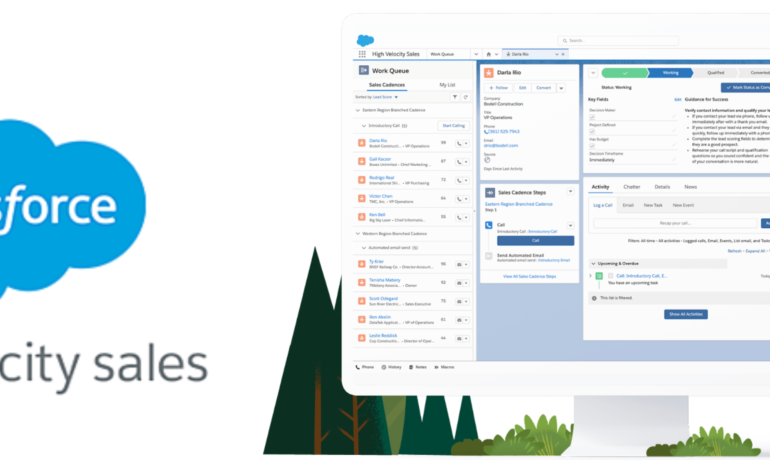
Exploring High Velocity Sales (HVS) in Today’s Business Landscape In the fast-paced world of business, sales departments are constantly seeking strategies to enhance efficiency and boost revenue. One approach gaining significant traction is High Velocity Sales (HVS). This guide offers a comprehensive overview of HVS, its impact on sales processes, and how Salesforce has revolutionized this high-speed approach. Understanding High Velocity Sales High Velocity Sales (HVS) is a Salesforce Sales Cloud extension that enables inside sales teams to prioritize hot leads, boost conversion rates, and build and sustain new business opportunities. Recently renamed to Sales Engagement, this extension includes automation features such as customer engagement tracking, chatbots, cadences, and automated actions. HVS emphasizes speed and efficiency in the sales funnel, leveraging automation and data-driven insights to streamline processes, accelerate lead conversion, and drive revenue growth. As competition intensifies and customer expectations evolve, adopting HVS has become essential for businesses aiming to stay competitive. Key Updates and Features Salesforce’s Role in High Velocity Sales Salesforce, a leading CRM platform, has transformed sales workflows with its HVS capabilities. By integrating HVS into the Salesforce platform, businesses gain access to advanced automation tools, intelligent lead scoring, and personalized engagement at scale. This integration empowers sales teams to identify and prioritize high-quality leads, automate tasks, and optimize sales efforts, driving revenue growth and enhancing sales performance. Benefits of High Velocity Sales Implementing HVS offers numerous benefits to organizations: Challenges and Considerations While HVS provides significant advantages, it may not suit every sales process, especially those with complex, long-term cycles. Adopting HVS can involve a learning curve, and there’s a risk of sacrificing quality interactions with prospects for the sake of speed. Balancing velocity with relationship-building is crucial for long-term success. Alternative Solutions and Integration Exploring alternative sales engagement tools beyond Salesforce HVS can offer unique features tailored to specific business needs. Ensuring seamless integration with existing systems and processes is essential to maximize efficiency and workflow. Choosing Your Sales Engagement Tool When selecting a sales engagement tool, consider factors such as: Evaluating the potential return on investment is critical to making an informed decision. Embracing Innovation in Sales In today’s competitive business environment, embracing innovative sales strategies like High Velocity Sales is crucial. Leveraging automation, data-driven insights, and streamlined workflows, businesses can enhance productivity, increase efficiency, and achieve remarkable sales results. Ready to Revolutionize Your Sales Process? Explore High Velocity Sales and unlock your sales team‘s full potential with Salesforce and other cutting-edge technologies. Reach out to learn how Salesforce HVS can transform your sales process and schedule a consultation with experts at Tectonic to explore comprehensive solutions tailored to your business needs. Content updated March 2024. Like Related Posts Who is Salesforce? Who is Salesforce? Here is their story in their own words. From our inception, we’ve proudly embraced the identity of Read more Salesforce Marketing Cloud Transactional Emails Salesforce Marketing Cloud Transactional Emails are immediate, automated, non-promotional messages crucial to business operations and customer satisfaction, such as order Read more Salesforce Unites Einstein Analytics with Financial CRM Salesforce has unveiled a comprehensive analytics solution tailored for wealth managers, home office professionals, and retail bankers, merging its Financial Read more AI-Driven Propensity Scores AI plays a crucial role in propensity score estimation as it can discern underlying patterns between treatments and confounding variables Read more

Read More
Salesforce Service Console

Salesforce Service Console

The Service Console serves as a standard Salesforce Lightning console app designed to cater to various service requirements, allowing customization for a personalized touch. What defines the service console? The Salesforce Service Console stands as the central interface within the Salesforce Service Cloud, a dedicated application for customer service, support, and customer experience. This unified console empowers agents by providing a comprehensive view of all pertinent customer information linked to a particular case or customer support incident. Streamlining case management: The split view feature enables agents to handle multiple cases on a single screen, with a preconfigured, three-column layout consolidating essential information and minimizing clicks and scrolling. Column 1 displays case details, contact information, and related cases for the parent account via Related Record and Related List Single components. Column 2 presents a prominent highlights panel with a compact case feed for efficient case updates. Column 3 incorporates related lists and relevant Knowledge articles for the case. Enhanced details tracking: The preconfigured utility bar facilitates quick access to History and Notes, with customization options to include additional tools such as Macros, Omni-Channel, and Open CTI Softphone. The Actions & Recommendations component provides users with a to-do list, showing flows, quick actions, and recommendations based on Next Best Action strategies. Noteworthy features of Salesforce console for service: While the Lightning console apps offer substantial benefits, some features present in Salesforce Classic console apps, such as push notifications and custom keyboard shortcuts, are not yet available in Lightning console apps. Benefits of Salesforce console: The console proves beneficial for both Sales and Service roles, allowing support agents to handle multiple applications concurrently and maintain context as priorities shift. Sales representatives can effortlessly access tools to nurture leads, close deals, and manage relationships. Understanding Salesforce Lightning console: The Lightning Sales Console serves as a standard Salesforce Lightning app that consolidates various sales tools, providing easy access for prospecting leads, closing deals, and relationship management. Distinguishing Service and Service Console in Salesforce: Service Cloud encompasses the entire Salesforce instance or organization, while the Service Console is one of the apps within the Service Cloud. Accessed through Apps, the Service Console operates as a tab-based workspace, facilitating the management of multiple records on a single screen. Reach out to Tectonic today to discuss adding the Service Console to your Sales Cloud. Like1 Related Posts Asset Management Salesforce Can Salesforce do asset management? You can manage assets in Consumer Goods (desktop) and in the Consumer Goods offline mobile Read more Lookup Relationship in Salesforce What is Lookup relationship in Salesforce? Salesforce’s lookup relationships is a significant capability that allows users to connect two objects Read more What is Salesforce? Salesforce is cloud-based CRM software. It makes it easier for companies to find more prospects, close more deals, and connect Read more Generating Documents in Salesforce Salesforce document generation poses a challenge for businesses, given the intricacies of integration involved. Fortunately, a variety of tools are Read more

Read More
Why Do We Use OmniStudio in Salesforce

Why Do We Use OmniStudio in Salesforce?

OmniStudio in Salesforce offers significant advantages over traditional custom code and Lightning Web Components (LWC), providing a low-code development platform that accelerates application development, simplifies maintenance, and reduces costs. Why Do We Use OmniStudio in Salesforce? OmniStudio enables Salesforce organizations to achieve the following: Moreover, OmniStudio facilitates integration with enterprise data and external applications, simplifying the incorporation of diverse data sources into Salesforce environments. OmniStudio Action in Salesforce refers to its capability to rapidly develop and deploy digital-first experiences tailored to specific industries and channels. It enhances Salesforce’s ecosystem by extending functionality through its suite of tools. Differences Between OmniStudio and Vlocity: OmniStudio is developed by Salesforce and serves as an integrated low-code development environment within Salesforce’s platform. In contrast, Vlocity was a separate company offering industry-specific cloud and mobile software solutions built on the Salesforce platform before its acquisition by Salesforce. Vlocity solutions were deeply integrated but maintained a distinct focus on specific industry needs. Differences Between LWC and OmniStudio: While LWC involves traditional coding for building applications, providing flexibility and control over customization, OmniStudio operates within a visual development environment that emphasizes rapid application development without extensive coding. OmniStudio thus prioritizes speed and ease of use over the granular control offered by LWC. Disadvantages of OmniStudio: While OmniStudio simplifies development and maintenance, organizations must carefully manage project architecture and component naming conventions to avoid complexity and ensure project clarity. Additionally, older component versions may become obsolete if not managed properly within Salesforce’s development lifecycle tools. In summary, OmniStudio in Salesforce represents a robust toolset for organizations seeking agile application development and enhanced digital experiences without the overhead of extensive custom coding. Like Related Posts Who is Salesforce? Who is Salesforce? Here is their story in their own words. From our inception, we’ve proudly embraced the identity of Read more Salesforce Marketing Cloud Transactional Emails Salesforce Marketing Cloud Transactional Emails are immediate, automated, non-promotional messages crucial to business operations and customer satisfaction, such as order Read more Salesforce Unites Einstein Analytics with Financial CRM Salesforce has unveiled a comprehensive analytics solution tailored for wealth managers, home office professionals, and retail bankers, merging its Financial Read more AI-Driven Propensity Scores AI plays a crucial role in propensity score estimation as it can discern underlying patterns between treatments and confounding variables Read more

Read More
Salesforce Nonprofit Cloud

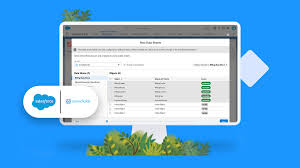
Salesforce Grantseeker Collaboration in Grants Management Nonprofit Cloud

Utilize Salesforce Grants Management for the collaborative collection and review of funding requests. Salesforce Grantseeker Collaboration tool empowers nonprofits. Allow Funding Request Collaborators: Update Invitation to Collaborators: Key Functions of Salesforce Grantseeker Collaboration: Nonprofit Cloud and Nonprofit Success Pack Like Related Posts Tectonic’s Successful Salesforce Track Record Salesforce Technology Services Integrator – Tectonic has successfully delivered Salesforce in a variety of industries including Public Sector, Hospitality, Manufacturing, Read more Lookup Relationship in Salesforce What is Lookup relationship in Salesforce? Salesforce’s lookup relationships is a significant capability that allows users to connect two objects Read more Step By Step Guide to a Salesforce Quickstart Salesforce Implementation with a Tectonic Quickstart: Step-by-Step Salesforce Quickstart Guide. Step 1: Define Your Business Requirements Identify specific business processes Read more Generating Documents in Salesforce Salesforce document generation poses a challenge for businesses, given the intricacies of integration involved. Fortunately, a variety of tools are Read more

Read More
Salesforce Success Story

Case Study: Google Cloud and Tableau Ecommerce Success

An industry leader in lifesciences research and ecommerce, is tasked with integrating recent acquisitions, standardizing processes, and improving marketing return-on-investment. Ecommerce company moves to the cloud and adopts Google Cloud and Tableau to improve sales and operational efficiency. Google Cloud and Tableau Ecommerce Success to the rescue. Industry: Lifesciences and Biotechnology Research Problem: Leadership requested help driving an improved culture of proactive decision-making, rather than reactive. Implemented : Our solution? Results: Salesforce offers customized solutions for the ecommerce industry, assisting companies in this field to provide outstanding customer experiences, optimize workflows, and spur growth and brand loyalty. Salesforce offers digital transformation technology for life sciences, ecommerce, and biotechnology research industries. If you are considering a Salesforce health and life sciences implementation, contact Tectonic today. Like2 Related Posts Who is Salesforce? Who is Salesforce? Here is their story in their own words. From our inception, we’ve proudly embraced the identity of Read more Salesforce Marketing Cloud Transactional Emails Salesforce Marketing Cloud Transactional Emails are immediate, automated, non-promotional messages crucial to business operations and customer satisfaction, such as order Read more Salesforce Unites Einstein Analytics with Financial CRM Salesforce has unveiled a comprehensive analytics solution tailored for wealth managers, home office professionals, and retail bankers, merging its Financial Read more AI-Driven Propensity Scores AI plays a crucial role in propensity score estimation as it can discern underlying patterns between treatments and confounding variables Read more

Read More
Channels and Tactics Redefine Customer Engagement

Channels and Tactics Redefine Customer Engagement

In today’s digital era, data is the core of enterprises, transforming actionable insights from a secondary role to a mission-critical element. Channels and Tactics Redefine Customer Engagement for nearly everyone. Marketers are investing heavily in tools and technologies that unify data, enabling brands to create unique customer profiles, automate campaigns, and scale personalized strategies effectively. While customer relationship management (CRM) systems are widely popular, marketers use a variety of tools to maintain relationships throughout the customer lifecycle. Notably, 89% of B2B and B2B2C marketers utilize account-based marketing platforms to conduct targeted campaigns in collaboration with their sales and service teams. To meet the growing demand for data-driven, personalized, and scalable customer experiences, over half of marketers have adopted artificial intelligence (AI). Additionally, 90% use CRM systems, 89% employ account-based marketing platforms, and 62% leverage AI. Marketers are keenly aware of customer trends and are experimenting with new digital channels to connect with their audience. Chief Marketing Officers (CMOs) cite customer preferences and expectations as the primary drivers of digital strategy. Recognizing the dominance of streaming services in the media landscape, marketers are increasingly using TV and over-the-top (OTT) platforms to reach prospects and customers. Video remains a crucial component of the marketing mix, with both pre-produced and livestream videos gaining traction. As customers show a growing preference for online engagement, marketers are leveraging a wide range of interactive and user-generated content to satisfy this demand. Interactive content and livestream videos, in particular, have experienced the most significant annual growth. Channels and Tactics Redefine Customer Engagement and that is not likely to change any time soon. Like Related Posts Who is Salesforce? Who is Salesforce? Here is their story in their own words. From our inception, we’ve proudly embraced the identity of Read more Salesforce Marketing Cloud Transactional Emails Salesforce Marketing Cloud Transactional Emails are immediate, automated, non-promotional messages crucial to business operations and customer satisfaction, such as order Read more Salesforce Unites Einstein Analytics with Financial CRM Salesforce has unveiled a comprehensive analytics solution tailored for wealth managers, home office professionals, and retail bankers, merging its Financial Read more AI-Driven Propensity Scores AI plays a crucial role in propensity score estimation as it can discern underlying patterns between treatments and confounding variables Read more

Read More
gettectonic.com