Salesforce Sales Cloud Archives - gettectonic.com - Page 6
The State of Loyalty

The State of Loyalty

You’ve likely seen the headlines proclaiming “Loyalty is dead,” reflecting declining customer and brand loyalty, exacerbated by post-pandemic shifts and uninspiring loyalty programs. As of 2022, active participation in loyalty programs has dropped, indicating a disconnect between consumer expectations and program offerings. The State of Loyalty. The issue lies with outdated and repetitive loyalty programs that fail to evolve with consumer needs. Many programs offer little beyond basic incentives like points or discounts, which no longer suffice in a saturated market where every brand seems to offer a similar scheme. Modern consumers demand mutual loyalty: personalized interactions, anticipation of needs, and alignment with personal values. To meet these expectations, companies are redefining loyalty success. A significant 82% plan to increase investment in loyalty programs, focusing on deeper connections that foster lasting customer loyalty. Redefining Loyalty: Permanence: Brands strive to maintain a permanent position in consumers’ minds, becoming their default choice in a competitive landscape. Forgiveness: Strong existing trust allows brands to recover from mistakes without losing loyal customers. Championship: Beyond advocacy, customers champion brands by recommending them to their closest networks, cementing their personal reputation with the brand’s reliability. Loyalty Model Options: Four baseline models—Transactional, Experiential, Experience-led, and Perpetual—guide loyalty strategies, each offering unique outcomes based on customer engagement and program design. Transactional Loyalty: Rewards based on purchases, enhancing customer lifetime value, purchase frequency, and brand preference. Experiential Loyalty: Emotional connections through personalized experiences, enhancing spending and earned media ROI. Experience-led Loyalty: Anticipating customer needs through enhanced interactions across the customer journey, fostering efficiency and scalability. Perpetual Loyalty: Seamless integration into daily life, aligning brand purpose with customer values, and overcoming operational challenges through targeted design and personalization. Operational Considerations: Successful loyalty strategies require alignment across vision, investment, and operational capabilities, spanning experience, data, technology, organization, process, and monetization. Key Recommendations: Conclusion: Building a successful loyalty strategy requires a comprehensive understanding of customer dynamics and a commitment to adaptability. Beyond mere programs or platforms, true loyalty inspires enduring customer actions—commitment, advocacy, and forgiveness—that reflect a brand’s ability to co-create value with its customers. Explore diverse loyalty models to meet these evolving consumer demands and secure lasting brand loyalty in today’s dynamic market. Content updated March 2024. Like Related Posts Who is Salesforce? Who is Salesforce? Here is their story in their own words. From our inception, we’ve proudly embraced the identity of Read more Salesforce Marketing Cloud Transactional Emails Salesforce Marketing Cloud Transactional Emails are immediate, automated, non-promotional messages crucial to business operations and customer satisfaction, such as order Read more Salesforce Unites Einstein Analytics with Financial CRM Salesforce has unveiled a comprehensive analytics solution tailored for wealth managers, home office professionals, and retail bankers, merging its Financial Read more AI-Driven Propensity Scores AI plays a crucial role in propensity score estimation as it can discern underlying patterns between treatments and confounding variables Read more
Read More
Salesforce

Salesforce Integrations for Sales Users

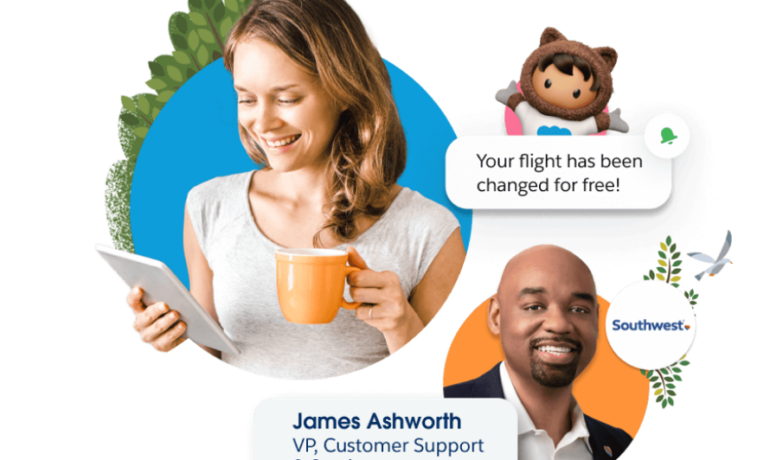
Salesforce integration offers compatibility with a wide array of business tools, and this insight article from Tectonic zeroes in on the most advantageous integrations tailored for your sales teams. Salesforce Integrations for Sales Users encompass various areas from contract management tools to lead enrichment and marketing automation platforms, the focus is on enhancing the efficiency of your sales operations. Understanding Salesforce Integrations A Salesforce integration is a mechanism linking the CRM with one or more business tools, facilitating seamless data transfer and automation of repetitive administrative tasks. With over 2,500 integrations, Salesforce is one of the most connected and flexible CRMs on the market. Let’s dive into the top Salesforce integrations for sales teams in 2024. Best Salesforce Integrations for Sales Teams 1. Slack – Streamlined Internal Communication Owned by Salesforce, Slack integration ensures smooth communication by facilitating easy sharing and querying of records between the two platforms. This integration promotes real-time updates, fostering improved collaboration, quicker decision-making, and enhanced productivity. Slack and Salesforce integrations are easy to set up and Tectonic can help. User Reviews: 2. Salesloft – Elevating Sales Engagement Salesloft complements Salesforce by focusing on customer engagement. This integration allows the import of contacts from Salesforce into Salesloft, enabling seamless communication with prospects. Recorded communication details are then synchronized back into Salesforce, offering visibility into deal progression and prospect engagement. User Reviews: 3. Chili Piper – Simplified Scheduling Chili Piper’s integration with Salesforce streamlines appointment scheduling by enabling one-click meeting scheduling within Salesforce. Every booked meeting is automatically logged and tracked as an event in Salesforce, contributing to improved data accuracy and efficient scheduling. All interactions with leads are added to engagement activity in their Salesforce record. User Reviews: 4. Juro – Accelerating Contract Management Juro’s all-in-one contract management platform integrates seamlessly with Salesforce, enabling sales reps to generate sales agreements effortlessly. The integration facilitates real-time syncing of data between the two platforms, allowing for swift contract drafting, negotiation, and management. Key Benefit: 5. LinkedIn Sales Solutions – Incorporate LinkedIn profiles to Salesforce records LinkedIn Sales Solutions embeds LinkedIn profiles with the CRM providing timely insights on buyers and companies. Data Validation flags out-of-date contacts. Key Benefit: 6. Lead Capture in Sales Cloud – Collect leads from Facebook and Google directly into Sales Cloud This application enables marketers to collect lead data from two primary external platform ad forms and share them with sales teams. Key Benefit: Salesforce Integrations for Sales Users These Salesforce integrations are tailored to augment the capabilities of sales teams, ranging from internal communication to contract management, ultimately fostering efficiency and productivity. If you are looking at tools to integrate with Salesforce for your teams, contact Tectonic for Salesforce implementation assistance. Like1 Related Posts Who is Salesforce? Who is Salesforce? Here is their story in their own words. From our inception, we’ve proudly embraced the identity of Read more Salesforce Marketing Cloud Transactional Emails Salesforce Marketing Cloud Transactional Emails are immediate, automated, non-promotional messages crucial to business operations and customer satisfaction, such as order Read more Salesforce Unites Einstein Analytics with Financial CRM Salesforce has unveiled a comprehensive analytics solution tailored for wealth managers, home office professionals, and retail bankers, merging its Financial Read more AI-Driven Propensity Scores AI plays a crucial role in propensity score estimation as it can discern underlying patterns between treatments and confounding variables Read more
Read More
Salesforce Success Story

Case Study: Large Restaurant Entity-Salesforce Sales/Service/Experience Clouds

An American chain store of bakery-cafe fast food restaurants with over 2,000 locations, all of which operate in 48 states, the District of Columbia and Canada. The restaurant offers a sit-down restaurants (some with drive-throughs) where customers can enjoy a variety of freshly made sandwiches on your choice of bread, accompanied by soup or salad. Salesforce Case Study: Transforming  a Large Restaurant Entity by leveraging Salesforce. Sales Cloud Service Cloud Experience Cloud Implementation PROBLEM SOLUTION RESULTS . Like2 Related Posts Who is Salesforce? Who is Salesforce? Here is their story in their own words. From our inception, we’ve proudly embraced the identity of Read more Salesforce Marketing Cloud Transactional Emails Salesforce Marketing Cloud Transactional Emails are immediate, automated, non-promotional messages crucial to business operations and customer satisfaction, such as order Read more Salesforce Unites Einstein Analytics with Financial CRM Salesforce has unveiled a comprehensive analytics solution tailored for wealth managers, home office professionals, and retail bankers, merging its Financial Read more AI-Driven Propensity Scores AI plays a crucial role in propensity score estimation as it can discern underlying patterns between treatments and confounding variables Read more

Read More
Sales Enablement in an AI World

Sales Enablement in an AI World

The New Era of AI-Driven Sales Enablement The era of AI-driven sales is upon us. More than 60% of sales and service professionals believe that generative AI will enhance their ability to serve customers effectively. AI-powered tools are already transforming the sales landscape by automating routine tasks and boosting productivity, ultimately driving sales and improving customer experiences. Sales Enablement in an AI World. AI is set to completely reshape the sales function, including the way we train and educate sales teams. Traditional Sales Enablement Historically, organizations have relied on generic sales enablement programs that provided “set it and forget it” content to the entire sales force, regardless of the specific challenges individual sellers faced. While some training was tailored to specific roles, personalizing content at scale was not feasible. Organizations generally expected sellers to learn the same foundational content at the same pace and in the same manner. Enterprises invested significantly in these programs but had little ability to measure the impact of their investments. ROI was often assessed based on whether sales team members completed training courses, rather than on their ability to apply new learnings to close deals. It’s no surprise that sales reps often viewed enablement as a box to check off in the process, not a path to growth. Thanks to AI, that perspective is changing. AI-Powered Enablement in Action AI and data are revolutionizing sales enablement by delivering more personalized and effective training and helping organizations understand the true impact of their investments. Companies can now monitor and adjust enablement programs in real time, using metrics like win rates, pipeline generation, average contract value (ACV), and customer satisfaction to continually refine their programs and drive business results. AI allows sales reps to access enablement programs seamlessly within their daily workflows. It facilitates hyper-personalization by aligning training with an individual’s past performance, strengths, and areas for growth. Organizations can adopt a data-driven approach to identify the challenges individual sellers face and automatically provide personalized guidance to boost productivity and help close specific deals. The Groundwork for AI-Powered Enablement Companies are understandably eager to reap the benefits of AI, but their approach must be thoughtful, outcome-focused, and powered by a robust data strategy. Effective AI-powered sales enablement requires well-connected and organized data. A strong data strategy helps organizations understand what works and what doesn’t in their sales processes. Data enables companies to identify the most effective sales tactics and share these insights with their teams—from targeting the prospects most likely to buy, to crafting compelling offers for specific individuals, to listening for cues that help overcome objections. Companies must adopt a values-driven, human-first approach to integrating AI into their sales and enablement processes. Leaders should proactively communicate that AI is not a replacement for the human connections that drive sales. Instead, AI supports salespeople by offering real-time feedback to refine sales pitches, follow-up notes, and perform mundane tasks, thereby giving sales teams more time and resources to excel in understanding customer pain points, presenting solutions, and building trust. To thrive in this AI-powered world, organizations must invest in both AI technology and the continued development of their people, especially the teams directly impacting the bottom line. Sales Enablement in an AI World isn’t the future. It is here. Like Related Posts Who is Salesforce? Who is Salesforce? Here is their story in their own words. From our inception, we’ve proudly embraced the identity of Read more Salesforce Marketing Cloud Transactional Emails Salesforce Marketing Cloud Transactional Emails are immediate, automated, non-promotional messages crucial to business operations and customer satisfaction, such as order Read more Salesforce Unites Einstein Analytics with Financial CRM Salesforce has unveiled a comprehensive analytics solution tailored for wealth managers, home office professionals, and retail bankers, merging its Financial Read more AI-Driven Propensity Scores AI plays a crucial role in propensity score estimation as it can discern underlying patterns between treatments and confounding variables Read more

Read More
Google 360 Analytics Dashboard in Marketing Cloud

Salesforce Audience Insights

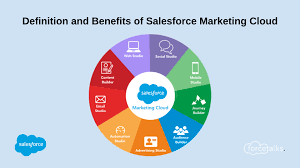
Salesforce Audience Insights By Tectonic’s Marketing Consultant, Shannan Hearne Salesforce Marketing Cloud is so much more than just an email sending platform. This insight explores how it can power your advertising.; Marketing Cloud offers robust audience segmentation capabilities, empowering marketers to effectively segment their customer base. The integration of AI through Audience Insights enhances this power. Formerly known as Advertising Studio, the platform is now recognized as Marketing Cloud Advertising. Audience Insights provides a deeper understanding of customers by unveiling unique characteristics, interests, and behaviors of user groups interacting with your ads and converting. By connecting Marketing Cloud Advertising to paid media channels, you can optimize your audience strategy, gaining a unified, cross-channel view and assessing the effectiveness of first-party audiences through a dedicated dashboard. Key features of Audience Insights include: To leverage Audience Insights, your Marketing Cloud Intelligence admin needs to configure it before connecting Advertising to paid media channels. This integration allows you to analyze the effectiveness of first-party audiences with a single, cross-channel perspective. As a Marketing Cloud Advertising customer with a Marketing Cloud Intelligence license, you gain access to comprehensive audience and campaign analytics through Audience Insights for Marketing Cloud Advertising. This application is conveniently available in the Marketing Cloud Intelligence Marketplace. Utilize the Audience Insights for Advertising Studio dashboard to refine campaigns using first-party audiences. Additionally, the Marketing Insights for Sales Cloud solution facilitates a deeper understanding of how marketing efforts and spend translate into revenue, offering insights into the sales funnel and guiding strategic decisions. Salesforce Audience Insights The Marketing Insights for Sales Cloud solution utilizes objects such as Leads, Opportunities, Accounts, Contacts, Campaigns, and Campaign Members to provide a holistic view of marketing and sales alignment. Setting up your digital advertising strategy within Salesforce, particularly through Advertising Studio, yields significant benefits. Integration with Google Analytics 360 expands your digital marketing and analytics possibilities. Advertising Studio seamlessly connects with advertising platforms like Google Display Ads, Facebook Ads, Instagram, Pinterest, Twitter, LinkedIn, AdWords, Gmail, and YouTube. Are you ready to employ the full power of Salesforce Marketing Cloud and Advertising Studio? Contact Tectonic today. Like3 Related Posts Salesforce Marketing Cloud Transactional Emails Salesforce Marketing Cloud Transactional Emails are immediate, automated, non-promotional messages crucial to business operations and customer satisfaction, such as order Read more AI-Driven Propensity Scores AI plays a crucial role in propensity score estimation as it can discern underlying patterns between treatments and confounding variables Read more Perfect Drip Campaign In an ideal world, you effortlessly conquer the lead generation challenges with one creative arm tied behind your back, craft Read more Asset Management Salesforce Can Salesforce do asset management? You can manage assets in Consumer Goods (desktop) and in the Consumer Goods offline mobile Read more
Read More
Sales Cloud Einstein

How Einstein Lead Scoring Works on Your Prospect Datanaiv

How Einstein Lead Scoring Works on Your Prospect Data By Shannan Hearne, Tectonic Marketing Consultant The love hate relationship between sales and marketing is based on lead quality.  Each party is tempted to blame the other for deals that fail to close.  Either marketing thinks the sales team dropped the ball following up with the prospect. Or the sales team thinks marketing failed to properly qualify the lead.  With Einstein Lead Scoring, the relationship between sales and marketing can improve. Not every lead holds the same significance, and relying on arbitrary details for accurate scoring is ineffective. Clicks, opens, and form fills vary in value for each lead, and visiting the Careers page does not necessarily diminish a lead’s potential.  Humans from both sales and marketing have to work together to craft scoring criteria that reflects behavior that great customers took before becoming customers.  The development of the scoring model is key to making Einstein Lead Scoring Works on Your Prospect Data. Einstein Lead Scoring, integrated with Sales Cloud Einstein, leverages artificial intelligence to enhance sales conversion efficiency. By automatically analyzing historical sales data and identifying key factors influencing lead conversion, sales reps can effectively segment and prioritize leads. With data supplied by Einstein running lead scoring in the background.  While the human factor is important, the speed of artificial intelligence to analyze data cannot be beaten. Tailored to individual business needs, Einstein Lead Scoring models analyze both standard and custom fields associated with the Lead object. By using predictive models like Logistic Regression, Random Forests, and Naive Bayes (definitions below). The system autonomously selects the best model based on a sample dataset, eliminating the need for statistical or mathematical expertise.  No more pouring through hours of spreadsheets sorting and creating pivot tables. Model Updates Regular model updates ensure accuracy. With leads being scored every hour using the latest model. This allows quick response to changes, ensuring that the prioritization of leads remains effective. The scoring factors are prominently displayed on the lead record page. Thus enabling sales reps to prepare for calls or emails efficiently with accurate engagement data. The true strength of Einstein Lead Scoring lies in its machine learning capabilities. Einstein is continuously refining predictions based on the latest Salesforce data. If new patterns emerge, such as VP titles in a specific industry showing interest in demos, Einstein automatically rescores leads meeting this criteria. Key benefits of Einstein Lead Scoring include increased connection and conversion rates, accelerated engagement with top leads, and a clear understanding of lead scoring factors. Important features encompass zero setup requirements, custom lead score-driven workflows for task assignments, and smart lead lists that prioritize the best leads for reps. Einstein Lead Scoring Works on Your Prospect Data For businesses utilizing or considering Salesforce Sales Cloud, consulting with Tectonic about integrating Einstein Lead Scoring can lead to faster implementation and deal closures. As your Salesforce implementation partner, Tectonic ensures a tailored Salesforce solution. Remaining aligned with your business needs, incorporating the powerful capabilities of Einstein tools within your Salesforce ecosystem.  Contact Tectonic today. Logistic regression estimates the probability of an event occurring, such as voted or didn’t vote, based on a given dataset of independent variables. Random forest is a commonly-used machine learning algorithm trademarked by Leo Breiman and Adele Cutler. It combines the output of multiple decision trees to reach a single result. Its ease of use and flexibility have fueled its adoption, as it handles both classification and regression problems. The Naïve Bayes classifier is a supervised machine learning algorithm, which is used for classification tasks, like text classification. It is also part of a family of generative learning algorithms, meaning that it seeks to model the distribution of inputs of a given class or category. Like1 Related Posts Who is Salesforce? Who is Salesforce? Here is their story in their own words. From our inception, we’ve proudly embraced the identity of Read more Salesforce Marketing Cloud Transactional Emails Salesforce Marketing Cloud Transactional Emails are immediate, automated, non-promotional messages crucial to business operations and customer satisfaction, such as order Read more Salesforce Unites Einstein Analytics with Financial CRM Salesforce has unveiled a comprehensive analytics solution tailored for wealth managers, home office professionals, and retail bankers, merging its Financial Read more AI-Driven Propensity Scores AI plays a crucial role in propensity score estimation as it can discern underlying patterns between treatments and confounding variables Read more

Read More
Salesforce High Velocity Sales

Salesforce High Velocity Sales

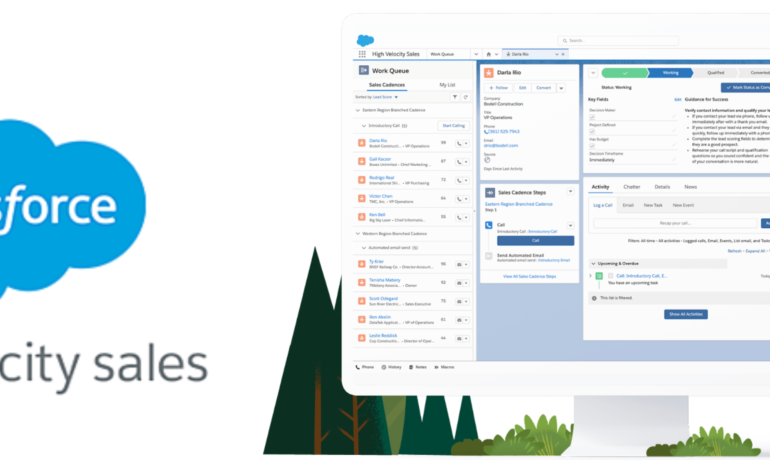
Exploring High Velocity Sales (HVS) in Today’s Business Landscape In the fast-paced world of business, sales departments are constantly seeking strategies to enhance efficiency and boost revenue. One approach gaining significant traction is High Velocity Sales (HVS). This guide offers a comprehensive overview of HVS, its impact on sales processes, and how Salesforce has revolutionized this high-speed approach. Understanding High Velocity Sales High Velocity Sales (HVS) is a Salesforce Sales Cloud extension that enables inside sales teams to prioritize hot leads, boost conversion rates, and build and sustain new business opportunities. Recently renamed to Sales Engagement, this extension includes automation features such as customer engagement tracking, chatbots, cadences, and automated actions. HVS emphasizes speed and efficiency in the sales funnel, leveraging automation and data-driven insights to streamline processes, accelerate lead conversion, and drive revenue growth. As competition intensifies and customer expectations evolve, adopting HVS has become essential for businesses aiming to stay competitive. Key Updates and Features Salesforce’s Role in High Velocity Sales Salesforce, a leading CRM platform, has transformed sales workflows with its HVS capabilities. By integrating HVS into the Salesforce platform, businesses gain access to advanced automation tools, intelligent lead scoring, and personalized engagement at scale. This integration empowers sales teams to identify and prioritize high-quality leads, automate tasks, and optimize sales efforts, driving revenue growth and enhancing sales performance. Benefits of High Velocity Sales Implementing HVS offers numerous benefits to organizations: Challenges and Considerations While HVS provides significant advantages, it may not suit every sales process, especially those with complex, long-term cycles. Adopting HVS can involve a learning curve, and there’s a risk of sacrificing quality interactions with prospects for the sake of speed. Balancing velocity with relationship-building is crucial for long-term success. Alternative Solutions and Integration Exploring alternative sales engagement tools beyond Salesforce HVS can offer unique features tailored to specific business needs. Ensuring seamless integration with existing systems and processes is essential to maximize efficiency and workflow. Choosing Your Sales Engagement Tool When selecting a sales engagement tool, consider factors such as: Evaluating the potential return on investment is critical to making an informed decision. Embracing Innovation in Sales In today’s competitive business environment, embracing innovative sales strategies like High Velocity Sales is crucial. Leveraging automation, data-driven insights, and streamlined workflows, businesses can enhance productivity, increase efficiency, and achieve remarkable sales results. Ready to Revolutionize Your Sales Process? Explore High Velocity Sales and unlock your sales team‘s full potential with Salesforce and other cutting-edge technologies. Reach out to learn how Salesforce HVS can transform your sales process and schedule a consultation with experts at Tectonic to explore comprehensive solutions tailored to your business needs. Content updated March 2024. Like Related Posts Who is Salesforce? Who is Salesforce? Here is their story in their own words. From our inception, we’ve proudly embraced the identity of Read more Salesforce Marketing Cloud Transactional Emails Salesforce Marketing Cloud Transactional Emails are immediate, automated, non-promotional messages crucial to business operations and customer satisfaction, such as order Read more Salesforce Unites Einstein Analytics with Financial CRM Salesforce has unveiled a comprehensive analytics solution tailored for wealth managers, home office professionals, and retail bankers, merging its Financial Read more AI-Driven Propensity Scores AI plays a crucial role in propensity score estimation as it can discern underlying patterns between treatments and confounding variables Read more

Read More
How Inbox Boosts Sales Productivity

How Inbox Boosts Sales Productivity

Explore the advanced productivity features accessible to sales representatives by integrating Inbox with Gmail. How Inbox Boosts Sales Productivity. Here’s a breakdown of common activities engaged in by reps and the corresponding features provided by Inbox: Scheduling Meetings: Inbox Feature: Embed open time slots directly from the calendar into an email, enabling recipients to choose a convenient time. The integration dynamically updates suggested times based on the rep’s availability, ensuring flexibility even after receiving the email. Tracking Email Engagement: Inbox Feature: Monitor email opens and link clicks, offering real-time insights into customer engagement. This feature eliminates uncertainty and empowers reps to follow up at precisely the right moment. Efficient Communication: Inbox Feature: Create shortcuts for frequently used phrases, reducing the need to repeatedly type the same content. This not only saves time but also minimizes the risk of typos in crucial communications. Optimizing Email Timing: Inbox Feature: Schedule email deliveries to coincide with the recipient’s optimal online hours, ensuring the message has the greatest impact. Timing plays a crucial role, especially when aiming for a potential sale. The integration of Inbox features, facilitated by adding an Inbox license, unlocks numerous benefits for reps. Activating this license is a seamless process, and Salesforce sales reps, or Tectonic, can guide you through it. Integrating Gmail with Salesforce not only enhances productivity but also minimizes context switching, allowing reps to concentrate on their customers and closing deals. With Einstein Activity Capture keeping contacts and events in sync, reps stay on top of their game. The addition of Inbox features turbocharges the integration, providing reps with a comprehensive toolkit to operate at peak efficiency. Like1 Related Posts Salesforce Marketing Cloud Transactional Emails Salesforce Marketing Cloud Transactional Emails are immediate, automated, non-promotional messages crucial to business operations and customer satisfaction, such as order Read more Asset Management Salesforce Can Salesforce do asset management? You can manage assets in Consumer Goods (desktop) and in the Consumer Goods offline mobile Read more Lookup Relationship in Salesforce What is Lookup relationship in Salesforce? Salesforce’s lookup relationships is a significant capability that allows users to connect two objects Read more Listview in Salesforce What is a listview in Salesforce? A list view is a filtered list of records where you can view records Read more

Read More

Salesforce and WithSecure

How does a Chief Information Security Officer (CISO) safeguard their organization against malware using Salesforce as an entry point into the corporate network? WithSecure™’s CISO faced this exact challenge in 2017 when transitioning from an alternate CRM application to Salesforce. How to secure data with Salesforce and WithSecure? During a security audit, our team discovered that content entering and exiting Salesforce was not being scanned, leaving the system vulnerable to cyber threats like malware. Unable to find a suitable solution on the market, we developed our own. WithSecure™ is a leading cybersecurity company in Europe with over 35 years of experience in IT security. Formerly known as F-Secure. We offer a robust portfolio of security products, including an end-to-end cybersecurity suite and dedicated threat hunting and consulting divisions. With ISO 27001 and ISAE 3000 (SOC 2 Type 2) certifications, our technology, cybersecurity laboratories, and scanning engines are world-class. Our experts traveled to San Francisco and partnered with Salesforce to develop a security solution that addressed the identified gap. After internal use for several years, we launched WithSecure™ Cloud Protection for Salesforce globally in 2020. Salesforce and WithSecure, Secure Your Enterprise WithSecure™ Cloud Protection for Salesforce is a Salesforce-native security tool. It operates within the Salesforce platform, requiring no special customizations, complex integrations, or external portals. This plug-in solution can be easily downloaded from the Salesforce AppExchange and deployed in under 20 minutes. As an ISV partner for Salesforce, WithSecure™’s tool is fully compatible and monitored by Salesforce. Our code undergoes regular review by Salesforce to ensure it meets the safety standards for all customers. WithSecure™ Cloud Protection for Salesforce operates efficiently in the cloud without performance overheads. It scans files and URLs uploaded to your company’s Salesforce cloud storage areas, providing real-time protection tailored for Salesforce environments. When suspicious content is detected, the tool quarantines the file or link while alerting administrators. As your Salesforce project expands, our solution scales seamlessly to offer continuous, real-time visibility into file and URL activity within the evolving ecosystem. Our tool checks link validity in real-time to halt even morphing malicious URLs. We provide advanced security analytics with comprehensive audit trails, empowering your security team to investigate incidents efficiently. Integration with SIEM and other third-party security systems is straightforward, allowing seamless metadata, alert, and workflow integration. Discover how leading organizations leverage WithSecure™ Cloud Protection for Salesforce. To learn more, download our latest ebook: “Securing Salesforce: Know Your Responsibilities, Protect Your Data.“ Think your Salesforce data is secure? Think again. Learn more about your security responsibilities and how to safeguard your valuable data. Salesforce and WithSecure. Like Related Posts Who is Salesforce? Who is Salesforce? Here is their story in their own words. From our inception, we’ve proudly embraced the identity of Read more Salesforce Marketing Cloud Transactional Emails Salesforce Marketing Cloud Transactional Emails are immediate, automated, non-promotional messages crucial to business operations and customer satisfaction, such as order Read more Salesforce Unites Einstein Analytics with Financial CRM Salesforce has unveiled a comprehensive analytics solution tailored for wealth managers, home office professionals, and retail bankers, merging its Financial Read more AI-Driven Propensity Scores AI plays a crucial role in propensity score estimation as it can discern underlying patterns between treatments and confounding variables Read more
Read More
Salesforce the Pioneer of CRM

What Does Salesforce Do?

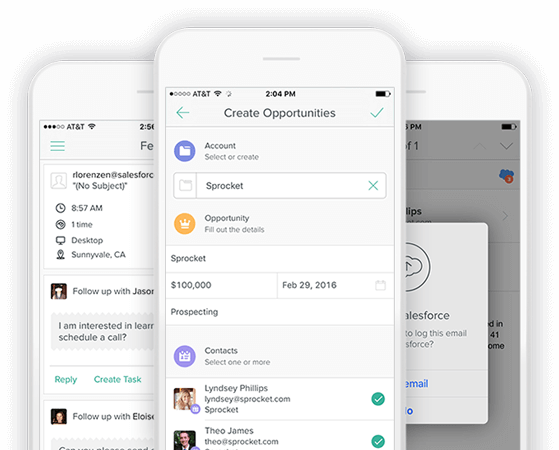
You might have glimpsed CEO Marc Benioff on CNBC or CNN or come across Salesforce’s cloud logo, friendly characters, or the distinctive headquarters dominating San Francisco. However, due to the diverse nature of theirr work, a common question arises: What does Salesforce do? In essence, Salesforce provides technology and services to help cultivate robust, enduring customer relationships, positioning itself as the customer company. The following sections will delve into what this entails. What does Salesforce do? For businesses with customers, managing customer data is a crucial challenge. Salesforce addresses this by offering customer relationship management (CRM) software. This software serves as a centralized hub for storing, tracking, and managing customer information, breaking down silos between different departments. Referred to as Customer 360, this portfolio encompasses products and services that unite various teams—sales, service, marketing, commerce, and IT—around a shared, AI-driven, real-time view of customers. The result is a seamless flow of customer information, enabling personalized experiences and fostering trust. Customer 360 contributes to lowering costs, increasing productivity, and driving efficient growth across organizations. It is adaptable to every industry and business size, providing flexibility for customization and integration with third-party partners. How does Salesforce work? Salesforce’s CRM operates in the cloud, facilitating online connectivity for teams, regardless of their physical locations. The cloud infrastructure, known as Hyperforce, allows Salesforce applications to scale rapidly and run globally. The cloud-based approach reduces maintenance costs, facilitates remote work, and opens up pay-as-you-go business opportunities. Harnessing the power of data is integral to modern business, yet many companies struggle with scattered data across numerous applications. Salesforce’s Data Cloud addresses this issue by providing access to and harmonization of various data sources, enabling a comprehensive view of customers and their histories. This clean data, coupled with Einstein AI, facilitates personalized customer interactions and creates a foundation for AI applications. How do you use Salesforce for sales? How Does Salesforce assist with sales? Originally designed for sales teams, Salesforce’s Sales Cloud aims to reduce costs, boost productivity, and increase deal success rates. By automating and scaling manual sales processes, Sales Cloud streamlines the entire sales cycle. Einstein for Sales integrates AI into sales workflows, automating tasks such as composing emails and scheduling meetings. Real-time insights and recommendations empower sellers, and integration with other departments enhances opportunities and customer experiences. What about customer service? Are there Salesforce tools for that? How Does Salesforce help customer service? Service Cloud, another facet of Salesforce, helps customers decrease support costs while enhancing service interactions. AI-driven tools, like Einstein, expedite service interactions by delivering knowledge articles and generating chat replies. Service Cloud covers critical touchpoints, from traditional customer service to self-service channels, field service, and digital channels like chat and SMS. How can you use Salesforce for marketing? How Does Salesforce work with marketing? Marketing Cloud is designed to save time, increase efficiency, and engage customers across various channels. Unified analytics and AI insights optimize campaign performance, leading to increased customer engagement and reduced acquisition costs. Marketing Cloud Customer Data Platform provides real-time data for understanding customers, while Einstein AI for Marketing dynamically generates personalized content for optimal customer engagement. Can Salesforce also be used for B2C and B2B shopping and commerce? Certainly. Commerce Cloud caters to both business-to-consumer (B2C) and business-to-business (B2B) commerce experiences. It simplifies the creation of personalized shopping experiences, maximizing revenue and removing friction from the buying process. Commerce Cloud users experience decreased order placement costs and increased online revenue. What about IT? Salesforce’s integrated IT tools assist organizations in automating processes, building intelligent apps, and securing data across Customer 360. This leads to increased productivity by improving scale, transparency, and security, resulting in a 19% decrease in IT costs for organizations. See an example of Salesforce at work A notable example is L’Oréal, the world’s leading beauty company, which utilizes Salesforce Customer 360 to deepen customer relationships through personalized beauty journeys. By integrating Marketing Cloud Personalization and Commerce Cloud with Einstein AI, L’Oréal achieves double-digit increases in average order value and improves agent satisfaction scores by 70%. What is Salesforce best known for? Salesforce pioneered placing business software in the cloud, eliminating the need for expensive custom-built computer infrastructures. It has since evolved into the world’s #1 CRM, continually innovating CRM with generative AI and real-time data to redefine customer-company connections. Why is Salesforce obsessed with customers? As the customer company, Salesforce has always been customer-obsessed, considering customer success as one of its core values. Recognizing that customer experience is as crucial as products and services, Salesforce focuses on helping businesses become customer-centric. Like1 Related Posts Who is Salesforce? Who is Salesforce? Here is their story in their own words. From our inception, we’ve proudly embraced the identity of Read more Salesforce Marketing Cloud Transactional Emails Salesforce Marketing Cloud Transactional Emails are immediate, automated, non-promotional messages crucial to business operations and customer satisfaction, such as order Read more Salesforce Unites Einstein Analytics with Financial CRM Salesforce has unveiled a comprehensive analytics solution tailored for wealth managers, home office professionals, and retail bankers, merging its Financial Read more AI-Driven Propensity Scores AI plays a crucial role in propensity score estimation as it can discern underlying patterns between treatments and confounding variables Read more
Read More
gettectonic.com