
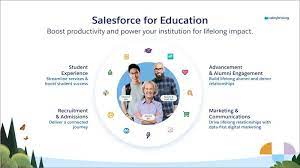
Educational institutions today confront a multitude of complex challenges, ranging from disjointed information systems to the need for agility in meeting evolving educational demands. Salesforce Education Cloud presents a unified solution aimed at overcoming these obstacles by enhancing operational efficiencies, boosting student engagement, and ensuring compliance with ever-changing educational standards. Below is an in-depth examination of the prevalent challenges faced by educational institutions and the tailored solutions provided by Salesforce Education Cloud.
Key Challenges in the Education Sector
- Data Fragmentation and Inefficient Systems Educational institutions frequently contend with disparate and disconnected information systems, which impede operational efficiency. These data silos hinder seamless data sharing and analysis, impacting decision-making processes and strategic planning.
- Student Engagement and Retention Effective student engagement and retention pose significant challenges due to insufficient support structures and resources that fail to address diverse student needs comprehensively.
- Administrative Inefficiencies Manual administrative processes, including admissions, scheduling, and student records management, are labor-intensive and prone to errors. This inefficiency diverts resources away from core teaching and learning activities.
- Communication Barriers Inadequate communication tools hinder effective interaction among students, faculty, and parents, leading to misunderstandings and diminished engagement in educational activities.
- Compliance and Reporting Educational institutions must adhere to rigorous regulatory frameworks and reporting standards. Outdated systems complicate compliance efforts, posing additional administrative burdens.
Salesforce Education Cloud: Tailored Solutions for Education
Salesforce Education Cloud addresses these challenges through a suite of customized features and tools designed to streamline operations, enhance student services, and promote effective communication.
- Unified Data Management Salesforce Education Cloud consolidates data from various departments and functions into a cohesive system, eliminating silos and facilitating seamless data sharing and analysis. This integration empowers decision-makers with comprehensive insights for informed strategic planning and resource allocation.
- Enhanced Student Engagement and Success The platform offers robust tools to monitor and analyze student performance, engagement, and behavior patterns. Educators can identify at-risk students early and implement personalized interventions to support their academic success, thereby improving retention rates.
- Streamlined Administrative Processes Salesforce Education Cloud automates routine administrative tasks, such as admissions workflows and academic record management. This automation accelerates processes and minimizes errors associated with manual data entry, freeing up staff to focus on strategic initiatives.
- Improved Communication Comprehensive communication tools within Salesforce Education Cloud enable real-time messaging, automated alerts, and customizable communication channels. These features foster transparent communication among students, parents, and faculty, enhancing the overall educational experience and promoting a cohesive community environment.
- Robust Compliance and Reporting The platform supports advanced analytics and reporting capabilities, facilitating institutions’ compliance with regulatory requirements. Salesforce Education Cloud enables accurate reporting on student performance, financial management, and operational metrics, ensuring adherence to educational standards.
Real-World Impact of Salesforce Education Cloud
Implementation of Salesforce Education Cloud yields transformative benefits across educational institutions:
- Operational Efficiency: Streamlined processes reduce administrative workload, allowing staff to focus on strategic initiatives.
- Student Outcomes: Enhanced monitoring and support tools contribute to improved student engagement and academic success.
- Community Engagement: Improved communication fosters a connected and supportive educational community.
- Regulatory Compliance: Comprehensive data management and reporting tools simplify compliance with educational standards and regulations.
Conclusion
Salesforce Education Cloud offers a comprehensive solution to the diverse challenges faced by educational institutions. By integrating this robust platform, schools, colleges, and universities can enhance operational efficiency, improve student outcomes, and cultivate a collaborative educational environment. Institutions seeking to explore the benefits of Education Cloud or enhance their existing systems are encouraged to consult with a Salesforce Education Cloud Consultant for tailored guidance and implementation strategies.
Who is Salesforce? Here is their story in their own words. From our inception, we've proudly embraced the identity of Read more

Salesforce Marketing Cloud Transactional Emails are immediate, automated, non-promotional messages crucial to business operations and customer satisfaction, such as order Read more

Salesforce has unveiled a comprehensive analytics solution tailored for wealth managers, home office professionals, and retail bankers, merging its Financial Read more
AI plays a crucial role in propensity score estimation as it can discern underlying patterns between treatments and confounding variables Read more


