AI-Driven Archives - gettectonic.com - Page 32
Salesforce Integrated Ecommerce Storefronts

Salesforce eCommerce & Commerce Cloud

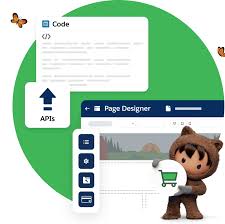
Salesforce eCommerce & Commerce Cloud: Everything You Need to Know What is Salesforce eCommerce? Salesforce eCommerce, powered by Salesforce Commerce Cloud, is a comprehensive, cloud-based solution that helps businesses scale, create intelligent shopping experiences, and drive revenue growth. A Unified Digital Commerce Platform Salesforce Commerce Cloud encompasses: With Commerce Cloud, businesses can build and manage their entire eCommerce operation—from responsive storefronts to complex logistics like shipping and inventory tracking. Key Features of Salesforce Commerce Cloud Commerce Cloud Digital Create fully responsive, omnichannel eCommerce websites with advanced search capabilities, secure mobile payments, and personalized customer journeys. Storefront Reference Architecture (SFRA) Launch professional eCommerce sites quickly using best-in-class tools, pre-built wireframes, and integrated digital technologies for easy customization and maintenance. Endless Aisle Enhance the shopping experience with pre-ordering, wishlists, back-in-stock alerts, and exclusive online promotions—reducing lost sales and improving inventory management. Commerce Portals Build account portals, loyalty programs, and customer communities to foster long-term engagement and brand loyalty. Order Management Optimize order processing with automated payments, easy returns, real-time order tracking, and a seamless purchasing experience. Intuitive Platform Leverage no-code tools, commerce APIs, and built-in templates to design eCommerce experiences without deep technical expertise. Unified Commerce Deliver a seamless shopping experience across digital and physical channels, ensuring consistency and convenience for customers. How Salesforce eCommerce Benefits Your Business AI-Powered Predictive Intelligence Commerce Cloud integrates Einstein AI, offering:✅ Personalized product recommendations✅ Automated marketing insights✅ Cart abandonment reduction✅ Smart search enhancements Personalized Customer Journeys Tailor every interaction with AI-driven recommendations, customized content, and omnichannel engagement strategies. Seamless Multi-Storefront Management Easily manage multiple brands, international storefronts, and localized experiences with multi-currency, multi-language, and cross-border commerce capabilities. Scalability Without Limits Handle high transaction volumes, traffic spikes, and expansive product catalogs with ease as your business grows. 24/7 Support & Strategic Guidance Benefit from Salesforce’s extensive support ecosystem, including advisory services, webinars, and AI-driven best practices to accelerate success. Salesforce Commerce Cloud + Marketing Cloud: The Perfect Pairing Salesforce eCommerce seamlessly integrates with Salesforce Marketing Cloud, enabling businesses to:🔹 Automate retargeting and abandoned cart recovery campaigns🔹 Personalize customer engagement at scale🔹 Track and analyze customer behaviors in real-time🔹 Enhance product recommendations with AI-powered insights By combining Commerce Cloud and Marketing Cloud, businesses can craft end-to-end, data-driven shopping experiences that drive higher conversion rates and customer satisfaction. Ready to Transform Your eCommerce Strategy? Whether launching a new online store or optimizing an established brand, Salesforce eCommerce offers limitless possibilities. Let’s explore how Commerce Cloud, AI, and automation can elevate your business. Like Related Posts Who is Salesforce? Who is Salesforce? Here is their story in their own words. From our inception, we’ve proudly embraced the identity of Read more Salesforce Marketing Cloud Transactional Emails Salesforce Marketing Cloud Transactional Emails are immediate, automated, non-promotional messages crucial to business operations and customer satisfaction, such as order Read more Salesforce Unites Einstein Analytics with Financial CRM Salesforce has unveiled a comprehensive analytics solution tailored for wealth managers, home office professionals, and retail bankers, merging its Financial Read more AI-Driven Propensity Scores AI plays a crucial role in propensity score estimation as it can discern underlying patterns between treatments and confounding variables Read more

Read More
AI-Powered Data Management

AI-Powered Data Management

AI-Powered Data Management: Transforming Data into Strategic Assets What is AI Data Management? AI data management integrates artificial intelligence (AI) and machine learning (ML) to optimize data processes—automating workflows, improving accuracy, and unlocking deeper insights. By leveraging AI, organizations can enhance data quality, security, compliance, and analytics, making data more actionable for AI-driven applications. Key Capabilities of AI in Data Management 1. Intelligent Automation 2. Enhanced Data Quality 3. Advanced Security & Compliance 4. Smart Data Discovery & Classification 5. Predictive & Prescriptive Analytics Real-World Applications ✅ Automated Data Cleansing – AI validates and corrects data in real time, ensuring accuracy.✅ Intelligent Data Cataloging – AI scans and classifies data for easy retrieval and governance.✅ Predictive Modeling – Analyzes historical data to forecast trends (e.g., customer behavior, operational risks).✅ AI-Driven Cybersecurity – Monitors network activity to detect and block threats before they escalate. Business Benefits of AI Data Management 🔹 Higher Data Accuracy – Fewer errors, more reliable insights.🔹 Faster Decision-Making – AI extracts insights in seconds, not weeks.🔹 Cost Efficiency – Reduces manual labor and storage waste.🔹 Regulatory Readiness – Automates compliance reporting.🔹 Competitive Edge – Turns data into a strategic differentiator. The Future of AI in Data Management As AI evolves, expect: Conclusion AI-powered data management isn’t just an upgrade—it’s a paradigm shift. By integrating AI, organizations can automate workflows, enhance security, and extract unprecedented value from their data, positioning themselves ahead in the data-driven economy. Is your business ready to harness AI for smarter data management? Like Related Posts Who is Salesforce? Who is Salesforce? Here is their story in their own words. From our inception, we’ve proudly embraced the identity of Read more Salesforce Unites Einstein Analytics with Financial CRM Salesforce has unveiled a comprehensive analytics solution tailored for wealth managers, home office professionals, and retail bankers, merging its Financial Read more AI-Driven Propensity Scores AI plays a crucial role in propensity score estimation as it can discern underlying patterns between treatments and confounding variables Read more Tectonic’s Successful Salesforce Track Record Salesforce Technology Services Integrator – Tectonic has successfully delivered Salesforce in a variety of industries including Public Sector, Hospitality, Manufacturing, Read more

Read More
How Good is Our Data

How Data Cloud and Salesforce Success Depend on Data Quality

Optimizing AI’s Impact on Your Business: The Crucial Role of Data Quality in Salesforce In the ever-evolving digital landscape, the convergence of data quality and artificial intelligence (AI) is a linchpin for organizational success. Success depends on data quality within the Salesforce ecosystem. The synergy between Einstein, an advanced AI system, and Data Cloud underscores the pivotal role of high-quality, comprehensive, and real-time data. Thereby unleashing the full potential of AI-driven insights and interactions with customers and prospects. Let’s explore how data quality profoundly influences these two emerging features. This insight will be shedding light on the repercussions of poor data quality and how Einstein and Data Cloud can elevate your organization to greater levels of sales success. Understanding Data Value Depends on Data Quality: Quality data extends beyond merely addressing duplicate records or inaccurate phone numbers It isn’t just about ensuring the area code field doesn’t contain zip codes. It is more than aligning contacts to accounts. It encompasses factors such as completeness, accuracy, and timeliness in your CRM: Consequences of Bad Data: Poor-quality data leads to inefficiencies and wasted time. Oftentimes causing flawed decision-making and strains on organizational resources. More critically, these poor business decisions often lead to tangible financial losses. Transforming bad data into quality data is imperative. Quality is key for relying on it to enhance company performance, requiring ongoing strategies rather than a one-stop solution. The Financial Impact of Accurate Data: Accurate data holds immense value. With data volumes projected to exceed 180 zettabytes by 2025, organizations must harness the power of their data. Proactive handling of data quality not only ensures higher data quality but also mitigates the financial impact of poor data quality. The sooner a plan is implemented to enhance and sustain data quality, the fewer negative repercussions organizations face in leveraging their data for growth. Your next decision is based on your last data. Is it going to help you or hurt you? Salesforce Einstein and the GIGO Principle: Salesforce Einstein, positioned as Artificial Intelligence for everyone, underscores trust as a core value. The system’s ability to create relevant and timely content and interactions is contingent on the quality of the data it operates on. Similar to the historical concept of “Garbage In, Garbage Out” (GIGO), AI results are only as reliable and valuable as the completeness and accuracy of the input data. No surprise, right? Introduction to Salesforce Data Cloud: Enter Salesforce Data Cloud, a platform allowing the organization and segmentation of customer data from any source. This open, extensible platform enables data enrichment from various sources, creating an optimal customer record. This enriched record empowers Sales, Service, and Marketing teams to perform intelligently and swiftly, ultimately driving enhanced results for the company. The WIIFM Factor: Amidst discussions about AI and Data Cloud, addressing the “What’s in it for me?” (WIIFM) question is crucial for organization adoption. Individual organizations must evaluate the reliability and accuracy of their data and determine forward-looking strategies for maintaining quality data, regardless of the source. The common theme remains: for data to yield valuable insights, it must be complete, timely, relevant, and accurate. Ultimately, success depends on data quality. Like3 Related Posts Who is Salesforce? Who is Salesforce? Here is their story in their own words. From our inception, we’ve proudly embraced the identity of Read more Salesforce Marketing Cloud Transactional Emails Salesforce Marketing Cloud Transactional Emails are immediate, automated, non-promotional messages crucial to business operations and customer satisfaction, such as order Read more Salesforce Unites Einstein Analytics with Financial CRM Salesforce has unveiled a comprehensive analytics solution tailored for wealth managers, home office professionals, and retail bankers, merging its Financial Read more AI-Driven Propensity Scores AI plays a crucial role in propensity score estimation as it can discern underlying patterns between treatments and confounding variables Read more
Read More
Salesforce CPQ

Choosing a New Salesforce for Outlook Solution

6 Tips for Choosing a New Salesforce for Outlook Solution as an Email Tool: As you gear up for the transition, consider the following insights when selecting a replacement for Salesforce for Outlook: As you evaluate New Salesforce for Outlook Solutions, reach out to Tectonic for assistance in selecting the right solution for your organization. Like Related Posts Who is Salesforce? Who is Salesforce? Here is their story in their own words. From our inception, we’ve proudly embraced the identity of Read more Salesforce Marketing Cloud Transactional Emails Salesforce Marketing Cloud Transactional Emails are immediate, automated, non-promotional messages crucial to business operations and customer satisfaction, such as order Read more Salesforce Unites Einstein Analytics with Financial CRM Salesforce has unveiled a comprehensive analytics solution tailored for wealth managers, home office professionals, and retail bankers, merging its Financial Read more AI-Driven Propensity Scores AI plays a crucial role in propensity score estimation as it can discern underlying patterns between treatments and confounding variables Read more

Read More
Salesforce

Salesforce Integrations for Sales Users

Salesforce integration offers compatibility with a wide array of business tools, and this insight article from Tectonic zeroes in on the most advantageous integrations tailored for your sales teams. Salesforce Integrations for Sales Users encompass various areas from contract management tools to lead enrichment and marketing automation platforms, the focus is on enhancing the efficiency of your sales operations. Understanding Salesforce Integrations A Salesforce integration is a mechanism linking the CRM with one or more business tools, facilitating seamless data transfer and automation of repetitive administrative tasks. With over 2,500 integrations, Salesforce is one of the most connected and flexible CRMs on the market. Let’s dive into the top Salesforce integrations for sales teams in 2024. Best Salesforce Integrations for Sales Teams 1. Slack – Streamlined Internal Communication Owned by Salesforce, Slack integration ensures smooth communication by facilitating easy sharing and querying of records between the two platforms. This integration promotes real-time updates, fostering improved collaboration, quicker decision-making, and enhanced productivity. Slack and Salesforce integrations are easy to set up and Tectonic can help. User Reviews: 2. Salesloft – Elevating Sales Engagement Salesloft complements Salesforce by focusing on customer engagement. This integration allows the import of contacts from Salesforce into Salesloft, enabling seamless communication with prospects. Recorded communication details are then synchronized back into Salesforce, offering visibility into deal progression and prospect engagement. User Reviews: 3. Chili Piper – Simplified Scheduling Chili Piper’s integration with Salesforce streamlines appointment scheduling by enabling one-click meeting scheduling within Salesforce. Every booked meeting is automatically logged and tracked as an event in Salesforce, contributing to improved data accuracy and efficient scheduling. All interactions with leads are added to engagement activity in their Salesforce record. User Reviews: 4. Juro – Accelerating Contract Management Juro’s all-in-one contract management platform integrates seamlessly with Salesforce, enabling sales reps to generate sales agreements effortlessly. The integration facilitates real-time syncing of data between the two platforms, allowing for swift contract drafting, negotiation, and management. Key Benefit: 5. LinkedIn Sales Solutions – Incorporate LinkedIn profiles to Salesforce records LinkedIn Sales Solutions embeds LinkedIn profiles with the CRM providing timely insights on buyers and companies. Data Validation flags out-of-date contacts. Key Benefit: 6. Lead Capture in Sales Cloud – Collect leads from Facebook and Google directly into Sales Cloud This application enables marketers to collect lead data from two primary external platform ad forms and share them with sales teams. Key Benefit: Salesforce Integrations for Sales Users These Salesforce integrations are tailored to augment the capabilities of sales teams, ranging from internal communication to contract management, ultimately fostering efficiency and productivity. If you are looking at tools to integrate with Salesforce for your teams, contact Tectonic for Salesforce implementation assistance. Like1 Related Posts Who is Salesforce? Who is Salesforce? Here is their story in their own words. From our inception, we’ve proudly embraced the identity of Read more Salesforce Marketing Cloud Transactional Emails Salesforce Marketing Cloud Transactional Emails are immediate, automated, non-promotional messages crucial to business operations and customer satisfaction, such as order Read more Salesforce Unites Einstein Analytics with Financial CRM Salesforce has unveiled a comprehensive analytics solution tailored for wealth managers, home office professionals, and retail bankers, merging its Financial Read more AI-Driven Propensity Scores AI plays a crucial role in propensity score estimation as it can discern underlying patterns between treatments and confounding variables Read more

Read More
Einstein 1 Unveiled

AI-Powered Sales Intelligence

AI-Powered Sales Intelligence: Transforming Customer Conversations into Actionable Insights The Problem: Lost in a Sea of Sales Calls Sales calls contain goldmines of insights—objections, buying signals, competitor mentions—but manually capturing and recalling them is time-consuming and unreliable. 🔹 Reps waste hours relistening to calls for one key detail.🔹 Critical intel gets buried in notes or forgotten entirely.🔹 Deals stall because follow-ups lack context. The Solution: AI That Works Like Your Smartest Sales Assistant Einstein Conversation Insights (ECI): Your AI-Powered Call Co-Pilot Salesforce’s Einstein AI turns unstructured call data into structured, searchable intelligence: ✔ Automated Transcripts – No more frantic note-taking.✔ Smart Summaries – Key takeaways in seconds.✔ Sentiment Analysis – Detect customer enthusiasm or concerns.✔ Next-Step Recommendations – AI suggests how to advance the deal. Real-World Example A rep gets an email months post-call: “Can we revisit the purchase options we discussed?” Instead of guessing: 4 Ways AI Supercharges Your Sales Team 1. Call Summaries & Exploration 🚫 No more digging through messy notes.✅ Get concise summaries, sentiment trends, and deal-blockers—in seconds. 2. Activity Capture (No More Data Entry) 🚫 Stop manually logging emails/meetings.✅ Einstein auto-syncs customer interactions to CRM records. 3. Conversation Mining 🚫 No more guessing why deals stall.✅ Uncover trends like: 4. Relationship Graphs 🚫 Skip LinkedIn stalking to map stakeholders.✅ Einstein reveals: Why This Matters Built for Trust & Scale 🔒 Secure & Native – Einstein runs directly in Salesforce, keeping data in your CRM.🛠 Customizable – Tailor AI to your sales process, products, and KPIs. Bottom Line: AI isn’t replacing sellers—it’s freeing them to sell smarter. 🚀 Ready to stop losing deals to forgotten details? Reach out to Tectonic today! Like Related Posts Who is Salesforce? Who is Salesforce? Here is their story in their own words. From our inception, we’ve proudly embraced the identity of Read more Salesforce Marketing Cloud Transactional Emails Salesforce Marketing Cloud Transactional Emails are immediate, automated, non-promotional messages crucial to business operations and customer satisfaction, such as order Read more Salesforce Unites Einstein Analytics with Financial CRM Salesforce has unveiled a comprehensive analytics solution tailored for wealth managers, home office professionals, and retail bankers, merging its Financial Read more AI-Driven Propensity Scores AI plays a crucial role in propensity score estimation as it can discern underlying patterns between treatments and confounding variables Read more

Read More
Tools to Liberate Salesforce Data

Caring For Utility Customers

Have you ever considered what your utility customers go through when trying to resolve an issue? Imagine being a customer facing a higher-than-expected bill. You navigate the website for answers but find none. Frustrated, you call customer service, enduring the automated phone system and long hold times. Once connected, you must repeat your information and wait while the agent figures out what you couldn’t. Eventually, the agent informs you that your bill is high because you used more energy last month and therefore still owe the billed amount. What you don’t see is the agent scrambling through multiple screens and systems to understand the bill change. Knowing the customer’s past billing history, recent weather conditions, or potential meter issues would help immensely. Lacking the necessary information frustrates customers and flusters agents. However, with artificial intelligence (AI), this experience can be greatly improved. Enter Artificial Intelligence As a utility company, each customer call adds up, and inefficient processes prolong call times and slow resolutions, impacting satisfaction. Utilities leveraging predictive analytics and generative AI are transforming the customer experience. By integrating AI into customer service, you can make the customer experience more intuitive and less frustrating. Internally, AI simplifies operations, reduces costs, and improves satisfaction for both employees and customers. What AI Can Do for Your Utility’s Customer Service AI’s capability to analyze vast amounts of data aligns perfectly with utilities’ needs — from historical usage and weather data to detecting unusual consumption spikes that often trigger customer service calls. AI can proactively send personalized notifications to customers explaining likely reasons for higher consumption before their bill arrives. It can also offer individualized recommendations and links to relevant services, programs, or rate plans, preventing calls and increasing engagement in cost-saving utility programs. Virtual assistants on your website and mobile app can understand customer questions, provide clear explanations, and deliver instant, accurate responses in natural language. AI in Utilities for Customer Service in Action Consider this scenario: as a customer, you call customer service and are greeted by a virtual agent that validates your identity and attempts to troubleshoot your issue. If unsuccessful, it transfers you to a live agent. Before connecting, the live agent sees all your relevant customer details, including what you’ve already tried on the web or mobile app. Generative AI supports the agent with a script and guides them in diagnosing and solving your issue. At the end of the call, AI drafts a call summary, updates relevant knowledge articles, and creates a follow-up email with links to recommended programs or services. Proactive communication with clear, detailed information reduces frustration and confusion, potentially resolving issues without needing a live agent. This AI-driven support enhances customer satisfaction and engagement. For the utility, AI-driven support reduces call volume, improves agent effectiveness, speeds up call resolution, lowers operational costs, and boosts agent satisfaction. Ready to Dip Your Toe into AI? We’re Here for You Embracing AI not only addresses immediate challenges but also sets the stage for a more efficient and customer-centric future in the utilities sector, creating a win-win scenario for both customers and utility companies. With AI-powered tools like Salesforce Energy and Utilities Cloud, you can recommend next best actions, provide knowledge articles to support agents and customers, and deploy chatbots for better online self-service options. These capabilities improve customer service and key performance indicators (KPIs). Implementing AI in customer service might seem daunting. Here are some initial steps to help you get started: Feeling overwhelmed? Don’t worry — we have Professional Services and AI Coaches to guide you every step of the way. Your AI journey will be structured, supported, and geared towards tangible success. Let’s embark on this journey together, enhancing efficiency, customer satisfaction, and sustainable growth in the utilities sector. Content updated August 1014. Like Related Posts Who is Salesforce? Who is Salesforce? Here is their story in their own words. From our inception, we’ve proudly embraced the identity of Read more Salesforce Marketing Cloud Transactional Emails Salesforce Marketing Cloud Transactional Emails are immediate, automated, non-promotional messages crucial to business operations and customer satisfaction, such as order Read more Salesforce Unites Einstein Analytics with Financial CRM Salesforce has unveiled a comprehensive analytics solution tailored for wealth managers, home office professionals, and retail bankers, merging its Financial Read more AI-Driven Propensity Scores AI plays a crucial role in propensity score estimation as it can discern underlying patterns between treatments and confounding variables Read more
Read More
Salesforce Marketing Cloud Journey Builder

Journey Builder Explained

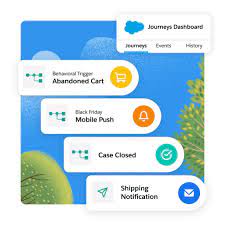
In B2C marketing, the focus on Journey Builder within the Marketing Cloud framework is essential to take customers on journeys with personalized interactions depending on where they are at in the buying cycle. This tool empowers marketers to craft intricate marketing journeys that deliver personalized experiences to customers. Operating within Marketing Cloud, the journey tool orchestrates comprehensive customer journeys, facilitating interactions across multiple platforms such as email, mobile, advertising, and websites. It stands as a foundational element of Marketing Cloud, primarily tailored for B2C initiatives. Salesforce Journey Builder facilitates a deeper understanding of customers by triggering actions based on their unique behaviors and ensuring consistent messaging across channels. As consumers navigate seamlessly between platforms and devices, brands must offer personalized and seamless journeys to maximize customer lifetime value. To achieve this, marketers must address key questions: Answering these questions requires a comprehensive view of the customer journey, with actions aligned to evolving customer expectations. With Salesforce Marketing Cloud Journey Builder, marketers can attain a unified view of all customer interactions, optimizing end-to-end journeys. Journey Builder provides visibility into consumer interactions across marketing channels, including email, mobile, social ads, and more. By connecting these interactions, marketers gain insights for improved message crafting, campaign design, and automation, fostering seamless customer experiences and fostering loyalty. Interactions a customer may have with the brand throughout their journey include clicking on an ad, opening an email, making a purchase, conversing with customer support, and more. Journey Builder, as an event-driven tool, initiates conversations based on customer history, preferences, and real-time behavior, supporting visual mapping of simple or complex journeys. However, Journey Builder operates within Marketing Cloud and utilizes content and audiences from Email Studio, Mobile Studio, Advertising Studio, Content Builder, and Audience Builder. It leverages event-driven triggers to react to customer actions, such as downloading an app or leaving a shopping cart abandoned, thus enabling timely and relevant responses. Key features of Journey Builder include a user-friendly drag-and-drop interface, entry and filter criteria for swift actions, and powerful add-ons for enhanced functionality. Ultimately, Salesforce Journey Builder facilitates a seamless customer experience by guiding journeys, ensuring consistent messaging, adapting to evolving needs, and maintaining brand consistency across channels. Like1 Related Posts Who is Salesforce? Who is Salesforce? Here is their story in their own words. From our inception, we’ve proudly embraced the identity of Read more Salesforce Marketing Cloud Transactional Emails Salesforce Marketing Cloud Transactional Emails are immediate, automated, non-promotional messages crucial to business operations and customer satisfaction, such as order Read more Salesforce Unites Einstein Analytics with Financial CRM Salesforce has unveiled a comprehensive analytics solution tailored for wealth managers, home office professionals, and retail bankers, merging its Financial Read more AI-Driven Propensity Scores AI plays a crucial role in propensity score estimation as it can discern underlying patterns between treatments and confounding variables Read more

Read More
Smart Communications Partners with Salesforce

CME Cloud Salesforce

Salesforce CME: The Industry-Specific Cloud for Communications, Media & Energy Transform Your Business with Tailored Industry Solutions Salesforce Communications, Media & Energy (CME) Cloud is a purpose-built industry solution that empowers organizations in these sectors to digitally transform operations, accelerate revenue, and deliver superior customer experiences. Built on the Salesforce platform, CME combines industry-specific workflows with powerful CRM capabilities to address unique challenges in: ✔ Telecommunications✔ Media & Entertainment✔ Energy & Utilities Key Capabilities of Salesforce CME 1. Configure, Price, Quote (CPQ) for Complex Offerings 2. Enterprise Product Catalog (EPC) 3. Intelligent Order Management 4. Digital Commerce Transformation 5. Contract Lifecycle Management (CLM) 6. Low-Code Customization with OmniStudio Industry-Specific Benefits Communications Providers Media Companies Energy & Utilities Implementation & Administration ✅ Managed package installation✅ Pre-configured industry data models✅ Granular permission controls✅ Detailed Salesforce documentation Typical Implementation Timeline: Why Choose Salesforce CME? “After implementing CME, we reduced service activation time from 5 days to 2 hours while improving NPS by 18 points.”— VP of Operations, Global Telecom Provider Next Steps Accelerate your digital transformation with Salesforce’s #1 industry cloud for Communications, Media & Energy. Like Related Posts Who is Salesforce? Who is Salesforce? Here is their story in their own words. From our inception, we’ve proudly embraced the identity of Read more Salesforce Marketing Cloud Transactional Emails Salesforce Marketing Cloud Transactional Emails are immediate, automated, non-promotional messages crucial to business operations and customer satisfaction, such as order Read more Salesforce Unites Einstein Analytics with Financial CRM Salesforce has unveiled a comprehensive analytics solution tailored for wealth managers, home office professionals, and retail bankers, merging its Financial Read more AI-Driven Propensity Scores AI plays a crucial role in propensity score estimation as it can discern underlying patterns between treatments and confounding variables Read more

Read More
Salesforce Marketing Cloud Personalization

AI and Marketing Personalization

AI Personalization Marketing: The Future of Customized Advertising Artificial intelligence (AI) is revolutionizing advertising by replacing generic mass marketing campaigns with highly targeted and relevant ads personalized through AI technology. Advanced AI and machine learning capabilities enable businesses to tailor and optimize marketing messages at scale. By leveraging extensive data insights, AI empowers businesses to understand customer needs and preferences on a personal level, allowing for customized messages and recommendations throughout the buyer’s journey. 5 Benefits of AI Personalization in Marketing Practical Applications of AI-Based Personalization in Marketing AI significantly enhances marketing effectiveness by analyzing extensive customer data to inform targeted campaigns. According to Babak Hodjat, CTO of Cognizant, integrating AI with business data empowers decision-making and drives key performance indicators. Explore more insights from Babak Hodjat in eWeek’s interview on AI’s transformative impact on marketing. AI-Powered Tools for Enhanced Personalization Challenges and Considerations for AI Personalization Implementation Implementing AI personalization presents challenges such as costs, ethical concerns, and data privacy considerations. Businesses must ensure transparent data practices and compliance with regulations like GDPR and CCPA to mitigate risks associated with data security and bias in AI algorithms. Best Practices for Effective AI Personalization Marketing Successful AI personalization strategies begin with clearly defined goals, ethical data practices, and the strategic use of AI tools to optimize marketing efforts. Regular monitoring and refinement based on data-driven insights ensure continuous improvement in campaign effectiveness and customer engagement. Conclusion AI personalization is reshaping marketing by delivering tailored experiences that drive customer engagement and business growth. Strategic implementation of AI tools enables marketers to unlock new levels of personalization while navigating ethical considerations and regulatory requirements. Embracing AI in marketing empowers brands to connect with customers on a deeper level, fostering loyalty and driving sustainable business success. Like Related Posts Who is Salesforce? Who is Salesforce? Here is their story in their own words. From our inception, we’ve proudly embraced the identity of Read more Salesforce Marketing Cloud Transactional Emails Salesforce Marketing Cloud Transactional Emails are immediate, automated, non-promotional messages crucial to business operations and customer satisfaction, such as order Read more Salesforce Unites Einstein Analytics with Financial CRM Salesforce has unveiled a comprehensive analytics solution tailored for wealth managers, home office professionals, and retail bankers, merging its Financial Read more AI-Driven Propensity Scores AI plays a crucial role in propensity score estimation as it can discern underlying patterns between treatments and confounding variables Read more
Read More
gettectonic.com