Data-Driven Archives - gettectonic.com - Page 22
Tectonic Salesforce Managed Services

Salesforce Customer 360

Salesforce Customer 360 is a family of Salesforce products and services that help businesses manage and connect with their customers across all touchpoints. With Customer 360, businesses can access a comprehensive view of their customers, including all their interactions and data, in one unified platform. This centralized data model allows businesses to deliver personalized and connected experiences to their customers across all channels and platforms. Customer 360 fully integrates marketing, sales, commerce, service, IT, and analytics into one unified platform, enabling businesses to streamline processes, improve decision-making, automate workflows, and enhance communication and collaboration. With the help of Salesforce solutions partners like Tectonic, businesses can customize Customer 360 to fit their specific needs and business model. Customer 360 is a framework that consolidates all existing customer insights from various tables and models within your data warehouse. In addition, Customer 360 provides real-time insights and metrics through customizable dashboards and reports, helping businesses track key performance indicators and make data-driven decisions. Salesforce Customer 360 can help businesses drive innovation, increase efficiency, and deliver a better customer experience, enabling them to digitally transform their operations. 85% of customers expect consistent interactions across all departments. With Salesforce’s Customer 360, important customer data from every step of their journey is captured and stored in one place. Adding more than one app to your Customer 360 solution has measurable benefits: Salesforce and Tectonic will kickstart your business’s digital transformation in 2023. Like1 Related Posts Who is Salesforce? Who is Salesforce? Here is their story in their own words. From our inception, we’ve proudly embraced the identity of Read more Salesforce Marketing Cloud Transactional Emails Salesforce Marketing Cloud Transactional Emails are immediate, automated, non-promotional messages crucial to business operations and customer satisfaction, such as order Read more Salesforce Unites Einstein Analytics with Financial CRM Salesforce has unveiled a comprehensive analytics solution tailored for wealth managers, home office professionals, and retail bankers, merging its Financial Read more AI-Driven Propensity Scores AI plays a crucial role in propensity score estimation as it can discern underlying patterns between treatments and confounding variables Read more

Read More
Marketing Cloud Admins

Marketing Cloud Admins

Salesforce Marketing Cloud Administrators play a key role in ensuring the success of an organization’s marketing efforts. Their responsibilities span system configuration, data management, campaign development, and execution. These professionals need a blend of technical expertise, strategic thinking, and keen attention to detail to effectively manage and optimize the Marketing Cloud environment. System Configuration and AdministrationMarketing Cloud Admins are responsible for setting up and configuring user accounts, defining roles and permissions, and customizing the system to meet specific organizational needs. They stay current on Salesforce updates, conducting system audits to maintain security and performance. Admins also oversee platform customization, aligning it with business goals. Data Management and SegmentationEffective data management is crucial for personalized marketing. Admins manage data imports, exports, and integration with other systems, ensuring data cleanliness and compliance with privacy regulations. They create audience segments based on specific criteria to enable targeted campaigns. Campaign Development and ExecutionAdmins work closely with marketing teams to develop and execute email, SMS, and social media campaigns. They set up customer journeys, implement automation, and ensure campaigns are delivered as planned. Monitoring performance and analyzing metrics allows admins to optimize campaigns and provide insights for future strategies. Integration and AutomationAdmins integrate Marketing Cloud with CRM systems, e-commerce platforms, and third-party apps. They streamline workflows by automating processes through tools like Journey Builder and Automation Studio, ensuring data consistency and efficiency. Troubleshooting and SupportAdmins provide technical support and troubleshoot issues related to system errors, data synchronization, and campaign delivery. They collaborate with Salesforce support to resolve complex problems, ensuring smooth operations and minimal downtime. Training and DocumentationTraining users on Marketing Cloud tools and developing comprehensive documentation are also key responsibilities. Admins ensure users are well-versed in the platform’s features and best practices, helping maintain consistent performance across teams. Monitoring and ReportingAdmins track key performance indicators (KPIs) and generate reports to analyze campaign success. By using tools like Analytics Builder, they offer data-driven insights that help improve marketing strategies and align them with business objectives. Skills Required for Salesforce Marketing Cloud AdminsAdmins must have strong technical aptitude, familiarity with Salesforce tools like Email Studio and Journey Builder, and proficiency in SQL, HTML, and APIs for system integration. Problem-solving skills are critical for diagnosing and resolving issues, and data management expertise is essential for organizing and analyzing marketing data. FAQs: If you are in need of Marketing Cloud assistance, contact Tectonic today. Content updated September 2024. Like Related Posts Who is Salesforce? Who is Salesforce? Here is their story in their own words. From our inception, we’ve proudly embraced the identity of Read more Salesforce Marketing Cloud Transactional Emails Salesforce Marketing Cloud Transactional Emails are immediate, automated, non-promotional messages crucial to business operations and customer satisfaction, such as order Read more Salesforce Unites Einstein Analytics with Financial CRM Salesforce has unveiled a comprehensive analytics solution tailored for wealth managers, home office professionals, and retail bankers, merging its Financial Read more AI-Driven Propensity Scores AI plays a crucial role in propensity score estimation as it can discern underlying patterns between treatments and confounding variables Read more

Read More
Engage Your Community with Experience Cloud

Community Cloud for Nonprofits: A Comprehensive Overview

Editors Note: Salesforce Community Cloud is now known as Salesforce Experience Cloud A “Community Cloud for Nonprofits” is a cloud-based platform, often built on Salesforce’s Community Cloud, designed to help nonprofit organizations create online communities. These communities serve as centralized hubs where nonprofits can connect with donors, volunteers, beneficiaries, and other stakeholders. The platform facilitates information sharing, collaboration, and engagement, empowering nonprofits to strengthen relationships and advance their missions. Key Features of Community Cloud for Nonprofits The platform is typically powered by Salesforce’s Community Cloud, which offers a robust foundation for building and managing online communities. Key functionalities include: Benefits of Community Cloud for Nonprofits Implementing a Community Cloud platform offers numerous advantages for nonprofit organizations: Why Community Cloud is a Game-Changer for Nonprofits Salesforce’s Community Cloud provides nonprofits with a powerful tool to centralize communication, enhance stakeholder engagement, and improve operational efficiency. By creating a dedicated online community, nonprofits can build stronger relationships with donors, empower volunteers, support beneficiaries, and collaborate effectively with partners. In summary, a Community Cloud for nonprofits is more than just a platform—it’s a transformative solution that helps organizations amplify their impact, streamline operations, and create meaningful connections within their ecosystem. Content updated October 2024. Like Related Posts Who is Salesforce? Who is Salesforce? Here is their story in their own words. From our inception, we’ve proudly embraced the identity of Read more Salesforce Marketing Cloud Transactional Emails Salesforce Marketing Cloud Transactional Emails are immediate, automated, non-promotional messages crucial to business operations and customer satisfaction, such as order Read more Salesforce Unites Einstein Analytics with Financial CRM Salesforce has unveiled a comprehensive analytics solution tailored for wealth managers, home office professionals, and retail bankers, merging its Financial Read more AI-Driven Propensity Scores AI plays a crucial role in propensity score estimation as it can discern underlying patterns between treatments and confounding variables Read more

Read More

Salesforce Reports Explained

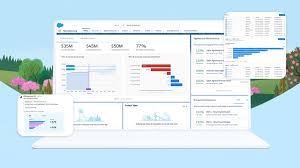
Salesforce Reports: A Complete Guide to Data Analysis & Insights What Are Salesforce Reports? Salesforce Reports empower users to access, analyze, and share critical business data stored in Salesforce. They transform raw data into actionable insights, helping teams track performance, identify trends, and make data-driven decisions. Reports can be customized, visualized in dashboards, and shared across teams for better collaboration. Key Types of Salesforce Reports Salesforce offers four main report types, each suited for different analytical needs: 1. Tabular Reports 2. Summary Reports 3. Matrix Reports 4. Joined Reports How to Create & Customize Reports Step 1: Navigate to the Reports Tab Step 2: Customize Your Report Step 3: Save & Share Advanced Analysis with Salesforce Reports Einstein Analytics Dynamic Filters Scheduled Reports Best Practices for Effective Reporting ✅ Define a Clear Purpose – What decision will this report drive?✅ Keep It User-Friendly – Use charts, summaries, and clear labels.✅ Ensure Data Accuracy – Regularly review filters & formulas.✅ Share Strategically – Grant access only to relevant stakeholders.✅ Automate Where Possible – Schedule reports to save time. Conclusion: Unlock the Power of Salesforce Reports Salesforce Reports turn raw data into strategic insights, helping businesses track performance, optimize processes, and drive growth. By mastering report types, customization, and sharing, teams can make faster, smarter decisions. Need help? Explore Salesforce’s Report Builder or check out Trailhead for hands-on training! Like Related Posts Who is Salesforce? Who is Salesforce? Here is their story in their own words. From our inception, we’ve proudly embraced the identity of Read more Salesforce Marketing Cloud Transactional Emails Salesforce Marketing Cloud Transactional Emails are immediate, automated, non-promotional messages crucial to business operations and customer satisfaction, such as order Read more Salesforce Unites Einstein Analytics with Financial CRM Salesforce has unveiled a comprehensive analytics solution tailored for wealth managers, home office professionals, and retail bankers, merging its Financial Read more AI-Driven Propensity Scores AI plays a crucial role in propensity score estimation as it can discern underlying patterns between treatments and confounding variables Read more

Read More
crm analytics

Understand Customer Service Analytics

Customer Service Analytics: Types, Use Cases & Key Benefits Customer service analytics transforms raw customer data into actionable insights—helping businesses improve support, boost retention, and drive revenue. With today’s complex customer journeys, analytics tools are essential for tracking interactions, predicting trends, and optimizing experiences. What Is Customer Service Analytics? Customer service analytics involves collecting and analyzing data from every touchpoint—support tickets, purchases, surveys, social media, and more. Companies use this data to: By leveraging analytics, businesses move from reactive problem-solving to proactive customer success strategies. 4 Key Types of Customer Service Analytics 1. Customer Experience (CX) Analytics What it does: Tracks key support metrics to assess performance and identify trends.Key metrics: Why it matters: 2. Customer Journey Analytics What it does: Maps the full customer lifecycle—from first contact to repeat purchases.Key data sources: Why it matters: 3. Customer Retention Analytics What it does: Measures loyalty and identifies churn risks.Key metrics: Why it matters: 4. Customer Engagement Analytics What it does: Tracks interactions across all channels (email, chat, social media).Key insights: Why it matters: Top 7 Customer Service Metrics to Track Metric What It Measures Why It Matters CSAT Customer satisfaction Gauges service quality First Response Time Speed of initial reply Impacts customer perception Time to Resolution Issue resolution speed Reduces frustration Customer Effort Score Ease of getting help Lower effort = higher loyalty Churn Rate Lost customers Identifies retention issues Lifetime Value (CLV) Customer profitability Guides long-term strategy Loyal Customer Rate Repeat buyers Measures brand advocacy How Analytics Improves Customer Service “Analytics turns raw data into stories—revealing relationships and driving smarter decisions.” – Susan Lahey Choosing the Right Analytics Software The best tools integrate data from all customer touchpoints, offering: Key takeaway: Don’t fear the data—embrace it. With the right analytics strategy, businesses can enhance CX, reduce churn, and boost revenue. Like Related Posts Who is Salesforce? Who is Salesforce? Here is their story in their own words. From our inception, we’ve proudly embraced the identity of Read more Salesforce Marketing Cloud Transactional Emails Salesforce Marketing Cloud Transactional Emails are immediate, automated, non-promotional messages crucial to business operations and customer satisfaction, such as order Read more Salesforce Unites Einstein Analytics with Financial CRM Salesforce has unveiled a comprehensive analytics solution tailored for wealth managers, home office professionals, and retail bankers, merging its Financial Read more AI-Driven Propensity Scores AI plays a crucial role in propensity score estimation as it can discern underlying patterns between treatments and confounding variables Read more

Read More
Salesforce for Hospitality

Salesforce for Hospitality

Transforming Hospitality with Salesforce CRM The hospitality industry, known for its expansive options and fierce competition, faces challenges from small hotels to globally recognized resorts. Beyond traditional amenities like clean rooms and Wi-Fi, evolving customer expectations demand highly personalized services for enhanced comfort and swift issue resolution. Salesforce CRM emerges aremains a tool for managing customer interactions and elevating the operations of various players in the hospitality sector. Leading establishments such as Quest Apartment Hotels, Carlson Hotels Worldwide, and HotelTonight harness the capabilities of Salesforce CRM to enhance their services. Salesforce for Hospitality Beyond the realm of hotels, the world’s most widely used CRM solution empowers the entire hospitality industry, encompassing transportation and travel, to deliver personalized and seamless customer experiences. Transportation companies leverage real-time query management and dynamic services to navigate the future of freight efficiently. Simultaneously, travel and hospitality entities utilize data-driven insights to tailor travel options, incorporate artificial intelligence for personalized recommendations, and establish connected guest services, ensuring unparalleled comfort and satisfaction. In essence, Salesforce CRM offers the hospitality industry unified customer views, heightened customer satisfaction and loyalty, invaluable analytics data, automation solutions, and prompt customer service. Its implementation accelerates industry efficiency, fostering innovation and driving continuous improvements in the realm of hospitality. Content updated September 2023. Like Related Posts Who is Salesforce? Who is Salesforce? Here is their story in their own words. From our inception, we’ve proudly embraced the identity of Read more Salesforce Marketing Cloud Transactional Emails Salesforce Marketing Cloud Transactional Emails are immediate, automated, non-promotional messages crucial to business operations and customer satisfaction, such as order Read more Salesforce Unites Einstein Analytics with Financial CRM Salesforce has unveiled a comprehensive analytics solution tailored for wealth managers, home office professionals, and retail bankers, merging its Financial Read more AI-Driven Propensity Scores AI plays a crucial role in propensity score estimation as it can discern underlying patterns between treatments and confounding variables Read more

Read More
Salesforce Slack Integration

Workflows for Salesforce Slack

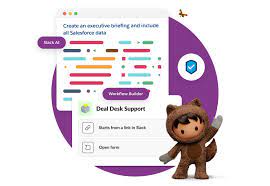
We all rely on processes to keep our teams organized and propel work forward. However, manual processes can be cumbersome, with work often getting lost in the chaos of Slack DMs or crowded team channels. Imagine if there were a way to structure processes into forms within Slack, allowing people to fill them out and automatically route requests to the appropriate individuals for follow-up. This is where Slack workflows come into play. What are Workflows for Salesforce Slack? A workflow is a multi-step process within your company, representing the sequence of tasks undertaken to achieve a business objective. Examples of Workflows for Salesforce Slack include: Workflows have a sequence of steps: Each workflow consists of multiple stages that typically occur in a specific order. Workflow Automation: Workflow automation is the use of software to streamline multi-step, multi-team workflows, ensuring the correct steps are followed, and tasks are completed efficiently. Types of Workflow Automation: Benefits of Workflow Automation in Slack: By incorporating workflow automation into Slack, teams can enhance efficiency, maintain structure, and reduce the risk of tasks getting lost or delayed. Contact Tectonic to learn more about Slack integration. Like1 Related Posts Who is Salesforce? Who is Salesforce? Here is their story in their own words. From our inception, we’ve proudly embraced the identity of Read more Salesforce Marketing Cloud Transactional Emails Salesforce Marketing Cloud Transactional Emails are immediate, automated, non-promotional messages crucial to business operations and customer satisfaction, such as order Read more Salesforce Unites Einstein Analytics with Financial CRM Salesforce has unveiled a comprehensive analytics solution tailored for wealth managers, home office professionals, and retail bankers, merging its Financial Read more AI-Driven Propensity Scores AI plays a crucial role in propensity score estimation as it can discern underlying patterns between treatments and confounding variables Read more

Read More
Salesforce Experience Cloud

Is Salesforce Experience Cloud Salesforce Communities?

The Salesforce ecosystem is in a constant state of evolution, and the introduction of the Salesforce Experience Cloud is a significant development aimed at delivering connected digital experiences to consumers rapidly. Is Salesforce Experience Cloud Salesforce Communities? In a recent update, Salesforce announced that the Community Cloud will now be rebranded as the Salesforce Experience Cloud. This renaming reflects the platform’s evolution to meet the diverse needs of consumers and highlights Salesforce’s commitment to creating exceptional digital experiences. The Salesforce Experience Cloud serves as a digital experience platform, enabling organizations to create scalable digital experiences for partners, consumers, and employees. Leveraging features from Salesforce CRM, Experience Builder, and CMS, the platform empowers organizations to swiftly develop websites, portals, and personalized content, all with just a few clicks. So, why did Salesforce decide to rename the Community Cloud to the Experience Cloud? The renaming signifies Salesforce’s dedication to enhancing people’s lives and transforming businesses. By shifting the focus from building communities to creating community experiences, Salesforce aims to underscore the importance of data-powered digital experiences that foster collaboration, automation, and real business value. The transition from Community to Experience Cloud represents a step into the future, where the platform integrates data and content seamlessly to provide meaningful solutions. This evolution brings added flexibility and efficiency to user journeys, enhancing the overall digital experience. But how does the Salesforce Experience differ from the Salesforce Community? With the rebranding, you’ll notice changes and improvements in the tools used to design sites. For instance, the Site built using the Experience Cloud, formerly known as the Community, can now be developed using either Visualforce or Experience Builder. This change in terminology signifies a broader shift in the platform’s capabilities. Moreover, other components within the Digital Experiences menu have been simplified and replaced, emphasizing the evolution from the Community Cloud to the Experience Cloud. Understanding the transition from Community to Experience Cloud is necessary for anyone embarking on the journey as an Experience Cloud Consultant. Whether you’re an existing user or a newcomer, grasping the significant differences between the two platforms is crucial. And to further explore the impact of this transition on your organization, consider joining industry-led courses like those offered by saasguru. Frequently Asked Questions (FAQ): Content updated March 2024. Like1 Related Posts Who is Salesforce? Who is Salesforce? Here is their story in their own words. From our inception, we’ve proudly embraced the identity of Read more Salesforce Marketing Cloud Transactional Emails Salesforce Marketing Cloud Transactional Emails are immediate, automated, non-promotional messages crucial to business operations and customer satisfaction, such as order Read more Salesforce Unites Einstein Analytics with Financial CRM Salesforce has unveiled a comprehensive analytics solution tailored for wealth managers, home office professionals, and retail bankers, merging its Financial Read more AI-Driven Propensity Scores AI plays a crucial role in propensity score estimation as it can discern underlying patterns between treatments and confounding variables Read more

Read More
Employ Marketing Cloud Data with Datorama

Employ Marketing Cloud Data with Datorama

Unlocking the Power of Salesforce Marketing Cloud with Dataorama-Employ Marketing Cloud Data with Datorama (now Salesforce Marketing Cloud Intelligence) In the realm of modern marketing, success hinges on data-driven insights rather than creative chaos. Salesforce Marketing Cloud’s Dataorama tackles the challenges associated with marketing data, offering a robust platform to store, visualize, and leverage data from diverse sources. What is Datorama? Originally developed to streamline reporting for advertising technology companies, Datorama is now a pivotal feature within Salesforce Marketing Cloud. It caters not only to advertising but also to industries spanning automotive to publishing. Datorama empowers marketers to consolidate marketing spend, campaign results, and trends into a unified and accessible platform. Key Features and Use Cases of Dataorama (now Salesforce Marketing Cloud Intelligence): Advantages and Limitations of Datorama-Marketing Cloud Intelligence: Implementation and Adoption: To implement Datorama-Marketing Cloud Intelligence within your organization: Salesforce Marketing Cloud’s Intelligence empowers marketers to shift focus from mundane reporting tasks to creative and strategic endeavors. By harnessing the power of data integration, visualization, and AI-driven insights, organizations can elevate their marketing performance and drive business growth effectively. Employ Marketing Cloud Data with Datorama Content updated September 2023. Like1 Related Posts Who is Salesforce? Who is Salesforce? Here is their story in their own words. From our inception, we’ve proudly embraced the identity of Read more Salesforce Marketing Cloud Transactional Emails Salesforce Marketing Cloud Transactional Emails are immediate, automated, non-promotional messages crucial to business operations and customer satisfaction, such as order Read more Salesforce Unites Einstein Analytics with Financial CRM Salesforce has unveiled a comprehensive analytics solution tailored for wealth managers, home office professionals, and retail bankers, merging its Financial Read more AI-Driven Propensity Scores AI plays a crucial role in propensity score estimation as it can discern underlying patterns between treatments and confounding variables Read more

Read More
Salesforce Einstein Next Best Action

What is Salesforce Next Best Action?

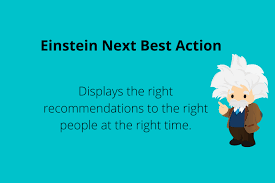
Einstein Next Best Action Efficiently present tailored recommendations to the right individuals at the right moment with Einstein Next Best Action. Correspondingly craft and showcase offers and actions personalized to your specific criteria. Formulate a strategy applying your business logic to refine these recommendations. Then distilling them into key suggestions like repairs, discounts, or add-on services. Display the final recommendations seamlessly within your Lightning app or Experience Builder site. Einstein Next Best Action (ENBA) is an innate Salesforce Platform feature empowering users to configure business rules and filters, especially surfacing the optimal course of action for any user. This tool seamlessly offers a range of recommended actions accessible directly within Salesforce. Next Best Action (NBA) is a strategic approach aiding businesses in identifying the most effective marketing actions to guide customers towards desired conversion events lest they veer off the desired path. It optimizes marketing efforts by enhancing the return on investment (ROI) of marketing campaigns. Key Features: FAQs: Like2 Related Posts Who is Salesforce? Who is Salesforce? Here is their story in their own words. From our inception, we’ve proudly embraced the identity of Read more Salesforce Marketing Cloud Transactional Emails Salesforce Marketing Cloud Transactional Emails are immediate, automated, non-promotional messages crucial to business operations and customer satisfaction, such as order Read more Salesforce Unites Einstein Analytics with Financial CRM Salesforce has unveiled a comprehensive analytics solution tailored for wealth managers, home office professionals, and retail bankers, merging its Financial Read more AI-Driven Propensity Scores AI plays a crucial role in propensity score estimation as it can discern underlying patterns between treatments and confounding variables Read more

Read More
Salesforce Content Management System

Salesforce Content Management System

Salesforce CMS: A Comprehensive Overview Salesforce Content Management System empowers organizations to build sites, portals, and forums effortlessly through a user-friendly, declarative builder, offered at a subscription rate of $10,000 per org/month. Users leverage its capabilities to publish and manage various content types such as blogs and banners across multiple channels like emails, websites, mobile apps, and portals. Key Features of Salesforce CMS Benefits of Salesforce CMS Salesforce CMS functions as a hybrid content management system, facilitating seamless content creation and delivery for teams of all skill levels. It integrates deeply with customer data, enabling personalized and efficient content distribution. Real-World Application Andy Jones from NOW, a streaming service by Sky in the U.K., praises Salesforce CMS for accelerating content creation. According to Jones, content creators transition swiftly from novice to mastery without relying on IT or design teams, resulting in visually appealing content. Integration of CRM with CMS enhances customer experiences significantly. Features and Flexibility Tools for Building Experiences Delivering Content to Third-Party Platforms Utilize Salesforce headless APIs to seamlessly deliver content to third-party sites, experiences, or mobile apps. Personalization and Customer-Centric Content Salesforce CMS enhances content personalization by leveraging customer data, enabling teams to craft content that effectively addresses customer pain points, needs, questions, and desires. Turning Data into Content Transform CRM records into visually compelling content such as banners, tile menus, or engaging promotional CTAs, empowering every team member to contribute to enhanced customer experiences. Salesforce CMS stands as a robust, adaptable, and user-friendly solution for organizations aiming to deliver personalized, data-driven content across all customer touchpoints. Like Related Posts Who is Salesforce? Who is Salesforce? Here is their story in their own words. From our inception, we’ve proudly embraced the identity of Read more Salesforce Marketing Cloud Transactional Emails Salesforce Marketing Cloud Transactional Emails are immediate, automated, non-promotional messages crucial to business operations and customer satisfaction, such as order Read more Salesforce Unites Einstein Analytics with Financial CRM Salesforce has unveiled a comprehensive analytics solution tailored for wealth managers, home office professionals, and retail bankers, merging its Financial Read more AI-Driven Propensity Scores AI plays a crucial role in propensity score estimation as it can discern underlying patterns between treatments and confounding variables Read more

Read More

What is Salesforce Field Service?

Salesforce Field Service (formerly known as Salesforce Field Service Lightning or FSL) is a comprehensive solution designed to help businesses manage and optimize their field service operations. It enables organizations to schedule, dispatch, and track field service technicians, ensuring efficient service delivery and improved customer satisfaction. Salesforce Field Service is part of the broader Salesforce Service Cloud ecosystem and integrates seamlessly with other Salesforce products to provide a unified platform for managing customer service and field operations. Key Features of Salesforce Field Service Benefits of Salesforce Field Service Use Cases for Salesforce Field Service How Salesforce Field Service Works Integration with Salesforce Ecosystem Salesforce Field Service integrates seamlessly with other Salesforce products, such as: Conclusion Salesforce Field Service is a powerful tool for businesses that rely on field operations to deliver services to customers. By optimizing scheduling, enhancing technician productivity, and improving customer communication, it helps organizations streamline their field service operations and deliver exceptional customer experiences. Whether you’re managing a small team or a large workforce, Salesforce Field Service provides the tools and insights needed to succeed in today’s competitive landscape. Content updated November 2024. Like Related Posts Who is Salesforce? Who is Salesforce? Here is their story in their own words. From our inception, we’ve proudly embraced the identity of Read more Salesforce Marketing Cloud Transactional Emails Salesforce Marketing Cloud Transactional Emails are immediate, automated, non-promotional messages crucial to business operations and customer satisfaction, such as order Read more Salesforce Unites Einstein Analytics with Financial CRM Salesforce has unveiled a comprehensive analytics solution tailored for wealth managers, home office professionals, and retail bankers, merging its Financial Read more AI-Driven Propensity Scores AI plays a crucial role in propensity score estimation as it can discern underlying patterns between treatments and confounding variables Read more

Read More
Salesforce Data Cloud

Drive Sales and Service With Real Time Data

Sales and Service Personalization: drive sales with real time data Enhance customer and prospect interactions by integrating real-time engagement data directly into your sales and service consoles. Provide service teams with the ability to proactively address queries and deliver effective case resolutions by swiftly accessing a customer’s recent interactions across diverse business touchpoints. Empower your sales teams with deeper insights into an account or prospect’s purchase journey, enabling more relevant conversations and offers based on real-time knowledge of consumed content, viewed products, or time spent on your site. Know your buyers. Attain a comprehensive view of your buyers by combining 1st and 3rd party data with the robust capabilities of Salesforce’s industry-leading Customer Data Platform (CDP). Imagine closing prospects instantly. With real-time data, it’s possible! Real-time sales data enables you to identify recent changes, such as mergers, acquisitions, new job openings, or promotions. Equip your sales team with a competitive advantage, allowing them to promptly contact potential customers and initiate sales activities. So, what is real-time data, how does it work, and how can you implement it without a complex data infrastructure? This article explores all these aspects and highlights the benefits of utilizing accurate B2B data for real-time sales. What is real-time data? Real-time data refers to immediate and continuous access to information about sales activities, customer interactions, and market trends. For your sales and marketing teams, this means capturing, analyzing, and utilizing up-to-date data to make informed decisions, enhance sales processes, create personalized experiences, and strengthen customer relationships. Real-time data is crucial because it offers numerous benefits for B2B businesses. This insight will explore some tangible benefits that real-time data can provide for your company: Access up-to-the-minute information on customer behaviors, preferences, and buying patterns, allowing your B2B sales team to engage with prospects immediately. Real-time insights into events like funding, promotions, or team expansions can trigger timely sales activities, such as emails, LinkedIn messages, or call invitations. Immediate updates from real-time sales insights enable businesses to adjust pricing based on market fluctuations or competitive moves. Real-time data collection helps track competitor pricing, customer demand, and inventory levels, allowing for optimized pricing strategies and instant adjustments with minimal effort from your sales team. Incorporate robust key management for data security to safeguard sensitive information and avoid additional risks. When a prospect expresses interest or takes specific actions, such as visiting a website or filling out a form, you can immediately engage with them. Define sales triggers and actions, such as emailing to schedule a demo after a prospect visits your pricing page. Real-time data processing allows for automated nurturing of prospects, eliminating the need for manual tracking and outreach. Gain real-time actionable insights into sales performance, leading to accurate sales forecasting. Sales managers can monitor sales data in real time, track progress against targets, adjust strategies, and manage pipeline visibility for more precise financial projections aligned with future financial planning. Instant data offers the opportunity to personalize customer interactions more effectively. Access real-time data analytics on customer preferences, purchase history, and previous interactions to tailor relevant recommendations and provide a personalized customer experience. Real-time data analysis provides instant visibility into sales performance metrics. Sales representatives can monitor their performance, including call activity, conversion rates, and revenue generated, in real time. Immediate feedback enables reps to course-correct, improve sales techniques, and achieve better results. By monitoring real-time market trends, competitor activities, and customer feedback, sales managers can make data-driven decisions, adjust sales strategies, and seize emerging opportunities. Business intelligence tools offering real-time data services help sales teams promptly address customer issues or concerns. By tracking customer behavior, feedback, complaints, and inquiries in real time, sales reps can proactively contact customers and help resolve issues. How does real-time data work? Real-time data involves capturing specific actions on the go, such as customers’ activities on your website or offsite, like visiting sales pages, checking your company’s LinkedIn profile, or exploring similar sites. Events are collected before storing any information, allowing for instant management of sales data and predictive analytics. Marketing and Sales Use of Real-Time Data: Updating lead records in real time results in better sales performance and cost savings across the entire business. Real-time big data can be used in various ways for better business decisions, such as: Examples of Real-Time Data: Real-time intent data helps identify potential customers actively researching or showing interest in products like you are selling. This data can be gathered from various sources, including website tracking, social media monitoring, and content consumption patterns. Ultima used a real-time data solution to access intent data and direct dials, resulting in ROI in just 8 weeks. Real-time data is a valuable asset for B2B businesses, offering timely opportunities, dynamic pricing, immediate lead engagement, accurate forecasting, personalized customer interactions, instant sales performance insights, agile sales strategies, and prompt issue resolution. Understanding how real-time data works and leveraging it effectively can significantly enhance the performance and efficiency of your sales and marketing teams. How do you use data to drive sales? What is an example of a data-driven sales? A B2B company that manufactures and sells industrial equipment can use a data-driven approach that involves analyzing purchasing data from their CRM, tracking industry trends, and using customer feedback surveys to understand what customers truly value. To drive sales with real time data, you need a tool like Salesforce and Salesforce Data Cloud. A real-time data sales strategy is a strategy that focuses on delivering immediate responses from customers. The methodology of real time selling is a way for brands to interact with their customers using stuff that’s actually happening at that time. The real time sales are based on insights into a customer’s online actions. The insights are analyzed and utilized quickly with AI. Drive sales real time data. Like1 Related Posts Who is Salesforce? Who is Salesforce? Here is their story in their own words. From our inception, we’ve proudly embraced the identity of Read more Salesforce Marketing Cloud Transactional Emails Salesforce Marketing Cloud Transactional Emails are immediate,


Read More
gettectonic.com