EMI Archives - gettectonic.com - Page 20
Salesforce Einstein and Einstein Automate

Lead Conversion at the Speed of Einstein

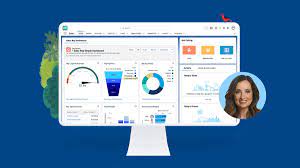
The primary challenges faced by businesses today revolve around lead generation and conversion. Lead conversion with Einstein is fast. Tectonic proudly offers comprehensive solutions for both challenges through the implementation and customization of Salesforce Einstein Lead Scoring. Salesforce Einstein Lead Scoring, a pivotal feature within Sales Cloud Einstein, leverages artificial intelligence to empower sales representatives in converting leads more efficiently. By analyzing historical sales data, Einstein Lead Scoring determines the likelihood of a lead converting into an opportunity. This predictive intelligence enables sales teams to segment and prioritize leads for faster conversion. Tectonic and Lead Conversion with Einstein Let Tectonic’s’ customization and implementation services ensure that your company maximizes the value derived from Sales Cloud Einstein, setting your sales representatives up for success. The factors influencing lead conversion, as predicted by Einstein Lead Scoring, are conveniently displayed on each lead record in Salesforce, aiding sales reps in quick preparation for calls and interactions. Lead Conversion with Einstein Einstein Lead Scoring models are uniquely built for each customer and organization, analyzing standard and custom fields through various predictive models. The machine learning behind Einstein continuously improves accuracy by updating models monthly. This ensures that leads are scored every hour using the latest model, promptly adapting to any changes in lead data. Truly, the power of Einstein Lead Scoring lies in its ability to discover insights, predict lead conversion likelihood, and provide automatic insights into the newly determined score. Studies indicate that AI-powered companies spend less time prospecting and more time actively growing revenue. Einstein Lead Scoring allows your company to focus more on selling and less on prospecting, leading to faster lead conversion and shorter sales cycles. Tectonic assists in automating sales and marketing processes, integrating the capabilities of Einstein Lead Scoring into your business. With zero setup requirements, custom lead score-driven workflows, and smart lead lists. Einstein Lead Scoring ensures that your sales teams work smarter and faster. The Lead Score Your Lead Score field added by Einstein Lead Scoring in your Salesforce org lets sales and marketing teams prioritize leads. This is based on similarities to prior converted leads. Through data science and machine learning, Einstein Lead Scoring offers a faster and more accurate solution. When compared to traditional rules-based lead scoring. Your Salesforce admin, or Tectonic’s Salesforce team, can set up Einstein Lead Scoring to score all leads together. Or group them into segments based on field criteria. The dashboard provides key lead score metrics. By offering insights into average lead score by lead source, conversion rate by lead score, and lead score distribution across converted and lost opportunities. Sales Cloud Einstein Sales Cloud Einstein, with Einstein Lead Scoring, is a ready-to-use set of tools that learn from Salesforce CRM data and activities, continuously enhancing its predictions. Because Sales Cloud Einstein includes additional features such as Salesforce Inbox and Einstein Activity Capture. Einstein Opportunity Insights offers smart reminders or tasks for nurturing customer relationships. Einstein Lead Scoring helps prioritize leads for conversion. Incorporating Sales Cloud Einstein and Einstein Lead Scoring into your sales and marketing strategy can yield a great return. Your Salesforce investment will fill your opportunity pipeline. Contact Tectonic for a free consultation to explore how Sales Cloud Einstein can accelerate lead conversion for your business. Like1 Related Posts Who is Salesforce? Who is Salesforce? Here is their story in their own words. From our inception, we’ve proudly embraced the identity of Read more Salesforce Marketing Cloud Transactional Emails Salesforce Marketing Cloud Transactional Emails are immediate, automated, non-promotional messages crucial to business operations and customer satisfaction, such as order Read more Salesforce Unites Einstein Analytics with Financial CRM Salesforce has unveiled a comprehensive analytics solution tailored for wealth managers, home office professionals, and retail bankers, merging its Financial Read more AI-Driven Propensity Scores AI plays a crucial role in propensity score estimation as it can discern underlying patterns between treatments and confounding variables Read more


Read More
Salesforce Sales Enablement

Customers Re-Evaluate Their Priorities

Compounding factors such as inflation and technological advancements are prompting individuals to reconsider their priorities. While impacting how and where they allocate their finances, it directly impacts businesses as well.. A substantial 62% of consumers have recently reevaluated their priorities, with the cost of living ranking as the primary influencer and obtaining better deals being the most common reason for brand switches. Customers Re-Evaluate Their Priorities and vote with their money. While financial considerations remain a focal point, customers are not solely driven by the pursuit of cost-effectiveness. Other crucial factors include product quality and the overall customer experience. Remarkably, 80% of customers emphasize that the experience provided by a company is as significant as the products and services offered. While companies are burdened by this trend it also emphasizes the need for technology. Marketing automation and personalization. Knowing enough about your customer to reach them with the right message at the right time on the right channel. Enter Salesforce Salesforce Omnichannel is a flexible and customizable Salesforce feature. It helps businesses to seamlessly connect with customers across multiple channels, be they physical stores, email, chat, social media, phone, or SMS. And best of all, anyone can implement the omnichannel approach without coding knowledge! Salesforce Personalization learns everything about your customer and presents them with personalized offers and messaging how they want it when they want it where they want it. Salesforce Marketing Cloud provides marketing automation power. Salesforce Sales Cloud serves customers with ease. Salesforce Data Cloud stores the customer information from all business sources and drives interaction powered by AI. Attitudes Shift Over two years into the global pandemic, a shift in attitudes towards work, home, spending, interactions, and well-being is evident among many Americans. The majority now express a preference for spending on experiences rather than products, with a focus on home-centered activities. Additionally, there is a notable inclination towards in-person interactions rather than substituting them with digital services. This “great rethink” emphasizes that post-pandemic society is unlikely to revert to its previous state. A pivotal aspect of this great rethink is the evolving attitude towards work. While the initial stages of the pandemic saw individuals deprioritizing work due to stress, burnout, and remote work, new economic realities have set in. Customers Re-Evaluate Their Priorities Rising living costs and the possibility of a recession are causing a shift in sentiment, with fewer Americans viewing deprioritizing work as an affordable luxury anymore. Consumer sentiment regarding an improved work-life balance is showing signs of reversal, with the percentage of those feeling they have more time to enjoy today decreasing from nearly 70% in September 2021 to 51% in May 2022. A recent survey conducted by Accenture, encompassing 25,000 consumers across 22 countries, sheds light on how the pandemic has prompted a reevaluation of consumer purchasing behavior. Accenture identifies a segment of consumers called “Reimagined,” representing those who have changed their buying habits across various industries. These consumers expect companies to understand and address their changing needs during disruptive times, with a significant portion expressing disappointment in companies that have not provided adequate support. Considering these insights, Accenture identifies five purchasing motivations that align with consumers’ desires for improved well-being and confidence in the products, services, and companies they engage with. These motivations – health and safety, service and personal care, ease and convenience, product origin, and trust and reputation – carry implications for businesses, including those in the events industry. Impact on Events Applying these motivations to the context of business events, event organizers must prioritize safety protocols, personalize communications, provide digital and hybrid event options, incorporate sustainability practices, and build trust through consistent alignment with organizational values and mission statements. As consumers remain open to new experiences, now is an opportune time for experimentation and innovation within the events landscape. Salesforce to the Rescue If amidst this great re-think you are re-thinking how you do business, contact Tectonic today to learn how Salesforce could be the solution you need. Content updated November 2023. Like Related Posts Who is Salesforce? Who is Salesforce? Here is their story in their own words. From our inception, we’ve proudly embraced the identity of Read more Salesforce Marketing Cloud Transactional Emails Salesforce Marketing Cloud Transactional Emails are immediate, automated, non-promotional messages crucial to business operations and customer satisfaction, such as order Read more Salesforce Unites Einstein Analytics with Financial CRM Salesforce has unveiled a comprehensive analytics solution tailored for wealth managers, home office professionals, and retail bankers, merging its Financial Read more AI-Driven Propensity Scores AI plays a crucial role in propensity score estimation as it can discern underlying patterns between treatments and confounding variables Read more

Read More
public sector and tribal governent

What is BI in Salesforce?

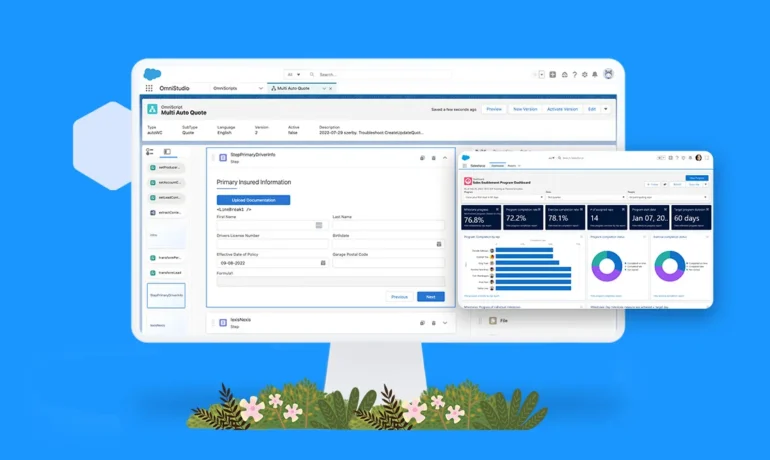
Salesforce BI helps to create fast, digestible reports to help you make informed decisions at the right time. Salesforce Einstein is a leading business intelligence software solution that will help streamline your operations. Read on in this insight to learn how Salesforce BI capabilities including Tableau rank in the Gartner Magic Quadrant. Make the right decision every time using analytics that go beyond business intelligence software. See why Gartner named Salesforce (Tableau) a Leader in the Gartner® Magic Quadrant™ for Analytics and Business Intelligence Platforms for the 11th consecutive year. Data and analytics leaders must use analytics and BI platforms to support the needs of IT, analysts, consumers and data scientists. While integration with cloud ecosystems and business applications is a key selection requirement, buyers also need platforms to support openness and interoperability. Analytics and business intelligence (ABI) platforms enable less technical users, including business people, to model, analyze, explore, share and manage data, and collaborate and share findings, enabled by IT and augmented by artificial intelligence (AI). For several years, the Magic Quadrant for Analytic and Business Intelligence Platforms has emphasized visual self-service for end users augmented by AI to deliver automated insights. While this remains a significant use case, the ABI platform market will increasingly need to focus on the needs of the analytic content consumer and business decision makers. To achieve this, automated insights must be relevant in context of a user’s goals, actions and workflow. Many platforms are adding capabilities for users to easily compose low-code or no-code automation workflows and applications. This blend of capabilities is helping to expand the vision for analytics beyond simply delivering datasets and presenting dashboards. Today’s ABI platforms can deliver enriched contextualized insights, refocus attention on decision-making processes and ultimately take actions that will deliver business value. In addition to the increasing consumer design focus trend, we see other key market trends, including the need for improved governance of analytic content creation and dissemination, and the demand for a headless, open architecture. For example, a headless ABI platform would decouple the metrics store from the front-end presentation layer, enabling more interoperability with competitive products. ABI platform functionality includes the following 12 critical capabilities, which have been updated to reflect areas of market change, differentiation and customer demand: Gartner added three new critical capabilities as part of our metrics store evaluation criteria this year:  ABI platforms have always been about measurement. For decades, the slicing and dicing of measures by their dimensional attributes was synonymous with the act of performing business intelligence. However, over the last decade, the focus on metrics and measurement was overshadowed by data visualization. As data visualization became the most conspicuous capability, some business executives began to conflate ABI platforms with data visualization — as if ABI platforms are glorified chart wizards. This misconception minimizes much of the work performed and the business value delivered by ABI platforms. Establishing metrics stores as a critical capability to execute makes it clear that defining and communicating performance measures throughout an organization is one of the key purposes of an ABI platform. Analytics collaboration is a combination of many features (such as Slack/Teams integration, action frameworks) that collectively improve an organization’s ability to make decisions with consensus. Data science integration reflects the increasing likelihood that a business analyst may want to use data science to test certain hypotheses, and that data scientists will need to leverage features such as data prep and data visualization. In addition, Gartner is changing “catalogs” to “analytic catalogs” to emphasize a set of requirements that are not being met by ABI platform vendors today. Most large enterprises have thousands of reports built across multiple ABI platforms, but consumers in these organizations have no easy way to access these reports. The name change to analytic catalogs reflects the need for ABI platform vendors to deliver analytic content with the consumer in mind. Three critical capabilities were removed from our evaluation criteria: security, natural language generation (NLG; rolled into data storytelling) and cloud analytics (which will no longer be considered a platform capability, but instead a go-to-market strategy covered in the Magic Quadrant). And one of the security sub-criteria, about the granularity of authorization (e.g., row-based security) has been moved to the enterprise reporting capability. Salesforce (Tableau) Tableau, a Salesforce company, is a Leader in this Magic Quadrant. Its products are mainly focused on visual-based exploration that enables business users to access, prepare, analyze and present findings in their data. CRM Analytics, formerly Tableau CRM, provides augmented analytics capabilities for analysts and citizen data scientists. Tableau has global operations and serves clients of all sizes. In 2022, Tableau reinforced its augmented consumer vision to provide contextualized insights with deeper integration with Salesforce Data Cloud. IT also improved decision intelligence by bringing domain-aware insights into action with Revenue Intelligence and other Salesforce-native apps. The extensible design and x-platform integrations (Salesforce Flow, MuleSoft, UiPath and Looker) further enable composable analytics to bring insights into workflow with agility. Strengths Cautions Like Related Posts Who is Salesforce? Who is Salesforce? Here is their story in their own words. From our inception, we’ve proudly embraced the identity of Read more Salesforce Marketing Cloud Transactional Emails Salesforce Marketing Cloud Transactional Emails are immediate, automated, non-promotional messages crucial to business operations and customer satisfaction, such as order Read more Salesforce Unites Einstein Analytics with Financial CRM Salesforce has unveiled a comprehensive analytics solution tailored for wealth managers, home office professionals, and retail bankers, merging its Financial Read more AI-Driven Propensity Scores AI plays a crucial role in propensity score estimation as it can discern underlying patterns between treatments and confounding variables Read more
Read More
Salesforce CDP Innovations

Salesforce CDP Innovations

New Salesforce CDP Innovations: Smarter, Faster, and More Personalized Customer Interactions Salesforce has launched new innovations for its Customer Data Platform (CDP), designed to help businesses leverage first-party data for more personalized customer experiences. Leading brands like Bank of Montreal and convenience store retailer Casey’s are already using Salesforce CDP to create a unified source of customer truth, streamlining interactions and providing frictionless customer experiences. The world is gradually recovering from the pandemic, and consumer behavior is shifting as shops, hotels, restaurants, and other establishments reopen. While customers are eager to engage in the experiences they’ve missed, companies recognize that digital innovations, such as curbside pickup and direct-to-consumer websites, which fueled pandemic-era growth, are here to stay. As expectations for personalized, connected experiences grow—with 70% of customers demanding this—many businesses struggle to unify customer data across systems, teams, and devices. This data fragmentation makes it difficult to create a single source of truth for customers. Salesforce CDP: Built on the World’s Leading CRM Salesforce CDP solves this challenge by capturing, unifying, and activating customer data across various touchpoints to drive more personalized experiences. Today’s new CDP features make data smarter, more connected, and easier to activate securely. Built on Salesforce’s #1 CRM platform, the CDP unifies data from sales, service, marketing, loyalty, and commerce systems, creating a comprehensive single source of truth. Businesses can then leverage this unified view for personalized marketing, advertising, analytics, and relationship-building strategies that increase customer loyalty and revenue. New Innovations in Salesforce CDP Include: How Businesses Are Using Salesforce CDP Availability of New Features: This insight helped you learn more about these innovations and how Salesforce CDP can enhance customer engagement from anywhere. Like Related Posts Who is Salesforce? Who is Salesforce? Here is their story in their own words. From our inception, we’ve proudly embraced the identity of Read more Salesforce Marketing Cloud Transactional Emails Salesforce Marketing Cloud Transactional Emails are immediate, automated, non-promotional messages crucial to business operations and customer satisfaction, such as order Read more Salesforce Unites Einstein Analytics with Financial CRM Salesforce has unveiled a comprehensive analytics solution tailored for wealth managers, home office professionals, and retail bankers, merging its Financial Read more AI-Driven Propensity Scores AI plays a crucial role in propensity score estimation as it can discern underlying patterns between treatments and confounding variables Read more

Read More
Sales Pipeline

The Seven Stages of Sales Pipelines Explained

Customers embark on a journey from initial discovery to becoming repeat buyers, progressing through seven essential sales pipeline stages: Throughout the sales pipeline stages, sales leaders can identify opportunities to better engage customers and enhance the likelihood of successful purchases. Contact Tectonic today to discover how Salesforce can help fill your sales pipeline. Like Related Posts Who is Salesforce? Who is Salesforce? Here is their story in their own words. From our inception, we’ve proudly embraced the identity of Read more Salesforce Marketing Cloud Transactional Emails Salesforce Marketing Cloud Transactional Emails are immediate, automated, non-promotional messages crucial to business operations and customer satisfaction, such as order Read more Salesforce Unites Einstein Analytics with Financial CRM Salesforce has unveiled a comprehensive analytics solution tailored for wealth managers, home office professionals, and retail bankers, merging its Financial Read more AI-Driven Propensity Scores AI plays a crucial role in propensity score estimation as it can discern underlying patterns between treatments and confounding variables Read more

Read More

AI in Sales Enablement

automation, and personalization to enhance sales processes, increase customer engagement, and drive revenue growth. Companies are working with AI to improve analysis of all customer contact points to both identify leads and weigh lead quality. That includes ingesting information from web pages, email campaigns, phone calls, and much more.

Read More
Salesforce Scheduler

Salesforce Scheduler

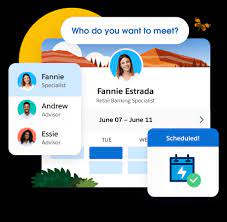
Salesforce Scheduler provides the objects required for appointment scheduling and an app that makes it easy to set up Scheduler. It provides preconfigured, customizable flows and rules that provide appointment booking experience. It also provides business APIs to create appointment booking experiences.

Read More
How Good is Our Data

Agiloft Salesforce Integration

Optimize organizational efficiency, performance, and value by automating contracts with Agiloft Contract Lifecycle Management Software. Regain control and streamline processes through seamless integration with Salesforce. Read on about Agiloft Salesforce integration to learn more. Agiloft’s core platform offers direct integrations that facilitate interaction within your daily tools. Collaborate effortlessly in Microsoft Teams, Outlook, and Office, exchange data seamlessly in Salesforce, and create actionable dashboards in Tableau or Power BI. Integration works in two directions: inbound and outbound. Inbound integration occurs when an external system initiates contact with Salesforce, while outbound integration involves Salesforce initiating contact with an external system. Wondering about the cloud aspect? Agiloft is purposefully designed as a pure web application with full multi-tenancy support. It stands out by being available as a Hosted Cloud service and also for deployment on-premise, providing flexibility to suit your specific needs. Agiloft Salesforce integration is one of the many Salesforce integrations Tectonic can handle. Extend your Salesforce CRM Experience by adding a no-code, AI-powered Contract Lifecycle Management (CLM) solution. Eliminate red tape and automate the contracting process Full Salesforce integration with one-click contract creation of proposals, MSAs, and other agreements as well as automated approval processes integrated with email, SMS, and e-signature. Minimize revenue leakage from contracts Keep track of performance obligations, contract end-dates, renewals, and invoicing as well as recommend actions to maximize revenue. Build custom dashboards to track KPIs and issue alerts as required. Like Related Posts Who is Salesforce? Who is Salesforce? Here is their story in their own words. From our inception, we’ve proudly embraced the identity of Read more Salesforce Marketing Cloud Transactional Emails Salesforce Marketing Cloud Transactional Emails are immediate, automated, non-promotional messages crucial to business operations and customer satisfaction, such as order Read more Salesforce Unites Einstein Analytics with Financial CRM Salesforce has unveiled a comprehensive analytics solution tailored for wealth managers, home office professionals, and retail bankers, merging its Financial Read more AI-Driven Propensity Scores AI plays a crucial role in propensity score estimation as it can discern underlying patterns between treatments and confounding variables Read more

Read More
The Evolution of Industrial Revolutions

The Evolution of Industrial Revolutions

History of First Four Industrial Revolutions Throughout history, humanity has always relied on technology. Although the technology of each era looked different from today’s, it was groundbreaking for its time. People consistently used available technology to simplify their lives while striving to enhance and advance it. This ongoing pursuit of innovation laid the groundwork for the industrial revolutions. Today, we are in the midst of the fourth industrial revolution, also known as Industry 4.0, marked by the rise of tech and web design companies. The Evolution of Industrial Revolutions. Here’s an overview of the three previous industrial revolutions that have led us to this point: The First Industrial Revolution (1765) The first industrial revolution followed the proto-industrialization period, starting in the late 18th century and extending into the early 19th century. This era was characterized by mechanization, which transformed industries and shifted the economic backbone from agriculture to industry. The massive extraction of coal and the invention of the steam engine introduced a new type of energy, accelerating manufacturing and economic growth through the expansion of railroads. This led to the enlarging of cities where factories and industry took place. The Second Industrial Revolution (1870) Nearly a century after the first, the second industrial revolution began in the late 19th century, marked by significant technological advancements. New sources of energy—electricity, gas, and oil—emerged, leading to the development of the internal combustion engine. This period also saw the rise of steel demand, chemical synthesis, and new communication methods like the telegraph and telephone. The invention of the automobile and airplane at the turn of the 20th century solidified the second industrial revolution’s profound impact on modern society. This led to the growing mobility of humanity. The Third Industrial Revolution (1969) In the latter half of the 20th century, the third industrial revolution introduced nuclear energy as a new power source. This revolution brought forth the rise of electronics, telecommunications, and computers, paving the way for space exploration, advanced research, and biotechnology. In the industrial sector, the advent of Programmable Logic Controllers (PLCs) and robots led to an era of high-level automation, revolutionizing manufacturing processes. This, in turn, led to a time of greater lesiure and freedom. Industry 4.0 Many consider Industry 4.0 to be the fourth industrial revolution, unfolding right before our eyes. Beginning at the dawn of the third millennium with the widespread use of the Internet, Industry 4.0 represents a shift from physical to virtual innovations. It encompasses developments in virtual reality, augmented reality, and other digital technologies that reshape our interaction with the physical world. The four industrial revolutions have fundamentally shaped global economies. Numerous programs and projects are being implemented worldwide to help people harness the benefits of the fourth revolution in their daily lives. From digital flipbooks to augmented reality gaming, the future is bright. For instance, the EU-funded RESTART project aims to transform vocational education and training (VET) systems to meet the digital skill demands of modern industries, ensuring that the workforce is equipped to thrive in this new technological landscape. What’s next? Look out as we are already into the Fifth Industrial Revolution. Like Related Posts Who is Salesforce? Who is Salesforce? Here is their story in their own words. From our inception, we’ve proudly embraced the identity of Read more Salesforce Marketing Cloud Transactional Emails Salesforce Marketing Cloud Transactional Emails are immediate, automated, non-promotional messages crucial to business operations and customer satisfaction, such as order Read more Salesforce Unites Einstein Analytics with Financial CRM Salesforce has unveiled a comprehensive analytics solution tailored for wealth managers, home office professionals, and retail bankers, merging its Financial Read more AI-Driven Propensity Scores AI plays a crucial role in propensity score estimation as it can discern underlying patterns between treatments and confounding variables Read more

Read More
gettectonic.com