Privacy Archives - gettectonic.com - Page 12
Security Identity and Privacy Summer 24 Release Notes

Security Identity and Privacy Summer 24 Release Notes

External Client App Manager, OAuth 2.0 token exchange handlers, and Event Log File Browser are each now available in Setup. Also, external client apps now support a bunch of new OAuth flows. Give users access to manage custom domains with a new, more targeted user permission. Create uninterrupted user experiences across Salesforce and custom interfaces with the new Single-Access UI Bridge API. Access your Data Cloud encryption policy status from the Security Center Encryption Policy metric. Scratch orgs on Salesforce Edge Network use partitioned domains. And Android mobile connected apps now require the Admin SDK private key and project ID from a Google Firebase project. Security Identity and Privacy Summer 24 Release Notes. Like Related Posts Who is Salesforce? Who is Salesforce? Here is their story in their own words. From our inception, we’ve proudly embraced the identity of Read more Salesforce Marketing Cloud Transactional Emails Salesforce Marketing Cloud Transactional Emails are immediate, automated, non-promotional messages crucial to business operations and customer satisfaction, such as order Read more Salesforce Unites Einstein Analytics with Financial CRM Salesforce has unveiled a comprehensive analytics solution tailored for wealth managers, home office professionals, and retail bankers, merging its Financial Read more AI-Driven Propensity Scores AI plays a crucial role in propensity score estimation as it can discern underlying patterns between treatments and confounding variables Read more

Read More
Salesforce Hyperforce Summer 24 Release Notes

Salesforce Hyperforce Summer 24 Release Notes

Hyperforce is the next-generation Salesforce infrastructure architecture built for the public cloud. Salesforce Hyperforce Summer 24 Release Notes. It provides Salesforce applications with compliance, security, privacy, agility and scalability and gives customers more choice over data residency. Salesforce Hyperforce Summer 24 Release Notes Hyperforce is Salesforce’s renewed infrastructure architecture, based on the consumption of public cloud services. It has been designed to offer customers a more powerful and easily scalable platform. In this new scenario, Salesforce does not manage physical resources. What is the difference between Hyperforce and Lightning? The Lightning Platform is the core infrastructure in Salesforce whereas, Hyperforce is a new infrastructure model provided by the CRM platform. Like Related Posts Who is Salesforce? Who is Salesforce? Here is their story in their own words. From our inception, we’ve proudly embraced the identity of Read more Salesforce Marketing Cloud Transactional Emails Salesforce Marketing Cloud Transactional Emails are immediate, automated, non-promotional messages crucial to business operations and customer satisfaction, such as order Read more Salesforce Unites Einstein Analytics with Financial CRM Salesforce has unveiled a comprehensive analytics solution tailored for wealth managers, home office professionals, and retail bankers, merging its Financial Read more AI-Driven Propensity Scores AI plays a crucial role in propensity score estimation as it can discern underlying patterns between treatments and confounding variables Read more

Read More
Gen AI Depends on Good Data

Gen AI Depends on Good Data

Accelerate Your Generative AI Journey: A Call to Action for Data Leaders Generative AI is generating immense excitement across organizations, with boards of directors conducting educational workshops and senior management teams brainstorming potential use cases. They need to keep in mind, Gen AI Depends on Good Data. Individuals and departments are already experimenting with the technology to enhance productivity and effectiveness. There needs to be as much effort into data quality as to the technology. The critical work required for generative AI success falls to chief data officers (CDOs), data engineers, and knowledge curators. Unfortunately, many have yet to begin the necessary preparations. A survey in late 2023 of 334 CDOs and data leaders, sponsored by Amazon Web Services and the MIT Chief Data Officer/Information Quality Symposium, coupled with interviews, reveals a gap between enthusiasm and readiness. While there’s a shared excitement about generative AI, much work remains to get organizations ready for it. The Current State of Data Preparedness Most companies have yet to develop new data strategies or manage their data to effectively leverage generative AI. This insight outlines the survey results and suggests next steps for data readiness. Maximizing Value with Generative AI Historically, AI has worked with structured data like numbers in rows and columns. Generative AI, however, utilizes unstructured data—text, images, and video—to generate new content. This technology offers both assistance and competition for human content creators. Survey findings show that 80% of data leaders believe generative AI will transform their business environment, and 62% plan to increase spending on it. Yet, many are not yet realizing substantial economic value from generative AI. Only 6% of respondents have a generative AI application in production deployment. A significant 16% have banned employee use, though this is decreasing as companies address data privacy issues with enterprise versions of generative AI models. Focus on Core Business Areas Experiments with generative AI should target core business areas. Universal Music, for instance, is aggressively experimenting with generative AI for R&D, exploring how it can create music, write lyrics, and imitate artists’ voices while protecting intellectual property rights. Gen AI Depends on Good Data For generative AI to be truly valuable, organizations need to customize vendors’ models with their own data and prepare their data for integration. Generative AI relies on well-curated data to ensure accuracy, recency, uniqueness, and other quality attributes. Poor-quality data yields poor-quality AI responses. Data leaders in our survey cited data quality as the greatest challenge to realizing generative AI’s potential, with 46% highlighting this issue. Jeff McMillan, Chief Data, Analytics, and Innovation Officer at Morgan Stanley Wealth Management, emphasizes the importance of high-quality training content and the need to address disparate data sources for successful generative AI implementation. Current Efforts and Challenges Most data leaders have not yet made significant changes to their data strategies. While 93% agree that a data strategy is critical for generative AI, 57% have made no changes, and only 11% strongly agree their organizations have the right data foundation. Organizations making progress are focusing on specific tasks like data integration, cleaning datasets, surveying data, and curating documents for domain-specific AI models. Walid Mehanna, Group Chief Data and AI Officer at Merck Group, and Raj Nimmagadda, Chief Data Officer for R&D at Sanofi, stress the importance of robust data foundations, governance, and standards for generative AI success. Focus on High-Value Data Domains Given the monumental effort required to curate, clean, and integrate all unstructured data for generative AI, organizations should focus on specific data domains where they plan to implement the technology. The most common business areas prioritizing generative AI development include customer operations, software engineering, marketing and sales, and R&D. The Time to Start is Now While other important data projects exist, including improving transaction data and supporting traditional analytics, the preparation for generative AI should not be delayed. Despite some slow pivoting from structured to unstructured data management, and competition among CDOs, CIOs, CTOs, and chief digital officers for leadership in generative AI, the consensus is clear: generative AI is a transformative capability. Preparing a large organization’s data for AI could take several years, and the time to start is now. Like Related Posts Who is Salesforce? Who is Salesforce? Here is their story in their own words. From our inception, we’ve proudly embraced the identity of Read more Salesforce Marketing Cloud Transactional Emails Salesforce Marketing Cloud Transactional Emails are immediate, automated, non-promotional messages crucial to business operations and customer satisfaction, such as order Read more Salesforce Unites Einstein Analytics with Financial CRM Salesforce has unveiled a comprehensive analytics solution tailored for wealth managers, home office professionals, and retail bankers, merging its Financial Read more AI-Driven Propensity Scores AI plays a crucial role in propensity score estimation as it can discern underlying patterns between treatments and confounding variables Read more

Read More
ai voice agent

Voice Agents

A voice agent, also known as a voice AI agent, is a system that uses artificial intelligence (AI) to understand, interpret, and respond to human speech, enabling natural, conversational interactions for tasks like answering questions, providing information, or completing actions. Functionality:Voice agents use technologies like natural language processing (NLP) and machine learning to engage in conversations, answer queries, and perform tasks, much like a customer service representative would. Voice AI agents represent a transformative leap in how humans interact with technology. These sophisticated systems combine speech recognition, natural language understanding, and human-like speech synthesis to enable fluid, real-time conversations. Unlike traditional AI tools, voice AI agents can autonomously reason, make decisions, and execute tasks—revolutionizing industries from customer service to healthcare. What Are Voice AI Agents? Voice AI agents are autonomous software systems that:✔ Understand spoken language (speech recognition).✔ Reason like humans (powered by large language models).✔ Respond with natural-sounding speech (text-to-speech synthesis).✔ Perform tasks with minimal human intervention (agentic workflows). They excel in 24/7 interactive services, such as customer support, personal assistants, and accessibility tools, offering human-like interactions at scale. How Voice AI Agents Work Voice AI agents integrate multiple AI disciplines: 1. Speech Recognition (ASR) 2. Natural Language Understanding (NLU) 3. Decision-Making & Task Execution 4. Speech Synthesis (TTS) Key Advancements Over Traditional Assistants Feature Virtual Assistants (Siri, Alexa) Modern Voice AI Agents Reasoning Limited, scripted responses Dynamic, LLM-powered decisions Task Complexity Single-step commands Multi-step workflows Adaptability Static knowledge Learns from interactions Personalization Basic user profiles Context-aware responses Architecture of a Voice AI Agent A typical client-server setup includes: Client-Side Server-Side Communication Protocols: Challenges & Limitations Despite rapid progress, voice AI agents still face hurdles: 🔹 Accents & Dialects – Performance drops with underrepresented languages.🔹 Speech Disorders – Struggles with stuttering or atypical speech patterns.🔹 Continuous Learning – Requires frequent retraining to stay current.🔹 Privacy Concerns – Handling sensitive voice data securely. How to Build a Voice AI Agent Real-World Applications ✅ Customer Service – Automated call centers (Vapi, Skit.ai).✅ Healthcare – Voice assistants for patients & diagnostics.✅ Education – Personalized tutoring & language learning.✅ Accessibility – Assistive tech for visually impaired (Be My AI).✅ Smart Homes – Voice-controlled IoT devices (Alexa, Google Home). The Future of Voice AI Agents As LLMs, speech synthesis, and agentic frameworks improve, voice AI will: However, ethical AI development remains critical to address biases, privacy, and security. Final Thoughts Voice AI agents are reshaping human-computer interaction, moving beyond rigid chatbots to true conversational partners. Businesses adopting this tech early will gain a competitive edge—while those lagging risk obsolescence. The era of talking machines is here. Are you ready? Like Related Posts Who is Salesforce? Who is Salesforce? Here is their story in their own words. From our inception, we’ve proudly embraced the identity of Read more Salesforce Unites Einstein Analytics with Financial CRM Salesforce has unveiled a comprehensive analytics solution tailored for wealth managers, home office professionals, and retail bankers, merging its Financial Read more AI-Driven Propensity Scores AI plays a crucial role in propensity score estimation as it can discern underlying patterns between treatments and confounding variables Read more Tectonic’s Successful Salesforce Track Record Salesforce Technology Services Integrator – Tectonic has successfully delivered Salesforce in a variety of industries including Public Sector, Hospitality, Manufacturing, Read more

Read More
Constituent Service Toolkit in Public Sector Solutions

Constituent Service Toolkit in Public Sector Solutions

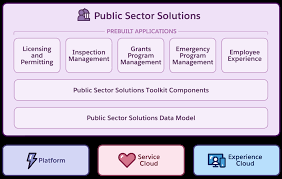
Explore the array of tools and components tailored for caseworkers, case managers, and other professionals to comprehend constituents’ needs and deliver exceptional customer service. Constituent Service Toolkit in Public Sector Solutions Public Sector Solutions offers a comprehensive suite of components, tools, and features designed to enhance the efficiency of caseworkers and other staff in addressing constituents’ concerns and issues. These tools provide valuable context for interactions with constituents and streamline actionable tasks, offering flexibility for customization to address diverse scenarios. Constituent Service Toolkit in Public Sector Solutions Whether handling inquiries about business license applications, social service benefits, or managing complaints and child welfare concerns, these tools empower users to efficiently navigate and resolve constituent service issues. Public Sector Solutions goes a step further by presenting a curated selection of these tools on a dedicated Lightning record page, facilitating a seamless start for users in utilizing these resources. Customize the page according to your agency’s specific needs, with limitless possibilities. Constituent Service Toolkit: Elevate customer service for constituents by providing tools that enhance the efficiency and effectiveness of caseworkers, case managers, and other users. Complete Common Service Tasks in Context with Action Launcher: Empower intake agents, caseworkers, and other users to access common service tasks through the Action Launcher Lightning web component. This tool allows users to perform tasks such as identity verification, referral intake, email communication, or call logging with a simple menu selection. Tailor the Action Launcher to meet specific needs and integrate it into frequently accessed record detail pages for quick and context-aware responses to constituent concerns. Protect Constituent Privacy and Reduce Fraud with Identity Verification and Audit Trail: Prioritize constituent privacy by implementing a flow to verify their identity before sharing sensitive information. Agents and service representatives can initiate this flow during phone calls, through messaging channels, or in person. Utilize the Audit Trail to monitor engagement interactions, analyze patterns, and detect potential fraud associated with identity verification. Receive Alerts on Records That Need Action: Stay informed about account and application records requiring attention with the Record Alerts component. Caseworkers, application reviewers, and other users receive notifications about person accounts, business accounts, or individual application records that demand action. The component organizes alerts by categories like type, priority, and severity, allowing users to dismiss or snooze alerts as needed. Deliver Service to Constituents from a Dedicated Account Lightning Record Page: Enhance caseworkers’ efficiency by providing relevant information and service tools through a dedicated Lightning record page for accounts. Key details about constituents are showcased through the Account card and Timeline component. The Action Launcher and Alerts components enable users to initiate common service actions and address pending record alerts. The Interaction Summary tab allows users to document notes from conversations and engagements with constituents. Create Start-to-Finish Automation to Address Service Requests from Constituents with Service Process Studio: Leverage Service Process Studio to design automated processes that efficiently respond to service requests from constituents, from intake to resolution. Utilize data attributes, OmniScript forms, Apex classes, and record-triggered flows to create automation for processing service requests, including tasks like updating a constituent’s address. Integration definitions enable seamless connectivity between service processes and external systems. Like1 Related Posts Who is Salesforce? Who is Salesforce? Here is their story in their own words. From our inception, we’ve proudly embraced the identity of Read more Salesforce Marketing Cloud Transactional Emails Salesforce Marketing Cloud Transactional Emails are immediate, automated, non-promotional messages crucial to business operations and customer satisfaction, such as order Read more Salesforce Unites Einstein Analytics with Financial CRM Salesforce has unveiled a comprehensive analytics solution tailored for wealth managers, home office professionals, and retail bankers, merging its Financial Read more AI-Driven Propensity Scores AI plays a crucial role in propensity score estimation as it can discern underlying patterns between treatments and confounding variables Read more

Read More
Ethical and Responsible AI

Ethical and Responsible AI

Responsible AI and ethical AI are closely connected, with each offering complementary yet distinct principles for the development and use of AI systems. Organizations that aim for success must integrate both frameworks, as they are mutually reinforcing. Responsible AI emphasizes accountability, transparency, and adherence to regulations. Ethical AI—sometimes called AI ethics—focuses on broader moral values like fairness, privacy, and societal impact. In recent discussions, the significance of both has come to the forefront, encouraging organizations to explore the unique advantages of integrating these frameworks. While Responsible AI provides the practical tools for implementation, ethical AI offers the guiding principles. Without clear ethical grounding, responsible AI initiatives can lack purpose, while ethical aspirations cannot be realized without concrete actions. Moreover, ethical AI concerns often shape the regulatory frameworks responsible AI must comply with, showing how deeply interwoven they are. By combining ethical and responsible AI, organizations can build systems that are not only compliant with legal requirements but also aligned with human values, minimizing potential harm. The Need for Ethical AI Ethical AI is about ensuring that AI systems adhere to values and moral expectations. These principles evolve over time and can vary by culture or region. Nonetheless, core principles—like fairness, transparency, and harm reduction—remain consistent across geographies. Many organizations have recognized the importance of ethical AI and have taken initial steps to create ethical frameworks. This is essential, as AI technologies have the potential to disrupt societal norms, potentially necessitating an updated social contract—the implicit understanding of how society functions. Ethical AI helps drive discussions about this evolving social contract, establishing boundaries for acceptable AI use. In fact, many ethical AI frameworks have influenced regulatory efforts, though some regulations are being developed alongside or ahead of these ethical standards. Shaping this landscape requires collaboration among diverse stakeholders: consumers, activists, researchers, lawmakers, and technologists. Power dynamics also play a role, with certain groups exerting more influence over how ethical AI takes shape. Ethical AI vs. Responsible AI Ethical AI is aspirational, considering AI’s long-term impact on society. Many ethical issues have emerged, especially with the rise of generative AI. For instance, machine learning bias—when AI outputs are skewed due to flawed or biased training data—can perpetuate inequalities in high-stakes areas like loan approvals or law enforcement. Other concerns, like AI hallucinations and deepfakes, further underscore the potential risks to human values like safety and equality. Responsible AI, on the other hand, bridges ethical concerns with business realities. It addresses issues like data security, transparency, and regulatory compliance. Responsible AI offers practical methods to embed ethical aspirations into each phase of the AI lifecycle—from development to deployment and beyond. The relationship between the two is akin to a company’s vision versus its operational strategy. Ethical AI defines the high-level values, while responsible AI offers the actionable steps needed to implement those values. Challenges in Practice For modern organizations, efficiency and consistency are key, and standardized processes are the norm. This applies to AI development as well. Ethical AI, while often discussed in the context of broader societal impacts, must be integrated into existing business processes through responsible AI frameworks. These frameworks often include user-friendly checklists, evaluation guides, and templates to help operationalize ethical principles across the organization. Implementing Responsible AI To fully embed ethical AI within responsible AI frameworks, organizations should focus on the following areas: By effectively combining ethical and responsible AI, organizations can create AI systems that are not only technically and legally sound but also morally aligned and socially responsible. Content edited October 2024. Like Related Posts Who is Salesforce? Who is Salesforce? Here is their story in their own words. From our inception, we’ve proudly embraced the identity of Read more Salesforce Marketing Cloud Transactional Emails Salesforce Marketing Cloud Transactional Emails are immediate, automated, non-promotional messages crucial to business operations and customer satisfaction, such as order Read more Salesforce Unites Einstein Analytics with Financial CRM Salesforce has unveiled a comprehensive analytics solution tailored for wealth managers, home office professionals, and retail bankers, merging its Financial Read more AI-Driven Propensity Scores AI plays a crucial role in propensity score estimation as it can discern underlying patterns between treatments and confounding variables Read more

Read More
Data Cloud and Snowflake Bidrectional Data Sharing

Data Cloud and Snowflake Bidrectional Data Sharing

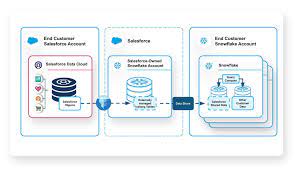
Salesforce Data Cloud and Snowflake are excited to announce that bidirectional data sharing between Snowflake, the Data Cloud company, and Salesforce Data Cloud is now generally available. In September, we introduced the ability for organizations to leverage Salesforce data directly in Snowflake via zero-ETL data sharing, enabling unified customer and business data, accelerating decision-making, and streamlining business processes. Today, we’re thrilled to share that customers can now also share Snowflake data into the Salesforce Data Cloud, using the same zero-ETL innovation to reduce friction and quickly surface powerful insights across sales, service, marketing, and commerce applications. Data Cloud and Snowflake Bidrectional Data Sharing. Data Cloud and Snowflake Bidrectional Data Sharing Enterprises generate valuable customer data within Salesforce applications, while increasingly relying on Snowflake as their preferred data platform for storing, modeling, and analyzing their full data estate. This integration between Salesforce and Snowflake minimizes friction, data latency, scale limitations, and data engineering costs associated with using these two leading platforms. The Snowflake Marketplace also offers customers the opportunity to acquire new data sets to enhance or fill gaps in their existing business data, driving innovation. By combining enterprise data and third-party data from Snowflake Marketplace with valuable customer data from Salesforce applications, organizations can unify their data and build powerful AI solutions to surface rich insights, driving superior and differentiated customer experiences. “Zero-ETL data sharing between Salesforce Data Cloud and Snowflake is game-changing. It has opened up new frontiers of data collaboration. We’re excited to see how customers are powering their customer data analytics and developing innovative AI solutions with near real-time data from Salesforce and Snowflake, generating incredible business value. Now that this integration is generally available, this kind of innovation will be broadly accessible,” says Christian Kleinerman, SVP of Product, Snowflake. Power Personalized Experiences with Salesforce and Snowflake Data sharing between Salesforce Data Cloud and Snowflake brings together holistic insights, empowering multiple customer-facing departments within any organization to create a truly robust customer 360. As Snowflake’s Chief Marketing Officer, Denise Persson, often states, a true, enterprise-wide customer 360 is the beating heart of a modern, customer-facing organization. The applicability of this integration spans various industries and unlocks new growth opportunities. For example: The bidirectional integration enables data sharing across business systems, Salesforce clouds, and operational systems, facilitating data set analysis and future action planning. This brings actionable insights and drives actions, unleashing a new level of customer experience and business productivity. Like Related Posts Who is Salesforce? Who is Salesforce? Here is their story in their own words. From our inception, we’ve proudly embraced the identity of Read more Salesforce Marketing Cloud Transactional Emails Salesforce Marketing Cloud Transactional Emails are immediate, automated, non-promotional messages crucial to business operations and customer satisfaction, such as order Read more Salesforce Unites Einstein Analytics with Financial CRM Salesforce has unveiled a comprehensive analytics solution tailored for wealth managers, home office professionals, and retail bankers, merging its Financial Read more AI-Driven Propensity Scores AI plays a crucial role in propensity score estimation as it can discern underlying patterns between treatments and confounding variables Read more

Read More
Where Will AI Take Us?

Where Will AI Take Us?

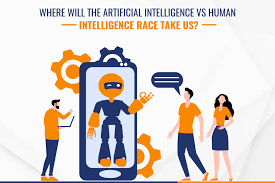
Author Jeremy Wagstaff wrote a very thought provoking article on the future of AI, and how much of it we could predict based on the past. This insight expands on that article. Artificial Intelligence (AI) refers to the simulation of human intelligence in machines that are programmed to think and learn. These machines can perform tasks that typically require human intelligence, such as visual perception, speech recognition, decision-making, and language translation. Many people think of artificial intelligence in the vein of how they personally use it. Some people don’t even realize when they are using it. Artificial intelligence has long been a concept in human mythology and literature. Our imaginations have been grabbed by the thought of sentient machines constructed by humans, from Talos, the enormous bronze automaton (self-operating machine) that safeguarded the island of Crete in Greek mythology, to the spacecraft-controlling HAL in 2001: A Space Odyssey. Artificial Intelligence comes in a variety of flavors, if you will. Artificial intelligence can be categorized in several ways, including by capability and functionality: You likely weren’t even aware of all of the above categorizations of artificial intelligence. Most of us still would sub set into generative ai, a subset of narrow AI, predictive ai, and reactive ai. Reflect on the AI journey through the Three C’s – Computation, Cognition, and Communication – as the guiding pillars for understanding the transformative potential of AI. Gain insights into how these concepts converge to shape the future of technology. Beyond a definition, what really is artificial intelligence, who makes it, who uses it, what does it do and how. Artificial Intelligence Companies – A Sampling AI and Its Challenges Artificial intelligence (AI) presents a novel and significant challenge to the fundamental ideas underpinning the modern state, affecting governance, social and mental health, the balance between capitalism and individual protection, and international cooperation and commerce. Addressing this amorphous technology, which lacks a clear definition yet pervades increasing facets of life, is complex and daunting. It is essential to recognize what should not be done, drawing lessons from past mistakes that may not be reversible this time. In the 1920s, the concept of a street was fluid. People viewed city streets as public spaces open to anyone not endangering or obstructing others. However, conflicts between ‘joy riders’ and ‘jay walkers’ began to emerge, with judges often siding with pedestrians in lawsuits. Motorist associations and the car industry lobbied to prioritize vehicles, leading to the construction of vehicle-only thoroughfares. The dominance of cars prevailed for a century, but recent efforts have sought to reverse this trend with ‘complete streets,’ bicycle and pedestrian infrastructure, and traffic calming measures. Technology, such as electric micro-mobility and improved VR/AR for street design, plays a role in this transformation. The guy digging out a road bed for chariots and Roman armies likely considered none of this. Addressing new technology is not easy to do, and it’s taken changes to our planet’s climate, a pandemic, and the deaths of tens of millions of people in traffic accidents (3.6 million in the U.S. since 1899). If we had better understood the implications of the first automobile technology, perhaps we could have made better decisions. Similarly, society should avoid repeating past mistakes with AI. The market has driven AI’s development, often prioritizing those who stand to profit over consumers. You know, capitalism. The rapid adoption and expansion of AI, driven by commercial and nationalist competition, have created significant distortions. Companies like Nvidia have soared in value due to AI chip sales, and governments are heavily investing in AI technology to gain competitive advantages. Listening to AI experts highlights the enormity of the commitment being made and reveals that these experts, despite their knowledge, may not be the best sources for AI guidance. The size and impact of AI are already redirecting massive resources and creating new challenges. For example, AI’s demand for energy, chips, memory, and talent is immense, and the future of AI-driven applications depends on the availability of computing resources. The rise in demand for AI has already led to significant industry changes. Data centers are transforming into ‘AI data centers,’ and the demand for specialized AI chips and memory is skyrocketing. The U.S. government is investing billions to boost its position in AI, and countries like China are rapidly advancing in AI expertise. China may be behind in physical assets, but it is moving fast on expertise, generating almost half of the world’s top AI researchers (Source: New York Times). The U.S. has just announced it will provide chip maker Intel with $20 billion in grants and loans to boost the country’s position in AI. Nvidia is now the third largest company in the world, entirely because its specialized chips account for more than 70 percent of AI chip sales. Memory-maker Micro has mostly run out of high-bandwidth memory (HBM) stocks because of the chips’ usage in AI—one customer paid $600 million up-front to lock in supply, according to a story by Stack. Back in January, the International Energy Agency forecast that data centers may more than double their electrical consumption by 2026 (Source: Sandra MacGregor, Data Center Knowledge). AI is sucking up all the payroll: Those tech workers who don’t have AI skills are finding fewer roles and lower salaries—or their jobs disappearing entirely to automation and AI (Source: Belle Lin at WSJ). Sam Altman of OpenAI sees a future where demand for AI-driven apps is limited only by the amount of computing available at a price the consumer is willing o pay. “Compute is going to be the currency of the future. I think it will be maybe the most precious commodity in the world, and I think we should be investing heavily to make a lot more compute.” Sam Altman, OpenAI CEO This AI buildup is reminiscent of past technological transformations, where powerful interests shaped outcomes, often at the expense of broader societal considerations. Consider early car manufacturers. They focused on a need for factories, components, and roads.

Read More
Custom Copilot Actions

Custom Copilot Actions

How to Create a Custom Copilot Action Custom Copilot Actions allow you to extend Copilot’s functionality within Salesforce, enabling users to perform tasks specific to your business needs. By utilizing invocable Apex classes, autolaunched flows, and prompt templates, you can build custom actions tailored to your organization’s requirements. Extend your unified copilot with custom actions. Before You Begin: Steps to Create a Custom Copilot Action: Testing and Deployment: Understanding Einstein Copilot Einstein Copilot is Salesforce’s AI assistant designed to enhance productivity and user experience across various applications and departments. Admins can configure and deploy Copilots to empower users with AI capabilities, streamlining workflows and increasing efficiency. Out-of-the-Box Actions: In the Spring ’24 release, Einstein Copilot offers several out-of-the-box actions, including: Customization and Future Development: Admins can create custom actions to tailor Copilot’s capabilities to their organization’s specific requirements. Custom actions enable tasks such as updating records and integrating with external systems, enhancing productivity and efficiency. When you create a custom action, you build it on top of platform functionality you want to make available in Einstein Copilot, such as invocable Apex classes, autolaunched flows, or prompt templates. Adding custom actions lets you customize your copilot and get more mileage out of your current Salesforce platform capabilities. Access to a custom copilot action depends on the type of Salesforce action it references. For example, if a custom action was built using a flow, the custom action adheres to the permissions, field-level security, and sharing settings configured in the flow. Use Cases and Considerations: Typical Use Cases: Considerations: Building Custom Copilot Actions: Power of Custom Actions: Custom actions extend Copilot’s capabilities, offering a wide range of use cases and functionalities. Actions can be built using flows, prompts, or Apex, providing flexibility and customization options. Descriptive Instructions: Accurate descriptions of actions, inputs, and outputs are essential for Copilot’s understanding and execution. Clear instructions provide context and improve response accuracy. Best Practices: Einstein Copilot, coupled with custom actions, empowers organizations to optimize workflows and drive efficiency. By following best practices and leveraging the full potential of Copilot, Salesforce admins can enhance user experiences and unlock new levels of productivity. Explore these features within your organization to realize the benefits of Salesforce Einstein Copilot Custom Actions. Assign an action to your copilot from the Copilot Actions page, the record page for an action, or the Copilot Action Library tab of the actions panel in the Copilot Builder. Your copilot must be deactivated. To test your action and preview how the output appears in a copilot conversation, open the copilot in the Copilot Builder and start a preview conversation. Enter utterances that you expect to trigger your action, and then make adjustments to the copilot action instructions based on your results. What powers Einstein Copilot custom actions? By facilitating the flow of work through smart, AI-driven actions, Einstein Copilot enhances efficiency and decision-making. Here’s how organizations can harness its power through the design of custom actions, ensuring their operations are as streamlined and effective as possible. Like1 Related Posts Who is Salesforce? Who is Salesforce? Here is their story in their own words. From our inception, we’ve proudly embraced the identity of Read more Salesforce Marketing Cloud Transactional Emails Salesforce Marketing Cloud Transactional Emails are immediate, automated, non-promotional messages crucial to business operations and customer satisfaction, such as order Read more Salesforce Unites Einstein Analytics with Financial CRM Salesforce has unveiled a comprehensive analytics solution tailored for wealth managers, home office professionals, and retail bankers, merging its Financial Read more AI-Driven Propensity Scores AI plays a crucial role in propensity score estimation as it can discern underlying patterns between treatments and confounding variables Read more

Read More
What is Einstein Used for in Salesforce?

What is Einstein Used for in Salesforce?

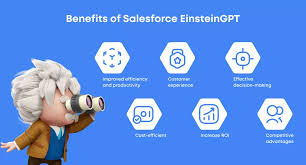
Salesforce Einstein is an AI-powered platform that can be used in various ways to enhance customer experiences and streamline business operations: SalesSalesforce Einstein can help sales teams better understand customers, improve conversion rates, and close deals more quickly. For instance, it can generate sales call summaries, draft emails using customer data, and provide real-time predictions. Customer ServiceEinstein helps customer service agents resolve cases faster and provide customers with relevant information during interactions. MarketingSalesforce Einstein enables marketers to create personalized experiences and send the right content to the right customer at the right time. ITSalesforce empowers IT teams to embed intelligence across the business and create smarter apps for customers and employees. CommerceSalesforce assists retailers by recommending the best products to each customer. Salesforce also includes features to protect data privacy and security, such as the Tectonic GPT Trust Layer, which provides AI bias detection, data security, and regulatory compliance. Salesforce Einstein is the first all-inclusive AI for CRM. It’s an integrated set of AI technologies that makes the Customer Success Platform smarter and brings AI to Salesforce users everywhere. Salesforce is the only comprehensive AI for CRM. It is: Tectonic and Salesforce allow businesses to become AI-first, providing the ability to anticipate customer needs, improve service efficiency, and enable smarter, data-driven decision-making. Sales teams can anticipate next opportunities and exceed customer needs,Service teams can proactively resolve issues before they occur,Marketing teams can create predictive journeys and personalize experiences like never before,IT teams can embed intelligence everywhere and create smarter apps. AI that works for your business.Drive business productivity and personalization with predictive AI, generative AI, and agents across the Customer 360 platform. Create and deploy assistive AI experiences natively in Salesforce, allowing your customers and employees to converse directly with Agentforce to solve issues faster and work smarter. Empower service reps, agents, marketers, and others with AI tools safely grounded in your customer data to make every customer experience more impactful. What is Salesforce Einstein?As of 2024, this groundbreaking AI-based product remains a leader in the CRM industry since its release in 2016. It combines a range of AI technologies, including advanced machine learning, natural language processing (NLP), predictive analytics, and image recognition, enabling businesses to improve productivity and sustain growth. Salesforce AI BenefitsThe most significant benefits of AI are the time and efficiency gains it offers to business processes. By automating tasks, employees can focus on more strategic work. Additionally, automating repetitive tasks reduces errors and enhances operational efficiency. Saleesforce provides robust reporting features that generate valuable insights to support decision-making, helping businesses understand customer needs and identify opportunities. From a customer perspective, Salesforce ensures more meaningful and personalized experiences through advanced NLP capabilities and machine learning to better understand customer behavior. Salesforce AI FeaturesSalesforce is a feature-rich platform that leverages AI’s capabilities in Natural Language Processing, Machine Learning, and image processing. Some of the key features include: Salesforce PricingCosts depend on the required features and the size of the business. Pricing starts at $50 per user per month, with potential increases based on the specific capabilities needed. Salesforce Tectonic ChallengesAlthough Salesforce Tectonic offers numerous benefits, companies may face challenges during integration, such as aligning it with existing systems and ensuring proper training for employees to maximize its use. How to Prepare for Salesforce Tectonic IntegrationUsing an implementation partner like Tectonic can help ensure seamless integration. A partner will assess your current Salesforce setup, recommend the right features, and guide you through the integration process. ConclusionSalesforce is a cutting-edge platform that empowers businesses to transform operations with comprehensive AI capabilities. It provides tailored solutions for sales, service, marketing, and commerce teams, enabling better customer interactions, data-driven decision-making, and increased productivity. With the right implementation partner like Tectonic, businesses can seamlessly integrate and leverage Tectonic to stay ahead in a competitive landscape. Content updated November 2024. Like1 Related Posts Who is Salesforce? Who is Salesforce? Here is their story in their own words. From our inception, we’ve proudly embraced the identity of Read more Salesforce Marketing Cloud Transactional Emails Salesforce Marketing Cloud Transactional Emails are immediate, automated, non-promotional messages crucial to business operations and customer satisfaction, such as order Read more Salesforce Unites Einstein Analytics with Financial CRM Salesforce has unveiled a comprehensive analytics solution tailored for wealth managers, home office professionals, and retail bankers, merging its Financial Read more AI-Driven Propensity Scores AI plays a crucial role in propensity score estimation as it can discern underlying patterns between treatments and confounding variables Read more

Read More
Customized Conversational AI Assistant

Customized Conversational AI Assistant

Create and Customize a Conversational AI Assistant for CRM Einstein Copilot is your all-in-one CRM AI assistant, seamlessly integrated into every Salesforce application. It empowers teams to accelerate tasks with intelligent actions, deploy conversational AI with built-in trust, and easily scale a unified copilot across your organization. Customized Conversational AI Assistant. Einstein 1 Studio Customize and Enhance AI for CRM:Einstein 1 Studio allows you to tailor Einstein Copilot to your specific business needs. Configure actions, prompts, and models to create a personalized AI experience. Users can interact with the AI using natural language, making task execution more intuitive and efficient. Copilot Builder Expand Einstein Copilot with Advanced Features:Enhance Einstein Copilot by integrating actions with familiar Salesforce platform features like Flows, Apex code, and Mulesoft APIs. Convert workflows into copilot actions and test these interactions within a user-friendly interface, enabling you to monitor and refine your copilot’s performance. Prompt Builder Accelerate Employee Task Completion:Design prompt templates that quickly summarize and generate content, helping employees complete tasks faster. Create prompts that draw from CRM data, Data Cloud, and external sources to make every business task more relevant. Develop prompts once and deploy them across Einstein Copilot, Lightning pages, and flows. Model Builder Integrate and Manage AI Models:Incorporate your predictive AI models and large language models (LLMs) within Salesforce through the Einstein Trust Layer. Utilize no-code ML models in Data Cloud, and manage all your AI models from a centralized control platform, ensuring seamless operation and integration. Deploy Trustworthy AI Leverage Generative AI with Built-In Safeguards:Einstein Copilot is designed to ensure the privacy and security of your data, while improving result accuracy and promoting responsible AI use across your organization. Built directly into the Salesforce Platform, the Einstein Trust Layer offers top-tier features and safeguards to ensure your AI deployments are trustworthy. “The combination of AI, data, and CRM allows us to help busy parents solve the ‘what’s for dinner’ dilemma with personalized recipe recommendations their family will love.”— Heather Conneran, Director, Brand Experience Platforms, General Mills Like1 Related Posts Who is Salesforce? Who is Salesforce? Here is their story in their own words. From our inception, we’ve proudly embraced the identity of Read more Salesforce Marketing Cloud Transactional Emails Salesforce Marketing Cloud Transactional Emails are immediate, automated, non-promotional messages crucial to business operations and customer satisfaction, such as order Read more Salesforce Unites Einstein Analytics with Financial CRM Salesforce has unveiled a comprehensive analytics solution tailored for wealth managers, home office professionals, and retail bankers, merging its Financial Read more AI-Driven Propensity Scores AI plays a crucial role in propensity score estimation as it can discern underlying patterns between treatments and confounding variables Read more

Read More
Einstein Trust Layer explained

Einstein Trust Layer Explained

The Einstein Trust Layer, seamlessly integrated into the Salesforce Platform, serves as a secure AI architecture designed to meet enterprise security standards. This foundational layer prioritizes stringent security measures, allowing teams to harness the power of generative AI without compromising customer data. Simultaneously, it empowers companies to make the most of their trusted data, thereby enhancing the precision of generative AI responses. Key features of the Einstein Trust Layer include: Integrated and Grounded: An inherent component of every Einstein Copilot, the Trust Layer ensures that generative prompts are firmly rooted and enriched in trusted company data. Its integration with Salesforce Data Cloud establishes a seamless connection, reinforcing the reliability and relevance of generative responses. Zero-Data Retention and PII Protection: Companies can trust that their data will never be retained by third-party Large Language Model (LLM) providers. The Trust Layer incorporates masking techniques for personally identifiable information (PII), ensuring an added layer of data privacy. Toxicity Awareness and Compliance-Ready AI Monitoring: A dedicated safety-detector LLM within the Trust Layer acts as a guard against toxicity, assessing risks to brand reputation by scoring AI generations. This scoring mechanism instills confidence in the safety of responses. Moreover, each AI interaction is meticulously recorded in a secure, monitored audit trail, providing companies with visibility and control over how their data is utilized and ensuring compliance readiness. In alignment with Microsoft’s introduction of Copilot solutions powered by generative AI, Salesforce is leveraging the capabilities of Large Language Models (LLMs) to empower professionals in sales, marketing, and customer service. Building on Salesforce’s existing suite of Einstein AI features, the company unveiled “Einstein 1” this year—a next-generation suite of tools empowering users to seamlessly integrate AI into their everyday workflows. At the core of this advancement is the Einstein Copilot solution, complemented by the new Copilot studio and the Einstein Trust Layer. Like2 Related Posts Who is Salesforce? Who is Salesforce? Here is their story in their own words. From our inception, we’ve proudly embraced the identity of Read more Salesforce Marketing Cloud Transactional Emails Salesforce Marketing Cloud Transactional Emails are immediate, automated, non-promotional messages crucial to business operations and customer satisfaction, such as order Read more Salesforce Unites Einstein Analytics with Financial CRM Salesforce has unveiled a comprehensive analytics solution tailored for wealth managers, home office professionals, and retail bankers, merging its Financial Read more AI-Driven Propensity Scores AI plays a crucial role in propensity score estimation as it can discern underlying patterns between treatments and confounding variables Read more

Read More
Marketing Cloud Engagement

Personalization vs Privacy in Marketing

The marketing landscape is evolving rapidly, with brands increasingly relying on data to drive customer engagement. Personalization vs Privacy in Marketing. While organizations anticipate a surge in data sources, achieving a comprehensive view of customers remains a challenge for many. Privacy regulations like GDPR and changes in tech policies, such as Apple’s, have significantly impacted how marketers utilize data. Despite efforts to transition away from third-party data, many still partially depend on it, necessitating a shift towards zero- and first-party data. Marketers are exploring various strategies to adapt, including incentivizing customers to share information and investing in AI technologies to enhance customer experiences and operational efficiency. However, there’s a concerning decline in the proportion of marketers going beyond regulatory requirements to safeguard customer privacy. As customer preferences continue to evolve, bridging online and offline experiences remains a priority, with AI playing a pivotal role in integrating these channels seamlessly. This Tectonic insight highlights several key trends and challenges in the realm of marketing and customer engagement, particularly focusing on data utilization, privacy regulations, AI adoption, and the integration of online and offline channels. Here’s a breakdown of the main points: Overall, this insight highlights the complex landscape of modern marketing, where data, privacy regulations, AI, and omnichannel integration play crucial roles in shaping customer engagement strategies. Marketers must navigate these challenges while prioritizing customer privacy and delivering personalized experiences across various touchpoints. Like1 Related Posts Who is Salesforce? Who is Salesforce? Here is their story in their own words. From our inception, we’ve proudly embraced the identity of Read more Salesforce Marketing Cloud Transactional Emails Salesforce Marketing Cloud Transactional Emails are immediate, automated, non-promotional messages crucial to business operations and customer satisfaction, such as order Read more Salesforce Unites Einstein Analytics with Financial CRM Salesforce has unveiled a comprehensive analytics solution tailored for wealth managers, home office professionals, and retail bankers, merging its Financial Read more AI-Driven Propensity Scores AI plays a crucial role in propensity score estimation as it can discern underlying patterns between treatments and confounding variables Read more

Read More
gettectonic.com