Privacy Archives - gettectonic.com - Page 13
How Good is Our Data

How Good is Our Data?

Generative AI promises to significantly reshape how you manage your customer relationships, but it requires data that is accurate, updated, accessible, and complete. Why is this important? You may do something differently this quarter than you did last quarter, based on the latest data. But if your data is outdated or incorrect, that’s what the AI will use.  Generative AI focuses on creating new and original content, chat responses, designs, synthetic content or even deepfakes. It’s particularly valuable in creative fields and for novel problem-solving, as it can autonomously generate many types of new outputs. Generative Artificial Intelligence models often present inaccurate information as though it were correct. This is often caused by limited information in the system, biases in training data, and issues with the algorithm. These are commonly called ‘hallucinations‘ and they present a huge problem. When training your models for generative AI, you should first ensure high information excellence from top to bottom. To get your information house in order, remove duplicates, outliers, errors, and other things that can negatively affect how you make decisions. Then connect your data sources — marketing, sales, service, commerce – into a single record, updated in real time, so the AI can make the best recommendations.   McKinsey recently wrote, “Companies that have not yet found ways to harmonize and provide ready access to their information will be unable to unlock much of generative AI’s potentially transformative power.” Why is data important in generative AI? Aside from the cost factor, poor information quality can introduce unnecessary and harmful noise into the generative AI systems and models, leading to misleading answers, nonsensical output, or overall lower efficacy. What is high-quality data for AI? High-quality information is essential for AI systems to deliver meaningful results. Data quality possesses several key attributes: Accuracy: High-quality information is free from errors and inaccuracies. Inaccurate information can mislead AI models and produce unreliable outputs. Is AI 100 percent accurate? Because AI will still rely on your data for decision making and accuracy depends on the quality of your information. AI machines must be well-programmed to make sure the machine is making decisions based on the correct, available information. Also, privacy and security of the data are paramount. AI machines need to access information that is encrypted and secure. Understand that Generative AI is most effective at creating new data based on existing patterns and examples, with a focus on text and image data. Generative AI is most suitable for generating new data based on existing patterns and examples. It doesn’t actually think for itself. Yet. Known Limitations Of Generative AI Large language models (LLMs) are prone to “hallucinations” – generating fictitious information, presented as factual or accurate. This can include citations, publications, biographical information, and other information commonly used in research and academic papers. Like1 Related Posts Who is Salesforce? Who is Salesforce? Here is their story in their own words. From our inception, we’ve proudly embraced the identity of Read more Salesforce Marketing Cloud Transactional Emails Salesforce Marketing Cloud Transactional Emails are immediate, automated, non-promotional messages crucial to business operations and customer satisfaction, such as order Read more Salesforce Unites Einstein Analytics with Financial CRM Salesforce has unveiled a comprehensive analytics solution tailored for wealth managers, home office professionals, and retail bankers, merging its Financial Read more AI-Driven Propensity Scores AI plays a crucial role in propensity score estimation as it can discern underlying patterns between treatments and confounding variables Read more


Read More

Salesforce Unveils Einstein Copilot

Salesforce Unveils Einstein Copilot: A New Era in AI-Powered CRM Salesforce, the world’s leading customer relationship management (CRM) platform, has introduced Einstein Copilot, an advanced AI-powered assistant designed to revolutionize business interactions with CRM systems. Seamlessly integrated within Salesforce’s ecosystem, including Data Cloud, Einstein Copilot automates complex workflows, enhances operational efficiency, and delivers highly personalized customer insights. By leveraging AI, it empowers sales, marketing, and customer service teams while ensuring compliance with data privacy and governance standards. The Challenge: Enhancing CRM Efficiency with AI As customer relationships became more intricate, businesses sought a CRM solution that could: Salesforce responded by integrating cutting-edge AI capabilities into its CRM platform, ensuring a seamless, secure, and intelligent customer experience. The Einstein Copilot Solution Salesforce has embedded Einstein Copilot across its CRM applications, transforming customer relationships through AI-driven automation. By harnessing Data Cloud, Einstein Copilot accesses unified, reliable data to generate real-time insights, helping businesses make smarter decisions and enhance customer interactions. With customization tools like Copilot Builder, Prompt Builder, Skill Builder, and Model Builder, businesses can tailor Einstein Copilot to meet their unique needs. Integration with Salesforce extensions and external APIs further optimizes workflows, automating tasks and streamlining operations. Key Features of Einstein Copilot Results: Transforming CRM with AI Since its launch, Einstein Copilot has significantly improved customer satisfaction and operational productivity by: Challenges & Considerations Despite its success, deploying Einstein Copilot presented some challenges, including: The Future of Einstein Copilot Salesforce is committed to expanding Einstein Copilot’s capabilities, focusing on: Salesforce envisions Einstein Copilot setting a new benchmark in AI-driven CRM, enabling businesses to foster stronger customer relationships, drive growth, and streamline operations. About Salesforce Salesforce is the world’s leading CRM platform, empowering businesses with innovative solutions that blend cloud computing, artificial intelligence, and big data analytics. Since its founding in 1999, Salesforce has been at the forefront of digital transformation, helping organizations optimize operations and elevate customer engagement. Conclusion Einstein Copilot marks a transformative shift in CRM, leveraging AI to enhance efficiency, automate workflows, and deliver superior customer experiences. With AI-driven automation and intelligent decision-making, businesses can now focus on building long-lasting customer relationships that drive loyalty and success. Einstein Copilot is now Agentforce. Content updated January 2025. Like Related Posts Who is Salesforce? Who is Salesforce? Here is their story in their own words. From our inception, we’ve proudly embraced the identity of Read more Salesforce Marketing Cloud Transactional Emails Salesforce Marketing Cloud Transactional Emails are immediate, automated, non-promotional messages crucial to business operations and customer satisfaction, such as order Read more Salesforce Unites Einstein Analytics with Financial CRM Salesforce has unveiled a comprehensive analytics solution tailored for wealth managers, home office professionals, and retail bankers, merging its Financial Read more AI-Driven Propensity Scores AI plays a crucial role in propensity score estimation as it can discern underlying patterns between treatments and confounding variables Read more
Read More
What is GovSlack

What is GovSlack?

GovSlack: Streamlined, Secure Collaboration for Government GovSlack brings together your team, tools, and partners into one secure platform, specifically designed to meet government regulations for processing and storing sensitive data. By integrating GovSlack, organizations can eliminate internal and external communication silos while empowering employees with the flexibility to excel in their roles. What is GovSlack?GovSlack is a tailored version of Slack that allows agencies, contractors, citizens, and partners to collaborate in a centralized, secure workspace. It complies with the strictest security and operational standards required by public sector clients. Is Slack FedRAMP approved?Yes, Slack holds FedRAMP Moderate authorization to meet public sector compliance needs. GovSlack goes further, earning FedRAMP JAB High authorization and is actively pursuing DoD CC SRG IL4 compliance to cater to defense sector clients. Does the federal government use Slack?Security is crucial for public sector agencies and their partners. Federal agencies trust Slack as their secure digital HQ, helping teams from the U.S. Department of Veterans Affairs to the GSA’s 18F office enhance collaboration while meeting stringent data privacy requirements. GovSlack Key FeaturesGovSlack, launched in July 2022 after extensive testing and feedback from government clients, offers several features to ensure secure and compliant collaboration: GovSlack integrates seamlessly with other government-specific tools such as Salesforce Government Cloud Plus, creating a powerful CRM and collaboration ecosystem to accelerate agency goals and improve constituent services. Case Study: Army Software Factory (SWF)The Army SWF, using agile methods to upskill soldiers and develop cutting-edge digital solutions, required a flexible and secure collaboration platform. By adopting GovSlack, they fostered improved collaboration without compromising compliance with stringent DoD policies. Partner IntegrationsLeading companies such as Lockheed Martin and Box are leveraging GovSlack to streamline collaboration while maintaining compliance with federal regulations. For example, Lockheed Martin is using GovSlack to manage projects with government partners while ensuring sensitive data remains protected. ThoughtsGovSlack is built for secure, government-specific collaboration, providing agencies and their partners with the flexibility to work more effectively while meeting compliance needs. By integrating with key tools and offering enhanced security features, GovSlack supports the digital transformation efforts of public sector organizations across the globe. Like Related Posts Who is Salesforce? Who is Salesforce? Here is their story in their own words. From our inception, we’ve proudly embraced the identity of Read more Salesforce Marketing Cloud Transactional Emails Salesforce Marketing Cloud Transactional Emails are immediate, automated, non-promotional messages crucial to business operations and customer satisfaction, such as order Read more Salesforce Unites Einstein Analytics with Financial CRM Salesforce has unveiled a comprehensive analytics solution tailored for wealth managers, home office professionals, and retail bankers, merging its Financial Read more AI-Driven Propensity Scores AI plays a crucial role in propensity score estimation as it can discern underlying patterns between treatments and confounding variables Read more

Read More
Salesforce AI Introduces SFR-Judge

Steps to AI Implementation

“You don’t have to sell people on the potential. What you do have to sell people on is how do we go about it.”— Deep Srivastav, Data Leadership Collaborative Developing an Effective AI Strategy: A Seven-Step Framework A well-defined AI strategy is the foundation for success. It provides clarity on vision, purpose, and goals while ensuring teams understand the steps needed to get there. By adopting a data-driven approach with measurable objectives and key performance indicators (KPIs), businesses can foster seamless collaboration and maximize AI’s impact. Key Steps to Building a Successful AI Strategy 1. Define Clear Business Objectives Start by aligning AI initiatives with overarching business goals. Clearly outline what success looks like and identify areas where AI can drive the most value. 2. Assess Your Data Readiness Evaluate the quality, quantity, and accessibility of your data. Identify gaps that could impact AI performance and ensure you have a strong data foundation for accurate insights. 3. Identify and Prioritize AI Use Cases Determine which business processes can benefit from AI, balancing short-term wins with long-term strategic projects. Focus on use cases that align with your objectives and offer the highest return on investment. 4. Build a Multidisciplinary Team AI success requires expertise across multiple domains. Assemble a team that includes data scientists, business strategists, engineers, and ethics specialists to guide AI development and deployment. 5. Choose the Right AI Technologies Select AI tools and platforms that match your business needs. Consider scalability, security, integration capabilities, and ease of deployment when evaluating your technology stack. 6. Pilot with Proof-of-Concept Projects Start small by running controlled pilot projects to test feasibility, validate assumptions, and refine your approach. This minimizes risk while providing valuable insights before scaling AI across the organization. 7. Monitor, Evaluate, and Improve AI is not a one-time implementation—it requires continuous monitoring and refinement. Track performance, gather stakeholder feedback, and iterate based on data-driven insights to optimize outcomes. Key Considerations for AI Implementation ✅ Ethical AI & Bias MitigationEstablish guidelines to ensure AI operates fairly, transparently, and responsibly, addressing potential biases and privacy concerns. ✅ Change Management & Stakeholder Buy-inEffectively communicate AI’s role within the organization, ensuring employees understand its benefits and adapt to new workflows. ✅ Security & ComplianceImplement robust security measures to safeguard data and adhere to industry regulations, ensuring responsible AI adoption. By following these steps, organizations can create an AI strategy that not only drives innovation but also delivers measurable business impact while mitigating risks. The key to AI success isn’t just recognizing its potential—it’s about executing it the right way. Like Related Posts Who is Salesforce? Who is Salesforce? Here is their story in their own words. From our inception, we’ve proudly embraced the identity of Read more Salesforce Unites Einstein Analytics with Financial CRM Salesforce has unveiled a comprehensive analytics solution tailored for wealth managers, home office professionals, and retail bankers, merging its Financial Read more AI-Driven Propensity Scores AI plays a crucial role in propensity score estimation as it can discern underlying patterns between treatments and confounding variables Read more Tectonic’s Successful Salesforce Track Record Salesforce Technology Services Integrator – Tectonic has successfully delivered Salesforce in a variety of industries including Public Sector, Hospitality, Manufacturing, Read more
Read More
Generative AI Glossary

Key Questions to Ask About Generative AI Before Diving into the Gene Pool

As generative AI plays an increasingly significant role in shaping business decisions and reshaping customer relationships, leaders must grasp the potential.  This means use cases, and risks associated with AI. The good, the bad, and the ugly.  Questions to Ask About Generative AI gene pool. The journey begins with asking pertinent questions. Are you feeling overwhelmed by generative AI yet? The multitude of questions that businesses need to address regarding AI—covering technology, skills, privacy, data, and organizational requirements, among others—can be seemingly endless. Knowing where to start and identifying the most crucial AI-related questions before jumping into implementation can be challenging.  But it is totally worth the time. “Many organizations are venturing into AI for the first time. They are transitioning from predictive AI, machine learning, or deep learning to explore the next generation of AI for elevating productivity.” Marc Benioff, CEO of Salesforce While the demand and potential of AI are substantial, so are the associated risks. To assist in navigating this landscape, here’s a snapshot: Employee View: Exec Summary: Your Next Move: By Tectonic’s Marketing Consultant, Shannan Hearne Like Related Posts Who is Salesforce? Who is Salesforce? Here is their story in their own words. From our inception, we’ve proudly embraced the identity of Read more Salesforce Marketing Cloud Transactional Emails Salesforce Marketing Cloud Transactional Emails are immediate, automated, non-promotional messages crucial to business operations and customer satisfaction, such as order Read more Salesforce Unites Einstein Analytics with Financial CRM Salesforce has unveiled a comprehensive analytics solution tailored for wealth managers, home office professionals, and retail bankers, merging its Financial Read more AI-Driven Propensity Scores AI plays a crucial role in propensity score estimation as it can discern underlying patterns between treatments and confounding variables Read more

Read More
How to Implement AI for Business Transformation

How to Implement AI for Business Transformation

Harnessing the Power of AI for Business Transformation The age of artificial intelligence (AI) is here. How to Implement AI for Business Transformation? Once a niche technology confined to research labs and the realm of science fiction, AI has now become a mainstream force. Today, an estimated 35% of businesses are leveraging AI to enhance products, boost efficiency, and gain a competitive edge. However, for companies yet to begin their AI journey, the path to implementation can seem daunting. So how can organizations navigate the complexities of AI and unlock its potential to drive success? This comprehensive guide is designed to empower businesses to confidently adopt AI. We’ll break down what AI is, assess your organization’s readiness, help you develop a robust AI strategy, and explore how to implement and integrate AI across operations. Ultimately, this insight will show you how to embrace AI for continuous innovation, helping automate tasks, uncover insights, and future-proof your business. AI Era Demands an Intelligent Data Infrastructure AI consulting services and digital transformation partners like Tectonic underscore the technology’s immense value, helping organizations evaluate, implement, and scale AI initiatives. However, knowing where to start and who to trust can be challenging. This guide will provide best practices for planning and executing AI projects, helping you make informed decisions when selecting solutions and partners. By the end, your organization will be equipped with the knowledge and confidence needed to make AI a powerful competitive advantage. Understanding the AI Landscape Before diving into AI implementation, it’s important to understand what artificial intelligence is and the wide array of applications it offers. What is Artificial Intelligence? Artificial intelligence (AI) refers to software and machines designed to perform tasks that typically require human intelligence—such as visual perception, speech recognition, decision-making, and language translation. AI is already deeply integrated into many everyday products and services, including: Machine Learning Basics At the core of most AI systems is machine learning (ML), which involves training algorithms on vast datasets, enabling them to learn from examples without being explicitly programmed for every scenario. There are three main types of machine learning: Beyond ML, fields like natural language processing (NLP) focus on understanding human language, while computer vision analyzes visual content such as images and video. Real-World AI Applications Understanding the fundamentals of AI helps organizations align their needs with its capabilities. Common business use cases for AI include: Armed with this knowledge, businesses can better evaluate how AI fits into their goals and operations. Developing a Comprehensive AI Strategy Once you understand the AI landscape, the next step is developing a strategic plan to guide implementation. Establishing an AI Vision and Objectives AI adoption must align with clear financial and operational goals. Leadership teams should identify: Aligning stakeholders and executive leaders around specific use cases will drive urgency, investment, and commitment. AI Ethics and Governance AI adoption also requires guidelines for ethical usage, transparency, and accountability. Organizations should consider: Establishing these frameworks early ensures responsible and transparent AI usage. Resourcing an AI Program AI implementation requires the right talent and resources. Budget considerations should include: A Phased AI Adoption Roadmap Rather than attempting to scale AI all at once, organizations should adopt a phased approach: This roadmap balances short-term impact with long-term scalability. Choosing the Right AI Implementation Approach With your strategy in place, the next decision is how to implement AI. Three primary approaches are: The choice depends on your organization’s internal capabilities, desired level of customization, and timeline. Integrating AI into Your Operations Successful AI implementation requires careful planning and integration with existing operations. Develop an Integration Plan Consider how AI will interact with existing systems and workflows: Address Security and Privacy Ensure that AI systems comply with data privacy regulations and security protocols, especially when handling sensitive information. Drive Adoption Through Training Help staff understand how AI will augment their roles by providing training on how the algorithms work and how to interact with AI systems effectively. Monitor for Model Decay Implement processes to monitor and retrain models as needed to ensure continued performance and reliability. Embracing AI for Continuous Improvement AI should be viewed as an ongoing investment, driving continuous improvement across the organization. Encourage a Data-Driven Culture Empower teams to identify new AI use cases and experiment with AI-driven solutions. Provide the tools and frameworks to facilitate this culture of innovation. Foster Responsible AI Ensure that AI systems are transparent, accountable, and designed to augment human decision-making responsibly. Commit to Reskilling As AI capabilities evolve, continually upskill employees to ensure your workforce remains at the forefront of technological advancements. Unlocking the Future of AI The potential of AI to revolutionize businesses is clear. However, achieving success requires more than just technical capabilities. It demands thoughtful planning, strategic alignment, and a commitment to continuous improvement. By following this guide, your organization can confidently implement AI to unlock powerful data-driven insights, automate tasks, and achieve lasting competitive advantage. The future of AI is full of possibilities—are you ready to seize them? Tectonic is ready to help. How to Implement AI for Business Transformation Like Related Posts Who is Salesforce? Who is Salesforce? Here is their story in their own words. From our inception, we’ve proudly embraced the identity of Read more Salesforce Unites Einstein Analytics with Financial CRM Salesforce has unveiled a comprehensive analytics solution tailored for wealth managers, home office professionals, and retail bankers, merging its Financial Read more AI-Driven Propensity Scores AI plays a crucial role in propensity score estimation as it can discern underlying patterns between treatments and confounding variables Read more Tectonic’s Successful Salesforce Track Record Salesforce Technology Services Integrator – Tectonic has successfully delivered Salesforce in a variety of industries including Public Sector, Hospitality, Manufacturing, Read more
Read More
Salesforce Einstein AI Trust Layer

Einstein AI Trust Layer Explained

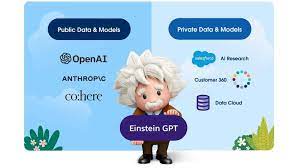
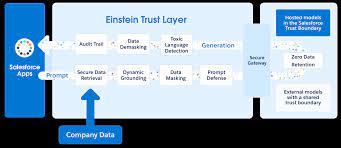
The Einstein Trust Layer is a secure AI architecture. It is natively built into the Salesforce Platform. Designed for enterprise security standards the Einstein Trust Layer continues to allow teams to benefit from generative AI. Without compromising their customer data, while at the same time letting companies use their trusted data to improve generative AI responses: Trusted AI starts with securely grounded prompts. A prompt is a canvas to provide detailed context and instructions to Large Language Models. The Einstein Trust layer allows you to responsibly ground all of your prompts in customer data and mask that data when the prompt is shared with Large Language Models*. With our Zero Retention architecture, none of your data is stored outside of Salesforce. Salesforce gives customers control over the use of their data for AI. Whether using our own Salesforce-hosted models or external models that are part of our Shared Trust Boundary, like OpenAI, no context is stored. The large language model forgets both the prompt and the output as soon as the output is processed. Like1 Related Posts Who is Salesforce? Who is Salesforce? Here is their story in their own words. From our inception, we’ve proudly embraced the identity of Read more Salesforce Marketing Cloud Transactional Emails Salesforce Marketing Cloud Transactional Emails are immediate, automated, non-promotional messages crucial to business operations and customer satisfaction, such as order Read more Salesforce Unites Einstein Analytics with Financial CRM Salesforce has unveiled a comprehensive analytics solution tailored for wealth managers, home office professionals, and retail bankers, merging its Financial Read more AI-Driven Propensity Scores AI plays a crucial role in propensity score estimation as it can discern underlying patterns between treatments and confounding variables Read more

Read More
2024 AI and Machine Learning Trends

2024 AI and Machine Learning Trends

In 2023, the AI landscape experienced transformative changes following the debut of ChatGPT in November 2022, a landmark event for artificial intelligence. 2024 AI and Machine Learning Trends ahead, AI is set to dramatically alter global business practices and drive significant advancements across various sectors. Organizations are shifting their focus from experimental initiatives to real-time applications, reflecting a more mature understanding of AI’s capabilities while still being intrigued by generative AI technologies. Key AI and Machine Learning Trends for 2024 Here are the top trends shaping the AI and machine learning landscape for 2024: 1. Agentic AIAgentic AI is evolving from reactive to proactive systems. Unlike traditional AI that primarily responds to user inputs, these advanced AI agents demonstrate autonomy, proactivity, and the ability to independently set and pursue goals. 2. Open-Source AIOpen-source AI is democratizing access to sophisticated AI models and tools by offering free, publicly accessible alternatives to proprietary solutions. This trend has seen significant growth, with notable competitors like Mistral AI’s Mixtral models and Meta’s Llama 2 making strides in 2023. 3. Multimodal AIMultimodal AI integrates various types of inputs—such as text, images, and audio—mimicking human sensory capabilities. Models like GPT-4 from OpenAI showcase this ability, enhancing applications in fields like healthcare by improving diagnostic precision. 4. Customized Enterprise Generative AI ModelsThere is a rising interest in bespoke generative AI models tailored to specific business needs. While broad tools like ChatGPT remain widely used, niche-specific models are increasingly popular for their efficiency in addressing specialized requirements. 5. Retrieval-Augmented Generation (RAG)RAG combines text generation with information retrieval to boost the accuracy and relevance of AI-generated content. By reducing model size and leveraging external data sources, RAG is well-suited for business applications that require up-to-date factual information. 6. Shadow AIShadow AI, which refers to user-friendly AI tools used without formal IT approval, is gaining traction among employees seeking quick solutions or exploring new technologies. While it fosters innovation, it also raises concerns about data privacy and security. Looking Ahead to 2024 These trends highlight AI and machine learning’s expanding role across industries in 2024. Organizations must adapt to these advancements to remain competitive, balancing innovation with strong governance frameworks to ensure security and compliance. Staying informed about these developments will be crucial for leveraging AI’s transformative potential in the coming year. Like Related Posts Who is Salesforce? Who is Salesforce? Here is their story in their own words. From our inception, we’ve proudly embraced the identity of Read more Salesforce Marketing Cloud Transactional Emails Salesforce Marketing Cloud Transactional Emails are immediate, automated, non-promotional messages crucial to business operations and customer satisfaction, such as order Read more Salesforce Unites Einstein Analytics with Financial CRM Salesforce has unveiled a comprehensive analytics solution tailored for wealth managers, home office professionals, and retail bankers, merging its Financial Read more AI-Driven Propensity Scores AI plays a crucial role in propensity score estimation as it can discern underlying patterns between treatments and confounding variables Read more
Read More
nCino and Salesforce

nCino and Salesforce

Leaders in cloud innovation reinforce alliance to provide best-in-class solutions to the financial services industry by extending successful partnership to 2031. Updated commercial terms are expected to improve nCino’s subscription gross margins. Wilmington, N.C. – December 21, 2023 – nCino, Inc. (NASDAQ: NCNO), a pioneer in cloud banking for the global financial services industry, today announced an expanded partnership with Salesforce to accelerate the delivery of best-in-class cloud solutions to the financial services industry. This builds on nCino and Salesforce’s long-standing collaboration, established in 2011, to empower financial institutions with digital innovations that increase efficiency, transparency, and reduce risks while driving customer growth and loyalty. “Our strategic partnership with Salesforce has enabled nCino to transform the financial services industry by providing industry-specific solutions that drive efficiencies, deliver intelligence, and help institutions modernize for a more agile future,” said Pierre Naudé, Chairman and CEO of nCino. “We’re glad to again be expanding our work with Salesforce and are committed to utilizing each other’s strengths to further benefit financial institutions of all sizes around the globe.” “nCino’s success is a testament to the enormous opportunity in front of ISVs building on Salesforce,” said Brian Landsman, Executive Vice President, Global Technology Partners, at Salesforce. “Salesforce is the world’s #1 AI CRM, trusted by thousands of partners to power purpose-built solutions for highly specialized industries. The expansion of our work with nCino will only accelerate how our customers are reimagining the future of personalized financial services.” As part of the agreement, nCino will deepen its connectivity to Salesforce platform tools including CRM, powered by AI and automation, and Financial Services Cloud. These innovations will empower financial institutions utilizing nCino and Salesforce to further modernize customer experiences like onboarding, loan origination, deposit account opening, and portfolio management. The expanded agreement also includes updated commercial terms which are expected to improve nCino’s subscription gross margins, minimum payment commitments from nCino during the first four fiscal years of the term of the extension, and an extension of the term of the agreement to 2031. About nCinonCino (NASDAQ: NCNO) is the worldwide leader in cloud banking. Through its single software-as-a-service (SaaS) platform, nCino helps financial institutions serving corporate and commercial, small business, consumer, and mortgage customers modernize and more effectively onboard clients, make loans, manage the loan lifecycle, and open accounts. Transforming how financial institutions operate through innovation, reputation and speed, nCino is partnered with more than 1,850 financial services providers globally. For more information, visit www.ncino.com. Salesforce, Financial Services Cloud and others are among the trademarks of Salesforce, Inc. nCino Media ContactsNatalia Moosepress@ncino.com Safe Harbor StatementThis press release contains forward-looking statements within the safe harbor provisions of the Private Securities Litigation Reform Act of 1995. Forward-looking statements generally include actions, events, results, strategies and expectations and are often identifiable by use of the words “believes,” “expects,” “intends,” “anticipates,” “plans,” “seeks,” “estimates,” “projects,” “may,” “will,” “could,” “might,” or “continues” or similar expressions. Any forward-looking statements contained in this press release are based upon nCino’s historical performance and its current plans, estimates, and expectations, and are not a representation that such plans, estimates, or expectations will be achieved. These forward-looking statements represent nCino’s expectations as of the date of this press release. Subsequent events may cause these expectations to change and, except as may be required by law, nCino does not undertake any obligation to update or revise these forward-looking statements. These forward-looking statements are subject to known and unknown risks and uncertainties that may cause actual results to differ materially including, among others, risks and uncertainties relating to the market adoption of our solution and privacy and data security matters. Additional risks and uncertainties that could affect nCino’s business and financial results are included in reports filed by nCino with the U.S. Securities and Exchange Commission (available on our web site at www.ncino.com or the SEC’s web site at www.sec.gov). Further information on potential risks that could affect actual results will be included in other filings nCino makes with the SEC from time to time. Like Related Posts Who is Salesforce? Who is Salesforce? Here is their story in their own words. From our inception, we’ve proudly embraced the identity of Read more Salesforce Marketing Cloud Transactional Emails Salesforce Marketing Cloud Transactional Emails are immediate, automated, non-promotional messages crucial to business operations and customer satisfaction, such as order Read more Salesforce Unites Einstein Analytics with Financial CRM Salesforce has unveiled a comprehensive analytics solution tailored for wealth managers, home office professionals, and retail bankers, merging its Financial Read more AI-Driven Propensity Scores AI plays a crucial role in propensity score estimation as it can discern underlying patterns between treatments and confounding variables Read more
Read More
The Promise of AI in Health Outcomes

The Promise of AI in Health Outcomes

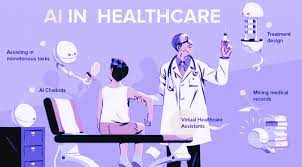
As President Biden has highlighted, artificial intelligence (AI) holds tremendous promise and potential peril. This is especially true in healthcare. On October 30, the President underscored his commitment by signing a landmark Executive Order aimed at governing AI development and use to improve health outcomes for Americans while safeguarding their security and privacy. The Biden-Harris Administration is leveraging every tool at its disposal to advance responsible AI in healthcare. However, U.S. government action alone cannot achieve the bold vision laid out by the President. By integrating AI into their platform, Salesforce aims to empower public health organizations with actionable insights and predictive analytics. From disease surveillance to population health management, AI-driven solutions have the potential to revolutionize how we approach public health initiatives. Therefore, policy priorities include managing and measuring the environmental impacts of AI by requiring emissions disclosures, adding environmental impact as a risk factor, and establishing efficiency standards for high-risk AI systems. In response to the Administration’s leadership, leading healthcare providers and payers have announced voluntary commitments to the safe, secure, and trustworthy use of AI in healthcare. These commitments build on ongoing efforts by the Department of Health and Human Services (HHS), the AI Executive Order, and earlier commitments from 15 leading AI companies to develop models responsibly. Today, 28 providers and payers have joined these commitments, including Allina Health, Bassett Healthcare Network, Boston Children’s Hospital, Curai Health, CVS Health, Devoted Health, Duke Health, Emory Healthcare, Endeavor Health, Fairview Health Systems, Geisinger, Hackensack Meridian, HealthFirst (Florida), Houston Methodist, John Muir Health, Keck Medicine, Main Line Health, Mass General Brigham, Medical University of South Carolina Health, Oscar, OSF HealthCare, Premera Blue Cross, Rush University System for Health, Sanford Health, Tufts Medicine, UC San Diego Health, UC Davis Health, and WellSpan Health. The commitments align with the “FAVES” principles—Fair, Appropriate, Valid, Effective, and Safe. Under these principles, companies commit to informing users when they receive content that is largely AI-generated and not reviewed by humans. They will adhere to a risk management framework to monitor and address potential harms of AI applications. Additionally, they pledge to develop AI solutions responsibly, advancing health equity, expanding access to care, making care affordable, improving care coordination, reducing clinician burnout, and enhancing patient experiences. Healthcare is an essential service, and quality care can be a matter of life and death. AI-enabled tools used for clinical decisions must undergo appropriate testing, risk mitigations, and human oversight to avoid costly or dangerous errors. AI diagnoses can be biased if not trained on diverse data, and AI’s data-collection capabilities could create privacy risks. Addressing these risks is crucial. Despite these risks, AI holds enormous potential to benefit patients, doctors, and hospital staff. AI can help doctors deliver higher-quality, more empathetic care and cut healthcare costs by hundreds of billions of dollars annually. It can also help patients make more informed health choices by better understanding their conditions and needs. Consider some examples: Each year, hospitals produce 3.6 billion medical images worldwide. AI helps doctors analyze images more quickly and effectively, detecting signs of breast cancer, lung nodules, and other conditions earlier than ever before. AI is also streamlining drug development, matching drug targets with new molecules faster and cheaper, translating to better care for patients. Additionally, new generative AI applications can alleviate clinician burnout by automating data extraction, form population, note recording, and patient communications. The Promise of AI in Health Outcomes To understand AI applications and the necessary risk-mitigation measures, the Biden-Harris Administration has engaged with healthcare providers, payers, academia, civil society, and other stakeholders. These engagements have informed the Administration’s approach, including the President’s October AI Executive Order, which tasks HHS with a wide range of actions to advance safe, secure, and trustworthy AI. These actions include developing frameworks, policies, and potential regulations for responsible AI deployment, documenting AI-related safety incidents, prioritizing grants for innovation in underserved communities, and ensuring compliance with nondiscrimination laws in AI deployment in healthcare. The private-sector commitments announced today are a critical step in our whole-of-society effort to advance AI for the health and well-being of Americans. These 28 providers and payers have stepped up, and we hope more will join these commitments in the coming weeks. The Promise of AI in Health Outcomes has been addressed by governments everywhere. In March 2024, Salesforce strengthened its AI commitment to healthcare. Salesforce’s Einstein 1 Platform powers Einstein Copilot with your healthcare organization’s unique data and metadata from Data Cloud to capture and summarize patient details, quickly update patient and member information, and automate manual processes Assessment Generation digitizes paper assessments and surveys to capture and track patient data Customers like Baptist Health South Florida and HarmonyCares are using Salesforce to personalize patient interactions and create a single, unified view of each patient Today, Salesforce announced AI and data innovations for CRM to help make healthcare operations more efficient and personalized. Einstein Copilot: Health Actions, a conversational AI assistant that will deliver trusted AI responses grounded with your healthcare organization’s own trusted and private data, Assessment Generation, and Data Cloud for Health help automate and streamline clinical summaries, deliver more personalized communication, and help compile tailored patient assessments faster for care teams, all from a single platform. These new innovations are powered by Salesforce’s Einstein 1 Platform, which helps organizations safely unlock their data to create better patient experiences and augment employee productivity. Why it matters: Nearly a quarter of U.S. healthcare spending is wasted on administrative costs, presenting a potential cost savings of up to $320 billion for healthcare organizations, according to McKinsey and Co. AI could be the solution, with recent Forrester data revealing that 82% of healthcare data leaders say AI is a top focus area that will drive operational efficiency.  Content updated April 2024. Like Related Posts Who is Salesforce? Who is Salesforce? Here is their story in their own words. From our inception, we’ve proudly embraced the identity of Read more Salesforce Unites Einstein Analytics with Financial CRM Salesforce has unveiled a comprehensive analytics solution tailored for wealth managers, home

Read More
AI Project Planning by Workflows

AI Project Planning by Workflows

Starting with Workflows-AI Project Planning by Workflows Step 1: Identify Key Business Processes Begin by listing out the most critical and repetitive processes in the business. This includes: Step 2: Pinpoint AI Integration Opportunities Break down each business process to identify specific decision points where AI can add value. Examples include: Step 3: Determine Relevant Data Sources Next, brainstorm the types of data that could help solve these problems. Organize potential data sources by factors such as: Step 4: Evaluate Data Viability Once you’ve matched problems with potential data sources, assess the practicality of using that data. Investigate the quality, accessibility, and relevance of the data to ensure it aligns with the business use case. AI Project Planning by Workflows. Like Related Posts Who is Salesforce? Who is Salesforce? Here is their story in their own words. From our inception, we’ve proudly embraced the identity of Read more Salesforce Marketing Cloud Transactional Emails Salesforce Marketing Cloud Transactional Emails are immediate, automated, non-promotional messages crucial to business operations and customer satisfaction, such as order Read more Salesforce Unites Einstein Analytics with Financial CRM Salesforce has unveiled a comprehensive analytics solution tailored for wealth managers, home office professionals, and retail bankers, merging its Financial Read more AI-Driven Propensity Scores AI plays a crucial role in propensity score estimation as it can discern underlying patterns between treatments and confounding variables Read more
Read More
gettectonic.com