Salesforce AI Archives - gettectonic.com - Page 5
Fivetrans Hybrid Deployment

Fivetrans Hybrid Deployment

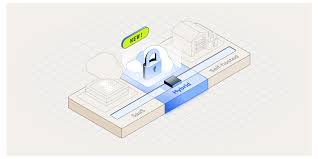
Fivetran’s Hybrid Deployment: A Breakthrough in Data Engineering In the data engineering world, balancing efficiency with security has long been a challenge. Fivetran aims to shift this dynamic with its Hybrid Deployment solution, designed to seamlessly move data across any environment while maintaining control and flexibility. Fivetrans Hybrid Deployment. The Hybrid Advantage: Flexibility Meets Control Fivetran’s Hybrid Deployment offers a new approach for enterprises, particularly those handling sensitive data or operating in regulated sectors. Often, these businesses struggle to adopt data-driven practices due to security concerns. Hybrid Deployment changes this by enabling the secure movement of data across cloud and on-premises environments, giving businesses full control over their data while maintaining the agility of the cloud. As George Fraser, Fivetran’s CEO, notes, “Businesses no longer have to choose between managed automation and data control. They can now securely move data from all their critical sources—like Salesforce, Workday, Oracle, SAP—into a data warehouse or data lake, while keeping that data under their own control.” How it Works: A Secure, Streamlined Approach Fivetran’s Hybrid Deployment relies on a lightweight local agent to move data securely within a customer’s environment, while the Fivetran platform handles the management and monitoring. This separation of control and data planes ensures that sensitive information stays within the customer’s secure perimeter. Vinay Kumar Katta, a managing delivery architect at Capgemini, highlights the flexibility this provides, enabling businesses to design pipelines without sacrificing security. Beyond Security: Additional Benefits Hybrid Deployment’s benefits go beyond just security. It also offers: Early adopters are already seeing its value. Troy Fokken, chief architect at phData, praises how it “streamlines data pipeline processes,” especially for customers in regulated industries. AI Agent Architectures: Defining the Future of Autonomous Systems In the rapidly evolving world of AI, a new framework is emerging—AI agents designed to act autonomously, adapt dynamically, and explore digital environments. These AI agents are built on core architectural principles, bringing the next generation of autonomy to AI-driven tasks. What Are AI Agents? AI agents are systems designed to autonomously or semi-autonomously perform tasks, leveraging tools to achieve objectives. For instance, these agents may use APIs, perform web searches, or interact with digital environments. At their core, AI agents use Large Language Models (LLMs) and Foundation Models (FMs) to break down complex tasks, similar to human reasoning. Large Action Models (LAMs) Just as LLMs transformed natural language processing, Large Action Models (LAMs) are revolutionizing how AI agents interact with environments. These models excel at function calling—turning natural language into structured, executable actions, enabling AI agents to perform real-world tasks like scheduling or triggering API calls. Salesforce AI Research, for instance, has open-sourced several LAMs designed to facilitate meaningful actions. LAMs bridge the gap between unstructured inputs and structured outputs, making AI agents more effective in complex environments. Model Orchestration and Small Language Models (SLMs) Model orchestration complements LAMs by utilizing smaller, specialized models (SLMs) for niche tasks. Instead of relying on resource-heavy models, AI agents can call upon these smaller models for specific functions—such as summarizing data or executing commands—creating a more efficient system. SLMs, combined with techniques like Retrieval-Augmented Generation (RAG), allow smaller models to perform comparably to their larger counterparts, enhancing their ability to handle knowledge-intensive tasks. Vision-Enabled Language Models for Digital Exploration AI agents are becoming even more capable with vision-enabled language models, allowing them to interact with digital environments. Projects like Apple’s Ferret-UI and WebVoyager exemplify this, where agents can navigate user interfaces, recognize elements via OCR, and explore websites autonomously. Function Calling: Structured, Actionable Outputs A fundamental shift is happening with function calling in AI agents, moving from unstructured text to structured, actionable outputs. This allows AI agents to interact with systems more efficiently, triggering specific actions like booking meetings or executing API calls. The Role of Tools and Human-in-the-Loop AI agents rely on tools—algorithms, scripts, or even humans-in-the-loop—to perform tasks and guide actions. This approach is particularly valuable in high-stakes industries like healthcare and finance, where precision is crucial. The Future of AI Agents With the advent of Large Action Models, model orchestration, and function calling, AI agents are becoming powerful problem solvers. These agents are evolving to explore, learn, and act within digital ecosystems, bringing us closer to a future where AI mimics human problem-solving processes. As AI agents become more sophisticated, they will redefine how we approach digital tasks and interactions. Like Related Posts Who is Salesforce? Who is Salesforce? Here is their story in their own words. From our inception, we’ve proudly embraced the identity of Read more Salesforce Marketing Cloud Transactional Emails Salesforce Marketing Cloud Transactional Emails are immediate, automated, non-promotional messages crucial to business operations and customer satisfaction, such as order Read more Salesforce Unites Einstein Analytics with Financial CRM Salesforce has unveiled a comprehensive analytics solution tailored for wealth managers, home office professionals, and retail bankers, merging its Financial Read more AI-Driven Propensity Scores AI plays a crucial role in propensity score estimation as it can discern underlying patterns between treatments and confounding variables Read more

Read More
Salesforce LlamaRank

Salesforce LlamaRank

Document ranking remains a critical challenge in information retrieval and natural language processing. Effective document retrieval and ranking are crucial for enhancing the performance of search engines, question-answering systems, and Retrieval-Augmented Generation (RAG) systems. Traditional ranking models often struggle to balance result precision with computational efficiency, especially when dealing with large datasets and diverse query types. This challenge underscores the growing need for advanced models that can provide accurate, contextually relevant results in real-time from continuous data streams and increasingly complex queries. Salesforce AI Research has introduced a cutting-edge reranker named LlamaRank, designed to significantly enhance document ranking and code search tasks across various datasets. Built on the Llama3-8B-Instruct architecture, LlamaRank integrates advanced linear and calibrated scoring mechanisms, achieving both speed and interpretability. The Salesforce AI Research team developed LlamaRank as a specialized tool for document relevancy ranking. Enhanced by iterative feedback from their dedicated RLHF data annotation team, LlamaRank outperforms many leading APIs in general document ranking and sets a new standard for code search performance. The model’s training data includes high-quality synthesized data from Llama3-70B and Llama3-405B, along with human-labeled annotations, covering a broad range of domains from topic-based search and document QA to code QA. In RAG systems, LlamaRank plays a crucial role. Initially, a query is processed using a less precise but cost-effective method, such as semantic search with embeddings, to generate a list of potential documents. The reranker then refines this list to identify the most relevant documents, ensuring that the language model is fine-tuned with only the most pertinent information, thereby improving accuracy and coherence in the output responses. LlamaRank’s architecture, based on Llama3-8B-Instruct, leverages a diverse training corpus of synthetic and human-labeled data. This extensive dataset enables LlamaRank to excel in various tasks, from general document retrieval to specialized code searches. The model underwent multiple feedback cycles from Salesforce’s data annotation team to achieve optimal accuracy and relevance in its scoring predictions. During inference, LlamaRank predicts token probabilities and calculates a numeric relevance score, facilitating efficient reranking. Demonstrated on several public datasets, LlamaRank has shown impressive performance. For instance, on the SQuAD dataset for question answering, LlamaRank achieved a hit rate of 99.3%. It posted a hit rate of 92.0% on the TriviaQA dataset. In code search benchmarks, LlamaRank recorded a hit rate of 81.8% on the Neural Code Search dataset and 98.6% on the TrailheadQA dataset. These results highlight LlamaRank’s versatility and efficiency across various document types and query scenarios. LlamaRank’s technical specifications further emphasize its advantages. Supporting up to 8,000 tokens per document, it significantly outperforms competitors like Cohere’s reranker. It delivers low-latency performance, ranking 64 documents in under 200 ms with a single H100 GPU, compared to approximately 3.13 seconds on Cohere’s serverless API. Additionally, LlamaRank features linear scoring calibration, offering clear and interpretable relevance scores. While LlamaRank’s size of 8 billion parameters contributes to its high performance, it is approaching the upper limits of reranking model size. Future research may focus on optimizing model size to balance quality and efficiency. Overall, LlamaRank from Salesforce AI Research marks a significant advancement in reranking technology, promising to greatly enhance RAG systems’ effectiveness across a wide range of applications. With its powerful performance, efficiency, and clear scoring, LlamaRank represents a major step forward in document retrieval and search accuracy. The community eagerly anticipates its broader adoption and further development. Like Related Posts Who is Salesforce? Who is Salesforce? Here is their story in their own words. From our inception, we’ve proudly embraced the identity of Read more Salesforce Marketing Cloud Transactional Emails Salesforce Marketing Cloud Transactional Emails are immediate, automated, non-promotional messages crucial to business operations and customer satisfaction, such as order Read more Salesforce Unites Einstein Analytics with Financial CRM Salesforce has unveiled a comprehensive analytics solution tailored for wealth managers, home office professionals, and retail bankers, merging its Financial Read more AI-Driven Propensity Scores AI plays a crucial role in propensity score estimation as it can discern underlying patterns between treatments and confounding variables Read more
Read More
AI evolves with tools like Agentforce and Atlas

AI Evolves With Agentforce and Atlas

Not long ago, financial services companies were still struggling with the challenge of customer data trapped in silos. Though it feels like a distant issue, this problem remains for many large organizations unable to integrate different divisions that deal separately with the same customers. Salesforce AI evolves with tools like Agentforce and Atlas. The solution is a concept known as a “single source of truth.” This theme took center stage at Dreamforce 2024 in San Francisco, hosted by Salesforce (NYSE). The event showcased Salesforce’s latest AI innovations, including Agentforce, which is set to revolutionize customer engagement through its advanced AI capabilities. Agentforce, which becomes generally available on October 25, enables businesses to deploy autonomous AI agents to manage a wide variety of tasks. These agents differ from earlier Salesforce-based AI tools by leveraging Atlas, a cutting-edge reasoning engine that allows the bots to think like human beings. Unlike generative AI models, which might write an email based on prompts, Agentforce’s AI agents can answer complex, high-order questions such as, “What should I do with all my customers?” The agents break down these queries into actionable steps—whether that’s sending emails, making phone calls, or texting customers—thanks to the deep capabilities of Atlas. Atlas is at the heart of what makes these AI agents so powerful. It combines multiple large language models (LLMs), large action models (LAMs), and retrieval-augmented generation (RAG) modules, along with REST APIs and connectors to various datasets. This robust system processes user queries through multiple layers, checking for validity and then expanding the query into manageable chunks for processing. Once a query passes through the chit-chat detector—which filters out non-relevant inputs—it enters the evaluation phase, where the AI determines if it has enough data to provide a meaningful answer. If not, the system loops back to the user for more information in a process Salesforce calls the agentic loop. The fewer loops required, the more efficient the AI becomes, making the experience seamless for users. Phil Mui, Senior Vice President of Salesforce AI Research, explained that the AI agents created via Agentforce are powered by the Atlas reasoning engine, which makes use of several key tools like a re-ranker, a refiner, and a response synthesizer. These tools ensure that the AI retrieves, ranks, and synthesizes relevant information to generate high-quality, natural language responses for the user. But Salesforce’s AI agents don’t stop at automation—they also emphasize trust. Before responses reach users, they go through additional checks for toxicity detection, bias prevention, and personally identifiable information (PII) masking. This ensures that the output is both accurate and safe. The potential of Agentforce is massive. According to Wedbush, Salesforce’s AI strategy could generate over $4 billion annually by 2025. Wedbush analysts recently increased their price target for Salesforce stock to $325, reflecting the strong customer reception of Agentforce’s AI ecosystem. While some analysts, such as Yiannis Zourmpanos from Seeking Alpha, have expressed caution due to Salesforce’s high valuation and slower revenue growth, the company’s continued focus on AI and multi-cloud solutions places it in a strong position for the future. Robin Fisher, Salesforce’s head of growth markets for Europe, the Middle East, and Africa, highlighted two major takeaways from Dreamforce for African businesses: the Data Cloud and AI. Data Cloud provides a 360-degree view of the customer, consolidating data into a single source of truth without requiring full data migration. Meanwhile, Agentforce’s autonomous AI agents will drive operational efficiency across industries, especially in markets like Africa. Zuko Mdwaba, Salesforce’s managing director for South Africa, added that the company’s decade-long AI journey is culminating in its most advanced AI offerings yet. This new wave of AI, he said, is transforming not just customer engagement but also internal operations, empowering employees to focus on more strategic tasks while AI handles repetitive ones. The future is clear: as AI evolves with tools like Agentforce and Atlas, businesses across sectors, from banking to retail, are poised to harness the transformative power of autonomous technology and data-driven insights, finally breaking free from the silos of the past. Like1 Related Posts Who is Salesforce? Who is Salesforce? Here is their story in their own words. From our inception, we’ve proudly embraced the identity of Read more Salesforce Marketing Cloud Transactional Emails Salesforce Marketing Cloud Transactional Emails are immediate, automated, non-promotional messages crucial to business operations and customer satisfaction, such as order Read more Salesforce Unites Einstein Analytics with Financial CRM Salesforce has unveiled a comprehensive analytics solution tailored for wealth managers, home office professionals, and retail bankers, merging its Financial Read more AI-Driven Propensity Scores AI plays a crucial role in propensity score estimation as it can discern underlying patterns between treatments and confounding variables Read more
Read More
Marketing Cloud and Generative AI

Marketing Cloud and Generative AI

Generative AI and Salesforce: Revolutionizing Digital Marketing with Einstein AI Generative AI is a form of Artificial Intelligence that learns from existing content to generate new, creative outputs. Salesforce has long been at the forefront of AI innovation, primarily through its Einstein assistant, which has evolved to offer increasingly sophisticated solutions over time. Artificial Intelligence: Key Concepts Before diving into Salesforce’s AI capabilities, let’s clarify some foundational concepts. Artificial Intelligence (AI) refers to the creation of intelligent systems that can learn and reason autonomously. Within AI, Machine Learning (ML) plays a crucial role by enabling computers to learn from data and improve over time without explicit programming. ML models fall into two broad categories: Deep Learning and Neural Networks A more advanced subset of ML is Deep Learning, which uses neural networks to process large amounts of data and make autonomous decisions. Deep Learning powers technologies like voice assistants (e.g., Alexa or Siri), which can recognize speech and execute tasks. A specific application within Deep Learning is Generative AI, capable of autonomously creating new content based on learned patterns from vast datasets. Another critical AI system is the Foundational Model, which is trained on enormous amounts of unstructured data from across the web, including text, images, and videos. These models offer a wide range of capabilities, such as generating text, answering questions, creating designs, or solving complex problems. Salesforce Marketing Cloud and AI Salesforce has utilizeded AI through its Einstein platform, which has evolved over time to offer a variety of data-driven tools. For example, Sent Time Optimization uses customer data to determine the best time to send emails to maximize engagement. AI Tools in Salesforce Marketing Cloud Salesforce offers several AI-powered tools for Marketing Cloud to help businesses leverage data for personalization and efficiency: The Einstein Trust Layer: AI in Salesforce CRM Einstein is the first generative AI model integrated into a CRM, and Salesforce refers to its AI process as the Einstein Trust Layer. Here’s how it works: Marketing Applications of Salesforce AI Tools Salesforce’s AI tools can be applied across omnichannel marketing campaigns to hyper-personalize communication, increasing conversion rates and customer engagement. Predictive analytics also allow businesses to optimize cross-selling and upselling, offering tailored product recommendations based on customer behavior. Chatbots powered by AI further enhance productivity by interacting in natural language, collecting leads, suggesting products, and resolving customer inquiries. Salesforce’s Commitment to AI in Digital Marketing Salesforce has been a pioneer in AI, continually expanding its capabilities through Einstein. With the latest AI tools for Marketing Cloud, businesses can now interact with customers more precisely, boost engagement, and optimize purchase predictions—paving the way for a new era in digital marketing. Like Related Posts Who is Salesforce? Who is Salesforce? Here is their story in their own words. From our inception, we’ve proudly embraced the identity of Read more Salesforce Marketing Cloud Transactional Emails Salesforce Marketing Cloud Transactional Emails are immediate, automated, non-promotional messages crucial to business operations and customer satisfaction, such as order Read more Salesforce Unites Einstein Analytics with Financial CRM Salesforce has unveiled a comprehensive analytics solution tailored for wealth managers, home office professionals, and retail bankers, merging its Financial Read more AI-Driven Propensity Scores AI plays a crucial role in propensity score estimation as it can discern underlying patterns between treatments and confounding variables Read more
Read More
Salesforce Offers Free AI Training

Salesforce Offers Free AI Training

Salesforce has announced plans to broaden access to free AI training through its Trailhead online platform, aiming to equip 100,000 additional students with essential AI skills. With AI becoming a transformative technology that nearly every business is investing in, the demand for AI training is rapidly increasing. To meet this need, Salesforce is expanding its free AI training programs via Trailhead, which offers courses and certifications designed to enhance learners’ AI capabilities. These resources will be available until the end of 2025. At a time when employers need to upskill employees on artificial intelligence, Salesforce is at the ready. In support of this initiative, Salesforce will open new spaces at its San Francisco headquarters, including a pop-up AI Center for in-person training and a dedicated floor for employees to develop AI skills. This expansion represents a million investment in workforce development, addressing the growing AI skills gap. Salesforce aims to help every Trailblazer become an “Agentblazer,” a term for those trained on Salesforce products, by reaching 100,000 more learners through these offerings. Recent expansions to the Trailhead platform include AI-specific courses on fundamentals, ethical AI use, and prompting. Since June 2023, over 2.6 million AI and data badges have been earned by employees, jobseekers, and learners, unlocking critical skills. “AI and agents are reshaping how people work, and it’s essential that everyone has the skills to thrive in this new landscape,” said Brian Millham, president and COO of Salesforce. Tectonic credits Salesforce for offering equal training opportunities for partners, consultants, job seekers, and users. Like Related Posts Who is Salesforce? Who is Salesforce? Here is their story in their own words. From our inception, we’ve proudly embraced the identity of Read more Salesforce Marketing Cloud Transactional Emails Salesforce Marketing Cloud Transactional Emails are immediate, automated, non-promotional messages crucial to business operations and customer satisfaction, such as order Read more Salesforce Unites Einstein Analytics with Financial CRM Salesforce has unveiled a comprehensive analytics solution tailored for wealth managers, home office professionals, and retail bankers, merging its Financial Read more AI-Driven Propensity Scores AI plays a crucial role in propensity score estimation as it can discern underlying patterns between treatments and confounding variables Read more
Read More
Salesforce AI Evolves with the Generative AI Landscape

Salesforce AI Evolves with the Generative AI Landscape

Salesforce AI: Powering Customer Relationship Management Salesforce is a leading CRM solution that has long delivered cutting-edge cloud technologies to manage customer relationships effectively. In recent months, the platform has further advanced with the integration of generative AI and AI-powered features, primarily through its AI engine, Einstein. Salesforce AI Evolves with the Generative AI Landscape. To explore how AI operates within the Salesforce ecosystem and how various business teams can leverage these innovations, this guide delves into Salesforce’s AI capabilities, products, and features. Salesforce AI: Transforming CRM Capabilities Salesforce remains a top choice in the CRM software market, offering one of the most comprehensive solutions for managing relationships across departments, industries, and initiatives. Through dedicated cloud platforms, Salesforce enables teams to oversee marketing, sales, customer service, e-commerce, and more, with tools focused on delivering enhanced customer experiences supported by powerful data analytics. With the introduction of generative AI, Salesforce has significantly elevated its native automation, workflow management, data analytics, and assistive capabilities for customer lifecycle management. Einstein Copilot exemplifies this innovation, aiding internal users with tasks such as outreach, analysis, and improving external user experiences. What is Salesforce Einstein? Salesforce Einstein is an AI-driven suite of tools integrated natively into various Salesforce Cloud applications, including Sales Cloud, Marketing Cloud, Service Cloud, and Commerce Cloud. It also operates through assistive technologies like Einstein Copilot. Einstein is built on a multitenant platform and incorporates numerous automated machine learning features to unify organizational data with CRM capabilities. Designed to make intelligent, data-driven decisions, Einstein requires no additional installation, offering a seamless user experience when paired with a compatible subscription plan. 7 Key Features of Salesforce Einstein 7 Applications of Salesforce Einstein Future Trends in Salesforce AI Bottom Line: Salesforce AI Evolves with the Generative AI Landscape Salesforce continues to enhance its AI-powered features, keeping pace with advancements in generative and predictive AI. Whether new to the platform or a seasoned user, Salesforce offers innovative, AI-centric solutions to streamline customer relationship management and business operations. Like1 Related Posts Who is Salesforce? Who is Salesforce? Here is their story in their own words. From our inception, we’ve proudly embraced the identity of Read more Salesforce Marketing Cloud Transactional Emails Salesforce Marketing Cloud Transactional Emails are immediate, automated, non-promotional messages crucial to business operations and customer satisfaction, such as order Read more Salesforce Unites Einstein Analytics with Financial CRM Salesforce has unveiled a comprehensive analytics solution tailored for wealth managers, home office professionals, and retail bankers, merging its Financial Read more AI-Driven Propensity Scores AI plays a crucial role in propensity score estimation as it can discern underlying patterns between treatments and confounding variables Read more

Read More
Salesforce Certified AI Associate

Salesforce Certified AI Associate

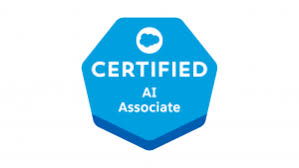
The Salesforce Certified AI Associate certification is a professional credential that demonstrates your knowledge of artificial intelligence (AI) and its application within Salesforce platforms. This certification is perfect for individuals aiming to enhance their ability to use AI to drive business outcomes. Key topics covered in the certification include: Trailblazer Trailhead for Salesforce Certified AI Associate Like Related Posts Who is Salesforce? Who is Salesforce? Here is their story in their own words. From our inception, we’ve proudly embraced the identity of Read more Salesforce Marketing Cloud Transactional Emails Salesforce Marketing Cloud Transactional Emails are immediate, automated, non-promotional messages crucial to business operations and customer satisfaction, such as order Read more Salesforce Unites Einstein Analytics with Financial CRM Salesforce has unveiled a comprehensive analytics solution tailored for wealth managers, home office professionals, and retail bankers, merging its Financial Read more AI-Driven Propensity Scores AI plays a crucial role in propensity score estimation as it can discern underlying patterns between treatments and confounding variables Read more

Read More
Agentforce and Thinking AI

Agentforce and Thinking AI

Agentforce is how humans with AI drive customer success together, equips organizations with autonomous agents that boost scale, efficiency, and satisfaction across service, sales, marketing, commerce, and more New Agentforce Atlas Reasoning Engine autonomously analyzes data, makes decisions, and completes tasks, providing reliable and accurate results With Agentforce, any organization can build, customize, and deploy their own agents quickly and easily, with low-code tools New Agentforce Partner Network allows customers to deploy pre-built agents and use agent actions from partners like Amazon Web Services, Google, IBM, Workday, and more Customers like OpenTable, Saks, and Wiley are turning to Agentforce because it is integrated with their apps, works across customer channels, augments their employees, and scales capacity for business needs SAN FRANCISCO — September 12, 2024 – Salesforce (NYSE: CRM), the world’s #1 AI CRM, today unveiled Agentforce, a groundbreaking suite of autonomous AI agents that augment employees and handle tasks in service, sales, marketing, and commerce, driving unprecedented efficiency and customer satisfaction. Agentforce enables companies to scale their workforces on demand with a few clicks. Agentforce’s limitless digital workforce of AI agents can analyze data, make decisions, and take action on tasks like answering customer service inquiries, qualifying sales leads, and optimizing marketing campaigns. With Agentforce, any organization can easily build, customize, and deploy their own agents for any use case across any industry. The future of AI is agents, and it’s here. Our vision is bold: to empower one billion agents with Agentforce by the end of 2025. This is what AI is meant to be.” MARC BENIOFF, CHAIR, CEO & CO-FOUNDER, SALESFORCE “Agentforce represents the Third Wave of AI—advancing beyond copilots to a new era of highly accurate, low-hallucination intelligent agents that actively drive customer success. Unlike other platforms, Agentforce is a revolutionary and trusted solution that seamlessly integrates AI across every workflow, embedding itself deeply into the heart of the customer journey. This means anticipating needs, strengthening relationships, driving growth, and taking proactive action at every touchpoint,” said Marc Benioff, Chair and CEO, Salesforce. “While others require you to DIY your AI, Agentforce offers a fully tailored, enterprise-ready platform designed for immediate impact and scalability. With advanced security features, compliance with industry standards, and unmatched flexibility. Our vision is bold: to empower one billion agents with Agentforce by the end of 2025. This is what AI is meant to be.” In contrast to now-outdated copilots and chatbots that rely on human requests and struggle with complex or multi-step tasks, Agentforce offers a new level of sophistication by operating autonomously, retrieving the right data on demand, building action plans for any task, and executing these plans without requiring human intervention. Like a self-driving car, Agentforce uses real-time data to adapt to changing conditions and operates independently within an organizations’ customized guardrails, ensuring every customer interaction is informed, relevant, and valuable. And when desired, Agentforce seamlessly hands off to human employees with a summary of the interaction, an overview of the customer’s details, and recommendations for what to do next. Industry leaders like OpenTable, Saks, and Wiley are already experiencing the transformative power of Agentforce. For example, Agentforce is helping organizations like Wiley provide customers with dynamic, conversational self-service. Agentforce is configured to answer questions using Wiley’s knowledge base already built into Salesforce so it can automatically resolve account access. It also triages registration and payment issues, directing customers to the appropriate resources. With Agentforce handling routine inquiries, Wiley has seen an over 40% increase in case resolution, outperforming their old chatbot and giving their human agents more time to focus on complex cases. Why it Matters An estimated 41% of employee time is spent on repetitive, low-impact work, and 65% of desk workers believe generative AI will allow them to be more strategic, according to the Salesforce Trends in AI Report. Every company has more jobs to be done than the resources available to do them. As a result, many jobs go unaddressed or uncompleted. Agentforce provides relief to overstretched teams with its ability to scale capacity on demand so humans can focus on higher-touch, higher-value, and more strategic outcomes. The future of work is a hybrid workforce composed of humans with agents, enabling companies to compete in an ever-changing world. Supporting Customer Quotes “Piloting Agentforce has made a noticeable difference during one of our busiest periods — back-to-school season. It’s been exciting to go live with our first agent thanks to the no-code builder, and we’ve seen a more than 40% increase in case resolution, outperforming our old bot. Agentforce helps to manage routine responsibilities and free up our service teams for more complex cases.” – Kevin Quigley, Senior Manager, Continuous Improvement, Wiley “Every interaction that restaurants and diners have with our support team must be accurate, fast, and reflective of the hospitality that restaurants show their guests. Agentforce has incredible potential to help us deliver that high touch attentiveness and support while significantly freeing up our team to address more complex needs.” – George Pokorny, SVP Customer Success, OpenTable “As we advance our personalization strategy, we believe Agentforce and its AI-powered capabilities have the potential to make a real impact on our approach to customer engagement, raising the bar in luxury retail. Agentforce will improve our effectiveness across customer touchpoints, empowering our employees and augmenting their ability to deliver the elevated and more individualized shopping experiences for which Saks is known.” – Mike Hite, Chief Technology Officer, Saks Global Like1 Related Posts Who is Salesforce? Who is Salesforce? Here is their story in their own words. From our inception, we’ve proudly embraced the identity of Read more Salesforce Marketing Cloud Transactional Emails Salesforce Marketing Cloud Transactional Emails are immediate, automated, non-promotional messages crucial to business operations and customer satisfaction, such as order Read more Salesforce Unites Einstein Analytics with Financial CRM Salesforce has unveiled a comprehensive analytics solution tailored for wealth managers, home office professionals, and retail bankers, merging its Financial Read more AI-Driven Propensity Scores AI plays a crucial role in propensity score estimation

Read More
Large Action Models and AI Agents

Large Action Models and AI Agents

The introduction of LAMs marks a significant advancement in AI, focusing on actionable intelligence. By enabling robust, dynamic interactions through function calling and structured output generation, LAMs are set to redefine the capabilities of AI agents across industries.

Read More
Salesforce Free AI Training

Salesforce Free AI Training

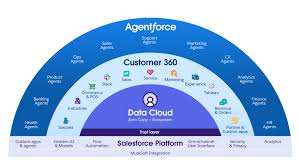
Salesforce Expands Access to Free AI Training to Address Global Skills Gap SAN FRANCISCO — September 18, 2024 – Salesforce (NYSE: CRM), the #1 AI-powered CRM, has announced a significant expansion of its AI skilling initiatives. Starting today, Salesforce will offer its premium AI courses and certifications free of charge to anyone via its online learning platform, Trailhead, through the end of 2025. This initiative aims to help bridge the growing AI skills gap by providing accessible education for individuals across industries. To further support these efforts, Salesforce will open new physical training spaces at its San Francisco headquarters, including a pop-up AI Center offering in-person community courses and a dedicated AI skilling floor for employees. This investment, valued at over $50 million, is designed to empower the workforce with essential AI skills as the demand for AI talent surges globally. Research from Slack highlights a growing urgency among executives to integrate AI into business operations, with interest increasing sevenfold in the last six months. However, more than two-thirds of workers have yet to engage with AI tools, and only 15% feel they possess the necessary training to use them effectively. “The advent of AI and agents represents the biggest technological shift of our generation and will radically change how people work,” said Brian Millham, President and Chief Operating Officer at Salesforce. “We need to ensure everyone has the skills to succeed in this new AI-driven world.” Expanding AI Training Opportunities Salesforce has already helped thousands of professionals acquire technical skills through premium, instructor-led training and certifications. With these new offerings, the company aims to reach an additional 100,000 learners, empowering every Trailblazer to become an “Agentblazer” in this evolving AI landscape. You don’t need to spend thousands of dollars in AI education for yourself or your workforce. Salesforce has it at your fingertips for free. Trailhead now offers a wide range of AI-specific courses, covering topics like AI fundamentals, ethical AI use, and prompt engineering. Since June 2023, learners have earned over 2.6 million AI and data badges, helping unlock critical skills for the future of work. Creating Spaces for Hands-on AI Learning In addition to expanding its online offerings, Salesforce is building AI training spaces around the globe. After launching its first AI Center in London, the company will open a pop-up AI Center at its San Francisco headquarters in 2025, with plans for additional locations in Chicago, Tokyo, and Sydney. These centers will host in-person Trailhead courses and bring together experts, partners, and customers to advance AI innovation. Introducing Agentforce — A Groundbreaking AI Suite As part of its ongoing AI revolution, Salesforce is also upskilling its 72,000-strong workforce through quarterly AI learning days and immersive experiences at the newly created AI Knowledge Center in San Francisco. The centerpiece of this initiative is Agentforce, an innovative suite of AI agents designed to enhance productivity in service, sales, marketing, and commerce. By automating repetitive tasks, these agents allow employees to focus on higher-value work. Since the launch of Slack AI in February, Salesforce employees have saved nearly 3 million work hours through AI-driven tools that summarize information, find answers, and generate new ideas. Nearly 40% of the AI and data badges earned on Trailhead belong to Salesforce employees, demonstrating the company’s commitment to internal skilling and innovation. “AI will transform the workforce, creating new roles and opportunities. It’s our responsibility as employers to provide training that prepares workers for the future,” said Nathalie Scardino, President and Chief People Officer at Salesforce. “Grounded in our values, we’re leveraging Salesforce’s full power to help everyone succeed in this AI-driven era.” Related Resources For more information about Salesforce, visit www.salesforce.com or call 1-800-NO-SOFTWARE. About SalesforceSalesforce is the world’s leading AI-powered CRM, helping organizations of all sizes reimagine their business for the AI age. Powered by its trusted platform, Agentforce, Salesforce brings humans and AI agents together to drive customer success through data-driven insights and actions. Salesforce is headquartered in San Francisco, with offices globally, and trades on the NYSE under the ticker symbol “CRM.” Like Related Posts Who is Salesforce? Who is Salesforce? Here is their story in their own words. From our inception, we’ve proudly embraced the identity of Read more Salesforce Marketing Cloud Transactional Emails Salesforce Marketing Cloud Transactional Emails are immediate, automated, non-promotional messages crucial to business operations and customer satisfaction, such as order Read more Salesforce Unites Einstein Analytics with Financial CRM Salesforce has unveiled a comprehensive analytics solution tailored for wealth managers, home office professionals, and retail bankers, merging its Financial Read more AI-Driven Propensity Scores AI plays a crucial role in propensity score estimation as it can discern underlying patterns between treatments and confounding variables Read more
Read More
Salesforce AI Tools for Healthcare

Salesforce AI Tools for Healthcare

Salesforce to Launch Pre-Built AI Tools for Healthcare in October Salesforce is introducing a new library of out-of-the-box AI tools specifically designed for healthcare operations, available through its Health Cloud. These generative AI features aim to streamline time-consuming tasks by integrating directly into clinician workflows, enhancing both the quality and efficiency of patient care. Key Features and Benefits Part of Salesforce’s broader initiative to address operational challenges across 15 industries, these healthcare-specific AI tools are embedded in each of its industry clouds. The Einstein Copilot, for example, will allow healthcare providers to generate patient summaries in natural language, leveraging new data management capabilities. This could enable care coordinators to view comprehensive patient summaries—such as care plans, prescriptions, and prior authorizations—before appointments. According to Salesforce, these AI-driven services, powered by Einstein prompts, are integrated within Health Cloud’s member accounts, simplifying administrative tasks like sending referrals and booking appointments. Data privacy and security remain a priority, with Einstein’s data masking and zero data retention layer ensuring patient information is protected. Beyond patient care, the new AI features will support business operations, including verifying insurance coverage, determining out-of-pocket costs, and ensuring eligibility—all designed to reduce administrative burdens and improve operational efficiency. Why It Matters Healthcare organizations often lack the resources to build and train their own AI models, a process that can cost upwards of 0 million. Salesforce’s pre-built AI capabilities provide an accessible solution, allowing organizations of all sizes to adopt AI tools tailored to their specific needs. By automating administrative processes, healthcare providers can focus more on patient care, with faster approvals and fewer manual tasks. Salesforce is positioning these tools to help organizations streamline workflows, reduce inefficiencies, and ultimately improve the patient experience. The features will be generally available in October, with pricing based on specific implementations. Industry Impact and Larger Trend The release of these healthcare-specific AI tools is part of Salesforce’s broader push into industry-specific AI. In March, Salesforce launched the Einstein AI Copilot within its Einstein 1 Platform, designed to leverage healthcare organizations’ unique data within its Health Data Cloud. New capabilities, such as patient services and benefits verification, aim to reduce platform switching, enabling faster approvals and supporting clinicians in real-time patient record updates. Salesforce’s investment in industry-specific AI comes at a time when many healthcare organizations are grappling with the rising costs of technology and labor. At the HIMSS AI in Healthcare Forum in Boston, leaders echoed the challenges of managing expansive technology footprints while balancing the need for AI-driven transformation. Operational workflows, particularly back-office processes, offer a low-risk area for AI deployment, as noted by Lee Schwamm, chief digital health officer at Yale New Haven Health System. On the Record “Organizations of every size and budget can now easily get started with practical AI tools that were purposefully designed to solve their unique challenges,” said Jeff Amann, executive vice president and general manager of Salesforce Industries. Salesforce’s new AI use case library, featuring more than 100 AI capabilities embedded across 15 industry clouds, underscores the company’s commitment to developing industry-specific solutions. For healthcare, these tools include automated patient matching for clinical trials, AI-generated prescriptions, and pre-visit summaries—helping organizations accelerate time to care and improve clinical outcomes. In addition, a new auto-matching tool for life sciences will assist in identifying eligible clinical trial participants, using both structured and unstructured data to reduce assessment time. These features allow healthcare CIOs to easily deploy AI capabilities designed to address their organization’s unique needs. Looking Ahead Salesforce’s latest AI tools for healthcare represent a significant step in the company’s strategy to bring industry-specific AI to market, with healthcare, life sciences, financial services, and retail among its top priorities. By offering pre-built, customizable solutions, Salesforce is making AI accessible to a broader range of organizations, enabling them to deliver value quickly while navigating the complexities of modern healthcare operations. Like1 Related Posts Who is Salesforce? Who is Salesforce? Here is their story in their own words. From our inception, we’ve proudly embraced the identity of Read more Salesforce Marketing Cloud Transactional Emails Salesforce Marketing Cloud Transactional Emails are immediate, automated, non-promotional messages crucial to business operations and customer satisfaction, such as order Read more Salesforce Unites Einstein Analytics with Financial CRM Salesforce has unveiled a comprehensive analytics solution tailored for wealth managers, home office professionals, and retail bankers, merging its Financial Read more AI-Driven Propensity Scores AI plays a crucial role in propensity score estimation as it can discern underlying patterns between treatments and confounding variables Read more

Read More
Salesforce Advanced AI Models

Salesforce Advanced AI Models

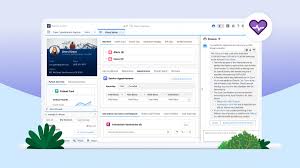
Salesforce has introduced two advanced AI models—xGen-Sales and xLAM—designed to enhance its Agentforce platform, which seamlessly integrates human agents with autonomous AI for greater business efficiency. xGen-Sales, a proprietary AI model, is tailored for sales tasks such as generating customer insights, summarizing calls, and managing pipelines. By automating routine sales activities, it enables sales teams to focus on strategic priorities. This model enhances Agentforce’s capacity to autonomously handle customer interactions, nurture leads, and support sales teams with increased speed and precision. The xLAM (Large Action Model) family introduces AI models designed to perform complex tasks and trigger actions within business systems. Unlike traditional Large Language Models (LLMs), which focus on content generation, xLAM models excel in function-calling, enabling AI agents to autonomously execute tasks like initiating workflows or processing data without human input. These models vary in size and capability, from smaller, on-device versions to large-scale models suitable for industrial applications. Salesforce AI Research developed the xLAM models using APIGen, a proprietary data-generation pipeline that significantly improves model performance. Early xLAM models have already outperformed other large models in key benchmarks. For example, the xLAM-8x22B model ranked first in function-calling tasks on the Berkeley Leaderboards, surpassing even larger models like GPT-4. These AI innovations are designed to help businesses scale AI-driven workflows efficiently. Organizations adopting these models can automate complex tasks, improve sales operations, and optimize resource allocation. The non-commercial xLAM models are available for community review on Hugging Face, while proprietary versions will power Agentforce. xGen-Sales has completed its pilot phase and will soon be available for general use. Like Related Posts Who is Salesforce? Who is Salesforce? Here is their story in their own words. From our inception, we’ve proudly embraced the identity of Read more Salesforce Marketing Cloud Transactional Emails Salesforce Marketing Cloud Transactional Emails are immediate, automated, non-promotional messages crucial to business operations and customer satisfaction, such as order Read more Salesforce Unites Einstein Analytics with Financial CRM Salesforce has unveiled a comprehensive analytics solution tailored for wealth managers, home office professionals, and retail bankers, merging its Financial Read more AI-Driven Propensity Scores AI plays a crucial role in propensity score estimation as it can discern underlying patterns between treatments and confounding variables Read more
Read More
Army of AI Bots

Army of AI Bots

Salesforce Inc. has announced a significant upgrade with the launch of Industries AI, a new automation platform designed to handle a wide range of time-consuming tasks, enhancing productivity across various sectors. We are NOT advocating that the next war will be fought with AI Bots. We aren’t even suggesting there is anything negative about these bots. However, if the next war were to be information and data based, who knows. Industries AI will be integrated into all 15 of Salesforce’s cloud platforms, including Sales Cloud, Data Cloud, Service Cloud, Commerce Cloud, and Marketing Cloud. This expansive solution is capable of managing over 100 common tasks, from matching patients with clinical trials and providing maintenance alerts for vehicles and machinery, to streamlining recruitment processes and enhancing government services. The launch of Industries AI responds to findings from Salesforce’s Trends in AI for CRM Report, which indicated that over 75% of business leaders are concerned about missing out on AI advancements if they do not adopt the technology soon. With a 700% increase in urgency to implement AI over the past six months, many organizations struggle with the resources and expertise needed to develop and train AI models. Salesforce aims to address this by offering a ready-made framework for creating AI agents tailored to industry-specific needs, utilizing each customer’s proprietary data within the Salesforce platform. Industries AI will provide a foundation for quickly deploying autonomous agents, with setup times estimated at just a few minutes. To assist customers in leveraging AI automation, Salesforce has created use case libraries for each of its cloud platforms, featuring over 100 capabilities at launch. These capabilities span multiple industries: Salesforce will begin rolling out Industries AI capabilities in October 2024, with some features available by February 2025. The company plans to regularly update Industries AI with new capabilities as part of its annual Salesforce releases. Jeff Amann, executive vice president and general manager of Salesforce Industries, emphasized that this innovation aims to make powerful AI accessible to all enterprises, regardless of size or budget. “Organizations can now easily start with AI solutions tailored to their specific challenges, enhancing efficiency and productivity across various functions,” he said. Like Related Posts Who is Salesforce? Who is Salesforce? Here is their story in their own words. From our inception, we’ve proudly embraced the identity of Read more Salesforce Marketing Cloud Transactional Emails Salesforce Marketing Cloud Transactional Emails are immediate, automated, non-promotional messages crucial to business operations and customer satisfaction, such as order Read more Salesforce Unites Einstein Analytics with Financial CRM Salesforce has unveiled a comprehensive analytics solution tailored for wealth managers, home office professionals, and retail bankers, merging its Financial Read more AI-Driven Propensity Scores AI plays a crucial role in propensity score estimation as it can discern underlying patterns between treatments and confounding variables Read more

Read More
gettectonic.com