

Salesforce AI Archives - gettectonic.com - Page 7
AI Center New Era of Cross Industry Collaboration

AI Center New Era of Cross Industry Collaboration

On Tuesday, Salesforce celebrated the launch of its new AI center in London with a complimentary training event that was attended by over a hundred software developers and administrators. This event was part of the center’s “AI Now Tour,” aimed at equipping developers from various industries with the skills to build the next generation of AI applications. AI Center New Era of Cross Industry Collaboration is an exciting new stage of artificial intelligence. A lot of “artificial intelligence” captures human creativity that is original. Regulators need to insist on training data transparency. No doubt the center will stand up plenty of conversations around regulations. This initiative underscores Salesforce’s commitment to training 100,000 developers worldwide. Attendees represented diverse sectors including automotive, financial services, retail, consumer goods, travel, hospitality, health and life sciences, and insurance. Needless to say, everyone has an appetite for AI. Reasons People Have Appetite for AI and Reasons They Do Not According to some polls, people are more concerned than excited about artificial intelligence (AI): Paul O’Sullivan, the new head of the Salesforce AI center and the UK&I CTO, discussed the center’s event and content strategy with publication TechInformed. He emphasized a plan to host “deep industry events” with a sector-specific focus, as well as cross-industry events to explore new business models. “Cross-industry opportunities are crucial in the AI landscape,” O’Sullivan noted. “For example, the future of self-driving cars impacts not just the automotive and OEM sectors but also insurance—who will be insured in the future? The driver, the car manufacturer, or the algorithm engineer?” He added that the center will foster thought leadership and cross-industry collaboration, offering new business models for customers. Despite the developer training courses being fully booked until the end of September, O’Sullivan highlighted that the 14,000 sq. ft. center, located in the Blue Fin building near Waterloo, is open to all businesses interested in exploring AI, not just Salesforce customers. In partnership with business growth agencies like London & Partners, O’Sullivan aims to extend training opportunities to local universities and apprenticeship program supporters. “We want to leverage our relationships to support the next generation, including students in art, design, and creative fields,” he said. AI Center New Era of Cross Industry Collaboration The new AI center, part of Salesforce’s $4 billion investment in the UK over the next five years, is located near iconic London landmarks such as the Tate Modern and Shakespeare’s Globe Theatre. The opening event was attended by notable UK business and industry figures, including Howard Dawber, the Deputy Mayor of London for Business and Growth, and Janet Coyle CBE, Managing Director of Grow London at London & Partners. Like Related Posts Who is Salesforce? Who is Salesforce? Here is their story in their own words. From our inception, we’ve proudly embraced the identity of Read more Salesforce Marketing Cloud Transactional Emails Salesforce Marketing Cloud Transactional Emails are immediate, automated, non-promotional messages crucial to business operations and customer satisfaction, such as order Read more Salesforce Unites Einstein Analytics with Financial CRM Salesforce has unveiled a comprehensive analytics solution tailored for wealth managers, home office professionals, and retail bankers, merging its Financial Read more AI-Driven Propensity Scores AI plays a crucial role in propensity score estimation as it can discern underlying patterns between treatments and confounding variables Read more
Read More
Generative AI Benchmark from Salesforce

Generative AI Benchmark from Salesforce

Salesforce Introduces Generative AI Benchmark Tool for CRM Generative AI Benchmark from Salesforce evaluation tool designed to help businesses select the most suitable large language models (LLMs) for their CRM needs. Key Benefits of the Generative AI Benchmark for CRM: Tailored for CRM Applications: Silvio Savarese, EVP and Chief Scientist of Salesforce Research, highlights the importance of aligning generative AI processes with CRM goals. The benchmark helps businesses assess various LLMs using real-world CRM data, covering use cases such as sales and service scenarios. Human-Centered Evaluation Approach: The benchmark, developed by Salesforce’s Frontier AI applied research group and core product teams, leverages human professionals and real CRM data. This approach ensures a thorough evaluation across four key areas: Notable Insights: Savarese points out that larger models are not always the optimal choice. Smaller, more cost-effective models can offer satisfactory performance. He also mentions that this benchmark is just the beginning, with plans to expand metrics, use cases, and data annotations. Future evaluations will include the performance of fine-tuned models on CRM data, promising further differentiation and improvement. Salesforce’s generative AI benchmark tool offers a comprehensive and practical framework for businesses to choose the best LLMs for their CRM needs, ensuring a balance of accuracy, cost, speed, and trust and safety. Like Related Posts Who is Salesforce? Who is Salesforce? Here is their story in their own words. From our inception, we’ve proudly embraced the identity of Read more Salesforce Marketing Cloud Transactional Emails Salesforce Marketing Cloud Transactional Emails are immediate, automated, non-promotional messages crucial to business operations and customer satisfaction, such as order Read more Salesforce Unites Einstein Analytics with Financial CRM Salesforce has unveiled a comprehensive analytics solution tailored for wealth managers, home office professionals, and retail bankers, merging its Financial Read more AI-Driven Propensity Scores AI plays a crucial role in propensity score estimation as it can discern underlying patterns between treatments and confounding variables Read more
Read More
Data Cloud Vector Database and Hyperforce

Data Cloud Vector Database and Hyperforce

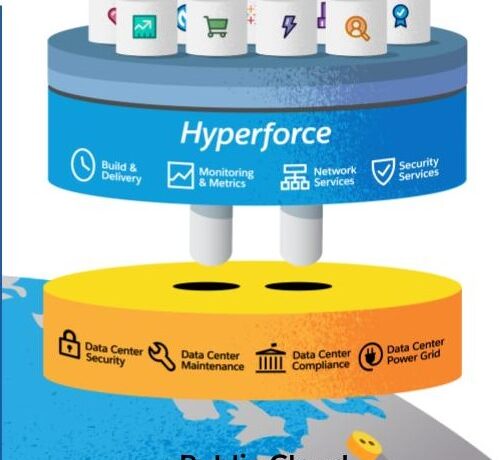
Salesforce World Tour Highlights: Data Cloud Vector Database and Hyperforce At the Salesforce World Tour on June 6, 2024, at the Excel Centre in east London, the focus was on advancements in the Data Cloud and Slack platforms. The event, sponsored by AWS, Cognizant, Deloitte, and PWC, showcased significant innovations, particularly for GenAI enthusiasts. Data Cloud Vector Database and Hyperforce. Vector Database in Data Cloud A key highlight was the announcement of the general availability of a Vector Database capability within the Data Cloud, integrated into the Einstein 1 Platform. This capability enhances Salesforce’s CRM platform, Customer 360, by combining structured and unstructured data about end-users. The Vector Database collects, ingests, and unifies data, allowing enterprises to deploy GenAI across all applications without needing to fine-tune an off-the-shelf large language model (LLM). Addressing Data Fragmentation Salesforce reports that approximately 80% of customer data is dispersed across various corporate departments in an unstructured format, trapped in PDFs, emails, chat conversations, and transcripts. The Vector Database unifies this fragmented data, creating a comprehensive profile of the customer journey. This unified approach not only improves customer engagement but also enhances organizational agility. By consolidating data from all corporate silos, companies can quickly and efficiently address issues such as product recalls and returns. Hyperforce: Enhancing Data Residency and Compliance During the keynote, Salesforce emphasized the importance of personalization in customer engagement and the benefits of deploying GenAI in customer-facing sectors. The event highlighted the need to overcome the fear and mistrust of GenAI and showcased how enterprises can enhance employee productivity through upskilling in GenAI technologies. One notable announcement was the general availability of Hyperforce, a solution designed to address data residency issues by integrating all Salesforce applications under the same compliance, security, privacy, and scalability standards. Built for the public cloud and composed of code rather than hardware, Hyperforce ensures safe delivery of applications worldwide, offering a common layer for deploying all application stacks and handling data compliance in a fragmented technology landscape. Salesforce AI Center The Salesforce AI Center was also introduced at the event. The first of its kind, located in the Blue Fin Building near Blackfriars, London, this center will support AI experts, Salesforce partners, and customers, facilitating training and upskilling programs. Set to open on June 18, 2024, the center aims to upskill 100,000 developers worldwide and is part of Salesforce’s $4 billion investment in the UK and Ireland. Industry Reactions and Future Prospects GlobalData senior analyst Beatriz Valle commented on Salesforce’s continued integration of GenAI across its portfolio, including platforms like Tableau, Einstein for analytics, and Slack for collaboration. According to Salesforce, the Data Cloud tool leverages all metadata in the Einstein 1 Platform, connecting unstructured and structured data, reducing the need for fine-tuning LLMs, and enhancing the accuracy of results delivered by Einstein Copilot, Salesforce’s conversational AI assistant. Vector databases, while not new, have gained prominence due to the GenAI revolution. They power the retrieval-augmented generation (RAG) technique, linking proprietary data with large language models like OpenAI’s GPT-4, enabling enterprises to generate more accurate results. Competitors such as Oracle, Amazon, Microsoft, and Google also offer vector databases, but Salesforce’s early investments in GenAI are proving fruitful with the launch of the Data Cloud Vector Database. Data Cloud Vector Database and Hyperforce Salesforce’s AI-powered integration solutions, highlighted during the World Tour, underscore the company’s commitment to advancing digital transformation. By leveraging GenAI and innovative tools like the Vector Database and Hyperforce, Salesforce is enabling enterprises to overcome the challenges of data fragmentation and compliance, paving the way for a more agile and competitive digital future. Like Related Posts Who is Salesforce? Who is Salesforce? Here is their story in their own words. From our inception, we’ve proudly embraced the identity of Read more Salesforce Marketing Cloud Transactional Emails Salesforce Marketing Cloud Transactional Emails are immediate, automated, non-promotional messages crucial to business operations and customer satisfaction, such as order Read more Salesforce Unites Einstein Analytics with Financial CRM Salesforce has unveiled a comprehensive analytics solution tailored for wealth managers, home office professionals, and retail bankers, merging its Financial Read more AI-Driven Propensity Scores AI plays a crucial role in propensity score estimation as it can discern underlying patterns between treatments and confounding variables Read more

Read More
Consumer Chatbot Technology

Consumer Chatbot Technology

The Reality Behind AI Chatbots and the Path to Autonomous AI In the rush to adopt the latest Consumer Chatbot Technology, it’s easy to overlook a fundamental reality: consumer chatbot technology isn’t ready for enterprise use—and it likely never will be. The reason is simple: AI assistants are only as effective as the data that powers them. Most large language models (LLMs) are trained on data from public websites, which lack the specific business and customer data that enterprises need. This means consumer bots can’t adequately assist employees in selling products, marketing merchandise, or improving productivity, as they lack the necessary personalization and business context. To achieve the vision of AI that goes beyond simple chatbots performing basic tasks—like drafting emails, essays, blogs, or graphics—to a more advanced role where AI acts autonomously and addresses business-critical needs, a different approach is needed. This vision involves AI taking action with minimal human intervention, using digital agents to identify and respond to these needs. At Salesforce, we are pursuing a clear path to AI that not only takes action but also automates routine tasks, all while adhering to established business rules, permissions, and context. Instead of relying solely on LLMs, which primarily focus on generating human-like text, future AI assistants will depend on large action models (LAMs) that integrate decision-making and action-taking capabilities. The Journey Toward AI Autonomy Our journey towards this vision began with the Salesforce Data Cloud, a robust data engine built on the Einstein 1 Platform. This platform integrates data from across the enterprise and third-party repositories, enabling companies to activate their data, automate workflows, personalize customer interactions, and develop smarter AI solutions. Recognizing the shift from generative AI to autonomous AI, Salesforce introduced Einstein Copilot, the industry’s first conversational, enterprise-class AI assistant. Integrated across the Salesforce ecosystem, Einstein Copilot utilizes an organization’s data, whether it’s behind a firewall or in an external data lake, to act as a reasoning engine. It interprets user intents, interacts with the most suitable AI model, solves problems, generates relevant content, and provides decision-making support. Expanding the Role of AI in Business Since its launch in February 2024, Salesforce has been expanding Einstein Copilot’s library of actions to meet specific business needs in sales, service, marketing, data analysis, and industries like ecommerce, financial services, healthcare, and education. These “actions” are akin to LEGO blocks—discrete tasks that can be assembled to achieve desired project outcomes. For example, a sales representative might use Einstein Copilot to generate a personalized close plan, gain insights into why a deal may not close, or review whether pricing was discussed in a recent call. Einstein Copilot then orchestrates these tasks, provides recommendations, and compiles everything into a detailed report. The ultimate goal is for AI not only to gather and organize information but also to take proactive action. Imagine a sales representative instructing their digital agent to set up meetings with top prospects in a specific territory. The AI could not only identify suitable contacts but also suggest meeting times, plan travel schedules, draft emails, and even create talking points—all of which it could execute autonomously with the representative’s approval. Tectonic dreams of the day AI is smart enough to interpret our search engine typos and produce the results for what we were actually looking for! The Future of AI Autonomy The possibilities for semi-autonomous or fully autonomous AI are vast. As we continue to develop and refine these technologies, the potential for AI to transform business processes and decision-making becomes increasingly tangible. At Salesforce, they are committed to leading this charge, ensuring that our AI solutions not only meet but exceed the expectations of enterprises worldwide. Salesforce is in a strong position to deliver on all of them because of the volume and breadth of data housed in Data Cloud, the heavy workflow traffic in our Customer 360 CRM, and the fact we’ve delivered an enterprise-class copilot that is rapidly expanding its library of actions. It will not happen overnight. The technology needs to advance, organizations and people have to be able to trust AI and be trained to use it in the right ways, and more work will need to be done to ensure the right balance between human involvement and AI autonomy. But with our continued investment in CRM, data, and trusted AI, we will achieve that vision before too long. Salesforce is in a strong position to deliver on all of them because of the volume and breadth of data housed in Data Cloud, the heavy workflow traffic in our Customer 360 CRM, and the fact we’ve delivered an enterprise-class copilot that is rapidly expanding its library of actions. Jayesh Govindarajan, Senior Vice President, Salesforce AI Like Related Posts Who is Salesforce? Who is Salesforce? Here is their story in their own words. From our inception, we’ve proudly embraced the identity of Read more Salesforce Marketing Cloud Transactional Emails Salesforce Marketing Cloud Transactional Emails are immediate, automated, non-promotional messages crucial to business operations and customer satisfaction, such as order Read more Salesforce Unites Einstein Analytics with Financial CRM Salesforce has unveiled a comprehensive analytics solution tailored for wealth managers, home office professionals, and retail bankers, merging its Financial Read more AI-Driven Propensity Scores AI plays a crucial role in propensity score estimation as it can discern underlying patterns between treatments and confounding variables Read more
Read More
Five9 Salesforce AI Integration

Five9 Salesforce AI Integration

Five9 and Salesforce Enhance AI-Powered Solutions for Superior Customer Experiences Five9 (NASDAQ: FIVN), a provider of the Intelligent CX Platform, today announced the next step in its collaboration with Salesforce. Five9 Salesforce AI Integration. This partnership aims to deliver AI-powered solutions to enhance customer experiences (CX) in contact centers. The latest release, Five9 for Service Cloud Voice with Partner Telephony, integrates Salesforce Einstein with Five9’s suite of AI solutions. This empowers agents to better service customer requests, improves management’s understanding of contact center operations, and delivers customer resolutions that exceed expectations. Using Five9’s open APIs and Five9 TranscriptStream, the Einstein AI engine identifies opportunities to provide real-time solutions for agents, prompting ‘Next Best Action’ guidance. The solution also offers real-time transcription of customer conversations, ensures call recordings’ accuracy and relevance, and integrates with Salesforce Einstein Conversation Insights to enhance conversation intelligence. “Five9 understands the power of elevating the customer experience through innovative technology and seamless integrations,” said Dan Burkland, President of Five9. “Our collaboration with Salesforce pushes the boundaries of what is possible. Infusing Einstein’s AI insights into the contact center and CRM eliminates repetitive tasks while guiding agents with the next best actions to help them be more effective.” A Long-Standing Partnership The Salesforce-Five9 collaboration, now over 15 years strong, recently introduced Five9 call dispositions for agents within the Salesforce Omni-Channel widget or Voice Call page. This allows organizations to automatically update call dispositions in the Five9 call database, ensuring accurate reporting across the integration. Both companies are meeting the growing demand for AI solutions to enhance customer engagement throughout the customer journey. “Five9’s deeper integration with Salesforce Einstein offers a new level of choice for customers seeking AI capabilities that best match their contact center needs and existing technology investments,” said Sheila McGee-Smith, President & Principal Analyst at McGee-Smith Analytics. “Coupled with features like Five9 TranscriptStream, organizations can significantly reduce an agent’s workload while enhancing the customer’s overall experience. This next step in the Salesforce-Five9 relationship demonstrates each company’s commitment to their joint customer base, enabling them to leverage the latest AI innovations easily.” “Service Cloud Voice with Five9 uses AI to deliver a better customer experience,” said Ryan Nichols, Chief Product Officer of Service Cloud, Salesforce. “Our collaboration focuses on more than just a ‘single pane of glass’– we’re bringing together customer data, knowledge, and real-time conversation transcripts to help make agents more productive and delight customers.” Availability and Further Information These new enhancements to Five9 for Service Cloud Voice with Partner Telephony will be available starting June 30. For a deeper look into the Five9 integration with Service Cloud Voice and to explore common use cases, register for the webinar “Unlock Efficiency with the Power of AI: Five9 and Salesforce Service Cloud Voice” on Tuesday, July 23. An on-demand playback of the December 2023 Five9 and Salesforce joint webinar is also available, covering topics such as using data for personalization, best practices for leveraging engagement data to improve experiences, and how companies can become more customer-centric. Salesforce, Einstein, and other related marks are trademarks of Salesforce, Inc. Like Related Posts Who is Salesforce? Who is Salesforce? Here is their story in their own words. From our inception, we’ve proudly embraced the identity of Read more Salesforce Marketing Cloud Transactional Emails Salesforce Marketing Cloud Transactional Emails are immediate, automated, non-promotional messages crucial to business operations and customer satisfaction, such as order Read more Salesforce Unites Einstein Analytics with Financial CRM Salesforce has unveiled a comprehensive analytics solution tailored for wealth managers, home office professionals, and retail bankers, merging its Financial Read more AI-Driven Propensity Scores AI plays a crucial role in propensity score estimation as it can discern underlying patterns between treatments and confounding variables Read more
Read More
AI Powered Education Cloud

AI Powered Education Cloud

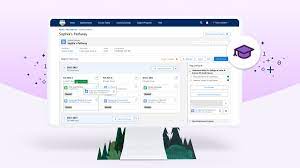
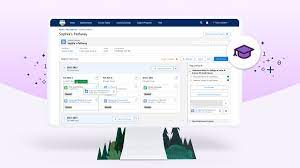
Salesforce Unveils New AI-Powered Features for Education Cloud Salesforce recently announced a suite of new features for its Education Cloud platform designed to simplify tasks for educators and students. AI Powered Education Cloud is here. These features range from student-focused tools, such as helping students stay on track with their degree requirements, to admin-focused capabilities like standardizing an institution’s entire student data corpus. New AI Capabilities Available in June Features Coming in October Enhancing Education with AI Salesforce positions these new features as tools to alleviate teacher burnout and enhance student career prospects. “With industry-specific AI and data tools, Education Cloud will help K-12 and higher ed institutions provide more individualized support for every student while increasing efficiency and helping to reduce staff burnout,” said Salesforce Vice President Bala Subramanian in a prepared statement. “This will free educators and staff to focus on improving student outcomes like career readiness, well-being, and graduation rates.” Like1 Related Posts Who is Salesforce? Who is Salesforce? Here is their story in their own words. From our inception, we’ve proudly embraced the identity of Read more Salesforce Marketing Cloud Transactional Emails Salesforce Marketing Cloud Transactional Emails are immediate, automated, non-promotional messages crucial to business operations and customer satisfaction, such as order Read more Salesforce Unites Einstein Analytics with Financial CRM Salesforce has unveiled a comprehensive analytics solution tailored for wealth managers, home office professionals, and retail bankers, merging its Financial Read more AI-Driven Propensity Scores AI plays a crucial role in propensity score estimation as it can discern underlying patterns between treatments and confounding variables Read more
Read More
IBM Salesforce AI Partnership

IBM Salesforce AI Partnership

IBM and Salesforce Expand Partnership to Advance Open, Trusted AI and Data Ecosystems PR Newswire-IBM Salesforce AI Partnership ARMONK, N.Y. and SAN FRANCISCO, May 21, 2024 – IBM (NYSE: IBM) and Salesforce (NYSE: CRM) today announced an expanded strategic partnership designed to bring together IBM’s watsonx AI and Data Platform with the Salesforce Einstein 1 Platform. This collaboration aims to provide greater customer choice and flexibility in AI and data deployment, empowering teams to make data-driven decisions seamlessly. Key Highlights of the Expanded Partnership: 1. Enhanced Large Language Models for Generative AI: The IBM watsonx platform and IBM Granite series models will introduce more large language models (LLMs) to support generative AI use cases across the Salesforce Einstein 1 Platform. This integration will provide pre-built actions and prompts, enhancing AI capabilities for CRM solutions. 2. Zero Copy Data Integration: IBM joins the Salesforce Zero Copy Partner Network to enable secure, zero-copy data integration between IBM watsonx and Salesforce Data Cloud. This integration offers customers a cost-effective way to connect and leverage their data without the need to move it, ensuring seamless data access and actionability. 3. Commitment to Responsible AI: Salesforce has joined the AI Alliance, reinforcing its commitment to developing open, safe, and responsible AI. This collaboration aims to foster transparency and ethics in AI development, aligning with the AI Alliance’s mission to advance beneficial AI innovation. Integration Details: Large Language Model Flexibility: Organizations can deploy generative AI for CRM use cases with LLMs tailored to their business needs. Salesforce’s “Bring Your Own Large Language Model” strategy allows customers to integrate their LLMs with the watsonx.ai platform and Salesforce Einstein 1 Studio. This will provide access to IBM’s Granite series AI models and custom LLMs built on watsonx, enhancing AI-driven customer interactions. Industry-Specific Solutions: Together with IBM Consulting, Salesforce will offer industry-specific prompt templates and copilot actions in Einstein 1 Studio, starting with public sector use cases. These templates are designed to optimize both foundation and Granite models for various industries, including automotive, energy, financial services, and public sector. Bidirectional Data Integration: By joining the Salesforce Zero Copy Partner Network, IBM enables bidirectional data integration with Salesforce Data Cloud. This integration allows customers to access IBM data via watsonx.data within Salesforce Data Cloud, maintaining data security and minimizing risks. This approach simplifies data management, maximizing technology investments and ensuring comprehensive data accessibility for analytics and AI. Industry Impact: Ritika Gunnar, General Manager of Product Management, Data and AI at IBM, emphasized the importance of choosing the right foundation models for AI strategies, stating, “IBM and Salesforce are making it easier for clients to navigate the complex generative AI landscape by helping them select the right LLM for their business needs.” Rahul Auradkar, EVP & GM of United Data Services & Einstein at Salesforce, highlighted the benefits of the partnership, saying, “With bidirectional data integration, companies can harmonize all their data faster, fueling actionable insights that empower teams to make data-driven decisions and deliver integrated experiences across all customer touchpoints.” About IBM: IBM is a global leader in hybrid cloud and AI, providing consulting expertise to clients in over 175 countries. IBM’s innovations in AI, quantum computing, and industry-specific cloud solutions support digital transformations with a commitment to trust, transparency, and inclusivity. For more information, visit www.ibm.com. About Salesforce: Salesforce is the #1 AI CRM, helping companies connect with customers through CRM + AI + Data + Trust on one unified platform, Einstein 1. For more information, visit www.salesforce.com. For additional details on IBM Granite and the partnership with Salesforce, visit IBM Granite. Statements regarding IBM’s and Salesforce’s future directions are subject to change and represent goals and objectives only. Like1 Related Posts Who is Salesforce? Who is Salesforce? Here is their story in their own words. From our inception, we’ve proudly embraced the identity of Read more Salesforce Marketing Cloud Transactional Emails Salesforce Marketing Cloud Transactional Emails are immediate, automated, non-promotional messages crucial to business operations and customer satisfaction, such as order Read more Salesforce Unites Einstein Analytics with Financial CRM Salesforce has unveiled a comprehensive analytics solution tailored for wealth managers, home office professionals, and retail bankers, merging its Financial Read more AI-Driven Propensity Scores AI plays a crucial role in propensity score estimation as it can discern underlying patterns between treatments and confounding variables Read more

Read More
Education Cloud AI Innovations

Education Cloud AI Innovations

Salesforce AI Innovations: Empowering Student Success and Faculty Efficiency Salesforce is introducing new Education Cloud AI Innovations, AI-powered tools designed to streamline the educational journey, enabling students to chart clear paths to graduation, translate their coursework into resume-ready skills, and connect with mentors who can guide them toward their career goals. Enhancing Faculty and Staff Efficiency with AI New generative AI capabilities are set to automate time-consuming tasks for faculty and staff, allowing them to focus on what matters most—driving student success. Personalizing Student Experiences with AI Institutions like the University of Nevada Las Vegas and Texas Tech are leveraging Salesforce for Education to create personalized student experiences and improve staff efficiency through AI-driven solutions. Salesforce Introduces AI-Powered Student Success Tools for Education Cloud Today, Salesforce unveiled cutting-edge AI tools for Education Cloud, including Intelligent Degree Planning and Skills Generator. These innovations are designed to help institutions craft personalized graduation pathways, translate coursework into tangible skills, and facilitate impactful mentorship programs. Additionally, Salesforce introduced Data Cloud for Education and Einstein Copilot Recruitment & Admissions Actions. These tools will enable institutions to automate routine tasks, enhance recruitment and enrollment processes, and bolster student support. Why It Matters Education professionals face the highest burnout rates across industries, and students are feeling the impact—only 11% of college students believe they are workforce-ready. As the education sector approaches an enrollment cliff, confidence in the value of a college degree is declining, and educators are leaving the profession in significant numbers. Schools must find ways to reduce staff workload while improving student experiences and outcomes. Explore Education Cloud Elevate the educational experience with the #1 AI CRM for learner and institution success. DIVE IN AI Innovation for Lifelong Student Success The new AI capabilities for Education Cloud, built on Salesforce’s Einstein 1 Platform, will help higher education and K-12 institutions unlock the power of their data to deliver trusted AI solutions. These innovations are designed to improve staff efficiency while enhancing student experiences and learning outcomes. Key features include: AI in Action for Faculty and Staff Salesforce is delivering new AI and data tools to automate tasks related to recruitment, enrollment, and student experience management. New features include: With these industry-specific AI and data tools, Education Cloud is poised to help K-12 and higher education institutions offer more individualized support to every student while increasing operational efficiency and reducing staff burnout. The Salesforce Perspective “Every institution wants to provide the best possible experiences for their students and staff. With industry-specific AI and data tools, Education Cloud will help K-12 and higher ed institutions offer more personalized support to every student while increasing efficiency and helping to reduce staff burnout. This will free educators and staff to focus on improving student outcomes, such as career readiness, well-being, and graduation rates.”— Bala Subramanian, VP & GM of Education Like Related Posts Who is Salesforce? Who is Salesforce? Here is their story in their own words. From our inception, we’ve proudly embraced the identity of Read more Salesforce Marketing Cloud Transactional Emails Salesforce Marketing Cloud Transactional Emails are immediate, automated, non-promotional messages crucial to business operations and customer satisfaction, such as order Read more Salesforce Unites Einstein Analytics with Financial CRM Salesforce has unveiled a comprehensive analytics solution tailored for wealth managers, home office professionals, and retail bankers, merging its Financial Read more AI-Driven Propensity Scores AI plays a crucial role in propensity score estimation as it can discern underlying patterns between treatments and confounding variables Read more

Read More
Salesforce AI

Salesforce AI

Salesforce AI is the cornerstone of our Einstein 1 Platform, offering reliable and adaptable AI solutions seamlessly integrated into your customer data. With Einstein, you can craft tailored, predictive, and generative AI experiences to address all your business requirements securely. Einstein brings conversational AI to every facet of your operations, from workflows and users to departments and industries. Here’s what Einstein can do for you: Sales AI: Accelerate sales cycles with trusted AI capabilities. Einstein can compose emails enriched with customer insights, summarize sales calls, and provide real-time predictions to guide sellers towards successful deals. Customer Service AI: Enhance customer service experiences while boosting agent efficiency. Einstein surfaces relevant information during support interactions, automates case resolutions, and empowers agents with a knowledge base. Marketing AI: Drive personalized and efficient marketing campaigns at scale. Einstein provides insights to enhance engagement, create personalized customer journeys, and automate outreach efforts. Commerce AI: Personalize every buyer and merchant interaction with flexible ecommerce AI tools. Einstein generates product descriptions, recommends relevant products, and optimizes buying experiences. Einstein 1 Studio: Customize and extend AI for CRM with ease. Configure actions, prompts, and models to tailor Einstein Copilot to your specific business needs. Copilot Builder: Extend Einstein Copilot with familiar platform features to streamline workflows and monitor interactions seamlessly. Prompt Builder: Create prompt templates to expedite tasks and generate content grounded in your business data, ensuring relevance across Einstein Copilot, Lightning pages, and flows. Model Builder: Build or import predictive AI models into Salesforce and the Einstein Trust Layer, seamlessly managing AI models in a unified control plane. Deploy AI you can trust with the Einstein Trust Layer, ensuring privacy, security, and responsible use across your organization. Features like Dynamic Grounding, Sensitive Data Masking, and Ethics and Inclusivity policies uphold ethical AI principles while optimizing accuracy and relevance. Join companies like General Mills and Riley Children’s Health in leveraging the power of Salesforce AI to drive personalized experiences and optimize operations for greater impact and efficiency. Like Related Posts Who is Salesforce? Who is Salesforce? Here is their story in their own words. From our inception, we’ve proudly embraced the identity of Read more Salesforce Marketing Cloud Transactional Emails Salesforce Marketing Cloud Transactional Emails are immediate, automated, non-promotional messages crucial to business operations and customer satisfaction, such as order Read more Salesforce Unites Einstein Analytics with Financial CRM Salesforce has unveiled a comprehensive analytics solution tailored for wealth managers, home office professionals, and retail bankers, merging its Financial Read more AI-Driven Propensity Scores AI plays a crucial role in propensity score estimation as it can discern underlying patterns between treatments and confounding variables Read more

Read More
Tectonic at a Glance

Why AI Keeps Salesforce Co-Founder Up At Night

Parker Harris holds conflicting views on artificial intelligence (AI). As the co-founder of Salesforce, he has urged the company’s leaders to swiftly integrate AI into their products. However, he grapples with concerns about maintaining the balance between speed and the company’s reputation for delivering high-quality solutions to clients. This dilemma has even led him to lose sleep. Expressing his anxiety at Salesforce’s World Tour event in New York City, Harris emphasized the unprecedented pace of AI development. He feels a sense of urgency to accelerate the adoption of AI technologies, driven by the need to meet customer expectations. Yet, he recognizes the importance of caution, knowing that customers rely on Salesforce to provide reliable solutions. Harris acknowledges the challenge of navigating this balance, pondering how to move quickly without making critical mistakes. Transitioning to his role as chief technology officer at Slack, a subsidiary of Salesforce, Harris reflected on AI’s potential, particularly its ability to generate images and videos from simple prompts. However, he tempered the enthusiasm by noting that what may seem like “magic tricks” on social media platforms may not necessarily translate effectively in workplace contexts. Harris also acknowledged the pervasive fear among entrepreneurs of missing out on the AI revolution, especially after a significant milestone in February when OpenAI, a market leader, was valued at $80 billion. This realization, coupled with the partnership between Salesforce rival Microsoft and OpenAI, prompted Harris and Salesforce co-founder Marc Benioff to acknowledge their need to catch up in the AI race. Salesforce’s main AI offering, Einstein, enables businesses to create predictive AI models using proprietary customer data. In Slack, enterprises can access Slack AI, a tool that summarizes conversations and provides answers to questions, for a monthly fee of $10 per person. Despite the promise of AI, Harris highlighted a critical issue: trust. He expressed concerns about AI occasionally providing inaccurate information or omitting key details, which could erode user trust in the technology. Maintaining trust is crucial, as users are unlikely to continue using AI tools if they encounter such troubling issues. Like Related Posts Who is Salesforce? Who is Salesforce? Here is their story in their own words. From our inception, we’ve proudly embraced the identity of Read more Salesforce Marketing Cloud Transactional Emails Salesforce Marketing Cloud Transactional Emails are immediate, automated, non-promotional messages crucial to business operations and customer satisfaction, such as order Read more Salesforce Unites Einstein Analytics with Financial CRM Salesforce has unveiled a comprehensive analytics solution tailored for wealth managers, home office professionals, and retail bankers, merging its Financial Read more AI-Driven Propensity Scores AI plays a crucial role in propensity score estimation as it can discern underlying patterns between treatments and confounding variables Read more

Read More
Salesforce in a Mega-Data Deal with Informatica

Salesforce in a Mega-Data Deal with Informatica

Since Salesforce announced its acquisition of Slack for $27.7B in late 2020, the cloud software mega-giant has paused its acquisition strategy due to factors like rising interest rates, declining revenues, and a laser focus on profitability. However, recent leaks from The Wall Street Journal and other news publications suggest that Salesforce in a Mega-Data Deal with Informatica, is in advanced talks to acquire Informatica in a deal worth over $11B. Informatica is a significant player in enterprise data management, boasting revenues of over $1.51B and a workforce of over 5,000 employees. They specialize in AI-powered cloud data management, assisting companies in processing and managing large volumes of data from various sources to derive actionable and real-time insights. Salesforce in a Mega-Data Deal with Informatica The synergies between Informatica and Salesforce are many, with both companies focusing on consolidating data from multiple sources to provide comprehensive business insights. This aligns well with Salesforce’s strategic shift towards AI-driven data processing and analysis, aiming to enhance generative and predictive capabilities. While Salesforce’s previous acquisition of MuleSoft in 2018 for $6.5B has proven successful in facilitating API connectivity for real-time integrations, Informatica brings expertise in ETL (Extract-Transform-Load), data quality, and data movement to and from platforms like Snowflake and Databricks. This potential mega-data deal underscores the growing importance of data in the tech industry, especially with the emergence of generative AI and large language models (LLMs) that enable deeper analysis of vast datasets. Salesforce’s recent rebranding of its platform to “Einstein 1” underscores the convergence of AI and data within its product suite. The company’s emphasis on “AI + Data + CRM” reflects its commitment to leveraging data analytics for CRM enhancement, exemplified by the growth of its Data Cloud product. Partnering with industry leaders like Snowflake, Databricks, AWS, and Google, Salesforce aims to offer comprehensive data solutions that integrate seamlessly with existing systems. Informatica’s capabilities in ETL and Master Data Management (MDM) align with this vision, particularly in streamlining data integration and ensuring data quality across disparate systems. In final thoughts, while the Informatica acquisition is still pending finalization, it represents a strategic move by Salesforce to strengthen its position in the AI and data-driven CRM market. As Salesforce continues to evolve its product ecosystem, this acquisition signals its commitment to innovation and leadership in the era of AI-powered data analytics. Like Related Posts Who is Salesforce? Who is Salesforce? Here is their story in their own words. From our inception, we’ve proudly embraced the identity of Read more Salesforce Marketing Cloud Transactional Emails Salesforce Marketing Cloud Transactional Emails are immediate, automated, non-promotional messages crucial to business operations and customer satisfaction, such as order Read more Salesforce Unites Einstein Analytics with Financial CRM Salesforce has unveiled a comprehensive analytics solution tailored for wealth managers, home office professionals, and retail bankers, merging its Financial Read more AI-Driven Propensity Scores AI plays a crucial role in propensity score estimation as it can discern underlying patterns between treatments and confounding variables Read more
Read More
Salesforce's Get Ready for AI Report

Salesforce’s Get Ready for AI Report

Welcome to the future of business – Get Ready for AI is for analytics and data leaders. The tools for those who are interested in positioning themselves for AI success. From strategy to governance, you’ll learn what’s top-of-mind with other thought leaders, and see what actions you can take to be a more effective leader in a rapidly changing technology and business environment.  Salesforce’s Get Ready for AI Report This insight introduces four topics that are essential for data leaders beginning their AI journey: Access the full report here. Salesforce’s Get Ready for AI Report Data is at the center of any AI initiative, and organizations that are leading the way are focused on ensuring their data sources are current, authoritative, and complete. From talent, to strategy, to infrastructure, organizations that are prioritizing data across every business unit are ready to ride the AI wave. Positioning themselves for a significant competitive advantage over their peers. Salesforce’s Get Ready for AI Report As with any digital transformation, success depends on an enterprise-wide commitment. Data leaders are in a unique position to help guide their organizations through this transition, and achieve the benefits that AI can deliver. Like1 Related Posts Who is Salesforce? Who is Salesforce? Here is their story in their own words. From our inception, we’ve proudly embraced the identity of Read more Salesforce Marketing Cloud Transactional Emails Salesforce Marketing Cloud Transactional Emails are immediate, automated, non-promotional messages crucial to business operations and customer satisfaction, such as order Read more Salesforce Unites Einstein Analytics with Financial CRM Salesforce has unveiled a comprehensive analytics solution tailored for wealth managers, home office professionals, and retail bankers, merging its Financial Read more AI-Driven Propensity Scores AI plays a crucial role in propensity score estimation as it can discern underlying patterns between treatments and confounding variables Read more
Read More
Einstein Copilot - A Valued Team Member

Einstein Copilot – A Valued Team Member

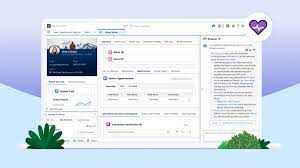
What Can Salesforce Einstein Copilot AI Really Do? Einstein Copilot – A Valued Team Member To find out, let’s virtually attend a live demo of the service March 2024. The short answer to the question is “whatever your business needs,” but with a common caveat in AI demos: beware of hallucinations. Keeping Data SafeLet’s rewind a bit. Back in September, Salesforce unveiled Einstein Copilot at Dreamforce, emphasizing customer data safety as a key selling point. Salesforce CEO Marc Benioff stated, “Your data isn’t our product.” Then, in February, the product entered public beta. Salesforce re-emphasized that the Einstein Trust Layer, designed to protect customer data, was a critical reason why customers could trust the responses and actions of Salesforce Einstein Copilot. At the demo safety was again a primary focus. Salesforce Product Management leads Gary Brandeleer and Jaswinder Rattanpal highlighted that Einstein is designed to differentiate between sensitive and non-sensitive data and to verify if the end-user has appropriate access rights for their query. These measures prevent leaks of confidential information and also minimize the impact of any potential “hallucinations” by compartmentalizing data. Rattanpal offered a word of caution: “While we have these amazing tools, be careful because we are not at a stage when they can be 100% trusted. Always have a human in the loop, especially when dealing with information that may become public.” Maximizing EfficiencySalesforce’s emphasis on data safety is wise, and its more than 150,000 customers worldwide will appreciate it. However, the real appeal of Einstein Copilot lies in the efficiency it offers. This efficiency stems from two key principles that drive Salesforce’s approach to AI. The first principle is that AI copilots fundamentally change how humans interact with software. Instead of navigating through clicks and menus, users can ask questions and receive answers directly, making software interaction more conversational. This shift can potentially transform software development and reduce the time required to complete tasks, particularly in sales, marketing, and customer service. Users can access Einstein across Salesforce’s interface. One click launches the assistant, which can execute tasks while the user attends to other duties. This reduces the time spent sifting through information to find answers. During the demo, Rattanpal showcased how Einstein could summarize an account’s financial history and populate different fields with data from a single prompt. Customization and AvailabilityThe second principle is the mix of customization and availability. Salesforce aims to allow users to deploy Einstein Copilot across any desired modules and to customize these deployments to suit each customer’s specific needs. Recognizing that its vast customer base has diverse requirements, Salesforce makes Einstein flexible yet grounded in a safety-first approach. Admins can customize Einstein using Copilot Builder, Prompt Builder, and Model Builder, each offering different levels of customization. Standard actions, like “write an email,” require minimal development, while custom actions typically involve more intricate setups. More Than a Copilot: A CoworkerThese capabilities often make Einstein feel more like a valued team member than a mere copilot. During the demo, Brandeleer showed how Einstein could determine whether a sales opportunity was worth pursuing—a subjective query that Einstein backed with a dozen data-driven reasons. This level of analysis, which would take a human hours or days to compile, underscores Einstein’s potential to exceed human efficiency and objectivity. When an AI can provide better answers to subjective questions than a human, it transcends being a simple tool. If it can effectively manage hallucinations, the question becomes: what can’t Einstein do? Salesforce Einstein Copilot stands out not only for its robust data safety measures but also for the significant efficiency and customization it offers. With its advanced capabilities, Einstein has the potential to revolutionize how businesses handle routine and complex tasks, making it an invaluable asset for any organization. Like1 Related Posts Who is Salesforce? Who is Salesforce? Here is their story in their own words. From our inception, we’ve proudly embraced the identity of Read more Salesforce Marketing Cloud Transactional Emails Salesforce Marketing Cloud Transactional Emails are immediate, automated, non-promotional messages crucial to business operations and customer satisfaction, such as order Read more Salesforce Unites Einstein Analytics with Financial CRM Salesforce has unveiled a comprehensive analytics solution tailored for wealth managers, home office professionals, and retail bankers, merging its Financial Read more AI-Driven Propensity Scores AI plays a crucial role in propensity score estimation as it can discern underlying patterns between treatments and confounding variables Read more

Read More
Introducing the New Nonprofit Cloud

Technology for a Human-Centric Impact: Introducing the New Nonprofit Cloud

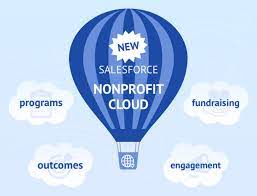
In times of disaster or need, it’s not technology that distributes supplies or ensures access to fundamental rights—it’s people. Nonprofits, whether large or small, work alongside individuals, partner organizations, government agencies, healthcare providers, volunteers, and staff to drive community and planetary improvements. From large-scale disaster responses to community food drives, real change and impact come from collaborative efforts, not isolated actions. Introducing the New Nonprofit Cloud for today’s NGOs. Salesforce’s vision for nonprofits has always been to empower impact makers with the best technology. Technology should be a critical enabler that brings people and organizations together, scaling those moments of impact. Breaking Down Barriers for Greater Impact Salesforce aims to simplify operations for the nonprofit sector by breaking down information silos within organizations and among local or global partners. Achieving greater impact collectively requires collaboration with stakeholders, information sharing, and effective data utilization. Salesforce collaborated with partners and nonprofit peers to address four key priorities: Introducing the New Nonprofit Cloud With these priorities in mind, Salesforce has announced a new vision for Nonprofit Cloud—a suite of nonprofit technology solutions built specifically for the sector. For the first time, instead of layering nonprofit applications on top of the platform, Salesforce is building directly into the core, unlocking innovation across all Salesforce industries. The new Nonprofit Cloud aims to address all goals in a single solution. For over two decades, Salesforce has worked with its community and partner ecosystem to deliver purpose-built packages on top of the Salesforce platform. Together, they have built more than 14 software packages, anchored by the Nonprofit Success Pack (NPSP), which is used by thousands of organizations. Salesforce will continue to support existing offerings like NPSP, Nonprofit Cloud Case Management, the Program Management Module, and more. Today, we have the thrill of Introducing the New Nonprofit Cloud However, Salesforce is now offering a new solution to nonprofit organizations with reimagined program management, case management, outcomes, marketing engagement, and fundraising in one package. The next generation of Nonprofit Cloud, available today, focuses on delivering programs and case management, leveraging the full power of the Salesforce platform. Fundraising and outcomes will be integrated into this solution later this year. Faster and Easier Access to Nonprofit Technology Supporters measure organizations by their impact, and the goal is to focus on driving that impact, not piecing together data from different systems. This new approach provides a faster and more unified way to drive impact by consolidating stakeholder experiences from across organizations and partners. The new Nonprofit Cloud unifies programs, fundraising, engagement, and outcomes, giving easier and faster access to innovations from across all of Salesforce. This connection to Salesforce’s portfolio of best-in-class solutions enhances the ability to make data-driven decisions swiftly, focusing on what works and where changes are needed. Greater Cross-Sector Impact – Introducing the New Nonprofit Cloud The new Nonprofit Cloud is designed for whole-person care. By building Nonprofit Cloud directly into the Salesforce platform, it’s easier to adopt technology used in other industries, such as Health & Life Sciences and the Public Sector. This integration reflects how jobs are actually done—working with program participants, their families, governments, healthcare organizations, and other nonprofits to ensure everyone achieves their goals. This fosters better cross-sector engagement and impact for all served. Impact is Driven by Everyone Behind every relationship, person, or program is data. When these data points are combined, they can be learned from, validated, and traced throughout the process. With the reimagined Nonprofit Cloud, Salesforce is building every component with outcomes in mind, partnering with the customer community to determine critical data to capture. This simplifies outcome measurement, reduces the need for heavy customization, and standardizes the process. Introducing the New Nonprofit Cloud Starting with programs and case management, available today, Salesforce will soon add outcomes, engagement, and fundraising, connecting them to all future innovations. The Power of Us Program Salesforce remains committed to giving 1% of equity, product, and employee time back to its communities through the Power of Us program, which grants qualified nonprofit and educational organizations 10 free technology licenses. The new Nonprofit Cloud innovation will be included. Salesforce will also continue to support existing licenses and paid nonprofit offerings, including the Nonprofit Success Pack (NPSP). This new approach for the nonprofit sector has been successfully used by other industries within Salesforce for years. Salesforce is dedicated to continuing investment in best-in-class nonprofit technology to help achieve significant and lasting impact. Connect with Salesforce Ready to implement Salesforce Nonprofit Cloud to streamline operations and amplify impact? Connect with Salesforce experts for more information. Like Related Posts Who is Salesforce? Who is Salesforce? Here is their story in their own words. From our inception, we’ve proudly embraced the identity of Read more Salesforce Marketing Cloud Transactional Emails Salesforce Marketing Cloud Transactional Emails are immediate, automated, non-promotional messages crucial to business operations and customer satisfaction, such as order Read more Salesforce Unites Einstein Analytics with Financial CRM Salesforce has unveiled a comprehensive analytics solution tailored for wealth managers, home office professionals, and retail bankers, merging its Financial Read more AI-Driven Propensity Scores AI plays a crucial role in propensity score estimation as it can discern underlying patterns between treatments and confounding variables Read more

Read More
UX Design Trends 2024

UX Design Trends 2024

Navigating Design Trends: AI, Discovery, Accessibility, and Collaboration. Salesforce UX Design Trends 2024. As we reflect on the past year and look ahead, design trends are emerging, signaling a pivotal moment in the intersection of creativity, usability, and AI. For developers, admins, architects, and business leaders, understanding these trends is crucial in shaping the future. Here are the four design trends steering this transformative journey: As we move forward, these design trends signify a paradigm shift, emphasizing the significance of AI, streamlined discovery, accessibility, and the growing collaboration between designers and developers. Navigating this transformative landscape requires an adaptable mindset and a commitment to ethical, inclusive design practices from the outset. When you work with Tectonic we take all these considerations to mind as we design or re-design your Salesforce org. Contact Tectonic today. UX Design Trends 2024 Like2 Related Posts Who is Salesforce? Who is Salesforce? Here is their story in their own words. From our inception, we’ve proudly embraced the identity of Read more Salesforce Marketing Cloud Transactional Emails Salesforce Marketing Cloud Transactional Emails are immediate, automated, non-promotional messages crucial to business operations and customer satisfaction, such as order Read more Salesforce Unites Einstein Analytics with Financial CRM Salesforce has unveiled a comprehensive analytics solution tailored for wealth managers, home office professionals, and retail bankers, merging its Financial Read more AI-Driven Propensity Scores AI plays a crucial role in propensity score estimation as it can discern underlying patterns between treatments and confounding variables Read more

Read More
gettectonic.com