Salesforce AI Archives - gettectonic.com - Page 8
Leverage AI and Machine Learning in Your Data Warehouse

Exploring Machine Learning with Salesforce

Machine Learning (ML) falls into three main categories: Supervised Learning, Unsupervised Learning, and Reinforcement Learning. Let’s dive into some issues and considerations that might leave you wondering if it’s even worth starting! Not embracing what Professor Stuart Russell called “the biggest event in human history” may be short-sighted. Don’t worry, Salesforce can help. Salesforce and Machine Learning Salesforce has a 20-year history of making complex technologies business-friendly. This extends to Machine Learning, integrating ML capabilities throughout the Salesforce Customer 360 suite, which includes solutions for Marketing, Commerce, Sales, Service, and Analytics, among others. Machine Learning in Action with Salesforce Marketing Imagine you’re in a marketing role. You want to predict the likelihood that a customer will engage with your campaigns to maximize effectiveness. Supervised Learning can help here by predicting subscriber engagement (opens, click-throughs, conversions) using historical data (90 days of engagement metrics). For example, using predictive Engagement Scoring, a Salesforce customer in the travel industry achieved a 66% drop in unsubscribe rates and a 13% revenue increase. You also want to ensure prospective customers can quickly find relevant products. Unsupervised Learning can personalize product assortments throughout the shopper journey by analyzing buying patterns, site browsing tendencies, and relationships between search terms and products. Using AI-powered Predictive Sort, businesses have seen a 9.1% increase in revenue per visitor and a 3.8% increase in conversion rates. Sales For sales teams handling many opportunities, predicting the quality of each Opportunity can help prioritize efforts. Supervised Learning, using historical data of at least 200 Closed/Won and 200 Closed/Lost Opportunities, can provide a prioritized list of Opportunities to maximize revenue potential. A large Salesforce customer in the consumer goods sector increased win rates by 48% by focusing on the best Opportunities. Service Post-sale customer support is crucial. Service agents need to address challenging cases efficiently. Supervised Learning can recommend articles to resolve current cases based on historical data from at least 1000 cases with knowledge base articles. A large electronics company using Salesforce AI-powered solutions saved 5 hours per agent per week, enhancing productivity. Simplifying Complex Technology Salesforce’s rich history of making complex technology accessible allows businesses to realize ML benefits without needing specialized knowledge. Traditional ML involves multiple steps like data collection, transformation, sampling, feature selection, model selection, score calibration, and integrating results. Salesforce simplifies this with a customizable data model, automated feature engineering, and automatic model building and selection. For example, in model selection, Salesforce runs a “model tournament” to choose the best model with varying hyper-parameters, ensuring the most accurate model is selected without requiring user intervention. Conclusion Salesforce abstracts the complexity of ML behind user-friendly interfaces, making it easier for businesses to leverage powerful technology. Whether it’s predicting customer engagement, personalizing shopping experiences, prioritizing sales opportunities, or enhancing customer support, Salesforce’s ML capabilities can drive significant business value. Discover more about how Salesforce can transform your approach to Machine Learning and help you achieve your business goals. Like Related Posts Who is Salesforce? Who is Salesforce? Here is their story in their own words. From our inception, we’ve proudly embraced the identity of Read more Salesforce Marketing Cloud Transactional Emails Salesforce Marketing Cloud Transactional Emails are immediate, automated, non-promotional messages crucial to business operations and customer satisfaction, such as order Read more Salesforce Unites Einstein Analytics with Financial CRM Salesforce has unveiled a comprehensive analytics solution tailored for wealth managers, home office professionals, and retail bankers, merging its Financial Read more AI-Driven Propensity Scores AI plays a crucial role in propensity score estimation as it can discern underlying patterns between treatments and confounding variables Read more

Read More
Salesforce CRM for AI driven transformation

Salesforce CRM Crucial for Transformation Driven by AI

Salesforce recently commission Forrester to wrangle up the state of AI. Overwhelmingly a CRM tool was found to be crucial for transformation driven by artificial intelligence. 89% of those surveyed said AI strategy and capability are top of mind when selecting a CRM partner. Tectonic is pleased to share our thoughts on the crucial role of Salesforce CRM for AI driven transformation. As companies increasingly adopt AI across various technologies, CRM is emerging as a crucial foundation for business transformation driven by AI. The interactions with customers generate substantial volumes of unstructured data from emails, meeting transcripts, phone conversations, and more. AI has the capability to distill this data into key insights and actionable next steps, thereby streamlining employee workflows and enhancing customer interactions. Today’s CRM customers are eager to leverage AI-powered CRMs to personalize front office content, address inquiries, and summarize customer interactions. Customers are rapidly integrating AI across most CRM use cases. According to Forrester’s research: The success of integrating AI capabilities into CRM relies heavily on data readiness. AI-powered CRMs depend on high-quality, well-structured, and clean data for informed predictions, personalized recommendations, and automation of various tasks. Respondents recognize the criticality of data readiness, with 92% emphasizing the importance of a strong data strategy for AI success. However, despite this awareness, many respondents are rushing to implement AI before achieving data readiness, with only 34% having a formal data strategy integrated across the business. Not only is Salesforce CRM a great choice for your digital AI transformation. Salesforce Data Cloud assists in ingesting and unifying data, ensuring your data is ready. Are you aware of the Salesforce Data Cloud license offer? Data readiness practices are generally low, as indicated by respondents ranking their organization’s level of data readiness into three bands: A, B, and C. Twenty-seven percent have ad hoc data initiatives and lack a formal strategy (band A), 39% have a formal data strategy but it is not integrated across the business (band B), and only 34% have a formal strategy integrated across the business (band C). Data readiness is critical for AI-powered CRM, as incomplete or unreliable data may lead to inaccurate and incomplete AI models, risking adverse outcomes. Data remains a primary challenge in Customer Relationship Management, with respondents highlighting data quality issues, extensive reliance on manual processes to synthesize data, and a lack of internal data skills as their top challenges. It’s essential to address these challenges, especially when incorporating generative AI features into an organization’s CRM, as genAI specifically requires a significant amount of data for successful implementation. Tectonic is ready to help you assess your data, implement Salesforce CRM, and experience an AI driven transformation. Contact Tectonic today for a trusted Salesforce partner to assist with your AI driven transformation. Like2 Related Posts Salesforce Unites Einstein Analytics with Financial CRM Salesforce has unveiled a comprehensive analytics solution tailored for wealth managers, home office professionals, and retail bankers, merging its Financial Read more AI-Driven Propensity Scores AI plays a crucial role in propensity score estimation as it can discern underlying patterns between treatments and confounding variables Read more Salesforce AI Einstein Next Best Action Salesforce AI Einstein Next Best Action is a feature designed to identify the most effective actions available to agents and Read more Salesforce Scheduler Salesforce Scheduler provides the objects required for appointment scheduling and an app that makes it easy to set up Scheduler. Read more

Read More
Virtual Event Management Plan

Virtual Event Management Plan

Have You Recently Attended an Information-Packed Webinar? Think back to your experience: from how you first learned about the event to its promotion and eventual execution. It might seem like organizing a webinar is straightforward, but… Virtual event management requires meticulous planning, from the initial concept and promotion to post-event tasks. Read on to discover how you can plan your online events in Salesforce with ease and what you’ll need for success. What is Virtual Event Management Plan in Salesforce? Virtual event management encompasses all the activities needed to ensure your online event runs smoothly. It’s how you prepare to share your insights—or those of other experts—virtually. Why plan your events in Salesforce? All your data stays integrated within your CRM, allowing you to manage every aspect of your event, from registration and ticketing to marketing and attendee engagement, without the hassle of multiple tools or disorganized planning. Types of Virtual Event Management Plans in Salesforce Choosing the right virtual event format can be overwhelming, but here are some common options: How to Plan Virtual Events in Salesforce: A 4-Step Guide 1. Create a Virtual Event Concept When planning a virtual event, don’t treat it like an in-person one. Virtual events require their own set of strategies. Start by answering these questions: Remember, seasonal holidays or other events can impact attendance. Avoid scheduling events during low-attendance periods, like the summer or late December. 2. Select an Event Management Tool You need the right technology to manage online events effectively. Salesforce offers robust functionality for this. When selecting a tool for Salesforce event management, look for these features: 3. Outline Content and Strategy Crafting a virtual event that resonates with your audience requires more than just setting a date and topic. You need a compelling content strategy. Here’s how to make it work: 4. Design an Event Microsite Like in-person events, virtual ones benefit from a dedicated event page or microsite. On your Salesforce Experience Cloud site, you can: The Ultimate Virtual Events Checklist Final Thoughts Virtual event management isn’t daunting if approached wisely. With a clear plan, engaging content, and the right tools, success is within reach. Follow these steps, and your next virtual event will be a breeze. Like Related Posts Who is Salesforce? Who is Salesforce? Here is their story in their own words. From our inception, we’ve proudly embraced the identity of Read more Salesforce Marketing Cloud Transactional Emails Salesforce Marketing Cloud Transactional Emails are immediate, automated, non-promotional messages crucial to business operations and customer satisfaction, such as order Read more Salesforce Unites Einstein Analytics with Financial CRM Salesforce has unveiled a comprehensive analytics solution tailored for wealth managers, home office professionals, and retail bankers, merging its Financial Read more AI-Driven Propensity Scores AI plays a crucial role in propensity score estimation as it can discern underlying patterns between treatments and confounding variables Read more

Read More
steps to embrace ai

Steps to Embrace AI

The world is evolving rapidly, with AI playing a transformative role. Despite concerns about AI’s impact on jobs, it has the potential to empower and simplify our lives. Rather than replacing humans, AI can automate routine tasks, allowing individuals to focus on more creative and value-added work. The future lies in human-AI collaboration, requiring us to prepare for a shift in roles and responsibilities.

Read More
Salesforce Flow

Einstein Flow and Generative AI

By Shannan Hearne, Tectonic Marketing Consultant Based on Nov 2023 Salesforce post from Cesar Castro As part of the ongoing evolution of Salesforce’s Einstein AI, Salesforce provided an update on how Einstein is impacting one of your favorite tools in your Salesforce admin toolkit: Salesforce Flow. Flow, with its numerous powerful capabilities, has been instrumental in helping Salesforce Admins streamline and automate their work, delivering value to all end users in their organizations.  Often without the need for any additional Salesforce development assistance! Einstein Flow and Generative AI are powering a whole new brand of Salesforce actions. Salesforce Flow is a blanket term for everything in the Salesforce ecosystem that allows you to create, manage, and run automation with clicks not code.  Those of you who are using Flow on the regular?  You are known as Flownatics! Working With Einstein Flow and Generative AI In preparation for Einstein for Flow, content was collaborated on with Ajaay Ravi, Einstein for Flow Product Manager, Cesar Castro, Product Manager for Einstein Flow, and Vera Vetter, Director of Product Management, AI Research. Together, as product managers, they are actively working on enhancing Einstein for Flow. As Tectonic’s Salesforce Marketing Consultant I am very excited to share the news with you! Generative AI Einstein for Flow is a generative artificial intelligence (AI) tool that utilizes large language models (LLMs). To drive process automation across multiple Salesforce products. Whether you are a new Flow user or an experienced admin, Einstein for Flow aims to assist in learning and adopting this capability. By aiding in the creation of more complex flows and time saving automations.  Many of Salesforce Flow’s capabilities allow you to do what used to require Apex developers. The powerhouse behind Einstein for Flow is CodeGen, Salesforce’s in-house LLM released by Salesforce AI Research in 2022 to transform software development. CodeGen is the driving force behind the tailored AI solution for the needs of Salesforce users. So, how does Einstein for Flow operate? It’s as straightforward as describing your flow requirement in plain language through a natural language prompt. Einstein then invokes code to interpret and generate the natural flow data. To handle intricate flows, a concept called a “chain of thought” is introduced. By breaking down the flow into manageable steps, sequentially creating each part, and merging them to produce the final flow. In tis way Einstein is ensuring accuracy in meeting your business automation needs. Looking ahead, Salesforce’s roadmap for Einstein for Flow includes exciting features. One notable feature is the ability to use Einstein to edit an existing flow. This is irrespective of whether Einstein created it. Salesforce’s goal is to make flow building more accessible by enabling editing of both new and existing flows. In upcoming releases, an Einstein assistive interface will be integrated. Thereby allowing you to open and edit flows by conversing with Einstein in natural language. For all you Star Trek fans out there, the age of the Enterprise doing your verbal bidding is upon us! Einstein Suggestions Einstein will suggest changes and present a list of interconnected updates resulting from the proposed modifications. Designed to be user-friendly yet advanced, you can inspect recommended changes. Then review step by step, and view individual modifications. Additionally, a history of all changes suggested and made by Einstein will be available for those interested in maintaining an audit trail of AI-driven alterations. This is just the beginning for Einstein for Flow. As Salesforce launched a pilot program with diverse customers, they plan to go general availability (GA) in Spring ’24, with capabilities to generate flows for both standard and custom objects. Customer feedback will play a crucial role in shaping their future roadmap as they continue to explore more use cases and capabilities for Einstein for Flow. Flows are such a powerful tool, they are like visual coding created with clicks. Unlike code requiring only an understanding of programming concepts and logic. Examples of Flow Automation Use Cases: Stay tuned for updates as we ride the Einstein for Flow wave. It’s a game-changer! Tectonic will be watching and implementing with Einstein Flow and look forward to helping you do the same. Like2 Related Posts Salesforce Unites Einstein Analytics with Financial CRM Salesforce has unveiled a comprehensive analytics solution tailored for wealth managers, home office professionals, and retail bankers, merging its Financial Read more AI-Driven Propensity Scores AI plays a crucial role in propensity score estimation as it can discern underlying patterns between treatments and confounding variables Read more Step By Step Guide to a Salesforce Quickstart Salesforce Implementation with a Tectonic Quickstart: Step-by-Step Salesforce Quickstart Guide. Step 1: Define Your Business Requirements Identify specific business processes Read more Salesforce AI Einstein Next Best Action Salesforce AI Einstein Next Best Action is a feature designed to identify the most effective actions available to agents and Read more
Read More
The Promise of AI in Health Outcomes

The Promise of AI in Health Outcomes

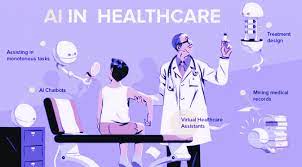
As President Biden has highlighted, artificial intelligence (AI) holds tremendous promise and potential peril. This is especially true in healthcare. On October 30, the President underscored his commitment by signing a landmark Executive Order aimed at governing AI development and use to improve health outcomes for Americans while safeguarding their security and privacy. The Biden-Harris Administration is leveraging every tool at its disposal to advance responsible AI in healthcare. However, U.S. government action alone cannot achieve the bold vision laid out by the President. By integrating AI into their platform, Salesforce aims to empower public health organizations with actionable insights and predictive analytics. From disease surveillance to population health management, AI-driven solutions have the potential to revolutionize how we approach public health initiatives. Therefore, policy priorities include managing and measuring the environmental impacts of AI by requiring emissions disclosures, adding environmental impact as a risk factor, and establishing efficiency standards for high-risk AI systems. In response to the Administration’s leadership, leading healthcare providers and payers have announced voluntary commitments to the safe, secure, and trustworthy use of AI in healthcare. These commitments build on ongoing efforts by the Department of Health and Human Services (HHS), the AI Executive Order, and earlier commitments from 15 leading AI companies to develop models responsibly. Today, 28 providers and payers have joined these commitments, including Allina Health, Bassett Healthcare Network, Boston Children’s Hospital, Curai Health, CVS Health, Devoted Health, Duke Health, Emory Healthcare, Endeavor Health, Fairview Health Systems, Geisinger, Hackensack Meridian, HealthFirst (Florida), Houston Methodist, John Muir Health, Keck Medicine, Main Line Health, Mass General Brigham, Medical University of South Carolina Health, Oscar, OSF HealthCare, Premera Blue Cross, Rush University System for Health, Sanford Health, Tufts Medicine, UC San Diego Health, UC Davis Health, and WellSpan Health. The commitments align with the “FAVES” principles—Fair, Appropriate, Valid, Effective, and Safe. Under these principles, companies commit to informing users when they receive content that is largely AI-generated and not reviewed by humans. They will adhere to a risk management framework to monitor and address potential harms of AI applications. Additionally, they pledge to develop AI solutions responsibly, advancing health equity, expanding access to care, making care affordable, improving care coordination, reducing clinician burnout, and enhancing patient experiences. Healthcare is an essential service, and quality care can be a matter of life and death. AI-enabled tools used for clinical decisions must undergo appropriate testing, risk mitigations, and human oversight to avoid costly or dangerous errors. AI diagnoses can be biased if not trained on diverse data, and AI’s data-collection capabilities could create privacy risks. Addressing these risks is crucial. Despite these risks, AI holds enormous potential to benefit patients, doctors, and hospital staff. AI can help doctors deliver higher-quality, more empathetic care and cut healthcare costs by hundreds of billions of dollars annually. It can also help patients make more informed health choices by better understanding their conditions and needs. Consider some examples: Each year, hospitals produce 3.6 billion medical images worldwide. AI helps doctors analyze images more quickly and effectively, detecting signs of breast cancer, lung nodules, and other conditions earlier than ever before. AI is also streamlining drug development, matching drug targets with new molecules faster and cheaper, translating to better care for patients. Additionally, new generative AI applications can alleviate clinician burnout by automating data extraction, form population, note recording, and patient communications. The Promise of AI in Health Outcomes To understand AI applications and the necessary risk-mitigation measures, the Biden-Harris Administration has engaged with healthcare providers, payers, academia, civil society, and other stakeholders. These engagements have informed the Administration’s approach, including the President’s October AI Executive Order, which tasks HHS with a wide range of actions to advance safe, secure, and trustworthy AI. These actions include developing frameworks, policies, and potential regulations for responsible AI deployment, documenting AI-related safety incidents, prioritizing grants for innovation in underserved communities, and ensuring compliance with nondiscrimination laws in AI deployment in healthcare. The private-sector commitments announced today are a critical step in our whole-of-society effort to advance AI for the health and well-being of Americans. These 28 providers and payers have stepped up, and we hope more will join these commitments in the coming weeks. The Promise of AI in Health Outcomes has been addressed by governments everywhere. In March 2024, Salesforce strengthened its AI commitment to healthcare. Salesforce’s Einstein 1 Platform powers Einstein Copilot with your healthcare organization’s unique data and metadata from Data Cloud to capture and summarize patient details, quickly update patient and member information, and automate manual processes Assessment Generation digitizes paper assessments and surveys to capture and track patient data Customers like Baptist Health South Florida and HarmonyCares are using Salesforce to personalize patient interactions and create a single, unified view of each patient Today, Salesforce announced AI and data innovations for CRM to help make healthcare operations more efficient and personalized. Einstein Copilot: Health Actions, a conversational AI assistant that will deliver trusted AI responses grounded with your healthcare organization’s own trusted and private data, Assessment Generation, and Data Cloud for Health help automate and streamline clinical summaries, deliver more personalized communication, and help compile tailored patient assessments faster for care teams, all from a single platform. These new innovations are powered by Salesforce’s Einstein 1 Platform, which helps organizations safely unlock their data to create better patient experiences and augment employee productivity. Why it matters: Nearly a quarter of U.S. healthcare spending is wasted on administrative costs, presenting a potential cost savings of up to $320 billion for healthcare organizations, according to McKinsey and Co. AI could be the solution, with recent Forrester data revealing that 82% of healthcare data leaders say AI is a top focus area that will drive operational efficiency.  Content updated April 2024. Like Related Posts Who is Salesforce? Who is Salesforce? Here is their story in their own words. From our inception, we’ve proudly embraced the identity of Read more Salesforce Unites Einstein Analytics with Financial CRM Salesforce has unveiled a comprehensive analytics solution tailored for wealth managers, home

Read More
Salesforce Enhances Einstein 1 Platform with New Vector Database and AI Capabilities

Salesforce Enhances Einstein 1 Platform with New Vector Database and AI Capabilities

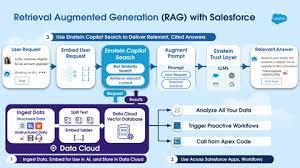
Salesforce (NYSE: CRM) has announced major updates to its Einstein 1 Platform, introducing the Data Cloud Vector Database and Einstein Copilot Search. These new features aim to power AI, analytics, and automation by integrating business data with large language models (LLMs) across the Einstein 1 Platform. Salesforce Enhances Einstein 1 Platform with New Vector Database and AI Capabilities. Unifying Business Data for Enhanced AI The Data Cloud Vector Database will unify all business data, including unstructured data like PDFs, emails, and transcripts, with CRM data. This will enable accurate and relevant AI prompts and Einstein Copilot, eliminating the need for expensive and complex fine-tuning of LLMs. Built into the Einstein 1 Platform, the Data Cloud Vector Database allows all business applications to harness unstructured data through workflows, analytics, and automation. This enhances decision-making and customer insights across Salesforce CRM applications. Introducing Einstein Copilot Search Einstein Copilot Search will provide advanced AI search capabilities, delivering precise answers from the Data Cloud in a conversational AI experience. This feature aims to boost productivity for all business users by interpreting and responding to complex queries with real-time data from various sources. Key Features and Benefits Salesforce Enhances Einstein 1 Platform with New Vector Database and AI Capabilities Data Cloud Vector Database Einstein Copilot Search Addressing the Data Challenge With 90% of enterprise data existing in unstructured formats, accessing and leveraging this data for business applications and AI models has been challenging. As Forrester predicts, the volume of unstructured data managed by enterprises will double by 2024. Salesforce’s new capabilities address this by enabling businesses to effectively harness their data, driving AI innovation and improved customer experiences. Salesforce’s Vision Rahul Auradkar, EVP and GM of Unified Data Services & Einstein, stated, “The Data Cloud Vector Database transforms all business data into valuable insights. This advancement, coupled with the power of LLMs, fosters a data-driven ecosystem where AI, CRM, automation, Einstein Copilot, and analytics turn data into actionable intelligence and drive innovation.” Practical Applications Customer Success Story Shohreh Abedi, EVP at AAA – The Auto Club Group, highlighted the impact: “With Salesforce automation and AI, we’ve reduced response time for roadside events by 10% and manual service cases by 30%. Salesforce AI helps us deliver faster support and increased productivity.” Availability Salesforce Enhances Einstein 1 Platform with New Vector Database and AI Capabilities Salesforce’s new Data Cloud Vector Database and Einstein Copilot Search promise to revolutionize how businesses utilize their data, driving AI-powered innovation and improved customer experiences. Salesforce Enhances Einstein 1 Platform with New Vector Database and AI Capabilities Like Related Posts Who is Salesforce? Who is Salesforce? Here is their story in their own words. From our inception, we’ve proudly embraced the identity of Read more Salesforce Marketing Cloud Transactional Emails Salesforce Marketing Cloud Transactional Emails are immediate, automated, non-promotional messages crucial to business operations and customer satisfaction, such as order Read more Salesforce Unites Einstein Analytics with Financial CRM Salesforce has unveiled a comprehensive analytics solution tailored for wealth managers, home office professionals, and retail bankers, merging its Financial Read more AI-Driven Propensity Scores AI plays a crucial role in propensity score estimation as it can discern underlying patterns between treatments and confounding variables Read more
Read More
Tectonic at a Glance

Will You Get a Return on Your AI Investment?

To get a return on AI investment, you must understand what you are investing in with Artificial Intelligence. “You need to be able to be clear-eyed about the potential but be able then to come down to the use cases. What are the functions? What are the tasks? What are the jobs to be done?” CHITRANG DAVE DATA LEADERSHIP COLLABORATIVE The essence of digital transformation, whether it involves cloud migration or implementing enterprise CRM, revolves around achieving results and enhancing productivity. Artificial Intelligence (AI) is no exception to this paradigm. A survey conducted among analytics and IT leaders reveals the manifold benefits of AI adoption, including expedited business decision-making, operational streamlining, increased focus on valuable tasks, automated workflows, and an enhanced customer experience. However, to fully realize these advantages and get a return on AI investment, it is imperative to pinpoint projects that promise the highest returns. Not every use case aligns with an AI solution, and the process of determining where to deploy AI involves both an art and a science. It commences with a profound understanding of the goals at hand and an assessment of potential challenges. Starting from this foundation, the following questions should guide your approach to get a return on AI investment: By addressing these questions systematically, organizations can navigate the complexities of AI deployment, ensuring that the chosen projects align with their objectives and provide tangible benefits in terms of efficiency, innovation, and customer satisfaction. Like1 Related Posts Salesforce Unites Einstein Analytics with Financial CRM Salesforce has unveiled a comprehensive analytics solution tailored for wealth managers, home office professionals, and retail bankers, merging its Financial Read more AI-Driven Propensity Scores AI plays a crucial role in propensity score estimation as it can discern underlying patterns between treatments and confounding variables Read more Tectonic’s Successful Salesforce Track Record Salesforce Technology Services Integrator – Tectonic has successfully delivered Salesforce in a variety of industries including Public Sector, Hospitality, Manufacturing, Read more Step By Step Guide to a Salesforce Quickstart Salesforce Implementation with a Tectonic Quickstart: Step-by-Step Salesforce Quickstart Guide. Step 1: Define Your Business Requirements Identify specific business processes Read more

Read More
Salesforce Einstein 1 Platform

Salesforce Einstein 1 Platform

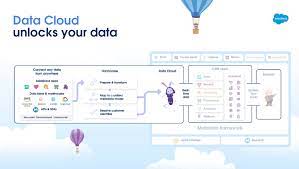
Salesforce unveils the groundbreaking Einstein 1 Platform, a transformative force in enterprise AI designed to enhance productivity and cultivate trusted customer experiences by seamlessly integrating data, AI, and CRM. This advanced platform meets the demands of a new AI era, adeptly managing extensive disconnected data, offering flexibility in AI model selection, and seamlessly integrating with workflow processes while prioritizing customer trust. Salesforce Einstein 1 Platform is a game changer from Salesforce. What is the Salesforce Einstein 1 platform? Einstein 1 has a mixture of artificial intelligence tools on the platform, and it kind of mirrors the way the core Salesforce platform is built, standardized and custom. We have out of the box AI features such as sales email generation in Sales Cloud, and service replies in Service Cloud. The Einstein 1 Platform consolidates data, AI, CRM, development, and security into a unified, comprehensive platform, empowering IT professionals, administrators, and developers with an extensible AI platform for rapid app development and automation. Streamlining change and release management, the DevOps Center allows centralized oversight of project work at every stage of the application lifecycle management process, ensuring secure data testing and AI app deployment. Salesforce customizes security and privacy add-on solutions, including data monitoring and masking, backup implementation, and compliance with evolving privacy and encryption regulations. Grounded in the Einstein 1 Platform, Salesforce AI delivers trusted and customizable experiences by leveraging customer data to create predictive and generative interactions tailored to diverse business needs. What are the Einstein platform products? Commerce Cloud Einstein is a generative AI tool that can be used to provide personalized commerce experiences throughout the entire buyer’s journey. It can be used to generate auto-generated recommendations, content, and communications that are based on real-time data from the Data Cloud. Einstein 1 serves as a comprehensive solution for organizations seeking a unified 360-degree view of their customers, integrating Silverline expertise to maximize AI potential and scalability. The introduction of Einstein 1 Data Cloud addresses data integration challenges, enabling users to connect any data source for a unified customer profile enriched with AI, automation, and analytics. Salesforce Data Cloud unifies and harmonizes customer data, enterprise content, telemetry data, Slack conversations, and other structured and unstructured data to create a single view of the customer. Einstein 1 Data Cloud is natively integrated with the Einstein 1 Platform and allows companies to unlock siloed data and scale in entirely new ways, including: Supporting thousands of metadata-enabled objects per customer, the platform ensures scalability, while re-engineering Marketing Cloud and Commerce Cloud onto the Einstein 1 Platform enables seamless incorporation of massive data volumes. Salesforce offers Data Cloud at no cost for Enterprise Edition or above customers, underscoring its commitment to supporting businesses at various stages of maturity. Einstein Copilot Search and the Data Cloud Vector Database further enhance Einstein 1 capabilities, providing improved AI search and unifying structured and unstructured data for informed workflows and automation. Einstein 1 introduces generative AI-powered conversational assistants, operating within the secure Einstein Trust Layer to enhance productivity while ensuring data privacy. Businesses are encouraged to embrace Einstein 1 as a strategic move toward becoming AI-centric, leveraging its unified data approach to effectively train AI models for informed decision-making. Salesforce’s Einstein 1 Platform introduces the Data Cloud Vector Database, seamlessly unifying structured and unstructured business data to enhance AI prompts and streamline workflows. Generative AI impacts businesses differently, augmenting processes to improve efficiency and productivity across sales, service, and field service teams. Einstein 1 Platform addresses challenges of fragmented customer data, offering a unified view for effective AI model training and decision-making. Salesforce’s continuous evolution ensures businesses have access to cutting-edge AI technologies, positioning Einstein 1 as a crucial tool for staying ahead in the AI-centric landscape. Ready to explore Data Cloud for Einstein 1? Limited access is available for $0, offering businesses an exclusive opportunity to leverage this transformative solution. Salesforce’s Einstein 1 Platform introduces advancements in AI search capabilities and unification of structured and unstructured business data, empowering informed workflows and automation. Einstein GPT expands conversational AI across Marketing and Commerce clouds, with the Data Cloud Vector Database playing a pivotal role in unifying data for Einstein 1 users. Einstein now has a generative AI-powered conversational AI assistant that includes Einstein Copilot and Einstein Copilot Studio. These two capabilities operate within the Einstein Trust Layer – a secure AI architecture built natively into the Einstein 1 Platform that allows you to leverage generative AI while preserving data privacy and security standards. Einstein Copilot is an out-of-the-box conversational AI assistant built into the user experience of every Salesforce application. Einstein Copilot drives productivity by assisting users within their flow of work, enabling them to ask questions in natural language and receive relevant and trustworthy answers grounded in secure proprietary company data from Data Cloud. Data Cloud Vector Database simplifies data integration, enhancing AI prompts without costly updates to specific business models. Data Cloud, integrated with the Einstein Trust Layer, provides secure data access and visualization, enabling businesses to fully harness generative AI. Einstein 1, with Data Cloud, offers a solution for organizations seeking comprehensive customer insights, guided by Silverline expertise for AI maximization. Salesforce’s Einstein 1 Platform securely integrates data, connecting various products to empower customer-centric businesses with AI-driven applications. Data Cloud for Einstein 1 supports AI assistants and enhances customer experiences, driving productivity and reducing operational costs. Einstein 1’s impact is evident in increased productivity and enhanced customer experiences, with ongoing evolution ensuring businesses stay at the forefront of AI technology. Generative AI augments existing processes, particularly in sales, service, and customer support, with Einstein 1 providing tools for streamlined operations. Salesforce’s Einstein 1 Platform introduces AI search enhancements and unified data capabilities, empowering businesses with informed decision-making and automation. Ready to embrace AI-driven productivity? Explore Data Cloud for Einstein 1 and revolutionize your business operations today. Like Related Posts Who is Salesforce? Who is Salesforce? Here is their story in their own words. From our inception, we’ve proudly embraced the identity of Read more Salesforce Marketing

Read More
Salesforce Chat GPT

Chat GPT and Salesforce

It’s more likely that you vacationed on Gilligan’s island than remain unfamiliar with ChatGPT. Since its introduction, this tool has emerged as an essential extension to Salesforce solutions, owing to its remarkable generative AI capabilities. From automating content creation to validating rules ChatGPT excels in some areas. By crafting Apex code, developing Lightning Web Components (LWC), summarizing conversations, and composing knowledge articles, ChatGPT has demonstrated its value. The integration of Chat GPT and Salesforce holds the potential to streamline substantial segments of organizational processes, leading to significant time savings. This not only enhances CRM data management, now fortified by generative AI, but also elevates the customer experience to unprecedented heights. While Salesforce has its own Einstein AI tools, Chat GPT and Salesforce remain a viable tool combination. This article will explore in detail how ChatGPT can seamlessly integrate with Salesforce. Understanding ChatGPT: When I questioned ChatGPT about its nature, and its response is as follows: ChatGPT is a language model created by OpenAI. It operates as a deep generative language neural network, having been trained on an extensive volumes of text to generate coherent and meaningful responses to user queries and commands. In essence, ChatGPT is essentially a chatbot, akin to Einstein bots. However, it distinguishes itself with its robust capabilities. Developed on the OpenAI GPT-3.5 family of large language models, incorporating both supervised and reinforcement learning techniques, ChatGPT has been trained on an extensive dataset of internet text up until January 2022. It excels in natural language processing tasks such as text generation, question answering, translation, and text classification. The underlying technology of ChatGPT is sophisticated, evolving continually through the application of machine learning and deep learning techniques. In 2023, OpenAI introduced two new models: ChatGPT-3.5 Turbo and ChatGPT-4, with the latter being notably superior. For instance, GPT-4 is multimodal, adept at processing both textual and visual inputs, comprehending and describing images effectively. It has also reduced the likelihood of generating nonsensical or “AI hallucinations” by 19-29%. In terms of security, GPT-4 incorporates robust measures from the outset, generating only 0.73% “toxic” responses compared to GPT-3.5’s 6.48%. It excels in maintaining context, with enhanced memory of the conversation, and improved context length to handle more extensive inputs. In summary, the mentioned improvements position GPT-4 as a more advanced and versatile option. ChatGPT Models: Every AI tool relies on models to discern patterns and make decisions from data. The OpenAI API is powered by a family of models with distinct capabilities and pricing scales. Users can also tailor their base models for specific use cases. The primary models include: This serves as a brief overview, and further exploration is possible here. OpenAI retires old models to introduce safer and more advanced versions. When a model becomes obsolete, it is promptly deactivated, with a specified shutdown date. Legacy models, those not receiving updates, are clearly labeled, signaling developers to transition to newer alternatives. Salesforce Consulting Services: Tectonic provides Salesforce consulting services geared toward catalyzing your company’s growth with Chat GPT and Salesforce, or by implementing a customized business solution or enhancing an existing implementation. Use Cases for ChatGPT in the Salesforce Ecosystem: The million-dollar question arises: how can ChatGPT be effectively utilized in Salesforce? Here are several Chat GPT and Salesforce use cases: Precautions with ChatGPT: While ChatGPT proves beneficial in areas like marketing, sales, and service, its application across the organization should be approached with caution. It’s a powerful tool, offering coherent and logical responses, but it cannot replace every role in every area. As of now, it functions as a valuable virtual assistant for specific tasks, but it shouldn’t be the sole source of information. Proper utilization of this tool can positively impact your Salesforce solution, but precautions must be taken. According to the “Generative AI Trends for Sales” report, 73% of sales professionals express concerns about the security risks associated with this technology, with 49% admitting to not knowing how to use it safely at work. Additionally, ChatGPT often lacks context, leading to potential inaccuracies in responses. Therefore, Salesforce recommends taking the following precautions before adopting any integration of Chat GPT and Salesforce: It’s essential not to overestimate ChatGPT while still leveraging its advantages. Currently, it can serve as a virtual assistant to assist with specific tasks, but it should not be the sole source of information. Prudent use of this tool can positively impact your Salesforce solution, but precautions should be taken. It’s advisable to make the most of generative AI capabilities within Salesforce, especially considering the developments in 2023. Salesforce has introduced multiple solutions incorporating this technology, not only with a comprehensive suite of GPT products but also a significant leap in Einstein. Since the past Dreamforce, Einstein Platform 1 has evolved into the CRM’s trusted AI, offering a high-performance real-time conversational assistant, Einstein Copilot, and an Infinite Capability Studio. Being part of Salesforce’s ecosystem eliminates potential data security and privacy gaps, facilitating integration with other platform solutions. ChatGPT marked the inception of the generative AI revolution and stands as a powerful tool. It’s crucial to remember that OpenAI releases versions frequently, addressing major issues promptly. There’s undoubtedly much more to explore and experience with ChatGPT. If you’re considering implementing it in your organization, Tectonic is prepared to assist you in achieving this goal. Like1 Related Posts Who is Salesforce? Who is Salesforce? Here is their story in their own words. From our inception, we’ve proudly embraced the identity of Read more Salesforce Marketing Cloud Transactional Emails Salesforce Marketing Cloud Transactional Emails are immediate, automated, non-promotional messages crucial to business operations and customer satisfaction, such as order Read more Salesforce Unites Einstein Analytics with Financial CRM Salesforce has unveiled a comprehensive analytics solution tailored for wealth managers, home office professionals, and retail bankers, merging its Financial Read more AI-Driven Propensity Scores AI plays a crucial role in propensity score estimation as it can discern underlying patterns between treatments and confounding variables Read more
Read More
Generative AI Regulations

How Generative AI Regulations Could Effect You

If you’re considering integrating generative artificial intelligence (GAI) tools into your business operations, you’re not alone. While these tools have the potential to boost employee productivity, concerns regarding their safety have been voiced by business leaders. Despite their utility in areas like marketing, customer service, and data insights, there is a growing demand for generative AI regulations due to apprehensions about its societal impact and potential risks. Key Points to Consider: Global AI Regulatory Response: A global response to AI regulation is taking shape, with U.S. lawmakers engaging tech leaders and expressing unanimous agreement on the necessity of AI regulation. In the EU, audits of AI algorithms and underlying data from major platforms meeting specific criteria have already begun. Business Decision Makers’ Role: As a decision-maker in your business, it is crucial to understand GAI and its implications for interactions with other companies and consumers. Countries worldwide are working to ensure that generative AI adheres to existing measures related to privacy, transparency, copyright, and accountability. What Your Company Can Do Now: Recent Developments: Concerns and Background on Generative AI Regulations: Considerations for Businesses: The rapidly evolving landscape of generative AI calls for ongoing awareness and adaptation, with the need for businesses to stay informed and engage in proactive discussions with trusted advisers. As regulatory efforts focus on privacy, content moderation, and copyright concerns, the conversations around generative AI regulations are crucial in navigating the ever-changing technological landscape. Like Related Posts Salesforce Unites Einstein Analytics with Financial CRM Salesforce has unveiled a comprehensive analytics solution tailored for wealth managers, home office professionals, and retail bankers, merging its Financial Read more AI-Driven Propensity Scores AI plays a crucial role in propensity score estimation as it can discern underlying patterns between treatments and confounding variables Read more Salesforce AI Einstein Next Best Action Salesforce AI Einstein Next Best Action is a feature designed to identify the most effective actions available to agents and Read more Einstein Relationship Insights ERI, serves as an AI-powered research assistant, enhancing sales processes. ERI operates as a desktop plugin with a browser extension, Read more
Read More
How Good is Our Data

How Data Cloud and Salesforce Success Depend on Data Quality

Optimizing AI’s Impact on Your Business: The Crucial Role of Data Quality in Salesforce In the ever-evolving digital landscape, the convergence of data quality and artificial intelligence (AI) is a linchpin for organizational success. Success depends on data quality within the Salesforce ecosystem. The synergy between Einstein, an advanced AI system, and Data Cloud underscores the pivotal role of high-quality, comprehensive, and real-time data. Thereby unleashing the full potential of AI-driven insights and interactions with customers and prospects. Let’s explore how data quality profoundly influences these two emerging features. This insight will be shedding light on the repercussions of poor data quality and how Einstein and Data Cloud can elevate your organization to greater levels of sales success. Understanding Data Value Depends on Data Quality: Quality data extends beyond merely addressing duplicate records or inaccurate phone numbers It isn’t just about ensuring the area code field doesn’t contain zip codes. It is more than aligning contacts to accounts. It encompasses factors such as completeness, accuracy, and timeliness in your CRM: Consequences of Bad Data: Poor-quality data leads to inefficiencies and wasted time. Oftentimes causing flawed decision-making and strains on organizational resources. More critically, these poor business decisions often lead to tangible financial losses. Transforming bad data into quality data is imperative. Quality is key for relying on it to enhance company performance, requiring ongoing strategies rather than a one-stop solution. The Financial Impact of Accurate Data: Accurate data holds immense value. With data volumes projected to exceed 180 zettabytes by 2025, organizations must harness the power of their data. Proactive handling of data quality not only ensures higher data quality but also mitigates the financial impact of poor data quality. The sooner a plan is implemented to enhance and sustain data quality, the fewer negative repercussions organizations face in leveraging their data for growth. Your next decision is based on your last data. Is it going to help you or hurt you? Salesforce Einstein and the GIGO Principle: Salesforce Einstein, positioned as Artificial Intelligence for everyone, underscores trust as a core value. The system’s ability to create relevant and timely content and interactions is contingent on the quality of the data it operates on. Similar to the historical concept of “Garbage In, Garbage Out” (GIGO), AI results are only as reliable and valuable as the completeness and accuracy of the input data. No surprise, right? Introduction to Salesforce Data Cloud: Enter Salesforce Data Cloud, a platform allowing the organization and segmentation of customer data from any source. This open, extensible platform enables data enrichment from various sources, creating an optimal customer record. This enriched record empowers Sales, Service, and Marketing teams to perform intelligently and swiftly, ultimately driving enhanced results for the company. The WIIFM Factor: Amidst discussions about AI and Data Cloud, addressing the “What’s in it for me?” (WIIFM) question is crucial for organization adoption. Individual organizations must evaluate the reliability and accuracy of their data and determine forward-looking strategies for maintaining quality data, regardless of the source. The common theme remains: for data to yield valuable insights, it must be complete, timely, relevant, and accurate. Ultimately, success depends on data quality. Like3 Related Posts Who is Salesforce? Who is Salesforce? Here is their story in their own words. From our inception, we’ve proudly embraced the identity of Read more Salesforce Marketing Cloud Transactional Emails Salesforce Marketing Cloud Transactional Emails are immediate, automated, non-promotional messages crucial to business operations and customer satisfaction, such as order Read more Salesforce Unites Einstein Analytics with Financial CRM Salesforce has unveiled a comprehensive analytics solution tailored for wealth managers, home office professionals, and retail bankers, merging its Financial Read more AI-Driven Propensity Scores AI plays a crucial role in propensity score estimation as it can discern underlying patterns between treatments and confounding variables Read more

Read More
Salesforce Net Zero Enhancements

Salesforce Net Zero Enhancements

Salesforce AI Innovations Boost ESG Reporting in Net Zero Cloud Powered by Einstein, Net Zero Cloud’s generative AI capabilities will suggest reliable, auto-generated responses for ESG reports – Salesforce Net Zero Enhancements CSRD Report Builder automates reporting, and Materiality Assessment empowers ESG managers to identify most relevant ESG topics Global sports brand Rossignol Group uses Net Zero Cloud to track its carbon footprint; joins 1t.org with commitment to plant 100,000 trees Today at Dreamforce 2023, Salesforce unveiled new Einstein features for Net Zero Cloud to make corporate environmental, social, and governance (ESG) reporting easier for companies as they navigate a rapidly evolving regulatory landscape.  Beginning in 2024, approximately 50,000 companies — including many large, multinationals based in the United States — must comply with the Corporate Sustainability Reporting Directive (CSRD). This includes disclosing both climate-related financial risks and societal impact, along with scope 3 or the emissions generated by a company’s supply chain. The company also introduced two new capabilities for Net Zero Cloud — CSRD Report Builder and Materiality Assessment. The Report Builder automates CSRD report generation, and Materiality Assessment helps organizations determine what is material – both to their business and broader societal impact, the “double materiality” assessment that is a requirement of CSRD. Integrate a complete sustainability management solution into your organization Like Related Posts Who is Salesforce? Who is Salesforce? Here is their story in their own words. From our inception, we’ve proudly embraced the identity of Read more Salesforce Marketing Cloud Transactional Emails Salesforce Marketing Cloud Transactional Emails are immediate, automated, non-promotional messages crucial to business operations and customer satisfaction, such as order Read more Salesforce Unites Einstein Analytics with Financial CRM Salesforce has unveiled a comprehensive analytics solution tailored for wealth managers, home office professionals, and retail bankers, merging its Financial Read more AI-Driven Propensity Scores AI plays a crucial role in propensity score estimation as it can discern underlying patterns between treatments and confounding variables Read more

Read More
Einstein in Salesforce

Einstein in Salesforce

Salesforce AI and CRM Evolution Salesforce has long been a leader in customer relationship management (CRM) by pioneering cloud technologies. Recently, the platform has significantly advanced with the integration of generative artificial intelligence (AI) and AI-powered features, thanks to its Einstein technology. Einstein in Salesforce is like a super smart computer overseeing and analyzing the data in your CRM. This guide explores Salesforce’s AI strategy, exploring its specific products and features to help business teams understand and benefit from this technology. Exploring Salesforce’s Advanced AI Features Einstein, Salesforce’s AI technology, powers various advanced features within the platform. This guide will cover these capabilities, provide real-life adoption examples, and discuss their benefits. Additionally, it offers best practices, solutions, and services to facilitate your Einstein implementation. Salesforce’s Comprehensive CRM Solution Salesforce remains a number one in the CRM software world, offering robust solutions for managing relationships across various departments. Specific clouds within Salesforce enable teams to handle marketing, sales, customer service, e-commerce, and more. The platform focuses on customer experience and provides robust data analytics to support decision-making. Enhancements Through Generative AI Salesforce’s generative AI has rapidly enhanced the platform’s automation, workflow management, data analytics, and assistive capabilities for customer management. A prime example is Salesforce Copilot, which aids internal users with outreach and analysis tasks while improving the external user experience. What is Salesforce Einstein? Salesforce Einstein is the first comprehensive AI for CRM, integrating AI technologies to enhance the Customer Success Platform and bring AI to users everywhere. It is seamlessly integrated into many Salesforce products, offering generative AI built specifically for CRM. Key Features of Salesforce Einstein Comprehensive AI Capabilities of Salesforce Einstein Einstein extends its capabilities across the Salesforce CRM platform under the Customer 360 umbrella, enhancing intelligence and providing personalized customer experiences. Key Benefits of Salesforce Einstein Salesforce Einstein helps close deals faster, personalize customer service, understand customer behaviors, target audience segments better, and create personalized shopping experiences. It ensures data protection and privacy through the Einstein Trust Layer, maintaining strong data governance controls. Responsible AI Principles Salesforce is committed to responsible AI principles, ensuring Einstein is trustworthy and safe for every organization. Organizations can select from various principles to ensure ethical AI use in their operations. Implementation of Salesforce Einstein Salesforce Einstein is a powerful AI solution transforming how businesses interact with customers. By leveraging machine learning and data analysis, it personalizes experiences, predicts customer behavior, and automates tasks, boosting sales, enhancing service, and driving growth. As AI evolves, its impact on CRM will continue to grow, making it an indispensable tool for businesses aiming to stay competitive in today’s data-driven landscape. Top 4 Benefits of Salesforce Einstein in an Organization Einstein Essentials Salesforce Einstein and GPT (Generative Pretrained Transformer) technologies represent significant advancements in AI, particularly in CRM and natural language processing. Here’s a brief overview of their relevance and potential intersection: Data Handling and Ethics in Salesforce Salesforce manages a vast amount of customer data, and the ethical handling of this data is crucial. Key considerations include data privacy, secure storage, access controls, compliance with regulations like GDPR and CCPA, and the ethical use of AI and machine learning. It’s important to maintain transparency, avoid biases, and ensure AI models are making ethical decisions. Newest Einstein Features for 2024 In the rapidly evolving ecosystem of Salesforce, AI offers a suite of tools to spark innovation, streamline operations, and provide richer business insights. Explore these potentials and let Einstein AI reshape your work in 2024. Content updated June 2024. Like1 Related Posts Who is Salesforce? Who is Salesforce? Here is their story in their own words. From our inception, we’ve proudly embraced the identity of Read more Salesforce Marketing Cloud Transactional Emails Salesforce Marketing Cloud Transactional Emails are immediate, automated, non-promotional messages crucial to business operations and customer satisfaction, such as order Read more Salesforce Unites Einstein Analytics with Financial CRM Salesforce has unveiled a comprehensive analytics solution tailored for wealth managers, home office professionals, and retail bankers, merging its Financial Read more AI-Driven Propensity Scores AI plays a crucial role in propensity score estimation as it can discern underlying patterns between treatments and confounding variables Read more
Read More
Salesforce Einstein and Einstein Automate

Einstein Trust

Generative AI, Salesforce, and the Commitment to Trust The excitement surrounding generative AI is palpable as it unlocks new dimensions of creativity for individuals and promises significant productivity gains for businesses. Engaging with generative AI can be a great experience, whether creating superhero versions of your pets with Midjourney or crafting pirate-themed poems using ChatGPT. According to Salesforce research, employees anticipate saving an average of 5 hours per week through the adoption of generative AI, translating to a substantial monthly time gain for full-time workers. Whether designing content for sales and marketing or creating a cute version of a beloved story, generative AI is a tool that helps users create content faster. However, amidst the enthusiasm, questions arise, including concerns about the security and privacy of data. Users ponder how to leverage generative AI tools while safeguarding their own and their customers’ data. Questions also revolve around the transparency of data collection practices by different generative AI providers and ensuring that personal or company data is not inadvertently used to train AI models. Additionally, there’s a need for assurance regarding the accuracy, impartiality, and reliability of AI-generated responses. Salesforce has been at the forefront of addressing these concerns, having embraced artificial intelligence for nearly a decade. The Einstein platform, introduced in 2016, marked Salesforce’s foray into predictive AI, followed by investments in large language models (LLMs) in 2018. The company has diligently worked on generative AI solutions to enhance data utilization and productivity for their customers. The Einstein Trust Layer is designed with private, zero-retention architecture. Emphasizing the value of Trust, Salesforce aims to deliver not just technological capabilities but also a responsible, accountable, transparent, empowering, and inclusive approach. The Einstein Trust Layer represents a pivotal development in ensuring the security of generative AI within Salesforce’s offerings. The Einstein Trust Layer is designed to enhance the security of generative AI by seamlessly integrating data and privacy controls into the end-user experience. These controls, forming gateways and retrieval mechanisms, enable the delivery of AI securely grounded in customer and company data, mitigating potential security risks. The Trust Layer incorporates features such as secure data retrieval, dynamic grounding, data masking, zero data retention, toxic language detection, and an audit trail, all aimed at protecting data and ensuring the appropriateness and accuracy of AI-generated content. Salesforce proactively provided the ability for any admin to control how prompt inputs and outputs are generated, including reassurance over data privacy and reducing toxicity. This innovative approach allows customers to leverage the benefits of generative AI without compromising data security and privacy controls. The Trust Layer acts as a safeguard, facilitating secure access to various LLMs, both within and outside Salesforce, for diverse business use cases, including sales emails, work summaries, and service replies in contact centers. Through these measures, Salesforce underscores its commitment to building the most secure generative AI in the industry. Generating content within Salesforce can be achieved through three methods: CRM Solutions: Einstein Copilot Studio: Einstein LLM Generations API: An overarching feature of these AI capabilities is that every Language Model (LLM) generation is meticulously crafted through the Trust Layer, ensuring reliability and security. At Tectonic, we look forward to helping you embrace and utilize generative AI with Einstein save time. Like1 Related Posts Who is Salesforce? Who is Salesforce? Here is their story in their own words. From our inception, we’ve proudly embraced the identity of Read more Salesforce Marketing Cloud Transactional Emails Salesforce Marketing Cloud Transactional Emails are immediate, automated, non-promotional messages crucial to business operations and customer satisfaction, such as order Read more Salesforce Unites Einstein Analytics with Financial CRM Salesforce has unveiled a comprehensive analytics solution tailored for wealth managers, home office professionals, and retail bankers, merging its Financial Read more AI-Driven Propensity Scores AI plays a crucial role in propensity score estimation as it can discern underlying patterns between treatments and confounding variables Read more

Read More
gettectonic.com