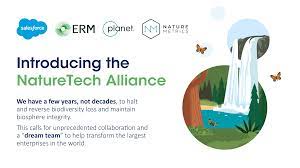
The Nature Tech Revolution: From “Do No Harm” to “Nature-Positive”
In January, ERM, Salesforce, Planet, and NatureMetrics launched the NatureTech Alliance at the World Economic Forum in Davos. The Alliance’s mission is clear: empower companies to leverage advanced data and technology to address pressing nature-related challenges. This integrated effort focuses on:
- Illuminating impacts, dependencies, risks, and opportunities tied to nature
- Streamlining nature-related data management and reporting
- Driving corporate strategies toward measurable, nature-positive outcomes
- Navigating emerging and complex regulatory frameworks
- Encouraging cross-sector collaboration and innovation
- Directing private capital toward impactful nature-positive initiatives
After engaging with clients in early 2024, the Alliance identified recurring challenges across value chains. Through interviews with industry leaders, it uncovered actionable insights into corporate efforts to overcome these hurdles. Seven key takeaways highlight the obstacles and opportunities for effective nature-positive strategies.
Seven Key Insights for Corporate Nature Action
1. Nature Risk is Both Global and Highly Local
Nature-related risks, such as water scarcity or biodiversity loss, vary significantly by region. However, many companies rely on coarse, global data that overlooks critical local nuances like community-level resource usage or ecosystem dynamics. This mismatch creates blind spots that can hinder decision-making, disrupt operations, or lead to regulatory non-compliance.
2. Nature Risk Lacks Integration with Enterprise Strategy
Nature-related risks often remain siloed from broader enterprise risk frameworks, despite deep ties to issues like climate change. For instance, deforestation exacerbates biodiversity loss and water stress while releasing carbon into the atmosphere. Integrating nature data into strategic planning is essential for resilience and sustainable performance.
3. Gaps in Understanding Hinder Progress
Corporate decision-makers and investors frequently struggle to interpret complex nature-related data, slowing the adoption of nature-positive strategies. Bridging this gap with accessible tools and clear communication is critical to driving meaningful action.
4. A Shift from “Do No Harm” to “Net Positive”
Businesses are evolving from mitigating harm (e.g., reducing deforestation) to pursuing net-positive outcomes, such as reforestation or ecosystem restoration. While promising, many of these efforts remain in pilot phases due to challenges in site-level data and measuring impacts.
5. Financial Institutions Lag but Hold Scaling Potential
The financial sector trails industries like agriculture in incorporating nature-related data into decision-making. However, as institutions recognize risks like biodiversity loss and soil degradation, they are poised to influence capital flows and set new standards for nature-positive investments.
6. The Future Lies in Outcome-Based Metrics
Companies are shifting from input-based metrics (e.g., reduced fertilizer use) to measuring real-world outcomes for biodiversity and ecosystem health. Outcome-based metrics offer better clarity on environmental impacts and link corporate actions to business value. However, challenges like standardized methodologies and reliable data collection persist.
7. Data Fragmentation, Not Technology, is the Biggest Barrier
Although technologies like AI and remote sensing are widely available, fragmented and inconsistent data remains a significant hurdle. Many organizations collect localized data but struggle to integrate it across supply chains and operations. Advanced platforms that consolidate disparate datasets are critical for actionable insights.
A Shared Vision for Nature-Positive Solutions
The NatureTech Alliance envisions a transformative approach to addressing these challenges, built on five pillars:
- Unified Data Platforms: Centralized systems for consolidating nature-related risks and opportunities, overcoming data fragmentation and driving actionable insights.
- Outcome-Based Metrics and Predictive Analytics: Moving from reactive compliance to proactive strategies by focusing on measurable environmental outcomes.
- Cross-Sector Collaboration: Facilitating shared innovation among companies, governments, NGOs, and investors to address landscape-level risks.
- Scalable Nature-Positive Investments: Creating profitable and scalable investments through market-driven incentives and innovative financial instruments.
- Accessible, Intuitive Tools: Providing user-friendly technologies to simplify nature-related reporting and decision-making for stakeholders at all levels.
Achieving a Nature-Positive Future
By aligning corporate strategies with these principles, businesses can move beyond “do no harm” to actively restoring ecosystems and driving nature-positive outcomes. This transition requires advanced tools, collaboration, and a commitment to measurable impact—paving the way for a more sustainable and resilient future.

Who is Salesforce? Here is their story in their own words. From our inception, we've proudly embraced the identity of Read more

Salesforce Marketing Cloud Transactional Emails are immediate, automated, non-promotional messages crucial to business operations and customer satisfaction, such as order Read more

Salesforce has unveiled a comprehensive analytics solution tailored for wealth managers, home office professionals, and retail bankers, merging its Financial Read more

AI plays a crucial role in propensity score estimation as it can discern underlying patterns between treatments and confounding variables Read more