Salesforce Einstein Archives - gettectonic.com - Page 12
Salesforce CRM for AI driven transformation

Salesforce CRM Crucial for Transformation Driven by AI

Salesforce recently commission Forrester to wrangle up the state of AI. Overwhelmingly a CRM tool was found to be crucial for transformation driven by artificial intelligence. 89% of those surveyed said AI strategy and capability are top of mind when selecting a CRM partner. Tectonic is pleased to share our thoughts on the crucial role of Salesforce CRM for AI driven transformation. As companies increasingly adopt AI across various technologies, CRM is emerging as a crucial foundation for business transformation driven by AI. The interactions with customers generate substantial volumes of unstructured data from emails, meeting transcripts, phone conversations, and more. AI has the capability to distill this data into key insights and actionable next steps, thereby streamlining employee workflows and enhancing customer interactions. Today’s CRM customers are eager to leverage AI-powered CRMs to personalize front office content, address inquiries, and summarize customer interactions. Customers are rapidly integrating AI across most CRM use cases. According to Forrester’s research: The success of integrating AI capabilities into CRM relies heavily on data readiness. AI-powered CRMs depend on high-quality, well-structured, and clean data for informed predictions, personalized recommendations, and automation of various tasks. Respondents recognize the criticality of data readiness, with 92% emphasizing the importance of a strong data strategy for AI success. However, despite this awareness, many respondents are rushing to implement AI before achieving data readiness, with only 34% having a formal data strategy integrated across the business. Not only is Salesforce CRM a great choice for your digital AI transformation. Salesforce Data Cloud assists in ingesting and unifying data, ensuring your data is ready. Are you aware of the Salesforce Data Cloud license offer? Data readiness practices are generally low, as indicated by respondents ranking their organization’s level of data readiness into three bands: A, B, and C. Twenty-seven percent have ad hoc data initiatives and lack a formal strategy (band A), 39% have a formal data strategy but it is not integrated across the business (band B), and only 34% have a formal strategy integrated across the business (band C). Data readiness is critical for AI-powered CRM, as incomplete or unreliable data may lead to inaccurate and incomplete AI models, risking adverse outcomes. Data remains a primary challenge in Customer Relationship Management, with respondents highlighting data quality issues, extensive reliance on manual processes to synthesize data, and a lack of internal data skills as their top challenges. It’s essential to address these challenges, especially when incorporating generative AI features into an organization’s CRM, as genAI specifically requires a significant amount of data for successful implementation. Tectonic is ready to help you assess your data, implement Salesforce CRM, and experience an AI driven transformation. Contact Tectonic today for a trusted Salesforce partner to assist with your AI driven transformation. Like2 Related Posts Salesforce Unites Einstein Analytics with Financial CRM Salesforce has unveiled a comprehensive analytics solution tailored for wealth managers, home office professionals, and retail bankers, merging its Financial Read more AI-Driven Propensity Scores AI plays a crucial role in propensity score estimation as it can discern underlying patterns between treatments and confounding variables Read more Salesforce AI Einstein Next Best Action Salesforce AI Einstein Next Best Action is a feature designed to identify the most effective actions available to agents and Read more Salesforce Scheduler Salesforce Scheduler provides the objects required for appointment scheduling and an app that makes it easy to set up Scheduler. Read more


Read More
How Good is Our Data

How Good is Our Data?

Generative AI promises to significantly reshape how you manage your customer relationships, but it requires data that is accurate, updated, accessible, and complete. Why is this important? You may do something differently this quarter than you did last quarter, based on the latest data. But if your data is outdated or incorrect, that’s what the AI will use.  Generative AI focuses on creating new and original content, chat responses, designs, synthetic content or even deepfakes. It’s particularly valuable in creative fields and for novel problem-solving, as it can autonomously generate many types of new outputs. Generative Artificial Intelligence models often present inaccurate information as though it were correct. This is often caused by limited information in the system, biases in training data, and issues with the algorithm. These are commonly called ‘hallucinations‘ and they present a huge problem. When training your models for generative AI, you should first ensure high information excellence from top to bottom. To get your information house in order, remove duplicates, outliers, errors, and other things that can negatively affect how you make decisions. Then connect your data sources — marketing, sales, service, commerce – into a single record, updated in real time, so the AI can make the best recommendations.   McKinsey recently wrote, “Companies that have not yet found ways to harmonize and provide ready access to their information will be unable to unlock much of generative AI’s potentially transformative power.” Why is data important in generative AI? Aside from the cost factor, poor information quality can introduce unnecessary and harmful noise into the generative AI systems and models, leading to misleading answers, nonsensical output, or overall lower efficacy. What is high-quality data for AI? High-quality information is essential for AI systems to deliver meaningful results. Data quality possesses several key attributes: Accuracy: High-quality information is free from errors and inaccuracies. Inaccurate information can mislead AI models and produce unreliable outputs. Is AI 100 percent accurate? Because AI will still rely on your data for decision making and accuracy depends on the quality of your information. AI machines must be well-programmed to make sure the machine is making decisions based on the correct, available information. Also, privacy and security of the data are paramount. AI machines need to access information that is encrypted and secure. Understand that Generative AI is most effective at creating new data based on existing patterns and examples, with a focus on text and image data. Generative AI is most suitable for generating new data based on existing patterns and examples. It doesn’t actually think for itself. Yet. Known Limitations Of Generative AI Large language models (LLMs) are prone to “hallucinations” – generating fictitious information, presented as factual or accurate. This can include citations, publications, biographical information, and other information commonly used in research and academic papers. Like1 Related Posts Who is Salesforce? Who is Salesforce? Here is their story in their own words. From our inception, we’ve proudly embraced the identity of Read more Salesforce Marketing Cloud Transactional Emails Salesforce Marketing Cloud Transactional Emails are immediate, automated, non-promotional messages crucial to business operations and customer satisfaction, such as order Read more Salesforce Unites Einstein Analytics with Financial CRM Salesforce has unveiled a comprehensive analytics solution tailored for wealth managers, home office professionals, and retail bankers, merging its Financial Read more AI-Driven Propensity Scores AI plays a crucial role in propensity score estimation as it can discern underlying patterns between treatments and confounding variables Read more

Read More
Marketing Cloud Growth Extends The Platform

Marketing Cloud Growth Extends The Platform

Marketing Cloud Growth extends the platform capabilities to enhance your team’s marketing endeavors. It allows you to integrate multiple data sources with Data Cloud, create content using Digital Experiences, orchestrate complex customer journeys with Flow Builder, and optimize campaigns with Einstein AI. Required Editions: Available in Salesforce Enterprise and Unlimited Editions with Marketing Cloud Growth Edition. Marketing Cloud Growth Extends The Platform Today, Salesforce unveiled Marketing Cloud Growth, a new edition tailored for small businesses to drive efficient growth through CRM, AI, and data integration. Marketing Cloud Growth integrates marketing automation with sales, service, and commerce functionalities on Salesforce’s trusted customer platform, Einstein. Furthermore, Salesforce announced that marketers can leverage Data Cloud at no cost, enabling them to access trusted first-party data crucial for AI-driven, personalized customer experiences. Why it matters: Studies show that 51% of marketers use generative AI to streamline tasks like content creation, copywriting, and market data analysis. However, without high-quality first-party data, AI-generated content lacks the accuracy necessary for businesses to trust and utilize it effectively. AI has significant potential to benefit small businesses, which spend nearly 11 hours per week drafting emails—time that could be saved through AI-driven automation for content creation, personalization, and optimized customer communication timing. By consolidating CRM, AI, and data within a unified platform, these innovations empower businesses to deliver compelling, interconnected customer experiences. Steve Hammond, EVP and GM, Marketing Cloud, Salesforce perspective: “Marketers want to leverage AI to fuel creativity, drive efficiency, and grow their business, but often lack the necessary data for accurate, trustworthy results. By consolidating CRM, AI, and data within a single platform, these innovations empower businesses to deliver the compelling connected experiences customers expect.” With Marketing Cloud Growth, small businesses gain access to Data Cloud and generative AI directly within their workflow, integrating multi-channel marketing with sales, service, and commerce on a single platform. New customers can easily start leveraging data and generative AI to: Additionally, Data Cloud, available at no cost to Salesforce customers, enables: Go deeper: Data Cloud enables companies to consolidate trapped data into Salesforce, creating a comprehensive 360-degree view of customers across products, services, and interactions. Einstein 1 seamlessly integrates with Data Cloud to unlock organizational data for superior customer experiences, AI-driven employee augmentation, and enhanced profitability. Manage Your Marketing App: Salesforce admins, Data Cloud admins, and marketing admins configure and manage Marketing Cloud Growth. Determine whether these roles are consolidated or managed by multiple individuals. Increase Productivity with AI: Predictive and generative AI tools from Einstein in Marketing Cloud Growth enhance work outcomes and day-to-day productivity. Comply with Privacy Regulations: Stay compliant with privacy and consent regulations using Marketing Cloud Growth’s consent management tools, including default marketing communication subscriptions and a built-in email preference page. Target Audiences with Marketing Cloud Growth: Utilize Data Cloud data to filter segments, ensuring your campaigns reach the right audience. Manage Marketing Efforts with Campaigns: Design and automate campaigns in a centralized hub with templated options for content creation. Manage Content in Marketing Cloud Growth: Organize and create various content types within the Content tab powered by Salesforce CMS. Measure Success in Marketing Cloud Growth: Monitor performance and campaign success with Data Cloud reports available in the Analytics tab. Marketing Cloud Growth will initially launch in the United States and Canada, with plans to expand to EMEA by year-end and additional regions thereafter. Salesforce customers with Sales or Service Enterprise Edition (EE) or above can access Data Cloud at no cost. Like1 Related Posts Who is Salesforce? Who is Salesforce? Here is their story in their own words. From our inception, we’ve proudly embraced the identity of Read more Salesforce Marketing Cloud Transactional Emails Salesforce Marketing Cloud Transactional Emails are immediate, automated, non-promotional messages crucial to business operations and customer satisfaction, such as order Read more Salesforce Unites Einstein Analytics with Financial CRM Salesforce has unveiled a comprehensive analytics solution tailored for wealth managers, home office professionals, and retail bankers, merging its Financial Read more AI-Driven Propensity Scores AI plays a crucial role in propensity score estimation as it can discern underlying patterns between treatments and confounding variables Read more

Read More
steps to embrace ai

Steps to Embrace AI

The world is evolving rapidly, with AI playing a transformative role. Despite concerns about AI’s impact on jobs, it has the potential to empower and simplify our lives. Rather than replacing humans, AI can automate routine tasks, allowing individuals to focus on more creative and value-added work. The future lies in human-AI collaboration, requiring us to prepare for a shift in roles and responsibilities.

Read More
Salesforce prompt builder

Create Test and Refine Prompt Templates With Prompt Builder

Salesforce has introduced Prompt Builder, a revolutionary tool powered by generative AI, designed to enhance business tasks by seamlessly integrating prompts into workflows. This article delves into the core AI concepts underlying Prompt Builder, offering insights into creating, managing, testing, and refining prompt templates for optimal performance. Before digging into the intricacies of this new innovation, let’s first explore what generative AI means for administrators. Create Test and Refine Prompt Templates With Prompt Builder. Understanding Key Terms: Key Features of Prompt Builder: Utilizing Prompt Templates: Testing and Refining Prompt Templates: Deploying Prompts: Designing Effective Prompt Templates: Embracing Generative AI with Prompt Builder: As Prompt Builder prepares for its general availability in Spring ’24, businesses can anticipate a paradigm shift in how they harness AI to propel their operations forward. Whether seasoned Salesforce Admins or newcomers to AI integration, Prompt Builder offers a gateway to unlocking the myriad possibilities of generative AI within Salesforce. Create Test and Refine Prompt Templates With Prompt Builder. Like1 Related Posts Who is Salesforce? Who is Salesforce? Here is their story in their own words. From our inception, we’ve proudly embraced the identity of Read more Salesforce Marketing Cloud Transactional Emails Salesforce Marketing Cloud Transactional Emails are immediate, automated, non-promotional messages crucial to business operations and customer satisfaction, such as order Read more Salesforce Unites Einstein Analytics with Financial CRM Salesforce has unveiled a comprehensive analytics solution tailored for wealth managers, home office professionals, and retail bankers, merging its Financial Read more AI-Driven Propensity Scores AI plays a crucial role in propensity score estimation as it can discern underlying patterns between treatments and confounding variables Read more

Read More
Generative AI Terms Do I Need to Understand

What Generative AI Terms Do I Need to Understand to Participate in AI Conversations?

You don’t need to be a software engineer, a data scientist, or a geek to understand gen AI or speak with authority about it with technical people. But business leaders should be able to think about AI holistically. Including benefits and risks, where it fits into the company’s culture, and mission. As well as what type of governance and infrastructure it requires.  What Generative AI Terms Do I Need to Understand to participate in the conversation? Business leaders can’t help lead AI programs to success if they can’t engage with the tech teams.    We’ve put together a list of the most essential AI terms that will help everyone in your company — no matter their technical background – understand the power of generative AI. Each term is defined based on how it impacts both your customers and your team, a crucial element in understanding the power of AI.  Gen AI technologies (and adoption) are growing extraordinarily fast. As it informs more business decisions and transforms your relationships with customers, leaders at all levels must understand its potential, its use cases, and its risks. How do you do that? Start by asking the right questions about AI.   Salesforce’s most recent survey on generative AI use among the general population within the U.S., UK, Australia and India found the public is split between users and non-users. Within each country, the online populations surveyed reported the below usage (note: cultural bias may impact results): Like1 Related Posts AI-Driven Propensity Scores AI plays a crucial role in propensity score estimation as it can discern underlying patterns between treatments and confounding variables Read more Einstein Relationship Insights ERI, serves as an AI-powered research assistant, enhancing sales processes. ERI operates as a desktop plugin with a browser extension, Read more Joined Datasets in B2B Marketing Analytics B2BMA empowers users to generate additional datasets using the data manager. This process involves creating datasets in various ways, such Read more AI in Sales Enablement automation, and personalization to enhance sales processes, increase customer engagement, and drive revenue growth. Companies are working with AI to Read more

Read More
Einstein Predicted Email Engagement

Salesforce Einstein Predicted Email Engagement

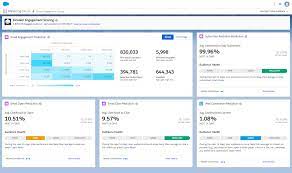
Access Einstein predicted email engagement data is on the email dashboard, categorizing contacts into personas based on engagement thresholds. Utilize detail pages to dig into prediction specifics and assess your audience health. Einstein Engagement Scoring is a feature that anticipates how a contact will engage with a brand and the likelihood of them making a purchase. This analysis relies on the contact’s email engagement data from the past 90 days, encompassing metrics like the number of emails sent, clicks, opens, etc. Einstein Predictive Email Engagement Scoring Einstein Predictive Email, specifically the Engagement Scoring aspect, foresees consumer engagement with email and MobilePush messaging. Leveraging customer data and machine learning, it creates predictive model. By assigning scores to contacts it indicates their likelihood to engage with emails and interact with push notifications. Salesforce Marketing Cloud introduces the Einstein Split activity in Journey Builder. Thus enabling marketers to target segments based on predicted email engagement scores. Different decision splits, such as Persona Split, Web Conversion Likelihood Split, Click Likelihood Split, Subscription Likelihood Split, and Open Likelihood Split, allow precise targeting based on various engagement factors. Email Engagement The email engagement heat map classifies subscribers into personas based on predicted email engagement: The clickTime Comparison feature illustrates changes in subscriber personas over time, providing insights into messaging resonance. For instance, an increase of 10,000 subscribers may show a 5,000 increase in the Loyalist bucket, with 70% transitioning from the Selective Subscriber persona. To utilize Einstein Engagement Scoring for Persona changes over time, a minimum of 14 days of active subscriber evaluation in each business unit is required. Einstein Engagement Scoring Einstein Engagement Scoring utilizes existing customer data and machine learning capabilities in Marketing Cloud to predict the probability of a contact engaging with marketing content. This is including emails and push messages. The generated scores indicate the likelihood of the contact opening or clicking emails and engaging with push notifications. Like2 Related Posts Salesforce Marketing Cloud Transactional Emails Salesforce Marketing Cloud Transactional Emails are immediate, automated, non-promotional messages crucial to business operations and customer satisfaction, such as order Read more Salesforce Unites Einstein Analytics with Financial CRM Salesforce has unveiled a comprehensive analytics solution tailored for wealth managers, home office professionals, and retail bankers, merging its Financial Read more AI-Driven Propensity Scores AI plays a crucial role in propensity score estimation as it can discern underlying patterns between treatments and confounding variables Read more Perfect Drip Campaign In an ideal world, you effortlessly conquer the lead generation challenges with one creative arm tied behind your back, craft Read more

Read More
AI Capability Maturity Model

AI Capability Maturity Model

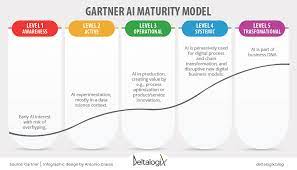
The AI Capability Maturity Model (AI CMM), devised by the Artificial Intelligence Center of Excellence within the GSA IT Modernization Centers of Excellence (CoE), functions as a standardized framework for federal agencies to evaluate their organizational and operational maturity levels. It is equally useful for private organizations in aligning them with predefined objectives. Instead of imposing normative capability assessments, the AI CMM concentrates on illuminating significant milestones indicative of maturity levels along the AI journey. The AI Capability Maturity Model focuses primarily on the development of AI capabilities within an organization. It evaluates an organization’s maturity across four main areas: data, algorithms, technology, and people. Serving as a valuable tool, the AI CMM assists organizations in shaping their unique AI roadmap and investment strategy. The outcomes derived from AI CMM analysis empower decision-makers to identify investment areas that address immediate goals for rapid AI adoption while aligning with broader enterprise objectives in the long run. Maturity vs capability models A maturity model tends to measure activities, such as whether a certain tool or process has been implemented. In contrast, capability models are outcome-based, which means you need to use measurements of key outcomes to confirm that changes result in improvements. AI development rooted in sound software practices underpins much of the content discussed in this and other chapters. Though not explicitly delving into agile development methodology, Dev(Sec)Ops, or cloud and infrastructure strategies, these elements are fundamental to the successful development of AI solutions. The AI CMM elaborates on how a robust IT infrastructure leads to the most successful development of an organization’s AI practice. What are the maturity levels of AI? What are the maturity levels of Artificial Intelligence? Or it can be measured this way. AI Maturity Model Why is AI maturity important? The AI Maturity Assessment is a process designed to help organizations evaluate their current AI capabilities, identify gaps and areas for improvement, and develop a roadmap to build a more effective AI program. Organizational Maturity Areas Organizational maturity areas represent the capacity to embed AI capabilities across the organization. Two approaches, top-down and user-centric, offer distinct perspectives on organizational maturity. Top-Down, Organizational View Bottom-Up, User-centric View Operational Maturity Areas Operational maturity areas represent organizational functions impacting the implementation of AI capabilities. Each area is treated as a discrete capability for maturity evaluation, yet they generally depend on one another. PeopleOps CloudOps DevOps SecOps DataOps MLOps AIOps AI Capability Maturity Model This comprehensive overview of organizational and operational maturity areas underlines the multifaceted nature of AI implementation and the critical role played by diverse elements in ensuring success across different layers of an organization. How AI is transforming the world? AI-powered technologies such as natural language processing, image and audio recognition, and computer vision have revolutionized the way we interact with and consume media. With AI, we are able to process and analyze vast amounts of data quickly, making it easier to find and access the information we need. Like1 Related Posts Who is Salesforce? Who is Salesforce? Here is their story in their own words. From our inception, we’ve proudly embraced the identity of Read more Salesforce Marketing Cloud Transactional Emails Salesforce Marketing Cloud Transactional Emails are immediate, automated, non-promotional messages crucial to business operations and customer satisfaction, such as order Read more Salesforce Unites Einstein Analytics with Financial CRM Salesforce has unveiled a comprehensive analytics solution tailored for wealth managers, home office professionals, and retail bankers, merging its Financial Read more AI-Driven Propensity Scores AI plays a crucial role in propensity score estimation as it can discern underlying patterns between treatments and confounding variables Read more

Read More
Evaluating RAG With Needle in Haystack Test

Evaluating RAG With Needle in Haystack Test

Retrieval-Augmented Generation (RAG) in Real-World Applications Retrieval-augmented generation (RAG) is at the core of many large language model (LLM) applications, from companies creating headlines to developers solving problems for small businesses. Evaluating RAG With Needle in Haystack Test. Evaluating RAG systems is critical for their development and deployment. Trust in AI cannot be achieved without proof AI can be trusted. One innovative approach to this trust evaluation is the “Needle in a Haystack” test, introduced by Greg Kamradt. This test assesses an LLM’s ability to identify and utilize specific information (the “needle”) embedded within a larger, complex body of text (the “haystack”). In RAG systems, context windows often teem with information. Large pieces of context from a vector database are combined with instructions, templating, and other elements in the prompt. The Needle in a Haystack test evaluates how well an LLM can pinpoint specific details within this clutter. Even if a RAG system retrieves relevant context, it is ineffective if it overlooks crucial specifics. Conducting the Needle in a Haystack Test Aparna Dhinakaran conducted this test multiple times across several major language models. Here’s an overview of her process and findings: Test Setup Key Findings Further Experiments We extended our tests to include additional models and configurations: Models Tested: Lars Wiik Similar Tests Included: Result Evaluating RAG With Needle in Haystack Test The Needle in a Haystack test effectively measures an LLM’s ability to retrieve specific information from dense contexts. Our key takeaways include: The test highlights the importance of tailored prompting and continuous evaluation in developing and deploying LLMs, especially when connected to private data. Small changes in prompt structure can lead to significant performance differences, underscoring the need for precise tuning and testing. Like1 Related Posts Who is Salesforce? Who is Salesforce? Here is their story in their own words. From our inception, we’ve proudly embraced the identity of Read more Salesforce Unites Einstein Analytics with Financial CRM Salesforce has unveiled a comprehensive analytics solution tailored for wealth managers, home office professionals, and retail bankers, merging its Financial Read more AI-Driven Propensity Scores AI plays a crucial role in propensity score estimation as it can discern underlying patterns between treatments and confounding variables Read more Tectonic’s Successful Salesforce Track Record Salesforce Technology Services Integrator – Tectonic has successfully delivered Salesforce in a variety of industries including Public Sector, Hospitality, Manufacturing, Read more

Read More
Generative AI Glossary

Key Questions to Ask About Generative AI Before Diving into the Gene Pool

As generative AI plays an increasingly significant role in shaping business decisions and reshaping customer relationships, leaders must grasp the potential.  This means use cases, and risks associated with AI. The good, the bad, and the ugly.  Questions to Ask About Generative AI gene pool. The journey begins with asking pertinent questions. Are you feeling overwhelmed by generative AI yet? The multitude of questions that businesses need to address regarding AI—covering technology, skills, privacy, data, and organizational requirements, among others—can be seemingly endless. Knowing where to start and identifying the most crucial AI-related questions before jumping into implementation can be challenging.  But it is totally worth the time. “Many organizations are venturing into AI for the first time. They are transitioning from predictive AI, machine learning, or deep learning to explore the next generation of AI for elevating productivity.” Marc Benioff, CEO of Salesforce While the demand and potential of AI are substantial, so are the associated risks. To assist in navigating this landscape, here’s a snapshot: Employee View: Exec Summary: Your Next Move: By Tectonic’s Marketing Consultant, Shannan Hearne Like Related Posts Who is Salesforce? Who is Salesforce? Here is their story in their own words. From our inception, we’ve proudly embraced the identity of Read more Salesforce Marketing Cloud Transactional Emails Salesforce Marketing Cloud Transactional Emails are immediate, automated, non-promotional messages crucial to business operations and customer satisfaction, such as order Read more Salesforce Unites Einstein Analytics with Financial CRM Salesforce has unveiled a comprehensive analytics solution tailored for wealth managers, home office professionals, and retail bankers, merging its Financial Read more AI-Driven Propensity Scores AI plays a crucial role in propensity score estimation as it can discern underlying patterns between treatments and confounding variables Read more

Read More
Salesforce Logo

Spring ’24 Enhancements to Salesforce Analytics, Data Cloud, Einstein, and Net Zero Cloud

Discover the Spring ’24 Enhancements to Analytics Data Cloud Einstein and Net Zero Cloud Enhancements to Salesforce Analytics, Data Cloud, Einstein, and Net Zero Cloud in Spring’24. Reports and Dashboards for Data Cloud Enhancements Analytics Create custom report types, more core semantics, calculated insights, and date and time formulas. Analytics Collection Components Analytics Curate related analytics assets for better organization and easier consumption. Embed a specific collection directly into Lightning pages to easily access the insights you need right in your workflow. Enhanced Dashboard Customization Analytics Easily create and remember custom colors for widgets. Save hours in development time by applying layouts and colors to all widgets in a dashboard with just a few clicks. Revenue Intelligence Enhancements Analytics A new streamlined setup helps you get started even faster, and a library of KPI components lets you further customize Forecast Insights. To better understand conversation rates, use the new Win Rate Funnel view. Data Graphs Data Cloud Combine multiple data model objects and calculated insights into a unified view. New Profile API improves query performance to power near real-time use cases across Customer 360. Bring Your Own Lake with Snowflake Data Cloud Share data between Data Cloud and Snowflake with zero-ETL. With Data Federation, you can now share your data bidirectionally and access Snowflake datasets in Salesforce to enrich your unified customer profiles and unlock new insights. Bring Your Own Lake with Google BigQuery Data Cloud Share data between Data Cloud and Google BigQuery with zero-ETL. With seamless data access, you can enrich your unified customer profiles with BigQuery datasets, helping you unlock new insights and better power your Google Analytics and AI models. Streaming Data Ingest for Salesforce CRM Connector Data Cloud Ingest changes to Salesforce standard and custom objects in near real-time with streaming data ingest for the Salesforce CRM Connector. Now, existing batch ingestion checks for more frequent updates to your Salesforce objects. Einstein Copilot Einstein Embed Einstein Copilot—a conversational AI assistant—across all Salesforce applications to help teams be more productive. Automate steps or tasks with out-of-the-box actions, or create custom actions that call flows, Apex, or MuleSoft APIs. Prompt Builder Einstein Create, test, and refine prompt templates easily without code. Ground prompts with dynamic CRM data, including merge fields and flows. Invoke prompted workflows across the Einstein 1 Platform through Flow, Lightning Web Components, and Apex. ESG (Environmental, Social, and Governance) Disclosure Authoring with Generative AI Net Zero Cloud Use Einstein to generate more efficient Corporate Sustainability Reporting Directive (CSRD), Global Reporting Initiative (GRI), and Carbon Disclosure Project (CDP) reports. Einstein can access and use the internal information you’ve uploaded to Net Zero Cloud to write and answer specific questions required for these reporting standards. Disclosure and Compliance Hub Plugin for Microsoft Word Net Zero Cloud Net Zero Cloud now provides sustainability managers more flexibility to support multiple authoring formats using Microsoft Word Office 365. Multiuser collaboration, easy navigation, and rich text support create a cleaner and easier experience. Marginal Abatement Cost Visualizations Net Zero Cloud With marginal abatement cost visualizations, customers can gain insights into required investments for various programs and forecast future emissions based on the cost to offset carbon. Sustainability Program Visualizations Net Zero Cloud Visualize the combined effects of multiple environmental, social, and corporate governance (ESG) initiatives and gain a deeper understanding into different ESG projects and specific metrics within these projects. Improved Emissions Factors Management Net Zero Cloud Automatically integrate emissions factors from Net Zero Marketplace into Net Zero Cloud to easily manage and apply the data, for improved transparency and visibility in one location. Stay tuned to Tectonic’s Insights for more details and news from Salesforce. Enhancements to Salesforce Analytics, Data Cloud, Einstein, and Net Zero Cloud. Like1 Related Posts Who is Salesforce? Who is Salesforce? Here is their story in their own words. From our inception, we’ve proudly embraced the identity of Read more Salesforce Marketing Cloud Transactional Emails Salesforce Marketing Cloud Transactional Emails are immediate, automated, non-promotional messages crucial to business operations and customer satisfaction, such as order Read more Salesforce Unites Einstein Analytics with Financial CRM Salesforce has unveiled a comprehensive analytics solution tailored for wealth managers, home office professionals, and retail bankers, merging its Financial Read more AI-Driven Propensity Scores AI plays a crucial role in propensity score estimation as it can discern underlying patterns between treatments and confounding variables Read more

Read More
Einstein 1 Unveiled

Salesforce Einstein 1 Platform

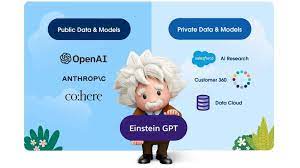
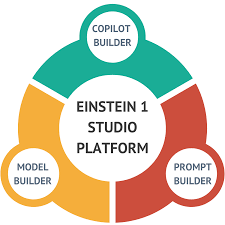
Welcome to the dawn of a bold new era in enterprise Artificial Intelligence, where the world demands a platform unlike any other. Enter Salesforce Einstein 1, the pinnacle of innovation, designed to navigate terabytes of disparate data seamlessly, offer freedom in AI model selection, and integrate directly into your workflow—all while upholding customer trust. Einstein 1 Platform serves as the nexus of your data, AI, CRM, development, and security needs, consolidating them into a singular, robust framework. This empowers IT, administrators, and developers alike with an adaptable AI platform, facilitating rapid development of transformative applications and automation. Within Einstein 1 lies an array of artificial intelligence tools, reflecting the modular architecture of the core Salesforce platform. From standardized to custom solutions, Einstein 1 caters to diverse needs. Examples include out-of-the-box AI features like sales email generation in Sales Cloud and service replies in Service Cloud. Since its unveiling as Genie, now Data Cloud, at Dreamforce ‘22, Salesforce has propelled this product to the forefront of its mission. The conversation has shifted from Customer 360 to encompass AI + CRM + Data—a strategic pivot poised for success in 2024 and beyond. But what does this transformation entail? Data Cloud has been a focal point of Salesforce’s narrative, hailed as a groundbreaking CDP innovation. The recent Q4 earnings call unveiled remarkable achievements: Gartner’s endorsement further solidifies Salesforce’s position, elevating it as a leader in the Magic Quadrant, surpassing rivals like Twilio and Adobe. This achievement is remarkable given Salesforce’s relatively recent CDP certification from the CDP Institute. However, understanding the significance of Data Cloud amidst a sea of CRM solutions may elude many. Yet, the resurgence of data underscores its importance. CRMs, while pivotal for sales, support, and marketing functions, fall short in managing the breadth of modern data collection, storage, and dissemination. Enter the CDP—a dedicated platform for aggregating customer data across every touchpoint throughout the customer lifecycle. Unlike CRMs, which traditionally served as the single source of truth, CDPs offer a comprehensive view, ingesting data from myriad sources. Two key attributes distinguish CDPs and Data Cloud: Yet, amidst this data revolution, the role of artificial intelligence cannot be understated. Einstein 1, formerly known as Salesforce Customer 360, epitomizes this synergy between AI, CRM, and Data. Einstein 1 boasts a diverse array of AI tools, from pre-built features to customizable solutions housed within the Einstein 1 Studio. This enables users to craft tailored AI functionality, seamlessly integrated with Salesforce’s ecosystem. Moreover, Salesforce’s agnostic approach to LLMs empowers users to harness the full potential of AI. Whether leveraging Salesforce’s proprietary LLM or integrating third-party or proprietary models, Einstein 1 ensures flexibility and innovation. As AI continues to permeate every facet of business and personal life, Salesforce’s strategic focus on Data Cloud and Einstein could propel the company to unprecedented growth. In the ever-evolving landscape of enterprise AI, Salesforce remains at the forefront, poised to redefine the future of customer engagement and business intelligence. Like Related Posts Who is Salesforce? Who is Salesforce? Here is their story in their own words. From our inception, we’ve proudly embraced the identity of Read more Salesforce Marketing Cloud Transactional Emails Salesforce Marketing Cloud Transactional Emails are immediate, automated, non-promotional messages crucial to business operations and customer satisfaction, such as order Read more Salesforce Unites Einstein Analytics with Financial CRM Salesforce has unveiled a comprehensive analytics solution tailored for wealth managers, home office professionals, and retail bankers, merging its Financial Read more AI-Driven Propensity Scores AI plays a crucial role in propensity score estimation as it can discern underlying patterns between treatments and confounding variables Read more

Read More
Salesforce Copilot

What is Einstein Copilot for Salesforce?

What Is Einstein Copilot for Salesforce? Salesforce Copilot service operates similarly to other generative AI tools in the customer experience landscape. Users can instruct the tool to automatically respond to customer queries with pertinent, personalized answers based on company data. Is Copilot Safe to Use? Concerned about the safety of using Copilot? Rest assured, you have the ultimate control over your data. Your data remains private and is not shared with a third party unless you have expressly granted permission to do so. Moreover, Microsoft does not utilize your data to train or enhance Copilot or its AI features unless you have provided explicit consent for such purposes. Einstein Copilot represents a cutting-edge generative AI-powered conversational assistant integrated seamlessly into every Salesforce application. It enhances workflow efficiency, driving substantial gains in productivity. Einstein Copilot Studio empowers organizations to tailor their Einstein Copilot for specific business needs, offering a customizable solution. Both Einstein Copilot and Einstein Copilot Studio incorporate the Einstein Trust Layer, ensuring the protection of sensitive data while enabling companies to use their trusted data to enhance generative AI responses. Prominent businesses like AAA, Heathrow Airport, and KPMG US leverage Einstein to enhance productivity, boost revenue, and create personalized experiences. Shouldn’t you? Like1 Related Posts AI-Driven Propensity Scores AI plays a crucial role in propensity score estimation as it can discern underlying patterns between treatments and confounding variables Read more Salesforce AI Einstein Next Best Action Salesforce AI Einstein Next Best Action is a feature designed to identify the most effective actions available to agents and Read more Einstein Relationship Insights ERI, serves as an AI-powered research assistant, enhancing sales processes. ERI operates as a desktop plugin with a browser extension, Read more Joined Datasets in B2B Marketing Analytics B2BMA empowers users to generate additional datasets using the data manager. This process involves creating datasets in various ways, such Read more

Read More

Prompt Builder Einstein

Prompt Builder in Salesforce Einstein: Revolutionizing AI-Powered Automation Salesforce Einstein has introduced a groundbreaking feature called Prompt Builder, designed to simplify and enhance the way businesses leverage generative AI for automation and productivity. Prompt Builder empowers users to create, customize, and deploy AI-driven prompts without needing deep technical expertise. This tool is part of Salesforce’s broader vision to make AI accessible and actionable for everyone. Let’s explore what Prompt Builder is, how it works, and why it’s a game-changer for businesses. What is Prompt Builder? Prompt Builder is a no-code/low-code tool within Salesforce Einstein that allows users to create and manage AI prompts for generative AI models. These prompts can be used to automate tasks, generate content, and provide intelligent responses across Salesforce applications. With Prompt Builder, businesses can harness the power of AI to improve efficiency, enhance customer experiences, and drive innovation. Key Features of Prompt Builder How Does Prompt Builder Work? Use Cases for Prompt Builder 1. Customer Service 2. Sales and Marketing 3. Content Creation 4. Internal Productivity Benefits of Prompt Builder How to Get Started with Prompt Builder The Future of Prompt Builder As generative AI continues to evolve, Prompt Builder is expected to become even more powerful. Future developments may include: Conclusion Salesforce Einstein’s Prompt Builder is a transformative tool that democratizes the use of generative AI for businesses. By enabling users to create, customize, and deploy AI-driven prompts with ease, Prompt Builder empowers organizations to automate tasks, enhance customer experiences, and drive innovation. Whether you’re in sales, marketing, customer service, or any other field, Prompt Builder can help you unlock the full potential of AI. Start exploring Prompt Builder today and revolutionize the way you work with AI! Content updated November 2024. Like Related Posts Who is Salesforce? Who is Salesforce? Here is their story in their own words. From our inception, we’ve proudly embraced the identity of Read more Salesforce Marketing Cloud Transactional Emails Salesforce Marketing Cloud Transactional Emails are immediate, automated, non-promotional messages crucial to business operations and customer satisfaction, such as order Read more Salesforce Unites Einstein Analytics with Financial CRM Salesforce has unveiled a comprehensive analytics solution tailored for wealth managers, home office professionals, and retail bankers, merging its Financial Read more AI-Driven Propensity Scores AI plays a crucial role in propensity score estimation as it can discern underlying patterns between treatments and confounding variables Read more

Read More
Jobs AI Could Take

Jobs AI Could Take

AI’s Impact on Creative Professions AI is poised to replace designers, writers, illustrators, filmmakers, and many other professional roles within the creative services industry. This transition may occur rapidly or gradually, but the inevitability remains. Disregard the notion that AI cannot perform deep-feeling work due to its lack of emotions. Similarly, dismiss the idea that the value of human-crafted work will surge as AI becomes more prevalent. Jobs AI Could Take and jobs it can’t. There are a few artisans, like hand-dipped candle makers, who still charge good prices for a handmade product. And there are many companies that mass produce candles far cheaper. However, the artisians are a small fraction compared to the thousands of craftsmen who existed before the advent of factories. Once AI has full access to publisher archives and the gamut of human emotions documented therein, it will be capable of replicating feelings just as easily. Historically, artisans displaced by machines have faced similar fears. Earning a living as a creative has always been challenging, and this transition will not be any different. Let’s face it. Each of the four Industrial Revolutions have caused fears, displaced workers, and created new jobs. Interestingly, the first three were each about a century apart. And the fourth only 4 short decades. Adapting to AI in Creative Roles Creatives will still possess their passions and skills, but the key question is how to make a living. Embracing AI and integrating it into your workflow is crucial. AI will transform the creative process. Your painting or drawing or creating may not continue to be your full time income, but it will become more valuable as less and less people are doing it. For instance, clients are using AI to expedite writing and strategy development, create packaging designs, and generate variations. In filmmaking, AI assists with storyboarding and editing. Even illustrators are using AI for initial sketches, with a foreseeable shift to using it for final art. Combining roles like writing and design with AI support is becoming more common. AI could enable writers to become proficient in design and illustration, and vice versa. Filmmakers may find new ways to expand their roles, potentially making existing categories less distinct. Current AI Developments in Creative Fields AI is already driving business decisions, with corporations reducing costs by replacing human roles. Here are some current trends: Emphasizing Human Connections Despite AI’s rise, human interaction remains irreplaceable. Profits depend on people making purchases, and corporate employees need trusted individuals to help them sell products and services. Maintaining personal relationships is crucial for success in a world increasingly influenced by AI. Focusing on real, person-to-person connections is essential. Building and nurturing relationships with fellow professionals and clients can provide lasting benefits. Engage in genuine interactions, listen actively, and develop strong interpersonal skills. Sharing stories and demonstrating vulnerability and empathy can strengthen these connections. Leveraging Personal Strengths and Jobs AI Could Take Continue honing your craft and keeping your community informed about your work. Focus on clients who value your expertise and are likely to invest in your services. Opportunities may lie with corporations or wealthy individuals who require your unique skills. Exploring alternative income sources beyond the corporate world can also be beneficial. Some creatives are transitioning to selling their work to communities with shared interests. Ultimately, your unique talents and personal touch are irreplaceable. By embracing AI while maintaining strong human connections, you can navigate the changing landscape and continue to thrive in your creative career. Jobs AI Could Take and why that might not be a terrible thing. Like Related Posts Who is Salesforce? Who is Salesforce? Here is their story in their own words. From our inception, we’ve proudly embraced the identity of Read more Salesforce Unites Einstein Analytics with Financial CRM Salesforce has unveiled a comprehensive analytics solution tailored for wealth managers, home office professionals, and retail bankers, merging its Financial Read more AI-Driven Propensity Scores AI plays a crucial role in propensity score estimation as it can discern underlying patterns between treatments and confounding variables Read more Tectonic’s Successful Salesforce Track Record Salesforce Technology Services Integrator – Tectonic has successfully delivered Salesforce in a variety of industries including Public Sector, Hospitality, Manufacturing, Read more

Read More
gettectonic.com