Salesforce Implementation Services Archives - gettectonic.com - Page 10
AI Potential to Improve Prior Authorizations

AI Potential to Improve Prior Authorizations

AI’s Potential to Reduce Provider Burdens in the Prior Authorization Process Artificial intelligence (AI) has the potential to significantly ease the documentation and substantiation burdens providers face during the prior authorization process. Prior authorization, a critical step where health plans approve or deny coverage for services or prescriptions before they’re administered, is a key cost-control mechanism in the U.S. healthcare system. While it helps payers avoid unnecessary spending, the process poses significant challenges, especially for healthcare providers tasked with gathering and submitting documentation. AI Potential to Improve Prior Authorizations examined. Historically, prior authorization has been a major regulatory challenge for providers, surpassing other issues such as electronic health record (EHR) interoperability and compliance with the No Surprises Act. Despite its cumbersome nature, prior authorization isn’t likely to be eliminated, as it plays a crucial role in balancing healthcare affordability and access to quality care. AI Potential to Improve Prior Authorizations The transactional nature of many prior authorization tasks makes them ripe for automation. Increasingly, stakeholders are turning to AI and other technology-driven solutions to streamline the process, making it less burdensome for providers. How AI Can Streamline Prior Authorization AI has already been applied to various aspects of healthcare, from automating hospital discharges to alleviating the administrative burdens of nurses. When applied to prior authorization, AI can speed up the approval process for both providers and payers, reducing delays in patient care and lowering administrative costs. Health insurance companies are already beginning to leverage AI to expedite prior authorization and claims decisions. However, concerns are growing over whether the use of AI in these areas complies with state and federal regulations. For example, a 2023 AMA Annual Meeting resolution cited an investigation revealing that Cigna doctors denied over 300,000 claims in two months, spending an average of just 1.2 seconds per case using AI. UnitedHealthcare has also employed AI to make “fast, efficient, and streamlined coverage decisions,” raising questions about whether these decisions adhere to regulatory standards for fairness and accuracy. AMA’s Call for Oversight on AI in Prior Authorization Recognizing the risks, the American Medical Association (AMA) has called for increased regulatory oversight of AI in prior authorization. Specifically, the AMA advocates for: AI could potentially reduce the time-consuming, manual tasks associated with prior authorization. However, as AMA Trustee Dr. Marilyn Heine cautioned, “AI is not a silver bullet.” The increasing reliance on AI for prior authorization must not add to the already overwhelming volume of requirements that burden physicians and hinder patient care. Nor can it increase the threat of cyberattacks. Fixing Prior Authorization: AMA’s Role Addressing the challenges of prior authorization is a key part of the AMA’s Recovery Plan for America’s Physicians. The organization is committed to reducing the overuse of prior authorization and improving the fairness of existing processes, ensuring that the use of AI in healthcare supports—not hinders—patient care. To that end, the AMA continues to research the costs and impacts of prior authorization on healthcare providers and patients. To learn more about the proper use of AI in medicine and the AMA’s efforts to reform prior authorization, visit the AMA’s resources on healthcare AI. Content updated September 2024. Like Related Posts Who is Salesforce? Who is Salesforce? Here is their story in their own words. From our inception, we’ve proudly embraced the identity of Read more Salesforce Unites Einstein Analytics with Financial CRM Salesforce has unveiled a comprehensive analytics solution tailored for wealth managers, home office professionals, and retail bankers, merging its Financial Read more AI-Driven Propensity Scores AI plays a crucial role in propensity score estimation as it can discern underlying patterns between treatments and confounding variables Read more Tectonic’s Successful Salesforce Track Record Salesforce Technology Services Integrator – Tectonic has successfully delivered Salesforce in a variety of industries including Public Sector, Hospitality, Manufacturing, Read more

Read More
Salesforce Data Cloud Explained

Salesforce Data Cloud Explained

Salesforce Data Cloud, previously recognized as Salesforce CDP/Genie, made its debut at Dreamforce 2022, hailed by Salesforce as one of the most significant innovations in the company’s history. A hyperscale data platform built into Salesforce. Activate all your customer data across Salesforce applications with Data Cloud. Data Cloud facilitates the intake and storage of real-time data streams on a massive scale, empowering automated tasks that result in highly personalized experiences. Data can be sourced from diverse Salesforce data outlets, including Mulesoft, Marketing Cloud, and others, along with customers’ proprietary applications and data sources. Subsequently, it can dynamically respond to this real-time data by automating actions across Salesforce CRM, Marketing Cloud, Commerce, and more, inclusive of automating actions through Salesforce Flow. What is the Salesforce data cloud? Data Cloud is the fastest growing organically built product in Salesforce’s history (i.e. Salesforce built it themselves, not via acquisitions). Data Cloud could be described as the ‘Holy Grail of CRM’, meaning that the data problem that’s existed since the infancy of CRM is now finally solvable. Data Cloud is the foundation that speeds up the connectivity between different ‘clouds’ across the platform. However, Data Cloud is also a product that can be purchased. While not all Salesforce customers have licensed Data Cloud, being at the foundation means they are still taking advantage of Data Cloud to a degree – but this all becomes even stronger with Data Cloud as a personalization and data unification platform. What is the history of Data Cloud? Salesforce has gone through several iterations with naming its CDP product: Customer 360 Audiences → Salesforce CDP → Marketing Cloud Customer Data Platform → Salesforce Genie → Salesforce Data Cloud. In some instances, changes were made because the name just didn’t stick – but what’s more important to note, is that some of the name changes were to indicate the significant developments that happened to the product. Salesforce Data Cloud Differentiators Data Cloud, in itself, is impressive. While many organizations would consider it expensive, if you were to flip the argument on its head, by buying your own data warehouse, building the star schema, and paying for ongoing compute storage, you’d be looking to spend 5 to 10 times more than what Salesforce is charging for Data Cloud. Plus, data harmonization works best when your CRM data is front and center. There are other key differentiators that helps Data Cloud to stand out from the crowd: Is data cloud a data lakehouse? That means that Data Cloud is now not just a really good CDP, it’s now a data lake which will be used in sales and service use cases. But it also means that we can start to fundamentally move some of our higher-scale consumer products like Marketing and Commerce onto the platform. Is Snowflake a data Lakehouse? Snowflake offers customers the ability to ingest data to a managed repository, in what’s commonly referred to as a data warehouse architecture, but also gives customers the ability to read and write data in cloud object storage, functioning as a data lake query engine. What is the benefit of Salesforce data cloud? Data Cloud empowers Salesforce Sales Cloud with AI capabilities and automation that quickly closes deals and boosts productivity across every channel. It drives customer data from all the touchpoints and unifies it separately in individual customer profiles. Salesforce Data Cloud is a powerful data warehouse solution that allows companies to effectively manage and analyze their data. What is the difference between Salesforce CDP and data lake? Talking abut Salesforce CDP is a little bit like a history lesson. While a CDP provides a unified, structured view of customer data, a data lake, on the other hand, is more of a raw, unstructured storage repository that holds a vast amount of data (more than just customer data) in its native format until it’s needed. Like1 Related Posts Who is Salesforce? Who is Salesforce? Here is their story in their own words. From our inception, we’ve proudly embraced the identity of Read more Salesforce Marketing Cloud Transactional Emails Salesforce Marketing Cloud Transactional Emails are immediate, automated, non-promotional messages crucial to business operations and customer satisfaction, such as order Read more Salesforce Unites Einstein Analytics with Financial CRM Salesforce has unveiled a comprehensive analytics solution tailored for wealth managers, home office professionals, and retail bankers, merging its Financial Read more AI-Driven Propensity Scores AI plays a crucial role in propensity score estimation as it can discern underlying patterns between treatments and confounding variables Read more

Read More
Channels and Tactics Redefine Customer Engagement

Channels and Tactics Redefine Customer Engagement

In today’s digital era, data is the core of enterprises, transforming actionable insights from a secondary role to a mission-critical element. Channels and Tactics Redefine Customer Engagement for nearly everyone. Marketers are investing heavily in tools and technologies that unify data, enabling brands to create unique customer profiles, automate campaigns, and scale personalized strategies effectively. While customer relationship management (CRM) systems are widely popular, marketers use a variety of tools to maintain relationships throughout the customer lifecycle. Notably, 89% of B2B and B2B2C marketers utilize account-based marketing platforms to conduct targeted campaigns in collaboration with their sales and service teams. To meet the growing demand for data-driven, personalized, and scalable customer experiences, over half of marketers have adopted artificial intelligence (AI). Additionally, 90% use CRM systems, 89% employ account-based marketing platforms, and 62% leverage AI. Marketers are keenly aware of customer trends and are experimenting with new digital channels to connect with their audience. Chief Marketing Officers (CMOs) cite customer preferences and expectations as the primary drivers of digital strategy. Recognizing the dominance of streaming services in the media landscape, marketers are increasingly using TV and over-the-top (OTT) platforms to reach prospects and customers. Video remains a crucial component of the marketing mix, with both pre-produced and livestream videos gaining traction. As customers show a growing preference for online engagement, marketers are leveraging a wide range of interactive and user-generated content to satisfy this demand. Interactive content and livestream videos, in particular, have experienced the most significant annual growth. Channels and Tactics Redefine Customer Engagement and that is not likely to change any time soon. Like Related Posts Who is Salesforce? Who is Salesforce? Here is their story in their own words. From our inception, we’ve proudly embraced the identity of Read more Salesforce Marketing Cloud Transactional Emails Salesforce Marketing Cloud Transactional Emails are immediate, automated, non-promotional messages crucial to business operations and customer satisfaction, such as order Read more Salesforce Unites Einstein Analytics with Financial CRM Salesforce has unveiled a comprehensive analytics solution tailored for wealth managers, home office professionals, and retail bankers, merging its Financial Read more AI-Driven Propensity Scores AI plays a crucial role in propensity score estimation as it can discern underlying patterns between treatments and confounding variables Read more
Read More
Einstein GPT Links to Flow and Data Cloud

Einstein GPT Links to Flow and Data Cloud

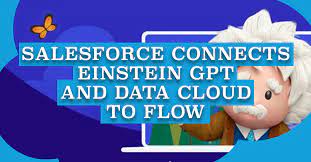
Salesforce Harnesses AI and Data Integration to Drive Autonomous, Intelligent Enterprise-Einstein GPT Links to Flow and Data Cloud Salesforce is forging ahead with innovative advancements, seamlessly integrating Einstein GPT and Data Cloud into Flow to propel the autonomous, intelligent enterprise. This article explores how these technologies collaborate to enhance customer experiences and streamline business operations. Einstein GPT Links to Flow and Data Cloud for Intelligent Enterprise Einstein GPT, Salesforce’s groundbreaking generative AI CRM technology, merges proprietary AI models with cutting-edge generative AI from diverse partners, alongside real-time data from the Salesforce Data Cloud. With Einstein GPT, users can leverage this data within their Salesforce CRM to generate adaptive content using natural-language prompts, responding dynamically to evolving customer information and preferences. The Data Cloud consolidates a company’s customer data from various channels into a unified, real-time customer profile. By empowering Flow with the Data Cloud, customers can automate intricate workflows triggered by real-time changes. Flow paired with Einstein GPT offers a conversational interface for creating and adjusting automation, significantly simplifying the process and reducing barriers for non-technical users. Einstein GPT Across Sales, Service, Marketing, and Development Salesforce introduces Einstein GPT across Sales, Service, Marketing, and Development to automate tasks such as composing emails, scheduling meetings, generating knowledge articles from case notes, and crafting personalized content across multiple platforms. Developers benefit from enhanced productivity with AI-driven code generation and assistance using Salesforce Research’s language model. By combining Einstein AI models with ChatGPT or similar models, customers can use natural-language prompts on CRM data to trigger powerful automation and generate personalized content efficiently. Generative AI Fund Salesforce Ventures launches a $250 million Generative AI Fund to invest in promising startups, bolster the startup ecosystem, and advance responsible and trusted generative AI technologies. Real-World Applications Flow, empowered by the Data Cloud, enables businesses to personalize every interaction. For instance, marketers optimize retail experiences with real-time data-driven automation for in-store discounts, while financial services automate fraud detection by flagging suspicious transactions. Manufacturing companies enhance efficiency by monitoring machine performance and automating maintenance requests based on real-time data. Einstein GPT Links to Flow and Data Cloud Real-time automation transforms energy solution commissioning. Salesforce automation streamlines energy production snapshots and system registration for incentives, enhancing operational efficiency and ensuring customer satisfaction. Salesforce is leading the charge in revolutionizing AI-driven content and real-time data integration to automate workflows and deliver personalized customer experiences. The integration of Einstein GPT and Data Cloud into Flow simplifies automation creation and fosters accessibility for all users. With the launch of Einstein GPT for diverse business functions and the Generative AI Fund, Salesforce demonstrates its commitment to responsible, trusted, and innovative AI solutions. Across industries, Salesforce is paving the way for a future powered by autonomous, intelligent enterprises. Like1 Related Posts Who is Salesforce? Who is Salesforce? Here is their story in their own words. From our inception, we’ve proudly embraced the identity of Read more Salesforce Marketing Cloud Transactional Emails Salesforce Marketing Cloud Transactional Emails are immediate, automated, non-promotional messages crucial to business operations and customer satisfaction, such as order Read more Salesforce Unites Einstein Analytics with Financial CRM Salesforce has unveiled a comprehensive analytics solution tailored for wealth managers, home office professionals, and retail bankers, merging its Financial Read more AI-Driven Propensity Scores AI plays a crucial role in propensity score estimation as it can discern underlying patterns between treatments and confounding variables Read more

Read More
Salesforce Announces Public Sector Compliance Certifications

Salesforce Announces Public Sector Compliance Certifications

Salesforce’s new Government Cloud certification marks a significant step for the U.S. Department of Defense in embracing cloud technology for secure app development and deployment. This certification enables government agencies to harness Salesforce’s suite of tools including CRM, AI, automation, and data management, thereby enhancing staff productivity, reducing operational costs, and fostering citizen engagement. Salesforce Announces Public Sector Compliance Certifications. Today, Salesforce introduced enhanced capabilities and compliance certifications for Customer 360 in the Public Sector. These advancements empower government organizations to modernize their services with tailored features designed to meet rigorous compliance standards within a unified, automated, and intelligent platform. Addressing compliance concerns: As digitalization becomes increasingly prevalent in government operations, ensuring security remains paramount. With over half of government employees reporting increased digitization and a rise in security threats, Salesforce’s Government Cloud Plus – Defense achieves DISA Impact Level 5 provisional authorization. This accreditation enables the U.S. Department of Defense and authorized defense contractors to leverage Salesforce for their mission-critical tasks. Furthermore, Government Cloud Plus already holds FedRAMP High and DISA Impact Level 4 authorizations, permitting federal and local government agencies to develop and deploy apps containing controlled unclassified information. Dave Rey, President of Global Public Sector at Salesforce, underscores the significance of these compliance certifications. He states, “With these compliance certifications, Salesforce continues to demonstrate commitment to meet the evolving U.S. government security needs.” Rey emphasizes the transformative potential of these environments, enabling the U.S. DoD to expedite digital transformation initiatives with the aid of CRM, data management, and automation tools, thereby enhancing operational efficiency on a significant scale. Salesforce Announces Public Sector Compliance Certifications The need for Customer 360: With post-pandemic labor and budget shortages, government organizations need to find a way to do more with less — without compromising cybersecurity or the constituent experience. What’s new in Customer 360 for Public Sector: Only 16% of constituents believe that the government has successfully used technology to improve their experiences. Agencies need to be able to tap into cutting-edge technology, including real-time data, AI, and automation, to deliver proactive personalized experiences citizens are asking for while helping them understand and access public services quickly and easily with proactive delivery of personalized programs. Automation, analytics, and intelligence capabilities purpose-built for the public sector include: “In an increasingly digital world, citizens expect to be able to engage with government agencies, anywhere they are, without friction. And, agencies of all sizes are being asked to do more with less, so they need automated, intelligent solutions to help them modernize service and deliver experiences that are secure, efficient, and easy. With Salesforce, agencies can achieve faster time to value and accelerate digital service delivery, helping to improve mission outcomes and better engage with citizens,” said Nasi Jazayeri, EVP and GM, Public Sector, Salesforce. Learn more about Customer 360 for Public Sector  Like1 Related Posts Who is Salesforce? Who is Salesforce? Here is their story in their own words. From our inception, we’ve proudly embraced the identity of Read more Salesforce Marketing Cloud Transactional Emails Salesforce Marketing Cloud Transactional Emails are immediate, automated, non-promotional messages crucial to business operations and customer satisfaction, such as order Read more Salesforce Unites Einstein Analytics with Financial CRM Salesforce has unveiled a comprehensive analytics solution tailored for wealth managers, home office professionals, and retail bankers, merging its Financial Read more AI-Driven Propensity Scores AI plays a crucial role in propensity score estimation as it can discern underlying patterns between treatments and confounding variables Read more

Read More
Salesforce Telephony Integration

Aircall and Salesforce Integration

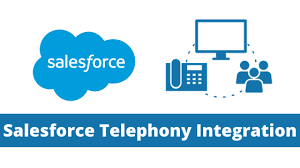
Aircall offers inbound screen-pop and automation call logging.  Run outbound list dialer campaigns from any Salesforce list of records or reports. Aircall and Salesforce Integration. Use the Aircall Salesforce integration to place and receive phone calls directly in Sales Cloud or Service Cloud. With the Aircall Salesforce integration all calls are automatically logged directly into Salesforce and each caller’s history is saved. You can now very easily connect Salesforce with Aircall to ramp-up your CRM. Log calls will be created for any type of calls and will be assigned to the person who picks up the call. Does Salesforce have VOIP? Telephony in Salesforce is done through a VOIP (voice over internet protocol) service. Many offerings on the market provide this, including RingCentral, Natterbox, and Salesforce’s own Service Cloud Voice. What makes Aircall different? Aircall uses cloud-based technology so no more physical desk phones. Set up whole teams, in moments, no matter where they’re based. Benefit from performance insights and integrate Aircall with all your existing systems for better productivity. Salesforce CTI, or Computer Telephony Integration, is a feature that allows you to integrate your telephone system with your Salesforce account. This integration enables you to make and receive calls, view call history, and log call information directly from within Salesforce. Like2 Related Posts Who is Salesforce? Who is Salesforce? Here is their story in their own words. From our inception, we’ve proudly embraced the identity of Read more Salesforce Marketing Cloud Transactional Emails Salesforce Marketing Cloud Transactional Emails are immediate, automated, non-promotional messages crucial to business operations and customer satisfaction, such as order Read more Salesforce Unites Einstein Analytics with Financial CRM Salesforce has unveiled a comprehensive analytics solution tailored for wealth managers, home office professionals, and retail bankers, merging its Financial Read more AI-Driven Propensity Scores AI plays a crucial role in propensity score estimation as it can discern underlying patterns between treatments and confounding variables Read more
Read More
Salesforce Success Story

Case Study: Financial Services-Insurance Healthcare-Salesforce Service/Marketing Clouds

Salesforce provides comprehensive solutions tailored for the healthcare industry, addressing the specific needs of both payers (insurance providers) and providers (healthcare organizations). These solutions are designed to enhance patient engagement, improve operational efficiency, and drive better health outcomes. Salesforce Financial Services and Healthcare solutions.

Read More
Salesforce

What are Salesforce Roles?

SFDC roles are record-level access controls that define what data a user can see in Salesforce. In other words, roles can be used to determine the visibility access of the user and the data they can access in your Salesforce CRM organization. For this insight we are looking for roles as defined in your Salesforce instance not roles as job titles. How many roles are there in Salesforce? By default, a Salesforce org can have up to 500 Roles. The current Maximum is 10,000. If you require more you will need a documented business case, including the specific amount of roles required when requesting a higher limit. What are roles and hierarchy? Role hierarchy works together with sharing settings to determine the levels of access users have to your Salesforce data. In most cases, the Salesforce hierarchical roles allow employees access to data of all the users directly below them in the hierarchy. How is a role and a user different in Salesforce? A user can access, and roles determine what records a user can see relative to others in the organization’s hierarchy. Typically, a user’s profile is set to something such as Sales or HR or System Administrator. This will determine what they have access to within the system. Custom roles can be created by your Salesforce administrator. Can you have multiple SFDC roles? Sorry, you cannot assign either multiple profiles or roles to a single user. One would typically create a single profile with sufficient permissions and then place the users of this profile high enough up in the role hierarchy. As an admin, you can log in as another user to see their views in Salesforce. What is the profile and permission in Salesforce? In Salesforce, profiles and permission sets define what a user can do. Roles, on the other hand, define what they can see. Salesforce offers a user role hierarchy that you can use with sharing settings to determine the levels of access that users have to your Salesforce org’s data. Roles within the hierarchy affect access on key components such as records and reports. Users at any role level can view, edit, and report on all data that’s owned by or shared with users below them in their role hierarchy. The only exception is for custom objects, for which you can disable the Grant Access Using Hierarchies setting on the Sharing Settings page. When disabled, only the record owner and users who are granted access have access to the custom object’s records. When you edit groups, roles, and territories, sharing rules are recalculated to add or remove access as needed. Like Related Posts Who is Salesforce? Who is Salesforce? Here is their story in their own words. From our inception, we’ve proudly embraced the identity of Read more Salesforce Marketing Cloud Transactional Emails Salesforce Marketing Cloud Transactional Emails are immediate, automated, non-promotional messages crucial to business operations and customer satisfaction, such as order Read more Salesforce Unites Einstein Analytics with Financial CRM Salesforce has unveiled a comprehensive analytics solution tailored for wealth managers, home office professionals, and retail bankers, merging its Financial Read more AI-Driven Propensity Scores AI plays a crucial role in propensity score estimation as it can discern underlying patterns between treatments and confounding variables Read more

Read More
Data Collection

Marketing Cloud Personalization Explained

Marketing Cloud Personalization introduces an advanced level of customization for both you and your clients. By tracking customer interactions on your website, the system can adjust messaging on web pages and customize experiences based on the products and services that interest your customer. With Marketing Cloud Personalization (formerly Interaction Studio), visualize, track, and manage customer experiences with real-time interaction management. SMCP gives you the power to utilize the 4 P’s of marketing personalization. What are the 4 Ps of marketing personalization? The timeless 4 Ps of marketing—Product, Place, Price, and Promotion—remain relevant. To capitalize on contemporary capabilities, it’s essential to update strategies. A recent Infosys survey found that: While monitoring customer behavior for personalized experiences is not new, the ability to do it in real-time is. To bring this vision to life, rely on Marketing Cloud Personalization (formerly Salesforce Interaction Studio). Salesforce Marketing Cloud Personalization is a real-time personalization and interaction management solution, creating personalized experiences at crucial touch points throughout the customer journey. Marketing Cloud Personalization enables you to: Other beneficial reasons to implement Marketing Cloud Personalization include: Impact & Benefits Across Industries: Marketing Cloud Personalization captures data from every interaction, building unique customer profiles for known and unknown visitors. It supports web, mobile, and email campaigns, offering real-time personalization experiences and advanced features like triggered and server-side campaigns. Gears, Feeds, and Catalogs: Like1 Related Posts Who is Salesforce? Who is Salesforce? Here is their story in their own words. From our inception, we’ve proudly embraced the identity of Read more Salesforce Marketing Cloud Transactional Emails Salesforce Marketing Cloud Transactional Emails are immediate, automated, non-promotional messages crucial to business operations and customer satisfaction, such as order Read more Salesforce Unites Einstein Analytics with Financial CRM Salesforce has unveiled a comprehensive analytics solution tailored for wealth managers, home office professionals, and retail bankers, merging its Financial Read more AI-Driven Propensity Scores AI plays a crucial role in propensity score estimation as it can discern underlying patterns between treatments and confounding variables Read more
Read More
Salesforce Data Cloud

Salesforce Data Cloud

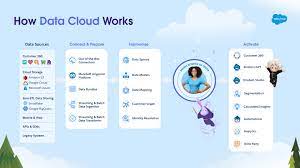
Revolutionizing Customer Engagement with the First Real-Time Platform – Salesforce Data Cloud In today’s business environment, customer expectations are soaring, with 71% anticipating personalized interactions at every touchpoint. However, the deluge of data, diverse devices, and evolving experiences poses a challenge for companies to maintain relevance. The typical business juggles an average of 1,061 form completions resulting in fragmented customer profiles and a sense of anonymity. The experience rather than giving personalized value. Leading to a sense of disconnection. Imagine a solution that consolidates all customer data, spanning channels and systems, into a unified source of truth. What if this real-time data could transform customer interactions? Empowering you to make them feel not just recognized but truly understood? Enter Salesforce Data Cloud, the inaugural real-time platform designed for customer magic. Data Cloud seamlessly integrates real-time data into Customer 360, unlocking the potential for enchanting customer experiences. Equipped with built-in connectors, Data Cloud aggregates data from diverse sources—Salesforce apps, mobile, web, connected devices, legacy systems via MuleSoft, and historical data from proprietary lakes—all in real time. However, the true power lies in distilling this vast pool of data into a cohesive customer view. Data Cloud achieves this by harmonizing and storing customer data at an extensive scale, crafting a dynamic, real-time customer graph—a singular source of truth. Real-Time Visibility The Data Cloud process involves connecting data streams, harmonizing the data into a real-time customer graph, and making it available across the Customer 360, facilitating engagement and creating magical experiences—all unfolding in real time. This real-time customer graph continually evolves as it absorbs more customer data. Activating this data across the entire Customer 360 empowers companies to create personalized, magical experiences. The real-time data from Data Cloud enhances automation with Flow and augments intelligence with Einstein, all under the reliable umbrella of Hyperforce infrastructure. The result? An automated, intelligent, and real-time Customer 360, delivering cost savings, time efficiency, and revenue growth. Data Cloud’s impact spans across the Customer 360 ecosystem: In essence, Data Cloud empowers businesses across industries to deliver real-time, intelligent, and automated experiences, fostering loyalty, cost efficiency, and increased ROI—a truly magical transformation! Like Related Posts Who is Salesforce? Who is Salesforce? Here is their story in their own words. From our inception, we’ve proudly embraced the identity of Read more Salesforce Marketing Cloud Transactional Emails Salesforce Marketing Cloud Transactional Emails are immediate, automated, non-promotional messages crucial to business operations and customer satisfaction, such as order Read more Salesforce Unites Einstein Analytics with Financial CRM Salesforce has unveiled a comprehensive analytics solution tailored for wealth managers, home office professionals, and retail bankers, merging its Financial Read more AI-Driven Propensity Scores AI plays a crucial role in propensity score estimation as it can discern underlying patterns between treatments and confounding variables Read more
Read More
Salesforce Success Story

Case Study: Salesforce Innovation for Hospitality

Major hospitality management firm, moves to the cloud and adopts Google Cloud and Salesforce to improve operational insights and decision-making. Tectonic assisted them to move to the cloud and obtatin quicker, actionable insights with business intelligence. Salesforce Innovation for Hospitality.

Read More
Salesforce Success Story

Case Study: A Marquis Resort Hotel in Hawaii-Hospitality-Salesforce Service/Marketing Clouds and Interaction Studio

Transforming the Guest Experience for Modern Luxury Resort hotel builds loyalty and drives sales increase across all sites using data and segmentation: Hospitality Salesforce Service Marketing Marketing Cloud Interaction Studio Service Cloud Hospitality Salesforce Service Marketing This oceanfront resort has over 400 rooms and cottages/villas, spa, golf and a variety of restaurants. PROBLEM: SOLUTION: RESULTS: Like1 Related Posts Salesforce Marketing Cloud Transactional Emails Salesforce Marketing Cloud Transactional Emails are immediate, automated, non-promotional messages crucial to business operations and customer satisfaction, such as order Read more Tectonic’s Successful Salesforce Track Record Salesforce Technology Services Integrator – Tectonic has successfully delivered Salesforce in a variety of industries including Public Sector, Hospitality, Manufacturing, Read more Perfect Drip Campaign In an ideal world, you effortlessly conquer the lead generation challenges with one creative arm tied behind your back, craft Read more Asset Management Salesforce Can Salesforce do asset management? You can manage assets in Consumer Goods (desktop) and in the Consumer Goods offline mobile Read more

Read More
Salesforce DevOpps

Salesforce DevOpps Engineer Explained

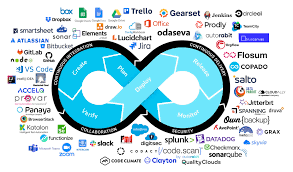
Salesforce DevOps aligns with traditional DevOps principles but focuses on leveraging Salesforce at scale. Its core objective is to assist development teams in proactively identifying problems, detecting bugs, and resolving issues before implementing changes for customers. Salesforce DevOpps Engineer Explained. Salesforce DevOps Engineers play a crucial role in ensuring the seamless deployment of Salesforce changes throughout the software development lifecycle, minimizing bugs, and avoiding disruptions for users. Contrary to requiring extensive coding skills, our no-code Salesforce DevOps platform accelerates Salesforce deployments by 50-75%, providing the flexibility to automate Continuous Integration/Continuous Deployment (CI/CD) pipelines with a preferred choice of tools. The responsibilities of a Salesforce DevOps Engineer are unique to the Salesforce ecosystem and necessitate a specialized understanding of Salesforce. The role can be categorized into entry-level, mid-level, and senior based on experience. Salesforce DevOpps Engineer Explained The demand for Salesforce DevOps is on the rise. More teams recognizing the advantages of reliable deployments and automated releases. While not all job titles explicitly mention “DevOps,” the practices are integrated into various roles such as administrators and developers. Senior Salesforce DevOps Engineers, with a minimum of 5+ years of experience, typically serve as Team Leads in multidisciplinary teams. They oversee the entire DevOps process, delegate responsibilities, define KPIs, review code coverage and quality, and mentor others within the team. Hiring a Salesforce partner like Tectonic often involves incorporating a Salesforce DevOps Engineer into the team structure. If your core Salesforce team is missing a solid Salesforce DevOps Engineer, reach out to Tectonic today for assistance. Like1 Related Posts Who is Salesforce? Who is Salesforce? Here is their story in their own words. From our inception, we’ve proudly embraced the identity of Read more Salesforce Marketing Cloud Transactional Emails Salesforce Marketing Cloud Transactional Emails are immediate, automated, non-promotional messages crucial to business operations and customer satisfaction, such as order Read more Salesforce Unites Einstein Analytics with Financial CRM Salesforce has unveiled a comprehensive analytics solution tailored for wealth managers, home office professionals, and retail bankers, merging its Financial Read more AI-Driven Propensity Scores AI plays a crucial role in propensity score estimation as it can discern underlying patterns between treatments and confounding variables Read more

Read More
Snowflake Database

Snowflake Database

What is Snowflake Database? Snowflake Database serves as the repository for an organization’s structured and semi-structured data sets, facilitating processing and analysis. It offers automated management of various aspects of data storage, including organization, structure, metadata, file size, compression, and statistics. Snowflake: The Global Data Cloud Platform Snowflake stands as a unified global platform powering the Data Cloud, connecting businesses worldwide across diverse data types, scales, and workloads, fostering seamless data collaboration. Understanding Snowflake Database Snowflake, a relational database hosted in the cloud, serves as a data warehousing solution. Leveraging infrastructure from Google Cloud Platform, Azure, and AWS, it combines traditional database features with innovative functionalities. Snowflake: More Than Just a Data Warehouse Snowflake’s Data Cloud encompasses a pure cloud-based SQL data warehouse, uniquely engineered to handle all data and analytics aspects. It offers high performance, concurrency, simplicity, and affordability unmatched by other data warehousing solutions. Snowflake Database’s Role in ETL Processes Snowflake streamlines data loading, transformation, and storage, eliminating the need for additional ETL tools. Its unique features, scalability, and security have led many organizations worldwide to adopt it as their primary Data Warehousing solution. Snowflake’s Integration with SQL and Python Built on a new SQL database engine, Snowflake’s data warehouse architecture is tailored for the cloud. Moreover, Snowflake provides first-class Python APIs for managing core resources, enabling seamless integration without SQL queries. Challenges and Advantages of Snowflake Despite its advantages such as scalability, performance tuning, and data security, Snowflake faces challenges like higher costs and limited support for unstructured data. Snowflake’s Position in Comparison to Other Databases Snowflake offers faster, easier-to-use, and more flexible data storage and analytic solutions compared to traditional offerings. It is not built on existing database technology or big data software platforms like Hadoop. Ownership and Integration Snowflake operates on major public clouds like AWS, Azure, and GCP, offering pre-warmed virtual machines to support rapid compute. Salesforce had a stake in Snowflake but sold its holdings, making Snowflake an independent entity. Snowflake vs. Salesforce: Choosing the Right Solution Snowflake is preferable for businesses requiring a versatile data platform, whereas Salesforce Data Cloud suits organizations already using Salesforce products due to its seamless integration. Some companies utilize both platforms for diverse needs. Like Related Posts Who is Salesforce? Who is Salesforce? Here is their story in their own words. From our inception, we’ve proudly embraced the identity of Read more Salesforce Marketing Cloud Transactional Emails Salesforce Marketing Cloud Transactional Emails are immediate, automated, non-promotional messages crucial to business operations and customer satisfaction, such as order Read more Salesforce Unites Einstein Analytics with Financial CRM Salesforce has unveiled a comprehensive analytics solution tailored for wealth managers, home office professionals, and retail bankers, merging its Financial Read more AI-Driven Propensity Scores AI plays a crucial role in propensity score estimation as it can discern underlying patterns between treatments and confounding variables Read more
Read More
gettectonic.com