
For Industries Archives - gettectonic.com - Page 2
Slack and Salesforce

Amaze Your Customers With Slack and Service Cloud For Improved Customer Service

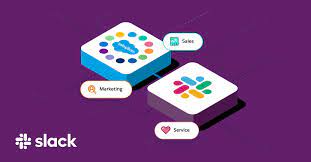
Surpass your customers’ expectations with the combined power of Service Cloud and Slack. Drive down operating costs, enhance team productivity, and exceed customer expectations by leveraging the capabilities of Service Cloud and Slack. Understanding the current service landscape: The digital transformation, accelerated by the pandemic, has propelled customers and businesses into a new era, marked by the extensive use of diverse tools for day-to-day operations. Since 2020, Salesforce’s data indicates that achieving transparency and fostering active engagement are crucial to meeting heightened customer expectations, evident in a notable 47% surge in video support. However, a significant number of organizations face a challenge as their technology systems do not fully align with these evolving expectations. We all know it’s hard to make a good paper mache airplane if you only have a piece of paper. And technology is no different. According to Intercom, 46% of support leaders express that their tech stack acts as a hindrance to achieving organizational goals. Operating across various applications diminishes team productivity and hinders business expansion. To effectively cater to your customers, service teams must innovate and adapt to the multitude of tools, contact channels, isolated teams, and fragmented data. Support operations personnel need to address key questions: The solution lies in adopting Slack as the productivity hub, coupled with Salesforce’s Service Cloud integration. This dynamic combination unlocks your full productivity potential, fostering increased customer loyalty. Break down organizational silos and expedite case resolution for enhanced customer experiences. In the ever-evolving digital marketplace, customers demand seamless service without being transferred between agents or repeating their information. A staggering 83% of customers expect complex issues to be addressed by a single point of contact. However, traditional tiered-support models fall short of meeting these expectations. The solution lies in providing teams with a comprehensive view of the entire customer journey. By leveraging the combined capabilities of Service Cloud and Slack, organizations can achieve significant cost reductions and enhance service team productivity. Service Cloud has been shown to lower support costs by 27%, while Slack increases employee productivity by 26%, according to the 2022 Salesforce Success Metrics Global Highlights study. Swarming Swarming, facilitated by Service Cloud and Slack, revolutionizes the support approach. Unlike traditional tiered support, swarming brings service agents, engineers, and issue analysts together in real-time, eliminating the need for case escalations and customer department bouncing. The swarm team collaborates efficiently, sharing information with customers proactively. The Field Service mobile app further facilitates instant connections with experts, reducing the need for unnecessary on-site visits. Service Cloud and Slack, working together, use out-of-the-box workflows to automatically assemble cross-functional experts and create Slack channels for collaborative efforts on complex cases. This approach eliminates messy handoffs and siloed decision-making, promoting transparency. Swarming ensures that everyone involved can access the entire conversation, participate in Slack huddles, and search for resolutions to similar cases. Automation and streamlined collaboration are paramount for providing exceptional service experiences. The time factor, particularly time to resolution and time on hold, is a significant barrier. Many service agents (78%) struggle to balance speed and quality due to the challenge of working across multiple systems. The integration of Service Cloud and Slack addresses this issue by extending workflows throughout the organization. Soon, Slack GPT will further enhance CRM and conversational data, providing AI-generated summaries and enabling the creation of no-code workflows. Workflow Builder and Flow Builder, no-code tools from Slack and Salesforce, respectively, collaborate seamlessly to automate daily tasks and enhance transparency, agility, and cross-team collaboration. Successful Integration The success of this integration is evident in the substantial improvements seen by service organizations using Slack, including a 32% increase in Net Promoter Score, 27% decrease in service/support costs, 30% increase in agent productivity, and a 30% increase in customer retention. The ever-changing level of customer expectations underscores the importance of service professionals as frontline ambassadors for your brand. With 88% of customers valuing their experience with a company as much as its products, swarming becomes a strategic approach to surpass expectations. Slack Connect facilitates direct access to support for partners, vendors, and B2B customers through a dedicated channel, fostering collaborative issue resolution. Slack clips and white-glove service further enhance the support process. Clips allow users to record audio, video, and screen shares, creating a searchable database of demonstrations. Private support channels in Slack provide key customers with white-glove service, allowing them to record and upload technical issues for prompt resolution. slack and service cloud In the current remote and decentralized business workforce, Service Cloud and Slack offer an opportunity to exceed customer expectations, transform service cases into lasting relationships, cut costs, and boost team productivity. If your average call handle time is too long, if your data is too siloed, or if your customer service teams are overwhelmed, contact Tectonic today to explore a Slack and Salesforce Service Cloud Integration. Like Related Posts Who is Salesforce? Who is Salesforce? Here is their story in their own words. From our inception, we’ve proudly embraced the identity of Read more Salesforce Marketing Cloud Transactional Emails Salesforce Marketing Cloud Transactional Emails are immediate, automated, non-promotional messages crucial to business operations and customer satisfaction, such as order Read more Salesforce Unites Einstein Analytics with Financial CRM Salesforce has unveiled a comprehensive analytics solution tailored for wealth managers, home office professionals, and retail bankers, merging its Financial Read more AI-Driven Propensity Scores AI plays a crucial role in propensity score estimation as it can discern underlying patterns between treatments and confounding variables Read more

Read More
Salesforce Data Cloud Explained

Salesforce Data Cloud Explained

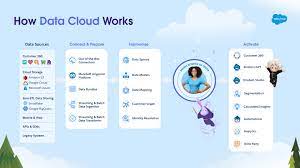
Salesforce Data Cloud, previously recognized as Salesforce CDP/Genie, made its debut at Dreamforce 2022, hailed by Salesforce as one of the most significant innovations in the company’s history. A hyperscale data platform built into Salesforce. Activate all your customer data across Salesforce applications with Data Cloud. Data Cloud facilitates the intake and storage of real-time data streams on a massive scale, empowering automated tasks that result in highly personalized experiences. Data can be sourced from diverse Salesforce data outlets, including Mulesoft, Marketing Cloud, and others, along with customers’ proprietary applications and data sources. Subsequently, it can dynamically respond to this real-time data by automating actions across Salesforce CRM, Marketing Cloud, Commerce, and more, inclusive of automating actions through Salesforce Flow. What is the Salesforce data cloud? Data Cloud is the fastest growing organically built product in Salesforce’s history (i.e. Salesforce built it themselves, not via acquisitions). Data Cloud could be described as the ‘Holy Grail of CRM’, meaning that the data problem that’s existed since the infancy of CRM is now finally solvable. Data Cloud is the foundation that speeds up the connectivity between different ‘clouds’ across the platform. However, Data Cloud is also a product that can be purchased. While not all Salesforce customers have licensed Data Cloud, being at the foundation means they are still taking advantage of Data Cloud to a degree – but this all becomes even stronger with Data Cloud as a personalization and data unification platform. What is the history of Data Cloud? Salesforce has gone through several iterations with naming its CDP product: Customer 360 Audiences → Salesforce CDP → Marketing Cloud Customer Data Platform → Salesforce Genie → Salesforce Data Cloud. In some instances, changes were made because the name just didn’t stick – but what’s more important to note, is that some of the name changes were to indicate the significant developments that happened to the product. Salesforce Data Cloud Differentiators Data Cloud, in itself, is impressive. While many organizations would consider it expensive, if you were to flip the argument on its head, by buying your own data warehouse, building the star schema, and paying for ongoing compute storage, you’d be looking to spend 5 to 10 times more than what Salesforce is charging for Data Cloud. Plus, data harmonization works best when your CRM data is front and center. There are other key differentiators that helps Data Cloud to stand out from the crowd: Is data cloud a data lakehouse? That means that Data Cloud is now not just a really good CDP, it’s now a data lake which will be used in sales and service use cases. But it also means that we can start to fundamentally move some of our higher-scale consumer products like Marketing and Commerce onto the platform. Is Snowflake a data Lakehouse? Snowflake offers customers the ability to ingest data to a managed repository, in what’s commonly referred to as a data warehouse architecture, but also gives customers the ability to read and write data in cloud object storage, functioning as a data lake query engine. What is the benefit of Salesforce data cloud? Data Cloud empowers Salesforce Sales Cloud with AI capabilities and automation that quickly closes deals and boosts productivity across every channel. It drives customer data from all the touchpoints and unifies it separately in individual customer profiles. Salesforce Data Cloud is a powerful data warehouse solution that allows companies to effectively manage and analyze their data. What is the difference between Salesforce CDP and data lake? Talking abut Salesforce CDP is a little bit like a history lesson. While a CDP provides a unified, structured view of customer data, a data lake, on the other hand, is more of a raw, unstructured storage repository that holds a vast amount of data (more than just customer data) in its native format until it’s needed. Like1 Related Posts Who is Salesforce? Who is Salesforce? Here is their story in their own words. From our inception, we’ve proudly embraced the identity of Read more Salesforce Marketing Cloud Transactional Emails Salesforce Marketing Cloud Transactional Emails are immediate, automated, non-promotional messages crucial to business operations and customer satisfaction, such as order Read more Salesforce Unites Einstein Analytics with Financial CRM Salesforce has unveiled a comprehensive analytics solution tailored for wealth managers, home office professionals, and retail bankers, merging its Financial Read more AI-Driven Propensity Scores AI plays a crucial role in propensity score estimation as it can discern underlying patterns between treatments and confounding variables Read more
Read More
Salesforce Success Story

Case Study: Higher Education Software Provider-Higher Education Intelligence-Salesforce Sales/Service/Experience Clouds

Salesforce in a Higher Education Intelligence Solutions Company Leveraging Salesforce to Support Acquisition and High Organic Growth Industry: Educational Technology Sales Cloud Service Cloud Experience Cloud salesforce higher ed software provider A Higher Education Software Provider, formed via multiple acquisitions, services more than 1,700 higher education institutions with educational solutions for assessment and accreditation planning, learning outcome, ePortfolios, faculty activity reporting, course evaluation and institutional surveys, and curriculum and catalog management.  Salesforce higher ed software provider. Salesforce Higher Ed Software Provider PROBLEM SOLUTION RESULT Like Related Posts Salesforce Marketing Cloud Transactional Emails Salesforce Marketing Cloud Transactional Emails are immediate, automated, non-promotional messages crucial to business operations and customer satisfaction, such as order Read more Asset Management Salesforce Can Salesforce do asset management? You can manage assets in Consumer Goods (desktop) and in the Consumer Goods offline mobile Read more Lookup Relationship in Salesforce What is Lookup relationship in Salesforce? Salesforce’s lookup relationships is a significant capability that allows users to connect two objects Read more Listview in Salesforce What is a listview in Salesforce? A list view is a filtered list of records where you can view records Read more

Read More
Salesforce Service Cloud Einstein

Salesforce Service Cloud Einstein

Einstein for Service is a robust suite of time-saving Artificial Intelligence features designed to empower agents in delivering exceptional customer service experiences. Salesforce Service Cloud Einstein-learn more. Customer service has evolved from being a cost center to a growth driver, and leading companies are prioritizing customer service to increase brand loyalty. In Service Cloud Einstein, various AI technologies, such as Machine Learning (ML), deep learning, predictive analytics, Natural Language Processing (NLP), and smart data discovery, work collaboratively to enhance customer support, providing faster and better service. Salesforce Einstein, recognized as the world’s first “generative AI” built for CRM, seamlessly integrates into multiple Salesforce products, including Marketing Cloud, Sales Cloud, and Service Cloud. Sales Cloud incorporates Einstein in the form of eight essential tools: Salesforce Einstein, since its inception in 2016, has been at the forefront of CRM AI technology, delivering personalized and predictive experiences for enhanced professionalism. Salesforce Service Cloud is a CRM platform focused on providing service and support to business customers. It is an extension of the Sales Cloud product tailored for sales professionals. Service Cloud Einstein is utilized by notable companies like Thomson Reuters, Southern Glazer’s Wine and Spirits, Cisco, and Skillsoft. Service Cloud Einstein benefits businesses by providing efficient customer service, with Einstein GPT responding promptly to inquiries, offering precise responses, enhancing customer satisfaction, and reducing resolution time. Studies show that in the same time 3 customers could be serviced before Service Cloud Einstein, now ten can be taken care of. The difference between Einstein GPT and ChatGPT lies in their design, with Einstein GPT specifically tailored for Salesforce users and clouds, while ChatGPT is a more versatile model for general use. Einstein is available for free with Salesforce’s Developer Edition, providing access to most platform features for building and testing custom applications and integrations using Einstein. Salesforce Sales Cloud and Service Cloud differ in their focus, with Sales Cloud concentrating on sales processes, while Service Cloud centers around customer service and support. Einstein remains the overarching AI brand for Salesforce, present across the portfolio, including within Tableau. Einstein Discovery is available as part of Tableau CRM Plus or through Einstein Predictions. Are you ready to explore the power of Einstein in your Salesforce Service Cloud implementation? Contact Tectonic today. Tectonic is please to announce Salesforce Service Cloud Implementation Solutions. Content updated January 2024. Like1 Related Posts Who is Salesforce? Who is Salesforce? Here is their story in their own words. From our inception, we’ve proudly embraced the identity of Read more Salesforce Marketing Cloud Transactional Emails Salesforce Marketing Cloud Transactional Emails are immediate, automated, non-promotional messages crucial to business operations and customer satisfaction, such as order Read more Salesforce Unites Einstein Analytics with Financial CRM Salesforce has unveiled a comprehensive analytics solution tailored for wealth managers, home office professionals, and retail bankers, merging its Financial Read more AI-Driven Propensity Scores AI plays a crucial role in propensity score estimation as it can discern underlying patterns between treatments and confounding variables Read more

Read More
AI All Grown Up

Understanding Generative AI and Predictive AI

Understanding Generative AI and Predictive AI: A Synergistic Approach Artificial Intelligence (AI) is broadly categorized into two key branches: Generative AI and Predictive AI. Both play a crucial role across various industries, from healthcare and fintech to logistics and education. Their impact is undeniable, driving efficiency, accuracy, and innovation. However, this is not a debate about Generative AI versus Predictive AI. Instead, it is an exploration of both branches and how they contribute to technological advancement. Let’s dive in. Generative AI vs. Predictive AI: An Overview Generative AI has been around for decades, with early iterations like Generative Adversarial Networks (GANs) and Variational Autoencoders (VAEs). While these earlier models saw limited enterprise adoption, the success of ChatGPT demonstrated the vast potential of Generative AI in producing articulate, human-like content. Conversely, Predictive AI is widely used across industries to correlate data and support decision-making. It is particularly prevalent in applications like cybersecurity, inventory management, and digital twin technology. Businesses increasingly recognize the benefits of both AI branches. From automating processes to creating digital replicas for scenario testing, AI applications continue to evolve. The goal now is not to compare Generative AI and Predictive AI, but to understand their mechanisms and potential for seamless integration. Are you fully leveraging AI in your enterprise? If not, or if you have questions, feel free to reach out. Now, let’s delve into how these AI branches work. What is Generative AI? Generative AI is transforming industries by producing text, code, music, and even videos. Companies use it to analyze vast datasets and generate content instantaneously. Key Applications of Generative AI: By 2026, over 80% of businesses are expected to incorporate Generative AI into their workflows. While implementation can be complex, expert guidance can help streamline the process. How Does Generative AI Work? Generative AI leverages machine learning (ML) and big data to analyze input forms—such as text, images, or sound—and learn their structures. Once trained, it generates new content without merely replicating existing data, making it a powerful tool for innovation. Generative AI in Action: If you’re uncertain about how to implement Generative AI in your business, consulting with experts can provide clarity. What is Predictive AI? Predictive AI, or predictive analytics, forecasts future outcomes based on historical data. It empowers businesses to make informed decisions by identifying patterns and trends. Key Applications of Predictive AI: Predictive AI improves decision-making capabilities by analyzing large datasets and refining machine learning algorithms. Integrating it with other analytics tools enhances its effectiveness and mitigates implementation challenges. Predictive AI in Action: Predictive AI’s ability to anticipate market trends and consumer behavior makes it a valuable tool for businesses looking to stay ahead. Generative AI vs. Predictive AI: Key Differences While Generative AI focuses on creating new content based on learned data patterns, Predictive AI forecasts future outcomes using historical data. These two models are not competing forces; rather, they complement each other in building comprehensive business strategies. Both models require a strong foundation in data governance and cybersecurity to ensure ethical and effective AI implementation. The Future of AI: Generative vs. Predictive According to McKinsey, the combined impact of Generative and Predictive AI could contribute up to $4.4 trillion annually to the global economy. What’s Next for AI? Generative AI: Predictive AI: Both Generative and Predictive AI are poised to shape the future of AI-driven industries. Businesses that embrace both models will gain a competitive edge in innovation and strategic decision-making. Conclusion Generative and Predictive AI are not opposing technologies; they are complementary forces that drive efficiency, accuracy, and creativity. Their applications span numerous industries, proving their immense value in today’s tech-driven world. Navigating AI implementation can be complex, but expert guidance can simplify the process. If you have questions about integrating AI into your business, consulting with professionals can help you harness its full potential. The future of business is deeply intertwined with AI—taking the right steps today will ensure success in the years ahead. Let Tectonic take you to the AI world. Like Related Posts Who is Salesforce? Who is Salesforce? Here is their story in their own words. From our inception, we’ve proudly embraced the identity of Read more Salesforce Marketing Cloud Transactional Emails Salesforce Marketing Cloud Transactional Emails are immediate, automated, non-promotional messages crucial to business operations and customer satisfaction, such as order Read more Salesforce Unites Einstein Analytics with Financial CRM Salesforce has unveiled a comprehensive analytics solution tailored for wealth managers, home office professionals, and retail bankers, merging its Financial Read more AI-Driven Propensity Scores AI plays a crucial role in propensity score estimation as it can discern underlying patterns between treatments and confounding variables Read more
Read More
Salesforce Data Cloud

Key Components of Salesforce Data Cloud

Salesforce Data Cloud organizes and unifies data across Salesforce and other external data sources.  After ingestion, it can drive personalization and engagement. Components of Salesforce Data Cloud to explore. Data Cloud expands Salesforce capabilities by using the best pieces of the developer-friendly Salesforce Platform and adding a highly scalable infrastructure. Data Cloud is an evolution of Customer Data Platform—which was originally designed for marketers but now caters to broader use cases beyond marketing.  The magic of Data Cloud is in creating experiences that wow customers. Key features and components of Salesforce Data Cloud include: Like Related Posts Who is Salesforce? Who is Salesforce? Here is their story in their own words. From our inception, we’ve proudly embraced the identity of Read more Salesforce Marketing Cloud Transactional Emails Salesforce Marketing Cloud Transactional Emails are immediate, automated, non-promotional messages crucial to business operations and customer satisfaction, such as order Read more Salesforce Unites Einstein Analytics with Financial CRM Salesforce has unveiled a comprehensive analytics solution tailored for wealth managers, home office professionals, and retail bankers, merging its Financial Read more AI-Driven Propensity Scores AI plays a crucial role in propensity score estimation as it can discern underlying patterns between treatments and confounding variables Read more
Read More
Salesforce Net Zero Cloud

Salesforce Net Zero Cloud Explained

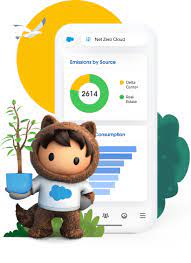
Introducing Net Zero Cloud, a cutting-edge addition to Salesforce’s product lineup, specifically designed as a carbon-accounting solution for companies seeking to take ownership of their carbon footprint.  Net Zero Cloud is a sustainability management platform designed to help companies manage their footprint and track their progress to net zero. Salesforce Net Zero Cloud Explained. This innovative tool streamlines the process of uploading data related to various aspects such as business travel, fuel, electricity, gas bills, and contributions from the supply chain. With pre-configured dashboards, Net Zero Cloud facilitates the effortless identification of significant contribution areas, trends, and potential action points. ESG Reporting Are you ready for ESG reporting mandates? Net Zero Cloud is the solution that can assist you in complying with CSRD, California regulations, and any emerging requirements. By integrating environmental, social, and governance data, this tool delves deep into carbon, waste, and water aspects across your entire value chain. Quantify your carbon footprint by utilizing Net Zero Cloud to track carbon emissions and energy consumption stemming from your diverse assets or activities, which may encompass buildings, products, and travel, covering scopes 1, 2 & 3 emissions. Salesforce Net Zero Cloud Explained Who benefits from Net Zero Cloud? Notable companies leveraging Salesforce Net Zero Cloud for Environmental, Social, and Governance (ESG) initiatives include CVS Health, a U.S.-based healthcare organization with 300,000 employees and revenues of 2.50 billion, and Mastercard, a U.S.-based banking and financial services organization with 29,900 employees. Salesforce initially released Sustainability Cloud – now rebranded as Net Zero Cloud – in 2019, aiming to provide businesses with a platform offering a 360-degree view of their environmental impact with the ability to track, analyze and report reliable environmental data in order to reduce their carbon emissions. What are the benefits of net zero Cloud in Salesforce? Built on the Salesforce platform, Net Zero Cloud customers get all the advantages of Salesforce solutions such as full customization, bulk uploading of data, APIs to connect with other platforms, Tableau CRM for full reporting and analysis of the data and Experience Cloud powering a supplier management portal. How does net zero cloud work? Companies that use Net Zero Cloud get a single source of truth for their carbon emissions. They can analyze individual assets and understand impact across location and time. Net Zero Cloud also provides useful reports and executive-ready visualizations in a few clicks, allowing you to easily track and manage emissions. What is Salesforce net zero marketplace? Net Zero Marketplace is a platform where organizations can evaluate carbon projects and carbon credits for consistency with their carbon neutral and net zero commitments or corporate sustainability initiatives. Like Related Posts Who is Salesforce? Who is Salesforce? Here is their story in their own words. From our inception, we’ve proudly embraced the identity of Read more Salesforce Marketing Cloud Transactional Emails Salesforce Marketing Cloud Transactional Emails are immediate, automated, non-promotional messages crucial to business operations and customer satisfaction, such as order Read more Salesforce Unites Einstein Analytics with Financial CRM Salesforce has unveiled a comprehensive analytics solution tailored for wealth managers, home office professionals, and retail bankers, merging its Financial Read more AI-Driven Propensity Scores AI plays a crucial role in propensity score estimation as it can discern underlying patterns between treatments and confounding variables Read more
Read More
Salesforce Service Cloud

Salesforce Service Cloud Explained

Service Cloud, developed by Salesforce, functions as a powerful customer relationship management (CRM) tool explicitly tailored to bolster a business’s customer service operations. This platform streamlines communication between customers and companies, utilizing channels such as email support, live chat, and phone interactions to aid customer agents in promptly identifying and resolving customer issues. Service Cloud, as a comprehensive customer service platform, empowers businesses to effectively manage and resolve customer inquiries and issues. Its huge array of features encompasses case tracking, social networking plug-ins for conversion, and analytics. If you’ve recently engaged with a business through live chat or created a support ticket, chances are they were leveraging a system like SFDC Service Cloud. Revolutionize the way your service teams provide value across every customer touchpoint, encompassing customer experience, engagement, processes, automation, and service operations. By reimagining service with Service Cloud, businesses can enhance customer lifetime value, reduce operational costs, and optimize efficiency—from the contact center to the field. Achieve personalized support at scale with trustworthy Artificial Intelligence. Integrate every customer service process into the Einstein 1 Platform to decrease costs and boost productivity. Service Cloud provides businesses with a 360-degree view of their customers, enabling the delivery of faster, smarter, and more tailored experiences. Businesses can establish a connected knowledge base, manage case interactions, and facilitate live agent chat—all within a unified platform. Leveraging customer’s past activity data allows for personalized interactions and opportunities for upselling services or products. It’s important to note the distinction between Salesforce Sales Cloud and Service Cloud. Sales Cloud focuses on the sales process, managing leads, opportunities, and sales forecasts. On the other hand, Service Cloud is dedicated to addressing customer inquiries and cases, emphasizing exceptional customer service and support. Important Features of Service Cloud Custom Reports and Dashboards Utilizing real-time reports within SFDC Service Cloud empowers business owners to access a comprehensive case history of customers, facilitating informed decision-making. The associated dashboard provides professionals with a 360-degree view, enabling easy tracking of customer information and cases for efficient problem-solving. Salesforce Lightning Service Console The Salesforce Service Cloud console consolidates customer data across multiple devices and channels. It provides a unified view of customer interactions, encompassing emails, chats, social media mentions, and phone calls. Salesforce Service Cloud Case Management A case management system collects and organizes customer service interactions from various channels, allowing agents to respond promptly. Automated Case Routing Automation in case routing expedites resolutions by assigning tasks to personnel based on qualifications and skills, managing tasks across multiple service channels. Social Customer Service Empowering customer teams, Social Customer Service handles user queries on social media channels and directs them to relevant agents, offering a 360-degree view of customers. Asset and Order Management Tracking orders, assets, and support history in one place provides a comprehensive view, enabling personalized services and enhancing customer satisfaction. Telephony Integration Integrating with Computer Telephony Integration (CTI) systems boosts agent productivity, allowing viewing of customer information without picking up the phone. Benefits of Salesforce Service Cloud: Supplementary Products: Digital Engagement, Service Cloud Einstein, Service Cloud Voice, Customer Lifecycle Analytics, Salesforce Surveys Response Pack. Are you ready to achieve the best in customer service with Salesforce Service Cloud?  Contact Tectonic today to learn more. Tectonic is please to announce Salesforce Service Cloud Implementation Solutions. Content updated September 2023. Like2 Related Posts AI-Driven Propensity Scores AI plays a crucial role in propensity score estimation as it can discern underlying patterns between treatments and confounding variables Read more Tectonic’s Successful Salesforce Track Record Salesforce Technology Services Integrator – Tectonic has successfully delivered Salesforce in a variety of industries including Public Sector, Hospitality, Manufacturing, Read more Asset Management Salesforce Can Salesforce do asset management? You can manage assets in Consumer Goods (desktop) and in the Consumer Goods offline mobile Read more Lookup Relationship in Salesforce What is Lookup relationship in Salesforce? Salesforce’s lookup relationships is a significant capability that allows users to connect two objects Read more

Read More

Connecting Data Strategies to Business Goals

Getting a handle on organizational data may not pay off until business and technical stakeholders agree on the core objectives. Connecting Data Strategies to Business Goals ensures the goals are met. Many leaders admit they need tighter alignment: Forty-one percent of line-of business leaders say their data strategy has only partial or no alignment with business objectives. Similarly, 37% of analytics and IT leaders see room for improvement. Part of the disconnect may stem from a lack of shared KPIs. Over six in 10 analytics and IT leaders are in the dark about line-of business teams’ data utilization or speed to insight. Fewer than one-third of analytics and IT leaders track the value of data monetization. This raises the issue of whether the majority of teams can effectively quantify the ROI of data initiatives for business stakeholders in the first place. Bring together known and unknown data from all your sources, for a true 360 customer view. Connecting Data Strategy to Business Goals: A 5-Step Approach 1. Identify Business Objectives and Goals Start by clearly identifying your organization’s business objectives and goals. Review your mission statement, conduct a SWOT analysis, define SMART goals, and engage with stakeholders to understand their priorities. Prioritize these goals based on their importance and impact. 2. Assess Current Data Landscape Conduct a comprehensive assessment of your current data landscape. Perform a data inventory, assess data quality, identify any gaps, evaluate data governance policies, and determine your organization’s data analytics capabilities. 3. Identify Gaps and Pain Points Identify gaps and pain points by conducting a gap analysis, analyzing customer feedback, reviewing operational processes, evaluating data analytics capabilities, and engaging with stakeholders. This step is crucial for tailoring your data strategy to address specific needs. 4. Develop a Data Strategy Develop a data strategy aligned with your business goals. Define your data vision, identify relevant data sources, develop data governance policies, define data analytics capabilities, and prioritize data initiatives based on their impact. Ensure that your strategy addresses the identified gaps and pain points. 5. Implement Data Governance Implement robust data governance to ensure the effectiveness and sustainability of your data strategy. Define data ownership, develop policies and procedures aligned with business goals, implement data quality controls, monitor data usage, and provide training to employees on data governance principles. By following these steps, you can establish a strong connection between your data strategy and business goals, enabling your organization to leverage data effectively to achieve its objectives. Current Trends Shaping the Future of Data and Business Strategy: What are the 6 key components of a data strategy? These components may differ among data assets depending on their priority and relationship to institutional goals and operational needs. An investment in data strategy is an investment in the achievement of your company’s strategic vision. Like1 Related Posts Who is Salesforce? Who is Salesforce? Here is their story in their own words. From our inception, we’ve proudly embraced the identity of Read more Salesforce Marketing Cloud Transactional Emails Salesforce Marketing Cloud Transactional Emails are immediate, automated, non-promotional messages crucial to business operations and customer satisfaction, such as order Read more Salesforce Unites Einstein Analytics with Financial CRM Salesforce has unveiled a comprehensive analytics solution tailored for wealth managers, home office professionals, and retail bankers, merging its Financial Read more AI-Driven Propensity Scores AI plays a crucial role in propensity score estimation as it can discern underlying patterns between treatments and confounding variables Read more

Read More

In App Guidance Salesforce

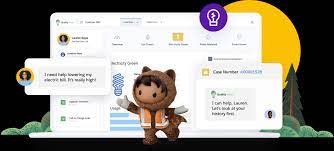
What is Salesforce In-App Guidance? Salesforce In-App Guidance is a pre-built tool empowering Salesforce Admins and power users with Managed Prompts and View All Profiles permissions to create customized training for user enablement or onboarding. These custom prompts are displayed on Salesforce Lightning pages, enhancing the user experience. How much does Salesforce In-App Guidance cost? Salesforce In-App Guidance is linked to a myTrailhead license for each user, incurring a cost of $25 per user per month. This fee is paid in addition to the standard Salesforce license cost for each user. What are the benefits of In-App Guidance? In-App Guidance streamlines the learning process, boosts digital adoption, minimizes the need for training sessions, and empowers users by actively guiding them through the software’s functionalities. What are the best practices for In-App Guidance? Effective in-app guides should be interactive, personalized, and contextual. It is recommended to avoid overwhelming users with information upfront and instead guide them in the context of their specific goals at different stages of their user journey. Businesses can create customized help content, target specific audiences, and schedule different flows. The tool also offers customizable reports with real-time insights into user engagement. One notable advantage of this functionality is its user-friendly, declarative nature, requiring no programming knowledge. Additionally, it can be filtered based on profiles and permissions for specific user groups. The two available types, Single Prompt and Walkthrough, offer distinct advantages. If you’ve explored Salesforce, you might have noticed the tool being used internally, such as to drive adoption for Einstein Search or provide reminders about searchable elements in a List View. Single Prompt: Walkthroughs: How to Use In-App Guidance: Implementation is straightforward, ensuring a quick turnaround for impacted end-users. The functionality is versatile, catering to various user groups in Salesforce, from sales to support to marketing. Setup & In-App Guidance Builder: Get Hands On: In app guidance provides a great user experience.  If you need assistance customizing your Salesforce instance with in app guidance, Tectonic can help.   Like2 Related Posts Who is Salesforce? Who is Salesforce? Here is their story in their own words. From our inception, we’ve proudly embraced the identity of Read more Salesforce Marketing Cloud Transactional Emails Salesforce Marketing Cloud Transactional Emails are immediate, automated, non-promotional messages crucial to business operations and customer satisfaction, such as order Read more Salesforce Unites Einstein Analytics with Financial CRM Salesforce has unveiled a comprehensive analytics solution tailored for wealth managers, home office professionals, and retail bankers, merging its Financial Read more AI-Driven Propensity Scores AI plays a crucial role in propensity score estimation as it can discern underlying patterns between treatments and confounding variables Read more
Read More
Salesforce Energy and Utilities Cloud

Salesforce Energy and Utilities Cloud

Salesforce Energy & Utilities Cloud is a robust platform tailored to meet the evolving needs of the energy industry. It offers personalized solutions for various sectors, including power, utilities, oil, gas, and green energy, prioritizing customer satisfaction through personalized services, AI-driven enhancements, and cutting-edge infrastructure offerings. The platform assists organizations in addressing challenges such as sustainability practices and cost-effective solutions. E and U Cloud combines the power of Salesforce Sales and Service Cloud with the Salesforce Platform, providing industry-specific solutions for utilities, retail energy, and modern energy services companies. By offering personalized experiences and leveraging AI for enhanced interactions, it ensures a seamless customer journey and empowers businesses to streamline operations, effectively manage data, and conduct safe field operations. Through transparency and data-driven tools, the platform promotes trust among stakeholders and facilitates efficient business processes. Key Features Key features of Energy & Utilities Cloud include OmniChannel Service for efficient customer management, OmniChannel Sales for streamlined sales processes, Products, Offers, and Quotes for personalized offers and quotes, Contract Management for regulatory compliance, Order and Enrollment for automated lifecycle management, and Field Service Management for optimized field service experiences. The platform caters to both B2B and B2C processes, empowering sales/account managers and service agents to deliver personalized interactions and support across multiple channels. For organizations seeking specialized tools, the Vlocity Energy & Utilities Cloud Application Suite offers prebuilt modules and application components tailored to specific energy and utility requirements. From customer acquisition management to utility self-serve portals, the suite provides comprehensive solutions to meet specific business requirements. Salesforce Energy and Utilities Cloud Salesforce Energy & Utilities Cloud empowers energy and utility companies to manage sales pipelines, collaborate effectively, ensure employee safety, and efficiently manage customer data. With its robust features and integrations, the platform facilitates business growth and helps organizations meet industry challenges head-on. To face your challenges head-on, contact Tectonic today for a Energy & Utilities Cloud implementation. Like1 Related Posts Tectonic’s Successful Salesforce Track Record Salesforce Technology Services Integrator – Tectonic has successfully delivered Salesforce in a variety of industries including Public Sector, Hospitality, Manufacturing, Read more Asset Management Salesforce Can Salesforce do asset management? You can manage assets in Consumer Goods (desktop) and in the Consumer Goods offline mobile Read more Lookup Relationship in Salesforce What is Lookup relationship in Salesforce? Salesforce’s lookup relationships is a significant capability that allows users to connect two objects Read more Generating Documents in Salesforce Salesforce document generation poses a challenge for businesses, given the intricacies of integration involved. Fortunately, a variety of tools are Read more

Read More
Salesforce Updates Sustainability Cloud with Slack

Salesforce Updates Sustainability Cloud with Slack

Salesforce has unveiled its updated Sustainability Cloud, integrating the newly acquired Slack, alongside the achievement of net zero emissions across its entire value chain and the transition to 100% renewable energy for its operations. Salesforce Updates Sustainability Cloud with Slack. The company’s climate action plan sets out priorities for advancing towards a 1.5°C future, highlighted by the launch of Sustainability Cloud 2.0. This updated platform empowers organizations to monitor and mitigate carbon emissions effectively. Sustainability Cloud is now known as Netzero Cloud. Marc Benioff, CEO and Chair of Salesforce, emphasized the urgent need to address climate change, underscoring Salesforce’s pride in achieving net zero emissions and renewable energy utilization. However, Benioff stressed the importance of continued efforts to engage all businesses in sustainable practices. These initiatives build upon Salesforce’s ongoing sustainability commitments, including the integration of climate obligations into supplier contracts and the introduction of tools to streamline supply chain emissions tracking. Salesforce also advocates for science-based climate policies and calls for mandatory climate reporting by companies. What is the Net Zero policy? Net Zero policy is that you reduce greenhouse gas emissions as much as possible. Then, any remaining emissions will be re-absorbed by things like the ocean or forests. What is Sustainability Cloud? Initially launched in 2019, Sustainability Cloud offers businesses a comprehensive view of their environmental impact, facilitating data-driven strategies to minimize carbon footprints. With the release of Sustainability Cloud 2.0, Salesforce integrates Slack, enhancing collaboration with suppliers post its acquisition. The updated platform includes features such as a carbon-offset ecosystem and tailored climate action plans. Salesforce credits its own net zero milestone to Sustainability Cloud, which identified impactful opportunities to reduce emissions effectively. Suzanne DiBianca, Chief Impact Officer and EVP of Corporate Relations, emphasized the transformative potential of Sustainability Cloud in empowering customers to combat climate change and reduce carbon emissions. UN Sustainable Development Goals To overcome the challenges and achieve the UN Sustainable Development Goals (SDGs) related to climate change, several key obstacles must be addressed: By addressing these obstacles through collective efforts and innovative approaches, we can accelerate progress towards achieving the UN SDGs related to climate action and sustainable development, securing a more sustainable and resilient future for all. Salesforce Updates Sustainability Cloud with Slack The Net Zero by Salesforce initiative helps customers manage their environmental footprints and track progress toward net zero. Organizations of all sizes can use this platform to achieve their sustainability goals. The Net Zero Cloud by Salesforce is a powerful cloud-based platform designed to assist organizations in managing their environmental impacts and achieving net zero goals. Here’s an overview of its features and potential uses: Key Features: Tools Offered: Pros: Cons: Overall, the Net Zero Cloud offers a comprehensive suite of tools to support organizations in their sustainability journeys, from emissions reduction to waste management. While it has notable benefits, such as advanced data management and supplier engagement, potential users should consider the associated costs and support limitations before implementation. Content updated November 2023. Like Related Posts Who is Salesforce? Who is Salesforce? Here is their story in their own words. From our inception, we’ve proudly embraced the identity of Read more Salesforce Marketing Cloud Transactional Emails Salesforce Marketing Cloud Transactional Emails are immediate, automated, non-promotional messages crucial to business operations and customer satisfaction, such as order Read more Salesforce Unites Einstein Analytics with Financial CRM Salesforce has unveiled a comprehensive analytics solution tailored for wealth managers, home office professionals, and retail bankers, merging its Financial Read more AI-Driven Propensity Scores AI plays a crucial role in propensity score estimation as it can discern underlying patterns between treatments and confounding variables Read more
Read More
Salesforce work.com

Salesforce Work.com Explained

Work.com was developed in response to the challenges posed by the Coronavirus Pandemic, offering support to companies and communities in safely resuming their operations. At its core, Work.com features a command center that empowers users to make informed, data-driven decisions regarding the safety of various activities, such as reopening offices. Seamless integration with Tableau allows the visualization of extensive datasets. Beyond the command center, Work.com incorporates essential features, including employee health and wellness monitoring, shift management for capacity planning, and contact tracing. Welcome to Work.com, an employee-centered experience designed to help everyone at your company succeed, regardless of their work location. Key Features: Is Work.com owned by Salesforce? Yes, Salesforce acquired the technology behind Work.com in 2011 when it purchased Rypple, a Toronto-based company that provided cloud-based human resources (HR) software. The application has since evolved through various iterations, expanding its focus to enhance employees’ remote work experience. Work.com Customer 360 Integration Work.com integrates the full power of Salesforce Customer 360, health experts, business leaders, and the Salesforce partner ecosystem. It equips teams with the tools needed to be productive, safe, and resilient in the evolving landscape of business operations, employee safety, wellness, experience and productivity, and customer trust and communications. Workplace Command Center serves as a company’s “single pane of glass” for managing the complexities associated with reopening businesses and guiding employees back to work. It functions as an Operations Executive’s “cockpit” for navigating the organization through crises, resuming business operations, and emerging stronger. Shift Management, an add-on to Workplace Command Center, helps companies balance workplace coverage and employee availability while creating new capacity models that support a safe return to work. HR and People leaders can create shifts to fill workplace capacity, while staggering arrivals to facilitate a safe return to offices. Employee Concierge delivers one integrated service experience for any employee need, streamlining workflows across various departments and empowering employees to find answers to their questions within Employee Workspace. Like1 Related Posts Who is Salesforce? Who is Salesforce? Here is their story in their own words. From our inception, we’ve proudly embraced the identity of Read more Salesforce Marketing Cloud Transactional Emails Salesforce Marketing Cloud Transactional Emails are immediate, automated, non-promotional messages crucial to business operations and customer satisfaction, such as order Read more Salesforce Unites Einstein Analytics with Financial CRM Salesforce has unveiled a comprehensive analytics solution tailored for wealth managers, home office professionals, and retail bankers, merging its Financial Read more AI-Driven Propensity Scores AI plays a crucial role in propensity score estimation as it can discern underlying patterns between treatments and confounding variables Read more
Read More
gettectonic.com