Salesforce AI Archives - gettectonic.com - Page 9
Salesforce Einstein Copilot

Salesforce Einstein Copilot – Spring ’24

Salesforce introduces the latest iteration of Einstein, introducing a Conversational AI Assistant to integrate seamlessly into every CRM application and enhance the overall customer experience. The new Einstein Copilot, powered by generative AI, is designed to boost productivity by seamlessly integrating into the workflow. Additionally, organizations can tailor Einstein Copilot to meet their specific business requirements using Einstein Copilot Studio. The inclusion of the Einstein Trust Layer ensures the protection of sensitive data while allowing companies to leverage their trusted data to enhance generative AI responses within the platform. The reality is every company will undergo an AI transformation to increase productivity, drive efficiency, and deliver incredible customer and employee experiences. With Einstein Copilot and Data Cloud we’re making it easy to create powerful AI assistants and infuse trusted AI into the flow of work across every job, business, and industry. In this new world, everyone can now be an Einstein. Marc Benioff, Chair and CEO, Salesforce Einstein Copilot is designed to generate reliable and precise recommendations and content for specific tasks such as constructing digital storefronts, crafting custom code, creating data visualizations, and guiding sales associates in closing deals efficiently. Grounded securely with customer data from Salesforce Data Cloud, encompassing customer data, enterprise content, telemetry data, Slack conversations, and other structured and unstructured data, Einstein Copilot ensures informed and accurate decision-making. In contrast to previous generative AI copilot solutions that operated as separate applications, Einstein Copilot is natively integrated within the world’s leading AI CRM. It taps into data from any Salesforce application, enhancing the generation of more accurate AI-powered recommendations and content. Employing natural language prompts, Einstein Copilot can perform various tasks in sales, service, marketing, commerce, development, Tableau, and industry-specific scenarios: Sales: Service: Marketing: Commerce: Developers: Tableau: Industry-specific: Like1 Related Posts Who is Salesforce? Who is Salesforce? Here is their story in their own words. From our inception, we’ve proudly embraced the identity of Read more Salesforce Unites Einstein Analytics with Financial CRM Salesforce has unveiled a comprehensive analytics solution tailored for wealth managers, home office professionals, and retail bankers, merging its Financial Read more AI-Driven Propensity Scores AI plays a crucial role in propensity score estimation as it can discern underlying patterns between treatments and confounding variables Read more Tectonic’s Successful Salesforce Track Record Salesforce Technology Services Integrator – Tectonic has successfully delivered Salesforce in a variety of industries including Public Sector, Hospitality, Manufacturing, Read more

Read More
Salesforce Sales Cloud

Salesforce Sales Cloud GPT

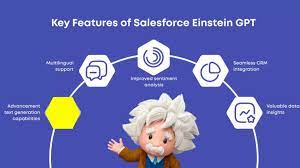
What is Salesforce Sales Cloud GPT? Salesforce’s Einstein GPT is a robust AI tool that seamlessly integrates both public and private AI models with CRM data. This unique synergy allows users to articulate natural-language queries directly within the Salesforce CRM environment, resulting in continuously adapted AI-generated content tailored to evolving customer information and requirements. Salesforce Sales Cloud GPT The suite encompasses a suite of powerful Artificial Intelligence (AI) products, including the Einstein service, the workplace-messaging app Slack, and the data analysis software Tableau. Notably, it unveils a compelling array of natural language tools slated for release in 2023, such as Sales GPT for personalized emails, Service GPT for service messages and chatbots, and Marketing GPT for refined audience targeting. Furthermore, the AI Cloud is meticulously crafted to host extensive language models from various providers such as AWS, Anthropic, and Cohere. Salesforce’s commitment to AI startups is further underscored by a substantial $500 million injection into its venture capital fund. Impact on Sales Cloud with AI and EinsteinGPT: Sales Cloud undergoes a transformative impact through AI, notably EinsteinGPT. Anchored in principles of Trust, Security, and Privacy, Salesforce introduces the Einstein Trust Layer within its AI Cloud offering to assuage privacy concerns. This layer ensures adaptability and transparency while upholding stringent standards for data privacy, security, and compliance. EinsteinGPT for Sales Cloud emerges as a game-changing innovation, serving as a personalized assistant within Salesforce CRM to streamline sales processes. Leveraging Generative AI, it transcends mere data analysis by generating novel content, ideas, and approaches. Key features encompass Einstein GPT, Einstein Conversation Insights, and Einstein Relationship Insights. Industries Experience Tangible Impact: Salesforce’s substantial investments in AI are reshaping the landscape of sales and customer engagement. As EinsteinGPT becomes an integral part of the platform, the anticipation of new and innovative use cases signals a significant leap forward in AI accessibility. Tectonic is please to announce our Sales Cloud Implementation Solutions. Like1 Related Posts Who is Salesforce? Who is Salesforce? Here is their story in their own words. From our inception, we’ve proudly embraced the identity of Read more Salesforce Marketing Cloud Transactional Emails Salesforce Marketing Cloud Transactional Emails are immediate, automated, non-promotional messages crucial to business operations and customer satisfaction, such as order Read more Salesforce Unites Einstein Analytics with Financial CRM Salesforce has unveiled a comprehensive analytics solution tailored for wealth managers, home office professionals, and retail bankers, merging its Financial Read more AI-Driven Propensity Scores AI plays a crucial role in propensity score estimation as it can discern underlying patterns between treatments and confounding variables Read more

Read More
Sales Cloud Innovation Driven by UX Design Principles

Use Cases for AI in Marketing

Navigating The Challenges as AI Empowers Marketers Use Cases for AI in Marketing. What is AI in marketing? AI marketing is when marketers use artificial intelligence to gather insights into their customers and produce better content. Marketing assets guided by AI are personalized and optimized for the customer journey. This can look like chatbots, targeted advertising, and content generation. Marketers encounter diverse challenges shaped by industry, organizational size, and customer dynamics. Despite these variations, they converge on four crucial pillars essential for success: understanding customers, personalizing interactions, engaging across the entire customer journey, and swiftly and accurately analyzing results. Establishing a cohesive customer profile across all touchpoints requires the identification of customers across diverse devices and channels. AI proves invaluable by employing probability models to match actions with identities. AI goes beyond by unveiling previously undiscovered audience insights and segments. When dealing with expansive audience datasets, traditional business intelligence tools may falter, but AI excels at clustering data for analysis and pinpointing overlaps in audiences or segments. As marketers accumulate new data points from interactions, content, and conversations, the sheer volume and speed can overwhelm conventional analysis methods. Here, AI steps in to augment data and attributes through capabilities like natural language processing and image recognition. Additionally, manual lead scoring and rule-based approaches can introduce biases. AI intervenes with predictive lead scoring, offering insights into customer journeys and enhancing accuracy. Generative AI could help SMEs create more personalized and effective marketing strategies through utilizing capabilities like SD, DL, and IoT. For example, SMEs might use Generative AI to generate personalized product or service suggestions for certain customers. As a result, customer engagement and retention can rise. Marketers are using gen AI to analyze competitor moves, assess consumer sentiment, and test new product opportunities. Rapid generation of response-ready product concepts can improve the efficiency of successful products, increase testing accuracy, and accelerate time to market. AI-driven content marketing tools can analyze vast amounts of data to identify trending topics, customer pain points, and content preferences. This allows manufacturers to create more relevant and engaging content that resonates with their target audience, driving better lead generation and brand awareness. Leveraging AI in these capacities empowers marketers to delve deeper into customer understanding, facilitating the delivery of enhanced experiences and an overall boost in marketing effectiveness. Like Related Posts Salesforce Marketing Cloud Transactional Emails Salesforce Marketing Cloud Transactional Emails are immediate, automated, non-promotional messages crucial to business operations and customer satisfaction, such as order Read more Salesforce Unites Einstein Analytics with Financial CRM Salesforce has unveiled a comprehensive analytics solution tailored for wealth managers, home office professionals, and retail bankers, merging its Financial Read more AI-Driven Propensity Scores AI plays a crucial role in propensity score estimation as it can discern underlying patterns between treatments and confounding variables Read more Tectonic’s Successful Salesforce Track Record Salesforce Technology Services Integrator – Tectonic has successfully delivered Salesforce in a variety of industries including Public Sector, Hospitality, Manufacturing, Read more

Read More
Sales Cloud Einstein

Salesforce Einstein Explained

Einstein serves as Salesforce’s integrated AI layer, intricately woven into nearly every Salesforce Cloud. Salesforce Einstein Explained. While certain features, like Opportunity Scoring in Salesforce, are now offered at no cost, many Einstein functionalities are premium add-ons for essential Salesforce products like Sales, Service, Commerce, and Marketing Cloud. A notable development came in March 2023 when Salesforce introduced Einstein GPT, an extension of the Einstein product. This groundbreaking application leverages the ChatGPT platform from OpenAI, renowned for its widespread popularity, and is anticipated to be released later this year. Thereby incorporating generative AI into many Salesforce cloud features. Salesforce AI delivers trusted, extensible AI grounded in the fabric of our Platform. Utilize our AI in your customer data to create customizable, predictive, and generative AI experiences to fit all your business needs safely. Bring conversational AI to any workflow, user, department, and industry with Einstein. Salesforce Einstein is the only comprehensive Artificial Intelligence for CRM. It is data ready to work in your Salesforce org and clouds. Einstein is an integrated set of AI technologies that make the Customer Success Platform smarter. Einstein is the only comprehensive AI for CRM. It is: Einstein enables you to become an AI-first company so you can get smarter and more predictive about your customers. What can you do with Einstein? Drive productivity and personalization with predictive and generative AI across the Customer 360 with Salesforce Einstein. Create and deploy assistive AI experiences natively in Salesforce, allowing your customers and employees to converse directly with Einstein to solve issues faster and work smarter. Empower sellers, agents, marketers, and more with AI tools safely grounded in your customer data to make every customer experience more impactful. Build and customize a conversational AI assistant for CRM. Einstein Copilot is a trusted, generative-AI powered assistant built into the user experience of every Salesforce application. Whether employee-facing or customer-facing, Einstein Copilot can automatically reason through tasks based on pre-built skills. Use prompts, APIs, apex, and more to customize your own AI assistant. Like2 Related Posts Who is Salesforce? Who is Salesforce? Here is their story in their own words. From our inception, we’ve proudly embraced the identity of Read more Salesforce Marketing Cloud Transactional Emails Salesforce Marketing Cloud Transactional Emails are immediate, automated, non-promotional messages crucial to business operations and customer satisfaction, such as order Read more Salesforce Unites Einstein Analytics with Financial CRM Salesforce has unveiled a comprehensive analytics solution tailored for wealth managers, home office professionals, and retail bankers, merging its Financial Read more AI-Driven Propensity Scores AI plays a crucial role in propensity score estimation as it can discern underlying patterns between treatments and confounding variables Read more

Read More
hospitality

Salesforce Einstein and Your Data

Einstein Lead Scoring is a robust tool, equipping sales teams to accelerate deal closures. Integrated into Salesforce’s Sales Cloud Einstein platform, this tool harnesses the power of artificial intelligence (AI) to analyze historical sales data, identifying leads with the highest likelihood of conversion. Salesforce Einstein and Your Data. Utilize AI to score leads based on their alignment with your company’s historical successful conversion patterns. Empower your sales team to prioritize leads according to their lead scores, and understand which fields most influence each lead score. Einstein Lead Scoring employs data science and machine learning to show patterns in your business’s lead conversion. Predicting which current leads to prioritize based on your business’s conversion patterns, Einstein offers a more straightforward, faster, and accurate solution compared to traditional rules-based lead scoring approaches. The tool examines past leads to identify commonalities with previously converted leads, scoring leads using various lead fields. Admins can exclude fields that don’t impact lead quality. Einstein also categorizes certain lead text fields, such as job titles or industries, creating associations for better pattern recognition. Einstein creates a predictive model for your organization, reanalyzing lead data every 10 days to ensure it captures emerging trends. Whether using a global model or a personalized one based on your data, Einstein Lead Scoring adds a Lead Score field to leads, allowing sales reps to prioritize work effectively. Sales representatives benefit from Einstein Lead Scoring’s ability to effortlessly identify and prioritize promising leads. The system, utilizing machine learning algorithms, scrutinizes data linked to lead records, recognizing patterns indicative of a heightened probability of conversion. Salesforce Einstein and Your Data Crafting a lead scoring model becomes a streamlined process with Einstein’s automated approach. The tool examines standard and custom fields associated with the Lead object, employing diverse predictive models like Logistic Regression, Random Forests, and Naive Bayes. Monthly model updates ensure ongoing accuracy and relevance, while leads receive scores hourly for the latest predictions. Einstein Lead Scoring facilitates lead segmentation and prioritization, offering insights into factors influencing conversion probabilities. These factors are prominently displayed on each lead record, enabling sales reps to prepare swiftly for every call, essentially providing each representative with a personal data scientist, elevating connection and conversion rates. Learn more about the lead prioritization process facilitated by Einstein Lead Scoring. Einstein Lead Scoring utilizes data science and machine learning to unveil patterns in your business’s lead conversion history, predicting which current leads to prioritize. This approach, leveraging machine learning, provides a simpler, faster, and more accurate solution compared to traditional rules-based lead scoring. The Scoring Model: Einstein analyzes past converted leads, including custom fields and activity data, to determine conversion patterns. Identifying current leads with commonalities to prior converted leads, Einstein builds one or more scoring models for your organization. During setup, Salesforce admins can choose to score all leads together or group them into segments based on field criteria. A separate scoring model is built for each lead segment, allowing admins to omit certain lead fields if necessary. The global model, utilizing anonymous data from multiple Salesforce customers, is employed when there isn’t enough lead data initially. As your organization accumulates sufficient lead data, Einstein shifts to a personalized model for better results. Einstein models are refreshed every 10 days or whenever admins update Lead Scoring configurations. Lead scores are updated at least every six hours for real-time predictions. Factors That Contribute to Scores: Einstein displays the lead’s field values with the most significant positive and negative effects on its score. These fields, known as top positives and top negatives, offer insights into why leads are likely to convert or not. However, in some cases, a lead’s score may be influenced by multiple fields with slight effects, and in such instances, top positives or top negatives may not be displayed. When Scores Don’t Appear: Several reasons may lead to a score not appearing on a particular lead: When Scores Don’t Change: Scores may not change on some leads for reasons such as: In medium to large enterprises, Sales agents manage numerous leads from various channels, and sorting through them can be overwhelming. Lead Scoring, assigning a score to a lead based on its ranking among prospects, provides a valuable indicator for Sales teams looking to focus on promising leads. Lead Scoring Definition: Lead Scoring is a score assigned to a lead, ranking it in relation to others, indicating the likelihood of conversion. In the vast sea of leads, a higher lead score serves as a handy indicator, helping Sales teams prioritize their attention effectively. While Lead Scoring has been a longstanding practice, the challenge lies in creating a consistent and effective lead scoring model. Without a reliable framework, ranking leads becomes arbitrary, leading to issues such as unknown or undocumented conversion patterns, models based on incorrect assumptions, or reliance on stale or non-relevant data. Sales Cloud Einstein addresses these challenges with Einstein Lead Scoring, utilizing machine learning and data science to discover patterns in lead conversion history. The tool autonomously selects the best predictive model for each customer, eliminating the need for statistical or mathematical expertise. Monthly model updates ensure ongoing accuracy, and leads receive scores hourly, providing businesses with the latest and most precise predictions. Einstein Lead Scoring, a key capability of Sales Cloud Einstein, revolutionizes lead conversion for sales reps. It automates the analysis of historical sales data, identifying top factors determining lead conversion likelihood. Sales reps can segment and prioritize leads, gaining insights into the factors influencing conversion probabilities, displayed prominently on each lead record. Einstein Lead Scoring acts as a personal data scientist for each sales representative, enhancing connection and conversion rates. Tectonic, as your Salesforce implementation success partner, can tailor Salesforce solutions aligned with your business needs, leveraging the power of tools like Einstein Lead Scoring. Based in Colorado, Tectonic is a Salesforce Consulting Partner, boasting a skilled team of certified Consultants, Developers, Analysts, and Project Managers. Contact us today to explore innovative Salesforce solutions for your business. Like1 Related Posts Who is

Read More
Sales Cloud Einstein

Einstein GPT from Salesforce

Salesforce, the leading global CRM provider, has unveiled Einstein GPT, the world’s first generative AI CRM technology. Engineered to craft personalized content across sales, service, marketing, commerce, and IT interactions, Einstein GPT aims to enhance employee productivity and elevate customer experiences. While Salesforce had previously integrated AI into its ecosystem with Einstein AI, the introduction of Einstein GPT represents a notable advancement. Leaning on OpenAI’s capabilities, Einstein GPT is an empowered iteration of existing technology, aligning with Salesforce’s commitment to artificial intelligence technology adoption. Einstein GPT from Salesforce Einstein GPT operates as an open and extensible platform, leveraging trusted, real-time data for training. It facilitates public and private AI models tailored for CRM, integrating seamlessly with OpenAI to offer generative AI capabilities. This enables users to connect data to OpenAI’s advanced models or choose external models, employing natural-language prompts within Salesforce CRM for content generation that dynamically adapts to evolving customer information and needs. The technology infusion of Einstein GPT involves combining Salesforce’s proprietary AI models with generative AI tech from an ecosystem of partners and real-time data from the Salesforce Data Cloud. This combination allows the generation of personalized content, including emails for sales, responses for customer service, targeted content for marketers, and auto-generated code for developers. The collaboration with OpenAI extends Salesforce’s capabilities by merging OpenAI’s enterprise-grade ChatGPT with Salesforce’s private AI models. Additionally, Salesforce Ventures announced the Generative AI Fund. This is a 0 million investment initiative supporting startups to foster responsible, trusted, and generative AI development. Einstein GPT introduces various applications, such as Einstein GPT for Sales, Service, Marketing, and Developers. These applications empower users to auto-generate things they used to have to write. Sales tasks, enhanced customer service interactions, dynamically created personalized content, and improved developer productivity through an AI chat assistant. To further enhance collaboration, Salesforce and OpenAI introduced the ChatGPT for Slack app. Thus offering AI-powered conversation summaries. The research tools and writing assistance within the Slack platform are aided by Einstein.. Prominent organizations like HPE, L’Oréal, RBC US Wealth Management, and S&P Global Ratings have acknowledged the value of generative AI. They are all improving customer engagement. Like1 Related Posts Who is Salesforce? Who is Salesforce? Here is their story in their own words. From our inception, we’ve proudly embraced the identity of Read more Salesforce Marketing Cloud Transactional Emails Salesforce Marketing Cloud Transactional Emails are immediate, automated, non-promotional messages crucial to business operations and customer satisfaction, such as order Read more Salesforce Unites Einstein Analytics with Financial CRM Salesforce has unveiled a comprehensive analytics solution tailored for wealth managers, home office professionals, and retail bankers, merging its Financial Read more AI-Driven Propensity Scores AI plays a crucial role in propensity score estimation as it can discern underlying patterns between treatments and confounding variables Read more

Read More
ChatGPT and Einstein GPT

ChatGPT and Einstein GPT

Artificial intelligence (AI) has been rapidly advancing globally, with breakthroughs captivating professionals across various sectors. One milestone that has gained significant attention is the emergence of ChatGPT, a cutting-edge language model revolutionizing the tech landscape. This development has profoundly impacted businesses relying on Salesforce for their customer relationship management (CRM) needs. In March 2023, Salesforce unveiled its latest AI innovation, Einstein GPT, promising to transform how companies engage with their clientele. In this article, we explore what Salesforce Einstein GPT entails and how it can benefit teams across diverse industries. When OpenAI introduced ChatGPT in November 2022, they didn’t expect the overwhelming response it received. Initially positioned as a “research preview,” this AI chatbot aimed to refine existing technology while soliciting feedback from users. However, ChatGPT quickly became a viral sensation, surpassing OpenAI’s expectations and prompting them to adapt to its newfound popularity. Developed on the foundation of the GPT-3.5 language model, ChatGPT was specifically tailored to facilitate engaging and accessible conversations, distinguishing it from its predecessors. Its launch attracted a diverse user base keen to explore its capabilities, prompting OpenAI to prioritize addressing potential misuse and enhancing its safety features. As ChatGPT gained traction, it caught the attention of Salesforce, a leading CRM provider. In March 2023, Salesforce unveiled Einstein GPT, its own AI innovation, poised to transform customer engagement. Built on the GPT-3 architecture and seamlessly integrated into Salesforce Clouds, Einstein GPT promised to revolutionize how businesses interact with their clientele. Einstein GPT boasts a range of features designed to personalize customer experiences and streamline workflows. From generating natural language responses to crafting personalized content and automating tasks, Einstein GPT offers versatility and value across industries. By leveraging both Einstein AI and GPT technology, businesses can unlock unprecedented efficiency and deliver superior customer experiences. Despite its success, OpenAI acknowledges the need for ongoing refinement and vigilance, emphasizing the importance of responsible deployment and transparency in the development of AI technology. Exploring Einstein GPT Salesforce presents Einstein GPT as the premier generative AI tool for CRM worldwide. Utilizing the advanced GPT-3 architecture, Einstein GPT seamlessly integrates into all Salesforce Clouds, including Tableau, MuleSoft, and Slack. This groundbreaking technology empowers users to generate natural language responses to customer inquiries, craft personalized content, and compose entire email messages on behalf of sales personnel. With its high degree of customization, Einstein GPT can be finely tuned to meet the specific needs of various industries, use cases, and customer requirements, delivering significant value to businesses of all sizes and sectors. Objectives of Salesforce AI Einstein GPT Salesforce AI Einstein GPT is designed to achieve several key objectives: Distinguishing Einstein GPT from Einstein AI Einstein GPT represents the latest evolution of Salesforce’s Einstein artificial intelligence technology. Unlike its predecessors, Einstein GPT integrates proprietary Einstein AI models with ChatGPT and other leading large language models. This integration enables users to interact with CRM data using natural language prompts, resulting in highly personalized, AI-generated content and triggering powerful automations that enhance workflows and productivity. By leveraging both Einstein AI and GPT technology, businesses can achieve unparalleled efficiency and deliver exceptional customer experiences. Features of Einstein GPT in Salesforce CRM Key features and capabilities of Salesforce Einstein chatbot GPT include: Utilizing Einstein GPT for Business Improvement Einstein GPT can be leveraged across various domains to enhance business operations: Integration with Salesforce Data Cloud Salesforce Data Cloud, a cloud-based data management system, enables real-time data aggregation from diverse sources. Einstein GPT utilizes unified customer data profiles from the Salesforce Data Cloud to personalize interactions throughout the customer journey. OpenAI on ChatGPT Methods We trained this model using Reinforcement Learning from Human Feedback (RLHF), using the same methods as InstructGPT, but with slight differences in the data collection setup. We trained an initial model using supervised fine-tuning: human AI trainers provided conversations in which they played both sides—the user and an AI assistant. We gave the trainers access to model-written suggestions to help them compose their responses. We mixed this new dialogue dataset with the InstructGPT dataset, which we transformed into a dialogue format. To create a reward model for reinforcement learning, we needed to collect comparison data, which consisted of two or more model responses ranked by quality. To collect this data, we took conversations that AI trainers had with the chatbot. We randomly selected a model-written message, sampled several alternative completions, and had AI trainers rank them. Using these reward models, we can fine-tune the model using Proximal Policy Optimization. We performed several iterations of this process. ChatGPT is fine-tuned from a model in the GPT-3.5 series, which finished training in early 2022. You can learn more about the 3.5 series here. ChatGPT and GPT-3.5 were trained on an Azure AI supercomputing infrastructure. Limitations ChatGPT and Einstein GPT Salesforce Einstein GPT signifies a significant advancement in AI technology, empowering businesses to deliver tailored customer experiences and streamline operations. With its integration into Salesforce CRM and other platforms, Einstein GPT offers unprecedented capabilities for personalized engagement and automated insights, ensuring organizations remain competitive in today’s dynamic market landscape. When OpenAI quietly launched ChatGPT in late November 2022, the San Francisco-based AI company didn’t anticipate the viral sensation it would become. Initially viewed as a “research preview,” it was meant to showcase a refined version of existing technology while gathering feedback from the public to address its flaws. However, the overwhelming success of ChatGPT caught OpenAI off guard, leading to a scramble to capitalize on its newfound popularity. ChatGPT, based on the GPT-3.5 language model, was fine-tuned to be more conversational and accessible, setting it apart from previous iterations. Its release marked a significant milestone, attracting millions of users eager to test its capabilities. OpenAI quickly realized the need to address potential misuse and improve the model’s safety features. Since its launch, ChatGPT has undergone several updates, including the implementation of adversarial training to prevent users from exploiting it (known as “jailbreaking”). This technique involves pitting multiple chatbots against each other to identify and neutralize malicious behavior. Additionally,

Read More
Salesforce AI Propensity Scores

Salesforce AI Propensity Scores

AI-driven propensity scores take an existing data model and improve its predictions, speed, and analysis with AI. Salesforce AI Propensity Scores in CRM: In CRM, a propensity score is the model’s probabilistic estimate of a customer performing a specific action. A propensity model is a mathematical formula that takes into account all of the known factors that are associated with conversion. The model then uses this information to estimate the likelihood that a given lead will convert to a customer. In super geeky terms, The propensity score is the probability of a unit (e.g., person, classroom, school) being assigned to a particular treatment given a set of observed covariates. How do you calculate propensity score? Propensity scores are generally calculated using one of two methods: a) Logistic regression or b) Classification and Regression Tree Analysis. a) Logistic regression: This is the most used method for estimating propensity scores. It is a model used to predict the probability that an event occurs. Why do we need propensity score? Propensity score analysis (PSA) arose as a way to achieve exchangeability between exposed and unexposed groups in observational studies without relying on traditional model building. Exchangeability is critical to our causal inference. Get Accurate Predictions by Defining the Target Variable Defining the target variable is crucial for accurate model predictions. Your model needs a primary focus for analysis and predictions. Scoring models uncover relationships between features and the target variable, providing insights on how to maximize or minimize this variable. For example, to predict the likelihood of opportunities converting into accounts, define a target variable that indicates this conversion. You can also apply custom logic to refine this target variable further. Make Informed Business Decisions Based on Historical Trends Generate predictions for specific periods to make informed business decisions and maximize revenue based on historical trends. For example, to determine which accounts sales representatives should focus on in the next 30 days, select a 30-day prediction duration. Then, use CRM Analytics datasets with historical data to identify revenue trends from accounts in the past 30 days. Effortlessly Build and Deploy Propensity Models Utilize the Scoring Framework to build and deploy generic propensity models for various industries without coding. Configure and deploy Einstein Discovery models through the AI Accelerator, which displays predictions and Einstein Next Best Action recommendations on record pages using the AI Accelerator—Einstein Predictions & Recommendations component. Scoring Framework Features AI Accelerator and Scoring Framework Integration Get real-time predictions across multiple industries by integrating AI Accelerator. Build generic propensity models without writing code using the Scoring Framework. Configure and deploy Einstein Discovery models, and showcase predictions and Next Best Action recommendations on record pages. AI Accelerator Functionality Salesforce Einstein’s Role Salesforce Einstein integrates robust AI technologies within the Lightning Platform, offering administrators and developers a comprehensive set of platform services to build smarter apps and customize AI for their businesses. Scoring Framework and CRM Analytics Use the Scoring Framework, based on CRM Analytics, to quickly build and deploy propensity models for various industries. Define template configurations, create CRM Analytics apps, and develop Einstein Discovery models and recipes effortlessly. Validating Input Features and Prediction Accuracy Train your model to validate input features and prediction accuracy. Then, deploy the model based on these predictions. Predictions Based on Standard or Custom Objects Build predictive models using standard or custom objects, enhancing business processes with smarter and more predictive capabilities. Making Business Decisions from Historical Trends Generate predictions based on historical trends to help make informed business decisions aimed at maximizing revenue. Enhancing Analysis with Additional Input Features Improve data analysis by incorporating features from CRM Analytics datasets along with object data. Focused Predictions with Defined Target Variables Improve prediction accuracy by defining the primary focus variable for your model. Customize input features to ensure valuable and accurate predictions for your use case. Targeted Predictions with Data Subsets Enhance prediction relevance by focusing on specific data subsets using filter conditions. Contextual Predictions by Storing in Records Store predictions in records to view them within the context of your use case, facilitating informed decision-making. Real-Time Predictions with AI Accelerator Integrate the Scoring Framework with AI Accelerator for real-time predictions, suggestions, and insights. Template Configuration and Data Requirements Ensure data requirements are met while configuring templates, confirming that there are enough records in the dataset. Quick Access to CRM Analytics and AI Accelerator Easily access CRM Analytics apps or AI Accelerator use cases by clicking the relevant button on the template configuration card. Handling Template Configuration and AI Accelerator Issues Retry template configuration activation or deactivation if unsuccessful. Similarly, retry creating or deleting AI Accelerator use cases as needed. Exploring New Metadata Types and Tooling API Objects Explore new metadata types and use the Tooling API to work with Scoring Framework setup objects, enhancing your capabilities within the Scoring Framework. Content updated April 2024. Like Related Posts Who is Salesforce? Who is Salesforce? Here is their story in their own words. From our inception, we’ve proudly embraced the identity of Read more Salesforce Marketing Cloud Transactional Emails Salesforce Marketing Cloud Transactional Emails are immediate, automated, non-promotional messages crucial to business operations and customer satisfaction, such as order Read more Salesforce Unites Einstein Analytics with Financial CRM Salesforce has unveiled a comprehensive analytics solution tailored for wealth managers, home office professionals, and retail bankers, merging its Financial Read more AI-Driven Propensity Scores AI plays a crucial role in propensity score estimation as it can discern underlying patterns between treatments and confounding variables Read more

Read More
Salesforce Experience Cloud

Is Salesforce Experience Cloud Salesforce Communities?

The Salesforce ecosystem is in a constant state of evolution, and the introduction of the Salesforce Experience Cloud is a significant development aimed at delivering connected digital experiences to consumers rapidly. Is Salesforce Experience Cloud Salesforce Communities? In a recent update, Salesforce announced that the Community Cloud will now be rebranded as the Salesforce Experience Cloud. This renaming reflects the platform’s evolution to meet the diverse needs of consumers and highlights Salesforce’s commitment to creating exceptional digital experiences. The Salesforce Experience Cloud serves as a digital experience platform, enabling organizations to create scalable digital experiences for partners, consumers, and employees. Leveraging features from Salesforce CRM, Experience Builder, and CMS, the platform empowers organizations to swiftly develop websites, portals, and personalized content, all with just a few clicks. So, why did Salesforce decide to rename the Community Cloud to the Experience Cloud? The renaming signifies Salesforce’s dedication to enhancing people’s lives and transforming businesses. By shifting the focus from building communities to creating community experiences, Salesforce aims to underscore the importance of data-powered digital experiences that foster collaboration, automation, and real business value. The transition from Community to Experience Cloud represents a step into the future, where the platform integrates data and content seamlessly to provide meaningful solutions. This evolution brings added flexibility and efficiency to user journeys, enhancing the overall digital experience. But how does the Salesforce Experience differ from the Salesforce Community? With the rebranding, you’ll notice changes and improvements in the tools used to design sites. For instance, the Site built using the Experience Cloud, formerly known as the Community, can now be developed using either Visualforce or Experience Builder. This change in terminology signifies a broader shift in the platform’s capabilities. Moreover, other components within the Digital Experiences menu have been simplified and replaced, emphasizing the evolution from the Community Cloud to the Experience Cloud. Understanding the transition from Community to Experience Cloud is necessary for anyone embarking on the journey as an Experience Cloud Consultant. Whether you’re an existing user or a newcomer, grasping the significant differences between the two platforms is crucial. And to further explore the impact of this transition on your organization, consider joining industry-led courses like those offered by saasguru. Frequently Asked Questions (FAQ): Content updated March 2024. Like1 Related Posts Who is Salesforce? Who is Salesforce? Here is their story in their own words. From our inception, we’ve proudly embraced the identity of Read more Salesforce Marketing Cloud Transactional Emails Salesforce Marketing Cloud Transactional Emails are immediate, automated, non-promotional messages crucial to business operations and customer satisfaction, such as order Read more Salesforce Unites Einstein Analytics with Financial CRM Salesforce has unveiled a comprehensive analytics solution tailored for wealth managers, home office professionals, and retail bankers, merging its Financial Read more AI-Driven Propensity Scores AI plays a crucial role in propensity score estimation as it can discern underlying patterns between treatments and confounding variables Read more

Read More
Salesforce AI

AI Learning

The prevalence of Artificial Intelligence (AI) news is a clear indicator AI is here to stay, and whether you’re navigating the intricacies of AI or expanding your knowledge daily, one certainty remains: AI is the future of work. To support your journey in acquiring AI skills, Salesforce provides resources on Trailhead, Salesforce’s free online learning platform. As discussions about AI advancements shaping our lives unfold, concerns about the future and potential job displacement may be part of the conversation. Nevertheless, the outlook is optimistic; successful AI aims to enhance, not replace, the human workforce. According to IDC, the Salesforce economy, driven by AI, is projected to generate a net gain of $2.02 trillion in worldwide business revenues and create 11.6 million jobs globally between 2022 and 2028. The potential for AI in the workplace is huge, with 60% of global workers expressing excitement about using Generative AI in their roles. Prospect of AI The prospect of AI streamlining mundane tasks is compelling, and executives estimate that 40% of workers will need reskilling in the next three years due to AI. However, 62% of workers admit they lack the skills to use AI effectively and safely, posing a challenge in determining which tools and skills to prioritize. Trailhead, committed to breaking down barriers to learning in the digital-first world, is heavily investing to ensure everyone can acquire AI skills and thrive in this evolving work landscape. Contrary to misconceptions, AI is not exclusive to developers or data scientists. Today’s AI technology empowers salespeople to craft compelling prospecting emails, enables service reps to address issues swiftly through case swarming, and allows marketers to create highly personalized customer journeys. AI is not someone else’s concern; it is relevant for anyone in business. As more companies recognize the value of AI, the demand for individuals who can implement AI-based systems is growing. With a shortage of experts in this emerging field, we’re here to help you upskill and position yourself as the AI hero your company needs. Now is the opportune moment to enhance your AI skills. There are numerous complexities and limited time for learning. You may wonder where to focus your efforts. We’ve identified five key areas of AI expertise that employers are seeking: Regardless of your chosen focus, learning about AI is a valuable investment. We are at a juncture where organizations recognize the need for AI. But they lack individuals who understand its intricacies. By enhancing your AI knowledge, you become a unique asset to your company, a strategic career move in these changing times! Like Related Posts Who is Salesforce? Who is Salesforce? Here is their story in their own words. From our inception, we’ve proudly embraced the identity of Read more Salesforce Marketing Cloud Transactional Emails Salesforce Marketing Cloud Transactional Emails are immediate, automated, non-promotional messages crucial to business operations and customer satisfaction, such as order Read more Salesforce Unites Einstein Analytics with Financial CRM Salesforce has unveiled a comprehensive analytics solution tailored for wealth managers, home office professionals, and retail bankers, merging its Financial Read more AI-Driven Propensity Scores AI plays a crucial role in propensity score estimation as it can discern underlying patterns between treatments and confounding variables Read more

Read More
Salesforce Sales Cloud

Planning for Einstein Sales Cloud

Salesforce Sales Cloud is a powerful catalyst for your organization’s business expansion, representing a significant investment in the growth of your enterprise. By incorporating Sales Cloud Einstein with your Sales Cloud instance, along with your sales and marketing teams, can operate at an enhanced level of efficiency. The key to success lies in meticulous planning for the implementation of Sales Cloud Einstein. The enormous potential of the Einstein Platform is a potential gamechanger. Launched in 2016, during the Dreamforce conference, Einstein is a solution that combines AI, CRM data, and processes assisted with analytical techniques. It optimizes the capabilities of the entire Salesforce platform. By offering multiple functions and tools based on machine learning and deep learning in order to make processes more intelligent. Planning for Einstein Sales Cloud shortens your time to success. In the pre-enablement phase, a comprehensive understanding of your business challenges and priorities is imperative. Armed with this knowledge, you can identify the specific Sales Cloud Einstein features that align with your organizational goals. Ensuring alignment across your teams facilitates the measurement of success throughout the implementation process. Identifying challenges within the organization, such as data overload, time constraints, vague processes, and difficulty in recognizing opportunities at risk, sets the stage for a strategic implementation. Beginning with a small, diverse group of users allows you to test and fine-tune the selected Sales Cloud Einstein features. A Partner for Planning for Einstein Sales Cloud Leverage Salesforce or your implementation partner’s tools to ensure the richness, utility, and cleanliness of your CRM data. Transitioning into the enablement stage involves setting up Sales Cloud Einstein in your sandbox org, activating chosen features, and testing compatibility with existing architecture, workflows, and Lightning components. Effective communication with users is crucial during this stage, outlining the goals and features of Sales Cloud Einstein. Providing SMART goals—specific, measurable, achievable, relevant, and time-bound—facilitates the measurement of implementation success. Key performance indicators may include lead conversion rate increases, closed-won rate increases, opportunity pipeline growth, or reduced time to close opportunities. As you prepare to go live in your Salesforce org, assign Sales Cloud Einstein licenses to a diverse user group, including power users, a pilot group, and representatives from various departments. A successful post-enablement stage involves gathering feedback from users, measuring return on investment (ROI), and expanding user groups. Essential stages for a successful Sales Cloud Einstein implementation encompass: Planning for Sales Cloud Einstein Plan your Sales Cloud Einstein rollout in three stages: pre-enablement, enablement, and post-enablement. For those without an implementation partner, Salesforce’s setup guide offers a step-by-step walkthrough of the above stages. Like1 Related Posts Who is Salesforce? Who is Salesforce? Here is their story in their own words. From our inception, we’ve proudly embraced the identity of Read more Salesforce Marketing Cloud Transactional Emails Salesforce Marketing Cloud Transactional Emails are immediate, automated, non-promotional messages crucial to business operations and customer satisfaction, such as order Read more Salesforce Unites Einstein Analytics with Financial CRM Salesforce has unveiled a comprehensive analytics solution tailored for wealth managers, home office professionals, and retail bankers, merging its Financial Read more AI-Driven Propensity Scores AI plays a crucial role in propensity score estimation as it can discern underlying patterns between treatments and confounding variables Read more
Read More
Salesforce AI

Einstein Opportunity Scoring

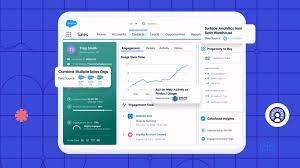
Let Salesforce’s artificial intelligence help you and your team focus on the right opportunities so you can close more deals with Einstein Opportunity Scoring. Each opportunity in Salesforce is given a score, from 1 to 99, which is available on opportunity records and list views. Sales reps use these opportunity scores to identify top opportunities. If you use Collaborative Forecasts, opportunity scores are also available on the forecasts page. Plus, use scores with reports, Process Builder, and workflows. Einstein Opportunity Scoring is available to users with or without a Sales Cloud Einstein license. Opportunity scores tell you the likelihood that an opportunity will be closed won. For each opportunity score, Einstein shows the factors that have contributed the most to the score, both positively and negatively. Einstein uses your team’s past closed opportunities, won and lost, to create a predictive scoring model.  This model helps identify which opportunities are most likely to result in a win. Einstein Opportunity Scoring in Lightning In Lightning Experience, the score is shown on the compact layout of opportunity records or on the Details tab. Hover over the score to see a list of factors that contribute to the score. For example, a score could be relatively high because the opportunity is moving quickly through the stages compared to other opportunities. In Salesforce Classic, the score is shown on the record detail of opportunity records. The contributing factors are shown. You can add the Opportunity Score field to any of your opportunity list views. If you don’t see the score on public list views, ask your Salesforce admin to add it. In Lightning Experience, hover over the score in the list view to see the factors that contribute to the score. In Salesforce Classic, the contributing factors aren’t available from the list views. Instead, navigate to the opportunity record detail page. The opportunity score can be calculated using a variety of factors, such as market demand, competitive landscape, the potential ROI, and the resources required to pursue the opportunity. Einstein Opportunity Scoring provides an unbiased, objective prediction on the likelihood of a deal closing, based on data patterns from previously closed deals. Then, take the guesswork out of forecasting. Einstein Forecasting uses AI technology to bring more certainty and visibility to your forecasts. Improve forecasting accuracy, get forecast predictions, and track how sales teams are doing. What is the difference between Einstein Lead Scoring and opportunity scoring? Einstein Opportunity Scoring is part of Sales Cloud Einstein Scoring, which also includes Einstein Lead Scoring. In the hierarchy, Einstein Lead Scoring comes under Salesforce’s Sales Cloud Einstein model. Opportunity scores tell the salesperson the likelihood of an opportunity to be won. Like1 Related Posts Salesforce Marketing Cloud Transactional Emails Salesforce Marketing Cloud Transactional Emails are immediate, automated, non-promotional messages crucial to business operations and customer satisfaction, such as order Read more Salesforce Unites Einstein Analytics with Financial CRM Salesforce has unveiled a comprehensive analytics solution tailored for wealth managers, home office professionals, and retail bankers, merging its Financial Read more AI-Driven Propensity Scores AI plays a crucial role in propensity score estimation as it can discern underlying patterns between treatments and confounding variables Read more Asset Management Salesforce Can Salesforce do asset management? You can manage assets in Consumer Goods (desktop) and in the Consumer Goods offline mobile Read more

Read More
Salesforce AI Einstein Next Best Action

Salesforce AI Einstein Next Best Action

Salesforce AI Einstein Next Best Action is a feature designed to identify the most effective actions available to agents and customers in real-time. Operating as a recommendation engine powered by extensive data analysis, it facilitates a dynamic workflow aimed at optimizing the customer pipeline. Tailoring recommendations to specific individuals at opportune moments is made effortless with Einstein Next Best Action. This Salesforce Platform feature enables the configuration of business rules and filters to present the most suitable course of action for any user. It offers a diverse range of recommended actions directly accessible within Salesforce, enhancing decision-making processes. Salesforce AI Einstein Next Best Action for Personalization Personalizing the customer experience: Next Best Action (NBA) empowers organizations to customize their interactions with customers based on individual preferences, behaviors, and historical data. This fosters a more personalized and pertinent experience, ultimately boosting customer satisfaction and fostering loyalty. What is Einstein’s Next Best Action for upselling? NBA continuously evaluates real-time customer data to deliver personalized recommendations for the most effective actions to take, whether it involves cross-selling, upselling, or addressing a customer concern. These recommendations consider various factors such as customer history, product usage, and behavioral patterns. Salesforce AI Einstein Next Best Action Cost Is Einstein Next Best Action free? Einstein Next Best Action operates on a usage-based entitlement model. Every organization receives a monthly allotment of free Next Best Action requests. If usage exceeds this free allowance or any purchased entitlements, Salesforce communicates with the organization to discuss additional options for their contract. Next Best Action is a paid Salesforce product but also offers free usage for up to 5000 requests each month. What is the Next Best Action strategy? Next-best-action marketing, also known as best next action or recommended action, is a customer-centric marketing approach that assesses various actions applicable to a specific customer and determines the most favorable course of action. It’s a subset of next-best-action decision-making focused on optimizing customer interactions. The Salesforce Einstein feature is being renamed Agentforce. Conent editingd June 2025, Shannan Hearne. Like1 Related Posts Who is Salesforce? Who is Salesforce? Here is their story in their own words. From our inception, we’ve proudly embraced the identity of Read more Salesforce Marketing Cloud Transactional Emails Salesforce Marketing Cloud Transactional Emails are immediate, automated, non-promotional messages crucial to business operations and customer satisfaction, such as order Read more Salesforce Unites Einstein Analytics with Financial CRM Salesforce has unveiled a comprehensive analytics solution tailored for wealth managers, home office professionals, and retail bankers, merging its Financial Read more AI-Driven Propensity Scores AI plays a crucial role in propensity score estimation as it can discern underlying patterns between treatments and confounding variables Read more

Read More
gettectonic.com