Salesforce Einstein Archives - gettectonic.com - Page 16
Need for AI Workers Never So Great

Need for AI Workers Never So Great

Salesforce’s UK & Ireland chief, Zahra Bahrololoumi, emphasized the urgent need for companies to train their staff on the effective and safe use of artificial intelligence tools, speaking to City A.M. The Need for AI Workers Never So Great. Bahrololoumi highlighted the increasing demand for “highly skilled people” capable of utilizing trustworthy data sources and protecting sensitive information, noting that this need has “never been more clear nor urgent.” Her comments coincide with the release of a Salesforce survey revealing that over 60 percent of individuals who use or plan to use generative AI at work feel they lack the skills to do so “accurately and safely.” Additionally, 70 percent of workers believe their employers are not fully leveraging generative AI’s potential, and more than half desire proper AI training. Salesforce, which also owns the business messaging platform Slack, has urged the government to enhance national access to digital skills training. The survey, conducted in collaboration with YouGov, included 1,384 full-time UK employees from various industries. Artificial intelligence (AI) is used in many aspects of life, including the workplace, retail, and healthcare. AI can help people understand how technology can improve their lives through products and services. AI skills can also set you apart at an interview. Like Related Posts Who is Salesforce? Who is Salesforce? Here is their story in their own words. From our inception, we’ve proudly embraced the identity of Read more Salesforce Marketing Cloud Transactional Emails Salesforce Marketing Cloud Transactional Emails are immediate, automated, non-promotional messages crucial to business operations and customer satisfaction, such as order Read more Salesforce Unites Einstein Analytics with Financial CRM Salesforce has unveiled a comprehensive analytics solution tailored for wealth managers, home office professionals, and retail bankers, merging its Financial Read more AI-Driven Propensity Scores AI plays a crucial role in propensity score estimation as it can discern underlying patterns between treatments and confounding variables Read more


Read More
ChatGPT Announces Custom Instructions

ChatGPT Announces Custom Instructions

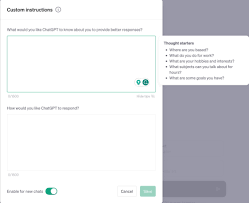
We’re rolling out custom instructions to empower you to tailor ChatGPT to better suit your needs. This feature will be accessible in beta starting today with the Plus plan, with availability expanding to all users over the next few weeks. Custom instructions enable you to incorporate preferences or requirements that you want ChatGPT to consider when generating responses. Based on feedback about the inconvenience of starting each ChatGPT conversation from scratch, we’ve engaged with users across 22 countries to grasp the crucial role of steerability in enabling our models to effectively adapt to diverse contexts and individual needs. Moving forward, ChatGPT will take your custom instructions into account in every conversation. The model will integrate these instructions into its responses, eliminating the need for you to repeat preferences or information in each interaction. For instance, a teacher designing a lesson plan no longer needs to reiterate that they’re teaching 3rd-grade science. Similarly, a developer preferring efficient code in a language other than Python can express it once, and ChatGPT will understand. Even tasks like grocery shopping for a large family become more seamless, with the model considering specifics like needing 6 servings in the grocery list. Plugins Incorporating instructions can also enhance your experience with plugins by providing relevant information to the plugins you utilize. For example, if you specify your city in your instructions and use a restaurant reservation plugin, ChatGPT might include your city when calling the plugin. Beta During the beta phase, ChatGPT may not always interpret custom instructions flawlessly—it might occasionally overlook instructions or apply them incorrectly. Safety We’ve adjusted our safety measures to accommodate the new ways users can instruct the model. For instance, our Moderation API is designed to prevent instructions from being saved if they violate our Usage Policies. Additionally, the model can decline or disregard instructions that lead to responses violating our policies. Privacy While we may leverage your custom instructions to enhance model performance, you can opt out of this via your data controls. Similar to ChatGPT conversations, we take steps to remove personal identifiers from custom instructions before using them to enhance model performance. Learn more about how we utilize conversations to improve model performance and your options in our Help Center. Like Related Posts AI-Driven Propensity Scores AI plays a crucial role in propensity score estimation as it can discern underlying patterns between treatments and confounding variables Read more Einstein Relationship Insights ERI, serves as an AI-powered research assistant, enhancing sales processes. ERI operates as a desktop plugin with a browser extension, Read more Joined Datasets in B2B Marketing Analytics B2BMA empowers users to generate additional datasets using the data manager. This process involves creating datasets in various ways, such Read more AI in Sales Enablement automation, and personalization to enhance sales processes, increase customer engagement, and drive revenue growth. Companies are working with AI to Read more
Read More
Data Management for AI

Who Are the AI Evangelists?

Who Are the AI Evangelists? What are the responsibilities of an AI evangelist? As a Technology Evangelist, your role entails guiding third-party developers in adopting the most effective strategies for creating innovative AI/ML-driven applications on platforms. You’ll facilitate the adoption of essential tools and frameworks like Core ML, Create ML, Vision, VisionKit, Speech, Natural Language, and others. How do you transition into an AI evangelist? Becoming an internal AI evangelist involves several steps. Firstly, you need to express your interest in AI to your immediate supervisor, emphasizing its significance for the organization. Clearly outline the advantages of AI, such as increased efficiency, data-driven insights, and competitive edge. Through educational efforts and outreach, you’ll encounter employees passionate about ensuring responsible AI creation and usage. With additional training, these individuals can serve as valuable resources, providing guidance in day-to-day discussions or design decisions across the company. Another approach involves integrating ethics reviews into existing AI product evaluations. Conducting these reviews earlier in the development process helps address potential issues proactively, rather than as a last-minute endeavor before launch. This proactive approach minimizes the accumulation of “ethical debt,” which arises when features violate ethical AI principles and require costly adjustments post-release. Implementing formal processes such as consequence scanning workshops, ethics canvases, harms modeling, and community juries, as well as creating documentation like model cards and FactSheets, further enhances ethical considerations throughout the product lifecycle. Who are the pioneers in the AI field? The field of AI owes its development to numerous pioneers whose contributions have been invaluable. Notable figures include Marvin Minsky, John McCarthy, and Alan Turing, whose ideas laid the foundation for today’s AI technologies. Understanding the Voices of AI The emergence of AI has sparked various viewpoints, represented by three distinct camps: evangelists, pessimists, and realists. Evangelists champion AI as a solution to global challenges, while pessimists highlight potential risks and advocate for immediate regulation. Realists acknowledge both the benefits and risks of AI, viewing it as a necessary tool for the future. Navigating the Risks of AI While AI offers significant productivity gains, it also introduces new security risks. For instance, AI-based services may require sharing sensitive data, potentially compromising privacy and intellectual property rights. Additionally, AI-generated code must undergo thorough testing to ensure it is free from malware or unauthorized elements. The surge in AI-driven IoT and generative AI applications further expands the attack surface, necessitating enhanced network security measures. As organizations embrace AI, it’s essential to weigh both its positive and negative impacts. Conducting a comprehensive risk and benefit analysis and establishing clear usage policies are critical steps in leveraging AI effectively. The rise of AI is not merely hype; it represents a transformative force that requires careful consideration to thrive in the modern security landscape. Like2 Related Posts AI-Driven Propensity Scores AI plays a crucial role in propensity score estimation as it can discern underlying patterns between treatments and confounding variables Read more What is Salesforce? Salesforce is cloud-based CRM software. It makes it easier for companies to find more prospects, close more deals, and connect Read more Einstein Relationship Insights ERI, serves as an AI-powered research assistant, enhancing sales processes. ERI operates as a desktop plugin with a browser extension, Read more Joined Datasets in B2B Marketing Analytics B2BMA empowers users to generate additional datasets using the data manager. This process involves creating datasets in various ways, such Read more

Read More
Generative AI Regulations

Salesforce, Data Science, and Generative AI

Is Salesforce utilized in the field of data science? Salesforce data science and Generative AI Data Science-as-a-Service (DSaaS) democratizes access to machine learning through the Salesforce Data Management Platform, enabling widespread adoption of data science capabilities. Utilizing Salesforce for Data Science Empowerment: The integration of Salesforce into data science represents a transformative endeavor aimed at democratizing machine learning through Data Science-as-a-Service (DSaaS). By leveraging the Salesforce Data Management Platform, the objective is to empower individuals across various domains with the potential of data science. Democratization of Data Science: DSaaS introduces a versatile workbench that capitalizes on machine learning to refine segmentation, enhance activation strategies, and uncover deeper insights. Through robust analytics tools, users can gain profound insights into individual customer behaviors. Supported by a formidable 20-petabyte analytics environment and a real-time big data infrastructure, data-driven analytics are taken to unprecedented levels. Harnessing Modeling Resources: Data owners enjoy the flexibility to harness their data, algorithms, and models either within the Salesforce Data Management Platform or within their independent environments. Spearheading this initiative is the Salesforce Unified Intelligence Platform (UIP) team, constructing a centralized data intelligence platform aimed at enriching business insights, enhancing user experience, improving product quality, and optimizing operational efficiency, all while upholding the core value of trust embedded in the Salesforce platform. Salesforce Data Science and Generative AI Emphasizing Security and Design: Security stands as a cornerstone of the Salesforce platform, with the UIP’s evolution tracing back to a transition from a colossal Hadoop cluster to UIP in public clouds. The architectural journey prioritized data classification early on, engaging in meticulous reviews with legal and security experts to classify data intended for storage within UIP. Adopting the “zero-trust infrastructure” principle, the architecture is fortified against both internal and external threats, ensuring robust defense mechanisms against potential data breaches. Unlocking Data Science Potential through DSaaS: DSaaS serves as a catalyst in democratizing machine learning through the Salesforce Data Management Platform, spotlighting the pivotal role of data science in fostering generative AI and cultivating trustworthy AI. Data scientists play a critical role in ensuring data quality and organization to steer clear of issues such as biased or irrelevant outcomes. Navigating Data Science Challenges: Despite the transformative potential of data science, businesses encounter various challenges including managing diverse data sources, scarcity of skilled professionals, data privacy and security concerns, data cleansing complexities, and effectively communicating findings to non-technical stakeholders. Proposed Solutions: Addressing these challenges involves leveraging data integration tools, investing in the upskilling and reskilling of data professionals, implementing robust data privacy measures, employing data governance tools for data cleansing, and honing communication skills for reporting findings to non-technical stakeholders. The success of generative AI hinges on well-organized data, and data science is pivotal in achieving this. Whether utilizing AI tools built with the expertise of data scientists or building a data science team, businesses can navigate the evolving landscape of AI and data science with confidence. Content updated March 2024. Like1 Related Posts Who is Salesforce? Who is Salesforce? Here is their story in their own words. From our inception, we’ve proudly embraced the identity of Read more Salesforce Marketing Cloud Transactional Emails Salesforce Marketing Cloud Transactional Emails are immediate, automated, non-promotional messages crucial to business operations and customer satisfaction, such as order Read more Salesforce Unites Einstein Analytics with Financial CRM Salesforce has unveiled a comprehensive analytics solution tailored for wealth managers, home office professionals, and retail bankers, merging its Financial Read more AI-Driven Propensity Scores AI plays a crucial role in propensity score estimation as it can discern underlying patterns between treatments and confounding variables Read more

Read More
Salesforce AI

Salesforce Einstein and Social Studio

The digital era (sometimes considered the third industrial revolution) has transformed the dynamics of customer-business interactions, demanding a proactive approach to customer engagement across diverse channels. Navigating this ever-evolving world is essential for business success, and Social Studio is a valuable asset in this endeavor. Social Studio, in conjunction with Einstein AI, plays a pivotal role in achieving social media success. Recognizing the significance of social media in shaping brand identity and fostering customer relationships, marketers are tasked with maintaining an active and responsive presence across various social media platforms. This challenge is met by Social Studio, offering a centralized hub for comprehensive social media management. This platform facilitates content planning and publication, team collaboration, content approval, audience engagement, and performance analysis. Equipped with advanced scheduling tools, user-friendly content creation features, and customizable approval rules, Social Studio ensures the safeguarding of your brand’s integrity across multiple platforms and messaging. Notably, Social Studio seamlessly integrates with Salesforce Marketing Cloud, providing an all-encompassing solution for efficient social media management. Its capabilities extend to user role management, image classification through Einstein Vision, and process automation using macros. With Social Studio, users gain access to a unified platform for content creation, scheduling, and monitoring, audience interaction, and performance analysis. Whether collaborating within a team or managing multiple accounts, Social Studio streamlines social media efforts, empowering users to achieve their goals. Embrace the advantages of this robust tool for an enhanced social media experience! Social Studio is a one-stop solution to manage, schedule, create, and monitor posts. You can organize posts by brand, region, or multiple teams and individuals in a unified interface. Social Studio offers powerful real-time publishing and engagement. Social Studio offers powerful real-time publishing and engagement platform for content marketers, plus the comprehensive content performance by social network and time frame. A single interface offers a fully customizable team-based collaboration platform that analyzes channel and content performance. Analyze current trends and recommend new content ideas. With Social Studio you can: Social Studio Components Social Studio is made up of these components: Note: Salesforce will sundown Social Studio on November 18, 2024, but some users will lose access before then if their contract expires sooner.  Salesforce recommends retrieving your Social Studio data at least 90 days before the Order End Date of your Marketing Cloud Social Studio Product(s) or November 18, 2024, whichever is sooner.  The digital, or third industrial revolution is the shift from mechanical and analogue electronic technologies from the Industrial Revolution towards digital electronics which began in the latter half of the 20th century.  This was prompted with the adoption and evolution of digital computers. (source) Like Related Posts Who is Salesforce? Who is Salesforce? Here is their story in their own words. From our inception, we’ve proudly embraced the identity of Read more Salesforce Marketing Cloud Transactional Emails Salesforce Marketing Cloud Transactional Emails are immediate, automated, non-promotional messages crucial to business operations and customer satisfaction, such as order Read more Salesforce Unites Einstein Analytics with Financial CRM Salesforce has unveiled a comprehensive analytics solution tailored for wealth managers, home office professionals, and retail bankers, merging its Financial Read more AI-Driven Propensity Scores AI plays a crucial role in propensity score estimation as it can discern underlying patterns between treatments and confounding variables Read more

Read More

Is Prompt Engineering Dying?

The Rise and Fall of Prompt Engineering Prompt engineering is everywhere—it’s the hot topic in the AI world. The World Economic Forum, OpenAI’s Sam Altman, and the Twitterverse can’t stop talking about it. My feeds are filled with ads promoting courses that promise to make you a fortune with minimal effort. But here’s the uncomfortable truth: prompt engineering is already facing its decline. Don Giannatti originally wrote on this topic in June of 2023. Whic got us thinking, is prompt engineering dying? Why Is Prompt Engineering Fading? Reason 1: AI Is Getting Smarter AI is advancing rapidly. Machines are starting to understand our words and phrases just like we do, similar to a child learning to talk. The need for finely tuned prompts is decreasing because AI is developing the ability to generate its own prompts simply by interpreting questions. It’s learning all the time. Reason 2: AI Crafts Its Own Prompts SDon already usea minimal nudge prompts, which AI then expands into detailed, contextually accurate prompts. GPT-4 can do this, and GPT-5 will have it even more integrated. While prompt engineering has been trendy among marketers and tech enthusiasts, its relevance is quickly waning. Reason 3: Prompts Are Limited in Versatility Prompts are tailored for specific AI models and versions, limiting their flexibility. AI can overcome these limitations more efficiently than humans. Machine learning excels in reducing input and friction, and AI is quickly learning and improving upon human-made prompts. The Future: Problem Formulation The enduring skill in the AI age is problem formulation—how we identify, analyze, and define problems. When we can clearly illustrate a problem, AI can provide efficient solutions. AI cannot identify unquantifiable problems that aren’t part of existing systems—that’s still a human strength, for now. Prompt Engineering vs. Problem Formulation Prompt engineering focuses on the words, sentence structure, and punctuation. Problem formulation is about defining the problem—seeing the bigger picture and broader strokes. Without a well-defined problem, even the best-crafted prompt is just a set of words. Why Problem Formulation Matters Problem formulation has been overshadowed by problem-solving. It’s not easy, isn’t taught in universities, and isn’t popularized by futurists. Yet, it’s essential. Executives often struggle with diagnosing problems—85% of them say so. To stay ahead, we need better problem formulation. Four Ways to Enhance Problem Formulation Embracing AI Wisely AI is evolving quickly. To leverage its potential, we must clearly identify problems. Once defined, AI can generate prompts to find solutions. A Take on AI While one can appreciate the educational and helpful capabilities of GPT and other language models, be cautious about the rapid integration of AI into our lives without adequate discussion or input from society. I trust AI more than the billionaires driving its adoption, but be wary of their motivations. Like Related Posts Who is Salesforce? Who is Salesforce? Here is their story in their own words. From our inception, we’ve proudly embraced the identity of Read more Salesforce Marketing Cloud Transactional Emails Salesforce Marketing Cloud Transactional Emails are immediate, automated, non-promotional messages crucial to business operations and customer satisfaction, such as order Read more Salesforce Unites Einstein Analytics with Financial CRM Salesforce has unveiled a comprehensive analytics solution tailored for wealth managers, home office professionals, and retail bankers, merging its Financial Read more AI-Driven Propensity Scores AI plays a crucial role in propensity score estimation as it can discern underlying patterns between treatments and confounding variables Read more

Read More
Salesforce Service Cloud

AI in Salesforce Service Cloud

Deliver personalized service and save time with AI built directly into your flow of service work. Utilize Salesforce’s trusted AI for customer service to create seamless conversational, predictive, and generative AI experiences for your agents and customers. Service Cloud has everything you need to scale now and drive immediate value. Salesforce launched Service Intelligence, a powerful new analytics app for Service Cloud designed to boost agent productivity, cut costs, and enhance customer satisfaction.  And now you have AI in Service Cloud. Powered by Data Cloud, Salesforce’s real-time hyperscale data engine, Service Intelligence gives users access to all of their data directly within Service Cloud, eliminating the need to toggle between screens for information. Pre-built, customizable dashboards inside Service Intelligence provide a view of essential metrics like customer satisfaction and individual and team workloads. And, with Einstein Conversation Mining, service professionals can use AI to analyze customer chat and email conversations to uncover insights — like specific challenges customers face during service interactions — assess the likelihood of complaint escalation, and proactively address the issue with the customer. To add AI in Service Cloud to your instance, contact Tectonic today. Service Intelligence, a new analytics app for Service Cloud is designed to boost productivity, cut costs, and enhance customer satisfaction.  AI is gaining prominence among service professionals, with an 88% increase in AI adoption from 2020 to 2022. This is no surprise, as 63% of service professionals say AI will help them serve customers faster. By embracing AI, service professionals can make informed decisions fast and enhance customer satisfaction, securing a competitive edge. Like Related Posts AI-Driven Propensity Scores AI plays a crucial role in propensity score estimation as it can discern underlying patterns between treatments and confounding variables Read more Tectonic’s Successful Salesforce Track Record Salesforce Technology Services Integrator – Tectonic has successfully delivered Salesforce in a variety of industries including Public Sector, Hospitality, Manufacturing, Read more Asset Management Salesforce Can Salesforce do asset management? You can manage assets in Consumer Goods (desktop) and in the Consumer Goods offline mobile Read more Lookup Relationship in Salesforce What is Lookup relationship in Salesforce? Salesforce’s lookup relationships is a significant capability that allows users to connect two objects Read more

Read More
Use Salesforce Einstein Copilot

Marketing GPT and Commerce GPT Announcement

Salesforce Introduces Marketing GPT and Commerce GPT to Revolutionize Personalized Campaigns and Shopping Experiences with Generative AI San Francisco — June 7, 2023 — Salesforce (NYSE: CRM), the global CRM leader, announced today at Connections its latest innovations, Marketing GPT and Commerce GPT, which combine generative AI with real-time data from Data Cloud. These groundbreaking products aim to transform how businesses engage with customers by delivering personalized experiences across every touchpoint. Significance: Generative AI is driving efficiency and productivity for businesses, with 60% of marketers acknowledging its transformative potential. However, concerns about accuracy and quality remain prevalent, highlighting the importance of trusted customer data for effective generative AI implementation. What’s new: Marketing GPT empowers marketers to create personalized, relevant experiences using generative AI and trusted first-party data from Data Cloud. With Marketing GPT and Data Cloud, marketers can: Commerce GPT enables companies to deliver customized shopping experiences throughout the buyer’s journey with auto-generated insights and recommendations based on unified real-time data from Data Cloud. With Commerce GPT and Data Cloud, brands can: Salesforce partners like DEPT®, Media.Monks, NeuraFlash, and Slalom are building a generative AI ecosystem with new accelerators, language models, and integrations to simplify Marketing GPT and Commerce GPT implementation for businesses. Soundbites: Availability: Like1 Related Posts Who is Salesforce? Who is Salesforce? Here is their story in their own words. From our inception, we’ve proudly embraced the identity of Read more Salesforce Marketing Cloud Transactional Emails Salesforce Marketing Cloud Transactional Emails are immediate, automated, non-promotional messages crucial to business operations and customer satisfaction, such as order Read more Salesforce Unites Einstein Analytics with Financial CRM Salesforce has unveiled a comprehensive analytics solution tailored for wealth managers, home office professionals, and retail bankers, merging its Financial Read more AI-Driven Propensity Scores AI plays a crucial role in propensity score estimation as it can discern underlying patterns between treatments and confounding variables Read more

Read More
Salesforce Einstein and Einstein Automate

AI Fundamentals

The concept of Artificial Intelligence (AI) has long been a fascination for storytellers and sci-fi enthusiasts. However, for a considerable period, most individuals didn’t give AI much serious consideration, perceiving it as a distant futuristic sci-fi possibility. Nevertheless, researchers and computer scientists have been actively working to transform the dream of AI into a tangible reality, leading some to insist that we have already entered the Age of AI. The AI Fundamentals explained. While the extent of AI’s integration into our daily lives remains uncertain, it is evident that meaningful conversations about AI require a shared vocabulary and a solid foundation of core concepts. Presently, asking ten people to define artificial intelligence is likely to yield ten different answers. This insight attempts to establish a common understanding by exploring AI’s current capabilities and digging into the methodologies employed by computer scientists in creating remarkable AI systems. AI Fundamentals Defining AI proves challenging due to distorted perceptions influenced by science fiction narratives portraying AI as a potentially malevolent force. Additionally, our tendency to benchmark AI against human intelligence contributes to this challenge. And I don’t want AI to be able to write a blog post as well as me! Acknowledging the vast spectrum of intelligence in the animal kingdom, as well as the diversity in human intelligence, prompts a need to view artificial intelligence through a similar lens. As humans we may think we are a lot smarter than a bird. But I don’t know how to fly, do you? AI Capabilities Recognizing specific AI capabilities tailored to distinct tasks is crucial, dispelling the notion of a universally proficient AI, known as general AI, which remains a distant goal. AI currently exists in specialized forms, each excelling at particular jobs. Key AI capabilities fall into several categories: It’s safe to say, artificial intelligence encompasses computer abilities associated with human intuition, inference, and reasoning. Presently, AI skills are highly specialized, covering categories like numeric predictions and language processing. The evolving landscape of AI offers a glimpse into the transformative potential of this technology, emphasizing its current application in specific domains. Like1 Related Posts Who is Salesforce? Who is Salesforce? Here is their story in their own words. From our inception, we’ve proudly embraced the identity of Read more Salesforce Marketing Cloud Transactional Emails Salesforce Marketing Cloud Transactional Emails are immediate, automated, non-promotional messages crucial to business operations and customer satisfaction, such as order Read more Salesforce Unites Einstein Analytics with Financial CRM Salesforce has unveiled a comprehensive analytics solution tailored for wealth managers, home office professionals, and retail bankers, merging its Financial Read more AI-Driven Propensity Scores AI plays a crucial role in propensity score estimation as it can discern underlying patterns between treatments and confounding variables Read more

Read More
Benioff Dreams of AI Making Messaging Intelligent

Benioff Dreams of AI Making Messaging Intelligent

During the company’s recent earnings call, Salesforce CEO Marc Benioff spoke about the “revolutionary” impacts of generative AI, emphasizing the immense potential it holds for the tech industry. Benioff Dreams of AI Making Messaging Intelligent. Benioff highlighted Salesforce’s integration of OpenAI’s ChatGPT platform into Slack, the workplace messaging app owned by Salesforce. This integration aims to enhance Slack’s capabilities by enabling features such as conversation summarization, research assistance, and message drafting directly within the platform. Benioff expressed his vision for Slack to become intelligent itself, leveraging the wealth of data stored within the platform. He emphasized the transformative potential of generative AI in providing intelligent support to users, potentially revolutionizing customer service interactions and business operations. Salesforce’s clients, including Gucci, are already leveraging AI to enhance customer service experiences, reflecting the growing adoption of AI-driven solutions across various industries. Generative AI offers benefits such as time-saving automation of routine tasks, efficient research gathering, and concise information delivery, benefiting individuals in personal, professional, and academic contexts. However, concerns regarding the ethical implications of generative AI have also surfaced, including issues related to deepfake images, bias, and potential job displacement. Some advocate for stricter regulation and careful assessment of AI’s risks before further development. Benioff Dreams of AI Making Messaging Intelligent Despite these concerns, Benioff remains optimistic about the transformative potential of generative AI, describing it as a revolution that will reshape the world in unprecedented ways. He believes that we are only at the beginning of this AI revolution, with much more innovation and transformation yet to come. Like Related Posts Who is Salesforce? Who is Salesforce? Here is their story in their own words. From our inception, we’ve proudly embraced the identity of Read more Salesforce Marketing Cloud Transactional Emails Salesforce Marketing Cloud Transactional Emails are immediate, automated, non-promotional messages crucial to business operations and customer satisfaction, such as order Read more Salesforce Unites Einstein Analytics with Financial CRM Salesforce has unveiled a comprehensive analytics solution tailored for wealth managers, home office professionals, and retail bankers, merging its Financial Read more AI-Driven Propensity Scores AI plays a crucial role in propensity score estimation as it can discern underlying patterns between treatments and confounding variables Read more

Read More
Salesforce Sales Cloud

Salesforce Sales Cloud GPT

What is Salesforce Sales Cloud GPT? Salesforce’s Einstein GPT is a robust AI tool that seamlessly integrates both public and private AI models with CRM data. This unique synergy allows users to articulate natural-language queries directly within the Salesforce CRM environment, resulting in continuously adapted AI-generated content tailored to evolving customer information and requirements. Salesforce Sales Cloud GPT The suite encompasses a suite of powerful Artificial Intelligence (AI) products, including the Einstein service, the workplace-messaging app Slack, and the data analysis software Tableau. Notably, it unveils a compelling array of natural language tools slated for release in 2023, such as Sales GPT for personalized emails, Service GPT for service messages and chatbots, and Marketing GPT for refined audience targeting. Furthermore, the AI Cloud is meticulously crafted to host extensive language models from various providers such as AWS, Anthropic, and Cohere. Salesforce’s commitment to AI startups is further underscored by a substantial $500 million injection into its venture capital fund. Impact on Sales Cloud with AI and EinsteinGPT: Sales Cloud undergoes a transformative impact through AI, notably EinsteinGPT. Anchored in principles of Trust, Security, and Privacy, Salesforce introduces the Einstein Trust Layer within its AI Cloud offering to assuage privacy concerns. This layer ensures adaptability and transparency while upholding stringent standards for data privacy, security, and compliance. EinsteinGPT for Sales Cloud emerges as a game-changing innovation, serving as a personalized assistant within Salesforce CRM to streamline sales processes. Leveraging Generative AI, it transcends mere data analysis by generating novel content, ideas, and approaches. Key features encompass Einstein GPT, Einstein Conversation Insights, and Einstein Relationship Insights. Industries Experience Tangible Impact: Salesforce’s substantial investments in AI are reshaping the landscape of sales and customer engagement. As EinsteinGPT becomes an integral part of the platform, the anticipation of new and innovative use cases signals a significant leap forward in AI accessibility. Tectonic is please to announce our Sales Cloud Implementation Solutions. Like1 Related Posts Who is Salesforce? Who is Salesforce? Here is their story in their own words. From our inception, we’ve proudly embraced the identity of Read more Salesforce Marketing Cloud Transactional Emails Salesforce Marketing Cloud Transactional Emails are immediate, automated, non-promotional messages crucial to business operations and customer satisfaction, such as order Read more Salesforce Unites Einstein Analytics with Financial CRM Salesforce has unveiled a comprehensive analytics solution tailored for wealth managers, home office professionals, and retail bankers, merging its Financial Read more AI-Driven Propensity Scores AI plays a crucial role in propensity score estimation as it can discern underlying patterns between treatments and confounding variables Read more

Read More

Race to AI for CX

AI emerges as a transformative force revolutionizing the customer experience (CX) landscape in the dynamic world of global e-commerce. Its ability to handle extensive data and facilitate large-scale automation empowers brands to offer tailored and seamless CX journeys, fostering customer loyalty and satisfaction. The great race to AI for CX is upon us. In the era of rapid technological advancements, organizations worldwide are in a race to integrate AI-driven capabilities across their operations. The widespread adoption of AI is fueled by its recognition not just as a technological advancement but as a strategic imperative. Businesses invest in AI to enhance operational productivity, reduce costs, elevate customer experiences, and maintain competitiveness. AI’s impact on customer experience extends to substantial improvements in Customer Relationship Management (CRM) systems. Automation of tasks like data entry, lead scoring, and follow-up reminders, coupled with intelligent insights such as predicting high-converting leads, empowers sales teams to optimize their efforts. Considering the pivotal role customers play for every business, CRM has become a launchpad for AI-led transformations throughout enterprises. Businesses swiftly integrate AI-powered experiences into sales, marketing, service, and e-commerce use cases. However, for AI investments to meet expectations, they must be built on robust data practices and trust. Data readiness, reflecting an organization’s preparedness to access and use quality data across its business, is crucial for successful AI outcomes. Ensuring trust in AI, free from data-security concerns or incorrect outcomes, is equally essential. Many companies, lacking mature data practices for advanced AI capabilities like generative AI (genAI), express significant trust concerns; nevertheless, the imperative to progress prompts continued AI investments. The deployment of AI-powered chatbots enables customer service teams to deliver convenient, 24/7 support. These chatbots, exemplified by Zendesk bots, operate round the clock, offering real-time assistance even when support agents are offline. Generative AI-powered conversational bots enhance customer self-service, reduce resolution times, and improve satisfaction by maintaining case-specific tonality and context in real time. Personalized marketing, beyond being a trend, has become a cornerstone strategy for businesses aiming to establish profound connections with their audiences. Crafting messages that resonate personally not only captures attention but also cultivates conversations and fosters lasting brand loyalty. In a digital age where user experience can make or break a brand, strategic partnerships become crucial. The race to AI for CX is on and you can’t afford to be left behind. Enhancing digital user experiences often requires collaboration with specialized partners. Regpack, a versatile payment and registration solution, exemplifies this approach by collaborating with Webeo, specialists in B2B website personalization. This partnership resulted in a 565% increase in site conversion, a 302% rise in average time spent on the site, and a significant 30% drop in bounce rates. Webeo’s personalization software enabled Regpack to identify and adapt to the diverse needs of its clientele through advanced behavioral personalization techniques. Race to AI for CX AI’s impact on marketing extends beyond being an add-on tool, serving as a fundamental game-changer for crafting bespoke customer experiences. AI seamlessly bridges the digital and physical realms, particularly in ecommerce and retail sectors, dynamically adapting products and content based on consumer behavior. AI-driven technologies interpret vast data points, allowing brands to offer hyper-personalized interactions. Real-time data analysis and pattern recognition capabilities make AI a powerful tool for creating engaging and emotionally resonant personalized experiences. In essence, AI architects a new era in marketing, where experiences are not merely personalized but dynamically respond to evolving consumer desires and expectations. Leveraging AI, brands can create narratives that consumers feel intrinsically part of, fostering profound connections. For instance, Calian IT & Cyber Solutions employs personalized marketing tactics to understand and address the unique challenges and needs of each business they serve, fostering strong, long-term relationships with clients. The key takeaway for marketers is clear – the era of generic messaging is fading. A more nuanced, data-driven, and empathetic approach is emerging. Brands that embrace this shift, continuously innovate, and create experiences that customers feel a part of will thrive. As technology advances and consumer expectations evolve, mastering the art of personalization becomes crucial to redefine the marketing landscape. Key Strategies for Exceptional Customer Experience with AI: AI and Customer Experience (CX): AI impacts the entire customer journey, from predictive and prescriptive analytics to sentiment analysis, journey mapping assistance, orchestration, dynamic pricing, virtual try-ons, and augmented reality, providing an interactive and engaging shopping experience. AI and Employee Experience (EX): Efficiencies introduced by AI in employee tasks directly benefit customers. When repetitive tasks are automated, employees gain time for critical and value-added tasks, leading to increased productivity, reduced workload, fewer errors, and improved job satisfaction. Delivering Exceptional Customer Experience with AI: As customer expectations evolve, AI offers a scalable approach for brands to exceed expectations, resulting in memorable customer experiences shaped by clear communication, seamless journeys, and engaging personalized interactions. The transformative potential of AI for CX success is evident in its ability to reshape the marketing landscape. Like1 Related Posts Who is Salesforce? Who is Salesforce? Here is their story in their own words. From our inception, we’ve proudly embraced the identity of Read more Salesforce Marketing Cloud Transactional Emails Salesforce Marketing Cloud Transactional Emails are immediate, automated, non-promotional messages crucial to business operations and customer satisfaction, such as order Read more Salesforce Unites Einstein Analytics with Financial CRM Salesforce has unveiled a comprehensive analytics solution tailored for wealth managers, home office professionals, and retail bankers, merging its Financial Read more AI-Driven Propensity Scores AI plays a crucial role in propensity score estimation as it can discern underlying patterns between treatments and confounding variables Read more

Read More

Layers of the AI Stack

The AI stack refers to the layered architecture of technologies and components that work together to build, deploy, and manage artificial intelligence (AI) systems. Each layer of the stack plays a critical role in enabling AI capabilities, from data collection to model deployment and beyond. Here’s a breakdown of the key layers of the AI stack: 1. Data Layer The foundation of any AI system is data. This layer involves collecting, storing, and managing the data required to train and operate AI models. Key Components: 2. Infrastructure Layer This layer provides the computational power and hardware needed to process data and run AI models. Key Components: 3. Framework and Tools Layer This layer includes the software frameworks and tools used to build, train, and optimize AI models. Key Components: 4. Model Layer This is the core layer where AI models are developed, trained, and fine-tuned. Key Components: 5. Application Layer This layer focuses on deploying AI models into real-world applications and integrating them with existing systems. Key Components: 6. Orchestration and Management Layer This layer ensures that AI systems are scalable, reliable, and efficient in production environments. Key Components: 7. Business Layer This layer focuses on the business value of AI, including use cases, ROI, and ethical considerations. Key Components: 8. Ecosystem Layer This layer includes the external tools, services, and communities that support AI development and deployment. Key Components: How the Layers Work Together Why the AI Stack Matters The AI stack provides a structured approach to building and deploying AI systems. By understanding and optimizing each layer, organizations can: Conclusion The AI stack is a comprehensive framework that enables organizations to harness the power of AI effectively. By mastering each layer—from data collection to business value—you can build robust, scalable, and impactful AI solutions. Whether you’re a startup or an enterprise, understanding the AI stack is key to staying competitive in the age of artificial intelligence. Content updated March 2025. Like Related Posts Who is Salesforce? Who is Salesforce? Here is their story in their own words. From our inception, we’ve proudly embraced the identity of Read more Salesforce Marketing Cloud Transactional Emails Salesforce Marketing Cloud Transactional Emails are immediate, automated, non-promotional messages crucial to business operations and customer satisfaction, such as order Read more Salesforce Unites Einstein Analytics with Financial CRM Salesforce has unveiled a comprehensive analytics solution tailored for wealth managers, home office professionals, and retail bankers, merging its Financial Read more AI-Driven Propensity Scores AI plays a crucial role in propensity score estimation as it can discern underlying patterns between treatments and confounding variables Read more

Read More
gettectonic.com