Salesforce Einstein Archives - gettectonic.com - Page 19
Data Management for AI

Data Management for AI

AI Data Management is the strategic and systematic handling of an organization’s data assets through the integration of AI technology. The primary goal is to enhance data quality, analysis, and decision-making processes. This encompasses the implementation of procedures, guidelines, and technical methodologies for the efficient collection, organization, storage, and utilization of data. While Generative AI receives considerable attention, more established AI applications, such as predictive analytics and chatbots, have long proven beneficial for organizations. Technical leaders leveraging AI report notable improvements in decision-making speed and operational efficiency. Beyond speed, analytics and IT leaders find more time to address strategic challenges rather than being immersed in routine tasks. Customers also experience significant enhancements in satisfaction due to AI. With AI outcomes heavily reliant on data quality, nearly nine in 10 analytics and IT leaders prioritize data management as a high concern amidst new AI developments. Artificial Intelligence quietly contributes to data management by addressing aspects like quality, accessibility, and security. As organizations accelerate digital transformation, AI and Machine Learning are increasingly harnessed to maximize data value. Effective data management is pivotal in creating an environment where data becomes a valuable asset throughout the organization. It mitigates issues arising from poor data, such as friction, inaccurate predictions, and accessibility challenges, ideally preventing them proactively. The labor-intensive nature of data management involves cleaning, extracting, integrating, cataloging, labeling, and organizing data. AI plays a crucial role in organizing data by analyzing extensive datasets and identifying relevant and high-quality content based on predefined criteria. It assists in tagging, categorizing, and summarizing content, simplifying user access to needed information. AI significantly contributes to various data management areas, including classification, cataloging, quality improvement, security, and data integration. It excels in tasks such as obtaining, extracting, and structuring data, locating data, reducing errors, ensuring security, and building master lists. In the realm of database management systems, AI is integrated, particularly machine learning, for automatic diagnosis, monitoring, alerting, and protection of databases. This advancement allows software to manage these tasks autonomously. ML data management applies data quality practices and debugging solutions to machine learning processes. Techniques such as embeddings/similarity search, active learning, meta-learning, and reinforcement learning are utilized for understanding data. AI databases play a crucial role in meeting the complex querying needs of AI systems, providing flexibility and power to enhance innovation and progress. AI-powered solutions contribute to data management by analyzing access patterns, detecting anomalies, and ensuring compliance with privacy regulations through anonymization or pseudonymization of sensitive data. Like1 Related Posts AI-Driven Propensity Scores AI plays a crucial role in propensity score estimation as it can discern underlying patterns between treatments and confounding variables Read more Einstein Relationship Insights ERI, serves as an AI-powered research assistant, enhancing sales processes. ERI operates as a desktop plugin with a browser extension, Read more Joined Datasets in B2B Marketing Analytics B2BMA empowers users to generate additional datasets using the data manager. This process involves creating datasets in various ways, such Read more Account Based Marketing and the Financial Services Sector Tectonic has a strong track record optimizing Salesforce and customizing for the Financial Services industry.  One solution we recommend is Read more

Read More
Forecasting With Foundation Models

Forecasting Tools

Leveraging Technology and AI for Accurate Sales Forecasting Sales forecasting is essential for business success, helping organizations allocate resources, set goals, and anticipate challenges. However, forecasting is inherently complex, involving uncertainty, variability, and vast datasets. By leveraging modern tools and AI-powered technologies, businesses can streamline this process, improve forecast accuracy, and drive better decision-making. This section explores the benefits of using technology for sales forecasting, highlights key tools available in the market, and discusses how AI enhances forecasting and analytics for B2B sales. Benefits of Technology in Sales Forecasting Tools for Enhanced Sales Forecasting AI’s Role in Revolutionizing Sales Forecasting AI-driven tools enable businesses to overcome traditional forecasting limitations, offering several advantages: AI Tools for Sales Forecasting Conclusion Harnessing technology and AI for sales forecasting transforms the process from a time-consuming challenge to a strategic advantage. By adopting visualization tools, automation, and AI-powered insights, businesses can generate reliable projections, optimize decision-making, and position themselves for success in dynamic markets. Content updated November 2024. Like Related Posts Who is Salesforce? Who is Salesforce? Here is their story in their own words. From our inception, we’ve proudly embraced the identity of Read more Salesforce Marketing Cloud Transactional Emails Salesforce Marketing Cloud Transactional Emails are immediate, automated, non-promotional messages crucial to business operations and customer satisfaction, such as order Read more Salesforce Unites Einstein Analytics with Financial CRM Salesforce has unveiled a comprehensive analytics solution tailored for wealth managers, home office professionals, and retail bankers, merging its Financial Read more AI-Driven Propensity Scores AI plays a crucial role in propensity score estimation as it can discern underlying patterns between treatments and confounding variables Read more

Read More
Salesforce and Google Calendar

Salesforce, Gmail, and Google Calendar Integration

Facilitate a seamless integration of Gmail and Google Calendar with Salesforce to optimize your sales representatives’ workflow. According to McKinsey & Company, sales reps dedicate up to 28% of their day to email and calendars, emphasizing the need to integrate these applications. Integration yields several benefits: Integration aids key sales activities: Address common challenges faced by sales reps: Integration features, along with Einstein Activity Capture, enhance sales reps’ capabilities: Empower sales teams with increased productivity. Integrate Gmail and Google Calendar with Salesforce. Like1 Related Posts AI-Driven Propensity Scores AI plays a crucial role in propensity score estimation as it can discern underlying patterns between treatments and confounding variables Read more Agiloft Salesforce Integration Optimize organizational efficiency, performance, and value by automating contracts with Agiloft Contract Lifecycle Management Software. Regain control and streamline processes Read more Salesforce AI Einstein Next Best Action Salesforce AI Einstein Next Best Action is a feature designed to identify the most effective actions available to agents and Read more Demandbase Salesforce Integration The integration of Demandbase with Salesforce creates a seamless connection between Demandbase One and your Salesforce CRM, establishing a bidirectional Read more

Read More
Salesforce AI Propensity Scores

Salesforce AI Propensity Scores

AI-driven propensity scores take an existing data model and improve its predictions, speed, and analysis with AI. Salesforce AI Propensity Scores in CRM: In CRM, a propensity score is the model’s probabilistic estimate of a customer performing a specific action. A propensity model is a mathematical formula that takes into account all of the known factors that are associated with conversion. The model then uses this information to estimate the likelihood that a given lead will convert to a customer. In super geeky terms, The propensity score is the probability of a unit (e.g., person, classroom, school) being assigned to a particular treatment given a set of observed covariates. How do you calculate propensity score? Propensity scores are generally calculated using one of two methods: a) Logistic regression or b) Classification and Regression Tree Analysis. a) Logistic regression: This is the most used method for estimating propensity scores. It is a model used to predict the probability that an event occurs. Why do we need propensity score? Propensity score analysis (PSA) arose as a way to achieve exchangeability between exposed and unexposed groups in observational studies without relying on traditional model building. Exchangeability is critical to our causal inference. Get Accurate Predictions by Defining the Target Variable Defining the target variable is crucial for accurate model predictions. Your model needs a primary focus for analysis and predictions. Scoring models uncover relationships between features and the target variable, providing insights on how to maximize or minimize this variable. For example, to predict the likelihood of opportunities converting into accounts, define a target variable that indicates this conversion. You can also apply custom logic to refine this target variable further. Make Informed Business Decisions Based on Historical Trends Generate predictions for specific periods to make informed business decisions and maximize revenue based on historical trends. For example, to determine which accounts sales representatives should focus on in the next 30 days, select a 30-day prediction duration. Then, use CRM Analytics datasets with historical data to identify revenue trends from accounts in the past 30 days. Effortlessly Build and Deploy Propensity Models Utilize the Scoring Framework to build and deploy generic propensity models for various industries without coding. Configure and deploy Einstein Discovery models through the AI Accelerator, which displays predictions and Einstein Next Best Action recommendations on record pages using the AI Accelerator—Einstein Predictions & Recommendations component. Scoring Framework Features AI Accelerator and Scoring Framework Integration Get real-time predictions across multiple industries by integrating AI Accelerator. Build generic propensity models without writing code using the Scoring Framework. Configure and deploy Einstein Discovery models, and showcase predictions and Next Best Action recommendations on record pages. AI Accelerator Functionality Salesforce Einstein’s Role Salesforce Einstein integrates robust AI technologies within the Lightning Platform, offering administrators and developers a comprehensive set of platform services to build smarter apps and customize AI for their businesses. Scoring Framework and CRM Analytics Use the Scoring Framework, based on CRM Analytics, to quickly build and deploy propensity models for various industries. Define template configurations, create CRM Analytics apps, and develop Einstein Discovery models and recipes effortlessly. Validating Input Features and Prediction Accuracy Train your model to validate input features and prediction accuracy. Then, deploy the model based on these predictions. Predictions Based on Standard or Custom Objects Build predictive models using standard or custom objects, enhancing business processes with smarter and more predictive capabilities. Making Business Decisions from Historical Trends Generate predictions based on historical trends to help make informed business decisions aimed at maximizing revenue. Enhancing Analysis with Additional Input Features Improve data analysis by incorporating features from CRM Analytics datasets along with object data. Focused Predictions with Defined Target Variables Improve prediction accuracy by defining the primary focus variable for your model. Customize input features to ensure valuable and accurate predictions for your use case. Targeted Predictions with Data Subsets Enhance prediction relevance by focusing on specific data subsets using filter conditions. Contextual Predictions by Storing in Records Store predictions in records to view them within the context of your use case, facilitating informed decision-making. Real-Time Predictions with AI Accelerator Integrate the Scoring Framework with AI Accelerator for real-time predictions, suggestions, and insights. Template Configuration and Data Requirements Ensure data requirements are met while configuring templates, confirming that there are enough records in the dataset. Quick Access to CRM Analytics and AI Accelerator Easily access CRM Analytics apps or AI Accelerator use cases by clicking the relevant button on the template configuration card. Handling Template Configuration and AI Accelerator Issues Retry template configuration activation or deactivation if unsuccessful. Similarly, retry creating or deleting AI Accelerator use cases as needed. Exploring New Metadata Types and Tooling API Objects Explore new metadata types and use the Tooling API to work with Scoring Framework setup objects, enhancing your capabilities within the Scoring Framework. Content updated April 2024. Like Related Posts Who is Salesforce? Who is Salesforce? Here is their story in their own words. From our inception, we’ve proudly embraced the identity of Read more Salesforce Marketing Cloud Transactional Emails Salesforce Marketing Cloud Transactional Emails are immediate, automated, non-promotional messages crucial to business operations and customer satisfaction, such as order Read more Salesforce Unites Einstein Analytics with Financial CRM Salesforce has unveiled a comprehensive analytics solution tailored for wealth managers, home office professionals, and retail bankers, merging its Financial Read more AI-Driven Propensity Scores AI plays a crucial role in propensity score estimation as it can discern underlying patterns between treatments and confounding variables Read more

Read More
Tableau vs Datorama

What is the Difference Between Datorama and Tableau?

In the current business environment, customer and prospect data serve as the driving force in most everything we do, emphasizing the importance of analyzing, understanding, and acting on accurate data for informed decision-making. Business Intelligence (BI) tools like Datorama and Tableau play an important role in facilitating these processes. This insight conducts a comparative analysis of Datorama vs. Tableau, covering features, capabilities, pricing, support, and training options. Tectonic’s goal is to assist businesses in making informed decisions aligned with their specific needs. If you are choosing between these two tools, contact Tectonic for assistance. Overview of Datorama: Datorama, a cloud-based BI platform, specializes in providing insights into data across a variety of marketing channels. Offering real-time analytics and pre-built connectors for various marketing platforms, Datorama serves as a comprehensive tool for marketing analytics. Its dashboard provides a centralized view of marketing data, automates real-time processing, and incorporates AI-powered insights generated by Salesforce Einstein. Overview of Tableau: Tableau, a widely used BI platform, facilitates easy data connection and visualization. With a user-friendly interface, it allows users to build interactive dashboards and visualizations without coding expertise. Tableau’s adaptability enables it to connect to various data sources, create interactive visualizations, offer data blending, and include forecasting capabilities. Key Features of Datorama and Tableau: Datorama Features: Tableau Features: Pricing Models: Datorama: Custom plans with varying costs based on specific business needs, starting at $3,000 USD per month. Tableau: Tiered plans with pricing ranging from $12 to $70 per user per month. Support and Training: Datorama: Knowledge base, community forums, training courses, and a certification program. Tableau: 24/7 support, online courses, and live training sessions. Choosing the Right BI Solution: Datorama: Suited for businesses with complex data integration needs, ideal for multi-channel marketing analytics and forecasting, offers advanced AI-powered insights. Tableau: Suited for businesses with data visualization and reporting needs, ideal for ad-hoc data analysis and dashboarding, offers powerful visualization capabilities. Benefits of Integration: Final Thoughts: Both Datorama and Tableau excel as BI tools, offering unique strengths. Datorama is tailored for marketing analytics with real-time insights, while Tableau provides versatility in connecting and visualizing data from various sources. Choosing the right solution depends on specific business needs, goals, and budget considerations. Contact Tectonic today for assistance. Like2 Related Posts Who is Salesforce? Who is Salesforce? Here is their story in their own words. From our inception, we’ve proudly embraced the identity of Read more Salesforce Marketing Cloud Transactional Emails Salesforce Marketing Cloud Transactional Emails are immediate, automated, non-promotional messages crucial to business operations and customer satisfaction, such as order Read more Salesforce Unites Einstein Analytics with Financial CRM Salesforce has unveiled a comprehensive analytics solution tailored for wealth managers, home office professionals, and retail bankers, merging its Financial Read more AI-Driven Propensity Scores AI plays a crucial role in propensity score estimation as it can discern underlying patterns between treatments and confounding variables Read more

Read More

What is Salesforce Field Service?

Salesforce Field Service (formerly known as Salesforce Field Service Lightning or FSL) is a comprehensive solution designed to help businesses manage and optimize their field service operations. It enables organizations to schedule, dispatch, and track field service technicians, ensuring efficient service delivery and improved customer satisfaction. Salesforce Field Service is part of the broader Salesforce Service Cloud ecosystem and integrates seamlessly with other Salesforce products to provide a unified platform for managing customer service and field operations. Key Features of Salesforce Field Service Benefits of Salesforce Field Service Use Cases for Salesforce Field Service How Salesforce Field Service Works Integration with Salesforce Ecosystem Salesforce Field Service integrates seamlessly with other Salesforce products, such as: Conclusion Salesforce Field Service is a powerful tool for businesses that rely on field operations to deliver services to customers. By optimizing scheduling, enhancing technician productivity, and improving customer communication, it helps organizations streamline their field service operations and deliver exceptional customer experiences. Whether you’re managing a small team or a large workforce, Salesforce Field Service provides the tools and insights needed to succeed in today’s competitive landscape. Content updated November 2024. Like Related Posts Who is Salesforce? Who is Salesforce? Here is their story in their own words. From our inception, we’ve proudly embraced the identity of Read more Salesforce Marketing Cloud Transactional Emails Salesforce Marketing Cloud Transactional Emails are immediate, automated, non-promotional messages crucial to business operations and customer satisfaction, such as order Read more Salesforce Unites Einstein Analytics with Financial CRM Salesforce has unveiled a comprehensive analytics solution tailored for wealth managers, home office professionals, and retail bankers, merging its Financial Read more AI-Driven Propensity Scores AI plays a crucial role in propensity score estimation as it can discern underlying patterns between treatments and confounding variables Read more

Read More
Salesforce AI

AI Learning

The prevalence of Artificial Intelligence (AI) news is a clear indicator AI is here to stay, and whether you’re navigating the intricacies of AI or expanding your knowledge daily, one certainty remains: AI is the future of work. To support your journey in acquiring AI skills, Salesforce provides resources on Trailhead, Salesforce’s free online learning platform. As discussions about AI advancements shaping our lives unfold, concerns about the future and potential job displacement may be part of the conversation. Nevertheless, the outlook is optimistic; successful AI aims to enhance, not replace, the human workforce. According to IDC, the Salesforce economy, driven by AI, is projected to generate a net gain of $2.02 trillion in worldwide business revenues and create 11.6 million jobs globally between 2022 and 2028. The potential for AI in the workplace is huge, with 60% of global workers expressing excitement about using Generative AI in their roles. Prospect of AI The prospect of AI streamlining mundane tasks is compelling, and executives estimate that 40% of workers will need reskilling in the next three years due to AI. However, 62% of workers admit they lack the skills to use AI effectively and safely, posing a challenge in determining which tools and skills to prioritize. Trailhead, committed to breaking down barriers to learning in the digital-first world, is heavily investing to ensure everyone can acquire AI skills and thrive in this evolving work landscape. Contrary to misconceptions, AI is not exclusive to developers or data scientists. Today’s AI technology empowers salespeople to craft compelling prospecting emails, enables service reps to address issues swiftly through case swarming, and allows marketers to create highly personalized customer journeys. AI is not someone else’s concern; it is relevant for anyone in business. As more companies recognize the value of AI, the demand for individuals who can implement AI-based systems is growing. With a shortage of experts in this emerging field, we’re here to help you upskill and position yourself as the AI hero your company needs. Now is the opportune moment to enhance your AI skills. There are numerous complexities and limited time for learning. You may wonder where to focus your efforts. We’ve identified five key areas of AI expertise that employers are seeking: Regardless of your chosen focus, learning about AI is a valuable investment. We are at a juncture where organizations recognize the need for AI. But they lack individuals who understand its intricacies. By enhancing your AI knowledge, you become a unique asset to your company, a strategic career move in these changing times! Like Related Posts Who is Salesforce? Who is Salesforce? Here is their story in their own words. From our inception, we’ve proudly embraced the identity of Read more Salesforce Marketing Cloud Transactional Emails Salesforce Marketing Cloud Transactional Emails are immediate, automated, non-promotional messages crucial to business operations and customer satisfaction, such as order Read more Salesforce Unites Einstein Analytics with Financial CRM Salesforce has unveiled a comprehensive analytics solution tailored for wealth managers, home office professionals, and retail bankers, merging its Financial Read more AI-Driven Propensity Scores AI plays a crucial role in propensity score estimation as it can discern underlying patterns between treatments and confounding variables Read more

Read More
Does Salesforce Have Artificial Intelligence?

Does Salesforce Have Artificial Intelligence?

Is Salesforce Equipped with Artificial Intelligence Capabilities? Salesforce Einstein is an intelligent layer built into the Lightning Platform, offering robust AI technologies that are seamlessly integrated into the user work environment. The Einstein Platform also provides a comprehensive set of platform services for administrators and developers, enabling the creation of intelligent applications and tailored AI solutions for businesses. Key Einstein Features: Salesforce Einstein is considered genuine artificial intelligence, providing a comprehensive AI solution specifically tailored for Customer Relationship Management (CRM). It eliminates the need for extensive data preparation or model management, seamlessly integrating with Salesforce data. According to Gartner, businesses in Sales, Marketing, Customer Experience, and Digital Commerce express significant interest in AI and Predictive Analytics. Salesforce, holding a substantial 19.5% share in the CRM Vendor Market, has been an early adopter of AI capabilities and technology. For Salesforce developers, embracing AI is crucial to staying relevant. It’s not AI itself that poses a threat but individuals proficient in utilizing AI tools who may replace those who are not. To remain competitive, becoming well-versed in prompt engineering and AI tools is highly recommended. Like Related Posts Who is Salesforce? Who is Salesforce? Here is their story in their own words. From our inception, we’ve proudly embraced the identity of Read more Salesforce Marketing Cloud Transactional Emails Salesforce Marketing Cloud Transactional Emails are immediate, automated, non-promotional messages crucial to business operations and customer satisfaction, such as order Read more Salesforce Unites Einstein Analytics with Financial CRM Salesforce has unveiled a comprehensive analytics solution tailored for wealth managers, home office professionals, and retail bankers, merging its Financial Read more AI-Driven Propensity Scores AI plays a crucial role in propensity score estimation as it can discern underlying patterns between treatments and confounding variables Read more

Read More
Salesforce Einstein and Einstein Automate

Lead Conversion at the Speed of Einstein

The primary challenges faced by businesses today revolve around lead generation and conversion. Lead conversion with Einstein is fast. Tectonic proudly offers comprehensive solutions for both challenges through the implementation and customization of Salesforce Einstein Lead Scoring. Salesforce Einstein Lead Scoring, a pivotal feature within Sales Cloud Einstein, leverages artificial intelligence to empower sales representatives in converting leads more efficiently. By analyzing historical sales data, Einstein Lead Scoring determines the likelihood of a lead converting into an opportunity. This predictive intelligence enables sales teams to segment and prioritize leads for faster conversion. Tectonic and Lead Conversion with Einstein Let Tectonic’s’ customization and implementation services ensure that your company maximizes the value derived from Sales Cloud Einstein, setting your sales representatives up for success. The factors influencing lead conversion, as predicted by Einstein Lead Scoring, are conveniently displayed on each lead record in Salesforce, aiding sales reps in quick preparation for calls and interactions. Lead Conversion with Einstein Einstein Lead Scoring models are uniquely built for each customer and organization, analyzing standard and custom fields through various predictive models. The machine learning behind Einstein continuously improves accuracy by updating models monthly. This ensures that leads are scored every hour using the latest model, promptly adapting to any changes in lead data. Truly, the power of Einstein Lead Scoring lies in its ability to discover insights, predict lead conversion likelihood, and provide automatic insights into the newly determined score. Studies indicate that AI-powered companies spend less time prospecting and more time actively growing revenue. Einstein Lead Scoring allows your company to focus more on selling and less on prospecting, leading to faster lead conversion and shorter sales cycles. Tectonic assists in automating sales and marketing processes, integrating the capabilities of Einstein Lead Scoring into your business. With zero setup requirements, custom lead score-driven workflows, and smart lead lists. Einstein Lead Scoring ensures that your sales teams work smarter and faster. The Lead Score Your Lead Score field added by Einstein Lead Scoring in your Salesforce org lets sales and marketing teams prioritize leads. This is based on similarities to prior converted leads. Through data science and machine learning, Einstein Lead Scoring offers a faster and more accurate solution. When compared to traditional rules-based lead scoring. Your Salesforce admin, or Tectonic’s Salesforce team, can set up Einstein Lead Scoring to score all leads together. Or group them into segments based on field criteria. The dashboard provides key lead score metrics. By offering insights into average lead score by lead source, conversion rate by lead score, and lead score distribution across converted and lost opportunities. Sales Cloud Einstein Sales Cloud Einstein, with Einstein Lead Scoring, is a ready-to-use set of tools that learn from Salesforce CRM data and activities, continuously enhancing its predictions. Because Sales Cloud Einstein includes additional features such as Salesforce Inbox and Einstein Activity Capture. Einstein Opportunity Insights offers smart reminders or tasks for nurturing customer relationships. Einstein Lead Scoring helps prioritize leads for conversion. Incorporating Sales Cloud Einstein and Einstein Lead Scoring into your sales and marketing strategy can yield a great return. Your Salesforce investment will fill your opportunity pipeline. Contact Tectonic for a free consultation to explore how Sales Cloud Einstein can accelerate lead conversion for your business. Like1 Related Posts Who is Salesforce? Who is Salesforce? Here is their story in their own words. From our inception, we’ve proudly embraced the identity of Read more Salesforce Marketing Cloud Transactional Emails Salesforce Marketing Cloud Transactional Emails are immediate, automated, non-promotional messages crucial to business operations and customer satisfaction, such as order Read more Salesforce Unites Einstein Analytics with Financial CRM Salesforce has unveiled a comprehensive analytics solution tailored for wealth managers, home office professionals, and retail bankers, merging its Financial Read more AI-Driven Propensity Scores AI plays a crucial role in propensity score estimation as it can discern underlying patterns between treatments and confounding variables Read more

Read More
Einstein Opportunity Scoring Boosts Sales

Einstein Opportunity Scoring Boosts Sales

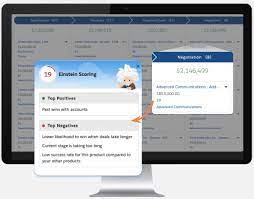
Your business thrives on seizing the right opportunities to drive more deals. Identifying these pivotal sales chances is crucial for prioritizing and capitalizing on prospects to secure successful outcomes. Enter Einstein Opportunity Scoring Boosts Sales. Enter Salesforce’s Einstein Opportunity Scoring system, designed to gauge the likelihood of an opportunity’s success, ranging from scores of 1 to 99, powered by artificial intelligence analysis. These scores offer a clear indication of each opportunity’s potential, empowering you to prioritize effectively and maximize your business’s deal closure rates. So, how does this innovative system function? In today’s digital age, Salesforce’s Einstein Opportunity Scoring leverages AI to analyze past opportunities, scrutinizing both closed-won and closed-lost instances to identify key factors influencing scores. These factors encompass various opportunity details, historical data, and product information, culminating in accurate scoring models refreshed every few hours to ensure precision. Moreover, you have the flexibility to customize your scoring model to align with specific business needs, modifying criteria by adding or removing records or custom fields. This adaptability extends further with regular scoring model updates every 10 days, reflecting the dynamic nature of the business landscape. Accessing this feature is simple—users with a Sales Cloud Einstein license can leverage Einstein Opportunity Scoring. And even if you lack this specific license or the Sales Cloud Einstein product suite, fret not, as this feature gradually rolls out to all customers, irrespective of license status. What advantages does Opportunity Scoring offer your business? Firstly, the opportunity scorecard presents a comprehensive overview of each deal, highlighting positive and negative influencing factors, aiding in focused deal analysis. Additionally, the system offers actionable suggestions for score improvement, ensuring optimal deal management. Furthermore, Opportunity Scoring aids in opportunity tracking, preventing deal slippage, and facilitating informed decision-making. Sales representatives can leverage low opportunity scores to seek guidance from sales managers, ultimately boosting deal conversion rates. To maximize the effectiveness of Einstein Opportunity Scoring, continuous improvement is key. Ensure proper opportunity segregation, timely entry of opportunities, and accurate data updates to enhance scoring accuracy and increase deal success rates. In instances where scores may not appear, reasons could range from initial feature setup time to opportunity closure or admin exclusion. Meeting specific data requirements, including closed-won and closed-lost opportunities, and regular updates, ensures robust scoring outcomes. In conclusion, harness the power of Salesforce’s Einstein Opportunity Scoring to unlock valuable insights and predictive capabilities, driving sales success and propelling your business forward. For further insights into Einstein Opportunity Scoring, explore our blogs section for comprehensive information. Like Related Posts Who is Salesforce? Who is Salesforce? Here is their story in their own words. From our inception, we’ve proudly embraced the identity of Read more Salesforce Marketing Cloud Transactional Emails Salesforce Marketing Cloud Transactional Emails are immediate, automated, non-promotional messages crucial to business operations and customer satisfaction, such as order Read more Salesforce Unites Einstein Analytics with Financial CRM Salesforce has unveiled a comprehensive analytics solution tailored for wealth managers, home office professionals, and retail bankers, merging its Financial Read more AI-Driven Propensity Scores AI plays a crucial role in propensity score estimation as it can discern underlying patterns between treatments and confounding variables Read more

Read More
public sector and tribal governent

What is BI in Salesforce?

Salesforce BI helps to create fast, digestible reports to help you make informed decisions at the right time. Salesforce Einstein is a leading business intelligence software solution that will help streamline your operations. Read on in this insight to learn how Salesforce BI capabilities including Tableau rank in the Gartner Magic Quadrant. Make the right decision every time using analytics that go beyond business intelligence software. See why Gartner named Salesforce (Tableau) a Leader in the Gartner® Magic Quadrant™ for Analytics and Business Intelligence Platforms for the 11th consecutive year. Data and analytics leaders must use analytics and BI platforms to support the needs of IT, analysts, consumers and data scientists. While integration with cloud ecosystems and business applications is a key selection requirement, buyers also need platforms to support openness and interoperability. Analytics and business intelligence (ABI) platforms enable less technical users, including business people, to model, analyze, explore, share and manage data, and collaborate and share findings, enabled by IT and augmented by artificial intelligence (AI). For several years, the Magic Quadrant for Analytic and Business Intelligence Platforms has emphasized visual self-service for end users augmented by AI to deliver automated insights. While this remains a significant use case, the ABI platform market will increasingly need to focus on the needs of the analytic content consumer and business decision makers. To achieve this, automated insights must be relevant in context of a user’s goals, actions and workflow. Many platforms are adding capabilities for users to easily compose low-code or no-code automation workflows and applications. This blend of capabilities is helping to expand the vision for analytics beyond simply delivering datasets and presenting dashboards. Today’s ABI platforms can deliver enriched contextualized insights, refocus attention on decision-making processes and ultimately take actions that will deliver business value. In addition to the increasing consumer design focus trend, we see other key market trends, including the need for improved governance of analytic content creation and dissemination, and the demand for a headless, open architecture. For example, a headless ABI platform would decouple the metrics store from the front-end presentation layer, enabling more interoperability with competitive products. ABI platform functionality includes the following 12 critical capabilities, which have been updated to reflect areas of market change, differentiation and customer demand: Gartner added three new critical capabilities as part of our metrics store evaluation criteria this year:  ABI platforms have always been about measurement. For decades, the slicing and dicing of measures by their dimensional attributes was synonymous with the act of performing business intelligence. However, over the last decade, the focus on metrics and measurement was overshadowed by data visualization. As data visualization became the most conspicuous capability, some business executives began to conflate ABI platforms with data visualization — as if ABI platforms are glorified chart wizards. This misconception minimizes much of the work performed and the business value delivered by ABI platforms. Establishing metrics stores as a critical capability to execute makes it clear that defining and communicating performance measures throughout an organization is one of the key purposes of an ABI platform. Analytics collaboration is a combination of many features (such as Slack/Teams integration, action frameworks) that collectively improve an organization’s ability to make decisions with consensus. Data science integration reflects the increasing likelihood that a business analyst may want to use data science to test certain hypotheses, and that data scientists will need to leverage features such as data prep and data visualization. In addition, Gartner is changing “catalogs” to “analytic catalogs” to emphasize a set of requirements that are not being met by ABI platform vendors today. Most large enterprises have thousands of reports built across multiple ABI platforms, but consumers in these organizations have no easy way to access these reports. The name change to analytic catalogs reflects the need for ABI platform vendors to deliver analytic content with the consumer in mind. Three critical capabilities were removed from our evaluation criteria: security, natural language generation (NLG; rolled into data storytelling) and cloud analytics (which will no longer be considered a platform capability, but instead a go-to-market strategy covered in the Magic Quadrant). And one of the security sub-criteria, about the granularity of authorization (e.g., row-based security) has been moved to the enterprise reporting capability. Salesforce (Tableau) Tableau, a Salesforce company, is a Leader in this Magic Quadrant. Its products are mainly focused on visual-based exploration that enables business users to access, prepare, analyze and present findings in their data. CRM Analytics, formerly Tableau CRM, provides augmented analytics capabilities for analysts and citizen data scientists. Tableau has global operations and serves clients of all sizes. In 2022, Tableau reinforced its augmented consumer vision to provide contextualized insights with deeper integration with Salesforce Data Cloud. IT also improved decision intelligence by bringing domain-aware insights into action with Revenue Intelligence and other Salesforce-native apps. The extensible design and x-platform integrations (Salesforce Flow, MuleSoft, UiPath and Looker) further enable composable analytics to bring insights into workflow with agility. Strengths Cautions Like Related Posts Who is Salesforce? Who is Salesforce? Here is their story in their own words. From our inception, we’ve proudly embraced the identity of Read more Salesforce Marketing Cloud Transactional Emails Salesforce Marketing Cloud Transactional Emails are immediate, automated, non-promotional messages crucial to business operations and customer satisfaction, such as order Read more Salesforce Unites Einstein Analytics with Financial CRM Salesforce has unveiled a comprehensive analytics solution tailored for wealth managers, home office professionals, and retail bankers, merging its Financial Read more AI-Driven Propensity Scores AI plays a crucial role in propensity score estimation as it can discern underlying patterns between treatments and confounding variables Read more

Read More
Salesforce in Education

Salesforce in Education

Salesforce for Education encompasses a suite of products that seamlessly integrate insights across recruitment, admissions, and student success, providing a comprehensive view of each learner’s journey—from prospective students to engaged alumni-and every step between. Our collaboration spans K-12 schools, community colleges, universities, and graduate schools, catering to institutions of all sizes, ensuring they are well-equipped with the education CRM necessary to thrive in the future. Education Cloud expedites time-to-value and fosters personalized experiences for every lifelong learner. Key Features: Learner-Centric Data Foundation:Begin your journey with education-specific objects, logic, and automation embedded in the #1 CRM platform. Core Capabilities for Your Entire Institution:Optimize faculty and staff impact using versatile features like scheduling and case management applicable across various departments. Pre-Built Apps Powering the Learner Lifecycle:Enhance productivity with ready-to-use, customizable apps tailored for each stage of the learner journey. From Insights to Action with Education Cloud:Realize improvements based on feedback from Salesforce.org customers, including the Hayward Unified School District, Austin Achieve Public Schools, and San Diego COE, achieving a 38% faster response to student needs and a 10% increase in enrollment. Access a Single Source of Truth:Consolidate student and family data into a unified view, enabling personalized interactions at every stage of the education journey. Innovate with a Scalable Platform:Education Cloud for K-12 serves as a CRM platform designed for schools, facilitating quick innovation to meet the evolving needs of constituents. Education Cloud for Community Colleges: Integrated Solutions to Maximize Impact:Built on the #1 CRM, Education Cloud serves as the digital foundation empowering institutions for the future. Tailored products and solutions for enrollment management, student support, workforce development, donor engagement, and marketing and communications enable community and technical colleges to leverage a single source of truth for transforming experiences into lifelong relationships. Like Related Posts Who is Salesforce? Who is Salesforce? Here is their story in their own words. From our inception, we’ve proudly embraced the identity of Read more Salesforce Marketing Cloud Transactional Emails Salesforce Marketing Cloud Transactional Emails are immediate, automated, non-promotional messages crucial to business operations and customer satisfaction, such as order Read more Salesforce Unites Einstein Analytics with Financial CRM Salesforce has unveiled a comprehensive analytics solution tailored for wealth managers, home office professionals, and retail bankers, merging its Financial Read more AI-Driven Propensity Scores AI plays a crucial role in propensity score estimation as it can discern underlying patterns between treatments and confounding variables Read more

Read More
gettectonic.com