

Salesforce Einstein Archives - gettectonic.com - Page 18
Salesforce Document Generation

Generative AI

Artificial Intelligence in Focus Generative Artificial Intelligence is a type of artificial intelligence technology that can produce various types of content, including text, imagery, audio and synthetic data. What is the difference between generative AI and general AI? Traditional AI focuses on analyzing historical data and making future numeric predictions, while generative AI allows computers to produce brand-new outputs that are often indistinguishable from human-generated content. Recently, there has been a surge in discussions about artificial intelligence (AI), and the spotlight on this technology seems more intense than ever. Despite AI not being a novel concept, as many businesses and institutions have incorporated it in various capacities over the years, the heightened interest can be attributed to a specific AI-powered chatbot called ChatGPT. ChatGPT stands out by being able to respond to plain-language questions or requests in a manner that closely resembles human-written responses. Its public release allowed people to engage in conversations with a computer, creating a surprising, eerie, and evocative experience that captured widespread attention. This ability of an AI to engage in natural, human-like conversations represents a notable departure from previous AI capabilities. The Artificial Intelligence Fundamentals badge on the Salesforce Trailhead delves into the various specific tasks that AI models are trained to execute, highlighting the remarkable potential of generative AI, particularly in its ability to create diverse forms of text, images, and sounds, leading to transformative impacts both in and outside the workplace. Let’s explore the tasks that generative AI models are trained to perform, the underlying technology, and how businesses are specializing within the generative AI ecosystem. It also delves into concerns that businesses may harbor regarding generative Artificial Intelligence. Exploring the Capabilities of Language Models While generative AI may appear as a recent phenomenon, researchers have been developing and training generative AI models for decades. Some notable instances made headlines, such as Nvidia unveiling an AI model in 2018 capable of generating photorealistic images of human faces. These instances marked the gradual entry of generative AI into public awareness. While some researchers focused on AI’s capabilities generating specific types of images, others concentrated on language-related AI. This involved training AI models to perform various tasks related to interpreting text, a field known as natural language processing (NLP). Large language models (LLMs), trained on extensive datasets of real-world text, emerged as a key component of NLP, capturing intricate language rules that humans take years to learn. Summarization, translation, error correction, question answering, guided image generation, and text-to-speech are among the impressive tasks accomplished by LLMs. They provide a tool that significantly enhances language-related tasks in real-world scenarios. Predictive Nature of Generative AI Despite the remarkable predictions generated by generative AI in the form of text, images, and sounds, it’s crucial to clarify that these outputs represent a form of prediction rather than a manifestation of “thinking” by the computer. Generative Artificial Intelligence doesn’t possess opinions, intentions, or desires; it excels at predicting sequences of words based on patterns learned during training. Understanding this predictive nature is key. The AI’s ability to predict responses aligns with expectations rather than reflecting any inherent understanding or preference. Recognizing the predictive character of generative AI underscores its role as a powerful tool, bridging gaps in language-related tasks for both professional and recreational purposes. Like Related Posts Who is Salesforce? Who is Salesforce? Here is their story in their own words. From our inception, we’ve proudly embraced the identity of Read more Salesforce Marketing Cloud Transactional Emails Salesforce Marketing Cloud Transactional Emails are immediate, automated, non-promotional messages crucial to business operations and customer satisfaction, such as order Read more Salesforce Unites Einstein Analytics with Financial CRM Salesforce has unveiled a comprehensive analytics solution tailored for wealth managers, home office professionals, and retail bankers, merging its Financial Read more AI-Driven Propensity Scores AI plays a crucial role in propensity score estimation as it can discern underlying patterns between treatments and confounding variables Read more

Read More
Salesforce Einstein

Salesforce ChatGPT

ChatGPT, an AI chatbot and Large Language Model developed by OpenAI with support from Microsoft, employs Natural Language Processing (NLP) to engage with users and provide responses by mining a vast database compiled from millions of websites. Its interactions are designed to be natural and conversational, but the accuracy may vary depending on the specificity of the user’s inquiry. In the context of the Salesforce ecosystem, the impact of ChatGPT can lead to both positive and negative outcomes. For example, it excels in generating code such as validation rules, formulas, and Apex classes. However, caution is advised when relying on it for declarative results or comprehensive answers. Junior developers may face challenges, as ChatGPT, drawing insights from extensive code samples, has the potential to outperform them in code writing. It is worth acknowledging that Salesforce has been integrating artificial intelligence since 2017. When it comes to output, ChatGPT is a little bit like canned cheese and string cheese. They are both “cheese” but neither one is cheese. For business analysts and consultants, ChatGPT can be a valuable resource for crafting generic proposals or suggesting process steps. Nevertheless, a measured reliance on its outputs is recommended. Architects, in contrast, may find limited value in ChatGPT, lacking the necessary experience and context for their role. Additionally, ChatGPT can be utilized to generate initial drafts of documents like training materials or business cases, but users must specify the rationale behind suggested changes, as ChatGPT lacks intrinsic understanding. It is crucial to clarify that ChatGPT functions as a content development tool and should not be confused with Salesforce Service Cloud Voice and conventional chatbots. Awareness of Salesforce’s My Domain changes is essential for those currently using chatbots, as these changes can impact their functionality. For marketers and content writers, it is essential to recognize that Large Language Models like ChatGPT may accentuate social biases and produce potentially inaccurate results. This stems from the questionable data found in some of the millions of websites that contribute to its training. In summary, while ChatGPT can be a beneficial tool, it is imperative to validate and verify its results before relying on them. Like1 Related Posts Who is Salesforce? Who is Salesforce? Here is their story in their own words. From our inception, we’ve proudly embraced the identity of Read more Salesforce Marketing Cloud Transactional Emails Salesforce Marketing Cloud Transactional Emails are immediate, automated, non-promotional messages crucial to business operations and customer satisfaction, such as order Read more Salesforce Unites Einstein Analytics with Financial CRM Salesforce has unveiled a comprehensive analytics solution tailored for wealth managers, home office professionals, and retail bankers, merging its Financial Read more AI-Driven Propensity Scores AI plays a crucial role in propensity score estimation as it can discern underlying patterns between treatments and confounding variables Read more

Read More
Salesforce Service Cloud Einstein

Salesforce Service Cloud Einstein

Einstein for Service is a robust suite of time-saving Artificial Intelligence features designed to empower agents in delivering exceptional customer service experiences. Salesforce Service Cloud Einstein-learn more. Customer service has evolved from being a cost center to a growth driver, and leading companies are prioritizing customer service to increase brand loyalty. In Service Cloud Einstein, various AI technologies, such as Machine Learning (ML), deep learning, predictive analytics, Natural Language Processing (NLP), and smart data discovery, work collaboratively to enhance customer support, providing faster and better service. Salesforce Einstein, recognized as the world’s first “generative AI” built for CRM, seamlessly integrates into multiple Salesforce products, including Marketing Cloud, Sales Cloud, and Service Cloud. Sales Cloud incorporates Einstein in the form of eight essential tools: Salesforce Einstein, since its inception in 2016, has been at the forefront of CRM AI technology, delivering personalized and predictive experiences for enhanced professionalism. Salesforce Service Cloud is a CRM platform focused on providing service and support to business customers. It is an extension of the Sales Cloud product tailored for sales professionals. Service Cloud Einstein is utilized by notable companies like Thomson Reuters, Southern Glazer’s Wine and Spirits, Cisco, and Skillsoft. Service Cloud Einstein benefits businesses by providing efficient customer service, with Einstein GPT responding promptly to inquiries, offering precise responses, enhancing customer satisfaction, and reducing resolution time. Studies show that in the same time 3 customers could be serviced before Service Cloud Einstein, now ten can be taken care of. The difference between Einstein GPT and ChatGPT lies in their design, with Einstein GPT specifically tailored for Salesforce users and clouds, while ChatGPT is a more versatile model for general use. Einstein is available for free with Salesforce’s Developer Edition, providing access to most platform features for building and testing custom applications and integrations using Einstein. Salesforce Sales Cloud and Service Cloud differ in their focus, with Sales Cloud concentrating on sales processes, while Service Cloud centers around customer service and support. Einstein remains the overarching AI brand for Salesforce, present across the portfolio, including within Tableau. Einstein Discovery is available as part of Tableau CRM Plus or through Einstein Predictions. Are you ready to explore the power of Einstein in your Salesforce Service Cloud implementation? Contact Tectonic today. Tectonic is please to announce Salesforce Service Cloud Implementation Solutions. Content updated January 2024. Like1 Related Posts Who is Salesforce? Who is Salesforce? Here is their story in their own words. From our inception, we’ve proudly embraced the identity of Read more Salesforce Marketing Cloud Transactional Emails Salesforce Marketing Cloud Transactional Emails are immediate, automated, non-promotional messages crucial to business operations and customer satisfaction, such as order Read more Salesforce Unites Einstein Analytics with Financial CRM Salesforce has unveiled a comprehensive analytics solution tailored for wealth managers, home office professionals, and retail bankers, merging its Financial Read more AI-Driven Propensity Scores AI plays a crucial role in propensity score estimation as it can discern underlying patterns between treatments and confounding variables Read more

Read More
Salesforce for Manufacturing, Automotive, and Energy

Improve Manufacturing Sales by Improving Partner Engagement

Did you know that half of all B2B revenue is generated through channel partner sales? A recent 2022 survey revealed that 80% of B2B executives find their partner programs ineffective, potentially slowing or even blocking product sales. The obstacles to improvements with manufacturing partners include siloed systems and data, fragmented processes, inconsistent programs, and outdated communication channels. You can improve manufacturing partner engagement. Learn more. To overcome these challenges and enhance manufacturing partner relationships. For increased sales, consider focusing on three key areas: By prioritizing transparency, investing in technology, and streamlining processes, manufacturers can strengthen partner relationships, leading to increased sales and improved customer satisfaction. Focus on making it easier for partners to do business with you, build trust, and create a unified, shared view of data to achieve mutually beneficial relationships. Is it time to explore how Tectonic and Salesforce can improve your partner engagement? Contact us today. Like1 Related Posts Who is Salesforce? Who is Salesforce? Here is their story in their own words. From our inception, we’ve proudly embraced the identity of Read more Salesforce Marketing Cloud Transactional Emails Salesforce Marketing Cloud Transactional Emails are immediate, automated, non-promotional messages crucial to business operations and customer satisfaction, such as order Read more Salesforce Unites Einstein Analytics with Financial CRM Salesforce has unveiled a comprehensive analytics solution tailored for wealth managers, home office professionals, and retail bankers, merging its Financial Read more AI-Driven Propensity Scores AI plays a crucial role in propensity score estimation as it can discern underlying patterns between treatments and confounding variables Read more
Read More
Salesforce Solutions for Communications

Salesforce Solutions for Communications

Salesforce has recently unveiled tailored Salesforce Solutions for Communications aimed at enhancing customer experiences through advanced analytics, automation tools, and AI-driven customer service. These innovations empower providers to gain deeper insights into their customers, automate interactions, and effectively monitor customer satisfaction levels. For communication providers looking to elevate their customer service, Salesforce’s automation solutions offer significant benefits. They ensure seamless and efficient handling of every customer interaction, leading to improved satisfaction and increased loyalty. Salesforce Solutions for Communication Providers Salesforce offers a comprehensive suite of solutions specifically designed for communication providers to enhance customer experiences. This suite includes: Salesforce Customer Engagement Platform (CXP) and Tools The Salesforce Customer Engagement Platform equips communication providers with a suite of tools to enhance customer experiences, including: Salesforce Einstein AI Platform for Communication Providers The Salesforce Einstein AI Platform is tailored to improve customer experiences for communication providers by analyzing extensive datasets to identify patterns, understand customer needs, and optimize interactions, ultimately enhancing overall customer experience. Benefits of the Salesforce Customer Engagement Platform The Salesforce Customer Engagement Platform offers communication providers various benefits, including enhanced customer experience, increased sales, and improved operational efficiencies. Features such as social listening and engagement analytics enable providers to understand customer sentiment and behavior, facilitating personalized interactions and driving sales growth. New Salesforce Innovations for Communication Providers New innovations from Salesforce include analytics, AI, and prebuilt solutions that automate processes, improve customer experiences, and reduce operational costs. Integrations with WhatsApp enable richer customer engagements, personalized experiences, and automated interactions through chatbots. In conclusion, Salesforce’s solutions for communication providers represent a significant advancement in improving customer experiences, revolutionizing how providers interact with their clientele to achieve positive outcomes and business growth. Contact Tectonic today to explore Salesforce communications solutions. Like Related Posts Who is Salesforce? Who is Salesforce? Here is their story in their own words. From our inception, we’ve proudly embraced the identity of Read more Salesforce Marketing Cloud Transactional Emails Salesforce Marketing Cloud Transactional Emails are immediate, automated, non-promotional messages crucial to business operations and customer satisfaction, such as order Read more Salesforce Unites Einstein Analytics with Financial CRM Salesforce has unveiled a comprehensive analytics solution tailored for wealth managers, home office professionals, and retail bankers, merging its Financial Read more AI-Driven Propensity Scores AI plays a crucial role in propensity score estimation as it can discern underlying patterns between treatments and confounding variables Read more
Read More
Cloud Based Business Solutions

Data Strategies in AI

The demand for reliable data has been a longstanding requirement. Driven by the continuous pursuit of real-time personalization and improved business efficiencies. The advent of Generative AI has further intensified these needs, prompting analytics and IT leaders to strengthen their data foundations. Data Strategies in AI A significant 86% of analytics and IT leaders acknowledge that the effectiveness of AI’s outputs hinges on the quality of its data inputs. Encouragingly, technical leaders express confidence in their standing. Assessing factors such as data capabilities, processes, sponsorship, investment, and vision, more than a third of analytics and IT leaders categorize their data maturity as best-in-class. Despite this optimism, only 6% of these leaders admit to having data maturity below industry standards or nonexistent. This statistic may reflect the challenges of benchmarking maturity against peers or, at worst, an overconfidence in data strategy and capabilities. Data Strategies in AI In today’s fast-paced work environment, characterized by a flood of data and constant communications, individuals are grappling to keep up. Simultaneously, business leaders face mounting pressure to enhance productivity amid unpredictable economic conditions. The list of challenges continues to expand: An AI Data assessment offers several benefits, empowering organizations to: Four key strategies for AI impact are: vision, value-realization, risk, and adoption plans. Like Related Posts Who is Salesforce? Who is Salesforce? Here is their story in their own words. From our inception, we’ve proudly embraced the identity of Read more Salesforce Marketing Cloud Transactional Emails Salesforce Marketing Cloud Transactional Emails are immediate, automated, non-promotional messages crucial to business operations and customer satisfaction, such as order Read more Salesforce Unites Einstein Analytics with Financial CRM Salesforce has unveiled a comprehensive analytics solution tailored for wealth managers, home office professionals, and retail bankers, merging its Financial Read more AI-Driven Propensity Scores AI plays a crucial role in propensity score estimation as it can discern underlying patterns between treatments and confounding variables Read more
Read More

Einstein License for Service Cloud

Salesforce Einstein for Service Cloud combines AI technology with customer prioritization to enhance CRM solutions and deliver superior customer service experiences. Tectonic, as a trusted Salesforce implementation partner, can assist organizations in leveraging the full potential of Salesforce Einstein for Service Cloud to revolutionize their customer service operations.

Read More
Salesforce Service Cloud

Salesforce Service Cloud Explained

Service Cloud, developed by Salesforce, functions as a powerful customer relationship management (CRM) tool explicitly tailored to bolster a business’s customer service operations. This platform streamlines communication between customers and companies, utilizing channels such as email support, live chat, and phone interactions to aid customer agents in promptly identifying and resolving customer issues. Service Cloud, as a comprehensive customer service platform, empowers businesses to effectively manage and resolve customer inquiries and issues. Its huge array of features encompasses case tracking, social networking plug-ins for conversion, and analytics. If you’ve recently engaged with a business through live chat or created a support ticket, chances are they were leveraging a system like SFDC Service Cloud. Revolutionize the way your service teams provide value across every customer touchpoint, encompassing customer experience, engagement, processes, automation, and service operations. By reimagining service with Service Cloud, businesses can enhance customer lifetime value, reduce operational costs, and optimize efficiency—from the contact center to the field. Achieve personalized support at scale with trustworthy Artificial Intelligence. Integrate every customer service process into the Einstein 1 Platform to decrease costs and boost productivity. Service Cloud provides businesses with a 360-degree view of their customers, enabling the delivery of faster, smarter, and more tailored experiences. Businesses can establish a connected knowledge base, manage case interactions, and facilitate live agent chat—all within a unified platform. Leveraging customer’s past activity data allows for personalized interactions and opportunities for upselling services or products. It’s important to note the distinction between Salesforce Sales Cloud and Service Cloud. Sales Cloud focuses on the sales process, managing leads, opportunities, and sales forecasts. On the other hand, Service Cloud is dedicated to addressing customer inquiries and cases, emphasizing exceptional customer service and support. Important Features of Service Cloud Custom Reports and Dashboards Utilizing real-time reports within SFDC Service Cloud empowers business owners to access a comprehensive case history of customers, facilitating informed decision-making. The associated dashboard provides professionals with a 360-degree view, enabling easy tracking of customer information and cases for efficient problem-solving. Salesforce Lightning Service Console The Salesforce Service Cloud console consolidates customer data across multiple devices and channels. It provides a unified view of customer interactions, encompassing emails, chats, social media mentions, and phone calls. Salesforce Service Cloud Case Management A case management system collects and organizes customer service interactions from various channels, allowing agents to respond promptly. Automated Case Routing Automation in case routing expedites resolutions by assigning tasks to personnel based on qualifications and skills, managing tasks across multiple service channels. Social Customer Service Empowering customer teams, Social Customer Service handles user queries on social media channels and directs them to relevant agents, offering a 360-degree view of customers. Asset and Order Management Tracking orders, assets, and support history in one place provides a comprehensive view, enabling personalized services and enhancing customer satisfaction. Telephony Integration Integrating with Computer Telephony Integration (CTI) systems boosts agent productivity, allowing viewing of customer information without picking up the phone. Benefits of Salesforce Service Cloud: Supplementary Products: Digital Engagement, Service Cloud Einstein, Service Cloud Voice, Customer Lifecycle Analytics, Salesforce Surveys Response Pack. Are you ready to achieve the best in customer service with Salesforce Service Cloud?  Contact Tectonic today to learn more. Tectonic is please to announce Salesforce Service Cloud Implementation Solutions. Content updated September 2023. Like2 Related Posts AI-Driven Propensity Scores AI plays a crucial role in propensity score estimation as it can discern underlying patterns between treatments and confounding variables Read more Tectonic’s Successful Salesforce Track Record Salesforce Technology Services Integrator – Tectonic has successfully delivered Salesforce in a variety of industries including Public Sector, Hospitality, Manufacturing, Read more Asset Management Salesforce Can Salesforce do asset management? You can manage assets in Consumer Goods (desktop) and in the Consumer Goods offline mobile Read more Lookup Relationship in Salesforce What is Lookup relationship in Salesforce? Salesforce’s lookup relationships is a significant capability that allows users to connect two objects Read more

Read More
Einstein Chatbot Salesforce

Einstein Chatbot Salesforce

Salesforce users have two options for creating a chatbot: either using an external platform and integrating the final product through Salesforce Lightning, or directly developing it within Salesforce Einstein Bot. Salesforce prioritizes empowering customers to create applications without the need for coding. Einstein Chatbot Salesforce. Einstein Bots utilize Artificial Intelligence (AI) to enhance the customer service experience across various channels such as SMS, Chat, Slack, Facebook Messenger, and WhatsApp, supporting conversations in multiple languages. They offer personalized and intelligent service by leveraging AI-powered chatbots integrated directly into the CRM. With just a few clicks, users can expedite issue resolution and boost productivity by utilizing AI-generated responses or automating routine tasks with bots integrated into Salesforce data. These secure, multilingual bots can be deployed on enhanced messaging channels, including in-app, web, and third-party platforms, as well as Slack and the Einstein Bots API. Creating an Einstein Bot: Enhanced Features for Einstein Bots: Einstein Bots offer various benefits: Salesforce Einstein Chatbots provide a valuable solution for organizations aiming to streamline customer service, reduce case volume, and enhance overall customer experience across diverse channels and languages. Like Related Posts Who is Salesforce? Who is Salesforce? Here is their story in their own words. From our inception, we’ve proudly embraced the identity of Read more Salesforce Marketing Cloud Transactional Emails Salesforce Marketing Cloud Transactional Emails are immediate, automated, non-promotional messages crucial to business operations and customer satisfaction, such as order Read more Salesforce Unites Einstein Analytics with Financial CRM Salesforce has unveiled a comprehensive analytics solution tailored for wealth managers, home office professionals, and retail bankers, merging its Financial Read more AI-Driven Propensity Scores AI plays a crucial role in propensity score estimation as it can discern underlying patterns between treatments and confounding variables Read more
Read More
tectonic logo

AI Large Language Models

What Exactly Constitutes a Large Language Model? Picture having an exceptionally intelligent digital assistant that extensively combs through text, encompassing books, articles, websites, and various written content up to the year 2021. Yet, unlike a library that houses entire books, this digital assistant processes patterns from the textual data it undergoes. This digital assistant, akin to a large language model (LLM), represents an advanced computer model tailored to comprehend and generate text with humanlike qualities. Its training involves exposure to vast amounts of text data, allowing it to discern patterns, language structures, and relationships between words and sentences. How Do These Large Language Models Operate? Fundamentally, large language models, exemplified by GPT-3, undertake predictions on a token-by-token basis, sequentially building a coherent sequence. Given a request, they strive to predict the subsequent token, utilizing their acquired knowledge of patterns during training. These models showcase remarkable pattern recognition, generating contextually relevant content across diverse topics. The “large” aspect of these models refers to their extensive size and complexity, necessitating substantial computational resources like powerful servers equipped with multiple processors and ample memory. This capability enables the model to manage and process vast datasets, enhancing its proficiency in comprehending and generating high-quality text. While the sizes of LLMs may vary, they typically house billions of parameters—variables learned during the training process, embodying the knowledge extracted from the data. The greater the number of parameters, the more adept the model becomes at capturing intricate patterns. For instance, GPT-3 boasts around 175 billion parameters, marking a significant advancement in language processing capabilities, while GPT-4 is purported to exceed 1 trillion parameters. While these numerical feats are impressive, the challenges associated with these mammoth models include resource-intensive training, environmental implications, potential biases, and more. Large language models serve as virtual assistants with profound knowledge, aiding in a spectrum of language-related tasks. They contribute to writing, offer information, provide creative suggestions, and engage in conversations, aiming to make human-technology interactions more natural. However, users should be cognizant of their limitations and regard them as tools rather than infallible sources of truth. What Constitutes the Training of Large Language Models? Training a large language model is analogous to instructing a robot in comprehending and utilizing human language. The process involves: Fine-Tuning: A Closer Look Fine-tuning involves further training a pre-trained model on a more specific and compact dataset than the original. It is akin to training a robot proficient in various cuisines to specialize in Italian dishes using a dedicated cookbook. The significance of fine-tuning lies in: Versioning and Progression Large language models evolve through versions, with changes in size, training data, or parameters. Each iteration aims to address weaknesses, handle a broader task spectrum, or minimize biases and errors. The progression is simplified as follows: In essence, large language model versions emulate successive editions of a book series, each release striving for refinement, expansiveness, and captivating capabilities. Like1 Related Posts Who is Salesforce? Who is Salesforce? Here is their story in their own words. From our inception, we’ve proudly embraced the identity of Read more Salesforce Marketing Cloud Transactional Emails Salesforce Marketing Cloud Transactional Emails are immediate, automated, non-promotional messages crucial to business operations and customer satisfaction, such as order Read more Salesforce Unites Einstein Analytics with Financial CRM Salesforce has unveiled a comprehensive analytics solution tailored for wealth managers, home office professionals, and retail bankers, merging its Financial Read more AI-Driven Propensity Scores AI plays a crucial role in propensity score estimation as it can discern underlying patterns between treatments and confounding variables Read more

Read More
ChatGPT and Einstein GPT

ChatGPT and Einstein GPT

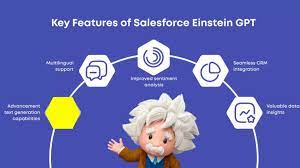
Artificial intelligence (AI) has been rapidly advancing globally, with breakthroughs captivating professionals across various sectors. One milestone that has gained significant attention is the emergence of ChatGPT, a cutting-edge language model revolutionizing the tech landscape. This development has profoundly impacted businesses relying on Salesforce for their customer relationship management (CRM) needs. In March 2023, Salesforce unveiled its latest AI innovation, Einstein GPT, promising to transform how companies engage with their clientele. In this article, we explore what Salesforce Einstein GPT entails and how it can benefit teams across diverse industries. When OpenAI introduced ChatGPT in November 2022, they didn’t expect the overwhelming response it received. Initially positioned as a “research preview,” this AI chatbot aimed to refine existing technology while soliciting feedback from users. However, ChatGPT quickly became a viral sensation, surpassing OpenAI’s expectations and prompting them to adapt to its newfound popularity. Developed on the foundation of the GPT-3.5 language model, ChatGPT was specifically tailored to facilitate engaging and accessible conversations, distinguishing it from its predecessors. Its launch attracted a diverse user base keen to explore its capabilities, prompting OpenAI to prioritize addressing potential misuse and enhancing its safety features. As ChatGPT gained traction, it caught the attention of Salesforce, a leading CRM provider. In March 2023, Salesforce unveiled Einstein GPT, its own AI innovation, poised to transform customer engagement. Built on the GPT-3 architecture and seamlessly integrated into Salesforce Clouds, Einstein GPT promised to revolutionize how businesses interact with their clientele. Einstein GPT boasts a range of features designed to personalize customer experiences and streamline workflows. From generating natural language responses to crafting personalized content and automating tasks, Einstein GPT offers versatility and value across industries. By leveraging both Einstein AI and GPT technology, businesses can unlock unprecedented efficiency and deliver superior customer experiences. Despite its success, OpenAI acknowledges the need for ongoing refinement and vigilance, emphasizing the importance of responsible deployment and transparency in the development of AI technology. Exploring Einstein GPT Salesforce presents Einstein GPT as the premier generative AI tool for CRM worldwide. Utilizing the advanced GPT-3 architecture, Einstein GPT seamlessly integrates into all Salesforce Clouds, including Tableau, MuleSoft, and Slack. This groundbreaking technology empowers users to generate natural language responses to customer inquiries, craft personalized content, and compose entire email messages on behalf of sales personnel. With its high degree of customization, Einstein GPT can be finely tuned to meet the specific needs of various industries, use cases, and customer requirements, delivering significant value to businesses of all sizes and sectors. Objectives of Salesforce AI Einstein GPT Salesforce AI Einstein GPT is designed to achieve several key objectives: Distinguishing Einstein GPT from Einstein AI Einstein GPT represents the latest evolution of Salesforce’s Einstein artificial intelligence technology. Unlike its predecessors, Einstein GPT integrates proprietary Einstein AI models with ChatGPT and other leading large language models. This integration enables users to interact with CRM data using natural language prompts, resulting in highly personalized, AI-generated content and triggering powerful automations that enhance workflows and productivity. By leveraging both Einstein AI and GPT technology, businesses can achieve unparalleled efficiency and deliver exceptional customer experiences. Features of Einstein GPT in Salesforce CRM Key features and capabilities of Salesforce Einstein chatbot GPT include: Utilizing Einstein GPT for Business Improvement Einstein GPT can be leveraged across various domains to enhance business operations: Integration with Salesforce Data Cloud Salesforce Data Cloud, a cloud-based data management system, enables real-time data aggregation from diverse sources. Einstein GPT utilizes unified customer data profiles from the Salesforce Data Cloud to personalize interactions throughout the customer journey. OpenAI on ChatGPT Methods We trained this model using Reinforcement Learning from Human Feedback (RLHF), using the same methods as InstructGPT, but with slight differences in the data collection setup. We trained an initial model using supervised fine-tuning: human AI trainers provided conversations in which they played both sides—the user and an AI assistant. We gave the trainers access to model-written suggestions to help them compose their responses. We mixed this new dialogue dataset with the InstructGPT dataset, which we transformed into a dialogue format. To create a reward model for reinforcement learning, we needed to collect comparison data, which consisted of two or more model responses ranked by quality. To collect this data, we took conversations that AI trainers had with the chatbot. We randomly selected a model-written message, sampled several alternative completions, and had AI trainers rank them. Using these reward models, we can fine-tune the model using Proximal Policy Optimization. We performed several iterations of this process. ChatGPT is fine-tuned from a model in the GPT-3.5 series, which finished training in early 2022. You can learn more about the 3.5 series here. ChatGPT and GPT-3.5 were trained on an Azure AI supercomputing infrastructure. Limitations ChatGPT and Einstein GPT Salesforce Einstein GPT signifies a significant advancement in AI technology, empowering businesses to deliver tailored customer experiences and streamline operations. With its integration into Salesforce CRM and other platforms, Einstein GPT offers unprecedented capabilities for personalized engagement and automated insights, ensuring organizations remain competitive in today’s dynamic market landscape. When OpenAI quietly launched ChatGPT in late November 2022, the San Francisco-based AI company didn’t anticipate the viral sensation it would become. Initially viewed as a “research preview,” it was meant to showcase a refined version of existing technology while gathering feedback from the public to address its flaws. However, the overwhelming success of ChatGPT caught OpenAI off guard, leading to a scramble to capitalize on its newfound popularity. ChatGPT, based on the GPT-3.5 language model, was fine-tuned to be more conversational and accessible, setting it apart from previous iterations. Its release marked a significant milestone, attracting millions of users eager to test its capabilities. OpenAI quickly realized the need to address potential misuse and improve the model’s safety features. Since its launch, ChatGPT has undergone several updates, including the implementation of adversarial training to prevent users from exploiting it (known as “jailbreaking”). This technique involves pitting multiple chatbots against each other to identify and neutralize malicious behavior. Additionally,

Read More
Salesforce Lightning

Why Migrate From Salesforce Classic to Salesforce Lightning?

Why Switch from Salesforce Classic to Lightning? Salesforce is actively advancing the Lightning interface, and the reasons are compelling. The Lightning platform offers numerous advantages, including an improved user interface, quicker development times, and extensive customization options. With user-friendly features like drag-and-drop functionality, Lightning enhances the overall user experience (UX). Many companies are opting to migrate from Salesforce Classic to Salesforce Lightning to leverage these benefits and more. Salesforce Classic Salesforce Classic served as the primary interface until 2016, but today, it is considered outdated. Investing in Lightning Experience is driven by the desire to deliver a superior user experience, adopt features solving business challenges, enhance processes, and gain access to Lightning innovation and rapid app development technology. Given that Salesforce Lightning is faster, provides advanced customization features, and boasts easier navigation compared to Classic, transitioning to Lightning in 2023 can be a strategic decision for your business. Lightning also integrates Salesforce Einstein, offering reporting, analytics, and generative AI capabilities. Salesforce Lightning In contrast to Classic, the Lightning development platform enables non-technical users to effortlessly create customized apps without programming knowledge. Due to its sleek UI, faster performance, regular feature releases, and comprehensive usability, Salesforce Lightning has become the preferred CRM for businesses. Migration However, migrating from Salesforce Classic to Lightning, or any other CRM to Lightning, presents challenges, including high implementation time. Opting for a phased rollout is an effective approach to overcome these challenges. While challenges may arise, a strategic plan executed by experienced Salesforce Lightning Support can ensure a seamless and timely migration. If you’re ready to migrate to Salesforce Lightning, especially if your Salesforce is highly customized, it’s crucial to document all changes made in Classic and identify corresponding solutions in Lightning. If handling the complexities of Classic seems daunting, consider engaging a Salesforce Migration partner like Tectonic to conduct a full Salesforce audit before migrating to Salesforce Lightning, ensuring a smooth transition. Content updated December 2023. Like2 Related Posts Who is Salesforce? Who is Salesforce? Here is their story in their own words. From our inception, we’ve proudly embraced the identity of Read more Salesforce Marketing Cloud Transactional Emails Salesforce Marketing Cloud Transactional Emails are immediate, automated, non-promotional messages crucial to business operations and customer satisfaction, such as order Read more Salesforce Unites Einstein Analytics with Financial CRM Salesforce has unveiled a comprehensive analytics solution tailored for wealth managers, home office professionals, and retail bankers, merging its Financial Read more AI-Driven Propensity Scores AI plays a crucial role in propensity score estimation as it can discern underlying patterns between treatments and confounding variables Read more

Read More
Salesforce Genie

Salesforce Announces Genie

San Francisco – September 20, 2022 – Salesforce (NYSE: CRM), the global leader in CRM, today unveiled Salesforce Genie, a hyperscale real-time data platform that powers the entire Salesforce Customer 360 platform. With Genie, every company can turn data into customer magic, delivering seamless, highly personalized experiences across sales, service, marketing, and commerce that continuously adapt to changing customer information and needs in real time. Today, 71% of customers expect every interaction with a business to be personalized. However, data remains siloed and duplicative across most companies. Companies on average have 976 separate applications to run their business — that’s potentially 976 versions of a single customer, leading to disconnected digital experiences. Responding to customer needs in real time is more critical than ever, but is becoming more challenging as the amount of data created, captured, replicated, and consumed each year is expected to more than double by 2026. Companies must seamlessly connect digital and real-world customer interactions in order to provide the most relevant, personalized, and compelling experiences, in every moment. A sales rep can no longer rely on in-person communication to close a large deal — reps need real-time insights about every customer, based on real-time and historical data, to act on the most relevant information in the moment, every time. A service agent runs the risk of losing a valuable customer if they lack a complete, real-time view across every touchpoint — every agent needs a source of real-time customer truth. With real-time patient data, healthcare providers can deliver proactive guidance and care recommendations.  “Genie makes every part of Customer 360 more automated, intelligent, and real time.” DAVID SCHMAIER, PRESIDENT AND CHIEF PRODUCT OFFICER, SALESFORCE “Every business leader wants to take advantage of real-time data to create compelling, personalized customer experiences — milliseconds matter in this new digital-first world,” said David Schmaier, President and Chief Product Officer, Salesforce. “That’s why we built Genie, our most significant innovation ever on the Salesforce Platform. Genie makes every part of Customer 360 more automated, intelligent, and real time.” Salesforce Genie: Unify data to build a real-time customer graph and single source of truth As the heart of real-time Customer 360, Salesforce Genie ingests and stores real-time data streams at massive scale and combines it with Salesforce transactional data. Genie includes built-in connectors that bring in data from every channel (mobile, web, APIs), legacy data through MuleSoft, and historical data from proprietary data lakes. Like Related Posts Who is Salesforce? Who is Salesforce? Here is their story in their own words. From our inception, we’ve proudly embraced the identity of Read more Salesforce Marketing Cloud Transactional Emails Salesforce Marketing Cloud Transactional Emails are immediate, automated, non-promotional messages crucial to business operations and customer satisfaction, such as order Read more Salesforce Unites Einstein Analytics with Financial CRM Salesforce has unveiled a comprehensive analytics solution tailored for wealth managers, home office professionals, and retail bankers, merging its Financial Read more AI-Driven Propensity Scores AI plays a crucial role in propensity score estimation as it can discern underlying patterns between treatments and confounding variables Read more

Read More
Salesforce BI

Analytics Studio Salesforce

Analytics Studio Salesforce provides the foundational tool for building CRM Analytics assets—the lenses and dashboards that make up Analytics apps. Use Analytics Studio to explore your data and build lenses and dashboards with data visualizations that give you the insights to help you run your business. Store everything in apps— the containers of assets that tell a story about an aspect of your business through data visualizations. Analytics Studio lets you do most of your work declaratively through its intuitive graphical user interface. You can also access the JSON, XMD, SaQL, and other files that control how Analytics consumes and displays data in dashboards and apps. Open those files with your editor of choice to make fine-grained changes to Analytics business user functionality. To open Analytics Studio, navigate to the Salesforce app picker and select Analytics Studio. Sometimes you must scroll or click View All to find it. From there, click Create, and start building. The Analytics Learning Map provides pointers to help get you going and master Analytics visualizations. Is Salesforce analytics Studio free? You have to be aware that Einstein Analytics is not free even if you’re using other Salesforce products such as Sales, Service, or Financial Cloud. You have to buy a separate license for Einstein Analytics Plus or Einstein Analytics Growth, depending on the components you plan to use in your workflow. What is CRM Analytics Salesforce? Salesforce CRM analytics is a powerful, accurate, and expansive CRM analytics solution, designed to provide users with a single, unified system capable of collecting and analyzing customer data to turn into valuable insights. Content updated December 2023. Like1 Related Posts Who is Salesforce? Who is Salesforce? Here is their story in their own words. From our inception, we’ve proudly embraced the identity of Read more Salesforce Marketing Cloud Transactional Emails Salesforce Marketing Cloud Transactional Emails are immediate, automated, non-promotional messages crucial to business operations and customer satisfaction, such as order Read more Salesforce Unites Einstein Analytics with Financial CRM Salesforce has unveiled a comprehensive analytics solution tailored for wealth managers, home office professionals, and retail bankers, merging its Financial Read more AI-Driven Propensity Scores AI plays a crucial role in propensity score estimation as it can discern underlying patterns between treatments and confounding variables Read more
Read More
Salesforce Revenue Intelligence

Salesforce Revenue Intelligence

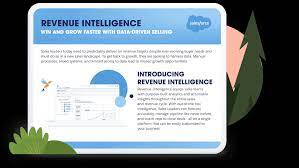
Achieve Sales Targets and Ensure Forecast Accuracy with Revenue Intelligence Salesforce Revenue Intelligence is a powerful data-driven sales solution designed to help sales teams hit their targets, grow pipelines, and ensure accurate forecasts. By combining Tableau CRM dashboards and analytics with a visual pipeline progress flow chart in Pipeline Inspection, Revenue Intelligence offers a comprehensive view of your sales pipeline. Key Features of Revenue Intelligence Unified Sales Insights Revenue Intelligence integrates several advanced tools, including: These features leverage AI, forecasting, and customer engagement data to help your sales team confidently close deals and drive revenue growth. Available for an Additional Cost Revenue Intelligence and its robust features are available as an add-on. For detailed pricing information, please contact your Salesforce account executive. Enhance Revenue and Build Stronger Pipelines with Revenue Insights Comprehensive Performance Insights Revenue Insights empowers sales teams with crucial performance insights to build stronger pipelines, improve forecast accuracy, and generate more revenue. It offers three embedded dashboards: Dynamic Pipeline Visualization With Pipeline Inspection, users can track changes in their pipeline dynamically. The Flow tab displays changes to opportunities across different forecast categories over time, allowing users to filter and focus on the most relevant data. By leveraging Salesforce Revenue Intelligence, sales teams can achieve unprecedented clarity and control over their sales processes, ensuring consistent growth and success. Like1 Related Posts Who is Salesforce? Who is Salesforce? Here is their story in their own words. From our inception, we’ve proudly embraced the identity of Read more Salesforce Marketing Cloud Transactional Emails Salesforce Marketing Cloud Transactional Emails are immediate, automated, non-promotional messages crucial to business operations and customer satisfaction, such as order Read more Salesforce Unites Einstein Analytics with Financial CRM Salesforce has unveiled a comprehensive analytics solution tailored for wealth managers, home office professionals, and retail bankers, merging its Financial Read more AI-Driven Propensity Scores AI plays a crucial role in propensity score estimation as it can discern underlying patterns between treatments and confounding variables Read more

Read More
gettectonic.com