

Testing Archives - gettectonic.com - Page 18
Sales Cloud Einstein

Einstein GPT from Salesforce

Salesforce, the leading global CRM provider, has unveiled Einstein GPT, the world’s first generative AI CRM technology. Engineered to craft personalized content across sales, service, marketing, commerce, and IT interactions, Einstein GPT aims to enhance employee productivity and elevate customer experiences. While Salesforce had previously integrated AI into its ecosystem with Einstein AI, the introduction of Einstein GPT represents a notable advancement. Leaning on OpenAI’s capabilities, Einstein GPT is an empowered iteration of existing technology, aligning with Salesforce’s commitment to artificial intelligence technology adoption. Einstein GPT from Salesforce Einstein GPT operates as an open and extensible platform, leveraging trusted, real-time data for training. It facilitates public and private AI models tailored for CRM, integrating seamlessly with OpenAI to offer generative AI capabilities. This enables users to connect data to OpenAI’s advanced models or choose external models, employing natural-language prompts within Salesforce CRM for content generation that dynamically adapts to evolving customer information and needs. The technology infusion of Einstein GPT involves combining Salesforce’s proprietary AI models with generative AI tech from an ecosystem of partners and real-time data from the Salesforce Data Cloud. This combination allows the generation of personalized content, including emails for sales, responses for customer service, targeted content for marketers, and auto-generated code for developers. The collaboration with OpenAI extends Salesforce’s capabilities by merging OpenAI’s enterprise-grade ChatGPT with Salesforce’s private AI models. Additionally, Salesforce Ventures announced the Generative AI Fund. This is a 0 million investment initiative supporting startups to foster responsible, trusted, and generative AI development. Einstein GPT introduces various applications, such as Einstein GPT for Sales, Service, Marketing, and Developers. These applications empower users to auto-generate things they used to have to write. Sales tasks, enhanced customer service interactions, dynamically created personalized content, and improved developer productivity through an AI chat assistant. To further enhance collaboration, Salesforce and OpenAI introduced the ChatGPT for Slack app. Thus offering AI-powered conversation summaries. The research tools and writing assistance within the Slack platform are aided by Einstein.. Prominent organizations like HPE, L’Oréal, RBC US Wealth Management, and S&P Global Ratings have acknowledged the value of generative AI. They are all improving customer engagement. Like1 Related Posts Who is Salesforce? Who is Salesforce? Here is their story in their own words. From our inception, we’ve proudly embraced the identity of Read more Salesforce Marketing Cloud Transactional Emails Salesforce Marketing Cloud Transactional Emails are immediate, automated, non-promotional messages crucial to business operations and customer satisfaction, such as order Read more Salesforce Unites Einstein Analytics with Financial CRM Salesforce has unveiled a comprehensive analytics solution tailored for wealth managers, home office professionals, and retail bankers, merging its Financial Read more AI-Driven Propensity Scores AI plays a crucial role in propensity score estimation as it can discern underlying patterns between treatments and confounding variables Read more


Read More
Row-Level Formulas in Salesforce

Row-Level Formulas in Salesforce

Mastering Row-Level Formulas in Salesforce Reports What Are Row-Level Formulas? Row-level formulas perform calculations on individual records in your report, displaying results for each row. Unlike summary formulas that aggregate data across records, row-level formulas analyze one record at a time. Key Characteristics Creating a Row-Level Formula: Step-by-Step 1. Build Your Base Report 2. Add the Formula Column 3. Writing the Formula 4. Finalize & Save Practical Applications Row-level formulas help answer critical business questions: Important Limitations Be aware of these constraints when working with row-level formulas: Best Practices Troubleshooting Common Issues Problem: Formula Not Calculating Correctly Problem: “Too Many Fields” Error Problem: Formula Validation Fails Advanced Techniques For more sophisticated analysis: Permission Requirements To create and modify row-level formulas: Conclusion Row-level formulas provide powerful, granular analysis capabilities in Salesforce reports. While they have specific limitations, their ability to perform record-by-record calculations makes them indispensable for detailed operational reporting. By mastering these formulas, you can unlock deeper insights into your business processes while maintaining data accuracy and relevance. Like Related Posts Who is Salesforce? Who is Salesforce? Here is their story in their own words. From our inception, we’ve proudly embraced the identity of Read more Salesforce Marketing Cloud Transactional Emails Salesforce Marketing Cloud Transactional Emails are immediate, automated, non-promotional messages crucial to business operations and customer satisfaction, such as order Read more Salesforce Unites Einstein Analytics with Financial CRM Salesforce has unveiled a comprehensive analytics solution tailored for wealth managers, home office professionals, and retail bankers, merging its Financial Read more AI-Driven Propensity Scores AI plays a crucial role in propensity score estimation as it can discern underlying patterns between treatments and confounding variables Read more

Read More
AI All Grown Up

Understanding Generative AI and Predictive AI

Understanding Generative AI and Predictive AI: A Synergistic Approach Artificial Intelligence (AI) is broadly categorized into two key branches: Generative AI and Predictive AI. Both play a crucial role across various industries, from healthcare and fintech to logistics and education. Their impact is undeniable, driving efficiency, accuracy, and innovation. However, this is not a debate about Generative AI versus Predictive AI. Instead, it is an exploration of both branches and how they contribute to technological advancement. Let’s dive in. Generative AI vs. Predictive AI: An Overview Generative AI has been around for decades, with early iterations like Generative Adversarial Networks (GANs) and Variational Autoencoders (VAEs). While these earlier models saw limited enterprise adoption, the success of ChatGPT demonstrated the vast potential of Generative AI in producing articulate, human-like content. Conversely, Predictive AI is widely used across industries to correlate data and support decision-making. It is particularly prevalent in applications like cybersecurity, inventory management, and digital twin technology. Businesses increasingly recognize the benefits of both AI branches. From automating processes to creating digital replicas for scenario testing, AI applications continue to evolve. The goal now is not to compare Generative AI and Predictive AI, but to understand their mechanisms and potential for seamless integration. Are you fully leveraging AI in your enterprise? If not, or if you have questions, feel free to reach out. Now, let’s delve into how these AI branches work. What is Generative AI? Generative AI is transforming industries by producing text, code, music, and even videos. Companies use it to analyze vast datasets and generate content instantaneously. Key Applications of Generative AI: By 2026, over 80% of businesses are expected to incorporate Generative AI into their workflows. While implementation can be complex, expert guidance can help streamline the process. How Does Generative AI Work? Generative AI leverages machine learning (ML) and big data to analyze input forms—such as text, images, or sound—and learn their structures. Once trained, it generates new content without merely replicating existing data, making it a powerful tool for innovation. Generative AI in Action: If you’re uncertain about how to implement Generative AI in your business, consulting with experts can provide clarity. What is Predictive AI? Predictive AI, or predictive analytics, forecasts future outcomes based on historical data. It empowers businesses to make informed decisions by identifying patterns and trends. Key Applications of Predictive AI: Predictive AI improves decision-making capabilities by analyzing large datasets and refining machine learning algorithms. Integrating it with other analytics tools enhances its effectiveness and mitigates implementation challenges. Predictive AI in Action: Predictive AI’s ability to anticipate market trends and consumer behavior makes it a valuable tool for businesses looking to stay ahead. Generative AI vs. Predictive AI: Key Differences While Generative AI focuses on creating new content based on learned data patterns, Predictive AI forecasts future outcomes using historical data. These two models are not competing forces; rather, they complement each other in building comprehensive business strategies. Both models require a strong foundation in data governance and cybersecurity to ensure ethical and effective AI implementation. The Future of AI: Generative vs. Predictive According to McKinsey, the combined impact of Generative and Predictive AI could contribute up to $4.4 trillion annually to the global economy. What’s Next for AI? Generative AI: Predictive AI: Both Generative and Predictive AI are poised to shape the future of AI-driven industries. Businesses that embrace both models will gain a competitive edge in innovation and strategic decision-making. Conclusion Generative and Predictive AI are not opposing technologies; they are complementary forces that drive efficiency, accuracy, and creativity. Their applications span numerous industries, proving their immense value in today’s tech-driven world. Navigating AI implementation can be complex, but expert guidance can simplify the process. If you have questions about integrating AI into your business, consulting with professionals can help you harness its full potential. The future of business is deeply intertwined with AI—taking the right steps today will ensure success in the years ahead. Let Tectonic take you to the AI world. Like Related Posts Who is Salesforce? Who is Salesforce? Here is their story in their own words. From our inception, we’ve proudly embraced the identity of Read more Salesforce Marketing Cloud Transactional Emails Salesforce Marketing Cloud Transactional Emails are immediate, automated, non-promotional messages crucial to business operations and customer satisfaction, such as order Read more Salesforce Unites Einstein Analytics with Financial CRM Salesforce has unveiled a comprehensive analytics solution tailored for wealth managers, home office professionals, and retail bankers, merging its Financial Read more AI-Driven Propensity Scores AI plays a crucial role in propensity score estimation as it can discern underlying patterns between treatments and confounding variables Read more

Read More

Improving Customer Experiences with Salesforce

In 2023, sustaining competitiveness demands businesses to prioritize personalization and agility in their customer experience (CX) strategy. Brands need to build customer relationships and provide experiences that exceed expectations. If not, your connected customer will find a competitor who can. Improving Customer Experiences with Salesforce begins with initial implementation. Salesforce plays a critical role in achieving customer success as it serves as a central hub for customer data, streamlines communication, and offers valuable insights for customized customer interactions. It also allows for the tracking of customer behavior and preferences, enabling proactive and personalized support. Salesforce did not invent Customer Success, but the company quickly built what has become the number one customer relationship management platform to help their customers provide great experiences to their customers. Here are strategies to enhance your customer experience program: Enhancing Customer Experience for Brand Loyalty: Advance Personalized Experiences: By concentrating on these core areas, organizations can navigate the evolving CX landscape, delivering exceptional customer experiences. Tectonic is poised to collaborate, customizing Salesforce tools to craft remarkable customer experiences. If a friend ignores a call, text, or email, it probably doesn’t bode well for the relationship. As with friendships, customer relationships bloom when individuals feel understood. Relationships weaken when customers feel that businesses don’t appreciate their personal preferences, whether that’s remembering they enjoy romantic comedies, or that they would rather be contacted by email. Improving Customer Experiences with Salesforce The customer experience is broader and deeper than just the level of service received. Customer experience is the total perception of the company, interaction by interaction, from the first touchpoint to the last. This may include navigating the website, talking to sales reps over the phone, visiting a store, sampling a product or service, and experiencing an onboarding phase after a purchase. CRM may be a modern term, but the importance of nurturing customer relationships is age-old. The role of the customer experience has shifted in recent years, becoming one of the most crucial brand differentiators. Let’s explore how leveraging Salesforce can create customer experiences that surpass expectations and foster long-term relationships. As products become less distinguishable by brand and price, a great customer experience has become essential for companies to differentiate themselves. What are the 4 E’s of customer experience? Then come the 4Es – Economic, Efficient, Emotional, and Empathetic experiences, which focus on making your customers’ journey worthwhile. Every interaction should offer value for money (Economic), be easy for the customer (Efficient), generate positive feelings (Emotional), and show customers you get them (Empathetic). Like2 Related Posts Who is Salesforce? Who is Salesforce? Here is their story in their own words. From our inception, we’ve proudly embraced the identity of Read more Salesforce Marketing Cloud Transactional Emails Salesforce Marketing Cloud Transactional Emails are immediate, automated, non-promotional messages crucial to business operations and customer satisfaction, such as order Read more Salesforce Unites Einstein Analytics with Financial CRM Salesforce has unveiled a comprehensive analytics solution tailored for wealth managers, home office professionals, and retail bankers, merging its Financial Read more AI-Driven Propensity Scores AI plays a crucial role in propensity score estimation as it can discern underlying patterns between treatments and confounding variables Read more
Read More
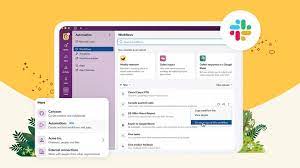
Slack's Next Gen Platform Released

Slack’s Next Gen Platform Released

The Salesforce Slack platform lets you extend, expand, and automate your workspaces all while collaborating. Slacks Next Gen Platform Released. Slacks Next Gen Platform Released Slack’s advanced platform, initially in the beta phase for developers, is now progressively rolling out to all teams. Following nearly three years of community-driven experimentation, development, and testing, Slack is excited for you to explore the possibilities it unlocks for your teams: Modular Architecture: Introduce yourself to a new modular architecture rooted in building blocks like functions, triggers, and workflows. These elements are remixable, reusable, and seamlessly connect to the data flow within Slack. Enhanced Developer Experience: Enjoy a faster, more intuitive developer interface with new tools such as the Slack CLI and TypeScript SDK. These tools simplify and clarify the often tedious aspects of building atop the Slack platform. Secure Infrastructure: Benefit from secure deployment, data storage, and authentication powered by Slack-managed serverless infrastructure. The fast Deno-based TypeScript runtime keeps your focus on coding and user experience. Flexible User Experience: Experience a flexible user interface that facilitates easy sharing of your creations within Slack. Introduce a link trigger to make your workflow portable—share it in messages, add it to bookmarks, incorporate it into a canvas, and more. Slack Seeks Feedback Acknowledging the importance of feedback from developers, admins, and users, Slack understands the challenges encountered while building custom integrations. From ensuring enterprise readiness to keeping integrations up-to-date with new Slack features, your input has guided every decision, leading them to this point. The platform’s distinction lies in its extensive options and robust support, offering a fluid and expansive development experience. This approach has allowed Salesforce and Slack to explore innovative ways to integrate support structures directly within Slack, as echoed by Tyler Beckett, SaaS Operations Engineer at Workiva. Slacks Next Gen Platform Released to Include More Automation Slack’s platform is also designed to make workflows automatically extensible to the Slack surfaces of today and tomorrow. Focus on business logic, and Slack will ensure your functions and workflows seamlessly work in any new experience introduced in Slack. For example, the canvas is a new persistent surface where teams can create, curate, and share essential information like text, files, link unfurls, and more in a single view. From day one, you can embed workflows too, making it easy to discover and use them in a relevant context, such as adding an IT request workflow to an onboarding canvas. Talk to Tectonic today about adding Salesforce Slack to your Salesforce ecosystem. Like Related Posts Who is Salesforce? Who is Salesforce? Here is their story in their own words. From our inception, we’ve proudly embraced the identity of Read more Salesforce Marketing Cloud Transactional Emails Salesforce Marketing Cloud Transactional Emails are immediate, automated, non-promotional messages crucial to business operations and customer satisfaction, such as order Read more Salesforce Unites Einstein Analytics with Financial CRM Salesforce has unveiled a comprehensive analytics solution tailored for wealth managers, home office professionals, and retail bankers, merging its Financial Read more AI-Driven Propensity Scores AI plays a crucial role in propensity score estimation as it can discern underlying patterns between treatments and confounding variables Read more

Read More
Improving Customer Experiences with Salesforce

Improving Customer Experiences with Salesforce

Sustaining competitiveness continues to demand businesses prioritize personalization and agility in their customer experience strategy in 2023. Improved Customer Experiences with Salesforce are attainable. Read on. “You are caller number 10; please stay on the line.” A few years ago, a phone message like this from a company was a standard part of the customer experience. But today, customers expect more. They expect callback options. They expect to open a chat window on your website, send a text message or a tweet, and get a near-instant reply. They expect that you already know who they are when they call, that you’re aware of their most recent order, and that you understand what they need next. They don’t want to repeat their information. And they definitely don’t want to wait. Improved Customer Experiences with Salesforce Here are ways to enhance your customer experience program: Enhancing Customer Experience for Brand Loyalty: Advance Personalized Experiences: By concentrating on these core areas, organizations can navigate the evolving CX landscape, delivering exceptional customer experiences. Tectonic is poised to collaborate, customizing Salesforce tools to craft remarkable customer experiences. CX-Customer experience, gets thrown around a lot. But how is it defined, and what does it mean? “Customer experience and service have converged, it’s more than call centers and successful responses to problems. It is service opportunities in sales, support, and marketing. Delivering great customer experiences now means providing amazing, almost magical service at every opportunity.” Peter Schwartz, Salesforce senior vice president of strategic planning What Does Customer Experience Mean? Customer experience encompasses every interaction a prospect or customer has with a business, spanning various channels and touchpoints. Here’s how to enhance customer experience with Salesforce: Customers have always wanted a consistently good buying experience and the best value they can get. If they’re not happy buying expensive razor blades, they can sign up for inexpensive monthly delivery. If they’re fed up with mediocre hotel chains that don’t offer value, why not try Airbnb? The Good News The good news? Customers are willing to pay a premium for great experiences, and not just great products and services. This means businesses have an opportunity to increase revenue by delighting their customers in a way that no one else can. What are the 3Rs of customer experience? Science shows that customers are looking for 3 things in every interaction. These can be summarized in the 3 service values: be reliable, be responsive and build relationships. What are the six pillars of customer experience excellence? Developed by KPMG Nunwood of the UK following research involving more than one million customers across three continents, the system spotlights six key principles as the building blocks for customer experience success: personalization, integrity, expectations, resolution, time and effort, and empathy. Like2 Related Posts Who is Salesforce? Who is Salesforce? Here is their story in their own words. From our inception, we’ve proudly embraced the identity of Read more Salesforce Marketing Cloud Transactional Emails Salesforce Marketing Cloud Transactional Emails are immediate, automated, non-promotional messages crucial to business operations and customer satisfaction, such as order Read more Salesforce Unites Einstein Analytics with Financial CRM Salesforce has unveiled a comprehensive analytics solution tailored for wealth managers, home office professionals, and retail bankers, merging its Financial Read more AI-Driven Propensity Scores AI plays a crucial role in propensity score estimation as it can discern underlying patterns between treatments and confounding variables Read more

Read More
Einstein Chatbot Salesforce

Einstein Chatbot Salesforce

Salesforce users have two options for creating a chatbot: either using an external platform and integrating the final product through Salesforce Lightning, or directly developing it within Salesforce Einstein Bot. Salesforce prioritizes empowering customers to create applications without the need for coding. Einstein Chatbot Salesforce. Einstein Bots utilize Artificial Intelligence (AI) to enhance the customer service experience across various channels such as SMS, Chat, Slack, Facebook Messenger, and WhatsApp, supporting conversations in multiple languages. They offer personalized and intelligent service by leveraging AI-powered chatbots integrated directly into the CRM. With just a few clicks, users can expedite issue resolution and boost productivity by utilizing AI-generated responses or automating routine tasks with bots integrated into Salesforce data. These secure, multilingual bots can be deployed on enhanced messaging channels, including in-app, web, and third-party platforms, as well as Slack and the Einstein Bots API. Creating an Einstein Bot: Enhanced Features for Einstein Bots: Einstein Bots offer various benefits: Salesforce Einstein Chatbots provide a valuable solution for organizations aiming to streamline customer service, reduce case volume, and enhance overall customer experience across diverse channels and languages. Like Related Posts Who is Salesforce? Who is Salesforce? Here is their story in their own words. From our inception, we’ve proudly embraced the identity of Read more Salesforce Marketing Cloud Transactional Emails Salesforce Marketing Cloud Transactional Emails are immediate, automated, non-promotional messages crucial to business operations and customer satisfaction, such as order Read more Salesforce Unites Einstein Analytics with Financial CRM Salesforce has unveiled a comprehensive analytics solution tailored for wealth managers, home office professionals, and retail bankers, merging its Financial Read more AI-Driven Propensity Scores AI plays a crucial role in propensity score estimation as it can discern underlying patterns between treatments and confounding variables Read more

Read More
Salesforce Integration

Salesforce Implementation Services

As certified experts, Tectonic offers comprehensive Salesforce implementation, management, and support services. Seek professional guidance from a trusted Salesforce Partner. Tectonic’s Salesforce implementation services encompass consulting, configuration, customization, migration, integration, support, and more. With over a decade of experience in CRM development, Tectonic assists companies in implementing robust Salesforce solutions that empower their sales, customer service, and marketing processes. Who participates in Salesforce implementation? The implementation team should include sales agents, customer service representatives, IT experts, marketers, general users, and business administrators. And of course, your Salesforce implementation partner. As an experienced Salesforce Partner, we follow a proven six-phase approach to ensure project success: Kickoff, Discovery, Build, Test, Deploy, and Service. Is it possible to implement Salesforce independently? Yes, but, we strongly discourage attempting a solo Salesforce implementation, especially if you are new to the platform. While Salesforce provides an admin-friendly interface, the risk of creating a non-scalable solution is high without expert guidance. Do you need a Salesforce implementation partner? In cases involving large-scale projects requiring a team of 10+ Consultants, engaging a Certified Implementation Partner is recommended. What are the critical success factors for Salesforce implementation? A well-defined strategy aligned with business goals, user training, effective data migration, proper customization, ongoing support, user adoption, clear communication, and commitment to continuous improvement are crucial elements. How long does Salesforce implementation take? On average, implementation for core products like Sales Cloud takes 5 to 12 weeks. The timeline may extend for a few months with add-ons or highly customized projects. How challenging is Salesforce implementation? Implementing Salesforce can be challenging and overwhelming, with up to 70% of CRM platform implementations facing difficulties. Salesforce itself recommends working with a Salesforce Implementation partner. One of the biggest challenges with the Salesforce platform is that it is highly customizable, this is not software you install and run with. Being highly customizable, however, is also why Salesforce is the number one CRM solution in the world. Why do Salesforce implementations fail? Failures in Salesforce implementations can result from fundamental data problems such as incomplete, inaccurate, or duplicative data, leading to issues like poor customer experience and incorrect budget forecasting. The lifecycle of Salesforce development involves planning, design, development, testing, deployment, and maintenance phases. The development process includes analyzing requirements, designing a solution, building and testing, and deploying it to end users. Is it time to explore bringing in a Salesforce implementation partner? Contact Tectonic today. Like1 Related Posts Who is Salesforce? Who is Salesforce? Here is their story in their own words. From our inception, we’ve proudly embraced the identity of Read more Salesforce Marketing Cloud Transactional Emails Salesforce Marketing Cloud Transactional Emails are immediate, automated, non-promotional messages crucial to business operations and customer satisfaction, such as order Read more Salesforce Unites Einstein Analytics with Financial CRM Salesforce has unveiled a comprehensive analytics solution tailored for wealth managers, home office professionals, and retail bankers, merging its Financial Read more AI-Driven Propensity Scores AI plays a crucial role in propensity score estimation as it can discern underlying patterns between treatments and confounding variables Read more

Read More
tectonic logo

AI Large Language Models

What Exactly Constitutes a Large Language Model? Picture having an exceptionally intelligent digital assistant that extensively combs through text, encompassing books, articles, websites, and various written content up to the year 2021. Yet, unlike a library that houses entire books, this digital assistant processes patterns from the textual data it undergoes. This digital assistant, akin to a large language model (LLM), represents an advanced computer model tailored to comprehend and generate text with humanlike qualities. Its training involves exposure to vast amounts of text data, allowing it to discern patterns, language structures, and relationships between words and sentences. How Do These Large Language Models Operate? Fundamentally, large language models, exemplified by GPT-3, undertake predictions on a token-by-token basis, sequentially building a coherent sequence. Given a request, they strive to predict the subsequent token, utilizing their acquired knowledge of patterns during training. These models showcase remarkable pattern recognition, generating contextually relevant content across diverse topics. The “large” aspect of these models refers to their extensive size and complexity, necessitating substantial computational resources like powerful servers equipped with multiple processors and ample memory. This capability enables the model to manage and process vast datasets, enhancing its proficiency in comprehending and generating high-quality text. While the sizes of LLMs may vary, they typically house billions of parameters—variables learned during the training process, embodying the knowledge extracted from the data. The greater the number of parameters, the more adept the model becomes at capturing intricate patterns. For instance, GPT-3 boasts around 175 billion parameters, marking a significant advancement in language processing capabilities, while GPT-4 is purported to exceed 1 trillion parameters. While these numerical feats are impressive, the challenges associated with these mammoth models include resource-intensive training, environmental implications, potential biases, and more. Large language models serve as virtual assistants with profound knowledge, aiding in a spectrum of language-related tasks. They contribute to writing, offer information, provide creative suggestions, and engage in conversations, aiming to make human-technology interactions more natural. However, users should be cognizant of their limitations and regard them as tools rather than infallible sources of truth. What Constitutes the Training of Large Language Models? Training a large language model is analogous to instructing a robot in comprehending and utilizing human language. The process involves: Fine-Tuning: A Closer Look Fine-tuning involves further training a pre-trained model on a more specific and compact dataset than the original. It is akin to training a robot proficient in various cuisines to specialize in Italian dishes using a dedicated cookbook. The significance of fine-tuning lies in: Versioning and Progression Large language models evolve through versions, with changes in size, training data, or parameters. Each iteration aims to address weaknesses, handle a broader task spectrum, or minimize biases and errors. The progression is simplified as follows: In essence, large language model versions emulate successive editions of a book series, each release striving for refinement, expansiveness, and captivating capabilities. Like1 Related Posts Who is Salesforce? Who is Salesforce? Here is their story in their own words. From our inception, we’ve proudly embraced the identity of Read more Salesforce Marketing Cloud Transactional Emails Salesforce Marketing Cloud Transactional Emails are immediate, automated, non-promotional messages crucial to business operations and customer satisfaction, such as order Read more Salesforce Unites Einstein Analytics with Financial CRM Salesforce has unveiled a comprehensive analytics solution tailored for wealth managers, home office professionals, and retail bankers, merging its Financial Read more AI-Driven Propensity Scores AI plays a crucial role in propensity score estimation as it can discern underlying patterns between treatments and confounding variables Read more

Read More
Data Collection

What is Personalization?

Understanding Personalization in Marketing At its core, personalization can be categorized into two main aspects: personalization for marketing and personalization for communication. This insight will delve into the realm of personalization for marketing, with a forthcoming discussion on personalization for communication. Marketing personalization is a strategy that uses data to target and retarget leads with a branded message that speak directly to specific customers’ interests, demographics, and known buying behavior. Marketing personalization is becoming increasingly expected by consumers. Customer Expectations Beyond meeting customer expectations, there’s a compelling business incentive behind utilizing personalization. When a significant portion of revenue (50%) stems from the top 10% of customers, and 90% of revenue originates from the top 20%, the imperative becomes clear—to retain and find more customers like the top performers. Personalization emerges as a potent tool, enabling the creation of tailored experiences that resonate with customers on an individual level, fostering enduring relationships with your brand. While the buzz around personalization might suggest it as the ultimate goal, it’s crucial to recognize it as an important means to an end. At its fundamental level, personalization involves utilizing customer data to make interactions more pertinent to them. Achieving personalization at scale requires a comprehensive understanding of all aspects related to your customers. Everywhere one looks, brands are embracing personalization, be it in targeted social media ads or the personalized greetings from the local coffee shop barista. Customers now expect personalized experiences, and recent technological advancements have expanded the horizons of where and how personalization can be implemented. Whether it’s through social media, website interactions, or email communication, audiences anticipate personalized experiences that make them feel valued. In a study, 71% of consumers expressed the expectation of personalized interactions, and 76% admitted frustration when this expectation isn’t met. Incorporating personalization into your marketing strategy is not just a trend but a necessity for enhancing customer engagement and driving conversions. Before delving into its implementation, understanding what marketing personalization entails is vital. What is Marketing Personalization? Marketing personalization is a strategic approach that leverages data to target and retarget leads with brand messages tailored to specific customers’ interests, demographics, and buying behavior. The goal is to make customers feel that the brand message is crafted exclusively for them, often referred to as one-to-one or individual marketing. Notable companies like Netflix, Amazon, and YouTube employ personalization through algorithms to automate product and content recommendations based on user behavior. This extends beyond digital channels, impacting customer loyalty in physical establishments such as hotels, cafes, or salons. Importance of Personalization The primary reason for adopting marketing personalization is meeting customer expectations. It is the difference between customers feeling directly addressed versus being just a number among the 1,700 advertisements they encounter monthly. Whether implementing personalization in specific aspects or transforming the entire marketing plan, businesses stand to gain in several ways: Marketing Personalization Trends Keeping up with evolving trends is crucial for effective marketing personalization: Like Related Posts Who is Salesforce? Who is Salesforce? Here is their story in their own words. From our inception, we’ve proudly embraced the identity of Read more Salesforce Marketing Cloud Transactional Emails Salesforce Marketing Cloud Transactional Emails are immediate, automated, non-promotional messages crucial to business operations and customer satisfaction, such as order Read more Salesforce Unites Einstein Analytics with Financial CRM Salesforce has unveiled a comprehensive analytics solution tailored for wealth managers, home office professionals, and retail bankers, merging its Financial Read more AI-Driven Propensity Scores AI plays a crucial role in propensity score estimation as it can discern underlying patterns between treatments and confounding variables Read more

Read More
Exploring Salesforce Journey Builder

Exploring Salesforce Journey Builder

Exploring Salesforce Journey Builder Salesforce Journey Builder, a feature within Salesforce Marketing Cloud, is designed to give marketers a comprehensive view of customer interactions across multiple channels, including email, mobile, and social ads. It enables the creation and automation of personalized customer journeys that can be tailored based on specific behaviors, preferences, and demographics. Key Features of Journey Builder Types of Customer Journeys Journey Builder supports various journey types, offering flexibility in campaign design: Benefits of Using Journey Builder Connecting Marketing Cloud Journeys to Salesforce To link Marketing Cloud journeys with Salesforce campaigns, navigate to the relevant campaign in Salesforce, then select “Connect Campaign” from the Campaign Messages component. From there, choose the appropriate Marketing Cloud business unit and select an active journey. Differentiating Journey Builder from Other Salesforce Tools Conclusion Salesforce Journey Builder empowers marketers to automate and personalize customer journeys across various channels. By leveraging its capabilities, organizations can boost customer engagement, drive conversions, and remain agile in response to evolving market trends. Like Related Posts Who is Salesforce? Who is Salesforce? Here is their story in their own words. From our inception, we’ve proudly embraced the identity of Read more Salesforce Marketing Cloud Transactional Emails Salesforce Marketing Cloud Transactional Emails are immediate, automated, non-promotional messages crucial to business operations and customer satisfaction, such as order Read more Salesforce Unites Einstein Analytics with Financial CRM Salesforce has unveiled a comprehensive analytics solution tailored for wealth managers, home office professionals, and retail bankers, merging its Financial Read more AI-Driven Propensity Scores AI plays a crucial role in propensity score estimation as it can discern underlying patterns between treatments and confounding variables Read more

Read More

Digital Marketing Roadmap

Digital transformation is becoming a mantra in business, but how do you embark on this journey? What is the goal? What does it look like? Begin with a digital marketing roadmap. What is the roadmap for digital marketing? A digital marketing roadmap lays out your major areas of focus and ensures iterations stay grounded in that strategy. As you build your digital marketing roadmap, remember the goal is to facilitate: Alignment: A strategy-driven roadmap rallies the team around the work that needs to be done. What are the four phases of digital marketing? Awareness – Content focused on educating your audience. Evaluation – Customers determine whether they need your product. Conversion – Reasons to buy your product. Delight – Keeping your audience engaged. The initial draft is likely straightforward, conceived by visionaries in your organization, outlining the roadmap’s initial steps: This initial draft is a good start but needs refinement before presentation to management for buy-in. The key is to make metrics SMART, following the framework proposed by management theorist Peter F. Drucker: Now, let’s transform the draft into a presentation-worthy strategic roadmap: Strategic Plan Vision Statement: Provide a seamless omnichannel customer experience to become the number 1 seller of our industry. This refined roadmap is more achievable, being both measurable and time-bound. For added effectiveness, consider SMARTER goals, where “E” stands for engagement evaluator and “R” stands for reward. Have an evaluator determine goal achievement and showcase how it impacts the organization in the long run. What are the 5 key elements of digital marketing? The five most important elements of a digital campaign consist of mobile considerations, organic search, social media marketing, content marketing and lead nurturing. All of these elements combined make up a cohesive digital marketing strategy. What is 4Ps vs the 4Cs of digital marketing? 4Ps is Product, Price, Place, and Promotion. On other hand 4Cs is Customer Value, Cost, Conveniece, and Communication. 4Ps is more company centered in other hand 4Cs is more customer focused. Note: For expert assistance with your assessment and strategic roadmap, contact your account executive at Tectonic to explore how our Salesforce team can assist with your planning. Once completed, revisit and tweak your roadmap to ensure customer experience is at its core and goals are SMARTER. Like Related Posts Who is Salesforce? Who is Salesforce? Here is their story in their own words. From our inception, we’ve proudly embraced the identity of Read more Salesforce Marketing Cloud Transactional Emails Salesforce Marketing Cloud Transactional Emails are immediate, automated, non-promotional messages crucial to business operations and customer satisfaction, such as order Read more Salesforce Unites Einstein Analytics with Financial CRM Salesforce has unveiled a comprehensive analytics solution tailored for wealth managers, home office professionals, and retail bankers, merging its Financial Read more AI-Driven Propensity Scores AI plays a crucial role in propensity score estimation as it can discern underlying patterns between treatments and confounding variables Read more

Read More
gettectonic.com