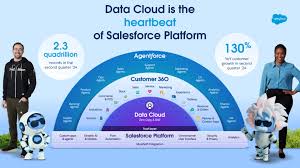
Salesforce Data Cloud Drives Customer Experience Transformation with New Data and AI Innovations
Salesforce has unveiled new innovations within its Data Cloud, enhancing the way organizations transform customer experiences by leveraging data and AI.
Key advancements include expanded support for unstructured data, enabling native processing of audio and video content—such as webinars and calls—to unlock deeper insights into customer behavior. A standardized semantic data model ensures both Agentforce Agents and humans can consistently interpret and use data, while improved search capabilities enhance information discovery by factoring in customer context. Real-time data activations allow organizations to respond instantly to evolving customer needs, and new data security and governance features safeguard operations and prevent data exposure.
“In this new era of AI and Agents, customer data and metadata are the new gold for the enterprise,” said Rahul Auradkar, EVP and GM for Data Cloud at Salesforce. “More companies are using Data Cloud to unify all their data—from customer interactions and product usage to IoT and social media data—gaining deeper insights across all touchpoints. Because Data Cloud is foundational to Salesforce, companies can act on this data to deliver personalized, meaningful customer experiences.”
Data Cloud integrates with Salesforce Customer 360, Agentforce, Flow, and analytics, providing a trusted data foundation for personalized experiences and real-time analytics. It powers data-driven actions and workflows while securely enabling AI across all Salesforce applications.
Leveraging zero-copy technology and MuleSoft connectors, Data Cloud can ingest data from hundreds of sources, including data lakes and warehouses. Integrated into the Salesforce Platform, this metadata seamlessly flows into Salesforce applications, governed by set policies. This gives every team a 360-degree customer view, driving AI, automation, and analytics without compromising security.
Data Cloud also enhances Agentforce, providing contextual insights and guiding next-best steps, like automating follow-up emails or sharing detailed chat summaries with human agents. Tableau Semantics bridges the gap between AI and employees, ensuring they operate with consistent data definitions.
The following new Data Cloud features will be available across various release stages:
- Now:
- Customer-managed keys are generally available.
- Sub-second real-time layer is generally available via sub-second real-time profiles add-on SKU.
- MuleSoft Direct for Data Cloud enters beta in late September 2024, requiring a MuleSoft Anypoint Platform license.
- A comprehensive list of pre-built connectors is available in the Data Cloud Connectors Directory.
- October 2024:
- General availability for unstructured audio and video content processing (currently in pilot).
- Data Cloud One will be generally available.
- November 2024:
- General availability for hybrid search (currently in pilot).
- AI tagging and classification will enter beta.
- Policy-based governance will enter beta.
- Private Connect for Data Cloud will be generally available.
- February 2025:
- Tableau Semantics (currently in pilot) will be generally available.
For more information, visit www.salesforce.com.
Who is Salesforce? Here is their story in their own words. From our inception, we've proudly embraced the identity of Read more
Salesforce Marketing Cloud Transactional Emails are immediate, automated, non-promotional messages crucial to business operations and customer satisfaction, such as order Read more

Salesforce has unveiled a comprehensive analytics solution tailored for wealth managers, home office professionals, and retail bankers, merging its Financial Read more
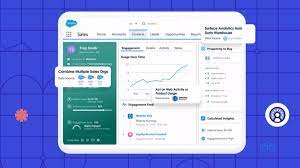
AI plays a crucial role in propensity score estimation as it can discern underlying patterns between treatments and confounding variables Read more